
Brian Burt's Blog: Work in Progress - Posts Tagged "climate-change"
Happy to Be Here!
A new documentary was recently released (free on YouTube) by author and environmental activist Bill McKibben and his colleagues at 350.org. This roughly 45-minute film is eye-opening and well worth a watch:
Do the Math - The Movie
I believe this documentary should be a wake-up call for all of us who worry about what kind of world we will bequeath to future generations. It inspired me to join 350.org as well as put Mr. McKibben's The End of Nature on my personal to-read list. If you sometimes agonize over the possible implications of climate change but feel powerless to affect the trend, watch the video: it will empower you!
And I'd also recommend another book from my personal bookshelf: Our Angry Earth: A Ticking Ecological Bomb. I read this when it first came out in the early 1990's and remember it inspiring much angst but also great passion. I hope it does the same for you.
I'm a Goodreads newbie, but I'm really enjoying the chance to become an active part of this community. Thanks for welcoming me! And, if you're interested, feel free to check out my guest blog on author Tony-Paul de Vissage's web site discussing how climate change inspired my own writing efforts.


The Expanding Dune-iverse
There are many dimensions which a speculative-fiction novel can explore: political intrigue; metaphysics; religion; scientific or technological paradigm shifts; economic forces that drive (or poison) human behavior; tensions between radically different races, species, or cultures that erupt into conflict; ecological changes that reshape worlds and the societies that inhabit them. An ambitious writer might seriously address two or three in a story. In Dune, Herbert manages to develop all of these themes, not short-changing any of them, and weaves them into a tapestry as rich and vivid as any I've encountered. That's an amazing feat. The novel, and the series, challenge you to understand the details of each individual element. More importantly, you are asked to discern the larger patterns and how they combine, collide, and interact to create a civilization that fills a sizable chunk of time and space.
I loved getting lost in Herbert's universe. I always felt that I only saw the tip of the iceberg; that Herbert must have spent years developing the intricate, sprawling backstories that lurked beneath the surface, lending the series its considerable weight. No matter how you tried, you couldn't digest it all...but it was thought-provoking, entertaining, and enlightening to try!
Of all the themes in Dune, the ecological one affected me most deeply. I've always been environmentally-minded, always enjoyed walking in the woods or reading in the shade of a tall tree, serenaded by birds. And I've always worried about the impact we're having on those wild places, because I truly believe they enrich us in ways we don't know how to measure. We are diminished every time we sacrifice another in the name of progress.
So, admittedly, I'm no Frank Herbert. But I did study his masterworks carefully, and I've tried my very best to incorporate the lessons taught by Dune into my own new novel, Aquarius Rising: In the Tears of God. This is book 1 of a trilogy that explores the potential trauma for residents of a future Earth where our worst-case scenarios for climate change have come to pass. Humans are forced to adapt to a hostile, wounded planet. Humanoid subspecies struggle to carve out their own niches in ecosystems far less friendly than the ones under which we've prospered. Aquarius Rising is not Dune, by a long shot. But - if I learned a fraction of what Herbert's famous series had to teach - I'll consider the time spent swimming through Aquarius's murky seas worthwhile. If you choose to read it, I hope you will, too!

#SFWApro
Cli-Fi or Just Sci-Fi, and Why?
I definitely see why the SF community bristles at the implication that this style of fiction represents something completely new. Great SF writers have indeed explored the territory that includes climate change, environmental disaster, and ecological imbalance for decades and have found fertile ground there. (Fertile for the writers' imaginations; perhaps not so fertile for the story's characters who may be left wandering through parched and barren hellscapes.) As I mentioned in a prior post, Frank Herbert's Dune series is a perfect example. Kim Stanley Robinson has mined this rich story vein brilliantly for years. And I still remember being mesmerized by Ursula Le Guin's The Word for World is Forest.
So, for SF fans, this is nothing new. What's changed, then (besides the melting polar ice, rising seas, violent weather patterns, and mean Earth temperature)? I'd say two major factors contributed to the emergence of "cli-fi" in the public eye. First, the evidence for global warming has become dramatically visible to people in their everyday lives. Extreme weather events and the nearly unanimous consensus of climate scientists have gradually shifted popular perception of this issue. Even the deniers grudgingly admit that something is happening, although they might argue about the root causes. Second, the theme of climate change has begun appearing in the work of acclaimed "mainstream" literary fiction writers like Barbara Kingsolver, Ian McEwan, and Margaret Atwood, to name a few. Although this rankles some SF folks who feel that we're treated like "second-class literary citizens," the reality is that mainstream literary writers carry more weight with many media sources.
New genre or simply newly recognized SF sub-genre, this can be a positive development for writers of speculative fiction with a passion for environmental themes. And, for those of us who also feel impassioned about environmental causes, it's a win-win. I believe fiction can communicate messages (like "we're mortgaging our planet's future for short-term economic gain") in ways that are more visceral than nonfiction books addressing similar concerns. Facts can move the mind, but fiction can move the spirit. Fiction writing is not activism... but infusing core beliefs into a story can make that tale more vivid and thought-provoking if it's not done in a preachy, heavy-handed way.
Is it really cli-fi or just good ol' sci-fi? Ultimately, I don't care, as long as readers enjoy the books and consider the implications. SF has a proud history of presenting cautionary tales about possible dystopian futures, and I for one think that just might help humanity avoid them!

BTW, for those interested, my local environmental organization interviewed me about the inspiration for my own "climate fiction" novel on their blog recently. Feel free to check it out if you're interested!
WMEAC Member Writes Climate Change Sci-Fi Novel
#SFWApro
SFFWorld Guest Post on Cli-Fi

I'm honored to have a guest post featured in SFFWorld -- one of the premier websites for science fiction, fantasy, and horror -- this week on the topic of Climate Fiction. It's a subject near and dear to my heart, and many thanks to Dag Rambraut and the staff of SFFWorld for allowing me to contribute.
There may be a follow-up online panel debate on this topic hosted in the SFFWorld forums as well. I'll keep you posted. In the meantime, please check out the guest post about cli-fi!
What Is Cli-Fi and Why Does It Matter? by Brian Burt
We Are Easter Island
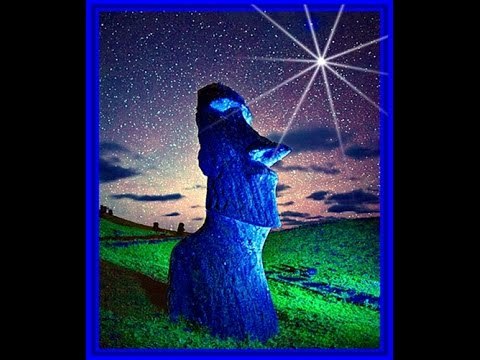
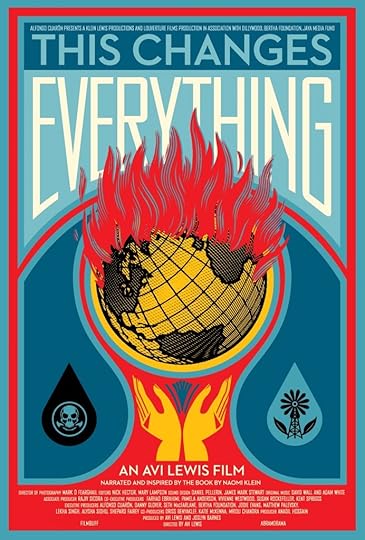
As part of a Goodreads Green Group monthly read, I just finished Naomi Klein's chilling nonfiction book This Changes Everything: Capitalism vs. The Climate. The challenge it presents for us as a species is daunting, and the looming implications if we don't act soon - and decisively - are dire. The more I read, and came to understand the opportunities for less drastic intervention we've squandered over the past three decades, the more I was reminded of another thought-provoking nonfiction book, Jared Diamond's Collapse: How Societies Choose to Fail or Succeed. The parallels were eerie, difficult to ignore, and our situation finally hit home with full force:
We are Easter Island.
As an SF writer currently on the third novel in a trilogy about Earth after climate catastrophe, this epiphany probably should have struck long ago. On some level, it did. But truth, if not stranger than fiction, can sometimes be more surreal; we really do, as a species, seem determined to ignore what's happening around us as countless other species vanish into extinction and the warming trends accelerate. Climate scientists are almost unanimous (in the neighborhood of 99+%) that man-made climate change is real, and threatens our entire biosphere. The science is clear. There are technological choices we can make to limit the damage and reduce the scope of the global disruption we're now doomed to face. And yet, we continue to waste time debating instead of mitigating.
I've always believed in science and technology, their miraculous ability to overcome obstacles, advance our common cause, improve our world. But science and technology aren't the issue now. We have the technical ability to transition away from the fossil fuel energy mix that threatens us, but we can't stumble through the dense political smokescreen. Maybe we're not Easter Island. Maybe we're that crazy old man with the hacking cough and emphysema who still smokes four packs a day and swears, between wheezes, that the anti-smoking movement is a "vast conspiracy to get cancer research funding from the NIH."
As a lover of science fiction, I've read more than my share of stark dystopian visions over the years. They struck me, not as predictive, but as cautionary tales: "here's what can happen if you take this craziness to the extreme." Right now, we seem determined to live out one of these cautionary tales to its tragic conclusion on a planetary scale. It scares me, profoundly, because I don't see how we write ourselves the happy ending.
Maybe watching the documentary Racing Extinction and Bill Nye's Global Meltdown in the midst of this reading project wasn't the best idea, either. They seem to have created the perfect psychic storm... or, given worsening weather extremes, super-storm might be more accurate.
But maybe that's exactly what we need. Maybe a confluence of forces - climate fiction from authors across traditional genre boundaries, nonfiction books and documentaries from science journalists, social media movements like that spawned by 350.org, urgent cries from organizations like IPCC and Union of Concerned Scientists - is essential to blow away the entrenched barriers to progress on this issue. I surely hope so.
I may not yet see the happy ending, but writing is rewriting. Perhaps some creative group editing, with each of us contributing a chapter or two, can still save us before our story ends far too soon.
#SFWApro
#CauseForOptimism: Catalyst for CO2 Conversion
Like me, you may be concerned about the sweeping policy changes unveiled by the new U.S. administration in relation to climate change. Both scientific research funding and regulatory enforcement appear to be under siege. As somebody who has written a science fiction trilogy driven by the catastrophic impacts of climate change on a future Earth -- and who has been moved by "climate fiction" novels like Barbara Kingsolver's Flight Behavior -- this generates an alarming sense of life imitating art.
So, when I see a story like the one I'm about to share, it injects that precious burst of optimism that we all need (desperately ;-) from time to time.
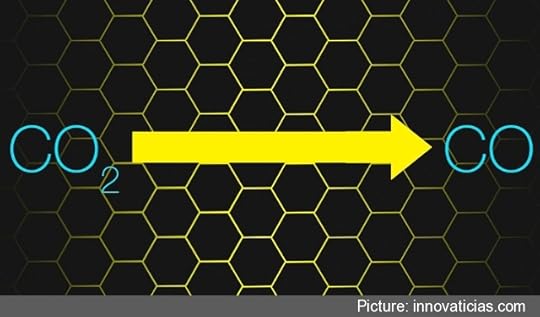
Researchers invent novel catalyst to convert carbon dioxide
Research chemists from the University of Amsterdam recently stumbled upon a catalyst that efficiently converts carbon dioxide to carbon monoxide, which can then be used to create useful chemicals. This new catalyst is cheap, easy to prepare, and operates at ambient pressure and low temperatures. If it scales up as expected, it can be applied at an industrial scale to potentially transform large volumes of an environmentally damaging greenhouse gas into a useful resource. Wicked cool!
So major kudos to the wizards at UvA's Sustainable Chemistry research area for distilling atmospheric lemons into lemonade. When things look dark, science shines a light of hope for a better future. That's why it deserves our support, respect, and government funding. American scientists are ready, willing, and able to provide this kind of #CauseForOptimism. We just need to keep giving them that chance!
#SFWApro
Living Dangerously on Earth Day
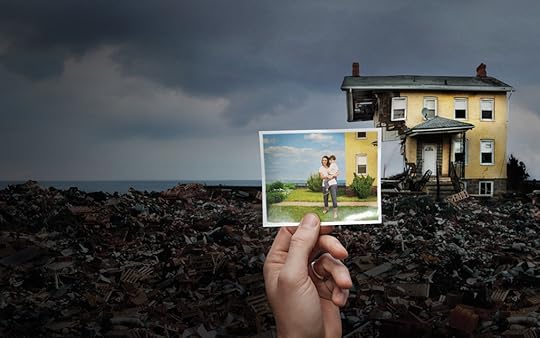
It's an exciting, momentous Earth Day, with the March for Science happening at many sites here in the U.S. and around the world. I feel a bit sidelined, unfortunately, recovering from surgery that only lets me march for short distances... and very, very slowly. My wife and youngest son are also feeling under the weather this weekend. So we decided to celebrate Earth Day by watching the first few episodes of the Emmy-winning series Years of Living Dangerously. It's been on our list for a while, but we don't get Showtime, so this "immobile" Earth Day finally provided the impetus to pull the trigger on buying Season 1. Best decision I've made in quite some time!
The first few episodes take viewers into many different places, with different perspectives on the effects of (and resistance to acknowledging) climate change. We see the impact of prolonged drought on small-town communities in Texas whose religious faith discourages acceptance of the science... until a devout Christian climate scientist from Texas Tech explains the implications in terms that don't insult their beliefs or alienate them. We see rampant corruption in Indonesia blindly ignoring an explosion of palm oil plantations that devastate the national forests that once served as a crucial carbon sink for the planet. We see Syrian refugees share their personal traumas and make clear that the fundamental catalyst for the human catastrophe in their home country was the most relentless drought in their region's recorded history; only when their government ignored their pleas for help did they resort to revolution.
And we see Western U.S. "hotshot" firefighters battling massive forest fires that have become steadily more deadly and numerous over the past several decades. These heroes don't question the science behind climate change because they're living (and dying) it every day.
It's arresting viewing. I love the written word and favor the novel over the film almost every time. But, in the case of issues like climate change and their impact in the real world, video evidence reaches may of us in a visceral way that books struggle to match.
So, on this Earth Day 2017, I highly recommend Years of Living Dangerously for anyone who hasn't had the pleasure of viewing it. As a passionate reader and writer of science fiction, I place great value on the contributions of science toward making our world better... and on warning us when we're on the brink of doing it irreparable harm. If you can't march today, maybe you can watch!
#SFWApro
Tricolor Mars
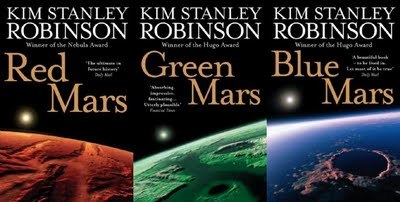
Red-green-blue (RGB) is the additive color model that drives electronic display systems. It paints our computer screens and infuses the incredibly vivid images that dance across modern televisions. It also describes the color-coding scheme for one of the most brilliant science fiction trilogies of all time. If you've not had the pleasure of reading Kim Stanley Robinson's award-winning Mars Trilogy, carve out time to do so. This is an SF saga you can't afford to miss!
The scope and sweep of the Mars Trilogy -- Red Mars, Green Mars, and Blue Mars -- will steal a reader's breath away. The saga covers two centuries of Martian history as it traces the adventures of the First Hundred, the initial group of scientists and engineers who struggle against daunting odds to colonize Mars. Robinson's imaginative world-building and attention to scientific detail are second to none, but what sets him apart are his facility with language and his insight into the softer sciences that power so much of character-driven fiction. He is rightly lauded for his ecological and environmental themes, the way his Martian settlers reshape their inhospitable planet and pioneer new cultural and political structures to provide a more open, free society than exists on their home world. Readers can marvel at the global changes that gradually transform the Martian landscape, differentiating it from the inequities of Earth and ultimately leading to a struggle for independence from the repressive "metanational" corporations that rule the governments back home... and covet the valuable resources of the Martian colony world.

The science, the ecosystems engineering, and the societal evolution are all fascinating. Still, what makes this trilogy even more compelling is the cast of disparate, colliding characters through whose eyes the reader sees the story unfold. The First Hundred (and their descendants) include calm, pragmatic engineers; enigmatic, mystical metaphysicists; fiery, passionate leaders; and introspective, geeky scientists. None of these key characters are caricatures or stereotypes. They defy expectations, are tormented by conflicting waves of emotion; they are uncertain and flawed and admirable and pitiable, undoubtedly recognizable examples of people in the reader's own life. Who better to accompany you through three lengthy novels, several centuries of toil and tribulation, and the creation of a new world?

If you enjoy science, space, and the spirit of exploration, you owe it to yourself to feast on this decorated trilogy that won two Hugos and a Nebula Award. It deserves every accolade it and its author have received. I very much enjoyed Andy Weir's The Martian and NatGeo's dramatic Mars miniseries. These were both brilliant... but they were undeniably inspired by Kim Stanley Robinson's groundbreaking epic published more than two decades earlier. The original Mars trilogy has lost none of its relevance, especially as we on Earth struggle with our own environmental challenges and accelerating climate change.
With red, green, and blue, you can concoct a dazzling array of colors. With Red, Green, and Blue Mars, you can explore a mind-boggling vision of the future. Taste the rainbow!
#SFWApro
Can Eco-Fiction Turn the Tide?

This is a scary time for the health of the planet. Earth’s biosphere is under stress from myriad human causes. Climate scientists have reached nearly unanimous consensus about the existential threat of human-induced global warming. Scientific organizations like the Union of Concerned Scientists, and activist groups like 350.org, fight to raise public awareness of the issue and its implications. While the entire biosphere is under siege, many believe that the oceans are the canary in the coal mine. Recent scientific surveys report that more than 70% of the Great Barrier Reef’s shallow water corals north of Port Douglas are now dead; 29% died from bleaching in 2016 alone.

These findings paint a grim picture for the oceans and the world. Still, the U.S. remains hopelessly embroiled in political debate over scientific facts that are accepted by almost all climate experts around the globe. Why? And how do we break the deadlock?
Scientific and environmental advocacy groups are certainly crucial to sway public opinion, and they continue to present the evidence. But polls have shown that too many Americans remain utterly entrenched in their beliefs on this issue, ignoring arguments to the contrary. A growing movement within fiction-writing circles hopes to shift hearts and minds in ways that rational debate simply hasn’t been able to achieve. The emerging literary genre of “climate fiction” (also known as “cli-fi”) or “eco-fiction” features gifted authors of traditional science fiction, fantasy, and mainstream fiction who are channeling their imaginations to portray the potential future of an Earth ravaged by climate change.
Renowned mainstream writers like Barbara Kingsolver (Flight Behavior) and Margaret Atwood (Oryx and Crake) have contributed novels that strike a chord with readers, affecting them on a visceral level that rational scientific argument simply hasn’t yet been able to duplicate. Of course, science fiction lovers like myself would argue that this is nothing new; brilliant SF authors like Frank Herbert (with his Dune series) and Kim Stanley Robinson (with his Mars series) have been dramatically illustrating the vital importance of environmental stewardship for decades.
My own award-winning science fiction trilogy, Aquarius Rising, explores a future Earth where global warming, and a disastrous attempt to reverse it, have forced humans to adapt to radically altered ecological niches. The bulk of the action takes place in the coastal shallows of the Eastern Pacific Ocean, where human-dolphin hybrids called Aquarians have built thriving reef communities amid the ruins of drowned human cities. This is no utopia by any means. Genetic engineering (biosculpting) is vital to allow the Aquarians to combat the ravages of ocean acidification and rising temperatures. They face an ongoing threat from human scientists clinging to the desiccated lands who strive to resurrect the continents at any cost. It is a brutal, bruising vision of one possible future we might face if we fail to act soon to mitigate climate change. While it offers hope for a successful outcome, it presents a cautionary tale that is representative of the works within this vibrant new literary genre.
Can fiction of this kind succeed where raw, unadorned facts have failed to convince so many Americans? I don’t honestly know. But I do believe in the power of story, of imagination, to move us. So do many, many fiction writers across many genres. Climate change is daunting when it acidifies our oceans, destroys ancient reefs, melts polar ice, and leads to relentless sea level rise that threatens to swallow coastal cities. Let’s hope that the combination of science fact and fiction can succeed where either, alone, seems doomed to fail.

#SFWApro
Storm Surge

Like most Americans, I watched with sympathy and shock as Hurricane Harvey slammed into the coast of Texas and dropped more than 50 inches of rain on Houston, a sprawling city utterly incapable of draining such prodigious amounts of water. The floodwaters rose, swallowing homes and cars and irreplaceable possessions without mercy. Terrified families were trapped in attics or on rooftops, rescued by first responders and the Cajan Navy and countless other brave, selfless volunteers. In the face of disaster, America once again showed its best, coming as close as it ever can to embodying its ideals. Hope refuses to drown. As the waters recede, we comfort ourselves with experts' assurances that we've just experienced a "thousand-year storm."
But -- honestly -- if we experience one of these "unprecedented" weather events every other year, isn't it time to ask ourselves why history seems to be accelerating, the span of millennia suddenly compressing into tighter coils that crush our most vulnerable: heat waves, drought, biblical downpours, juggernauts of wind and wave. We can't continue to dismiss them all as "storms of a lifetime" if they hammer us during every season.
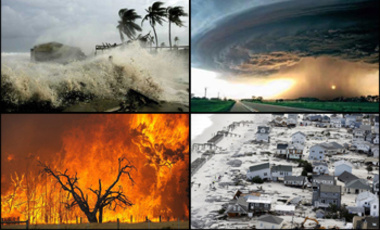
The world's climate scientists, and almost every other nation on the planet, understand and acknowledge the cause. Climate change pumps heat energy into our weather systems and spawns more frequent, extreme, traumatic events. "But climate isn't weather," counter skeptics; "you can't trace storms like Katrina, Sandy, or Harvey to global warming."
Actually, according to the latest U.S. federal climate change report, you can:
Yes, You Can Blame Climate Change for Extreme Weather
How did this issue become so insanely politicized in the U.S.? I don't fully know, nor do I care at this point. I just know that we need to change our political climate so we can deal with the hard decisions confronting us when it comes to our planetary climate. Is it fair to debate the policies for mitigating global warming, to discuss the economic implications vs. the benefits of reducing reliance on fossil fuels? Sure; in fact, it's vital. But we can't have that informed debate as long as we in the U.S. continue to insist that the problem doesn't exist, or that China manufactured it. And we can't have politicians carrying snowballs into the Senate chamber in winter to prove that "it still gets cold." That's behavior we wouldn't tolerate from a sulky pre-teen, much less an elected official who owes his constituents a lot more intellectual integrity than that.
My heart aches for the people of South Texas whose lives have been devastated in the wake of Hurricane Harvey. My family and I were happy to contribute to a fund to help them, sponsored through my generous employer who has pledged to match those donations dollar for dollar. Americans will do what they can to assist their suffering neighbors. But if we refuse to see the larger pattern woven by these mounting, cataclysmic weather events -- if we pretend they're isolated and unrelated -- we better steel ourselves to face a litany of similar suffering in the future.
Where will the next storm of the century, or the millennium, strike? When will the next heat wave broil a crowded city or the next drought wither crops to dust? Who knows. But, according to all the recent evidence, it will happen far too soon (and too often) for comfort. None of our communities will ultimately be immune.
As SF writers, and readers, we know better than to disregard the science. So spread the word. Don't let those around you ignore the warning signs. Fiction transports us to amazing worlds beyond imagination... but facing facts may be the key to saving this one.

#SFWApro
Work in Progress

- Brian Burt's profile
- 51 followers

