Jerry J. Davis's Blog
February 11, 2025
Optimistic Nihilism: A Mindset That Just Might Keep You Sane
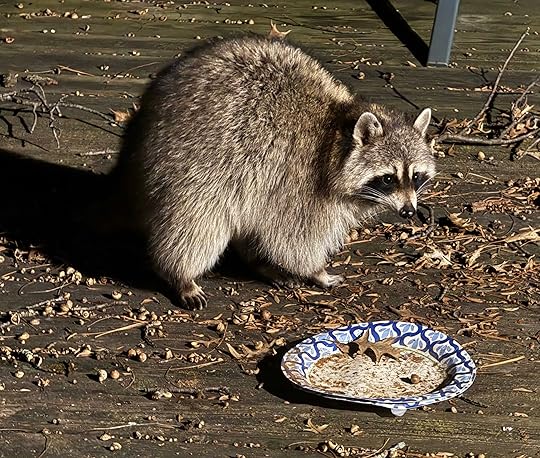 Befriend a raccoon.It Keeps You Engaged Without Breaking Your Brain
If you’ve ever looked at the news, sighed deeply, and muttered “What even is real anymore?” Yeah, me too. This is how I took my first steps into the wild world of optimistic nihilism — a mindset that just might keep me sane while the world around us implodes into deeper and deeper absurdity.
So, what is Optimistic Nihilism?
It’s simple: nothing inherently matters, so you get to decide what does. Unlike regular old nihilism, which suggests that life has no meaning and everything is doomed, optimistic nihilism says:
The universe is indifferentEverything is chaotic and meaninglessYou’re totally free to make your own meaning, and most importantly, it’s okay to have fun doing itInstead of being crushed under the weight of this meaningless cosmos, you get to dance on top of it.
Let’s face it. The last several years have been a fucking nightmare, and it’s getting worse. Between political insanity, reality-warping misinformation, and social media screaming matches, it’s clear that we’re all stuck in an absurdist sitcom that is not at all funny.
But that’s where optimistic nihilism comes in. Here’s why it might be the best mental tool for handling this madness:
Freedom from Doomscrolling Anxiety — If nothing is cosmically important, then maybe that one awful tweet or that latest headline doesn’t have to ruin your day.You Can Define Your Own Purpose — The world’s a mess? Cool. That means you’re not obligated to follow any pre-written script. Go write a book. Start a weird hobby. Befriend a raccoon. The rules are yours to create!It Turns Chaos Into Comedy — Once you accept that everything is absurd, the political circus starts looking less like a terrifying dystopia and more like a darkly hilarious Coen Brothers movie.It Keeps You Engaged Without Breaking Your Brain — You don’t have to be emotionally crushed by every piece of bad news. You can care, take action, and fight for a better world — without letting the weight of it all destroy your joy. Instead of feeling like a powerless extra in a never-ending political horror film, you can be the protagonist in your own story, choosing where to put your energy.At the end of the day, optimistic nihilism isn’t about giving up — it’s about realizing you’re in charge of what you focus on.
Yes, things are chaotic. Yes, the world is unpredictable. Yes, the universe is a vast and indifferent place where nothing has inherent meaning.
But that’s actually good news, because it means you’re free. Free to laugh. Free to create. Free to decide what matters to you and lean into it hard.
For more in-depth information about Optimistic Nihilism I recommend this article by Dr. Steve Parker:
Optimistic Nihilism: A Creative Approach to Existence — Provided You Exercise Caution
[image error]Optimistic Nihilism: A Mindset That Just Might Keep You Sane was originally published in MojoWriter on Medium, where people are continuing the conversation by highlighting and responding to this story.


February 7, 2025
Dancing with Chaos
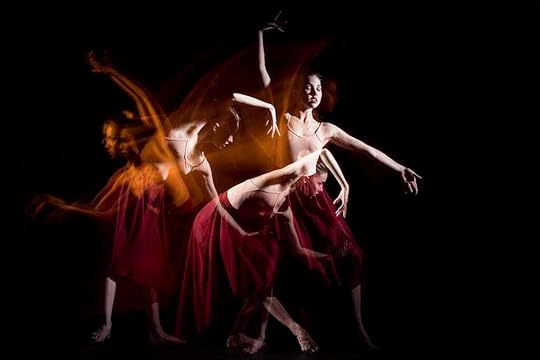
Lately, it feels as if the world is unraveling. Every headline, every conversation, every anxious social media post repeats the same refrain — things are falling apart. The new administration is making sweeping changes, institutions are being gutted, and uncertainty hangs in the air like a brewing storm, ready to unleash its fury at any moment. People are panicking, clinging to fear like a life raft in a raging sea.
And yet, here I sit, feeling the same fear tighten in my chest, the same anxious thoughts pulling at my mind. I feel the urge to fight, to lash out, to take up arms against the uncertainty. To do something — anything — to push back against the chaos. But then I take a breath and remind myself — this has always been the nature of things. Chaos is never as far away as we like to believe. It waits just beyond the illusion of order, ready to spill over the edges of our carefully constructed lives. And when it does, we act as if it’s some great violation, rather than the return of something ancient and inevitable.
Alan Watts once wrote, “The more a thing tends to be permanent, the more it tends to be lifeless.” We forget that everything — governments, economies, societies — are living processes, not fixed structures. They grow, evolve, decay, and are reborn. To expect stability in an ever-changing world is like expecting the ocean to hold still.
It won’t. It never has.
So I ask myself: What do I actually control? The answer, of course, is not much. I cannot dictate the course of a government. I cannot slow the march of time or force things to remain as they were. But I can choose how I meet the moment.
I can choose to move with change instead of against it. I can choose not to let fear paralyze me, even as I watch those in power tear things down with reckless abandon. Destruction is infuriating — it makes me want to scream, to fight, to demand that things be made right. But even in the wreckage, there is opportunity. If the old world is crumbling, then we are the ones who must lay the foundation for something stronger, something better. And as frustrating as that is, as much as it burns to see what’s been lost, it’s the only thing we truly can do. Watts also said, “To resist change, to try to cling to life, is like holding your breath: if you persist you kill yourself.” So instead, I exhale. I let go of what I cannot hold, and I turn my attention to what can be built in its place.
The world may feel like it’s unraveling, but it is not simply falling apart — it is reshaping itself. And while we may not control the storm, we are not powerless within it. We do not give up in despair. We do not shrink back in fear. Instead, we put our hands in, we shape what comes next, we guide the world toward something better. This is the dance — not passive acceptance, but active engagement with the ever-changing flow of life.
So today, I dance — not away from the chaos, but into it.
[image error]Dancing with Chaos was originally published in MojoWriter on Medium, where people are continuing the conversation by highlighting and responding to this story.
November 26, 2024
I Try to Practice Mindfulness
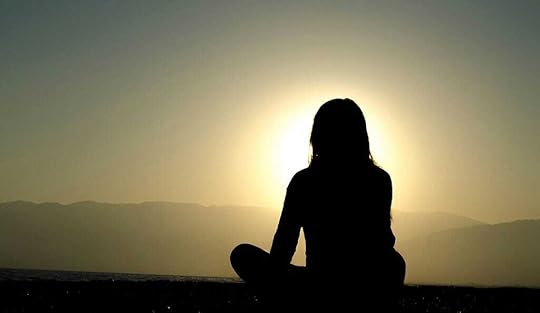 Photo by Dingzeyu Li on Unsplash
Mindfulness — the art of being truly present, here and now. To cultivate it in daily life, one must begin with the simple act of attention. Not as a grim duty or a spiritual exercise, but as an exploration, a playful curiosity about this moment, as it unfolds.
I tell this to myself, as I channel my inner Alan Watts.
First, I imagine him to say, “recognize that mindfulness is not about achieving something. It is about noticing what already is.” A starting point could be your breath. You don’t need to control it, for your breath breathes itself. Sit quietly for a moment and simply observe the rhythm of inhalation and exhalation. Feel the air moving through your nostrils, the rise and fall of your chest. This, you see, is an anchor — a way to come back to the present whenever your mind drifts.
As you go about your day (my inner Alan Watts tells me), mindfulness can be woven into the most mundane activities. Washing dishes, for example, can become a meditation. Feel the warm water on your hands, the texture of the soap, the sound of the running tap. (This is why I don’t mind doing the dishes.)
Walking, too, becomes an opportunity to feel the earth beneath your feet, to notice the sway of your arms, the sounds of the world around you. (This is why I like taking solitary walks.)
I imagine Alan telling me that “the key is to avoid labeling these experiences as ‘good’ or ‘bad.’ Simply notice them.” The moment you try to force mindfulness, you turn it into yet another task, another thing to “get right.” But life, as Alan would say, is not a riddle to be solved; it is a song to be sung.
And when you inevitably find yourself lost in thought, distracted or overwhelmed, be gentle with yourself. The act of noticing that you’ve wandered off is, itself, mindfulness. In that moment, you are aware of awareness.
Ultimately, mindfulness isn’t something separate from life. It is life. It is the art of realizing that you are not apart from this flowing moment but an intrinsic part of its dance. The wind doesn’t have to try to blow; it simply does. So, too, let mindfulness arise naturally, as an expression of your own being.
And with that, my inner Beavis and Butthead start going, “Heh heh, heh, heh heh heh, he said ‘blow.’”
[image error]I Try to Practice Mindfulness was originally published in MojoWriter on Medium, where people are continuing the conversation by highlighting and responding to this story.
November 5, 2024
Finding Calm in the Midst of Chaos
These days, it can feel as if the world itself is at war, spinning in a frenzy that threatens to pull us under. The future seems uncertain, and with that uncertainty, fear arises — fear that the things we hold dear will crumble, that the freedom we cherish will slip through our fingers. It’s natural to feel disillusioned and angry, perhaps even betrayed by those who allow such things to happen. But what if, instead of getting lost in the storm, we found a way to touch the peace that lies beneath it all?
Let us consider the nature of peace. We often think of it as a quiet, tranquil environment — one free of conflict or disturbance. But true peace is not a place, nor is it dependent on what happens around us. True peace is the depth of an ocean, the boundless expanse of the sky. It is something that we are, not something we must seek outside ourselves.
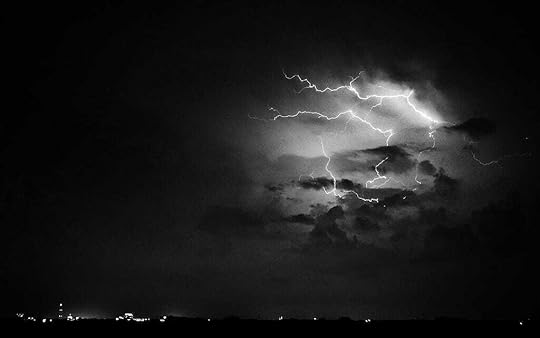
Imagine yourself as the sky, vast and open. Within you, clouds of thought, emotion, and worry drift and gather. Storms arise, lightning flashes, thunder rumbles — but all of it passes. The sky remains untouched, unchanged by the drama unfolding within it. This is the true nature of peace: an inner stillness that doesn’t depend on external calm, but rather welcomes everything without resistance, without losing its essence.
Of course, it’s easy to feel that life’s storms are too fierce, that the pressure is too intense. We may think we’re on the verge of being crushed by the weight of it all. But in those moments, remember that even the fiercest storms pass. All things in life are impermanent. No empire, no movement, no leader lasts forever. And just as they come, they will go. We are not here to fight the tides of history but to find within ourselves the strength to meet them with grace and wisdom.
When the world is in turmoil, our greatest act of courage is not to run away or lash out, but to cultivate that calm center within us. This isn’t to deny the suffering in the world or to turn our backs on others. On the contrary, when we find stillness, we can move through life with clarity and compassion, able to see beyond our fear and anger, able to act wisely rather than react impulsively.
In times of great upheaval, remember that what you are — what you truly are — cannot be touched by any outside force. You are the awareness in which all these events arise and dissolve. This awareness is boundless, open, and unshakeable. It allows you to feel deeply without being overwhelmed, to care without becoming consumed. And from this place, you can bring the light of calm and kindness into the world, even as the storms rage around you.
So, if you feel the urge to flee or despair, pause. Close your eyes, breathe deeply, and remember the sky within you. Let the clouds of anger, fear, and frustration drift by. You need not push them away, nor cling to them. Simply allow them to be, as the sky allows every cloud to pass. When you touch that boundless, peaceful awareness, you bring a little more peace to the world itself.
And that is no small thing.
I hope these words offer some solace and perspective to those who need it most. Each person who touches that place of inner calm becomes, in their own way, a quiet lighthouse amid the storm, guiding others back to their own unshakable peace.
[image error]Finding Calm in the Midst of Chaos was originally published in MojoWriter on Medium, where people are continuing the conversation by highlighting and responding to this story.
October 30, 2024
The Art of Sleep
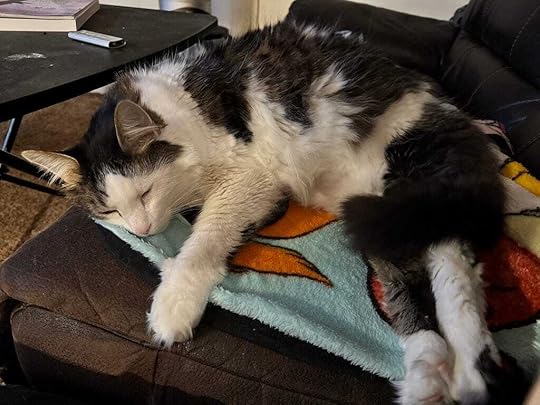
You know, going to sleep is a bit like falling into the arms of life itself — surrendering, letting go of the day, trusting that you will be caught.
As you lie there, try not to think too hard about falling asleep, for it’s rather like trying to remember a dream; the more you chase it, the faster it flees. Instead, invite yourself to simply be. Notice the rise and fall of your breath, the soft weight of your body against the bed, the gentle rhythm of the dark.
Now, imagine yourself as a drop of water in a great river, flowing effortlessly along. You are both that single drop and also the entire river, moving through valleys and plains, winding gently towards the vast ocean. There is no hurry in this river, no particular place to be. It just flows — complete, unhurried, at ease.
Or perhaps think of yourself as part of the vast night sky, filled with stars. Each of these stars is a spark of light, a reminder that even in darkness, there is beauty. You are not separate from these stars but a part of them, connected through the simple miracle of existence. In this vastness, all your worries are like clouds passing by — temporary, insubstantial.
In the end, realize that sleep isn’t something to do; it’s something to allow. It’s a journey without effort, a return to a place that has always been within you. And as you let yourself drift, remember that this moment, as you lie here, is perfect just as it is — quiet, peaceful, whole.
[image error]The Art of Sleep was originally published in MojoWriter on Medium, where people are continuing the conversation by highlighting and responding to this story.
Letting Go is not Giving Up
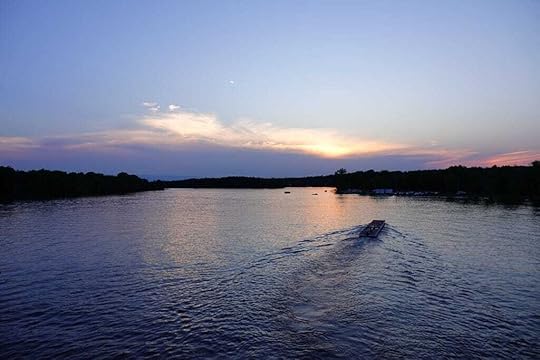
The art of letting go — a theme that flows through so much of life, yet often misunderstood in our usual ways of thinking. You see, most of us are trained to approach life as if it were something to be grasped, controlled, or manipulated. We cling to ideas, identities, and goals with a kind of fierce attachment, as though holding on will give us certainty or security. But in doing so, we miss the essential nature of life itself, which is fluid, ever-changing, and deeply interconnected.
Letting go doesn’t mean giving up or becoming passive; rather, it’s about recognizing that the harder we cling, the more life slips through our fingers. It’s akin to trying to hold water in your hand — grip it too tightly, and it escapes. Open your hand, and it flows through freely, while still touching you. In this way, letting go allows us to move with the natural currents of existence, rather than struggle against them.
In contrast, the standard way of thinking tends to be linear, analytical, and driven by a need to control outcomes. It often sees life as a series of problems to be solved, goals to be achieved, and obstacles to be overcome. This mindset is rooted in the idea of a separate, isolated self, constantly at odds with the external world, trying to bend it to its will.
But when we embrace the flow of life, we come to see that we are not separate from it at all. The river of life is not something outside us, but something we are intrinsically part of. To “let go” is to trust that the river knows where it’s going, that life itself is intelligent and dynamic, and that we can relax into its movement.
So, letting go is really about a shift in perception — allowing ourselves to be as we are, in this moment, and allowing life to unfold without constantly trying to interfere. It’s a profound freedom, a kind of surrender that is far from passive; it’s actually the most alive thing you can do. It’s moving from a state of resistance to a state of harmony with the whole of existence. And when we do this, we often find that life takes us in directions far more wondrous than anything we could have planned or controlled.
[image error]Letting Go is not Giving Up was originally published in MojoWriter on Medium, where people are continuing the conversation by highlighting and responding to this story.
July 2, 2024
Diversify Your Creativity
 Refuse to be classified.
Once upon a time, when I was a young lad of 16, I set my sights on being a Science Fiction author. I’d been writing stories since the 2nd grade, but when I was 16 I was on a beach in California, wandering up and down the shore barefoot, writing a story in my head.
The whole thing came to me in a rush. I went back to the apartment, whipped out my trusty Ticonderoga №2 pencil, sharpened it to a razor point (which immediately broke), and scribbled down 50 college-ruled binder pages some of the best stuff I’d ever written.
I spent the better part of that month typing it out, rewriting and refining, and finally popped it into a manila envelope (with a properly stamped, self-addressed return envelope) and sent it off to a science fiction magazine.
It got rejected. Of course.
But the kind editor, George H. Scithers, wrote me a friendly letter telling me what was wrong and how to fix it, and encouraged me to keep writing. Because he could tell — it was rather obvious — I was a young teenager.
That was it. For the next umpteen years I was dead set to become a successful Science Fiction author. That’s what I concentrated on. That was my only vision of success.
In college, I wrote on the college paper — but I didn’t want to be a journalist, so I didn’t care. I was a Science Fiction Writer.
After college, I wrote computer software manuals and articles for tech magazines, but I didn’t care. I was a Science Fiction Writer.
I wrote articles for photography magazines. I wrote speeches for upper management presentations. I wrote instructions on how to repair escalators. But, I didn’t care … I was a Science Fiction Writer.
So when I got my big break, and an actual New York publisher accepted one of my manuscripts to be published, I was ecstatic. I’d made it. Sure, I’d had some short stories published before, but this was a book. This was the real deal.
Yeah, it happened. And then nothing happened.
Life went on. I was a Science Fiction Writer, but so what? It led to nothing. Years of focus, of heartache, of sacrifice, and … nothing. Nobody cared. And the worst part of all, neither did I. After the thrill of it happening, there was an emptiness that lingered, and I wondered just how much of my life did I waste?
It took me a while to realize that it wasn’t writing Science Fiction that made me happy in life. It was creating. Anything. The act of being creative.
So, I began creating anything that interested me. I wrote and created videos. I built websites and wrote blogs. I reviewed beer and tech and wrote articles about lizards. I wrote about childhood adventures that I didn’t realize were special until someone pointed out that I had a very unusual childhood. I became a “Content Creator” rather than a “Science Fiction Author.”
And that has led to much more happiness and fulfillment.
So that’s my takeaway from this article. I would advise young-up-and-coming creatives to diversify what they work on. Don’t pigeonhole yourself. Do what interests you and gives you joy, sure, but mix it up a bit. Write, make videos, take pictures, draw cartoons, create things that satisfy you.
This is exactly what I would have told my angst-ridden 16-year-old geeky teenage self if I had a time portal. I’d say, “Don’t just write Science Fiction.”
I’d tell myself: “Follow all of your dreams.”
And don’t wait until you’re in your 40’s.
[image error]Diversify Your Creativity was originally published in MojoWriter on Medium, where people are continuing the conversation by highlighting and responding to this story.
June 25, 2024
June 25th, 2024
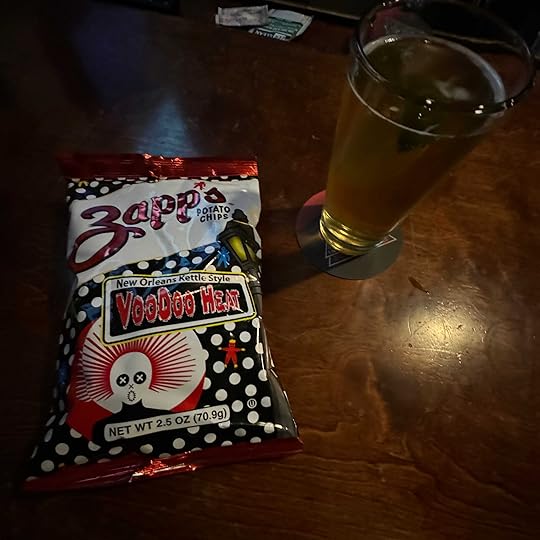
I’m sitting at my neighborhood pub, drinking a “pickle Schlitz” and eating Zapp’s “Voodoo Heat” potato chips. The Offspring is playing over the sound system and on the TV is some movie where a girl is killing people and chopping them up. She’s taking all the pieces and sewing them together to make a friend.
I avert my eyes. I don’t want to see the rest.
Outside lightning is striking and thunder is making terrific booms. Various phones are making that high pitched keening that warns of severe weather.
Across the well used and seasoned wood, across from my little portable keyboard where I’m typing this into a word processor on my phone, there is a stack of coasters next to two packets of something called “Beer Clean.” Directly across from me is the large metal door to a large walk-in refrigerator where all the beer is, and on the silvery surface are probably 300 odd beer caps. I don’t know if they’re magnetically attached or glued. To the left of them is a collection of stickers. They’re beer related but the light is too dim, and they’re too far away from me, to read what they say — except for one: MONON.
Next to the industrial sized refrigerator door is the line of taps, ten of them, all with different handles. Above them are more stickers, and to each side are eyes. Giant googly eyes.
Hanging from the ceiling above the corner of the beer taps is a plastic human foot, severed, with painted blood and a section of bone projecting from the ankle. It’s affixed to the ceiling by a thick chain with a manacle — it looks like whoever it belonged to chewed off his own foot to get away.
Below that, facing away from me, toward the other section of the L-shaped bar, is a head in a jar. It kind of looks like a Howdy Doody mask and the liquid surrounding it is slightly red, as if blood had eked out of the head and tainted the supposed formaldehyde.
Directly behind me, hanging from the ceiling, is what looks like a full-sized human who’d been caught by a giant spider and wrapped in webbing, like real spiders do to flies. I don’t remember if there’s a giant plastic spider up there or not. I don’t want to turn around to look —
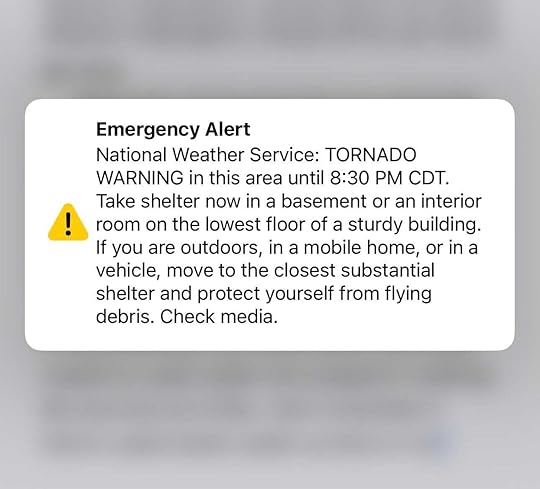
I was just interrupted by a tornado warning. We’ve been told to go into a shelter immediately. No one is doing so. No one cares. No one believes it.
We’re all too used to false alarms. Someone just went outside to check. Another person says there is a tornado by one of the local groceries stores.
I’m going to pay my tab and go home where I have a basement.
20 minutes later, tornado sirens still going off. I have gathered all three cats into the basement with me, and they are freaked out. Except for the oldest and smartest one, who is stoic about it all.
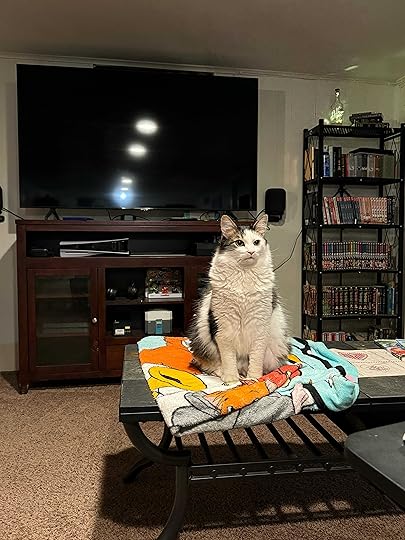 Rufio is taking it all in stride.
An hour later, and everything supposed to have been over and done with, the tornado sirens keep going off again. I have let the cats back upstairs, but now they want to come back down into the basement because it’s more interesting down here.
When I started this blog post I thought it was going to be a boring one. Strange how things turned out. As far as the storm is concerned, it’s past, and I now have a really nice sunset.
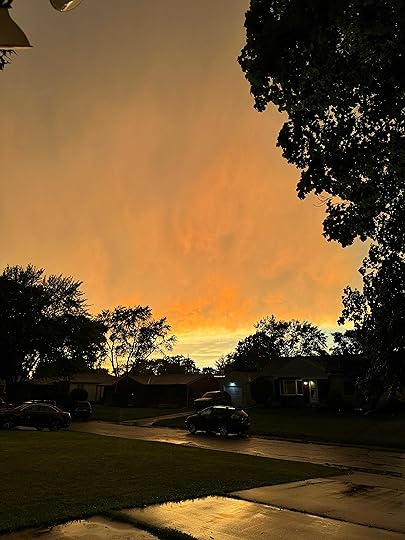 [image error]
June 25th, 2024 was originally published in MojoWriter on Medium, where people are continuing the conversation by highlighting and responding to this story.
June 24, 2024
It’s a Wide Angle World
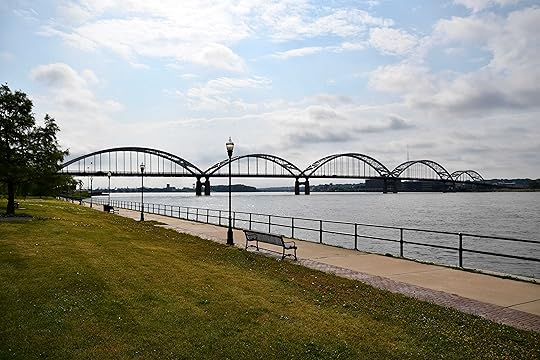
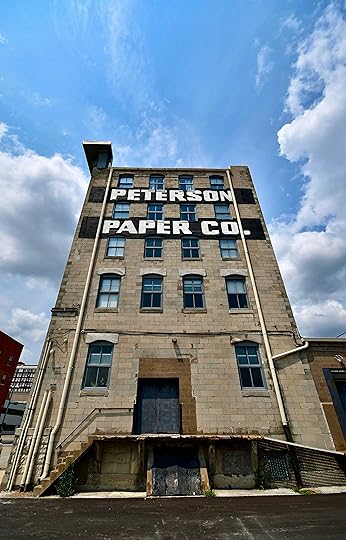
I’ve been a photographer since the late 1970s, and for some reason, I’ve always been oriented toward telephoto lenses. 35mm is the widest I’d ever gone, and that was only recently. It was always 50mm, 70mm, 105mm, or longer. I took lots of pictures of birds and squirrels, used macro zoom to capture objects for work, or portraits with zoom for maximum bokeh.
But then I upgraded my phone to an iPhone 15 Pro Max with that super wide-angle lens and started playing around with that. Then I bought one of those higher-end Insta360 cameras (for work, to get pictures of interiors of structures), and in using these, I realized something:
I have been seriously limiting myself.
I have no idea why I’d never been interested in wide-angle lenses, but I’m glad, really, that I’d avoided them. Why? Because now, after all these years, I have something new to explore: reality.
Our eyes are wide-angle lenses. The world is a wide-angle experience. Telephoto lenses, in a way, are a filter that allows you to focus on a detail — which is fine — but a wide-angle image gives the whole picture. It captures the whole slice of time.
I know, I know. It’s obvious. Duh, Jerry. But my point is, here I am at 63 years old, and now I get to do something new. That is a gift from my earlier self. It saved something new for me to learn and grow.
I’ve started simple, with a 10–20mm Sigma zoom lens for my Nikon that I bought used for (comparatively) next to nothing. This is in contrast to my bazooka-sized 600mm Sigma zoom. My original impetus was that I needed a lens for the Nikon to capture something large in a small space for work. But after work, I took it out and started exploring the rest of reality with it.
I love it. It’s made me an instant wide-angle-phile.
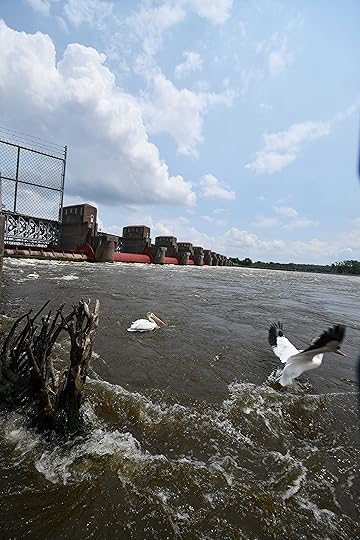
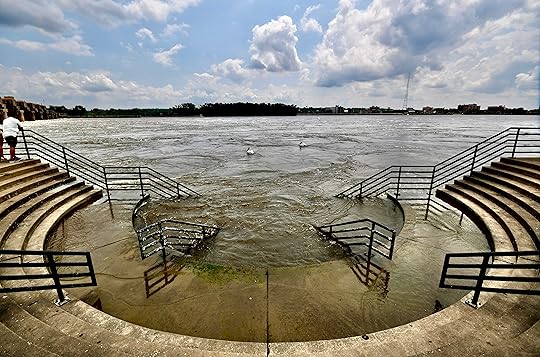
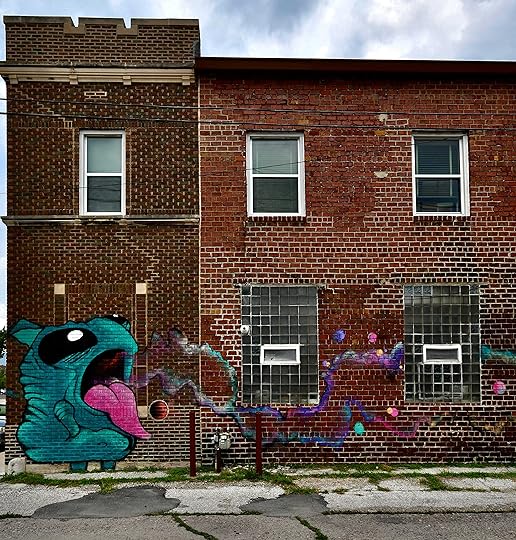
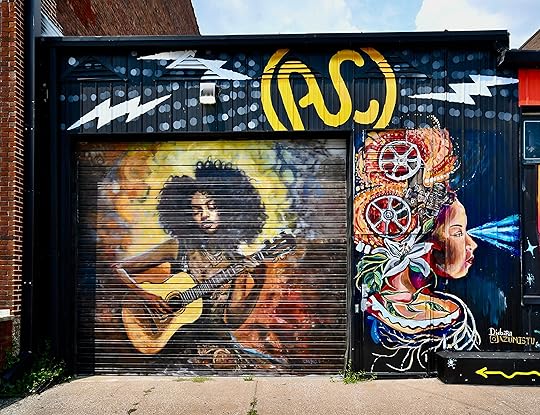
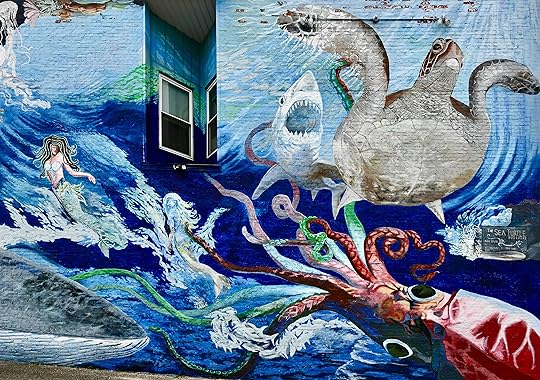 [image error]
It’s a Wide Angle World was originally published in MojoWriter on Medium, where people are continuing the conversation by highlighting and responding to this story.
June 23, 2024
Well, I bought a bicycle.
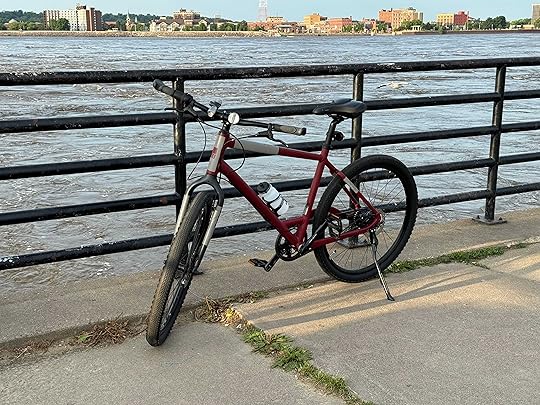 Used, custom built Momentum UX
It’s a nice one, and I got a great deal on it because it’s used. I had been thinking seriously about getting a bike for over a year. Then, while I was out taking pictures along one of the local riverwalks, I met a guy who looked younger than me but was significantly older. He was on a bicycle. We talked for a good 45 minutes, and all the while, I was ogling his bike.
His was one of those electric-assist bikes that you have to pedal — it’s not like a moped — but it senses when you’re struggling and gives you some help, especially up hills. What made his bike special was that it didn’t use a chain but instead used a belt, and all the gears were inside the back wheel hub or drum.
I was sold. But after researching the prices and reading horror stories about the cheap ones, I balked. I could make that investment, but only if I knew I’d actually use it. So, I made myself a deal: if I got a regular bike and actually used it for a year, then I’d splurge and get one of the fancy electric ones.
At the local bike shop, I found a bike with the belt instead of the chain, and the gears all internal — everything low maintenance with no derailleur to break and no oiling required. Even better, it was used, so it was half the price of a new one.
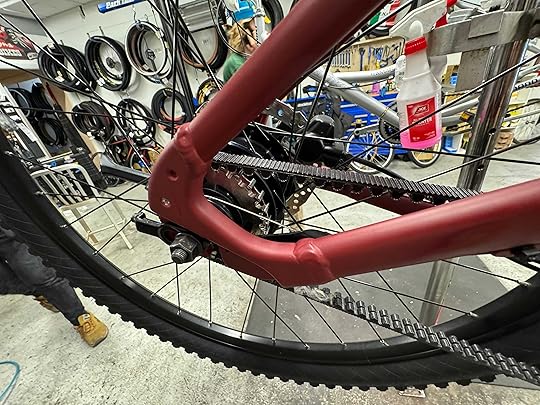 No chain, no oiling, no derailleur. I love it.
I took a test ride, loved it, and bought it. They put a more comfortable seat on it, and I’ve been riding it around enough to become saddle-sore. On a whim, I bought one of those noseless padded seats, hated it, and immediately took it back off. I’ll tough out the saddle soreness. After all, I need to harden my backend anyway.
This is the first time I’ve been bike riding in over a decade. The last time was on rented bikes in a forest in Finland. Before that, we’re looking back over 30 years to when my ex and I would go bike riding with our kids.
My goal is to get in better shape, and this will definitely help with that. My secondary, more nefarious goal is to get to the point where I can bike ride to my neighborhood pub and not have to worry about driving a car home afterward.
You have to go with what motivates you, you know.
[image error]Well, I bought a bicycle. was originally published in MojoWriter on Medium, where people are continuing the conversation by highlighting and responding to this story.