
Tim Warnes's Blog: My Life in Books
September 17, 2026
“Clip-Clop” by Nicola Smee | Picture Book Review
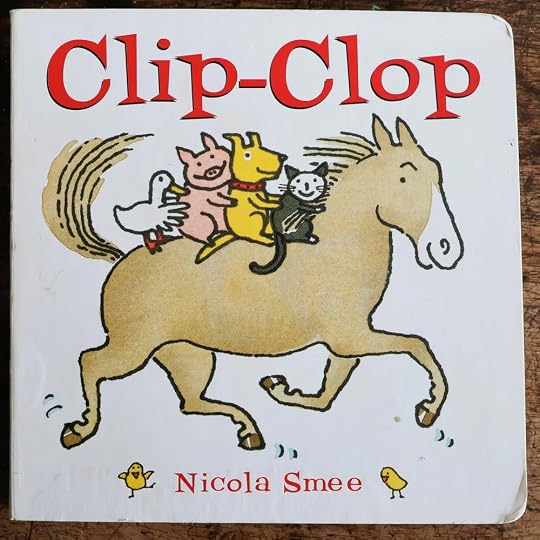 Clip-Clop by Nicola Smee(Boxer Books, 2007)Good to Read for:turning storytime into a gameexpressive, familiar charactersdeveloping language skills
 My friend called out for various items needed for the new toddler group at church. His wishlist included the classic picture books We're Going on a Bear Hunt and The Very Hungry Caterpillar. They've endured as firm family favourites because they really hit the mark. Words and pictures working in unison to create interactive stories that invite youngsters to join in.
The next book on the wish list had me scratching my head: Clip-Clop! by Nicola Smee (Boxer Books, 2007). It was a new one to me, but I added it to my order anyway. Now that I've read it, I can say, “Yes, yes, YES!” Here's another fabulous book for preschoolers to enjoy. Like Caterpillar and Bear Hunt, Clip-Clop! is everything a book for young children should be: engaging, interactive, expressive, and fun!
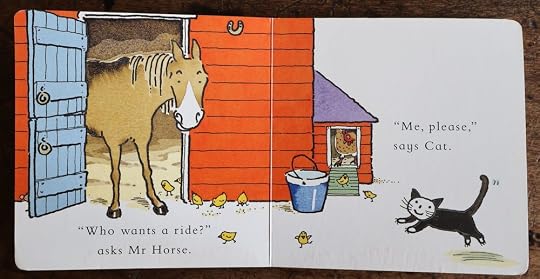
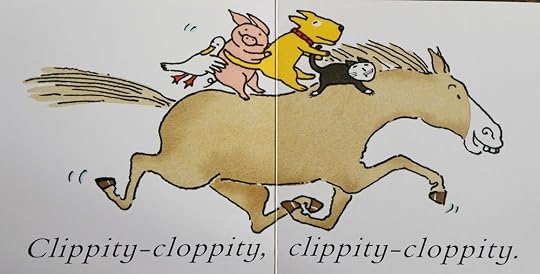
“Who wants a ride?” asks Mr Horse.
“Me please,” says Cat.
Here comes the magic ingredient, the repeated refrain that reassures kids and encourages them to join in and develop their language skills:
Clip-clop, clippety-clop…
“I want a ride too, please Mr Horse,” says Dog.
“Up you get,” says Mr Horse.
The characterisation, language and phrasing are delicious in their simplicity, and I love how the game is already set up with friendly Mr Horse acting as a stand-in adult.
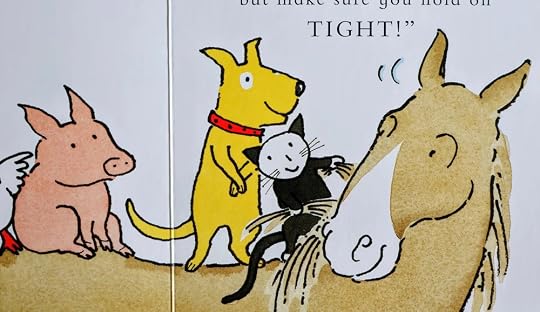
As more familiar farm animals climb aboard, they urge Mr Horse to run faster – hold on TIGHT! Kids will delight as Mr Horse speeds up to a gallop before suddenly skidding to a halt, sending his friends flying through the air.
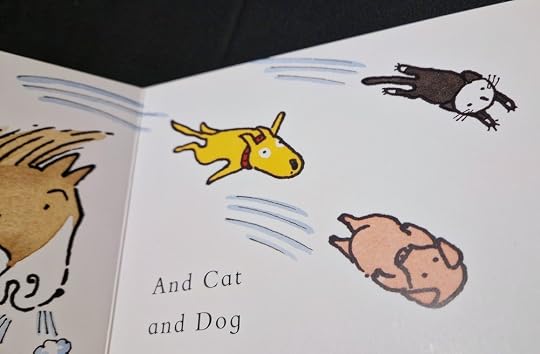
"Oh dear!
Oh dear!
Oh dearie me!”
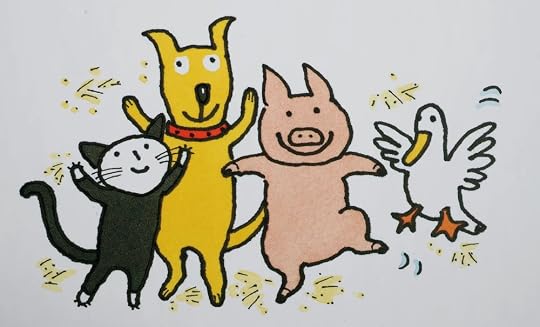
But there’s no need to worry. Mr Horse’s friends land safely in a bed of straw. They’re are all smiles and joy! “Up you get!” laughs Mr Horse.
And like all little kids, they want to play the game AGAIN! Hold tight, everyone!
I'm disappointed I didn’t discover Clip-Clop when my boys were small. Published in 2007 (too late for Noah), it would have paired perfectly with a favourite family game played with Great-Grandad, where he’d bounce the kids on his lap like a horse, getting faster and faster before gently tumbling them to the floor.
“This laugh-out-loud picture book is first-rate,” writes School Library Journal. It encourages active participation, giving you permission to let go of your inhibitions, play and have fun. Like the animals in the book, your kids will ask for Clip-Clop! (and to be bounced about like galloping Mr Horse) again and again! And when you do, you’ll be creating memories that last forever.
 3 practical tips for sharing Clip-Clop with your child
 When reading with your own kids, play and have fun! Bounce and jiggle them on your knee/lap. Let them experience the thrill of riding Mr Horse, just like Cat, Dog, Pig, and Duck.
In group readings, get the kids trotting – then galloping – on the spot before tumbling to the floor.
Help develop language skills by asking your child to join in with the clippity-clop refrain. (While you're at it, get a pair of coconut halves and really go to town with those hooves!)
Clip-Clop by Nicola Smee(Boxer Books, 2007)Good to Read for:turning storytime into a gameexpressive, familiar charactersdeveloping language skills Copyright © 20007 Nicola Smee (Text & Illustrations)From CLIP-CLOP by Nicola Smee(Boxer Books) VISIT NICOLA SMEE'S WEBSITE GOOD TO READMore interactive picture books pre-schoolers LOVE!The Very Hungry Caterpillar by Eric Carle
Tip Tap Went the Crab by Tim Hopgood
How Kind by Mary Murphy
Tiny Little Fly by Michael Rosen and Kevin Waldron
Say Hello to the Dinosaurs! by Ian Whybrow & Tim Warnes
BUY THE BOOKPowered by Bookshop.orgSupporting independent bookshops “A book full of fun.”– Books for Keeps
“A delightful repeating story that's perfect for little ones.”– Book Trust
BUY U.K. BUY U.S.A. * I EARN COMMISSION FROM THESE LINKS #AD/AFF SOURCESClip-Clop by Nicola Smee (Boxer Books, 2007) Looking for more quality picture books to share with your child? Sign up for recommendations and tips. SIGN UP HERE © 2026 BY TIM WARNES(UNLESS OTHERWISE ATTRIBUTED)****USE OF THIRD-PARTY COPYRIGHTED MATERIAL FALLS UNDER FAIR USE/FAIR DEALING PRACTICE

February 6, 2026
“I Am Wriggly” by Michael Rosen & Robert Starling | Picture Book Review
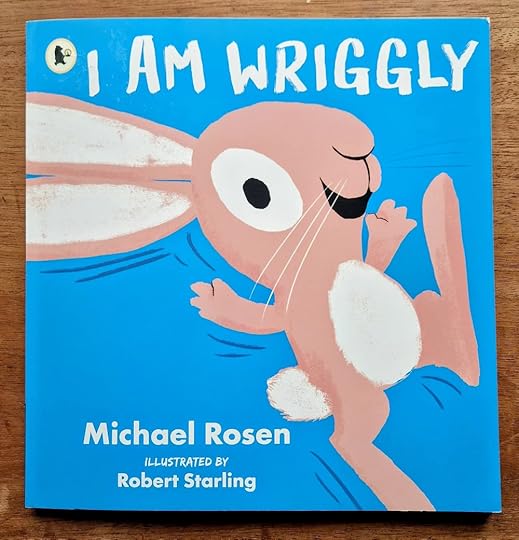 I Am Wriggly by Michael Rosen, illustrated by Robert Starling(Walker Books, 2023)Good to Read for:Celebrating all kids’ wriggly energy!Exploring emotionsA quick bedtime story I Am Wriggly is a really fun little book! Just look at that cover – I can’t imagine a kid who wouldn’t be instantly attracted to that adorable rabbit with its big, friendly eyes. And as
Kirkus
notes, this bunny is 'a stand-in for squirmy, fidgety little ones everywhere.'
I Am Wriggly by Michael Rosen, illustrated by Robert Starling(Walker Books, 2023)Good to Read for:Celebrating all kids’ wriggly energy!Exploring emotionsA quick bedtime story I Am Wriggly is a really fun little book! Just look at that cover – I can’t imagine a kid who wouldn’t be instantly attracted to that adorable rabbit with its big, friendly eyes. And as
Kirkus
notes, this bunny is 'a stand-in for squirmy, fidgety little ones everywhere.' I am wriggly. REALLY wriggly. Wriggly, wriggly, wriggly.

I Am Wriggly is one in a series of four, small rhyming books by Michael Rosen and Robert Starling: I Am Hungry, featuring a squirrel (previously recommended), I Am Angry (featuring a feisty kitten) and I Am Happy (featuring a puppy). Each title highlights and explores an emotion that young kids everywhere will relate to. The rhymes are fun and rambunctious (as you would expect from former Children's Laureate Rosen), and Starling’s endearing illustrations bring energy, life and humour to the party. In other words, these books are guaranteed to charm small children.


The effervescent rabbit is so wriggly that its whiskers wiggle and its ears jiggle. He wriggles ‘round and round’ and on the ground. Throughout the book, Rosen, the legendary master of rhymes, creates small scenarios which children will immediately recognise from their own lives: playing with a teddy bear, joggling balloons (I knew there’d be a noun for that activity!), messing about with odd socks, emptying the contents of a toy box to get to the prize at the bottom, and general pre-school hi-jinks!

All kids are wriggly and giggly, but it’s true that some kids are more wriggly than others. Many kids live with the challenge of ADHD or other neuro-divergent conditions. So I think the decision (deliberate or not) to show the rabbit wearing ear defenders is a really nice touch. Many wriggly, giggly kids wear such ear protection to prevent becoming over stimulated, and seeing themselves reflected in a positive way is affirming.
Then comes a phrase that sums up the feelings of excited kids everywhere: If I don't stop, says the little pink rabbit, I think I'll burst.
The I Am series stands out for its direct approach. Unlike picture books that encourage kids to explore complex emotions like loss and grief (for example, The Suitcase), take them on rollicking adventures (There’s a Tiger on the Train), or offer quiet contemplation (Perdu), these ones are straightforward. They hold a mirror up to kids and say, Hey, I know you have these emotions. You know you have these emotions. So let’s play and have fun talking about it!
Indeed, that’s Rosen’s hope for the books. In a note at the start of each book, he invites grown-ups to use the book as a springboard to play and connect with their kids:
“By playing with words and phrases, we show children that they can explore many different ways to express themselves.I believe that doing this in a fun way helps children to enjoy language and feel free to say what they think and feel.”
Learning to express ourselves clearly and appropriately is a lifelong journey. And these books are a great way to help your child along the way.
They're also fun little last-minute stories. At the end of bedtime stories, my children would usually plead for “just one more story, Dadda, please, just one more.” I enjoyed our storytimes as much as they did, so I never liked to disappoint. At such a moment, it's always good to have something short and sweet on standby. This series is absolutely perfect. Fun and joyous, they’ll even make tired grown-ups smile.
 3 practical tips for sharing I Am Wriggly with your child
 “If you can think of new rhymes, new ways to play with the words, do it!” [Michael Rosen]
Use up some wriggly energy and play at being bunnies! Hop and jump, twitch your nose and stamp your feet – just like that wriggly, giggly rabbit! (Best to do this earlier in the day or at the start of bedtime stories!)
Think about names for the rabbit. Which sound most bouncy? Now help your child draw the rabbit shouting his name in a speech bubble.
I Am Wriggly by Michael Rosen, illustrated by Robert Starling(Walker Books, 2023)Good to Read for:Celebrating all kids’ wriggly energy!Exploring emotionsA quick bedtime story Copyright © 2023 Michael Rosen (Text) & Robert Starling (Illustrations)From I AM WRIGGLY by Michael Rosen & Robert StarlingReproduced by permission of Walker Books Ltd, London, SE11 5HJwww.walker.co.uk Visit Michael Rosen's Website Visit Robert Starling's Website GOOD TO READPicture books pre-schoolers will LOVE!Tip Tap Went the Crab by Tim Hopgood
How Kind by Mary Murphy
Tiny Little Fly by Michael Rosen and Kevin Waldron
Max at Night by Ed Vere
Say Hello to the Dinosaurs! by Ian Whybrow & Tim Warnes
BUY THE BOOKPowered by Bookshop.orgSupporting independent bookshops “a fantastic choice for young readers who need to move and groove”
“I Am Hungry” by Michael Rosen & Robert Starling
How “Tiny Little Fly” by Michael Rosen & Kevin Waldron will empower your child
Super Isaac – What makes him different, makes him great!
SOURCESI Am Wriggly by Michael Rosen & Robert Starling (Walker 2023)Walker BooksKid Review: I Am Wriggly by Michael Rosen, YA & Kids! Books CentralI Am Wriggly: Candlewick Press Looking for more quality picture books to share with your child? Sign up for recommendations and tips. SIGN UP HERE © 2026 BY TIM WARNES(UNLESS OTHERWISE ATTRIBUTED)****USE OF THIRD-PARTY COPYRIGHTED MATERIAL FALLS UNDER FAIR USE/FAIR DEALING PRACTICEJanuary 16, 2026
“Du Iz Tak?” by Carson Ellis | Picture Book Review
 Du Iz Tak? by Carson Ellis(Walker Books, 2017)Good to Read for:Empowering kids as storytellersExploring the seasonsSparking curiosity A child doesn't need to understand every word to follow a story. But what happens when they understand none of the words—when it's in a language alien even to adults? Enter a cast of teeny-tiny insects in Carson Ellis's enchanting Du Iz Tak? (Walker Books, 2017).
Du iz tak? asks a nattily-dressed damselfly, shown pointing at a green shoot (like the curled frond of a fern) sprouting up beside a large, fallen log.
Ma nazoot, comes the reply.
Ellis repeats her imaginary words and phrases, pairing them with images – bugs pointing at objects, emotions clear on their tiny bug faces – which help readers decode the text.
“You can go through the whole book this way,” says Ellis, “figuring out what words mean through context, going back and using the words you’ve translated to translate more. In this way, the book is kind of like a puzzle.”
The level of detail in the illustrations is spectacular! Ellis pulls out all the stops to create a believable, fully imagined world that reveals more of its secrets with each reading. (It was only while looking at it again for this review that I spotted the stick insect.)
There are bugs with hats and bugs holding handbags;
pipe-smoking bugs and one with a walking stick.
Bugs with books and deeply felt emotion.
It’s fun speaking bug! But the strength of the story lies in the fact that, as with wordless picture books like The Midnight Fair, it can be followed through the illustrations alone.
There are several story threads to follow through the pages of the book. But that curled, green shoot is the focal point for both the bugs and the main plotline.
As the shoot unfurls and grows, more critters gather around. They seem eager to climb the plant but are unable to reach even the lower leaves.
They’re going to need help.
Icky!
Icky!
ICKY!
Icky (a pill bug) opens the door of his big log home.
Icky – ask his friends – ru badda unk ribble?
Icky emerges with a long ladder.
Unk ribble! cheer his friends.
The following day, the three friends build a den in the growing canopy. But a spider arrives and spoils everyone’s fun by spinning its web over the plant and their treehouse structure. Tthe angry bugs shout and wave tiny clenched fists.
VOOBECK!
BOOBY VOOBECK!

Emotions run high, even for little bugs! Kids will identify with the small, put-upon characters and most likely cheer when the unexpected happens: With a sudden rush of feathered wings…
… The spider is gone and its web destroyed.
‘[Ellis’s] imaginary land is delightfully welcoming,’ notes The New York Times, ‘even if — or especially because — it is also a realistic world, one with joys and dangers, achievements and disappointments (not to mention pipe-smoking roly-polies).’
More bugs gather around as the plant (now several bugs tall) forms a huge bud which opens into a spectacular bloom. It is, remarks Kirkus Reviews, an ‘enthralling spectacle.’
Du iz tak?
Oooooh.
Unk gladdenboot!
Unk scrivadelly gladdenboot!

‘The setting never changes, but with every turn of the page, we witness a little play unfold before our eyes. Insects come and go, flowers bloom and wilt. Time passes and we watch as the scene is transformed by seasons, growth, death, and rebirth.’ [Quill & Quire]
To the grasshopper's mournful violin, the gladdenboot shrivels and the plant wilts and dies. It’s a bittersweet moment, quickly followed by the emergence of an angelic moth from the chrysalis (formed at the start by a bearded caterpillar), who enchants the grieving grasshopper with her swirling arabesques. Winter arrives: snow lies thick and silent. But not forever. As it recedes, new shoots appear. Du iz tak? asks a bug in boots and a bobble hat. Spring has returned, and with it, new stories.

Is this an easy read to share with children? Yes and no. Kids can be left to decipher and play with the story themselves. Or you can invest the time to share and explore it together. If in doubt as to how, try following Ellis’s own advice and narrate it:
“I'll say something like, "Two damsel flies approach the plant and wonder about it. 'Du iz tak? asks the first damsel fly. 'Ma nazoot,' replies the other, shrugging." The narration is designed to gently hint at the meanings of some of the words. At various points in the reading, I'll translate words that might help them figure out what other words mean. I don't tell them what "du iz tak" means, but the phrase repeats throughout the book and on the last page, when a cricket wanders out into a field of little plants, points to one of them, and asks, "Du iz tak?" I ask my audience what they think that means and by then they typically know. (It means "What is that?") That's probably been the most unexpected and thrilling thing about reading [this] book to kids: that the language part actually works! They're able to figure it out.”
– Carson Ellis interview with Let’s Talk Picture BooksBut what if it’s the end of a long day and you’re too tired to engage?
If you’re really running on empty, and have nothing left to give (let alone decipher the meaning of Du kimma plonk?!), choose something short and sweet as your bedtime story, such as one of the Moon and Back books. Then kiss your kids goodnight and leave them with Du Iz Tak? – and challenge them to spot the hidden stick insect!
3 practical tips for sharing Du Iz Tak? with your childReading the words aloud is fun. So follow the advice of Children’s Lit Love: Just put on your best silly accents and enjoy laughing with your kids.
Use Du Iz Tak? to spark curiosity about life cycles, food chains, and the seasons. Then get outside and explore!
The story is a fun prompt for creative writing opportunities for older children: encourage them to expand on one of the many subplots (or make up some bug language of their own).
Du Iz Tak? by Carson Ellis(Walker Books, 2017)Good to Read for:Empowering kids as storytellersExploring the seasonsSparking curiosity Copyright © 2017 Carson Ellis (Text & Illustrations)From DU IZ TAK? by Carson EllisReproduced by permission of Walker Books Ltd, London, SE11 5HJ VISIT CARSON ELLIS'S WEBSITE GOOD TO READ5 picture books featuring miniature worlds
The Hidden World of Gnomes by Lauren Soloy
Mina by Author & Illustrator
The Snatchabook by Helen & Thomas Docherty
Weasel Is Worried by Ciara Gavin & Tim Warnes
Sam Vole and his Brothers by Martin Waddell & Barbara Firth
BUY THE BOOKPowered by Bookshop.orgSupporting independent bookshops “Certain to ignite readers’ interest and imaginings regarding their natural surroundings.”– Kirkus Review
- Observer
BUY U.K. BUY U.S.A. * I EARN COMMISSION FROM THESE LINKS #AD/AFF RELATED ARTICLESHow Mole encourages curiosity and engages kids with nature
Why Eric Carle’s The Very Hungry Caterpillar is a classic
The Midnight Fair – a wordless picture book by Gideon Sterer & Mariachiara Di Giorgio
SOURCESDu Iz Tak? by Carson Ellis (Walker Books 2017) Let’s Talk Illustrators #6: Carson Ellis , Let’s Talk Picture Books, October 18, 2016Du Iz Tak? Kirkus ReviewsChildren’s Lit Love review, July 10, 2019The New York Times reviewDu Iz Tak? Review by Serah-Marie Mcmahon, Quill & QuireLet’s Talk Picture Books: Interview with Carson Ellis Looking for more quality picture books to share with your child? Sign up for recommendations and tips. SIGN UP HERE © 2026 BY TIM WARNES(UNLESS OTHERWISE ATTRIBUTED)****USE OF THIRD-PARTY COPYRIGHTED MATERIAL FALLS UNDER FAIR USE/FAIR DEALING PRACTICENovember 6, 2025
“The Elephant and the Sea” by Ed Vere | Picture Book Review
 The Elephant and the Sea by Ed Vere(Puffin Books, 2024)Good to Read for:Teaching the value of determinationConnecting generationsCelebrating community and teamwork
 I’ve been excited to share The Elephant and the Sea by Ed Vere (Puffin, 2024) for some time now. It’s a quiet, lyrical tale (with moments of drama and tension) that celebrates bravery and quiet determination. Unashamedly British in its setting – the rugged Cornish coastline – Vere has created a universal story about courage and calm determination. Cornwall really resonates with me. It’s somewhere I love, and Vere captures it so well. And he draws you into the story straight away by introducing his protagonist – a frail, old elephant.
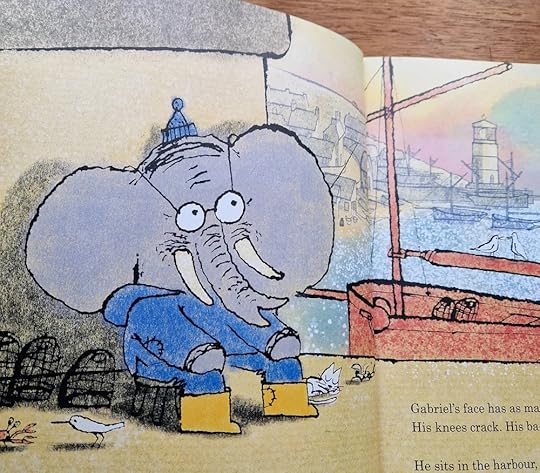
His name is Gabriel.
Milou, the sea cat, purrs by his side.
Gabriel’s face has as many lines as the sea has waves.
His knees crack. His back creaks.
I love this introduction! Vere is a seasoned pro and knows just how to hook his readers. It’s so intriguing – who wouldn’t want to know more about the old elephant by the sea? Throughout the story, Vere adds layers of depth and beauty – both visual and literal (for example, by referring to Milou as ‘the sea cat’ rather than simply ‘a cat’ – kids will love spotting him throughout the story, by the way!).
Many years ago, before you were born,
when [Gabriel] was a young elephant…
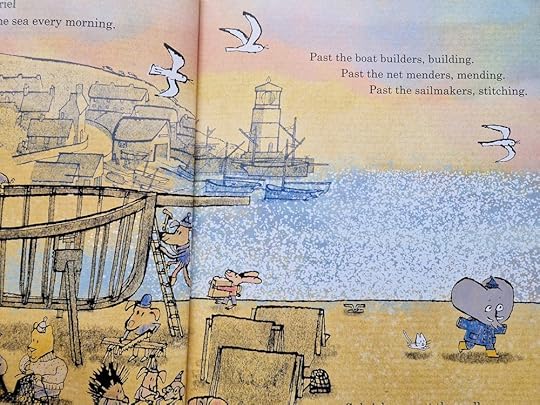
With a well-placed page turn, we go back in time to meet Gabriel as a youngster, wearing the same attire but fresh-faced and fleet-footed. He runs down to the sparkling sea, past the boat builders and fishermen, to the thing he loved most in all of the world… the lifeboat!
Young Gabriel desperately wants to join the lifeboat crew.
“You’re a bit young, lad.
Come back when you’re older.
Come back when you’re stronger.”
“I will!” said Gabriel.
Gabriel’s quiet determination is inspiring. He’s not put off by this setback. Instead, he uses the opportunity to immerse himself in his dream.
He read books about wild seas,
ferocious storms and daring rescues.
He practised rowing.
“Heave away, haul away, heave-HO!”
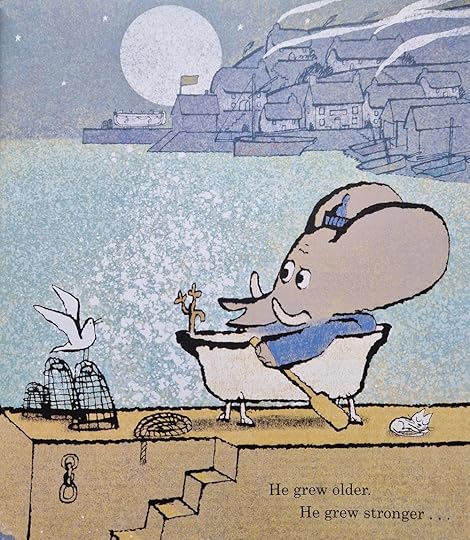
Gabriel grows older and stronger until the day comes when he’s ready to join the lifeboat crew. But – oh no! – now, he’s too big for the boat!
It’s a crushing blow.
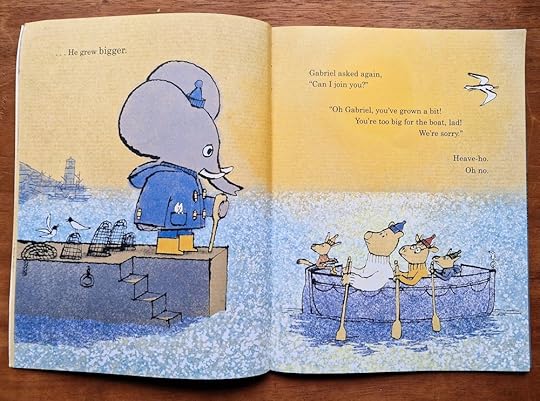
Back ‘[a]t home, Gabriel stared far out to sea and heaved a long sigh.’
Does Gabriel let his disappointment defeat him?
No! After some quiet contemplation, he has an important thought:
There is only one thing I want to do…
So I will do it!
What a great attitude to instil in a child. Life has plenty of setbacks. Equipping kids to deal with problems—and not to lose sight of what’s important—is a beautiful gift for life.
Gabriel makes a plan. And he works hard.
He collects driftwood.
And as the seasons pass, Gabriel builds himself a boat.
One bright winter morning,
gulls were seen far out to sea.
Which meant fish!
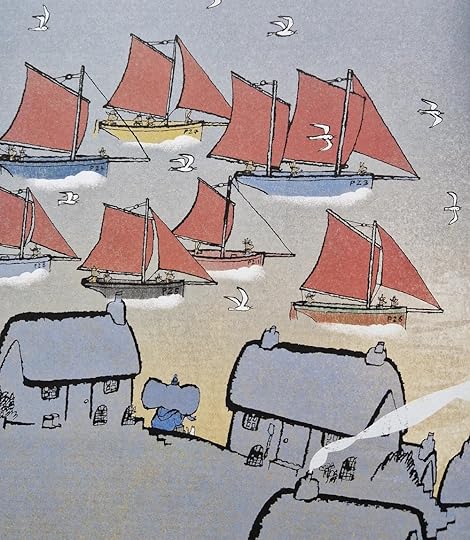
Gabriel sits on the clifftops and watches the fishing fleet set sail.
But a sudden change in the weather brings an almighty winter storm.
The waves turned into giants,
tumbling, lashing and crashing.
The fleet was in trouble!
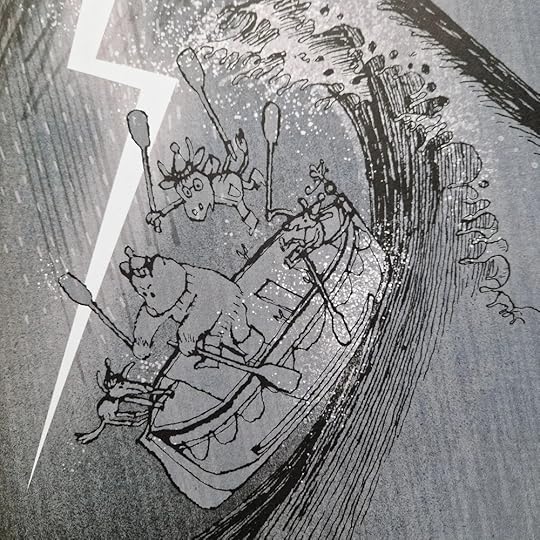
This is a great place to pause and ask your child what they think might happen next. Most likely, they will suggest that the lifeboat goes to rescue them. And it does! But – oh no! – They’re ‘not strong enough to battle this giant sea.’
All hope was lost.
The story may have ended there –
But wait! Here’s Gabriel!
He had built a boat.
Built for strength. Built for him!
Brave Gabriel rowed out through thundering waves.
Strong as oak, he pulled the oars.
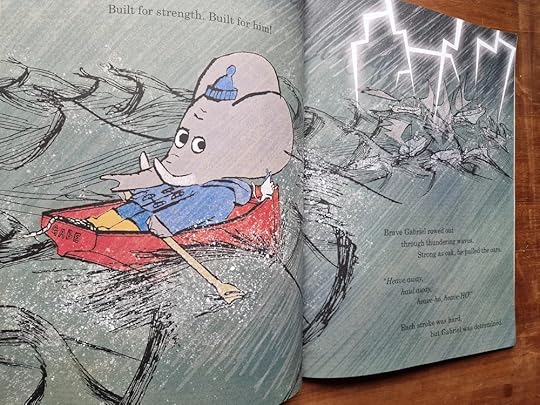
That page turn should be accompanied by a fanfare! It’s so exciting! The determined elephant battles the crashing waves, finds the fishermen and tows them home to safety.
“Brave Gabriel, our hero!”
Now the tables are turned, because the lifeboat crew want to join Gabriel’s team!
“Of course!” said Gabriel.
“But we might need a bigger boat.”
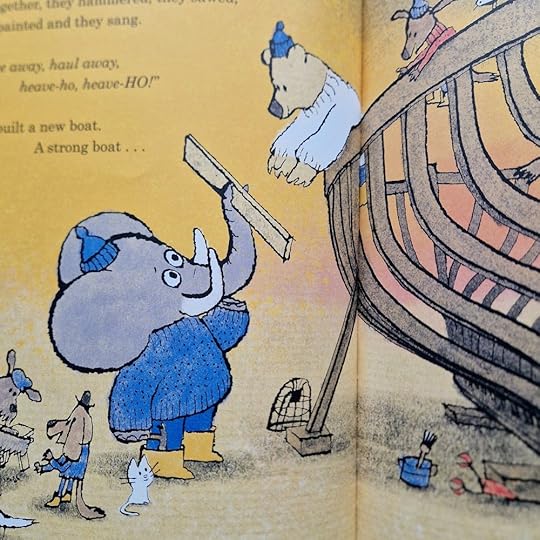
Together, they build a boat big enough for everyone. And Vere concludes his inspiring tale by telling readers that Gabriel ‘lived a life he loved. Part of the crew, saving sailors at sea.’
With the very last page turn, we come full circle. Here’s Old Gabriel again, ‘happy in his old sea boots’ with Milo the sea cat, purring by his side.
Vere has a beautiful way with words which makes his stories a delight to read aloud. But The Elephant and the Sea is worth sharing for so many reasons. Aside from being a great adventure story, it teaches kids to overcome setbacks and follow their dreams. It’s a celebration of tradition – of fishing communities and brave lifeboat crews. ‘Most importantly,’ says Vere, ‘it’s about believing in yourself.’
Another admirable attribute is how this story celebrates and honours the elderly. Like Old Gabriel at the start of the story, they may creak and crack, but they still have a tale or two to tell! For that reason, Book Trust recommends it as a way for kids and their grandparents (or any older relative, for that matter) to connect over stories about their own childhood dreams. Indeed, Vere himself considers it something of a meditation on old age.
“Very young children don’t always realise that their grandparents haven’t always been vastly old. I wanted them to realise that their grandparents were once young too. That they also had dreams and adventures.”
– Ed Vere, Author Chat with Ed Vere (THE ELEPHANT AND THE SEA) , YA Books Central
This review may prompt you to get hold of a copy of The Elephant and the Sea to share with the kids in your life, and spark meaningful conversations between grandparents and grandchildren. I hope so – because that would honour the former lifeboat man whom Vere met by chance on a Cornish harbour, one blustery winter’s day, who inspired this wonderful story.
Share your childhood dreams – a great way for grandparents (or older relatives) to bridge the generations.
Celebrate the “heave-HO!” moments and join in with Gabriel’s rowing chant and the dramatic storm sounds. Picture books are meant to be performed – so let loose and make it fun and interactive!
If you live in the UK, head out on a stormy weekend and visit a lifeboat station. Build on the interest piqued by Gabriel the elephant and discover some real-life stories of brave lifeboat men and women.
The Elephant and the Sea by Ed Vere(Puffin Books, 2024)Good to Read for:Teaching the value of determinationConnecting generations through conversations about childhood dreamsCelebrating community and working as a team Copyright © 2024 Ed Vere (Text & Illustrations)From THE ELEPHANT AND THE SEA by Ed Vere(Puffin Books) VISIT ED VERE'S WEBSITE GOOD TO READBest books to snuggle up with on a stormy day
After the Storm by Nick Butterworth
The Storm Whale in Winter by Benji Davies
Weasel Is Worried by Ciara Gavin & Tim Warnes
A Letter to Amy by Ezra Jack Keats
Maya and the cat by Caroline Magerl
What Small Rabbit Heard by Sheryl Webster & Tim Warnes
Bear Feels Scared by Karma Wilson & Jane Chapman
Bear Snores On by Karma Wilson & Jane Chapman
BUY THE BOOKPowered by Bookshop.orgSupporting independent bookshops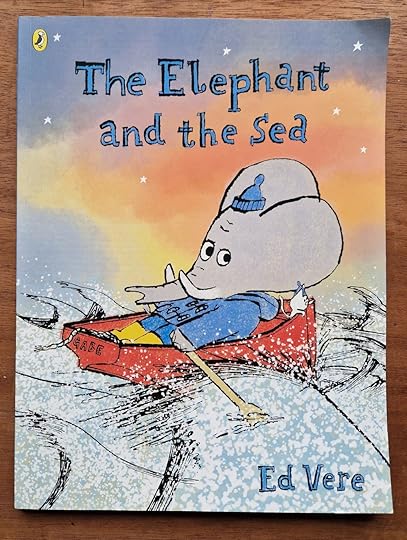
“readers will cheer for Gabriel all the way”
Introducing Grandad Frank – a real class act
Sir Lilypad the Green (bravest frog I’ve ever seen)
SOURCESThe Elephant and the Sea by Ed Vere (Puffin Books, 2024)Just Imagine review: The Elephant and the SeaKirkus review: The Elephant and the SeaBooks for Keeps: Slow down drawing: an interview with Ed VereEd Vere’s WebsiteBooktrust review: The Elephant and the SeaYA Books Central: Author chat with Ed Vere Are you looking for quality picture books to share with your child? Sign up for recommendations and tips. SIGN UP HERE © 2025 BY TIM WARNES(UNLESS OTHERWISE ATTRIBUTED)****USE OF THIRD-PARTY COPYRIGHTED MATERIAL FALLS UNDER FAIR USE/FAIR DEALING PRACTICEThe Elephant and the Sea: A Story of Dreams, Determination, and Daring Rescues
The Elephant and the Sea by Ed Vere(Puffin Books, 2024)Good to Read for:Teaching the value of determinationConnecting generationsCelebrating community and teamwork I’ve been excited to share The Elephant and the Sea by Ed Vere (Puffin, 2024) for some time now. It’s a quiet, lyrical tale (with moments of drama and tension) that celebrates bravery and quiet determination. Unashamedly British in its setting – the rugged Cornish coastline – Vere has created a universal story about courage and calm determination. Cornwall really resonates with me. It’s somewhere I love, and Vere captures it so well. And he draws you into the story straight away by introducing his protagonist – a frail, old elephant.
His name is Gabriel.
Milou, the sea cat, purrs by his side.
Gabriel’s face has as many lines as the sea has waves.
His knees crack. His back creaks.
I love this introduction! Vere is a seasoned pro and knows just how to hook his readers. It’s so intriguing – who wouldn’t want to know more about the old elephant by the sea? Throughout the story, Vere adds layers of depth and beauty – both visual and literal (for example, by referring to Milou as ‘the sea cat’ rather than simply ‘a cat’ – kids will love spotting him throughout the story, by the way!).
Many years ago, before you were born,
when [Gabriel] was a young elephant…
With a well-placed page turn, we go back in time to meet Gabriel as a youngster, wearing the same attire but fresh-faced and fleet-footed. He runs down to the sparkling sea, past the boat builders and fishermen, to the thing he loved most in all of the world… the lifeboat!
Young Gabriel desperately wants to join the lifeboat crew.
“You’re a bit young, lad.
Come back when you’re older.
Come back when you’re stronger.”
“I will!” said Gabriel.
Gabriel’s quiet determination is inspiring. He’s not put off by this setback. Instead, he uses the opportunity to immerse himself in his dream.
He read books about wild seas,
ferocious storms and daring rescues.
He practised rowing.
“Heave away, haul away, heave-HO!”
Gabriel grows older and stronger until the day comes when he’s ready to join the lifeboat crew. But – oh no! – now, he’s too big for the boat!
It’s a crushing blow.
Back ‘[a]t home, Gabriel stared far out to sea and heaved a long sigh.’
Does Gabriel let his disappointment defeat him?
No! After some quiet contemplation, he has an important thought:
There is only one thing I want to do…
So I will do it!
What a great attitude to instil in a child. Life has plenty of setbacks. Equipping kids to deal with problems—and not to lose sight of what’s important—is a beautiful gift for life.
Gabriel makes a plan. And he works hard.
He collects driftwood.
And as the seasons pass, Gabriel builds himself a boat.
One bright winter morning,
gulls were seen far out to sea.
Which meant fish!
Gabriel sits on the clifftops and watches the fishing fleet set sail.
But a sudden change in the weather brings an almighty winter storm.
The waves turned into giants,
tumbling, lashing and crashing.
The fleet was in trouble!
This is a great place to pause and ask your child what they think might happen next. Most likely, they will suggest that the lifeboat goes to rescue them. And it does! But – oh no! – They’re ‘not strong enough to battle this giant sea.’
All hope was lost.
The story may have ended there –
But wait! Here’s Gabriel!
He had built a boat.
Built for strength. Built for him!
Brave Gabriel rowed out through thundering waves.
Strong as oak, he pulled the oars.
That page turn should be accompanied by a fanfare! It’s so exciting! The determined elephant battles the crashing waves, finds the fishermen and tows them home to safety.
“Brave Gabriel, our hero!”
Now the tables are turned, because the lifeboat crew want to join Gabriel’s team!
“Of course!” said Gabriel.
“But we might need a bigger boat.”
Together, they build a boat big enough for everyone. And Vere concludes his inspiring tale by telling readers that Gabriel ‘lived a life he loved. Part of the crew, saving sailors at sea.’
With the very last page turn, we come full circle. Here’s Old Gabriel again, ‘happy in his old sea boots’ with Milo the sea cat, purring by his side.
Vere has a beautiful way with words which makes his stories a delight to read aloud. But The Elephant and the Sea is worth sharing for so many reasons. Aside from being a great adventure story, it teaches kids to overcome setbacks and follow their dreams. It’s a celebration of tradition – of fishing communities and brave lifeboat crews. ‘Most importantly,’ says Vere, ‘it’s about believing in yourself.’
Another admirable attribute is how this story celebrates and honours the elderly. Like Old Gabriel at the start of the story, they may creak and crack, but they still have a tale or two to tell! For that reason, Book Trust recommends it as a way for kids and their grandparents (or any older relative, for that matter) to connect over stories about their own childhood dreams. Indeed, Vere himself considers it something of a meditation on old age.
“Very young children don’t always realise that their grandparents haven’t always been vastly old. I wanted them to realise that their grandparents were once young too. That they also had dreams and adventures.”
– Ed Vere, Author Chat with Ed Vere (THE ELEPHANT AND THE SEA) , YA Books Central
This review may prompt you to get hold of a copy of The Elephant and the Sea to share with the kids in your life, and spark meaningful conversations between grandparents and grandchildren. I hope so – because that would honour the former lifeboat man whom Vere met by chance on a Cornish harbour, one blustery winter’s day, who inspired this wonderful story.
Share your childhood dreams – a great way for grandparents (or older relatives) to bridge the generations.
Celebrate the “heave-HO!” moments and join in with Gabriel’s rowing chant and the dramatic storm sounds. Picture books are meant to be performed – so let loose and make it fun and interactive!
If you live in the UK, head out on a stormy weekend and visit a lifeboat station. Build on the interest piqued by Gabriel the elephant and discover some real-life stories of brave lifeboat men and women.
The Elephant and the Sea by Ed Vere(Puffin Books, 2024)Good to Read for:Teaching the value of determinationConnecting generations through conversations about childhood dreamsCelebrating community and working as a team Copyright © 2024 Ed Vere (Text & Illustrations)From THE ELEPHANT AND THE SEA by Ed Vere(Puffin Books) VISIT ED VERE'S WEBSITE GOOD TO READBest books to snuggle up with on a stormy day
After the Storm by Nick Butterworth
The Storm Whale in Winter by Benji Davies
Weasel Is Worried by Ciara Gavin & Tim Warnes
A Letter to Amy by Ezra Jack Keats
Maya and the cat by Caroline Magerl
What Small Rabbit Heard by Sheryl Webster & Tim Warnes
Bear Feels Scared by Karma Wilson & Jane Chapman
Bear Snores On by Karma Wilson & Jane Chapman
BUY THE BOOKPowered by Bookshop.orgSupporting independent bookshops “readers will cheer for Gabriel all the way”
Introducing Grandad Frank – a real class act
Sir Lilypad the Green (bravest frog I’ve ever seen)
SOURCESThe Elephant and the Sea by Ed Vere (Puffin Books, 2024)Just Imagine review: The Elephant and the SeaKirkus review: The Elephant and the SeaBooks for Keeps: Slow down drawing: an interview with Ed VereEd Vere’s WebsiteBooktrust review: The Elephant and the SeaYA Books Central: Author chat with Ed Vere Are you looking for quality picture books to share with your child? Sign up for recommendations and tips. SIGN UP HERE © 2025 BY TIM WARNES(UNLESS OTHERWISE ATTRIBUTED)****USE OF THIRD-PARTY COPYRIGHTED MATERIAL FALLS UNDER FAIR USE/FAIR DEALING PRACTICESeptember 4, 2025
“Let's Go! haw êkwa!” - A Skateboarding Story by Julie Flett | Picture Book Review
 Let’s Go! haw êkwa! by Julie Flett(Greystone Kids, 2024)Good to Read for:Affirming anxious kidsCelebrating finding your tribeIts diverse representation Today’s Story Worth Sharing is unique in many ways. It’s by a favourite picture book maker of mine, Cree-Métis author and illustrator Julie Flett. As usual, Flett uses the opportunity to garnish her story by introducing readers to a little of her language and culture. Want to know more? haw êkwa!
 Let’s Go! haw êkwa! (Greystone Kids, 2024) is unique in many ways, the most obvious being that it’s a story about skateboarding that includes the Cree idiom haw êkwa! (pronounced how AYgwa), meaning “okay then!” Based on personal experience, Flett’s story opens with the narrator – a small boy with dark skin – admiring the skateboarders who pass by his window each day.
Cacussh! Cacussh! Cacussh!
Closer and then farther.
The boy scrambles into his clothes and heads to the park with his mother.
At the park, I imagine myself riding a skateboard on the path that winds like a river.

The flurry of pigeons and sequential drawings of the boy bring so much energy to this image. It’s a beautiful example of how illustrations can enhance the text and raise further questions: Is the boy imagining that he’s flying like a bird, as well as riding a skateboard? Is Flett explaining pictorally that this is how it feels to ride a skateboard - to be free, flying like a bird? It’s this kind of small detail that kids will often pick up on – so take the opportunities when they arise to talk around the stories you share.)
One morning, my mom brings home a bag from Grandma’s house.
Her skateboard from when she was my age!
haw êkwa! Let’s go!

The boy’s awkward first attempts will resonate with anyone who’s ever attempted to skateboard. He starts off kneeling, then sitting, and finally, standing on his board. He practices over and over – at the playground, in the empty basketball court and Auntie’s yard.
The day finally comes to brave the skateboard park.

But when we arrive, it’s like a waterfall of skateboarders crashing down. I’m not sure.
What a beautiful description, a waterfall of skateboarders. That should definitely become the proper collective noun! And such a powerful illustration. The boy stands to one side with his mum, clutching his deck and watching the skaters. It has so much energy and flow with the cropped characters zipping off the page. I love it!
The boy bides his time and finds a quiet spot to watch (with mum reassuringly close by).
Soon I’m not alone.

Two more wannabe skaters join him to watch the action. A trio of kindred spirits, united by a drive to skateboard and a fear of joining in. Isn’t this the kind of situation where so many friendships are formed? They ‘[watch] the pattern and pace’ long enough to muster the collective courage until finally – haw êkwa! Let’s go!
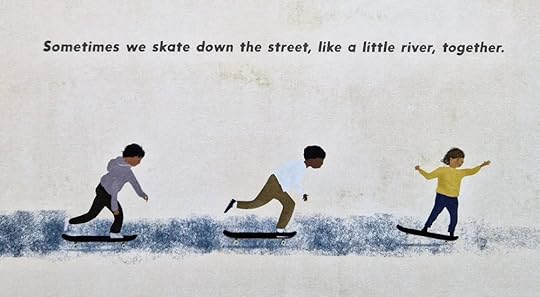
As the story unfolds, you realise that this is not simply a story about skateboarding. It’s an invitation to become part of something – a community, a friendship group, a tribe – bigger than yourself (Sometimes we skate down the street, like a little river, together.) And in doing so, we discover that things that makes us feel alive. That make us unique. Let’s Go! feels like a celebration of life itself.
Flett identifies as Métis-Cree, and her characters have dark skin. Maybe that’s why one review likened Flett’s illustrations to those of Ezra Jack Keats. Keats’ picture books – infamous for portraying African American families and their neighbourhoods – were favourites of mine as a young boy. Both illustrators feature panoramic, urban landscapes complete with gritty textures and chalk-scribbled sidewalks. Flett’s use of collage and patterned wallpaper is also reminiscent of Keats. Her illustration, depicting those first tentative attempts at skateboarding (with the boy shown multiple times against the same background) remind me of the scene where Peter is giddy from spinning in Keats’ Whistle for Willie. So I agree, there’s definitely a similarity.


Perhaps that’s why I find Flett’s work so comforting! It reminds me of a safe space from my childhood, the local library, where I would eagerly rifle through the picture books to find Peter and his dachshund, Willie.
Most significantly, both Keats and Flett portray BIPOC characters (Black, Indigenous, and People of Colour) in their picture books – not as representatives of social issues, but simply as kids being kids. Keats’ characters ‘lived in apartment buildings, played on city streets, and navigated urban environments that many young readers could recognise from their own lives.’ [Claude AI] Flett’s work builds on that legacy. In her earlier picture book, We All Play!/kimêtawânaw!, for example, she features a child with a malformed hand (inspired by watching Paralympians). In Let’s Go!, kids with a passion for skateboarding can see themselves reflected, as well as those from loving and supportive single-parent families (as highlighted by American Indians in Children’s Literature’s review). So it’s about more than just ethnicity.
As Flett explains in an interview with The Federation of Children’s Books Groups, “when [kids] see themselves in books, it opens worlds to them – and a sense of belonging. For kids to feel seen and heard and that they belong in all of their own unique ways is so important.”
Seasons pass, and the years – like the skateboarders – roll on by. With perseverance and practice, our protagonist finally masters his sport and earns his independence. By the end of Let’s Go! the young boy is a teenager. The story comes full circle, ending with his mom watching through the window as her son returns home –
Now, every day.
Cacussh. Cacussh. Cacussh.
Closer, closer, home.
In an end note, Flett shares her inspiration and explains some of the story’s themes. She signs off: “I hope you find all the different ways of expressing yourself uniquely in the world and with the communities you find along the way.”
The world of picture books is blessed by Flett. Her unique expression shows readers that despite differences in culture and heritage, kids have shared interests and experiences. The addition of native Cree language only adds an extra richness to her work that reminds readers: There’s a whole world out there, waiting to be discovered.
haw êkwa! Let’s go!
 3 practical tips for sharing Let’s Go! haw êkwa! with your child
 Have fun with an interactive read-aloud! At the appropriate times, kids can call out, "Let's go! haw êkwa!" They can make the sound of the wheels on pavement: "cacussh, cacussh, cacussh." They can move their bodies as the skateboarders do in the illustrations. (Source: American Indians in Children’s Literature blog)
Practice the "haw êkwa!" mindset - When your child faces something scary or new, use the Cree phrase together as a courage-building ritual. Make it your family's way of saying, “we've got this, let's give it a try!”
Explore the "flying like birds" imagery - Ask your child what activities make them feel like they're flying. Use Flett's beautiful illustration of the boy running through the pigeons to talk about what makes them feel most alive. (Then ask yourself: What can I do to help them achieve their potential and fly?)
Let’s Go! haw êkwa! by Julie Flett(Greystone Kids, 2024)Good to Read for:Affirming anxious kidsCelebrating finding your tribeIts diverse representation Copyright © 2024 Julie Flett (Text & Illustrations)From LET’S GO! haw êkwa! by Julie Flett(Greystone Books)Illustration of Peter (‘When he stopped everything turned down’) © 1964 Ezra Jack Keats. From Whistle for Willie by Ezra Jack Keats Visit Julie Flett's website GOOD TO READBest diverse and inclusive picture books
Splash, Anna Hibiscus! by Atinuke & Lauren Tobia
What Happened to You? by James Catchpole & Karen George
Only You Can Be You! by Nathan & Sally Clarkson & Tim Warnes
So Much! by Trish Cooke & Helen Oxenbury
There’s a Tiger on the Train by Mariesa Dulak & Rebecca Cobb
Birdsong by Julie Flett
We All Play/kimêtawânaw by Julie Flett
I am the Subway by Kim Hyo-eun (translated by Deborah Smith)
Mr Scruff by Simon James
The Boy with Flowers in his Hair by Jarvis
The Snowy Day by Ezra Jack Keats
Whistle for Willie by Ezra Jack Keats
Julián is a Mermaid by Jessica Love
Last Stop on Market Street by Matt de la Peña & Christian Robinson
BUY THE BOOKPowered by Bookshop.orgSupporting independent bookshops “exhilarating”
 “absolutely unique” BUY U.K. BUY U.S.A. * I EARN COMMISSION FROM THESE LINKS #AD/AFF RELATED ARTICLES SOURCESLet’s Go! haw êkwa! by Julie Flett (Greystone Kids, 2024)Youth Services Book Review: Let’s Go! haw êkwa! by Julie Flett by susanh579 (April 11, 2024)Let’s Go by Julie Flett, The Federation of Children’s Book Groups blog (June 04, 2024) Highly Recommended: LET'S GO! haw êkwa! by Julie Flett , American Indians in Children’s Literature, (September 03, 2024)Let’s Go! Kirkus Reviews (March 23, 2024) Are you stuck for quality stories that you and your kids will enjoy? Sign up for recommendations and tips. SIGN UP HERE © 2025 BY TIM WARNES(UNLESS OTHERWISE ATTRIBUTED)****USE OF THIRD-PARTY COPYRIGHTED MATERIAL FALLS UNDER FAIR USE/FAIR DEALING PRACTICE
"Let's Go! haw êkwa!" - A Skateboarding Story About Finding Your Tribe
Let’s Go! haw êkwa! by Julie Flett(Greystone Kids, 2024)Good to Read for:Affirming anxious kidsCelebrating finding your tribeIts diverse representation Today’s Story Worth Sharing is unique in many ways. It’s by a favourite picture book maker of mine, Cree-Métis author and illustrator Julie Flett. As usual, Flett uses the opportunity to garnish her story by introducing readers to a little of her language and culture. Want to know more? haw êkwa! Let’s Go! haw êkwa! (Greystone Kids, 2024) is unique in many ways, the most obvious being that it’s a story about skateboarding that includes the Cree idiom haw êkwa! (pronounced how AYgwa), meaning “okay then!” Based on personal experience, Flett’s story opens with the narrator – a small boy with dark skin – admiring the skateboarders who pass by his window each day.
Cacussh! Cacussh! Cacussh!
Closer and then farther.
The boy scrambles into his clothes and heads to the park with his mother.
At the park, I imagine myself riding a skateboard on the path that winds like a river.
The flurry of pigeons and sequential drawings of the boy bring so much energy to this image. It’s a beautiful example of how illustrations can enhance the text and raise further questions: Is the boy imagining that he’s flying like a bird, as well as riding a skateboard? Is Flett explaining pictorally that this is how it feels to ride a skateboard - to be free, flying like a bird? It’s this kind of small detail that kids will often pick up on – so take the opportunities when they arise to talk around the stories you share.)
One morning, my mom brings home a bag from Grandma’s house.
Her skateboard from when she was my age!
haw êkwa! Let’s go!
The boy’s awkward first attempts will resonate with anyone who’s ever attempted to skateboard. He starts off kneeling, then sitting, and finally, standing on his board. He practices over and over – at the playground, in the empty basketball court and Auntie’s yard.
The day finally comes to brave the skateboard park.
But when we arrive, it’s like a waterfall of skateboarders crashing down. I’m not sure.
What a beautiful description, a waterfall of skateboarders. That should definitely become the proper collective noun! And such a powerful illustration. The boy stands to one side with his mum, clutching his deck and watching the skaters. It has so much energy and flow with the cropped characters zipping off the page. I love it!
The boy bides his time and finds a quiet spot to watch (with mum reassuringly close by).
Soon I’m not alone.
Two more wannabe skaters join him to watch the action. A trio of kindred spirits, united by a drive to skateboard and a fear of joining in. Isn’t this the kind of situation where so many friendships are formed? They ‘[watch] the pattern and pace’ long enough to muster the collective courage until finally – haw êkwa! Let’s go!
As the story unfolds, you realise that this is not simply a story about skateboarding. It’s an invitation to become part of something – a community, a friendship group, a tribe – bigger than yourself (Sometimes we skate down the street, like a little river, together.) And in doing so, we discover that things that makes us feel alive. That make us unique. Let’s Go! feels like a celebration of life itself.
Flett identifies as Métis-Cree, and her characters have dark skin. Maybe that’s why one review likened Flett’s illustrations to those of Ezra Jack Keats. Keats’ picture books – infamous for portraying African American families and their neighbourhoods – were favourites of mine as a young boy. Both illustrators feature panoramic, urban landscapes complete with gritty textures and chalk-scribbled sidewalks. Flett’s use of collage and patterned wallpaper is also reminiscent of Keats. Her illustration, depicting those first tentative attempts at skateboarding (with the boy shown multiple times against the same background) remind me of the scene where Peter is giddy from spinning in Keats’ Whistle for Willie. So I agree, there’s definitely a similarity.
Perhaps that’s why I find Flett’s work so comforting! It reminds me of a safe space from my childhood, the local library, where I would eagerly rifle through the picture books to find Peter and his dachshund, Willie.
Most significantly, both Keats and Flett portray BIPOC characters (Black, Indigenous, and People of Colour) in their picture books – not as representatives of social issues, but simply as kids being kids. Keats’ characters ‘lived in apartment buildings, played on city streets, and navigated urban environments that many young readers could recognise from their own lives.’ [Claude AI] Flett’s work builds on that legacy. In her earlier picture book, We All Play!/kimêtawânaw!, for example, she features a child with a malformed hand (inspired by watching Paralympians). In Let’s Go!, kids with a passion for skateboarding can see themselves reflected, as well as those from loving and supportive single-parent families (as highlighted by American Indians in Children’s Literature’s review). So it’s about more than just ethnicity.
As Flett explains in an interview with The Federation of Children’s Books Groups, “when [kids] see themselves in books, it opens worlds to them – and a sense of belonging. For kids to feel seen and heard and that they belong in all of their own unique ways is so important.”
Seasons pass, and the years – like the skateboarders – roll on by. With perseverance and practice, our protagonist finally masters his sport and earns his independence. By the end of Let’s Go! the young boy is a teenager. The story comes full circle, ending with his mom watching through the window as her son returns home –
Now, every day.
Cacussh. Cacussh. Cacussh.
Closer, closer, home.
In an end note, Flett shares her inspiration and explains some of the story’s themes. She signs off: “I hope you find all the different ways of expressing yourself uniquely in the world and with the communities you find along the way.”
The world of picture books is blessed by Flett. Her unique expression shows readers that despite differences in culture and heritage, kids have shared interests and experiences. The addition of native Cree language only adds an extra richness to her work that reminds readers: There’s a whole world out there, waiting to be discovered.
haw êkwa! Let’s go!
3 practical tips for sharing Let’s Go! haw êkwa! with your child Have fun with an interactive read-aloud! At the appropriate times, kids can call out, "Let's go! haw êkwa!" They can make the sound of the wheels on pavement: "cacussh, cacussh, cacussh." They can move their bodies as the skateboarders do in the illustrations. (Source: American Indians in Children’s Literature blog)
Practice the "haw êkwa!" mindset - When your child faces something scary or new, use the Cree phrase together as a courage-building ritual. Make it your family's way of saying, “we've got this, let's give it a try!”
Explore the "flying like birds" imagery - Ask your child what activities make them feel like they're flying. Use Flett's beautiful illustration of the boy running through the pigeons to talk about what makes them feel most alive. (Then ask yourself: What can I do to help them achieve their potential and fly?)
Let’s Go! haw êkwa! by Julie Flett(Greystone Kids, 2024)Good to Read for:Affirming anxious kidsCelebrating finding your tribeIts diverse representation Copyright © 2024 Julie Flett (Text & Illustrations)From LET’S GO! haw êkwa! by Julie Flett(Greystone Books)Illustration of Peter (‘When he stopped everything turned down’) © 1964 Ezra Jack Keats. From Whistle for Willie by Ezra Jack Keats Visit Julie Flett's website GOOD TO READBest diverse and inclusive picture books
Splash, Anna Hibiscus! by Atinuke & Lauren Tobia
What Happened to You? by James Catchpole & Karen George
Only You Can Be You! by Nathan & Sally Clarkson & Tim Warnes
So Much! by Trish Cooke & Helen Oxenbury
There’s a Tiger on the Train by Mariesa Dulak & Rebecca Cobb
Birdsong by Julie Flett
We All Play/kimêtawânaw by Julie Flett
I am the Subway by Kim Hyo-eun (translated by Deborah Smith)
Mr Scruff by Simon James
The Boy with Flowers in his Hair by Jarvis
The Snowy Day by Ezra Jack Keats
Whistle for Willie by Ezra Jack Keats
Julián is a Mermaid by Jessica Love
Last Stop on Market Street by Matt de la Peña & Christian Robinson
BUY THE BOOKPowered by Bookshop.orgSupporting independent bookshops “exhilarating” “absolutely unique” BUY U.K. BUY U.S.A. * I EARN COMMISSION FROM THESE LINKS #AD/AFF RELATED ARTICLES SOURCESLet’s Go! haw êkwa! by Julie Flett (Greystone Kids, 2024)Youth Services Book Review: Let’s Go! haw êkwa! by Julie Flett by susanh579 (April 11, 2024)Let’s Go by Julie Flett, The Federation of Children’s Book Groups blog (June 04, 2024) Highly Recommended: LET'S GO! haw êkwa! by Julie Flett , American Indians in Children’s Literature, (September 03, 2024)Let’s Go! Kirkus Reviews (March 23, 2024) Are you stuck for quality stories that you and your kids will enjoy? Sign up for recommendations and tips. SIGN UP HERE © 2025 BY TIM WARNES(UNLESS OTHERWISE ATTRIBUTED)****USE OF THIRD-PARTY COPYRIGHTED MATERIAL FALLS UNDER FAIR USE/FAIR DEALING PRACTICE
August 8, 2025
The Enduring Magic of Picture Books

This week, two handwritten notes reminded me why I do what I do.
The first arrived by mail – a carefully handwritten letter from ten-year-old ‘Z’ in South Dakota. She told me about her love for I Love You to the Moon and Back, and how she still treasures the book despite being “a little over the age range.”

Z asked about my hardest book to make and what my favourite book is, signing off with words that are music to my ears:
I love your books and your art. I hope you continue making books for kids so they can enjoy them as much as I did.
The second piece of paper I found while sorting through old keepsakes at my Mum’s – a note I’d written to my Dad decades ago, complete with a big love heart. Dad read to me every night, and those moments helped forge a connection that lasted his entire life. Even in his final years, when cognition was a challenge, we enjoyed reminiscing about Charlotte’s Web and Pooh.

I was touched that it’d been treasured all these years. With the two notes placed side by side, I see the beautiful circle that picture books – and storytime – create. Z’s letter embodies the very essence of what I strive to achieve as a picture book creator and storyteller, whilst my own childhood love letter served as a reminder of what (and who) helped me become a storyteller in the first place.
Throughout his long life, Dad fondly recalled the tradition of bedtime stories from his childhood, a tradition he passed on to us. These bedtime stories (coupled with frequent visits to the local library with Mum) not only nurtured a love for reading but also instilled a profound sense of being cherished and seen. The experience was about more than just stories—it was about being present and creating connection, and delivered a daily message that I was worth my father’s time and attention. Here he is as a grandfather, giving his all to The Cat in the Hat Comes Back with Noah (looking like it was way past bedtime!).

Now, through my books and recommendations, I have the privilege of helping other parents create those same sacred moments. When Z writes that she loves my books and art (“I know nothing is perfect but the art in your book is close”), I hear echoes of my own childhood wonder and appreciation of, for example, Maurice Sendak’s Little Bear and the Busy World of Richard Scarry. When parents or grandparents tell me my recommendations helped them find books that engaged their children, I see that circle completing itself again.
I shared this in my reply to Z:
When I was a little boy (a long time ago – I’m 54 now!) bedtime stories was my favourite part of the day. I loved snuggling up and listening to my dad, mostly, read stories. He always gave the characters different voices. My favourite ones from childhood include '“Are You My Mother?” by P.D. Eastman, Maurice Sendak’s “Nutshell Library” collection and the Beatrix Potter stories.
Picture books aren’t just entertainment. They’re conversation starters and memory makers. They’re the balm to a busy day, a pause to be present, a quiet moment of togetherness. They contain a kind of magic.
Every time a parent chooses to read with their child instead of scrolling their phone, every time they wonder over a beautiful illustration or discuss a character’s feelings, they’re nurturing their child and planting seeds. Seeds of literacy, yes, but also seeds of relationship—the kind that grow into a lifetime of connection.
“We have such great times reading DANGEROUS! It’s a every night before bed kind of deal! Abraços from Brazil!”— Eduardo Amoroso Parra @eduparrox
Z's letter reminds me that these seeds take root in ways we might never fully know. Kids in Brazil, as I discovered firsthand at the Bienal do Livro in Rio this summer, feel connected to me through my work, while their parents appreciate books like PERIGOSO!, which have the power to nurture their children and strengthen family bonds. My note to my daddy reminds me where my own seeds were planted, in those precious bedtime moments when he chose to give me his full attention. Happy times when he played the fool, acted the part, and gave me the gift of story.
The circle continues.
One book, one child, one bedtime story at a time.
My note to Dad is a testament to the enduring power of childhood stories and the deep connection they foster between the storyteller and the listener.
And as Z’s letter testifies, the magic of picture books is still working.
 RELATED ARTICLES Are you stuck for quality stories that you and your kids will enjoy? Sign up for recommendations and tips. SIGN UP HERE © 2025 BY TIM WARNES(UNLESS OTHERWISE ATTRIBUTED)****USE OF THIRD-PARTY COPYRIGHTED MATERIAL FALLS UNDER FAIR USE/FAIR DEALING PRACTICE
August 1, 2025
“Our Pebbles” by Jarvis | Picture Book Review
 Our Pebbles by Jarvis(Walker Books, 2025)Good to Read for:Celebrating intergenerational relationshipsEncouraging connection with natureGentle introduction to loss There is something childlike and charming about Jarvis's work that makes me feel comforted, something akin to receiving a warm hug. His latest picture book, Our Pebbles – a heartfelt portrayal of the relationship between a grandfather and his grandchild – builds on that sense of togetherness.
 Told from a child’s perspective (with suitably informal and chatty language, yet beautiful prose), Jarvis homes in on those simple things that children love best.
A handful of sweets.
Trains whooshing past; climbing over stiles.
A day at the seaside.
It left me feeling quietly nostalgic for my childhood and the time spent with my own kids.
Jarvis’s own childhood inspired Our Pebbles. He writes:
‘Our Pebbles’ is quite a gentle story, and that’s how I began, very softly, but then I decided that it shouldn’t feel wistful and sombre - it should feel joyful and exciting - so my grandad character reflected that too.
– Jarvis on Instagram @jarvispicturebooksGrandad’s joie de vivre, and his tender care towards his grandson, is inspiring. Our Pebbles is an unapologetic celebration of life’s simple pleasures; of enjoying someone else’s company while doing nothing. Days like this are easily overlooked, and this story is a sweet and joyful reminder that they are limited.
There's so much to spot in the illustrations, from butterflies and birds to squirrels and centipedes – and that's just along the path through Wonky Woods, where the boy ‘look[s] out for monsters and things like that.’

Grandad is ever present, holding his grandson’s hand and joining in with the fun, from waving at the trains to ‘chatting with the spotty dogs.’
And up and over the stile. Where Grandad always said,
“Careful you don’t hit your head on the sky.”
Silly old Grandad.
With his arm around the boy’s shoulders, Grandad shepherds the boy over the sand dunes that hide the sea.
“Will it be in? Will it be out?” – the sense of anticipation is great!
Finally, the two friends arrive at their favourite destination: Pebble Beach.
There’s plenty for kids to spot, starting with the train. And a lifebelt.
A lighthouse and sea groynes;
seagulls, and a jetty.
Grandad and the boy have a sword fight with ‘old pirate wood’ left behind by the sea.
They guess the name of a seal and eat ice cream.

(This moment reminded me of eating chips with my parents and kids on the beach at Lyme Regis. Grandad became increasingly irate with the clamouring squabble of gulls overhead. Eventually, he could bear it no longer. He dramatically shooed the birds away with a wild waving of his arms – and promptly threw his chips everywhere! We all laughed, and the seagulls had their fill. Silly old grandad.)
We went where footsteps didn't go.
Where crabs hide out.
Nobody knew the beach like us.
Then they perform their own, private tradition. They pick a pebble each, wash them clean in the sea and then ‘hold them tight all the way to our favourite place… The Jolly Dancer’, an old fishing boat hauled up on the shingle, where Grandad does ‘his funny dance with the wiggly knees.’
Sitting in the boat , ‘perfectly smushed together,’ they paint their pebbles with a memory of the day.

Jarvis gives us a seagull's eye view of the boat and its collection of pebbles. Each one tells a story. This is a lovely moment for kids to share their ideas about the meaning of the pebbles. And there’s plenty to choose from! For example: A day at the circus; finding a tiny crab; sharing bubble gum and a thunderstorm. Interpreting these visual clues is a fun way of strengthening children's visual literacy and storytelling skills.
In some picture books (for example, Grandad’s Island by Benji Davies or Granpa by John Burningham), the featured grandparent dies. Although Our Pebbles touches on grief and loss, Jarvis addresses it in a different way: Grandad moves away.
And I missed looking out for monsters.
And I missed chatting with the spotty dogs.
And I missed The Jolly Dancer.
But most of all… I missed Grandad.
Mam suggests a trip back to Pebble Beach. The child is empowered, leading the way with a smile up over the sand dunes and onto the shingle bank, where they pick out two stones.
And I held them tightly all the way to Grandad's new home.
‘Grandad and child continue their tradition despite their new circumstances’ [Kirkus]. They paint the pebbles together just like before, and the boy promises Grandad that he'll take them back to the Jolly Dancer. As Kirkus notes, Jarvis doesn’t explain why Grandad moves, ‘though a propped-up cane by the sofa suggests that he’s slowed down a bit in his old age.’ And whilst picture books about death are important and useful, the bittersweet way in which Jarvis approaches the boy’s present sadness and inevitable loss is subtle and a welcome change.
The story ends on the narrator visiting the collection of painted pebbles that lie in The Jolly Dancer.
I look at each one and remember the days.
Our days at Pebble Beach.
Just silly old Grandad and me.
As Jarvis said in a recent interview, “Finding the small moments that can signify something larger is what I often find interesting. Sometimes, a story about giving a pebble to somebody you love is still a big adventure.”
Watch Jarvis read "Our Pebbles" here 3 practical tips for sharing Picture Book with your childCreate your own memory pebbles
Take your children on a nature walk or beach visit to collect smooth stones. Back home, let them paint or decorate the pebbles to represent special memories you've shared together. Start a family collection in a special jar or box, adding a new pebble after each memorable outing. This creates a tangible way for children to understand how ordinary moments become treasured
Decode the pebble collection
Use the illustrations showing Grandad and the boy's painted pebbles as a storytelling prompt, asking your child to guess what memory it represents. Then encourage them to create their own stories: "What do you think happened on circus day? How did they find that tiny crab?" This builds visual literacy skills while sparking imagination.
Go on a treasure hunt!
Turn any walk into a treasure hunt by looking for the wildlife Jarvis includes throughout the journey - for example, butterflies, birds, squirrels, centipedes and spotty dogs! Create a visual checklist where children can draw or tick off what they spot.
Our Pebbles by Jarvis(Walker Books, 2025)Good to Read for:Celebrating intergenerational relationshipsEncouraging connection with natureGentle introduction to loss Copyright © 2025 Jarvis (Text & Illustrations)From OUR PEBBLES by JarvisReproduced by permission of Walker Books Ltd, London, SE11 5HJ Find more of my favourite seaside-themed picture books using the button below GET MORE SEASIDE STORY RECOMMENDATIONS BUY THE BOOKPowered by Bookshop.orgSupporting independent bookshops “Family bonding at its sweetest.”
– Kirkus
“as comforting as holding a warm, smooth pebble in your hand.”– LoveReading4Kids
BUY U.K. BUY U.S.A. * I EARN COMMISSION FROM THESE LINKS #AD/AFF RELATED ARTICLES SOURCESOur Pebbles by Jarvis (Walker Books 2025)Jarvis on Instagram: @jarvispicturebooks, June 17th 2025Our Pebbles review, Kirkus Reviews, June 10th 2025 Author-Illustrator Jarvis on Finding Colorful Memories in the Everyday by Cara Broel. Bookstr, June 5th, 2025 Are you stuck for quality stories that you and your kids will enjoy? Sign up for recommendations and tips. SIGN UP HERE © 2025 BY TIM WARNES(UNLESS OTHERWISE ATTRIBUTED)****USE OF THIRD-PARTY COPYRIGHTED MATERIAL FALLS UNDER FAIR USE/FAIR DEALING PRACTICE‘Our Pebbles’: Finding Magic in Life's Simple Moments
Our Pebbles by Jarvis(Walker Books, 2025)Good to Read for:Celebrating intergenerational relationshipsEncouraging connection with natureGentle introduction to loss There is something childlike and charming about Jarvis's work that makes me feel comforted, something akin to receiving a warm hug. His latest picture book, Our Pebbles – a heartfelt portrayal of the relationship between a grandfather and his grandchild – builds on that sense of togetherness. Told from a child’s perspective (with suitably informal and chatty language, yet beautiful prose), Jarvis homes in on those simple things that children love best.
A handful of sweets.
Trains whooshing past; climbing over stiles.
A day at the seaside.
It left me feeling quietly nostalgic for my childhood and the time spent with my own kids.
Jarvis’s own childhood inspired Our Pebbles. He writes:
‘Our Pebbles’ is quite a gentle story, and that’s how I began, very softly, but then I decided that it shouldn’t feel wistful and sombre - it should feel joyful and exciting - so my grandad character reflected that too.
– Jarvis on Instagram @jarvispicturebooksGrandad’s joie de vivre, and his tender care towards his grandson, is inspiring. Our Pebbles is an unapologetic celebration of life’s simple pleasures; of enjoying someone else’s company while doing nothing. Days like this are easily overlooked, and this story is a sweet and joyful reminder that they are limited.
There's so much to spot in the illustrations, from butterflies and birds to squirrels and centipedes – and that's just along the path through Wonky Woods, where the boy ‘look[s] out for monsters and things like that.’
Grandad is ever present, holding his grandson’s hand and joining in with the fun, from waving at the trains to ‘chatting with the spotty dogs.’
And up and over the stile. Where Grandad always said,
“Careful you don’t hit your head on the sky.”
Silly old Grandad.
With his arm around the boy’s shoulders, Grandad shepherds the boy over the sand dunes that hide the sea.
“Will it be in? Will it be out?” – the sense of anticipation is great!
Finally, the two friends arrive at their favourite destination: Pebble Beach.
There’s plenty for kids to spot, starting with the train. And a lifebelt.
A lighthouse and sea groynes;
seagulls, and a jetty.
Grandad and the boy have a sword fight with ‘old pirate wood’ left behind by the sea.
They guess the name of a seal and eat ice cream.
(This moment reminded me of eating chips with my parents and kids on the beach at Lyme Regis. Grandad became increasingly irate with the clamouring squabble of gulls overhead. Eventually, he could bear it no longer. He dramatically shooed the birds away with a wild waving of his arms – and promptly threw his chips everywhere! We all laughed, and the seagulls had their fill. Silly old grandad.)
We went where footsteps didn't go.
Where crabs hide out.
Nobody knew the beach like us.
Then they perform their own, private tradition. They pick a pebble each, wash them clean in the sea and then ‘hold them tight all the way to our favourite place… The Jolly Dancer’, an old fishing boat hauled up on the shingle, where Grandad does ‘his funny dance with the wiggly knees.’
Sitting in the boat , ‘perfectly smushed together,’ they paint their pebbles with a memory of the day.
Jarvis gives us a seagull's eye view of the boat and its collection of pebbles. Each one tells a story. This is a lovely moment for kids to share their ideas about the meaning of the pebbles. And there’s plenty to choose from! For example: A day at the circus; finding a tiny crab; sharing bubble gum and a thunderstorm. Interpreting these visual clues is a fun way of strengthening children's visual literacy and storytelling skills.
In some picture books (for example, Grandad’s Island by Benji Davies or Granpa by John Burningham), the featured grandparent dies. Although Our Pebbles touches on grief and loss, Jarvis addresses it in a different way: Grandad moves away.
And I missed looking out for monsters.
And I missed chatting with the spotty dogs.
And I missed The Jolly Dancer.
But most of all… I missed Grandad.
Mam suggests a trip back to Pebble Beach. The child is empowered, leading the way with a smile up over the sand dunes and onto the shingle bank, where they pick out two stones.
And I held them tightly all the way to Grandad's new home.
‘Grandad and child continue their tradition despite their new circumstances’ [Kirkus]. They paint the pebbles together just like before, and the boy promises Grandad that he'll take them back to the Jolly Dancer. As Kirkus notes, Jarvis doesn’t explain why Grandad moves, ‘though a propped-up cane by the sofa suggests that he’s slowed down a bit in his old age.’ And whilst picture books about death are important and useful, the bittersweet way in which Jarvis approaches the boy’s present sadness and inevitable loss is subtle and a welcome change.
The story ends on the narrator visiting the collection of painted pebbles that lie in The Jolly Dancer.
I look at each one and remember the days.
Our days at Pebble Beach.
Just silly old Grandad and me.
As Jarvis said in a recent interview, “Finding the small moments that can signify something larger is what I often find interesting. Sometimes, a story about giving a pebble to somebody you love is still a big adventure.”
Watch Jarvis read "Our Pebbles" here 3 practical tips for sharing Picture Book with your childCreate your own memory pebbles
Take your children on a nature walk or beach visit to collect smooth stones. Back home, let them paint or decorate the pebbles to represent special memories you've shared together. Start a family collection in a special jar or box, adding a new pebble after each memorable outing. This creates a tangible way for children to understand how ordinary moments become treasured
Decode the pebble collection
Use the illustrations showing Grandad and the boy's painted pebbles as a storytelling prompt, asking your child to guess what memory it represents. Then encourage them to create their own stories: "What do you think happened on circus day? How did they find that tiny crab?" This builds visual literacy skills while sparking imagination.
Go on a treasure hunt!
Turn any walk into a treasure hunt by looking for the wildlife Jarvis includes throughout the journey - for example, butterflies, birds, squirrels, centipedes and spotty dogs! Create a visual checklist where children can draw or tick off what they spot.
Our Pebbles by Jarvis(Walker Books, 2025)Good to Read for:Celebrating intergenerational relationshipsEncouraging connection with natureGentle introduction to loss Copyright © 2025 Jarvis (Text & Illustrations)From OUR PEBBLES by JarvisReproduced by permission of Walker Books Ltd, London, SE11 5HJ Find more of my favourite seaside-themed picture books using the button below GET MORE SEASIDE STORY RECOMMENDATIONS BUY THE BOOKPowered by Bookshop.orgSupporting independent bookshops “Family bonding at its sweetest.”– Kirkus
“as comforting as holding a warm, smooth pebble in your hand.”– LoveReading4Kids
BUY U.K. BUY U.S.A. * I EARN COMMISSION FROM THESE LINKS #AD/AFF RELATED ARTICLES SOURCESOur Pebbles by Jarvis (Walker Books 2025)Jarvis on Instagram: @jarvispicturebooks, June 17th 2025Our Pebbles review, Kirkus Reviews, June 10th 2025 Author-Illustrator Jarvis on Finding Colorful Memories in the Everyday by Cara Broel. Bookstr, June 5th, 2025 Are you stuck for quality stories that you and your kids will enjoy? Sign up for recommendations and tips. SIGN UP HERE © 2025 BY TIM WARNES(UNLESS OTHERWISE ATTRIBUTED)****USE OF THIRD-PARTY COPYRIGHTED MATERIAL FALLS UNDER FAIR USE/FAIR DEALING PRACTICEMy Life in Books

- Tim Warnes's profile
- 35 followers
