
Bill Johnson's Blog
April 29, 2026
Forestalling the Conceptual Mind in Storytelling
The power of a story is in the intensity of its scenes. Each scene should be a complete experience unto itself, something readers can immerse themselves into.
In a powerful scene, readers can surrender themselves to the story. They can let the situation take care of them. But this requires not a dry description of events, but an unexpected revelation of feelings and illuminations of ideas and understanding.
To write an intense scene, write it as an evocation of what an environment feels like to character, what a character feels in reaction to events.
To do this, feel your way into a story, into a scene, into a moment in a scene.
Many writers enter a scene from their head, a conceptualizing of details, what's going to happen next.
It's a map of a journey, an outline, if you will, but not the journey itself.
For many, once they start down this path of understanding their story by conceptualizing where it's going next, they can't stop drawing that map.
To live in and experience a situation is different from outlining a situation with details.
Let your reader live in the unexpected moments of a scene.
Write a scene from a character's point of view as if it will be the last of their life.
Immerse your reader in that moment.
If you want to see an example of a story that heightens the effect of its moments and scenes, watch Alphaville 69, by Jean-Luc Godard.
Watching the film, we can never know what's going to happen next, just as the main character doesn't know what's going to happen next. Our attention is pulled into the film and becomes immersed in the main character's journey. It's a journey that is constructed one moment at a time; we're never playing through a scene just to get to the next one.
If you can't forestall your conceptual mind from taking over as you write, consider writing scenes around feelings as a separate step in your process. Focus on each scene separately; focus on each moment. Don't plan on getting to the next scene, let yourself immerse yourself in the moments.
I've found that children can do this easily, but most adults have been trained by the school system into essay-style writing. Create a thesis statement, then write to expand on that statement. It's a who, what, when, where, why style of writing. It's a map for writing an essay, not telling a story.,p>Don't confuse the map/outline for the journey.
Take your readers on the journey and let them explore it with you.
I have other essays that explore the nature and craft of storytelling at A Story is a Promise | Essays on the Craft of Dramatic Writing!


April 25, 2026
Capsule Movie Review - Broken Bird
The film making is striking and beautiful, the main actress a marvel, and I appreciated seeing it on a large screen.
I suspect the film will find a wider and appreciative audience when it's available on streaming. It might even be considered a cult classic some day.
The film is a singular vision, but not for everyone.
I offer capsule movie reviews on my website at https://www.storyispromise.com/quikcuts.html.
The reviews are meant to offer a glimpse into the mechanics of a film and what it did to satisfy - or not - an audience.
April 18, 2026
The Musicality of Writing Fiction
Songs are typically written in a specific key. For example, Pachelbel's Canon in D, familiar to many as the Christmas Canon, is written in the key of D. That means there are notes that are correct and work for that song, and notes that would be discordant and "out of tune" or wrong.
(A quick side note, I'm aware that some music, singing or collections of sounds, are meant to be discordant.)
On a much simpler level, the song "Louie Louie," as recorded by The Kingsmen, is in the key of A Major.
Someone could change the key "Louie Louie" is played in, but that means it is played with different notes to a different effect and sound.
Modern jazz tunes can be played in a particular key and also improvised in many different ways. A jazz musician could play "Louie Louie" or Pachelbel Canon in D to an entirely different purpose and sound than what people usually associate with these pieces.
The point is, the key a musical piece is originally written in doesn't limit the choices of the way in which it can be played, but there's a difference between someone new to music hitting wrong notes and an accomplished musician improvising with the intent of creating a variation of a song.
I'm not a classically trained musician, but I can tell the difference between a wrong note being played and a thoughtful, musical variation or interpretation.
Now lets bring that back to writing. Prince of Tides by Pat Conroy is a novel about an emotionally numb man regaining the ability to feel. All the choices in this novel revolve around that. Let's say it to be in the key of A Major.

Because the author understands the song/story he is playing, he hits the right notes. Tom Wingo wants to save the life of his sister who has attempted suicide. To do that, he must tell her therapist about their dysfuctional upbringing. Conroy carefully evokes the time and place where Tom grew up, on a sea island. And all the local characters, who hit powerful notes, all in key. Tom's also trying to save his marriage. His wife left him because he's emotionally numb. Conroy knows the world and characters in which his story takes place, much like a composer knows the key of his or her composition, and everything falls within those boundaries. If any notes land outside the key of the song, they don't ring true, just as a musical piece that hits a wrong note will not work in a musical composition.
Now, a new, struggling writer could set out to write a novel like Prince of Tides. But this writer starts out with an idea for a character or a plot event, or some other starting point. To someone reading this manuscript, because the writer hasn't settled on a key to set the story, notes are discordant. Maybe the writer doesn't know the world in which the story has taken place. Maybe the writer hasn't settled on a central theme or conflict. Perhaps the characters are not well developed or sound out of tune. These are all critical elements to creating a story that harmonizes, that brings a sense of accord and beauty to the reader.
The writer makes choices about how to describe characters, but someone the description is flat or fails to advance the story.
The words/notes aren't set/being played in the correct key of the story.
Reading manuscripts by new or struggling authors, I've found I have to get to the end of the novel to find out what the story is about, or, in this context, in what key it should be played.
That requires the author to go back to the beginning of the story and find a way to convey, what Harry Potter-like fantasy the "key" the book belongs in.
The writer chooses what type of story/song they are playing.
The foundation for my a story is a promise concept is to understand a story and to make choices based on that understanding.
Looking at stories from this frame of reference, The Dead by James Joyce, and The Hunt for Red October by Tom Clancy, are the Pachelbel Canon in D and the "Louie Louie" of stories, but each hits note correct for each song.
Criticism of a story "not working" are an observation that the story notes don't create the effect of a pleasing song for a particular audience, with the understanding that different music appeals to different audiences.
 In the movie Florence Francis Jenkins, the main character sang opera horribly off key, but an album she recorded was so odd, people bought it to hear badly sung opera or to discover what the fuss was about. This is not the audience most writers want for their novels, so it is imperative to know what "key" you are creating in, and then to use notes that are in harmony with that key.
I've come across people who had a good ear for music/language and were willing to learn how to compose a story/song that played in particular key and pleased an audience. They had an ear for the tones created by words and they could create an enjoyable story melody. Such a composition may not have obeyed all the rules of grammar, but the story and its notes worked. An example is The Davinci Code68. Not great writing, but mostly in tune in a way that allowed its audience to enjoy the story, in spite of the people who pointed out its faults.
And, just like in popular music, there are those one-hit wonders who write a song/novel that sells millions of copies but mystifies people who enjoy well-played music.
If you were one of those people who were born with an ear for language and telling a story, I greatly envy you. Much of my success as a writer has been as a playwright because of my imagination and an ear for dialogue. How to create a plot, that I had to learn. To read some of my longer reviews of popular movies, visit my web site at A Story is a Promise: Essays on the Craft of Dramatic Writing or check out my writing workbook, A Story is a Promise, available on Amazon Kindle.

(Nancy Hill, author The Ghost Doctor and other stories available on Amazon, provided editorial feedback on a first draft of this essay.)
April 11, 2026
Fertile Ground Play Festival Opens in Portland
 Fertile Ground, a flagship program of the Portland Area Theatre Alliance, is new works performing arts festival spanning the entirety of the Portland Metro Area. The Festival was founded in 2009 by Tricia Pancio Mead and flourished for over a decade under the leadership of Festival Director Nicole Lane.
Fertile Ground features the new work of our LOCAL artists, performers, and resident theatre companies from Portland and the surrounding areas, ensuring that the artistic and financial benefits of the festival stay in the community. Where other new works festivals are typically curated by one entity, this Festival is collaboratively shaped by community participation, uplifting a variety of aesthetic voices.
In 2021, Fertile Ground created the GROW Grant program was created to increase access to presenting work in the Fertile Ground Festival for marginalized and traditionally underrepresented artists. Through the GROW program, Fertile Ground seeks to support the artistic and professional growth of these artists, and to enrich the Portland arts landscape by providing direct support to artists from underrepresented communities.
https://fertilegroundpdx.org/about/
https://fertilegroundpdx.org/festival-guides/
(Text and image from Fertile Ground website)
April 9, 2026
Essays on the Craft of Dramatic Writing! Website Rebuilt
It was a long process that started with some simple fixes and became more complex and detailed.
I really needed the help to navigate the Google Search Console, tointerpret messages and to figure out problems, like a word processing program that used curved apostrophes that didn't work with the Console.
My original site went up in 1995 when people thought you were talking about spiders when you mentioned the web.
Those were the salad days of my site, reaching a hundred visitors a day.
Ah, youth.
My latest post of the website is Storytelling and the Superconscious Mind
It has been a pleasure and a priviledge to work with so many talented writers over the years.
Blessings on your journies.
Bill Johnson
April 1, 2026
Willamette Writers Portland Chapter Hosts Memoir Panel
The Portland Chapter of Willamette Writers presents an evening on the art of personal narrative with memoirists Karleigh Brogan, Nastashia Minto, Judith Barrington, and Rebecca Knuth. The panel will be moderated by Write Around Portland Executive Director, Chris McDonals. The event takes place from 6:30–7:30 p.m. on Tuesday, April 7, 2026, at the Multnomah County Library – Albina, 205 NE Russell St, Portland, OR 97212.
What does it mean to tell the truth about a life? How do we tell the story of our lives? In this lively panel discussion, four acclaimed memoirists will explore how memory, voice, and vulnerability shape powerful storytelling. From intimate personal moments to broader cultural reflections, the conversation will highlight how lived experience can become compelling narrative.
Willamette Writers supports writers and the writing community throughout Oregon and Southwest Washington. Founded in 1965, the organization has approximately 1,300 members and 75 year-round volunteers. It publishes a biweekly newsletter reaching 6,000 writers and hosts or supports nearly 400 events annually across 10 regional chapters and online.
Join the Willamette Writers Portland Chapter on April 7, 2026, in the Albina Library Community Room 2B from 6:30–7:30 p.m. (doors open at 6:15 p.m.) for an engaging evening with these distinguished memoirists. Moderated by Chris McDonald of Write Around Portland, the panel will explore how writers transform personal experience into meaningful stories and why those stories matter now more than ever.
For more information about Willamette Writers and its annual conference in August, visit http://www.willamettewriters.org.
March 26, 2026
google-site-verification: google1b03f641e0c64ade.html
March 22, 2026
Evoking a Novel's Inner and Outer Landscape
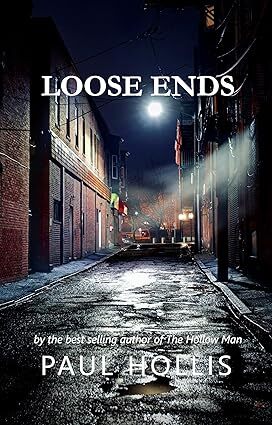 One aspect of a well told story is to evoke an environment; what it feels like to be in it.
Paul Hollis’ novel, Loose Ends, from his Hollow Man series, offers some wonderful examples in its first chapter of evoking environments.
A note in passing, even the title, Loose Ends, conveys something about the story and plot. Both a character and a situation can beat loose ends.
Opening line...
“Life goes on,” he said, “even when you don’t want it to.”
This conveys something about the main character’s state as the story begins.
Continuing...
‘The words hung in the air, heavy with resignation, as if he uttered them not for comfort but to confirm some unwavering truth. Outside, he knew the world would press forward with its usual indifference; down in the street bus brakes screeched, car horns blared, and pedestrians and pedestrians weaved through crowds of living ghosts as the world moved on with us or without us.’
Note how clearly this evokes this place but also this moment in the narrator’s life. As readers, we are sharing this moment.
Continuing from the end of page one to page two, ‘The fading light of dusk framed his silhouette like he was a figure caught between two worlds, unwilling or unable to choose a side.’
Again, using language that evokes the inner journey of the character.
In passing, one finds the same technique in a novel like Henry James’ The Ambassador or Virginia Woolf’s To the Lighthouse.
I do advise people to pack a lunch when they start a Henry James paragraph, or with Woolf, be prepared to go to great inner depths of a character in a single sentence.
Hollis’ language is more succinct, but the goal is the same, to allow a reader to share the journey of a story.
Continuing…
A female character observes of a mug she holds, ‘The jagged lines spidering across the glaze felt like a reflection of her own fractures, small but irreparable.’
Note what this conveys about her inner life. We don’t have to wait 40 pages to discover she’s a damaged human being.
Continuing, ‘The room fell silent except for the faint ticking of a clock on the mantle, marking time with a cruelty she couldn’t bear.’
As the story advances with precision, the two characters come to a monumental decision, ‘Their presence (words) hung irreversibly like a stone dropped into deep water, sinking fast into the darkness but rippling outwards.’
Dark and deep. Lovely language that serves a dramatic purpose.
Moving to the end of the chapter, ‘The room fell into a pressing silence again, time marked only by the ticking of the clock, counting down the moments to a decision she knew she couldn’t undo.’
Note how this advances the plot and the inner journey of the characters. Each chapter in a novel should advance the story and plot.
As well, the audience is drawn forward to turn the page, the goal of a well-written chapter, a well-written paragraph, a well-written sentence.
Well done, Mr. Hollis.
Other novels reviews by Bill Johnson are available on his website, Essays on the Craft of Dramatic Writing.
Evoking a Novel's Landscape
One aspect of a well told story is to evoke an environment; what it feels like to be in it.
Paul Hollis’ novel, Loose Ends, from his Hollow Man series, offers some wonderful examples in its first chapter of evoking environments.
A note in passing, even the title, Loose Ends, conveys something about the story and plot. Both a character and a situation can beat loose ends.
Opening line...
“Life goes on,” he said, “even when you don’t want it to.”
This conveys something about the main character’s state as the story begins.
Continuing...
‘The words hung in the air, heavy with resignation, as if he uttered them not for comfort but to confirm some unwavering truth. Outside, he knew the world would press forward with its usual indifference; down in the street bus brakes screeched, car horns blared, and pedestrians and pedestrians weaved through crowds of living ghosts as the world moved on with us or without us.’
Note how clearly this evokes this place but also this moment in the narrator’s life. As readers, we are sharing this moment.
Continuing from the end of page one to page two, ‘The fading light of dusk framed his silhouette like he was a figure caught between two worlds, unwilling or unable to choose a side.’
Again, using language that evokes the inner journey of the character.
In passing, one finds the same technique in a novel like Henry James’ The Ambassador or Virginia Woolf’s To the Lighthouse.
I do advise people to pack a lunch when they start a Henry James paragraph, or with Woolf, be prepared to go to great inner depths of a character in a single sentence.
Hollis’ language is more succinct, but the goal is the same, to allow a reader to share the journey of a story.
Continuing…
A female character observes of a mug she holds, ‘The jagged lines spidering across the glaze felt like a reflection of her own fractures, small but irreparable.’
Note what this conveys about her inner life. We don’t have to wait 40 pages to discover she’s a damaged human being.
Continuing, ‘The room fell silent except for the faint ticking of a clock on the mantle, marking time with a cruelty she couldn’t bear.’
As the story advances with precision, the two characters come to a monumental decision, ‘Their presence (words) hung irreversibly like a stone dropped into deep water, sinking fast into the darkness but rippling outwards.’
Dark and deep. Lovely language that serves a dramatic purpose.
Moving to the end of the chapter, ‘The room fell into a pressing silence again, time marked only by the ticking of the clock, counting down the moments to a decision she knew she couldn’t undo.’
Note how this advances the plot and the inner journey of the characters. Each chapter in a novel should advance the story and plot.
As well, the audience is drawn forward to turn the page, the goal of a well-written chapter, a well-written paragraph, a well-written sentence.
Well done, Mr. Hollis.
Other novels reviews by Bill Johnson are available on his website, Essays on the Craft of Dramatic Writing.
February 16, 2026
Notes on Good Luck Have Fun Don't Die
He says he has a bomb connected to a switch in his hand.
He needs the attention of diners because he’s from the future and he needs recruits to help stop the end of the world.
Somehow, he knows personal details of many of the diners.
The first person to offer himself is rejected as he’s been an ‘albatross’ on previous attempts to prevent the end of the world. Over 100, apparently.
A woman offers to volunteer and slowly several others volunteer, including a young woman wearing a bedraggled princess costume, who the time traveler rejects, then accepts.
Then the police arrive and the question becomes, how to get out of the restaurant? And the first volunteer has the answer, which the time traveler finds suspicious, but what can you do?
The time traveler also explains what’s happened. That humanity started in the morning checking emails. Then an AI generated content that gave a reason to stay online and not get out of bed.
End of world.
Flashbacks convey the lives of the volunteers and the way society has been overtaken by AI.
I found it gloriously funny and the most enjoyable movie I’ve seen in years.
When the story seems to have a happy ending, the time traveler has a decision to make.
Highly recommended to anyone who wants a change of pace and a satire that skews modern society as we become happy, pacified consumers.
Et me, too.
If this happens to you in real life, don’t ask for kittens as an adversary.
A moment of synchronicty...a few days before the movie on a whim I bought a pink snowball treat that I haven't eaten in years. One is featured in the film. It's like I was in the movie once removed.
Maybe it's a sign that I'm going to...
For more of my capsule movie reviews, visit https://www.storyispromise.com/quikcuts.html
Bill Johnson's Blog

- Bill Johnson's profile
- 5 followers

