
Juliet Butler's Blog
April 19, 2019
Can you cure a narcissist?

It is a commonly held belief that someone suffering from Narcissistic Personality Disorder cannot be helped.
When I met Russian conjoined twins Masha and Dasha Krivoshlyapova, they were in their thirties and I’d never heard of narcissism – neither, of course, had they. In fact, such was the bubble of ignorance they’d been kept in during their institutionalised lives in Moscow, that they hadn’t even heard of the word ‘conjoined’. This explains why the title of my novel, based on the true story of their lives, is: ‘The Less you Know, The Sounder You Sleep,’ – a popular Russian platitude.
I came to know them intimately in the following fifteen years, and was outraged by Masha’s cruel, domineering and often violent treatment of her submissive sister.
At the time, I didn’t understand that because of the toxic abuse the twins both suffered in their childhood, Masha had developed psychopathic tendencies and Dasha had become her willing victim – or indeed, The Perfect Storm, because she could never escape.
Insecure love is what makes us echoists or narcissists: victims and perpetrators.
Enmeshment is a term used in psychology to describe an unhealthy dependence on another person, something that happens between all perpetrators and their victims. Masha and Dasha were enmeshed in body as well as soul.
It took a savagely malicious expose on them in the tabloid press, ten years after I met them, for the tide to finally turn. Masha had given a drunken ‘interview’ to a journalist (who had posed as a doctor,) slamming her sister for being an alcoholic slut, and painting herself in the light of the wronged angel. A typically narcissistic act. The narcissists’ False Self rationalises that all wrongs are the fault of others, they take no blame for their own behaviour but shamelessly blame others.
The sense of shame the partner feels can be paralyzing.
But this betrayal turned out to be the point at which Dasha knew she couldn’t go on like this and remain sane.
In most cases, victims fight or take flight. They freeze like a rabbit in the headlights. I was in an abusive relationship with my husband and I froze and then fawned.
Over the weeks, months and years that followed the publication of that tabloid article, I watched in awe as Dasha slowly but surely regained her power and achieved a healthy balance in the relationship. Something that I never managed with my husband despite our many therapy sessions.
A narcissists’ victim will leave when they reach rock bottom and the pain becomes too much to endure. Either that, or they develop a substance addiction or a stress related illness which may well kill them. Or they commit suicide.
But leaving wasn’t an option for Dasha with Masha watching her all the time, knowing that if Dasha ended her life she would die too.
.
I couldn’t ask Dasha how she achieved this, but I could see, every time we were together that she had taken on the role of reparenting a hurt and angry child.
Dasha stopped being the victim and became the victor. Masha began calling her by her name, instead of referring to her as ‘my sheep,’ ‘my slave’ and ‘my shipwreck’. She began listening to her advice and following it. She was still childlike, but now she was a happier child with parental boundaries instead of a screaming toddler throwing terrible, uncontrolled tantrums.
Ironically, I believe Dasha achieved this balance because she never had the option to walk out, so she forced herself to stop fearing and validating her sister and began respecting and validating herself. We victims know we can leave but we often don’t because of the toxic bond with our tormentor – as popularised with the #whyIstayed movement. And we chose to fall in love with our partners whereas Dasha had no choice with her sibling.
Some readers of ‘The Less You Know The Sounder You Sleep,’ have asked me how to emulate Dasha’s success in taming her narcissistic sister and achieving a loving relationship. They are almost always referring to their partners, and my advice is to leave. If Dasha could have left she would have been off like a rabbit. As Masha always said, if they’d been surgically separated, she wouldn’t have seen Dasha for dust!
But happily, we possess a self-awareness that they are completely devoid of. That’s why we are the ones who can eventually stop all contact with them and heal. We don’t have to heal them. We are not conjoined.
The post Can you cure a narcissist? appeared first on Juliet Butler.


April 15, 2019
Echoists and Narcissists as siblings
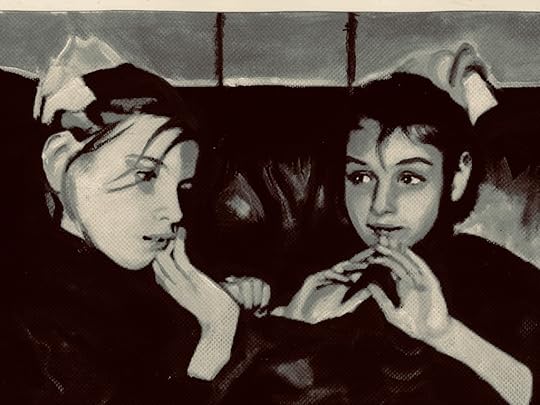
Dasha was a conjoined twin who was born in the USSR in 1950 and spent the first five years of her life with ‘care-givers’ who were scientists studying her and her identical twin Masha in one of Stalin’s laboratories.
It’s not surprising that she and her twin Masha, grew up with personality disorders – not as a result of their unusual deformity but because of their childhood trauma. After all, conjoined twins Abby and Brittany Hensel were brought up in a loving family and are well adjusted, happy adults.
What is surprising is that because of their inherited character traits (Masha was like her bullying father and Dasha like her gentle mother,) they were at diametrically opposed ends of what is now known as the scale of narcissism.
When I met Masha and Dasha, they were in their mid thirties and Masha had developed into a full blown narcissist while Dasha was struggling with the torment of being an echoist.
In Greek mythology a nymph, Echo, was in love with the handsome Narcissus who fell in love with his own reflection and pined away staring at himself in a pool of water. Echo pined away watching him.
I was introduced to the twins as a foreign correspondent in Moscow, because Masha wanted to be featured in the British Sunday Times Magazine. She desired fame, money and attention while all Dasha had ever wanted was to hide in the shadows.
Humiliation is a more intensely felt emotion than either happiness or anger and the toxic shame that both Masha and Dasha felt at their core, comes from when caregivers consistently punish and isolate a child. The trauma of persistent abandonment and rejection results in the True Self being quelled. As a defence mechanism against the shame of not being considered lovable, the child creates its own False Self.
The narcissist forms a hard shell and becomes a consummate taker, demanding the love and approval he/she never received. The echoist however, crawls inside someone else’s hard shell (usually a narcissists’) and is a consummate giver, seeking that love and approval.
They both employ survival tactics to keep them safe, and both are based on shame.
Being on the echoist end of the spectrum myself, I felt an immediate affinity with Dasha and antipathy for Masha. This was something my editor had to help me balance when rewriting the book The Less You Know The Sounder You Sleep.
An echoist lives in denial of the shame of being in an abusive relationship so Dasha was loyal to her sister and I was loyal to my late husband who, through no fault of his own, (it’s that dang parenting again) was as malignantly narcissistic as Masha.
Masha wanted to be a circus act, to appear on TV, and feature in the tabloids. Dasha wanted to be quietly hidden away in a corner She would have hated being on social media and expressing her opinion, (as do I, but I’m doing battle with my fear of CRAP – criticism, rejection, abandonment and punishment, on a daily basis.) But Masha would have loved it.
The first autobiography I helped them write, turned out to be Masha’s bombastic version of their life. That’s why, after their death, I wanted to write a second one, giving Dasha the voice she never had, but with the message that always burned within her: that disabled people are not ‘defective,’ just different.
But I also wanted to show how she eventually rose above the cripplingly abusive relationship with her sibling.
In a way you could say I perpetuated my own echoism by telling her story. But I’ve come to realise that I did so with such passion, because in a way it was my story too…
The post Echoists and Narcissists as siblings appeared first on Juliet Butler.
March 2, 2019
What makes us who we are – and can we change our fate?
Three Identical Strangers, the award-winning documentary film about identical triplets, focusses on three boys who were put up for adoption by their mother in New York in 1961. They were placed in three different families by a Freudian psychologist studying nature and nurture. The study was never published.
The boys grew into adults who, in later life, had divergent personalities and looked dissimilar. Yet when they first discovered each other as teenagers, the media shone a spotlight on their behavioural similarities, claiming, that this proved the supremacy of nature over nurture.
But as the triplets matured, their dissimilarities grew more pronounced. They had been raised in three families with contrasting parenting styles and this, it seemed had influenced their characters.
So the pendulum swung back to nurture over nature.
But what if identical siblings inherit completely different character traits?
The nature versus nurture debate has traditionally relied on identical twins studies because they were of course presumed to be genetic clones. But behavioural geneticists have discovered that through a process of epigenetics and minor DNA mutations in utero, this is not so.
The medical records of Russian conjoined twins, Masha and Dasha Krivoshlyapova, are proof of this. They were taken from their parents at birth by Soviet scientists in 1951 (the mother wanted to visit them and so was told they’d died,) to be experimented on in a laboratory for six years.
Part of these experiments involved observing their individual character traits and the resultant scientific paper showed that from the first few weeks of life, the girls were like chalk and cheese: Masha was feisty, stubborn and spirited while Dasha was meek, gentle and a people pleaser.
Their contrasting, innate personalities affected how each of them reacted to their identical environments and so became more pronounced as they grew older. Masha became increasingly controlling and Dasha increasingly submissive. Masha loved life – and Dasha was depressed and wanted out of it.
Their diametrically opposed personalities changed their fates as well as their looks.
The interplay between our genes and our experience makes us who we are. Masha became become a narcissist and Dasha an empath. But as Dasha proved, that isn’t the end story
Through self-awareness we can step back and exert our free will to change our circumstances.
The post What makes us who we are – and can we change our fate? appeared first on Juliet Butler.
October 27, 2018
Victims of abuse can end up the victor
People caught up in abusive relationships feel as if they’re trapped in a padded prison. There seems to be no way to escape from your ‘other half’ and for Dasha this of course was true a hundred fold.
Victims are undermined, dominated and made to feel they are worthless. And yet Dasha, remarkably, possessed a wisdom and self-assurance which never ceased to amaze me.
But why? How?
Perhaps it was because although Masha diminished her with what we now call coercive control, she also empowered her with her scorn for the abuse they both faced on almost a daily basis. Or maybe it was her innate wisdom that enabled her to eventually rise above all the ill treatment? Or was it the unconditional love she could always rely on from Aunty Nadya?
I believe it was probably a combination of these three factors. What do you think? All I know for sure is that despite all the monumental obstacles she faced, she emerged as the eventual victor. She overcame her depression and was able to tame Masha and find peace with her.
Masha used to jokingly quote the Russian proverb ‘two bears can’t live in one lair’, but in the end Dasha proved that two lambs could share a pen.
The post Victims of abuse can end up the victor appeared first on Juliet Butler.
November 15, 2017
End of life advice
I met a friend today who has terminal cancer and asked her what her advice would be to those who have their life before them. She said it would be to seize opportunities in life and pursue your dreams.
That’s easier said than done. Confidence is 80% nature and 20% nurture. The essence of confidence is indifference. In other words confident people think: ‘I don’t care what people think of me, I’m going to do it anyway.’ Acquiring confidence however, is hard and takes constant application and self awareness.
Masha was born confident and Dasha acquired confidence. Masha seized opportunities and Dasha gritted her teeth and followed her into the unknown. (Going to the school in Novocherkassk and appearing on the TV show ‘Vzglyad’, in order to escape the asylum.)
My friend has inherent confidence – lucky her – and when looking back on her life, she was telling me about how seeing the bigger picture helped her make the right decisions. That meant that now she can face death with equanimity and no regrets.
We should take the driving seat in our lives instead of buckling up in the passenger seat and sitting back for the ride. Of course when you are eighteen years old and are incarcerated in a locked institution for the elderly for the rest of your life, it’s impossible to take control. But we are not like the teenage Masha and Dasha. Luckily we have opportunities to take the wheel and navigate our own course. Let’s remember that. Let’s steel ourselves and strike out onto the open road to pursue our dream. Life is short.
The post End of life advice appeared first on Juliet Butler.
October 17, 2017
The Loneliness of Being Bullied
Masha and Dasha were bullied.
First by the scientists who took them from their parents to study them like guinea pigs.
Then by those in authority in the institutions where they were forced to live.
Since they had two different personalities they reacted in two different ways. Sensitive Dasha shrank back and withdrew, but tough Masha fought back. She became a bully to protect herself.
Someone said to me last night that being conjoined must be the worst torture a person can go through. This comment got me thinking that there were definite advantages to being conjoined – and one of them is never feeling isolated by bullying.
Most of us face bullying alone but Dasha always had her sister pulling her to her feet and saying ‘if they don’t need us we don’t need them.’
Being a victim of bullying is a lonely business. But when you always have a ‘partner’ at your side who is the target of the same persecution – whether it be from fellow inmates or the poisonous press – you have an ally.
There’s a lot in the news nowadays about children and teens suffering from depression and anxiety because of the oppressions of social media. What we need is a person to talk to, not a portal.
A problem shared is a problem halved.
Something we could all remember.
The post The Loneliness of Being Bullied appeared first on Juliet Butler.
August 29, 2017
Please help me! What do you do if there’s no one to help?
I’ve had my share of problems in life, love and relationships.
But there’s always been help at hand. Whether it’s through the therapy I went through with my two husbands and more recently as a singleton, or through friends, family, on line forums, psychiatry sites on the internet, you name it, help is available to people who need it and are willing to access it, 24 hours a day.
Masha and Dasha were viewed as mutants in a society that didn’t accept physical flaws of any kind.
They both had opposite personality disorders stemming from the abuse they suffered in childhood.
And they had no one to turn to for support and understanding of their condition.
They weren’t even told they were conjoined. In an article in ‘Life Magazine’, in 1966, the scientist who conducted the experiments on them as small children wrote that as they reached puberty they would need psychological help.
But neither he nor anyone else offered it.
Masha’s response as they grew to adulthood was ‘if they don’t need us we don’t need them.’
Dasha’s was to sink into a suicidal depression.
I understood this and tried to talk to Dasha honestly and openly when Masha was asleep (Masha didn’t talk about the psychological consequences of never being apart – she preferred to bulldoze through life under her own steam) but Dasha wouldn’t, or couldn’t speak to me about her inner world.
And yet, miraculously, through the power of her own rationale and common sense she found a way to cope with being locked into the same body as an abusive sister and to redress the balance of their warring personalities. Ultimately she was the one to achieve peace and wellbeing for them both.
I remain in awe of that stupendous achievement.
The power of the mind can be a terrible thing but also a wonderful one. If we just try hard enough.
The post Please help me! What do you do if there’s no one to help? appeared first on Juliet Butler.
August 28, 2017
So you don’t want to take a risk and do something new?
You’re comfortable in your job, your marriage, your house, your town and your country. You don’t want to rock the boat.
Or maybe you’re not? Perhaps you think that if you could just pluck up the courage it might be exciting and more fulfilling to step out of your comfort zone and do something different? Buuuut, you just can’t do it because it’s scary.
Now. Imagine what it’s like to be placed in a tiny, dark room in an Old People’s Home at the age of 18 and told that you will have no one your age to talk to and nothing to do for the next fifty odd years.
No TV, no radio, no work, virtually no books. Nothing. To. Do.
Masha and Dasha had no opportunity step away from their routine and explore. They weren’t allowed outside the narrow grounds of their Home, let alone outside Moscow to another city or another country.
Amazingly, they coped. They made the best of it despite all the odds, year upon year upon dreary year.
But we don’t have to.
We’re the lucky ones. But perhaps our minds are rather like the fearsome Administrator at the Twentieth Home for Veterans in Moscow who locked them up there for life.
Until they broke free in a stupendous act of dual courage, overcoming all their fears.
But we don’t have to appear before millions of viewers on live TV in an appeal to change our circumstances for what we know deep down, will be for the better.
We can just wake up one morning and do it.
Let’s take advantage of the opportunities we have.
The post So you don’t want to take a risk and do something new? appeared first on Juliet Butler.
August 27, 2017
Is a tragic love affair better than no love affair at all?
Dasha kept the letters of the boy she fell in love with under her pillow all her life.
She never forgot him. She created an imaginary life with him – the one she could have had if they had both been ‘healthies’ instead of ‘defectives.’
This fantasy of hers is what is known as cognitive dissonance and is not uncommon among those who are suffering from trauma. In Dasha’s case it was the trauma of being perceived by the public as mutants; the trauma of having a dominant, abusive sister; and of course the trauma of unbearable grief when the one person who understood her and loved her for who she was died unexpectedly.
Her dream of a life with Slava in a village where they both worked and had a family, was, she told me, just as real, if not more real in her own mind than the existence she loathed.
She drew energy and created a reason for living from the power of her imagination. It helped her cope and it gave her joy. If hadn’t had that glimpse of passion and love in the four years she spent with him in their school, she would never have had that romantic fantasy to draw on.
Most of course live a reasonably happy and fulfilled life so when we suffer heartbreak we may weep and tear our hair out but eventually we are able to react appropriately and move on.
We may look back on a love affair which ended tragically (whether that be the agony of being abandoned by someone we loved, or having a lover die) and regret it because of the terrible pain it caused. But what we should is take the positivity out of that experience, not the negativity. A lost love should – and often does – act as a catalyst to reassess our lives and move onwards and upwards to happier relationships, both with ourselves and others.
Dasha was unable to move on to another man because Slava was the only shot she got at true love.
But she was able to find joy in the world of illusion she created from his memory, his letters and their love for each other. She took his letters with her when she was taken in the ambulance before she died.
They were probably disposed of by cleaning staff but that’s OK. They’d served their function.
The post Is a tragic love affair better than no love affair at all? appeared first on Juliet Butler.
August 25, 2017
‘Do you wish you’d been killed at birth?’
‘Do you wish you’d been killed at birth?’
I’d been walking around the grounds of the 6th Home for the Elderly with Masha and Dasha and one of the old ladies there asked them that question.
It got asked a lot.
As usual, Masha dismissed it with a joke, saying her life had been worthwhile for the pleasure of dancing on the graves of old biddies like her.
But Dasha was more thoughtful and once we were back inside, in the safety of their room, she told me that yes, she did wish they’d been killed at birth.
‘I’ve had more sorrow than joy,’ she explained as Masha scoffed and switched on her Atari. ‘I only find peace in the blackness that vodka brings.’
This conversation took place in the years before she finally stood up to Masha, reasserted herself and redressed the balance in their abusive relationship. She stopped drinking, took back control and they found peace and happiness. Both of them.
But it made me consider, for the thousandth time during my friendship with them, the plight of being conjoined when you are two totally different people.
One loved life and the other hated it. Dasha’s bitterness was etched into her face but Masha seemed to thrive on her own anger and resentment. Dasha had tried to kill herself many times and been prevented by Masha.
I sat with them while Dasha told me of the times they’d been betrayed by people they thought were their friends. Then they received a visit from one of the staff – a motherly figure who loved fussing over them. She’d come in with some homemade jam and sat down with a bump on their bed for a chat. By the time I left Dasha was laughing at her tales of life on the Outside, and spooning the jam out of the jar and into her tea.
I left them to pick my children up from their school but I remember that it struck me then, that we shouldn’t live a life of regret, but take happiness where it comes. In the moment.
And if there is something in our lives that causes us sorrow and that we are able to change, we should set out to jolly well change it. A few years later, Dasha managed to shift their relationship from one of abuse to compromise. She couldn’t change their body, but she could change her mind.
It’s called positivity and she cracked it. To start of with in little ways – and by the end in life changing ones.
If I’d asked her the same question then, I think her answer would have been different.
The post ‘Do you wish you’d been killed at birth?’ appeared first on Juliet Butler.

