
Alicia Silverstone's Blog
November 30, 2025
Finding Cozy Connection During The Holiday Season
The holiday season doesn’t have to be stressful — no matter which holidays you celebrate (or avoid). The increasing dark of the Northern Hemisphere can be a signal to turn inward to your family, to create more warmth, light, and peace in your home. It can be a time for cozy connection and deep joy, whatever your personal beliefs.
The key is deciding what kind of experience you want to create – and meshing your expectations with your family’s. Imagine it’s next January 1. Won’t it be terrific if you find yourself rested, refreshed, and contented with your life?
Imagine being able to:
Use this holiday to have some wonderful, deep time with each member of your immediate family. Your whole family will start the year feeling energized and connected.Give presents that delight the receiver, and therefore delight you. You don’t go over budget, and most of the time your present is something you make or do for the recipient, with your child, easily and joyfully.Feel healthy and maintain a steady weight. Instead of overeating, you feed your hungry heart with connection to others, and with giving to others. You spend time outdoors. You nourish yourself and your family by cooking healthy food. In short, you nurture your own body and soul, as well as your children’s.Find meaning this year in brightening the season for others. Through your example, your kids begin to discover the spirit of the season and feel the gift of being angels to others.Feel clarity, going into the new year, about the ways you want to make your life different in the future. You even make a plan that will be easy to stick to, that will help you change ONE important habit.1. Decide what’s really important and say no to everything elseWe all have full lives the other eleven months of the year. Adding an elaborate agenda to accomplish during the season can only send your household into a tailspin and your blood pressure through the roof. The guaranteed result is tantrums from the kids and tears for you. What do you need to do so it feels like Christmas, or Hanukkah, or Kwanza, or the Winter Solstice, to you? Maybe you always decorate the house with greenery, or bake cookies. Maybe you’d like to make presents, or start a new tradition about kindness or gratitude. Maybe advent calendars or latkes or religious services are essential.
Just say no to holiday events that don’t hold meaning for you, including most work events. If you must spend time at work-related holiday events, be sure to acknowledge them as work time that’s cutting into the family time you want to prioritize this season. Take other time off to make up for it. For instance, you might leave work early to pick your child up after school for a special afternoon together doing something meaningful and holiday-related.
If your kids are old enough that they want to spend time with their friends rather than just family, that’s terrific. Plan now to include their friends in the events where it feels appropriate – baking pies for the local soup kitchen, or gathering greenery to decorate the house. Your kids will probably jump at the chance for a small party, even if it’s a party to make holiday decorations.
This family meeting about the holidays is a great time to express what YOU most want this holiday – special time to connect with each member of your family.
2. Prioritize connecting with your family.Now you have a sense of what you’re actually going to do, your first rule is not to do holiday tasks alone, unless you feel nurtured by them. If you like nothing better than to put on music and fill the house with good smells, then I wish you happy baking. But don’t set yourself up to feel like a martyr at midnight, when you find yourself bleary-eyed and facing a sink full of dirty dishes. Always find a partner for these holiday tasks. It’s a great opportunity for fun with family members, and the kids love the one-on-one time with mom or dad. And if you can’t recruit anyone, consider that maybe you don’t actually need to do more baking or decorating or whatever, if it isn’t important to anyone else. Who are you trying to impress, after all?
If your kids are too young to help, then it becomes even more important to limit what you do. What they want this holiday season is connection with their parents, not perfect decorations, or lots of events, or even, ultimately, presents. Your kids need you to be in a good mood, ready to make merry and make meaning. Keep it simple. Don’t try to create some glossy magazine vision of the holiday. Remember that your mood matters more to your kids than anything else.
Hopefully, you already have family traditions that give you special time alone with each family member, such as a father-daughter brunch once a month at a favorite diner. You can make your holidays more meaningful, though, with this golden opportunity for one-on-one time. Make a plan with each family member to do something delicious just with them.
Some ideas for “dates” with your kids:
Work together to make a present for another family member.Bake cookies for her class party.Work out together – it’s a great antidote to holiday calories and stress.Go for walks together in a part of town where you can admire the holiday decorations, or out in the country to gather greenery.Take advantage of the early dark to bundle up and stargaze together.3. Reject commercialismNone of the holidays we observe at the end of the year were meant to include purchasing plastic-wrapped things from stores. Each is an opportunity to celebrate – the birth of Jesus, the return of the light with the Solstice, the Seven Principles of Kwanza, and the miracle of faith symbolized by the Hanukkah lights.
The pressures of commercialization do a disservice to these sacred days, to our wallets, and to our children. Our children have been trained to think of the winter holidays as a time for loot, beginning when we put them on a bearded stranger’s lap and have them recite a list of possessions they covet. Kids who watch TV have an especially difficult time, as the seasonal ads whip them into a frenzy of desire that can only crash and burn. The first question they hear upon returning to school is usually “What’ja get?”
After having spent years buying too many presents – originally one for each night of Hanukkah – our family settled into making each of the eight nights meaningful in its own way. One night is the big present night, where the kids each get one “store bought” gift. One night is “Homemade presents” night. One night we throw a Hanukkah party with latkes, another night we go to celebrate with family or friends. One night is Tzedaka night, when we discuss good causes and donate money to them. Each night is special in its own way, and presents take a back seat. We work hard to de-commercialize what can so easily become a feast of more, more, more, rather than a feast of lights and miracles.
De-commercializing Christmas can be even more challenging, but it’s certainly possible. I know families who give four presents to their child for Christmas: “something you want, something you need, something to wear, something to read.” Others give a present from the parents and a present from Santa. Add a stocking, time to play with your child, and a few annual traditions, and it’s plenty. The gifts you do give will be treasured.
Set a budget for each gift, add them up to be sure you can handle the total, and really stick to it. You might try online shopping, so you can do it at night without the kids around, avoid the exhaustion and crowds, and diminish the importance of holiday shopping in your family life. You’re also more likely to stick to your budget.
Some families de-commercialize the holidays by making presents. It isn’t free – you have to buy supplies – and it takes time, but it can be cheaper, more fun, and more meaningful than a “bought” gift.
If you choose to make presents, sit down with your list of giftees and decide what you’re making and how long each present will take. Your goal is to delight your giftees with a token of your affection, not to garner status points or exhaust yourself. One strategy is to make big batches of something that most folks will enjoy — fudge, or bath salts — so that most of your gifts can be made on one day, with the help of your child.
If your whole family is making presents – and what kid doesn’t like to make presents? – try scheduling some weekend afternoons when everyone is working on presents. You can count on having to help the younger members of the family, but it’s worth it. If you make this a family tradition, you’ll find that they get more independent each year in making ever more lovely presents. Click here for presents you can make easily with your kids.
4. Create traditions that make merry, meaning, and bring your family closer together.Children love tradition and ritual. Repetition, the comfort of belonging, the sense of wonder, magic, and celebration — traditions nurture kids and parents alike, and create a sense of shared meaning. They connect families.
Kids need the security of repeated traditions, and they’ll want you to repeat this year anything you’ve “always done” in the past. Honor those requests and savor those moments. But if you’re feeling like the things you do every year don’t reflect your values, why not re-evaluate your traditions? Don’t make this about more work; keep it simple. Just try altering your current tradition a bit, or try something new, and if you like it, repeat it. Then begin to talk about it and look forward to it with the whole family. Eventually, that tradition will take on a life of its own and will become a sustaining part of your family culture.
Holiday traditions that will have meaning for your family are plentiful; your job is to find the ones that feel best to everyone and are easiest to pull off.
5. Live the spirit of the season by giving to othersIt’s hard for kids not to get greedy at the holidays, especially if they’re encouraged to make long lists of their desired presents. One answer, of course, is to limit kids to one store-bought gift (although often a grandparent will add another.) But what we really want for our kids is not for them to feel deprived, but to find their own holiday spirit and discover the joy of giving to others. Did you know that the experience of giving actually activates an area of the brain that gives us physical pleasure?
But generosity doesn’t come from guilt. Children begin to feel generous from the feeling of having plenty — emotionally, even more than materially — and develop as they have the experience of making others happy by giving to them. Our job as parents is to help our kids to have those experiences.
Eventually, if your child is lucky, she’ll learn from experience that making someone else happy by giving to them really is more rewarding than receiving a gift herself. But that wisdom is something that usually develops only after one has had plenty of experiences of giving to others and seeing their delight.
6. Take time as a family for reflectionBeyond the obvious traditions of spiritual reflection and embodying the spirit of giving, the time we have together at the holidays gives a golden opportunity for families to reflect, examine, and appreciate their lives together. It’s traditional at Kwanzaa to rededicate oneself to living a principled life.
The rest of us usually rely on the New Year’s tradition of making a resolution, which is generally less than effective because one resolution is not enough to change a habit (that takes at least 30 days of sustained effort!) Start with discussions at dinner about what you love about your family, your lives, and yourselves, and one thing you would change if you could. Here are a couple of ideas for family reflection rituals to extend this practice:
Start a “Count Your Blessings” scroll. Take a roll of adding machine tape and let everyone write on it something they’re grateful for. The scroll can be taped in lengths around your house as a blessing, like a Tibetan prayer flag.Ask each family member to write down one thing they want to leave behind in the old year, and throw it into the fire (or set it on fire in a firesafe iron pan). At the same time, they can write down one thing they want to create more of in their lives, and put that in a safe, special place. It’s even more effective if you help them write a simple plan to create what they want more of, and review their plan daily for 30 days as they create a new habit.7. Cultivate enough-ness by nurturing yourselfWe approach the holidays each year with the secret hope that our life will be transformed. Somehow, our home will become picture-perfect, professionally decorated and worthy of a magazine spread. Our homemade gifts will be the envy of the neighborhood.
Our children, perfect angels, will be baking for the soup kitchen, starring in the holiday pageant, and certainly never bickering or ungrateful. It helps to make these fantasies conscious, so we can let go of them without guilt. I find I have to remind myself repeatedly throughout the holiday season that my happy mood and time with my kids are much more important than my vision of all I could “give” them – even the educational, values-laden experiences.
Media images of the “perfect” holidays can be discouraging, since real life never looks like that. Reducing TV time during the holidays can reduce that pressure, and give you more time for family games and connecting.
So let go of perfection, and find ways to nurture yourself so you have the energy to be fully present. Go for long walks outdoors, take hot baths, work out at the gym, do yoga, trade massages with your partner or a friend, cook good wholesome food. The more full you feel inside, body and soul, the less you’ll need to pursue the holiday frenzy. And the more you and your family will find yourselves making meaning, as well as making merry.
Dr. Laura Markham is founder of AhaParenting.com and author of Peaceful Parent, Happy Kids, Peaceful Parent, Happy Siblings and the Peaceful Parent, Happy Kids Workbook.


November 28, 2025
My Post-Thanksgiving Detox Soup
During Thanksgiving, my family eats a lot of naughty vegan treats. We have sugary desserts and other veg dishes that are yummy but not very healing or nourishing. At the end of the week, we typically crash. So what do I make to bring us back to our superhero ways?
How about a miso soup from ingredients already in the house: celery, bok choy, light and dark miso, carrots, leeks, dried shiitake mushrooms soaked and sliced (very healing), scallions, and cilantro.
I pre-chopped the scallions and cilantro. I keep them in a little glass jar to use whenever I need a garnish. It saves time! We also had some sweet rice mixed with short-grain rice. It was nice with a little homemade gomasio. This is all I ate all day, and I felt so much better. It tasted so good and healing.
That’s it! We had a day of healing, simple superhero food to get back to normal and heal from the sugar devil!
November 6, 2025
Tia Mowry’s Ginger Acorn Squash Soup
When Tia Mowry told me she was a fan of The Kind Diet—so much that she took the book grocery shopping with her—I was so thrilled! As someone who loves to cook and is trying all kinds of new plant-based recipes, she offered to share this yum-looking soup recipe with us. Thanks, Tia!
xo,
Alicia
Vegan Ginger Acorn Squash Soup
By, Tia Mowry
I am so excited to be guest blogging on The Kind Life! Alicia’s book has been a saving grace. The recipes in it are sooo amazing. I was beyond thrilled and honored when Alicia asked if I wanted to share one of my own recipes on the site, and (after a long deliberation) I finally decided on a recipe for my ginger acorn squash soup. It’s a deliciously cozy winter comfort food, but still light enough to enjoy on a warm spring day. I love how the ginger gives it that extra flavor kick!
Tia Mowry’s Ginger Acorn Squash Soup
Serves 2-3
Ingredients:
1-2 tsps of coconut oil
1 organic raw acorn squash chopped
2 carrots chopped
2 onions chopped
2 celery sticks chopped
3 garlic cloves minced
3-4 inches grated ginger root
About 3 cups vegetable broth (enough to cover the vegetables in the pot)
Parsley as a garnish
Instructions:
1. Sauté carrots, onions, celery, and garlic in coconut oil
2. After a couple of minutes, add squash and ginger
3. Pour in vegetable broth
4. Simmer for 30 min
5. Purée or use Vitamix for 5 minutes until desired creaminess
6. Add sea salt and simmer at least 10 more minutes if you want
7. Garnish with parsley, and serve
This soup is perfect for the whole family—my son Cree loves it, too! I love experimenting with ingredients and I’ve found that soup is one of the easiest, yummiest things to make with all the veggies in my fridge.
October 3, 2025
The Joke’s On Cancer
I was so excited for 2025. I never make insipid resolutions, mostly because I usually derail by mid-February. This time, though, I was resolute: meditate, eat healthy, exercise more, read more, do more, and shift into fifth gear in my career. As a stand-up comedian, I’ve always used humor to navigate life’s obstacle course—but nothing prepared me for the unforeseeable detour up ahead.
The new year started with a boom-erang. I spent New Year’s Eve in the hospital with my husband, who had just undergone a knee replacement. Not exactly the kind of New Year I’m accustomed to. Normally, I work every New Year’s Eve, which gives me the illusion that I’m manifesting abundance for the upcoming year. So, this clinical rerouting was upsetting. But I wanted to be there for my husband, who was feeling very dismayed. Plus, he looked sexy in his gender-neutral hospital gown.
 Irene Bremis and her husband | Courtesy
Unwilling to let anything upend my goals, on January 1st I woke up and started listening to motivational meditations on Reloop. I was on fire for over two weeks—record scratch—until January 17th, when life pissed on my parade and I couldn’t see through the smoke.
For six months, I’d been experiencing frequent bowel movements with occasional blood. I convinced myself it was IBS and hemorrhoids—because the show must go on, sweeties! But eventually, the blood became consistent. I tried Cologuard twice. The first box was expired, the second was invalid for “insufficient specimen.” (No comment.) So, I gave up on Cologuard and walked over to CVS, where I picked up a Second Generation FIT kit for $8. I went home, locked myself in the bathroom, and after the appointed time, looked down to see it had tested positive for cancer.
I assumed it was just detecting blood, but it lit a fire under my ass to make an emergency appointment for a colonoscopy. I was over 50 and had never had one before. I thought it was futile—colon cancer doesn’t run in my family—but old age does. Plus, I’ve always had a visceral fear of anesthesia, especially since menopause brain had me forgetting the make and model of my own car. I even got tested for early-onset dementia, just to be sure.
On January 17th, I walked into the doctor’s office. The nurse assured me that 98 percent of the time, a FIT test leads to nothing. Eager to drink the Kool-Aid, I followed them to the gurney. I was mid-sentence, asking the nurse to use a very light dose of… and I was out.
The next thing I remember was waking up alone, farting like I’d never farted before. It took a while for anyone to come into the room, but eventually, my husband did. Within one minute, the doctor pulled him out. They were gone for what felt like fifteen dog minutes. When they returned, my husband looked like someone had broken into our safe, and the doctor had the discomforting look of a funeral director. He gently said, “We found something. It’s a mass.”
Five centimeters, he said, forming a circle with his fingers. He explained they’d send it to the lab for biopsy and they’d call me with the pathology report.
Three days later, the phone rang. My husband answered. His constipated poker face told me everything—I had cancer.
 Irene Bremis and podcast co-host, Rachel Dratch | Courtesy
Hearing “you have cancer” is surreal. The words echo loudly, but somehow you go deaf. My husband and I stayed in “sick bay,” sob-spooning. I speculated how much time I had left, pondered all the unchecked things on my to-do list, and kept thinking: I don’t have time for cancer. I’M BUSY.
After a week of inertia, I picked myself up and googled colon cancer survivors without chemo. The book Chris Beats Cancer popped up. Chris had colon cancer, underwent surgery, but skipped chemotherapy against his doctor’s urgency. The more I read, the more I knew chemo wasn’t for me. Chemo terrified me more than cancer did.
The gastroenterologist referred me to a surgeon. He explained the tumor was large and in a precarious spot. He recommended three months of chemo, followed by surgery. That was the beginning of a series of dehumanizing procedures that left me sympathizing with anyone who’s ever claimed alien abduction.
Then, as if the universe wanted to mock me, my sister texted to say our mother was being rushed to the hospital with a bowel obstruction. My surgeon overheard and blurted, “That’s colon cancer.” Sure enough, it was. Same size tumor, same surgery. She underwent genetic testing that showed it wasn’t hereditary—just a cruel coincidence. I thought who’s holding the voodoo doll? Was this stigmatic or a cruel coincidence?
Meanwhile, my surgeon said a stoma was unavoidable if he operated. A scat fanny pack? I wasn’t prepared. He pushed chemo. My mind was already fixed.
I plunged into research. Books, medical journals, survivor blogs, YouTube testimonies. Knowledge wasn’t just power—it was life. I changed my diet: raw cruciferous veggies, sprouts, juicing, Ezekiel bread, legumes, brown rice, fasting. EVERYTHING organic. I gave up red wine when I needed it most. I started a regimen of dandelion root, turkey tail, reishi, amla, curcumin, omega-3s. I tracked biomarkers—CEA, hsCRP, ctDNA.
I found community: a 96-year-old nutritionist, an astrophysicist with a breakthrough supplement, friends who became “cancer sponsors,” and my church, where I hijacked the prayer group. I meditated, cut stress, and kept podcasting with Rachel Dratch. I kept my diagnosis private, not out of shame but out of sheer self-preservation.
 Visiting the oncologist | Courtesy Irene Bremis
Within a week of research, I was 95 percent sure I’d forgo chemo.
My first oncologist only cemented that choice. She pushed FOLFOX, a regimen from the ’90s. She told me I’d need a port—a small device under the skin for infusions. I prefer my Port in a glass, vintage 2011. Risks included infection, sepsis, embolisms. She promptly scheduled installation. When I asked if I could wait, she said it was inadvisable. Then she casually mentioned she’d be on vacation for two weeks but I could “always try MyChart.” Paging Dr. Casper.
On the long ride home, I felt I’d signed up for something my body opposed. At home, I re-read the pamphlet. A dealbreaker: I wouldn’t even be able to share a bathroom with my husband because chemo urine is a biohazard. I imagined him in a Silkwood shower. I called to cancel the port, and I ghosted her.
Later I learned she wasn’t even a full oncologist—just an underling. My surgeon admitted she was “inexperienced” and recommended someone else. But hospital politics meant no one wanted to “poach” patients. What about me!? Mean Girls with cancer, so I went out of network.
Chemo was frightful to me. I believed my body could cure cancer, and chemo would harm me. I’d already been misdiagnosed with Lyme for eight years. My faith in medicine was malignant. Lifestyle, eating, meditation—my body’s real medicine.
I researched until I found my dream oncologist, Dr. Ocean. Brazen, formidable, willing to think outside the box. Booked for months. I put her on my vision board. One week later, her secretary called: a cancellation. I knew it was fate.
She respected my decision, ordered MRIs, and gave me no pushback. By then, two months had passed, but I was feeling better. I told her my bowel movements were ten years younger. My biomarkers were excellent. She was intrigued.
Three days later, the MRI results came. I told my husband, “The only thing that would shock me is if it didn’t shrink.” I said it was 2.8 cm. We opened the file. Sure enough: 2.8. I’m psychic! We toasted with kale juice.
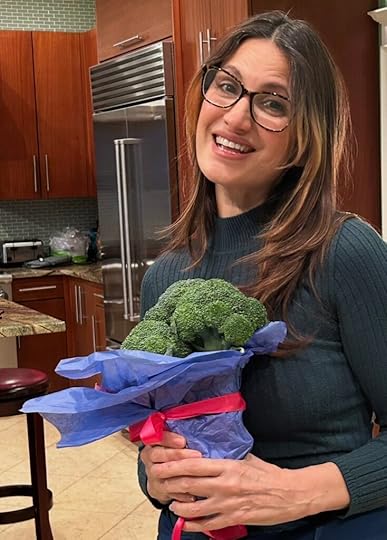 A bouquet of broccoli for Irene’s cancer healing journey | Courtesy
A week later, I saw her again. She recommended we push for surgery. My Doubting Thomas surgeon, skeptical as ever, scoped me again and looked stunned. “It’s 2.8 cm. It did shrink.” He showed me before-and-after footage, then said, “You look good.” Thanks?
I got the green light for surgery, absent a stoma. SUCCESS. A month later, the surgery was done. I’M CANCER FREE.
I’m grateful—for friends who became foxhole bitches, for Alicia who uses her platform, for my surgeon admitting chemo’s days are numbered. Immunotherapy is the future, though Big Pharma will find ways to patent and monetize it. I even looked into holistic cancer resorts. $150k a year. Rancid.
The only thing you need is will…I’m not pushing my methods on anyone—I’m just sharing my road trip. For me, cancer was a blessing too. It forced me inward. It was terrifying, yes, but also empowering.
My friend Carmen summed it up: “2025—a year you won’t forget, not because of anything that went wrong, but everything you did right.”
Feckless C., you ain’t got nothing on me, SWEETIE! And speaking of Sweetie—my comedy special (directed by Onur Tukel, presented by Rachel Dratch) is streaming on Amazon Prime. Hard to believe I had cancer while filming it.
To all my C’s out there: you are not alone. Seek and be sought. This fight is ubiquitous. Thanks for listening—impossible not to take the scenic route when cramming a memoir into one essay.
For more on her cancer journey and comedy, follow Irene Bremis on Instagram.
September 16, 2025
The Eco Clothes Bear and I Actually Wear All the Time
Lately, I’ve been thinking about how often we reach for the same clothes over and over. Not because we have to, but because they just work. They feel good, they fit right, they wash well, and they’re made by people and companies I trust.
For us, that’s mostly Mate the Label and Pact.
Bear’s 14 now, which means he’s got a growing opinion about what he’ll wear (and what he definitely won’t). But these days, he’s practically living in his Pact long-sleeved shirts and pants. They’re soft enough that he doesn’t complain, but still look put-together. They’re perfect for school days, family dinners, and everything in between. I’ll post a few photos — he’s so cute in them, and I love how easy it is to layer when the weather’s being moody (which it always is in LA).
His favorite pair of pants from Pact has that magic combination of comfort and structure — kind of like grown-up sweats but nicer. And I have to admit, I love seeing him in his Pact sweater. It’s simple and classic, and makes him look like such a gentleman. We brought it on our last trip and he wore it to dinner more than once without any nudging from me.
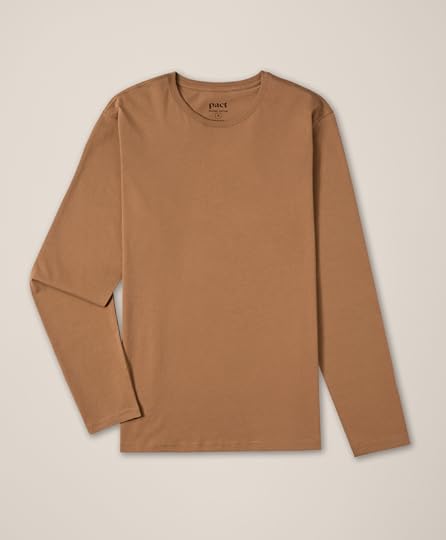 Pact long sleeve shirt
I’ve been wearing Pact for years myself; their sweatpants, socks, underwear, and scoop neck tees are all part of my regular rotation. What I appreciate most is that nothing feels fussy. It’s all made from organic cotton, no weird dyes or chemicals, and it feels like something I don’t want to take off at the end of the day.
Mate the Label is another one I go back to all the time. Their pieces have this beautiful simplicity — super soft, well-made, and thoughtfully designed. I love that they manufacture everything locally in LA and that the whole line is non-toxic and climate-neutral. I’ve worn their thermals, sweats, and lightweight basics for years. My favorite right now is the Fleece Relaxed Sweatshirt. It’s cozy enough for mornings at home but cute enough to wear out if we’re grabbing lunch or running to the farmers market.
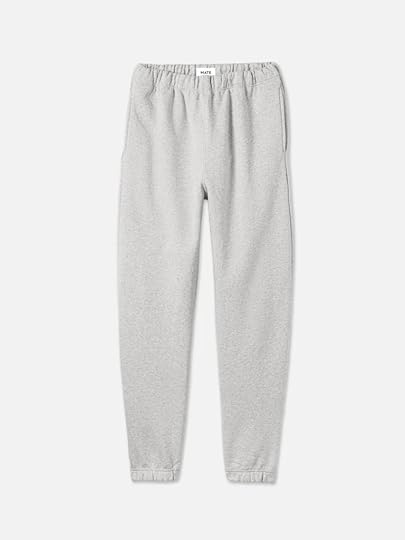 Mate the Label sweatpants
I try to be mindful of what comes into our home, especially with clothes. It doesn’t have to be a lot. In fact, I think it’s better when it’s not. A few high-quality things that you love and wear often — that’s the goal, right? And when those things are also made kindly, it just feels right.
So, here are a few of the staples we’ve come to rely on:
Bear’s Pact long-sleeve shirts and cotton pantsThat classic Pact sweatshirt I love him inEveryday socks and boxer briefs from Pact (Bear-approved)My go-to Pact sweatpants and scoop neck teesMate the Label thermals, sweats, and softest sweatshirtsI’m always looking for brands that are gentle on our skin, on the planet, and on the people making them — and I feel really good about these. Not perfect, but thoughtful. That matters.
More soon,
Alicia x
September 4, 2025
Is ‘Regenerative Wool’ Really Sustainable? A Closer Look at RWS Claims
Lately, you may have seen a few fashion brands talking about wool like it’s suddenly the most sustainable material on the planet. Maybe you’ve seen brands boasting “regenerative,” “responsible,” or “ethical” wool.
Reformation, a brand many consider conscious and cool, now promotes its use of Responsible Wool Standard (RWS)–certified wool as a sustainable choice. Another Tomorrow, Eileen Fisher, and even Stella McCartney all boast regenerative wool in their collections. But when we look beneath the marketing, the picture becomes far less comforting than those cozy-looking sweaters.
Wool comes from animals. And no certification can undo the systemic issues at the core of how it’s produced.
What does ‘regenerative’ really mean?In its truest form, regenerative agriculture refers to a system of farming that goes beyond sustainability. It doesn’t just minimize harm, it actively works to restore ecosystems. Regenerative farming practices can include rotating crops to build soil fertility, using cover crops to reduce erosion, planting trees to increase biodiversity, and eliminating synthetic inputs like pesticides and fertilizers. When done right, regenerative agriculture can increase carbon sequestration, improve water cycles, and support the long-term health of the land.
This approach is deeply rooted in Indigenous land stewardship principles, where farming and grazing were done in harmony with the rhythms of nature, not for extraction, but for regeneration. More recently, regenerative practices have been popularized in environmental circles as a climate solution, especially for soil restoration and carbon drawdown.
But the term has no legal definition, and that’s where things get messy.
In the context of wool, “regenerative” is increasingly being used as a marketing term to suggest that animal-based systems can contribute to climate healing. Wool producers might claim their grazing methods improve soil carbon or reduce erosion, but these benefits are often based on small, cherry-picked studies or theoretical projections, not real-world data at scale. Some regenerative grazing advocates say rotational grazing can mimic natural herd migration patterns, but the science on whether this truly builds soil carbon is still hotly debated and often overstated.
Even more concerning, regenerative wool claims tend to completely ignore the animals themselves. The narrative centers on land health, but says little about whether the sheep involved are treated with care, or if they endure the same violence and commodification seen across the broader wool industry. So when a brand markets “regenerative wool,” it’s important to ask: regenerative for whom?
True regeneration requires care for all parts of the ecosystem, not just soil health, but also biodiversity, climate impact, and animal welfare. A label that focuses only on land, while overlooking what happens to the animals, isn’t fully honest about the cost of production.
What Is the Responsible Wool Standard?The Responsible Wool Standard is managed by Textile Exchange and claims to certify wool from farms that prioritize animal welfare and land stewardship. It cites the “Five Freedoms” of animal welfare and claims to ensure responsible shearing and land management practices. But here’s the problem: the standard makes promises it can’t reliably keep.
Undercover investigations have found cruelty at more than 150 wool operations across seven countries and four continents—many of them certified by RWS or similar programs. Workers have been documented punching, kicking, and stomping on sheep during shearing, while others were caught cutting into animals and stitching gaping wounds without any pain relief. These aren’t isolated incidents. They are patterns that happen across continents, brands, and certifications, according to PETA (People for the Ethical Treatment of Animals).
Even so-called “ethical” programs, like New Zealand’s ZQ Merino, often used alongside RWS, have come under fire. Recent footage revealed sheep beaten and bloodied at ZQ farms. Last year, New Zealand’s Ministry for Primary Industries launched formal investigations into more than 30 farms implicated in these reports, and at least two have been suspended from the ZQ program.
Are the audits enough?Audits under the RWS are mostly pre-scheduled. Even unannounced visits come with up to an hour’s warning, giving farms time to clean up or hide cruelty before auditors arrive. Each certified farm receives just one audit per year, which critics say is hardly enough to capture the day-to-day reality of animal treatment.
The standard also lacks concrete protections around how shearing is done. Shearers are usually paid per fleece, not by the hour, which encourages speed over care. Injuries are so routine that the RWS Farmer Guidebook includes a template for recording them, noting wounds over ten centimeters, accidental removal of teats or parts of the vulva, and other disturbing outcomes.
There are also no requirements for video monitoring, improved restraint methods, or training that prioritizes animal comfort over profit.
What about slaughter?This is another area where the RWS falls short. The standard does not address what happens to sheep once they’re no longer useful for producing wool. Often, they’re transported to the same slaughterhouses as animals from conventional farms, enduring long trips and painful deaths. Investigators have documented animals having their throats slit while still conscious and being handled roughly by untrained workers.
There’s no requirement within the RWS to ensure humane end-of-life protocols, meaning that for all the talk of sustainability and responsibility, the final chapter of a sheep’s life may still be full of fear and suffering.
Why this mattersWords like “regenerative” and “responsible” sound hopeful. And regenerative agriculture can be a powerful tool in the climate conversation when applied to plant-based systems that build soil health and restore ecosystems without harm to animals.
But when we attach these terms to wool, it becomes a form of greenwashing. Wool is still an animal product. It still involves sentient beings who don’t volunteer to be part of the system. And the idea that we can make that system “kind” by branding it differently doesn’t hold up to scrutiny.
In fact, many brands know that shoppers are looking for sustainability, and they’re using that desire to sell business as usual. The goal should be true transparency, not clever marketing.
Better alternatives existThe good news is that innovation is on our side. Today, you can find beautiful, cozy, breathable materials made from plants and recycled content, like tencel, hemp, bamboo, organic cotton, and others that don’t require suffering or slaughter. These materials support biodiversity, protect animals, and often have a much lower environmental footprint.
Fashion can be a space of joy, creativity, and care. But in order to get there, we have to question the stories we’re being sold.
August 11, 2025
4 Foods to Avoid If You’re Pregnant or Trying
You’ll get a lot of advice when you’re expecting: what to eat. But what about the foods to avoid? For moms-to-be, there are some definite no-nos. Let’s take a look.
Most women think of pregnancy as a total departure from normal life, like it’s some kind of nine-month-long excuse to wear fat pants. But all those pints of ice cream and pepperoni pizzas will probably come with a side of hemorrhoids, varicose veins, swollen feet, diabetes, and high blood pressure. Not to mention the impact on your baby.
That’s because filling your diet with nasty foods is the quickest way to derail balance in your body. If your system is busy doing damage control after mealtimes, then it’ll be too short-staffed to get to the really important stuff like making a cleaner, safer, healthier place for your baby to live.
Meat, dairy, and processed foods are tracking toxic sludge through your baby’s house. They’re clogging your arteries, raising your blood pressure, and pumping you full of cholesterol, toxins, hormones, and antibiotics that you don’t need.
Nasty Food #1: MeatUnlike true carnivores (think big jungle cats with big, pointy teeth), whose short intestinal tracts allow for much faster digestion, when humans eat meat, it gets to spend time on the 98.6-degree-Fahrenheit lazy river of our insides—up to 72 hours, to be exact. And what’s it doing in those 72 hours? It’s rotting. That’s three days that a decomposing piece of flesh is sharing a bunk bed with your baby! Yes, it’s being dealt with by your digestive system, but while that meat is taking days and days to break down, it’s leaching a noxious cocktail of hormones, antibiotics, pesticides, pollutants, bacteria, and viruses into your body.
Fish isn’t much better. The tons of garbage floating in the oceans slowly break down into snack-size particles for little plankton-eating fish. And when those little fish become dinner for the big fish—which we in turn eat—they’re passing on not only mercury but also organochlorines, polychlorinated biphenyls (PCBs), and other environmental toxins that are known to be major offenders in fertility, increasing the risk of endometriosis and altering hormonal function.
Yes, omega-3 fatty acids (found in some fish) are good at lowering the risk of heart disease, improving blood vessel function, and improving the overall health of people with diabetes, but we can also get these health benefits from omega-3-rich sources like walnuts, chia, hemp, and flaxseeds, without any of the fishy stuff.
Nasty Food #2: DairyDairy, like meat, is full of unwanted surprises. With the approval of the FDA and USDA, many farmers use growth hormones to rev up milk production and antibiotics to treat the frequent infections cows get from being tethered to milking machines three times a day with no fresh air, and feed them livestock grains that are doused with any number of purposely life-killing compounds.
I know milk seems like a healthy staple of our diet—I mean, most of us grew up drinking a glass with dinner. But the truth is, most humans never tasted any milk besides breast milk for almost all of human history. Cow’s milk is a fairly recent addition to a majority of our diets, thanks to industrialized agriculture. Besides, no other mammal quenches its thirst for the milk of another species.
Nasty Food #3: SugarSugar is bad for the baby house and bad for you. It causes inflammation, can lead to diabetes, and is linked to cancer. But let’s think about the most obvious point of all: Sugar makes you feel like garbage.
If you’re caught in the sugar-craving hamster wheel, consider this: Refined sugar is really bad for the baby house. The Nurses’ Health Study found that eating too many simple carbohydrates can lower your chance of getting pregnant. And if you do manage to get pregnant, continuing to consume large amounts of refined sugar puts you at an increased risk for high blood pressure, which can endanger the baby.
Plants are not without their unprocessed sweet rewards, and after you give your poor taste buds a break from the white sugar assault, you won’t believe how utterly satisfying something as simple as a bowl of ripe berries can be.
Nasty Food #4: Processed FoodBelieve me, I know the allure of a quick-and-easy meal or snack snapped off the grocery store shelf. But food that comes in a box or bag, that has a mile-long list of ingredients, and that can sit unrefrigerated for days is not the “kind food” we’re talking about.
Yes, there might be whole grains or even kale listed on the side of the box. But chances are, during its factory-processed life, those good bits were souped up with hidden sugars and fats and a scary mix of preservatives and additives linked to numerous health issues like obesity, heart disease, and can be seriously detrimental to the health of your developing baby.
If you’ve gotten to the end of this article and are freaking out about a lifetime spent eating these foods take a deep breath. Deliciousness and health await you—trust me!! The human body is incredibly resilient. It wants to heal and be healthy! By beginning to make cleaner, kinder choices now, you can give your body the opportunity to be the amazing little machine it was meant to be.
Check out The Kind Mama for more information & seriously delicious recipes.
July 28, 2025
These Foods Fight Migraines
Migraine headaches affect 25 percent of the female population and about eight percent of the male population. Most people who suffer from migraines head straight for the medicine cabinet, but there are foods that can help reduce the frequency and severity of migraine headaches.
I used to get severe migraines as a kid. The pain was so unbearable! I have memories of praying so intensely for it to stop because it would hurt so bad. Thankfully, I have not had one since I changed my diet to a kind one.
Migraines are a type of headache characterized by intense, debilitating pain. They can last for hours or even days, and can significantly interfere with a person’s daily activities. Migraines are often accompanied by other symptoms beyond just headache, which can include:
Aura: These are sensory disturbances that often precede the headache. They can include visual changes such as seeing flashes of light, zigzagging lines, blind spots, or other symptoms like tingling on one side of the face or in an arm or leg.Nausea and vomiting: Many people with migraines experience these symptoms during an attack.Extreme sensitivity to light and sound: During a migraine, people often find that light and noise make their headaches worse.Lightheadedness, sometimes followed by fainting: These are less common symptoms but can occur in some people.Migraines are often divided into two main types: migraine without aura and migraine with aura. Some people will always experience an aura before a migraine headache, while others will never experience an aura.
The exact cause of migraines isn’t completely understood, but they seem to involve changes in the brain and genetic factors. Certain triggers can also increase the risk of having a migraine. These can include stress, certain foods and drinks, lack of sleep, and hormonal changes in women.
Treatment for migraines can include a combination of medications, lifestyle changes (such as identifying and avoiding triggers), and sometimes complementary therapies like acupuncture.
Which foods cause migraines?Since migraines aren’t fully understood, their triggers aren’t either. But there are a handful of foods connected to migraines including caffeine, alcohol, cheeses and processed meats, as well as food additives including aspartame and other artificial sweeteners, and MSG (Monosodium glutamate), a flavor enhancer used in many types of food.
Foods that fight migrainesIf you follow a kind diet but still get migraines, I recommend you see a macrobiotic counselor. For now, here are five foods that have been shown to help fight migraines.
1. MilletMillet contains migraine-preventing magnesium. Try it for breakfast in my millet and sweet vegetable porridge.
The research is still in its infancy ,but flaxseed is high in omega-3s, and some studies have shown that omega-3s can reduce the frequency of migraines
At least one study concluded that olive oil (also high in omega-3s) reduced the length, intensity, and duration of migraine attacks in adolescents.
Vitamin B2 (riboflavin) is a major weapon in the battle against migraines. Spinach has some of the highest amounts of riboflavin among other vegetables. But a word of caution: be mindful of eating spinach more than 1-2 times a week. This is because it contains low levels of oxalic acid, a naturally occurring acid that can interfere with calcium absorption. There are many other riboflavin-rich veggies such as asparagus, broccoli, and peas that can be substituted.
5. WaterDehydration is a common trigger for migraines, so before you reach into the medicine cabinet, or start chowing down, make sure you’ve had your H2O.
Other foods believed to fight migraine headaches are peppermint, cayenne pepper, ginger, wheat germ, soy, and many dark leafy vegetables.
July 25, 2025
Bad Manners: Sweet Potato, Squash, & Black Bean Enchiladas
Bad Manners: Eat Like You Give a F*ck is a tough, edgy, and fun-looking cookbook all about eating plant-based. The authors lay down the facts, provide the steps, and want you to “elevate your kitchen game.” These guys make me giggle. I’m not the biggest fan of enchiladas but I definitely want to try these! Enjoy!
There are two kinds of people in this world: people who like enchiladas and people who have no fucking taste. Which are you?
MAKES 8 ENCHILADAS OR ENOUGH FOR 4 PEOPLE
ENCHILADA SAUCE
21/4 cups vegetable broth
1/3 cup tomato paste
21/2 tablespoons chili powder
2 teaspoons ground cumin
11/2 teaspoons dried oregano
2 to 3 cloves garlic, minced
2 teaspoons soy sauce or tamari
1 tablespoon lime juice
FILLING
1 large sweet potato (about 1 pound), chopped into nickel-size pieces*
2 teaspoons olive oil
1/2 yellow onion, chopped
1 medium yellow squash, grated on your box grater (about 1 cup)
1 teaspoon chili powder
2 cloves garlic, minced
11/2 cups cooked black beans**
1 teaspoon maple syrup or agave syrup
A pack of corn or flour tortillas
Sliced avocado
Chopped fresh cilantro
1/2 teaspoon ground cumin
1/2 teaspoon salt
(keep going ’cause you know we aren’t done . . . )
* You really just need 1 large cooked sweet potato. If you have a leftover roasted sweet potato or something, just scoop out the flesh and move on with the recipe. Or steam it in the microwave if that is your shit: Stab it with a fork, then cook on high for 5 minutes, flip, then 5 minutes more.
** Or one 15-ounce can
July 1, 2025
The Best Clean, Vegan Sunscreens for Your Body and Your Planet
The weather in LA is heating up and we are slowly getting into summer mode over here. Bear and I love to spend time outside, hike with our dogs, and swim. Sometimes we surf! For times when sunscreen is needed (skin covered in sunscreen does not absorb vitamin D the same as un-blocked skin), these are my favorite sustainable and vegan sunscreens to use
Like most conventional products, sunscreen can contain lots of icky ingredients. In order to steer clear of that stuff, look for a few key indicators on your sunscreen to help you navigate. Ideally, the ingredients are natural or organic, and mineral-based (like zinc oxide) with limited other (hard to pronounce) ingredients. Bonus: look for products that also tout being reef safe. Ingredients gentler on the planet are generally gentler for our bodies, too.
If you want to dig deeper into certain brands or educate yourself more on those unknown ingredients, check out the Environmental Working Group‘s simple to use and informative sunscreen guide.
Though there are a fair amount of natural-based sunscreens out there, continue to read labels and question ingredients—as even if they lack some of the more common scary ingredients, there could be some other questionable ones in there.
Here’s one: Ethylhexylglycerin is a relatively new chemical on the market and is commonly used as an alternative to parabens. While it does derive from vegetable oil, it goes through several chemical processes. It’s definitely not the worst ingredient out there, but there just isn’t too much research on it so just be aware.
Similarly, Polyaminopropyl Biguanide is a synthetic ingredient commonly found in natural sunscreens. It is also not a terribly dangerous ingredient, but the way it works is by breaking the cell wall of bacteria and damaging its DNA. Studies have shown it’s not strong enough to break down human cells, so that’s a relief! But it is restricted in Japan so if you want to lean on the safe side, steer clear of it.
Best Sunscreen For Daily ProtectionListed below are some healthy sunscreens— some I like to use and others with excellent safety ratings. So get your best summer on without burning, premature aging, or damaging coral reefs. Enjoy!
 For the Face1. Josh Rosebrook Nutrient Day Cream Tinted, SPF 30
I love this tinted SPF! It has zinc, so it protects against UVA and UVB rays, blended with yummy organic ingredients like almond oil, calendula, and shea butter.
Get it here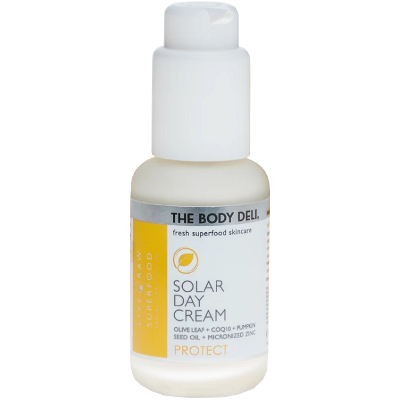 2. Body Deli Solar Day Cream
 I love the Body Deli products and this sunscreen does not disappoint, either. This is great for the face. Nice neutral scent, and feels really lightweight.
Get it here 3. Alba Botanica, SPF 30
 Goes on like a charm, feels nice! The coconut shea butter one smells really good!
Get it here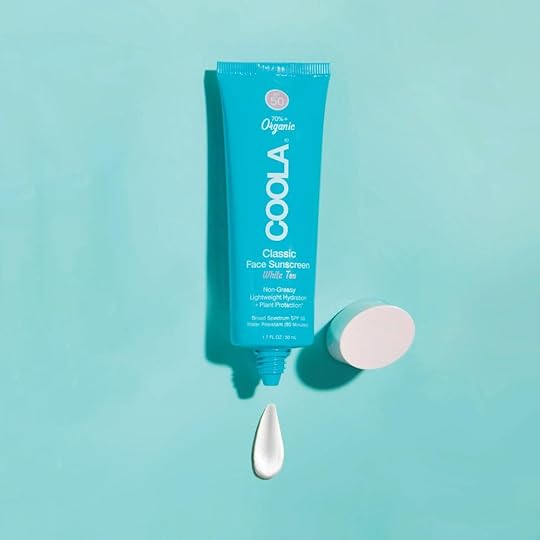 4. Coola, SPF 50
 I love Coola’s sunscreen. There are a few different flavors but the gentle white tea scent is my pick. It’s reef safe and doesn’t leave a white tint. I mostly use this on my face but it feels nice on my arms and body and isn’t sticky either. I also love the Coola Guava Mango SPF 50 Sport organic sunscreen spray. It’s one of my favorites and smells incredible.
Get it here 5. Raw Elements Baby and Kids Stick, SPF 30
Great! I love the idea of a stick- especially with a kid, it makes it super easy to apply on the face quickly and then let them run back into the sun!
Get it here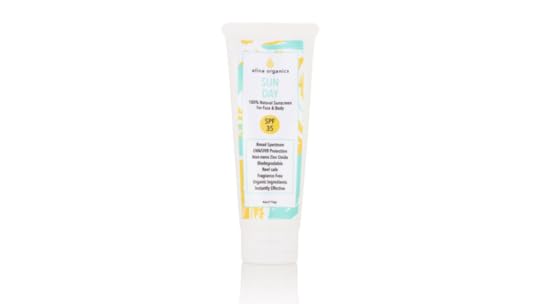 6. Elina Organics Sun Day, SPF 35
Super white and thick- I had to rub this one in a lot! It is heavy on the white tint but it does go in nicely.
Get it hereFor the Beach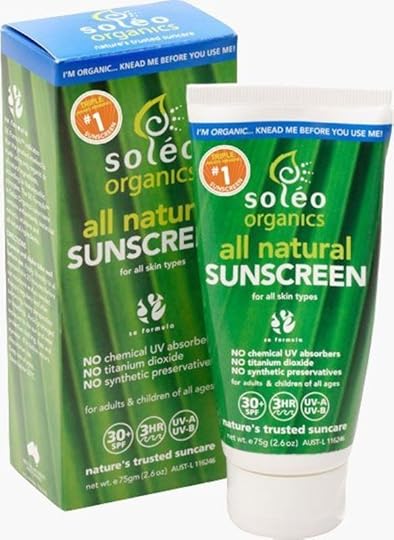 7. Soleo Organics, SPF 30
This sunscreen rubs in rather easily and is great when you’re at the pool or beach as it has a three-hour water resistance window!
Get it here 8. MyChelle Replenishing Solar Defense, SPF 30
Smells great, lightweight, no white cast….but slightly sticky! Doesn’t feel overly sticky that I wouldn’t use it, though!
Get it hereKids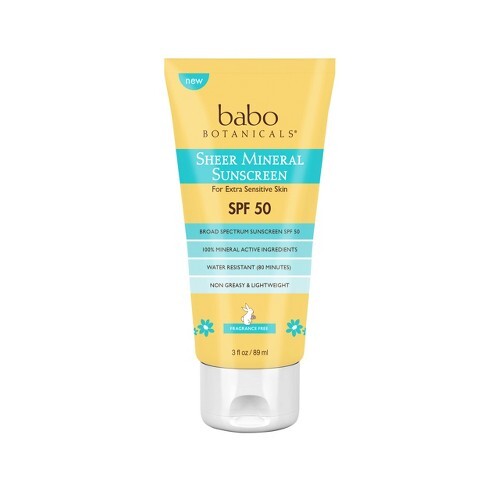 9. Babo, SPF 50
Great for Bear — this one is very kid-friendly. It does give you a slight white tint, and it isn’t super easy to rub on, but it is great for the shoulders and chest and I feel like it’s one of the best for keeping littles protected.
Get it here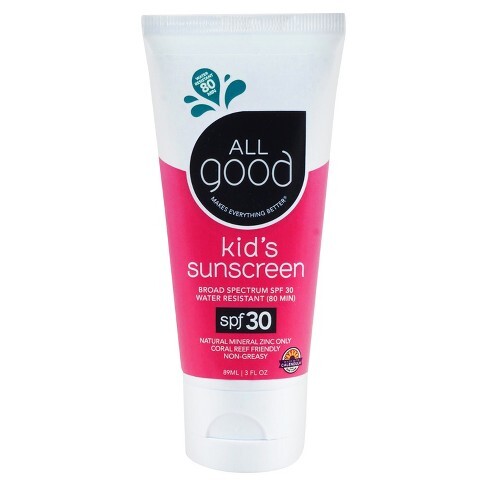 10. All Good Kids Sunscreen, SPF 30
This one didn’t really pass the test! Extremely white on the face and body- and sticky once it’s on!
Get it hereAlicia Silverstone's Blog

- Alicia Silverstone's profile
- 85 followers

