
Daniel Johnson's Blog
May 24, 2025
Animal domestication in Mesoamerica
The Book of Mormon refers to various Old World animals, most of which are believed to not be indigenous to the Americas. Evidence for their existence or even what animals are being referred to is a topic for another discussion. But all throughout Nephite history, there is a mention of their having 'flocks and herds,' although the actual animals they contain are not specified.
Domestication of animals in Ancient America is a murky subject. According to an article at the National Library of Medicine, "The nature of animal management in Mesoamerica is not as well understood compared with other state-level societies around the world." Recent studies show evidence for the use of animals at the Maya city of Ceibal, a site in central Guatemala that we visited. Carbon, nitrogen, oxygen, and strontium isotopes show what kind of flocks and herds the Maya had, exercising some form of animal husbandry.
Using a multiisotope approach to examine faunal specimens, scientists have found the earliest evidence for captive-reared taxa in the Americas, showing that animal domestication and husbandry played a greater role in life at Ceibal than was previously believed. This city's central plaza is one of the earliest known in the region, with human habitation at the site going back as far as 1000 B.C. Live animal trade in the area is now known to go back as far as at least 700 B.C. Based on the evidence, the Maya had dogs (some used for hunting and some as food), deer, peccaries (a type of wild pig), tapirs, cats, and turkeys, among other animals. The more we learn the specifics of Maya and other cultures in Ancient America, the more we see that they had the same kinds of complex societies known in the Old World, including, urban areas, capitals, governments, markets, schools, agriculture, and even animal husbandry. These were not a primitive, Stone Age people as was first believed.
Many controversial aspects of the Book of Mormon have been shown to be plausible as we learn more about the history of the New World. While not a direct one-to-one comparison, strong evidence for large scale animal domestication among the Maya coincides with the Book of Mormon account.
Click here to read about the earliest isotopic evidence for animal management at Ceibal.


May 23, 2025
New cities discovered in South America
We think it's always interesting when previously-unknown cities are found in Central and South America. Geographically, this area is probably outside of Book of Mormon locations, but new technologies such as LiDAR are showing us just how much history is hidden under the jungles and remote areas in this hemisphere. It's interesting to not that as far as we know, there is nothing like this in North America. Of course, there's really no need to use LiDAR to search for them as the land has been cleared here and we don't really have rainforests anyway. But unknown ancient cities, structures, roads, and even agricultural sites where people dwelt in large numbers a long time ago.
In some cases, as with this site in Ecuador, mounds and roads were known, but the true extent of how it all fit together could not be known unless centuries of Amazonian growth could be removed, in this case, digitally. This ancient Ecuadorian city was inhabited by a people known today as the Upano as early as 500 B.C. In addition to buildings, farms, and drainage canals, they had roads, some of which stretched for 12 miles. As archaeologist Stéphen Rostain noted, "There's always been an incredible diversity of people and settlements in the Amazon..."
Our opinion is that modern Ecuador is far outside any map that would match Book of Mormon geography. However, similar discoveries are being made all over Mesoamerica. There is so much ancient history in these lands that we have yet to find.
 Click here to read about the Kunguints site at the Upano Valley in Ecuador.
January 4, 2024
Jewish temples outside of Jerusalem?
 While we don't have proof of Nephi's temple, there is actually uncontested evidence for Israelite temples outside of Jerusalem. The best-known example is one in Egypt, on the island of Elephantine on the Nile River. Papyrus documents and ostraca (pottery shards inscribed with writing) show a Jewish presence on the island as early as the 7th century BC. They apparently were Judean mercenaries that guarded the border between Egypt and Nubia. Based on these ancient documents, this Jewish community may have been polytheistic and surprisingly enough, they were not aware of the Torah or many of the accounts it contains. This could possibly explain the additional worship of other local deities, along with Yahweh (Jehovah). It is also somewhat similar to the account of the people of Zarahemla in the Book of Mormon, who had brought no scriptures with them and had lost their religion.
 Letter asking for help in
 rebuilding the templeThe Elephantine Jews referred to their small temple as בֵּית יהוה Bēt YHWH (House of the Lord), just like Solomon's temple in Jerusalem. It was originally built between the 7th and 6th centuries BC and had altars for incense offerings and sacrifices. Serving the religious needs of this little community, it may also have been built as a reaction to the pagan worship instituted by King Manasseh in Jerusalem. Its construction appears to resemble a permanent version of Moses' tabernacle, although it is only known through the accounts found on the Elephantine papyri. The temple was damaged at least once as evidenced by a letter written in Aramaic found in the Elephantine papyri sent by the Jews there to the high priest in Jerusalem, asking for support in rebuilding it. They also sent similar letters to local governors. It is not known whether this temple was built before or after the destruction of Jerusalem that Lehi and his group escaped. The original Jerusalem temple was pillaged and destroyed shortly afterward in 587 BC by the Babylonians. Some surviving refugees may have fled to Elephantine, especially if there was another temple there. Sometime in the 3rd century BC, this satellite temple was also abandoned and destroyed, replaced by a temple to the Egyptian god Khnum.
 Holy of holies in the
Tel Arad templeAnother Jewish temple is found at Tel Arad, near the modern Israeli city of Arad in the Negev Desert. Ostraca at the site written in Paleo Hebrew also identify it as בֵּית יהוה Bēt YHWH (House of the Lord). Its construction dates back to 950 BC, making its use concurrent with Solomon's temple. Its design included an outer court with an altar, a holy place, and a holy of holies.
Yet another temple outside of Jerusalem is mentioned by the Jewish historian Flavius Josephus. It was built in 170 BC by a high priest, Onias ben-Shimon (son of Simon) in the Egyptian city of Leontopolis of the district Heliopolis. It is described as a copy of the temple at Jerusalem, although smaller and less elaborate. Sacrifices were performed there, however, it is still debated as to whether they were valid (halachic) or if this was part of an idolatrous cult. This temple is referred to as Bēt Honio (or Chonyo), the 'House of Onias.'
With these examples in mind, it is easy to understand why Nephi felt justified in building a temple in the Promised Land to which he and his people had been led. Even though it was not built on Jerusalem's Mount Moriah and did not contain the holy temple artifacts found within Solomon's temple, the Nephites continued to obey the law of Moses with all its required sacrifices where they had settled. Since there were no Levites mentioned in Lehi's group, the authority for any ordinances practiced within would have been under the Melchizedek priesthood. The Book of Mormon later gives an account of a temple in the land of Zarahemla and again later in Bountiful, when the resurrected Savior appeared. Wherever the Lord's people end up, they feel compelled to build a temple to his name in which to worship. This pattern is as true today as it was anciently.
Click here to read more about the Elephantine temple.Click here to read more about the Tel Arad temple.Click here to read more about Onias' temple in Leontopolis.
December 27, 2023
Mysterious skulls may hold a secret
You may have heard that before. What is still known as the History channel (for some reason) has lots of shows dealing with the concept of ancient aliens and the like. It should go without saying that most archaeologists hate this theory, but they also reject much of what we suggest concerning the Book of Mormon and ancient history. It may be useful at times to see what is happening in the fringe areas of pseudoscience. Oddly enough, sometimes the Book of Mormon or other experiences of Joseph Smith are mentioned on these programs. They do at times find anomalies like advanced cultural artifacts, lost civilizations, ties to the Old World, or even writing on metal plates. While their standard answer is often aliens, we may have a more plausible explanation.
There are a number of unusual skulls that have been excavated from ancient burial sites in the Americas. It is well known that for some reason, both Old and New World peoples with no apparent ties practiced cranial deformation to elongate their skulls, starting with infants. Some ancient American skulls look so unusual that again the alien hypothesis is brought up. Recently, DNA studies gave some surprising results and have raised questions about how the Americas were populated in antiquity.
In 2014, DNA tests were performed on 2000-3000-year-old skulls found in Peru. Hundreds were found in Paracas by a Peruvian archaeologist in the 1920s. The initial results found mitochondrial DNA “with mutations unknown in any human, primate, or animal known." To get a better idea of what was really happening with these ancient skulls, a second round of DNA tests was undertaken. Samples of hair and bone powder were taken and sent to three labs in Canada and two in the US. Geneticist at these labs were told that the samples were from ancient mummies, but the origins were not given. This nod to blind testing is commendable, as it avoids preconceptions that could influence the results or how they are interpreted.
The second set of tests were performed in 2016, with the results showing European and Middle Eastern Origins. Not surprisingly, not much more attention is given to these revolutionary findings. They are often explained away if not ignored outright. However, if true, it would mean that the accepted population history of Ancient America would need some serious re-evaluation. Scientists have always been reluctant to do so, even though some claim they are open to the question. On the subject, once scientist has commented, "It is of course possible that genetic evidence of an ancient trans-Atlantic migration event simply has not been found yet. Should credible evidence of direct gene flow from an ancient Solutrean (or Middle Eastern) population be found within ancient Native American genomes, it would require the field to reassess the “Beringian only” model of prehistoric Native American migration. However, no such evidence has been found, and the Beringian migration model remains the best interpretation of the genetic, archaeological, and paleoclimate data to date."
As we question the standard historical answer of how the Americas were populated, we need to keep these issues in mind. Often, controversial claims regarding DNA are hard to understand by non-geneticists. But the genetic record in the Americas was drastically altered after the European conquest, sometimes through violence, but more often through disease. According to lead researcher Antonio Salas of the University of Santiago de Compostela, “Up to 90% of native South Americans died very quickly...You can imagine that a lot of genetic diversity was lost as well.”
Click here to read about the DNA results.Click here to read a reaction to pseudoscientific claims.Click here to read about the impact on genetic history in South America.
August 10, 2023
'Elephants' in America?
One of the more outlandish claims of the Book of Ether is that there were elephants in the promised land. While we know that wooly mammoths and similar animals lived in the Northern Hemisphere during the last Ice Age, the question is how long they survived before becoming extinct. If there were remnant mammoth populations in the Americas during Jaredite times, this could be a good explanation for the 'elephants' mentioned in Ether 9:19.
Surprisingly, small populations of mammoths survived until relatively modern times. It is now accepted that a group of mammoths were still living on a remote Russian island in 1650 BC. This is pretty much what we understand to be at the start of the Jaredite time period as depicted in the Book of Mormon. Could there have been other groups still on the American mainland, and perhaps even as far south as Central America at that time? This is a controversial suggestion, but various explorers in the Americas have described seeing what could only be understood as mammoths, even as recently as the 19th century. Some of their accounts are reproduced in this video.
July 12, 2023
Bearded Maya Deities
 One figure often depicted this way was the Maya sun god. This detail from a mural at Xelhá shows the sun god with a floral breath scroll emanating from his mouth. Flowers and jade appear as Classic-era symbols.
 We all know about legends regarding Quetzalcoatl. Without diving into questionable interpretations or connections, we still find this character to be noteworthy, whether as a conquering hero or as a god. This bearded depiction of Quetzalcoatl is found in the Codex Telleriano-Remensis. Notice the serpent earspool. Among the Aztecs, these items were part of the regalia of deity. These items were derived from more ancient Mesoamerican imagery of flowers as caves or portals.
  While Quetzalcoatl is the Nahuatl name for an Aztec deity, the sun god mentioned here is from Maya belief. He is often shown holding shield and a lance and also became associated with war. By the late Postclassic era, his visual traits include a beard and fangs. This image is from the Madrid Codex. Sometimes, beards are shown on images depicting old men.
 Another image of the sun god is on the wooden handle of a sacrificial knife. This instance shows a him in the guise of a diving or descending god, which is a symbol particular to the Yucatán Peninsula. Some of the best known examples are found at Tulum and Cobá. This deity is often associated with the god of bees. The Maya honeybee symbolized a link to the spirit world. This particular image shows iconography on the band of his headdress that combines the solar k'in glyph for day and a floral sign. A turquoise mask, supposedly from Chiapas, Mexico, depicts the sun god with inlaid jaguar fangs. It originally also had a beard and brow made from human hair.
 Among the ancient Maya, flowers were closely related with the sun. In Mesoamerica, the sun was portrayed as a bellicose being ruling the afterlife, a floral realm for the brave and virtuous. Flowers symbolized the paradise of the sun, which contained not only flowers, but also precious birds and polished stones. The Aztec solar celestial paradise was where the honored dead became birds and butterflies. Some of this symbolism can be traced back to Teotihuacán, where plumed serpents emerge from giant flowers. The Aztecs placed this realm in the east, which was also the domain of plumed serpents. The feathered serpent is the major symbol of Quetzalcoatl and Kukulkán, his Maya counterpart. Quetzalcoatl has many connections to the east, the dawn, and the Morning Star.
We aren't making direct connections here, but feel that bearded figures are interesting and we aren't the only ones that see possible connections to Old World cultures. Some of the symbolism covered here spans a broad range of time periods and cultures, from Central Mexico to Guatemala and the Yucatán. Some important initial teachings may have been the source of beliefs that have had such a widespread impact.
Much of this content and imagery was taken from At Dawn’s Edge: Tulúm, Santa Rita, and Floral Symbolism in the International Style of Late Postclassic Mesoamerica by Karl Taube.
May 29, 2022
Delving deeper into the Blythe Intaglios
Sharing the previous post generated a lot of pushback, surprisingly from a Facebook group on the Book of Mormon and archaeology. The suggestion that this particular figure of the geoglyphs in the southern California desert known today as the Blythe Intaglios could possibly be a horse was met primarily with criticism. The common answer was that it was a mountain lion and could not be a horse. Why would an animal design like this be identified with a predator like a puma or cougar?
The prevailing interpretation is that the humanoid figure is Mastamho, the creator of life. He had a companion and helper known as Hatakulya, a mountain lion. Some legends say that Hatakulya could also transform into a man. Other legends state that there were two mountain lions: Hatakulya and Numeta. One has a tail that hangs down an the other has one that goes up. These creation stories come from the Mohave and Quechan tribes that live in the region today.
This is the most common interpretation of these giant images, but if you look at websites that describe the site, they all appear to have copied text from the same source, as they all say the same thing. The human and animal figures are grouped together as a pair. Each set is traditionally identified as Mastamho and Hatakulya, but since Hatakulya is a mountain lion that can transform into a man, perhaps each set represents the two aspects of each being. A third humanoid is nearby, but without an accompanying animal.
LegendsofAmerica.com has a page on the Intaglios and repeats the same story as all the rest do, but also suggests that the figures may represent powerful individuals in a clan interacting with their surroundings. It also includes the observation that: 'Part of the dating problem is that the animal figures appear to be horses. If so, they must have been carved either before American horses went extinct some 10,000 years ago or more recently after the Spaniards arrived in California in 1540.
Another theory holds that some modern horses did exist in North America before the Spaniards, but were regarded as food sources rather than bests of burden.'
Our point is that it really is not clear what these figures were originally created to represent. Since neither the Mohave nor the Quechan made them, it is reasonable to look at alternative interpretations. We have suggested several possibilities. The problem is, as LegendsofAmerica states, the animal figures (particularly one of them) appear to be horses.
May 20, 2022
Ancient horse in the southern California desert?
 Blythe Intaglio Quadruped
In addition to some spiral and geometric designs, the five main figures are humanoid and animal; two of them are officially known as 'quadrupeds,' the most interesting of which is shown here. Two questions should immediately come to mind: what animal is being represented and what is the age of this and the other large figures? Thinking of large American fauna, this image could easily be seen as a horse to the untrained eye. How likely is that? Daniel has long researched the topic of ancient American horses, as recorded in the Book of Mormon. This is obviously a controversial topic that goes against the current line of thinking, both common and scientific, but that is slowly changing. There is actually a good bit of information about these geoglyphs, but none of it suggests that this could be a pre-Columbian depiction of an ancient horse; that would be going too far. Attempts have been made to connect this and the other nearby figures to Yuman oral history and cosmology, however, it is not known who created them, although later native nations knew about and attached significance to them.
Is there any danger in seeing a horse in this figure? The claim can be made that imagery from other cultures must be interpreted using the understanding of that culture. This is definitely true and quite often pseudoscientific claims are made by taking artifacts out of context and interpreting them with a modern understanding. We should be careful to guard against this, but it must be pointed out that from prehistoric cave paintings to zoomorphic representations from ancient cultures all over the world, animals can usually be readily identified. Ancient people knew what animals familiar to them looked like and were quite skilled at representing them through painting, sculpture, and other means. While we may not know much about the culture that created the aforementioned Nazca Lines, we can easily recognize the spider, monkey, hummingbird, and other representational art they made, even if we do not understand their meaning.
 Blue Mesa, AZOddly enough, this figure is most often identified as a mountain lion, companion to the Creator in an ancient creation myth. Other safe and more visually likely candidates would be a deer, elk, or another common North American ungulate. Our first reaction to the mountain lion label is that it could only be true if the creators of this figure had never seen such an animal, but are there culturally similar examples known to represent cougars or pumas for comparison? While it is not known exactly who created the Blythe Intaglios or even when, there is a plethora of ancient and even prehistoric rock art examples from this region of the United States. Shown here is a well-known petroglyph, which is easily recognizable as a feline. Notice salient features such as the ears and claws. Interestingly enough, a common feature of indigenous images in the Southwest of mountain lions is the long tail going over the back.
.jpeg) Coso Mountains, CAOther examples of non-controversial animals are quite common. As can be seen in these petroglyphs from the Mohave Desert, animal forms are surprisingly recognizable, even cross culturally. It is not hard at all to make out horned sheep/goats, a lizard, and some sort of canine, perhaps a coyote or dog. More specific identification may not be possible, but the overall general type of animal is easy to see.
Coso Mountains, CAOther examples of non-controversial animals are quite common. As can be seen in these petroglyphs from the Mohave Desert, animal forms are surprisingly recognizable, even cross culturally. It is not hard at all to make out horned sheep/goats, a lizard, and some sort of canine, perhaps a coyote or dog. More specific identification may not be possible, but the overall general type of animal is easy to see. Bluff, UTIn this prehistoric example, large horned animals are depicted. What are obviously antlers are shown on what is likely a deer. Also identifiable are a bird and the human hunting with a bow and arrow. Countless such petroglyphs and pictographs are known all across the United States, but these are all chosen from the American Southwest in an attempt to be as culturally relevant as possible to the Blythe Intaglios. However, it should be noted that even in ancient rock art worldwide, the modern viewer can almost always tell at least the general type of animal depicted. Humans have a way of successfully representing animals, even across wide ranges of time and distance.
 Indian Creek State Park, UTAs a contrast, there is North American rock art that obviously shows horses, even being ridden. Newspaper Rock in Utah is a well-known example. We are not suggesting that this is a pre-conquest depiction of an Ancient American horse. It was likely created long after horses had been re-introduced to the Americas and plains tribes had adopted them into their culture. When non-native scientists see horses depicted, they assume a historical date without further investigation. It should be noted that some First Nations people have oral histories and traditions that they have always had horses, long before the white man arrived.
 Rock art can be dated using a variety of techniques, including the growth of lichens and weathering or varnish on the rocks, but as we have often seen if the image is undeniably a horse, no effort is taken to determine a date because its age can automatically be assumed. This is safe enough and scientifically sound, but notice the circular reasoning involved: If it is a horse, then it must be post-conquest and only if it is post conquest, then can it reasonably be a horse. This approach is used by Michael J. Harner in his study of the Blythe Intaglios. In "GRAVEL PICTOGRAPHS OF THE LOWER COLORADO RIVER REGION," he states '...if one considers the quadrupeds to be horses, then all five figures can be considered to be historic...' He also suggests they may be a coyote, wolf, or dog. A safe and non-controversial assumption, but again, it begs the question (since we know there were no horses in the Americas before they were introduced by Europeans, any ancient horse-like depiction must be something else) instead of researching it out fully with an open mind. However, even in this study, we see that interpreting the quadruped as a horse is not unreasonable.
This brings us to the real question, can these geoglyphs be dated? They have been, with some interesting results. Jay von Werlhof and Harry Casey authored a study on these and other rock art in the region. On the Blythe Intaglios quadruped in particular, the AMS C-14 age is 1145 +/_ 65 with a Total Error of 203. The Calibrated Age (1 sigma) is AD 668 (892) 1152. This may be a bit hard to decipher, but later in the study, they conclude that the minimum ages of these geoglyphs, referred to as the 'Blythe Giants,' are in the time range of AD 550-1150 and according to the table in the study, the quadruped has a highest probabilistic date of AD 892. This is important, as Harner states that, 'The uniformity of style of the anthropomorphic and quadruped representations suggests that they were constructed contemporaneously.'
Based on the results of these studies, the Blythe Intaglios quadruped was created at least 400-500 years before the traditional timeline of the re-introduction of horses to the region, and probably much earlier. Comparing it to other rock art examples in the American Southwest, it does not easily resemble a mountain lion, deer, bighorn sheep, elk, or other animals commonly known to Native Americans, although it could represent a mythical animal. As stated in scientific studies, it has at times been interpreted as a horse. The only point of contention is its age if indeed it actually is a horse. We realize that we are swimming against the current here, but all things considered, suggesting that this Blythe Intaglios quadruped might be a pre-conquest horse is not all that outrageous.

Click hear to read Michael J. Harner's studyClick here to read Jay von Werlhof and Harry Casey's studyClick here to read about the attempts to connect the geoglyphs to the Yuman cultureClick here for an article on pseudoarchaeological claims of horses in the Americas that mentions this geoglyph
December 24, 2021
The Peacemaker and the Tree of Peace
"The Peacemaker was born a Huron, to a young virgin woman who had not yet gone through here puberty rites. The young woman had not yet reached her time for the ceremony when she became pregnant. Her mother was worried of what the people of the village might say, so she hid her away during her pregnancy until she gave birth. She convinced her daughter that she had to get rid of the baby. The grandmother tried three times to kill the baby and failed each time. She then realized that he must be someone special and with special powers and knew that they should raise him carefully."

The Peacemaker brought together five warring nations. Even after this success, he noticed that they still carried their weapons. So he saw a tall evergreen tree and uprooted it, creating a cavity. He then instructed the men to cast their weapons of war into it and he replaced the tree, burying them, saying, "Into the depths of the earth, down into the deep under earth currents of water flowing into unknown regions, we cast all weapons of strife. We bury them from sight forever and plant again the tree. Thus shall all great peace be established and hostilities shall no longer be known between the Five Nations but only peace to a united people."Christlike similarities are immediately obvious. It is interesting how many gods and heroes in mythologies around the world come from a virgin birth with an unknown father. But the Book of Mormon also tells a story of Lamanites that once converted to belief in God, buried their weapons of war as a symbol of their newfound faith. "...all the people were assembled together, they took their swords, and all the weapons which were used for the shedding of man’s blood, and they did bury them up deep in the earth." (Alma 24:17)
The Book of Mormon does not teach about the origins of the Iroquois necessarily, but we find these similarities to be quite intriguing and worthy of further study. If it records true events that took place anciently, it's possible that these stories survived in some form and were adopted by later cultures, who appropriated them and made them their own.
Click here to read more about the Peacemaker and the Tree of Peace.
November 15, 2020
More thoughts on the origin and significance of Quetzalcoatl
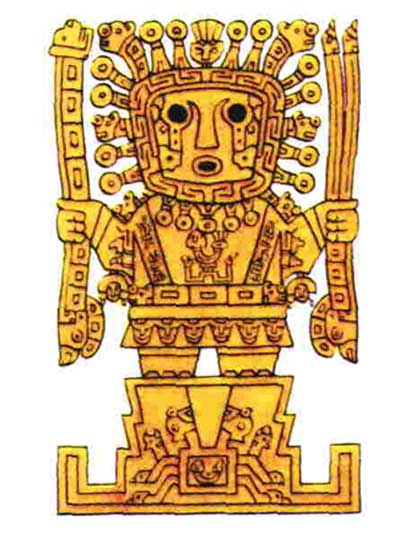 Latter-Day Saints have long been interested in establishing a connection between ancient American legends of Quetzalcoatl (and similar deities from a variety of cultures) and Jesus Christ's visit as told in the Book of Mormon. It should be noted that this idea is not new; Spanish chroniclers wrote down these beliefs and noted their similarity. So, this idea is not something that was created in support of the veracity of the Book of Mormon account, but perhaps latched onto because it was appealing.
 Obviously, the scientific world does not think much of this view, pointing out the need to be skeptical of the Spanish, who may have had other interests in mind. The native populations they met may have also altered their stated beliefs for reasons of their own as they related them to their conquerors. This may explain the examples of seemingly Biblical stories and practices found among the Maya, Aztecs, and other later cultures, or it may not. Even some LDS scholars and commentators, such as Brandt Gardner, not only discourage making these connections, but even affirm there is no support for a Christlike Quetzalcoatl (or Gukumatz, or Kukulcan, or Viracocha) older than Spanish records, asserting that this similarity was basically a Spanish invention.
Leaving aside why the idea of a deity similar to Christ would appeal to the Catholic conquerors (after all, they weren't Mormons), we can look at the widely-held indigenous belief in a feathered serpent deity, which is found among many ancient cultures and combines unexpected animal aspects. An admittedly non-scientific article on Ancient Origins deals this this topic. It discusses the idea that these (bearded?) gods of the Americas may have been the resurrected Jesus, even mentioning LDS beliefs and the account of his visit in the Book of Mormon. This assertion is no longer as widely ridiculed as it has been in the past. But it delves into what is perhaps a more important question of why the serpent, a creature from the ground, was combined with a bird, a creature from the sky, to form a singular god.
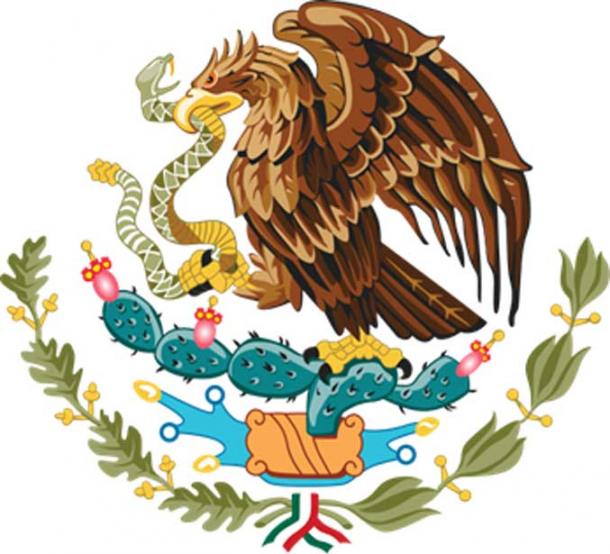 The symbol of the eagle and the snake is also important to Aztec origin legends and is found on the flag of Mexico. As stated in the article, this legend was misinterpreted by the Spanish as the eagle representing good and the serpent evil, which fits in nicely with European heraldry and Christian theology. But a more accurate representation of these attributes may be much more complex. The suggestion in this article is that the earthly and heavenly creatures may represent different states of consciousness together in one being. Another idea we suggest is that the idea of a feathered serpent god is to suggest a deity combining heavenly and earthly attributes, or we might say, divine and mortal. Looking at it in this way, it's not too hard to think of Jesus Christ the Son of God, who embodied both the divine and the mortal in his person, as necessary in carrying out his atoning sacrifice.
 In conclusion, perhaps Quetzalcoatl doesn't need to be a bearded white man after all. Perhaps the symbolism of the earthly and the divine combined in one individual is enough. Just something to think about.
Click here to read the article on ancient-origins.net


