Kevin McKinney's Blog
November 25, 2025
The Jesus Cup
The oldest artifact to mention Jesus by name.
There is an artifactdated to the first century A.D. that many believe mentions Jesus by name. Theartifact is a ceramic bowl or Careened cup that, aside from a missing handle,is in excellent condition. The remarkably well-preserved artifact wasdiscovered in 2008 by a team from the European Institute for UnderwaterArchaeology (IEASM). The team was led by Frank Goddio as they worked near the now-submergedislands of Antirhodos. This site is located in the harbor of the Egyptian cityof Alexandria and is historically linked to the palace, and some speculate thatit is the tomb of Queen Cleopatra.

The extraordinary thingabout this cup is the inscription upon it. Most scholars now believe the cupitself was manufactured and fired in Western Asia Minor sometime in the firstcentury B.C. At a later time, the cup was inscribed. The inscription isbelieved to have come from the first half of the first century A.D., with manyscholars placing the date at 50 A.D. or earlier. This would mean theinscription was carved into the bowl less than twenty years after Jesus wascrucified.
The inscription, which isin Greek, reads, DIA CHRSTOU O GOISTAIS. This translates into “Through Christthe magician”. The accuracy of the translation is a key point of controversy,which will be explored later. If thistranslation is correct, as many scholars believe, this would be the oldestartifact or item ever found to mention Jesus. This would mean that the story orreputation of Jesus as a miracle worker had reached as far as Alexandria before50 A.D. This is far sooner than was previously thought.
Two important notes. Thefirst is the word ‘Magician’. This is thought to be a reference to the storiesof Jesus, powers to heal and to perform other miraculous feats. Again, thisshows Jesus’ reputation went far beyond a localized group and apparentlyencompassed the entire area of the Mediterranean Sea. Some see this as externalproof of Jesus performing miracles. The second item of note is the belief that thiscup did not belong to a Christian. It is believed this cup belonged to a fortuneteller in Alexandria. The fortune-teller was attempting to invoke the name ofJesus and His power in their own practices. This confirms the fact that Jesuswas well known in Alexandria at the time the cup was in use. The user wasattempting to impress their customers with the name of a well-known magician,thus increasing their own worth. If Jesus had not been well known, His namewould have had no value.
The primary area ofcontroversy with this artifact is the translation or reading of theinscription. As mentioned, many scholarsbelieve the inscription reads “Christou,” which would translate toChristos.Christ. Some scholars are not so sure. Some believe the inscriptionreads “Chrestou” which they believe is simply the name Chrestos. This changesthe overall translation of the text from “Through Christ theMagician/Chanter” to possibly “A gift from Chrestos to the Ogoistais”. Ogoistais was a known religious fraternity. Somewho believe the second inscription bases it on the fact that the cup originatedfrom Western Asia Minor. While this may be a valid point, it is almostunanimously agreed that the inscription was added to the cup after it was fired,perhaps as much as a century later. This raises the likely possibility that theinscription was made by the end user in Alexandria, not in Asia Minor.
If the inscription on thecup does reference Jesus Christ, it would be the first mention of the nameknown to exist, possibly older than any of the writings of the New Testament.This would result in the need to rethink how quickly Christianity spread in theregion. If the cup does mention Jesus, it is a strong indication thatChristianity spread at a much faster rate than is currently believed. If thesingle letter in the inscription can be resolved, this cup could be confirmedas proof of Jesus’ power being well known throughout the region, far earlierthan previously believed.


November 24, 2025
How was the Date for Christmas Established
The Bible does not tellus the exact date of Jesus’ birth, so there is no way to know from scripturewhen Jesus was actually born. So, if the Bible is silent on the subject, howwas it determined that Christmas, Jesus’ birthday, was on December 25th?There are two competing theories for how and why this date was selected.
Some historians claimthat December 25 was selected because that date was already a pagan holiday. Inthe Roman culture, December 25th was the winter solstice, the dateof the Sol Invictus festival. The thought goes that this would make it easierfor some Pagans to convert to Christianity by absorbing the current religiousfestival into a new Christian festival. This seems a little far-fetched, asmany in the early church wanted to distance themselves from pagan festivals andtraditions. This theory is very popular with those who oppose Christianity.
The second theoryproposed is based on when Jesus died and, thus, when he was conceived. It wasbelieved that great prophets, among whom Jesus would have been included, wereconceived and died on the same day. This Jewish tradition was known as the"integral age." This is mentioned in the BabylonianTalmud, mostly in relation to the life of Moses, with it stating he was bornand died on the same day (the seventh of Adar). The idea of being conceived anddying on the same date was believed to represent a perfect life. Basedon the Gregorian calendar, it is believed Jesus died on March 25th.If Jesus were conceived on the same date of March 25th, then Hewould have been born nine months later on December 25th.
(The feast of theAnnunciation, the day when the Angel Gabriel announced the conception of Jesus,was set as March 25th)
(The Gregorian calendarcelebrates Jesus’ birth on December 25th. The Julian calendarcelebrates it on January 6th. The time span between these two,according to some, came to be known as the twelve days of Christmas. – Thetwelve days of Christmas also represent the time between the birth of Jesus andthe arrival of the Magi.)
November 22, 2025
2025 Discovery helps confirm the Gospel of John
In the Gospel of John, hewrites about the burial place, the tomb, of Jesus. John records that it was acarved tomb that had never been used and was located in a garden.
“Nowin the place where he was crucified there was a garden, and in the garden a newtomb in which no one had yet been laid.” John 19:41
Now, almost two thousand yearslater, researchers have discovered evidence that supports the accuracy of theGospel story. With the rare opportunity to excavate beneath the floors of the ‘Churchof the Holy Sepulchre’, archaeologists have made a rather startlingdiscovery. Professor Francesca Romana Stasolla led the team of researchers. Theteam was allowed to excavate materials from deep beneath the church's currentfloor. The archaeobotanical analysis found a large number of preserved seedsand pollen from Olive trees and grapevines.

Not only were seeds andpollens found, but the researchers also found that small dividing walls hadbeen constructed and dirt hauled in to make the garden area. This demonstrates thatthe garden was planned and not just a wild area of growth. This is seen asproof that, before the area was used as a tomb, it was built as a garden.Furthermore, prior to the garden being built, stones had been quarried fromthis area. This gives us a progression of events for this area that perfectlymatches the gospel account.
Quarry– Garden – Tomb
Carbon dating of theseeds and pollens places the garden in use approximately 2,000 years ago, orjust before the time of Jesus’ crucifixion. This timeline fits very well withthe gospel account, as it states that the tomb had never been used before,leading to the logical conclusion that it was new and recently carved.
The Church of the HolySepulchre was traditionally placed on the spot where Jesus was crucifiedand then laid in the tomb. This evidence shows the Gospel writer, in this caseJohn, got the details exactly right. Taken together, this provides tangiblephysical evidence that the topography of a cultivated garden adjacent to tombscarved in a quarry did in fact exist at this location at the exact time inhistory recorded by the Apostle John. This is unprecedented proof to supportthe most sacred Christian tradition of Jesus being raised from the dead.
October 18, 2025
Spiral Bound Study Editions
Special Study Editions are now available.
Large 8 1/2 by 11-inch formatSpiral-Bound Lays flat for convenient useExtra Space for NotesThese special editions are available exclusively through the Lulu Bookstore. Titles available are "New Testament Miracles: The 37 Miracles of Jesus, Bible Reference Sheets, and The Bible: Some Assembly Required.These are some of the Best-Selling titles by Kevin McKinney. They are available in eBook, paperback and Hardcover on Amazon.com. These special study editions are available only at Lulu.
 Jesus performed thousands of miracles during his brief ministry on Earth. In John 21:25, we are told - “And there are also many other things which Jesus did, which, if they should be written every one, I suppose that even the world itself could not contain the books that should be written. Amen.” These include healing the sick, manipulating nature, curing the lame, and even raising the dead. While Jesus performed an untold number of miracles, the New Testament records just thirty-seven. Why were these selected? What was Jesus demonstrating with these specific miracles? How can these miracles relate to our current lives and situations?
Review each of the thirty-seven miracles recorded in the Bible. What was the ultimate message Jesus was teaching with each of His miracles? Beyond the obvious, what was He teaching us? ‘New Testament Miracles’ reviews each miracle in chronological order. Where was the miracle performed, which gospel(s) is each recorded in, and what is the message/teaching of the miracle? Includes bonus material, maps, and archaeological discoveries. An easy-to-read and use format puts the message of the miracles in your hands.
 Start your Bible Study with these easy-to-use Bible Reference Sheets. Single-page reference guides to all 66 books of the Bible. You can use for your personal Bible Study or print copies for your study group. Each Bible reference sheet includes the author's name, date written, key verses, key figures, and study elements. Individual Bible Summary Sheets for both the Old and New Testaments. This edition also includes reference sheets for the Apocrypha books for a total of 73 reference sheets, all conveniently formatted on 8 1/2 x 11 pages for easy printing, copying, or laminating. Get your copy of this Bible Study Guide today and incorporate these summary Bible Reference Sheets into your studies.
The Bible is the inspired word of God, but is the Bible we read today the same Bible our ancestors read? For centuries, meetings of church leaders have been held to discuss and clarify the contents of the Bible. These included many arguments, disagreements, and controversies before the proper Books of the Bible could be decided upon.
Questions and curiosities about the Bible are not limited to non-believers. Saint Paul in 1 Thessalonians tells us we should not take things at face value. “...examine everything; hold firmly to that which is good.” (1 Thessalonians 5:21) - Don’t be afraid to ask questions, to seek the truth.
When and how were the books that make up the modern Bible decided upon? Why are there multiple translations of the Bible? Why do some Bibles have 66 books while others have 73 and still others 80 books? Who were the people involved? Which were the most important ancient manuscripts? Do the Dead Sea Scrolls contradict or confirm the Bible? How do the ancient manuscripts found in the Nag Hammadi Library fit into Bible History, and why were the Apocrypha Books excluded from the Bible? Persecuted and outlawed, the early Christians fought to follow their faith and compile a canon of selected scripture, which has endured for nearly twenty centuries.
Answers can be difficult, but there are many sources of information available from ancient times and some of the most reliable historians of antiquity. A vast number of ancient manuscripts exist to help confirm what we have today is the Bible the early church leaders intended. The Bible is the greatest story ever told, but there was some assembly required.
October 12, 2025
The 'Q' Source
Ifyou study the Bible at all, you have undoubtedly come across the Q Gospel. Thisis the name given to a collection of sayings of Jesus. The name comes from theGerman word ‘Quelle’, which means source. The Q Gospel is associated with theSynoptic Gospels. These are the Gospels of Matthew, Mark, and Luke, which allshare some aspects in common and are believed to have drawn from a commonsource or sources.
TheGospel of Mark is considered to have been the first written. It is believedthat Matthew and Luke both used Mark as a primary source for their writings. Atthe same time, Matthew and Luke have several sayings and or teachings of Jesusin common that are not found in the Gospel of Mark. This has led some scholarsto suggest there was another source used by both Matthew and Luke, which theyhave named the Q Gospel.
Itis important to remember that the Q Gospel is strictly theoretical. There is nomention of such a writing in any other texts. There are no known copies of theQ gospel in existence, and no fragments have ever been discovered. This is instark contrast to the multiple copies of the other gospels, as well as partialfragments. Some scholars have attempted to reconstruct the Q gospel based onthe similarities in Matthew and Luke, but many other scholars do not believesuch a document ever existed. They think other explanations can account for thesimilarities in the gospels.
Interestingly,most of those who support the theory of the Q gospel believe it was fardifferent in format than the other four gospels. It is thought that the Qgospel was not a narrative of Jesus' life, but rather a collection of Jesus'sayings.
Again,there is no historical proof of such a document. The Q source is a hypotheticaldocument created by scholars to account for similarities in the three SynopticGospels. If such a document ever existed, there has, to date, been no physicalevidence discovered to support its existence. This is not to say evidence maynot be found in the future, but it is considered unlikely by most scholars.
Itis curious that if such a document existed, Mark apparently did not use any ofits material in his gospel account.
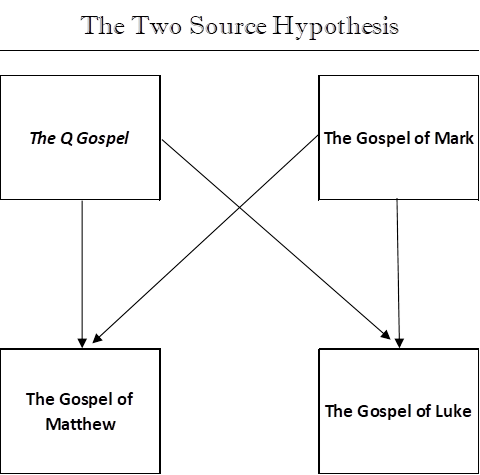
Note: Withthe Two-Source Hypothesis, it is believed that the Q gospel was the firstwritten. Mark was then composed second, followed by Matthew, and finally theGospel of Luke. The Gospel of John is considered separate from this group ofgospels.
Itshould also be noted that early Christian historians/writers such as Clement ofAlexandria recorded that Matthew and Luke were written first. If this isaccurate, they could not have used the Gospel of Mark as a reference.
October 10, 2025
What is the Signs Source
“Semeia Source”
Thereis a theory known as the “Signs Source’ that claims the Gospel of John wasprimarily based on a previous writing. These writings, also known as the SemeiaSource, were believed to be a list of the miracles, or signs, performed byJesus. The theory claims that John, or another author, used this list as abasic outline for the Gospel of John.
Thistheory is primarily based on John’s use of the term ‘signs’ rather than ‘miracles,’as used in the other Gospels. Some go even further and believe this Signsdocument contained more than just a list of miracles, but also contained thestory of Jesus’ life. In John 20:30-31, John writes,
“Jesus did manyother miraculous signs in the presence of his disciples, which are not recordedin this book. But these are written that you may believe that Jesus is theChrist, the Son of God, and that by believing you may have life in his name.”
Themention that other signs were performed but not recorded in this book has ledsome to speculate that John is saying there is another book in which thesesigns were recorded.
This,of course, ignores the fact that John could have been referencing the othergospels, which mention many miracles not recorded in the Gospel of John. SinceJohn wrote his gospel last, he may not have seen the need to duplicate themiracles from the other gospels, and he included only a handful of miracles notlisted by the other evangelists.
Itis essential to note that there is no historical, archaeological, or scientificevidence to support the theory of a Signs Source. No copies of the “SignsGospel” have ever been found. No fragments of this document have been found,and the early church fathers and writers do not mention it. This seems to be atheory based solely on the fact that John called the wondrous works of Jesus‘signs’ while the other gospels called them ‘miracles’. In most moderndiscussions, they are referred to as miraculous signs, which were intended toprove Jesus’ divinity and power over both the physical and spiritual realms.There is no evidence of any list of signs/miracles.
August 14, 2025
Books by Kevin McKinney
.jpg)
New Testament MiraclesThe 37 Miracles of Jesus
During His earthly ministry Jesus performed thousands of miracles. From curing all types of diseases, to calming a storm, to raising people from the dead, Jesus showed His power over and over again. The writers of the New Testament, Matthew, Mark, Luke and John, recorded 37 specific miracles out of the thousands performed. These were selected to give us a better understanding of who Jesus is as well as demonstrate His power and authority. Each miracle has multiple lessons to teach and only by close examination can you see everything Jesus was attempting to teach his followers two thousand years ago, and today.
This book puts the 37 miracles of Jesus in chronological order. Each entry shows the scripture, where the miracle took place, and gives a commentary on the meaning and lessons of the miracle. There are also interesting facts inserted including archaeological discoveries that help put the miracle stories in a proper context. The text also examines possible contradictions in the miracle stories and shows these are not what they seem.
What more can we learn from Jesus raising Lazarus from the dead? Why did Jesus delay in performing miracles for some of those who asked? Get a new perspective on the accounts of all 37 miracles performed by Jesus. The miracles of the New Testament showed Jesus' power during His time on earth, and they still hold power for us today.
Avaible at

Available at
Start your Bible Study today with these easy-to-use Bible Reference Sheets. Single page reference guides to all 66 books of the Bible. Use for your personal Bible Study or print as many copies as needed for study groups or Sunday school classes. Each Bible reference sheet includes author name, dates written, key versus, key figures, and study elements. Includes a separate Bible Summary Sheets for both the Old and New Testaments. This edition also includes the Apocrypha books for a total of 73 reference sheets all conveniently formatted on 8 1/2 x 11 pages for easy printing, copying and laminating. Get your copy of this Bible Study Guide today and incorporate these summary Bible Reference Sheets into your studies.

Available at
Amazon.com
The Bible is the inspired word of God, but is the Bible we read today the same Bible our ancestors read? For centuries there were meetings of church leaders to discuss and hash out the contents of the Bible. These included many arguments, disagreements and controversies before the proper Books of the Bible could be decided upon.
Questions and curiosities about the Bible are not limited to the non-believer. Saint Paul in 1 Thessalonians tells us we should not take things at face value.“...examine everything; hold firmly to that which is good.” (1 Thessalonians 5:21) - Don’t be afraid to ask questions, to seek the truth.
When and how were the books that make up the modern Bible decided upon? Why are there multiple translations of the Bible? Why do some Bibles have 66 books while others have 73 and still others 80 books? Who were the people involved? Which were the most important ancient manuscripts? Do the Dead Sea Scrolls contradict or confirm the Bible? How do the ancient manuscripts found in the Nag Hammadi Library fit into Bible History? and why were the Apocrypha Books excluded from the Bible? Persecuted and outlawed, the early Christians fought to follow their faith and put together a canon of selected scripture which has lasted nearly twenty centuries.
Answers can be difficult, but there are many sources of information available from ancient times and some of the most reliable historians of antiquity. A vast number of ancient manuscripts exist to help confirm what we have today is the Bible the early church leaders intended. The Bible is the greatest story ever told, but there was Some Assembly Required.
.jpg)
Available at
Amazon.Com
Did the Bible writers get it right? Can we trust the historical aspects of the Bible? What can science, archaeology and history tell us about the historical aspects of the Bible? If the writers got the historical details correct, does it make it easier to believe the divine aspects recorded in the Bible? Examine the evidence for yourself.
The spread of Christianity is not easily explained or understood and confounds critics and believers alike. While this new faith was widely spread by word of mouth, the primary tool for the new religion was the Bible. Even now, nearly 2,000 years later the Bible continues to influence lives all over the world. How can this ancient document continue to have such a profound influence on the world?
How has it survived the changing times and the feeble whims of mankind? While the world has changed so dramatically, the Bible remains the same. The Bible has withstood centuries of attack from critics and non-believers, but it still stands intact.
The Bible has its roots in both theology and history. Some believe the Bible is at its basest form a book of history.
“The Religion of the Bible is broadly speaking, a historically based religion; the primary arena of the Bible is history; the divine manifestation is set essentially in history.”
The Bible is indeed a historically accurate document which can be trusted in all the elements it records regarding history, and therefore should be considered trustworthy and accurate in other areas as well.
Can and should the Bible be taken seriously as an historical document? What does science, archaeology and ancient writings have to say on the subject? All of this and more is covered in 'The Bible As History'

Can Archaeological discoveries offer proof of the Bible's historical accuracy? Did the Bible writer's get the details, the people and places correct? Look at the evidence archaeology can provide. Listed here are 75 of the top Archaeological Discoveries associated with the Bible.
What can Archaeology Prove?
King David's Kingdom
The Worldwide Flood
Peoples of the Bible
Ancient Manuscripts
The Exodus
Hebrew's in Egypt
Oldest Religious Structure
Seals, Coins and Rings
Solomon's Mines
...and much more...
Examine the evidence for yourself and decide what is true. Get your copy of The Top 75 Discoveries today...
Available at
Amazon.com

Easter, three days that changed the world forever. What can archaeology, science and ancient historical text reveal about the Easter Story? Can we separate the two Easters, the one told of in the Bible and the one with the cute bunny? Examine the evidence, look at the traditions, the myths and the proof.
In this compact guide we will take a closer look at each of the following elements to examine the peoples and places of the Easter Story.
The Last Supper
Pontius Pilate
High Priest Caiaphus
The Method of Death
The Cross of Christ
The Sun Went Dark
The Resurrection
Easter Morning
The Empty Tomb
The Shroud of Turin
Tradition and Trivia
Examine the evidence for yourself, then decide what is true, and what is a fairy tale.
Available at
Amazon.com

What can Archaeology tell us about the Story of Christmas?
Look at the individual elements of the Christmas Story and examine the scientific and historical evidence concerning this, perhaps the best known story in history. We will separate fact from fiction, truth from legend and myth. Can we separate the commercialism from the true story of Christmas?
Examine the various elements of the Christmas Story
• How was the date for Christmas Selected?
• Was there really a census?
• Did Bethlehem exist in the 1st century?
• Is the story of no rooms at the inn accurate?
• Why a manger?
• Did the Shepherds have a more significant meaning?
• When was Jesus presented at the Temple?
• Was there really a Christmas Star?
• Who were the Magi?
• What was King Herod like?
• Was there really a slaughter of infant boys in Bethlehem?
• Where did the Holy Family go in Egypt?
• Was Nazareth on the map?
• Where do the traditions come from?
Examine the evidence for yourself and separate the fact from myth. - Get your copy of "The Christmas Story" today.
Available at
Amazon.com

“I have found it, God help me, I have found it.”
With this simple text the race is on across three continents to possess one of the greatest and most important treasures man has ever known. The Cloak, a collection of writings, letters, manuscripts and books belonging to Saint Paul. The same collection the Bible tells us Paul requested be brought to him by Timothy. What letters and manuscripts were included in the Cloak? What books did the Great Missionary carry with him and desire to have in Rome during his final days? The collection would be sought after by thousands, and worth billions. Black market dealers, terrorists, private collectors, the Vatican and numerous world governments will stop at nothing to possess the Cloak.
Jerrie Knightly, world renowned archivist knows the scholarly value and importance of the Cloak. Phillip Marlow has spent the last two decades working within the Black Market acquiring Biblical artifacts and manuscripts for his billionaire employer. She is a by the book professional, following the proper rules and procedures, and believes there are no short-cuts. He is a man who gets the job done, by whatever means necessary. Now, these two must form an uneasy alliance in order to preserve the Cloak for future generations. These two will have to risk it all, including a dance with the devil if they are to have any hope of success.
Their obstacles will be many. Traitors within their own group and a masterful double cross by unorthodox terrorists. Jerrie and Phillip will be pursued by both the police and government agents as they race across Egypt in the action-adventure story for the ages. The two will face all but impossible odds to save the Cloak in time. Yet the greatest obstacle they may have to overcome if they are to save The Cloak, is one another.
Join the hunt for Saint Paul’s cloak in this action-adventure thriller, available in eBook, paperback and hardcover editions. Get your copy today, and have a very precarious dance with the devil…
Available at
Amazon.com
August 2, 2025
The Bible By the Numbers
Common BibleQuestions
(Some of these numberswill change depending on which translation of the Bible you are using.)
1. How many books in the Bible?
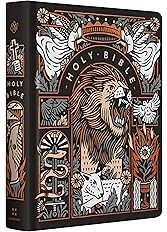
a. CatholicBible – 73 (First assembled around 382A.D.)
b. Protestant– 66 (First assembled around 1529 A.D.)
c. Eastern OrthodoxBible – 79 to 81 (varies) (Firstassembled sometime in the 4th century A.D.)
d. Hebrew Bible (Tanakh) – 24 (Believe finalizedaround 164 B.C)
(For the following answers we willuse only the Protestant Bible.)
2. How many pages in the Bible?This depends on the page size, font, line spacing and what version of the Bibleyou are reading. Each of these will have a vastly different page count.
3. How many words in the Bible?783,137
4. How many chapters in the Bible?1,189
5. How many versus in the Bible?31,102
6. What is the longest book of theBible? Psalms (150 Chapters)
7. What is the shortest book of theBible? 3 John (by word count)
8. How many people wrote the Bible?Forty, Thirty-One various authors wrote the Old Testament while only nineauthors wrote the New Testament.
9. How many miracles did Jesus Perform?The exact number is not recorded but Jesus performed hundreds, perhapsthousands of miracles during His ministry. The New Testament recordsthirty-seven specific miracles but alludes to hundreds more.
10. How many people went on the Ark?According to Genesis 7:13, eight people went on the Ark. These were Noah, hiswife, their three sons, Shem, Ham and Jacpheth and their wives.
11. How many animals did Noah take on theArk?Noah took seven of each ‘clean’ animal and two each of ‘unclean’ animals.Estimates range from a total of 6,750 animals up to as many as sixteen thousandanimals were taken aboard the Ark.
12. How long did the flood last?The rain fell for forty days and forty nights. The water from the rain and thedeep wells of the earth, remained on the earth for a period of 150 days afterwhich it began to recede. This is recorded in the book of Genesis 7:17
13. How big was the Ark?The Bible tells us the Ark was 300 cubits long by 50 cubits wide and 30 cubitstall. A cubit can vary in size but it is generally believed the Ark would havemeasured 438 feet by 73 feet, by 44 feet. Some calculations have the Ark beingas long as 510 feet.
14. How long was a cubit?A cubit was the length of a man’s arm from the elbow to the tip of his finger.This means it was not an exact number. In most cultures a cubit was consideredto be between 17 and 21 inches
15. What is the longest verse in theBible? Ester 8:9
16. What is the shortest verse in theBible? John 11:35 ‘Jesus Wept’.
17. Number of times the word “God”appears? 4,094
18. Number of times the word “Lord”appears? 6,781
19. How many Bibles have been sold?It is estimated that more than five billion copies of the Bible have been sold.
20. Is the Bible the best-selling book?– Yes, the Bible is the best-selling book of all time. It is also the moststolen book of all time. This is attributed to the number of Bibles in publicplaces, such as hotels and places of worship.
21. How many copies of the Bible havesold recently? In 2023 Americans alone purchased 14.2million Bibles. In the first ten months of 2024 Americans purchased 13.7million Bibles, an increase of 22% over 2023. – Some publishers credit theincreased sales to a higher interest in the Bible from Generation Z and youngerAmericans.
22. How many languages has the Bible beentranslated into? As of late 2024 the Bible had beentranslated into at least 3,756 different languages. The entire Bible, Old andNew Testaments has been translated into 756 languages. The New Testament alonehas been translated into 1,726 languages while the Old Testament has beentranslated into 1,274 languages.
23. How many languages has the Bible notbeen translated into? Estimates place the number at 985languages where no current translation project is underway. (Some say thisnumber is even higher at 3,776.) – It is estimated that 80% of the world’spopulation can read the entire Bible in their native language. The NewTestament has been translated into far more languages than the Old Testament.
24. What is the longest word in theBible? – This comes from the Book of Isaiah 8:3,Mahershalalhashbaz. (Was the secondprophetic name mentioned in Isaiah.)
25. How many ‘Wise Men’ (Magi) came tovisit Jesus? – The Bible does not record the exactnumber, but by the word usage we can confirm there was more than one. Magi isthe plural for Maus, so we can be certain there was more than one who visited. Manyhave assumed there were three wise men because there were three gifts, but thisis not confirmed by the Bible text.
26. How many women are named in theBible? A total of 188 women are mentioned by name in theBible. 93 of these women spoke in the Bible.
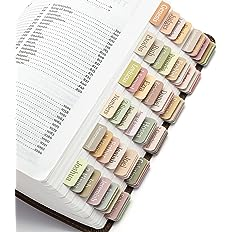
Bible Tabs, 75 Boho Theme Laminated Tabs for Women and Men, Study Bible Index, Book Labels
(I may receive commission if you purchase through these links)
Bible Lists
Random informationfrom the Bible
(What the BibleTeaches)
1. What are the Ten Commandments?
a. Iam the Lord your God; you shall not have strange gods before me.
b. Youshall not take the name of the Lord your God in vain.
c. Rememberto keep holy the Lord’s Day.
d. Honoryour father and mother.
e. Youshall not kill.
f. Youshall not commit adultery.
g. Youshall not steal.
h. Youshall not bear false witness against your neighbor.
i. Youshall not covet your neighbor’s wife.
j. Youshall not covet your neighbor’s goods.
a. Blessedare the poor in spirit, for theirs is the kingdom of heaven.
b. Blessesare those who mourn, for they will be comforted.
c. Blessedare the meek, for they will inherit the earth.
d. Blessedare those who hunger and thirst for righteousness, for they will be filled.
e. Blessedare the merciful, for they will receive mercy.
f. Blessesare the pure in heart, for they shall be called sons of God.
g. Blessedare those who are persecuted for righteousness’ sake, for theirs is the kingdomof heaven.
a. Reuben– the first son of Jacob and Leah
b. Simeon– Second son of Jacob and Leah
c. Levi– A descendant of Jacob
d. Judah– Fourth son of Jacob and Leah
e. Dan– The first son of Jacob and Bilhah
f. Naphtali– The sixth son of Jacob and Bilhah
g. Gad
h. Asher
i. Issachar
j. Zebulun
k. Joseph– The tribe was split into Ephraim and Manasseh
l. Benjamin
(Bilhahwas the maidservant of Rachel)
a. First Missionary Journey– Cities visited, Antioch, Seleucia, Salamis, Paphos, Perga, Pisidian Antioch,Iconium and Lystra.
b. Second Missionary Journey– Cities visited, Galatia, Macedonia, Achaia, Athens, Corinth, Ephesus,Caesarea and Jerusalem.
c. Third Missionary Journey–Cities visited, Galatia, Macedonia, Achaia, Ephesus and Jerusalem – Paul alsotraveled through Asia on this journey.
d. Fourth Missionary Journey– not confirmed, but it is highly likely after his release from prison Paultraveled to Spain.
a. Pride
b. Greed
c. Lust
d. Envy
e. Gluttony
f. Wrath
g. Sloth
a. Supplications
b. Prayers
c. Intercessions
d. Thanksgivings
a. Belt of Truth
b. Breastplate of Righteousness
c. Shoes of the Gospel Peace
d. Shield of Faith
e. Helmet of Salvation
f. Sword of the Spirit
a. Virtue
b. Knowledge
c. Self-Control
d. Perseverance
e. Godliness
f. Brotherly Kindness
g. Love
a. Love
b. Joy
c. Peace
d. Patience
e. Kindness
f. Goodness
g. Faithfulness
h. Gentleness
i. Self-Control
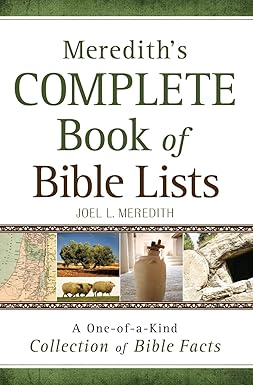 This new volume combines Joel Meredith's two books of Bible lists for a total of 375 lists! Includes easy access to lists like the Ten Commandments, the gifts of the Spirit, and the Beatitudes. But it doesn't stop with the expected. It also offers lists of people raised from the dead and people who were struck blind. Readers will also discover surprising Bible facts, like animals God used miraculously, bald men in the Bible, and nine of the earliest recorded inventors. Lists are organized into 39 categories. A great resource for students, families, or anyone wanting to learn more about the Bible.
 Journaling Bible Set: Includes the full ESV text in 5 volumes: Pentateuch; Historical Books; Poetry; Prophets; and New TestamentSpiral-Bound Bible: Pages lie flat to make reading and writing more comfortableAttractive Layout: Easy to read, with ample space for notesA Great Gift for Students
(I may receive commission if you purchase through these links.)
July 31, 2025
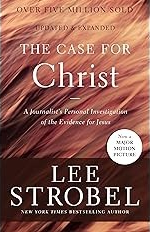
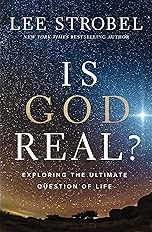
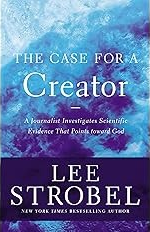
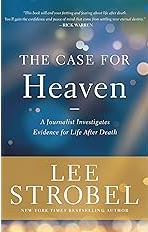
"Seeing the Supernatural' - Book Review
Investigating Angels, Demons, Mystical Dreams,Near-Death Encounters, and other Mysteries of the Unseen World
By LeeStrobel
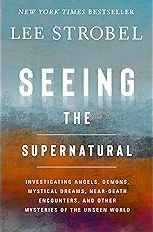
Publishedby Zondervan
320 Pages
Publishedon March 18, 2025
LeeStrobel was once an investigative reporter in Chicago. He had very little usefor Christians and did not believe in God. At some point, he turned hisinvestigative techniques to the question of Faith and God and found there was asurprising amount of evidence in favor of the divine. He became a Christian andbegan writing a series of books to help people see that there really isevidence for God if you just look. In his latest book, Strobel turns his attentionto the supernatural. Is there a supernatural realm that exists outside or inconjunction with our physical world? Are Angels real? Do Demons stalk the earthdoing the Devil’s bidding? Is there any such thing as a miracle, a near-deathexperience (NDE), or a mystic dream? What about ghosts, spirits, and psychics?Do they really have the power to speak with the dead?
Inthis fairly short text, Strobel looks at each of these topics. He interviewssome of the top minds in the fields and presents arguments critics often usewhen denying the existence of the supernatural. The findings are veryinteresting. I found some sections to hold my attention far better than others,but all are well-written. While there were a lot of terms that were new to me,Strobel did an excellent job of explaining everything, keeping it on a levelthat was both sophisticated and easy to understand.
Allelements of the book are well researched with endnotes. With only a few minorexceptions, I found the conclusions to be based on factual and verifiableevidence. In others, the volume of evidence was so impressive that it was hardto argue even when verification was far more difficult.
Ihave read a number of Mr. Strobel’s works, and I find each to be entertaining,educational, and inspirational. There is a common theme to each, a commonmethodology to his writing that is familiar. If you have any interest in thesupernatural, questions about Angels, Demons, or Miracles, I would suggest youread this book. For most, I believe it will help deepen your faith and yourunderstanding of certain topics. At the same time, the text seems to skip oversome areas and side-step some questions that present themselves as you readeach chapter. It is understandable why some of these questions were left notonly unanswered but also ignored entirely. Many of the questions would send thediscussion in an entirely new direction and be deserving of their own book. Inorder to stay on task, Strobel pushed forward and remained laser-focused on histopic of Seeing the Supernatural.
Thiswould receive a “definitely read” recommendation.
(I may receive commission if you purchase through these links.)
Other Books by Lee Strobel