
Penny Tangey's Blog
March 10, 2025
How to ‘ummm actually’ like a professional
Recently I was a bit shocked and appalled by the results of a study, Online Misinformation in Australia. A huge 45% of participants scored NO POINTS in the study’s test. Sometimes getting no points is a good thing, like in the quiz show Pointless, or on your driver’s license. But in this case nil points means a participant demonstrated no ability to verify online information, and that is worrying.
For a few years I worked as a verifier for TV quiz shows. This involved checking the questions and answers for accuracy and suitability. I was paid to say, ‘Ummm…actually’ – though I usually started my most tedious quibbles with the word, ‘Technically….’
You don’t need great general knowledge to work on quiz shows. Verifyers need to:
Use the internet to check factsThink laterally about unexpected ways an answer could be disputedIgnore feelings of being annoying and nitpick relentlessly.Anyway, apparently I can do all three of these things well enough to not get sacked. I’m aware that my aptitude for pedantry doesn’t always translate to my behaviour in real life. I’m biased towards facts that confirm my opinions. I repeat rumours without checking them. I don’t correct people’s spelling or criticize them for not using literally literally. I have terrible attention to detale.
But bearing in mind my many failings, here are some tips for checking information online from an ex-quiz show verifier who is still terrible at trivia nights.
Use the internetI have very bad general knowledge and am very ignorant. This might seem to be a problem for working on a quiz show but I thought of it as an asset. I knew I didn’t know, so I always checked everything. I had no shame in Googling whether Brazil was in South America (I’ve just checked again, and it is).
In everyday life, we rely on pre-existing knowledge to make judgements. But if you want to be very accurate in public, you should check your knowledge and assumptions. The volume of information we have access to is too great for any person to hold in their mind. Anyway, unless you’re at a pub quiz, it’s okay to use your phone and the internet to find credible sources. It’s not cheating. (What counts as a credible source is a big question that I’m too lazy to answer.)
But don’t Google the answerIf you put the answer you think is correct into Google you will be likely to find information that confirms that answer, and not sources that say something different. If someone tells you the Eiffel Tower weighs 10,000 tonnes, don’t search for ‘Eiffel Tower 10,000 tonnes’ to verify this. Search for ‘Weight Eiffel Tower’.
And don’t rely on AIMany AI summaries are wrong, weird, irrelevant or all three riding on a unicorn. Unless that’s the vibe you are going for with your opinions, try to find information collated and checked by a human being.
But Wikipedia is fineThere is bias against Wikipedia because anyone can change it, but this is also a strength. Other users will quickly correct inaccurate information on a heavily used Wikipedia page. Wikipedia can be a great starting point to get an overview of a subject and links to other references. Start with Wikipedia. It’s fine.
Context is kingIf possible, go directly to the source rather than hearing about it second (at best) hand. This will increase accuracy but also gives important context. This is how I realised that the Big Pineapple is not really that big (though still bigger than the average pineapple).
Even if it’s interesting, it might be wrongTo make entertaining television, the question writers would include as many interesting and surprising facts as possible. My initial reaction was always, ‘Wow. That’s amazing. So cool that’s true.’ I would then override my belief in wonderful things and try to prove them wrong.
It’s not always appropriate to do this in social situations. And you usually shouldn’t whip out your phone and fact check someone in their face. But if someone tells you an astonishing thing, you probably should check if it’s true before you go around telling other people.
If something gets repeated often enough, it can appear to be true by the sheer volume of sources. A quick way to circumnavigate this is to search for the key words of the fact and then add ‘myth’. That way you can quickly find the work of people who have already debunked the amazing tidbit.
Nothing is true, everything is trueIt is difficult to write questions with only one correct answer. It is even more difficult to write interesting questions with only one correct answer.
About once a week I would become frustrated with the sheer weight of quibbling and collapse dramatically across my desk declaring, ‘Nothing’s true!’ having been frustrated by a seemingly simple ‘fact’ that turned out to be inaccurate. But my lament could also have been, ‘Too much is true!’ because often questions fell down not because the answer was wrong but because there was another, equally correct answer and that’s not the kind of show we were making.
In real life nuance and complexity are interesting and you don’t have to check everything you see on the internet. Many things are incorrect, partially correct, or a matter of opinion and it doesn’t really matter. But sometimes misinformation is harmful and in those cases you should be ready and able to ‘ummm actually’.
The post How to ‘ummm actually’ like a professional appeared first on Penny Tangey.


December 2, 2024
My year of appreciating doors
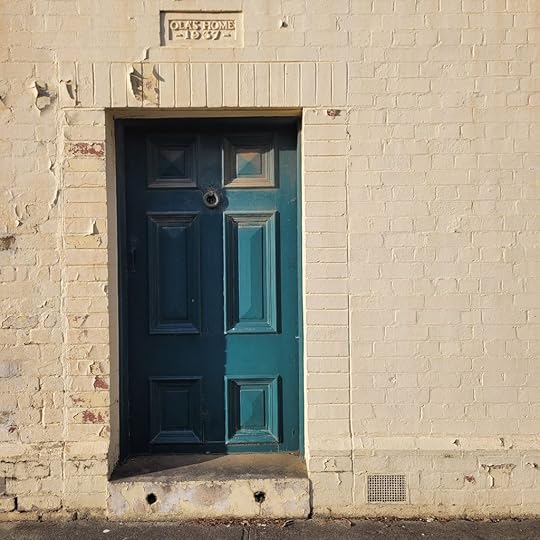
For a year I posted photos of doors on my door-dedicated Instagram account. This might seem like an oddly specific thing to do, but there are hundreds of door-focused Insta accounts and a thriving community of door appreciators around the world. (There are also a great many knobs and knockers accounts but I don’t want to get into that.)
How it started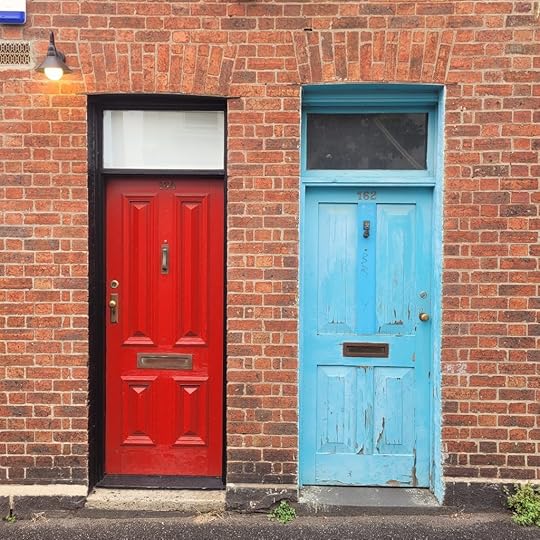
In 2023 the Facebook algorithm served me up some cracking photos of doors. Realising that a well framed door is very pleasing, I joined the Door Appreciation Society – a very busy Facebook group with more than 100,000 members and dozens of posts per day. I enjoyed seeing doors from all the round the world and, though I’m not a photographer, I started noticing doors in my neighbourhood and trying to take nice photos of them.
One day I posted a photo of a door a moderately good door to the Door Appreciation Society. To spice it up I included some information about a famous historical murder at that address. My post got decent engagement until suddenly without warning or avenue of appeal I was banned from the Door Appreciation Society.
I’ve always claimed I was kicked out for being too interesting, but in fairness maybe people don’t come to hear tales of tragic unsolved murders on a door appreciation site.
A window opened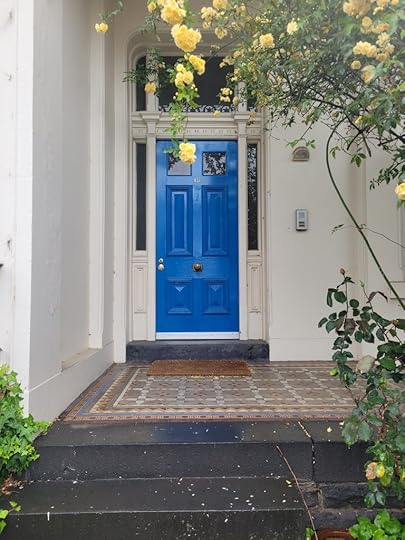
The problem was I had now become addicted to doors. I missed scrolling through other people’s doors, and I had nowhere to showcase my own attempts.
I tried to contact the moderators of the Door Appreciation Society. ‘I’ll be boring from now on,’ I promised, but they did not respond. So I started my own Instagram account: Appreciatedoor.
I aimed to post a daily door photo, and mainly succeeded. I aimed to make my accompanying captions as inane as possible, and definitely succeeded. For a whole year, I kept this up.
What did I learn?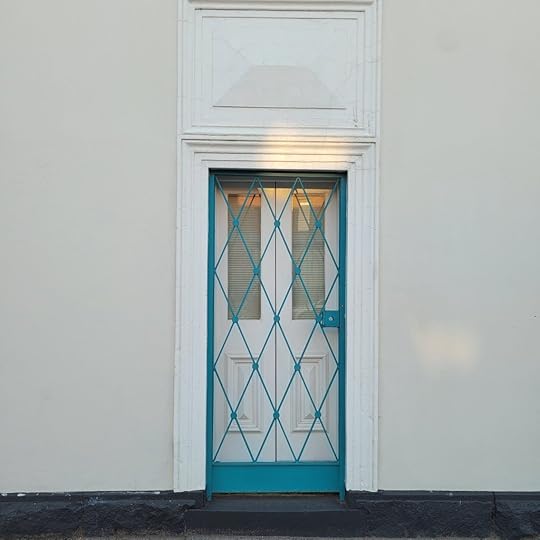 There are lots of doors
Because I aimed to post a door photo every day, I was always on the lookout for good doors. Every street I walked or rode down I was thinking about doors. It can make an ordinary trip more diverting, but not everyone appreciated it. Sometimes people I was with would get cross. Not again! they’d say and pretend not to know me as I whipped out my phone. At other times I’d be late for appointments because I’d stopped to take photos of doors. No-one thinks this is a reasonable excuse.
Every door has it’s dayI often found myself photographing a door I’d rejected many times previously. But with the right light, foliage and accessories the door was suddenly worthy of my interest. For example a flowering plant, Christmas wreath, sunset, or a pair of polka-dot gumboots might make a previously boring door alluring. Please don’t think this is a metaphor for people, you will only be disappointed.
Suburban doors disappointWhen I’d go to a suburb out of the inner city I’d feel excited by the potential fresh doors to photograph. But I was usually disappointed. This isn’t necessarily a reflection on the quality of doors but on the fact that the houses are set back further from the street. I’m not prepared to go up garden paths to get door photos.
Screen doors are the enemy of door loversI’m exaggerating. Some, rare screen doors can be worthwhile. But usually they simply block you from seeing the door behind them. It’s like wearing a condom in the rain, pointless.
How it ended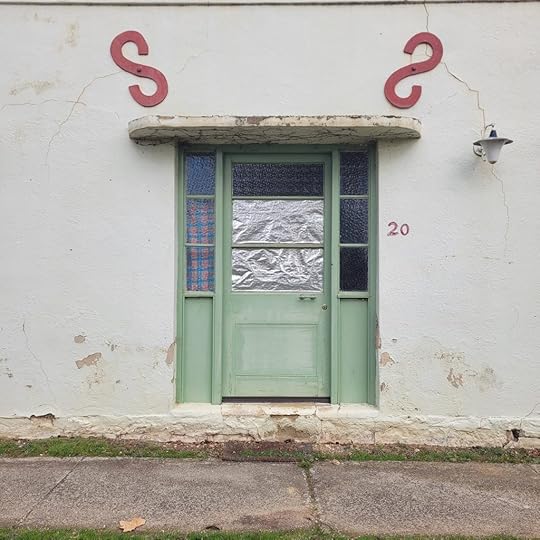
You’ll have noticed I’m using past tense. I’m not photographing doors now (much).
I was getting a bit sick of it anyway, and then a lady yelled at me for being too interested in her property. It was unsettling because at the time of the confrontation I hadn’t taken a photo of her door for at least three months. She must have been lurking and waiting for me to return. I explained to her about my door-based Instagram account, but like almost everyone else in the world, she didn’t didn’t want to see it. She kind of calmed down and then told me all about how many weird people there are in her neighbourhood. I tended to agree.
The only other time I was ‘caught’ photographing a door it ended in a very friendly conversation with the owner who was a lovely older man. He told me all about the history of his street and the subsidence issues.
Not everyone who catches you on the street taking a photo of their front door will accuse you of plotting to storm their property, but some will and I have other things I’d rather be unpopular for.
What next?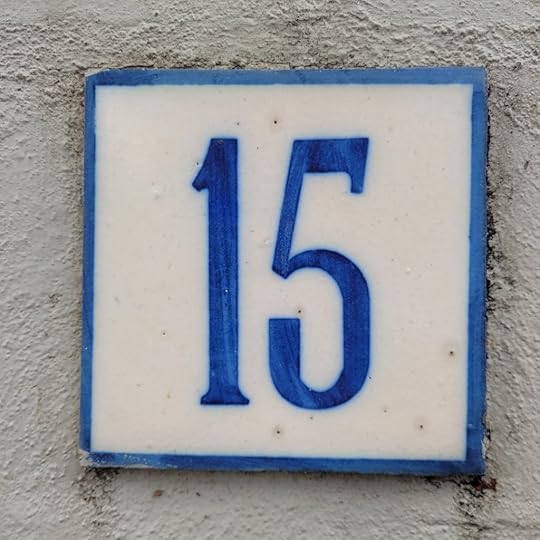
While taking photos of doors, I noticed that house numbers can be quite nice too. I’m going start an Instagram account and post a number for every day of 2025. I’ll start with number 1 on 1 January and will end with number 365 on December 31, unless I get yelled at.
The post My year of appreciating doors appeared first on Penny Tangey.
June 17, 2024
Richmond history in the library: babies, bands and dodgy librarians
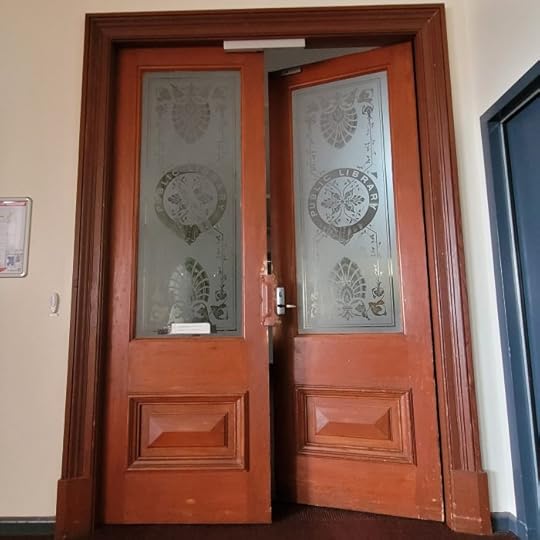 Original doors from the Richmond Town Hall Library, Bridge Road – now installed at Richmond Library, Church Street.
I co-host In Those Days with Christina Adams. In the podcast we read digitised newspapers from Trove, the National Library of Australia’s digital repository. The premise of In Those Days is that I’m a library nerd who does the research then shares articles with Christina and a guest.
We usually record at the State Library Victoria’s recording studio. It’s a great facility but you can only book two hours per day. So earlier this year we completed a residency at the Richmond Library Makerspace, a multi-purpose recording and editing studio. The residency gave us a lot more time in the studio to explore local history with our guests.
Our guests were a mix of Richmond locals and people with professional or personal expertise on Richmond-based topics.
A theme of every episode was how community services and the arts have changed (and stayed the same). In our first episode historian Mary Carroll discussed the first public library at Richmond Town Hall, which held books and periodicals. Public libraries today provide information in many formats including digital, audio and video. Mary Carroll pointed out that libraries still provide free access to resources and space to use them. This was the fundamental, radical ideal of the first public libraries, which has not changed.
An idea that may be genuinely new(ish) for public libraries is that libraries are now places for creation rather than just consumption of information. Public libraries today help people make things. They provide spaces, materials, technology and expertise that facilitate artistic creation (and podcasts). Below is some more information about the episodes we made.
In Those Days Richmond episodesIn The Library with the ProfessorOur first guest was library historian Associate Professor, Mary Carroll. While reading articles about the first public library in Richmond in the Town Hall we discussed some hot button library topics including: qualified teacher librarians, silence, and Mills and Boon.
I’d never met Mary before we recorded, and I was nervous about talking to a real historian. But Mary was delightful and I would have talked to her all day about libraries but she had to get to Wagga Wagga that afternoon and you aren’t allowed to kidnap people.
My highlight was when I asked Mary whether libraries were quiet spaces in the 19th century and she replied “I don’t know, I wasn’t there.” A refreshing burst of historian honesty.
The Globe Theatre with Damian CallinanStar of stage and screen Damian Callinan was our guest to talk about stages and screens in Richmond in the olden days.
Damian is a very versatile performer and writer who has tried and suceeded at almost every artform. He’s also been a guest on a lot of podcasts and he threatened to steal the synthesizer as payment.
We discussed articles about the Globe Picture Theatre, which was built in 1912 on the site of the current Richmond Library. The theatre was used for films and for vaudeville performances and was fascinating to hear Damian’s view on whether they were any good.
We talked about a vaudeville performer, Harry Hoddinot, who performed (badly) at the Globe but then moved to Broken Hill. On a major tangent, I got my school friend Tim Carruthers to bring to life the sheet music of Hoddinot’s song, ‘We’re Going Back Back Again to Broken Hill’ and he tried to make me sing it.
Band Blasts from the Past and PresentMusician and educator, Adam Arnold talked to us about brass bands in Richmond. We uncovered some uncanny parallels between Adam’s current bands and the Richmond Boys Brass Band started 100 years earlier.
I was very interested in Adam’s definition of talent as “an absence of boundaries”. Honestly, I didn’t understand at first, but after he explained I became a convert.
We also heard from one of Adam’s current students, Scarlett O’Heeler, about playing in one of Adam’s bands.
Baby Expert DepotSome of the first services for mothers and babies in Australia were started in Richmond. We read articles about early infant welfare services and my friends Jo Rosenberg and Vaya Pashos compared these to their experiences of Maternal Child Health services.
Afterwards, proper oral historian, Carla Pascoe-Leahy, talked to us about how ideas around mothercraft have changed over the past 100 years. Carla is very knowledgeable and reassuring about why talking about motherhood is hard.
We had many logistical issues while recording this episode, but like all modern parents we bravely juggled on.
Crime in the LibraryWe ended the series where we started. In the library.
Julianne Negri came in to talk about library work and crime. Julianne is an author, artist, library worker and Trove-lover and in this episode she applied her incredible skill set to solving cold-case crimes from the Richmond Library.
We discovered money in a cupboard, corrupt council dealings and a violent assault on the librarian by an ex-mayor of Richmond. We cracked all the cases and I had to edit out a lot of giggling.
Please share!All our guests for this series were extremely generous with their time and information. I think they said interesting stuff, so I’d love more people to listen. If you know someone who’s interested in libraries, history, true-crime, Richmond, music, books, parenthood or dodgy librarians please recommend In Those Days to them!
The post Richmond history in the library: babies, bands and dodgy librarians appeared first on Penny Tangey.
May 3, 2024
On the Verge
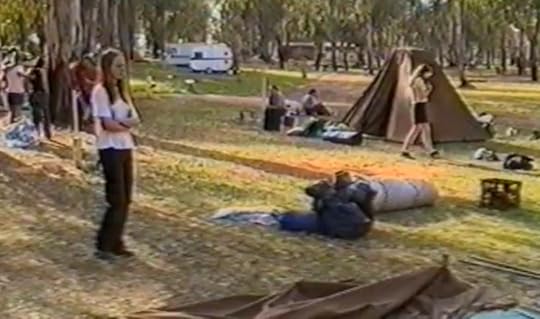
Recently my friend digitised the 1997 video of our school orchestra tour of outback New South Wales. Titled ‘On the Verge of the Outback’, it’s styled as a fly-on-the-wall documentary and was made by the school chaplain. We don’t know why, but I’m glad he did because it’s the only footage I have from that time and it definitely made Music Camp more memorable.
I hadn’t watched the video for at least 20 years but it was exactly as I remembered: An excruciatingly drawn-out, plotless dirge. It’s nearly three hours of teenagers standing around waiting, then playing music that sounds like it’s recorded underwater.
In summary I found ‘On the Verge of the Outback’ fascinating, hilarious and almost achingly sad. 5 stars.
I am hardly in it. I played second clarinet and was extremely quiet and awkward. Rewatching the video, I kept laughing when I was briefly in shot because I appeared so miserable or terrified. I called my partner over to show him how ridiculous I was.
Over the past 25 years, I’ve made a lot of hay out of making fun of and criticising myself. I’ve read my school diaries on stage for laughs and based characters in books on things I’ve done that I’m ashamed of. It’s been cathartic and gives me an illusion of being an improved version of my earlier self. But I’ll probably always think past-Penny was a bit of a duffer.
On the same day I rediscovered ‘On the Verge of the Outback’, I showed an 8-year-old a video of herself dancing when she was in prep. To me, it was cute, but she didn’t want to look. ‘I’m so embarrassed’, she said. ‘I can’t believe I thought I was a good dancer.’
She was being harsh to her younger self and I felt sad. I wished she could look at that little girl and say, ‘I really loved dancing then’.
In that spirit, and against my natural inclination, I’m going to say some nice things about my Year 10 self based on my rewatching of ‘On the Verge of the Outback’.
1. I was a good audienceI said above I looked miserable in most of the shots. But actually I spent a lot of the trip pissing myself laughing in the background. There were some very funny people on that Music Camp. I recognised funny when I saw it, and I did not hold back in showing it.
I hope I still do this. Not from me the cool ironic smile and sideways glance. If I think you’ve said something really funny, you’ll get an actual round of applause.
2. I did hard things that I was scared ofI was not a gifted clarinetist and playing in front of other people was excruciatingly difficult because I was so shy. One of my most cringe-worthy memories is being asked to play alone at orchestra rehearsals and then simply not making a sound.
I was incompetent but I stayed in the orchestra because I wanted to be a part of it. Maybe I should have found another hobby, but in fairness there weren’t that many avenues to participate in the arts, so I took one that was available.
When I watched myself playing in the orchestra, I wondered if I was pretending (cos I did that quite a lot) but who cares. I was there, I tried and I learned a lot.
3. I didn’t peak in high schoolThis sounds mean. To be clear, I don’t think anyone peaked in high school. We all learned more and did more after that Music Camp. I had a lot to look forward to.
I really enjoyed Music Camp.
The post On the Verge appeared first on Penny Tangey.
November 19, 2023
5 fashion mistakes to avoid for the rest of your life
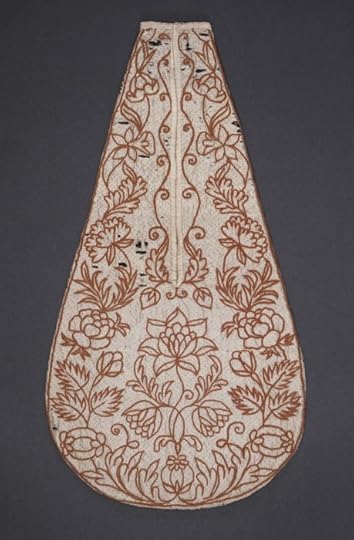 4×5 originalONE: Shorts without pockets
Ambling in your local park, listening to all things you can’t hear, you spot a treasure on the ground. You bend to pick up the glittering prize and hold it up to the light. Yes indeed, a fine treasure. You try to slip the special object into your shorts pocket. Uh oh. No pockets.
So you hold your treasure in your hot little hand. You keep walking and see some sticks, a leaf you like the look of and some beguiling rocks. You gather them all into your arms but when you get home you realise the treasure is gone.
TWO: Dresses without pocketsYou attend a presentation on Art preceded by light refreshments. That means canapes. After many minutes of staring longingly at the silver trays, eventually you are offered a mini-spring roll. You take a napkin and gobble down the hot, fatty treat. You join a conversation about lunchboxes and screw your napkin into a ball as you talk.
A bell rings and everyone is called into the presentation on Art. It is a high price to pay for one mini-spring roll. You sigh and follow the others into the theatre, scanning for a place to drop your serviette. There’s no bin so you try to put it in your pocket. Uh oh. No pocket.
You shove the napkin into your bag where it will stay until your death many decades later.
THREE: Pants without pocketsYou try on a pair of pants in a shop. They fit perfectly, no gapping around the waistband, and they are comfortable when you sit down. You buy them.
The next day you dress carefully in your new pants and do a new pants dance. You pick up your phone, lift up the pocket flap on your pants and try to slip your phone in. But it won’t go. Then you realise. It is a fake pocket.
Cursing your life and now running late because of the misguided dancing, you half run, half walk to the tram stop. Your phone rings from inside your bag. You slow down and open the bag, find the phone, and speak to your partner who tells you you they called by mistake. The tram you needed to catch sails past.
FOUR: Culottes with no pocketsYou waft from the house excited to spark the question, ‘Is that a skirt or pants?’ all the live long day day.
Voluminous fabric billows around you as you step outside into a bright spring day. Suddenly, it hits you. First itchy eyes. Then, a tickle in your nose. Finally a massive sneeze. You reach for a tissue in your pocket. Uh oh. No pockets. You spend the rest of the day fumbling in your bag for tissues, unable to revel in the confusion your pants/skirt hybrid outfit creates.
FIVE: Overalls with no pocketsYou are fixing a pipe and have nowhere to put your spanner.
In each of the scenarios above, you have only yourself to blame, but I think it’s worth trying to sue the manufactures as well. There are many class actions afoot and compensation may be forthcoming.
The post 5 fashion mistakes to avoid for the rest of your life appeared first on Penny Tangey.
July 15, 2023
Action
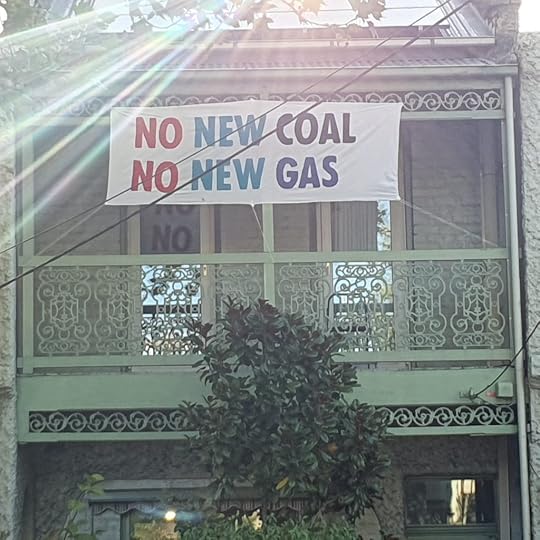
I’ve ended the week dispirited by the awful climate news and the loneliness of my personal attempts at activism.
So I decided it’s good day to update our household climate action plan. This plan lists stuff we’re trying to do and includes household, work, communication, activism and community activities (obviously these can overlap!) I know it seems like a rigid thing to do, but it helps me keep calm and on task.
It can also cheer me up. When I went through the plan today I realised that in the past six months there have been good things that are worth some celebration.
Gas goneOur house got off gas. It’s been a long-term project due to the money and organisation required, but the gas water heater was finally replaced and it’s done!
Forests savedThe Victorian Government announced native forest logging will end in 2023 along with a transition package for workers. There are some caveats and worrying details, but this was overall amazing news. My household have been involved on the periphery of forest activism and seen the hard work and dedication of those involved. I am really hopeful this will be a start to recovery for Victoria’s forests and communities.
Book doneMy first picture book, Granbad, was finished (out 1 August). It’s about a grandfather who breaks all the rules (and even the law) to help his grandkids. I was really grateful that my publisher UQP supported me to write this and to Peter Baldwin who did amazing illustrations. The book reflects the cheeky, funny and brave environmental activists I’ve met (as well as my own Dad who is less politically radical but still breaks a lot of rules for his grandkids).
Naughty Old Nana Blows up a Pipeline will be out for Mother’s Day…this is a JOKE.
Bike riddenI’ve got confident riding the cargo bike. It has a seat for two kids at the back and very helpful electric motor. This has greatly reduced the need for short car trips around town. Also, it is so much fun!
List listedMy list of fossil fuel sponsorships in Australia, which I’ve been compiling for over a year was used by 350 Australia as part of their Fossil Free Sponsorships campaign. I’d really encourage you to look at the website and check if organisations you’re involved in have fossil fuel funders. If so, you can start a conversation with them about why this needs to change. The Climate Council recently released a great report on this.
It never feels like enough, but it is also definitely something.
The post Action appeared first on Penny Tangey.
June 16, 2023
The Language of Stamps
While researching a podcast episode with the team from Stamps Aren’t Cool I became aware of something called the language of stamps.
This language was mentioned in an article about a divorce court hearing in 1931. The husband submitted as evidence a stamp his wife had placed on a piece of paper at a rakish angle. This was meant to mean something. There was, the judge was told, a language of stamps.
So I looked up “language of stamps” in a digital repository of Australian newspapers (Trove) and found articles on it going back to the 1880s. It seems to be one of those topics that gets regularly trotted out to fill space and distract from the heat death of the Universe. Like the constant advice on how much water to drink, and the opinion pieces on whether women are really funny every single Melbourne Comedy Festival.
From these historic articles I divined that the language of stamps is expressed through the location of a stamp on the envelope. Different locations and angles signal meanings.
I noticed that the language of stamps seemed to vary across the articles, and so it would seem that there are number of stamp dialects (or newspaper columnists simply make stuff up).
Some people disapproved of the whole thing. This fun columnist replied to a reader’s enquiry by saying: “The use of the language of stamps is a breach of the regulations of the Post Office, and letters so stamped may not be delivered.”
Quite right. But to expand your knowledge with information that you must NEVER put to use, I have prepared a quiz on the language of stamps based on an article published in 1922.
LANGUAGE OF STAMPS
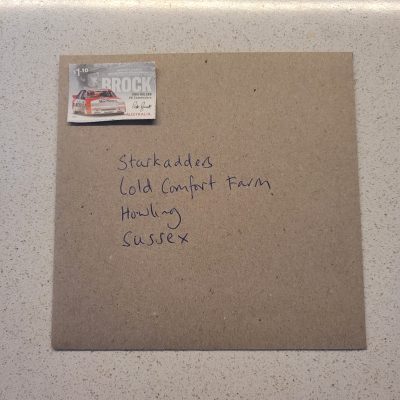
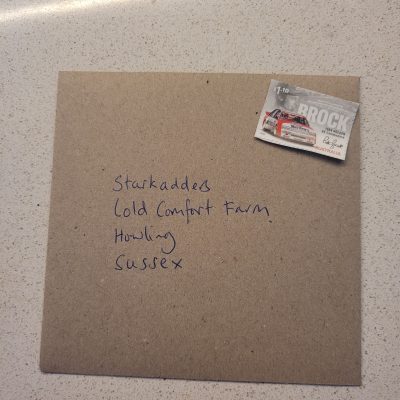 Q1. Stamp in the upper right hand corner at a slight angle
a) I expect an immediate reply.
b) Where is the toilet?
c) Train.
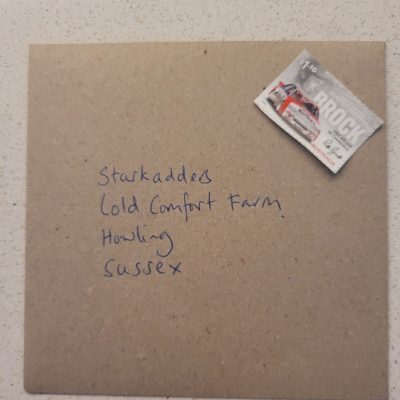 Q2. Placing the stamp in the upper right hand corner on a 45 degree angle
a) Do you sell cheese?
b) I am provoked at your long silence.
c) Jumper.
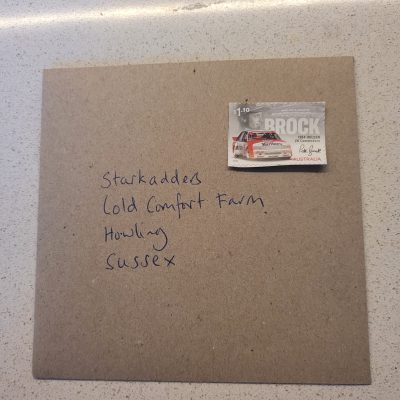 Q3. Placing the stamp half-an-inch from the upper and right-hand edges
c) Dog.
b) Expect me tonight.
c) I want to catch a train to the city.
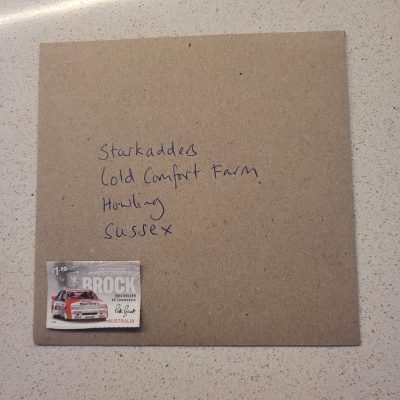
 Q4. Placing the stamp at the upper left hand corner
a) Museum.
b) Four croissants please.
c) Be careful how you reply to this.
 Q5. Placing the stamp at the lower right hand corner
a) I am from Australia.
b) Bookshop.
c) Beware! Father has caught on.
Answers
a) 2. b) 3. b) 4. c) 5. c). But quite honestly you can pretend it means whatever you want, we’re due for another article on the language of stamps now.The post The Language of Stamps appeared first on Penny Tangey.
January 15, 2023
Melbourne to Adelaide – the journey and the desperation
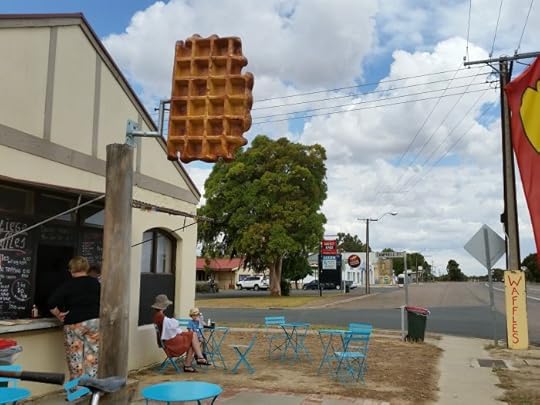 Waffles and Jaffles, Coonalpyn January 2016
Every year my family drive from Melbourne to the Fleurieu Peninsula near Adelaide. Over the past 10 years we’ve made this trip with children growing in size and number and we’ve found ways to make the trip fun(ish) for every(some?)one.
I considered writing a guide reviewing every stopping point on the most direct Melbourne-Adelaide route, however, I don’t want to put that kind of negativity into the world. In particular, my partner and I have a feverish aversion to a town along the way. Our dislike is no longer fully rational and has been passed on to our kids who gnash their teeth if we need to stop there.
So I’m going to keep it positive and tell you about the places we love to stop on the drive from Melbourne to Adelaide(ish). In no particular order (but my favourite is the first one):
Dimboola, VICDimboola is a cute town with an olde-fashioned main drag. When we first visited we were thrilled to find a great cafe. Then the Dimboola Imaginarium opened. This amazing shop is in a restored bank building. There’s a giraffe-sized stuffed giraffe in the middle of the room and many other wonders. Last year I bought a 500 piece puzzle of David from Schitt’s Creek.
In 2022 we stopped the night in Dimboola for the first time. There was a frog in the motel’s pool and my daughter wanted to give it a funeral. We had to break the news to her gently that the frog wasn’t dead.
We had tea at the Victoria Hotel, a pub with amazing décor and great food. It has accommodation but it’s not right for my family as we make a lot of noise and break things. One of my dreams is to stay at the Victoria Hotel with friends and hang out for a weekend reading books and holding funerals for frogs.
Keith, SAThere’s a lot to do in Keith and some people in my family have wanted to take an extended holiday there rather than pushing on to the coast.
In ‘Keef’ you can look at the landrover on a pole. You can have a go on the mono-rail at the playground and think about how many fingers you really actually need. You can swim at the very nice public pool. You can have chips at the pub.
In short, we love Keith to the point of tears if we don’t stop there because some of us were asleep and it made sense to keep driving while everyone was quiet.
Coonalpyn, SAOne word. Waffles. Actually the cafe is called ‘Waffles and Jaffles‘ but who’s having jaffles when there’s waffles?
It’s more a roadside kiosk than a cafe, but Waffles and Jaffles is not to be missed just because you have to sit outside, it’s boiling hot, there’s a stink coming from the public toilets, and trucks are roaring past every 14.7 seconds. The waffles are fantastic and extremely popular because they are fantastic. Nothing else matters.
Coonalpyn also has some excellent silo art (not just big) and a cafe opposite the silo. We tried it for coffee once but still got waffles at Waffles and Jaffles.
For waffles reasons we ALWAYS stop in Coonalpyn on the way to the holiday and on the way home. Maybe if a baby had just gone to sleep we wouldn’t, but actually we would.
Other good bitsThe Giant Koala, Dadswell Bridge, VIC. The speed limit on the Western Highway drops to 80km/hour near the Giant Koala and that gives you plenty of time to take in this tourist attraction. There is nothing to be gained by slowing down further and your soul to lose if you stop.
Jaypex Park, Nhill, VIC. There’s a big slide that I am sometimes brave enough to go on. There’s a great nature walk that starts off on a boardwalk at the park and then loops around the lake. You can watch birds if they like the sound of children screaming.
Our annual drive to Adelaide is genuinely one of the highlights of my year. With our evolving family every year feels like a new challenge, but we always manage to find the fun between the screams.
The post Melbourne to Adelaide – the journey and the desperation appeared first on Penny Tangey.
December 17, 2022
Supporting friends with COVID
In the olden days, having COVID was unusual and the community rallied around those afflicted with support packages and engagement on COVID diary posts.
These days, most Australians have had COVID, and many people more than once. Like a Krispy Kreme, you no longer have to go to the airport to get it, but it still makes you feel sick.
Having COVID still isn’t fun no matter how popular it is. So many of us would like to support our sick and isolating friends. Here are some ideas:
Care packageNothing says ‘I care’ like constructive criticism. Isolation provides an opportunity to review and reflect so this is the perfect time to provide your friend with some very honest feedback. Take the time to prepare a letter, podcast episode, or film script detailing your sick friend’s weaknesses and how you think they can improve. This will help them get better physically and as a person.
FoodPeople with COVID often lose their sense of smell, but not their sense of humor! Sprinkle some poo on biscuits, deliver, wait several days and then give your friend the hilarious news about what they’ve been eating! They will laugh and laugh and momentarily stop carrying on about how everything tastes like metal.
Contactless ContactPeople with COVID get very tired because their bodies are working hard to fight infection. This can lead to a lot of daytime sleeping, or as I call it, failing the day. Don’t let your friend fall into this trap. Call periodically to ‘see if they need anything’. If they get tricksy and turn off their phone you may need to make a contactless visit. Small lollies such as Tic-Tacs thrown at windows make a loud noise, but rarely break the glass.
ReviewsYou cannot go a day without someone asking you for a 5-star review. From podcasters to surgeons, everyone is begging for full marks, and they usually get them. That kind of pandering might be why the pandemic happened in the first place. To stop the rot, jump onto your friend’s platform and give them a 1-star review. This will drag down their average and lift up their fighting spirit.
With friends like you, they will soon be feeling recovered and ready to provide the same caring attention when it’s your time of need.
The post Supporting friends with COVID appeared first on Penny Tangey.
December 8, 2022
How podcast transcripts will make me popular
When I started a podcast, In Those Days, I decided to include transcripts. It can be a pain but here is why I think it’s worthwhile.
AccessibilityPodcast transcripts make the content accessible to more people.
People with hearing impairments use transcripts to access audio content. This is a lot of people. More than 5% of people have disabling hearing loss.
Transcripts also help non-native English speakers. Text can be translated, or the audio easier to understand alongside a written transcript.
You could say that having a bigger potential audience just creates a bigger pool of people choosing not to be audience members. But that would be rude. Just because something is true, doesn’t mean you should say it.
ContentOn the podcast I use digitised newspapers in Trove to discuss personal history with a guest and my co-host Christina Adams. I search Trove to find articles and information to hopefully surprise and delight the guest, or at least let them know that their ancestors were murderers.
Resources in Trove are searchable because of optical character recognition and volunteer text-correctors. So, In Those Days is a celebration of the usefulness and fun of searchable text. To then make content without searchable text would be missing the point.
FindabilityTranscripts make it more likely people will find the show by searching. I’m told it helps with SEO. Including timestamps in the transcript also makes it easier for people to locate content within an episode and share bits they hate with a friend.
LongevityIf people listen, it’s a podcast. If they don’t, it’s an oral history project. And as the host of an oral history project, I have an eye on preserving content for the future.
Transcripts are a back-up in case something goes wrong with the audio files. On the podcast we discuss memories and personal histories that aren’t recorded elsewhere. Maybe, one day, someone will be interested, and text files might be the only way to access the information.
DownsidesInitially I put the transcription in the show-notes and a few people got confused and read the transcript rather than listening to the podcast. But now there’s a separate tab for the transcript and we’ve explained it to our mums, so that shouldn’t happen again.
The main problem is the time required to make an accurate transcript. I listen and type the episodes manually. I’m an okay typer, but it takes 2-3 times the episode’s length to produce the transcript.
You can pay for transcription services, but that’s an extravagance I can’t run to at this definitely-an-oral-history-project stage.
I’ve tried computer-generated transcription. Superficially it seems to do a good job, but on closer inspection errors make the transcription confusing, inaccurate, and sometimes offensive. Correcting mistakes can take just as long as transcribing manually.
Because I have so few listeners, and I’m quite time-poor, I’ve been tempted to skip the transcript. But I tell myself that if I don’t have the time to make it accessible, I don’t have time to make it.
In summary…I don’t know if anyone wants my transcripts, but that’s never stopped me making anything before. I’ll keep doing it.
The post How podcast transcripts will make me popular appeared first on Penny Tangey.


