Erika Lust's Blog
September 18, 2026
Reflections on “Dancing on MY Own”
For almost ten years, Thais Català and I have been talking about making this film. We were about to shoot it right before the pandemic hit, and then somehow a few more years went by.
Thais has been working as my Director of Photography since 2015 and has been with me since the beginning of XConfessions. She has been behind the camera through a huge part of my life as a filmmaker, and during all those years we have spent an enormous amount of time together talking about bodies, desire, sexuality, beauty, light and how you make intimacy visible on screen.
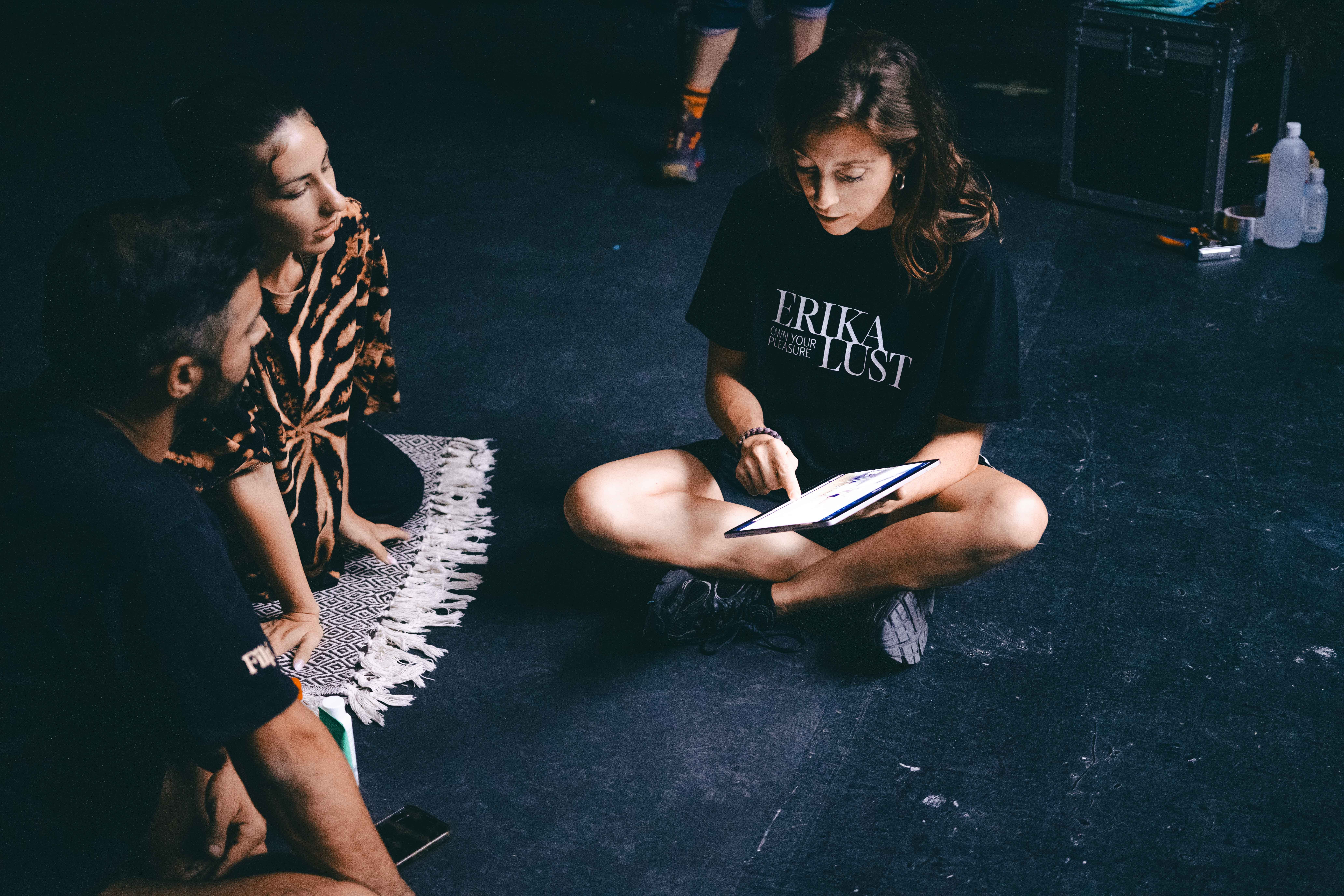 Thais, Tula and Filipi going over choreography and shot details on set.
 But working in erotic cinema also opened something up for Thais herself. At some point during those years, she discovered pole dancing. What fascinated her was not simply the eroticism of it, but the combination of sensuality and physical strength. It made her more aware of her own body, more confident in it, and she began to really look at herself without needing somebody else to tell her what they saw. That became the starting point for “Dancing on My Own.”
Pole dancing is still often reduced to a narrow stereotype. Its history is deeply connected to stripping and sex work, and I don’t think we need to distance pole from that history in order to take it seriously as an art form or as an incredibly demanding physical discipline. In fact, there has been an important conversation within the pole community about exactly this: how to celebrate the way pole has evolved without erasing the strippers and sex workers who pioneered modern pole dance in the first place. I won’t even begin to try to tell that whole history here, but I highly recommend the work of Dr. Carolina Are/Hades of Blogger on a Pole for anyone who wants to understand it better.
The woman in “Dancing on My Own” is alone, surrounded by mirrors. Gradually, she encounters another version of herself: almost like a twin, a fantasy, an alter ego. For Thais, this second woman was never simply another character. She was also a way of playing with the idea that there isn’t only one version of or way to see ourselves. This is why mirrors became so important to the film.
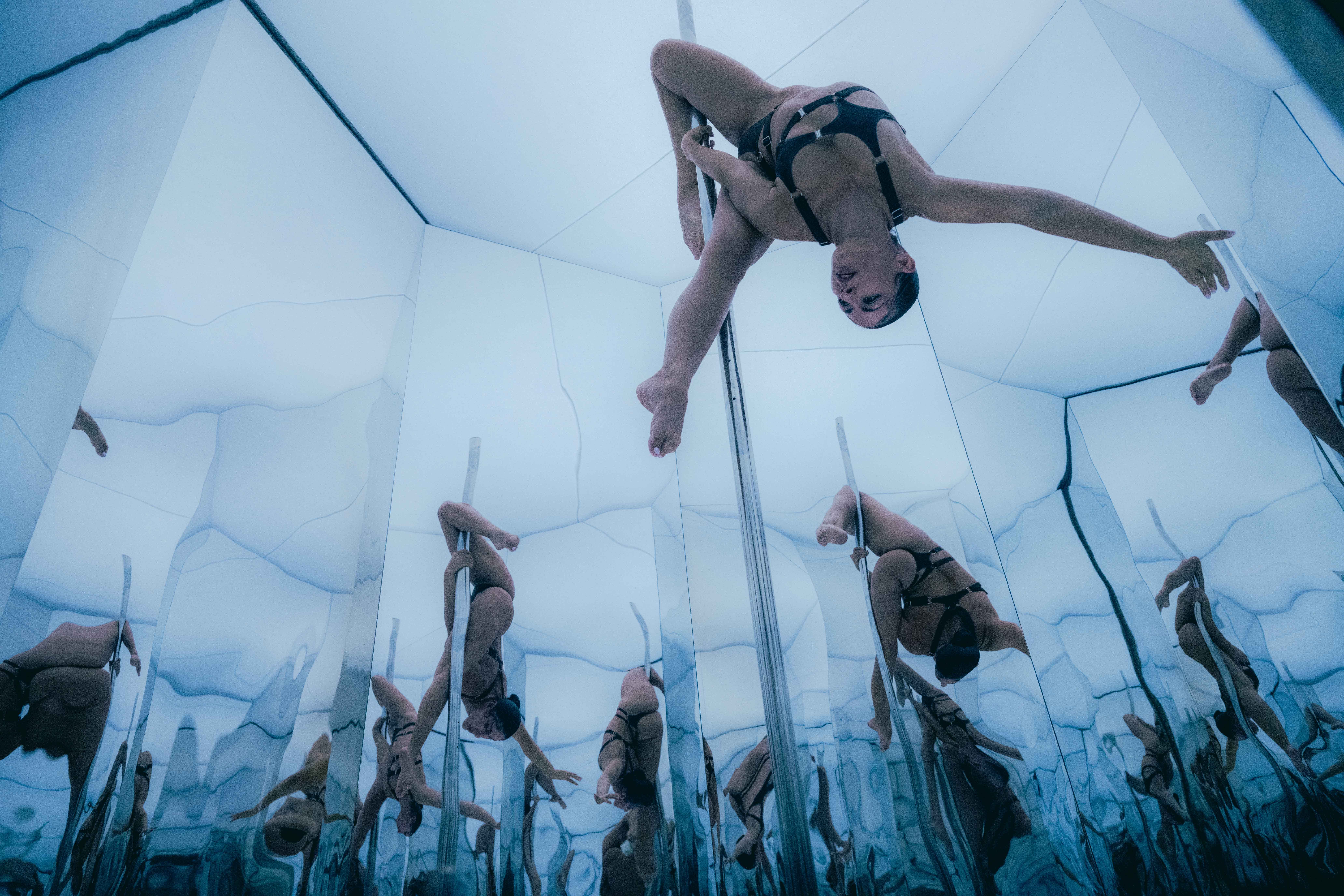 One spin, infinite Tulas.
Most women are very used to looking at themselves in mirrors: checking, correcting, hiding, comparing. Thais wanted to play with the possibility of a mirror doing the opposite. Instead of looking for what is wrong: what if you could enjoy what you saw?
I’ve been thinking about mirrors a lot over the last few years. My memoir, “Lust: Pleasure, Power, Performance,” comes out next month in the U.S., and writing it often felt like holding a mirror up to my own life and being asked to keep looking, even when I thought I already knew what was there.
I wrote this book alongside the journalist Mary Katharine Tramontana. We spent a lot of time going back over my life, talking, researching and interrogating my memories. She would ask questions that made me look again, notice contradictions, or see something in my own story that I hadn’t quite seen before.
I’ve spent so much of my career thinking about what a camera allows us to see and what it leaves outside the frame. Our writing process made me ask some of those same questions about my own life. The longer I looked, the less fixed my reflection became. I kept returning to versions of myself I thought I remembered clearly, only to find them shifting as we went deeper. The woman I thought I was at twenty-five looks different when I meet her through the eyes of the woman I am now.
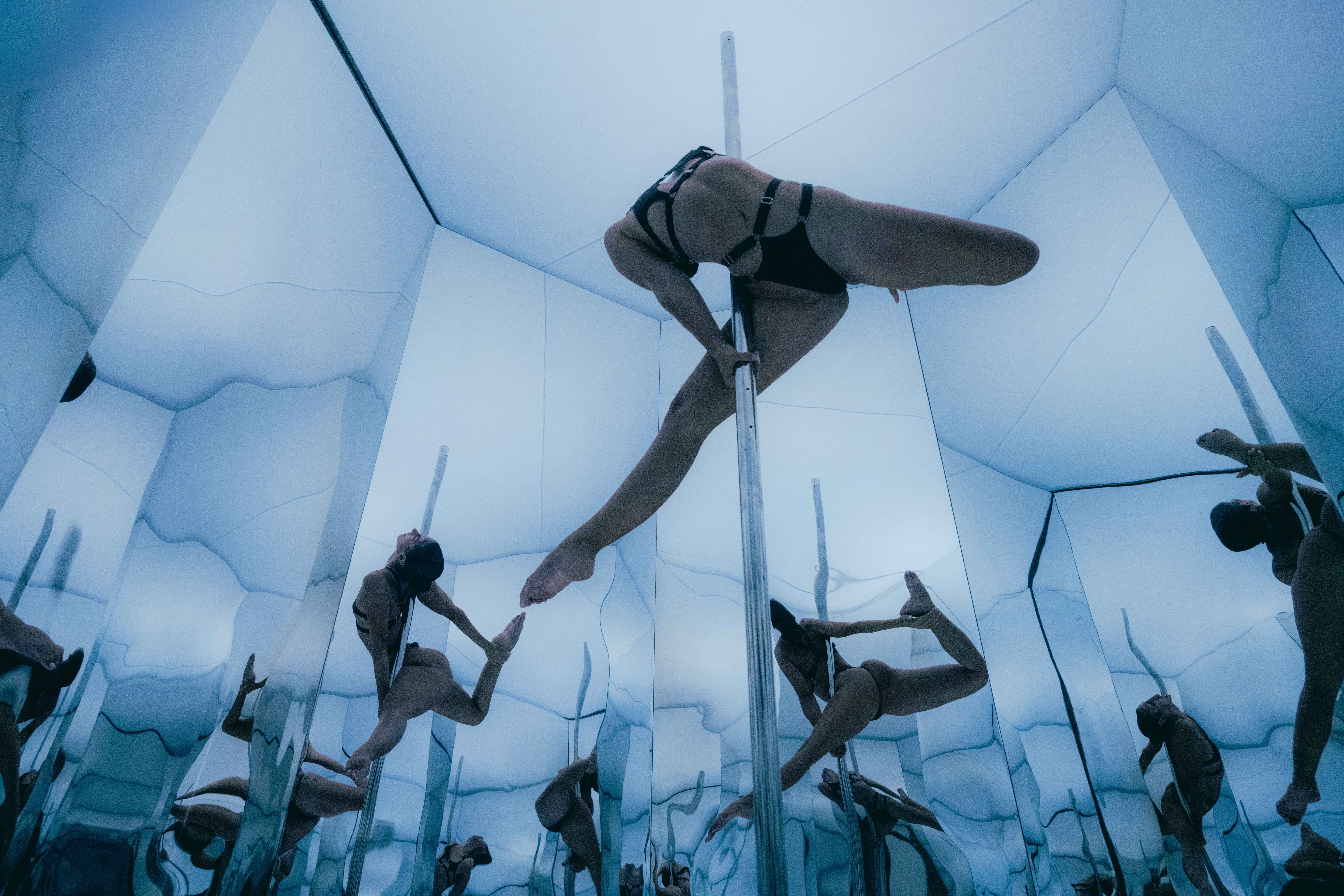
When Thais and I started developing this film, we talked a lot about these ideas. Together we wrote the voice-over, trying to put into words what happens when you begin to look at your own body differently: the vulnerability of moments like that, but also the strength and pleasure that comes with them. Thais has spent so many years working with photography and light, and understands how much light can change the way we see a body and what we feel when we look at it. The mirrors, reflections and shadows in “Dancing on My Own” are not there just to make the bodies we see look beautiful. They change the tone of what we see as the invisible audience and what Tula Vida sees when she looks at herself.
The choreography was equally important. Tula spent weeks rehearsing with a choreographer (Karem Gutierrez) before the shoot. Pole dancing demands extraordinary physical strength, even though, when performed beautifully, it can look almost effortless.
But it isn’t.
And because Thais wanted the movement of Tula’s body, the camera and her reflections to work together, everything had to be extremely precise.
Creating her double in Julia Roca brought another challenge. We needed to find someone whose body was similar enough to Tula’s for the illusion to work, and then makeup, hair and wardrobe had to bring the two women even closer together. Tula’s tattoos were carefully recreated on Julia, her hair and makeup were matched, and they wore the same clothes. One of my favorite small details is that we even had the same pair of pole dancing shoes in two different sizes.
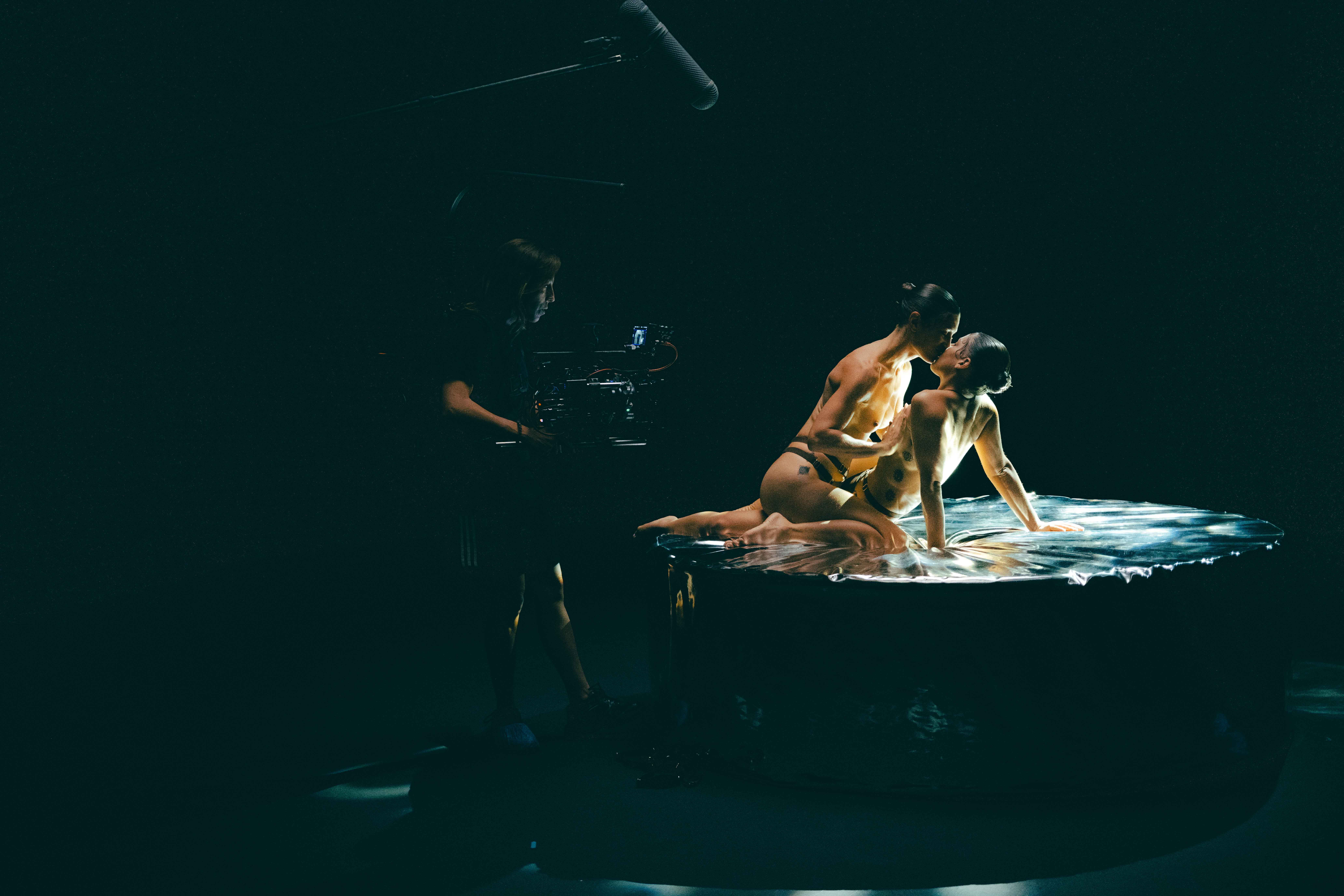 Thais behind the camera, capturing Tula and Julia
All of this work was there to create something that should feel quite simple when you watch it: Tula meets another version of herself.
Everything continued taking shape long after the shoot wrapped. Thais spent many sessions with our editor Lina working through the material, finding the rhythm and deciding how the images should speak to one another. Sound and color became especially important because so much of this film depends on atmosphere rather than dialogue. Josefina Rosenwasser also created original music for it.
One of the things I love about “Dancing on My Own” is how many women contributed something of their own to it. It began with Thais’s experience with pole dancing, but then so many other people brought something to it: Tula through her performance, Julia as her double, Elettra through the art and set design, Paula with makeup and hair, Otti with the styling, Lina in the edit, Josefina with the music, and our whole ERIKALUST production team bringing all these pieces together. This is part of what makes filmmaking so interesting to me. You begin with an idea, and then other people bring things to it that you could never have created alone.
It is also one of the reasons I have spent so many years producing films by other directors. I don’t want erotic cinema to have one voice or one way of looking at sexuality. I want filmmakers to bring their own experiences, fantasies, obsessions and visual languages into the dialogue we’re having as artists.
Thais has spent so many years helping me realize my ideas from behind the camera. So there was something very special about changing those roles and watching her direct a film that came from something she had discovered within herself. I love that this is the story she chose to tell.
“Dancing on My Own” is ultimately about rediscovering your own body. Looking at yourself differently. Allowing sensuality to belong to you before it belongs to anyone watching you.
And perhaps, hopefully, liking the woman who is looking back at you.
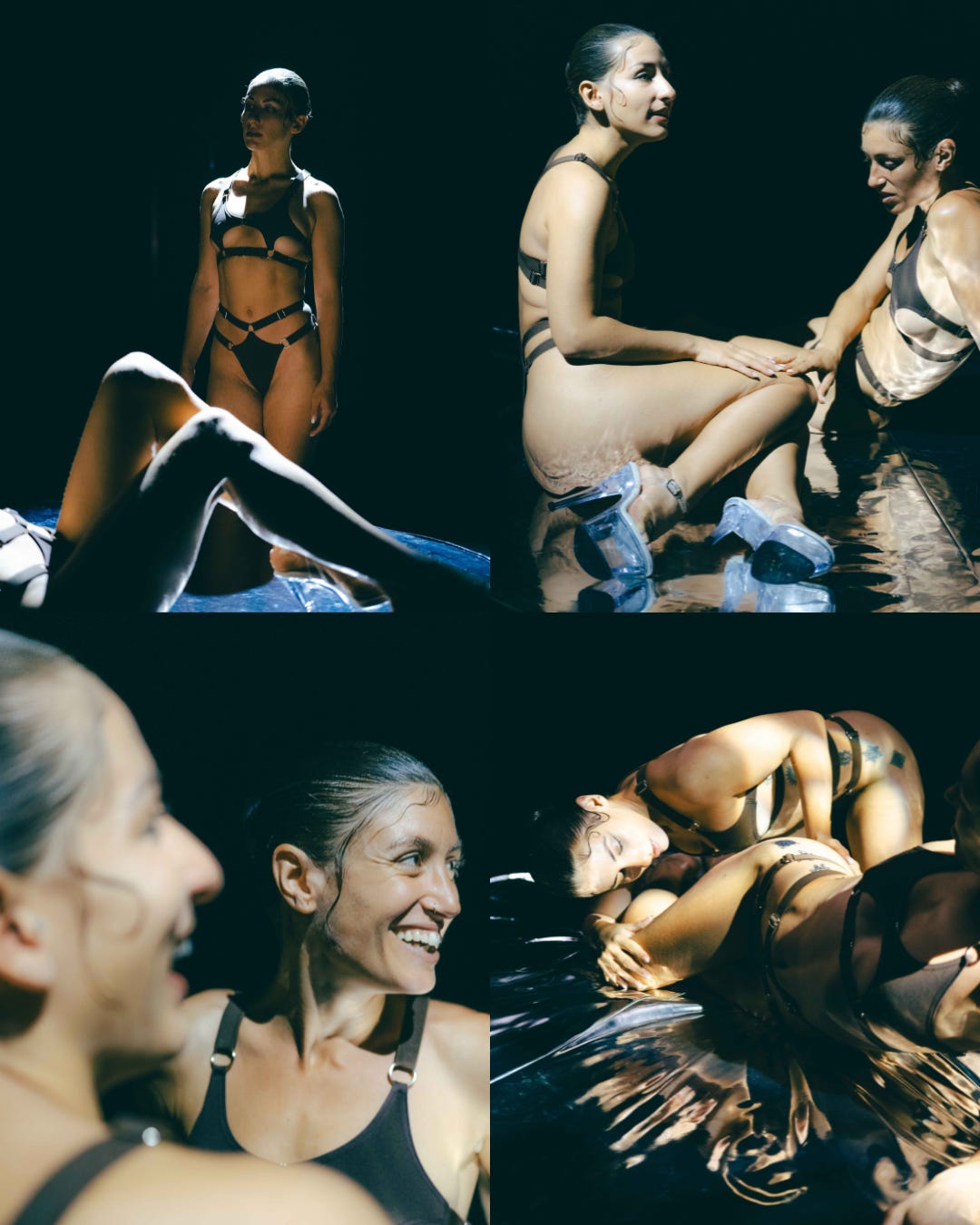 Tula and Julia or Julia and Tula. All images by Monica Figueras.


August 27, 2026
Bike Smut: Summer Flirting on Two Wheels
Some films stay with you as sensations rather than stories. Heat on skin. A glance held half a second too long. A camera that seems to know exactly what it wants.
Tinto Brass’s Monella is one of those films for me. It’s from 1998, so of course it hits for me: those were formative years for my erotic gaze.
What I carry from it is a mood: eroticism that is bright, mischievous, physical, and completely unashamed of its own pleasure. Desire in Monella doesn’t brood. It plays. It teases. It moves.
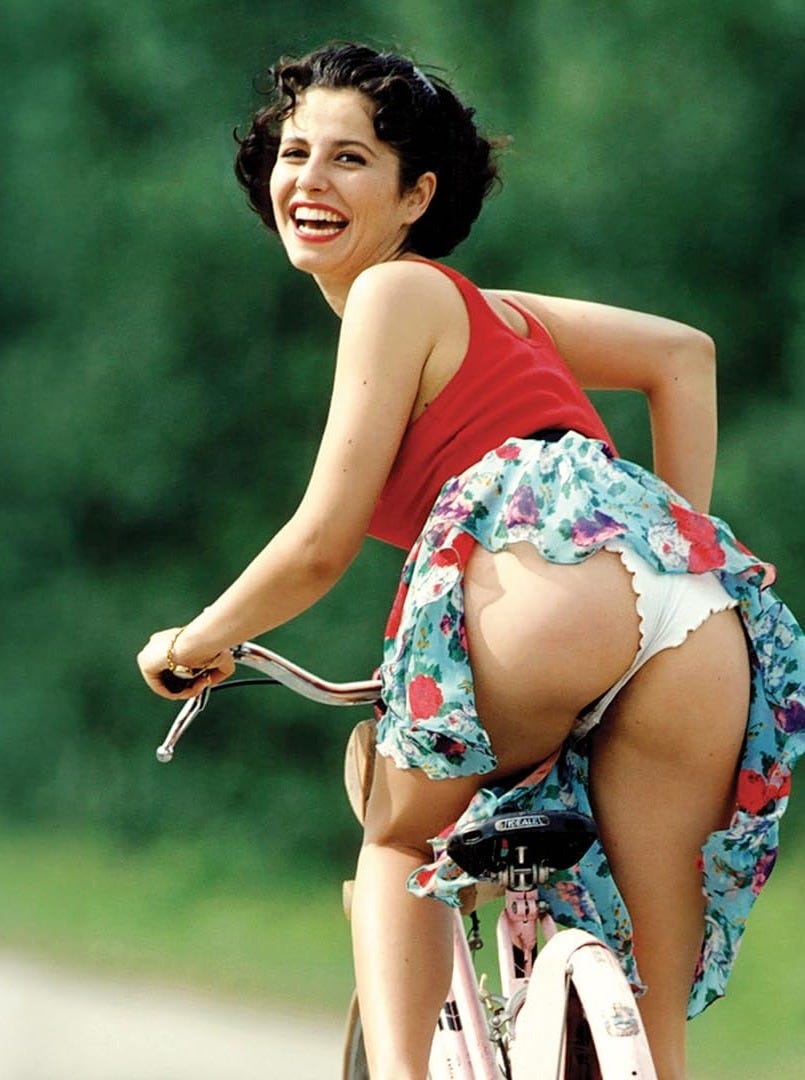 Anna Ammirati as Lola in Monella, directed by Tinto Brass.
I met Brass in Rome, at an event for the Italian publication of my book Porno para mujeres — released there as Per Lei — held at Zou Zou, a beautiful erotic store that turned out to be a perfect setting for a conversation about pornography, pleasure, and women’s desire. That encounter feels now like a lovely thread connecting different moments of my work: writing about another kind of cinema, and eventually making films that carry some of that same carefree sensuality forward.
BIKE SMUT, which arrived at the end of July, is my playful tribute to that energy. A wink, not a remake.
The immediate spark came from an XConfession submitted by @pornoavelo:
“There’s something about bikes that turns me on every time. Maybe it’s those first memories — my clit pressed against something hard, the road vibrating through me. Or maybe it’s that feeling of freedom: the wind in my hair, the perfect rhythm of pedaling, like a heartbeat in sync with summer. Or maybe… It’s my girlfriend, riding like she knows exactly what it does to me. Tiny shorts, sweat glistening on her skin… and suddenly I’m a horny teenager again, lost in a daydream.”
That confession had a film inside it. Memory, sensation, freedom, rhythm, summer, and the unbearable excitement of watching the person you desire ride just ahead of you, fully aware of the effect she’s having.
There’s something unusually intimate about a bicycle. You grip it, lean into it, press yourself against it. Your body finds a rhythm with the pedals while the road sends every vibration back through the frame. Effort, friction, speed, sweat — and a machine in constant contact with the body. I wanted to explore the ride itself as a form of foreplay: the almost-there of anticipation, the little stomach flip when your girlfriend is just ahead and she knows you’re looking.
Emma C and Agatha Vega bring that to life. They keep it light, naughty, conspiratorial. The tension lives in the space between them — the shared rhythm, the looks, the sweat, the knowledge that one of them is watching the other. Then the bikes stop. Everything that built through movement and speed finally gives in.
The camera couldn’t simply observe all this from a safe distance. Our DOP Andrea filmed parts of the ride on rollerblades, gliding downhill with the camera in hand — technically daring and slightly mad, and completely in the spirit of the film. The result is a camera that chases and swerves, pulled into the ride along with everyone else.
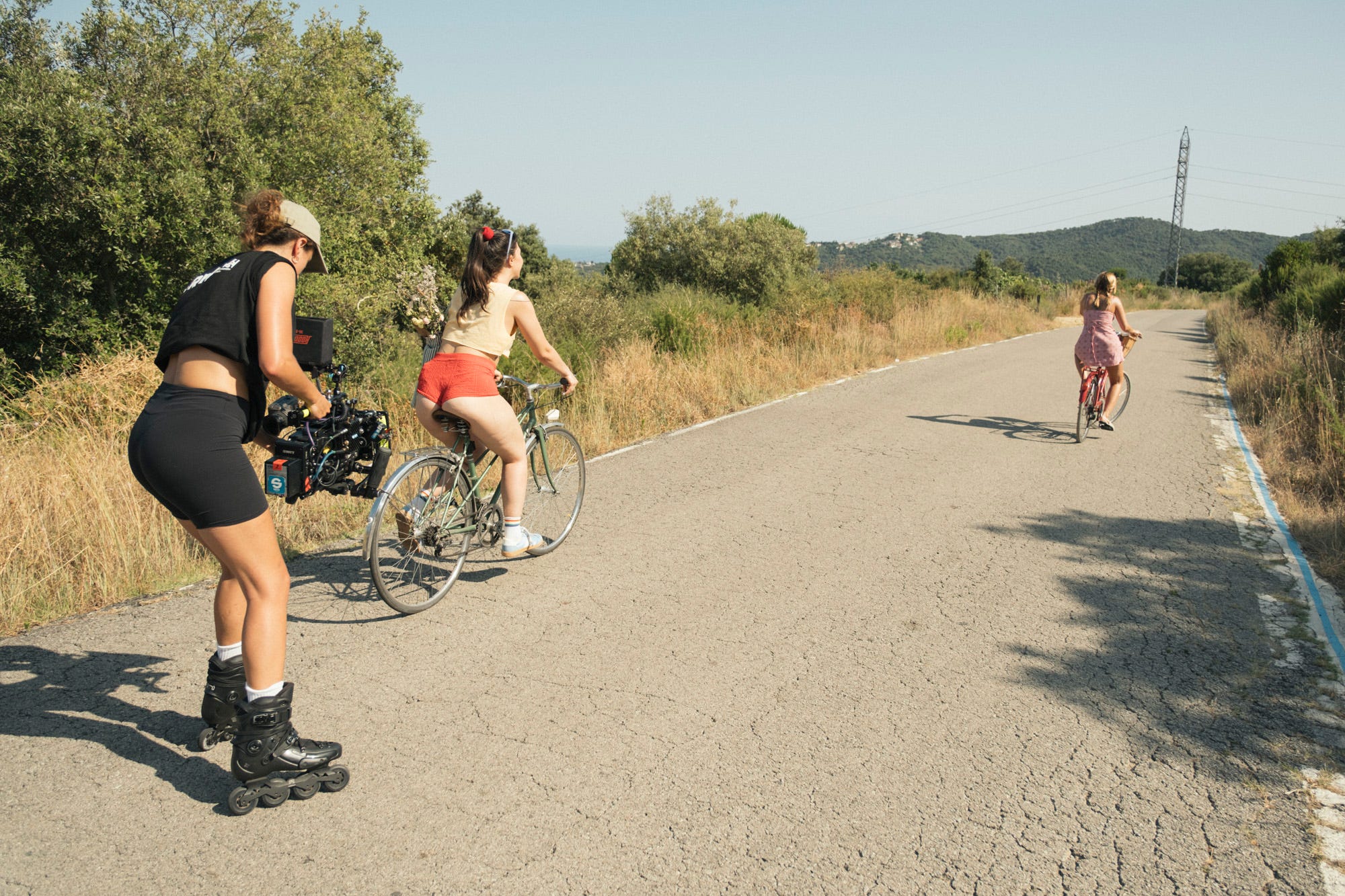 BTS: DOP Andrea Mezquida willing to do whatever it takes to get the best shot.
The camera, she is having fun too.
That’s perhaps where Monella‘s influence is strongest. Brass’s camera has an appetite. It lingers on a wrist, a waistband, the sweat at the back of a knee, all the small details that a polite camera would hurry past. With BIKE SMUT I wanted some of that visual pleasure, while making the flirtation feel reciprocal. Emma and Agatha aren’t unaware of the gaze. They return it. They seem to know exactly what the camera — and each other — want.
One more thing, about the title. Calling a film “smut” is partly a joke and partly a refusal of respectability. The word gets used to dismiss work that is too bodily, too direct, too sure of what it wants. I like reclaiming that dismissal. Smut can be intelligent, formally precise, tender, comic, political, and strange. It can be a bicycle ride on a summer afternoon that turns into something else entirely.
Sometimes desire begins with nothing more complicated than warm air, a vibrating road, and the view of someone riding a few metres ahead of you. Will you give in?
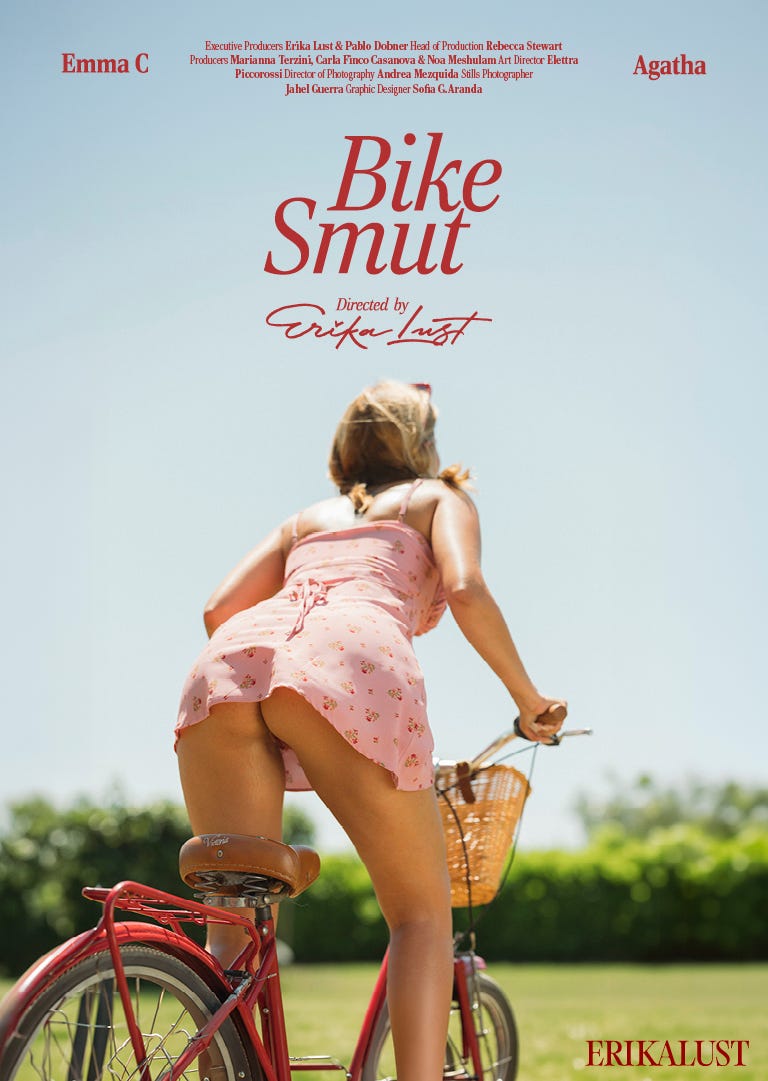 Poster for Bike Smut.
P.S. Bike Smut is also the name of a touring festival of erotic film and performance, human-powered and sex-positive, running since 2007. A whole coalition of horny, dedicated people have kept it moving across 25 countries and counting.
I've had the pleasure of working with Poppy Cox, one of the artists behind it, as both a performer and a director over the years. If you're into this world, look them up and support what they're building.
August 13, 2026
The Door You Won’t Open Decides for You
I keep coming back to BDSM. People always want it to be about transgression. What keeps me here is that it’s revealing. The longer I work here, the more it seems to go after the questions most cinema leaves alone: control, trust, what it feels like in the body to hold power or to hand it over.
Which brings me, this time, to the men.
We’ve just finished shooting “Madame Oh’s Manor,” the newest room in a cinematic universe Eva Oh and I began building last year with “Madame Oh’s Shoeroom.” Eva — Mistress Eva to most — is a dominatrix, a podcaster, a performer and an educator, and one of the very few people whose power leaves me rearranged. By now the Manor has grown into its own universe of latex and leather, of servants moving with a trained, ceremonial precision, of forniphilia, the art of turning a body into furniture, an object, a part of the room itself. (Yes, it’s real; look it up.) Into all of that we smuggled the most exhausted setup mainstream porn has to offer, the pool boy: Romeo plays him, Hannah Holy is the maid, and Sylvan, who some of you will remember from the Shoeroom, comes back this year promoted to chauffeur. When I asked Eva what becomes of an ordinary pool boy once he steps into the Manor, she had the answer ready: “He’d better not be too ordinary for too long.”
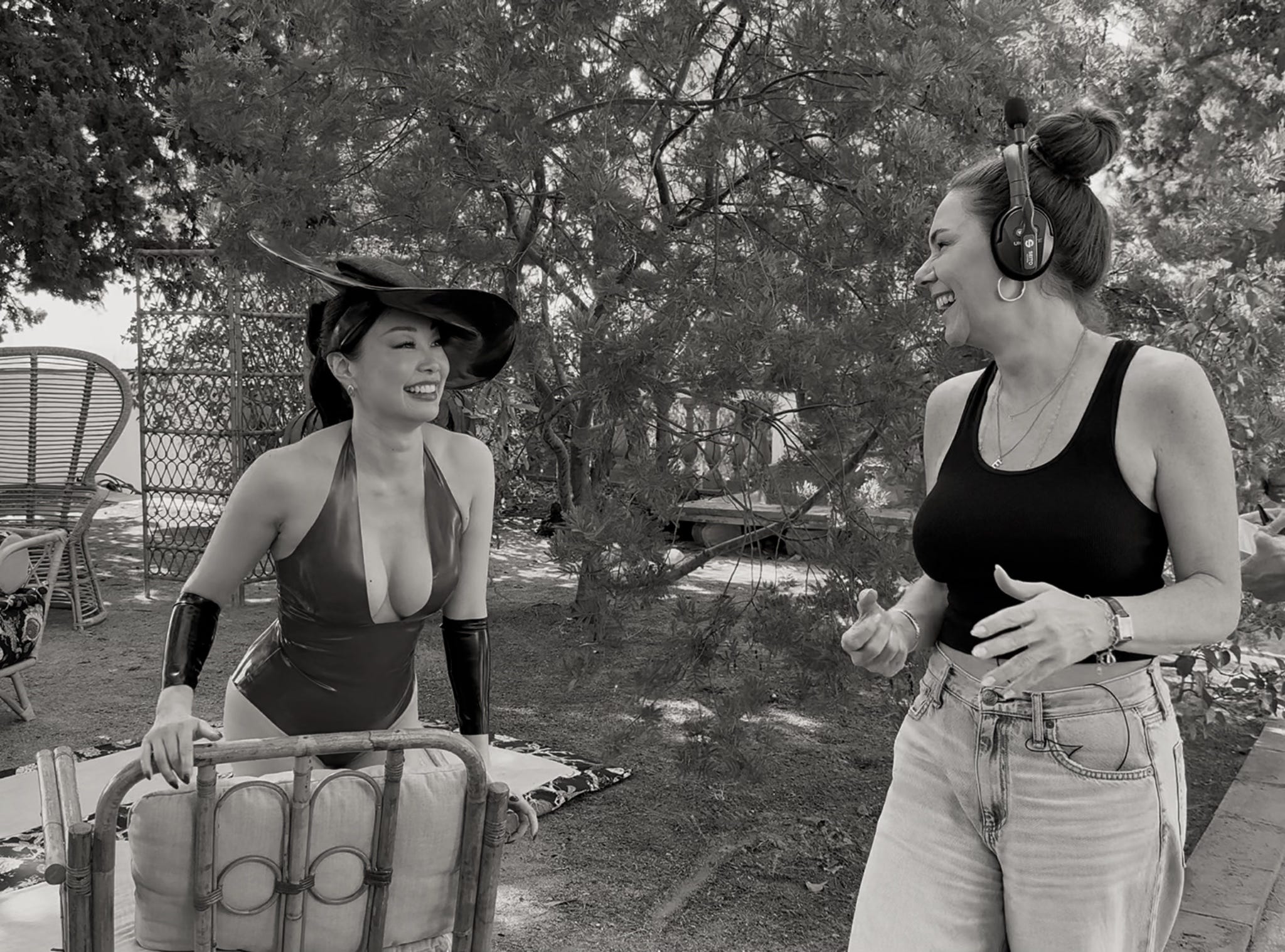
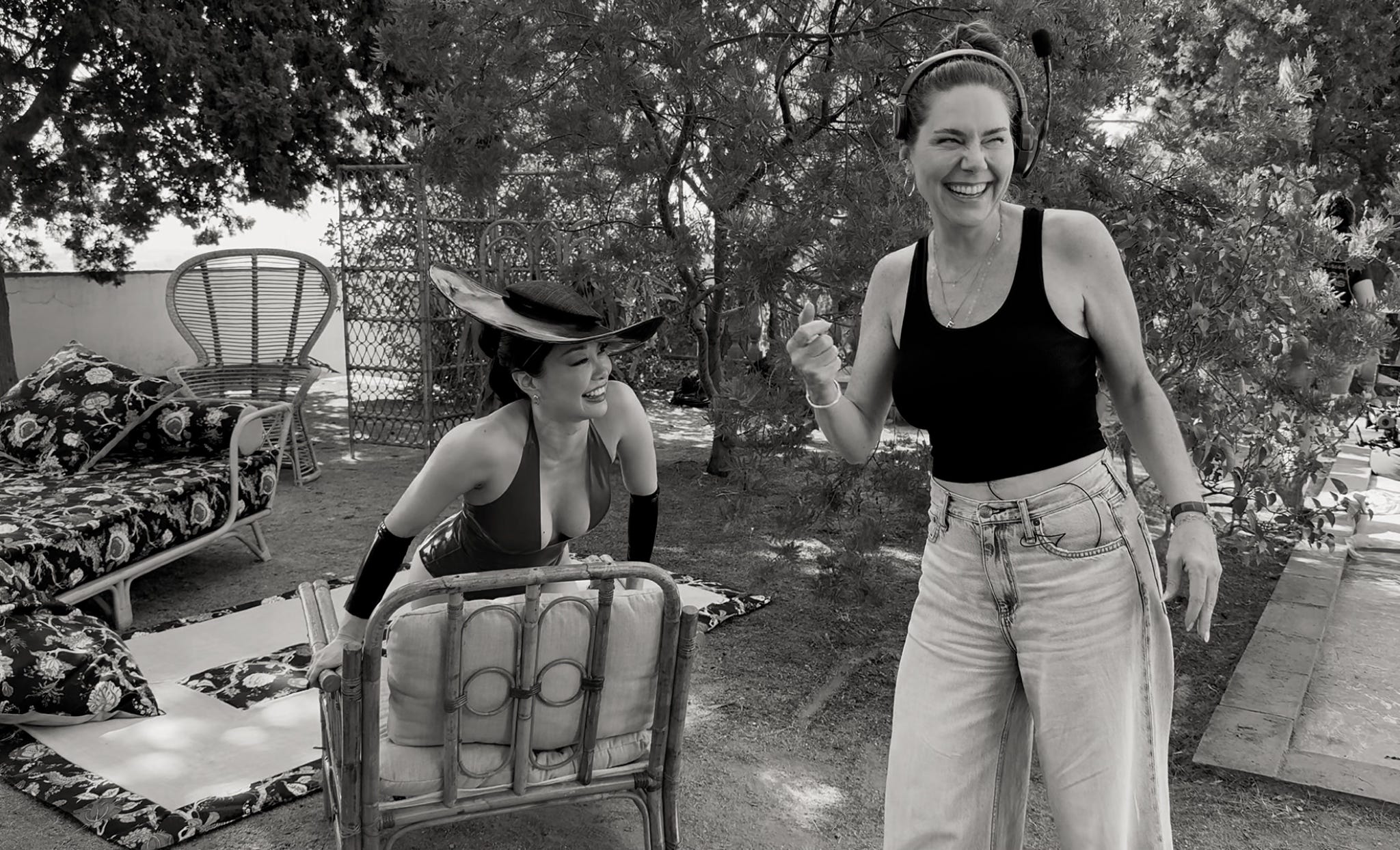 A little laugh with Eva on the set of Madam Oh’s Manor.
Somewhere in those days, on a break, we were talking about Romeo and Sylvan, about how they read as exactly the men you’d expect to be running a room rather than kneeling in one, when Eva said this: “It’s about choice. If you can’t go somewhere because you’re scared of it, that place will always control you. If you can step into submission, step into dominance, be flexible with life, there’s far more power in that. But everybody’s told they need to be one thing, and they think it’s easier, until they crack.”
It’s the last word that stays with me: the way she made staying one fixed thing sound less like strength than like something waiting to give.
I think this is where we get power wrong. We talk about dominance constantly: who has it, who’s performing it, who cashes in. And it makes sense that we do, because dominance photographs well and the culture already has a vocabulary for it. What we rarely ask is what dominance is even made of. Eva describes hers as something close to stillness. A refusal to be afraid. “You spend a lot of time feeling no fear in yourself,” she says, “so other people will fear you.” The discomfort for the other person, she told me, arrives when “you are so secure in yourself that they just... collapse.” None of that is a grip on anyone else. It’s how completely she has stopped bracing.
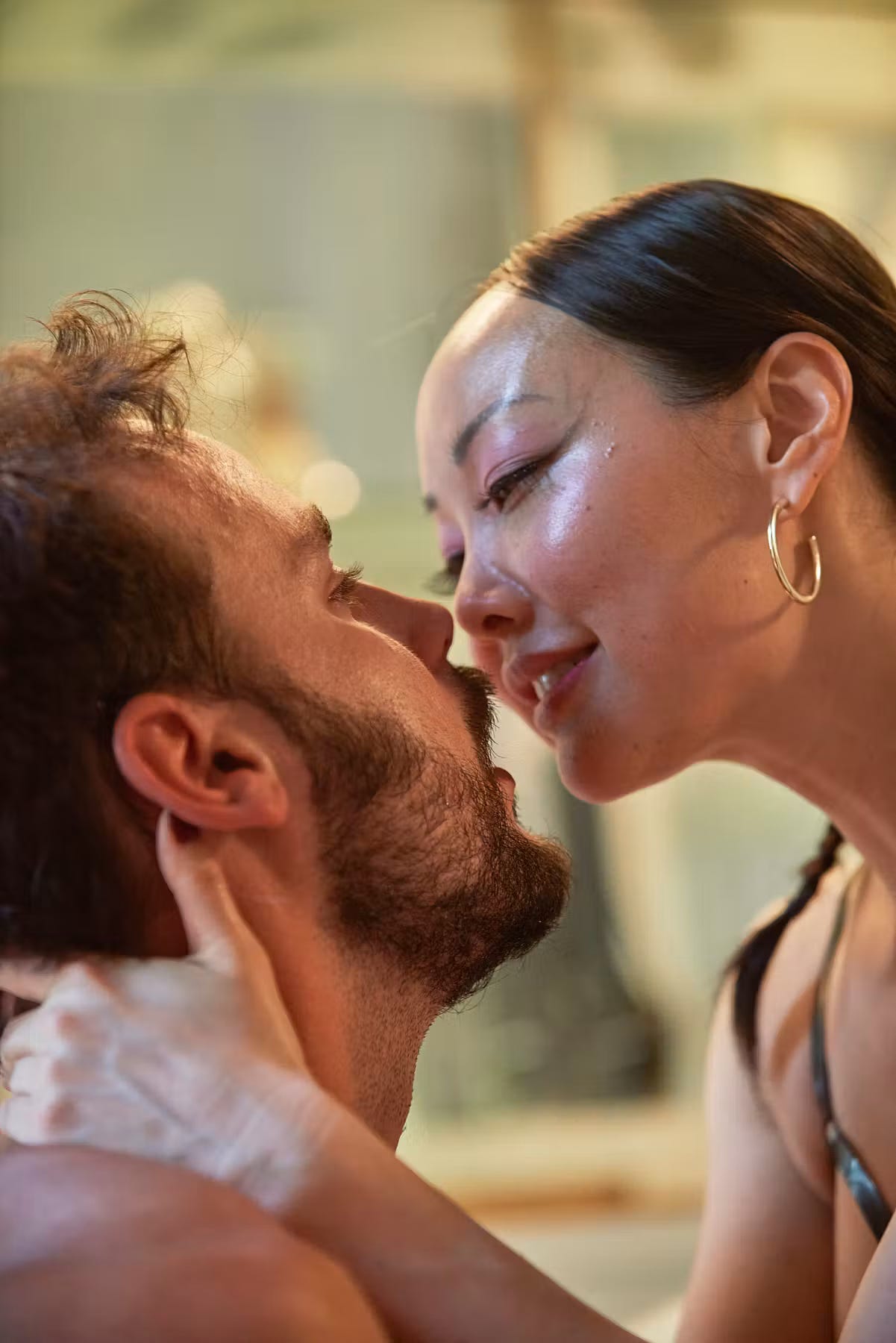 Eva and Sylvan in Madame Oh’s Shoeroom. Stills by Adriana Eskenazi.
Submission asks for its own version of that nerve. To be led — actually led, not performing openness for a camera — you have to stop managing and deciding and let go of whatever shape you’ve been holding to keep yourself safe, and what comes into the room you’ve been keeping shut is a relief most men never allow themselves, on camera or off.
I won’t spoil the film, but one of its final images is about precisely this, about how the pool boy changes.
This is the thread I want to keep pulling, here and in the films both, because it was never really about a set. “I think a lot of men hold themselves to a very difficult standard,” Eva said. “It would be nice if some of them just saw a dominatrix. All of them, actually.” She’s only half joking. Men get handed a script very early for how to look strong, and a great many of them follow it so faithfully and for so long that they end up sealed off from the very things that might let another person reach them: tenderness, need, the wish to be led for once and not have to carry it.
When I said I hoped a few men watching might open up a little, Eva finished the thought for me. “Relax a little,” she said, and yes, that is the whole of it.
There’s a trap sitting inside her line, though. The place you refuse to go doesn’t wait there politely for you; it quietly starts making your decisions — what you let yourself want, who gets to really see you, how much of yourself stays behind a door you’ve marked private. And you go on believing you’re the one avoiding it, right up until you notice it has taken over the house.
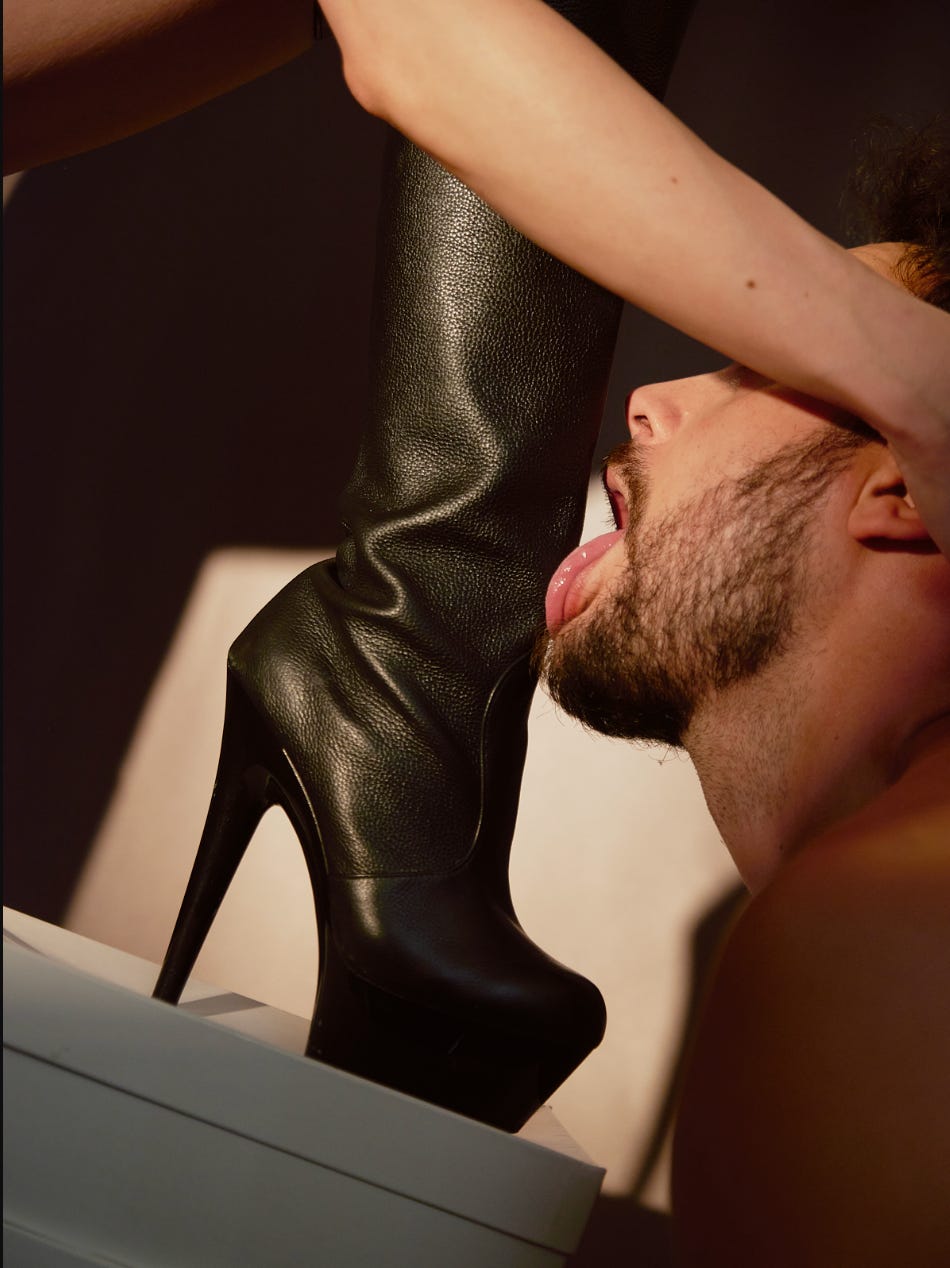 Sylvan knows the rules. Stills by Adriana Eskenazi.
There’s a second chapter, too, shot across the same stretch of days: Madame Oh and her personal maid, something slower and more devotional, shaped by ritual and a very Lust sense of devotion. That one has earned its own letter, I believe.
I asked Eva what a person needs to know before they walk through the Manor’s door. “I’m quite happy if they don’t know a single thing,” she said. “But if they can bring an honesty with themselves, I can work with that.” Which may be the only key any of these rooms needs.
There are a lot of them in this Manor, which was always the point of building it as a house. Some of the doors you’ll walk through without thinking. Others you’ll stand in front of for a while, telling yourself you’re simply not that curious, and those are the ones worth the trouble of opening.
p.s. — This is, give or take, what my book is about, so forgive the plug: “LUST: Pleasure, Performance, Power” is out in October (you can preorder it here), and if it makes a single argument, it’s that we’ve spent far too long looking at only half of what power is. More rooms soon.
July 21, 2026
After Inter Alia
A while ago in London, I caught the limited West End run of Inter Alia, starring Rosamund Pike at Wyndham’s Theatre. It did what the best theatre does: I left thinking about it for days.
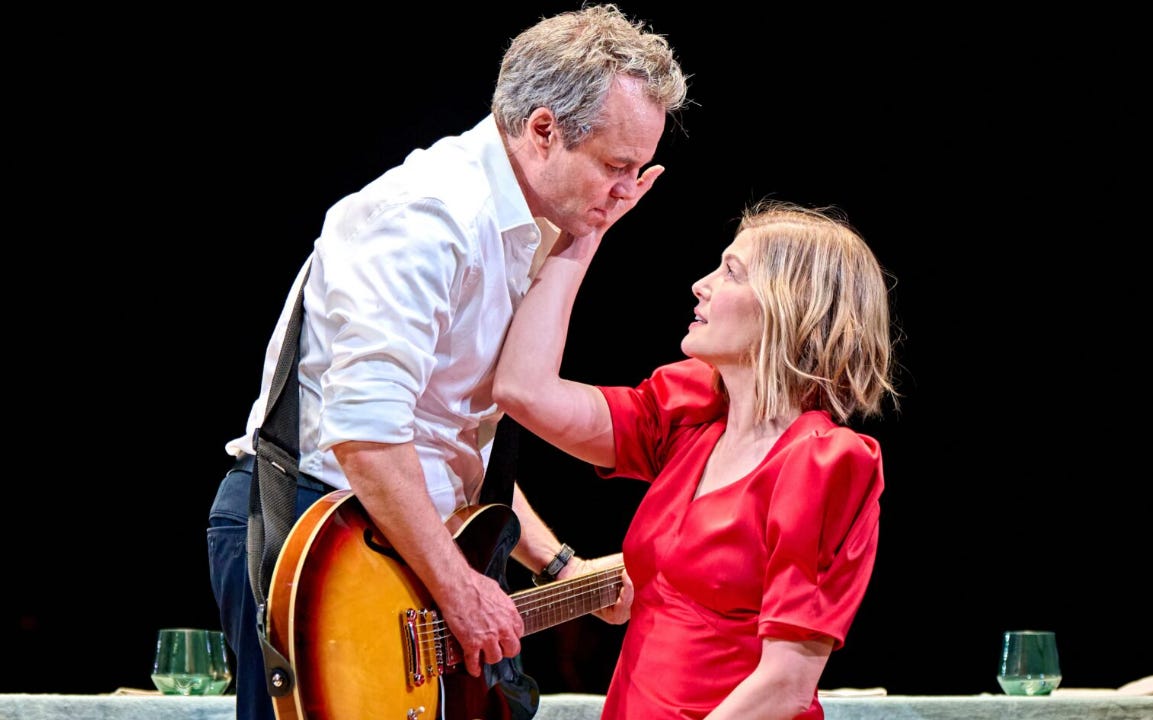 Image via the Inter Alia website.
 It’s one of those plays where the author, Suzie Miller, refuses to offer the comfort of a clear villain or a tidy resolution. Instead, she exposes the invisible dynamics that shape so many heterosexual relationships: the emotional labour, the inherited roles, the assumptions nobody has bothered to question because they’ve worked well enough for the people who benefit from them.
As a woman, much of it felt painfully familiar. The endless negotiation. The constant, low-level awareness of how your actions might be interpreted. The subtle calculations that become second nature without you even noticing. Looking around the theatre, I had the impression I wasn’t alone in recognizing those moments. There was something strangely comforting about seeing experiences that so often remain invisible given shape on stage.
But what stayed with me most was thinking about the men in the audience.
The play doesn’t accuse them. It doesn’t divide its characters into good people and bad people, victims and monsters. That restraint is precisely what gives it so much power. Instead, it invites men into an experience they may never have fully considered, showing how privilege rarely feels like privilege to the person who has it. It simply feels like normal.
One of the most compelling threads follows a father who slowly begins to question the assumptions that have guided him throughout his life. He isn’t presented as a monster. He’s presented as recognizably ordinary. A loving husband. A caring father. A successful professional. And perhaps that’s what makes his journey so unsettling.
He comes to realize that being a decent man did not necessarily mean he had always behaved well. That there may have been moments when he made someone uncomfortable, crossed a boundary, or simply failed to ask questions he never imagined needed asking. Not because he intended harm, but because the rules he had inherited were incomplete.
That recognition feels far more powerful than condemnation. It doesn’t ask us to drown in guilt. It asks us to become more curious about ourselves.
What also struck me is that the play isn’t really about the absence of love. Quite the opposite. The relationships feel genuine, affectionate and believable. People continue loving each other while still living inside structures that distribute emotional responsibility unequally. That may be one of the hardest truths the play presents. Inequality doesn’t only exist inside abusive relationships. It can exist inside loving ones too.
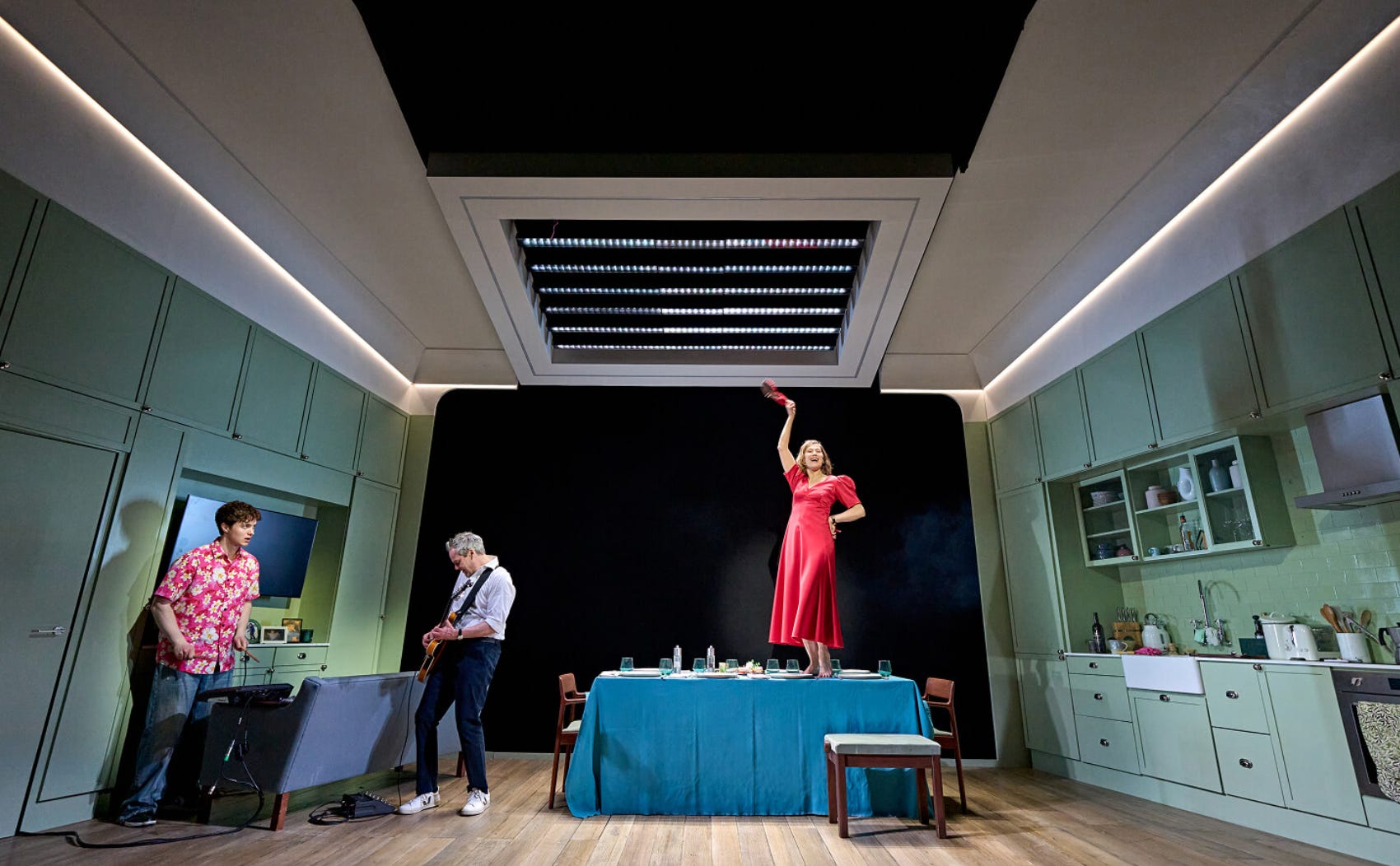 Image via the Inter Alia website.
Watching Inter Alia, I found myself thinking about the work I do. On my film sets, performers spend hours talking before a single intimate scene is filmed. They discuss boundaries, desires, fears, expectations, contraception, safer sex practices and what happens after the cameras stop rolling. They check in before, during and after every scene. Communication isn’t treated as a legal safeguard; it’s treated as part of intimacy itself.
I often wonder why we see these as professional skills rather than life skills.
For years we’ve invested enormous energy in teaching girls how to stay safe. Watch your drink. Share your location. Avoid walking home alone. Be careful. Be polite. Say no, but don’t be too harsh. Most women know that list by heart.
What if we invested that same energy in teaching boys how to communicate?
Not because they’re potential perpetrators, but because communication is something everyone deserves to learn. Curiosity instead of assumption. Learning that desire isn’t something you presume but something you discover together. Understanding that silence isn’t clarity, and that checking in isn’t awkward or unromantic. It’s part of intimacy.
And perhaps most importantly, realizing that intimacy doesn’t end when sex ends. A message the next day. Asking how someone felt. Making space for reflection. These aren’t signs of weakness. They’re signs of emotional maturity.
Consent doesn’t belong only in schools, universities, HR departments or courtrooms. It belongs around dinner tables, in conversations between parents and children, between fathers and sons, between friends, and long before anyone starts dating.
The father in Inter Alia eventually understands that men of his generation have probably made mistakes they never recognized as mistakes. The play doesn’t ask us to judge him. It asks us to imagine what might have been different if someone had taught him to ask better questions in the first place.
I left the theatre feeling something I hadn’t expected: hope.
Not because the play offers easy answers, but because it reminds us that people are capable of changing. That recognition can arrive late and still matter. That conversations we should have started decades ago can still begin today.
If a play can make an audience leave the theatre asking better questions—about love, power, responsibility and the stories we’ve inherited—then art is doing exactly what it should.
July 17, 2026
Drama and "Intimacy"
I’ve said many times that one of the most crucial roles on my movie sets is that of the intimacy coordinator.
Coordinating sex scenes is no easy task — that is, if you want to get the shots you need and also offer the hard-working performers the most professional environment possible. The intimacy coordinator starts working during pre-production, long before the actual shoot day, and they continue providing their services well after I call “Cut!”
At ERIKALUST, we developed our communication protocols in close collaboration with performers and intimacy coordinators, drawing on their experience of what makes a set feel safe, transparent, and respectful. These protocols guide conversations about boundaries, desires, safety needs, medical considerations, sexual preferences, and emotional triggers before filming begins.
Then, during the shoot, my intimacy coordinator and I watch the scene unveil together, ensuring that everything previously agreed upon is being honored.
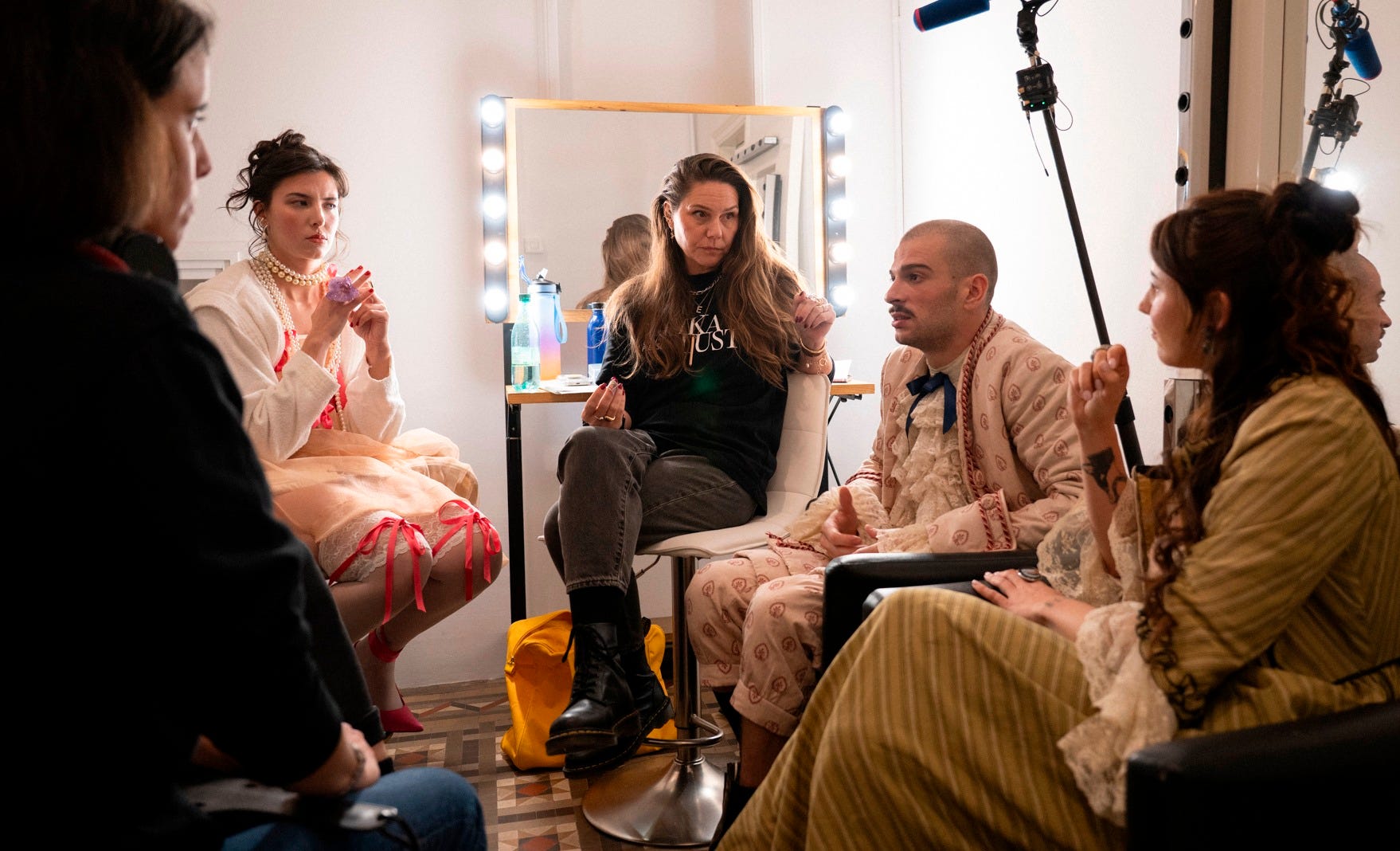 Pre-shoot sex talk with performers Emma C, Martin Grey and Venus Grey and Anarella. Photo: Jahel Guerra
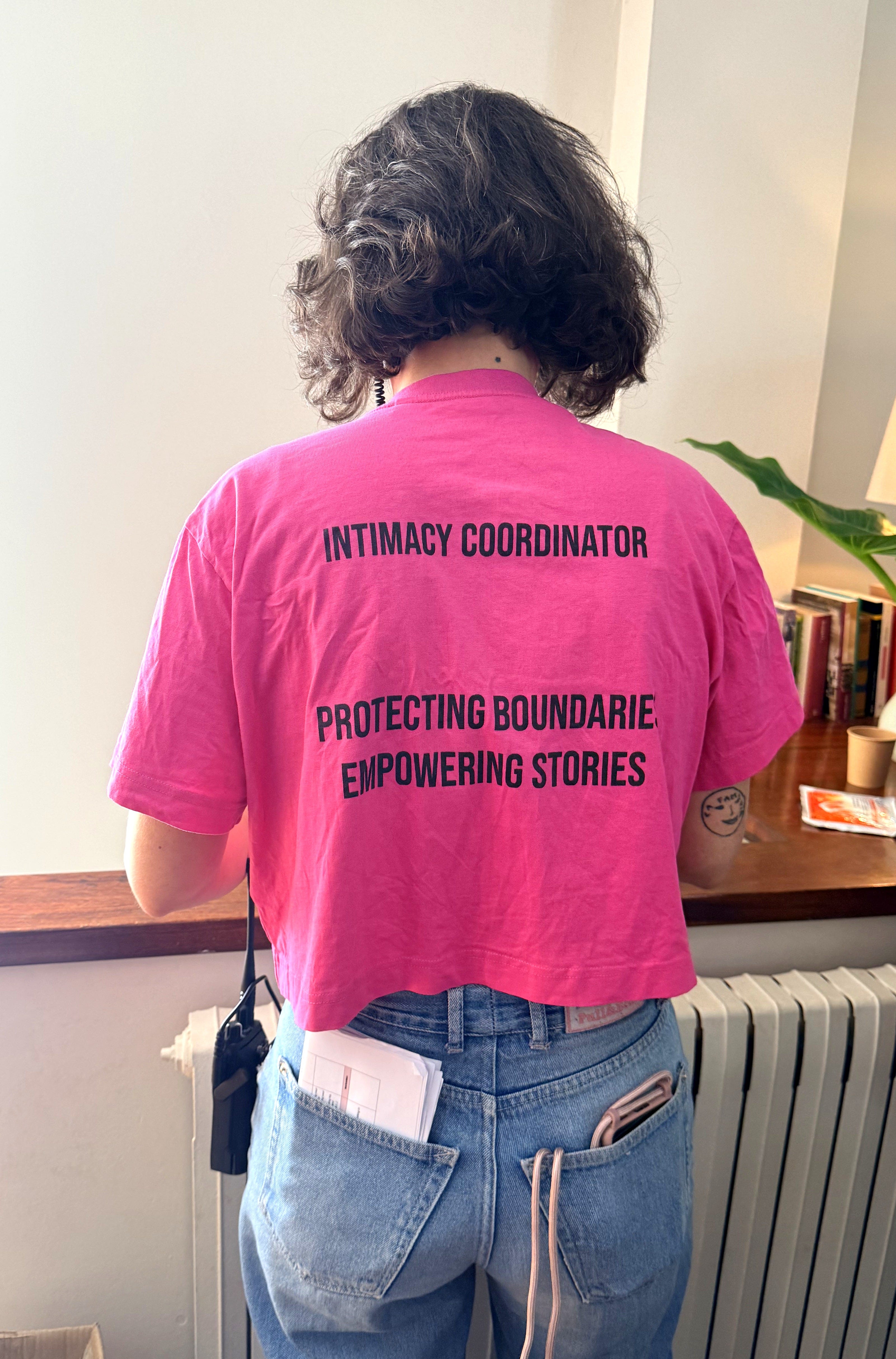 An excellent outfit choice by Anarella Martinez, our intimacy coordinator and a key member of the crew, during one of our shoots earlier this year.
I feel so strongly about these crucial members of the creative team, that I’ve long advocated for them to have their own high-profile awards when they oversee mainstream productions.
As I wrote in an open letter a few years ago, if there are BAFTAs and Oscars for costume design, interior decoration and hair and make-up, the mainstream industry could extend that consideration by recognizing the critical role of Intimacy Coordinators with its own award category.
“Porn is a dirty word for many,” I wrote then, “but as a female director in a still predominantly male-dominated porn industry, just like Hollywood, I bet Hollywood could learn from the ethical standards and expectations we place on set to protect cast members from exploitation, misogyny, and degrading behavior.”
And now, my advocacy for the crucial role of intimacy coordinators has borne surprising fruits. I wanted to share with my Substack readers my excitement about a new cinematic audio drama that the Arc podcast feed on BBC Sounds will air in the U.K. starting July 22.
Why am I telling you about this? Well, “Intimacy” is based on an original idea by none other than… me!
“Intimacy” features a remarkable cast of British actors headed by Lena Headey (whom I’m sure you remember as problematic Game of Thrones matriarch Cersei Lannister), who also wrote and directed the show. The cast also includes Hannah Waddingham (Ted Lasso), Maisie Williams (also from Game of Thrones), Alison Steadman (Gavin & Stacey, Pride and Prejudice), Thaddea Graham (Bad Sisters), Matthew Broome (The Buccaneers) and Tom Goodman-Hill (Baby Reindeer).
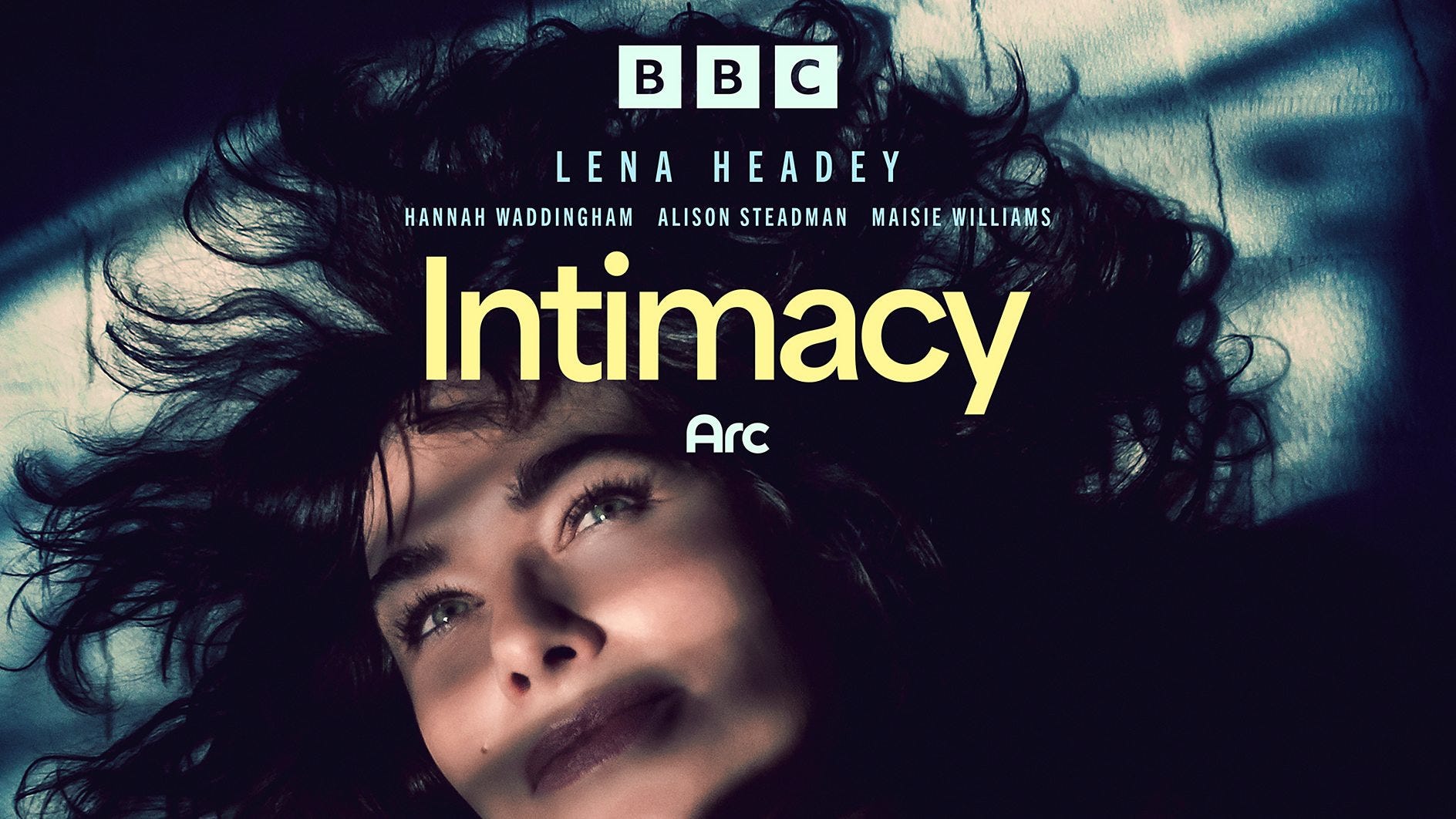 Image credits: BBC
The show — an eight-part comedy drama which will also be rebroadcast on the BBC’s prestige signal Radio 4 starting 27 July — follows intimacy coordinator Liza Simmons (Headey) on a Greek island movie set, as she navigates her professional role as what the show calls “a warrior for consent” and much more complicated personal dynamics, some of them involving her co-workers.
I am truly impressed by how production company Merman and Headey as star and showrunner took my original idea and turned it into a nuanced exploration of the uneasy balance for professional women between career and life, and how that becomes even more complicated — and dramatically rich territory — when sex is part of the equation.
I cannot think of a better place than the Arc podcast feed — BBC Sound’s home for premium cinematic audio drama — as a home for a project that began with my desire to foreground the hard-working intimacy coordinators. As someone who usually develops films from my own ideas from start to finish, I’m genuinely curious how other artists interpret and build on them.
Have you ever thought about what happens behind the scenes when sex is part of a production? I’d love to know whether the world of intimacy coordination is new to you — or whether you’ve encountered it, on screen or off.
July 3, 2026
A Church Reconsecrated for Pleasure (and Community)
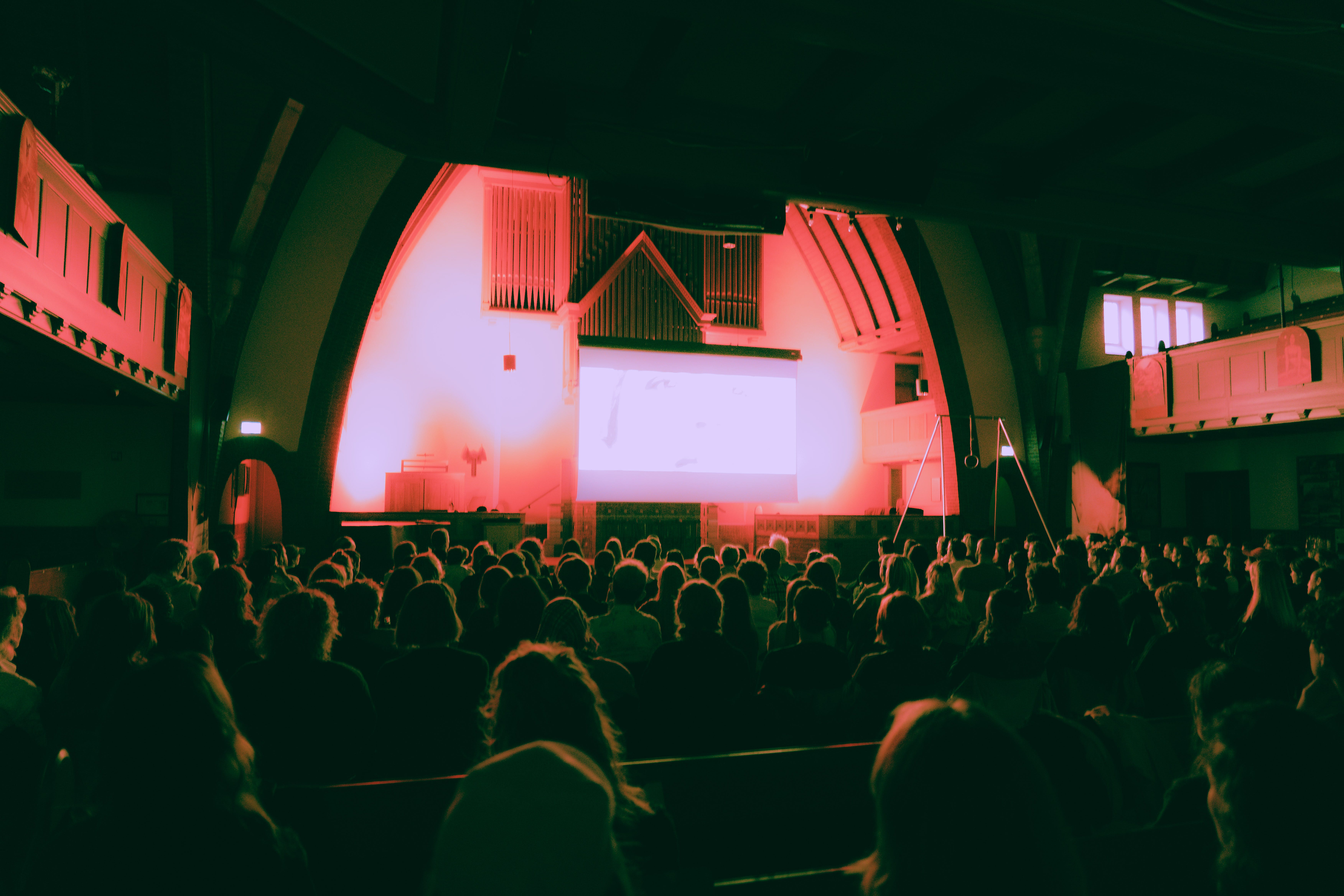
Last month, in collaboration with The Queer Agenda, we brought A Night of Lust into Nassaukerk in Amsterdam. The event, billed as “a night dedicated to worshipping queer eroticism, on and beyond the screen” still feels slightly unreal to me.
Within the unlikely confines of a 100-year-old church, there was queer porn on the screen, a beautiful shibari performance by Antartica and Mary Hoochie, and the kind of joy and laughter that only happens when people feel a little nervous and a little turned on.
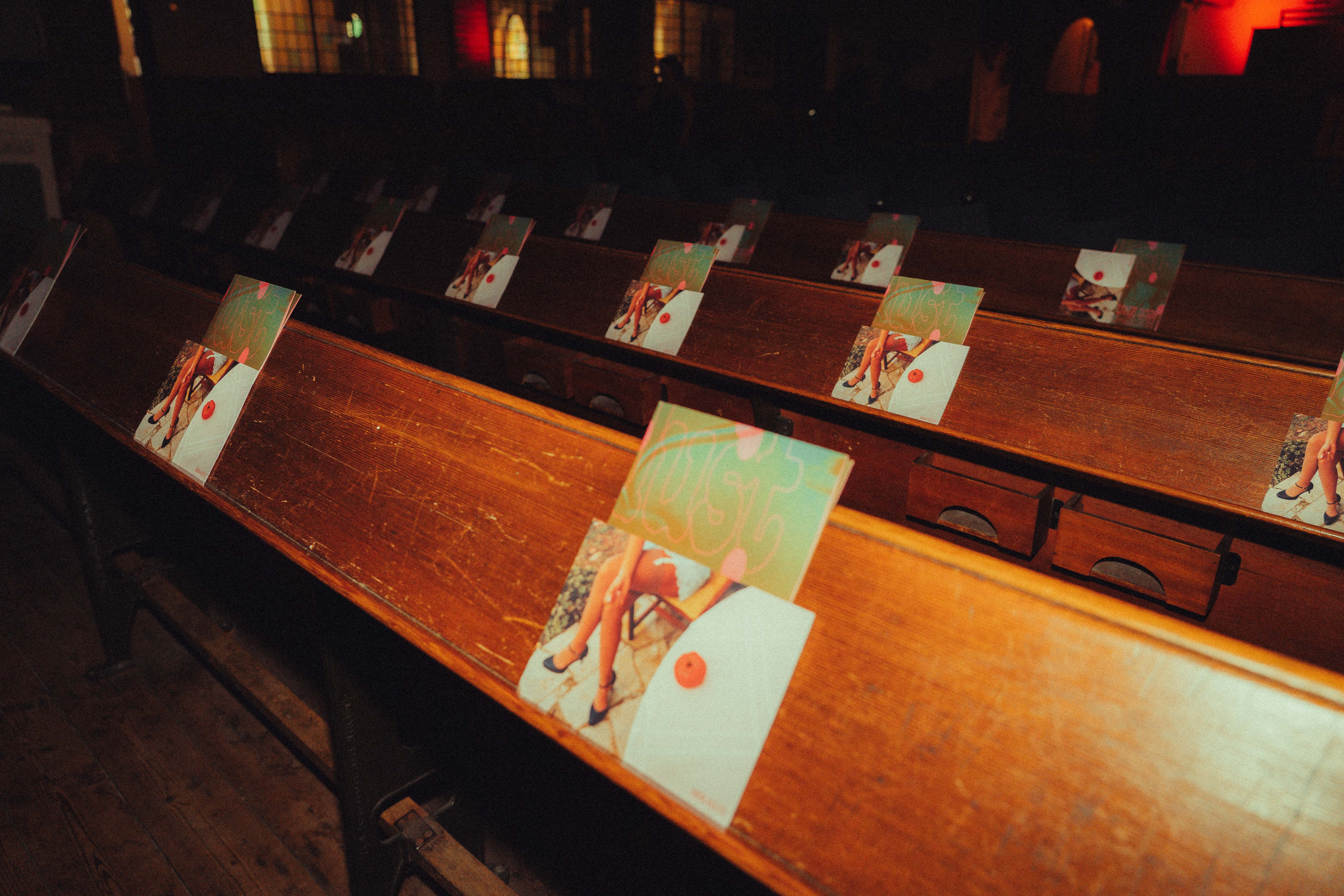
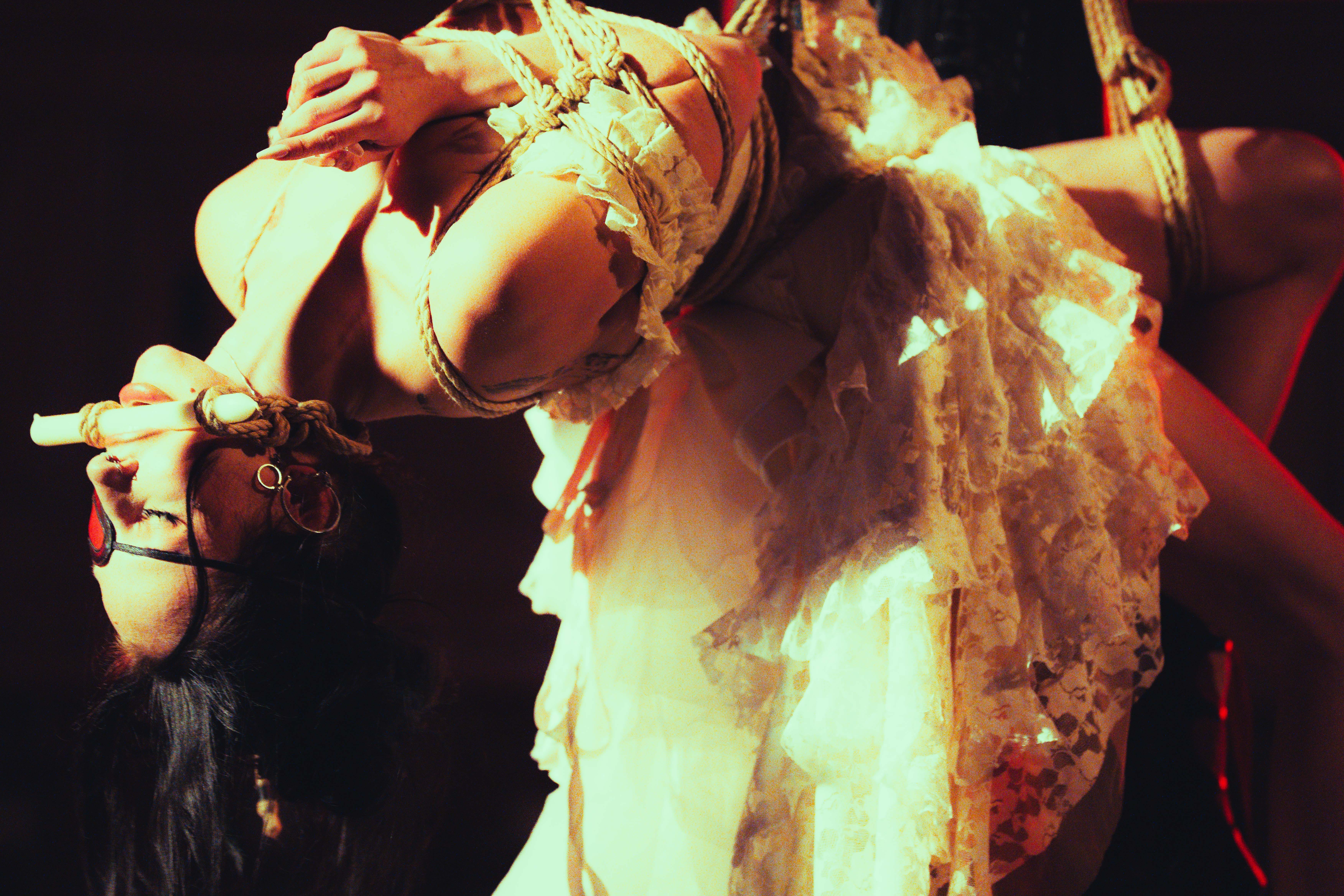
As in other ERIKALUST special events, everyone was aware that we were sharing a room with others. I keep thinking about the room itself. The fact that we were all there, watching together, reacting together, and letting erotic cinema take up space somewhere physical and old and full of history, was electrifying.
Most of the time, our films travel through private little portals — laptops, headphones, the lowered brightness of a screen afterhours — into bedrooms, for late-night rituals, alone or partnered, maybe under cover of darkness. But there is something very different about seeing them with other people around you — people you hear, you see, and you feel what they feel in the same room. You remember that cinema has a body, and that erotic cinema, especially, needs bodies around it.
This feels even more important to me now, when so much of our work depends on digital spaces that can disappear, censor, punish, or misunderstand us without much explanation.
I wrote more about this in my recent post about leaving Meta, but the Amsterdam event made the feeling much less abstract. If platforms keep making less and less room for sex-positive, queer, feminist, performer-led work, then we have to keep making rooms of our own. Us finding each other in this third space to watch pleasure unraveling on screen is building that community that no one can take away from us, not even the Meta overlords.
I’m not invoking “community” here just as a brand buzzword: I mean actual people sitting together, asking questions, laughing after a screening, telling us what moved them, what surprised them, and what they want to see more of.
The June 11th edition of A Night of Lust was such a gathering: a beautiful, surprising night in a church in Amsterdam. But it also reminded me why these physical spaces matter so much. We need third spaces, analog spaces, strange and generous spaces where erotic culture can breathe without being flattened into a category or hidden by a platform.
These moments remind me that my work exists because people still need cinema that gives pleasure another frame and makes sex feel curious, funny, beautiful, awkward, tender, and, yes, political.
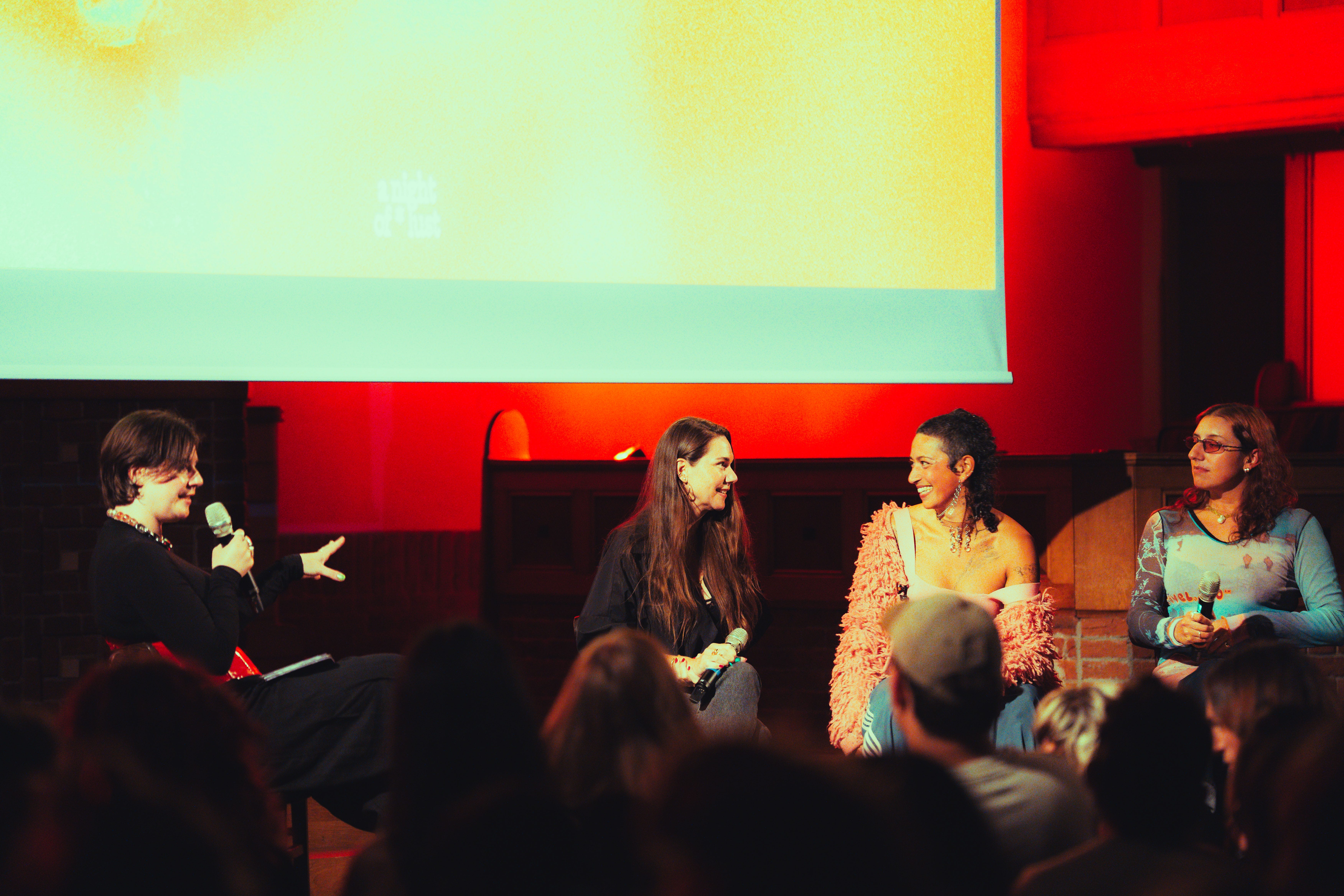 All pictures by Leroy Leijtens
June 22, 2026
The Quiet Power of Letting Go
My ERIKALUST site recently premiered my latest film, “Lessons From a Dominatrix.” Like all the titles in my XConfessions series, the film was based on a fantasy (or personal experience) submitted by one of our subscribers. It has been important for me to include the ERIKALUST community into the creative process, creating the kind of conversation about erotic desire that has become an important throughline for my two-decade-long career. That spirit is there in all my projects, including this from-me-to-you Substack.
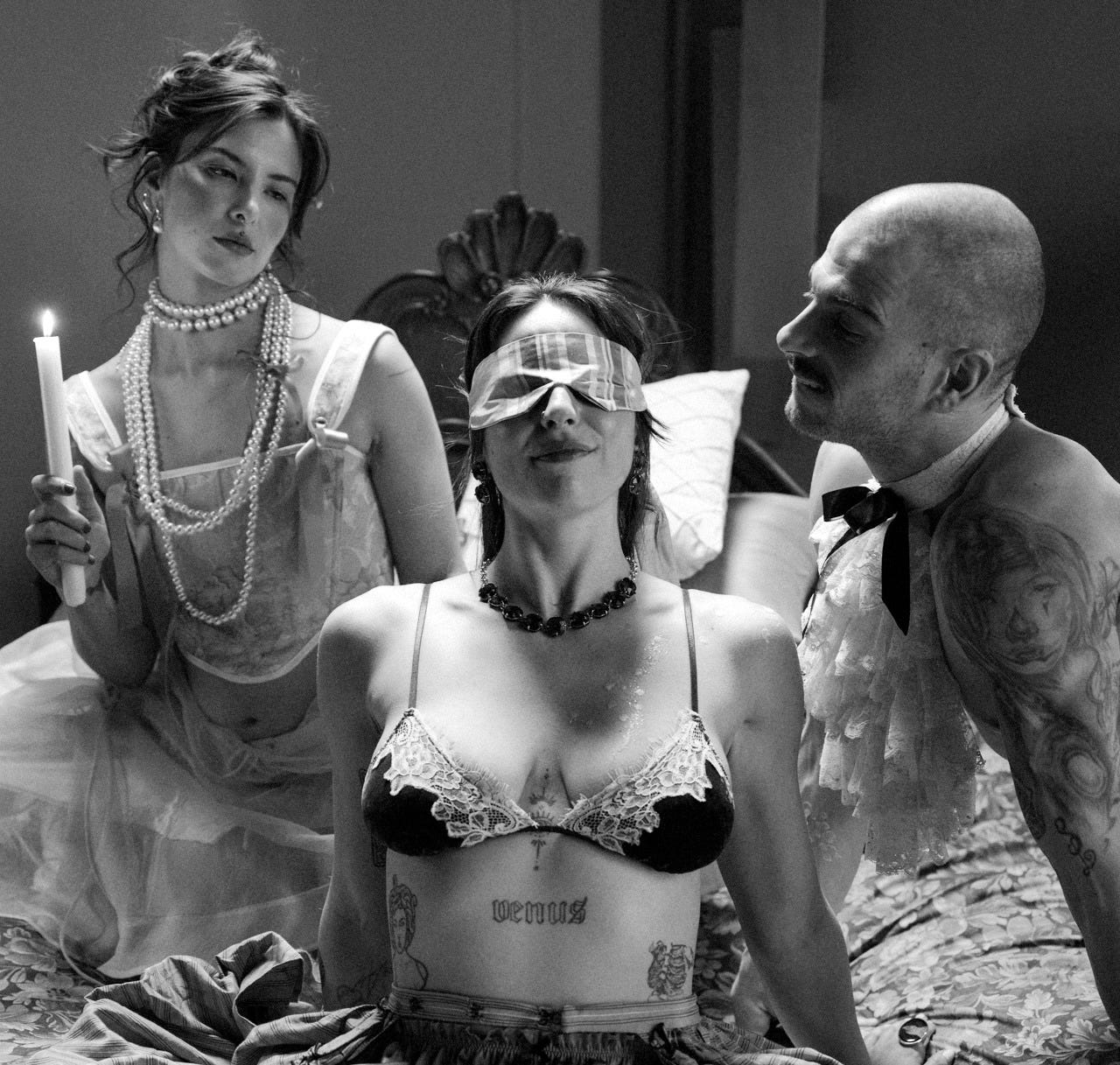
In this “Lessons From a Dominatrix,” I wanted to explore that quiet moment when control begins to loosen. And also, how a couple can work together to learn more about how to incorporate power play in their sexual dynamics.
In my conversations at events and also during my research, I’ve found that BDSM is often misunderstood as something extreme or predefined. But at its core, I believe it is really about play and the capacity of communication with your partner, and about listening closely. “Lessons From a Dominatrix” is a deep exploration of this feeling.
The script was based on “Let Me Let Go,” a sexual fantasy by subscriber YourVenus. They write:
“Sometimes I get tired of deciding.
What to do, what to say, who to be.
Even the small things—what to eat, what to wear, when to speak—feel like a maze I can’t find my way through.
I spend my days analyzing everything, trying to make the right choice. It’s exhausting.
There’s a voice in my head that never shuts up—Did I do the right thing? Did I upset someone? Should I have said that differently?
I crave silence.
Not outside—inside.
That’s why I want you to take control.
Not because I want to be small or powerless,
but because I want to feel safe enough to stop thinking.”
I think many women in relationships can identify with these feelings: the way we are in charge of the emotional labor but sometimes just want our partner to take over and lead, but how we need to feel safe with our person for that to happen.
In my upcoming book “LUST: Pleasure, Performance, Power” (coming out in October, but please preorder it here), I also reflected on my ever-increasing fascination with BDSM and its larger implications, both socially and for women’s sexualities.
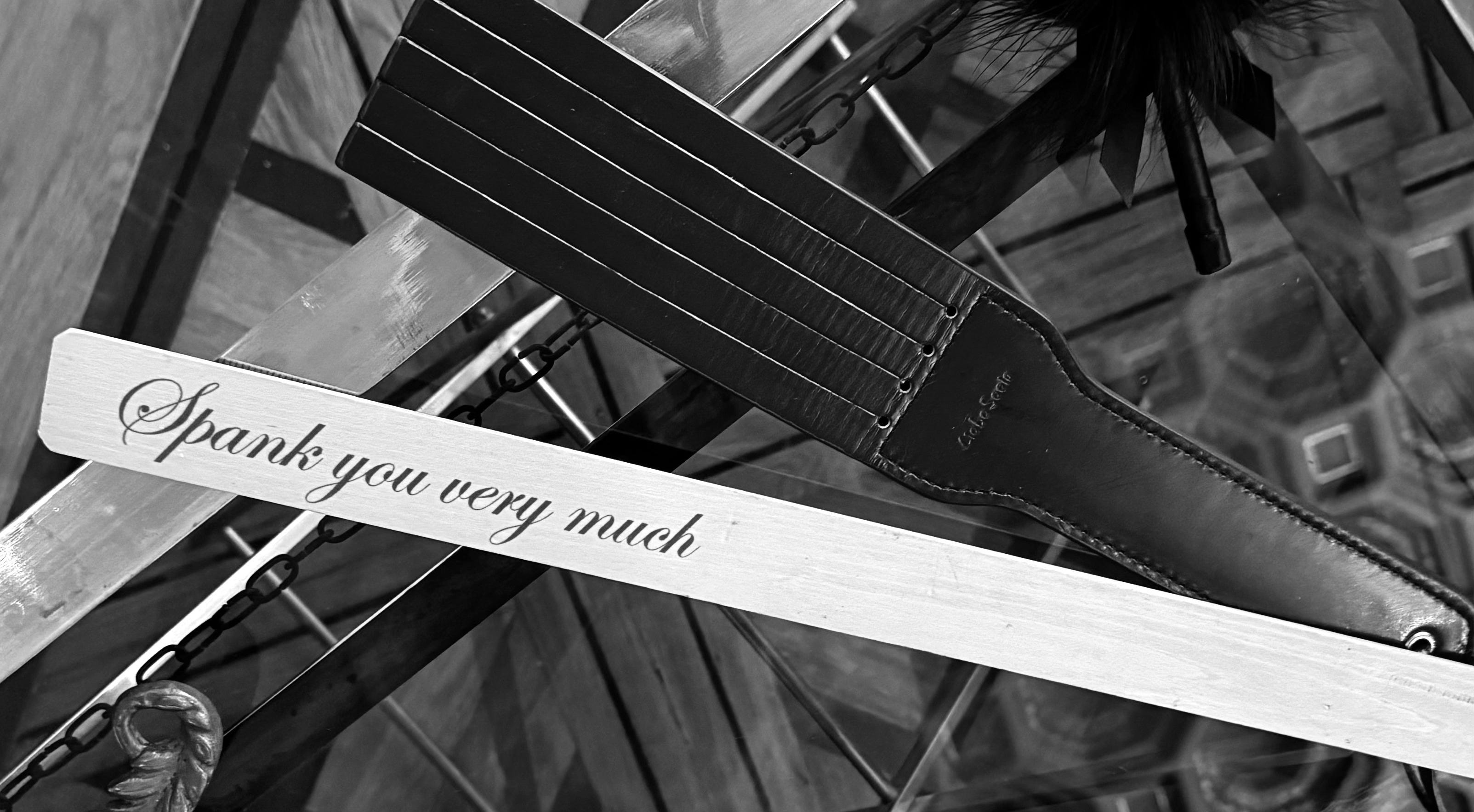
A crucial moment in my career as a filmmaker regarding this world was “Safe Word,” a four- episode series I made in 2019 about a successful, commanding woman who discovers liberation in surrendering control. In “Safe Word,” Christie (Mona Wales) goes through a private awakening under the tutelage of a dom (the absolutely iconic Nina Hartley), which ultimately leads to public catharsis.
“Safe Word” probed a long-time preoccupation of mine, how power is casually thought of mainly in one way: as control or influence over others, be it through money and force, and privileging a masculine logic of dominance. Something you hold over someone else. Something that serves the self.
But control is only one form of power. And there is also an enormous power in letting go.
Over the years, looking through the XConfessions, I found again and again that many women feel that giving up control can be empowering, liberating, and, yes, deeply consensual.
Or, as YourVenus wrote, a deep-seated desire to “stop managing every detail, every emotion, every outcome.
“I want to surrender, not to disappear, but to breathe again.
I want to be told what to do—not because I’m weak, but because I trust you.
I want your hands to ground me, your voice to guide me.
I want to feel my body instead of my mind.
When you tell me to kneel, or to stay still, or to look at you—
something in me quiets.
The world narrows, and for once, it’s simple.
You lead. I follow. I don’t have to think.”
In “Lessons From a Dominatrix,” a couple (Venus Rey — the perfect actress to portray a confession written by our subscriber YourVenus ;) — and Martin Grey) steps into the unknown with the help of a therapist (Emma C) who understands that desire may not always be about doing more, but about feeling differently. And all of this in French! Which adds a kind of intense intellectual sexual curiosity to the film.
(Sidenote: Directing in French was a bit of a challenge but I still have some notion, as I spent a year in France when I was in high school. And I had my francophone co-worker Arthur there as a script supervisor on our shooting day.)
And this is a topic I will continue exploring, both personally and artistically. I am currently preparing a very exciting project with the always inspiring Eva Oh. Eva (aka Mistress Eva) is a dominatrix, podcaster, performer, and advocate with extensive experience leading conversations about sexuality, BDSM, and sex work to a smart, worldwide audience. Eva’s work caught my attention years ago, when I fell under her spell.
What we are envisioning this year will be another two chapters of our ongoing collaboration “Madame Oh’s Manor,” which last year produced one of my favorite films, “Madame Oh’s Shoeroom,” a feminist exploration of fetish that easily stands out within its genre. That film continues subverting expectations — particularly of female audiences — of what can be achieved when two likeminded artists combine their powers and turn their probing curiosity in the direction of power itself.
Allow me then to wrap this up with the last delicious morsel of YourVenus’ XConfession that inspired “Lessons From a Dominatrix”:
“It’s not about control. It’s about release.
It’s about trust so deep that I can finally let go of the weight I carry every day.
Let me give that to you.
Let me let go.”
p.s.: If this post made you intrigued about the possibilities of having your own fantasy or experience turned into an ERIKALUST film, we would love to hear from you. You can find more information here.
June 9, 2026
It’s Not Me, It’s Actually You: A Reluctant Farewell to Instagram
On May 20th, as I was getting ready to celebrate the official announcement of the U.S. edition of my upcoming book “LUST: Pleasure, Performance, Power” (which you can preorder here), Meta decided to commemorate the event by disabling the Instagram accounts for @erikalust, @erikalustfilms, and @iamerikalust.
Click on any of those handles, and you will be told — with typical tech overlord opacity — “Sorry, this page isn't available — The link you followed may be broken, or the page may have been removed.”
This is hardly the first time I’ve dealt with this. Even though for some members of the press I may be “the presentable one” among the pornographers, the all-powerful and arbitrary forces of online censorship don’t distinguish between sexual representation that is ethical or feminist, and all the other kinds of things it objects to.
From the blanket interdiction of “female nipples” — which results in the absurdity of the same person having their nipples suddenly become acceptable with IG if they transition from female to male and get a mastectomy — to never-properly-explained sweeping claims of “sexual solicitation,” Instagram’s commitment to censorship has been something I have written about for years.
In 2019, for example, I published an op-ed with USA Today about that very topic, and also wrote an article about it on my own Lust Zine. The title? “The War on Sex & Social Media Censorship: How Instagram Censorship Could Affect the Lives of Women.”
As I noted at the time, “countless profiles of predominantly female and queer artists, educators and sex workers as well as companies working around sex and sexuality have been targeted by Social Media’s crackdown on sexual content.”
Like it had done to many others, I explained at the time, Instagram had at times “deleted my account in the past, took down my posts and stories and I have been and continue to be shadow banned on the platform,” which made “the account in question less visible and harder to find for potential new followers.”
Seven years later, we have made no progress. Instagram and parent company Meta chose to hurt my visibility at a time when I was eager to tell you about my new book, which is all about my journey in the world of sexual expression. It’s almost too on the nose, and I may even smirk about it, if it wasn’t so damaging to my free speech and yet another contribution by the tech giants towards the erosion of public discourse around sex.
How bad is it? Bad enough that the Pope himself recently issued a major warning about the unchecked power of these Masters of the Tech Universe playing at being little gods.
In his new encyclical letter Magnifica Humanitas, Pope Leo has the exact same diagnosis as your favorite feminist pornographer. It is not that often that the head of the Catholic Church and a porn director share the same thoughts, but the hubris of the technorati has brought about this modern-day miracle!
Here’s my new comrade Pope Leo on this Brave New World of artificial (i.e., inhuman) intelligence: “The content that circulates within digital environments shapes how people perceive the world and introduces into the collective consciousness images and narratives that direct our desires and influence our daily choices. This is ‘not a parallel or purely virtual world,’ since what originates online now becomes a part of people’s lives, especially of the youngest.
“For this reason, those who control digital platforms and means of communication have a considerable ability to affect the collective imagination and to present a particular vision of reality as desirable. Such power should be constantly guided by the pursuit of truth and respect for human dignity, so that the culture fostered on the internet does not become an instrument of excessive distraction, homogenization or dominance, but rather a setting in which inner freedom and critical thought can mature.”
And this was me in 2019 in my opinion piece for USA Today:
“A paternalistic framework, like the one seemingly employed by Instagram, which is based on a gendered notion of indecency will inevitably disempower people who are already marginalized — as well as disproportionately affect women. A possible gendered censorship from a platform as large as Instagram reflects a societal fear of the female body and promotes the power dynamics that keep the female body sexualized and commodified by men, rather than understood or celebrated by women.”
“Social media is a parallel world but changes that happen online can cause real-life ripple effects. Pages that promote sexual education, women’s bodily autonomy and sexual pleasure are particularly vulnerable to censorship, leaving the many women who use these pages at risk of losing vital resources. These channels are so important for teaching a more inclusive, diverse sex education and covering topics that schools neglect — something that is especially important in the U.S. where abstinence-only sex ed is still prevalent.
“If the internet mimics real life, then real life can also mimic things happening online. If women are censored on Instagram there is no doubt that we could be censored in offline life too. When Instagram pages that promote female pleasure are hidden, young women will come to understand that their pleasure is invalid in real life. When anatomical drawings of vaginas are censored on Instagram, women will learn that their bodies are something to be ashamed of in real life. When female nipples are censored but male nipples are not, we are taught that we must police our bodies to ensure we do not arouse men. When photos of period blood are taken down, a natural bodily process is turned into a source of shame.”
Last week, after exploring our options for recovering our Instagram accounts — and having to maybe wallow in the mud of the shadowy world of people (helpers? extortionists) who claim they can restore accounts — we decided to end this toxic relationship, at least for now.
It's time to reclaim our time and efforts, and so we want out of this toxic relationship we have with Meta, which prevents our entire hard-working team from planning and growing. Fine — they can ban us, but now we don't want to go back to this space anymore. We can choose to reallocate time and resources to create spaces within other networks, and with our own community.
So thank you for being here with me on Substack, and let others know we are still here, even if Meta/Instagram broke our links. Fortunately, we have many other links — and we don’t take our links with all of you for granted.
June 2, 2026
An Argument for Sex on the Internet
Two years ago, I stood at the Cambridge Union and argued against the idea that the internet has ruined sex.
The questions behind that debate haven’t gone away. The general historical points about the internet having been a positive force for sexual liberation and expression still stand. Also (unfortunately) my statements about the unfair deplatforming and shadowbanning of legal content involving sex and sexualities (including several of my own accounts) remain a major issue for free speech online.
I thought my readers here would enjoy reading and watching what I told the future political leaders of the U.K. at the Cambridge Union, a group of opinion-shapers that will be crucial in safeguarding — if we as a society agree that this is worth safeguarding — free speech for the 21st century.
Below is the full text of my speech, along with a link to watch the video of my appearance.
Ladies, gentlemen, non-binary folks, esteemed Cambridge students, and respected colleagues, today, we gather to engage in a hot debate in the media and society: the Internet’s profound impact on human sexuality.
I will challenge the motion “This House Believes The Internet Has Ruined Sex.” This is a superficial assumption, and I invite you to embrace a more nuanced perspective.
The motion appears conservative. It reminds me of the Victorian Era when a secret room was created in The British Museum — a room to hide from women and the working class all the artifacts and images considered sexually graphic that the explorers and colonizers brought from all around the world.
I argue that the Internet has not ruined human sexuality; instead, it has catalyzed a shift toward sexual liberation and diversity. In an era where digital connectivity permeates every facet of our lives, the Internet is crucial to fostering sex positivity and celebrating the rich tapestry of human sexual and gender identities.
Let us acknowledge the Internet’s democratizing influence. People now have unprecedented access to information, communities, and resources championing sexual empowerment and inclusivity. Whether through online forums, activist platforms, or digital publications, the Internet has become a conduit for marginalized voices to meet and be heard and for diverse perspectives on sexuality to flourish.
The Internet has confronted rigid constructs of gender and sexuality, helping to foster greater acceptance and understanding. From the increase of LGBTQI+ representation to the destigmatization of non-traditional sexual practices, the Internet has allowed a culture of openness and acceptance previously deemed unattainable.
I was born in 1977, so I grew up in the pre-Internet times. The mainstream cultural discourse was hard to challenge. Gender norms were strict, and sexual choices were narrow.
I have a 17-year-old son who is transgender. Without the Internet, it would have taken much more time and effort for him to validate his feelings and identity. By equipping individuals with references, knowledge, and agency, the Internet has played an instrumental role in promoting healthier attitudes toward our bodies, sex, and relationships.
However, I acknowledge that the Internet is messy and chaotic too.
There are digital spaces where hate speech and harmful ideologies thrive. But the dark side of the web is not only individual haters and bigots. We need to talk about Big Tech.
In her recent book Silicon Values, Jillian York explores the ethical implications of the tech industry’s dominance, focusing on Silicon Valley’s influence on global culture and politics. While publicly selling themselves as champions of connectivity and progress, Silicon Valley giants like Meta, Apple, Google, and X (before known as Twitter) prioritize profit and biased moral standpoints over principles, leading to harmful consequences worldwide.
Let’s take a look at some of those consequences: queer voices, sex educators, erotic artists, and sex workers are being banned or shadowbanned from social media platforms, cornered, silenced, and censored. My accounts have been repeatedly taken down. Meanwhile, models of heteronormative beauty standards, or even the big mainstream pornstars, can show ass and tits and link to their highly profitable OnlyFans accounts.
I affirm that they are allowed to exist and even to promote themselves because their sexual expression obeys the rules of sexism and patriarchy.
Rich, white, CIS, heterosexual men rule BIG TECH. These private companies are making their own rules and pushing their moral agenda.
Finally, I want to turn our attention to the Elephant in The Room, to my industry, Adult Entertainment… PORN. Porn is the reason why we are here tonight discussing if the Internet has ruined sex. I know that many think that online Porn kills our erotic imagination.
It’s time to acknowledge that online porn is not monolithic. There is more out there than mass-produced chauvinistic content. There are many dissident voices producing content that is inclusive and sex-positive. This new wave of creators is challenging traditional narratives and power structures, championing diversity, creating beautiful erotica, and celebrating a myriad of sexual experiences.
Berkeley Professor in Film & Media Linda Williams wrote in her book Hardcore that porn might be one of the only spaces where women are allowed to experience sexual pleasure.
However, the critics tend to focus on porn always being degrading towards women. Another common misconception is that it creates unrealistic body standards, but if we look closer, the diversity in porn is greater than on Netflix or in Vogue Magazine.
I shot my first short film 20 years ago. Like me, many people (primarily women) are reshaping the landscape of adult entertainment, not only artistically or regarding representation on screen but also implementing better working standards.
The answer to bad porn, as Annie Sprinkle said, is not NO PORN, but to make and consume better Porn.
Porn can be an excellent way of finding inspiration, playing out fantasies that maybe you’re not ready to explore in real life yet, or facing your own shame or taboos. Porn can also help you understand other sexualities, identities, or kinks you might be curious about. You can learn how to talk about sex, consent, and boundaries.
The Internet has not ruined sex, it has changed sex. The real challenge is not the medium itself but our relationship with it. Moderation and mindfulness are crucial; we must strive to use Internet to enrich our sex lives, rather than letting it dominate us. By cultivating media literacy, self-awareness and managing our anxieties and obsessions, we can enjoy Sex on Internet instead of fearing it.
Thank you.
May 12, 2026
A few things directing has taught me about intimacy
Working on my upcoming book “LUST: Pleasure, Performance, Power” I got to reflect on my craft. As an adult filmmaker, I get to experience the creative processes of other filmmakers — in all their glorious unpredictability — but also have an unusual front-row seat to the always fascinating, ever-evolving world of human intimacy.
Trust and preparation make intimacy more possible, not less real. People often imagine intimacy as something wild, immediate, unplanned. But on set I’ve learned the opposite. The more clarity there is — conversations, boundaries, check-ins, practical details — the more room there is to breathe. The more someone feels safe, the less they need to pretend. Also, what looks effortless is very rarely accidental.
The most beautiful moments, once all is said and done, usually come through collaboration. I’ve never believed in the director as dictator. The magic happens when a performer says, “This feels right,” or someone on set solves an impasse by suggesting a change in pace. A scene becomes more honest because nobody is forcing it into a fixed idea. Intimacy needs authorship, but it also needs listening.
What happens off camera always (and I mean, always) enters the frame. Tension shows, but so do tenderness and trust. It’s true that you can feel it in the final product when people have been rushed, as much as you can feel it when their needs have been met properly. The dispassionate camera eye excels at catching what a room feels like.
Directing has made me more protective of my own privacy. This may sound strange, but spending years filming bodies has made me more aware of what it means to reveal something — and what it means not to. I’m still a private person, and maybe that’s part of why I care so much about how intimacy is held.
Age has made me less interested in performance. I don’t mean in cinema — I still really love performance there — but in life, in desire. I now have an inner watchdog monitoring the old reflex to please or impress (thanks for nothing, patriarchy!). What interests me much more now is presence: a body that feels inhabited, a person who is no longer auditioning.
Maybe that is one of intimacy’s quieter truths: it asks less for perfection than for trust, and less for bravado than for the courage to stop performing and stay present.