Michael A. Greco's Blog
November 29, 2025
Christmas 2025

Snarky Muse: Why do you write?
Me: Wow, just cut to the chase … Okay, in the words of Joan Didion: I write to find out what I think. And ink is cheaper than therapy.
Snarky Muse: Did you say that?
Me: No, that’s Victor Kline.
Snarky Muse: Fine, I’ll just ask the regular stuff: What are you writing these days?
Me: I’ve finished Purple Bleed Naughty Beasts. This is novel thirteen, currently getting the fine-tooth comb treatment in New York before I put it up on Amazon and other sellers. It’s a stand-alone, though it uses many characters from a previous story called Project Purple. The lead is a strong woman often referred to as the goatwench—her role back in the role-play colony. Project Purple follows how she was deceived into reenacting early American colonial life for a streaming audience. Conditions grew intentionally harsher. Most of the colonials died, though three survived and make it into Purple Bleed Naughty Beasts.
Snarky Muse: How is this story different?
Me: It has an interesting structure. Without giving too much away, it mirrors the architecture of the great 1950s sci-fi novel A Canticle for Leibowitz—similar themes, too: the cyclical nature of history and humanity’s habit of walking straight back into its own mistakes.
Snarky Muse: So it’s a sequel?
Me: Not really. It’s an entirely different story, though some characters return.
Snarky Muse: The ones who survived the first book.
Me: That’s right.
Snarky Muse: Will there be a third story with these characters?
Me: Nope. Novel fourteen returns to the adventures of Japanese Pinky Bell.
Snarky Muse: The Pinky Bell stories are rather heavy on comic-book action, no?
Me: It’s comic fantasy, but with heavy social commentary woven in.
Snarky Muse: So this latest story—Purple Bleed Naughty Beasts—it doesn’t exactly scream comedy, does it?
Me: The Goatwench stories have a different tone: more sober, explicit, lyrical.
Snarky Muse: How many novels do you plan to write?
Me: As many as I can before the lights go out. I’m not counting; I’m simply following the trail.
Snarky Muse: The trail, huh? Well, why are some writers so prolific?
Me: Some have to write to stay sane. Others write because stopping feels like a small death. I’m somewhere in the middle—driven by curiosity, irritation, the occasional miracle of a story that lands just right. If fourteen novels is considered prolific, then I’ll go with Henry Colfax: I stay prolific by never asking if it’s any good until it’s too late to quit.
Snarky Muse: Sounds like a fine place to quit.


January 12, 2025
33 Frivolous Pricks
This work, my 12th, looks at the historical episodes of the 20th century in the US—mostly the 1950s and 1960s—that defined the baby-boomer generation and the early years of my youth. There is destruction—bombs drop, dams burst, volcanos erupt, zeppelins crash, hurricanes ravage. Bad things happen. There are riots and there are killings (many of them). People make mistakes — Anyone up for a quick lobotomy? —Let’s electrocute this old couple, just because. There is injustice. That’s what the story is mostly about.
Getting tired of time-travel stories? Well, how about this one last time? The 33 frivolous pricks (of time) our 8 travelers visit were supposed to be safe—until one of them kills Ronald Reagan back in 1964. Then it’s a whole new ballgame (speaking of baseball, the Dodgers do make an appearance, as these are LA stories), the dimensions of space-time are torn a big one, and our travelers are sucked into the lethal realm of the non-frivolous.
Neat subplot: Kyoto, Japan is burning! A troubled young woman with the flame-throwing force of pyrokinesis intends to destroy everything she sees as beautiful in her messed up world—and the temples of Kyoto are ripe for her vengeance. Enter my usual Japanese heroine, Pinky Bell, who must confront the girl—who happens to be, wait for it … the daughter of one of the time travelers. (See how I did that?)
Anyway, it’s all a good yarn, funny (I hope), with many of my (slightly corrupt) 30-year-old perspectives on Japanese culture and behavior, as well as a look-back on many of the more startling episodes of American life.
November 27, 2023
Another interview …
I’ve just published my 12th novel called “The Fanny Upping”. Here’s an interview I did last week with Literary Titan:
Author Interview – Michael A. Greco
The Fanny Upping follows a Japanese girl living in a multi-dimensional mayhem who is trying to unravel everything that has turned upside down and backward in the world.What was the inspiration for the setup of your story?
As you say, I wanted to paint a world upside-down. Driving the story is what’s called the colloquium—where participants, always unwilling, learn a life lesson. For those that survive, it’s a valuable learning experience—though the unhuman entity that runs this colloquium seems indifferent to the fate of its participants. This story is just a natural growth from the first novel, The Cuckoo Colloquium, though I write the novels so that they can all stand alone.
What were the morals you were trying to capture while creating your characters?
Evenhandedness. Justness. What goes around comes around. The colloquium can be a harsh and unforgiving mentor. Self-indulgence will be corrected. Those who think themselves superior, or in some way better, will find themselves on the wrong, maybe fatal, end. It probably all comes down to the fundamental scruple of do the right thing.
What were some themes that were important for you to explore in this book?
Coming of age is a big theme, of course, as we follow the maturity of Pinky Bell from gangly little girl into womanhood. But it’s also about honesty and being true to oneself. The stories look at what it means to assimilate into another culture, too, and play with the highs and lows of this exacting process. I hope the themes stray from mainstream novels and challenge social norms in ways that readers don’t usually get.
Will there be a follow-up novel to this story? If so, what aspects of the story will the next book cover?
No follow-up planned, but the themes and messages will continue into my next book called 33 Frivolous Pricks (out in June, 2024) that returns to the theme of time-travel and the human toll one inevitably must pay for the experience. The story, like most of what I write, is set in Kyoto and Los Angeles, two cities I know well. Like The Fanny Upping, 33 Frivolous Pricks is a wild ride, and I just hope readers are able to hang on and enjoy it until the end.
Can you provide links to any of these;
GoodReads: https://www.goodreads.com/author/show/3178748.Michael_A_Greco
Twitter: https://twitter.com/Mike12854850
Facebook: https://www.facebook.com/grecowrites/
Website: http://www.michaelandrewgreco.com/
Thanks for reading!
May 6, 2023
Updates and Adverbs
Inspiration from William Blake:
“The best way — and the only effective way — to complain about the way things are is to make new and better things, untested and unexampled things, things that spring from the gravity of creative conviction and drag the status quo like a tide toward some new horizon.”
Welcome readers! — Long time, no write! This is the spring newsletter for 2023. You receive word from me every quarter, so that’s only 4 times a year you get a Magic Beans newsletter.
Here at michaelandrewgreco.com, we (meaning me) celebrate untested and unexampled things. We (as in me) drag the status quo through the fun slush of QUIRK and ABSURDITY.
As most know, I write in the genre of what is called Comic Fantasy.
“What is comic fantasy?” you ask?
I think of it as humor with thoughtful undertones. Visionary. Metaphysical. Childish. But I’m not for children. I will write about teens, but not for them. My sub-genre might be: weird fiction. Amazon has yet to make a category for that, but that’s okay with me.
MY WRITING NEWS
A lot has happened since my last newsletter. I’m going through the final editing for a novel called The Fanny Upping—though this title could change if more sense prevails. I like the title, though, because the story is about flipping life upside-down—or fanny up—to deal with all the unfairness in the world: the ultra-rich are upended into paupers; bigots are upended into victims; bullying countries are upended into vulnerable weaklings; up is down, down is up, and all this madness falls right into the lap of Japanese teenager, Pinky Bell.
The Fanny Upping should be available on Amazon by June.
I’ve also finished an early draft of a story I’m calling Thirty-Three Frivolous Pricks (out in 2024). Catchy title, I know, I love it—for now, anyway. It’s a return to the NEEDS time machine, which is now stuck on exactly thirty-three rather uneventful situations in the past. This allows for innocuous field trips for our eight time-traveling passengers—until things go haywire.
And haywire they soon become when one of the eight passengers slips away during what was supposed to be an ordinary excursion back into 1964 and assassinates budding politician Ronald Reagan!
Oh, boy—The space-time continuum has a real fit with this derailment of history, and the thirty-three frivolous pricks degenerate into chaos and menace the remaining passengers with chilling conditions of life or death.
So that’s what I’m up to. Stay tuned for more updates on this.
A Look at MECHANICS!
THE ADVERBIAL BATTLE marches on sloggily. Should we go with shitily or shittily?
I’m reading Stephen King’s book, Firestarter—as I’m considering using a child with remarkable power, similar to the character in this story—and I noticed an out-of-place adverb in the very first sentence of the novel:
“Daddy, I’m tired,” the little girl in the red pants and green blouse said fretfully.
Does that -ly adverb stick out to you? It does for me.
Far be it from me to criticize King (he’s one of my prose stars), but as a writing instructor and sometimes editor, I take the approach of asking my student-writers to think about why they should use an adverb that sticks out and how they can convey the same meaning without it.
I read this recently, too, and it’s an easier one of diagnose:
Wordlessly, she marched to the door.
I mean, c’mon—that’s an entirely unnecessary word you’ve got there. If your character does something and they don’t talk, the absence of a quotation is indicative of them not talking, right? Right! We’ve all heard it before: Adverbs are not your friends. Adverbs are the devil. No good writer uses adverbs. You should never have more than one adverb per page, etc.
Some might respond to this with, “You’re being anal, Greco, there are no stinkin’ rules! And my writing’s going swimmingly, by the way, thanks for asking. And I use adverbs continuously, so please sit on it!”
And I agree—to the extent that one shies away from the “-ly” form.
We know that anything that modifies a verb, an adjective, or another adverb is an adverb, and that’s just the high school grammar definition. But you get a few fantastically weird adverbs out there modifying things like adjectival or adverbial phrases, entire clauses, or verbs in ways that don’t make them look like adverbs. For example, in the sentence, “Do it now,” the word “now” is an adverb. It modifies “do” with time information.
Anyone who’s ever had kids or been in an action movie knows how difficult life would be without the word “now.” Here are some words that would be quite difficult to live without. Some of these may function as prepositions, conjunctions, filler subjects, or more depending on where they are in the sentence, but all of them could be adverbs. And each of them would make for a substantially less understandable sentence if they were absent. This is not a definitive list. Just a few words that generally get the reaction “THOSE are adverbs?” from the cancel-the-adverb crowd:
Abroad / After / Almost / Always / Anywhere / Because / During / Everywhere / Far / Here / Just / Later / Less / More / Mostly / Never / Not / Now / Only / Sometimes / Somewhere / Soon / Then / There / To / Tomorrow / Upbeat / Upright / Usually / Well
And lest we forget Too and Very.
Still think you don’t need adverbs? Still think you can write meaningfully with only one per page? My advice: Stop the hating on adverbs, and just go easy on the “-ly”.
End of this quarter’s mechanics lesson.
If anyone wants to comment, please do! I will try to reply to all comments.
If you want to unsubscribe, I’ll be sorry to see you go—especially since I’m so darned close to one million subscribers (this is a funny joke)—but I understand.
“If writers were good businessmen, they’d have too much sense to be writers.” Irvin Cobb
michaelG
July 10, 2022
Magic Beans: Summer — Good Book, Bad Book
Joyful summer salutations to everyone, and welcome back to Magic Beans! In the below interview with my snarky muse (SM), we talk about the writing process and what separates good books from bad books.
SM: So, you’ve finished ten books.
Me: My first ten, yes. I hope to produce another ten in the next decade, coming out with a new novel in the spring of every year.
SM: That’s an ambitious schedule. Surely, a bit of quality has to suffer under the load of all that quantity.
Me: I don’t see it that way at all. One should be able to write a good story in a year’s time.
SM: (getting snarky) Of your ten comic fantasy books, which one’s the worst?
Me: That’s an odd question.
SM: No, it’s not! You told me to ask original questions. There’s got to be a stinko or two. And you should know, right?
Me: Yeah, I would. A bad book for me is predictable; unoriginal; the story carries a cliché feeling. The characters are flat, poorly developed, with unrealistic dialog and a boring plot.
SM: I suppose you’d say none of that applies to your work?
Me: I was hoping your tone would be less snarky.
SM: Oh, if you want snark, I can give you snark, buddy…
Me: (ignoring outburst) Anyway, I always try to build relatable characters and stories that engage from the start, and with plots that captivate. Comic fantasy is my game, after all. Lilly Tomlin said, “Deep in the human unconscious is a pervasive need for a logical universe that makes sense. But the real universe is always one step beyond logic.”
SM: Right. So, what do you do when you pick up a stinko?
Me: Just because you picked up a book and spent some time reading it doesn’t mean you have to finish it.
SM: I can dig that. What do you have in the works now?
Me: If you recall, the second book in the Cuckoo Colloquium series, ‘Cuckoo Heartfully’, was about inside-outing—where the thoughts we keep on the inside are turned outward.
SM: I heard it’s about some chick’s naked butt.
Me: That’s symbolic of the hypocrisy we deal with in life.
SM: (rolling its one eye) Yeah, right.
Me: I’m writing the third book in the series now, and it’s about upside-downing—taking things in our world that are unfair or unjust and turning them on their heads.
SM: But it’s another colloquium, right? A learning experience, so to speak.
Me: That’s right. Or it’s just people caught in the wrong place at the wrong time. Including myself.
SM: You upside-down yourself?
Me: The writer dies.
SM: That’s you.
Me: (nodding) Laurie Halse Anderson said, “When people don’t express themselves, they die one piece at a time.”
SM: Your idea of self-expression is to stage your own death? … You’ve lost me here.
Me: I’m sorry to hear that because that’s what comic fantasy is—droll parables that map the wretched and the absurd; tales earnest and asinine—with lots of silliness. That’s what you get in a Greco book.
SM: Do you use the same characters or introduce new ones?
Me: I always have new characters, but I’ll keep some of the old ones around, too. Pinky Bell is back—as she’s become the cornerstone of the series. Here she’s pursued by a mysterious entity that turns everything in its path upside-down: The rich see what life is like as paupers, the narcissist gets a taste of his own arrogance, racists become the object of their own derision.
SM: A lot of authors are self-censoring these days. Doesn’t that crush the inspirational spirit?
Me: Kazuo Ishiguro warns of young authors self-censoring out of ‘fear’ of being ‘trolled’ or ‘cancelled’. But for some reason there are a lot of people in this world who say “I don’t like this thing, it shouldn’t exist.” The solution is to not read the book if you don’t like it.
SM: But publishers and corporations listen to twitter and will bend the knee if enough trolls get together to cancel someone.
Me: “The real world is where the monsters are.” … That’s Frank Herbert from Dune.
SM: So, it’s on twitter where we find the real monsters?
Me: (reaching for a book on the coffee table) Now, this will brutally rip out your heart and tear it to shreds, then stomp it into the ground as you drown in a sea of tears and bask in eternal sorrow… Here, read it.
SM: (reading the cover) Assunta… That’s your virus book.
Me: Sharing is caring.
SM: (curling all three of its lips) You really broke the genre rules with that one. Don’t you worry about that?
Me: Worry about what?
SM: Breaking the rules.
Me: Rules? (in my best bandido accent) I don’t need no stinkin’ rules. (back to normal voice) Writing by the rules applies to essays, official documents, the world of academia. I write works of fiction, and the writing style had better be unique.
SM: You don’t handle constructive criticism very well.
Me: Some of the best literary works have done away entirely with grammar and punctuation; this is what creative genius is about, not following some rule book.
SM: (snarky again) Perhaps that’s why you have no real following … Any final words of wisdom?
Me: (considering the question) The only thing standing between writers and their dreams may be their appearance, their lack of talent, general personality, and inability to self-promote.
SM: That’s some… uh, real wisdom there.
Me: Thanks. If you’re a changed person after you turn the last page, then it’s a good book. Growth is change; change is novelty. Life is about spanning the wings wider and feeling the breeze on your face while you soar—and straightening your spine, smiling while you do it. A good book lets you do the same.
April 20, 2022
Magic Beans — April: On my second novel and satire and its use
First off, mea culpa — a big sorry for my long absence. I will try to post material on the genre of comic-fantasy with a higher level of consistency.
On the publishing front … I’ve finished a sequel to my first novel, “The Cuckoo Colloquium.” One reason to do a sequel is that the characters are established and ready to go (if I haven’t killed them off). And if I enjoy working with the characters and there is plenty of story left, why not continue?
The problem with sequels is in the marketing. People are not really interested in reading a sequel if they haven’t read the first book in a series. Of course, this makes sense, but it’s hard to get readers for any subsequent books in a series. If anyone out there is interested in being a reader, I will send you a free copy in exchange for an honest review of the book on Amazon. Just let me know!
My second novel is called “Cuckoo Heartfully.” It brings back all the characters from the first book, while dealing with the various notions and examples of hypocrisy — the way people often fail to practice what they preach. What if we were no longer able to hide our feelings or predilections? How much trouble would ensue if our worlds were thus turned inside-out?
I’ve also written 25,000 words of the third and final book in the series. (I generally consider 50,000 words to be my ballpark goal for a complete novel, so I’m half-way there). The third book, unnamed at this early stage, is a riches-to-rags story. What if the impoverished become the super-rich, the beautiful become the ugly, the unschooled become our leading intellectuals? In this tale, our worlds don’t turn inside-out, they turn upside-down. Book Three will be out early next year.
 On Satire…
As you may know, I write in the genre called comic-fantasy. There is a lot of satire in my writing. So, what is satire in literature?
We know that satire is a type of social commentary. Writers use exaggeration, irony, and other devices to poke fun at a particular leader, a social custom or tradition, or any other prevalent social figure or practice that they want to comment on and call into question.
“Satire is traditionally the weapon of the powerless against the powerful.”
Molly Ivins
Indeed, satire remains a powerful tool in contemporary culture. Let’s look quickly at the three different types of satire, each serving a different function.
HoratianHoratian satire is comic and offers light social commentary. It’s meant to poke fun at a person or situation in an entertaining way.
Gulliver’s Travels, written in the eighteenth century by Jonathan Swift, is an example of Horatian satire in literature. The work is a spoof of the kind of travelogues that were common at that time. Through his invented narrator, Gulliver, Swift takes aim at travel writers, the English government, and human nature itself.As far as politics goes, The Onion is a popular satirical online news site that embodies Horatian satire.JuvenalianJuvenalian satire is dark, rather than comedic. It is meant to speak truth to power.
George Orwell’s famous 1945 novel Animal Farm is a good example of Juvenalian satire. The novel’s intended target is the Stalin-era Soviet Union. Animal Farm is also an allegorical satire — it can be read as a simple tale of farm animals, but it has a deeper political meaning.A modern-day example is the television show South Park, which juxtaposes biting satire with juvenile humor. The show has tackled all sorts of hot-button targets, including abortion, the Pope, Hollywood, and criminal justice.MenippeanMenippean satire casts moral judgment on a particular belief, such as homophobia or racism. It can be comic and light, much like Horatian satire — although it can also be as stinging as Juvenalian satire.
Lewis Carroll’s Alice’s Adventures in Wonderland is one of the best examples of Menippean satire in literature. The novel pokes fun at upper-class intellectualism but does it with a distinct sense of humor. The ridicule is there, but it is good-natured in spirit.A TV example is Saturday Night Live, which has carried a long tradition of poking fun at elected officials ever since Chevy Chase’s 1975 impersonation of Gerald Ford.
“Satire is a lesson, parody is a game.”
Vladimir Nabokov
 A Few Tips for Using Satire
When choosing a topic to satirize, start by looking at recent political events, and think of news stories that have garnered a lot of attention and debate. Decide where you stand: make sure you have a strong opinion about the issue you want to satirize. Satirical writing needs to come from a very clear point of view so that you can make a case to your audience.
When you’re ready to write, try and use some of the following techniques to create a good piece of satirical writing:
Irony. Irony is a critical tool in satire because it highlights the distance between the way people talk about a situation and the reality of the situation. For example, use words that say the opposite of what you mean. Hyperbole. Similarly, over-exaggerating one feature or characteristic of your satirical target can draw readers’ attention to what you want to convey.Understatement. Pick one aspect of your subject to understate for comic effect — a social dynamic, characteristic, or political situation.Allegory. An allegory is a story that can be read in two ways: with a literal meaning on the surface, and a hidden meaning underneath that comments on a political or social situation.
“Praise undeserved, is satire in disguise.”
Alexander Pope
I use a hearty dosage of all three forms of satire in my own writing. Really, how could I create any of the worlds I’ve made without this treasured voice of critique and exposure?
In the next post I’ll give everyone an update on Cuckoo Heartfully. I should have a book cover to show you by then.
See you next time!
August 22, 2021
Magic Beans Summer Spotlight
This summer’s comic fantasy spotlight is on… Charlie Kaufman!!!
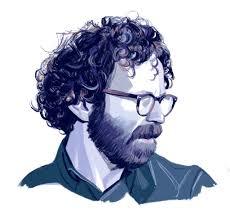
Everybody knows Charlie Kaufman, right? He’s an American screenwriter, producer, director. He wrote, among many others, the films Being John Malkovich (1999), Adaptation (2002), and Eternal Sunshine of the Spotless Mind (2004), three scripts that appear in the Writers Guild of America‘s list of the 101 greatest movie screenplays ever written. In 2020, Kaufman made his literary debut with the release of his first novel, Antkind.
It makes sense that such an imaginative thinker would want to write a novel, and of course, it’s about the self, a solipsistic journey into the mind of yet another of his famous neurotic narrators.
Quick synopsis: The story runs over seven hundred pages and deals with the mind of B. Rosenberger Rosenberg, a flailing, middle-aged film critic, who falls in love with a stop-action animation film whose run time is three months long! He decides it’s a masterpiece—the “last great hope of civilization.” When transporting the film back to New York, the truck catches fire and Rosenberg wakes up some months later in a hospital. The second two-thirds of the story involves Rosenberg’s attempts to remember what he saw of the film and recreate what he didn’t, often with the aid of a dubiously qualified hypnotist.
This book is hyper-metafictional, as any Kaufman fan probably expects.
Obsessive compulsive disorder —and if you have it, then you likely won’t be physically able to stop reading because you will need to see what happens.
Every film technique Kaufman ever used he uses again in this book. He even invents many film ideas he may or may not make. All of his films are contained in this book in one form or another. Eternal sunshine of the spotless mind within eternal sunshine of the spotless mind, etc; dreams within dreams under hypnosis inside a remembered film that could be a figment of his imagination. Are you bothered by dream sequences? There are a lot.
There are also time reversals and time extensions, and a lot of general clowning. And clowns. Literal clowns. Are they supposed to be symbolic? Everything is symbolic. That’s the first assumption we have to make. Time malleability, the marketability of memories.
That’s just a small part of what I got from the story, but I’m still trying to process what I read. The title—Antkind— comes from (I think) a futuristic civilization that’s superior to our own because ants “know who they are without knowing they know who they are.” In other words, Antkind is free of the curse of self-consciousness, and, therefore, of self-criticism.
That’s some of what I got, and I’d like to hear what you all think of the book.
I write this newsletter alone in the Kyoto house. I haven’t spoken to anyone—by actually opening my mouth and speaking words—for a good long time. Communication with the family, now living in Malaysia, is mostly by text. They’re busy.
So I’m isolated. Aren’t we all?
That brings us to this month’s topic: Is isolation beneficial to the creative process?
The lockdowns around the world have led to millions of people being shut in at home, unable to go about their normal lives, and, frankly, becoming increasingly bored. But might that actually be a good thing?
On The Agenda, Sandi Mann, senior psychology lecturer at the University of Central Lancashire, has carried out research to prove that boredom can be a creative force.
“I’ve done a mini-version of lockdown near my university in Preston in the UK, where we’ve got people into isolation cubicles,” she revealed. “We’ve seen what happens when people are really bored, and it actually makes them more creative.”
Mann explained that it’s crucial not to fight that boredom. “The key to creativity is to let your mind wander, to daydream. So this period of lockdown that we’re all experiencing all over the world could turn out to be our greatest period of creativity in the whole history of mankind.”

Maximizing creativity
Not everyone is thriving in lockdown, and Mann acknowledged that some people were suffering from anxiety or depression exacerbated by isolation – but noted that “it’s human nature to try and get the positives where you can, from even the most dire of situations. It’s a bit like what we call ‘cognitive reframing’ – it’s seeing things differently, trying to get the positives out of a very difficult situation.”
Asked how to maximize this inherent creativity, Mann said the key was to embrace the boredom. “It’s not just about being bored and going on the internet and trying to swipe and scroll boredom away. Let your minds wander. Be mindful.”
She goes on with, “Just watch the world go by or even just stare at the ceiling and let your mind find its own entertainment and its own creativity. Your mind will do the job, you don’t need to do anything else – that’s what your mind is programmed to do after millions of years of evolution, it’s programmed to find its own stimulation. And it will.”
Watch The Agenda’s full interview with Sandi Mann here:
Sources:
https://www.cgtn.com/europe/the-agenda
See you soon!
July 16, 2021
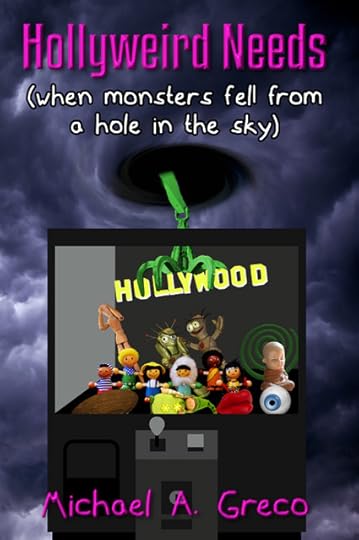
Cohesion and Double Mumbo Jumbo in “Hollyweird Needs”
Interviewer: So, you’ve finished your ninth novel. What’s it about?
Me: It’s about teens on the autism spectrum who discover time travel.
Interviewer: (hissing and arching back) Whoa, whoa, whoa! Haven’t you ever heard of double mumbo-jumbo?
Me: This isn’t double mumbo-jumbo.
Interviewer: (narrowing eyes) How why not?
Me: How why not? Is that English?
Interviewer: Don’t get smart with me, mister.
Me: Okay, double mumbo-jumbo is just a comic idea in the book. It means that audiences will only accept one piece of magic per movie. You can’t have an alien invasion in the story and then get bitten by a vampire, because now you’re dealing with both aliens and vampires, and that’s over-kill. Get it?
Interviewer: Well, I read your book because I’m a professional. I know what’s going on, so don’t bullshit me. There’s a Terminator, a dragon, giant birds, a swirling pool of gunk that’s invaded the parking lot, a giant bowling ball that smashes its way across Los Angeles, and people are getting raptured up into the sky. You’ve thrown double-mumbo-jumbo out the window and now it’s morphed into a helter-skelter of a gazillion mumbo-jumbos.
Me: In science fiction, readers will give you one ‘freebie’ where you don’t really have to explain the mumbo-jumbo, they will just accept it for the sake of the story; i.e., hyperdrive, or that aliens can read minds, or whatever. But then in the context of that freebie everything else has to ‘make sense’ logically/scientifically/quasi-scientifically.
In fantasy, however—which is my schtick—everything is kind of a freebie if you want it to be. That said, I do think there’s something to be said for cohesion.
Interviewer: How why cohesion?
Me. That question doesn’t make sense, but what I mean by cohesion is that I don’t want a lot of new stuff happening, because every complex thing that gets added bogs down my ability to let readers get caught up in the plot and characters. My rules for worldbuilding are: the less important it is, the simpler it should be.
Interviewer: I happen to be well read, and double mumbo-jumbo is an expression in a book called “Save the Cat,” and that is the best book in the world.
Me: You say that because you’re a cat.
Interviewer (who is indeed a cat, my cat, named Howard, so let’s just call him as such): I have a right to my opinion.
Me: In this story there are autistic teens and the tribulations they undergo. There is also time travel and its repercussions, where the continuum fabric is torn and the things the time travelers created in the 1950s, 60’s 70’s and 80s come back through time to haunt the present.
Howard (my cat): OK, I’ll lick that, what kind of things?
Me: You’ll lick anything. And you have to understand that they live in Hollywood.
Howard: Or Hollyweird…
Me: That’s right. The teens are in the special needs school, and the adults are all wannabe screenwriters, each with their own peculiar fantasies. An arcade game called DIMENSIONAL NEEDS appears one day outside the school, and it gives the students and the adults—those that in some bizarre way qualify—the tickets to travel through time and space.
Howard: Did you answer the cohesion question, which, I believe was ‘How why cohesion’?
Me: Look, if little brain-eating monkey-birds get introduced, regardless of anything else, they must maintain a consistency and work the same way every time. If that consistency gets broken and things don’t make sense, then I may lose the reader.
Howard: You do the POV of a different character in every chapter and sometimes these people are unreliable. Won’t that lose readers?
Me: Unreliable narrators often perceive/narrate something they don’t fully understand which can cause confusion, but otherwise everything is still consistent, the story elements are coherent, everything belongs in that world.
Howard: Time travel… Need I say more?
Me: Is that your question?
Howard: It’s been done a million times. Why do it?
Me: That’s actually a good question. The whole mind-bending paradox of time travel and its myriad ramifications make great stories. Stephen King said, “History doesn’t repeat itself, but it harmonizes, and what it usually makes is the devil’s music.” That’s what I’ve done with my characters that slip back in time, stealing the ideas of popular books and movies. They plagiarize, and the characters they create in the past bully their way into the present and kill or horrify everyone in the shopping center where the special needs school is located. Anything goes with the terror that ensues.
Howard: (now licking a leg) So what themes are you digging into, anyway?
Me: The major theme might be that we all have needs, but they’re often different from what we thought they were. And who exactly are the needy ones, anyway? — Those with physical or cognitive impairments, the aspies, or the NTs (or neuro-typicals)—those of us considered normal, but who have immature longings or irrational outlooks, or prejudices, or fears. Who really has the greater need?
Howard: How long did it take to write this thing?
Me: I started in winter of 2018 and finished in summer, 2020. As with the other eight children of the pen, child-birth doesn’t get easier. This one was hard too.
Howard: Is it within the genre of comic-fantasy?
Me: Oh, yes, it’s pure comic-fantasy, thoughtful insanity, kind of like the genie who will trick you and not give you what you want, but you realize later that it was what you needed. Sometimes the characters are just brutally murdered—but always with some life-reflection beforehand. Lloyd Alexander said, “Fantasy is hardly an escape from reality. It’s a way of understanding it.”
Howard: (extending leg in impressive fashion and licking asshole) The story can be quite, how to say, insensitive, no?
Me: Maybe, but there’s enough insensitivity in this story for everyone. If I’ve failed to insult your demographic, religion, gender, race, ethnicity, or cognitive functions in this tale, then I may get it right in a later revision.
Howard: Well, let’s wrap with that stinker of a reply… So, how’d I do? Am I your regular interviewer now, and what do I get for this?
Me: I’ll call you.
mg
Double mumbo-jumbo is an expression in Blake Snyder’s book “Save the Cat.”
June 10, 2021
Contrast, Pacing and Secrets in Project Purple
SM (Snarky Muse): Why so glum?
Me: I’m an Indie writer with marketing blues. Someone’s got to sell the stuff I write, and the family cat (now licking its butt on the windowsill with an impressive leg extension) isn’t exactly volunteering.
SM: So, it’s all up to you.
Me: Yeah, but I get distracted. First, I have to check my Gmail to see if that person ever responded to my request for a review. Then I need to go check my Yahoo to see if the girl on Fiver has responded to enlarging the cover, because I didn’t know that pink pages, instead of the white, require a larger cover size, and I don’t know how to do that stuff.
SM: Maybe you should learn.
Me: Meanwhile, my young daughter is inviting her friends into the house downstairs and partying with raucous games of tag, while I’m up here trying to assess whether I have bad breath or not: I breathe out, then jump over real quick and receive the exhalation.
SM: (rolling eyes) How’s that going?
Me: It’s inconclusive.
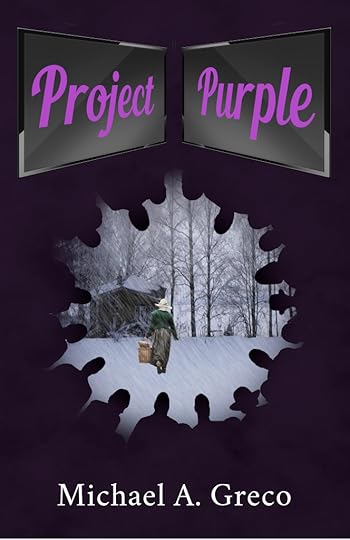
SM: Thank you for sharing. Let’s talk about Project Purple. The blurb reads as such:
“Thirteen Americans volunteer for a unique three-month project to recreate America’s early colonial experience for a worldwide on-line audience.
The colonists have been deceived. They don’t know their ordeal has been gradually, brutally, altered by their organizers, and a genuine struggle for food, shelter and survival turns deadly as an Arctic winter approaches.
Is there some point to this insanity? The besieged Americans (including a police detective who throws his world away to rescue a colonist he knows only as the Goatwench) must find the primal survivor within themselves to counter the ever-increasing violence they face—all to the attentive schooling of their multi-national audience.”
SM: How are the reviews?
Me: Pretty good, actually. Online Book Club just gave it four out of four stars, and they’re quite on the stingy side dispensing these stars. Project Purple’s got a lot of conflict, externally and internally… Everyone knows what conflict is, right? It’s the basis of drama, character, plot. It creates an engaging story. Characters out of place make for interesting situations.
I think of contrast as another form of conflict. I’m talking about making sure of a sharp difference between characters and setting, and I think that contrast is one big reason the story Project Purple is such a compelling work. Contrast adds personality to the story: thirteen unsuspecting Americans, misled, suddenly thrust into the nether of the Russian tundra.
Fish out of water.
The colonists are the opposite of one another. They are liberal, they’re conservative, they’re Christian, they’re Atheists. They press one another for peace, for concessions, or for war, for violence. They all have to fight for survival, but they come to this realization in their own ways because of their backgrounds
They are as opposite to one another as I can get them.
SM: It’s loaded with secrets, isn’t it?
Me. It’s a story with secrets, all right. Secrets help drive it. Sometimes readers know about the secrets and sometimes they don’t. Sometimes readers figure things out based on clues throughout the story. But the secret of using secrets is to come very close to revealing the secret without actually doing so. And this can turn scenes into nail biting reading experiences.
The biggest secret, I suppose, is what the shadowy group of Internationals—the Rhizome—really want. What are they after? But there are other secrets, just as important: Why are the colonials keeping things from each other? Because they’ve got dark secrets, too. The secrets are the reason the colonials find themselves where they are. The policeman, Rigor, has a secret, too, and that’s why he’s slowly lured into the Rhizome.
SM: Isn’t it a challenge finding the right pacing when intertwining so many character threads?
Me: You bet. Chuck Palahniuk says, “I try to tell a story the way someone would tell you a story in a bar, with the same kind of timing and pacing.”
Pacing was a concern in this story. I was careful not to input too much of the historical data, as that’s when, as a reader, eyelids grow heavy and brain function appears to slow down.
SM: It’s boring.
Me: Project Purple could have had structural problem. Spending too much time on the colonials reliving life in the year 1613, and on the trials of developing the colony would have distressed plot development.
SM: Is that why you created the policeman?
Me: (nodding) To break up the colonial endeavor with another, illuminating insight into the machinations of the Rhizome. But poor scene construction, or poor overall story construction would have been a much bigger problem. If any scenes had read slowly, I would have had to examine the conflict once again: Is it insufficient? Is it overwritten? Are there too many words? Is it all just too fancy?
I wanted to create 13 fascinating, three-dimensional characters with over-the-top problems that would hold readers transfixed, and their eyelids wouldn’t grow heavy; their brain functions wouldn’t slow. I wanted readers to care what happened next. I think a story with terrific characters and terrific plot give readers a fast read—because they care. On the other hand, mundane characters with weak plot challenges will ensure a slow-paced read.
SM: So, contrast, pacing, and secrets are all a big part of the success of Project Purple?
Me: Jeff Buckley said: “I’m always writing and reflecting in life. I want to suck it all in.”
SM: Well, happy sucking. What’s that noise downstairs?
Me: It sounds like a game of tag with ten-year-olds. (Standing and stretching) Guess it’s time for a little exercise.
mg
May 2, 2021
Neurosis and Dialog in “Plum Rains on Happy House”
Me: I have to finish my ninth book, but this one is hard. I think all this alone time is starting to get to me.
Snarky Muse (SM): What do you mean alone time? You’ve got me—I’m your inspirational muse.
Me: I still feel alone. I’m starting to think it’s unhealthy. All I seem to do is have long, meandering talks with myself. I also scratch myself way too much. Then I look down at the marks and can plainly see the ragged scratches on my shins from my own fingernails. Then I start wondering why I’m so itchy down there. Have I got some kind of exotic skin condition? So I DuckDuckGo the various possible skin conditions I could have, and rule out—systematically—eczema and hives.
SM: I’m sure readers find that all fascinating (rolls eyes). But let’s move on, shall we?
Me: Then I wonder if the cat has fleas again, and this might be the reason for the itchiness. So I want to grab the cat and turn him upside down, and scour his little body for those brown pests. But first I have to hunt for the cat all over the house, and finally find him under the bed blanket right behind me!
SM: That’s one slick anecdote for the archives. So, about “Plum Rains on…
Me: But I don’t see any movement under the cat’s fur. Now I’m thinking maybe it’s just the advent of the warm weather. So, what I’m saying is be prepared for the neurosis that accompanies a long time by oneself.
SM: Neurosis might be a recommended condition for reading Plum Rains on Happy House, wouldn’t you say?
Me: Well, I wouldn’t go that far…
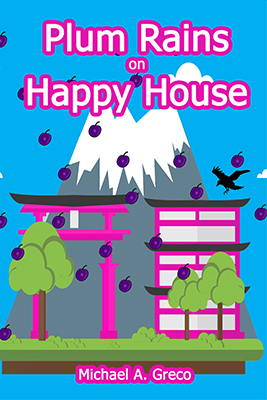
SM: Tell us the inspiration behind this, err, unique story.
Me: Inspiration? Well, I live in Japan, and it’s a place I know well. The book’s dedication probably says it all:
This book is for Japan. It’s the place I call home—though it may not want me to. For over 25 years I have grappled with the dos and don’ts of my host country, destroying the language in conversation, giving up, resuming more study, eventually resigning myself to the boundless plateaus of almost-speech.
And Japan abides. Like a patient steward, it absorbs the frolics and the ribbing, while providing a solacing habitat in which to write and teach and parent and grow.
I came over to Japan in the 80’s and I’ve lived in some pretty seedy guest houses—what we call gaijin houses—because there may be a few non-Japanese residents (though the majority of residents are usually Japanese).
In creating the tenants of Happy House, I just mingled the characteristics of a few of the unique people I’ve met over the decades in Tokyo and in Los Angeles. In some cases, I didn’t need to exaggerate at all.
Plum Rains on Happy House is a detective story. A fellow named Harry Ballse invites the protagonist, nicknamed the Ichiban, to Japan. But the residents of Happy House all deny any knowledge of this mysterious Harry Ballse.
Of course, some readers may pick up on the references to the 1973 film The Wicker Man, about a policeman who is lured to a Scottish island to investigate the report of a missing child. It’s a game of deception. The islanders are playing with him. The paganism and the sexual activity the sanctimonious policeman finds so objectionable are simply part of the selection process—to see if he possesses the characteristics to burn in their wicker effigy so that the village will have subsequent successful harvests.
In Plum Rains on Happy House, the Ichiban must undergo his own horrific sacrifice to appease the house. My novel is a tribute to that remarkable film, and it has the same, foundational plot lines, but I’ve laid down a hearty layer of satire and lots of lunacy.
SM: This has been your most ambitious work yet. Does it take a neurosis to write like this?
Me: I should be offended by that question, but I will say that nothing is easy. If women will forgive me the metaphor, creating Plum Rains on Happy House was like giving birth—it hurt a lot. There were points when I considered giving up because it was just too hard. I’m not a funny person, but I have little trouble dreaming up wacky stories and characters.
The residents of Happy House had to be distinctively quirky. I didn’t know how bawdy things were going to become, or how much depravity would creep its way into the story. But once I had the characters, they took charge, and I relegated myself to being, more or less, their stenographer.
Dialog was also something I paid close attention to. Of course, sharp dialog is vital in any story, but for this kind of back-and-forth humor to succeed, I felt it really had to have zip. Just like a comedian practices his delivery line, the dialog exchanges had to have real punch. As with most writing, dialog should say a lot , with very little. The communication isn’t in the words being said but in the subtext. Good dialog says it without saying it. If you want a reader to read every word, you have to make every word count.
One quick example from Chapter One has the resident of Room 3 (nicknamed The Goat) explaining to the new resident about his missing foot:
“I saw you looking at the bottom of my leg.”
“Your foot?”
The Goat scowled. “Obviously, you can see that no longer exists.”
“It’s in Cambodia.”
The Goat went into a cross-eyed fluster. “What is?”
Sometimes readers need to work a bit to understand the exchange, and I think they appreciate that. Dialog is an organic process. It’s the way characters talk in my head, and I think I know how to write them because they are all a part of me. It all works toward satisfying the element of what a good scene often comes down to: one person trying to get something from another.
SM: Some of the dialog is just plain nonsensical.
Me: Tom Rickman said, “Dialog works the least well when it’s telling you what’s going on.”
Mix that in with the baffling idiosyncrasies of Japan and its language, and the vexing stages of culture shock—which frame the Ichiban’s misadventure in Happy House, and readers may have to follow closely what is happening, especially those uninitiated to life in other countries. I’m hoping this confusion is a part of the magnetism of the story. After all, the old guesthouse is haunted:
“Happy House is an amoeba everlasting, a floating world—capturing and sealing the self-indulgence of the red-light districts, the bordellos and the fleeting, delightful vulgarity of ancient Japan, an eternal time capsule of the flamboyant and the boorish.”
SM: It’s a bit of a shocker, though, what happens to the poor guy, no?
Me: Stephen King says, “I try to create sympathy for my characters, then turn the monsters loose.”
SM: How’s the reception been?
The book has received mixed reviews. Of the nine books I’ll soon have up on Amazon, Plum Rains on Happy House was the first to receive a customer review of one star—perhaps rightfully so: the reader was “disgusted” by some of the more explicit scenes, and I think that was my fault; the earlier cover gave no indication of the sexual content within, and this poor woman was clearly ambushed. With the one star, I know I’m finally an author, and wear it as a badge of honor.
There are, however, cultural elements in the story that some will not understand: the usage of the various slipper customs inside a house, the daily beating of the futon, the laundry poles, the shockingly steep stairwells, the neighborhood garbage trucks that play cute tunes to let you know they’re coming, the confusion between the colors of blue and green.
The dichotomy of substance versus form also plays an important part in underscoring the tension—in the way one swings a tennis racket, or walks in a swimming pool, or plays baseball, or eats particular dishes: What should predominate—what you are doing or how you are doing it?
On another level, the story examines language acquisition and the role of structure within the learning process. The residents all have their various opinions: As teachers, should English be taught through some kind of lock-step formula, or would one be better off approaching it in a more hands-off manner, rather like painting? Everyone seems to have an opinion.
The idea of structure comes to the forefront again when discussing what one character, Sensei, calls the hidden structure of the house, which, like the neighborhood (or any cityscape in Japan) appears as an amorphous sprawl. But look underneath this sprawl and one sees the organism. The randomness, or chaos, embraces a flexible, orderly structure, likening the house to an amoeba that has the ability to alter its shape. Similarly, this amoeba can be seen as a microcosm of Japan as a whole.
SM: A hidden structure, huh?
Me: Yeah.
SM: Amoeba…
Me: That’s what I said.
SM: Maybe you’re right about all this alone time.
Me: I’m not alone—I have my Snarky Muse!
SM: (agonized expression) Don’t remind me.
mg
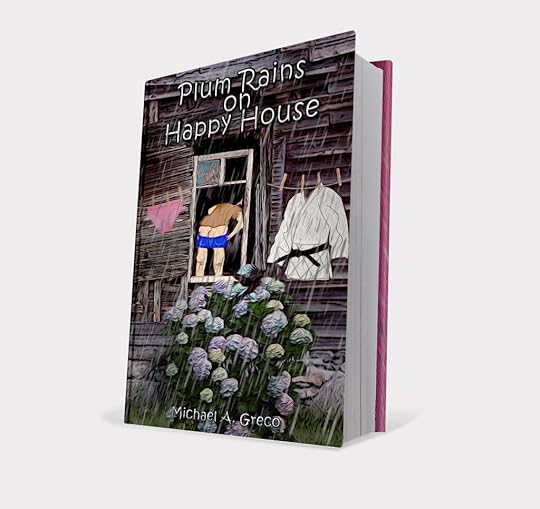 present book cover above