Martin J. Kleinman's Blog
November 24, 2025
The Year We Fired Thanksgiving
Every year, people post on Book of Faces, or write to their local paper’s “ethics” columnist or, sometimes, columnists write about Thanksgiving family stress.
I used to liken family visits to having to fold my adult personality into a small square and place it gently in my childhood dresser drawer, behind the socks. The family, including the parental units, could not deal with the grown person that was me, and only related to me as the child they once knew.
I was no longer that person.
Anyhoo, when my wife and I married — in our early twenties — we were not in a position to host Thanksgiving. Our relatives lived on Long Island and in southern Connecticut. The two family groups would invite us to their T-Day feasts, tugging at us each year like Bluto and Popeye jockeying for a shot at Olive Oyl.
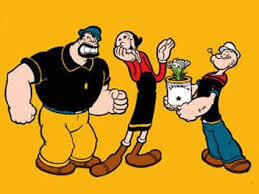 “Oooh, oooh — you keep your hands to you, that’s what you are!!!”
We took turns. One year at the Kleinman clan. The next year at the Stolzenberg tribe. That strategy generated ill-will with the family that was passed over that year. So, we made a decision: each year we’d do dinner at one place, and dessert at the other.
That was worse. Far worse. Everyone was sore when we (a) departed early or (b) arrived late. Plus, we were exhausted by the logistical nightmare of running running running on a day that was supposed to be “fun”. Ha!
So one year, we gave them all the finger. We spoke to our dear friends, Ken and John, who also had familial issues around the “day of thanks”. Screw this, we collectively agreed. Let’s just the four of us celebrate.
We reserved rooms at bed and breakfasts on the rocky coast of Maine. We flew into Portland, rented a Lincoln Town Car (I know, pretty bougie, right? But it was a deal). A light snow fell when we arrived, which was bad news for our rear-wheel drive rented car and our New York City-friendly Italian footwear. But great news for our aesthetic sensibilities. The foliage! The ocean’s saltwater scent! The flavor of fresh fish! The sound of the furious breakers!
We enjoyed traditional Thanksgiving dinner at the B&B, drove (very cautiously) on twisty snowy roads up and down the coast, did some shopping, ate lots of chowder, and had a grand old time, free of familial stress.
Avast! Maine in fall is cute as a fg button. You want to pinch its little red cheeks.
 Maine in fall is cute as a button.
We didn’t miss our families that year. Not one bit. We made our own memories, minus the stress of idiot uncles spouting nonsense, questions about why we were still childless (“Why? Because we’re having too much fun as a young NYC couple, that’s why!”), fighting traffic, etc. etc.
In time, the torch was passed to us, and for decades now, my wife and I have hosted Thanksgiving. We’ve had as many as 16 guests. We’ve cooked many pies, roasted many birds, and popped many corks. A raucous time is always had by all.
Someday, some family member may decide to bug out, and make their own T-Day memory. We’ll gladly oblige. We know what that’s like. But this year, we’re hosting again, and every on of our eleven guests (including three strays) is champing at the bit to join in the fun, and contribute to the feast.
Which is as it should be. At its best, Thanksgiving is a mellow time of breaking bread and wallowing in that precious and rare commodity: joy.
I guess we learned how to handle the situation from our experiences with our elders. We back off, give everyone their emotional space, and cherish the fact that we’re all here, still safe and sound. Nothing more. Nothing less.
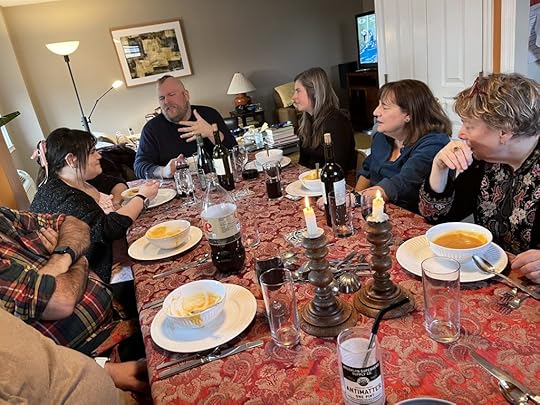 Happy Thanksgiving, one and all!


November 14, 2025
Back When Each Photo Mattered
Once upon a time, the world used film cameras to capture “Kodak Moments”. We chose our images carefully, and composed within the viewfinder. The idea was to reduce screw ups. Film cost money, and processing was pricey.
And yet, we snapped away,graduating from Brownie box cameras, to Instamatics, to Polaroid Land cameras, to 35mm SLRs. We filled shoe boxes with prints, negs, contact sheets, and slides. Envelopes and boxes bear the date and place of the images within. Loch Sheldrake ’71. Nantucket ’77. Paros ’84. Woodstock ’91. Then, we went digital, and our hard drive folders hold: Paris/Amsterdam ’15. Montauk ’19. Taormina ’23. Budapest ’24. And, now, Bordeaux ’25.
These days, our cameras are out throughout the day. Free photography! Yaay! Ready, shoot, aim!!! Right? Cause for joy?
Well, yes and no.
Apps such as Snapseed and Camera + transform our phones into powerful image capturing machines. Why carry a nifty compact digital camera for grab shots, vacation photos, family pix, when all you need is your handy-dandy smartphone? These digital vacuum cleaners Hoover up memories as they eliminate processing wait-times, mid-activity film reloading, image sharing — and, most of all — artistic restraint. Just keep shooting away, and sort a cloud’s worth of shoeboxes at some later date.
Where is the lie?
Whelp, I just came back from vacation. And I’m here to report that my fellow travelers had their phones permanently implanted in their faces for the entire trip. Cathedral – got it! Pastry shop window — got it! Cool harbor sunset – got it!
Yeah, we get it; you GOT it. But did you EXPERIENCE the moment? Is the compulsive documentation of each waking hour healthy? Wise? Necessary?
Several times on this trip, I detached from the group and wandered off. I got a haircut on a Barcelona side street during a windstorm that tore off a tree branch and slammed it into the barber’s scooter, which was parked outside. A master-class of cursing (by the barber) ensued. I sat in the chair as the barber calmed down. I explained in my sad Spanglish how I wanted my hair cut. It went well, as did his proud tale of the history of his shop, opened by his grandfather 85 years ago. All the fixtures were original, even the razor strop of heavy, burnished, horsehide.
I took the Metro, and fumbled mightily with unfamiliar prompts of the ticket machine. A local resident provided help, and I got on the correct train, got off at the correct stop, and — once above ground — got directions to my final destination from a young couple walking their doggies.
I sat at an outdoor cafe, ordered lunch, and watched the passing parade. Nothing special, just city people going about their business. I wandered down alleys, bought shoes, tasted new wines.
And rarely did I reach for my phone. My camera. My phone AND my camera (Faye Dunaway/Chinatown voice needed here).
Because it’s important to preserve memories. As Paul Simon wrote in his song “Old Friends” — “preserve your memories, they’re all that’s left you…”
But maybe it’s better to preserve a few of them in the “cloud” that can only exist in your brain, rather than on your phone. Bad Bunny/Benito Ocasio now sings “Debi’ Tirar Mas Fotos” (“I Should Have Taken More Photos”). He longs to preserve, in a fast-changing world, the magic and emotion of beloved people and places forever lost in time. Me too. His videos are very powerful, especially this short film of a guy in Puerto Rico who faces cruel headwinds of change in his sanitized, gentrified island town. Check this out:
I’m just saying that it’s also important to put that smartphone back in your pocket once in awhile. Maybe sometimes the photos you DON’T TAKE pack more emotion and staying-power than the dawn-to-dusk photography too often practiced today.
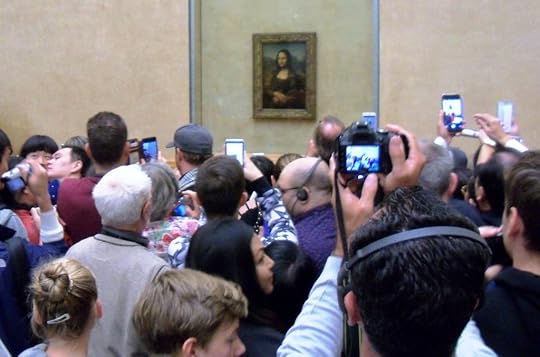 Did any of them really see the Mona Lisa, or did they just capture a bunch of pixels for social media humble-bragging? (Photo credit: Me! And, yeah, “guilty as charged”, for I do it, too.)
October 10, 2025
Wichita Kleinman
I’m about done with people who categorically denounce certain music genres.
Any artistic endeavor has a bell curve of quality. Some stuff is piss poor. Some stuff is superlative. Most stuff is OK/Pretty Good. Crap is crap, and that goes for music in pop, rock, rap, country, classical, blues — whatever.
So recently I had to endure an infuriating eyeball-roll when I mentioned the Jimmy Webb classic “Wichita Lineman”. You see, I’ve been following uber-session bassist Carol Kaye on FB. Kaye was queen of the Wrecking Crew, that group of studio musicians who were the stunt-men/women for pop and rock “stars” who had charisma but didn’t have the chops to cut it in recording sessions.
In that group were Hal Blaine, Kaye, Glenn Campbell, Leon Russell, Dr. John, James Burton, Billy Strange, Barney Kessel, and a whole lot more. A few of them went on to stellar solo careers.
You may recall Glenn Campbell. He had major, MAJOR, guitar chops. He was like pre-Hendrix “Hendrix”. The guy could play anything. In time, he owned the airwaves, and was a leading exponent of Jimmy Webb, who is on my Mount Rushmore of all-time great songwriters.
Carol Kaye recently wrote that she created the opening descending bass line in “Wichita Lineman.” It was released in ’68, as the war raged, and he was backed by members of the Wrecking Crew. It’s unforgettable, that throbbing intro, and sets the table for this classic line from this tale of love: “and I need you more than want you; and I love you for all time…”
Jimmy Webb and Glenn Campbell perform “Wichita Lineman” in 2000. For sure, Campbell was bedeviled by dementia by this time in his life.The song was affecting then, as was another Webb/Campbell collaboration, “Galveston”, for me a stellar song, if only for the “I am so afraid of dying…” line. I mean, for a song’s male character to admit that to the love of his life, as he cleans his gun, and dreams of Galveston, back then? Wow. Imagine the “anti-woke” BS we’d hear today if that line was ever uttered in a pop tune. Hegseth would have a hissy, for sure.
But back to Wichita. I was one of the few kids to play WHN-AM and WKHK-AM on my transistor radio at Orchard Beach’s Section 13 back in the day. My dad had basic training down south before going overseas during WWII, and he played country music in our apartment all the time. In time, whenever my friends and I hit the bars, I’d play songs like “Ring of Fire”, “Detroit City”, and of course, “Wichita Lineman.”
For that, I was dubbed “Wichita Kleinman”. Whatever.
I guess I liked the poignancy and simplicity of some of those songs. “Wichita Lineman” became even more touching for me in recent years. Time has punctured the balloon of youthful invulnerability. This year has smacked my upside the head with a one-two of physical ailments. Thankfully, I’m on the mend. However, being upended like that gave me a finer appreciation of the fact that Glenn Campbell, master guitar slinger, was robbed of his mind by the devil of dementia. Still a relatively young man, he was lost.
Except when he took the stage and started to play. It was as if the gods hit “play” on his brain’s computer. Campbell would go into “perform” mode. As he did in the clip above, which was from 2000.
So, yeah, no eyerolls on this song, or “good” country, or “good” pop, or whatever. Shit is shit. Jingoistic tunes are not what the genre is really all about. Rather, it’s about basic human emotion and the trials and tribulations — and joy — of life.
As for me, “Wichita Lineman” is still on the line…and, yes, I DO INDEED need a small vacation…
Here is the original from ’68, with the Carol Kaye bass intro. Butter, baby.September 21, 2025
Nashua, NH
I’m not even sure I know, as I write this, what this post is all about, and perhaps that’s the best thing that could happen. So, let’s discuss, for none of us has ever been in this place before.
I had a ‘Gansett last night over dinner. It is a popular beer brewed in New England that is currently on the “cool”/ironic list — like PBR — and I was reminded of my best friend from high school and college, Dave, and his family.
First and foremost, Dave and I were THISCLOSE in terms of thought. We finished each other’s sentences. It was to personality what the Everly Brothers’ voices were to harmony. An optimal blend. Paired strands of a seaman’s rope.
We came from different tribes and it did not matter. My dad was an accountant. He was a white collar Dilbert. Dave’s dad was shop steward for the MTA, Local 806, International Union of Painters and Allied Trades. He supervised a crew of subway station painters. You know, the guys who stood around smoking Camels while maybe — MAYBE — two of their buddies slopped Exorcist-green paint onto station stanchions.
My mom was a loudmouthed faded glory blonde and sometime saleslady for Lee Jewelry on 59th Street, and Wilson’s House of Leather and Suede. Talk about selling snow to Eskimos: at Wilson’s a guy could walk in for change for the parking meter and after she got through her hard-sell, he’d walk out with a $900 leather trench coat.
His mom? An itty-bitty little lady, a homemaker, with a tangle of blue-rinse curls who presented as “cute.” She was anything but. She snarled. Her stare could gut glaciers. With an omnipresent Kent lit between her lips, she could make ten out of ten underhand free-throws from the foul line on a Reservoir Oval basketball court. I’d seen it with my own eyes.
I was in their presence many times, and I do not remember either of Dave’s parents saying a word to me. Not even a “Hi, Marty.”
NOTHING.
And so I was surprised when, one summer day, Dave invited me to his family’s compound in rural New Hampshire. Which is kind of an oxymoron, for what IS New Hampshire, if not “rural” (note to out of town readers: I say that as a son of broken-glass Bronx tenement life).
The idea of this trip was exciting but it would take a financial toll, for back then, I worked summers in the bursting room of a publicly traded financial services company. It was an exhausting, filthy job that required repeated lifting of heavy boxes of six-part carbon forms used to print ledgers for various departments. We got them from the speed freaks in the mainframe computer room on the third floor. These guys worked nights so the reports would be ready for the execs on the next business day. They shot crystal meth to get through their double-shifts and dealing with them when they were “going down” was, um, somewhat disagreeable.
We first removed the carbon (decollated) from them on a decollating machine. This required throwing heavy rolls of shmeary carbon paper into large barrels and, then, carefully fitting each copy onto a bursting machine, which snapped — with a machine-gun decibel report — page perforations and, thus, created readable material. These would be loaded onto steel-wheeled wooden skids and delivered to different departments. Who read them? What did they say? To this day, I have no idea.
 The bursting room. That’s a bursting machine right there, folks. Left-to-right: Bob, Jesus, Carlos, Morris (our boss), Jerome, and Richie.
I lived at home and went to CUNY. That is, four-year commuter college. My co-workers were sons of the working poor. Some were just back from ‘Nam. Others had just graduated high school. Some, like Bob, lived with their moms. Bob lived in a railroad flat on the (in)famous Hell’s Angels block in the East Village. After work some Saturdays, we’d get thoroughly baked on weed and Pagan Pink Ripple, listen to Dylan singing “Talking World War III Blues” and laugh until we cried or, rather, until his mom came in from work, smiled to see us having a safe good time off the streets, and fried up a platter of pierogi.
Jerome lived in Harlem and on weekends (no supervisors!) he’d bring in his little brothers and we took turns babysitting them while we worked. We’d all go to the (brand new! clean rental shoes!) bowling alley at Madison Square Garden afterwards and I’d keep an eye on the kids while Jerome went for beer-frame Buds.
Some lived in East New York. Jose carried a .32. David sold a little dope. Mike skin-popped smack in the men’s room, and most of us smoked hash right under our boss Morris’ nose. We’d take a crumb of mossy goodness, place it on the lit tip of a Kool, spark up, and inhale the spindly ribbon of blue-black smoke that got us through this hard job.
I got paid $2/hour and worked lots of overtime so, over a summer, I netted all the money I needed for CUNY registration fees, books, a new winter coat and Georgia Giant work boots for the coming year.
I needed every penny and going to New Hampshire meant foregoing a weekend of income. I didn’t even take off to go to Woodstock, as did some of my more affluent CUNY chums.
Nevertheless, a trip to Nashua and Dave’s rural family compound had appeal. I imagined big blue skies! Fresh country air! Woods teeming with wildlife! I was totally down with that!
So I stuffed clean clothes into my old Boy Scout backpack, went to Port Authority, and took a Trailways bus to New Hampshire. It smelled like a hamper and I cared not one wit. I was going to visit Dave and his family in the New England woods.
The bus ride to Nashua took forever. It seemed to stop in the asshole of every jerk-water town in Connecticut and Massachusetts. But I finally got to New Hampshire. Dave was waiting in his Dad’s green Maverick. The clouds were dark and low and the New Hampshire air smelled like froggy lake water.
Worse, there was a distinct desperation in the air. The town had clearly seen better days. I was naive. I never expected the cast of Deliverance to be perched on the porch of the local town rooming house. This was once an area of factories and mills that made the country’s shoes and carpets. The derelict, big red Civil War-era structures we passed looked to me like the brick buildings in Red Hook, Brooklyn, like the one on the pier near IKEA that burned down last week.
My ESP was right, for in years to come — according to the National Institute on Drug Abuse — New Hampshire had the second-highest rate of opioid-related overdose deaths in the country. Second only to West Virginia. Take me home, country roads, indeed. Go Mountaineers.
We passed rickety farm stands, burned out barns, small private houses with snarling dogs chained to fences and rusted F-150s on cinder blocks. From time to time we passed billboards with pictures of frosty cold beer: “Hi Neighbor…Have a ‘Gansett” the billboard screamed.

My heart sank, for this was not what I expected after countless plays of James Taylor’s “Sweet Baby James”. These were not the “dreamlike Berkshires” at all. Wrong state. Wrong direction.
Down the road from a dilapidated stand that sold cannonball-sized tomatoes for ten cents a pound, we clunked onto a lumpy dirt road. Ferns raked the flanks of the Maverick.
Finally, a clearing. Voila: three buildings with tarp-covered mountains of firewood out front, that made a semicircle around a large patch of balding lawn.
“Well, this is it!” Dave said. He showed me inside. I was to sleep on the couch in the living room. His mom and dad were in the yard. I reach out my hand to his father to shake. I got not a hand, but a grunt. His mom ignored me and turned to Dave. “We’re eating at six,” she said, walking off.
Dinner was boiled hot dogs and corn on the cob. There was a large bottle of French’s yellow mustard and a stick of margarine enrobed in its gold foil wrapper for the corn. There was the four of us around the dinner table, plus Dave’s uncle Deacon, who seemed pleasant enough. I remember the unlit cigar in Deacon’s mouth, his Oshkosh denim overalls and flannel shirt, and very long fingernails.
There weren’t many wieners and ears of corn to go around for the five of us. I remember being starving but reticent about asking for more than one, but seconds weren’t offered anyway, so that was moot. Dessert was Deacon’s home made apple pie. Dave turned to me and, sotto voce, said, “If you find a big cigar ash in your pie, don’t say anything. Deacon smokes while he cooks.” The pie was tasty, as I recall. No ashes in my slice.
The next day I leaned on the Maverick in the yard and whittled a stick with my big yellow folding knife I got from a bursting room kid to settle a $2 pre-paycheck loan. The slivers of bark fell at my feet. As I sharpened a point on the stick, Dave’s dad came over and whispered into his son’s ear.
“Let’s get a broom and clean up the wood,” Dave said to me. Dave was my bestie and I cleaned up my wood chips and wondered about surviving the rest of the weekend.
After dinner, Dave and I drove around. There was really nothing to see, or do, and I knew for sure my presence was not wanted at the family compound. We passed the tomato stand and I bought $3 worth of red-ripe tomatoes. At ten cents a pound, that was a basket full. When we got back, I presented the big wooden basket of fruit to Dave’s dad.
“I’ll be leaving tomorrow,” I said. “This is for you. Thanks so much for the invitation.”
They sliced up one of the tomatoes and served it alongside scrambled eggs fried in margarine the next morning. I packed up my belongings and Dave drove me to the bus station in town. We were very quiet.
I fell asleep on the bus and felt quite lucky that my pack wasn’t stolen by one of my fellow passengers.
I traded 20 hours of labor in the bursting room for a short visit to Nashua, New Hampshire, where billboards greeted travelers with optimistic “Hi Neighbor!” messages of camaraderie. At two bucks an hour, the trip left me in the hole for $40, plus three bucks for the tomatoes. Plus the bus fare. That was real money for me back then.
But in retrospect, I got more than my money’s worth in life experience. More than I’d learn in class at CUNY, in any anthropology textbook, in any newspaper, People are essentially good. Not everyone is bad. Some people you click with, and some people you don’t. Not everyone is your friend. Or wants to be your friend. Or is emotionally capable of being your friend. And that’s OK too.
It is important, I learned at the time, to “play it as it lays” as Joan Didion famously wrote. This is a golf idiom meaning to accept circumstances and play the ball from where it rests, even if the spot is shitty. It also refers to accepting and dealing with the realities of a situation, whether it’s a golf game or life, without attempting to change it or complain. I thought I was cool with that. But that was then.
Oh yes, one other thing. The hard hat riots of 1970 exploded the following May, days after Kent State, and I realized there were many new life lessons to learn.
And it looks like we still do. Yeah, none of us has ever been in this place before.
September 5, 2025
The Jolly
The ear-splitting feedback from a dining room full of octogenarian’s hearing aids, louder by far than Jimi playing “Machine Gun” at the Fillmore, is the first thing that comes to mind when I think of The Jolly.
How bad was the hearing aid feedback at The Jolly? Go to :42 of this clip and multiply it by 100.The Jolly. That is, the Jolly Fisherman, was a sturdy suburban surf and turf restaurant in the village of Roslyn, on New York’s Long Island. The restaurant, now of blessed memory, could not survive Covid. Nor could a good percentage of its ancient patrons, for that matter.
The restaurant was the stuff of family folklore for my wife’s family. It became part of my life as well, from the mid-70s into the start of the new millennium.
It was a place for celebration. My wife’s family went to The Jolly for birthdays. Anniversaries. Holidays. Family get-togethers. Back when I first became enmeshed in my wife’s family activities, she and I — and her wisenheimer little sister — scoffed at the stodgy decor, decrepit waitstaff, and aged customers.
It was a clubby, white table cloth place abutting the town’s cute duck pond and the food was decent enough.
 The young snot-nose that was me equated The Jolly Fisherman’s clubby decor and decrepit clientele with The Overlook’s wax museum. “Your money’s no good here, Mr. Kleinman.”
But it wasn’t cool. It wasn’t Arizona 206, Montrachet, Al di La, Odeon, Babbo, Florent, or Chelsea Place. Our careers were on the ascendant and we sniffed out the latest hot restaurants with fervor starting in the Ford-to-City: Drop Dead” years, through the “there you go again” Reagan era and on into the “that depends on what your definition of ‘is’ is” Clinton epoch.
The Jolly did not cater to the boldfaced names of the day. It catered to bougie bastions of middle-aged suburbanites of the type skewered by Mad Magazine back when we were smart-ass tweens. It was a cardigan crowd. In their minds, they’d made it. Out of the outer boroughs of The Bronx, Queens, and Brooklyn, and into the world of onamental front lawns, Oldmobile Toronados, Garcia y Vega cigars, and Bally slip-ons.
“Plastics. There’s a great future in plastics, Ben.”So it became, for us young-ins, far more than a restaurant. It was a family joke.
“Where are we going for ma’s birthday?”
Younger generation, in unison: “THE JOLLY!!!!!”
Then, “Yeah, but The Jolly sucks.”
“We know, we know, already. But they LOVE it there.”
My MIL, her husband, her second husband, her boy toy (“the fly-boy”, who was a tail-gun Charley in WWII), uncles and aunts, all loved The Jolly.
“Oh! Their walnut bread is to die for,” they would qvell. They had their favorite waiter, Bob, who knew their names, their drink orders, their “don’t forget — dressing on the SIDE!” special instructions.
They loved the very thing we despised: the dulling sameness. Same decor, same waiters and valet boys, same patrons. Most of all, they loved the fact that, after surviving the Great Depression and World War II, they now had a few bucks and could relax in relative peace and comfort.
“Is it spicy?” my MIL would ask Bob, should a rare “new item” find its way onto the menu. Bob would shake his head “no, don’t” and my MIL would order her usual. Green salad, dressing on the side. Filet of sole. Chocolate cake. (The woman had a major sweet tooth and could inhale a brick of marble-pistachio halvah in one sitting.)
The Jolly was safe, as safe as Johnny Carson. Life may be like Forrest Gump’s box of chocolate (“you never know what you’re gonna get”), but here, as with The Tonight Show, there were — thankfully, for them — NO surprises. Ever.
Time has taught me many lessons. What I know for sure is that, as The Grateful Dead sang, “when life looks like easy street, there is danger at your door.”
Yup, indeedy do. “Like the morning sun you come, and like the wind you go.”
“Well the first days are the hardest days, don’t you worry anymore…”My brother in law, a promising suburban physician with a wife and two rugrats, died in 1980. Two years later, my father in law pulled a Fred Sanford (myocardial infarction) and died. After his son’s death, he never was the same, although a three-pack-a-day smoking habit sure didn’t help things.
My MIL, though, was a tough bird. It took Covid-19 to take her out, along with my mother, my son’s bestie, and so many millions of others.
Then Covid — you know, “the hoax” — took out The Jolly. The restaurant business model was forever altered and stodgy old places that didn’t deliver were DOA, along with their patrons.
But you know what they say. “You live as long as the last person who remembers you remains alive.”
We will soon be in the Days of Awe, the Jewish High Holy Days. These holidays are a time of introspection, celebration, and prayer, with Rosh Hashanah marking the Jewish New Year and Yom Kippur being the Day of Atonement. We wonder: who will be inscribed in the Book of Life? That is, who will live another year? Who will perish?
I guess that is why I think of this now, of a once-vibrant surf and turf restaurant in a little Long Island town, populated by first- and second-generation descendants of shetl dwellers and Holocaust survivors. They were immigrants to a new land with a new language and customs, and they elbowed up society’s ladder one slippery rung at a time, finally finding solace in sturdy suburban restaurants like The Jolly Fisherman.
So many of them are gone now. But not forgotten. No yet, anyway. We’ll see what happens in a couple of weeks when it is determined whose names shall be written in the Book of Life.
May we all be inscribed in the Book of Life.Meantime, I’ll think I’ll make a reservation at Enzo’s, my go-to restaurant on Williamsbridge Road. I know just what I’m going to get: fried calamari, the heritage pork chop with hot cherry peppers and the potato croquetta, and the tortufa for dessert.
I get that all the time. It’s to die for.
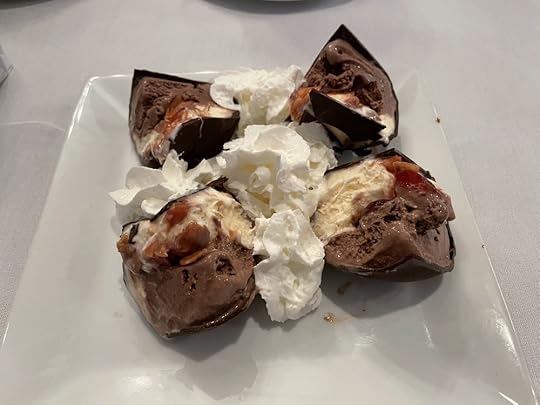 You gotta close out every meal at Enzo’s with the tartufa. [image error]
July 5, 2025
Independence Day
It’s all over now.
That is, the fireworks, the speechifying, the bbqs — that was yesterday. All our troubles seemed so far away.
Nah. They’re here to stay.
Congress, that DC-based assisted-living facility, is packed with fearful, preening dolts tethered to our government’s teat, blowhards who excel only at sending gimme-money email blasts.
SCOTUS is overrun with aging ideologues in-place until it’s time for their dirt-nap.
The nation’s war on expertise has bequeathed us health leaders who are anti-science, education leaders who are anti-learning, and financial leaders who deride debt and deficits — except for when they don’t.
Sometimes the cavalry doesn’t come. The state of our nation? We’ve scored an own-goal. We did this to ourselves. And we’re too dumb to even have the sense, the awareness, to be ashamed.
It’s always “us” vs. “them”, larded with fear of “the other.” Our leaders invoke “the good old days.” Listen up: there were never really any “simpler times.” Every decade, every generation, faces enormous challenges. The argument “YOUR generation had it SOOO easy!” is SOOO fallacious. Destructive. Polarizing.
I think we need a reboot, a clean reinstall. A countrywide high colonic. The state of the union? Feh. Together we built great things, true. Together, though, we BROKE bigger things. “He” is not the baby with a chainsaw. WE are that baby, threatening the sanctity of the entire planet with our reckless, infantile, societal meltdown. “Waaaaa! Screw everyone, just gimme my Monday Night Football, big-ass TVs, and over-plump Costco rotisserie chickens. Five bucks, baby, what could be bad?”
Well, plenty.
Independence Day harkens back to an era of brave souls who risked all for an ideal. And, let’s not forget, who weren’t down with paying Georgie’s taxes. And who grew vast empires by chasing off indigenous people and harnessing the sweat of the world’s cleapest labor. Slaves.
“I’ll think of it tomorrow…after all, tomorrow is another day,” said Scarlett O’Hara in “Gone With the Wind”. “Tomorrow” is here, folks, and who among us has any notion of citizenship? The concept of “the common good”? We claim to be a Judeo-Christian society and yet those very values have been denigrated.
I take that back, for it’s worse. “Values” are now considered excess baggage, of no worth whatsoever. “I got mine, buddy. Paddle your OWN canoe.”
We soldier on. We fume. We write. We fight. We protest publicly. But in the fencing match of life, there can be no winners, for we have forever locked ourselves into moral positions.
Worse, we’ve become siloed by friends, family, and the myriad media platforms monetized by manipulating socio-political demarcations.
I remember sweet summers of young adulthood in a Litchfield County cabin rented from a UConn professor who vacationed on the Cape. The house abutted a truck farm owned by a guy named Rudy. Most mornings, I rode my motorcycle past sweet-smelling tobacco barns, and around the Barkhamsted reservoir, while my wife wrote a winning novel with her friend, Ken, of blessed memory. The air was fragrant, the skies were blue, the “refreshing tropical drinks” were strong, and plentiful, and taken on cool afternoons on a deck overlooking a duck pond.
Presciently, the tiny town’s theater company would stage “Goodwives & the Gallows”, a cautionary tale of the Connecticut witchcraft panics. “The Other”, indeed.
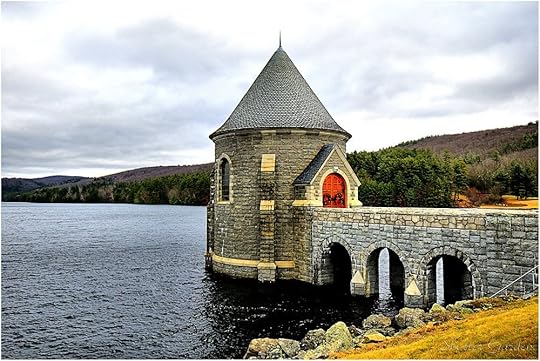 The Barkhamsted Reservoir, where I cruised on my Yamaha bike on crisp Connecticut summer mornings. The scent of curing tobacco wafted through the nearby hollows as I travelled the backroads in search of tranquility. It was divine.
On July 4th, we’d drive into town, park by the lake, and partake of the village’s celebration. We’d find a grassy spot, spread our beach blanket wide, sip wine, and stare at the star-lit Connecticut sky.
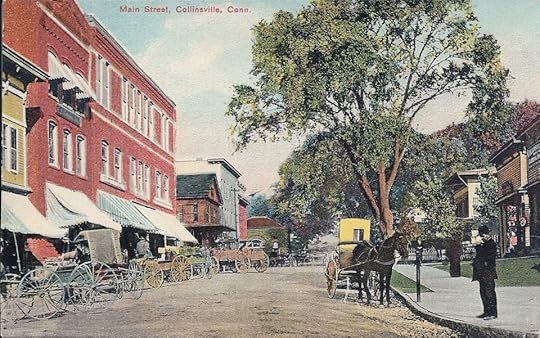 Our little Connecticut summer idyll, back in the day. Were these really “the good ol’ days”? Were there EVER any “good old days”?
The fireworks would begin. They’d burst just overhead, pound in our chests, and stir great emotion.
For, in the final analysis, what is the appeal of a pyrotechnical display? Our greatest dramatist, Tennessee Williams, used fireworks to great advantage in “Cat On a Hot Tin Roof” and “Summer and Smoke” to underscore moments of great emotional intensity. Fireworks are beautiful. Magical, even. But let us not forget that these sky-bound outbursts are violent and visceral reminders of humankind’s ability to wreak destruction.
On those soft, sweet Connecticut eves, it seemed as if we could reach up, grab those fiery blasts, and keep them close forever and always. We were young, idealistic, and blessed with the promise of success and accomplishments to come.
Today, many decades later, with grey in my beard, I recall these Garth Brooks lyrics: “All my cards are on the table with no ace left in the hole. I’m much too young to feel this damn old.”
Independence Day is, today, simply a time for speechifying, drinking to excess, and Toyotathons. Someday, I’m sure, there will be 9/11 Mattress Firm marathon sales.
Is this really who we are? Is such behavior that on-brand? Is the United States of America nothing more than a vast souk, a global trading post? Trade typically encourages cultural crosstalk, so what happened?
For too many of us, the “American Way of Life” means money. Wealth accumulation. “Not that there’s anything wrong with that” (in “Seinfeld” voice) per se. It’s ok to like nice things. Only, let’s remember our roots. Let’s drop the “zero sum game” M.O., and try and remember that the interconnected strands of a rope make it stronger, not weaker.
My dad fought Nazis in World War II. Do we really have to wage that battle all over again?
I dunno. Sometimes, you just gotta do what you gotta do.
“Let the weak be strong, let the right be wrong
Roll the stone away, let the guilty pay
It’s Independence Day”
June 23, 2025
The White Typewriter
At some point in second grade, I decided I was going to tell stories for the rest of my life. I had graduated from the wide-spaced yellow paper used to teach handwriting in first grade, and cherished the sleek legal pads my dad would filch from his office. Book reports, class assignments, stuff I just made up. It didn’t matter. I was a writer.
I took my teacher’s tips to heart. Mix up your sentence beginnings! Use verbs with muscle! Cut your adjectives and adverbs! Avoid cliches like the plague (that one’s a joke!).
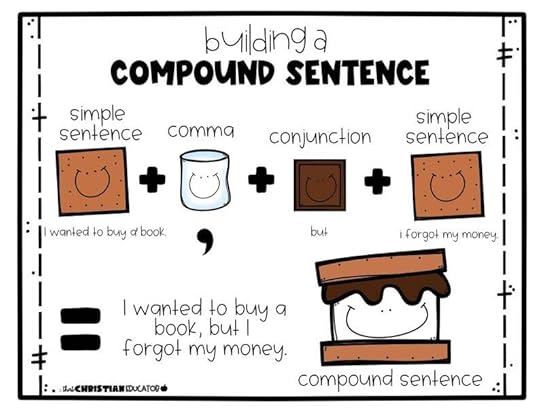 The lost art of sentence structure. OMG, LMFAO! Yeah, exactly!
I won praise from my teachers, as well as my friends. Let’s hear it for the power of positive reinforcement.I recited my stories for the entire class. Never mind that they were mashups of monster movie plots seen the previous Saturday at the RKO Fordham, and the most recent episode of The Twilight Zone or The Outer Limits. I’d add a little Marty Special Sauce as a binder. These typically involved the Yiddish-isms of Grandma Lena’s latest linguistic faux pas. “It’s freezink colt! Vehr a hatkela, and button your neck!”
The luge run of life continued, and soon I was tasked with long form papers at school. These required a typewriter, for the teachers grew impatient with our undecipherable cursive handwriting, further defiled by sloppy erasure smudges.
My classmates all had access to a typewriter, but not I. Back then, a time not unlike ours (does anyone even remember the Cuban Missile Crisis?) “typewriter” meant “manual”. Heavy keys! Faded ribbons and stained fingers! And then, there was that DING!
Ding!I went to management and begged for a typewriter. No luck. Why? No money, no space…let’s be honest, no parental interest in helping an earnest son out.
But miracles sometimes do happen. Months later, my dad’s company purchased new office equipment and offered the old stuff to employees for an attractive price. A grey metal tank in the form of a Royal Standard was soon ours, for $35.
It was a monster that required the finger strength of a gorilla. Worse, typing required know-how. Who knew? After spending the better part of an hour typing the first sentence of Mr. Goldberg’s history assignment, I steeled myself for trouble.
I asked my mother, a former “office girl”, to type the report for me, from my handwritten version.
I never knew my mom could curse like that, but curse she did, with every crash of the keys, or mistyped word. And then, there was her extemporaneous editing.
“Did you mean to say…?” Nooo, just type what I wrote. Pretty please.
“This makes no sense…” Just type what I wrote. Pretty please, with sugar on top.
It took hours. It was mentally exhausting. My mom was a terrible typist and a worse editor of my junior high school prose. Which, to my tweener eyes, was the epitome of elegant, nuanced, informative writing.
I knew I had to learn to type. But how?
Turns out, a typing class was offered at my high school. De Witt Clinton, the feeder school for Rikers Island. The teacher looked like Trixie from The Honeymooners, or the female model for Hopper’s “Nighthawks”. In her New Yawk accent, she drilled us on “home keys”. ASDF. JKL;. From there, the upper tier of letters and, finally, the numbers! Then, hit “shift” to gain access to @#$%^&&*()_+, which proved so useful as expletive metaphors.
In six months I graduated to typing my own stories. However, in seven months I grew weary of fighting the ancient Royal’s stuck keys and recalcitrant ribbon. My typewriter research began.
At 16, I graduated high school. For this feat, for being accepted to CUNY (free!), I earned the kings’ ransom of $100 from various relatives. The money burned a hole in my pocket. I set my sights on 23rd Street in Manhattan, which back then was the known universe’s epicenter of typewriter retailing.
I did not want a used machine. I wanted something sleek, smooth, fast, and solid to memorialize my precious prose.
My research uncovered marques such as Royal (boo!), Smith-Corona, Brother, Olivetti, Underwood. And then there were the Mercedes-Benz, Porsche, and BMW of manual typewriters: Hermes, Adler, and Olympia. In a dusty, one-step-down store with a yellowed sign and tables covered with the objects of my desire, I road tested and priced these three lofty brands and made my selection.
The Olympia SM9, made in West Germany. My college companion.I bought an Olympia SM9, and still had money left over to treat myself to a MacGregor fielder’s glove (Claude Osteen model, purchased for $18 at Paragon, before that store got all fancy-schmancy).
That Olympia had style and grace. It was a typewriter worthy of my writing and, in my mind, it took my flights of fancy to new heights. In college, I applied for, and won, one of only eight spots in a noted author’s advanced writing seminar. The NYPL had shelves stocked with his books. Some of them were written in French! There he was! His author photo made him look sane. In class, he wore the same white jeans and British Walker Playboy shoes every day. He’d come in, late, open his leather briefcase, open a vial and pop some pills, and begin the session, mumbling all the while. On the poems and stories I submitted — typed on my white Olympia — he’d underline phrases he liked and, once in a great while, he’d write “good” next to a particularly pithy line. Each “good” was like a line of coke. It wore off fast, and I was always eager for more.
And the best part? He, this professor, hailed from the East Bronx, not far from where Grandma Lena lived, and where Sonny Pacino grew up and went to Herman Ridder JHS 98 on Boston Road, where he was a classmate of my wife’s second cousin, Fat Eleanor. You may have heard of him. Al Pacino? He starred in “The Indian Wants the Bronx”, a play that ran in the Astor Place Theater, and that my AP English teacher, Miss Gail Simon, honored by pinning the show’s Playbill above the bulletin board in our classroom.
Al Pacino started out in the Bronx and made it, just like my creative writing professor. Mr. C even wrote and spoke in French. I was impressed. Each shard of his praise fueled my clattering on my white Olympia typewriter.Man, if Mr. C could make it, if he could break through the Bronx clouds to a wider world, so could I!
All it took was hard work, diligence, and my beautiful white Olympia typewriter. Over the years, I pounded away on that machine, eventually graduating to an electric Remington, which served me well, and then to a Tommy Gun-fast IBM Selectric at a direct mail advertising job. It wasn’t until the late 80s that I made the leap to the wonderful world of computers, after learning the arcane commands of Wordperfect/DOS 5.1 at an early PR agency job.
The spine of the story here is constant writing. From pencil and paper, to the clunky Royal, to the buttery-smooth, white Olympia, to the Remington, to the Selectric, to the Wangs I used reporting and writing 4500 words a week for two weekly newsletters for the automotive trade. Office joke, when the machines went kaput: “The Wangs are down! The Wangs are down!”
I never stopped writing. Reports. Poems. Short stories. Ad copy. Speeches. Web content. Whatever. I never will stop. This is what I do: tell stories. I type now on a Logitech keyboard, connected to a Philips HD monitor, tethered to my ThinkCentre. It’s a gypsy cab of a rig, the equivalent of a four-door, bench seat, Dodge Dart with a slant six 225 engine. Unlike those Wangs, it never goes down LOL.
The primary difference is that, these days, I’m my own editor, channeling the infuriating chides of my mom as she banged and cursed on that Hindenberg of a Royal machine:
“This makes no sense…”
“Did you mean to say….?”
[image error][image error]
June 15, 2025
My Father’s Day Deep Dive
In so many ways, my father was a hero. In so many other ways, he was a failure.
That is, he was only human.
 Big Mort (right) and his older brother, Harold. This was probably 20 years after he was discharged from the U.S. Army, and working as an accountant for CIT.
He was born in ’23, on a kitchen table on Garden Street. This is off Southern Boulevard, not too far from the Bronx Zoo. He went to Monroe H.S. From there, he went down to his draft board on Gerard Avenue and asked them to move him up, so he could join the fight with his buddies.
Big Mort fought the Nazis in WWII. He was a Tech Sargent. His job was fixing weapons under .50 cal. The southern boys broke his balls for being a Jew, and rubbed his forehead in search of his Jew Horns.
 Big Mort in uniform. Back then, he was called Slim. He trained down South and his Bronx accent would slip into a southern drawl. Once he called his parents and they didn’t recognize his voice. He said of his camp “it was the asshole of the world”.
 Big Mort was deployed to England. Then his unit went to France, then Belgium and, finally, Germany. He saw his buddies blown apart in front of his eyes. He was bombed every night during the Battle of the Bulge. Later on, he flushed Nazis out of henhouses at gunpoint and saw a Russian officer “interrogate” a captured Nazi by shooting him in the face.
 Big Mort’s WWII itinerary. Note the period December 16-February 18, 1944. The bulge! “Hell hell hell all night” he wrote.
When he came back to the states, he was trained for deployment in the Pacific. Then Truman dropped the big one, and he came back to The Bronx and married the girl who would become my mom.
He didn’t talk about the war to anyone. Now they call it PTSD. Back then, the stoic “suck it up” personality was just “being a man”. You know, Gary Cooper. The “strong, silent type”.
He bottled it all up in a lead-lined box in his heart. But the poison leeched out, as it always will. Out of nowhere — at least that’s how it seemed, as a little kid — he’d explode. We probably dropped a toy, or yelled at something on TV. “God dammit it to hell!” he scream. “No sudden outbursts!” He’d scramble out of his chair, clench his fists, and charge.
Me and my sister would run under the bed for cover.
Most times, he didn’t speak much. He drank his Scotch before and after work, came home, complained about his job over dinner, and usually fell asleep in his Archie Bunker chair by 9 p.m. Every morning, as I readied for school, I saw him chug from the bottle before heading off to midtown on the 4 train. “Aaah, smooth…” he’d say, smacking his lips.
As a dad, he was remote. Once, as a kid, I asked him for some advice. “I don’t give advice,” he said, and that was that. End of discussion.
He drank, smoked, and ate to the point where he suffered a heart attack by age 47. He had multiple bypass surgery at age 67.
As a youngster, then teen, then young adult, I never understood why he couldn’t seem to pull the trigger on key life decisions. Moving to a bigger apartment? Replacing our clunker of a car? No can do. No proactivity whatsoever.
Today, I understand a bit of what led to that level of passivity. Who is prepared for the horror of war? On the other hand, his older brother and their sister — the middle child — were pretty much the same way. And they were stateside. Something weird was baked into the cake of that nuclear family.
Fast forward. I became a dad in 1987. People would watch me interact with little D and say, “wow, you’re such a natural with him. What a great dad you are.”
I came to understand that, on some level, fatherhood gave me a shot at healing myself and being the dad to D that I wish I’d had. “Being a dad is easy,” I’d say. “I just remember how my father would handle something, and then I do 180-degrees the opposite.”
It was a flip remark. Every parent makes mistakes. No parent can be perfect. You need a license to operate a motor vehicle, but you don’t have to pass a proficiency test to become a dad. I, too, would explode and scare D. I’m sure D can tell you stories.
But I tried to push in the clutch before it escalated, at least most times.
 Me and D at Patricia’s Morris Park. It’s a birthday dinner for me. This is pre-Covid. I slimmed down (a lot) and he trimmed up his beard (also, a lot) since this shot was taken.
 I try to be the best dad I can be. I’ll continue to make mistakes, Who doesn’t. But I’ll keep trying hard to improve, And when D becomes a dad, I pledge to help D and M and their kids as well.
Even as I write this, though, I can’t help but wonder what toxic stew my dad had with his father, to make him the passive, remote, frighteningly explosive guy he was. That’s something I’ll never know, and something my cousins can’t figure out either when we discuss our granddad’s M.O. But that’s another story for another day.
Meantime, Happy Father’s Day. Have one for me.
 My dad, Big Mort, aka “Slim” at age 19. He was 20 when his world was rocked in the Ardennes, during the Battle of the Bulge. But that doesn’t explain everything, does it?
June 11, 2025
When I Grew Up To Be A Man
This is actually a post about Brian Wilson, so stay with me as I crab walk up to his importance in my life.
I may have mentioned this before. You know, that the New York Public Library probably saved my life.
But also, so did music, back when I was a lost soul, a punk kid trying to survive the bad vibrations of my home life, and the heroes and villains in school (De Witt Clinton H.S. was, um, challenging).
One of the major positives of my life was that, one day, my father decided we needed a record player better than the tiny unit that folded into a little suitcase, the one with the tiny, tinny speaker, felt-topped turntable, and needle about as thick as a construction spike.
Big Mort went to Fordham Road and looked at the Magnavox store near Joe’s Army-Navy, and then across the street at Davega. For some reason, he decided upon a huge wooden console model, made in Germany, with an AM/FM/Short Wave radio and turntable that played 78s, 45s, and 33 1/3 LPs. He put it in the foyer of our cramped four-room rent-controlled apartment, and we played it during dinner at our drop-leaf foyer table.
Whenever possible, I commandeered the stereo and played my growing collection of 45s and LPs purchased at Alexander’s, Spinning Disc, Cousins, and — my favorite — Music Makers. These were all on or near the Fordham/Concourse intersection. That is, the center of my universe.
Early on, I realized the only way out of my situation was to earn money, and not the chump change from delivering groceries to old piss-pots for nickel tips, or shoveling snow for storekeepers around Fordham and University Avenue.
My best friend told me about library jobs. Cushy. Indoors. And, holy smokes, a dollar an hour! Since I was on the early shift at Clinton, I could work three to six p.m. after school and make a whopping $15/week! Sweet, right? I got working papers on Gerard Avenue, then went downtown on the four train to the NYPL on 42nd Street and Fifth Avenue. Whoa! Stone lions in front! Huge reading room! I found the business office. I filled out the application. I had my first interview.
I got the friggin job! Yay me!
I worked for Mrs. Gibney in the Bainbridge Branch of the NYPL. It was just north of Fordham Road. I was a library page. I shelved books, repaired them, and traveled all around the city to shuttle films from one branch to another for their movie programs. I was in heaven because I was surrounded by books and film.
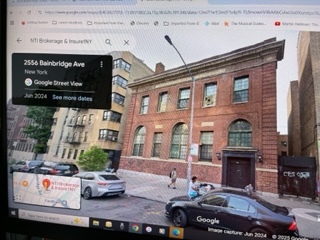 My first on-the-books job was working for a buck an hour at the Bainbridge Library. Here’s what it looks like today.
 But my love of music always came first. My weekly loot freed me to buy my own clothes (shirts were $2 at Joe’s!), and go to the movies anywhere thanks to my city-subsidized train pass (50 cents a month).
And buy records. I remember the slant of the 6 p.m. sun on sultry spring days. I’d step with purpose around the corner to Music Makers. They stocked all the top AM-radio hits on 45s and my collection grew.
First it was AM mega stations — WMCA, WABC, and WOR. But then came free-form FM, with WOR-FM, which morphed into WNEW-FM. Boy oh boy, I got hooked on the good stuff.
I remember the freedom I felt with the cultural winds at my back and some coin in my pocket. I absolutely remember the day I bought Sloop John B. But the Theremin infused Good Vibrations really helped me achieve lift-off, in terms of exiting my Bronx-provincial chrysalis. I was off to another kind of life.
Whenever I heard the opening “Aaaahhhh…” I went into another world, thanks to Brian Wilson.The year 1967 braided a confluence of counter-culture, war, and rioting. Societal fabric was being ripped asunder, it seemed to my young eyes, I read about Brian Wilson’s childhood and totally grokked his plight. “Tortured genius” doesn’t come close to doing it justice. My situation was nowhere as bad. But I sure had rachmonis.
And now, all those decades later, I hear that Brian Wilson is dead at 82. My guess is that he’s been long gone for years and years. But I can easily reimagine those sunny days of youthful optimism, even though they were colored by the fire of riots and war. The times were a-changin’ for sure, and music both helped us understand what was goin’ on, even as it transported us to another, more humane, place.
And today, I wish more geniuses like Brian Wilson were here to lift our spirits and help us navigate the shoals of life.
Wouldn’t it be nice?
Indeed.June 1, 2025
Genghis Vs. Tank
Genghis hated Tank with a passion, and the feeling was very much mutual.
The two dogs were, 95 percent of the time, sweet peas. Genghis was my 85-pound fawn boxer, floppy ears, docked tail. Tank was a brick shithouse of a Chesapeake Bay retriever. His owner was a burly, curly-haired guy with a big black beard who looked like he played upright bass in a band on the Americana charts.
Genghis would lick the bare toes of babies in strollers, and the babies would giggle maniacally. Tank loved to play with any human up for a game of tennis ball fetch.
And yet. If either of the two dogs spied each other from a distance, their barking would start. And escalate to Defcon 1 in a heartbeat. Theirs was not yippy barking, but rather a vicious cur display of hatred that communicated: “Get the fuck outta here, this is my street, move now or I’ll rip your fucking balls off you sonova bitch bastard…”
Genghis vs. Tank: The Final ShowdownUpon sighting one another, Tank’s master and I would immediately cross the street and walk in opposite directions. We’d roll our eyes as each dog strained at their pinch collars, muscles bulging, eyes bugging, eager to end the other’s life or die trying.
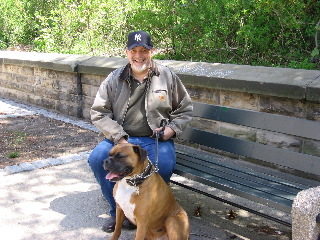 The hound from hell, Genghis, leader of unruly men.
Around this time fifteen years ago, Genghis’ life was in final descent, for big-breed dogs are not known for longevity. He left it all on the field after years of hard play during off-leash hours in Prospect Park. He had a luxated patella repaired (that is, knee surgery), and was riddled with arthritis.
Our walks grew shorter, our play times way less spirited. He’d chase his ball a few times, and then lie down on the grass, with the ball between his paws. He’d methodically peel and eat the fuzz off his tennis ball, as if it was the fur on a rabbit’s head.
My wife and I decided to leave Brooklyn after 25 years. There were a variety of factors. But we were out of there, and worried if Genghis would hang in there for the move. We’d leave for another round of viewings with realtors and return to find that Gengy had another horrific gastric accident behind a couch, or in a far corner where he thought we’d never find it. As if.
He was sick and failing fast, closing in on 12 years. We got him as a puppy from a home breeder in nowhere’s-ville New Jersey. He was a purebred Boxer but not a show dog. But he was our dog, our noble friend.
We breathed the same air for years, ever since I started my business and the little wildling would position himself under my bicycle, which leaned against a bookcase, and paw the pedals, his little white belly dotted with chain lube. I drove myself hard back then, building a portfolio of clients. Gengy would visit me around 11:45 or so, and jostle my right elbow with his massive head as I typed. It was as if to say, “Break time big guy. Plus, I gotta go pee.”
 Genghis, the evil war-lord, hanging with his young master back in the day.
And then we’d go outside for our lunch hour constitutional. I’d be on the lookout for Tank. I’d feel vibrations run up Gengy’s leash as a low growl rumbled from my big dog’s chest. With Tank blocks away, I’d cross the street, or head into the park, but not before stopping at a stone fountain and filling a discarded Poland Spring water bottled plucked from a garbage can. I’d cap it and hand it to Genghis, who would proudly carry his beverage in his vise-like jaws.
Genghis never made it to the promised land. We had to help our furry friend, and a week before we moved, he stopped eating. It was game-over.
And so it was, too, for Tank, I was told. It was Ali and Joltin’ Joe Frazier. Two heavy weight champs, gone now for all time.
Their lives are so compressed. Their love is unconditional. And we, their humans, know the secret. That is, their clock is ticking.
As is ours.
 And still, we persisted.