Kate Mitchell's Blog
December 17, 2012
Book 13: Goddess Boot Camp
Book 13: Goddess Boot CampGoddess Boot Camp, by Tera Lynn Childs
Summary: This sequel to Tera Lynn Childs’ book Oh. My. Gods. follows Phoebe in her first summer on the Greek island where the school for descendants of the Greek gods is. It turns out she does not have as much control over her powers as she should, so the gods are going to give her a test – and if she doesn’t pass, well, very bad things will happen. In preparation, she needs to attend Goddess Boot Camp with all of the ten-year-olds who need training. At the same time, though, she’s training for the trials for Pythian Games with her boyfriend Griffin, who she thinks is cheating on her with his ex-girlfriend, Adara. And Adara is a counselor at Goddess Boot Camp, along with her best friend Stella, who is also Phoebe’s evil stepsister.
While Phoebe struggles with all of these things, she begins to get strange messages from an anonymous source claiming that there was more to do with her dad’s death than she knows. Phoebe already knows that he used his powers – they are descended from the goddess Nike – in football, as he was a professor football player, and that caused the gods to smote him on the field. But she learns that there was a hearing about him, and the records of it are in the Academy’s library’s secret archives. When the library takes Phoebe down to the archives, along with her best friend Nicole, they learn that the file she’s looking for is missing. Phoebe spends her time training for the test, training for the Games, searching for answers about her dad, and trying to shake the feeling that Griffin is back together with Adara.
Her suspicions grow so large that she breaks up with him. However, a few days later Phoebe learns that Griffin is not cheating on her. As Adara explains, her mother has been chosen to be a handmaiden of Apollo, which means she can’t leave Mount Olympus for twenty-five years and Adara will not see her for that long. Griffin has been helping Adara prepare for this, as his parents were banished when he was younger. Since this is supposed to be an honor, Adara did not want other people knowing that she was upset, so she asked Griffin to keep it quiet. This led to Phoebe questioning what he did with her so much that was secret, and thinking he was cheating on her.
Then, Phoebe goes to meet up with the anonymous person who sent her so many messages about her dad and who has the file. Her friends and Griffin all worry that this person will hurt her, but it turns out to be Damian, her stepfather. He explains that he wanted to distract her from everything else that was going on so she could not over-think her powers and would be able to master them better. He gives her the file, but she chooses not to read it yet.
After all, Phoebe was steadily mastering her powers with help from Stella and still training for the Games. Damian and her mom return from their honeymoon in time to see Phoebe run in the trials for the Pythian Games. While in the race, she only needs to be in the top three to make it to the actual Games. She remains steadily there the entire race, but that the end another runner appears out of nowhere. Phoebe pushes herself harder than she has before, but is able to control herself so that she doesn’t use her powers. Right at the finish line, the other racer disappears, and Phoebe places third. It turns out that the race was also her test from the gods, and the other runner was the goddess Nike, her great-grandmother.

There is also the mention of curses, but not necessarily in a bad way. The anonymous emails Phoebe receives are cursed so that no one can figure out who is sending them and only Phoebe can read them, but as Nicole says, “A curse isn’t necessarily a bad thing. It’s just a specialized use of powers that affects only one person or a specific group of people.” Prophecies are also mentioned, as there is a prophecy that says Griffin “will ‘find his match in a daughter of victory’ – aka the goddess Nike’”.
Another myth allusion refers to the history of Xander, one of the counselors at Goddess Boot Camp and someone who had to have a test of his powers, too. The classic myth says that Narcissus was infatuated with his own reflection and stayed there so long that he died. In this book, the gods paroled him by granting him temporary immortality. After he met Xander’s mother, though, he proved that he had not learned a thing. To protect Xander from succumbing to the same fatal flaw, the gods granted him the ability to “‘see beneath the surface in others’” so that he can see who a person truly is.
Finally, another presence of myths in this novel is the Pythian Games. In Ancient Greece, they were one of four the Panhellenic Games, and occurred every two years before/after the Olympic Games. While the Olympics honored Zeus, the Pythian Games honored Apollo and and took place at Delphi. (Delphi is also the location of Apollo’s great oracle.) In this novel, when the original Olympics stopped the Pythian Games did not and instead became only open to descendants of the gods. Here, Phoebe and Griffin were invited by their cross-country coach to run in the trials, and so training for that takes up much of their time.
Childs employs a couple of different plot archetypes in this novel. One is the contest, in which the main character struggles with a rival, which could be a person, animal, or nature. Phoebe struggles with herself throughout the book in a contest against her powers. Another is the romance, involving an obstacle between the lovers. In this case, the obstacle between Griffin and Phoebe is his inability to share Adara’s secret, which threatens their relationship severely. Finally, another plot archetype present is the mystery, where the reader is invited to solve a puzzle. While Phoebe tries to figure out the information on her dad’s death, the reader tries to figure out who the anonymous contact could be.
Connections: For one, this is the sequel to Oh. My. Gods., so it connects to that novel. It also contains descendants of Greek gods who have powers, and certain ones are special only to those descended from a certain god. This compares to the Percy Jackson series, where many of the characters are children of the Greek gods and have different strengths depending on who their parent is.
Review: Goddess Boot Campis a fast, enjoyable read. Although at times a little predictable, Childs keeps the reader guessing, and some major plot points are not easily foreseen. Childs crams a whole lot of mythology into one novel, but does so in a believable way (as believable as it can be, of course). It feels more like a novel about teen drama than a mythology lesson.


December 9, 2012
Book 12: Cupidity
Book 12: CupidityCupidity, by Caroline Goode
Summary: Roman-mythology-obsessed Laura is about to begin her senior year of high school, but feels inadequate because she has never had a boyfriend. Feeling dramatic one night, she calls for Jupiter to send her a boyfriend, unknowingly sending a message to the god Mercury. The Roman gods are still around, but they have been semi-retired for years, and jump at the chance to fill their old position. They send Cupid to Laura’s high school for 25 days disguised as Cupidity, the hottest new girl possible, with the task to find Laura a boyfriend.
Cupidity quickly befriends Laura and wreaks havoc among the strict social cliques with her bow and arrows. Laura gets dragged on double dates that result in creating the strangest couples that Laura has ever seen. This makes Laura wonder about Cupidity, and figure out that she is really Cupid. Laura sneaks a look at the bow and arrows … and accidentally shoots Cupidity and one of the boys from school. Cupidity promptly loses all memories before the high school – like that she is actually Cupid and not a girl. Immediately, Laura panics, and she starts trying to find a way to reverse the love spells. After speaking to Mercury, she embarks on a journey to find Venus, as she is the only one who could do anything about it.
Eventually, she finds Venus and is able to convince her to do something. They arrive back at the school on the night of the homecoming dance where Cupidity has just been crowned Homecoming Queen. As the clock strikes midnight, the disguise spell wears off, and Cupidity becomes Cupid again. However, the love spell remains, and he believes he is still a mortal high school student. Venus reverses the spell for all affected, but some of the couples decide to remain together, showing Laura that true love does not have to be with who you are “supposed” to be with based on cliques or types. With the spell gone, Laura’s friend Peter realizes he is not in love with the head cheerleader after all, and he and Laura get together.
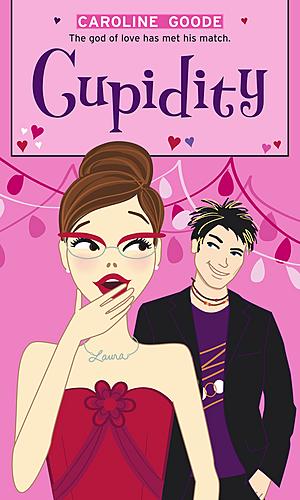
One archetype, so to speak, extremely prevalent in this novel is that of Cupid. Many in television, movies, and real life talk about “playing Cupid” and setting up people. As far as Laura is aware, Cupidity is doing this for her and fulfilling this archetypal role. Of course, Cupidity is actually the real Cupid, making the situation a little more complicated.
Another archetype is the spell broken at midnight. Used in many stories, one example being Cinderella, this plot archetype includes a spell that changes someone and will be broken on a certain date at midnight. Usually, the plot revolves around rushing around to complete or do something by that time, and it being an extremely close call.
Connections: Some components of Cupidity connect to other texts. For one, the Cupid component connects to any tale about someone shooting arrows to make people fall in love. For another, the midnight component is similar to stories like Cinderella. But Cupidity also includes things like a sci-fi convention and discussions of the Internet perpetuating romance in our modern world. In terms of the other books I have read so far, the relationships between the gods are similar to those depicted in the Percy Jackson series, even if those are Greek and these are Roman. Since this is the first book with Roman gods that I have read, I cannot compare it to any of those.
Review: Although the writing quality is not bad, the story is predictable and contains some extremely cliché moments. At points it was difficult to get through because it could be cringe inducing. It was not a boring book, but I did not find it terribly enjoyable.

December 7, 2012
Book 11: Quiver
Book 11: QuiverQuiver, by Stephanie Spinner
Summary:The story begins at the Calydonian boar hunt, where the female hunter Atalanta draws first blood. This leads the prince Meleager offers the skin to her, which causes a large fight and many die, including Meleager. Upset that men died as a result of her, Atalanta goes to the Oracle of Delphi on the way home, and she has three dreams. One warns her that if she marries, it will ruin her. However, she thinks nothing of it because she has already taken a vow of chastity in the name of Artemis. But shortly after she arrives at home her biological father arrives – the man she only knew as the one who abandoned her at birth when she wasn’t a boy. It turns out her father is a king, and he needs an heir, so he tracked her down and she must go and live with him. He wants her to marry, but she refuses, remembering her vow and her dreams. Eventually, she agreed to marry only if her suitor could beat her in a footrace. Many men try, and many die. Eventually, though, this changes. Eros shoots Atalanta so that she falls in love with Hippomenes, and Aphrodite apparently gives him three irresistible golden apples to slow her down. Distracted by the apples and distressed at the idea of his death, Atalanta lets him win, and so they marry. They are happy for a time, but then they have sex in one of Zeus’ temples, are turned into lions as punishment.

Quiver includes a couple of archetypes. Artemis serves as a combination of the mother and father figures, as she guides Atalanta through her physical and emotional journey, cares for her, and protects her, even though Atalanta never meets her. Atalanta herself serves as the underdog. Because she is a woman doing her best to operate in a man’s world, she is constantly at a disadvantage. No matter what happens, she pushes through to win respect from those around her, up until she is married and later turned into a lion.
Connections:Several components of Quiver overlap with other books. For example, in Nobody’s Princess Helen meets Atalanta at the Calydonian boar hunt, where she observes the actions of the beginning of this novel. The Oracle and learning from dreams is prevalent in many books based on mythology, including the Percy Jackson series and Nobody’s Princess. Furthermore, like Nobody’s Princess Spinner’s novel directly addresses some of the sexist components of Greek mythology.
Review: A fast-paced read about one of the most gender-role-defying characters in Greek mythology, Quiver is an interesting read. It looks at the side of mythology often glossed over in favor of the glamorous and romantic stories, but does not do so in a depressing way. I would suggest it for high school students.

December 6, 2012
Book 10: Percy Jackson and the Last Olympian
Book 10: The Last OlympianPercy Jackson: the Last Olympian, by Rick Riordan
Summary:The action in this last Percy Jackson book gets started immediately. Percy is called from his family vacation by fellow camper Charles Beckendorf to destroy Kronos’ ship and slow his approach from the sea. Beckendorf sacrifices his life to destroy the ship, and Percy dives overboard and passes out. He awakens in the underwater palace of his father, Poseidon, who currently fights the Titan Oceanus. Poseidon makes him return to Camp Half-Blood, and explains that he cannot help with the battle of Manhattan because of his fight with Oceanus. Once at camp, Chiron decides Percy needs to hear the Great Prophecy now, and Percy tells the campers that there is a spy at camp. Percy does not remain at camp long, as he leaves again with Nico di Angelo to work on Nico’s plan for Percy to survive the battle in Manhattan. After some struggles and events, Percy descends into the River Styx, gaining the same power that Achilles had.
Pery then returns to Manhattan and meets up with Annabeth and the other campers to begin the battle. Finally, the battle begins. Percy’s forces are joined by the Hunters of Artemis, saturs, naiads, dryads, centaurs, automatons, and Mrs. O’Leary the hellhound. Kronos has more, though, as Percy’s forces are forced back despite Kronos suffering some losses, too. At one point, Annabeth is badly injured when she saves Percy from being hit in his Achilles “heel,” and later Percy tells her that she did this and what it meant. The fight continues, and the Ares cabin shows up to save the day.
Percy and Kronos battle in the throne room of Olympus, and at one point Luke overpowers Kronos within his body. Percy gives Luke Annabeth’s dagger, and Luke injures himself at his Achilles spot to kill himself and therefore eliminate Kronos. The Olympians arrive and defeat the last of Kronos’ troops. They then return to the throne room, and grant Percy, Grover, Annabeth, Thalia, and Tyson rewards. Rachel Elizabeth Dare becomes the new Oracle. Athena gives the job of redesigning Mount Olympus to Annabeth. Grover becomes a Lord of the Wild.Ryson becomes a general of the Cyclopes’ army. Percy refuses the offer to turn him into a god, and instead have the gods swear on the River Styx that they will recognize all of their children, and the camp builds cabins for the children of every god, including Hades and the minor gods.
Upon returning to camp, Percy and Annabeth kiss and start dating, and the camp prepares for a life after the battle
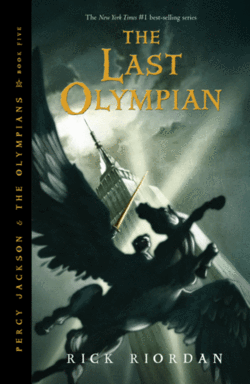
Use of Myths:Like the other books in the Percy Jackson series, The Last Olympian follows the Hero’s Journey and features several archetypes. Of course, like the others, it also includes myths in that it features the Greek gods and mythology in a modern setting. Percy is the son of Poseidon, his friends are all children of gods or mythological creatures like satyrs and centaurs, and they’re all fighting the army of the Titan Kronos. A new addition to the series is the Oracle of Delphi. She was featured in the previous books, but as a nearly mummified being in the attic. This time, Percy’s friend Rachel Elizabeth Dare becomes the new Oracle.
Call to Adventure Blackjack the Pegasus arrives with fellow demi-god Charles Beckendorf at Percy’s vacation with his family and his friend Rachel. They tell him that it is time to begin thwarting Kronos’ attempts to take Manhattan. Supernatural Aid Percy hears the complete Great Prophecy Threshold Percy goes into Manhattan Acquires a Helper Percy and Nico work together Experiences challenges and temptations Percy prepares himself and his “troops” for the upcoming battle; the battle commences.
Meets another helper:Percy goes to the Underworld and talks to Hades.
Has a Great Revelation at the Abyss (Death/Rebirth):Percy goes into the River Styx and is reborn as nearly undefeatable
Goes Through a Transformation: Percy realizes that Luke was still within Kronos the entire time, and Luke overcomes Kronos to kill himself in his “Achilles heel” before Kronos could manifest and return for good Receives the Gift of the Goddess As a reward for saving them all, the Olympians offer to make Percy a god, too. He turns them down. Returns They all return to Camp Half-Blood and Percy and Annabeth get together
Some components of the Hero’s Journey were more fluid in this book than in the others. The challenges and temptations component incorporates many components: preparing for the battle (including when Percy enters the River Styx) and the large battle itself, which encompasses several days and a large segment of the book. Because some of the other parts of the journey do not occur in chronological order, I have indicated that they occur during the challenges and temptations through putting them underneath it in the table.
One new referral to mythology is the incorporation and the Achilles’ heel. Luke has already been dipped in the river, and Percy goes in, as well. To do this, Riordan briefly tells the story of Achilles, which will show students where that phrase comes from and what it means.
Archetypes:- Hero: Percy Jacksono Even though Percy knows/believes that is going to die, he still fights, putting Manhattan, his friends, his family, and the world ahead of everything else. - Villain: Kronoso Kronos blatantly is Percy’s enemy. At this point in the series, this fact is no longer hidden. His does, however, use strength and cunning to undermine Percy in every way that he can.- The underdog: Lukeo For many books now, Annabeth has believed that Luke was still “good” and still there within Kronos. She kept fighting for him, even though Percy didn’t like it. Now, it appeared she was right, as Luke saved them all (winning Percy’s respect) by overcoming Kronos’ influence in his body to destroy Kronos.
Connections:There are two components to how this novel connects to others and to the world. (1) It is the last in the Percy Jackson series, so it relates and connects to everything that happened in the past four books, as they all built up to this one. (2) Application of mythology to our current world. Some books other than the Percy Jackson series – Starcrossed, Oh My Gods, and Abandon– demonstrate an interpretation of Greek mythology directly playing a role in the modern world.
Often, students read books featuring Greek mythology and don’t see how it could affect their lives. Of course these novels are fantasy to some extent, but they demonstrate realistic portrayals of the possibility of Greek mythology in our lives. This makes it easier for students to understand it. If they see how a certain god might act in a certain situation, they can see why the ancient Greeks would have acted in order to not offend that god. Percy Jackson provides one way to see this, as Percy directly interacts with gods, goddesses, and the impacts of their actions.
Review: As a whole, I have been a huge proponent of the Percy Jackson series, and The Last Olympian is no exception. Fun and action-packed, it is sure to get all readers hooked and on-task. Reading the other books in the series is absolutely necessary, though, because while Riordan provides quick summaries of important events it is not the same and the plot could be extremely confusing. Overall, though, it is well-written and an extremely enjoyable read.

December 3, 2012
Book 9: Abandon
Book 9: AbandonAbandon, by Meg Cabot
Summary:17-year-old Pierce just wants to start the new school year at her mom’s alma mater in Florida as easily as possible. She doesn’t want to ruin her mom’s life any more difficult that it already is, but that’s hard when nothing has been the same since Pierce died. Two years prior, Pierce died in a freak swimming pool accident in February. It led to the end of her parents’ marriage – and to being claimed as the consort for a minor death deity, John. Pierce escaped from John’s castle in his underworld and returned to the land of the living. But from that moment on, bad things kept happening around her because the Furies are after her, and John shows up in the nick of time to rescue her from them.
Back in Florida, Pierce deals with trying to get off on the right foot. Unfortunately, the Furies and John are still right there with her. She navigates her new high school with Alex, her cousin who has lived with their grandmother since his father went to prison. But the popular kids try to befriend her so that they can use her gated community for an illegal school tradition, and when she goes along with it she alienates Alex. In the midst of this normal-high-school behavior, the cemetery sexton finally explains to her who John is. She makes the connection between their situation and that of Hades and Persephone, and learns that the Furies want to kill her to pain John because they hate him. Shortly after learning the truth, Pierce realizes that she loves John.
But knowing doesn’t help Pierce. The Furies kill a school official because she was in the cemetery when and where Pierce usually was, and Alex’s father is blamed. Then, Pierce’s grandmother shows up at the school to take Pierce home. She knows something is wrong, though, and discovers that her grandmother had been an embodiment of the Furies for a few years. Just in time to save her, John appears, and whisks them down into the Underworld. This time, though, Pierce can’t escape, but she desperately wants to.
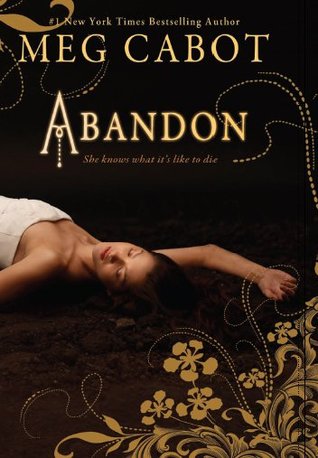
Their relationship demonstrates the starcrossed lovers archetype. They cannot stay away from each other, as if fate is drawing them together. At the same time, their relationship appears doomed. In this case, the Furies wish to kill Pierce in order to get to John. The Furies play the archetype of the villain, as we know that they are bad but they use cunning to remain hidden until the end.
Connections:Past novels have featured the Greek gods, but none have done anything seriously with death deities, even Hades. The death deity point of view differs, but they still focus on the universe of the Greek gods. When Pierce learns about the death deities, she hears all about the stories of the Greek gods. They serve as the basis of Abandon, demonstrating the connection between this book and the other stories of Greek myths.
Review:Despite being significantly darker and more mature than what else I have read, Abandon is a fun read. The tale of death – and love in the afterlife – stands out from other stories with a myth basis and would appeal to those readers who are attracted to the idea of an immortal man inextricably drawn to a mortal girl. Like all of Meg Cabot’s books, the writing is top quality, and the story unique.

December 1, 2012
Book 8: Nobody's Princess
Book 8: Nobody’s PrincessNobody’s Princess, Esther Friesner
Summary:Helen of Troy’s famous beauty started the Trojan War. But before she and Paris left Menelaus together, she was Helen of Sparta. Freisner’s novel follows Helen during her childhood, and provides an option to what happens between her famous conception – daughter of Zeus, born to royalty – and when Theseus kidnapped her in her early teens. As a child, Helen is already beautiful, but lacks any desire to do the princess and lady-like activities she is supposed to do. When she is forced to spin and weave because all women do it, she hears the message that it is all women can do and they – including she – are trapped. She spends the novel trying to find ways to be free before the day she ultimately is forced to marry and live the life expected of her.
First, she wants to learn to fight like her brothers do. At first she tries to hide who she is, but quickly she learns that she can’t disguise herself from everyone and the weapons master who tutors her brothers agrees to tutor her as long as she hides her lessons from her parents. The lessons are difficult, but Helen learns and keeps going back for more. Then, rumors of a great boar in the land of Helen’s aunt reach their court. Helen’s brothers, along with many of the soldiers and men from Sparta, set off to join the boar hunt, and Helen joins as a diplomatic presence. All of the great princes, warriors, and heroes have arrived to fight the boar, including Atalanta, the daughter of a king who fights better than most warriors. She teaches Helen more, including about riding a horse. When the boar is finally killed, Atalanta is the one who makes it possible. But that night, at the celebration banquet, the honor goes to someone else, and when he tries to give it to her, a riot breaks out. Many die, and as soon as it is appropriate Helen and her brothers leave again – but not before Helen frees a slave, Milo, who joins them.
They then journey to Delphi to speak to the Oracle of Apollo. Helen is skeptical, and does not wish to speak to the Oracle. Instead, she chooses to spend the day in the market, where Milo helps her ditch the soldiers meant to guard to her. While she enjoys her new freedom, she comes across Theseus, who she met during the boar hunting. He tries to grab her, but is stopped by none other than the Oracle herself. The Oracle and Helen begin talking, and Helen finds a friend in Eunike, the Oracle. When Helen’s brothers wish to go off on another adventure, Eunike helps Helen enact a plan that allows her to escape her role as Lady Helen as follow them disguised as a boy. Everything goes according to plan, and Helen and Milo set off after her brothers a few days later.
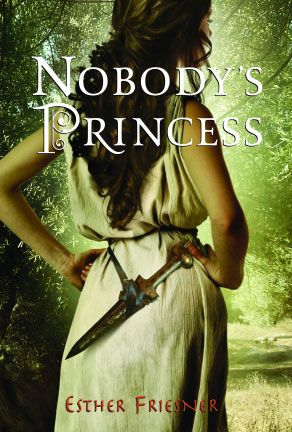
Feisner’s Helen defies the archetypal view of Helen the Great Beauty. Yes, as a child she is known for being exceptionally beautiful, but puberty does what it always does, and she becomes a gangly mess hoping to be beautiful again one day. She resists the traditional view of princess, and desperately wants to be free. As a whole, she is not the traditional Helen.
Helen’s focus on freedom has implications for the future beyond the book. The starcrossed lovers archetype includes idea that the fate has decided their love, and they have no choice about it. They lack any freedom in what will happen, which is Helen’s greatest fear in this novel.
Connections:Like Troy High and Starcrossed, Nobody’s Princess includes aspects of the Trojan War. This differs because it directly focuses on Helen herself. Troy High was the modern representation, and Starcrossed included a modern depiction of Helen. But Nobody’s Princess differs because it focuses on what so few books do – what happened before, way before, the Trojan War. Because Nobody’s Princess directly refers to events that formulate who Helen is, which affects the events in The Illiad and the Trojan War. One of the greatest debates about Helen is whether or not she willingly went with Paris. The Helen from this novel would choose going with Paris if it meant love and free choice.
Review:Frisner’s novel is exciting and curious. You want to know what Helen will do that demonstrates the Helen of Troy we know from myths. The novel is fast-paced and well-written. It is a great read, especially for anyone who wishes that Helen had more say in her life or who disliked the idea that she was essentially stolen from her husband.

November 24, 2012
Book 7: Troy High
Book 7: Troy HighTroy High, Shana Norris
Summary:Norris’ Troy High provides a retelling of the Trojan War but set in a modern high school. We view the story through the eyes of Cassie Prince, a student at Troy High, sister of Perry and Hunter, star players on the football team. Troy High’s greatest rival is Lacede High, home of the Spartans, where Cassie’s best friend Greg is a student. Greg is the younger brother of Lucas, the quarterback for Lacede and boyfriend of Elena Argos. Elena is a famous local beauty, and the recent school redistricting means that at the beginning of the novel she is about to become a student at Troy.
One key component in the story is that Elena is thinking about breaking up with Lucas before she even meets Perry. This highlights that Perry did not steal Elena, as discussed in The Illiad. Although Elena’s choice is influenced by Perry’s presence – and she does not officially break up with Lucas early enough – she wants to before she even meets him. However, almost as soon as she meets Perry she starts to date him, and then the high school version of the battle of Troy takes places. A series of pranks make the situation escalate, making Cassie and Greg’s friendship increasingly difficult while they are called to support their siblings and their schools.
It all leads up to the big football game between the schools. A few weeks before, Cassie has a dream where her eldest brother Hunter is seriously injured during the game. With Hunter out of commission, the Spartans win. Then, after the game, a float rigged to explode by the Spartans destroys the Trojan gym. The Spartans have officially won, and the war is over. As the book ends, Hunter’s fate remains unclear – a serious shoulder injury needing surgery could mean the death of his career if the surgery does not go as planned. Other than that, though, everything is peaceful again. Perry and Elena are happy in their high school romance, and Cassie and Greg embark on their own.

Use of Myths:Norris makes her use of myths extremely clear in Troy High, as it is a blatant modern version of the Trojan War. In her author’s note at the end of the novel, she includes the list below of the Trojan War counterparts to her characters. Because they are all based on their mythological counterparts, then, they all have similar relationships and play similar parts in the action. Of course, these relationships and actions are all to scale, as Greek warriors act very differently than high school football players.
Cassie Prince Cassandra the Seer, princess of Troy Greg Mennon Agamemnon, brother of Menelaus, commander in chief of the Greeks Perry Prince Paris, prince of Troy Hunter Prince Hector, the finest warrior and prince of Troy Elena Argos Helen of Troy, the greatest beauty, wife of Menelaus, and lover of Paris Lucas Mennon Menelaus, brother of Agamemnon, first husband of Helen, and king of Sparta Owen Odysseus Ackley Achilles Patrick Patrocles
There are some other key ideas that she includes. For example, Cassandra was known for being a Seer, and she foretold Hector’s death. At one point, Cassie has a dream that Hunter will be gravely injured on the football field, and a few weeks later he is. However, Hunter does not die, and instead receives a troublesome shoulder injury, although it could mean the death of his football scholarship. Another similarity is the role of Hunter as the lynchpin in the Trojan forces. Like with Hector’s death, once Hunter is no longer on the field, the Trojans fall. One more similarity is the imagery of Troy burning. The loss of the football game is not enough – some Spartan football players rig a parade float to explode in the gym. Much like how the Trojan horse truly ends the war and ensures that the Greeks win, the explosion in the gym means that Troy High loses. In fact, Hunter says, “‘We lost the game, Troy burned, and I’m in these bandages for who knows how long. The war is over and Troy is defeated’” (Chapter 27). This further cements the connection to the Trojan War.
One component of Troy High that rings true to the Trojan War but also to archetypes as a whole is the presence of the star-crossed lovers Elena and Perry. Elena and Perry’s relationship brings the deep-seeded issues of Troy and Lacede to a point, much like Helen and Paris’ relationship does. Also like Helen and Paris, Elena and Perry’s relationship has much more to do with fate than anything else. Regarding her relationship with Lucas, Elena says, “‘We were never meant to be together, I see that now” (Chapter 6). Later, she says, “‘I knew it before, but I’m completely sure now. Perry is the guy I’m meant to be with. It was fate for me to be transferred to Troy’” (Chapter 7). This idea of a fated relationship is a part of the star-crossed lovers archetype. This means that no matter what happens, that couple is meant to be together. Usually, this means that their journey as a couple is difficult and means danger for them and those around them. In this case, Elena and Perry deal with the war between Troy and Lacede Highs, like Helen and Paris did with that between Troy and Greece. One key difference between Troy High and the traditional star-crossed lovers motif is that both Elena and Perry are alive and in the same place at the end of the novel, and they are not split up; they are happily together.
Connections:The star-crossed lovers archetype has played a part in another book I read thus far: Starcrossed, by Josephine Angelini. Both novels approach the Trojan War in a modern setting, although Troy High looks at retelling it along the same plot line, while Starcrossed sees the Trojan War as a part of their ancestry that has the potential to be reenacted with the same disastrous results. Both address the Trojan War, although Troy High explains the events and relationships of the war better than Starcrossed does. At the same time, though, Starcrossed better displays the traditional view of the star-crossed lovers. Most times, the lovers’ lives do not end well, or together, and so the ending of Elena and Perry might confuse students as to a key part of the archetype.
Review:Overall, Troy High is a good book. It is quick, easy, and engaging. Students can learn about the Trojan War in a familiar environment – a high school rivalry – and enjoy it along the way. It is fast-paced, and everyone is relatively happy at the end. The content and language are accessible, and contributing to the general enjoyment factor of the novel. A book good for teaching and for pleasure reading, middle and high school teachers should be aware of Troy High and its benefits.

October 20, 2012
Book 6: Percy Jackson and the Battle of the Labyrinth
I'm back! I'm so sorry to have disappeared for so long, but I'll be back more regularly now. I moved, had a virtual book tour (for my novel Aureole, if you hadn't already heard), and then had a minor procedure on my knee. But I'm back, and we're returning with another Percy Jackson book. Did I mention that I love them?
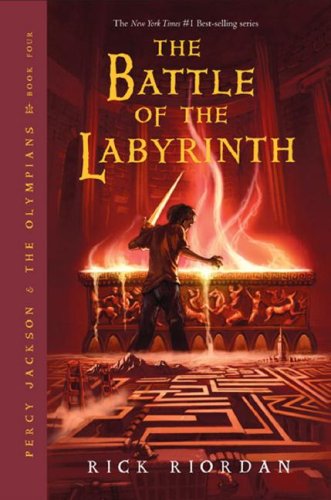
Book 6:Percy Jackson and the Battle of the Labyrinth, by Rick Riordan
Summary:Per usual, Percy Jackson is just trying his best to attend orientation for a new school when he fights with monsters and destroys part of his new school. Kid can’t seem to catch a break! But, of course, it was just the beginning of his adventures. After escaping the school, Percy heads to Camp Half-Blood, where everyone is in the midst of preparation for the struggles that lay before them. Percy meets a new member of the staff, Quintus, the new sword master. Then, during a battle drill, Percy and Annabeth accidentally discover an entrance into the Labryinth. The Labryinth is the one created by Daedalus to hold the Minotaur, but over the years has kept growing and now stretches across large parts of the world. It turns out that Luke is planning to lead an army through the entrance discovered by Percy and Annabeth to attack the camp.
They realize that they have to use the Labryinth to find Daedalus to ensure that Luke doesn’t find Ariadne’s string, which would help him navigate the extremely confusing maze and make it to the camp. Annabeth receives a prophecy, and they set off with Grover and Tyson, too. Over the course of their adventures, they interact with Nico, the teenage son of Hades who still blames Percy for the death of his sister. Percy and Annabeth also end up splitting up with Grover and Tyson, who go off to search for the god Pan. Percy and Annabeth go to Mount St. Helens, where they find the telekhines – “sea demons – who attack them. Before Percy causes Mt. St. Helens to erupt, he and Annabeth have an argument, leading her to kiss him before fleeing. The eruption pushes him out of the volcano, but also drains his energy.
When he wakes up, he is on the magical island maintained by Calypso. She treats his wounds, but he decides to leave and return to the world that needs him. Then he once again meets up with Rachel Elizabeth Dare, the mortal girl who can see through the Mist and therefore can help him make it through the Labryinth. The meet up with Grover, who has found Pan, but Pan is dying, and he asks them to spread the word that he has died. Once he does, his spirit passes into all present, especially Grover. They finally find Daedalus, who actually is Quintus, and they also learn that Kronos has gained enough strength by Luke. Unfortuatnely, Luke has already found Daedalus and gotten Ariadne’s string, and he sends an army to destroy Camp Half-Blood.
The camp fights a losing battle, and most of them are either injured or killed. But then Daedalus and Briares – Tyson’s hero who they met from their Labryinth journey – arrive. Finally, what turns the battle around is Grover scaring away the enemy using Pan’s power Panic. But even though their enemies have left, there is still the threat of the Labryinth, and Daidalus sacrifices himself to close it, as it is tied to his life.
To close the book off, the camp says good-bye to those who have died. Nico leaves, Grover leaves to spread the message of Pan, and Percy returns to his mother’s to celebrate his fifteenth birthday. There, Nico arrives with an idea on how to defeat Kronos.
 Use of Myths:Like in the past Percy Jackson books, the hero’s journey plays a very clear role in the novel. Only one component is missing in this particular novel, which is Acquiring a Mentor. At this point in the series, Percy has grown enough that when he is with his helpers/friends that he does not seem to demonstrate a strong need for a mentor, so it makes sense that he does not have one here. The other difference between the hero’s journey in this novel verses in other ones is that the atonement and receiving the gift of the goddess are reversed. Before Daedalus/Quintus gives up his life to Nico, he gives his computer and all of his ideas and plans to Annabeth, but it is not until after that when the camp demonstrates the loss of those who died in the battle. Otherwise, though, the hero’s journey is followed fairly strictly.
 Call to Adventure Annabeth shows up at Percy’s new school just in time to see him escaping after evil cheerleaders (really empousas, servants of Hecate) and burn part of the school Supernatural Aid Percy meets Quintus, who is helping out at the camp, and his pet the hellhound Mrs. O’Leary. Quintus later gives Percy a special whistle, which later saves his life. Threshold Annabeth receives the quest. Annabeth, Percy, Grover, and Tyson leave and go down into the labyrinth on the quest. Acquires a Helper Hera meets them in the labyrinth. Experiences challenges and temptations The journey in the labyrinth Meets another helper Rachel Elizabeth Dare joins them and leads them through the correct path Has a Great Revelation at the Abyss (Death/Rebirth) Discovery of Pan and the realization that he is dead/dying and it is their journey to spread the news Goes Through a Transformation Return to Camp Half-Blood, where there is a battle, and where Grover summons the power of Pan that ends the battle Receives the Gift of the Goddess (…kinda) Daedalus/Quintus gives Annabeth his computer with all of his information and designs on it Atonement Camp Half-Blood holds funerals for those killed in the battle Returns Percy returns to New York City and has his birthday party
Some of the archetypes present are the hero, villain, mother/father figure, and underdog. Percy is the hero, as he has been in the other novels in the series. Like in the other books, he puts himself above others. The villain is still Kronos, helped by Luke. Percy only sees Kronos in dreams, but he does meet Luke face-to-face at one point. In the arena, Luke employs cunning to try and trick Percy into dying in his fight with Percy’s brother, Antaeus.
The underdog is Grover, as he is at odds with the Council of Cloven Elders throughout the entire novel. From the beginning, he is in trouble because he has not found Pan yet, and then when he does find Pan and deliver the message that he is dead, they don’t believe him. The reader wants him to succeed, especially because his situation is like any child trying to prove that something that sounds ridiculous is true. In the end, the Council is disbanded, and Grover summons panic, the power of the god Pan, which earns his respect from everyone who heard it happen.
The mother figure in this novel is actually Annabeth. It is her quest, and she guides the others throughout. She doesn’t necessarily care for them, though, which would going along with the traditional mother figure, and she also doesn’t protect them, although she fights with them. Annabeth has some components of the mother figure, but not all of them, and some of the father figure, but she also doesn’t have all of those, either. She fills an intertwined role, instead.
Another component of myths in the novel is the allusions and involvement of the number three. Chiron points out that “Three is a sacred number. There are three Fates, three Furies, three Olympian sons of Kronos. It is a good strong number that stands against many dangers.” In this case, Chiron is talking about the people that are about to go on Annabeth’s quest. But three reappears a few times: the fact that Mr. Geryon from Triple G Ranch has three bodies (hence the name) and talking about the Trident of Poseidon, for example. Three has also played a part in other Percy Jackson books – when Percy went on the quest in The Titan’s Curse, 5 people left but only 3 came back. Numbers of all kinds play roles in mythology of all cultures, but this is the first case that is has been directly addressed in the Percy Jackson books.
Connections: As this is the fourth book in the series, The Battle of the Labyrinth clearly connects to some other books I have read so far. After the complexity and difference of East, though, it was nice to return to Percy and this particular use of Greek mythology that Riordan’s books demonstrate.
Review: No review this time. I love this book. And this series. That’s all that really needs to be said.

August 20, 2012
Book 5: East by Edith Pattou
Book 5:East, by Edith Pattou
Summary:In a Norse family down on its economic luck in the sixteenth century, Rose is the eighth child born to a superstitious mother. A few times while she grows up, she sees a white bear in the woods, and it saves her life once. Later, when Rose is in her late teens, the family is about to be ejected from their farm and one of the daughters is very sick and near death. The white bear appears and says that if Rose goes with him their other daughter will get better and their economic troubles will end. After a week of family debates and considerations, Rose agrees.
She goes to live with the bear in a castle in a mountain, and by this point the reader has been able to gather that the bear was once a French prince but a troll princess captured him. To punish his daughter for her actions, the Troll king put a spell on the boy, and certain conditions had to be met before either the bear to be turned back into a boy or the princess (now queen) to earn the boy. Rose is unaware of this, but she knows something is not right about the bear. She tries to befriend him, keep herself busy, and also to befriend the two people – actually trolls – who keep the castle running. The bear watches her weave, listens to her try to learn to play instruments, and in man form sleeps in the same bed as her every night, although Rose is unaware for certain that it is him.
After about a year of living with the bear, Rose becomes extremely homesick, and is allowed to go home for one month. True to his word, her sister is healthy and the family is returned to economic success. Rose does not trust her mother completely because of some of her actions due to her superstitions, but accepts a gift from her the day before she leaves to return to the bear. One night, curiosity overwhelms her, so Rose uses the gift: candle and flint that will shed light on any darkness. It works, and Rose sees the bear’s true form: after so many years of being under an enchantment, he is a young man. But because Rose has seen him, it also fulfills a condition, and the Troll queen can now come and collect him, and he is now a human again all the time.
Rose feels awful, and wants to set things right, so she decided to go after him. She journeys up past the coldest parts of the north and eventually reaches the Troll kingdom. She infiltrates the castle by pretending to be a “softskin” servant, and works in the castle while making a plan and finding Tuki – one of the trolls who served in the mountain castle – again. During the wedding of the Troll queen and the former white bear, Rose intervenes in a way that causes him to be married to her, not the queen, and then the Troll castle to be destroyed. They, along with some of the captured humans, journey back down south.
They meet up with Rose’s father and one of her brothers, and in the night the former white bear disappears. Rose understands that he needs to figure out who he is now that he’s no longer a white bear, but she goes after him anyway because she knows now that she truly loves him. She finds him at the castle in the mountains, where he has learned that his name is Charles. Charles and Rose get married, and live happily ever after.
 Use of Myths:East was unlike any of the other books I have read for this so far, especially because it has nothing whatsoever to do with the Greek gods. Instead, this novel is a reimagining of the Beauty and the Beast tale.
 A girl who is different than the rest of her family is born Ebba Rose is born, the eighth child and the one that is different from the rest in personality Girl’s family falls on tough times Sara becomes deadly ill, and the family will be evicted from their farm In exchange for the family’s betterment, girl goes to live in an enchanted castle with a beast The white bear appears and tells them that Sara will heal and their economic woes will cease if Rose goes to live with him Girl and beast become close The white bear sleeps in Rose’s room every night, and often watches her while she weaves or does other activities. Rose begins to think of him as her white bear Girl becomes extremely homesick Rose eats less and also takes less enjoyment from her former activities like reading, weaving, sewing, and playing music. The white bear notices that she is not doing well and she says that she misses her family and her home Girl is allowed to go home for a short period of time, but must return Rose is allowed to go home for one month, but after that period of time she must return to the bear Girl breaks the spell on the beast One night after they have returned to the castle, Rose lights the candle her mother gave her. Now that she has laid eyes on the bear’s true form, the spell is broken. He is now a man all the time, but also the Troll queen returns for him.
However, East goes beyond that. In most Beauty and the Beast tales, after the spell is broken the happily-ever-after part starts, and the book ends. However, when Rose breaks the spell, her story is really almost beginning. The hero’s journey can be applied to the story once the action to end the spell gets under way.
Call to Adventure Rose tells Neddy about the white bear Supernatural Aid Rose’s mother gives her the magical candle and flint before she returns Threshold Rose lights the candle and breaks the spell on the white bear Acquires a helper Rose meets Sofi and Estelle, who help her journey north Acquires a mentor Rose meets Malmo Experiences challenges and temptations Rose and Malmo journey across the ice to the Troll kingdom Meets another helper Rose finds Tuki again Has a great revelation at the abyss (death/rebirth) Rose realizes that the former white bear will be marrying the Troll queen, and considers for the first time that he does not want to be rescued (he has been drinking drugged slank every night that makes him forget his past and only think positively about his current situation) Goes through a transformation Rose disguises herself as a troll for the wedding. She stops the wedding, and is reunited with the white bear, who is himself again now that the drugged slank is out of him. Atonement Rose, the white bear, and other humans travel back down south after the castle collapses. They meet up with Rose’s father and Neddy, but the bear disappears in the night. Rose has lost what she fought for because he wants to figure out who he was and is. Receives the gift of the Goddess The white bear gains back a sense of who is was and is, namely learning that his name is Charles Returns Charles and Rose get married
In this way, Beauty and the Beast influences the first half of the book, and the hero’s journey influences the second half.
East is the perfect example of how myths can influence YA books in a number of ways. The Beauty and the Beast storyline demonstrates how fairy tales are a kind of myths, and Rose’s journey demonstrates that the hero’s journey can apply to many different kinds of stories. Furthermore, there are many allusions to Norse myths, as well. Rose regularly compares the ice land to Nifleheim, the frozen land of the dead in Norse mythology, and also frequently refers to the Norse mythology stories that Neddy told her as a child. In this capacity she references Freya, Thor, Odin, Loki, Asgard, and more. There’s also the ship captain nicknamed Thor, and the accompanying allusions to the god of thunder.
Since East is an interesting combination of myth components, it would make sense that the archetypes are mixed, too. In the Beauty and the Beast tales, the basic archetypes are the kind and intelligent girl, the beast, the witch, and the father with good intentions but who still can’t protect his child. These are all filled by Rose, the white bear, the Troll queen, and Rose’s father and brother.
The archetypes of the hero’s journey are also filled to some degree, although with changes. Rose is the hero, but even she admits that one of the main reasons she goes with the white bear is because she wants to, not necessarily to put others ahead of herself. Even when she goes to get him back from the Troll queen, she later acknowledges that she went because she loves him and wants him for herself, not because she needs to set the wrong right. The Troll queen is the villain, but she does not directly fight Rose or act maliciously to her. Instead, the queen wants the white bear for herself, and works to have him; in fact, she does not even think much about Rose until the wedding when Rose tricks her. The mother figure would be Malmo, as she guides Rose through the most perilous part of her journey. Although Rose has a mother of her own, Eugenia does not fulfill that role of this story. Similarly, even though Rose has a father, he is not present in Rose’s life during most of the events of the book, and does not lead or protect her, although he does spend much time looking for her.
As a whole, East uses myths entirely differently than the other books I have read so far.
Connections:The only connection between East and the other ones I have read for this project so far is that the hero’s journey can be applied. On one hand, this demonstrates the wide variety of formats that the hero’s journey applies to. After all, even though this novel is so different from the others, it still contains this similar structure. On the other hand, it can be a little difficult to explain the place of East within the category of mythological books because of its unique plot.
Unlike the other books, though, students can connect with East because of the influence of Beauty and the Beast and Norse mythology. The majority of students will be at least marginally familiar with the Beauty and the Beast motif because of the Disney film, so that will help them understand the plot a little more and hopefully also like it more. The other side of the mythology in this novel – Norse mythology – is also currently having a bit of a revival in modern cinema. A few years ago, the movie Thor came out, and while it is based on the Thor comic books, those books are based on the Norse mythology. The same character/actor from that movie played a role in this year’s The Avengers, which was extremely popular. Those students who have heard of or seen either of these movies – or who have read the comic books featuring Thor and Loki – should have a basic understanding of the Norse mythology that plays an underlying role in East. By drawing on the Disney version of Beauty and the Beast and the movies based on the Marvel comic books, students can see the different myth components that influence East.
Review:I enjoyed East because it was different from other books that I’ve read before, both adaptations of Beauty and the Beast as well as stories with mythological influences. What I didn’t like was how long it was. It’s really, really long, even though it’s easy to move through. It made sense because that was what was necessary to fully explore the different plot components, but by the time I reached the end I was really glad to be done with it. It’s unique, though, and kind of cute with a heavy adventure component. Overall, it’s an enjoyable read, and a wonderful idea. If only it was shorter, or even two separate books.

August 15, 2012
Book 4: Oh, My Gods by Tera Lynn Childs
Book 4:Oh, My Gods, by Tera Lynn Childs
Summary:Phoebe is close to achieving her dream: as long as she keeps a B average and keeps running the way she has been, the coaches at the University of Southern California will give her a full-ride scholarship. But then her mother tells her that she’s met the man of her dreams and they’re getting married – and they’re moving to Greece to be with him because he is the headmaster of an incredibly prestigious school. As if this wasn’t bad enough, once they move Phoebe learns that all of the students at the Academy are descendants of the Greek gods.
Phoebe struggles to adjust, which includes dealing with an evil stepsister, but meets some friends to help navigate the school. She also makes the cross-country team – but on a probationary level, because Griffin, another runner, sabotaged her with his powers. Now, Phoebe can only make the USC team if she comes in the first three places at her first race and if she works harder academically than she ever has before. She makes a deal with her evil step-sister, Stella, and as a part of it begins working closer with Griffin. Just when she realizes and accepts that she has feelings for him, though, it turns out that the deal with Stella was actually a plot to humiliate her, and Griffin was in on it.
At the big race, she wins, and at the finish line her friends from California are waiting. But becomes convinced that someone used their powers to help her win, meaning she cheated. After speaking to Damian, though, it turns out that her powers were just trying to be used, and she is a great-granddaughter of the goddess Nike. Griffin also talks to her and tells her that he broke up with his evil girlfriend and wants to be with her. Phoebe also speaks to her friends from California, who tell her that while they would love to go to college together at USC, maybe somewhere else would be better, as they already want to go so somewhere else. In the epilogue set in December at the formal wedding of Phoebe’s mom and Damian, we learn that Phoebe has been training her powers and can hold her own against Stella, she is still good friends with her friends from California, and she is dating Damian and they plan to study an extra year and then go to Oxford together. All is well in her life.

In terms of archetypes, there aren’t many in this book. Damian, Phoebe’s stepfather, fulfills the father figure nicely as he guides Phoebe through entering this new world. He also leads the Academy but also tries to protect Phoebe from Stella as well as those who don’t like her because they don’t think she’s like them.
Call to Adventure Mom tells Phoebe that they’re moving to Greece Supernatural Aid Damian tells Phoebe about the Academy and the Greek gods Threshold Guardian(s) Stella Threshold Phoebe arrives at the Academy for the first time Acquires a helper Phoebe meets Nicole and Tony Acquires a mentor Phoebe goes to cross country trials and meets Coach Lenny Experiences challenges and temptations Phoebe tries to adjust to her new school’s academics, social scene, and running demands. Meets another helper Griffin runs with Phoebe Has a great revelation at the abyss (death/rebirth) Phoebe learns that Stella set her up for embarrassment with Griffin and believes that Griffin was in on it Goes through a transformation At the meet, Phoebe begins to glow and thinks that Tony tried to help her cheat. She wins the race, but believes she cheated. Atonement Damian reveals that Phoebe is descended from Nike, the Greek goddess of victory. She apologizes for accusing Tony of helping her cheat. Receives the gift of the Goddess Phoebe comes to term with her new life and makes new dreams. She knows that she will remain close with her friends from California but she no longer wants to go to USC. Returns Epilogue; Phoebe plans on staying another year and going to Oxford with Griffin
Connections: Oh, My Gods plays on the same idea of godly parentage that the Percy Jackson series and Starcrossed does. The three previous books that I have read thus far, along with this one, are all based on the same basic idea that the Greek gods have mortal children. However, this novel takes it in a different direction: rather than focusing on the impact that the gods – and their descendants – has on the world at large, this novel displays them as living in their own little world. Instead of dealing with monsters and prophecies (for the most part), the focus is on the social structure and dynamic within the school. The cliques, and the alliances or hostility among them, are arranged by parentage. To some extent, this is similar to the Percy Jackson books, as the students live at Camp Half-Blood according to their parent and like or dislike each other generally depending on their relationships among the gods. However, Camp Half-Blood is very much its own society, while the Academy is just like any other high school.
At the end of the day, though, what makes Oh, My Gods stand out among the other books I have read so far is that it takes many normal high school issues – parent remarrying, moving schools, new cliques, anger at a parent for “ruining my life,” young love, betrayal, etc. – and puts them within the realm of the Greek gods.
Review: In comparison to the other books I have read so far for this project, Oh, My Gods seemed like a little bit of a joke. Yes, it was fun, and full of high school drama, but Phoebe’s emotions were all over the place and she changed her mind so much it was unrealistic. I’ve known many, manyhigh school girls – I was one myself of course, and I also have a younger sister – but I have never known someone whose mind was changed this quickly and who wasn’t considered crazy by everyone who knew her. I liked Phoebe, and I felt that her reaction to her mother moving her across the world was realistic and understandable. However, I felt like she went from a reasonable and likeable young woman to a crazy person during the space of the novel. If Childs had made the book longer and made Phoebe’s character changes more gradual and realistic, then the book would have been much better.