Rose Alexander's Blog
October 8, 2018
New book coming soon!
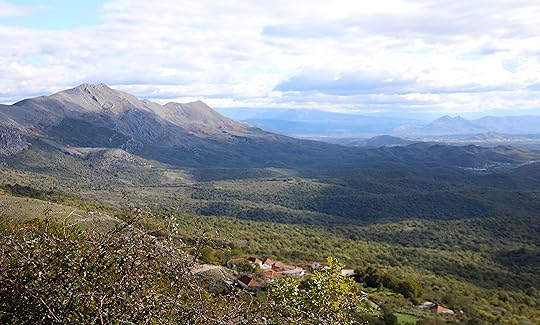
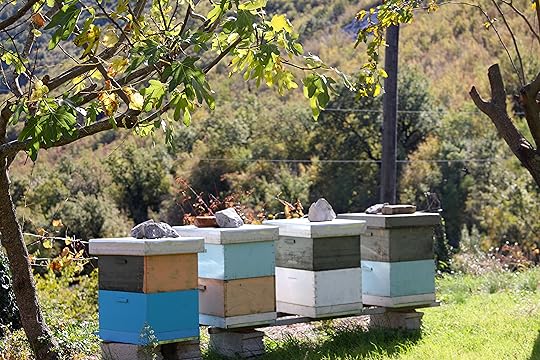
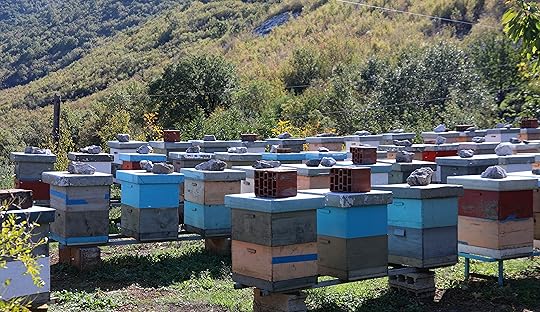
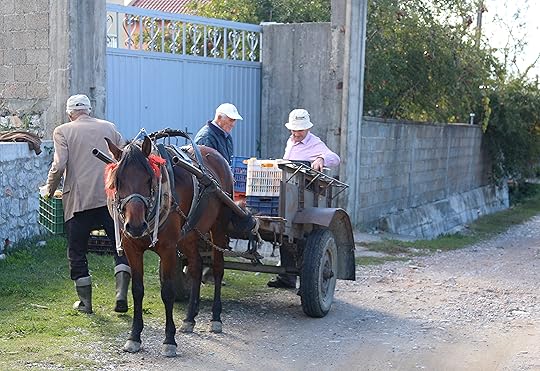
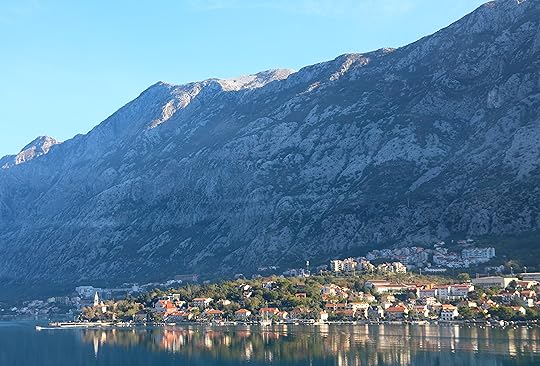
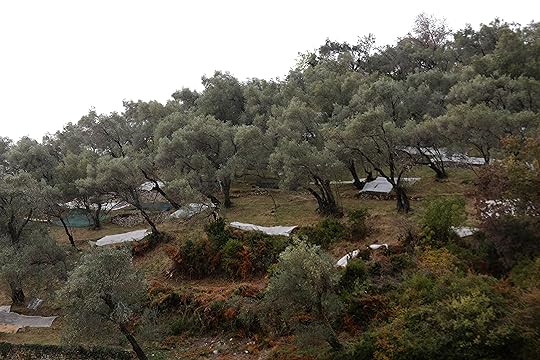
I have neglected this blog for so long, and my only excuse is that I've been so busy with full-time work, family and, of course, writing. Now one manuscript is ready and plenty more are in the pipeline... but to get you in the mood for the follow-up to Under An Amber Sky, I wanted to treat you to some beautiful autumnal pictures of Albania - location for much of the new book - and Montenegro. I hope you enjoy them, I hope they inspire you to read the book and I hope that, perhaps, if you get the chance, you'll take a trip to this most wonderful, unspoilt part of the world and cherish its beauty as I do. 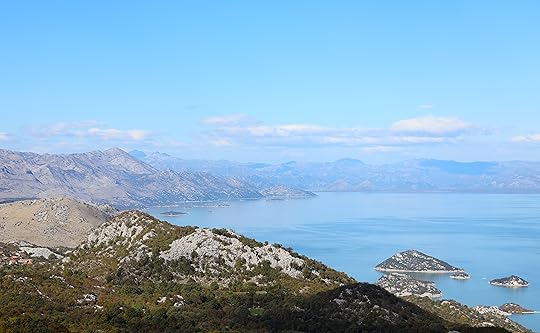


April 25, 2018
Review: Blind Side by Jennie Ensor
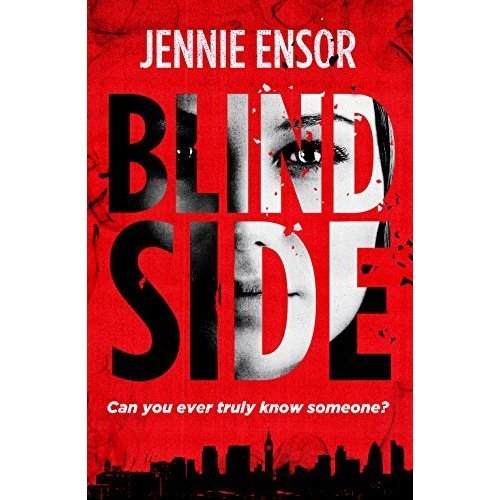 I've been trying to post my review of Jennie Ensor's brilliant Blind Side for a few weeks now but Amazon continues to insist that the last review I posted 'violated their rules'. I have absolutely no idea what I've done wrong and haven't managed to get to the bottom of it yet. But, as the author has been signed by the dynamic Bloodhound Books, I wanted to spread the word about her wonderful writing. Other books I've read recently haven't inspired me to the same extent and I have a policy that I only review books that I can be positive about. If I didn't enjoy the book, I keep quiet about it - writing is hard, lonely work that's often incredibly demoralising and writers need encouragement, not savaging. Because I pay for all the books I read - I don't receive any free at all - I can pick and choose. I'm under no obligation to review, so if I do it's because I really enjoyed the work and feel it was worth a few hours of my time. 'I started reading Blind Side at totally the wrong time – which was the night I went to bed at 8pm before having to get up at 3.30am to catch a flight from Stansted. Bad idea; I could hardly bear to put the book down and suddenly the holiday didn’t seem half so appealing because all I wanted to do was finish reading! Sadly, that moment had to be postponed… and every time I opened my kindle the next day, I had to shut it again to find the departure gate/board the plane/settle the children/get off the plane etc etc etc. However, when I did finally manage to get some undisturbed reading time, I devoured it greedily right until the very end.The premise of the story is both simple and incredibly complex. Georgie has a best friend, Julian, and then meets Nikolai, a troubled Russian ex-soldier, veteran of the Chechen conflict. As the plot unfolded, I became more and more drawn to Georgie and desperately wanted it to work out for her … although quite what that would look like for her, I wasn’t sure.I thoroughly recommend Blind Side as an excellent piece of storytelling that also shines a light on a conflict rarely touched upon in literature. In many ways, it is a book that defies categorisation and for me, this is where the obsession amongst publishers to put fiction into pigeonholes doesn’t work. The description ‘gripping thriller crossed with a love story’ does not, in my opinion, do the novel justice and in a way makes it have to jump through hoops it shouldn’t have to. I would be content to describe it as a great story, beautifully and expertly told. Ensor brilliantly evokes the North London I live in and know so well and I will definitely be looking out for more of her work.'
February 19, 2018
Stalking its prey
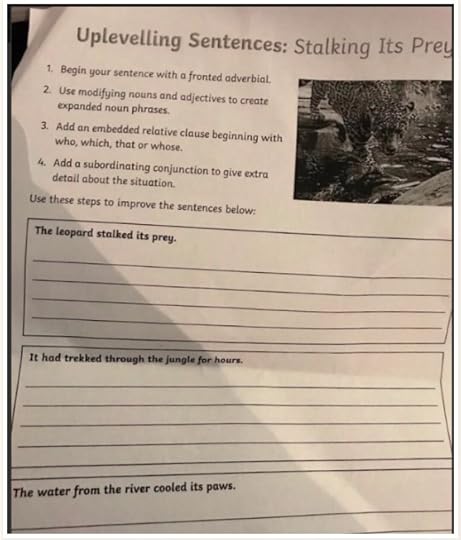 The other day, I happened upon the image shown here that had appeared in a Michael Rosen blog post and that was being commented upon on social media. I confess that I can’t remember if I saw it on Twitter or on Facebook; whichever, I tried to find the conversation again and ended up spending loads of time looking with no success. So I gave up. However, I do recall that all the comments made were along the same lines: it’s ridiculous; it’s insulting to our children; I was never made to do stuff like this; why don’t children read more; children should be made to read more etc etc. I only glanced at this post in passing and didn’t have any intention to get involved in the debate. But when, two days later, I was still thinking about it in any idle moment, I realised that I needed to address some of the issues it raised with me. There are quite a few, and absolutely none are intended to engage in an argument, to contradict any of those who commented or to be the definitive answer. They’re just things that occurred to me that I wanted to share. Firstly, I teach English at secondary school level; I’m not a primary teacher. We don’t tend to use worksheets like this, but I can absolutely understand why primary schools do. The issue I would have with this particular sheet is not the tasks that the children are being asked to complete, but the line that says: Use these steps to improve the sentences below. And within that line, the only word I object to is the verb ‘improve’. The assumption that adding clauses and conjunctions and noun phrases will ‘improve’ the existing sentences is utterly subjective and something that’s impossible to prove. If the verb used was ‘change’, I think it would be completely fine. Teaching children the component parts of sentences, and the ways in which you can add or move clauses around to enhance or change meaning, is an essential part of the job of teaching them to write. Encouraging them to experiment with language and sentence structure and vocabulary is brilliant. It’s what they need to do. To all the people who say ‘I was never taught this and I’ve done OK’ I want to reply, ‘Well done you but it’s not like that for everyone!’ I don’t remember being taught any of this either. Writing well is something I’ve always been able to do; I had an intrinsic understanding of how language works and how to manipulate it the way I wanted to. But my experience is not the point. Just like any other skill, there are some people who seem to get it innately and all the rest - the vast majority - who need to be taught. We all know this is the case with physics or Spanish or even art. To pretend that that it is not the case with English is completely ridiculous. Personally, as a secondary school teacher, I’m really pleased if children are being introduced to this stuff in primary school. It means that, one day, I might be able to shelve my lessons on subordinate clauses and how to use a semi-colon. That would leave me free to concentrate on all the wonderful texts we study in secondary school, all the opportunities to engage in creative writing and immerse ourselves in the wonderful world of English. Secondly, I think it’s really important to understand just what exactly it is that primary school teachers are expected to do. Unlike secondary teachers, they are not specialists - they have to teach English, maths, science, history, geography, art and often PE and music as well. Could you do that? Any of you who want to toss this worksheet in the bin? I couldn’t; that’s why I went into secondary. I only ever have to teach the subject that I know really well and am entirely comfortable and confident with. I could not teach children to build electrical circuit boards or solve fractions or paint water colours or play the ukelele. Even in the secondary school world, we are so overloaded with planning, marking, teaching, data, meetings, duties and extracurricular activities that, frankly, if anyone resorts to a worksheet to make their life easier, who can blame them. I work at least ten or eleven hours a day and I’m sure primary teachers do the same. So cut the teachers a bit of slack, please. Thirdly, I need to address this issue of ‘children should be reading books.’ Yes, of course they should. So do you have the magic solution for how to do this? If you do, you could make yourself very, very rich. I was at school more years ago than I care to dwell on but suffice to say, some people I knew read a lot and some people read absolutely nothing at all other than what they were compelled to. Even then, the proudest boast of many of the pupils in my school year, on walking into our English Literature ‘O’ Level (closed book in those days, as they are again now) was, ‘I haven’t even read the book yet.’ This was said with a laugh and a jeer as if only losers actually read the set text before being examined on it. This was long before the days of the internet, mobile phones, computer games of any sort or any diversion whatsoever except the television. There was nothing particularly compelling to take the attention away from the wholesome influence of books, yet many, many, many young people didn’t read. Just like today, many young people don’t read. It was ever thus. I have three daughters. The house is full of books, stuffed from top to bottom. Books are regularly given and received as presents to treasure. Outings to the bookshop are a treat to be relished. I write books! We have no wii, playstation, nintendo or x-box, although we do have an ipad and computers. I read non-stop, including often whilst cooking or cleaning my teeth. Everyone in my family reads; my children will never see me, my sisters or my mum without a book by their side. Yet though the oldest and the youngest one read avidly, the middle one does not. She says books are boring, they just go on and on before they get to the interesting bit and she doesn’t enjoy reading. I’ve tried everything to encourage her, including bribery, telling her she would get a higher allowance if she read at least two books at month. She said she didn’t want the money.We all want young people, especially teenagers, to read more. But you simply can’t force them to do it in their spare time if they don’t want to. And when there are so many other sources of entertainment available to them, often seeming much more engaging than words on a page, it is often a case of fighting a losing battle. However, having said all that, I really would like people to appreciate the huge efforts schools go to to encourage reading. Every secondary school I know of in London has a fantastic library stocked with fabulous books, library lessons embedded in the curriculum and a range of stimulating texts being studied in class which all pupils will read either alone or as part of shared reading. My school has all of these, plus student book clubs and reading groups. And whilst there are many teenagers who don’t read, there are also a huge number who do. We do all we can to turn our young people into readers but some will never take to it in the way that many of us would like. At least we have given them the tools that will enable them to enjoy reading if they change their minds as they grow older, which many do. I have sent young men from the inner city, who are able to quote widely from the poems of Robert Browning, into car spraying apprenticeships and that’s good enough for me. They’ve experienced the best of English literature and they know it’s there if they want it. Finally, it’s really important to raise the question here of what exactly education is for. I would like to see education, and certainly my job as an English teacher, as providing the students with the ability to read and decode texts, to understand how meaning can be manipulated by clever use of language, to have wide and varied vocabularies that allow them to express themselves precisely and succinctly. To develop in them an appreciation of the writer’s craft and expose them to some of the classics of English literature, to open doors to them to worlds past, present and future that will expand their own experience of existence. To enable them to write clearly and coherently, to form an argument, to develop a story and, above all, to love our wonderful language, its culture, heritage and literature. But, for most students, education is about passing their exams so that they can get a job, go to university, get an apprenticeship etc etc. That is what education has been made to become. It’s a means to an end, rather than an end in itself. Of course good schools try to counter that as much as possible, thinking carefully about what will be studied before the crucial GCSE years so it isn’t all about being in an exam factory. But the reality is that our children and young people need to get their grades and they know it. The exam criteria for the writing section of the English Language GCSE specifically calls for the use of ‘varied sentence structures’ and I know from experience that if you don’t teach students to use complex sentences, the vast majority of them won’t. They’ll stick to simple and compound sentences and the mark scheme will judge them harshly for it. So the much maligned ‘uplevelling sentences’ worksheets has a really important purpose. I’m currently running after school sessions for Year 10s who would like to take part in the BBC Young Writers Award. They have to write a short story of 1000 words or less. At the first session, eleven students attended - ten girls and one boy - all from my own year 10 class. So I guess I didn’t do a great job in selling it to the rest of the year group! But I also know a very disaffected young man from another class who writes really well. He’s not behaving too well right now and keeps getting into trouble. I suggested to him that he join the group, trying to persuade him with the argument that he has a talent and should use it. I genuinely want him to take part but I was also thinking that perhaps being engaged in something positive might influence him in all areas. He agreed, but it wasn’t only the joy of exercising his creative muscles, the unaccustomed praise, or the potential glory of winning a competition that sold him on the idea. It was because I also told him that just taking part and entering would enable him to put it down in the ‘extra-curricular’ section of his CV or sixth form college application - which he knew would be extremely empty otherwise. Does it matter what reasons a young person has for participating in writing? I don’t believe so. But I do think we need to move away from a romantic ideal of a book reading past that has sadly died, and take a more pragmatic approach. Let’s look on those who are reading as a bonus rather than on those who don’t as failures. It will make us all a lot happier and, let’s face it, we’ve got enough to worry about in this country right now.
December 17, 2017
It's literature - but is it good for me?
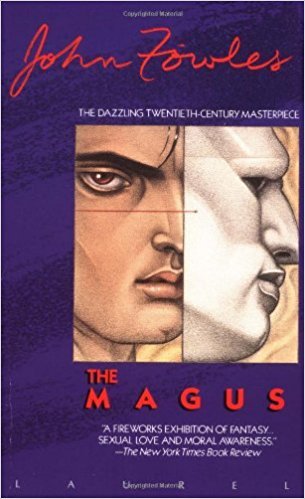
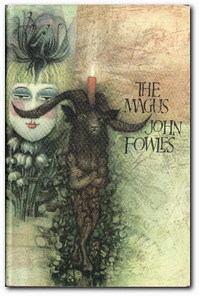
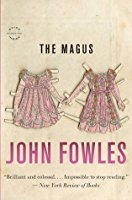 Recently, I decided that I needed to put aside my kindle for a while, with its beguiling temptations of frothy, easily digested psychological thrillers and the like, in order to read something more challenging. More fulfilling. And, in the case of The Magus, just plain longer than most authors would get away with nowadays. John Fowles came to mind as my first brain-stretching author, partly because a colleague of mine had been teaching The Collector as part of the IB sixth form course and that reminded me of Fowles, a writer one could be excused for not thinking about from one year to the next. For most people (of my age, anyway!), the mere sound of Fowles's name brings one thought immediately springing to mind - the 1981 film of The French Lieutenant's Woman, with Meryl Streep giving the Scottish Widows lady a run for her money in her hooded black cape and Lyme Regis's Cobb taking on the importance of a major character. Adapted by Harold Pinter, directed by Karel Reisz and with Jeremy Irons taking the male lead as Streep's counterpart, this film is a quality production and brought much attention to Fowles's work. People I knew were mad for him, reading anything and everything he had written, including The Magus. Or rather I should say that people I knew CLAIMED to be mad for him and to be reading everything he had written, including The Magus. I, personally, didn't bother. One look at the house brick size of the tome put me off. But, time passes, one gets older, and a new wisdom descends. Or rather, one realises that one needs to cling on to any vestiges of wisdom and intelligence one ever possessed and frantically try to replace all that's been lost before it's too late. Hence my reading of the The Magus. It's taken many laborious weeks of reading five or six pages every night before sleeping - and then re-reading most of them the next evening when I realise that I haven't taken in a word and haven't got the slightest clue what is going on. Now I'm very, very nearly at the end - just a few pages away - and I'd love to say it's opened up a new world of understanding and insight. But I'm not sure it has. I'm not even sure what it's really about. This is my best guess: protagonist Nicholas Urfe represents mankind, and Conchis, the man who he meets in Greece when he goes to teach in a boys' school there, is a kind of anti-god, someone who, through his machinations and manipulations of Urfe, reveals that there is no real, all-seeing, all-knowing, all-powerful God. That's my best guess. One of the things that's most noticeable about the book is how dated much of it seems, even though it was only written in the 60s. I found it disturbing how quickly Urfe resorted to raising his hand to the women he's involved in. I'm not sure if Fowles has him doing this to reveal the wrongness of it, or just because that's what men in the 60s did if a woman really annoyed and aggravated them. It sits uneasily now, in 2017; Urfe is selfish and self-centred and his actions made us dislike him even more but there's no sign of an authorial comment on it. Anyway, I'm going to press on - The Collector next! After that, I'll start on Kazuo Isiguro. I did read The Remains of the Day years ago, and see the film, but frankly can't remember anything much about either of them apart from there's a butler. The Nobel Prize statement - something about showing us the abyss - isn't exactly the kind of blurb that is guaranteed to garner a mass audience. But I'm up for it. At least the books look half the size of The Magus.I didn't realise until I became an author myself that Christmas books were a Thing. I honestly had no idea. Now, I feel part of a very small authorly gang in that I don't write books of this genre. I honestly have nothing but respect for those who read them and even more so for those who write them as I personally can't think of more than about two pages I could possibly come up with centred around a time of year I find, quite frankly, tedious. I'm just a rotten, un-rehabilitated old Scrooge whose heart Tiny Tim has yet to touch. And on top of it all, I just don't get Christmas books. There, I've said it and I'm sorry but as the saying goes, the truth sets you free. If anyone can suggest a Christmas book to me that would change my mind, I'll happily give it a go. But it'll have to join the queue behind the above already listed reading, so that means I'd probably be reading it around mid-summer. On reflection, perhaps that would be a good time for someone like me to read a Christmas book, when the real horror of all the shopping and cooking and socialising and nauseating general gaiety is as far away as it can be in any one year.And with that - a genuine Happy Christmas to you all. I'll be back on my blog in the New Year. Meanwhile, I'll be found shopping, cooking, socialising and partaking in nauseating general gaiety... there's just no way out of it!
November 5, 2017
Pictures of what inspired me
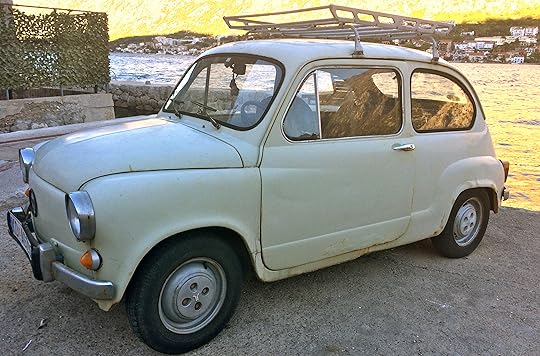 I recently returned from a half-term visit to Montenegro and took the opportunity to snap some of the pictures that I've not quite got round to before. I've uploaded a bunch of them into the Under An Amber Sky gallery so do take a look if you fancy seeing some of the key locations from the novel. It's amazing how much time it takes to photograph everything left, right and centre and often I prefer to just enjoy the experience rather than constantly be hiding behind a lens and a viewfinder. Perhaps part of that is because I spent so many years as a videojournalist and self-shooting producer/director so I was always lugging camera equipment around - including whilst heavily pregnant. I think it was filming in an boisterous and extremely loud Essex nightclub at 3am that finally made me think this wasn't the job for the long term! After a ten-year period working as a freelance writer and digital media creative director, I retrained as an English teacher - no less exhausting and still lots to carry around, just exercise books rather than battery packs - but at least I finish work at 6 or 7 in the evening rather than at dawn. Montenegro was as beautiful, peaceful and life-enhancing as it always is. Apart from some instances of aggressive driving, I find Montenegrin people incredibly calm. Even when held up in a two-mile tailback of stationary traffic (at least half of which was headed to the international airport in the capital city) because the road had been shut for the Podgorica marathon, nobody was getting upset or emotional. The men took it as an excuse to get out of the car and have a chat and a cigarette and the women - well, they just waited. Not a single horn sounded during the entire 25-minute delay and as far as I know, nobody missed their flight so all's well that ends well. I've been reading a lot lately and will be updating this blog with my picks shortly. I love a good psychological thriller so those have been featuring heavily on my reading list. If you, too, like this genre, do give my one a try! It's called The Missing Twin by Alex Day https://goo.gl/yK9KXL and is available in ebook, paperback and audio. The audio narration has been done by the wonderful Sarah Agha and is truly superb. As well as my own personal reading, I'm studying American Literature 1880-1940 with Year 12 and LOVING re-reading classics such as The Yellow Wallpaper by Charlotte Perkins Gilman and The Awakening by Kate Chopin. It's so rewarding to see these texts opening up new worlds for the students. The many restrictions experienced by women in a patriarchal society shock our twenty-first century young people - but the scandals rocking Hollywood and Westminster right now make me wonder what has changed. Perhaps we're not quite locking hysterical women away in attics or Gothic mansions any more but women as men's possessions or as objects to be treated how they please? How much has that changed?
September 30, 2017
How I write
 ‘Writing is easy. All you have to do is cross out the wrong words.’ So said the late, great Mark Twain and I’m trying to take his advice but it’s not easy. All writers know that we should sit at our desks and get down x thousand words per day, come what may, but knowing something makes sense and actually doing it is where the problems start, right? Like we all know asparagus is better for us than Haribo but it doesn’t stop us from reaching for just one more Tangfastic....The writing process for me is convoluted to say the least. Quite apart from anything else, I work full time as a teacher in a tough inner London secondary school. After a day in front of anything up to 130 stroppy, hormonal, disaffected teenagers, plus a few hours planning and marking, a meeting or two, and a detention for the worst miscreants, spending the evening writing gripping and inspirational stories is the last thing I feel like doing. But do it I must, otherwise nothing would ever be achieved and I wouldn’t be a writer, I’d just be an over-worked, underpaid public servant.Relentless self-discipline has enabled me to publish three books in just over a year - Under an Amber Sky and Garden of Stars being the first two with the third, a psychological thriller called The Missing Twin due out in August under the author name Alex Day. Now the school summer holidays have just begun and over the next six weeks I hope to get a good way through two new manuscripts. I’m brushing off a school year’s worth of exhaustion in the hope that, if I ignore it, it will go away.The fact that I am the unlikely possessor of three children of my own puts yet another spanner in the works. (Sorry kids.) Every now and again I feel compelled to show some interest in my progeny and sometimes even to spend time with them, doing what they want to do. But wherever I go, my writing comes too. I can, and have, written whilst waiting for a bus, for a theatre show to begin or for an orthodontist’s appointment. I’ve written at magic parties, trampolining parties and ice-skating parties. (Not whilst skating. That would be silly.) I’m currently writing in my (minuscule) garden whilst builders attach a new section to the bathroom waste pipe running down the wall beside me. This is possibly going to turn out to be unwise place to sit right at this moment. But I can’t stop or the schedule will fall apart! So on that note I’ll leave you with some wise words about the writing process. I’d like to say I wrote them myself but I didn’t so it would be a lie.Instead, Brian Clark, thank you for laying out the most accurate ’10 Steps to Becoming a Better Writer’ that I’ve ever come across and that, in my writing life, I live by:1. Write.2. Write more.3. Write even more.4. Write even more than that.5. Write when you don’t want to.6. Write when you do.7. Write when you have something to say.8. Write when you don’t.9. Write every day.10. Keep writing.Start writing your post here. You can insert images and videos by clicking on the icons above.
September 16, 2017
A sensational story
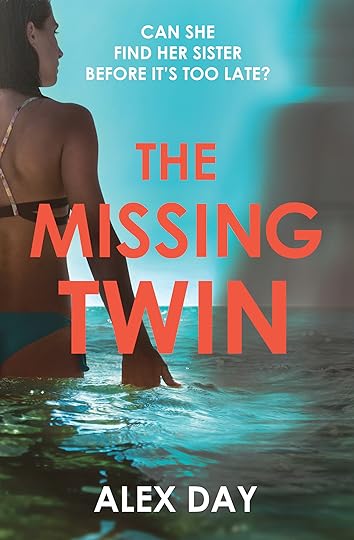 So the new school term has started and it's back to work - new classes to get to know, new texts to teach, new colleagues to befriend. Thankfully, there are also lots of new books to read - including one by my alter-ego, Alex Day. The Missing Twin is a sensational and compelling page-turner of a psychological thriller. It's very much a work of fiction but based around a very real fact of 21st century life - the story of the millions of people around the world who are fleeing their homeland, whether due to war, persecution, hunger or poverty.I'm so gratified that so many reviewers have bonded with refugee Fatima and her twin daughters, and have written about how the book has brought to their attention the terrible plight the real Fatimas of the world find themselves in - alone, homeless and running for their lives. I based a lot of Fatima's story around what I heard from Syrian children I taught in my first teaching job in North London. They had heartrending stories of loss and in many cases had obviously been left utterly traumatised. The father of one such child said to me, through a translator, the exact words that Fatima hears from one of the many people smugglers she meets along her journey - that God decides who survives and who does not, and that one can do nothing but pray for survival and to be treated kindly by fate. The smugglers take no responsibility for the safety and well-being of those they are purportedly 'helping' - for a large fee - but it shocks me that my own country is also taking precious little responsibility for those in need. Surely we could find it in our hearts to welcome those who have gone through so much in their efforts to get out of terrible situations alive? The other main character in the book, Edie, is terribly misunderstood, poor girl. Some readers totally get her, but others cannot see beyond her rather immature and selfish facade. The point about Edie is that her psychological problems dog her throughout and it's only by the end of the book, when she has been through a life-changing experience and had to surpass her own expectations of what she can do, that she matures into a new and better person. MetLineReader on Amazon sums it up beautifully: 'A fast-paced tale with darker elements of intrigue, distrust and secrets... Edie is a more complex character than initially thought and the story of Fatima shows strength of character and what tragedies these refugees have to overcome.'Why not read it yourself and find out what you think? THE MISSING TWIN: https://goo.gl/yK9KXL
August 22, 2017
Why is everything 'gripping'?
 I was browsing through some Amazon reviews of a book I was thinking about buying and someone asked the question, 'Why are all books described as 'gripping' when many of them clearly aren't?' Reading this brought a wry smile to my face as I had also had this thought many times. This reviewer was referring to psychological thrillers but the overuse of the word 'gripping' extends far beyond this genre - I think it is applied to every single book type under the sun. Including all of mine - both my Rose Alexander titles and also my psychological thriller, The Missing Twin by Alex Day, are proudly declared to be 'gripping' on their Amazon listings.Of course it goes without saying that these books are, indeed, gripping beyond measure - but when I saw the 'g' word being rolled out yet again for Under An Amber Sky I did question it with the publisher. And I was firmly told that it was necessary to describe it thus because this is how readers search for books. So there we have it - to the reader who raised this issue in their review and to everyone else who's ever wondered about the ubiquity of the word 'gripping' - it's because it's the most frequently used search term by people looking for something to read. I picture hundreds of thousands of potential readers entering 'gripping book' or 'gripping read' into Amazon and sitting back as literally every book ever published in the last ten years scrolls up in front of them. Is this actually what happens? There was only one way to find out. So, in the true pioneering spirit of empirical research, I tried it for myself. I know, the things I'm prepared to do for my blog, it's quite incredible.... Nervously, full of trepidation, I typed 'gripping book' into Amazon's search bar. A long list of books, nearly all psychological thrillers, materialised before me. And led me to the next question, to which I do not have an answer. How is the order in which they appear decided? The book at the top of the list had around 250 reviews -a really good number that most authors would die for, but there are many books with thousands of reviews. At the time I looked at it, it was sitting around number 400 in the overall kindle chart - so nowhere near the top selling spot. And so on. As I carryied on through the listings, the books that appeared were a mixture of best sellers, not best sellers, books with many reviews or few reviews, and books of varying prices, from free to nearly a fiver.I simply have no idea how the Amazon algorithm works here. Are the books picked for me, ones that it thinks I will be interested in? Would someone else get a completely different list? If you know the answer to this, please do share. And then, as I was concluding my research, in the middle of the darkly enticing book covers the colourful hues of A Very Hungry Caterpillar teething toy sang out. Anyone who's ever been bitten by a baby will know that to call their teeth 'gripping' is probably the most accurate use of the word there could possibly be.
July 1, 2017
This week's reads
I've been so ridiculously busy the past month or so, with exam season here in the UK making school and home frantic, plus of course the publication of Under An Amber Sky https://goo.gl/yK9KXL at the end of May. Something had to give and it's been my blog; I simply haven't had the energy to write anything or, quite frankly, the ideas. My mind has been a blank! However, no matter what is going on I always manage to read a few pages or chapters before I go to sleep at night so I thought I'd do a round-up of the most recent reads. 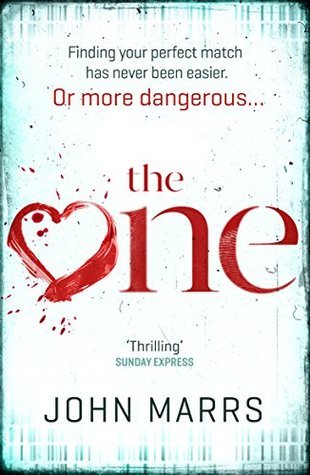 I saw The One by John Marrs mentioned on The Book Club on Facebook and I thought it sounded interesting. When I discovered that it was #1 in books/genetic engineering on Amazon, I was so intrigued that I immediately bought it and started to read. Well, what can I say? It's an utterly preposterous but thoroughly enjoyable read. Nothing in it is remotely believable, from the central premise itself - if everyone had one match only in the whole world, what are the chances of living in the same town as that person? Surely nil? - to the characters, the characters' bizarre actions, and the non-ending. It passes a few hours in a completely unchallenging way and there's nothing wrong in that, but don't expect enlightenment.
 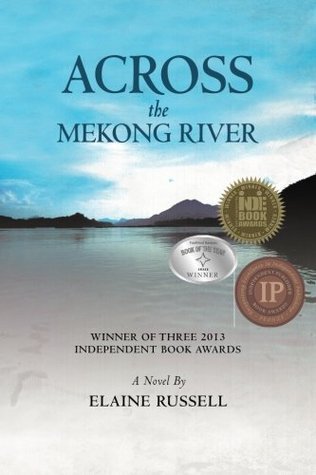 I absolutely loved Across the Mekong River. The descriptions of the life of the Hmong hilltribes in the forests of Laos were amazing; their customs, traditions, clothing, food all enthralled. The terrible circumstances in which the extended family the book follows were forced to flee for their lives to Thailand are emotionally told and harrowing. I can't even begin to imagine how difficult it is for people broken in so many ways to find the strength and courage to carry on and build new lives, especially as, when they finally get to America, they end up in Minneapolis, surely about as different from their homeland as it's possible to get. However, the one let-down about this book is when I discovered that it's not a true story. I'm sure it's representative of the journey of many Hmong, but somehow it would have touched me even more than it did if I knew that there was a real Laura Lee out there somewhere, building a life after having survived so much hardship. A really fantastic read, nevertheless.
 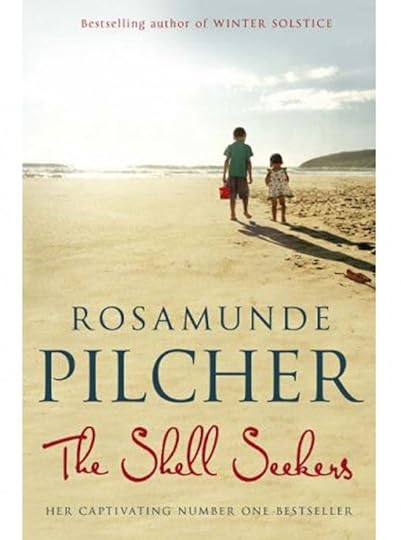 I read Rosamunde Pilcher's Sleeping Tiger and absolutely loved it so I sought out more of her work. I think I must have read her books at some stage in my life but they had faded out of my memory. I bought The Shell Seekers on the strength of the blurb and the promise inherent in the fact that it is her bestseller. Unfortunately, I have to confess to being deeply disappointed. I thought several times about giving up on it but I forced myself on to the rather lacklustre ending. I found the book rambling, the plot too disparate, the characters too disconnected with each other and with me. It went on and on and down numerous segues and I wasn't at all sure why I was reading it or what the point of it all was. I found it populated by not very interesting or pleasant characters and I simply couldn't really care about any of them.
 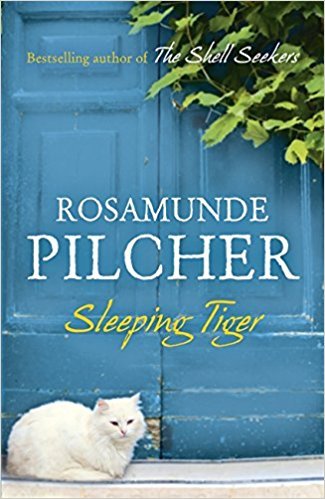 If you are interested in trying this author, I would much more highly recommend Sleeping Tiger. This is a short, simple, self-contained and life-affirming read - and the good news is, if you don't like it, you'll only have spent an hour or two on it, rather then the eternity it took me to finish The Shell Seekers.
 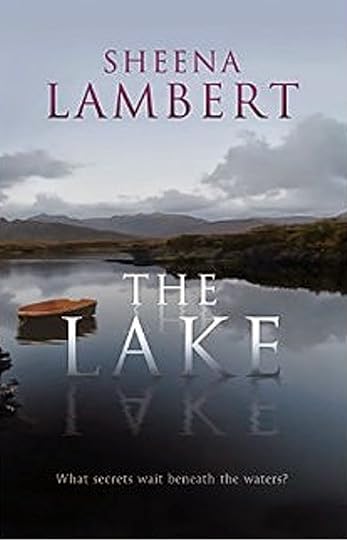 There is much to love in Sheena Lambert's The Lake. I found the characters entrancing and believable, the setting charming and beautifully described and the story intriguing. The plot drew me in and I enjoyed every moment of what I read. And then it stopped. And this is the potential problem with ebooks. It's impossible to tell how long a book is when you choose it, unless you can be bothered to go into the details and find out how many pages it is etc, which I can't and don't. I had no idea that this novel was so short - a novella, really - and I was just starting to get really into it when it was all over! (Where have you heard that before? Phenar, phenar.) Nevertheless, a super read with a gentle 'thriller' twist.
I saw The One by John Marrs mentioned on The Book Club on Facebook and I thought it sounded interesting. When I discovered that it was #1 in books/genetic engineering on Amazon, I was so intrigued that I immediately bought it and started to read. Well, what can I say? It's an utterly preposterous but thoroughly enjoyable read. Nothing in it is remotely believable, from the central premise itself - if everyone had one match only in the whole world, what are the chances of living in the same town as that person? Surely nil? - to the characters, the characters' bizarre actions, and the non-ending. It passes a few hours in a completely unchallenging way and there's nothing wrong in that, but don't expect enlightenment. I absolutely loved Across the Mekong River. The descriptions of the life of the Hmong hilltribes in the forests of Laos were amazing; their customs, traditions, clothing, food all enthralled. The terrible circumstances in which the extended family the book follows were forced to flee for their lives to Thailand are emotionally told and harrowing. I can't even begin to imagine how difficult it is for people broken in so many ways to find the strength and courage to carry on and build new lives, especially as, when they finally get to America, they end up in Minneapolis, surely about as different from their homeland as it's possible to get. However, the one let-down about this book is when I discovered that it's not a true story. I'm sure it's representative of the journey of many Hmong, but somehow it would have touched me even more than it did if I knew that there was a real Laura Lee out there somewhere, building a life after having survived so much hardship. A really fantastic read, nevertheless. I read Rosamunde Pilcher's Sleeping Tiger and absolutely loved it so I sought out more of her work. I think I must have read her books at some stage in my life but they had faded out of my memory. I bought The Shell Seekers on the strength of the blurb and the promise inherent in the fact that it is her bestseller. Unfortunately, I have to confess to being deeply disappointed. I thought several times about giving up on it but I forced myself on to the rather lacklustre ending. I found the book rambling, the plot too disparate, the characters too disconnected with each other and with me. It went on and on and down numerous segues and I wasn't at all sure why I was reading it or what the point of it all was. I found it populated by not very interesting or pleasant characters and I simply couldn't really care about any of them. If you are interested in trying this author, I would much more highly recommend Sleeping Tiger. This is a short, simple, self-contained and life-affirming read - and the good news is, if you don't like it, you'll only have spent an hour or two on it, rather then the eternity it took me to finish The Shell Seekers. There is much to love in Sheena Lambert's The Lake. I found the characters entrancing and believable, the setting charming and beautifully described and the story intriguing. The plot drew me in and I enjoyed every moment of what I read. And then it stopped. And this is the potential problem with ebooks. It's impossible to tell how long a book is when you choose it, unless you can be bothered to go into the details and find out how many pages it is etc, which I can't and don't. I had no idea that this novel was so short - a novella, really - and I was just starting to get really into it when it was all over! (Where have you heard that before? Phenar, phenar.) Nevertheless, a super read with a gentle 'thriller' twist.
May 7, 2017
The countdown begins...
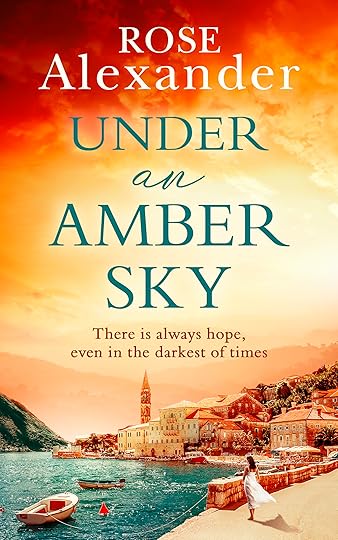 I was so excited to go onto Goodreads and find the very first review for UNDER AN AMBER SKY. It's from Anne and she really loved the book. I'm sure you can appreciate the relief an author feels when someone bothers to pen a review - and it's a good one. Even if Anne is the only person in the world who reads and enjoys it - it still makes it feel that it's all worthwhile.Anne's review: 'What a thoroughly gorgeous read! Characters you take to your heart, a modern story about friendship and "family", a fascinating thread about hidden history, and a backdrop beautifully described that had me adding Montenegro to my bucket list. Review to follow, but highly recommended.'Publication date is 24th May so any pre-orders will magically appear on your kindles then - and Amazon reviews will be open for anyone who can spare the time to write their own review. It makes such a difference to authors to see the reaction of their readers so I do urge people to take the trouble to do it. You don't have to write much - just a title and a few words - but the author will appreciate it. Thank you and happy reading!