
Therese Huston's Blog
March 3, 2025
What kind of exercise makes you younger?

Photo: Ketut Subiyanto
Why This MattersYou might spend your teens and early twenties wishing you were older - why can’t I rent a car until I’m twenty-five? you demand - but many of us spend the rest our lives wishing we were younger. At the very least, we wish we could slow down how quickly we’re aging. We wish we felt a little more energetic and a lot less tired.
The good news? You can slow down how quickly you’re aging. And you don’t have to be a billionaire investing in fringe medical procedures to do it.
The ScienceFirst, we need to introduce something called epigenetics. The concept is a bit tricky, so an analogy helps. Imagine that your DNA is the master instruction book for building and maintaining your body. Your DNA doesn’t change over time (you’ll die with the same DNA you were born with), but how your body reads that instruction book can change.
This is where epigenetics comes in: it’s like a layer of sticky notes and highlighters that tell the body which sections of the DNA to read and which sections to ignore on any given day. These sticky notes can lead your body to age faster or slower, depending on how your body is reading your personal instruction manual.
Now let’s dive into the specific research. A research team out of Poland studied what’s known as the “epigenetic clocks” of 1000 people. If we push the analogy a little further, an epigenetic clock is a diagnostic tool that can scan all of those sticky notes and determine how much wear and tear there is on your instruction manual. Is your instruction manual looking pretty worn and tattered, or is it relatively fresh, given your age?
In sum, the researchers were asking, “At the DNA and cellular level, which people seem older or younger than their actual age, and what are those people doing differently?”
They found that a number of key behaviors changed how quickly a person was aging and several of them are behaviors you can change immediately.
The two behaviors that had the biggest positive impact in making cells younger were 1) eating more vegetables (at least 3-4 servings a day) and 2) exercising daily. Lots of fruit didn’t work - it had to be vegetables.
And the single exercise that had the biggest aging benefit? Yoga. Practice yoga regularly and your instruction manual actually rejuvenates, making your cells younger. The researchers looked at many different forms of exercise, everything from cycling to running, from to weight-lifting to cross fit, and yoga was the winner.
There are two behaviors that age you a lot, however. Smoking topped the list in this study, and eating a lot of meat came in second. (Being male also made for older instruction manuals, but that’s not easily changed). The good news is that former smokers looked almost as young as non-smokers, so don’t despair if you’ve been smoking for a decade. Giving up smoking now is worth it.
Key TakeawaysIf you want to slow down your body’s aging, start doing three things: Eat at least 3-4 servings of vegetables a day, get some physical activity every day, and start doing yoga regularly.
You should also stop doing two things: Stop smoking and reduce your consumption of meat. You don’t have to go all-out vegetarian, but eat less meat and your cells will start getting younger.


February 24, 2025
Does White Noise Improve Focus?
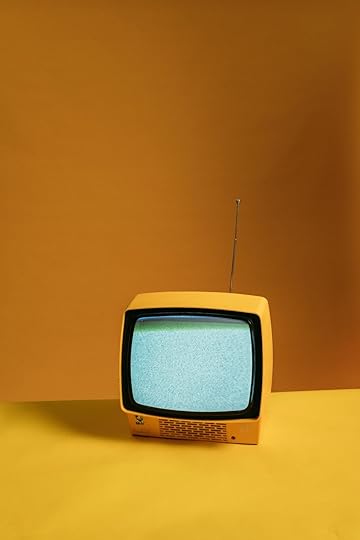
Photo: Koolshooters
Why This MattersWe’ve all been there – you’re trying to concentrate but something pulls you out of your focused state. Maybe it’s your buzzing phone, a pinging email, or your growling stomach, but whatever it is, one tiny interruption often turns into a much longer break than you’d planned. When you finally, eventually, drag yourself back to your work, you feel frantic with the time you’ve lost.
Could something as simple as white noise help you stay in the zone and ignore those distractions until you’re truly ready to take that break?
The ScienceResearch led by Joel Nigg, a professor of psychiatry at Oregon Health Sciences University, examined this question through a meta-analysis—a fancy way of saying “let’s average out a bunch of studies to find what’s the truth.” Nigg and his team analyzed 13 studies on white and pink noise to assess their impact on cognitive performance.
Their findings were clear: for individuals with ADHD, both white noise (like the old-school static from a TV ) and pink noise (softer sounds like rain or waterfalls) significantly improved focus and memory. The effects weren’t as strong as medication, but they were similar to other approaches that don’t involve a trip to the pharmacy.
But here’s the plot twist: if you don’t have ADHD, those sounds might actually make your focus and memory worse. The drop in performance isn’t dramatic, but that static noise in your headphones? It probably isn’t helping.
For the Curious (Like Me!):You might be wondering what makes white noise and pink noise different. Both include all the sounds you can hear, but white noise plays all those frequencies at the same volume, which is why it can sound a bit harsh. Pink noise dials up the lower frequencies (think bass) and dials down the higher ones, making it a softer, more soothing auditory experience.
Key Takeaways:If you have ADHD: Try white or pink noise to enhance your focus, especially if you’re not keen on taking meds. Many recordings are available online, and they might just give you the boost you need.
If you don’t have ADHD: Skip the noise—your best strategy likely lies elsewhere. Check out Chapter 1 in Sharp to find focus-enhancing tools that are right for you.
We’re all different: It’s a good reminder that what works for one person might not work for another. Understanding your own brain is key.
This isn’t outdated wisdom – this research was just published in 2024. Fresh science, real strategies, and at least for some of us, one more way to zip up your focus.
February 17, 2025
Does White Noise Improve Sleep?

Photo: Christian Dominigues
Why This MattersWe all want a good night’s sleep because, well, it feels better than a lousy night’s sleep. Plus you can’t leaf through a magazine in a waiting room without reading how essential sleep is to your health.
But sometimes, sleep just isn’t happening, no matter how careful you are about your caffeine consumption during the day and your bedtime routine at night. Could turning on a white noise machine help you sleep a little better?
The ScienceDr. Elizabeth Capezuti, a professor of nursing and gerontology at the City University of New York, analyzed 34 studies on sleep and sound. Although white noise machines have become the default choice for many (myself included), the evidence shows they only work about 1/3 of the time. It’s not exactly a ringing endorsement.
Pink noise, on the other hand, helped improve sleep in 81% of the studies. Although pink noise isn’t as publicized, it’s softer and more natural sounding, with the bass notes turned up and the higher frequencies turned down. Imagine the sound of rain or rustling leaves. It’s like white noise’s calmer cousin.
The only catch is that most of the studies that used pink noise weren’t as rigorous as the studies that used white noise, still leaving room for the skeptics out there to raise an eyebrow.
Key TakeawaysIf you’re looking for sounds to help you sleep: Pink noise – such as the sound of rain, waterfalls, or rustling leaves – is probably a better option than white noise.
February 13, 2025
Welcome to a Sharper You

Photo: Mabel Amber
I’m so glad you’re here!Welcome to your go-to source for quick, practical insights from neuroscience and psychology that can make a real difference in your everyday life. Much of what I share here builds on the ideas in my latest book, Sharp: 14 Simple Ways to Improve Your Life with Brain Science.
Sometimes, you’ll find fresh twists on topics I explored in the book—new angles that bring added depth or relevance. Other times, I’ll dive into ideas I didn’t include in the book (or, let’s face it, didn’t think to include back then!) but now feel timely and useful.
Have you got a topic you’d love me to explore? Head to my contact page and send me an email. Just sum up your question in one or two sentences (feel free to write more, but be sure to bold the question somewhere in your email so that I can find it). I’m always on the lookout for new ideas and will do my best to uncover the research that can help.
Remember—every day is a chance to get sharper. And your brain? It’s your greatest tool.


