
Paul Varner's Blog: Zane Grey's The Heritage of the Desert--How Zane Grey became an author
October 8, 2018
Announcement
I have recently signed a contract with Cambridge Scholars Publishing for a scholarly monograph tentatively titled Edward Dorn, Charles Olson, and the American West. Due out by 2020 I assume. Dorn and Olson, of course were key figures in early American postmodern/avant garde poetics. Dorn's Gunslinger is arguably the most important epic poem to come out of the Beat Movement in the West. This will be my third book with Cambridge Scholars.


October 14, 2015
Max Brand, Singing Guns (1938)
THE SHERIFF AND THE BANDIT
Sheriff Caradac had tracked down his man. As he sighted the rifle muzzle on the muscular body of his unsuspecting victim, he realized there wasn’t another man in the West like him. For a moment he hesitated. Then. Almost automatically, he lifted his gun and shifted his left foot a bit forward. As he fired, he felt a stone turn under him, and even before his finger fell from the trigger, he knew he had missed.
Out of that strange twist of fate, there grew an even stranger friendship—one that took a sheriff and an outlaw on a trail of high adventure that could have destroyed them both!
Sheriff Caradac had tracked down his man. As he sighted the rifle muzzle on the muscular body of his unsuspecting victim, he realized there wasn’t another man in the West like him. For a moment he hesitated. Then. Almost automatically, he lifted his gun and shifted his left foot a bit forward. As he fired, he felt a stone turn under him, and even before his finger fell from the trigger, he knew he had missed.
Out of that strange twist of fate, there grew an even stranger friendship—one that took a sheriff and an outlaw on a trail of high adventure that could have destroyed them both!
October 13, 2015
MAX BRAND, SILVERTIP'S CHASE

THE JAWS OF A FEROCIOUS WOLF GUARD THE SECRET OF A DEAD MAN’S GOLD!
Bill Gary was near death. Blood gushed from the gaping wounds inflicted by the giant wolf who now lay stunned at his feet. Slowly, agonizingly, he drew a diagram, stuffed it inside his dead dog’s collar, and fastened the collar around the neck of the wolf. Then with excruciating effort, he opened the trap and released the wolf.
In that collar Gary had tucked a map to the location of a vein of gold he had discovered only hours before. This most vicious of timber wolves was now guardian and executor of his estate. And Silvertip, to carry out the dead man’s wish, must find Frosty, the wolf.
September 21, 2015
MAX BRAND CRUSADER (1924)

Facing the Mob!
Doc Cambert called: “Hey you. . . Camden!”
The big man yawned in their faces and made no other reply except to shut his strong white teeth with a click.
“We’ve come to give you a runnin’ chance! Come out of that there brush and we’ll give you a twenty-yard start on the hosses to get back to the hotel. If you make it. . . you got an hour to get out of town. If you don’t make it. . . .”
“Shut up, Doc,” cut in Josh Williams. He don’t get no runnin’ chance. We’ve had enough of that devil. We’ve had too damned much.”
“You want me?” Camden said. “Then come and take me!” With that, he stepped forth from the shelter of the trees and began to walk toward the hotel, slowly.”
They trooped their horses after him, but no man spoke, no man moved a hand. There was something too formidable about the light-footed bulk—that terribly soft-stepping monster of a man. He seemed capable of leaping at them like a mountain lion. They held their distance until Josh Williams, with a shout as though at a roundup, whirled the noose of his rope and spurred forward.
September 3, 2015
MAX BRAND, THE CABIN IN THE PINES (1922)
WOLF AND MASTIFF!
Babe Rourke and Angus Cairn are two giants among men whose similarly large reputations make them adversaries before they actually meet. Their enmity goes through several permutations after a chance encounter occurs in a cabin in the pines. (Definitive text from The Overland Kid, 2003)
Babe Rourke and Angus Cairn are two giants among men whose similarly large reputations make them adversaries before they actually meet. Their enmity goes through several permutations after a chance encounter occurs in a cabin in the pines. (Definitive text from The Overland Kid, 2003)
August 28, 2015
MAX BRAND THE ONE-WAY TRAIL (1922)
THEY CALLED HIM THE SHIFTER
When Harry French left home he was just another kid looking to make his way. But when he came back four years later, things were different. He was different. Or at least the town thought so. Now nobody looked him in the eye. Conversation stopped when he walked into a room. Even his old friends were afraid of him. He wasn’t just Harry anymore. . . now he was the Shifter, a gun-fighter who brought trouble with him wherever he went. And as hard as Harry tried, he found that a reputation was a hell of lot harder to put down than a gun.
When Harry French left home he was just another kid looking to make his way. But when he came back four years later, things were different. He was different. Or at least the town thought so. Now nobody looked him in the eye. Conversation stopped when he walked into a room. Even his old friends were afraid of him. He wasn’t just Harry anymore. . . now he was the Shifter, a gun-fighter who brought trouble with him wherever he went. And as hard as Harry tried, he found that a reputation was a hell of lot harder to put down than a gun.
August 25, 2015
The Most Famous Scene In Any Western Novel
(The villian Trampas has just casually called the Virginian a
son-of-a-bitch during a poker game.)
The Virginian's pistol came out, and his hand lay on the table, holding it unaimed. And with a voice as gentle as ever, the voice that sounded almost like a caress, but drawling a very little more than usual, so that there was almost a space between each word, he issued his orders to the man Trampas:-
"When you call me that, smile!" And he looked at Trampas across the table.Yes, the voice was gentle. But in my ears it seemed as if somewhere the bell of death was ringing.
From Owen Wister's The Virginian, 1902
son-of-a-bitch during a poker game.)
The Virginian's pistol came out, and his hand lay on the table, holding it unaimed. And with a voice as gentle as ever, the voice that sounded almost like a caress, but drawling a very little more than usual, so that there was almost a space between each word, he issued his orders to the man Trampas:-
"When you call me that, smile!" And he looked at Trampas across the table.Yes, the voice was gentle. But in my ears it seemed as if somewhere the bell of death was ringing.
From Owen Wister's The Virginian, 1902
July 29, 2015
B.M. Bower's Chip, of the Flying U
I'm looking at some classic old Westerns for the next several weeks. Already I've written about a few lesser-known Zane Grey novels. Today I want to look at a classic novel written by B.M. Bower, the first great female writer of Westerns. Bower's novels often accept contemporary stereotypes of masculinity and femininity. But she also often surprises with strong feminist themes.
CHIP, OF THE FLYING U (1904) was unquestionably B. M. Bower’s best-known novel. It was the novel that established her reputation and the first novel written in what was to be a long-running series based on Happy Family characters from the fictional Flying U ranch in Montana. As with most of her novels, Chip, of the Flying U deals with women in the West. The title character is a cowboy who yearns to be an artist, but the main character actually is Della Whitmore, a physician. The novel opens as if all the stereotypes will fall into place easily. The ranch hands grumble when they find out the boss’s sister is coming out to Montana for the summer. As the original publisher’s blurb reads: “All of the boys at the Flying U did a lot of grumbling – among themselves -- when they heard that the Old Man’s sister was coming out to spend the summer. They didn’t want a woman at the ranch, and certainly not one who had just received a medical degree! But if they – particularly Chip – could have had an inkling of what was really going to happen, they would have done more than grumble.”
If you are interested in B.M. Bower, or if you are interested in Western novels, be sure to check out my book, the Historical Dictionary of Westerns in Literature, listed on my home page here, virtually the only complete reference book related to Western novels, especially paperbacks and popular Western novels.
CHIP, OF THE FLYING U (1904) was unquestionably B. M. Bower’s best-known novel. It was the novel that established her reputation and the first novel written in what was to be a long-running series based on Happy Family characters from the fictional Flying U ranch in Montana. As with most of her novels, Chip, of the Flying U deals with women in the West. The title character is a cowboy who yearns to be an artist, but the main character actually is Della Whitmore, a physician. The novel opens as if all the stereotypes will fall into place easily. The ranch hands grumble when they find out the boss’s sister is coming out to Montana for the summer. As the original publisher’s blurb reads: “All of the boys at the Flying U did a lot of grumbling – among themselves -- when they heard that the Old Man’s sister was coming out to spend the summer. They didn’t want a woman at the ranch, and certainly not one who had just received a medical degree! But if they – particularly Chip – could have had an inkling of what was really going to happen, they would have done more than grumble.”
If you are interested in B.M. Bower, or if you are interested in Western novels, be sure to check out my book, the Historical Dictionary of Westerns in Literature, listed on my home page here, virtually the only complete reference book related to Western novels, especially paperbacks and popular Western novels.
July 27, 2015
ZANE GREY'S THE BORDER LEGION (1916)
Zane Grey’s The Border Legion is set in 1860s Idaho during a gold rush at Adler Creek. Grey took as his inspiration the border raids of the real life outlaw Henry Plummer and his gang. As with his other novels such as Riders of the Purple Sage (1912) and Light of Western Stars (1914), Grey uses a woman as the main protagonist. Joan Randle and Jim Cleve have been in a relationship not moving very fast when the reticent Cleve decides he wants to be adventurous. He plans on joining an outlaw gang. Randle, of course, becomes distraught and as the stronger of the two she breaks off the relationship and decides to get as far away as she can from Cleve. When she runs away she becomes lost. Eventually the notorious outlaw leader Jack Kells, of the Border Legion, captures her. He takes her to his cabin. Rape is his obvious intention, but Randle thwarts him and shoots him, nearly killing him. Instead of running she stays and over time nurses him to health. Kells considers her his wife so he dresses her up as the outlaw Dandy Dale. When the rest of the gang, led by a blonde, evidently psychopathic killer named Gulden, comes to the hideout, Jim Cleve is with them. Over time, Dandy Dale reveals herself to him. He repents at the heart of a good woman and seeks the moment to rescue her. They see each other by stealth. They even sneak a parson into camp to marry them. Meanwhile Jack Kells serves as Randle’s protector from Gulden, a bitterly mean man, and genuinely falls in love with Randle. The unwinding of these twisted plot threads makes for another Zane Grey thriller. The Golden West Literary Agency has restored the novel and issued the definitive text now with Zane Grey’s original title, Cabin Gulch (2006). Five film versions are based on The Border Legion, three silents from 1918, 1924 and 1930, and the more common 1934 Last Round-up, starring Randolph Scott. Roy Rogers starred in the 1940 version.
If you are interested in Zane Grey, or if you are interested in Western novels, be sure to check out my book, the Historical Dictionary of Westerns in Literature, listed on my home page here, virtually the only complete reference book related to Western novels, especially paperbacks and popular Western novels.
If you are interested in Zane Grey, or if you are interested in Western novels, be sure to check out my book, the Historical Dictionary of Westerns in Literature, listed on my home page here, virtually the only complete reference book related to Western novels, especially paperbacks and popular Western novels.
March 26, 2015
THE COMANCHERIA
What Readers of Westerns Need to Know
Some of the last territory settled by Anglo-Americans in the southwest United States was an area of west Texas extending northwest from San Antonio into New Mexico and extending north through Indian Territory and the west Kansas plains. The area was especially arid and usually seen as uninhabitable. It was here that the Comanche tribe flourished with their mastery of horsemanship and plains warfare. Prior to the Civil war the U.S. Army established progressive lines of forts deeper and deeper into the territory beginning at Fort Worth. After the war the line of forts penetrated deeper into the area with famous forts such as Fort Griffin, Fort Phantom Hill, Fort Concho, and Fort Belknap. Eventually the army led by such famous Indian fighters as Captain Ranald Mackenzie and his MacKenzie’s Raiders eliminated the threat of the Comanches and the area was rapidly settled by the beginning of the 20th century.
The area has captured the imagination of numerous Western writers such as Elmer Kelton and Larry McMurtry. It lends itself especially to antimyth Westerns because of its barrenness, sterility, and the nature of its original inhabitants. Few if any efforts have been made in Western fiction to romanticize the Comancheria.
Some of the last territory settled by Anglo-Americans in the southwest United States was an area of west Texas extending northwest from San Antonio into New Mexico and extending north through Indian Territory and the west Kansas plains. The area was especially arid and usually seen as uninhabitable. It was here that the Comanche tribe flourished with their mastery of horsemanship and plains warfare. Prior to the Civil war the U.S. Army established progressive lines of forts deeper and deeper into the territory beginning at Fort Worth. After the war the line of forts penetrated deeper into the area with famous forts such as Fort Griffin, Fort Phantom Hill, Fort Concho, and Fort Belknap. Eventually the army led by such famous Indian fighters as Captain Ranald Mackenzie and his MacKenzie’s Raiders eliminated the threat of the Comanches and the area was rapidly settled by the beginning of the 20th century.
The area has captured the imagination of numerous Western writers such as Elmer Kelton and Larry McMurtry. It lends itself especially to antimyth Westerns because of its barrenness, sterility, and the nature of its original inhabitants. Few if any efforts have been made in Western fiction to romanticize the Comancheria.
Zane Grey's The Heritage of the Desert--How Zane Grey became an author
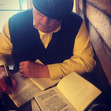
When Ripley Hitchcock handed Zane Grey a contract in 1910 for Heritage of the Desert, Grey knew he had arrived as an author. He kept the contract through the years as a treasured memento. Selling the
...more
- Paul Varner's profile
- 13 followers

