
Deborah Swift's Blog
April 22, 2026
Bride of the Devil by J P Reedman #CoffeePotBookClub
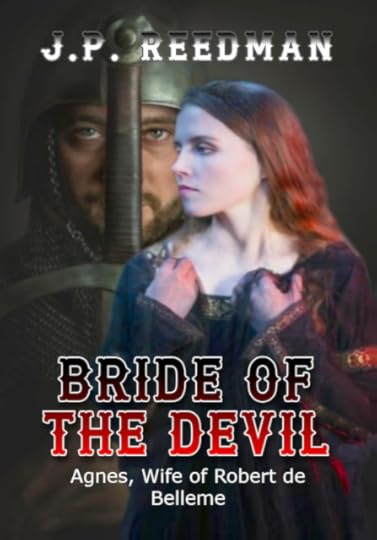
She is a great heiress; he is the wickedest man in Normandy.
Known to men far and wide as ‘The Devil,’ Robert de Belleme terrorises France alongside his equally fearsome mother, Mabel the Poisoner. But even a Devil needs an heir, and Mabel chooses the wealthy heiress Agnes of Ponthieu to be her son’s bride. The marriage is unhappy, though the longed-for son and heir is eventually born…but when Robert is away on one of his military campaigns, Agnes flees back to her father’s castle.
She is not safe; her young son William is not safe.
The Devil will seek to claim his own.
BOOK 13 IN THE MEDIEVAL BABES SERIES.
Buy Link: Universal Buy Link
This series is available to read on #KindleUnlimited.
About J.P. Reedman J.P. Reedman was born in Canada but has lived in the U.K. for over 30 years. Interests include folklore and anthropology, prehistoric archaeology (neolithic/bronze age Europe; ritual,burial & material culture), as well as The Wars of the Roses and the rest of the medieval era. Novels include the popular I, Richard Plantagenet series about Richard III, The Falcon and the Sun (featuring other members of the House of York), and Medieval Babes, an ongoing series about lesser-known medieval queens and noblewomen.
Connect with J.P.:
Website • Facebook • Twitter / X • InstagramThreads • Bluesky • Pinterest • TikTokAmazon Author Page • BookBub • GoodreadsThe post Bride of the Devil by J P Reedman #CoffeePotBookClub first appeared on Deborah Swift.


March 4, 2026
Both Sides of the Pond by Barbara Kent Lawrence #WW2 #TrueStory #CoffeePotBookClub

In January of 1939 when Barbara Greene, a beautiful young British actress, met Joe Kennedy, Jr., son of the American Ambassador, she could not have expected that their relationship would lead to her emigrating to the United States and learning to pilot a plane. Neither could her brother, Kent, have foreseen his bitter retreat from Dunkirk when he left England in January 1940 to fight in France, or his subsequent service on the frontlines in Cornwall, N Africa, Sicily, and Burma.
In this intensively researched war story of the author’s family, we also hear the stories of other ordinary people who survived extraordinary circumstances. Richly illustrated with photographs and documents, “Both Sides of the Pond, My Family’s War: 1933 – 1946” is a captivating book.
Amazon UK Paperback Buy Link:
https://www.amazon.co.uk/Both-Sides-Pond-Familys-1933-1946/dp/B0FMF2NTQZ/
Amazon US Paperback Buy Link:
https://www.amazon.com/Both-Sides-Pond-Familys-1933-1946/dp/B0FMF2NTQZ/

Dr. Lawrence is the author of many articles and nine books, including an award-winning dissertation about the influence of culture on aspirations in Maine. Her new book, Both Sides of the Pond, My Family’s War: 1933 – 1945, is available in book stores and on amazon.com.
A former professor, she has taught courses in anthropology and sociology, research, and writing non-fiction and memoir. Lawrence grew up in New York City and Washington D.C., then earned a BA in anthropology from Bennington College, an MA in sociology from New York University, and an Ed.D. in Administration, Policy and Planning from Boston University.
In addition to teaching, Lawrence has worked for the Department of Social Services and the Housing Development Administration in New York, directed a small museum in Maine, co-run a brokerage and construction company, consulted for the Rural School and Community Trust and KnowledgeWorks, and started four non-profit organizations supporting the environment and students.
When not working she loves to garden, knit, and go for walks, pastimes she learned from her British mother. She lives in Maine and is working on the third novel in her Islands series.
LinkTree: https://linktr.ee/barbarakentlawrenceauthor
Website: https://barbaralawrence.com/
Facebook: https://www.facebook.com/barbarakentlawrenceauthor
Instagram: https://www.instagram.com/barbarakentlawrenceauthor/
Amazon Author Page: https://www.amazon.com/stores/author/B000APK6SQ/
Goodreads: https://www.goodreads.com/author/show/109261.Barbara_Kent_Lawrence
March 2, 2026
Love Lost in Time by Cathie Dunn #Historical #DualTimeline @MaryAnneYarde @CathieDunn

A reluctant daughter. A dutiful wife. A mystery of the ages.
Languedoc, France, 2018
Historian Madeleine Winters would rather research her next project than rehash the strained relationship she had with her late mother. However, to claim her inheritance, she reluctantly agrees to stay the one year required in her late mother’s French home and begins renovations. But when she’s haunted by a female voice inside the house and tremors emanating from beneath her kitchen floorboards, she’s shocked to discover ancient human bones.
The Mediterranean coast, AD 777
Seventeen-year-old Nanthild is wise enough to know her place. Hiding her Pagan wisdom and dutifully accepting her political marriage, she’s surprised when she falls for her Christian husband, the Count of Carcassonne. But she struggles to keep her forbidden religious beliefs and her healing skills secret while her spouse goes off to fight in a terrible, bloody war.
As Maddie settles into her rustic village life, she becomes obsessed with unraveling the mysterious history buried in her new home. And when Nanthild is caught in the snare of an envious man, she’s terrified she’ll never embrace her beloved again.
Can two women torn apart by centuries help each other finally find peace?
Love Lost in Time is a vivid standalone historical fiction novel for fans of epoch-spanning enigmas. If you like dark mysteries, romantic connections, and hints of the paranormal, then you’ll adore Cathie Dunn’s tale of redemption and self-discovery.
BUY THE BOOKAbout Cathie Dunn
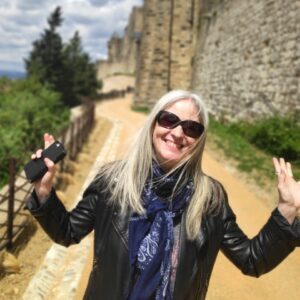 Cathie is an Amazon-bestselling author of historical fiction, dual-timeline, mystery, and romance. She loves to infuse her stories with a strong sense of place and time, combined with a dark secret or mystery – and a touch of romance. Often, you can find her deep down the rabbit hole of historical research…
In addition, she is also a historical fiction book promoter with The Coffee Pot Book Club, a novel-writing tutor, and a keen reviewer on her blog, Ruins & Reading.
After having lived in Scotland for almost two decades, Cathie is now enjoying the sunshine in the south of France with her husband, and her rescued pets, Ellie Dog & Charlie Cat.
She is a member of the Historical Novel Society, the Richard III Society, the Alliance of Independent Authors, and the Romantic Novelists’ Association.
WebsiteFacebookTwitterInstagramThe post Love Lost in Time by Cathie Dunn #Historical #DualTimeline @MaryAnneYarde @CathieDunn first appeared on Deborah Swift.February 26, 2026
Circus Bim Bom by Cliff Lovette #Circus #ColdWar #Adventure
I’m delighted to welcome Cliff Lovette to my blog to tell us about Circus Bim Bom.
CIRCUS BIM BOMBy all accounts, the Soviet circus that toured America in 1990 was a small blip on the radar of the Cold War’s end. It barely received national news coverage. So how do I bring such an incidental event to life? How do I make readers care about people history forgot to record? The answer: I don’t just tell the story of the event. I tell the story of the people caught up in it.
Writing Circus Bim Bom required building two worlds simultaneously: the crumbling Soviet empire at a pivotal juncture when sworn enemies dared to envision peace, and the intimate, sensory world of circus life sawdust and sequins, animal musk and greasepaint, the roar of the crowd and the thrill of the high wire.
The Weight of History
President Gorbachev approved the newly formed Circus Bim Bom’s tour to showcase his Perestroika experiment—attempting to blend the best aspects of communism and capitalism while fostering cultural bridges across the Cold War divide. He wanted to impress upon President Bush and The West his genuine intentions to join the world community of peaceful nations. A pretty tall order for a humble circus.
That’s the macro world: superpowers negotiating, walls falling, an empire imploding. But readers don’t connect with geopolitics. They connect with a young aerialist who dreams of becoming a clown while his father insists he carry on the family tradition. They connect with performers who left families behind in bread lines, uncertain if they’ll get enough to eat.
Performers, Not Bystanders
The performers couldn’t just be bystanders to history. They had to be active participants—people with skills, relationships, dreams, and fears. And this circus faced a unique challenge: it was assembled specifically for this tour. These performers had never worked together before. They arrived in America as strangers. Then disaster struck. The USDA quarantined their animals in Brooklyn—no health certificates, no release. The trainers erupted. “We start rehearsals tomorrow, da? With what?” To build the world of the animal trainers, I immersed myself in their relationships with their animals. When the creatures finally arrived, they were traumatized. A young bear named Gorki engaged in repetitive head-banging. Masha gnawed steel bars until blood stained the floor. The big cats’ ribs showed through matted fur. Through the trainers’ eyes, readers experience the bond between human and animal— and the moral complexity of circus life. “These cats are family,” one trainer insists. “They seek our affection, our touch. We love them.” Another admits the dark side:
unscrupulous circuses that drown imperfect animals or sell them to illegal traders. The world I built isn’t simple. Neither were these people.
The Moment They Became Family
Every circus needs its turning point—the moment when a collection of individuals becomes a troupe. For Bim Bom, it happened during a rehearsal break when someone started playing an accordion. The song was “Dorogoi Dlinnoyu”—an old Russian folk tune that Western audiences know as “Those Were the Days.” The circus director watched from the sidelines as his fragmented company found unity in song and dance. Russians, Georgians, Ukrainians, Kazakhs, Azerbaijanis, Americans—all sharing the language of movement and wistful singing. The harsh work lights dimmed until only a single spotlight remained, catching the flash of whirling bodies and the sparkle of costume jewelry. When the last note faded, scattered footprints in the sawdust were the only evidence of what had happened. That scene required no explanation of Cold War politics. The world-building happened through sensory detail—the smell of sawdust, the blur of spinning skirts, the exhausted laughter of performers who had been strangers hours before.
Making Small Events Matter
The Ringmaster promises this: “The best Soviet stories are like vodka—they burn with suffering, intoxicate with conflict, keep you stewing in reflection, and yearning for your heart’s desire.” A Soviet circus touring America during the empire’s final months wasn’t front-page news. But for the performers caught between two worlds, facing authoritarianism at home and an uncertain future in a land of freedom, every choice carried weight. That’s my task: to find the human drama in forgotten corners of history. To build worlds so vivid that readers smell the animal musk, hear the roar of the crowd, and share their exhilaration and fear as they watch death-defying acts. To transform bystanders into performers.
☆☆☆☆☆
Circus Bim Bom: A Cold War Adventure launches March 1, 2026. The novel features over forty-five embedded links to period music, videos, and historical footage, allowing readers to hear the songs the performers danced to and watch the speeches that shaped their world. But world-building doesn’t stop at the page. At bimbombookclub.com, readers become part of the circus family. Twenty-five animated character avatars introduce themselves through video. The Historians’ Room invites readers to debate where history ends and imagination begins. Live chats and Zoom calls connect readers with their favorite characters—and each other. Because the best stories don’t just build worlds. They build communities.

Soviet circus performers arrived in America hoping to build cultural bridges. Instead, they became unwitting pawns in a Cold War game of international intrigue.
When the first privately owned Soviet circus arrived in 1990 in America as the Soviet Union disintegrated, its elite performers expected to build cultural bridges through spectacular shows. Instead, this prestigious troupe faced a perilous journey through Cold War America.
Circus director Yuri had to navigate treacherous waters where American mobsters, Soviet agents, and political forces circled like predators. Young aerialist Anton dreamed of becoming a clown against his family’s wishes, while forbidden romances and unexpected connections bloomed between Soviet performers and Americans who saw past the ideological divide. As high-stakes conspiracies threatened to tear the circus family apart, they had to choose between the authoritarian chains of home and the uncertain promise of freedom.
As the Ringmaster reminds us, “The best Soviet stories are like vodka—they burn with suffering, intoxicate with conflict, keep you stewing in reflection, and yearning for your heart’s desire.” This genre-bending tale explores whether human connection can transcend ideology—and whether storytelling can bridge the divides that separate us.
BUT THE BOOK ABOUT CLIFFFather, storyteller, and dog lover living in Sandy Springs, Georgia, with London curled at his feet.Circus Bim Bom: A Cold War Adventure is the first book in his debut duology, followed by Circus Bim Bom: The Great Escape.WebsiteInstagramYouTubeTikToKThe post Circus Bim Bom by Cliff Lovette #Circus #ColdWar #Adventure first appeared on Deborah Swift.
January 25, 2026
Deborah’s Newsletter – The Astonishing Past
I send my newsletters every month and every now and again I put one on the blog so you can see what kind of content I send out.
 Hello readers and book-loving friends. It’s a bit late to wish you all a Happy New Year, but better late than never! This month I’m working on my new novel set during the Partition of India in 1947 just after Indian Independence.
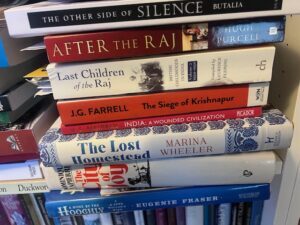
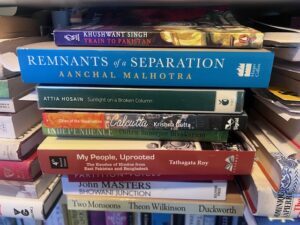
Partition – the 80th anniversary of this historic event will be in 2027. It is one of those subjects for which I can never do enough research, or do enough justice to the stories of those who lived through it. By focusing on my main characters, I’m trying to hammer out one story out of the millions of possibilities that exist. The story includes the jaw-dropping experiences of an Anglo-Indian woman, Edie, based on my aunt’s life in India, as well as a Muslim family who leave for the newly-formed Pakistan, and a Hindu family who stay. For those of you who don’t know, I have family on my father’s side in India and my father was brought up there in Kolkata – then Calcutta. I have longed to know more about this history which intersects with some personal stories of my relatives – now all sadly passed on. Here are my research books – such a lot of reading.
In which displaced women were shunted about like pawns on a chessboard.
After the violence of the division of India into India and Pakistan, the Central Recovery system was set up to recover women who had been taken by men of the ‘other side’ and it attempted to return them over the border to their families. This was a government initiative. But imagine – you are a woman who has now got children in your new life, and you don’t want to leave them behind. Or – you were worked as a slave by your previous family and don’t want to return to them. Or, you have grown to love your wife and don’t want her returned to another man. So many stories – and that is only a small part of the book.
It should be finished by April, after which it will go through a long punishing edit! I’ll tell you a bit more about it once it’s all complete.
Here is my coffee time video, and one I have used to glean details of setting and atmosphere for the new book. Take a look at Calcutta in 1947 with this British Film Institute video of a bygone era. (12 minutes).

Left: This is the heart of Calcutta’s “business district,” 1945. It was the “Times Square” of Calcutta on Chowringee Road.
A Taxing Affair
Like many other self-employed people, I’ve been doing my tax returns ready for the January deadline. Ugh. It is eye-opening when you realize exactly how you spend your money. When I saw how many books I’d bought that year, it explained why the shelves are groaning!
WW2 Special offers this month – grab a January bargain!

Last Train to Freedom is on offer in the US for 99c.
http://mybook.to/TransSiberian
Operation Tulip is on offer in the UK for 99p
Australian WW2 fan? You can buy The Shadow Network for $4.99 here.
GIULIA TOFANA SERIES
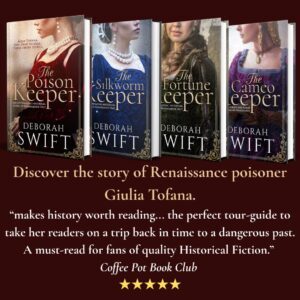
The Cameo Keeper continues to do well, with some lovely reviews from readers. I have just read the proposed pilot script of Episode 1 for a TV series based on these books. Fingers crossed that a producer will want to make it because the screenplay is fabulous. There are now four books in the series. Thank you, those who have read, rated or reviewed and kept these books in the public eye. Here’s the link to them all.
For WritersI know how hard this job is, so keep going!
My writing process for The Cameo Keeper – an interview.
Here’s a nice selection of tips on writing engaging historical fiction from Writers Digest.
What I’m readingWell, apart from mountains of research – I’m reading a lot of Cold War novels, the most recent being ‘A Shadow in Moscow’ by Katherine Reay.
Market Research – I love to know what you enjoy in my books so if you have time, ping me an email with which of my books you’ve enjoyed most.
Happy reading everyone!
Until next time
Deborah x
The post Deborah’s Newsletter – The Astonishing Past first appeared on Deborah Swift.
January 21, 2026
Red Anemones by Paula Dáil – Read an Excerpt #CoffeePotBookClub #HistFic
Moving among generations of a German-Jewish-American family, “Red Anemones” is a poignant exploration of the intricate bonds, untold secrets, and unspoken legacies our ancestors bestow upon us.
Natalie Barlow’s journey of self-discovery begins when her estranged mother’s sudden death releases a storm of unrevealed family secrets reaching back to pre-WWI Germany.
As Natalie navigates the complexities of her newly discovered Jewish identity and her ancestral heritage, she comes face-to-face with the early 20th-century German immigrant experience, which included strong anti-German sentiment and deep antisemitism that prevailed across America.
Through diaries and letters her mother saved, Natalie learns of the personal costs this ugly reality extracted from generations of her own family. Ultimately, she must confront the question of her own identity.
Like Israel’s red anemones carpeting the western Negev and Dvira Forest of the Judean foothills year after year, Natalie is determined, no matter the personal costs, to find the courage, resiliency, and passion to embrace the changes that bring new beginnings. Inspired by a true story.
Praise for Red Anemones:““Red Anemones” by Paula Dáil weaves a powerful narrative inspired by a gripping true story, infusing the text with authenticity and emotional resonance. This book is an absolute must-read for fans of the genre, as it expertly blends enthralling storytelling with fully realised characters and a rich plot.”
~ Yarde Book Promotion, Editorial 5* Review
“Poignant, disturbing, and historically and dramatically riveting.”
~ Kirkus Reviews
“As I read, I found myself utterly taken by Dáil’s writing. Her prose has rhythm and patience, tight, deliberate, and quietly powerful. She writes with tenderness but never sentimentality, allowing emotion to rise naturally from her characters’ choices. I could almost feel the weight of Nathalie’s conflict between family duty and self-determination, between love and freedom. The language is lived-in, grounded, and full of quiet heat.”
~ Literary Titan, 5* Review
EXCERPT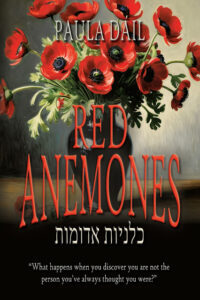 “All I know is he is translating dairies and letters found after your mother’s recent death – may her memory be for a blessing – and that they describe a family history you know nothing about but has revealed you to be the Jew you didn’t know you were. Mazel Tov!” So far, not much of my mother’s memory is any kind of blessing, I think, resisting the urge to say this out loud.
“The diaries are mostly from my grandmother who immigrated from Germany as a young woman; the letters are from the family she left behind. There are some notebooks belonging to my mother, both in German and in English, but I don’t know a lot about those yet. The diaries strongly suggest my grandmother was very unhappy for most of the years she lived in America. I don’t know what happened to her – whether she returned to Germany and died there or remained in America and died here. I don’t know how she died – illness, accident, intentionally, or she simply gave up on life and died heartbroken. The truth is, rabbi, I know almost nothing. I’ve never even seen a picture of her.” I pause, choking down sudden, unexpected tears.
“And you say Mourner’s Kaddish for her?”
“I don’t know the Mourner’s Kaddish…”
“It is the most vital of all Jewish prayers because it honors our ancestors… keeps us connected to them. What could be more important? I will be sure you have knowledge of it before you leave today, but first, tell me what is distressing you right now.”
“After immigrating to America, it appears my grandmother was compelled to deny being German and being Jewish, and passed this fear to her two daughters, one of whom was my mother. My aunt, her sister, is having a very difficult time with the contents of the letters and diaries being revealed and has been very reluctant to discuss any of it. She believes the risks are too great and a lot of people will be hurt. Honestly, I don’t understand any of this, and Adrian believes you can help me.”
“First, understand that America’s founders only intended for this to be a great country for white, Anglo-Saxon, protestant men and no one else… not for women, the dark-skinned, the circumcised, not even for the native people who were already living here for centuries. The colonists were so arrogant they believed they were entitled to have what they wanted and getting it was all they cared about. Now we are left with the inevitable mess this misguided attitude has created. Such a travesty!” In a sudden burst of energy, the rabbi completes his sentence by sweeping his right hand through the air, attempting to move this despicable history out of his direct line of vision. I can’t help smiling at this brief, remarkably accurate interpretation of American history.
“By the time your grandmother arrived, there was much for Germans and Jews in America to fear, beginning before World War I, when immigration generally was becoming increasingly unpopular, and remained that way up until the end of World War II. Your grandmother was not wrong in her assessment of her surroundings, and she may have been very wise to do what she needed to do to protect herself and her children.
Hitler was not the only person in the world who actively persecuted the Jews; across human history there has been no shortage of political leaders eager and willing to kill us. But more important for you right now is to think about this: if a German Jew is forced to deny being German and deny being Jewish, what identity is left to them? How do they answer the simple ‘who are you?’ and ‘where do you come from?’ questions?” Looking me straight in the eye, he waits for my answer.
“It would seem there is no identity left, and it would be impossible to answer those questions,” I finally admit, looking into the space above the rabbi’s head, hoping another episode of tears I feel forming don’t start dripping down my face.
“Precisely! There is no identity… nothing to hold onto that validates someone as a living, breathing human being. Think of it as being adrift, alone in the treacherous ocean they crossed to come here. They aren’t fish, they are air-breathing, land-loving humans facing deep panic at not knowing where they belong or how to survive in all that water. Nothingness surrounds them, and living beings cannot survive for long in a state of nothingness.”
 BUY THE BOOK
Universal Buy Link
BUY THE BOOK
Universal Buy Link
About Paula Dáil
 A native Californian, Paula Dáil is an emerita research professor of social welfare and public policy and award-winning author. Widely published in the social sciences, she has also been recognized for her non-fiction and fiction writing, both under her own name and her pen name, Avery Michael.She is the recipient of first or second place Readers Favorite, Reader’s Choice, Independent Publisher, Bookfest and Literary Titan awards, a Booklist Starred Review and several other five-star reviews, including Goodreads, The Book Commentary, and Independent Book Review. Two of her books received the Non-fiction Book of the Year Award from the Council for Wisconsin Writers.She holds a PhD from the University of Wisconsin-Madison and lives with her husband and dog in the Great Lakes Region of the Upper Midwest.Connect with Paula:Website • FacebookAmazon Author Page • GoodreadsThe post Red Anemones by Paula Dáil – Read an Excerpt #CoffeePotBookClub #HistFic first appeared on Deborah Swift.
January 15, 2026
Spotlight on The Relic Keeper by Heidi Eljarbo
Inspired by Gerrit van Honthorst’s masterpiece, The Adoration of the Child, and the novel Oliver Twist by Charles Dickens.
Italy, 1620.
Angelo is an orphan, lonely and forgotten. Having been passed on from one family to the next, he ends up as a common thief, subject to and under the thumb of a ruthless robber called Tozzo.
Angelo knows no other life and has lost hope that any chance of providence will ever replace his lonely, misfortunate existence. When he loses his master, his livelihood is shaken. Tozzo’s plunder is hidden in a safe place, but what will happen if someone comes after Angelo to get their hands on the stolen relics? More than that, he feels threatened by words he’s heard too many times; that he’ll always remain unforgiven and doomed.
One day, a priest invites Angelo to help with chores around the church and rectory and, in exchange, offers him room and board. Padre Benedetto’s kindness and respect are unfamiliar and confusing, but Angelo’s safety is still a grave concern. Two older robbers have heard rumors about the hidden treasures and will stop at nothing to attain them.
With literary depictions and imagery, Angelo’s story is a gripping and emotional journey of faint hope and truth in seventeenth-century Italy—an artistic and audacious tale that crosses paths with art collector Vincenzo Giustiniani and the powerful Medici family.
Using invisible threads, Heidi Eljarbo weaves together her fictional stories with historical figures and real events. The Relic Keeper is similar in tone to books by Geraldine Brooks, Tracy Chevalier, Deborah Swift, and Laura Morelli.
Buy Link: Universal Buy Link #KindleUnlimited.
About Heidi Eljarbo

Heidi Eljarbo grew up in a home full of books, artwork, and happy creativity. She is the author of historical novels filled with courage, hope, mystery, adventure, and sweet romance during challenging times. She’s been named a master of dual timelines and often writes about strong-willed women of past centuries.
After living in Canada, six US states, Japan, Switzerland, and Austria, Heidi now calls Norway home. She lives with her husband on a charming island and enjoys walking in any kind of weather, hugging her grandchildren, and has a passion for art and history.
Her family’s chosen retreat is a mountain cabin, where they hike in the summer and ski the vast white terrain during winter.
Heidi’s favorites are her family, God’s beautiful nature, and the word whimsical.
Sign up for her newsletter:
https://www.heidieljarbo.com/newsletter!
Get in touch with Heidi
Website • Twitter / X • Facebook • Instagram • Pinterest
BookBub • Amazon Author Page • Goodreads
 Tour ScheduleThe post Spotlight on The Relic Keeper by Heidi Eljarbo first appeared on Deborah Swift.
December 23, 2025
Christmas and Holiday Greetings to all my readers
A quick post to wish all my readers and book friends a very happy holiday season, and plenty of reading for the new year.
This year I have published two books – Last Train to Freedom set in WW2 and The Cameo Keeper, set in Renaissance Rome. There will be a fifth book in the Renaissance series eventually, but I have another few books to finish first. Next year, April will see the publication of The Enemy’s Wife, the second in the series following Zofia after her WW2 journey on the Trans-Siberian Express, and then there will be a third in that series set in the Cold War era in Chicago.
For now though, I am working on a novel set during the Partition of India, The River Between Us, and this will appear the following year, the 80th anniversary of that event. In the process of writing and publication everything is a year or so ahead of when the book actually hits the shelves or your e-reader. I am enjoying the research and writing, and finding out about this momentous event in history. My father was brought up as Anglo-Indian in India, and the Partition affected him and his family in ways I hadn’t fully understood until doing the research.
Over Christmas I hope to catch up on my reading and have a few weeks away from the desk and the plot-wrangling that always occupies so much of my mind. Looking at the weather forecast it seems the rain has eased off at last, and I hope for some long walks and then evenings in front of the fire with family and friends.
Wherever you are, I hope you have a lovely time and send you all good wishes for 2026.
The post Christmas and Holiday Greetings to all my readers first appeared on Deborah Swift.
December 11, 2025
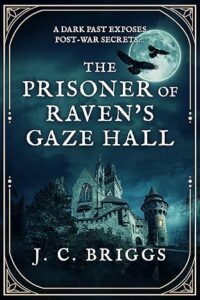
The Prisoner of Raven’s Gaze Hall by J C Briggs #WW1 #Gothic #Mystery
The Prisoner of Raven’s Gaze Hall
The raven sits on the ravenstone,
And his black wing flits
O’er the milk-white bones…
Manfred, by Lord Byron
England, 1919
Catherine Sisley is home from her nursing role in the war and mourning the death of her beloved, Captain Leo Beaufort.
She is unsure about her future, and when a former patient, John Lestrange, writes to her asking if she will come to Raven’s Gaze Hall in Yorkshire to nurse his ailing grandmother, she decides to go.
But Raven’s Gaze turns out to be a house with a dark past.
There is the enigmatic Bennet Lestrange, John’s father, whom Catherine comes to dislike and fear. And there is the secrecy surrounding the deaths of John’s mother and brother, both of whom are never mentioned.
And then Catherine finds an old nursery with abandoned toys and a room with a hospital bed where a patient had obviously been restrained.
Feeling she is being spied on, and repulsed by the tense atmosphere, Catherine is determined to leave.
But something pulls her back…
Will Catherine uncover the mysteries lurking in the Hall? Can she find happiness again after the grief of the First World War?
Or will the darkness at Raven’s Gaze Hall take her over…?
THE PRISONER OF RAVEN’S GAZE HALL is a Gothic mystery set in England after the First World War, exposing family secrets and the legacy of trauma from the war and its aftermath.
 REVIEW
Fabulously atmospheric and gripping. Nurse Catherine Sisley is left without work when her employers go abroad. After a chance acquaintance with a man she remembers from her time nursing at the Front, she decides to take a nursing job at Raven’s Gaze Hall. Remote and isolated on the Lancashire moors, she thinks it might be peaceful after the terrors of war. But Raven’s Gaze Hall, as its creepy name suggests, is a place of secrets and lies. Presided over by eccentric owner Bennet Le Strange, who likes nothing more than to point out all the dreadful history of the building and its surroundings, Catherine soon feels uneasy. Her friend John, who is still suffering from shell shock, will tell her little about how his parents died, and why he is tied to this forbidding place or why Bennet LeStrange has such a hold on them all. Catherine begins to explore and finds a friend in Grizel, a kind of wise woman who provides homespun remedies to the locals such as Annot and her ailing husband, Ted. Grizel is a character that the reader can instantly trust, unlike all the others who seem to be hiding something.
The discovery of a locked room, complete with restraints, adds to the gloomy atmosphere. Who was held there and why?
The thing I admired most about this novel was the way the shadow of the war seemed to taint everything; the men driven mad by the trenches and the horror of watching their friends and comrades die. Today we would call it PTSD, then it was just ‘shellshock.’ The opening scenes at the Casualty Clearing Station and the horrors of Passchendaele haunt the rest of the book. The detail of the primitive conditions of the every day lives of the nurses, how the horrific wounds were treated, the carbolic and chloroform, the shrapnel and gas, are both eye-opening and tragic. Raven’s Gaze Hall is a gothic mystery with a serious amount of research underpinning it, and it shows. Not only is this a mystery to keep you up at night, but this is a book rooted in real history that really brings home the legacy of the First World War. Highly recommended.
This book is also available on KindleUnlimited.
BUY THE BOOKThe post The Prisoner of Raven’s Gaze Hall by J C Briggs #WW1 #Gothic #Mystery first appeared on Deborah Swift.December 9, 2025
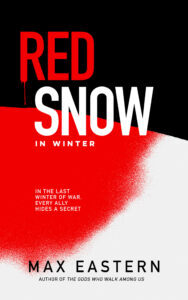
Red Snow in Winter by Max Eastern #Thriller #NewRelease #Espionage
Endorsements:
“A gripping cat-and-mouse political thriller, with an intelligence officer finding himself in an espionage battle involving Americans, Nazis, and Russians. A high-stakes plot and fascinating historical detail.”
—R.G. Belsky, author of the Clare Carlson mystery series
“Every curve in this novel is taken with the foot on the gas. Hitchcockian.”
—Timothy Miller, author of The Strange Case of the Pharaoh’s Heart
ABOUT MAX EASTERNInspired by his father’s stories of serving as an intelligence officer in World War II, Max Eastern wrote his debut historical novel, Red Snow in Winter. He has also published nonfiction on topics ranging from Ulysses S. Grant’s first command to Attila the Hun. His modern noir novel, The Gods Who Walk Among Us, was a Kindle Scout selection in 2016. A lawyer specializing in publishing, he lives in New York State.Find him on his website https://maxeastern.wordpress.com/“I found a great new-to-me author in Max Eastern. I love how he brought his characters to life and made the situations in this novel seem as though they were happening in front of me.”
— Terrie Farley Moran, national bestselling co-author of the Jessica Fletcher ‘Murder She Wrote’ mystery series.
 REVIEW
This is a fast-moving, page-turning espionage thriller set just after the war. Julius Orlinsky, a young intelligence officer with definite James Bond type characteristics, certainly has a run of bad luck. Not only does someone take a pot shot at him at a party, but when he investigates he finds he has somehow become a target – but he’s not exactly sure who is after him. After a disastrous confrontation where someone ends up dead, he soon finds he is on the run from the police as well as the shadowy figures who want to kill him. Further investigations mean he has to to re-think everything he ever knew about himself and the woman he loves. Could she have been a traitor and betrayed an innocent family to the Nazis? Was he a stooge, unable to distinguish lies from truth?
The settings are believable and the whole book has a dark, slightly seedy vibe reminiscent of Raymond Chandler. Many of the characters are unpleasant, but this all adds to the tension. An excellent thriller highly recommended for anyone who wants to be kept up at night!
More Netgalley reviews here:https://www.netgalley.com/catalog/book/743087
The post Red Snow in Winter by Max Eastern #Thriller #NewRelease #Espionage first appeared on Deborah Swift.

