Tracy Rowan's Blog
February 1, 2023
A Few Thoughts About Reading at the End of 2022 and Beginning of 2023
I fear this is going to be one of those posts that ramble, and are held together with good intentions and chewing gum. While on some fronts the cancer battle is going well, the bone pain went from bad to worse at the end of the year, to the point that the medical team all nodded and said, “radiation. Again.” Between that and the Zometa they seem determined to beef up my bones (No soup joke intended.) and, with luck, give me a break from the discomfort.
Well… radiation is no joke, especially the second time around when it came at me like a coked-up baboon with a flaming sledgehammer. If I started to read I’d fall asleep almost immediately, so for the last few months I’ve relied on audiobooks, though many of them failed to hold my interest. I’m not going to list them here though, since it’s not their fault they didn’t keep me reading.
What Worked and What Didn’t:
The Sins of Jack Saul, by Glenn Chandler – Interesting account of the life of an Edwardian-era rent boy, about the ease with which he slid into the life, and the way he affected the whole “Uranian” culture, such as it was. In a real sense Jack was an early gay-rights proponent. He wasn’t always on the side of the angels, but his (relatively) unashamed approach to the way he lived and loved was very much an in-your-face challenge to the upright, uptight, and often hypocritical Edwardian society. If you’re looking to dig a bit deeper into Queer history, this is worth a look.
The Living Blood, by Tananarive Due – Sequel to My Soul to Keep, and just as good, but alas the narrative lost me in the midst of some of my most uncomfortable days, and I returned it to the library before finishing it. I hope to get back to it one of these days.
Less is Lost, by Andrew Sean Greer – Sequel to Less, it picks up not long after the events of Less. Less and Freddy are now together, and living in the house that belonged to Less’ ex, whose death sends Arthur and Freddy into a financial tizzy. Arthur is forced to take on various publicity events to promote his new book, and Freddy is restless and looking to make writing his career too. Both of them have serious questions about their relationship.
While Arthur goes rambling around the US on his various publicity jobs, he finds himself exploring what it means to be an American, what it means to fit in and why he might want to, what it means to love Freddy in light of his own past failures, and a whole lot of the other questions and concerns that Arthur carries around in that over-stuffed brain of his.
As always, he’s charming, funny, sad, smart, insightful (though he doesn’t always realize it) and SO worth your time.
Dodge and Twist, by Tony Lee — Sounded like fun; Oliver Twist and the Artful Dodger team up again a dozen or so years after the events of Dickens’ novel. Oliver is seeking justice after having had his inheritance stolen from him. Dodger has an audacious plan to steal the Koh-i-noor diamond. But after an hour or so I started feeling that it was formulaic and a lot less imaginative as I had hoped. Doubt I’ll finish it. If anyone else does and wants to warn me away, or urge me to finish, please feel free.
Started & Determined to Finish:
The Bullet That Missed, by Richard Osman – Another in the Thursday Murder Club series, and it starts out just as wonderfully quirky as I hoped and expected. I just can’t stay awake over hard copy right now.
Siren Queen, by Nghi Vo – Really intriguing so far!
Truly, Madly, Alan Rickman – Rickman’s diaries from 1993 through his death. Difficult until you get the rhythm of his writing style, often obscure and occasionally oddly cryptic. It’s a lot of work sometimes, so I’m taking it slow.
The Magician, by Colm Toibin – This took so long to come in at the library that by the time it dropped I’d forgotten what it was about. It’s not a fantasy about magick-workers, it’s a novel about Thomas Mann! I’m a couple of chapters in and enjoying it. Finding the style enchanting.
The Road to Hell is Paved with Books That Never Had a Chance
So many books passed through my library accounts in the last few months, including some Enola Holmes books, and a few socio-political books from people whose social media I follow. And I have not been able to do more than open them, sigh, and close them again. Some don’t even get that far. But I’m hoping things will even out again in the near future, and I’ll be reading the way I always have. Wish me luck.


October 8, 2022
September 2022 Reading Recap
Hmmm, we’re a week into October and I haven’t done anything about my reading recap for last month. Some days it’s just not possible to accomplish anything.
Let me start with two titles I did not finish. The first was Paul Tremblay’s The Cabin at the End of the World, which I picked up because I had been encountering a lot of talk about it. I was warned that it was disturbing, but I underestimated my ability to deal with how disturbing it actually was. I’m not sure I’ll ever be willing to go back to it, but you never know.
The second was Bel Canto by Ann Patchett. I honestly can’t tell you exactly where or why I lost interest. Patchett’s prose is lovely, and the developing story looked to be interesting enough. But one day I just closed the book and moved on. Again, I don’t know that I won’t ever go back to it, but right now it doesn’t seem likely.
Cloud Cuckoo Land, by Anthony Doerr – This was the first book I finished last month, and in all honesty, I think it was my favorite. In part, I suppose, that had to do with the fact that I spent a lot of time watching The Sandman on Netflix, and found myself deeply involved in questions about the power of stories, and why we need them. Cloud Cuckoo Land is a book about stories, one in particular, the threads of which inform all the story arcs within the novel. One story, five arcs each revolving around a single character who is somehow tied to an ancient manuscript. Each one of them leads a wholly different life from each of the others, but the ancient tale is meaningful to all of their lives. It’s an extraordinary book about how we need our stories, we need to hear them and we need to tell them to truly understand who we are.
Sandman deluxe edition Vol 1, by Neil Gaiman– Once I started watching the series on Netflix I wanted to go back and reacquaint myself with the graphic novel it was based on. And then I watched the series again and reread this volume, all of which gave me new things to think about so I’m going to re-review it this month.
As with Cloud Cuckoo Land, Sandman is about the power of stories as well. There’s a reason why Morpheus is also known as the Prince of Stories. The Endless (Destiny, Death, Dream, Destruction, Desire, Despair, and Delirium who was Delight) are siblings who serve humanity via their roles, but all of them except for Dream are stark realities of life. Only Dream can really expand on the meaning of that life through the dreams he fashions from the sleeping minds of humans. He’s the one who gives a greater meaning to all the others, the one who helps us understand and assimilate the others.
This first volume contains the whole of the first season of the show, and if you’re a fan of the latter, I really recommend you read it. Though I will say that much of it is harsh, some of it is dated, and ultimately I think the series does a better job of explaining the mythos of the Endless than the books do. Not a surprise, really. When an author has a chance to revisit their work after several decades, of course things are going to change. Any decent author has spent those decades thinking “If I could do it over again, I’d change _____.”
Earthseed: Parable of the Sower, by Octavia Butler – I picked this up on the strength of my enjoyment of the Lilith’s Brood trilogy from last month. And while I enjoyed it, it felt weirdly over-familiar to me, as if it was setting up the Lilith stories from the other side, with humans as the space-faring race. I didn’t find the characters as interesting as in the Lilith books, or the plot quite as involving. The net result was that I haven’t bothered to look at the sequel. I suspect this is partly due to the fact that Butler never finished this series. If I can’t really know where she was going with this, I’m not sure I need to travel along any farther.
Berlin: Life and Death in the City at the Center of the World, by Sinclair McKay – As a long-time student of the era between about 1850-1950, I have read a good deal about Germany during the first and second World Wars, albeit most of it from a political/military standpoint. McKay focuses on one city, Berlin, and the people who lived there between the wars, during WWII, and just after it ended, and the city was divided. It’s highly informative, as I would have expected, but oddly moving because it’s so human.
There’s no attempt to excuse the German people for their part in the war, and the Holocaust, but there is a deeper understanding about the lives of ordinary people caught up in a situation, for whatever reason, they never saw coming. And honestly, who hasn’t succumbed to the desire to hide their head in the sand sometimes and pretend the bad things aren’t happening?
Whatever else you can say about the citizens of Berlin, you will find how dearly they paid for Hitler’s insane aggression. Wonderful book for anyone who wants a deeper dive into the history of the city.
Easy Chicago Cookbook, Book Sumo Press – Excuse me a moment, I’m going to go scream.
AAAAAAAAAAAAAAAAAAAAAAAAAAAAAAAAAAAAAAAAAAAAAAAAAAAAAAAAAAAAAAAAAAA
Okay I’m back. But that should give you some idea of my response to this cookbook that has absolutely nothing at all to do with cooking in Chicago. Nothing. You simply cannot append the name of a Chicago suburb to some mundane recipe and have it be an accurate reflection of how people eat here.
They don’t get anything right, not even the cut of meat used for our Italian beef. The damn sandwiches don’t even look right! I don’t know who did the homework on this (if anyone actually did) but they need to be fired. This book is absolute crap. I got it free. I’m not sure it was even worth the download time.
The Little Prince, by Antoine de Saint-Exupéry – I had to read this book in HS and hated it. It struck me as the worst sort of child-worshipping BS. You know what I’m talking about, right? Oh children are so pure, why can’t we all be like them? But I thought I might try again. Maybe I was wrong all those years ago.
I wasn’t. The prince himself is still tiresome. So is the aviator. So are all the creatures they encounter. I’m sorry Miss Karsh (Senior year English teacher) but you were wrong. This isn’t charming, it’s pretentious as fuck.
So I hope to read more in October. I just started Siren and I’m really liking it so far. But I’m also doing more writing so the reading is taking a back seat right now. I’ll be back in November to yammer some more about books.
September 17, 2022
September 5, 2022
The New Inn, by Dargelos: A Sandman Fic
1990
“Open for business?”
Hob glanced up into the mirror behind the shelves he was stocking and saw a youngish, fair-haired man standing at the bar. “First of the month,” he said, turning to face the man.
“Damn. I saw the open door and the alluring display,” He waved his hand toward the shelves. “of drink, and thought I’d gotten lucky.”
“Well perhaps you have,” Hob told him as he found two glasses and took down a bottle of the MacAllan. “The name’s Rob and I’m the owner.” He poured two fingers for each of them and pushed a glass toward his guest. “On the house. For luck.”
“Stephen. And thank you.” They clinked glasses and sipped their whiskey in companionable silence. “I’ve been sad about the White Horse,” Stephen admitted. “Then I saw the signs.”
“A can of spray paint is cheap advertising, but effective,” Hob admitted. He liked Stephen, possibly too much, but his life wasn’t currently about partnership, or even scratching an itch. He was focusing on business, and the hope that this new venture of his would pay off.
“So… first of the month, you say? Grand opening?”
“Oh yes, with a brass band, and clowns, and games for the kiddies.” The look on Stephen’s face made him laugh.
“You’re pulling my leg.”
“Absolutely. On the first I’m going to open the door, and go sit over there,” he pointed to a table by the fireplace, “and wait for business to come to me. With luck I’ll be able to pay my bartender and cook.”
“Oh so you’re a hands-off sort of innkeeper?”
He wasn’t, not really. Every inch of the place he’d planned out from the simple but welcoming décor to the wine cellar that, along with a nice selection at different price points, held a few bottles of exquisite vintage that he hoped one day to share with a friend. His best friend. “I’d be hopeless behind the bar,” Hob told him as he put the bottle back on the shelf. “People tell me their life stories and I like listening to them.”
“Remind me not to bend your ear with the story of my life.” Stephen threw back the last swallow of his whiskey and set the empty glass on the bar. “So you’ll have a lot of free time.”
Oh here it comes, Hob thought.
“Perhaps I could convince you to spend some of that time with me?”
And in spite of himself, Hob replied, “Perhaps.”
1997
The New Inn (Everyone kept asking him why that name, and Hob would just shrug and say “I have no imagination.” It wasn’t their business.) was doing well. He and Stephen were doing well.
He and Deborah were doing well. She’d stumbled in one day with a broken heel on her shoe, and Hob had fixed it for her. “Did a bit of cobbling in my youth,” he told her. And when she put her foot on his knee, and he grasped her ankle as he slipped her shoe back on, their eyes met, and he realized that he would be spending even more time away from home.
That hadn’t been his plan at all. He’d been fairly uninterested in sex since burning out on every possible (consensual) vice during his years in Paris and Berlin between the wars. He’d finally come home late in 1938, absolutely finished with fucking of any sort. It had been more than twenty years that he’d lived like a monk until he met a very nice young lady on Carnaby Street, and they’d explored the idea of “free love” together with some vigor. Since then there’d been the occasional dalliance, but nothing more than one-nighters, or very short affairs that almost always ended with him shrugging and saying he was sorry.
Nothing at all touched his heart. That had ended even before the Berlin years, and the strange thing was that now Hob barely remembered the woman who broke his heart back in 1919 when everyone was giddy with victory. Edith? Ethel? He laughed when he thought about how furious she’d be to be forgotten. Ermintrude? Perhaps his heart hadn’t been so much shattered as badly bruised after all. But he had proposed, after a fashion anyway, and she’d flat out told him that she had bigger plans, bigger fish to fry, as she put it. And she told him he wouldn’t understand.
He’d heard that she’d done well for herself, and then she’d disappeared entirely around the time he was pursuing a pair of twins, boy and girl, in Paris. Dear lord, they’d been fun, for a while anyway.
But now, with Stephen and Deborah, it was about not feeling so wholly alone. He was careful to be an attentive and courteous lover, except that Deborah saw through him eventually.
“Who is it, Rob? Is it that man you introduced me to at the inn?” An awkward moment that had been, but he wasn’t about to lie to either of them.
“What? No. Wait, what are you talking about?”
“There’s someone or something that’s always between us. I always feel like I can touch you but never really hold you.”
God help him, he understood immediately. She was right. Someone or something. Dead right. His body was only marginally engaged, his heart not at all. So he did the right thing and said, “I understand what you mean. I’m sorry.”
“Is it that man?” she asked again. “Stephen?”
“No. Not remotely.”
She sat back against the pillows and looked at him. “Who is it then?”
“A memory,” he told her. No point in lying. “Someone I don’t believe I’ll ever see again.”
And at that, her gaze softened. “Oh. I’m sorry. But I’m not going to be a consolation prize.”
“I never thought of you like that,” he told her.
Her expression suggested that she didn’t believe him, but she was kind enough not to say as much. “It’s time,” she told him, and he understood. He got up, dressed, and bent to kiss her good-bye but she turned her face so that his lips brushed her cheek. And that was for the best.
So then it was over, and Hob decided that it was time to make a clean sweep of it, and cut himself loose from Stephen as well.
“Oh,” Stephen said when Hob told him they were finished. “Oh well, nice of you to let me know. I suppose I should tell you that I’ve been seeing someone else too.”
“There’s no one else I’m seeing.”
“That woman, what’s her name?”
“Deborah? No, that’s over.”
“You’re just dumping us all?” Stephen laughed. “Don’t you want to know who I’ve been seeing?”
“No. Look, I never meant to hurt you, but I can’t love you. I can’t love anyone.” Which was a lie, but the truth wasn’t something Stephen needed to hear.
“I was fine with the arrangement.”
“I’m sorry.”
“No you’re not.”
Hob sighed. “Could we not do this? If you’re with someone else, and you care about that person, you should be with him. Just him.”
“I really liked you,” Stephen said, his voice rough.
“And I really liked you. But it’s not enough.”
“Will you be okay?” Stephen asked, surprising Hob with the sudden change in attitude.
“I hope so. You?”
“Oh yes. I’ll be fine. Look, sorry about the drama. Ego. You know.”
Their good-bye kiss lingered a bit, and made Stephen sigh. “I will miss you, you rotten, sexy bastard.”
“Stop by for a drink or a meal occasionally.”
Stephen shook his head. “There is not a chance in Hell I’ll ever step foot in that place again, no matter how good the pasties are.”
2022
A quarter of a century later not much had changed for Hob, but the world had changed around him. He had new people working at the inn every four or five years, new customers came and went, and he’d disappeared for a while and come back as his own son, a game he was good at, though tired of. Fortunately people seemed less interested in who and what he was than they had been even a hundred years earlier. They weren’t curious about the people they barely knew. And that was fine by Hob.
He planned small events like wine, beer, and even whiskey tastings. Occasionally he’d tell the barman and servers that he was picking up every check on a given day, and he’d make himself scarce so no one could thank him, or even notice him. It was fun. It was something to do that didn’t involve financials.
He had so much money now that the making of more bored him, and he began to investigate charities he could donate to. Always anonymously, of course. He was the least-known mega rich man on the planet. A wealthy ghost who was not about to allow fame to ruin his appreciation of the everyday workings of the world. He did his own grocery shopping. He lived in three rooms above the inn where he had a bed, a radio, a computer, and stacks of books. And a coffee maker. Top of the line. An indulgence but one he got a lot of use out of. The older he got, the less he needed.
He had begun to think that maybe the inn had been a mistake, maybe his friend wasn’t coming back at all. Maybe they really weren’t friends. The thought hurt more than it should have done. Maybe he needed to move on. He began to think about traveling again. There was so much in the world he wanted to see and learn. Still, after all these centuries..
And then…
“You’re late.”
“I’ve always heard it impolite to keep one’s friends waiting.”
The world tipped on its axis.
He sat down and there was small talk. Careful small talk. Hob didn’t push, he just listened. He let his friend talk for hours about where he’d been, what he’d done. About his regrets. How had they been apart for over a century and yet still reached the point of sharing so much so easily?
He learned that his friend was called Morpheus. Or Dream. Something seemed to be growing inside Hob, warm and bright.
“What have you been doing? Making more money?”
“I have more than enough. I like being an innkeeper.”
“It’s a nice place,” Dream told him as he looked around. “No smoke.”
Hob snorted with laughter. “No fleas either.”
“Small mercies,” Morpheus observed and they both laughed.
“I even live upstairs. No more fancy digs for me. A couple of rooms and my books is all I need now.”
“I live in a palace,” Morpheus told him.
“Why does that not surprise me?”
“Show me.”
“What?”
“Show me your place. I want to see your books.”
So they went upstairs and Dream walked into Hob’s apartment as if it was a palace too. He walked with respect.
Hob felt tears prickle his eyes. It had never been like this before. He had never felt this kind of warmth and acceptance from his friend before.
“I like it,” Morpheus told him. He squatted beside a pile of books and read the spines. “The Saga of Burnt Njal? That’s older than you are.”
“I’m trying to catch up.”
“I know the feeling.” He stood and held out his hand to Hob, who didn’t hesitate. He grasped his friend’s hand and a shock of pleasure ran through him. Not sexual, or perhaps sex was a small part of it, but it was so far beyond sex that he didn’t even know what to call it.
They moved together and embraced. There were soft kisses, and a sigh of what seemed like happiness escaped Dream’s lips to be echoed by Hob. They lay down on the bed and held each other. Nothing more. They just held one another so close, with so much gentle affection that Hob suddenly realized that he was feeling love like he’d never felt before.
He pressed his head against Dream’s chest.
He slept.
He dreamed the day over again, this time feeling what it was Morpheus had felt. He dreamed this strange, all-encompassing love, this immortal love.
He woke to find Morpheus wiping tears from his cheeks. “You were crying in your sleep. I never intended—“
“Happiness,” Hob said. And Morpheus nodded.
He didn’t come every day. Once he was gone for over a month. And when he returned they mostly just sat and talked about the things that were important to them. And sometimes about silly things because Hob loved making Morpheus laugh, seeing the weight of his existence lift a little. It was everything. And then they would curl up together and sleep, and the dreams Hob had were like water in the desert, like the taste of honey, like light in the darkness.
One cold night at the end of December, Hob was sitting in front of the fireplace toasting his bare feet. The inn was nearly empty, the Christmas decorations shimmered in the darkness. He’d told Frank, the barman, that if he wanted to go, they’d close up early, but Frank had said no, he was just as happy to sit behind the bar and read until there were people to serve.
So Hob sprawled in a chair, put his feet up, and drifted on the warmth. It was amazing how content he felt. He wanted for nothing. Not a damn thing.
And then a cool hand was laid on his forehead and it tipped his head back far enough that Hob could see his friend hovering over him, an enigmatic smile on his pale face.
“Come upstairs with me,” Dream said. “There’s something we need to do.”
On the way out, Frank shot Hob a wink and a smile.
They’d barely entered the little apartment when Morpheus pushed Hob against the door, pinning him with his long body, and captured Hob’s mouth in a long, intense kiss.
“Uh…” This wasn’t what he was expecting. He’d gotten used to their love for each other being comforting and sexless. He didn’t need more. And yet, the fire that ignited inside him as Dream’s mouth bruised his with kisses put the lie to all that.
He was panting when they broke apart. He reached out and tugged at Dream’s coat, yanking it off, giddy with the hunger he was feeling. Morpheus shucked him out of his sweater and shirt, and when the two of them went for the other’s zippers at the same moment, they both laughed so hard they could hardly manage.
“I didn’t think—“
“Neither did I.” Morpheus reached out and pushed Hob’s hair out of his face. His expression nearly broke Hob’s heart with joy.
“But you came here wanting this?”
“In the worst way, Hob. I’m twisted into a knot over you.” He dragged Hob to the bed, shoved him down and climbed on top of him.
Much was done that night, and much was said that had never been spoken between them, and dear god the sex was idiotically good. Transcendent. Died and gone to heaven good, except Hob didn’t die, he couldn’t, and that was a good thing because he wanted to do this again, and again until his brain and body just shut down out of exhaustion.
They were loud. They were comically loud.
At one point Hob began to laugh because he wondered what Frank and the customers would think. “So much for my reputation as a prudish loner,” he whispered, and moved against Morpheus’ slim body with slow, deliberate intent. Damn the man, he was hard again, and Hob, immortal or not, needed time to recover.
But then he rolled over onto his belly and said, “Do it then. We both want it.” No lie. He ached for it and somehow he knew Morpheus did too.
He would hold that night in his memory for centuries. Hold those feelings in his heart and soul. Almost, almost he could happily have died in Dream’s arms, but even then he could see more time together ahead of them. This love had been growing for centuries, and he wanted to see it bloom. It was his garden, dammit. He’d waited long enough.
He slept that night with Dream draped across his back, with the fingers of their right hands entwined. With the scent of dreams – a scent that was everything in the world and nothing at all – wrapping him in his slumber, and the palace of the Lord of Dreams welcoming him as the beloved friend.
It was done and could not be undone.
#Sandman #HobMorpheus
August 30, 2022
Reading in Review, August 2022
Reading has been dodgy since I got sick, I think everyone has figured that out from my previous review posts (or lack thereof.) I’m relying more on audiobooks right now because it seems like every time I sit down to read hard copy/ebooks, I fall asleep in a matter of minutes. Seriously, it’s like being drugged. As usual, my reading is a bit of a mixed bag, with one re-read.
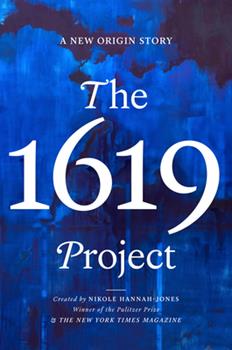
The 1619 Project, by by Nikole Hannah-Jones (Author), The New York Times Magazine (Author), Caitlin Roper (Editor), Ilena Silverman (Editor), Jake Silverstein (Editor) – I didn’t expect this to be an easy read, which is one reason why I chose the audio format, but I also recommend the audiobook because this is a book about voices, voices of the past, the present, and voices that speak to the future of black people in America. There is nothing weak or hesitant about those voices either. From the unflinching accounts of the arrival of slave ships on our shore, to the unflinching accounts of the murder of George Floyd and Brianna Taylor (among others) the voices here speak about an experience most white Americans can’t even guess at.
I thought I was pretty well educated in real history, as opposed to the whitewashed version in which slave owners like Thomas Jefferson (who I used to like; that’s how poorly educated I’ve been) had the audacity to stand up and say “All men are created equal,” while owning black human beings, and even fathering children on Sally Hemmings. (I don’t want to hear a single word about how maybe they loved each other. It was rape. She couldn’t say no. Even if she was screaming “YES! YES! YES!” she was his slave and she couldn’t say no to him, so it was rape.)
I wasn’t even close to being educated enough to know half of what I read in this book. Maybe I allowed myself to slide past the worst of it as I read American history, I don’t know. What I do know is that the accounts are horrifying, and what lies beneath the actions of white Americans even more so, particularly as the playbook, though sanitized, is still in use today. Frex, infrastructure is still being used to divide black from white in US cities, even as our politicians assure us that “Oh no, it was just the best place to put this particular highway.” And of course, the ever-popular Second Amendment was created out of fear that the slaves might actually want freedom enough to rise up against their masters, and by god those masters were going to be armed to the teeth. I leave you to make the connection between the facts of history and today’s gun-fanatic rhetoric. Well-regulated militia, my arse.
But then… the chapter that lifted my heart: Music. It’s a long, beautiful chapter about how African music has evolved here in the US, and informed virtually every genre of music, making it one of the richest heritages on earth. I will hug that chapter close forever.
Read, or if you’re of a mind to hear black voices, listen. Learn the things they never taught us. Learn the things they never want us, our children, our grandchildren to know. Let it be a starting point, not the end of your study.
The Girl from the Metropol Hotel: Growing Up in Communist Russia, by Lyudmila Petrushevskaya – Someone in one of my reading groups on Facebook recommended this for people who loved A Gentleman in Moscow. Well apart from being set in 20th century Moscow, it really doesn’t have all that much to do with the Towles novel. And yet I found it fascinating. It’s a short autobiography of a girl from a well-connected Bolshevik family who nevertheless grew up nearly feral and in great poverty, to become one of Russia’s most eminent writers. AFAIK, she’s still alive and still writing, and her voice is so strong and assured, her personality so vigorous that reading her is a joy.
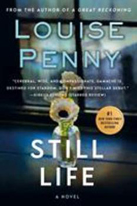
Still Life, by Louise Penny — Sometimes a girl needs a bit of comfort reading. First in the Gamache series, a group of novels I never tire of. This one is an introduction not only to Inspector Gamache of the Surete Quebec, but to the residents of Three Pines, which is more than a little mythic in character. I love mysteries with ensemble casts, and these are really top-of-the-line. I’m sure a search of this site will turn up a more complete review if you’re interested.
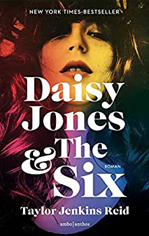
Daisy Jones and The Six, by Taylor Jenkins Reid – After reading The Seven Husbands of Evelyn Hugo last month, I went looking for more by Reid. This one is an earlier outing, and appealed to me because, at least at the start, it reminded me strongly of my own novel White Rabbit. But by the time I was well into it, it stopped being as interesting as it seemed originally, and became essentially the kind of story you read in all those tell-all books about rock bands; you know the ones that document the drug, alcohol, and sexual excesses of the band members. Honestly, I didn’t find the characters – Daisy in particular – worth worrying about. So unless you’re really into 70s rock-and-roll, Rolling Stone pastiches, you might want to give this one a miss. I’m glad I got mine from the library.
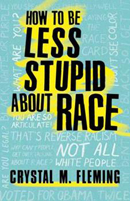
How to Be Less Stupid About Race: On Racism, White Supremacy, and the Racial Divide, by Crystal Marie Fleming – I have to fess up here, I didn’t quite finish this book. It was rough going because Fleming spares no one including herself (She explains how her background and education exempted her from a lot of harsh truths about the lives of most Black Americans.) and I only listened for short sittings. Net result, the library took it back before I managed to get all the way through, and if I want to finish it I have to put it back on hold.
I did learn a lot, probably not nearly enough, and am destined to remain stupid about race until I can reborrow the book. It’s not easy. You have to want to hear these things just like you have to want to hear what the 1619 project has to say. But as someone who never imagined what this country has done to people of other races (Fleming doesn’t limit herself to dealing with Black Americans.) it’s an important read.
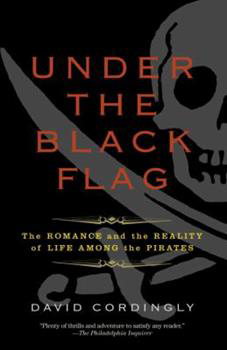
Under the Black Flag, by David Cordingly – Okay so I’m on an Our Flag Means Death kick, and I wanted to read something about real pirates. But now I’m kinda feeling like maybe this wasn’t entirely what I wanted. At the same time the wealth of information is impressive. And dry, like, my-brain-skitters-sideways-a-lot-of-the-time dry. At one point I ended up surfing Facebook while listening to an exhaustive catalog of the kinds of ships pirates used, and the differences in them from number and configuration of masts to how many guns were on board and how many men were required to man each ship based on the number of guns aboard. Yeah there better not be a test on that one.
 “Adios, Bart!”
The most interesting stuff is, predictably enough, about the various pirate captains. I expected Blackbeard to loom larger, but beyond the spectacular account of his Rasputin-like demise, he’s just another player. (Did anyone else know that his skull remains in storage at the Peabody Essex Museum?) The standout personalities have been pirates like Bartholomew Roberts (Black Bart. You thought he was just a product of Ralphie’s imagination, didn’t you? Me too.) Anne Bonney and Mary Read, the most notorious of the women who turned to piracy, and Calico Jack Rackham of all people!
Cordingly also discusses pirates in the media, and how far from reality the portrayals are. Since he was writing pre-OFMD, my only comment there was “Buddy, you don’t know the half of it.” One interesting thing I did learn was that apparently Izzy Hands appears in Stevenson’s Treasure Island. (BTW, did anyone else realize he was also known as “Basilica Hands?” What was that about?)
Bottom line is that you really have to be a pirate fanatic to get the most out of this book. It’s not bad, it’s just, well, dry like I said. And the narrator is not what you’d call sparkling. I also question some of his pronunciation like rendering machete as “mah-SHET” at one point in the book. In another spot he actually got it right, at least in the plural. Did no one care enough to correct him? Oh well.
The Sandman: The Deluxe Edition, Book One, by Neil Gaiman — I first encountered the Sandman comics back in the very early nineties when a friend insisted I read them. I’ve always been grateful to her for that not only because it introduced me to Neil Gaiman’s writing, which I love, but because the images and ideas I encountered have stuck with me for decades and informed a lot of my thinking about my own work. I’ve been watching the series, so I decided to revisit the graphic novels and see why there’s been so much fussing about the changes and the casting and so on from some quarters.
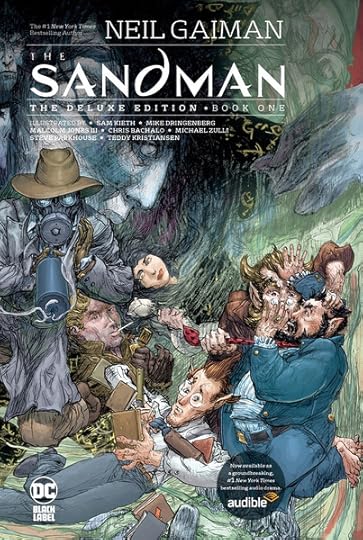
First off the series is very different from the comics. It’s also very not different. I’m a firm believer in allowing every form of media to be true to itself because if it’s not, then why bother with translating stories into different forms of media? If Gaiman had written Sandman as a novel originally, and then had it translated into comic book form, you can bet there’d have been the same sort of pointless whining about how it’s wrong all wrong terrible horrible and should never have happened. In my opinion, the series remains true to the basic ideas within the comics even if it changes the details. I mean, come on, how many decades has Neil had to refine his ideas? You think Morpheus hasn’t grown and changed in his mind? He’s a genius for fuck’s sake, of course he’s always growing.
But I’m here to review the first volume of the graphic novels, and all of the above was in aid of explaining why I found this first volume jarring and unsatisfying to the story-teller in me. It’s not that I don’t love the comics, I do. But the way the stories are presented is a lot less subtle than in the series. They’re messy and sometimes needlessly complicated. Character motivation… well honestly a lot of doesn’t make any sense at all. The one I keep coming back to is 24/7, the story of John Dee. In the comic, his actions are chaotic. He’s just a crazy man doing crazy, horrible things, and a great many of those things seem to be included simply for shock value. In the series, there is a logic to all he does. It’s warped, but it makes sense, and as such it’s far more satisfying as a story.
One thing I did find jarring after all these years is the whiteness and maleness of the comics. People of color are background characters for the most part, though we do see a brief incarnation of Dream as an African at one point. It’s a comic that reflects what was considered acceptable and mainstream back in the day.
So I’m telling you that yes, if you love Sandman the series, reading the comics is a great idea. But be prepared for something that’s very different from what you’ve seen. And something that is very much the same as what you’ve seen.
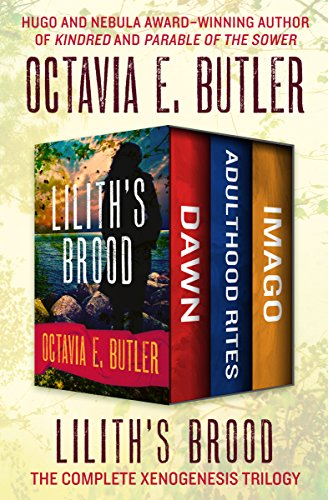
Lilith’s Brood: The Xenogenesis Trilogy, by Octavia Butler: Dawn, Adulthood Rites, and Imago — Wow. No, seriously, just wow. I lay in bed last night, after finishing Imago, the final book of the trilogy, and thought that maybe “Wow” would be the absolute best review I could write because there is so freaking much about these books that demands discussion, that it would be best served as an advanced lit course. But yeah, if I’m going to review, I need to review, so forgive me if I utterly miss some hugely important points about the books, but my brain can only translate so much into words at a time.
We start with Dawn, the book in which Lilith Iyapo is introduced as a woman in some kind of bizarre captivity. She’s isolated except for a voice that asks her questions. She is put to sleep many times and each time the awakening is unpleasant. Eventually we learn that she is a human woman who was rescued from a post-apocalyptic Earth by aliens known as the Oankali. Because we’re viewing all this through Lilith’s eyes, we know very little about why she’s been rescued, what they want from her, and who they are exactly. And this, right here, is one of the themes that run through the trilogy, both in content and structure. We only really know what we’re told. Sure we can infer from context, but that’s not always reliable. I read 700+ pages of this trilogy before I finally figured out what the term Akjai actually meant, and that realization underscored, for me anyway, the reactions of the humans to the actions of the Oankali. I found myself being resentful that this term, and many other words and ideas, weren’t made clear from the get-go.
The Oankali are really good at not telling people the truth. They don’t lie, they just omit. And because of this, and the fact that their understanding of human nature is flawed and they are incapable of recognizing this, there is a lot of conflict, both internal and external. So much of the trilogy is about agency, free will, and yes even enslavement, though that’s never a concrete issue as it might have been in the hands of a lesser writer. Butler was a brilliant, subtle writer who made every component of her work serve a greater purpose.
Do I recommend it? Not just yes but HELL YES. It’s not easy. If you want something easy look elsewhere. But if you want a multi-layered story about what it means to be human (and yeah, I know that’s starting to sound trite, but trust me it works here) and how humans have to look to the future as much as we have to learn from the past, then this is well worth the time and effort.
August 18, 2022
Ed, color version
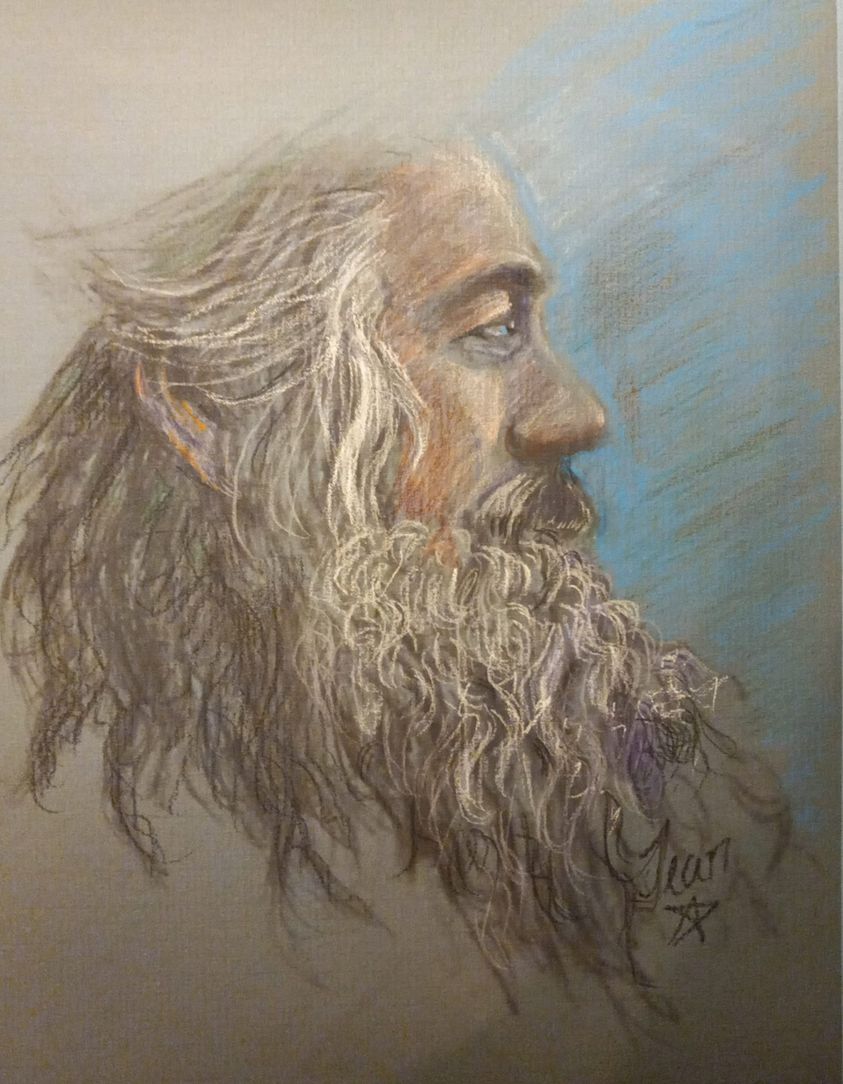 Color version of my original Ed drawing. Pencil, charcoal, colored pencil (c) 2022 Tracy Rowan
August 15, 2022
And art rears its fickle head
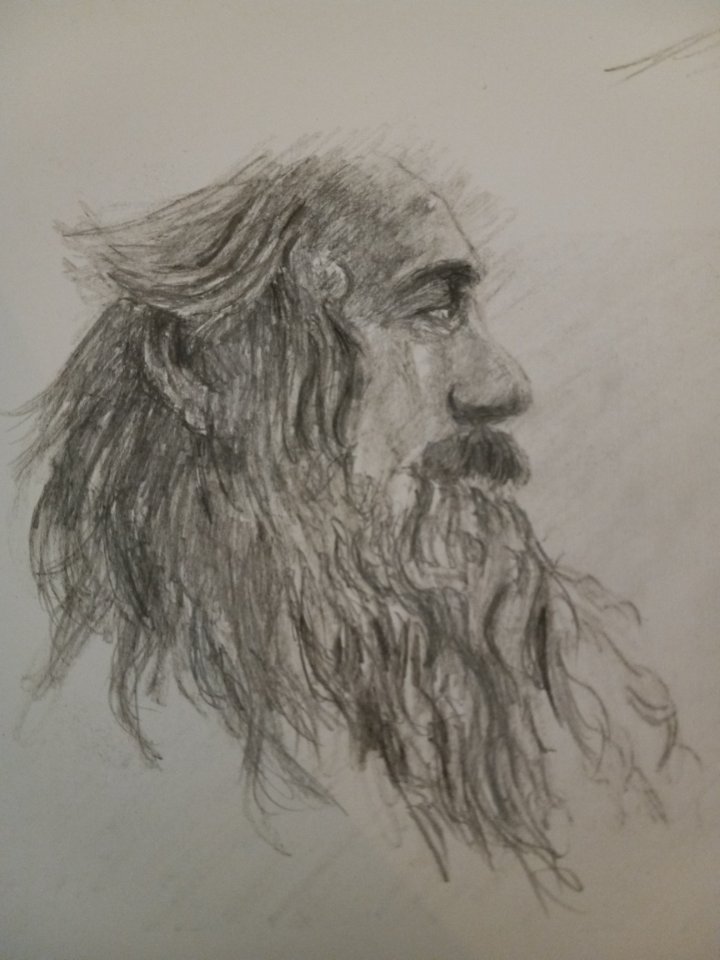
I literally haven’t made art in years. I used to be a decent portraitist, back in the 80s and 90s, but for whatever reason I just stopped. Today I decided I wanted to draw something from OFMD, so I knocked off this portrait of Blackbeard. Image © 2022 by Tracy Rowan
August 12, 2022
North Star, by Dargelos
#OFMD, Stede/Blackbeard, end of season, spoilers everywhere you look
He looked down into that sweet, beardless face; that beautiful face, softer now that the black and grey waves of beard were gone. It was the face of a child, Stede thought, though he didn’t quite know why. Maybe it was the eyes, so vulnerable. It was almost as if Ed was asking forgiveness for something. But Stede had nothing to forgive. He loved Ed with every fiber of his being.
And then the expression was gone, and in its place was the new, thoughtful Ed. Sad Ed. Wistful Ed, who was suddenly living a life he’d never have bargained for if it hadn’t been for Stede.
Stede left the room. He couldn’t bear it.
But later, when Ed sought him out on the rocks, and made him understand that what he’d done, he’d done out of love, Stede’s heart broke open. And the kiss sealed it. It wasn’t just desire, but something so much bigger, vaster than the ocean, and deeper. They would sail on it together, hold each other up, or drown together, it didn’t much matter to Stede, so long as Ed was with him.
He could drown in those eyes.
There’s always an escape, Ed told him, and he was right. But it wasn’t the escape Stede had been told to expect. He’d stumbled around in the dark for hours after Chauncy’s death, finally finding himself at a cove where a dinghy waited. So he waited. And nothing happened except that the dinghy’s owner came at dawn.
He didn’t know anyone named Ed, he said, and he needed to get the boat out to fish. If Stede would help him, he’d row him out far enough that he might find a ship going… where?
Stede had no idea, none. Nothing they’d said to each other had been practical. Love had been their map and compass.
“Barbados,” he blurted for lack of a better answer.
And for that whole voyage home on the ship they’d encountered, he found himself wondering if the look of apology in Ed’s eyes had been for this, for abandoning him.
For betraying him? Had Ed sent Chauncy to kill Stede?
Unworthy thoughts, wrong thoughts, contemptable thoughts. Ed would never do something like that. No, this was all a mistake. It was fixable.
But once home he made no move to fix it. He became a ghost in his own home, barely there at all for the children, and a nuisance to Mary who could barely stand to look at him.
But her eyes…
When he told her, “His name is Ed,” her eyes were so kind, so happy for him. So accepting, that he knew he had to find Ed, the love of his life, and make all this right no matter how long it took. He would get down on his knees and beg if he had to.
He would find Ed, find love, or find his end. He steered by the memory of Ed’s beautiful face. He would steer by the memory of Ed’s eyes.
Ed was his North Star.
(I never thought Dargie would write fanfic again. I’m gobsmacked.)
August 1, 2022
June July 2022 Reading
Thanks to me feeling like hammered shit for a couple of months, my reading list got skipped, but what there was to document wasn’t much anyway. I’m breaking the list down into fiction and non-fiction because I found that there were themes within those categories which are worth noting. Here we go…
Music as a Mirror of History – Goldberg – This was supposed to be a relisten, but damned if I remembered much about it. Still, it was worth listening to because Goldberg is so good at contextualizing music and how it reflects the events of the time in which it was written. His series of musical courses are so very good.
The Song of the Dodo – David Quammen – Starting with this book, I went on a reading binge that focused on extinction, evolution, and diversity. Oh boy did I read about diversity. Sometimes it felt as if that was the single most important word in this and the next two. Diversity is more critical than I’d ever imagined to the health of a species. And while so many factors contribute to growing healthy populations of animals – and we are, in fact, still arguing about and testing those factors in search of remedies to extinction – without diversity animal populations don’t really have a chance to hold their own. Much of the information is less than hopeful, but it’s important. I’d venture to say that it’s applicable to human populations as well.
Eating to Extinction – Dan Saladino – Saladino covers a lot of the same questions Quammen does, but from the viewpoint of our eating habits, and how we choose to grow our food. We breed our food for certain qualities such as pest and disease resistance, yield, flavor, etc, giving favor to the species that seem to have everything we need. But nature is tricksy, and we may manage to breed an orange with spectacularly good flavor, but in the process we may also have created an orange that has requirements that can be a burden on the ecosystem. But people love it, so we plant more and more, squeezing out other crops in favor of flavor, and thus we lose diversity. Those genes are gone, and with them any benefit we might find we require in the future. Again, not a really upbeat book, but one worth reading if you care about stuff like this.
The Secret Life of Groceries – Benjamin Lorr – You are what you eat, right? Also you are where you choose to shop for your food, a fact that Lorr explores in his examination of grocery stores in the west. He gives us histories of places like Trader Joe’s, and fills us in how supermarkets are run, and what goes into getting the food from farm to grocery cart. There’s a huge human toll in that process when you take into account the raising of the food, harvesting, shipping, and marketing. It’s fantastically competitive and everyone is always looking for the next big thing in aid of making a buck. And here, diversity means choice, it means that fads can have far-reaching effects. Fascinating book.
The Wild Places – Robert McFarlane – McFarlane, who is a wonderful writer btw, takes the reader on trips around the British Isles to places where wildness still exists. Not just sparsely populated rural land, but honest-to-god wildness, something of which there is precious little in the world. He has an eye and a voice that work in tandem to refresh our sense of wonder about our natural world, and in his work he tackles many different aspects of it. If temporary separation from the man-made world appeals to you, this is a book you’ll probably enjoy.
Aspects – John M. Ford – John Ford’s final book, and unfinished at the time of his death. While I enjoyed it (and it’s the only Ford I’ve ever read, so maybe this wasn’t the best choice for an introduction to his work) it was difficult to connect with the characters in any meaningful way, at least by my standards. I don’t really feel like I can do justice to it here, so let’s just say if you’re already a Ford fan, you’ll probably love it. If you’re as clueless about his work as I was, start somewhere else.
Earthlings -Sayaka Murata – Oh god, this book… I started telling The Housemate about it, and she almost immediately asked why I kept on reading. I told her that I felt I needed to figure out what the hell was going on. When I got to the cannibalism part, she just shook her head and said something to the effect that I was nuts for sticking it out. And yeah I think I may have been. It’s a deeply unsettling book, but not in the wow-that-gave-me-a-lot-to-think-about way, as “A Little Life” was. More in the way a narrative about people being hacked to pieces both physically and emotionally would be. I don’t mean to dismiss it entirely because there are important issues hidden within its pages, but I’m not sure the digging was worth it.
The Seven Husbands of Evelyn Hugo – Taylor Jenkins Reid – Total surprise to me. I’ve been aware of it for months, but nothing I’d heard about it had seemed particularly appealing. Boy was I wrong. Sure there were moments when I thought, “why am I bothering?” But in the end I’m so happy I stuck it out. Wonderful book.
The Locked Room – Elly Griffiths – The newest Ruth Galloway mystery. I didn’t think much of the mystery per se, but it did start to resolve some of the problems I’d been having with Ruth’s private life which made it much more satisfying than the last couple. I know that sounds like damning with faint praise, but I think it’s worth reading, particularly if you’re already a fan of the series. Also there’s some scary stuff with a character I love, and that overshadowed everything else for me to the point where I started doing the whole If-she-kills-(character)- I’m-finished-with-her thing. Yeah, yeah, I know…
The Thursday Murder Club – Richard Osman – I read the two books in the series in reverse order, so I already knew stuff about how the series would progress. But I loved it. A group of cranky, brilliant seniors who solve murders? Come on, how could anyone not love that?
Lincoln in the Bardo – George Saunders – If you’ve been reading my reviews/lists for any amount of time you’ve probably seen me in raptures about this book. This reread I opted for the audio because it’s so perfect. Normally I don’t like full cast audiobooks, but this one is sheer poetry with a brilliant cast of voices so perfect, so evocative that it’s often like listening to music. I became lost in the sound of it. It’s miraculous, IMO.
That’s it for these last two months. I’m currently reading The 1619 Project which I have to tell you is not for the faint of heart. I hope my commentary next month will do it justice. See you then.
May 31, 2022
May 2022 Reading
Another slowish month for reading. I’m in the middle of two very good books right now, but I knew I wouldn’t finish them even close to the beginning of June, so they’ll be coming atcha in the next recap post. One thing I noted as I wrote my recaps this month is that the content is heavy on things like wistfulness, affection, kindness, and what it means to be human. I don’t know why that is, though perhaps it’s about my own life being in such flux with the cancer diagnosis and all the physical and mental ickiness that goes with it. In any event, while they weren’t all winners this month they were all worth reading for one reason or another. Enjoy!
And Still I Rise: Black America Since MLK – Henry Louis Gates Jr. – I began reading this back in February when I was in the rehab facility trying to learn to walk again. It’s not that it’s dull, far from it. But it’s dense with information about how black America changed in the last 60 or so years. There’s no editorializing here; Gates even writes about himself in the third person. Rather it’s a detailed chronology of black Americans in politics, entertainment, business, sports, and every other public arena from which they’d been systematically excluded in the previous centuries. Gates is a clear-eyed observer, and an excellent writer. If you want to know more about the world of black Americans, you can’t do better, in my opinion.
The Paris Bookseller – Kerri Maher – This was a gift from friend and neighbor, Linda. She knew I’d want something to read when I got home so she gifted me with two lovely books, one of which I reviewed last month (The second Thursday Murder Club book, title escapes me. Currently waiting for the first of the series to drop at the library.) This one was, I thought, non-fiction about Sylvia Beach and her Paris bookstore, Shakespeare and Company, and how she and the store helped to reshape fiction between the wars. But it’s a novel, and a decent one as well, touching on Beach’s relationships with Hemingway, Gertrude Stein, and most importantly, James Joyce. Beach ventured everything on getting Ulysses published and into the hands of readers in countries where it had been banned as obscene. Her difficulties with Joyce (he was a difficult man) and her long-term relationship with writer and bookstore owner Adrienne Monnier, are both central to the plot, so if you’re into literature, particularly early 20th century, and queer romance, this is the book for you.
Aristotle and Dante Dive into the Waters of the World – Benjamin Alire Saenz – I read the first Dante and Aristotle book last year, I think it was, and I adored it. I love this one even more. Why? Because Ari is growing up, he’s becoming less isolated and discovering that he actually has friends who love him. He’s finding that his relationship with his family is deeper and more loving than he suspected. He’s learning what love really means to an adult, and it’s quite wonderful. If you read and enjoyed the first book, you need to read the sequel. Honest.
Hôtel Magnifique – Emily J. Taylor – This sounded better than it read. It’s decent brain candy, but nothing really new or special. Read it for fun, don’t look for anything deep.
Less – Andrew Sean Greer – I picked this up because it was the choice for an online book club I joined, and devoured it in two days. It’s hilarious and sad, smart, kind, and thoughtful. It’s the story of a man who understands nothing much about himself, but in the process of fleeing from his broken heart, learns a great deal about how loved he is and always has been. He starts to understand exactly who he is as he turns 50, and it’s a wonderful thing to share with him.
Station Eleven – Emily St. John Mandel – How did I ever forget that I read this a couple of years ago? Even as I was reading this time around, I found both familiar and unfamiliar passages, and finally I looked up my review, which was short but positive (July 2019) What I would say now is simply that it’s a book that never quite goes where you expect it to. Yes, there’s the usual post-apocalyptic threats of violence, but that pretty much comes with the territory, doesn’t it? Much of it revolves around relationships, who the characters know, whose lives are entangled with their own and how. Don’t look for action and terror because what you’ll find instead is sadness and the determination to survive intact as a human being.
See you all next month. Have a great summer.