Astrid Cole's Blog
August 20, 2023
Fall Goals
Man, it’s been a while since I’ve done a post. The last time was in June, and quite a bit has happened since then. I talked about beta-reading and the importance of having someone other than yourself read your book (no matter how great you might think it is!). So what’s been going on since then? Let’s check it out.
Writing and more writingOver the summer, I managed to finish (heavily) editing Emerald City. After two and a half weeks of slogging through the manuscript with all of my beta-readers’ comments, I added about 30,000 more words to the whole story. Important words, I might add, as they helped to build characters and develop the world a bit better. I am super thankful for all of the awesome readers who are out there and are willing to do this kind of reading. Think about it—beta-reading means that you are spending time and energy with a manuscript that is not quite done. It is riddled with flaws and lack of proper editing. Kudos to all beta-readers out there.
Next, I managed to start working on my fantasy romance series. I had written book 1 back in 2017. Reading through it in 2023, I saw just how amateurish my writing was. The plot wasn’t that great, either…but I did fix it up as best as I could!
And then, of course, I started on the third book of the Diamond City trilogy! I’m about halfway through it as of this post, and it’s coming, guys!
So, what’s next?All right. Here’s what I’m thinking.
August – Write as much of Diamond City #3 as possibleSeptember – Finish up Emerald City edits, then send to final proofreaderOctober – Start reading through fantasy-romance titleNovember – Format Emerald City/send fantasy-romance title to beta-readers/cover for fantasy-romanceDecember – Publish Emerald City!/Finish Diamond City #3January – Edit fantasy-romance title/Send Diamond City #3 to beta-readersFebruary – Send fantasy-romance to final proofreaderMarch – fantasy-romance cover/Diamond City #3 edits/Diamond City #3 coverApril – fantasy-romance page formatting/Send Diamond City #3 to final proofreaderMay – Publish fantasy-romance titleJune – Diamond City #3 page formatting August – Publish Diamond City #3Whew! Is that a lot or what? But it’s been in my head all summer, and here it is for you all to see! Publishing is no joke. For me, it’s about ensuring my readers get quality books. That’s all that matters.
What should you keep an eye out for?Emerald City will be up for pre-order soon! And with it, a nice little incentive. How about exclusive access to Diamond City #3’s first three chapters? Or…a nice art print? Stay tuned!
The post Fall Goals appeared first on Astrid Cole.


June 25, 2023
Beta-Reading
Hey, everyone! It’s been a couple of weeks since my last blog post, and I hope all of you have been doing well! I thought it’d be important to give everyone an update on what’s been going on since Diamond City’s release and to address the importance of beta-reading to all the new authors out there! So, without further ado, let’s dive right in!
RecapA few weeks ago, I announced the title of the sequel to Diamond City: Emerald City! Which I’ve already written and is now in the beta-reading stage. I’m planning on having the cover by August/September, and then it’ll be time for the ARC stage again. Okay, so what’s the plan?
In my last post, I addressed NetGalley and whether or not I’d be using it again. As an indie author who doesn’t have a huge reader following yet, I wasn’t too comfortable with the sort of readers/reviewers I was attracting. I much preferred to reach out to the Bookstagram community because I got to connect with my readers in a way you really can’t on NetGalley. Honestly, as a reader myself, I’m more inclined to give (helpful) feedback to someone who asked me to. This, I feel, has been the best for me so far and it’s what I’m going to stick to moving forward.
The problem is…I didn’t do this for Diamond City.
The Importance of Beta-readingFor Diamond City, I only had two people beta-reading it.
My best friend and freelance editor.
My best friend gave me incredible feedback that I used to make the novel two times better than it was. She sent me an email with all the parts that needed tweaking and what she wanted to see more of. Great!
My freelance editor was more of a line-edit kind of thing. As far as story and developmental edits, it was completely useless. When it comes to the English language, I’m not perfect, but I studied a lot of English at FIU and I don’t think that’s exactly what Diamond City needed in its early stages. Either way, I was super confident in my work and uploaded it to NetGalley as an ARC without asking for more feedback.
And there’s my mistake.
Okay. If you’re an author, I’m sure you’ve heard this a gazillion times. If you’re querying agents, you’ve heard this, too. Please, for the love of all that is good, have someone other than your circle of friends read your book. The feedback you get from strangers, sometimes, opens your eyes to mistakes or pitfalls that you didn’t know were there. The majority of my reviewers complimented my world building. The same reviewers said the beginning was hard to follow. Would I have tweaked the beginning had I known this from the get-go? Probably. Although Diamond City is a sci-fi tale with a lot of world-building, I could have fixed early scenes to help readers along a bit better. But, in the ARC stage, it was too late for a major edit like that. Once the design process starts, tweaking chapters can become…expensive.
Anyway, so beta-reading is definitely important! For Emerald City, I’ve asked five people to read it. Depending on the feedback I get, I more or less know what changes I’m going to be incorporating. I also have my own ideas for what I want to fix. Once I’ve tweaked it, I’m going to send it off for another round of beta-reading. I will consider asking the same people if they’re interested, but I already have a list of the new ones I’m going to ask. Depending on that feedback, Emerald City will either be ready or not. How would I tell?
Ultimately, I’ll ask myself: Am I happy with it? Is it my best work? At the end of the day, it’s all I can do. Right now, I’m going through my first round of edits. So far so good, but we shall see!
Should you hire an editor?The answer is…maybe. It really depends. If this is your first novel and you don’t have much experience writing, I would say yes. Writing is an art and not everyone can do it well. Also keep in mind that there are two types of edits:
Developmental EditingLine-EditingDevelopmental editing is what beta-readers actually do. They read what you have and tell you what they liked and didn’t. Line-editing is more for grammar, sentence structure, transitions, and phrasing. This can get tricky for writers who don’t have a lot of experience. The bad part is when the story or emotions get muddled because the novel is just written strangely or wrong. Beta-readers will and should also determine the novel’s readability as well. If they say that the wording was off or there are a ton of errors, then maybe it is a good idea to hire an editor.
But be warned: editors are crazy expensive. Self-publishing a book is already expensive enough as it is (cover art, page design, ISBN number, etc.), so adding an editor on top of that can be taxing. I would say you know yourself. If you’ve been writing for a long time and you get positive feedback from your beta-readers, maybe you can swing it. But if this is all new to you…well…You want to put your best foot forward. I dread the day I publish something I’m not a 100% with. As a reader, I want a book the author has poured his/her heart and soul into. And trust me, I’ve picked up books that make me feel cheated. Where I know, for a fact, the author didn’t care about edits or proofreading to make my reading as enjoyable as possible.
More to come!Anyway, that’s the update! There will be more coming soon, such as how the edits for Emerald City are going and an official new-book announcement for 2024!
The post Beta-Reading appeared first on Astrid Cole.
June 11, 2023
I Self-published my book. What’s next?
First off, hope everyone had a great weekend! This is my first post after my website went live last week, so it’s super exciting to get to finally—officially—do this.
As many of you already know, this is my first time publishing a book. Diamond City released on 5/30/23, and it still feels a bit surreal. I’ve been a writer for years. This is not to undermine writers, of course, but anyone can write a 1,000-page book on their laptop and keep it in their closet. That was me, actually! And I wouldn’t have minded doing it forever, but I wanted to share my stories with other people and that’s what prompted me to take the next sep.
And trust me: taking that next step into publishing is the hardest, riskiest part of this profession. How many of us want to send our hard work out into the world for others to read and critique? And let’s not forget that all this is, er, subjective. So what one might find to be amazing, another might totally hate. I’ve been hearing that so much my whole life, but I didn’t quite get it until now. It’s one thing to have your friend read your book and another completely different thing to have a stranger read it. One you’ve never even spoken to on social media. My first experience with this came from NetGalley.
NetGalleyOn Goodreads, it’s all reviewers talk about. “Thank you NetGalley for an ARC in exchange for an honest review.” So, as an author, you think to yourself, I gotta do it, too!
And I did. I paid close to $700.00 to have my title listed on NetGalley for the next six months, thinking that I had to do it. I mean, I had my cover art, my pages nicely formatted, and my mind in an I’m-almost-published mode.
I’ve gotten one-star reviews that say my book is trash. I’ve gotten five-star reviews that say my book is the best thing anyone’s ever read. To be fair, I’ve also learned there are a lot of trolls on NetGalley. Like, a lot. A lot of the “reviewers” on there are on the hunt for free downloads and never review. Others leave you a review without ever having read the book—and you can tell. They’ll say things like “this isn’t good” but not explain why it’s not good. An ARC review is supposed to help the author make changes for the final cut. At least, I think that’s the idea.
On the other hand, I’ve gotten some good feedback from NetGalley reviewers as well. This one reviewer gave me three stars, but really made me think hard about the overall take-aways of my novel. He complimented my strengths and went on to describe what he didn’t like. I agreed and disagreed on some, but respected his point of view. When other reviewers started touching on the same points, I made the changes accordingly.
I think the moral of the story is this: be careful who you accept as a reader on NetGalley. Make sure they have a high feedback ratio. Check their reviews of other books. If their average rating is 3 or lower, I would say…pass. The ARC stage is very sensitive, in my opinion, since it’s not really the final product, and you want people who are going to be helpful with their feedback—not chew you out.
Will I use NetGalley Again?No.
First off, it’s expensive. Secondly, NetGalley makes it difficult to communicate with your readers/reviewers. It’s not like Instagram where you can send a message or comment on a post. Thirdly, I’ve met incredible people on Instagram who have truly helped me and supported me as an author. That’s not to knock the readers on NetGalley, because a lot of them are on Instagram, too, but for new authors: be careful because again…trolls. Inappropriate reviews. I had to have one taken down because the language was degrading. It’s truly not the best of feelings for someone who’s starting. And, fourthly, NetGalley is not a true reflection of who your reader following will be. Remember that the majority of readers don’t leave reviews. I, myself, as a reader of fiction, never left reviews. And I have a lot of books 
For anyone who is considering self-publishing for the first time and wants true, honest feedback on their manuscript or ARC, my advice is this: hunt. Ask bookstagrammers, readers, and reviewers for an opportunity to read your book in exchange for an honest review. My go-to platform is Instagram. Facebooks works, too, although I’m not too familiar with it yet. You can join groups or buy ads. For me, I love connecting and communicating with people. I’ve developed a pretty good relationship with a few on Instagram, and they are the ones I’m turning to for beta-reading feedback on my second book (title to be revealed soon!).
Okay, so now what?Now that the NetGalley part is over, I can touch on what my next steps will be! Here we go.
Marketing Diamond City as much as I can without paying. I’ve—er—spent a lot of money already. Incorporating beta-reading feedback to Diamond City #2. Working on another series, totally different from Diamond City. Remember that more people read your first book—not the second. Social media. That will never stop. It’s the only way to truly build a readership. If you have a team, puzzle pieces should slowly fall into place.Has anyone had any experience with NetGalley? Either as an author or reviewer? What are your thoughts on getting ARCs out there?
The post I Self-published my book. What’s next? appeared first on Astrid Cole.
May 8, 2023
Do You Want to Publish?
For a lot of writers, publishing their work is a dream come true. Sure, there are some who are perfectly content writing or journaling for fun without a single pair of eyes on their work, but for a lot we like to dream and venture into what it would be like to actually do this for a living and make money.
As I’m sure you’ve probably already figured out, writing the book or the short stories or the poems is the easy part. It’s the amount of time, dedication, and know-how in the next steps that are truly difficult. And yes, while some might find them fun, let’s be honest: it’s difficult.
So for new writers out there, there are two ways that you can publish: Traditional or Indie. Because Indie authors are still climbing the ranks in popularity (we’ve come a long way from the early 2000s), a lot of people tend to think that traditional is the make all and be all of publishing. I happened to have dabbled in both and gone the self-publishing wrote for reasons that I’ll disclose here. But for those of you interested in giving the traditional route a go, here’s the good news:
You’ve got nothing to lose.
Traditional PublishingIf you’re looking into a traditional publisher (Tor, Penguin, Bloomsbury, etc.), then it shouldn’t cost you a dime to get your work looked at. What this means is you (1) finish a novel (2) get it beta-read and/or edited, and (3) send it off to agents or editors that are accepting unsolicited work. And it’s the third step that’s the hardest.
To find and catch the interest of an agent or editor, you have to have a query letter. Like I posted in my previous blog, a query letter introduces you, your project, and the reasons why you’re approaching said agent (Do they represent the same genres you write? Do they represent an author you absolutely love? Do they watch the same television shows as you?) to the agent. The purpose of the letter is to pitch yourself and your story in one page or less, and cross your fingers it gets the agent’s attention. The hardest part of the query letter is capturing the essence of your book in just 250-350 words, and it’s nowhere near as easy as it sounds. It’s not a summary of your book—it’s simply supposed to entice the reader to read more. There are a lot of websites you can visit to help you write one and get feedback on one (which is absolutely necessary).
1.) https://www.agentquery.com/
2.) https://queryshark.blogspot.com/
3.) https://absolutewrite.com/forums/inde...
These are just three of the ones I used when I was in the querying trenches. There are so many more now that the publishing industry has gotten so big. Additionally, these are free websites, meaning you can post your query on there and have other people (not necessarily professionals) take a look at your query and give you feedback. There are other authors, agents, and editors that charge for services but might garner better results in the long run.
And I did that. A lot. I hired a handful of authors and agents to look at my different query letters and it NEVER WORKED. I don’t want to dash anyone’s dreams, but sometimes the reality is it’s not the query. It’s the story, the genre, whether it’s YA or not, whether you get lucky, whether you get looked at, whether the agent is in a bad mood, etc. The most frustrating part of all this was the amount of time and work I put into a manuscript or query letter and never getting a response. You spend hours researching agents, what they like, what kind of story they’re looking for, and just when you think you have it, you get a nice rejection letter in your inbox The best response I ever got was for a partial request by Sara Megibow for my YA historical fantasy, SOMETHING TO REMEMBER. Unfortunately, the partial didn’t turn out either because historical anything is a niche and not very popular at the moment.
And that’s what traditional publishing is. A niche. Always think of the thousands of people who are querying right alongside you. And while having a rockstar query letter is a plus and will definitely get attention, at the end of the day, agents and editors are looking for stories to sell. They have to make money.
I gave up so many times. I felt so defeated by the system that I resigned myself to never publishing. I love writing—I do it nearly every minute of the day. And if I’m not typing, then I’m thinking of stories in my head. I know it’s my calling and passion and it’s what I see myself doing. So if traditional publishing isn’t going to work out…then how about giving self-publishing a try?
Self-PublishingOkay, so self-publishing is a totally different deal than traditional publishing. Honestly, unless you’re deadset on doing it yourself, you’re better off trying your hand at traditional (unless the querying gets to you; and trust me, after sending out a hundred letters and researching agents endlessly, it does). But, if that doesn’t pan out, then you know you have to do it yourself.
And that’s no joke. You’re on your own. What does that mean? Editing, formatting, book cover, ARC, and marketing are just the preliminaries. Whereas in traditional publishing the publisher awards you an editor, now you have to look for one yourself. And there are some pretty bad ones out there.
Editing.The rates for some of these editors are jaw dropping. I spoke to a former agent who once wanted to charge me $10,000 for content editing my manuscript. That’s almost a pay check for me. And while it kinda makes sense, since editing is like a job on its own, it’s astronomical and a bit abusive when you’re a wee author trying to get your head above water. My honest opinion? Find beta readers. My best friend gave me more constructive feedback than the editor I went with, although the latter helped me with some grammar mistakes I overlooked. Remember that it’s not the same reading and editing your own writing, although I do try to take breaks and read the manuscript with fresh eyes every once in a while to cut back on the editing cost. Still, it isn’t the same, and I highly recommend an editor. The one I went with charged $600.
Book cover.Again, this is something traditional publishers give you. But when you’re self-publishing, you have to look for one on your own and do be forewarned: look for one months in advanced. I found Bookfly Covers—Kira and James are incredible—and I booked them in September for March. And last I heard, they were filled up for 2023 already. Either way, when you self-publish it shouldn’t be from one day to the next. Book the cover, and keep on editing until it’s ready. The cover cost me about $700.
Book formatting.Oh, man. This is the one no one tells you about because you just don’t have a clue until you realize that the chapters you were typing happily on Word have to be formatted to fit a little book page! I would have totally missed this one had I not googled page formatting late one night and realized there’s a whole profession to this, too. What’s the big deal with page formatting? Well…if your pages aren’t formatted, then your book size will be off. The pages will look weird. Unprofessional. And the idea is to get your self-published book to look as professional as possible.
I contacted Mayfly Design, who do not only the formatting, but walked me through the purchasing of the ISBN numbers, designing a map for my world, and teaching me how to work Kindle Direct Publishing through Amazon as well as Ingram Spark, which is the largest book distributor out there. That alone cost me near $3,000. Yikes, right?
ARC (Advanced Reader’s Copy)To be honest, I didn’t even know what an ARC was until I started writing reviews on Goodreads and kept seeing “Thank you NetGalley for the free ARC in exchange for an honest review.” ARCs are the not-quite-yet-finished version of your novel that’s in a bit of a strange limbo. At this stage, readers are expected to know that tweaks are to be made and that everything they read is not final. While this is great to have, it also needs to be done strategically. What I mean by that is the timing—ARCs should be sent out right after the beta-reading stage, when you want a broader audience to read your stuff. If you’re a new author, how do you get this audience?
Social media. Close friends.
I will be honest here: be wary of sites you have to pay to use. I’m talking about NetGalley. I watched a YouTuber who swore by NetGalley and said it was super important for authors to post their ARCs there for early reviews. While that might be true, and traditional publishers do post early copies of their authors’ works there, be careful of the…er…abusive reviews. I can’t speak for other platforms like Booksprout, but I didn’t see a lot of positive feedback from self-published authors who’ve used them. If you’re publishing for the first time and want to build a platform, it’s super important to get feedback from a circle or group of people you trust and can talk to—not leave it in the hands of reviewers who are raring to destroy your reputation. I’m in no way bashing NetGalley, especially if you’ve used it before and it’s worked for you, but I had to pay $700 for six months of feedback that really didn’t help me improve my writing all that much.
I guess what I’m trying to say is: for your ARC stage, make a PDF of your story, call it a day, and send it to people who are willing to read it and give you a fair and honest review.
I’ve learned this the hard way.
MarketingAnd now the fun part. Marketing. I hate social media. I never used it. I was happy in my own little bubble here at home, but no—I wanted to be an author. And if I want to make a living, people have to buy my books. And how are people going to buy my books if I don’t know who I am? While making a Facebook and Instagram account is free, if you google any other author out there you’ll see they have a website. A fancy one.
Check out Leigh Bardugo and her Grishaverse—you’ll see what I mean.
I tried my hand at Wix, but damn—I’m an author, not a website designer. So I went with Rocket Expansion, who have been incredible with this website. It cost me around $3,000, but again, if I’m going to do this I’m going to do it right…right?
Final ThoughtsThe road to publication is long and hard no matter which route you choose to take and both are possible. I could have kept trying to query, but I was done being overlooked by agents and ready to share my story with the world. The question is: how badly do you want it?
The post Do You Want to Publish? appeared first on Astrid Cole.
April 25, 2023
Inspiration for Diamond City
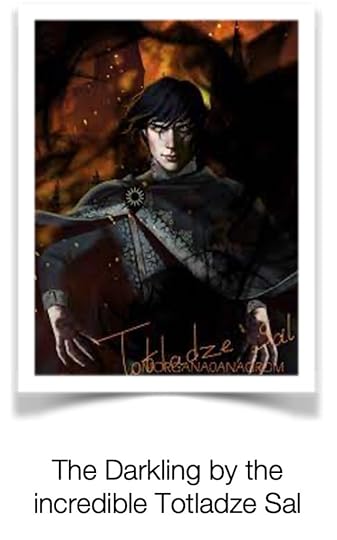 Credit:
https://www.instagram.com/p/BxuNt-jBwkf/
Shadow and Bone will forever hold a special place in my heart. It was the first fantasy book I read after completing my Master’s degree at FIU. Mind you, I am not a passionate reader with a 200-book goal on Goodreads—I actually never read fiction growing up, aside from the classics like Harry Potter and…Harry Potter. It was hard to move on, and I know that a lot of you know what I’m talking about.
I had this attitude about me, too. I felt like no other author truly wrote what interested me, so why bother reading? I wrote what I liked, so why read anyone else’s books?
And—oh, man—Shadow and Bone humbled me. I was totally vested in Alina and her interest in the Darkling (which Bardugo totally squandered. To this day, I hate Mal. With a passion. He just wanted to control Alina, let’s be honest. I suppose the Darkling did, too, but he should have gotten a redemption arc). The tragedy of their romance spurred me to write a romance of my own. I mean, I had written romance before, but this new story and characters were inspired by the Darkling.
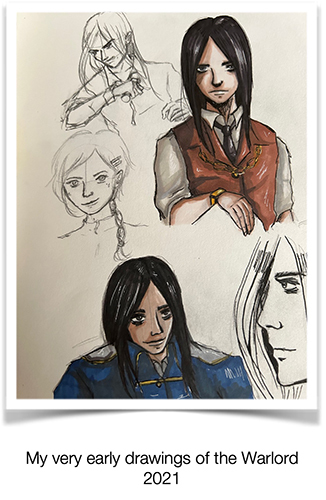
And thus the Warlord was born.
And, of course, remember my love for Blood+. Strong female protagonists, but not bossy ones. Subtle ones. And I think that’s what Sage is—she’s a warrior who pulled the four districts of Diamond City together, but spends all her time now working pizza. She wants more for her life, but when she’s too far in, she’s shy and pulls out.
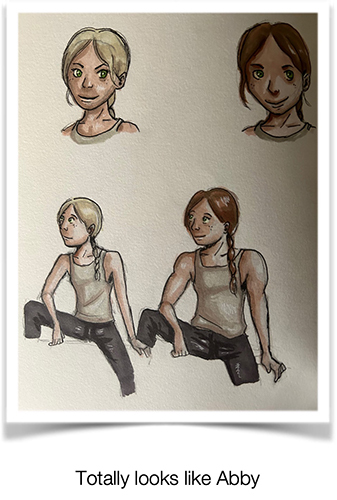
It started off with doodles. I know there’s a rage over The Last of US 2, but I was mesmerized by Abby’s fierceness. With her and Saya in my head, I think Sage was born.
Then it graduated to some written scenes here and there. Mostly between Sage and the Warlord. They were kind of bad because I still didn’t know who the hell these people were, what their backgrounds were, and what they wanted. Any writer knows that telling the story of two people they don’t know just turns out bland and boring. Like chewing on plastic.
From then on out, I started to create a world. I started the story from the very beginning, the inciting incident, what got Sage moving, what her goals were, and what got in her way.
Diamond City details didn’t come until later. The calendar, Wooly Socks, Speedstars, Sage’s history with August, and even the Warlord’s past were incorporated after the main plot was down. I knew before I even sent it to my first beta reader that I needed to put more in the story to make it come alive. Jay Kristoff’s world-building is incredible, so I knew I needed to spend some time thinking about the mechanics, characteristics, and functions of the world.
That’s why it’s important to let the manuscript sit for a bit. I had sent out the first draft to my beta-reader in the summer of 2022, then waited a few months or so before revisiting again. When I did, I saw things I had never noticed before—gaps in the world-building or characters that needed more attention. This is when all the extra details were added, and it’s those details that make a world of difference.
Sometimes a lot of self-published authors rush this process. By no means is my world perfect and there is always room for improvement, but if you’re thinking of publishing, and you’re into fantasy and science fiction, think about the world and what makes it tick. The world is a character, too, and if you know its politics, people, religion, and issues, then your story is only going to be that much better.
Check out this story by Writer Unboxed: https://writerunboxed.com/2017/01/07/characters-world-story/
The post Inspiration for Diamond City appeared first on Astrid Cole.
How I became an Author
First and foremost, I wanted to welcome everyone to my very first blogpost!
Writing is a profession that never ceases to amaze me because there are so many ways to do it. Fiction writing is so very different from academic writing. And while you can be amazing at one, you can be terrible at the other (shout out to my FIU committee director who read through all my terrible theses).
And so, I begin my official journey as an author. How did I get here? This one’s an interesting one.
While a lot of writers focus their love and attention on their first book, and even publish it, Diamond City is not my first book. I started writing in high school with a friend of mine thanks to the Twilight/vampire craze. I’m a huge anime fan, too, so put the two together and you’ve got someone with an overactive imagination who has two outlets: art or writing. I went for both, but soon focused on the latter. Like so many writers out there, my first terribly written manuscript was about vampires!
At this point, publication wasn’t even a thought, though. Writing was a pastime with my friend amidst Doritos and Gatorade during first lunch. We actually finished the story that senior year, and then never picked it up again. We went our separate ways in college, and I focused my writing on science fiction because I was a chemistry major. I had to drop CHM1045 my first semester for all those wondering what became of my scientific talent. While I stuck with inorganic, organic chemistry at FIU killed me.
 Credit: https://abound.college
Killed me.
Because I came to a crossroads. I realized that science just wasn’t for me. It wasn’t something that I woke up to and thought about. Constantly. Or as I was walking up and down the (too) many flights of steps at the FIU library. And that’s when I switched to English, where I’d get more exposure to classic literature, writing, and creative writing. That was 2012. But by then, guess how many books I had already written?
Like five, lol! Badly written, of course! As I soon learned when I tried to publish traditionally, and the first response I got to my query letter was “We won’t be requesting this book.”
My first true and somewhat ready manuscript, which was a strange YA/Adult blend, was called Struggle to Prosper. It was about a young man who had freaky shape-shifting powers. That is still my baby, but was nowhere near ready for publication. My query was put through the ringer quite a bit and serves as a classic example of it’s not the query letter—it’s the story. Here’s a sample of it below for those of you who are curious. I don’t think it fit into the publishing world in 2012. Or 2013. Or 2014.
Query #1Eighteen-year-old Kasimir wants to start college, rent an apartment, and land a girlfriend. He definitely doesn’t want to spend the rest of his life in a lab getting analyzed—literally—to death. True, the disease he has isn’t fatal like the one sweeping America, but hiding frostbite, blood-vomit, and premature aging is harder than passing chemistry.
Kasimir’s problems multiply faster than bacteria on a petri dish when he becomes the prime target of Officer Edmund Taylor, who’s kidnapping random people for illegal experiments. Taking cover in a forest seems like a good idea until he runs into a doctor. Hello lab table. Time to run, but then Officer Edmund Taylor drops by.
Yep, Edmund’s still on the hunt for Kasimir, but he’s also tracking his best friend…the doctor. It’s Edmund’s job to capture test subjects, and the doctor and his pregnant wife look like pretty good candidates. Unfortunately, the doctor won’t believe Kasimir when he says Edmund’s a crock. Oh, well. Looks like they’re goners. Because it’s either run for his life, or expose his disease to a doctor that could keep him under the lens of a microscope forever. The school counselor never mentioned this.
STRUGGLE TO PROSPER is a YA sci-fi complete at 87,000 words. It takes place in the U.S. and highlights the issues we as Americans struggle with today in the healthcare world: doctors, pills, and paranoia. It is a standalone in a completed series. I am a college student completing an English degree and am currently working on other science fiction and fantasy titles.
 Credit: https://tvtropes.org/pmwiki/pmwiki.php/Anime/BloodPlus
Thank you for your time and consideration.
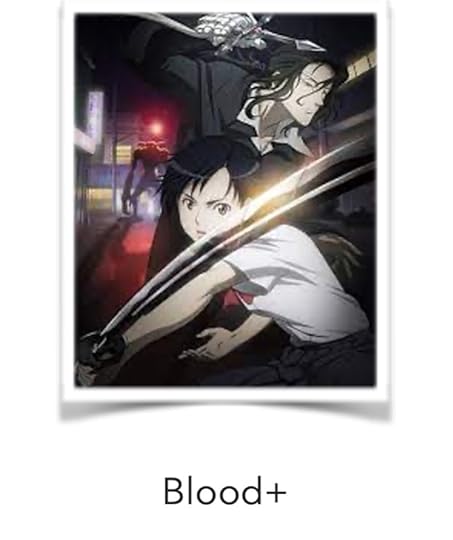
So…I gave up. The publishing part. I started writing fantasy and romance because I went back to my roots. The anime Blood+ is a huge inspiration to me and my writing, and there was something subtle about its romance that I loved. Again, vampire girl against the world which every writer and their mother has done, but Blood+ was done right. I took the romance element of it and wrote a book about a girl who used soul energy to power her powers.
Yeah.
But again, no publication. Just a really well written query letter that I paid so many editors to read and critique but never really got any results. Then again, it was more adult than YA, and remember that YA was the hot market back then. Maybe still is today, although NA and Adult are growing.
Query #2Single mother Sophia Stevenson busts her ass—or more accurately busses her ass—at the local diner, but if that’s what it takes to secure her twelve-year-old daughter’s future and her elderly mother’s wellbeing, she’s all in. That is, until a car rams into her and kills her.
In the afterlife, bad guys are purged of their sins and reincarnated on Earth while good guys strive to enter Paradiso, a place that offers everlasting peace and luxury. Two words: fuck that—Sophia doesn’t care about the perks of eternity. All she cares about is winning a ticket back to her family, ensuring her mother stays healthy and her daughter doesn’t end up in foster care (or worse: with deadbeat dad). She finds her chance in a tournament to become a Collector, a job that entails traveling to Earth and transporting souls between worlds.
She throws herself into training with Orion, a current Collector, who becomes her mentor and teaches her about fighting, spirit energy, and betrayal. He’s a looker and a nice distraction from her worries, but as their relationship heats up, so does the Corruption, an evil made up of people’s purged sins. It’s been consuming the afterlife, slowly eating souls, and growing more powerful by the day. Shit really hits the fan when Orion becomes possessed and instigates the destruction of the afterlife, damning any chance of everlasting peace and welcoming impenetrable darkness.
Now Sophia has more than just a tournament to win if she ever wants to see her family again both in life and death. If she doesn’t find a way to stop Orion and contain the Corruption, she can kiss all of existence goodbye.
IN OUR WORLDS is an adult fantasy laced with romance and feminist values complete at 96,000 words. Think Jane Ellsworth from SHADES OF MILK AND HONEY lands in one of Terry Pratchett’s worlds. Per your submission guidelines, I’m including XX pages of IN OUR WORLDS and would be happy to send more upon request.
Then in 2018 I started my Master’s in English Literature. And after a few semesters of reading Ulysses (yes, I read the whole thing), I started reading actual contemporary fantasy/science fiction. From, you know, today’s time because books today are very different than the ones in the 1800/1900s. Sarah J. Maas, Leigh Bardugo, and Holly Black got me started on a path I know I won’t be deviating from any time soon. I started with Shadow and Bone, fell in love with the Darkling (the inspiration behind the Warlord), and wrote Diamond City in 2021. Fast forward all the publishing/marketing research I did, and…
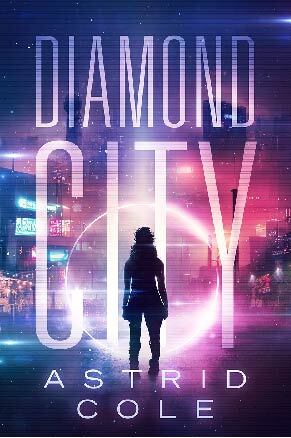
Ha, I know I jumped over the juicy stuff! The steps to publishing are not easy and require a lot of patience. More on that coming soon, but sometimes it helps to know that publishing didn’t happen overnight. For me it certainly didn’t.
The post How I became an Author appeared first on Astrid Cole.