Stephen Hayes's Blog
November 28, 2025
Twentieth Blogiversary
I started this blog 20 years ago today, on 28 Nov blame mi blameasdLSKgokjik2005.
I was going to say more but the paragraph I just typed just disappeared, and I can't be bothered to type it all over again. I blame Microsoft with their stupid keyboard driver -- there is some key that if you press it by mistake defines a whole bunch of text, and the very next key you press, no matter what that key is, deletes it. That was really a most idiotic design. Text should not be deleted unless you press the Delete key, and preferably after an "Are you sure?" notice pops up.


November 17, 2025
Memories: The Alexandra Bus Boycott 1957
Someone recently posted a historical note on exTwitter about the 1957 Alexandra bus boycott. Reading the comments that followed the post, I realised how little people knew of the history, and how much of what they knew was wrong.
You can find a broad outline of the event on WikiPedia, and a fuller account here, in a chapter of a book by Ruth First, but few have any conception of what it was actually like. The boycott began in early 1957 when the Public Utility Transport Corporation (PUTCO), which ran the bus service between Alexandra Township, 11 miles north of the city centre, raised the fare by 25%. People who worked in the middle of Johannesburg walked or cycled to work rather than ride on the buses.

I was then 15 years old, and attended a boarding school, though the boycott actually started in the school holidays, when I was at home. A few months earlier I had read Alan Paton's novel Cry, the Beloved Country, which had a description of an earlier bus boycott in the 1940s. I was fascinated to see history being repeated before my eyes. Almost everything Paton had written about it was being re-enacted, almost exactly as he described it.
My mother then worked as an estate agent, and had a nearly new car, a Wolseley 4/44, which in addition to travelling to and from the office, she used to show clients houses they might want to buy. When she passed along Louis Botha Avenue, the route most of the bus boycotters took to and from work, she would stop to give some of them a lift, usually women loaded with parcels, or older people who looked tired. Occasionally, if they looked very tired, she took them past where she usually turned off to Sandringham, where we then lived, and took them on to Alexandra.
Putco was a commercial company, listed on the stock exchange, and the Johannesburg Chamber of Commerce took their side, and tried to break the boycott, among other things by persuading the municipal traffic cops to ticket motorists who gave lifts to the boycotters. In those days the Joburg traffic cops wore very smart charcoal grey uniforms, and rode powerful BMW motorbikes, and they would give tickets for a variety of alleged offences, like obstructing traffic when motorists stopped to pick up boycotters, or running an unlicensed taxi service.
On one occasion, when I was back at boarding school, I had to go to the dentist in the middle of Joburg. I had money for the bus fare from school to town, and my mother was going to pick me up after work and take me back to school, but she forgot. I didn't have enough money for the bus fare, so I walked home with the bus boycotters, since it was the time when everyone was going home from work. I did it one way, once, but they did it twice a day, morning and evening, for nearly six months.
A few years later I went to work for the Johannesburg Municipal Transport Department as a bus conductor, and one of the older conductors told me that during the bus boycott many of the boycotters got on the municipal trams at Yeoville and rode into town from there. It shortened their journey by a couple of miles. Putco and the municipal services were entirely separate, and so travelling on a municipal tram did not break the boycott. The municipal tram service was also segregated. Trams for black people were painted silver, while those for white people were maroon and cream. In 1960 the Yoville trams were replaced by buses -- trolley buses for whites, and oil buses for non-whites. The buses for black people weren't painted silver, but the same maroon and cream, but had bords on the front and side saying "Non-Europeans Only/Slegs vir Nie-Blankes". For more on the municipal transport services, click here.
During the bus boycott the tram service, the old conductor told me, was almost overwhelmed. He could only collect fares on the lower deck and didn't even try to get to the upper deck. But his waybill would still show that he had carried a full load.
A few corrections to misconceptions revealed in comments on exTwitter.
Someone thought that the bus boycott was the occasion for the introduction of minibus taxis. It wasn't. In those days "Second Class Taxis" (as taxis for black people were called) were mostly 10-year-old American saloon cars, most popular were Chrysler, Plymouth, Dodge and Desoto, with curved sloping backs. Ten years later, in 1967, they were still 10 years old, but 1957 models, longer, wider, and with enormous tail fins. It was in 1969 that the first Toyota HiAce minibuses were landed at the Durban docks, each with two nuns installed in the front seats. And from then the min ibus taxi undustry began to grow, about 12-15 years after the bus boycott.
The Putco buses, like the one in the picture above, were painted dark green, with "Public Utility Transport Corporation" painted on the side. Nowadays they use the acronym PUTCO. There were some buses that had "PUTCO" written on the side -- they were painted blue-grey, and travelled between Johannesburg and Pretoria. They were only for white people, and on the sides was written "PUTCO Operating and Technical Services."
The boycott ended when the Johannesburg Chamber of Commerce agreed to subsidise the bus service by paying the increase. That always struck me as a strange anomaly -- subsidising a profit-making company. It would have been better to subsidise the municipal bus service, to pay for a public service, and not subsidise the shareholders' profits.
November 10, 2025
Beware of scam ads on Facebook and other Meta sites
Recent news reports have revealed that Meta (which owns Facebook, Whatsapp and Instagram) has knowingly made large profits from scam ads. See, for example, this article.
In this blog post I will describe how I tested a scam ad, and what happened when I reported it to Facebook.
A couple of years ago Facebook started showing me ads that looked "too good to be true". They claimed to be from well-known chain stores, like Makro or TakeALot, and advertised excess, damaged, or outdated stock at very low prices -- laptop computers or cell phones were often advertised for R35.00, or somewhere between R35.00 and R39.00.
One day I decided to check one that advertised Apple iPhones for R35.00. They were so cheap because the packaging had been damaged, or some such story. I hovered my cursor over the link, and the URL was totally different from the name of the chain store selling them. I nevertheless went on to the site. And they said that this Apple iPhone for R35.00 would be delivered to my home within 2 days. I just needed to answer some questions. I answered some questions, gave my card details, and got an acknowledgement of payment. It then went on to a different site, dealing with something totally different, and at the end a message flashed across the screen saying "Thank you for subscribing to..." and was gone before I could see what it was thanking me for subscribing to.
I immediately called the bank and cancelled my card.
Later the same day the bank phoned me, and said they had received by request for cancellation, but two requests for payment had come in since then -- one for R35.00, and the other for R650.00. Did I want the bank to pay them?
I said they should pay the R35.00, but not the other one. I had reckoned on losing R35.00 if the ad was a scam, but if I cancelled the payment I would never know, so I let it stand. And no iPhone ever was delivered to me, so I now know for certain it was a scam. And if I had not cancelled my card when I did, they would probably have taken the R650.00 every month as well.
But since I had responded to one such ad, Facebook began showing me a lot more. I would hover my cursor over them, note that the URL never corresponded with the ostensible advertiser, and would then report it as a scam. Sometimes Facebook would acknowledge by email that I had reported it, but would never say what action they had taken, except in a few cases where they responded by saying that they had investigated my complaint and found that the ad I had complained of "does not contravene our community standards".
I also once tried advertising on Facebook. I write children's books, and wanted to make them known to more potential readers. Setting up the ads was not easy, because the instructions were vague. I tried to specify the kind of people who would be interested in such books, but Facebook apparently showed them to a bunch of random people. They told me who had "liked" them, but none had shown any interest in reading them, and the demographic data showed that the people who had "liked" them would not be very likely to want to read them.
So the lesson I draw from this is twofold:
1. Don't buy stuff advertised on Facebook & other Meta platforms
2. Don't advertise stuff on Facebook and other Meta platforms
October 8, 2025
Modernised Christianity in premodern Africa
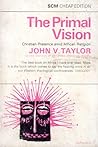
The Primal Vision by John V. Taylor
My rating: 5 of 5 stars
This is one of those life-changing books, which changed my attitude to a lot of things, and taught me things that proved useful in later life.
It is part of a series of books on Christian presence among other religions -- in this case the religions of sub-Saharan Africa. John V. Taylor, a British Anglican, served in East Africa, and read widely in books about other parts of Africa. He noted that in much of Africa Christianity was a classroom religion, because that is how it was taught to many Africans, and so it was remote from the everyday life of the people.
I later learned different words to describe what Taylor wrote about -- that sub-Saharan Africa had a premodern culture, and missionaries from the West had, by the 19th century, inculturated Christianity in to modernity, and so found it difficult to communicate it to pre-modern Africans. Western Christianity had been reshaped to deal with modern problems; and so could not help Africans with many of the problems they faced. So Western missionaries concluded that civilisation must precede Christianisation. Africans had to be modernised to that they could have the modern problems that modern Christianity had been contextualised to solve, the problems of an urban industrialising society.
The book was written more than 60 years ago, and Africa has changed, as has the West, from which most Christian missionaries to sub-Saharan Africa came in the 19th and early 20th centuries. It was written before the rise of Neopentecostal megachurches, which have modernised African Christianity in ways that Taylor never thought of.
I first read The Primal Vision 1967, and then again four years later. In between those readings I read The Secular City by Harvey Cox, a paean of praise to Western modernity. Where Taylor saw the value of the premodern worldview, in which the world was seen as enchanted and alive, Cox says
Both tribal man and secular man see the world from a particular, socially and historically conditioned point of view. But modern secular man knows it, and tribal man did not. Therein lies the crucial difference. The awareness that his own point of view is relative and conditioned has become for secular man an inescapable component of that point of view.Both books show how some people, at least, saw these things in the 1960s, but they also worth reading to see how we got to where we are now. View all my reviews
October 2, 2025
Secret of the Night Ponies (book review)
 Secret of the Night Ponies by Joan Hiatt Harlow
My rating: 5 of 5 stars
A historical novel set in Newfoundland, Canada in 1965, when people were being encouraged to move off smaller islands and live on the main island, where it was easier for the government to provide infrastructure and services like schools, hospitals, etc. Many ponies were left abandoned on the small islands, where they sometimes starved in winter. Thirteen-year-old Jessie Wheller had taken her own pony to the mainland, but then learned of the fate of some of the others, and urged her friends to join her in doing something about it.
Young Jessie actually has three rescue adventures in the story, first of some people whose boat is wrecked in a storm, then of a younger school friend who is abused by her foster parents. This seems to cram too many adventures into too short a time, but it's fiction, and people who have adventures in fiction usually have more than in real life. Also, her participation in the earlier rescues gives Jessie the confidence that leads her to believe that she and her friends can rescue a whole herd of ponies.
Because of the setting and the age of the main characters I found it rather similar to Anne of Green Gables, and readers who enjoyed the stories of L.M. Montgomery will probably enjoy this one too. It is an exciting adventure story, well told, and gives an interesting glimpse into place and period.
View all my reviews
September 15, 2025
Speaking ill of the dead
What did your pastor preach on today?
That was a post I saw yesterday on exTwitter.
 I was the one who preached yesterday in our small congregation in Atteridgeville. Since we use the old calendar, I preached on St Simeon the Stylite and the Ecclesiastical New Year, remarking that in our part of the world it coincides with spring, and that is appropriate for the beginnings of things.
 On the way home after the service we stopped to take photos of the camel's foot trees in bloom, which is always one of the first signs of spring in our part of the world.
Out of curiosity I looked at the comments on the exTwitter post, and found that almost every one of them was about whether the preacher in their church preached on, or mentioned Charlie Kirk. Some of them said that they were never going back to that church because the preacher had not preached on Charlie Kirk.
Until last week I had never heard of Charlie Kirk. The first I heard of him was a bunch of angry posts on social media saying that he was a terrible person who said terrible things and deserved to die.
So that was the first thing I learned about Charlie Kirk: that a lot of people didn't like him, and didn't like the things he said, and thought he deserved to die.
After reading a bunch of posts in this vein I came a couple of others that said he was a fine upstanding young man and that he didn't deserve to die.
So there were the second, third and fourth things I learned about Charlie Kirk: that some people admired him, that he was young, and that he was dead.
And then more messages appeared about his wife and children, and the manner of his death, and so on.
Now Charlie Kirk wasn't the only one to die last week. He wasn't even the only one to die violently. In the same week we had heard about 11 people who died violently on a boat in the Caribbean, shot by the US Navy. And some people had been killed in Ukraine, and some in Gaza, and some in Qatar who were trying to make peace. But none of these others were of any interest to the Twittering classes. Their names, their ages, their opinions, their families, were of no interest to the news media or the Twittering classes. The only one that interested them was Charlie Kirk.
Then I started seeing all sorts of opinions about Charlie Kirk from people who knew no more of Charlie Kirk than I did. I began to get a sense of pressure from social media, that one ought to have an opinion on Charlie Kirk. One ought to be able to say whether he was in heaven or hell. I felt a bit uncomfortable about that; after all, "vengeance is mine says the Lord, I will repay" (Romans 12:19).
If, as some people were saying, Charlie Kirk had said some bad things, then, without judging him as a person, one could at least comment on the things he said. But what did he say?
People who knew him, who had listened to what he had said or read what he had written, might be able to form a judgement. But I hadn't heard him speak or read what he had written. All I had on social media was third-hand or even more remote -- people who had heard someone else say that he had said something. That's hearsay, not evidence on which one can make a judgement.
I suppose I could do some research. I could search the web for a speech, writing, utterance or statement he had made, study it and then embark on a critique of his views, opinions or character. I could search for evidence of his actions. But why bother?
Perhaps one should bother because a lot of people seem to think it is important to have an opinion about Charlie Kirk. But is it really? I think it is no more important to have an opinion about Charlie Kirk than it is about the 11 people who died on a boat in the Caribbean. I think that Charlie Kirk no more deserved to die than they did.
One of the problems of the world, or perhaps one of the things that exacerbates the problems of the world, is this rush to judgement. The perceived need to identify the "good guys" and the "bad guys" in any conflict, what Americans call the "black hats" and the "white hats" (from the old Western movies of the 1930s and 1940s). And social media tend to exaggerate this tendency. It seems that their algorithms are even designed to do so.
As a result, in the conflicts of today there are no good actions or bad actions, only good people and bad people. Genocide is bad if the bad people do it, but good if the good guys do it. Terrorism is bad if the bad guys do it, but good if the good guys do it. As a result the needle of the world's moral compass swings about wildly. An act by those we designate as bad guys is an outrage, and the needle points north. The same act by those we designate as good guys is a brilliant strategic move, and the needle swings around and points south.
For Christians, at least, one way to steady the moral compass is to remember the adage Love the sinner, hate the sin. But I've said more about that here.
September 10, 2025
Goodbye to Zoom?
For the last couple of months ominous notes have appeared on my computer whenever I've used the Zoom conferencing app, telling me that Zoom will no longer be supported on my computer after December 2025, and saying I could learn more on their web site. So I went to their web site where I read:
In November 2025, Zoom plans to release the final version of the Zoom Workplace app for Windows 32-bit. The anticipated version number of the final release for Windows 32-bit is the last minor release of 6.6.0. Anyone who is still using a device running on a 32-bit version of Windows must prioritize upgrading to 64-bit.
Well, no, I will not prioritize downgrading to 64-bit with its reduced functionality. The reason I bought a computer running 32-bit Windows is that the 64-bit version will not run several programs that I use every day. The 32-bit version of Windows has this functionality, the 64-bit version lacks it. I use Zoom roughly once a fortnight. So if I am forced to choose between programs I run every day and one that I run once a fortnight, I know what I'll prioritise.
The Zoom page doesn't say that the 32-bit version will stop working after December 2025, it just says that that will be the date on which the last update of the 32-bit version will be released, so I hope it will go on working for some time after that. But I suppose sooner or later someone will introduce something that breaks it, and then it is likely to stop working.
But I think email mailing lists will still work, and I think they is one of the best means of group communication, and long may it continue. If you'd like to keep in touch by that means, come and join us in the Offtopic forum, where stuff that is off-topic in more specialised online forums may be freely discussed. To learn more, click here!
September 5, 2025
A Literary Mystery
Now here is a literary mystery that puzzles me, and if you are reading this I hope you might try to help me solve it, especially if you enjoy reading books and use the GoodReads web site.
I've written four novels, three for children and one for adults, and some people who've read them have written reviews and posted them on the GoodReads web site. If a book on the GoodReads web site gets ten or more ratings (books are rated with from one to five stars), it gets a list of other books attached -- "readers who enjoyed this book also enjoyed".
I was hoping to see such lists for my books, partly because I thought that if people who enjoyed my books liked them, I might like them too. And also because, knowing what readers of my books liked could help me to know what kind of books I should write in future. So I was very pleased when one of my books, The Enchanted Grove, got the required 10 ratings and I could see what other books its readers liked.
But the result was weird:
 I can't imagine any readers of my books liking those two books, which I've never heard of. So if you've read The Enchanted Grove, or any others of my books, and rated them on GoodReads, please let me know if you're read either of those two. Also, if you've read any of my books and have not rated them on GoodReads I'd be very grateful if you would rate them, and better still, write a review, and check to see if any of your favourite books appear on this list. What I think may have happened is this: I got a couple of spammy emails from people asking for a link to my book. I gave them a link, and then a couple of reviews appeared. Both were filled with fulsome praise for the book which I was pretty sure were written by AI, and that the people who had posted these reviews had not read the book at all. It looks like some kind of scam to get the two books shown above listed on my book's page as a means of promoting them. The implication is that most of the readers of The Enchanted Grove had those two books as their favourites, which I find very hard to believe. If you haven't read The Enchanted Grove, and would like to, you can find out more about it, including where to get a copy, here.
August 22, 2025
Burying the Typewriter: under the Eye of the Secret Police

Burying the Typewriter: Childhood Under the Eye of the Secret Police by Carmen Bugan
My rating: 4 of 5 stars
A memoir of a family living under the eye of the Romanian secret police in the time of the dictator Nicolae Ceaușescu.
Carmen Bugan's father was a political activist, protesting against the dictatorial communist regime in Romania, and was imprisoned as a result of his protests. During his imprisonment his family was under constant surveillance by the Romanian secret police, the Securitate, and Carmen Bugan describes the life of their family in those circumstances. When her father was eventually released from prison he wanted to leave Romania and the family emigrated to the USA shortly before the fall of Ceausescu.
The story is well told - Carmen Bugan is a poet, and many of her descriptions are poetic -- and I found it well worth reading.
It may be just me, but one of the things that I found most interesting was comparing her experience with the Romanian Securitate and my own experience (and that of other people I have known) with the South African Security Police in the time of apartheid.
The main difference seemed to be that the Romanian secret police were far less secret than the South African ones. In Romania much of the surveillance was open. The family were told that they were being watched, they saw the microphones being installed in their house, and were told to leave their curtains open so that the police could see what was going on inside. The children were followed to school, and the friends and relatives who visited them often wrote notes to warnher and her parents them to be careful what they said, because they had been asked to report conversations to the police. In South Africa, even reports to the Minister of Justice did not name informers but referred to them as as "'n delikate bron" (a sensitive source).
But in most other respects they seemed to be very similar, and rather familiar. Reading the book I was reminded of the feeling that one could not really trust anyone, because you never knew who might be a police spy. She writes of
Sofica, our neighbour, who is in her late thirties and single, is called to the Securitate to give information about us. Does she have a choice? We can't tell the difference between her being 'interrogated' about us and her being asked to 'inform' on us... When she returns home it is her and her parents job to prepare meals for the Securitate comrades who turned the front room of their house into a surveillance residence from which they could watch us day and night.
I was rather disappointed that the story did not tell more of their emigration and life in exile, and how they adapted to life in a new country. It did, however, tell of her later return to Romania and reading the files kept on her family by the Securitate. That paralleled my own experience of going to the archives in Pretoria and reading the reports the South African Security Police made on me and my activities. As Carmen Bugon writes
...it's knowledge that comes as a sort of exile from Eden. Am I worthy of gaining this knowledge? Am I entitled to have this knowledge because I am a part of it? Will my life make sense without this knowledge now that I know it exists?I found it interesting to see what they knew, and also what they did not know; what they saw fit to record, and what they did not see fit to record. They said I had been to places I had never been to, and did not say anything at all about places I had been to. Their "total onslaught" mentality made them see conspiracies where there were none, and often to misinterpret what they did see because of the distorting lens through which they looked at the world. In that respect there was little difference between the Romanian secret police and the South African secret police, or the secret police of any other place or time. As W.H. Auden writes:
Obsession with securityAnd that goes for other security measures too.
in sovereigns prevails
'His Highness' and 'The People' both
choose islands for their jails.
View all my reviews
July 3, 2025
The Inklings and King Arthur (book review)

The Inklings and King Arthur: J. R. R. Tolkien, Charles Williams, C. S. Lewis, and Owen Barfield on the Matter of Britain by Sørina Higgins
My rating: 5 of 5 stars
Several of the Oxford Inklings wrote about King Arthur though for most of them Arthur was not the main focus of their work. Roger Lancelyn Green's prose retelling probably did a great deal to make the Arthurian stories accessible to 20th-century readers, and Charles Williams devoted quite a lot of poetry to Arthurian themes, but for the other Inklings, Arthur, though not central, was always present.
This book looks at the ways in which the four main Inklings -- Barfields, Lewis, Tolkien and Williams -- handled the "Matter of Britain" in their writings, and how they themselves contributed to it. In such a project, one of the first things that needs to be decided is what makes a particular text "Arthurian". In the first chapter editor Sørina Higgins deals with this question and generally adopts an inclusive approach. Any reference to the Arthurian legend, explicit or implicit, is included. So the book also includes a list of all the writings of the four main Inklings, published or unpublished, that contain such references.
This alone would make the book useful to Inklings scholars, or indeed anyone wanting to know about 20th-century Arthuriana, but the main articles deal with it comprehensively from various points of view, including a survey of the source material, the writings of the Inklings themselves analysed from various points of view, and much more.
I found it especially valuable because much of my own knowledge of "The Matter of Britain" comes from the Inklings. As a child I had read a children's edition of Stories of King Arthur by Stuart Campbell, and likewise a child's edition of Spenser's The Faerie Queen (during the reading of which I fell in love with Britomart). So when I read Arthurian bits of the Inklings, that was my reference point, and things that were not mentioned there (like the Fisher King) passed right over my head. So this book helps to anchor the Inklings' Arthurian references in a wider tradition, and helps one to make sense of them.
There is not much mention in this book of Roger Lancelyn Green, a minor Inkling, whose retelling of the stories of King Arthur helped me to put them in context. I've said more about that in South African Camelot.
View all my reviews