Steve Anderson's Blog
March 11, 2025
Can a novel predict our nightmare?
This was supposed to be a different kind of post, but here we are. We are currently enduring a soft coup perpetrated by an oligarchical, Christian-nationalist kleptocracy that betrays the ideals this country was built on and that our people have fought so hard and died for.
Ten years ago this spring, my novel The Other Oregon: A Thriller was first published.
Thanks for reading Underdog Stories! Subscribe for free to receive new posts and support my work.
In The Other Oregon, a Portland activist ventures into a rural part of my state to face a threat from his past. The story follows Greg Simmons, an advocate for the Cascadia movement, who becomes an unlikely informant for the FBI. Tasked with investigating a dangerous militia group in and around the town of fictional Pineburg, Greg must confront his estranged friend, Donny Wilkie, and the dark secret they share.
The only problem is, Donny’s a charismatic but narcissistic swindler obsessed with power and with getting back at a world that rarely gave him love or a chance. He’s a dangerous mix of charm and menace and has many in town believing that he’s their potential savior.
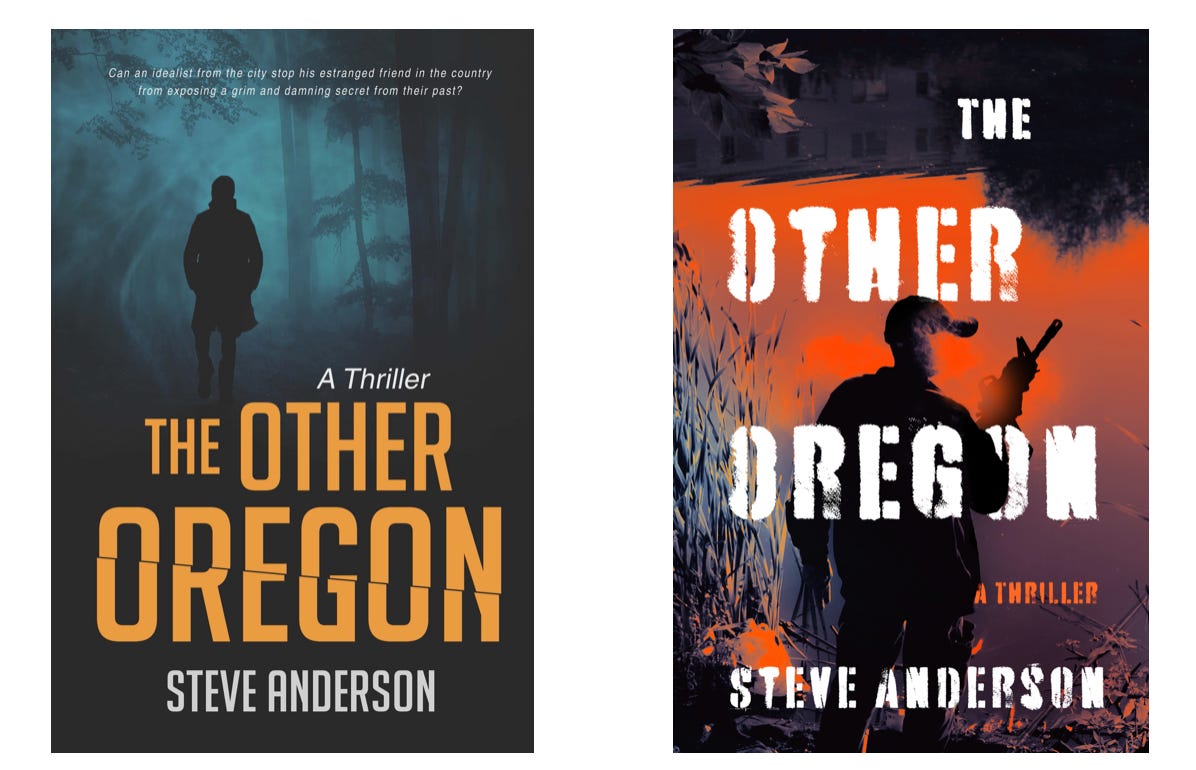 As published in 2015 (left) and in 2023 (right)
Donny’s rise to power in remote Pineburg is built on exploiting the fears and frustrations of people who feel abandoned by the government. Through fiery speeches about secession, anti-government conspiracies, and a return to a simpler America, Donny weaponizes nostalgia and resentment to rally his followers—despite not truly believing in his own rhetoric.
Looking back now, I can see how this mirrors today’s right-wing leaders and influencers harnessing social media and populist messaging to amplify distrust in institutions, promising to “take back” America while serving their own agendas. Just as Donny’s followers are seduced by promises of restoring lost freedoms, modern extremist groups have tapped into economic anxiety and cultural fear to legitimize their cause.
This all said, I was really just writing a crime thriller that used all of the above as setting. For those seeking the whole truth, talented, hard-working journalists such as Leah Sottile, insightful historians of the Oregon and US right like Seth Cotlar, and gritty procedural dramatizations such as the recent movie The Order lay bare the longstanding right-wing threat.
It pains me to say itBefore the election, I’d planned to write this post simply about storytelling and story mechanics, and about how readers either loved or hated the novel. I’ll be brutally honest: More readers disliked it compared to my other books.
In other words, I was going to leave the politics out of it. But as I look back, I see that some of the reasons some readers hated it might well have to do with what the book was predicting.
Some readers have solid reasons for disliking the story. I’ll admit I tried out some things that don’t work for everyone. I’d first adapted the story from a screenplay I wrote that did well in awards contests and was later optioned, so I kept the sparse style in the spirit of noir crime fiction.
When The Other Oregon was first published, it didn’t find much of an audience (partially for reasons I’ll explore another time). But some readers who found it loved it. One review called it “a fast-paced historical thriller that will linger in the mind and memory long after the novel is finished and set back upon the shelf.”
So far, so good. But then came other reviews.
Some focused their takes on the storytelling—they simply didn’t like the main character, for example, or the way I told the story. Fair enough. But others did not like that I called out a political divide. Some thought I was taking cheap shots at the red parts of my state.
I wasn’t trying to be political. I was telling it like I saw it while exploring conflicting mindsets in the service of crime fiction.
Then again, I also believe that old adage: “If you’re trying to please everyone, you’re doing something wrong.”
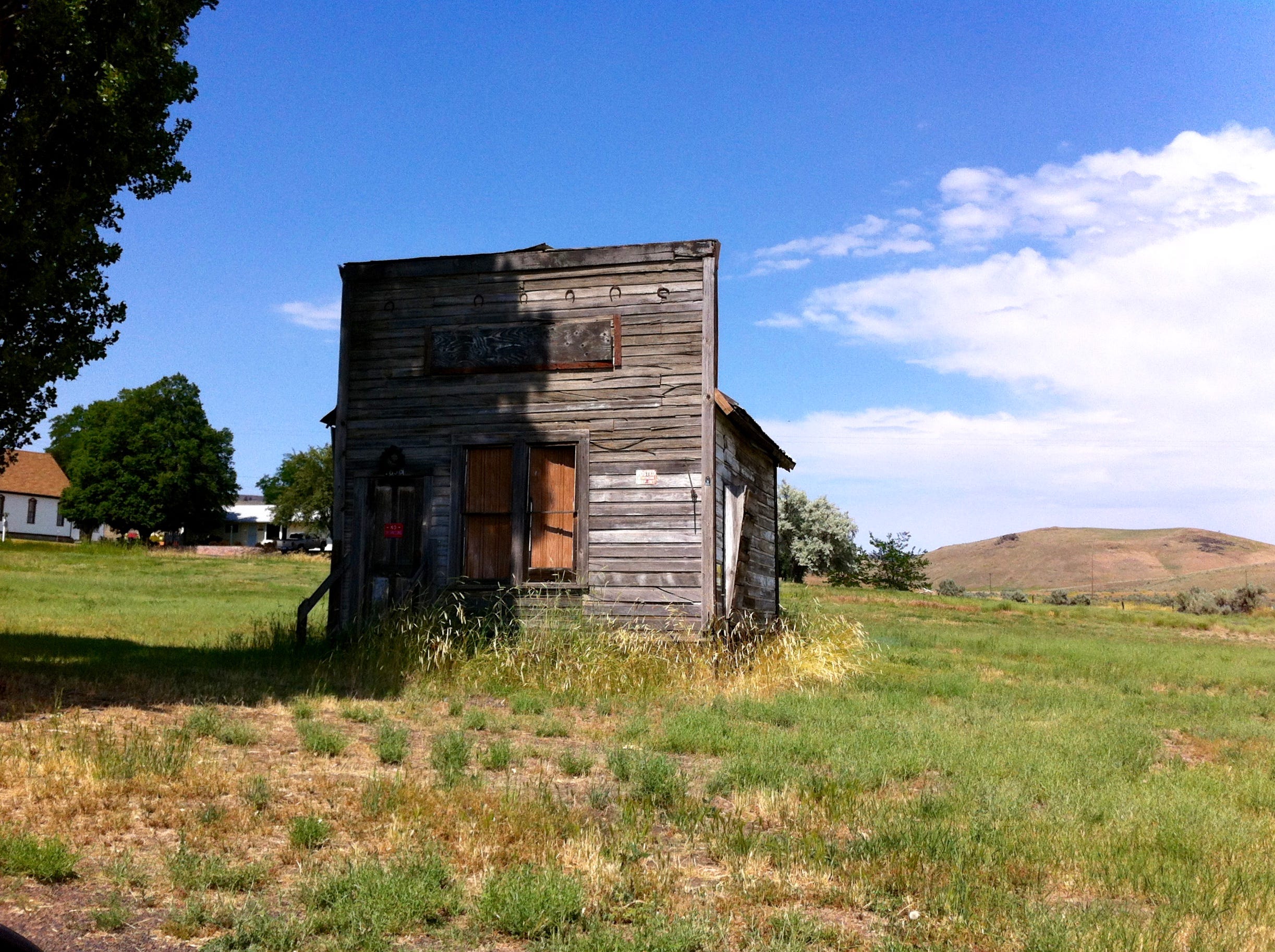
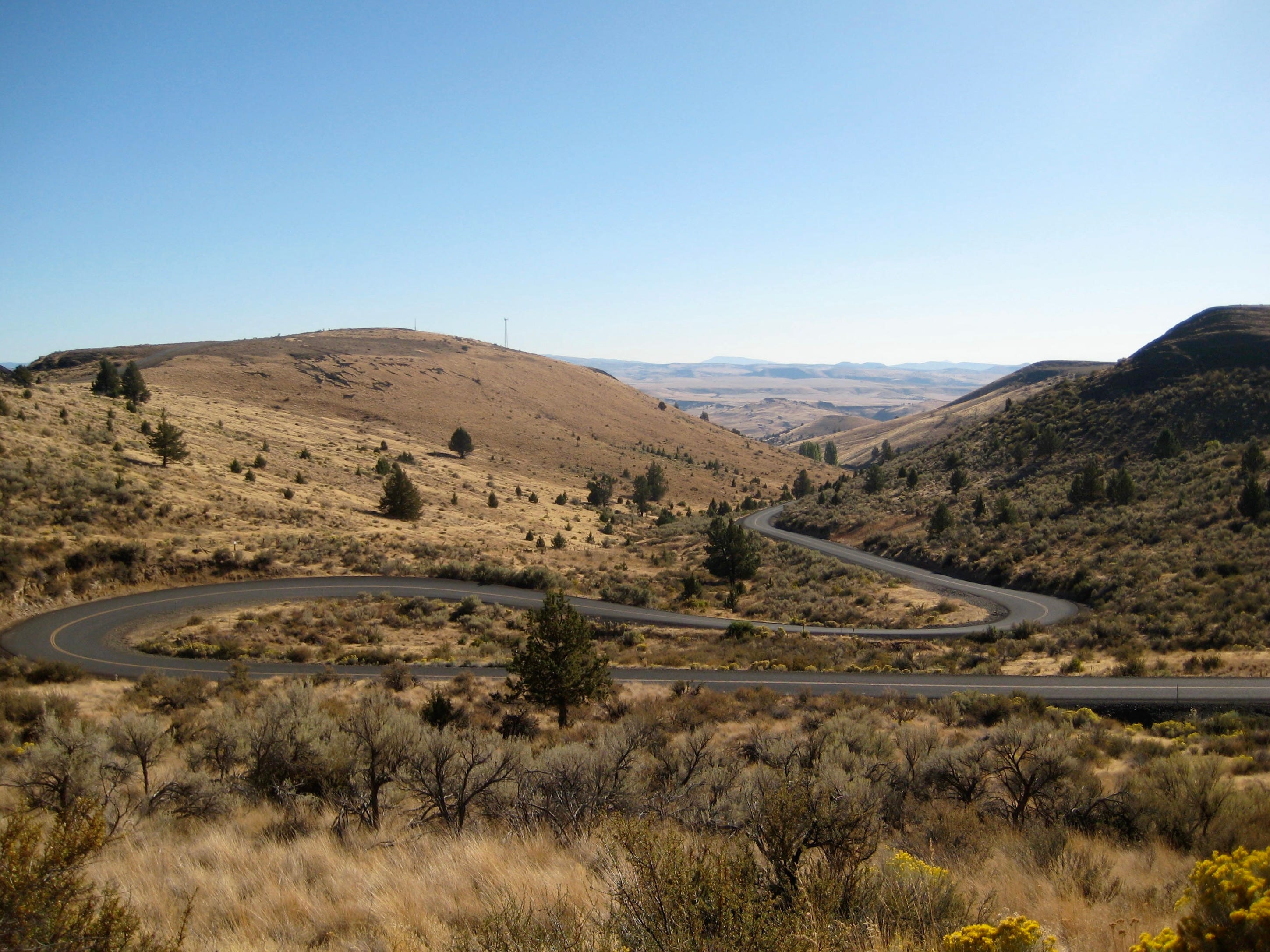 On the road researching The Other OregonIt can and is happening here
Looking back, I remember thinking I was describing angry mindsets that, while existing in the Pacific Northwest for a long time, were likely dying out and soon. And in my story (spoiler alert), my Donny doesn’t get away with it.
It all seems so quaint if not naive now.
Less than a year later, as I wrote in an early 2016 post, Ammon Bundy and his criminal right-wing militants occupied Oregon’s Malheur National Wildlife Refuge, not to mention historically Paiute Tribe land.
And we know who first got elected later that same year.
By 2020, we had violent protests against lifesaving COVID-19 restrictions, and an armed plot to kidnap Michigan Governor Gretchen Whitmer orchestrated by members of the Wolverine Watchmen militia.
And, of course, we have the infamous events of January 6, 2021, when right-wing groups, including militias like the Oath Keepers and Proud Boys, violently stormed and raided the US Capitol itself. They attacked the cops they profess to back so much. They killed a Capitol Police officer and injured many more, and would do it all over again. And on and on.
Jump to early 2025, and these antidemocratic forces who claim to be patriotic and put “America First” think they are winning. They were pardoned by their Dear Leader, after all. But they are also getting fooled and exploited by the extreme oligarchs, heartless conmen, grievance mongers, and conniving lackeys who want to squeeze all the profit, power, and blood out of America that they can inhale—before leaving us to rebuild it all.
We were never reaching the end of a divide. It seems we are just getting started. So to those who thought I was taking cheap shots:
Wake the hell up, people.
We welcome you to join the fight once you realize that you too are getting conned.
This book could use some loveIn 2023, my current publisher quietly rereleased The Other Oregon with a great new cover. Maybe it’s improved with age? Maybe not. But I invite you to see for yourself.
If you like it, please give it a review or rating at your favorite online book retailer such as Amazon, Goodreads, Barnes & Noble, or other review-based sites.
I hope you’re doing well. Hang in there. Let’s close things out with a little tune that’s truer than ever from a guy who really did predict the future:
Steve
Thanks for reading Underdog Stories! Subscribe for free to receive new posts and support my work.


February 11, 2025
Blast from my past
For this post, I had planned to sound off about the looming collapse of the American Experiment. From the White House, an oligarchical kleptocracy collaborating with racists and Christian nationalists is perpetrating an openly corrupt soft coup. Their lackeys can’t suck up hard enough. These attacks and offenses betray the democratic ideals this country was built on and our people have fought so hard and died for.
I don’t say this lightly. I have studied such movements in history and see all the dark signs. But others on Substack and elsewhere are describing it better and in precise detail right now. I write novels, after all.
So instead, I’m sharing a personal story published back in 2008. In the early 2000s, I wrote essays and short stories and tried getting them published. None were historical or thrillers like I write now.
In “Trimet Summer,” I wrote about what we teens did in the remote SE suburbs of Portland, Oregon, well before social media, cell phones, and helicopter parents. Back then, we just used our imaginations, tried to be good, and somehow made it home by dinner. Wise policies here in my home state helped make it possible. It all seems a lost world, especially now.
I hope you enjoy it.
Trimet Summer
No one said we couldn’t take a river raft on the bus. Two TriMet bus seats barely held the scruffy yellow rubber, all deflated and folded and crammed in there. We grasped at the metal seat handles, peering out windows. Then we’d catch a glimpse of it — the Clackamas River, a vast sparkling sheet beyond cropland and lines of pines.
It was summer, 1980. We had four for this river run, four teen boys from the same tame subdivision of Milwaukie suburbia. The bus driver dropped us off at Carver. Along with the raft we had a sack of cans and bottles. At Carver Store we returned the booty — and stocked up on jerky and sunflower seeds from the payoff. We pumped up the raft with the store’s air hose, shouldered the raft across Carver Bridge and on down to the boat ramp, where the river’s edge had two smells — the fresh scent of rushing current, and the musty reek of water that would not rush.
In a short half hour TriMet bus 31 had delivered us, while our parents worked, into something wilder and freer. We were too young to drive, which definitely was not cool, but TriMet didn’t judge. Our allowances sucked and our crappy first jobs paid little more, but the Oregon Bottle Bill had us covered.
 High Rocks on the Clackamas (Trimet.org
We did a lot of those river runs. We’d have anywhere from two to six of us (me, my brother Dave, Andy, Kelley, Brubaker, Travis, or some special guest star), there could’ve been inner tubes or air mattresses (easier to lug on the bus), and it might have been the summer of ‘79, ‘81 or even ‘82. The ritual remained the same. Floating that short stretch of the Clackamas offered the geography of the world, it seemed then — rocky cliffs, sandy shore, low valley of horses there, bank of river rocks here, then clay plateaus, then overlooks with majestic houses and, in-between, trees and trees with moss on trunks, the high noon sun painting it all in vivid browns, greens, grays and blues. Sometimes it was even flesh tones — if we were lucky we’d pass some “fox” on a towel or lawn chair. I remember aromas of suntan lotion and wild berries, that salty, piney taste of our sunflower seeds. Stop at a rope swing. Jump from a rock. Take the fast rapid again, and again, knocking ankles on river rocks as we plowed back upstream for another go. We might drift without seeing a soul, legs dangling off the side. I don’t remember litter.
Sometimes we scored a six-pack. I don’t know how four teen wannabe river rats riding the bus managed that one. I do know I drank my first beer on the river — a Mickey’s Big Mouth in the stout green bottle, like a grenade. I can still taste the warm bitterness of it, like liquid shrubs. Yet we never got drunk. We could only carry — or score — so much and had to make it last. We didn’t smoke pot then. It just wasn’t us. We weren’t stoners or even nerds — we were soccer players, a new breed spontaneously created a few years hence by the North American Soccer League and a tricky little dude named Pelé.
We played morning and night on nearby fields, in backyards, on concrete hoop courts, before and after anything we were told to do. Yet we weren’t jocks — back then, soccer had the same clout as flag team or ping-pong. Only we seemed to know that nylon soccer shorts dried way faster on the river than denim cutoffs.
The river float let us be ourselves, but the ride had to end. Riverside was the safe jump-off point, a sleepy park with a kids’ BMX track and a soccer field we all knew. If we wanted a longer ride we had to stop at High Rocks farther down, near Gladstone and the Willamette River. When High Rocks got close a hulking old rail bridge blocked the sun, its massive supports sucking and churning the water, working hard to make us steelhead bait. Then those jagged high rocks loomed, like mini black Alps.
The regulars glared down at us, looking to me like the Manson family with their tattoos and leather headbands, gaunt pocked cheeks and knives and furry shit hanging from their belts, the women stomping around all the while like infantry on patrol. Here the darker 1970s still ruled, all Motörhead and Jonestown and the Gypsy Jokers, when tattoos and Harleys were not stale brands but weapons. The Mansons leapt from any rock, from any height, without even looking it seemed. It was Land of the Lost and Planet of the Apes, we joked, but we had to know it was within us too. They were daring us to jump.
After braving High Rocks, we could do anything. On weekends that same TriMet bus 31 delivered us to downtown’s Civic Stadium and the Portland Timbers of the North American Soccer League (NASL). We’d take back bottles and always get downtown early. At Caplans Sports we’d try on the rare Mitre and Patrick soccer shoes we couldn’t ever afford. At Callin Novelties we’d buy whoopee cushions and fake turds on sale. We scarfed at mom-and-pop joints, lots of bad tacos and cheap hot dogs, and we amazed at Django’s Records and the endless stocks of used LPs that nowadays couldn’t fill one colored room of Powell’s or a page of Amazon.
Along the march to Civic we eyed girls but rarely made successful contact. Maybe it was because we were to them young Mansons from the far-out, pre-New Wave suburbs. And maybe it was best, for we had no clue what to say. Ever rafted the Clackamas? Listen to that band Devo? Hear my whoopee cushion? Inside the stadium, we found our way. A few times we snuck down to the field’s edge for a Timbers game’s last minutes. In 1979, we sat along the midfield touchline as our boys lost to the mighty New York Cosmos in a shootout.
After games, the stadium crew often let us soccer rats play on the hard Astroturf until after the lights died down. Once we made it below the westside stands and mingled with players coming out the locker rooms with cigarettes and beers and so many British accents twanging away, none of which we could match to a town or even a country. For one big game we brought our small one-man raft on the bus and, branding it the “Timber Boat,” blew it up and sent it out into the Timbers’ crowd, a kooky teen bonding of river and city. It floated out among the North End’s thousands and can probably be seen, I’m really hoping, in a decent photo somewhere.
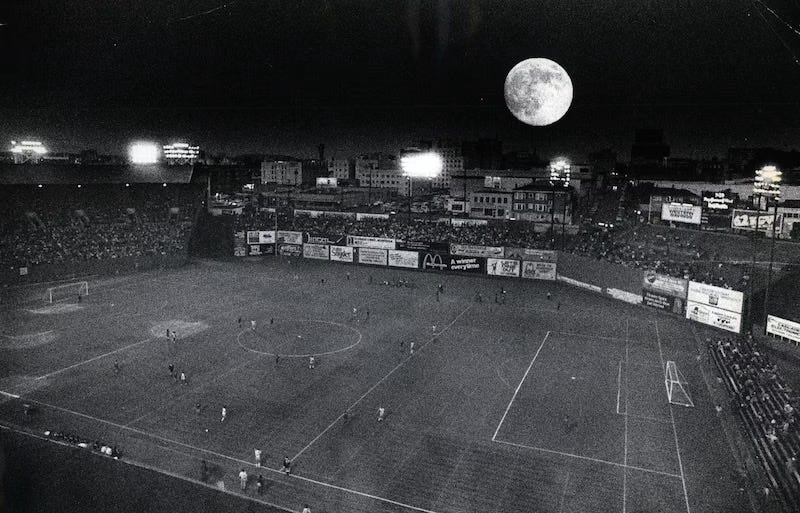 The NASL Timbers in Civic Stadium under a full moon in 1977. A little before my time, but not far off. Just imagine it in color! (The Oregonian)
That was our Soccer City USA. We never ventured into Old Town, Chinatown, or that dead zone of grimy warehouses now called The Pearl. Like most kids, we took it all for granted. We had no clue downtown’s smaller blocks (compared to other American cities’) helped make that trek to the stadium quick and easy. For us, the Transit Mall and Fareless Square had always been there even though they were only a couple years old. We didn’t care much about Pioneer Courthouse Square being built, about some trolley they were calling MAX.
As for the Clackamas River, I certainly had no clue Rudyard Kipling had fished at Carver and they’d named a big rock in the river after him, had no clue endangered coho salmon and steelhead swam nearby Clear Creek and that only years of activism, conservation and grit had brought the noble fish back. The Oregon Bottle Bill was barely ten years old then. I only vaguely thought of it as recycling and probably didn’t see that our returns helped keep the litter off the river.
We were just getting started, yet nothing was what it seemed. The Mansons at High Rocks were partly grotesque exaggerations of my overheating teen mind, and I’m sure the scene was nothing like the psycho summer river riots reported today. At the same time, a grinning contender named Neil Goldschmidt was still the untainted champion of progress Portland, Oregon-style, and the Trail Blazers were those humble scrapping heroes we loved all the more because the national media snubbed them.
Out by my house, Clackamas Town Center was about to change a loose two-lane network of sleepy fringe suburbs, farmland and woods into a supersized morass of chain mall, road improvement and mini-mansion that would scrape the green from the hills and, in the end, seduce even old isolationist Happy Valley.
We were those teens who thought themselves different. We’d find out otherwise. Soon we’d get our first cars and loathe the bus, the summer river runs involving complex car shuttles, and more crappy jobs freed us from taking back bottles. Along the river, I’d hope to see that one girl who’d dropped out instead of just some fox. Shorties of Schlitz Malt Liquor would replace sips of Mickey’s, whoopee cushions became bongs, Devo abandoned for Black Flag. Though I’d become a top soccer player locally I quit top-level ball before I turned 19, the collapse of the cocky, overreaching NASL doing my teen malaise no favors at all.
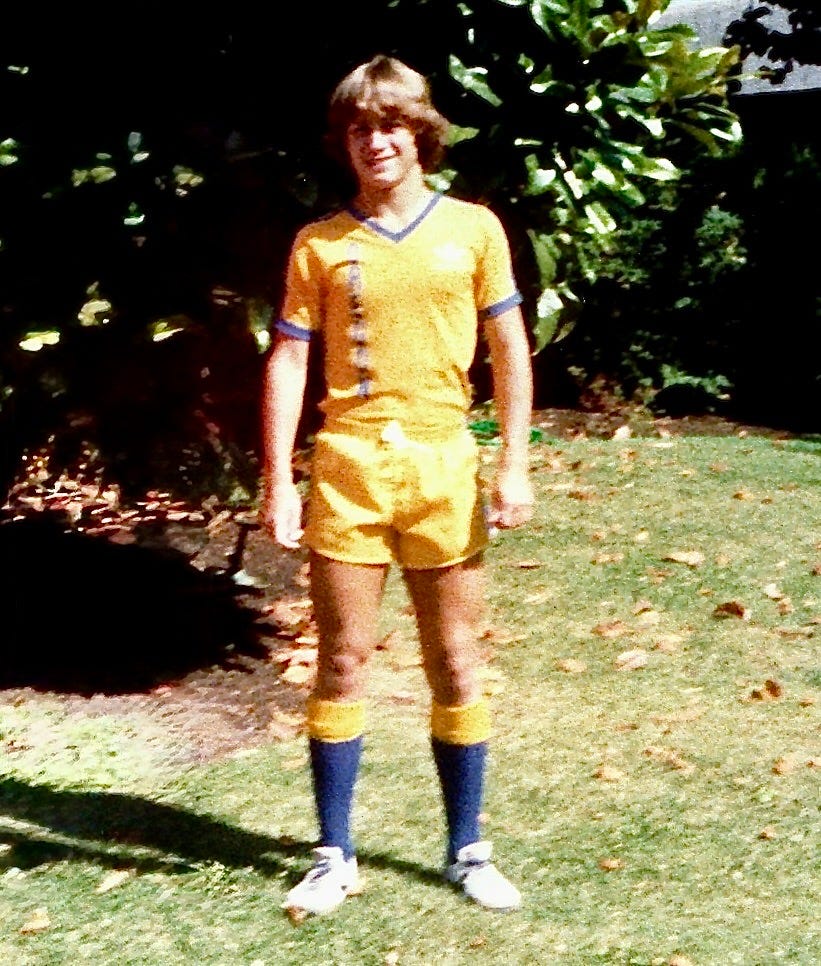 Early 1980s, before playing in Civic Stadium myself. Pretty stoked!
 Those easy summers made possible by TriMet and the Oregon Bottle Bill were not to blame. If anything they were character builders that would help us remember later we could make it all on our own — with just a little help. It’s not often you can thank policy for encouraging growth of a human sort. Today, it might be phrased this way: There’s a lot to be said for unstructured play.
Of course, my parents Carl and Jean knew it all along. Did they know their sons were hauling a smelly rubber raft on TriMet to float the big river and taking back bottles like a “hobo” to roam the raw city? I think so. To brave the dark sight of Gypsy Jokers and the ridicule of downtown westside girls? They had to have a clue. My parents were happy to let TriMet and the Bottle Bill give us a better summer while they worked, for us. That’s because Carl and Jean, much older than most kids’ parents, were true children of the Great Depression. They knew a damn good New Deal when they saw one.
***
First published in Citadel of the Spirit: Oregon’s Sesquicentennial Anthology, Nestucca Spit Press, 2008.
Trimet Summer is also available in my free ebook titled Underheroes, a DIY compilation of eight fiction shorts and two essays published in the early 2000s when I was writing as “Stephen F. Anderson.” You can get it as a download here.
I hope you’re doing well. Hang in there, take care of yourselves, and always be prepared to resist.
Steve
Thanks for reading Underdog Stories! Subscribe for free to receive new posts and support my work.
January 14, 2025
Native American fighters in WWII Europe
I’m often amazed by the things I find out while doing research for my novels. And as I work on a new book, I’m still discovering more about WWII that I hardly knew.
This new novel is the third book in my Wendell Lett series. It isn’t even set during WWII, yet the consequences of the war still loom large. Here’s the story (as of now):
In 1950, former WWII hero and combat deserter Lett has to go undercover to stop a possible Soviet mole at a secret UFO research site in a remote Pacific Northwest forest. He can’t trust anyone as he tries to figure out the real spy—and clear his own name.
Thanks for reading Underdog Stories! Subscribe for free to receive new posts and support my work.
The story takes place on the tribal land of the Yakama Nation, with a supporting character who’s Native American. While he knows about the violence and destruction that the white people inflicted on his own tribe and others, he’s also witnessed firsthand the extreme self-destruction that they committed against each other.
That’s because he fought in WWII, in the European Theater, all the way to the liberation of Dachau Concentration Camp. He might be fictional, but his experiences mirror those of many other Native Americans.
Native Americans join the fightNative Americans volunteered in huge numbers during World War II despite growing up on reservations and facing poverty, limited education, broken treaties, and discrimination. About 44,000 total served in the armed forces, which is a lot given their population at the time.
Many people know about Native Americans’ contributions in the Pacific during WWII thanks to the 2002 movie Windtalkers, which tried to tell the story of the Navajo Code Talkers but focused too much on conventional war movie tropes and action—and on Nicholas Cage—at the expense of the Native American protagonists’ unique efforts.
But there’s been less attention paid to the critical roles Native Americans played in the European Theater, especially those of the 45th Infantry Division and the Comanche Code Talkers.
The Thunderbird Division in EuropeThe 45th Infantry Division, also known as the “Thunderbird Division,” was named after a sacred symbol in many Indigenous cultures. About 2,000 Native American soldiers from different tribes across the country made up about one-fifth of the 45th. These men brought their unique perspectives and skills to some of the war’s most important battles. Three received the Medal of Honor: Jack Montgomery (Cherokee), Van T. Barfoot (Choctaw), and Ernest Childers (Muscogee [Creek]), the first Native American awarded the Medal of Honor in World War II.
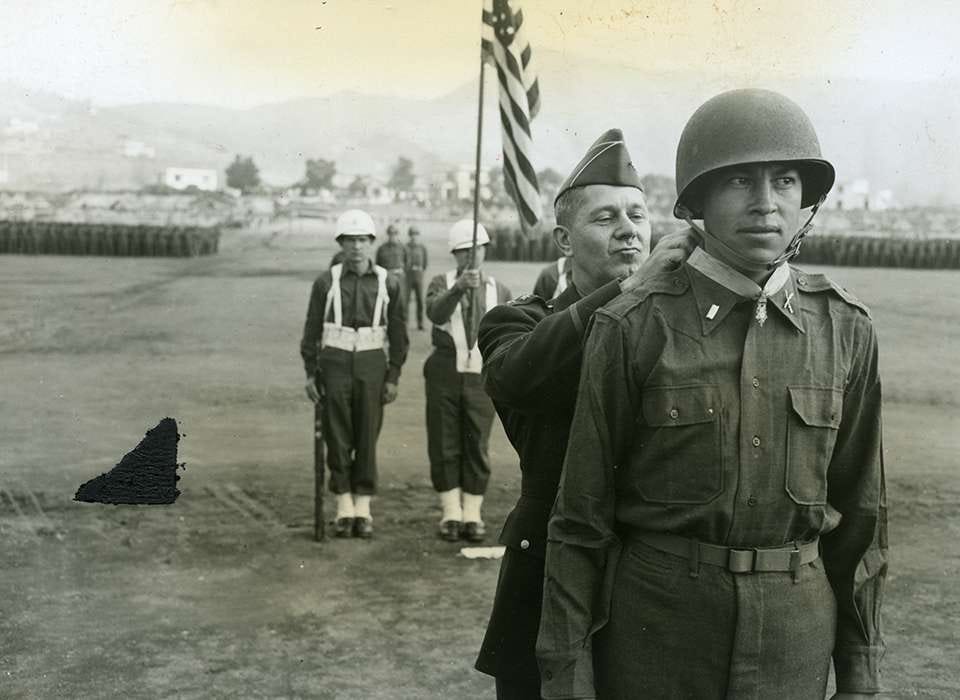 Ernest Childers receiving the Medal of Honor (National WWII Museum)
The 45th Infantry saw plenty of tough duty in the European Theater, starting with the invasion of Sicily in 1943. They fought their way up Italy, survived the meat grinder in battles at Salerno and Anzio, and later helped liberate southern France during Operation Dragoon.
By 1945, the division had made it deep into Bavaria, the heart of Nazi Germany. They captured Nuremberg and Munich, two cities that were key to Hitler’s rise to power. But their most difficult job came on April 29, 1945, when they liberated Dachau Concentration Camp.
How’s this for irony? The Thunderbird Division’s patch was a swastika before the Nazis ripped off the ancient symbol. For Native American tribes, it had symbolized peaceful and sacred themes such as life, harmony, well-being, and spirituality.
 The old swastika symbol and new thunderbird patch after 1939The Liberation of Dachau
The 45th Infantry Division was one of the first Allied units to reach Dachau. The soldiers found scenes of unimaginable horror: emaciated prisoners, piles of corpses, clear evidence of mass executions. For many Native American soldiers, whose cultural values emphasized respect for the dead and the sacredness of life, the experience must’ve been especially devastating.
GI Bennett Freeny, a Chickasaw and Choctaw from Oklahoma, entered Dachau as a medic. Freeny was one of the first to care for the camp’s survivors, and he and his fellow soldiers worked hard to save the starving and seriously ill.
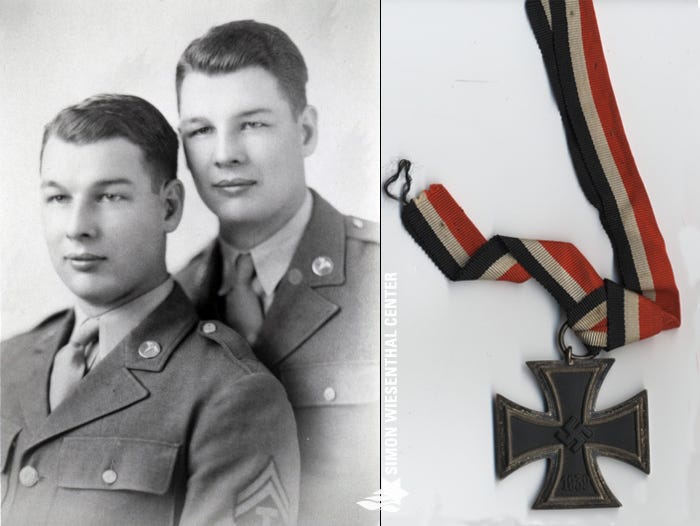 Bennett Freeny (left) and his identical twin brother Benjamin (Simon Wiesenthal Center).
Fellow GI Ace Caldwell, who served with Freeny, once wrote to Bennett Freeny’s daughter about her father:
“… Bennett and I were both medics with the 45th and we encountered a great many prisoners who had contracted Typhoid and other ailments, and even more who had been starved … We were very disheartened by the condition of these poor souls and still enraged by the evil and carnage we had encountered liberating the camp.
“A German SS officer walked through as though still in command and eyed us arrogantly and with a sort of sneer. Your dad stood, walked up to him, and pulled out his knife. A couple of our boys stood by and prevented the officer from moving. Your father, one at a time, cut his medals and insignias off his uniform—Death Head, Edelweiss insignia, various patches and came to the Iron Cross hanging around his neck. Bennett grabbed it, cut the ribbon, and said, ‘This is the sign of a hero—there are no heroes here’ and stuffed all the medals and patches in his pocket. A few of the prisoners who were able, clapped.
“We were young men who had a lifetime of horror and violence visited upon us by age 23. None of us would ever be the same, but that day your father was bigger than life . . .”
Comanche Code Talkers in EuropeAlong with Navajo Code Talkers in the Pacific, Comanche soldiers created their own secret code to confuse the Nazis in Europe—using languages that US authorities once forbade them to speak.
Fourteen Comanche Code Talkers served with the US Army, and 13 landed on the beaches of Normandy during the D-Day invasion. They used their language to send secret messages that German intelligence couldn’t figure out. The Comanche word for “turtle” meant tanks, for example, and “crazy white man” Adolf Hitler. Their code proved hugely important in big battles like the Battle of the Bulge and the push into Germany.
Charles Chibitty, a legendary Comanche Code Talker, was a passionate advocate for Native American contributions in World War II until his passing in 2005. He also made sure people knew that he and his fellow Code Talkers faced unique hurdles beyond the dangers of war. They had to repeatedly convince skeptical white officers that their language was even worth using.
Cultural Challenges and TriumphsSources say that Native American soldiers adapted remarkably well to military life, often outperforming their peers in endurance and marksmanship. Fighting for the white man brought cultural tensions and outright racism, too, yet Native American frontline warriors earned the respect of their fellow white soldiers through their bravery and skill.
And their spiritual beliefs kept them going. Some carried medicine bundles and took part in prayer rituals before battle, drawing strength from old traditions that emphasized harmony and resilience.
For decades, Native Americans’ contributions went largely unrecognized. But in recent years, their stories are being preserved and celebrated. You can learn more here:
Looking for a fiction editor?
National WWII Museum: Native Americans in WWII, Ernest Childers
United States Holocaust Memorial Museum: 45th Infantry Division
U.S. Army: Comanche Code Talkers
Charles Chibitty’s Biography: Wikipedia
Smithsonian National Museum of the American Indian: Why We Serve
Simon Wiesenthal Center: 76 years ago: Dachau Concentration Camp Liberated
Finishing a novel draft is a big accomplishment—congratulations! But in many ways, it’s just the beginning. Most writers can benefit from the right guidance and thoughtful edits, and that’s where I can help.
I know what writers need to improve and engage readers by drawing on over 20 years’ experience as a published editor, author, and translator of fiction.
My specialties are historical, espionage, and psychological/crime thrillers, but I offer expertise for all types of stories, including creative nonfiction.
You can find out more on my website, or on the Reedsy platform, with plenty of testimonials.
Not sure what you need? Get in touch and ask me anything—you can simply reply to this email.
Find me on Bluesky
I’m on Bluesky now after ditching Twitter (X, sorry; not sorry), which I’d abandoned years ago, frankly. I’m enjoying it so far. Less anger, smarter posts—much like on Substack Notes. Find me at steveawriter.
 My latest novels
Are you into Cold War espionage tales with exotic locales? Or maybe you like a psychological crime thriller with a twist? Check out Lines of Deception and Show Game.
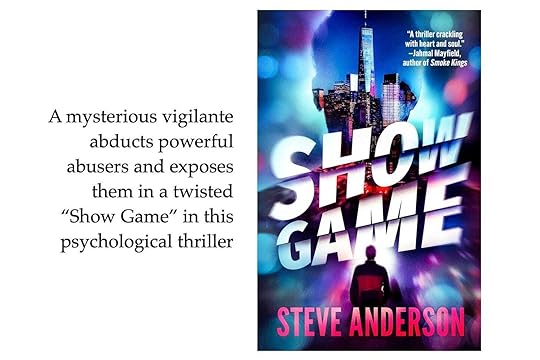 Ebook or paperback
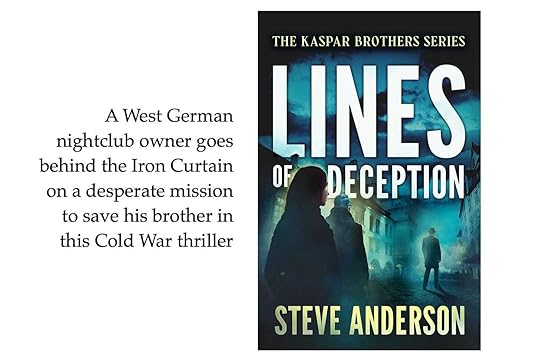 Ebook, paperback, or audiobook
And if you like them, or any of my novels, please give them a review or rating at your favorite online book retailer such as Amazon, Goodreads, Barnes & Noble, or other review-based sites.
Please also follow me on my Amazon Author page and Facebook Author page.
I hope the new year’s treating you well so far. Take care of yourselves.
Steve
Thanks for reading Underdog Stories! Subscribe for free to receive new posts and support my work.
December 17, 2024
A fatal WWII gambit from 80 years ago
Some of you longtime readers know this wild WWII story, but many newer subscribers might not.
So here it is one more time — on its 80th anniversary this week.
Thanks for reading Underdog Stories! Subscribe for free to receive new posts and support my work.
By December 1944, the German war machine was running on fumes. Allied forces pressed from the west, and Soviet troops encircled from the east. But an increasingly delusional Hitler had one last-ditch throw of the dice.
His secret Ardennes Offensive would punch through weak American lines in Belgium, seize the port of Antwerp, and divide Allied forces. The bloody fight that ensued was known as the Battle of the Bulge.
A bizarre subplot of this massive counteroffensive was Operation Greif, in which Germans disguised as US soldiers infiltrated American lines, some driving captured Jeeps, and sowed chaos behind Allied lines.
Led by their Nazi propaganda-fueled, daredevil commander Otto Skorzeny, it sounded like the type of bold and cunning ruse you only get in thrillers. In reality, it was a bumbling and hopeless operation that would probably make a decent Coen Brothers movie.
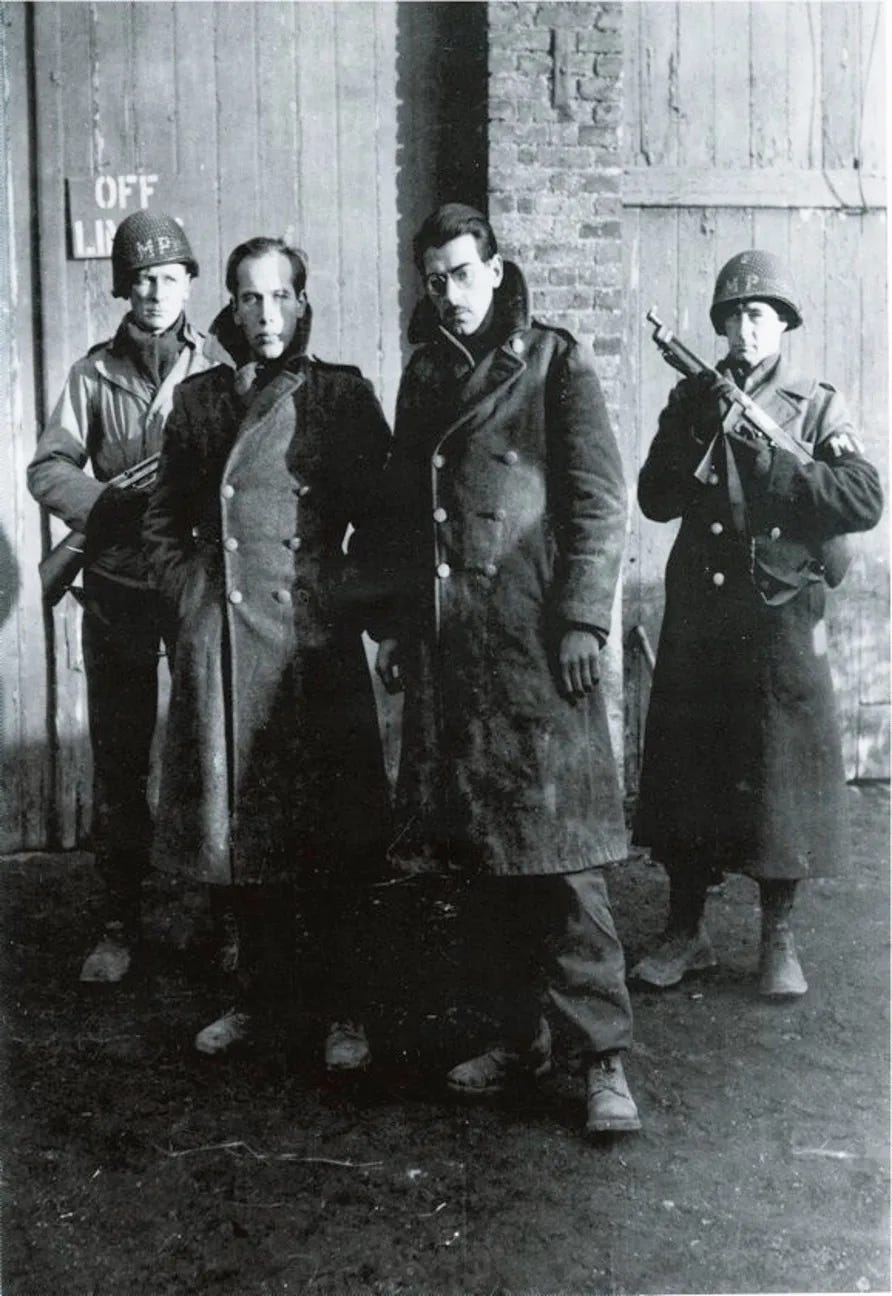 A false flag spy faces the firing squad. (LIFE/U.S. Army)Not exactly the best-laid plans
Recruits came from across the German military, many responding to a vague call for English-speaking volunteers. And many exaggerated their English ability, assuming they’d be performing harmless duties such as interrogating POWs. Few were actual commandos capable of posing as enemy soldiers. But it was too late — they couldn’t get out once they were in.
They spent hours practicing strange American slang and relaxed gestures, watching Betty Grable movies to learn how Americans spoke and moved. But knowing phrases like “Okay, Joe,” “what’s your hurry?” and “gung-ho” weren’t going to help them.
Even basic logistics posed problems. Their captured American uniforms often had POW markings or bloodstains. The operation was so short on US vehicles that mechanics had to modify German tanks to look like US ones by slapping on sheet metal, which tricked no one at close range.
Meanwhile, of the roughly 2,000 volunteers, only 10 spoke fluent English, and fewer still could imitate an American accent. Skorzeny himself admitted they “would certainly never dupe an American, even a deaf one,” as he wrote later.
A bold launch soon fizzlesOn December 16, as the Ardennes Offensive stormed into US-held Belgium, Skorzeny sent Operation Greif’s Jeep teams across enemy lines.
They misdirected American convoys, cut communication cables, and spread rumors of impending German attacks. One team posing as MPs redirected an entire US regiment, causing a critical delay in reinforcements. Another reported the location of an Allied fuel depot to advancing German panzers. But the cracks soon showed.
In the Belgian village of Aywaille, three of the fake Americans driving a captured Jeep tried passing through an American checkpoint. They showed forged US Army paybooks, but their accents and behavior raised suspicions. When asked for the day’s password, they stammered and admitted they didn’t know it.
The American sentries searched the Jeep and found explosives, grenades, and cyanide capsules hidden in cigarette lighters. They arrested the German spies, who soon confessed their mission.
That discovery and others sparked waves of suspicion deep behind the US lines. American sentries started asking questions of anyone they encountered, no matter the uniform. GIs had to name baseball teams, state capitals, or Sinatra’s first name to prove their identity. At least one fake American referred to fuel as “petrol,” a dead giveaway.
The paranoia reached its peak when rumors spread of a German plot to assassinate General Dwight D. Eisenhower. Although no evidence supported the claim, Eisenhower was placed under heavy guard, effectively confined to his headquarters for weeks. But the boost in security across the board likely helped US efforts in the long run by making soldiers more aware.
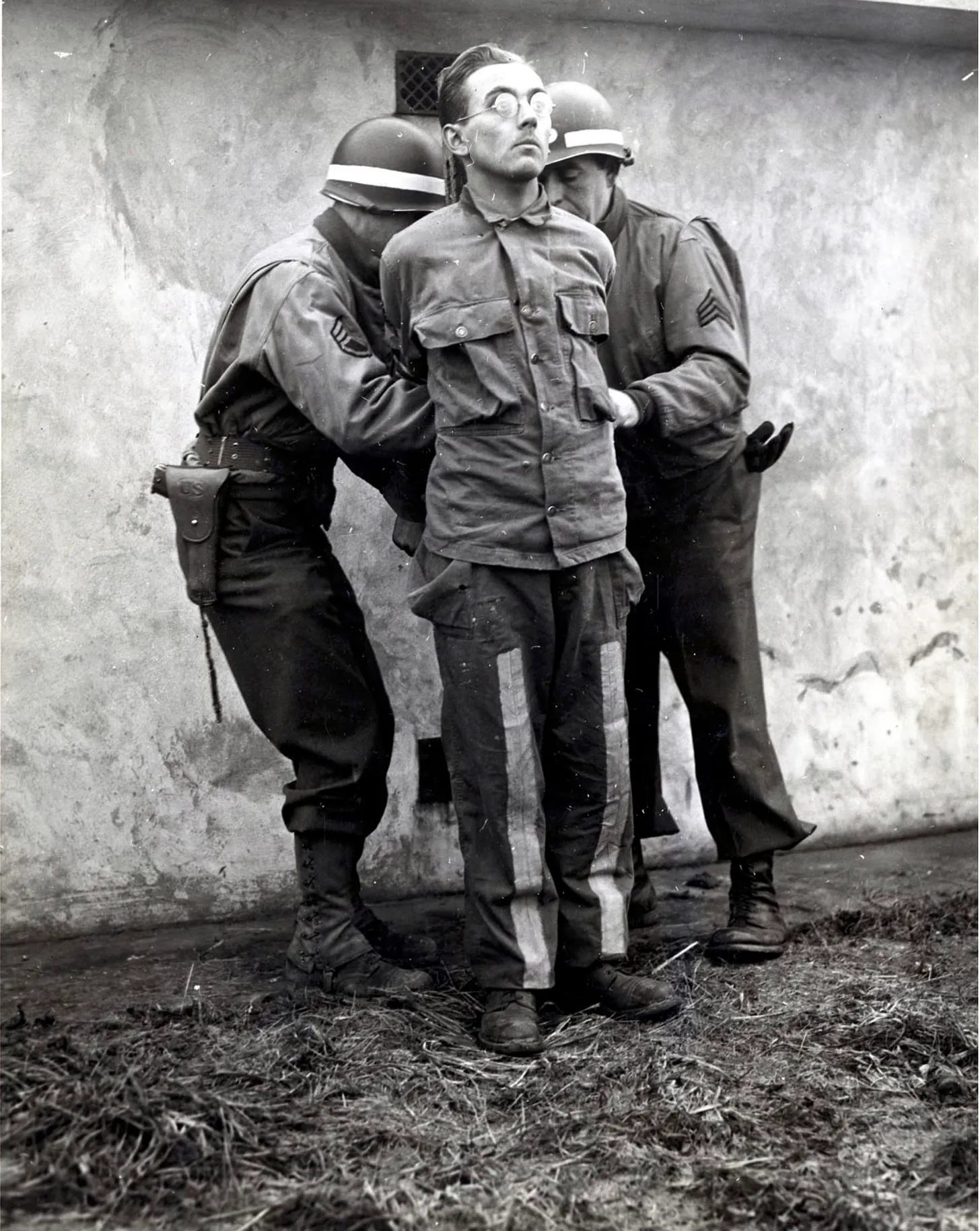 A false flag spy faces the firing squad. (LIFE/U.S. Army)
By then, Operation Greif was falling apart. Most teams were captured or killed, undone by their lame English and poor disguises, limited training and lack of resources. Only a handful of commandos made it back to German lines. Many of the captured were soon tried by US military tribunal and executed. By December 21, Skorzeny called the whole thing off.
The little guy gets screwed againAfter the war, the Allies tried Skorzeny for war crimes. But the conviction didn’t stick, and he lived on for years hyping his daredevil reputation in Fascist Spain and South America. It’s yet another case of the little guy getting screwed while the bigshot walks.
Something about this deadly footnote in history had captured my imagination. Maybe it’s the pathetic futility of this whole gambit.
Whatever the reason, this story plays a part in my novels The Losing Role and Under False Flags as well as in my nonfiction Kindle Single Sitting Ducks.
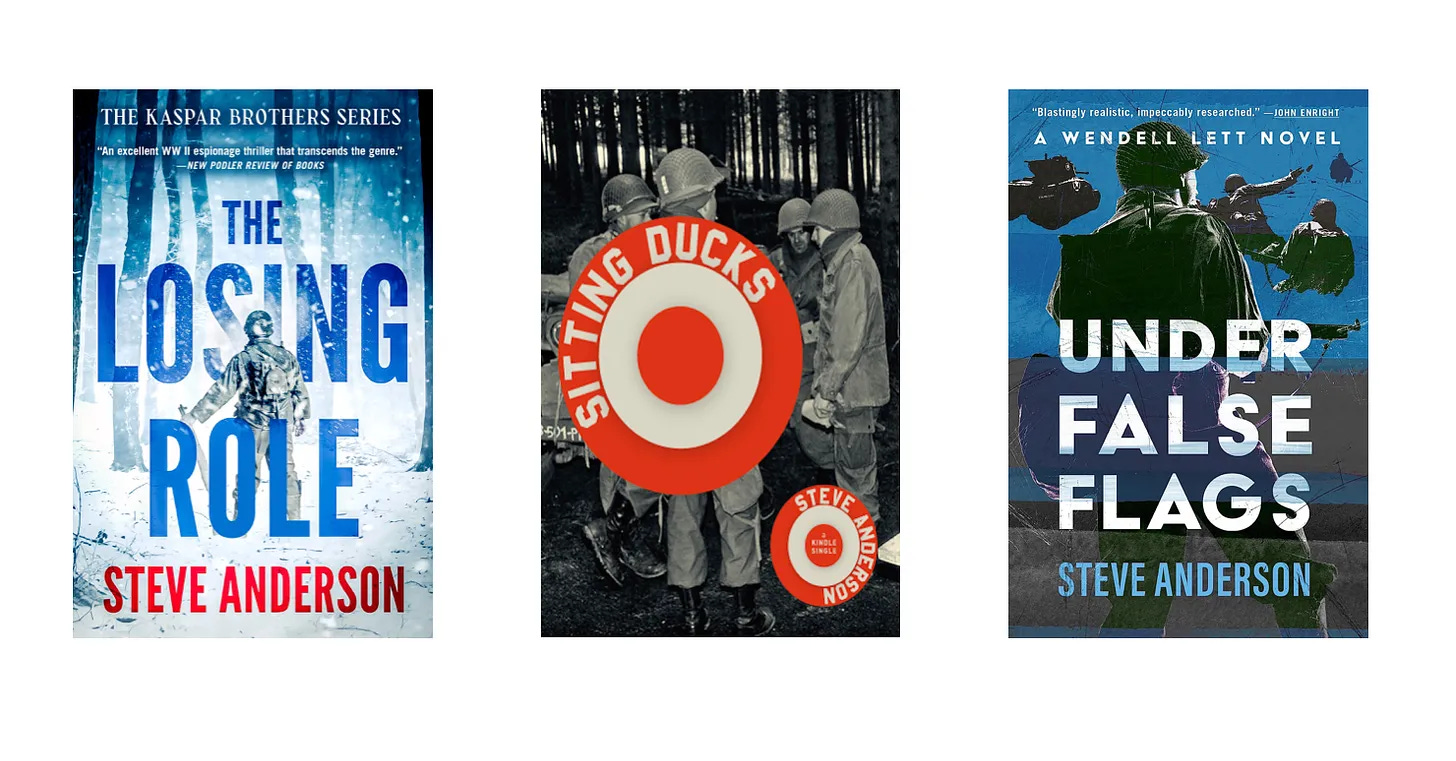
You can also read more in these earlier posts:
“Never Had a Chance: German Spies in US Uniform”
“When Underdogs Refuse to Fight”
“79 Years Ago: A Doomed WWII Spy Mission”
Speaking of Under False Flags ...Years ago, I thought I’d finished writing about the Greif debacle when the story found me again. Acting on a tip from a friend, I had the honor of interviewing an elderly American, loved and respected in his community, who had a secret to tell me.
Back in 1944, he revealed, the US Army called on him to take part in intelligence missions. In one, he went on a frightening recon patrol disguised as German soldiers that somehow ended up far behind enemy lines, in bombed-ravaged Cologne. In another mission, they hunted down the Germans disguised as Americans roaming behind US lines in Belgium during the Battle of the Bulge.
He told me the missions were classified and he needed to remain anonymous. I searched for records of such operations nevertheless, and kept finding dead ends. My contact may have had details mixed up in his old age, but one thing was clear — the emotions he expressed to me lay bare horrid memories. I knew I’d never know the whole truth.
But that led me to write Under False Flags, in which “two soldiers on opposing sides find the courage to desert when their honor is betrayed.”
This week, the Kindle version is on sale for only $2.99. The offer’s good through Friday only.

Here’s a tip: For any upcoming deals on all my books, you can always get notified by following me at my publisher here.
Happy holidays to you! I hope you’re doing well.
Steve
Thanks for reading Underdog Stories! Subscribe for free to receive new posts and support my work.
November 19, 2024
What I'm working on now
After many years of starts and stops, I’m reaching the end of writing a couple of novels that aren’t my usual type of story. Meanwhile, I’m starting another that’s the third in a series.
In this brief post, I’m breaking a standard writer’s rule by sharing what I’ve been working on.
That said, I’ll keep the descriptions broad because these stories are still works in progress and can always change.
Here are the novels in no particular order…
The Know-it-AllsWhat it’s about:
Munich, 1990: As the Cold War ends and Germany reunites, a would-be American research scholar with not enough brains and too much heart must uncover the truth behind shocking historical documents possibly faked by the Soviets. The story has humor and satire and mixes coming-of-age and mystery fiction. Everyone's an impostor, and all get exposed despite their best efforts
The Know-It-Alls borrows only slightly from my own adventures as a chronic young backpacker throughout Western and Eastern Europe and a graduate researcher in Munich. And here’s a secret — it’s a complete overhaul of a novel I briefly self-published way back in 2009.
Untitled soccer novelIn the 1970s, a talented young American soccer player hits the big time in the booming North American Soccer League (NASL), but the wild and demanding pro life threatens his enduring love for his longtime sweetheart, a rising star of her own in the emerging women’s game.
This is a pet project, as I’ve been a lifelong fan and player of the beautiful game, and my hometown club Portland Timbers got their start in the NASL. I’m aiming to get this released in time for World Cup 2026 in North America.
Wendell Lett #3It’s been a long time coming — I’ve started the third Wendell Lett novel after Under False Flags and The Preserve:
In 1950, former WWII war hero and deserter Wendell Lett must go undercover to stop a possible Soviet mole at a secret UFO research site in a remote Pacific Northwest forest. He can trust no one as he tries to uncover the true spy — and restore his own lost honor.
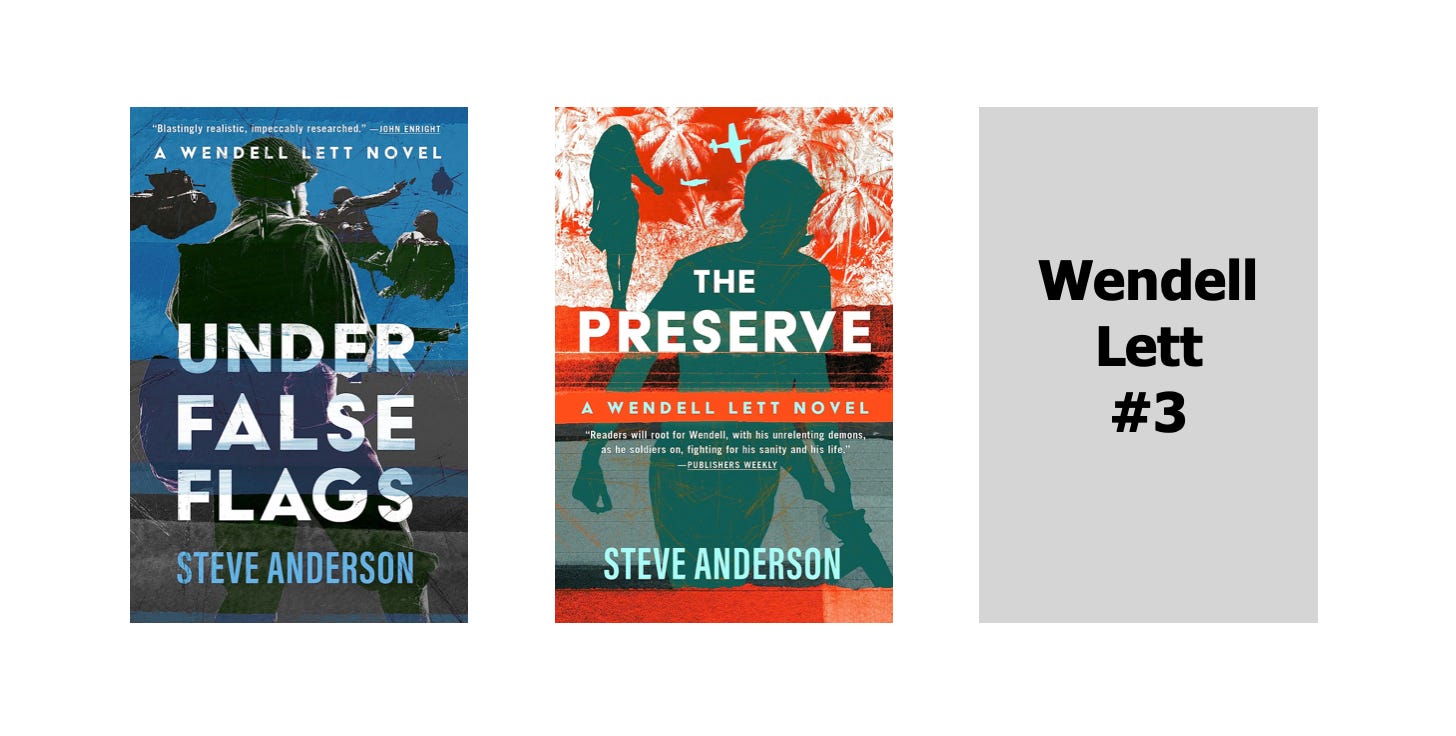
Pretty excited about this one, especially for the research.
Pick your favoriteOf these three novels, which appeals to you most? Feel free to answer this poll or just leave a comment.
Will my current publisher put these books out, or a new publisher? Or maybe I publish them myself. It might take a while, but I will get these books out in the world. And this newsletter will have all the news, so stay tuned.
Find me on BlueskyI got on the Bluesky bandwagon and am enjoying the ride so far. Find me at steveawriter.
 If you like my books, please help
Some of you have asked me what helps my books find more readers. One single thing helps more than anything:
A review or rating at your favorite online book retailer
Every single positive review or rating on Amazon, Goodreads, Barnes & Noble and other review-based sites helps us authors a ton.
Please also consider following me on my Amazon Author page and Facebook Author page.
That’s it for now. I hope you’re doing well and surviving this crazy world.
Thanks for reading,
Steve
October 22, 2024
The underdog spy who conned the Nazis
If I wrote this story as fiction, you’d probably think it was farfetched if not a farce.
In 1942, as WWII raged on, German military intelligence believed that Spaniard Juan Pujol Garcia was running a formidable spy network for them from inside enemy Britain.
Thanks for reading Underdog Stories! Subscribe for free to receive new posts and support my work.
In reality, the Nazis’ man in London was making it all up — from his little apartment in Portugal.
Juan Pujol was driven to help the Allied war effort in any way possible — even if it meant masquerading as a Nazi sympathizer. And he was doing it all on his own.
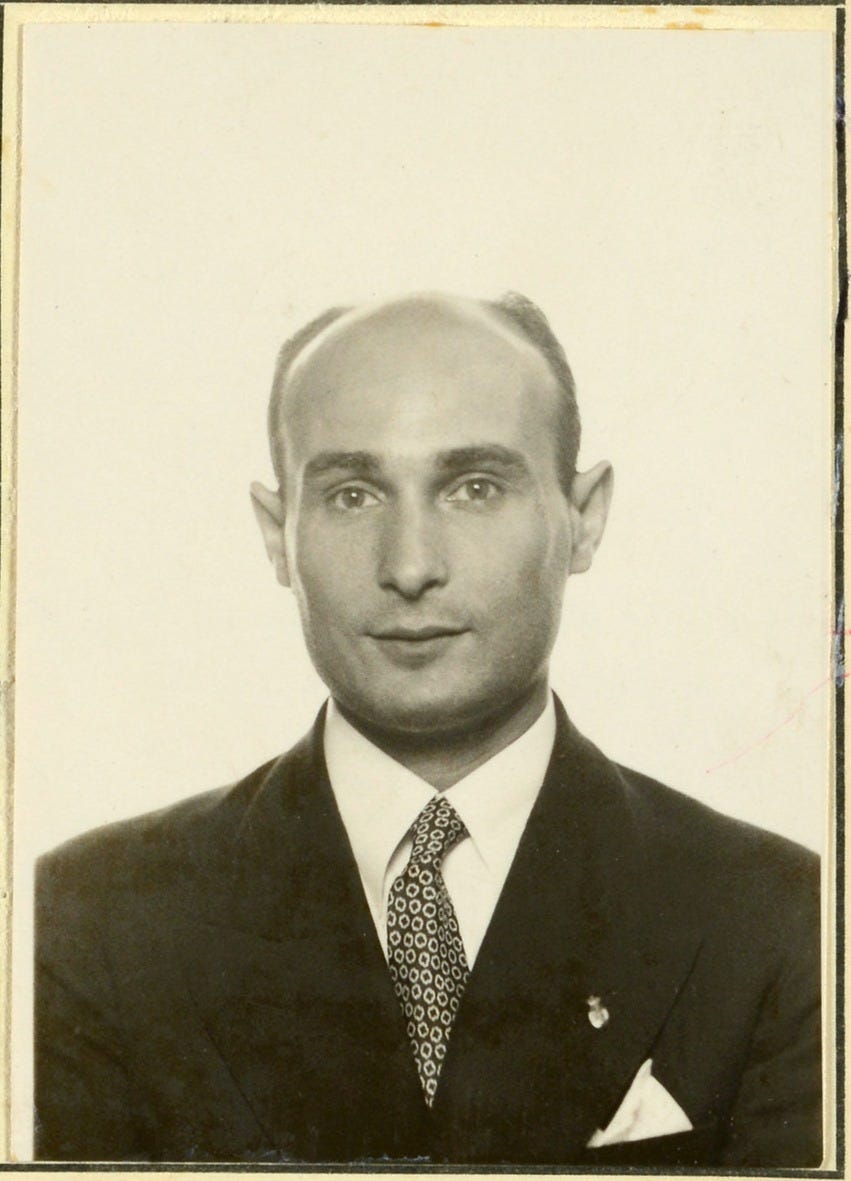 Juan Pujol Garcia “Garbo” (National Archives UK)
The wily Pujol would make a great movie character: a chicken farmer from Barcelona with no connections, he first offered to spy for the British. But when the British embassies in Madrid and Lisbon kept rejecting his services, he had the moxie to offer himself to the Nazis instead, and they took the bait. Soon he was dreaming up dozens of imaginary subagents — all with the end goal of becoming a British double agent after all.
Quite the self-starter, our Pujol.
Eventually British intelligence saw the true worth of this gung-ho unknown con man. They smuggled the dogged double agent to London, where they trained him and set him up to keep building his subterfuge under the code name Garbo.
Like a novelist himself, Pujol continued making up his elaborate network of spies, with a wholly fictitious cast of characters and long letters and secret messages and more. German intelligence ate it up.
In 1944, Agent Garbo took the lead on an elaborate Allied deception campaign. His grand ruse of a story helped fool Hitler and his generals about the D-Day invasion — and surely saved thousands of lives.
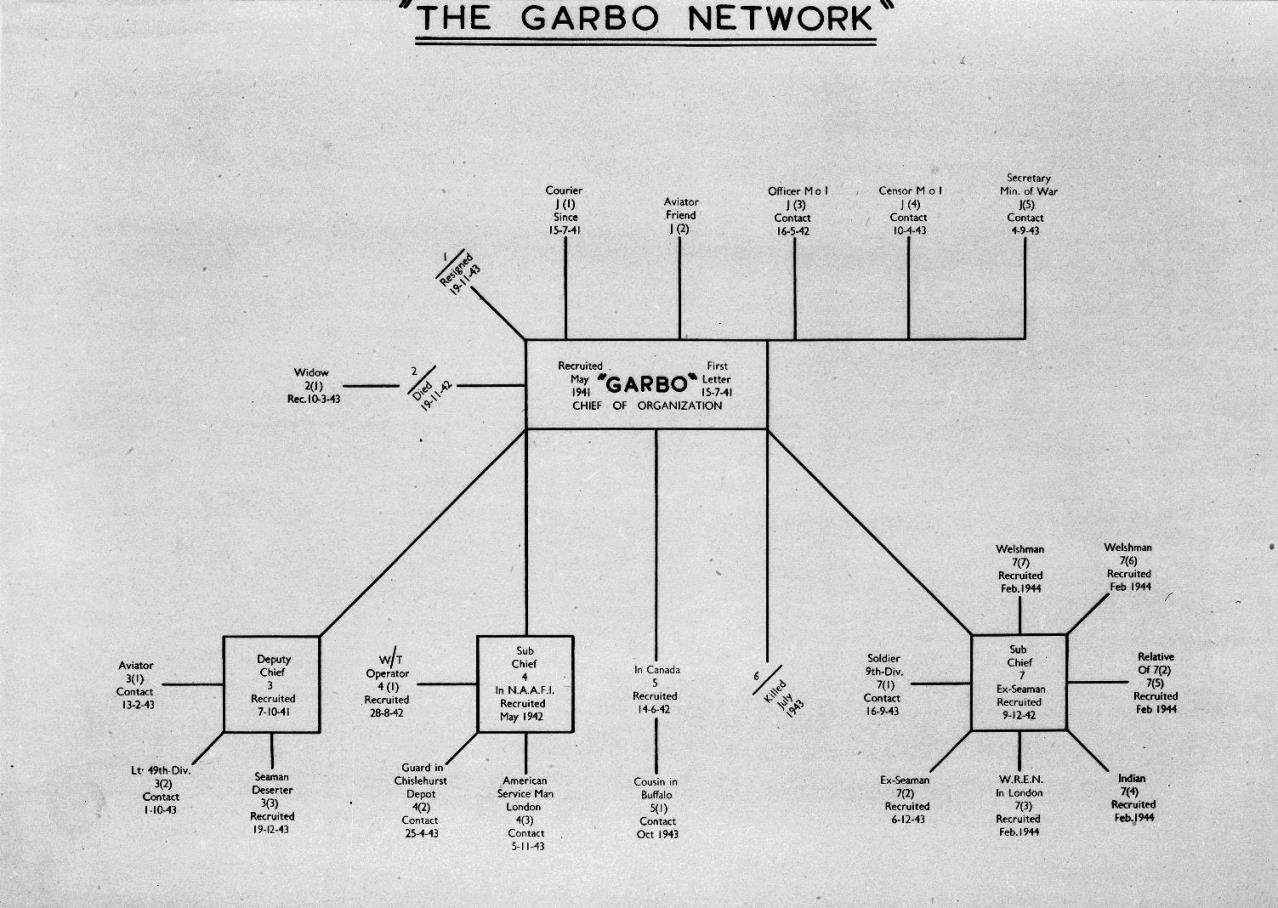 National Archives UK
The Nazis never knew they’d been taken for a ride. They were so impressed, they even awarded Garbo — who they codenamed Alaric — the Iron Cross Second Class in July of 1944, an honor that Hitler personally authorized.
Only months later, the British awarded Garbo the Most Excellent Order of the British Empire, or MBE for short. But that was top secret at the time, too.
Because of the secrecy involved, no one knew about Pujol’s true exploits for decades.
"A man struck me in the face," he began. "A Nationalist officer. A Spanish fascist." It had been the final straw, a realization building up for years, he told Harris.
His father, also a Catalonian named Juan Pujol, laid the foundation from early on:
“My father was the most honest, noble and unbiased man I have ever known. He belonged to no political party. He taught me to respect the individuality of human beings, their sorrows and their sufferings. He abhorred oppression. He despised war and the despot, the authoritarian, those all too bent on taking advantage of others.”
Back in 2011-12, I got a jump-start as a published writer when Amazon Publishing contacted me to write a two nonfiction Kindle Singles, which became brief bestsellers.
The second of these, Double-Edged Sword, tells the wild and all-true story of legendary underdog Pujol aka Garbo.
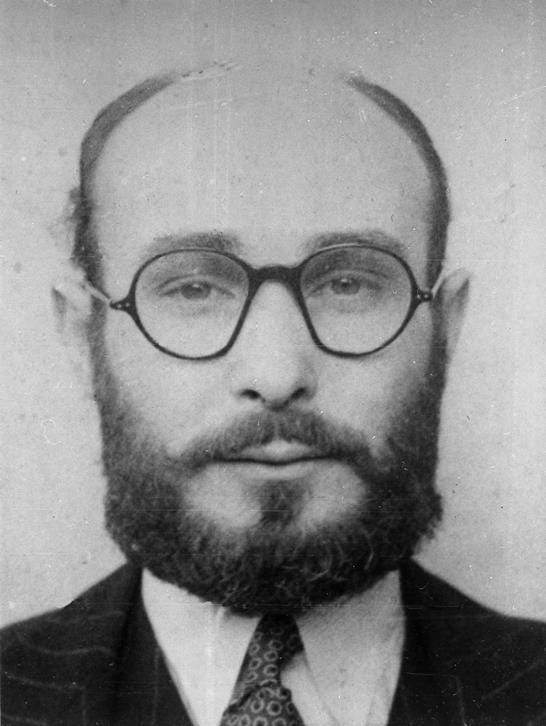 Garbo in disguise (National Archives UK)
I introduce readers to the many players in Pujol's ever-twisting world of deception, including his enterprising British handlers and more than one gullible Nazi.
There’s also Pujol's wife Araceli, who helped him make his mark as a double agent — but who became the biggest threat to the entire operation and to the D-Day invasion itself.
The British had brought her to London along with her husband, but she grew frustrated with their life there, feeling neglected and homesick. At one point she threatened to expose Garbo by going to the Spanish Embassy. After a series of outbursts and incidents, British intelligence was forced to intervene.
Working together, Pujol and MI5 resorted to their own cocky and special ruse to get Araceli back on track.
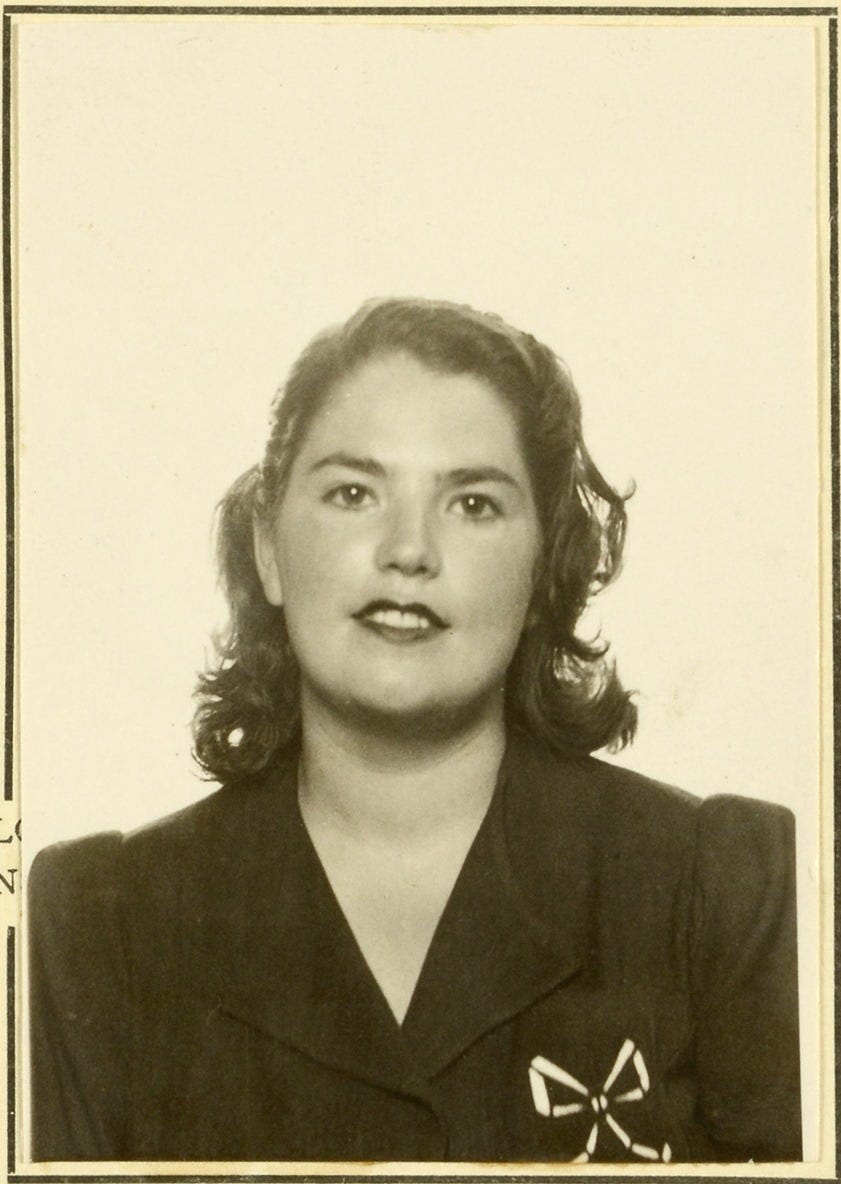 Garbo’s wife Araceli (National Archives UK)
For this former history grad student, researching this story was a joy. I was able to use firsthand documents from archives in London and text from secret messages to examine what motived and inspired Pujol. You’ll also get snippets of imagined dialogue that help bring Pujol's story to vivid life.
Double-Edged Sword focuses on the most crucial moments of the epic double cross that Pujol was so uniquely built to pull off.
It’s available as a Kindle ebook, but you can get it in audiobook at most other retailers beyond Amazon. The ebook’s always only $1.99 (or “free” on Kindle Unlimited) and usually under six bucks in audiobook.
A concise, short read, it equals about 70 print pages in length or just under three hours in audio.
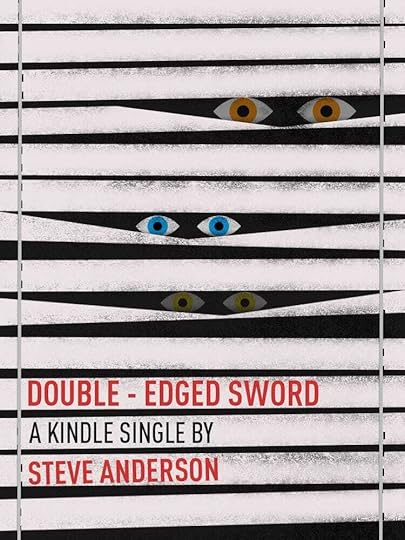
I hope you’ll find that it reads like an espionage thriller despite being all true.
I love this story about a true underdog and always thought it would make a compelling movie or series. The true underdog Pujol deserves it, if nothing else. I’ll keep crossing my fingers for him.
The other Kindle Single, Sitting Ducks, tells the true story of Germans impersonating US soldiers on the front lines in WWII. It’s the same tale I fictionalize in my novels The Losing Role and Under False Flags. Sitting Ducks is available in audiobook everywhere and as a Kindle ebook (also in German).
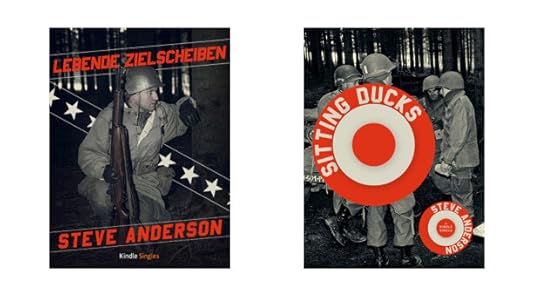
And now, on to other news…
The latest podcast interviewIt was a genuine pleasure doing a recent interview with author and podcaster Marie Sutro. Marie had thoughtful questions about my latest release Show Game and the issues the story touches on. Plus my cats have a rare cameo, sort of. Check it out.
Ebook sale: Show GameI’ve just learned that my latest release Show Game is on sale in ebook for a limited time — through October 25 in both the US and UK. It’s only 2.99 in the US and 1.99 in the UK wherever you buy ebooks.

In this psychological thriller, a mysterious vigilante abducts powerful abusers and exposes them. This is a great deal, so grab it while you can.
If you like my books, here’s how you can helpSome of you have asked me what helps my books find more readers. One single thing helps more than anything:
A review or rating at your favorite online book retailer
If you’re so inclined, please consider giving any (or all) of my books an honest review or just a rating. Many retailers such as Amazon let you leave a simple star rating without having to write anything.
Every single positive review or rating on Amazon, Goodreads, Barnes & Noble and other review-based sites helps us authors a ton.
Please also consider following me on my Amazon Author page and Facebook Author page.
That’s it for now. I hope you’re enjoying the fall weather.
Steve
Thanks for reading Underdog Stories! Subscribe for free to receive new posts and support my work.
September 24, 2024
Get my favorite thrillers up to 80% off
I had a far different post in mind for this edition of the newsletter, but then my publisher put the ebook versions of many of my favorite thrillers on sale all at the same time. I figured you’d want to know about the big savings — they’re up to 80% off.
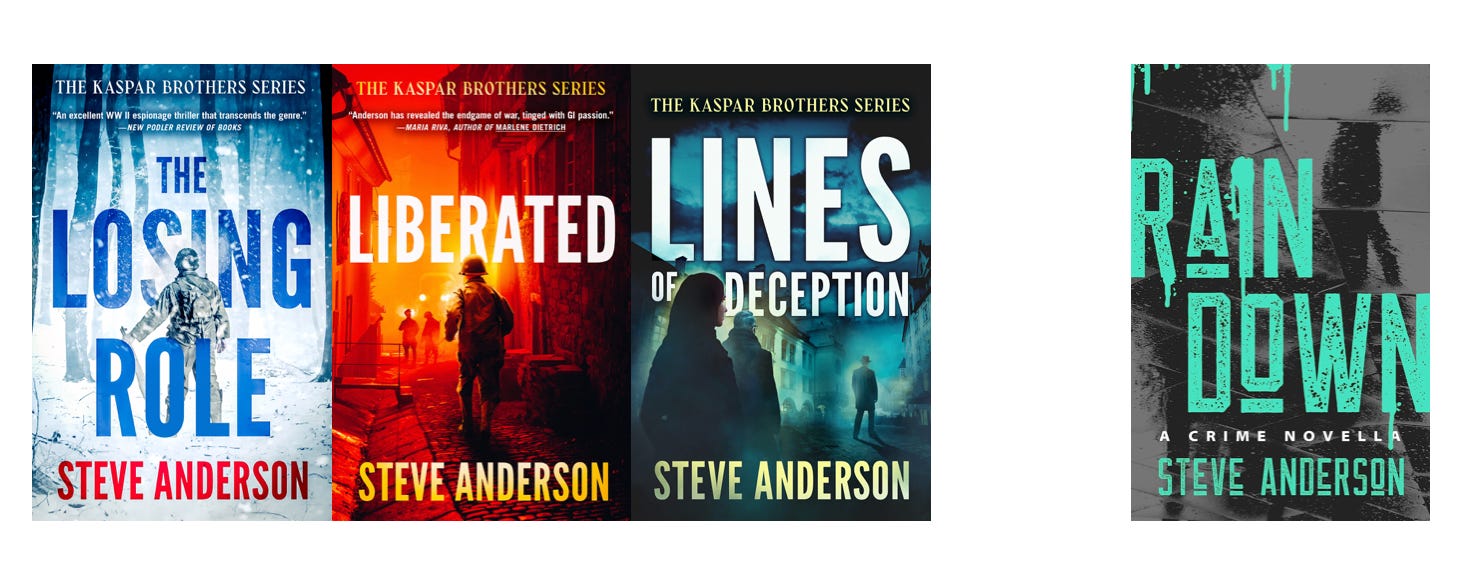
These novels have more in common than just the sale price though. That’s because all the main characters are underdogs.
I’ve always been intrigued by the in-between worlds in a story, where the main character is caught between a rock and a hard place with little control over what they need to achieve.
On top of that, my underdogs are usually not professional or even proficient in what they attempt to do, so they rely on whatever crossover skills they have to make a dent in a sometimes screwed-up world.
Let’s start with the Kaspar Brothers series.
The Kaspar BrothersIn these historical thrillers, German American brothers Max and Harry Kaspar are separated by World War II but united in the Cold War.
Max spent more of his life in Germany than Harry yet he’s ironically more carefree and would be a cosmopolitan fellow if he wasn’t so naive—at first. Harry is more like the stereotypical stern and focused German even though he mostly grew up in America. When they finally reunite, they’re the odd couple.
You get Max’s origin story in the first book, The Losing Role, and Harry’s in the second, Liberated. The brothers team up in the books after those. My recent release Lines of Deception is the fourth one. Each book can be read as a standalone, by the way.
The Losing Role (#1)Here’s the story:
A German actor conscripted into WWII will play the role of his life as he makes a daring escape in this espionage thriller inspired by true events.
Here’s the first paragraph:
October 1944
Max lay flat on his back, in the mud. The mud was cold and seeping through his wool corporal’s uniform. Why were his arms above his head? Someone must have been dragging him. Was he hit? He moved his legs. They worked, thank God — he’d still dance again one day. Fingers? All there. He could still play piano. He felt at his stomach and chest, fingering the tin buttons, dry leather straps and coarse worn tunic, and found no blood. Lucky man.
Here’s more about the story:
When the SS orders banned entertainer Max Kaspar to impersonate a US officer during the Battle of the Bulge, Max devises his own secret mission to escape the war and flee to America. With his career in Germany over, this plan is his big break — and his last chance.
But Max’s mission is doomed from the start. Trapped between the lines in the freezing Ardennes Forest, he must summon all of his acting talents and newfound courage to evade perilous traps laid by both sides. Inspired by a real-life 1944 operation, this gripping wartime thriller is the first book in the Kaspar Brothers series.
Want to read on? You can read a sample here.
The deal: The Losing Role is on sale for Amazon Kindle in the US and Canada at 2.99, that’s 80% off. But only until September 30th.
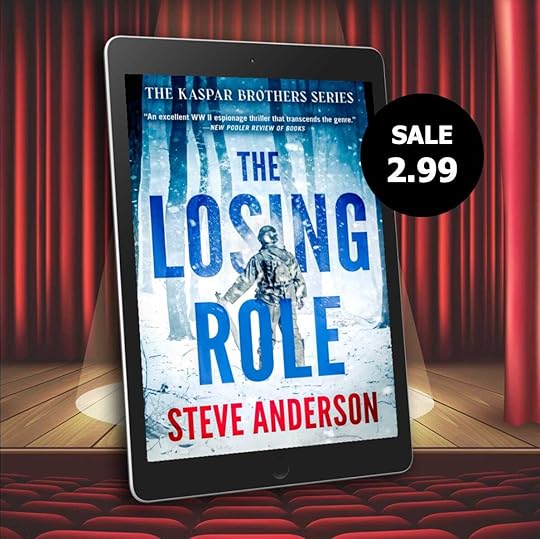
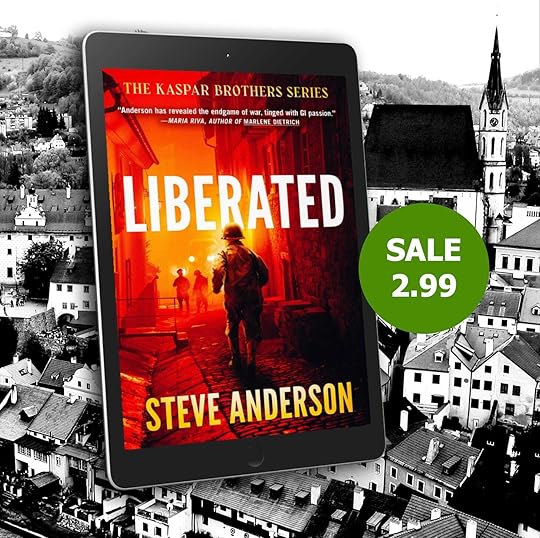
Liberated (#2)
An American captain in post-WWII Germany must stop a criminal conspiracy by his fellow officers.
Here’s the first paragraph:
I should’ve been more scared, but the truth was I had never felt more ready and raring to go. I was heading deeper into the heartland of our bitter enemy. I drove this country route all alone, my jeep so new I could smell the tires. The sun rose above the birch trees lining the road, so I dropped the canvas top. I blitzed on past farms and villages. On the way I saw no German locals, no stray soldiers looking to surrender. They would see me soon enough. Within minutes, I’d be running a whole Bavarian town on my own.
Here’s the story:
Germany, May 1945. With the war just over, Capt. Harry Kaspar is about to take a new posting in the US occupation — running a Bavarian town named Heimgau. When Harry loses the command to a rival, he’ll do almost anything to win the job back.
Then Harry discovers a horrific scene: three German men tortured and murdered. Solving the crime could teach the locals about American justice — and help him reclaim his posting. But as Harry’s quest for the killer leads him back to American officers, he uncovers a criminal network plundering the war-torn land for all its worth. Now, for justice to mean anything at all, Harry must fight back.
Read the full sample here.
Liberated is also on sale for Amazon Kindle in the US and Canada at 2.99 — 80% off. Only until September 30th.
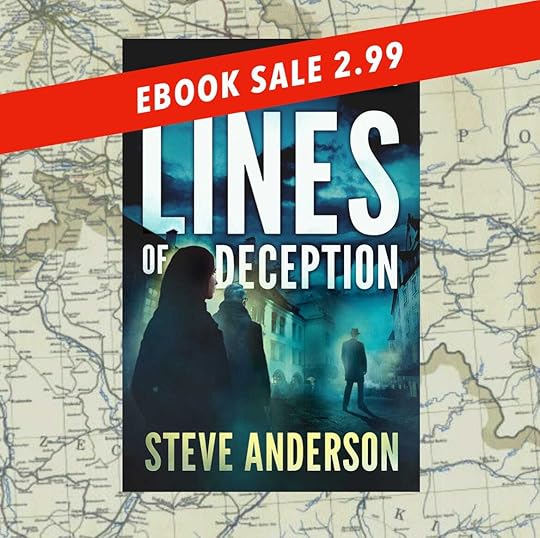
 Lines of Deception (#4)
A West German nightclub owner goes behind the Iron Curtain on a desperate mission to save his brother in this Cold War thriller.
First paragraph:
MUNICH
Tuesday, May 17, 1949
12:01 a.m.
Max Kaspar learned about his brother, Harry, from the little man who brought him the severed ear. The nasty fellow even had the gall to bring it to the Kuckoo Nightclub, keeping it in a small purple box on his table along the wall.
The story:
West Germany, 1949. Former actor Max Kaspar suffered greatly in the Second World War. Now he owns a nightclub in Munich — and occasionally lends a hand to the newly formed CIA. Meanwhile, his brother Harry has ventured beyond the Iron Curtain to rescue an American scientist. When Harry is also taken captive, Max resolves to locate his brother at all costs. The last thing he expects is for Harry to go rogue.
Max’s treacherous quest takes him to Vienna and Prague to Soviet East Germany and Communist Poland. Along the way, dangerous operators from Harry’s past join the pursuit: his former lover Katarina, who’s working for the Israelis, and former Nazi Hartmut Dietz, now an agent of East German intelligence. But can anyone be trusted? Even the American scientist Stanley Samaras may not be the hero Harry had believed him to be.
Read a sample here.
On sale for Amazon Kindle in the US and Canada at 2.99 — another 80% off. This one’s only until September 27th.
The third book in the series, Lost Kin, isn’t currently on sale, but you never know. Here’s more about that book here.
For the next ebook on sale, let’s go to a completely different world: Portland, Oregon in 2009. That said, you can follow the adventures of another underdog who’s going it alone out of moral need and making it up as they go along.
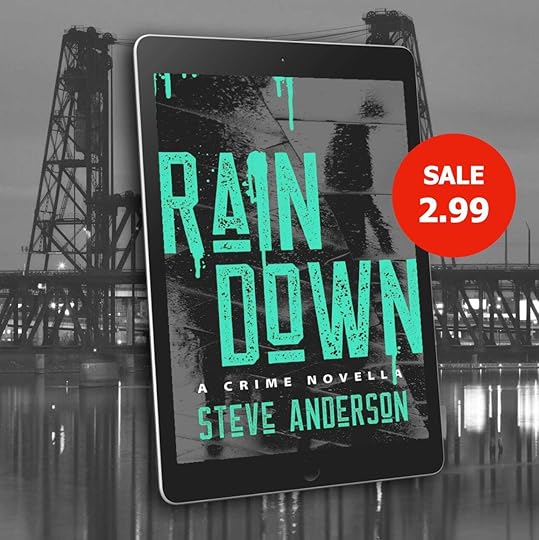
Rain Down: A Crime NovellaA man with no name is out to find a labor activist friend who disappeared on the streets of Portland in this noir crime novella.
First paragraph:
The Fall of 2009
Oscar Alvarez is missing. Vanished. Without my friend Oscar, I got nothing. Oscar is the only one who believes in me. He believes in me more than I do myself. The fact that he’s gone missing makes me worry. It eats away at me and it makes me start imagining, like I used to so much, what it would be like to climb up onto the Steel Bridge and never have to climb back down.
The storyline:
It’s 2009, and the economy’s falling apart. Formerly homeless, our nameless hero owes what little he has to his friend Oscar. As a fellow day laborer, Oscar always stood up for their rights, even if it meant trouble. But now the cops are looking for Oscar — but he’s nowhere to be found.
The man with no name needs to find Oscar and soon, or he just might take the rap himself. He dodges the cops, tries to save his drug-addicted ex, and discovers a criminal coverup protecting some of Portland’s richest and most powerful. To get at the whole truth, he’ll have to finally face his past, and accept who his friend Oscar really was. Only then can he reclaim his name and place in a harsh world.
On sale for Amazon Kindle in the US and Canada at 2.99 — 80% off. Deal lasts through September 30th.
 More on sale?
It’s tough to know when all the books go on sale everywhere, but as of this writing I’ve noticed that a few more deals are running. I don’t know how long these will last:
The Wendell Lett novels at all ebook retailers for only 2.99 for a limited time. Here are sale links for Under False Flags and for The Preserve.
In the UK, my latest release Show Game is only 1.99 for Kindle through September 27.
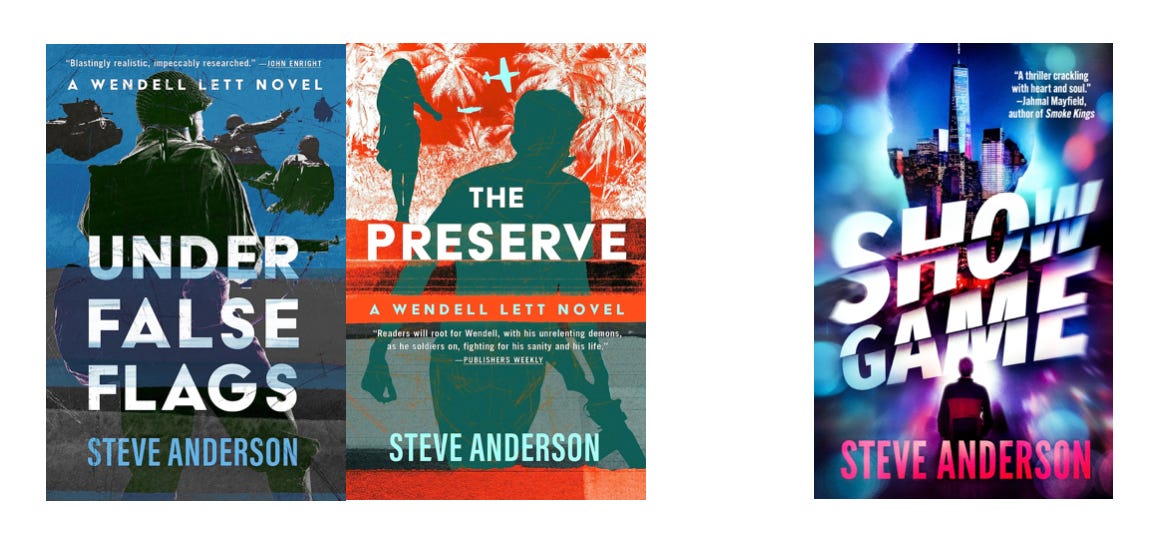
I hope you’ll take advantage of these killer deals, pass the word, and give my books a review or rating if you liked the read.
And don’t forget: All my books are also available in paperback and some in audiobook.
That’s it. I hope you’re enjoying the fall. It’s probably my favorite season.
Happy reading,
Steve
August 27, 2024
Giving you the posts you want
Readers and friends,
A little over a year ago, I restarted this newsletter after a long break. My new publisher was rereleasing all my previous books, plus they published two new ones this year: Lines of Deception and Show Game.
Thanks for reading Underdog Stories! Subscribe for free to receive new posts and support my work.
Thank so much for reading, and for reading my books.
Now I want to ask what you’d like to see in future posts. So far, I’ve been sharing the real stories behind my books, some little-known history, and a few thoughts on writing and translating along with book news and special deals.
But here’s the thing: I also work as a freelance fiction editor, and I’m guessing that some of you are writers and might be working on fiction projects.
With this in mind, I’m thinking about focusing more on fiction writing tips and advice in future. That said, I also don’t want to turn anyone off.
So, let’s do a little poll…
Or maybe you want something else that you’re not getting from this or other authors’ newsletters? Feel free to comment below or reply to this email.
About my fiction editingI’m open to new projects if you need an experienced editor for:
Editorial assessment (aka manuscript evaluation)
Developmental editing
Copy editing
You can find out more about my work and see what other writers have said here.
Now sure what you need? Just reply to this email if you’re interested.
I’m also working on a new editing services page for my website (to replace this old one) and will share it in this newsletter when it’s ready.
Now, on to other brief news…
Free eBook for Barnes & Noble loversAre you a Barnes & Noble Premium Member? B&N chose The Losing Role as one of five Nook eBooks you can get for FREE during August. Grab it before the end of the month! Find out more.

The Losing Role is also the first in the Kaspar Brothers series that includes my recent release, Lines of Deception.
Latest podcast interviewI recently joined bestselling thriller writer Terrence McCauley on his great Spies, Lies and Private Eyes podcast. Find out why my novels are really Westerns at heart, why my characters always have to improvise, and more — available wherever you get your podcasts.
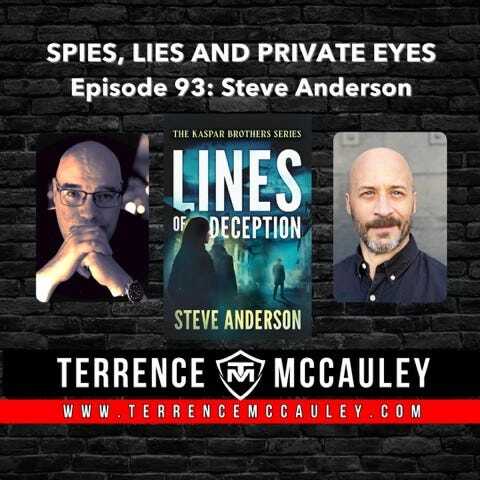
You can find more recent podcast interviews here.
Thanks, and happy reading.
Steve
Thanks for reading Underdog Stories! Subscribe for free to receive new posts and support my work.
July 30, 2024
Q&A for my new thriller: Show Game
In my new thriller, a mysterious non-violent vigilante named Alex takes it upon themself to capture some of society’s biggest abusers and put them on trial online, forcing them to confess to their crimes.
At the same time, investigative reporter Owen Tanaka is determined to unmask Alex’s true identity and motive. But soon Owen discovers that Alex’s cause is too important and hits too close to home, so he must decide whether to thwart or to help a vigilante.
Thanks for reading Underdog Stories! Subscribe for free to receive new posts and support my work.
In this post I answer some great questions I’ve gotten about Show Game, taken from recent interviews.
What led me to write Show Game ?My smart wife Rene gave me the idea.
Like so many of us, Rene was fed up seeing the worst abusers of power in our society constantly getting away with everything, and all the time, while normal people would immediately go to jail.
The writer in me took it from there and started asking those questions that writers ask. What would drive Alex and Owen to go there? What would stop them? What would be the consequences?
I started playing around with the concept and could not stop. I did a first rough draft right before the pandemic, then got to the good stuff—the deep rewriting and revisions—while holed up during the pandemic. It was a great way to live vicariously through Alex and Owen during those long hard days here in Portland.
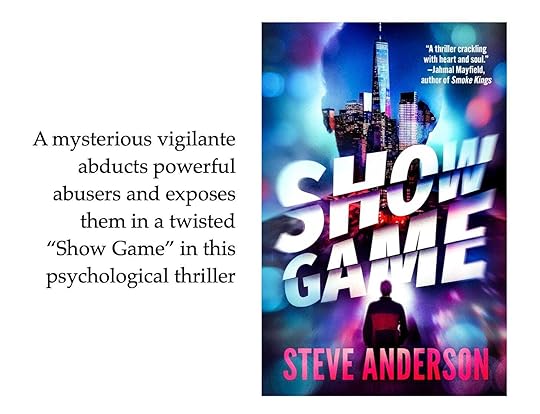 What makes Alex and Owen and others tick?
Like in my other novels, my characters are often in over their heads—they’re not necessarily professional or even proficient in what they attempt to do, but they apply the skills they do have to risk all for what they believe is right.
I can’t say too much about Alex because of spoilers. But I can say they experienced a very personal loss that drives them to this. But, as we go deeper into the story, the readers discovers an even harsher abuse that hit Alex personally. It’s made Alex somewhat self-destructive. Owen Tanaka, meanwhile, had worked hard for years to become a skilled investigative reporter, but it’s all changing by the time he’s reached the peak of his skills.
Both, at their hearts, want to get at the actual truth. They want to cut through all the bullshit and reveal things for what they really are. They’re coming at it from far different angles. But then they come to realize that they are actually pursuing the same dark and evil truth. Once they realize that, they have no choice but to pursue it.
As for the antagonist Mason Snead, I also can’t give too much away. Tech wunderkind and startup genius. He’s like many we can think of today. And, as it turns out, he has reasons for turning out like he did. There is environment. Bad things that happen to you that form you. And you become like your abuser in some sense. But, another frightening thing is that some people are just wired that way. Evil. And when they are born with a silver spoon or whatever that enables and entitles them, then watch out.
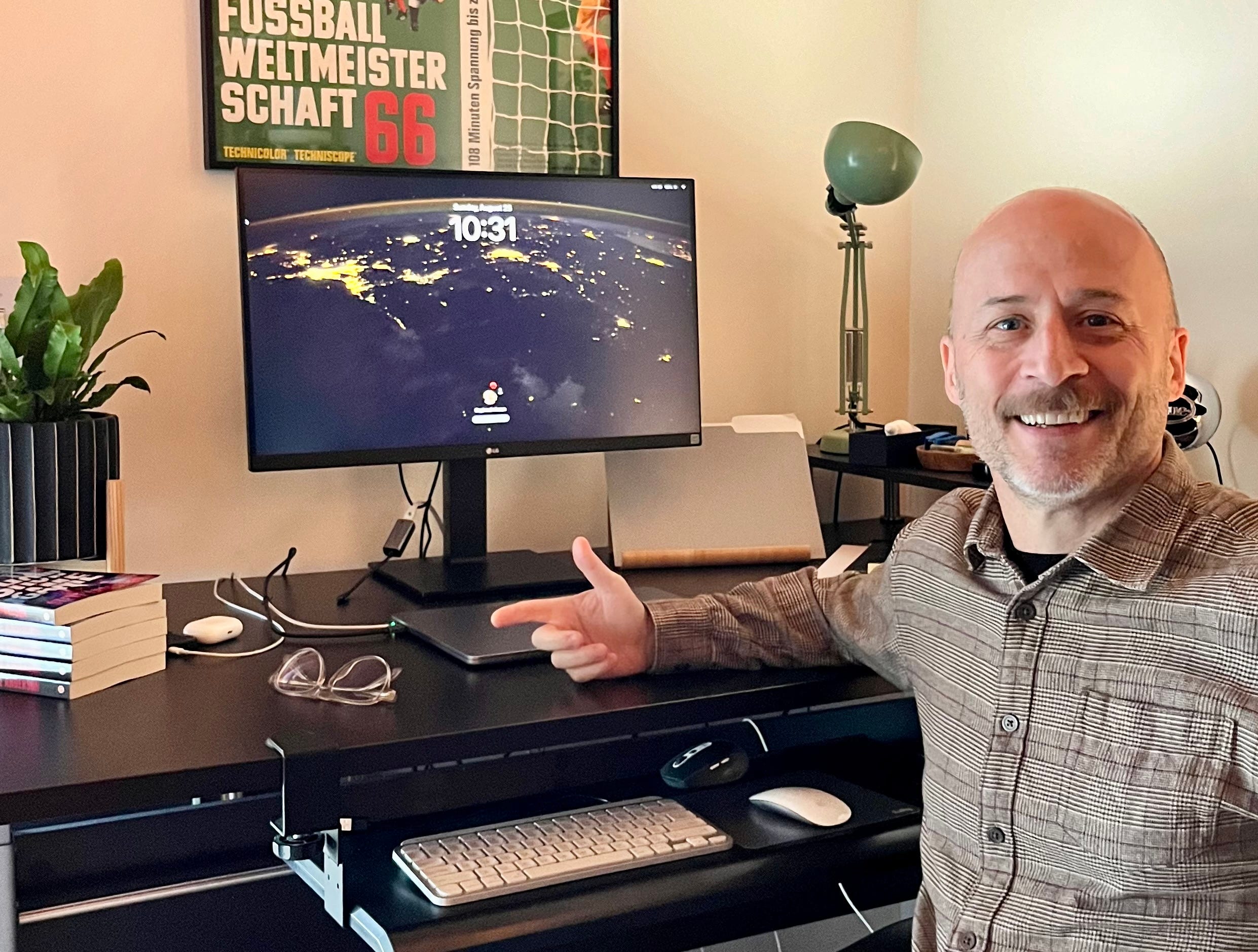
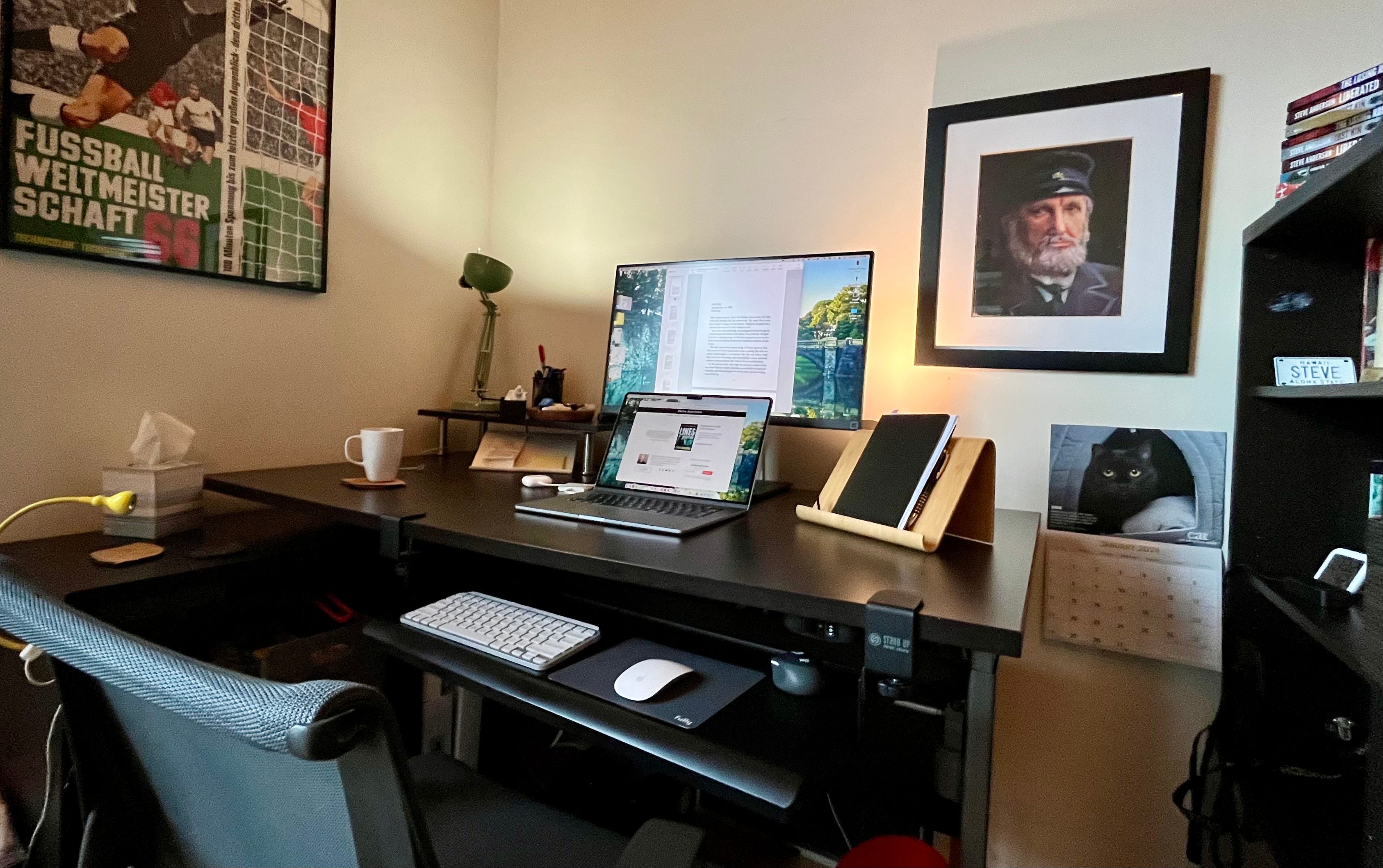 My corner desk where the Show Game got madeWhat did I enjoy most about writing this?
Show Game is a new direction for me—a psychological thriller set in the present day. I enjoyed the release of being able to experience these people risking all and going for it. They’re doing what so many of us wish we could do.
I also enjoyed the freedom of writing in the era and settings that I live in. It liberated me to just concentrate on telling the story and let my characters just do what they have to do.
The only scary thing is, the world hasn’t gotten much better since I started writing this, and the worst people in our society just keep getting away with their crimes because they have the power. I might have to write a sequel.
Where to find the bookShow Game is available wherever books are sold, from big retailers to your local bookstore. Here are just a few options:
Amazon (ebook and print)
Apple Books (ebook)
Barnes & Noble (ebook and print)
Bookshop (print, also via your local bookstore)
Google Play (ebook)
Kobo (ebook)
Powell’s (print)
If you like the novel, or any of my stories, please consider posting a review or rating. Every single positive review on Amazon, Goodreads, Barnes & Noble and other review-based sites helps a ton.
You can also follow me on my Amazon Author page, Facebook Author page, and Open Road Media.
The other crime thrillersWhile most of my novels are set in the WWII and Cold War eras, I do have a couple contemporary crime thrillers out from a while back: The Other Oregon, and the novella Rain Down.
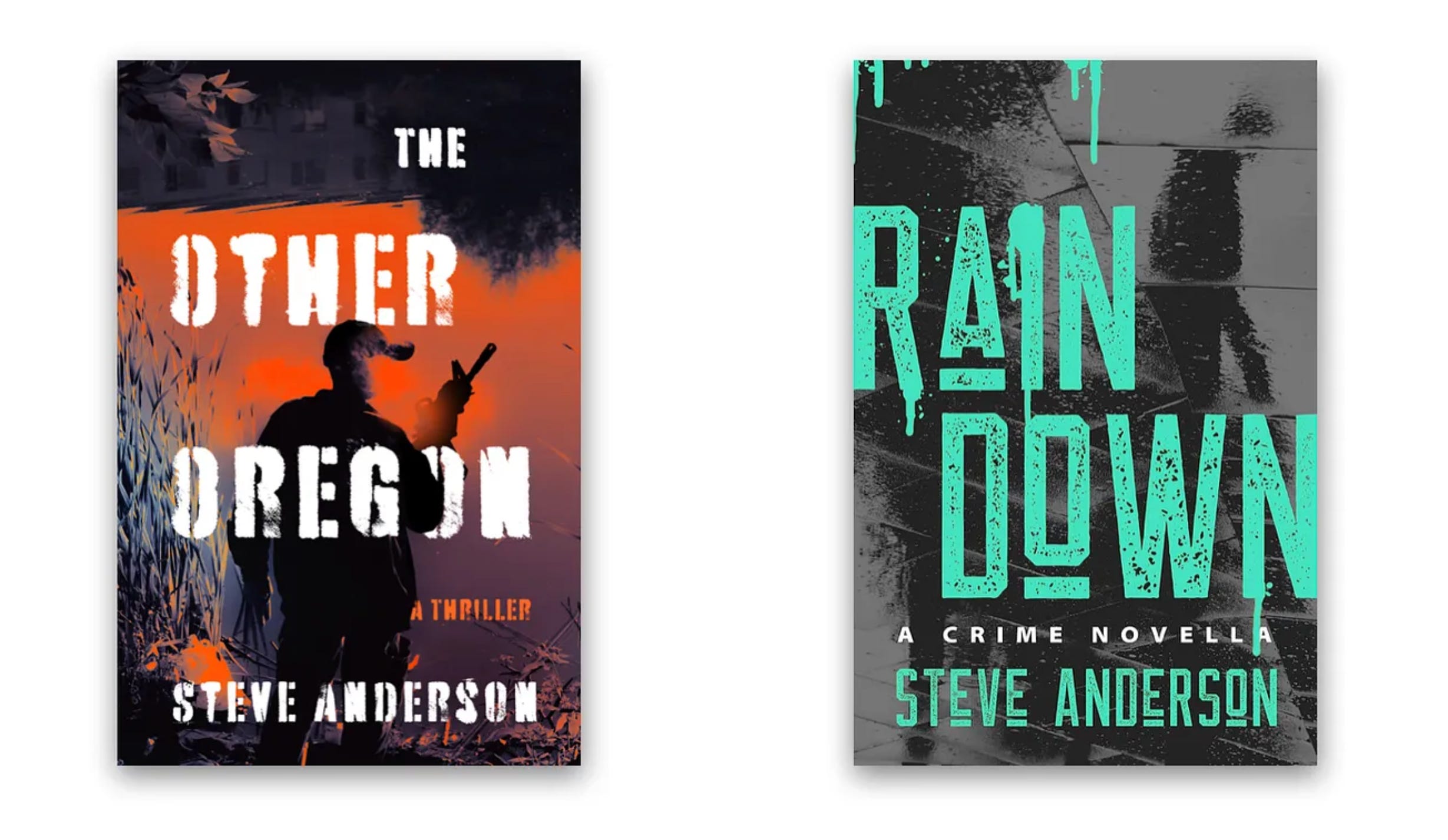
Not many readers know about the two books, but my new publisher Open Road Media has rereleased them with great new covers. More about these stories in upcoming posts.
A great ebook deal—ends tomorrow (July 31)Open Road has dropped the Amazon Kindle price for my WWII thriller Under False Flags to only 2.99 for the month of July. That’s a steal for an ebook that can run up to 12 bucks. Go grab this first book in the Wendell Lett series before the sale ends on Wednesday, July 31.

That’s it, thanks for reading. I hope you’re having a great summer.
Steve
Thanks for reading Underdog Stories! Subscribe for free to receive new posts and support my work.
July 2, 2024
Out now: my new thriller Show Game
Many of us, especially the helpers in society, from first responders to investigators and more, grow so frustrated if not enraged by witnessing, again and again, the worst abusers and criminals getting away with their crimes and only because they have the power.
Faced with such odds, some have imagined taking the law into our own hands to pursue real and lasting justice.
That’s the idea behind my new psychological crime thriller Show Game. Here’s the lowdown from my publisher:
A mysterious vigilante abducts powerful abusers and exposes them in a twisted “Show Game.”
The pandemic may be over, but the world is not safe for those who prey on the innocent. A vigilante known by the alias “Alex” knows what these transgressors have done. And taking them captive is only the first step toward vengeance. In order to be set free, they must first play the Show Game . . .
A predatory priest, a double-dealing politician, a fraudulent philanthropist—Alex has ways of making them confess, on camera, for all the world to witness. But the Show Game is building toward a darkly personal finale: exposing society’s most notorious and evil abuser.
As Alex gets closer to the main event, investigative reporter Owen Tanaka is determined to unmask the vigilante’s true identity and motive. But when a shocking revelation hits close to home, Owen must decide whether to stop a criminal mastermind’s devious scheme . . . or let the Show Game play its final round.
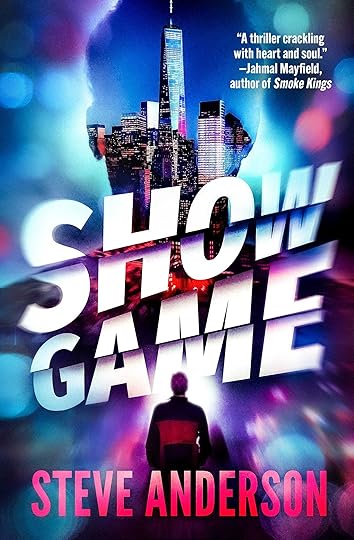
Show Game is somewhat of a new direction for me, as many of my novels are historical thrillers set in the WWII and Cold War eras. But many aspects are the same. The story’s themes and characters come straight from the headlines, and the protagonist is not an expert doing their duty but simply pursuing what they know is right and must be done. So they risk it all.
Where to find the bookShow Game is available wherever books are sold, from big retailers to your local bookstore. Here are just a few options:
If you like Show Game , here’s how you can help
Amazon (ebook and print)
Apple Books (ebook)
Barnes & Noble (ebook and print)
Bookshop (print, also via your local bookstore)
Google Play (ebook)
Kobo (ebook)
Powell’s (print)
Some of you have asked me what helps my books find more readers. One single thing helps more than anything:
A review or rating at your favorite online book retailer
If you’re so inclined, please consider giving Show Game (or any of my books) an honest review or just a rating. Many retailers such as Amazon let you leave a simple star rating without having to write anything.
Every single positive review or rating on Amazon, Goodreads, Barnes & Noble and other review-based sites helps us authors a ton.
Please also consider following me on my Amazon Author page and Facebook Author page.
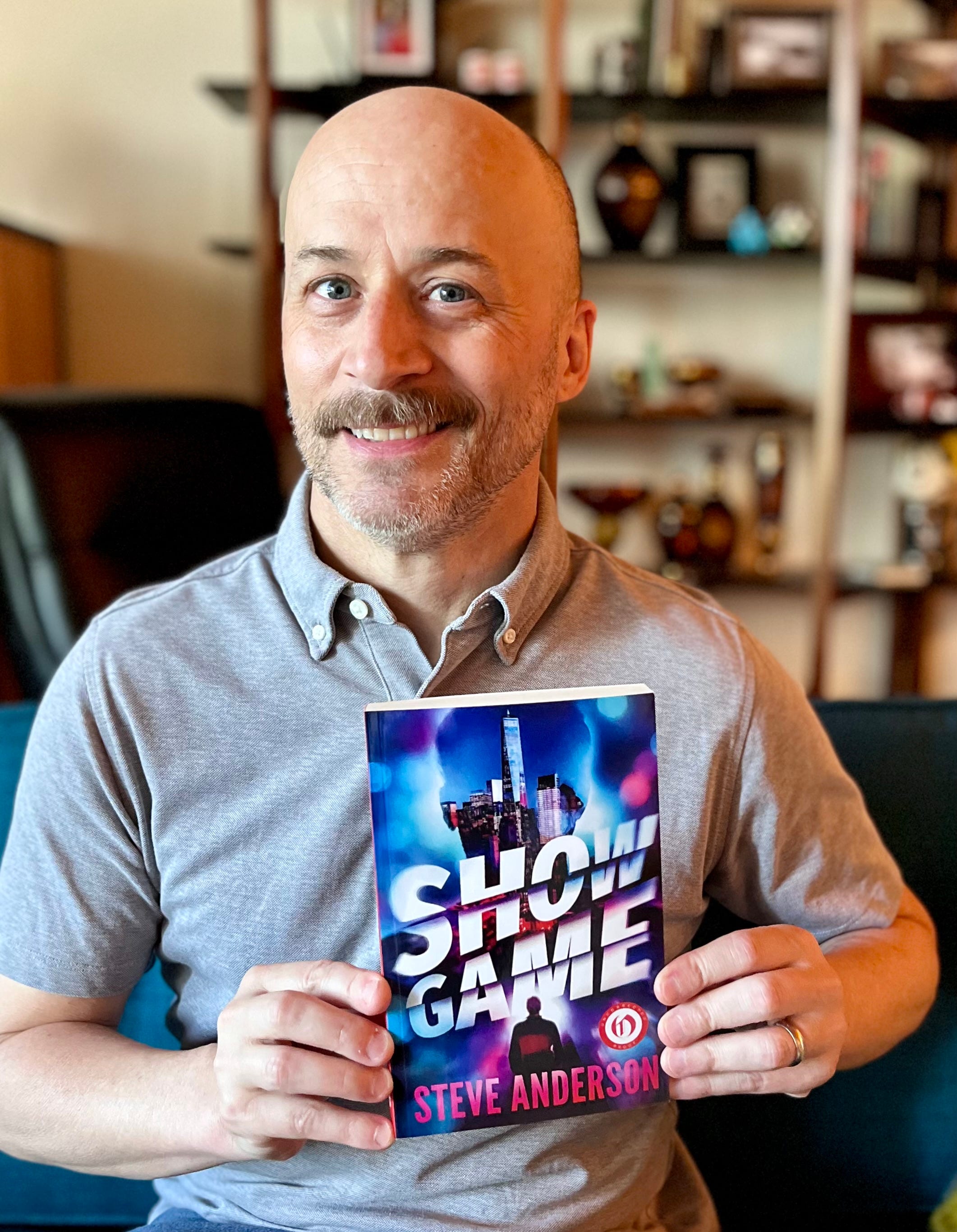
As you’ll know from this newsletter, Show Game is the second of my two novels out this year. My historical espionage thriller Lines of Deception just released in March. Here’s a previous post about that and the brand-new audiobook as well.
Do you have any questions about Show Game or Lines of Deception or anything I could answer? Just hit Reply and let me know.
Thanks for reading. I hope you’re doing well.
Steve