
Andrew Mayne's Blog
March 30, 2016
The Cure for Writer’s Block

Why do some writers never seem to have a problem producing a nearly endless flow of stories while others find themselves perpetually staring at a blank page?
In The Cure for Writer’s Block, Andrew Mayne, named Amazon UK’s top five best-selling author of the year, occasional television magician and prolific writer of fiction and nonfiction, including the Amazon #1 bestselling book on authorship, How to Write a Novella in 24 Hours, shares the secrets to unlocking your creative potential.
From inception to completion, The Cure for Writer’s Block helps you diagnose what kind of writer’s block you’re experiencing and how to cure it.
Writer’s Blank: When you really want to tell a story but have no idea what to tell.
Writer’s Lock: When you have a great idea but just can’t figure out how to get started.
Writer’s Knot: When you’re in the middle of your book and you don’t know where to go next or what happened to the passion.
The Cure for Writer’s Block is presented in an easy-to-read format, includes quick summaries and “Try this” activities to help you build your creative problem-solving skills.
Also included are 50 creativity boosters, designed to help you find a solution and engage your imagination.
Table of Contents
Diagnosing Writer’s Block
Opening Night
Writer’s Blank: Finding your story
1. Storytelling is in your DNA
2. The Story Formula
3. What it Means to Write What You Know
4. Mining Your Experiences
5. Finding Stories
6. Writing Prompts
7. Choosing the Right Story
Writer’s Lock: How to start writing your story
8. Getting Started
9. Starting Structure #1: The Collision
10. Starting Structure #2: The Slow Build
11. Starting Structure #3: In Medias Res
12. Starting Structure #4: Framing Devices
13. First Impressions
Writer’s Knot: How to get unstuck in the middle of your story
14. The Tangle
15. Dead Story Walking
16. Stuck in the DMV
17. Step Away from the Keyboard - But Not Too Far
18. Rethink Your Ending
Finally
50 Creativity Boosters


March 28, 2016
A&E promo from way back when…
A&E promo from way back when…
March 23, 2016
My Book Dictation Experiment (so far)
For those of you following my Facebook Live videos, you already know that I’ve decided to try to train myself to use dictation as a writing technique with the advice of Peter J. Wacks. Not voice dictation software where you have to say “comma”, “quote”, “period” and other punctuation out loud, but the human transcribed kind in which you record into a device or your phone and have a person convert that into text.
I’ve been curious to try this for two reasons. The first is that I spend a lot of time walking and a lot of time writing. If I could combine the two activities, I think my productivity could increase dramatically. The second is that one of my writing heroes, Kevin J. Anderson, uses this method and is one of the most prolific writers there is.
Immediately after getting back from Silicon Valley Comic Con, I jumped right into the project following suggestions from Peter. Step one was just getting used to walking around talking into a recorder. I did this doing laps around the block in my neighborhood.
After about two hours of just random stream of conscious ramblings (describing my day so far, my writing projects and anything else that came to mind) I moved on to doing descriptions of the environment around me.
When I felt completely comfortable talking out loud, I moved onto using the recorder to making story notes. I found that just saying something verbally was very helpful in crystallizing a story. If all I got out of the experiment was the insight that speaking these thoughts was helpful in story development, I’d consider it a success.
I then decided to give actual story writing a shot, with the complete understanding that this would be a very rough start and I shouldn’t prejudge the future potential of writing this way unfairly if it was a failure.
All I wanted to know was three things:
1. Could I “write” a story through speech in the same way I use a keyboard?
2. Could I do this without having to start and stop too much? (Pausing a lot to collect thoughts is fine, but if the process took longer than writing, it might not be worth it.)
3. What was my starting word count? How many words per hour could I comfortably write this way? (For example, typing something original,1,600 per hour is a very comfortable pace for me.)
Initially I was hesitant to jump into the project because I have some other stories I have to finish, but decided that since I was already out walking around, it’s not like it would really be cheating on them…
So I spent about 15 minutes making notes about what I wanted to write, which actually covered far more ground than I ended up dictating in my first session. I then spent the next 30 walking and talking, sometimes pausing to phrase something. There was a lot of stumbling as my mouth outran my brain a few times. However, at the end of the session I felt like I’d written a solid first chapter to a book with plenty of material in my head left to do another two or three without a note session.
It felt good. Question number one was answered. I felt comfortable working this way and think there’s a role for this in my writer’s toolkit.
Question two was answered when I checked the time versus the recording length. In the 30 minute session I only paused for about 4 minutes. This seemed like a good ratio, especially because I was pausing less as I got further into the chapter.
Now question three: How productive was this? That’s the killer question. For this experiment all I cared about was comfort and word count. To get an accurate word count I needed to send this off to a transcription service. I chose Rev.com because their website was very user friendly and their rate of $1 per minute was very competitive.
I haven’t dug into the finished manuscript yet. To Rev’s credit, they turned around my 30 minute recording in 4 hours. They say 24 is their target, so they certainly delivered. When I have a chance to look at it, I’ll let you know how they did. In the meantime, after opening the doc in Word, I had my word count – the most critical question of all.
Before I tell you the number, I have to tell you what I was hoping for. If I could type 1,600 original words an hour, hitting 2,000 with dictation would be a big success. I could combine my writing with my evening walk and hit a 2,000 words per day deadline with little effort.
I’ve heard that some writers using this method hit 10,000 words per hour. Which sounds insane. But it also creates a kind of goal. Not unlike finding out that Roger Bannister broke the 4 minute mile.
So what was my word count first time out? Keep in mind that I don’t know how many words are usable and I spent some time making audio notes, pre-planning the chapter (Although I also do that with my normal writing.)
29 minutes of taking
4 minutes of pauses
= 33 minutes in the session
Word count: 4,600
Yep, 4,600 in 33 minutes kind of blew past my 2,000 words per hour goal. If, that’s a big “IF” I did this session for an hour, that puts me over 8,000 words an hour.
Immediately this fills my head with the idea of writing an entire 80,000 word novel in a day with time leftover for sleeping and watching Netflix. Which is silly. A lot of thought went into that 4,600 words. My mind was preloaded with information. It takes planning to write – at least to write well. So don’t worry, I’m not going to be releasing a book a day. Well, not yet.
My next step is to go through the manuscript Rev sent me and see what is usable. While I can tell without reading that I didn’t spin 4,600 words of pure gold, at least half has to be usable. And that would still leave me with 5,000 words per hour – a near tripling of my current rate.
What are my future plans for this? Good question. The biggest factor, besides quality, is the cost. At $1 per minute, that means a one hour session of transcription will cost $60. Writing a full-length novel, assuming a spoken word count of 100,000 (edited down to 80,000) would cost about $750 to have transcribed. That’s not an outrageous sum if you’re a working writer and know there’s going to be a payoff when the thing is done. For an aspiring writer, it may not be worthwhile – at least not initially. There are many, many other ways to maximize your time without spending anything. (I’m writing this using Google Docs on my iPhone while I sit at a ToGo’s sandwich shop.)
My advice to anyone looking to experiment with paid transcription, try a small session, 10 or 20 minutes. If you’re totally cool with a messy, unpunctuated first draft, then use software.
I’ll let you know how the experiment proceeds. So far, really, really awesome. I’m hugely indebted to Peter J. Wacks for the advice and coaching.
Meanwhile, I’ve had people volunteer in the past to proofread manuscripts in exchange for early reads and finished copies. If there’s anybody out there that wants to volunteer to transcribe an out-of-breath author mumbling through a story as he walks around the streets of Burbank late at night, let me know…
Best,
Andrew
February 24, 2016
February 19, 2016
December 21, 2015
Actually, naysayers, BB-8 would work just fine on Jakku and in space
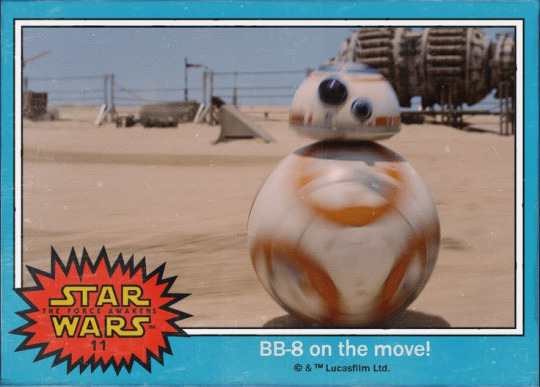
So we’re all asking the burning question of how does BB-8 work?
I’m not talking about the toy version we have on earth. Wouldn’t his smooth metal surface slip on the sandy slopes of Jakku?
This was the criticism of one well-known planetarium director (as well as a NASA scientist! When did these guys stop dreaming???).
Although, technically, we should wait to hear what a tribologist says, that’s someone who studies friction. In the meantime, I’m happy to offer a couple theories…
If you put a blaster (I’ll explain how those could work in another post) to my head and asked me to tell you how to make a BB-8 that can go across sand and traverser different environments, I’d tell you to start with a material that has variable friction. Just because BB-8 looks like he’s made from a smooth material doesn’t mean that he actually is or that he has to behave that way.
The simplest explanation would be that he’s made from a material similar to gecko tape (this is the industrial version of how gecko’s feet work.) You could have a version of this material that either lost or gained its traction through electrical current.
But let’s get even more creative: Imagine that his ball body is lined on the inside with ultrasonic speakers. He could use sound to create pressure waves that either gives him traction or help him glide. Add to that a similar internal weighted mechanism like the toy (and production versions of BB-8 employed) and you have a plucky little ball that can traverse any surface.
Take a look at this experiment showing how resonance can move small particles in fascinating patterns (now imagine the BB-8s surface was able to do this):
A little further out technically, you could use surfaces comprised of quantum wells that would allow you to mimic the surface features of any known material.
Instead of saying that something is impossible and can’t be done, let’s stretch our imaginations and broaden our understanding of science to what is possible*.
*Except time travel and FTL. That’s just crazy talk.
November 9, 2015
How to Write a Novella in 24 Hours: And other questionable & possibly insane advice on creativity for writers - Kindle edition by Andrew Mayne. Reference Kindle eBooks @ Amazon.com.
October 15, 2015
100 No (or low) Cost Ways to Promote Your Ebook
This list is meant to get you thinking. I’m not promising that they’re all good ideas for you, or immediately practical, but quite a few have helped me out.
1. Tweet out the link when you first release it.
2. Tweet out each time you put it on a new platform.
3. Create a serialized podcast.
4. Personally email +20 friends and ask them to email 10 of their friends. Write the actual email you want them to forward.
5. Announce the book on Facebook.
6. Announce the book on Google+.
7. Create an audiobook versions using Audible’s ACX program.
8. Make short trailer for Vine or Instagram.
9. Ask a group of friends to retweet a link to the book on a specific day.
10. Ask friends via personal email to write reviews for the book.
11. Ask anyone who likes the book on Twitter to write a review for the book.
12. Send an email with positive reviews to your mailing list.
13. Make a mailing list of close friends.
14. Hold a contest for people to make a blurb just on the cover and tweet it out.
15. Call 10 people on your phone and ask them to help promote.
16. Hold a Google Hangout to talk about the book.
17. Create a YouTube video of you talking about the book.
18. Change all your avatars to the book.
19. Promote the book in your signature line.
20. Write a Google+ post on why you wrote the book.
21. Tweet out the post.
22. Email the post.
23. Tweet really good reviews with a thank you.
24. Ask a fan to make a video review for Amazon.
25. Write about something you learned writing the book and submit it to a site like Reddit.
26. Write about something technical/scientific you learned and submit it to Hacker News.
27. Tweet and post small facts about the research for your book.
28. Tweet and post easter eggs.
29. Tweet and post a list of books that influenced your book.
30. Tweet and post a list of movies that influenced your book.
31. Send out a press release to free services.
32. Ask to be a guest on book related podcasts.
33. Ask to be a guest on topic related podcasts.
34. Put your best reviews in your description.
35. Ask people on Facebook, Twitter and Google+ for promotion ideas.
36. Post several different synopsis and ask people which one they like better.
37. Do the same with alternate covers.
38. Post why you chose the cover you used.
39. Post covers that inspired you.
40. Create an audio trailer for your book and link to it.
41. Create a Twitter feed for one of your characters.
42. Ask people who’ve read your book who they would cast in a movie then retweet and post their answers.
43. Record a scene from your book as a radio play.
44. Create a Flickr and Instagram feed of photos of locations that inspired you.
45. Make an annotated map of scenes.
46. Cross-promote it with other ebooks.
47. Hold a contest for people to do their own ‘movie voice’ narration for the trailer.
48. Create a list of blogs that review ebooks and send them free copies.
49. Give away a limited number of copies of your ebook.
50. Send printed books to super fans.
51. Use printed versions as prizes.
52. Write guest posts on other blogs.
53. Change categories if it’s not ranking on a top 100 list.
54. Use rankings in your description.
55. Create a post where you interview one of your characters.
56. Take a look at the descriptions of the ten best-selling books in your category. Rewrite your description from what you learned.
57. Post the first half of your book for free.
58. Hold an author reading on Google Hangout.
59. Write a guest post unrelated to your book, but mention it in your byline.
60. Write and give away a short story that takes place in your book’s universe.
61. Release the prologue as a YouTube video.
62. Remind people there’s a free Kindle app for every major platform and provide a link to your book.
63. Do a charity promotion where all proceeds from sales help a cause.
64. Hire someone on Fiverr to help promote your book.
65. Do a cross interview with another author looking to promote their book.
66. Offer to Skype with any fan that has questions.
67. Make an Animoto trailer for your book using free images.
68. Create a Prezi typography presentation of your book (create a video for YouTube).
69. Get your friends to stage Instagram photos of scenes from the book.
70. Exchange Social Media accounts with another author for a day.
71. Use puppets to act out a scene from the book.
72. Send physical copies of the book to people in exotic locations.
73. Ask podcasts if you can put the audio version at the end of their show in a serialized form.
74. Hide a physical copy of your book somewhere and tweet out clues.
75. Have your friends all post photos reading the book.
76. Make paper book jackets that can slip over a Kindle or iPad.
77. Virtually sign ebooks by taking a photo of you next to a white board with your fan’s names.
78. Virtually take photos with fans by holding up an iPad with their photo.
79. Hold a contest for people to write the best 140 character or less blurb for the book.
80. Ask fans to tweet photos of the best temporary tattoo relating to the book.
81. Create a new cover for the book.
82. Make a print version (via CreateSpace) and announce it for sale.
83. Include chapters from this book at the end of another one.
84. Make your ebook part of a bundle (like Humble Bundle.)
85. Make your book free for a day.
86. Include your book in Amazon’s KDP select program.
87. Create a Spritz (fast moving text) of the first chapter.
88. Hype up the sequel and remind people to get the first version.
89. Offer the book for free to anyone who retweets a sales link.
90. Update your website with new images and info, then tweet about it.
91. Offer free books to anybody who will follow you on Twitter.
92. Announce the book will be free for a day if you get a specific number of retweets or forwards (then make it free anyway.)
93. Make a crossword based on the book.
94. Create t-shirts for the book using catchphrases.
95. Animate a scene using PhotoPuppet for iOS.
96. Put together a music playlist for your book.
97. Compile a list of your fan’s favorite things about the book.
98. Post the first sentence of the book on Twitter. Have a “read more” that goes to a larger post with the first chapter. Have another “read more” that then takes them to the Amazon page to buy the book.
99. Post the first chapter on Facebook
100. Create a GIF trailer for the book.
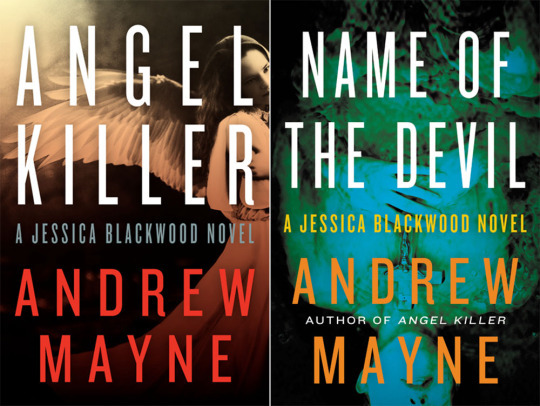
If you like these, check out my books Angel Killer and Name of the Devil and sign up for my mailing list!
Andrew Mayne, star of A&E’s Don’t Trust Andrew Mayne, is a magician and novelist ranked the fifth best-selling independent author of the year by Amazon UK. He started his first world tour as an illusionist when he was a teenager and went on to work behind the scenes for Penn & Teller, David Blaine and David Copperfield. He’s also the host of the WeirdThings.com podcast. AndrewMayne.com
September 16, 2015
ANGEL KILLER to be developed for television by Twentieth Century Fox and Temple Hill Entertainment
Hey folks, here’s the announcement from Publisher’s Marketplace:
Andrew Mayne’s ANGEL KILLER and subsequent books, featuring the magician-turned-FBI agent with a dark past who must confront the grisly and possible supernatural crimes of an elusive serial killer, to Twentieth Century Fox to be developed for television, with Temple Hill Entertainment executive producing, by Erica Spellman Silverman at Trident media Group.
TV development, like film, is a numbers game. The odds of a project ever getting produced are slim. But this is exciting none the less and the people at Temple Hill have a great track record with adapting books. You might have heard of a little movie series they did called Twilight? They also did the Fault in Our Stars, Maze Runner and the upcoming show Rosewood for Fox.
July 6, 2015
Name of the Devil is available now!!!This is the second book...
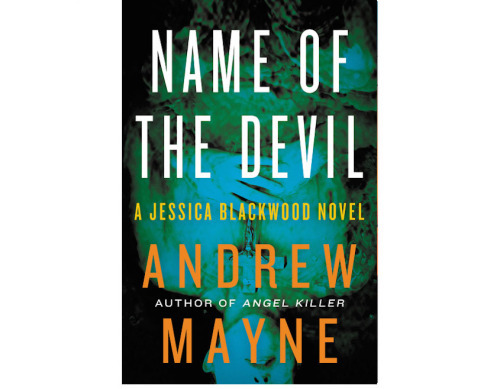
Name of the Devil is available now!!!
This is the second book (although you can read it as a standalone) about Jessica Blackwood, former magician turned FBI agent, who is on the hunt for some of the most sinister criminals who commit crimes that some people think are supernatural.
There’s some awesome reviews up on FreshReads plus this one for Publishers Weekly:
“In Mayne’s exciting second Jessica Blackwood novel, the cunning FBI special agent applies her magician training to investigating a bizarre explosion…. A fast-moving thriller in which illusions are weapons for both good and evil.”
(Publishers Weekly)
Available at your local books store and here:
Amazon
http://amzn.to/1S3clLV
Barnes & Noble
https://goo.gl/X3mAfd
Google Play


