Adam Heine's Blog
April 25, 2026
The Importance of Being Bored (and Social Media Fasting)
I think a lot about how social media has hacked our brains. I also think a lot about WHY AREN'T I WRITING RIGHT NOW OH YEAH BECAUSE I HAD TO CHECK MY DISCORD SERVERS ONE MORE TIME JUST IN CASE SOMETHING FUNNY OR SCARY HAPPENED.
This is about that. I recently saw this video (embedded below—though if you're receiving this as an email, you may need to click through to view it) wherein a Harvard professor, who I swear is the dad from Pitch Perfect, talks about how we have invented a way to effectively eliminate boredom... and why that's really bad.
We already know that social media can be linked to depression, so it makes sense that the opposite—just, you know, being present for life—can reduce depression.
What really clicked for me was some of his key takeaways. Go ahead and watch it (or don't; I'm not your dad... probably), and then I'll talk about what I got out of it.
So, our family already does the first two protocols he mentions at the end (and it was real nice to feel validated like that): We don't allow phones at family meals, and our kids aren't allowed their phones at night.
The third one, though, was a reminder I needed. I've taken breaks from social media before, but the last time I did so was over 10 years ago. A lot has happened since then, and my social media habits (and addictions) have changed.
I always enjoyed those fasts, but they were hard too. The first couple of days were exactly what Dr. Not-The-Pitch-Perfect-Dad says: children screaming in my head while my dopamine goes nuts, followed by a kind of peace.
And as someone who experiences several flavors of anxiety, the idea of quiet peace in my head sounds amazing. So here's what I'm doing this week.
My particular fast has a single focus: I want to be intentional about what gets my attention. If habits or muscle memory drive me toward something that I don't actually want in large doses—watching Twitch, scrolling Facebook, playing "just one more game" of Clash Royale—then that thing gets a break. Meanwhile, anything that my habits are able to keep short and finite—reading the news, watching the latest Colbert on YouTube, playing Clues By Sam—are things I can keep doing, once a day, with intention.
I'm trying this for one week, with the idea that it will become a recurring thing—though how long and how often remains TBD. I'll let you know how it goes.
I'm actually kind of excited about it. I can already hear the screaming, but I can also feel my time and peace expanding a bit. I'm excited to fill it with things I want to do.
I believe everyone can benefit from evaluating their internet usage and determining what's best for them, but I don't think what works for me will work for everyone. I do encourage you to think about where you spend your attention, track it, and then evaluate how far off it is from where you want to be.
Social media companies and others have robbed us of our intentionality for a long time now. I say we reclaim it.


April 16, 2026
Art vs. Politics
A little while ago, this excerpt from an interview with Andy Weir (author of The Martian and Hail Project Mary) made some new ripples in the writing world. See if you can guess why:
I dislike social commentary. Like… I really hate it. When I’m reading a book, I just want to be entertained, not preached at by the author. Plus, it ruins the wonder of the story if I know the author has a political or social axe to grind. I no longer speculate about all possible outcomes of the story because I know for a fact that the universe of that book will conspire to ensure that the author’s political agenda is validated. I hate that.
I put no politics or social commentary into my stories at all. Anyone who thinks they see something like that is reading it in on their own. I have no point to make, and I’m not trying to affect the reader’s opinion on anything. My sole job is to entertain, and I stick to that.
Opinions like this are not new (not even for Weir; the interview is from 2018), but it's important to address.
Because it's impossible to create art with no politics in it.
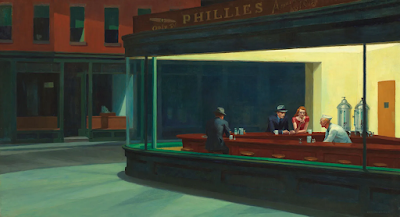
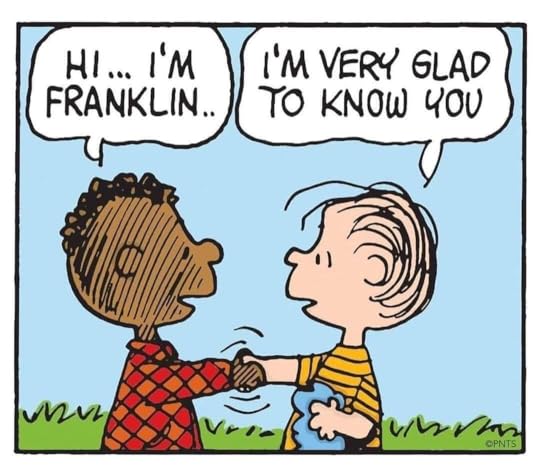 Peanuts? Political.
What do I mean by that? Well, there are two main things people mean when they say fiction is "political," so let's define terms for a second.
Meaning #1: Fiction is political when it's trying to make a point. This is what people usually think of when they make comments like this. They don't want fiction to preach. "Moralizing" gets in the way of the story, they say. They "just want to be entertained."
The flaw here is that people are fine with social commentary if it's done well and if it's a message they agree with. Messaging only bothers them if they become aware of a message they don't like. I've found this to be true across the political spectrum and regardless of the message (like, I've lost count of the number of badly written yet wildly popular Christian novels I've read—looking at you, Tim LaHaye).
Meaning #2: Fiction is political when it presents a particular worldview. This is the broader meaning of the term, and it is definitely something conservative folks have a problem with (just Google "bad woke fiction"... or maybe don't). But again, this happens regardless of one's political spectrum—for example, conservatives don't like stories portraying language as a tool of colonial oppression just as much as progressives might not like scientists portrayed as arrogant and dumb.
The flaw here is that it assumes one can write fiction that does not present the author's worldview—fiction that just "presents things as they are." But that is a worldview.
For example, if you believe that gender is a strict, God-ordained binary, but I believe that it is a spectrum (a fluid one at that), then when I write a novel with a trans woman in it—even if the novel has nothing else to do with transgender issues!—I will think I'm just presenting things as they are, while you might think I'm inserting my politics into my fiction.
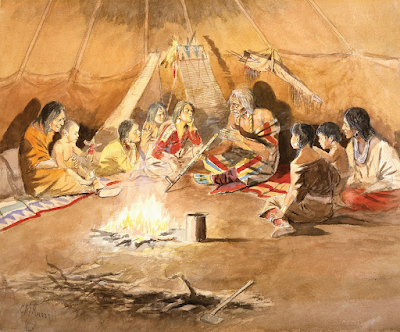
 This mural? Quite political.
And it's this last point that shows why all art is political. All art inherently portrays the worldview of its creator. It can't not!
So while I do believe that Weir did not intentionally put politics or social commentary in his novels, his politics and social beliefs are still there. His world portrays what he believes to be the status quo, and while he may think he does not have a point to make, his fiction nonetheless makes his point for him: "Things are fine this way, and nothing needs to change."
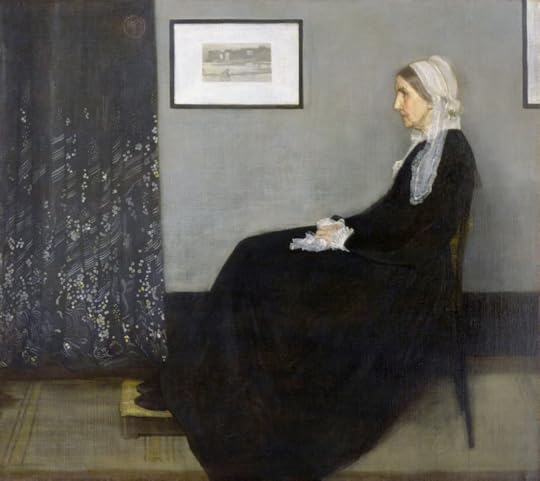 "Whistler's Mother"? You guessed it: political.
On the flip side, this is why art—all art—is so important. We are sharing how we see the world, and in doing so, we express what it means to be human, in all of its messy, chaotic, kaleidoscopic glory.
Specifically, your stories are important because they express how you see the world.
Whether you want them to or not.
March 30, 2026
How Do You Know It's AI?
Since the start of generative AI, a lot of people have suggested ways to tell when something is AI. First, it was fingers. Then, it was em-dashes. The recent Shy Girl debacle was based, among other things, on the idea that genAI likes lists of threes and giving every noun an adjective.
But are these accurate indicators?
Every claim of AI detection comes with the same two problems:
AI is constantly evolving. As soon as people start talking about one indicator, AI companies work to change it.. This is easily done since many so-called "AI indicators" are easy to fix programmatically.
Humans use the same indicators. AI is trained on our words, so if it does anything over and over again, it's because we do. (Well, except for the finger problem. That's just weird.)
There's no technological reason why either of these will ever stop being true.
So, there is no quick and easy way to identify AI—no single indicator that means this is AI but that is human. Every such claim will always be flawed. How do we know, then?
The answer is simultaneously simple and complex:
To identify whether something is genAI, you have to engage deeply with the work.
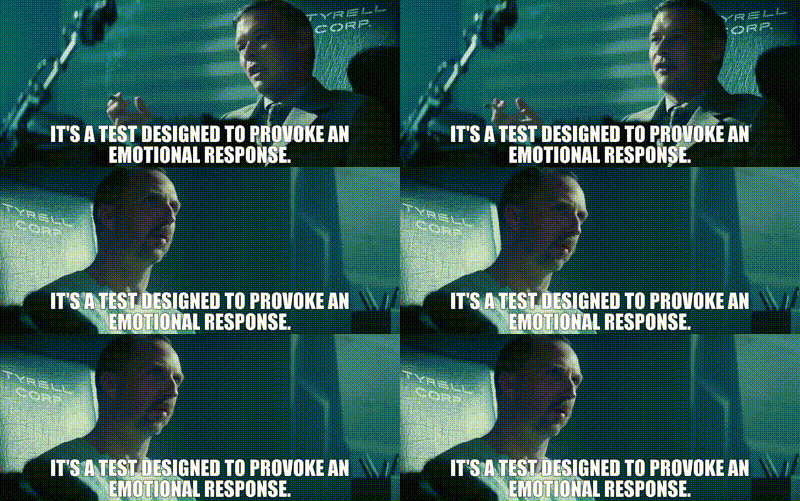
Specifically, you have to engage so deeply with the work that you realize there is nothing to actually engage with.
I've spent a lot of effort learning how to identify generative AI in both images and text, and I've edited a lot of AI-generated text. There is nothing they all share in common except this: They look really good at first glance, but any attempt to find deeper meaning falls apart.
That's easy to say, I know. But after editing—not just reading, but critically editing—dozens of papers, you start to get a feel for it.
You have to look for intentionality and connections, and that takes effort. For me, editing generated text takes the same amount of time as, if not more than, editing a human's sloppy first draft. The AI text has far fewer errors, yes, but it takes a lot of time to identify why the piece feels off. It's only when I deeply analyze what's being said that I realize it's not actually saying much at all.
And the thing is, even once you've identified genAI, you can never be sure you're right. Why? Because humans phone things in all the time! We write like crap. We slap imagery together without intentionality. We adopt stylistic crutches. You have to look at dozens and dozens of examples of genAI to tell the difference between a lazy author and an LLM that doesn't know what it's saying.
And that's tiring. Nobody wants to do that.
But in a world where authors are getting accused left and right of using genAI—when the truth is maybe they're just an average writer cashing a check (or their accusers are think humans don't use em-dashes)—it's important to do due diligence on these things.
Generative AI cannot be detected by anything so simple as a style choice. If it could, we wouldn't be arguing about this.
For this same reason, AI can never reliably detect AI. There's no statistical pattern to look for that identifies AI vs. human. Generative AI cannot make connections or create intentionality (though it can fake these things), so it cannot possibly detect them either. If it could, it could fix those things in itself!
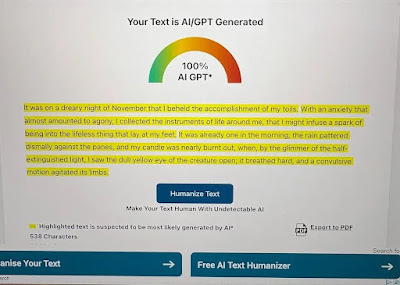 AI detects text as being 100% AI-generated... except this is an excerpt from Mary Shelley's Frankenstein.
It seems obvious when you think about it, but we are fooled all the time into thinking the "intelligence" of AI is the same thing as ours. I cannot stress enough: genAI can only remix statistically likely patterns. It cannot understand context or meaning, no matter how much electricity it consumes.
And while it feels like that shouldn't matter, it turns out meaning matters more than anything.
March 16, 2026
The Game Narrative Kaleidoscope—A Book About Writing in Games
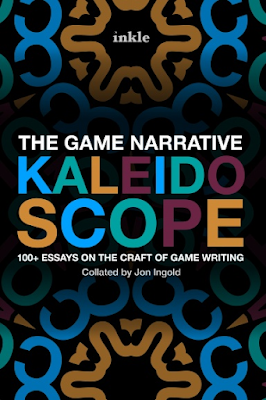 It's not fiction, but I did write a thing! The Game Narrative Kaleidoscope is a collection of essays from over 100 game writers from all across the spectrum—writers of major titles like Prince of Persia, Control, Call of Duty, and Baldur's Gate 3 as well as indie writers and mid-sized me.
Like the title says, the book is a kaleidoscope of thoughts on game writing and narrative design, including practical advice, inspiration, random ideas, and more. If you want to know how narrative designers think about the games we make, or what we'd like to see more of (or less of), or you just want to pick the brains of the creators behind some of your favorite games, this book is for you.
It's also got a cool Choose-Your-Own-Adventure style format, letting you read through linearly, randomly, or in a pseudo-narrative order walking through from one related topic to another. For example, one of the options linked from my essay is an exploration of the opposite point from Fallen London's Bruno Dias.
And the best part is all the profits are shared amongst the writers. It's not, like, a lot of money, but it's to all good people.
If that sounds interesting, check it out here in hardback, paperback, or digital...back.
And if you do read my thoughts on providing evil player fantasies in games, let me know what you think!
March 2, 2026
Making Characters Sympathetic
Sympathetic characters are vital in fiction. Developing sympathy helps us like them, root for them, and connect to them. If the reader can't sympathize with a character, they won't want to spend hours and hours with them and their story!
But what does that mean exactly? How do you make a character sympathetic?
For the most part, readers will like a character for the same reasons they like people in real life. For example:
They act unselfishly.They are kind to others.They are humble.They are (through no fault of their own) the underdog or a victim.They try hard to achieve their goals.They don't give up hope.They are brave.They are honest.They are clever.This is not an exhaustive list of course. It is also not a list of Everything A Character Must Have. But generally speaking, the more of the above traits a character has, the more readers will like them. (Careful though: it's possible to create characters who feel too perfect.)The inverse is also true: readers tend to dislike characters who are selfish, mean, arrogant, self-victimizing, apathetic, hopeless, cowardly, deceitful, foolish, etc.
But creating sympathetic characters is an art. A character can be foolish but unselfish and kind, or they can feel hopeless but still try to achieve their goals anyway, etc., and we may still like them. Depending on how it's done, we may even like them more as a result of their flaws.
For example, Frodo gives up hope, but we root for him anyway (partially because Sam doesn't give up on Frodo either). Naruto is a fool, but we cheer when he doesn't give up. Han Solo is arrogant, but dang if we don't love him for being brave and (eventually) unselfish.

And what about anti-heroes and villains? Can they be sympathetic? Heck yeah! Being sympathetic doesn't necessarily mean we agree with or even like the character; it means we understand them and why they do what they do.
Like, Zuko is an arrogant jerk, but when we learn that his reason for chasing the Avatar is to return home and prove himself in his father's eyes, we sympathize. Magneto lies, kills, and has given up hope entirely on the human race, but given how mutants are treated in his world (and how he was treated in Nazi Germany), we can understand why. Killmonger is a lying, psychotic killer, but he also has some very solid points...

There's nothing wrong with a villain who has no redeemable qualities whatsoever, but a villain we sympathize with—with whom we find ourselves almost agreeing if it weren't for their methods—can be really powerful and even unsettling.Again, this isn't an exhaustive list of traits that make a character likeable, but it's a strong start. It's also a good list to check against if you're getting feedback that people can't connect with your characters or just don't like them. Readers may not always know why they bounce off a character, but there's always a reason.
Who are some of your favorite characters (whether heroes, anti-heroes, or villains)? What about them makes them likeable to you?
February 16, 2026
How Change Happens
I've been thinking a lot lately (as many have) about how this all ends—referring, of course, to the cosplay Nazification of America. What will stop ICE? Who will arrest the Trump–Epstein pedo cabal? How do we reunite the country and get our democracy back? Etcetera.
I've also been thinking a lot about Friends.
See, we've been rewatching all ten seasons of Friends to educate our 15-year-old (mostly so she understands what we're quoting and laughing about half the time). I'm enjoying it; the series is still very funny, but uh... it's also increasingly problematic. Joey's a creeper. A bunch of jokes are homophobic. Everyone needs therapy. You know.
For example, we just watched this one episode where Ross and Rachel hire a male nanny to care for their daughter. It's cute and funny, but also, Ross is a total dick. See for yourself:
When this aired 22 years ago, it was just funny (to a cishet white guy like me, at least). Ha ha, Freddie Prinze Jr. is a male nanny. Ha ha, he's overly sensitive. Ha ha, he's weird, but Ross and I can't quite express why.
But when I watch it now? Yeah, no, Ross is just being a dick. He obviously has his own unexamined masculinity issues, and his hostility toward Freddie says more about his own insecurity than anything else.* And while Rachel does hilariously call him out on that, I'm not so sure this episode could air today without repercussions.
And that's a good thing. We should be calling it out whenever someone weaponizes mockery like that.
So what changed that makes this episode feel weird? Well, the culture did when we weren't looking. We changed.
Which brings me back to our modern bootlegged fascists. A lot of us wake up to the news every day hoping for some kind change, some climactic victory that will end it all. We want Neo to defeat the Agents. We want President Snow arrested and executed for his crimes. We want Thanos snapped away.

But that's not how real change happens.
Slavery didn't end with Lincoln's proclamation. Civil rights wasn't won with a law. These were indicators of a culture that had already shifted. The change had already been made in the people.
Or rather, in enough people. Because civil rights haven't been fully won and even slavery hasn't actually ended, but that's just it: cultural change doesn't happen with a singular event, but it does happen.
And it is happening now. Celebrities and Olympians are speaking out. Protests are breaking records, and even Republican allies are turning. There's hope that the midterms will turn against the regime or maybe he'll be impeached or something else, but these are all indicators of the underlying culture change. I desperately hope the upcoming elections or some judge ruling will lead to consequences and systemic changes, but the biggest hope we can take from these indicators is encouragement—the culture is changing.
Real change is slow. It is always slower than we want, and it will always feel slow, but it is still changing. Like, I don't know when my wife and I realized that Ross's faux masculinity made him a jerk—and was something we wanted to make sure our kids knew was weak and bad—but we did realize it. A lot of people did and still are.
All we have to do is not give up, to consistently push forward, speak out, listen to those who are hurting—literally be the change we want to see—until one day, we look back and realize that we haven't had to push quite so hard for a while, and we don't know when that happened.
* For what it's worth, I spent the entire episode shouting at Ross to go to therapy, and in the end at least, he kinda did.
February 2, 2026
So Your Loved One Has Lost Their Mind...
So. America's fascist now. But not everybody sees it?
It feels like everything has gone crazy very fast, but what gets me every single time—what has driven me crazy for over a decade now—is that the people who disagree with me seem to be operating from an entirely different set of facts.
"You can't trust mainstream media."
"I do my own research."
"You know that website bans sources they disagree with?"
"Oh, I don't read articles."
I feel like I'm trapped in this meme, and no matter how much I learn about what's going on, I can't get out:
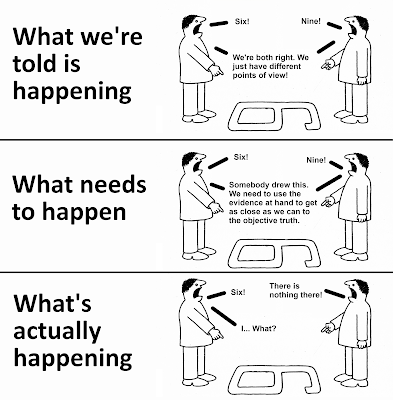
It's frustrating as hell to talk to someone who counters every fact with demonstrably false information, and it's impossible to have any kind of discussion about real-world solutions. Invariably, it turns into a heated argument rife with whataboutisms and strawman arguments, in which nobody wins and nothing is accomplished except to give my therapist steady work.
I've spent a lot of energy trying to reach folks like this and studying how the professionals do it. So, this is a kind of high-level summary of what I've learned, because every source I've found, and my own experience, shows a few key points that are pretty much always true. Here they are.
1) Know your limits
Trying to reach someone whose worldview is hostile to your own is hard, frustrating work. It is emotionally draining and often fruitless. Don't do it unless you have the mental and emotional resources to remain calm and loving in the face of... literally anything. Most importantly, I recommend only doing it with someone for whom you genuinely care about maintaining a relationship.
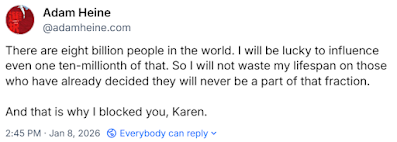
There is no shame in ignoring, unfriending, muting, and blocking, especially if we're talking about a rando in your mentions.
2) Do NOT debate facts and beliefs
This is what we want to do, but turns out it wastes time at best and backfires at worst. As much as I want them to, facts and beliefs don't change minds.
This is also kind of freeing though. Part of what's so draining about these conversations is the endless identifying of fallacies and researching of claims and providing receipts that are simply dismissed or ignored. Good news then: It was never gonna work anyway!
The goal in a conversation like this is not to win an argument or change someone's mind. The goal is to sustain the relationship. From Life After Hate: "The key here is to remind the individual that you still love them, and that the door will always be open for them to return."
Listen, I want to believe that we can just talk about facts and stay civil, but I actually believe that love and relationship—figuring out how to reconnect as people—is our only chance at a better world.
3) Show them you love and accept them
This can be really hard, but it's also 100% vital. If you cannot love and accept them (the person, not their beliefs), then stepping away is probably the best option. And again, there ain't no shame in that. But if you are able to keep going, try these:
Recognize their full, rich identity. Each of us is much more than our beliefs. We have loves, hobbies, goals, and stories that have nothing to do with politics. Seek out and recognize their individuality.Be curious about their beliefs. Ask what their beliefs are and, more importantly, what those beliefs provide for them personally. Listen uncritically to their story and reasoning. Try to understand how they came to where they are (even if you don't agree with it and desperately want to shout at them).Find common ground. It doesn't have to be a common belief. It can even be something very small, just something that connects you as people. For example (from How to Talk to Family Members About Politics): "Maybe it’s a value. Maybe it’s a common goal. Maybe it’s just ‘I know you to be this wonderful loving person,'" or in the worst case, "fall back on the 'I agree this is a difficult issue' response."4) Determine if they're willing to hear your perspective
This is critical (and potentially freeing) as well. Don't jump in with your point of view; first, find out if they even want to hear what you have to say. If they don't, there's not really anything more you can do.
And if they do, then you've established a point of human connection—that this is about sharing perspectives rather than arguing a point. You've opened the possibility of relationship.
5) Share your personal story
If they're willing to listen, don't lean on facts and talking points (reread #2 above). Instead, share your personal story that led you to your own beliefs. Facts can be argued (and extremist groups count on this), but it is much harder to argue with the lived experience of a person you care about.
That doesn't mean they won't, of course, but it's a place to start. And if you can show you care about them, they're far more likely to hear you when you ask them to care about you.
6) Offer them support
Often, people are attracted to disinformation because it gives them something they need—security, value, belonging, etc. If the person is willing, ask how you can provide the kind of support and connection they need. Can you help give them a healthier version of what the disinformation provides?
Again, this doesn't mean you support their political beliefs. It means you are willing to support them as a person.
Moving Forward
Don't get me wrong. This isn't going to Solve Everything Immediately—not even close. It could take months or years of relationship to change someone's heart, if they ever change at all.
I'm also not preaching an obligation to reach out to every Facebook rando, manipulative parent, or literal Nazi. Only you can decide—for each person and in each situation—whether it is someone you want to engage with and care about. There is nothing easy about that at all, and I wouldn't judge anyone who decides against it.
But if someone you care about has been lost down a far-right rabbit hole, then maybe some of these ideas can help. You don't have to argue with or convince them. You probably can't anyway, but you can still be there for them when they need to come out.
And I dunno, maybe someday, if enough of us relearn how to connect with other people, we could actually inoculate ourselves against the propaganda that divides us and have a better world.
January 7, 2026
Creator's Resolution: Make What AI Can't
I don't normally make yearly resolutions—calendars feel arbitrary, and my own mental pressures are quite real—but I found I do have a resolution for this coming season:
Make things that generative AI could never make.
What does that mean? A lot of things, but here are a few.
Be intentional. GenAI's biggest giveaway is that it cannot make artistic choices; it can only regurgitate statistically likely patterns. That's the most important difference between human-made art and not: the artist made what they made on purpose.
I mean, yeah, everyone phones it in sometimes (or even multiple times in a row). Artists gotta eat, and there's a distinction to be made between art and artifice (which this video lays out pretty well).
But what makes human creations unique from everything genAI spits out is that you can view a piece of art (or read it or listen to it, etc.) and have a meaningful think about why the artist made the choices they made, what they were feeling, what they were trying to express. We all do this whether we're aware of it or not, but it doesn't work with AI slop.
That's why the slop feels empty.
As a creator, then, I want to challenge myself to make more intentional decisions, to not phone it in, to think about why I'm making what I'm making and what it means to me.
Make connections. Another thing genAI struggles with are connections and continuity. Oh, it can fake continuity to be sure (especially when provided unlimited contextual memory and that California doesn't need all that water anyway), but it doesn't understand the real world or the meaning behind anything it generates, so of course it can't understand the connections between the two.
For me, that means connecting my ideas and experiences to the real world and real people. I'm not just writing a fun story, but I'm writing a story that has a purpose, that's exploring a deeper question or theme that has meaning to me personally (and trusting that others will connect to it, because we are rarely alone in our human experiences). I may often even be creating for a specific person, knowing nobody else will get it.
Make real things. GenAI is digital and can only make digital things.* It can't put on a theater production or run a tabletop RPG with your friends. It can't bake food or handwrite a poem. It can't play live guitar or do stand-up crowd work. These things are human, and they matter. They will always matter.
I'm still working out what this means for me. I'm already leaning more into tabletop RPGs. Maybe I'll sketch more again or put more energy into writer coaching. There are a lot of possibilities, and I'm excited to find them.
*Of course, digital things can be printed, and you can make robots to paint and stuff, but unless there's human intention behind it, it's still gonna feel like genAI.

The goal of all of this is not just to compete with AI. Honestly, I don't think we need to compete with it. I think, whether people realize it or not, there will always be a hunger for real human creations.
The goal is to make what I make be even better. More real. more human.
I think it's important to note that none of the ideas above require skill or production quality. A child can make intentional choices, connect their work with their audience, and make things with their hands. They do it all the time—and we love it! It's a piece of them!
And that's what art is. It's a piece of us, who we are, how we think, what we feel. GenAI can never do that.
And the more we lean into it, the better our own art will be.
December 22, 2025
Year-End Gratitude
If you follow me on social media, you know the one thing I'm consistent about is gratitude posts. You might not know that I also try to name five things I'm thankful for to myself, however small or silly, each day or that I even start my walks or other quiet moments thinking about being thankful for the day or the weather.
I don't do this because I'm some kind of appreciative guru.
I do it to survive.
Celebrating the small things fends off the mental demons, and it reminds me that, no matter how bad things might feel, there are always things worth celebrating.
In that spirit, here are some things I'm grateful for in 2025.
In mental health. I'm thankful for therapy and my own inner work. It's far from easy, but I feel more like myself today than I ever have.
In life. I'm thankful for a lot of things—my wife, my family, my friends—but a highlight of 2025 was getting to take my firstborn son to PAX West this year. We even got to meet PAX's Mike and Jerry!

In work. I'm thankful to have had basically steady work throughout this entire year. I constantly worry I'm not gonna have it, so it's good to look back and see that I did.
In video games. I played a lot of good games this year, but my personal game of the year (out of games I played, not games that were released in 2025) was Tactical Breach Wizards. It's an engaging almost-puzzle tactics game, and the writing is some of the funniest I've seen in a while.
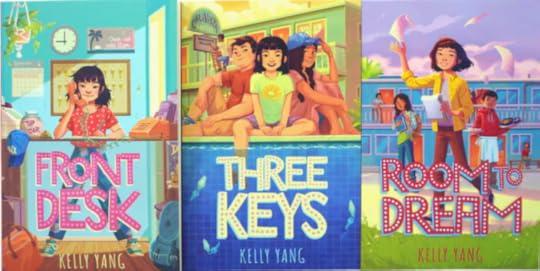
In books. I'm thankful for a handful of really great book-recommenders in my life. This year, I'm particularly thankful my daughter introduced me to Kelly Yang's Front Desk series, whose protagonist (surprisingly but consistently) pushes me to take a shot at the things I want.
In movies. I'm thankful for Fantastic Four: First Steps, which felt to me like a return to older MCU and also my own childhood. (Until I saw this movie, I'd actually forgotten how much I used to enjoy the Fantastic Four when I was a kid.)
In TV series. I've mostly been rewatching old series with my kids lately, and of those, I'm most thankful for Agents of S.H.I.E.L.D. Among other things, it had one of the most satisfying endings to a series I've seen in a minute.
In music. Music, especially new music, is not often my thing. (Spotify pegged my listening age as 68!) But I'm thankful in particular for "What It Sounds Like" from K-Pop Demon Hunters. It is not only a fantastic song, but it also carries layers of meaning that had me in unexpected tears when I wasn't even watching the movie.
I'm sure I could go on, but that's enough for one post (and one year).
What are you thankful for this year?
November 18, 2025
Painting a Scene in the Reader's Mind
A common problem I come across when editing is something like the example below. As you read, try to imagine the scene, paying attention to how it changes in your mind:
"I really thought it would be harder than this," Donny said.
"Well, sure!" Amanda took a sip of her coffee. "People like you."
"You said that before, but I didn't believe it." Donny picked up the mug after the server refilled it. He passed it back to Frieda—she had passed it to him because the server was too far away.
Frieda reached down to grab her mug. "I don't know. People are still staring."
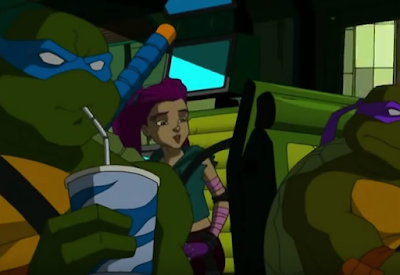
"What do you expect," Leo said, wiping the spill with his napkin. "We're giant talking turtles."
What's happening here? New characters appear without warning alongside new details about their environment. The reader has to jump back and forth, rereading parts in order to accurately imagine what's happening in the scene. It's draining for the reader, annoying even (and I'm sorry to have inflicted you with it to make a point).
When you're writing a scene, you're painting an image in the reader's mind. How and when you paint in the details matters. In a first draft, you're likely to make up details as you think of them, and that's fine, but when you go back to revise, you need the scene to read as though you had all those details worked out ahead of time.
Here are some tips to do that:
Ground the reader in the sceneWatch for confusing usage of the definite articleDescribe actions in chronological orderGround the Reader in the Scene
I talk about this in more detail here, but the simplest form of the idea is this: Set the scene before anything happens within that scene.
That's an oversimplification of course. I'm sure it might get old to spend a paragraph or two describing every single scene every time it changes. But in general, it's best to err on the side of clarity. A confused reader is going to stop reading.
To fix our example above, we might add this paragraph at the top of the scene:
Donny and Leo met their friends at Joe's Cafe—during the day, in public. Amanda sat at one of the outdoor tables wearing a light summer dress. The weather had turned cold already, but it didn't seem to bother her. She loved the chill in the air and the smell of crisp, fallen leaves. Frieda was up on a ladder, coffee in-hand, as she helped old Joe out by hanging a new sign above the door.
Customers and passersby kept glancing their way, but it wasn't as bad as any of them had expected. A few folks even smiled and waved.
This, by itself, solves nearly all of our problems. It sets the scene, describing who is there, where they are, and what they're doing as well as providing a few visuals and other sensory images to really place the reader in the moment. Now, when the action happens, the reader almost never has to revise their mental image of the scene. They just live in the story and enjoy it.
But we haven't fixed everything....
Confusing Usage of "The"
This seems like such a simple thing. Didn't we learn this in elementary school? But I still see it all the time—not because writers didn't learn grammar, but because it's hard to remember what you did and did not put on the page yet. There's always more in the author's head than what gets written down.
In the example above, we have the phrase "wiping the spill with his napkin." But what spill? When did it happen? It's confusing and possibly frustrating for the reader, making them feel like they missed something.
Fortunately, it's an easy fix. You can either change "the" to "a" or, if that still isn't clear, just describe the thing that's happening before referring to it with the definite article:
Frieda reached down to grab her coffee, spilling a bit in the process.
Describe Events in Chronological Order
This is a smaller problem but equally important to catch. When two events occur, describe them in the order that they happen, and when one event causes another, describe the cause before the effect. For example:
CAUSE: Frieda is too far away from the server.EFFECT: She passes her mug to Donny to get it filled.
CAUSE: The server refilled Frieda's mug.EFFECT: Donny picked it up and passed it back.
Keep these events in order, and your readers will thank you:
A server arrived. Frieda was too far away, so she passed her mug down to Donny.
Donny held the mug out toward the server until it was refilled.
Putting It All Together
Now, read and imagine the scene below, comparing how you felt the first time with now:
Donny and Leo met their friends at Joe's Cafe—during the day, in public. Amanda sat at one of the outdoor tables wearing a light summer dress. The weather had turned cold already, but it didn't seem to bother her. She loved the chill in the air and the smell of crisp, fallen leaves. Frieda was up on a ladder, coffee in-hand, as she helped old Joe out by hanging a new sign above the door.
Customers and passersby kept glancing their way, but it wasn't as bad as any of them had expected. A few folks even smiled and waved.
"I really thought it would be harder than this," Donny said.
"Well, sure!" Amanda took a sip of her coffee. "People like you."
A server arrived. Frieda was too far away, so she passed her mug down to Donny.
Donny held the mug out toward the server until it was refilled. "You said that before, but I didn't believe it.""I don't know." Frieda reached down to grab her coffee and spilled a bit in the process. "People are still staring."
"What do you expect," Leo said, wiping the spill with his napkin. "We're giant talking turtles."
Of course, there are still things missing. We haven't shown a lot about how Donny and Leo feel during this whole conversation, and that's equally critical. We'll talk about that more in a later post, but for now, this is a passable scene that paints a logical picture and doesn't force the reader to revise the image in their head.
(Well, not any more than is necessary at least. They are giant talking turtles, after all.)