
Nancy Ragno's Blog
December 13, 2019
Presidents’ Christmas Plum Pudding
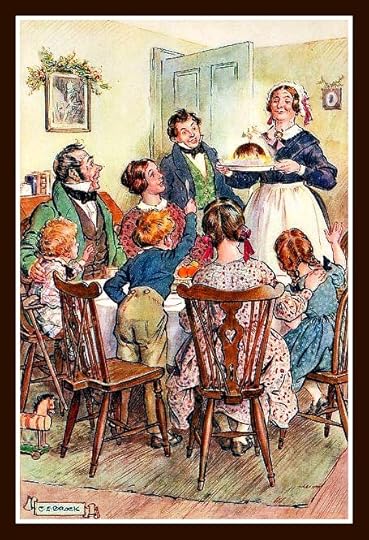
The traditional Christmas Plum Pudding, celebrated in Charles Dicken’s A Christmas Carol, is something few of us will have a chance to taste (thanks, at least in part to its labor-intensive preparation). But when America was young it was still a beloved tradition, borrowed from Britain. Our Presidents enjoyed it, as witnessed by four recipes for the famous pudding in the official The White House Cook Book, copyrights 1887-1915. The pudding itself has an interesting history.
The History of Plum Pudding
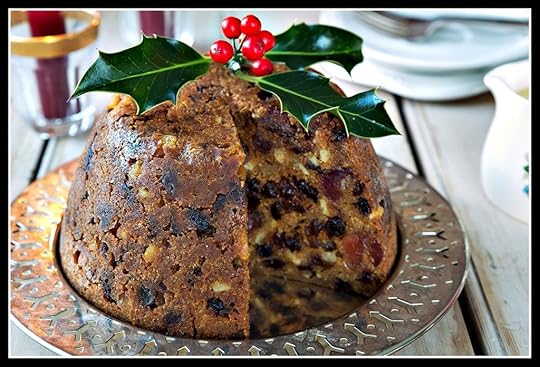
Plum pudding had its origins in medieval England as a kind of sausage. In those days, fat, spices, and fruits were used as preservatives. These plus meats, grain, and vegetables were mixed together and packed in animal stomachs and intestines (as was sausage) to preserve it as long as possible. The first records of plum pudding come from the 1400s. At that time the word “plum” was used to mean any kind of dried fruit. By the 1600s dried fruit was plentiful and the puddings became sweeter, less meaty. This change was also furthered by the “invention” of the pudding cloth — a piece of floured fabric in which to wrap the pudding, rather than in animal intestines. Suet, however, has always remained a main ingredient of the pudding.
During the Victorian era (Dickens’ time), journalists and writers promoted a family “English Christmas,” complete with plum pudding, and Christmas savings clubs sprung up among poor families to help them save pennies through the year for Christmas pudding ingredients. Preparation of the pudding was started five weeks before Christmas, on the Sunday, or Sunday before, Advent. This was called “Stir Sunday.” Every member or child in the family stirred the pudding and made a wish.
The pudding was a thick, dark mixture of dried or fresh fruit, nuts, and suet, raw beef or mutton fat, saturated with brandy, dark beer, or other alcohol. Often households stirred a silver coin, or other “favors” into the pudding. The silver coin meant good luck to whoever found it. Other favors were: the button from a bachelor and a spinster’s thimble. If a singe man found the button or a single woman the thimble, he or she would remain single for another year.
The last ingredient to be added to the pudding was egg whites beaten stiff. The pudding was poured into a cloth that had been scalded and floured, tied tightly (leaving room for the pudding to swell), and boiled or steamed for six hours. On Christmas Day, the pudding was again steamed for two hours before serving. It was served steaming, and sometimes with brandy sauce, which was set aflame. Children played a game called “snap dragons,’ in which they snatched raisins from the flaming brandy. Sometimes the lights were put out to further show off the flaming concoction.
As the song “We Wish You a Merry Christmas” expresses it: “Bring us some figgy pudding!” (an American term for plum pudding).
Here is the recipe for “English Plum Pudding (The Genuine)” that White House cooks prepared for American Presidents and their families. It is from The White House Cook Book” copyright 1915.
English Plum Pudding (The Genuine)
Soak one pound of stale bread in a pint of hot milk and let it stand and cool. When cold, add to it one-half pound of sugar and the yolks of eight eggs beaten to a cream, one pound of raisins, stoned and floured, one pound of Zante currants, washed and floured, a quarter of a pound of citron cut in slips and dredged with flour, one pound of beef suet, chopped fine and salted, one glass of wine, one glass of brandy, one nutmeg and tablespoonful of mace, cinnamon, and cloves mixed; beat the whole well together and, as the last thing, add the whites of the eight eggs, beaten to a stiff froth; pour into a cloth, previously scalded and dredged with flour , tie it firmly, leaving room for the pudding to swell and boil six hours. Serve with wine or brandy sauce. It is best to prepare the ingredients the day before and cover closely.
Enjoy!


September 18, 2017
WHAT WAS IN GEORGE WASHINGTON’S CANTEEN?

Martha’s Cherry Bounce
Among the papers of Martha Washington was found a memo written on her husband’s stationary. It was a recipe for Cherry Bounce, a homemade cherry liqueur that was one of George Washington’s favorite drinks. He liked it so much that he took it along with him on trips and often served it to guests at Mount Vernon. In September, 1784, he packed a”Canteen” of it, along with Madeira and port, to fortify himself on a trip west across the Allegheny Mountains.
In her diary, Martha Washington recorded a recipe for making a large batch of cherry bounce. It called for 20 pounds of cherries, cognac, sugar, cinnamon, nutmeg – and, crushed cherry stones! Martha’s own recipe called for brandy, sugar, and tart cherries. She also liked to spice it up with whole spices —cloves, cinnamon ,and nutmeg.
Martha’s Recipe
The Mount Vernon website has posted a number of recipes from Martha Washington, including her recipe for Cherry Bounce. It calls for 10 to 11 pounds of fresh sour cherries (preferably Morello), sugar, cinnamon sticks, whole cloves, nutmeg, and 4 cups of brandy.
The Mount Vernon website is:
www.mountvernon.org/inn/recipes/
The website page for Cherry Bounce is:
www.mountvernon.org/inn/recipes/article/cherry-bounce/
The Mount Vernon site explains that you may substitute 3 (1 lb., 9-oz.) jars of preserved Morello cherries for the fresh cherries. (Pit them if they have pits.) See the Internet for suppliers of preserved Morello cherries. (Trader Joe’s is a retailer that may carry them.)
Alternate Recipe
Here is another recipe for Cherry Bounce that uses bourbon and produces 1½ quarts of the liqueur.
You will need: a half-gallon lidded glass jar in which to stir and store the ingredients.
Ingredients:
1 quart fresh tart cherries, pitted
1½ cups sugar
½ quart bourbon
Directions:
Combine the cherries and sugar in the glass jar and stir.
Add the bourbon and stir until the sugar is dissolved.
Attach the lid, shake the jar, and store in a dark place, such as a cabinet or closet, for three months. Stir daily.
Strain into a clean jar, or jars. Allow the bouce to sit several hours before using. If stored in a moderate, even temperature, it will keep indefinitely.
Use the discarded cherries for tasty topping on ice cream or pound cake.
 Options
Cherry Bounce can be made with a variety of liquor bases and with or without spices. Instead of brandy, some recipes use rum, whiskey, vodka, rye, or bourbon. Vodka is said to keep the cherry flavor true; rum adds sweetness; cognac creates the taste of cherry wine; bourbon or rye creates a smoky and fruity liqueur.
 Think Holidays and Gift Giving!
What better way to celebrate the holidays than with Washington’s Cherry Bounce! And, if you have any left over after the holidays (which is doubtful), what better way to toast Washington on his birthday!
Think and plan ahead, keeping in mind that Cherry Bounce takes about three months to make. You might want to make a large batch to have enough for gift giving. Small, decorative jars or Mason jars of Cherry Bounce make a delightful and well-appreciated gift.
………………………………………………………………………………………………………………………………………………
NEW! “The President Did WHAT?” Revised and Updated
Announcing! The New “The President Did WHAT?” is now available!
New entries!Go
Added illustrations!
Completely current and up-to-date.
ALL the Presidents are here, from 1-45 , George Washington to Donald Trump!
“ The President Did WHAT? “
 A challenging & amusing Presidential Trivia Quiz
Plus — little-known, intriguing facts about each President
Go behind the scenes at the White House!
But instead of continuing to sing its praises, let George do it . . .
Take it from George —

“This book made me chuckle and raise my eyebrows more than once!”
“A great book to take to the beach!”
” A good bathroom read!”
“Marvelous party book!
“The perfect book to get kids interested in history and the fascinating characters (like yours truly) that made it!”
Check it out! www.amzn.com/1500810614
March 15, 2017
NEW! “The President Did WHAT?” Revised and Updated
Announcing!
New “The President Did WHAT?” now available!
New entries!
Added illustrations!
Completely current and up-to-date.
ALL the Presidents are here, from 1-45 —
from George Washington to Donald Trump!
Not Just a Trivia Quiz
“The President Did WHAT?“ is not just an amusing and challenging trivia quiz . . .
Informational book, as well!
Chock-full of intriguing, little-known facts about the presidents!
After each answer — more fascinating details about that president!
Book begins with complete list of all the presidents, 1-45, with their vice-presidents.
But instead of continuing to sing its praises, let George do it . . .
Take it from George —
“This book made me chuckle and raise my eyebrows more than once!”
“A great book to take to the beach!”
” A good bathroom read!”
“Marvelous party book!”
“THE PERFECT BOOK TO GET KIDS INTERESTED IN HISTORY AND IN LEARNING MORE ABOUT THE FASCINATING CHARACTERS (like yours truly) THAT MADE IT!”
CHECK IT OUT NOW! amzn.to/1nQ2QAV
February 15, 2017
NO CHERRY PIE, GEORGE WASHINGTON?

Cherry pie is a favorite on Presidents’ Day, thanks to what we now know is a myth about George Washington cutting down the cherry tree. We do know that Washington loved cherries, as well as a variety of other fruit, yet Martha Washington did not have a single recipe for cherry pie in her extensive cookbook, Book of Cookery! She did include the recipe for her favorite cherry dessert, “Cherry Bread and Butter Pudding,” however. Chances are, if Washington did eat cherry pie, it wasn’t often.
What about Abe Lincoln? No mention of cherry pie by his biographers, either. However, fresh peach pie was a different matter!
On this Presidents’ Day let’s go authentic and serve up two dishes our 1st and 16th Presidents really did love. For George Washington it was “Fried Apples and Bacon,” a recipe Martha had gotten from General Braddock and served often at Mount Vernon. For Lincoln it was “Squash Pie.”
Here are the recipes. Bon appetit!
Fried Apples and Bacon
4 tart apples
1 pound of bacon
sugar
Directions:
Peel the apples and cut into 1-inch cubes. Fry the bacon in a heavy skillet, drain on a paper towel
`
February 6, 2017
LINCOLN’S FAVORITE CHOCOLATE SAUERKRAUT CAKE

Want the recipe for Abraham Lincoln’s favorite chocolate sauerkraut cake?
Yes, sauerkraut is the secret ingredient in this deliciously moist cake popular in the Lincoln era and passed down by descendants.
WANT THE RECIPE?
Gi
 ve it a try, and if you love it . . . hat’s off to Abe!
HERE’S THE RECIPE:
Cake
½ cup butter
1½ cup sugar
3 eggs
1 tbs. vanilla
2 cups flour
¼ tsp. cream of tartar
¼ tsp. salt
1½ tsp. baking soda
½ cup cocoa powder
1 cup water
2 cups sauerkraut, drained, washed, and chopped
Cream together butter and sugar. Beat in eggs, one at a time. Stir in vanilla.
Sift together dry ingredients: flour, cream of tartar, salt, baking soda, cocoa powder.
Add dry ingredients and water alterately to butter mixture. Stir in sauerkraut.
Pour into a greased and floured 9×13 inch pan. Bake at 350º for 35-40 minutes.
Icing
6 oz. semi-sweet chocolate
4 tablespoons butter
½ cup sour cream
1 tsp. vanilla
¼ tsp. salt
2 cups sifted powdered sugar
Melt chocolate and butter over low heat.
Remove from heat and blend in sour cream. vanilla, and salt.
Stir in powdered sugar and blend until smooth.
ENJOY!

For more tantalizing details about the Presidents, check out:
The President Did WHAT?
An interactive Presidential trivia quiz that takes you behind the scenes at the White House to reveal intriguing facts that few know (and Presidents might prefer to keep it that way).
Example: Which President earned money as a model while in college and received offers from the Green Bay Packers and Detroit Lions upon Graduation?
Was it: George W. Bush, Ronald Reagan, or Gerald Ford?
GIVE UP! Find the answer to this question and lots more.
Go to http://amzn.to/1nQ2QAV
Laugh while you learn with THE PRESIDENT DID WHAT?
Available formats: Paperback, Kindle, Audiobook
Recipe from: A. Lincoln Cookbook: A Cookbook of Epic Portions. Morris Press Cookbooks, Kearney NE, © 2008
December 1, 2016
A GIFT TO MAKE EVEN SCROOGE SMILE!

A. “The President Did WHAT? ” of course!

The President Did What?♦ Entertaining and informative
♦ Trivia quiz, anecdotes, and surprising facts about the Presidents
♦ Chronological list of the Presidents and their Vice-Presidents
amzn.to/1nQ2QAV
June 27, 2016
Have a Blast on the 4th with . . . “The President Did WHAT?

THE PERFECT PARTY BOOK for July 4th!

THE PRESIDENT DID WHAT?

Presidential Trivia Quiz
and Reference Book
Check it out!
http://www.amzn.to/1nQ2QAV
Available in Paperback, Kindle
and . . . AUDIOBOOK

June 10, 2016
PART II: WHITE HOUSE FORMAL DINNERS
 As in the previous post, “It’s a White House State Dinner —& You’re Invited!” the following details are from the White House Cookbook, © 1877 & 1914 and describe the protocol and etiquette of the time. (However, in the world of formal dining, customs change very slowly through the years.)
Arrangement of Glasses
The diagram below shows how the glasses for water, white and red wine, and champagne are arranged at a place setting. The circle labeled A is the plate.
I= Glass for Sauterne IV=Glass for Water
II= Glass for Sherry V= Glass for Champagne
III= Glass for Rhine Wine VI = Glass for Burgundy
Linens, Centerpiece, Silverware
(From The White House Cookbook, © 1877)
In laying the table for dinner, all the linen should be a spotless white throughout, and underneath the linen tablecloth should be spread one of thick cotton flannel, which gives the linen a heavier and finer appearance, also deadning the sound of moving dishes.
Large and neatly folded napkins (ironed without starch), with pieces of bread three or four inches long, placed between the folds, but not to completely to conceal the bread, are laid on each plate. An ornamental centerpiece, or a vase filled with a few rare flowers, is put in the center of the table.
The dessert plates should be “set” and ready on the sideboard, along with extra silverware to be placed beside guests between courses, if required. A doily and finger bowl is set on each dessert plate. The finger bowl is partly filled with water and a slice of lemon.
The “dinner” may be served by the waiter either from a sidetable (where it is carved and presented on the left-hand side of each guest); or the dishes may be brought in ready-carved from the kitchen. At the end of each course the plates give way for those of the next.
Since soup and fish are the first course, plates of soup are usually placed on the table before dinner is announced; or if the host/hostess wishes the soup served at the table, the soup tureen, containing hot soup and the warm soup plates are placed before the seat of the host/hostess. Soup and fish being disposed of then come the joints or roasts, entrees, poultry, etc. and relishes.
What’s for Dinner?
Here is one menu for a White House dinner (not a State Dinner).
Veal Soup with Croutons
Boiled Chicken with Caper Sauce
Steamed New Potatoes
Asparagus on Toast
String Beans Young Onions
Green Gooseberry Tart Golden Cream Cocoanut Macaroons
Cheese
Coffee
Those White House Cooks were kept busy!
Lots more intriguing Presidential facts in our Presidential trivia quiz and reference book: THE PRESIDENT DID WHAT?Available in paperback, Kindle, and audiobook formats.
April 8, 2016
IT’S A WHITE HOUSE STATE DINNER — & YOU’RE INVITED!

The photo above shows how the White House state dining room table was set up in 1960 for an official White House state dinner for the king and queen of Denmark. Up until 1960 state dinners followed the formal table seating arrangement shown with strict rules of seating protocol. Long tables were arranged in a horseshoe with the President’s seat in the middle. In the 1960’s Mrs. Kennedy dispensed with that arrangement in favor of smaller round tables that enabled guests to have an opportunity to “rub elbows” and allowed for an interesting, diversified group at each table.
A Step Back in Time
Let’s step back to the 19th century to experience what it was like to be invited to a State Dinner at the White House. You are the lucky recipient of an invitation written by the official calligrapher and issued by the President’s Secretary by direction of the President. It is a black tie affair. (Gentlemen’s dress is a tuxedo with a black —not white— tie; women’s, a gala ball gown.) What will happen when you arrive?
(The following details are from the White House Cookbook, © 1877.)
The Usher in charge of the cloak room hands to the gentleman on arrival an envelope containing a diagram of the table,

wherein the name and seat of the respective guest and the lady he is to escort to dinner are marked.
A card corresponding with his name is placed on the napkin belonging to the cover of the seat he will occupy.
The President’s seat is in the middle of the table. The most distinguished guests sit on his right and left. If their wives are present they will occupy these seats, and the gentlemen will be seated next to the President’s wife, whose seat is directly opposite the President.
[Dinners are served French style and are divided into three parts. Two of them are served from the kitchen and the third from the pantry.]
The first part of the dinner includes from oysters on the half shell to sherbets; the second continues to the sweet dishes; the third includes ice, cakes, fruits cheeses (which are all understood as desserts and are “dressed in the pantry.”)
Bon appetit!

(Want more details about dinner at the White House — how to lay the table, choose the centerpiece , fold the napkins serve the cigars, and so on — watch for the next episode. Plus, you’ll find the answer to the question, “Where do you place those six glasses, and what is each one for?“
[image error]
Don’t forget to check out our Presidential trivia quiz and reference: The President Did What? (Available in paperback, Kindle and Audiobook!) amzn.to/1nQ2QAV





![[image error]](http://thepresidentdidwhat.com/wp-content/uploads/2016/04/Book-cover.png)
