Beth Barany's Blog
November 28, 2025
Listicle From the Writer’s Fun Zone Archive on Writer’s Block
 A listicle for you!
I’ve been sharing articles about writer’s block in my group mentorship and with my 1-1 clients, and even emails from you!
So I gathered them in 1 place:
Eight Ways to Beat Writer’s Block by Laurel Osterkamp : awesome; useful; and too the point.Get your Creativity Back with the Wisdom of the Five Elements by Marie BowserI Don’t Believe in Writer’s Block by Hugh TippingOvercome Writer’s Block: Get Writing Now, Spark #1More listicles here on 8 tips to plan your novel.

For more resources, subscribe to the blog; visit Beth Barany’s site for all the things; check out Beth’s science fiction and fantasy; How To Write The Future podcast; 12-month group mastermind for science fiction and fantasy authors; Overcome Writer’s Block (book). Beth Barany on YouTube.
The post Listicle From the Writer’s Fun Zone Archive on Writer’s Block appeared first on Writer's Fun Zone.


November 25, 2025
Crafting Ethical AI Worlds with Abigail Hing Wen
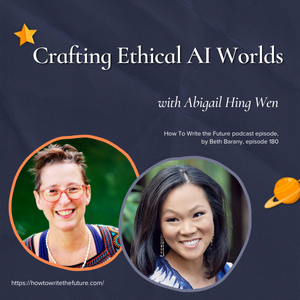

Crafting Ethical AI Worlds with Abigail Hing Wen – How To Write the Future podcast, episode 180
***
“I try to write worlds that I believe are attainable and that I think we can aspire towards.” – Abigail Hing Wen
In this future‑forward episode of How To Write The Future, host Beth Barany chats with author‑filmmaker Abigail Hing Wen about The Vale — a middle‑grade fantasy where a family builds a clean, AI‑generated virtual world. They get into why ethical AI matters for storytellers, what “clean AI” looks like, and the real‑world tradeoffs creators face as tech evolves.
Why ethical AI matters for writers and readersWhat “clean AI” means: trained on your work and public‑domain classicsCraft meets tech: worldbuilding across book, short film, and RobloxPractical questions around indemnification, settlements, and building responsiblyPlatforms the podcast is available on: Apple Podcasts | Buzzsprout | Spotify| YouTube
RESOURCESFOR CREATIVE WRITING PROFESSIONALS – BUILD YOUR BUSINESS SERVING WRITERS
Sign up to be notified when our training opens and get a short Creative Business Style Quiz to help you create success.
https://bethbarany.com/apprenticeship/
Support our work for creatives!
Buy me a coffee: https://ko-fi.com/bethbarany
GET HELP WITH YOUR WORLD BUILDING – START HERE
Free World Building Workbook for Fiction Writers: https://writersfunzone.com/blog/world-building-resources/
GET SOME FREE WRITING COACHING LIVE ON THE PODCAST
Sign up for the 30-minute Story Success Clinic with Beth Barany: https://writersfunzone.com/blog/story-success-clinic/
GET SUPPORT FOR YOUR FICTION WRITING BY A NOVELIST AND WRITING TEACHER AND COACH
Schedule an exploratory call here and see if Beth can support you today: https://writersfunzone.com/blog/discovery-call/
About the How To Write the Future podcastThe How To Write The Future podcast is for science fiction and fantasy writers who want to write positive futures and successfully bring those stories out into the marketplace. Hosted by Beth Barany, science fiction novelist and creativity coach for writers. We cover tips for fiction writers.This podcast is for readers too if you’re at all curious about the future of humanity.
This podcast is for you if you have questions like:
– How do I create a believable world for my science fiction story?
– How do I figure out what’s not working if my story feels flat?
– How do I make my story more interesting and alive?
This podcast is for readers, too, if you’re at all curious about the future of humanity.
ABOUT ABIGAIL HING WEN

Abigail Hing Wen is an author, film producer and director as well as former tech executive. She is the New York Times best selling author of multiple novels for young people, including Loveboat, Taipei, which has been adapted as the movie Love in Taipei, now on Netflix. Abigail served as an executive producer and on set during production. Abigail is directing her first short film starring Lea Salonga, a prequel to her middle grade debut THE VALE, coming September 2025, and featuring an inventor family that builds an AI generated virtual world. She serves on the board of Harvardwood and as a judge for the 2025 Golden Trailer Awards recognizing the industry’s most outstanding film trailers.
Abigail is a frequent keynote speaker for young people, including Y’Allfest, US Presidential Scholars, and the Los Altos High Writer’s Week, as well as libraries, colleges, schools and bookstores around the country. She’s also given keynotes and fireside chats for the National Conference of State Legislatures, Meta, Google, Paramount, Paypal and other companies, and spoken on panels at SDCC, LACC, LA Times Festival of Books and ALA.
Website: www.abigailhingwen.com
Instagram: https://www.instagram.com/abigailhingwen/
TikTok: https://www.tiktok.com/search?q=abigailhingwen
LinkedIn: https://www.linkedin.com/in/abigailhingwen/
Transcript for episode 180 – Crafting Ethical AI Worlds with Abigail Hing Wen Introduction and Host’s BackgroundBETH BARANY: Hi everyone. Welcome to How to Write the Future podcast. I am your host, Beth Barany. I’m a science fiction and fantasy writer, also a creativity coach, editor, podcaster and filmmaker. And I also help creative entrepreneurs get their businesses started. So yeah, like a lot of creatives, I have a lot going on.
My passion is how do we make the world a better place for everyone? And that was one of my goals in starting this podcast is talking to story writers about the amazing thing that happens when we create stories, which is we can help new things come into the world because I believe that what we vision we can help make so.
So I love talking to other creatives, writers, futurists, and people who care about the future. And today I’m really excited to have a guest with us who is gonna talk about her book. And that pertains to these topics. I’m so excited.
[00:54] Guest Introduction: Abigail Hing WenSo Abigail, please join us in and if you wouldn’t, if you would please introduce yourself, that would be awesome.
ABIGAIL HING WEN: Yeah. Well, thank you so much for having me, Beth. I am Abigail Hing Wen. I’m an author and now filmmaker. And I have published five books. This is my fifth one, The Vale, that just came into the world on Tuesday, about a week ago. And um, it’s kind of exploding in all these different directions. There’s a Roblox game and there’s a short film prequel starring my childhood hero, Lea Salonga, and lots of good things.
So I’m excited to be sharing this book with the world.
BETH BARANY: Oh, wow. I am so excited to have you here with us.
[01:27] Abigail’s Journey with “The Vale”And if you could start out by saying like, what inspired you to write this book and also just for some context, if this is your fifth book, what are all your books? Middle grade, young, you know it’s middle grade, right?
Not young adult,
ABIGAIL HING WEN: Yeah. Although it reads up for sure. It’s a, there’s a lot of technology and there’s some, there’s some hardships of the family. But I actually wrote The Vale in 2015, so ten years ago, and it was actually the last book I wrote that was a drawer novel. So for those who don’t know what a drawer novel is, it’s the novels that you write that don’t get published that you have to shelve.
And, it was because it’s a story about a family that creates an AI generated virtual fantasy world, there was no market for it at the time, so my agent at the time said, you know, she couldn’t take it out. And I think that’s probably right, that nobody knew what AI generation was. So I ended up writing Loveboat Taipei and that was my breakout novel that became the movie “Love in Taipei” on Netflix.
And, um. Then with, you know, times changed. I had another book. I had four more books in the world. And so, I was able to kind of make edits to this one and adjust it, and the short film got underway. And so now ten years later, the world is ready, so I finally get to publish it.
BETH BARANY: Wow. I love that. So you’re, you’re a futurist too.
I mean, writing things that then get set aside. I too just resurrected a novel that I wrote ten years ago in, uh, this paranormal romantic suspense, kind of this global theme of women’s power and which is what I, one of the things I write about, but it’s like, oh, now I’m ready to work on this. I’m ready. Maybe the world’s ready. We’ll see, I’m still not a hundred percent sure.
Yeah. And so, you wrote it ten years ago and then just, it sounds like things just evolved that now just became the time that this book was ready to be born.
ABIGAIL HING WEN: That’s right. Yeah. Everyone knows what chat GPT is and, um, using chat bots and artificial intelligence.
So, there’s just more people that it’s relevant to.
BETH BARANY: Yeah. That is so interesting. So just a shout out to all you writers. Keep writing. You never know. Maybe if now is not the time for your book, then later. We don’t even know. Yeah.
My next question is: what do you hope that readers, and viewers, because you’ve got this short prequel film, what do you hope everyone is gonna take away from your project, from The Vale?
[03:40] The Concept of Clean AI and Ethical TechnologyABIGAIL HING WEN: So one of the things I am excited about with this Vale is that the family creates clean AI. So it’s AI that’s not been trained on copyright works, it’s been trained on their own works, their own art and works that are outta the copyright. So classics, fairytales, the Brothers Grimm, Arabian Knights and uh, the Magic Paintbrush where everything you paint comes to life.
And that is kind of like the world of The Vale. Everything that Bran creates in The Vale grows through AI and becomes real. So there’s a village of elves that evolve over time. There’s a blue forest that grows using the Fibonacci sequence behind it. Um, there’s a castle that he gets to build and decides everything he wants to do with it.
And so part of the hope is that, the, one of the stories that the Vale is good because the Lee family is good. And that is a theme of the story. Like we need ethical people to make ethical technology because the ones at the front lines of making technology are the ones making decisions about how this technology is built.
BETH BARANY: I love that so much. Two things you said: one clean AI and ethical technology. It’s so interesting ’cause the way I use AI, I use it inside of Notion and I trained it on my material and then I ask it to adapt from that. I’ve given it my guidelines, my brand voices. All the things.
So I purposely don’t use chat GPT because I’m like, that’s not okay. That’s, that’s based on stolen work. I wanna use the tool, but based on my own work.
ABIGAIL HING WEN: Yeah.
BETH BARANY: And the work I feed it. So, uh, it’s, it’s a second brain cubed or something, ’cause I also feed it all my research notes and just anything that interests me just goes into this big pot.
ABIGAIL HING WEN: That’s amazing.
BETH BARANY: Yeah. My podcast notes, all my event things and the events I market for other people, you know, my friends and stuff as an affiliate or, my thoughts, my, my business journaling check-ins, and then I have some private things that I’ve gated away from the AI. I’m like, eh, yeah. I’m keeping that private.
This whole notion of clean AI, that’s such a wonderful idea for people to play with. and then your notion of, of ethical technology.
[05:35] Challenges and Ethics in AI DevelopmentI guess I have a side question to that, which is, how can we build ethical technology on top of the AI when the AIs were trained and created in basically, uh, unethical way?
ABIGAIL HING WEN: Mm-hmm. How can we build it? You know, that is a very, that’s like the million dollar question. It is very complicated. You’re right, these technologies are already built and there are lawsuits now, as you know. Um. Lib Live Gen has trained on my works, has trained on the works of many author friends that I know, and I know there are settlements that are going around, so it’s possible that with enough settlements that they’ll be able to button up things.
But what I do know is, um, a lot of the big tech companies, what they’re doing is they’re indemnifying, they’re saying like, if use our AI technologies, like, and you get in trouble, we’ll take care of you. So that also in some ways is a solution for the lay person, but it doesn’t really solve the bigger issue.
And I think it’s not a, it’s not an easy answer.
BETH BARANY: Yeah, it’s almost like that whole ethos of, um, break things. Or, you know, take action and ask for forgiveness later. Even that whole thing. So it’s like the, the ethical conversation, and this is, this could be its own show. I really need to do a show on ethics.
The ethical conversation of what underpins our technology, but also what underpins our economics.
ABIGAIL HING WEN: Mm-hmm.
BETH BARANY: Political systems. I mean, it’s all, you could say, built on the backs of unpaid labor. Which is like, oh, we’re all exactly that, we’re all a product of that. So it’s like how do you rank wrangle with that as you, as you step into trying to create something ethically good.
I guess that’s a question for you too, and me.
ABIGAIL HING WEN: Yeah. No, I, again, I don’t think there’s an easy answer. Um, but I think it’s small choices along the way. As you are developing these products, as you create them, like people need to be asking the questions so that they can try to choose. The routes that are, are for safety or for inclusion, and not take shortcuts.
I mean, that’s really what it kind of comes down to. Like it was easy to just take advantage of things that were out there and, and try to fix the problem later. But I think people who are forward thinking and, and can anticipate these things that, that, that makes a big difference. And just being in the room, having a seat at the table, and being able to use your discretion, like I think all that makes a big difference.
BETH BARANY: That’s really great. So it’s, it’s back to like critical thinking and kind of being really clear-eyed about what’s going on.
ABIGAIL HING WEN: Right.
BETH BARANY: And also not naive, like it’s not a black and white situation. It, there’s a lot of nuance here.
ABIGAIL HING WEN: Mm-hmm.
BETH BARANY: Yeah.
[07:56] Engaging with Young AudiencesSo how, um, can people support your project? ’cause I know like you’re in your car right now for those of you watching on YouTube and you’ve just done a school visit.
ABIGAIL HING WEN: I just had a school visit. It was so wonderful. It was to the fourth and fifth grade class of an elementary school, and we showed them the short film, which is about Bran. Um, my main character when he’s six, five, six years old, it’s, it’s called The Vale Origins and it’s about why this world was built in the first place.
So we showed them the short film in fifteen minutes, and then we had a Q and A and it was really fun. They were so engaged, so I definitely wanna do more school visits if folks are interested. Um, you can reach out to me. I’m pretty much like on social media or you can reach out to my assistant, which is just assist@abigailhingwen.com.
But I think getting word out. That’s really kind of our, our next big step. Getting word out for the book as widely as possible, um, and building from there.
BETH BARANY: That’s so great. And just for everyone listening, like when we say middle grade, we’re talking what, fourth graders, fifth graders.
ABIGAIL HING WEN: Mm-hmm.
BETH BARANY: Um, also, what about middle school? Would they be interested in this or would they think, oh, it’s a little too young?
ABIGAIL HING WEN: Yeah, no middle school, my protagonist is thirteen, so it’s like Harry Potter age.
BETH BARANY: Okay.
ABIGAIL HING WEN: And I definitely feel like, like all my books, it can be read up because there’s so much about the technology and there’s a parent storyline. I actually wrote it Four-Quadrant the way a Disney movie would be made, so there’s, you know, older people, younger people, and everyone in between so that, that everyone can be engaged and the family can sit down and, and watch it together. So it’s similar for this book.
BETH BARANY: That’s great. And even a parent could read it to their child.
ABIGAIL HING WEN: Absolutely.
BETH BARANY: Yeah. That’s really wonderful. And when you say Four-Quadrant, meaning like you have characters at all the age groups so that they all feel seen and heard and,
ABIGAIL HING WEN: Mm-hmm.
BETH BARANY: Story. Yeah. We have a little bit more time. I was wondering if you could tell us a little bit about your.
[09:38] The Making of ‘The Vale’ Prequel Filmthe, how the film came about, how did the, the prequel come about? Can you tell us a bit about that?
ABIGAIL HING WEN: Yeah, so that,I had, I was, after Loveboat,Taipei, um, was made into a movie. I was meeting with producers in Hollywood and I happened to meet one that was at Netflix and he told me he did hybrid films that were half live action, half animation.
And that got my wheels turning ’cause I’m like, oh, I actually have a project like that. It’s a novel that I shelved. And you could see from the cover, the idea is that it’s half animation, half live action. And so I was like, I talked to my agent, like I could finish the book and maybe we could do something with it.
And so I did finish the book, but at the same time I was thinking about being a director and I was advised that the best way forward is to have a sample. So I,I thought about The Vale Origins. That was the most discreet story I had in my portfolio. I’m like, I could do that. And it would be a really fun proof of concept to show how it can go back and forth between the real world and the virtual world.
And so that’s how it started going and actually ended up having that off get, getting that off the ground before I even had the book deal.
BETH BARANY: Oh, that is so wonderful. I love how you have, you’re also, your creative wheels are in different domains as well. That’s so great.
[10:39] Where to Find ‘The Vale’ and Final ThoughtsAnd is there anything else, um, that you wanna share about your project?How long is the book? Where can people find the book? Can they just
ABIGAIL HING WEN: Yes
BETH BARANY: Buy it anywhere.
ABIGAIL HING WEN: The book is available pretty much everywhere books are sold. Um, you can get it like, you know, Barnes and Noble’s picked my very first novel as a young adult book club pick. So I always love supporting Barnes and Noble.
Um, the indie stores also can carry it. You can order from them or some of ’em have it in store. And then of course Amazon, Books A Million. It’s pretty much everywhere. So you can, you’ll be able to find it.
BETH BARANY: That’s so great. That’s wonderful.
[11:09] Conclusion and Future VisionSo as we wrap up today, I always like to ask people, um, since this is a podcast about the future is what does it mean for you to write the future?
ABIGAIL HING WEN: Ah, great question. I love fiction because you can imagine a better world and, you know, you can imagine a worse world too, that those are dystopian novels. But for me, I, I try to write worlds that I believe are attainable, and that I think we can aspire towards. And so The Vale is a book about, kind, good hearted people that create technology that is also kind and good hearted.
And I think that is a very reachable dream. And part of my hope is that our future engineers and scientists and ethicists and thought leaders who are reading my books, um, today will go forth and make a better world for all of us.
BETH BARANY: I love that. I love that so much. I believe fiction, I mean, it shapes our imagination and it shapes who we think we can become, so thank you for putting that vision out into the world.
Uh, well I just wanna thank you so much, Abigail, for being a guest on How To Write The Future.
So, it’s so fun to see you in your car. Like you’re on your way.
ABIGAIL HING WEN: Exactly how it is. This is how life is.
BETH BARANY: Yeah. So great. So thank you so much for being a guest on How To Write The Future.
ABIGAIL HING WEN: Yeah. Thank you for having me, Beth.
BETH BARANY: All right everyone. That’s it for this week. Write long and prosper.
Loved this episode? Leave us a review and rating here: https://www.buzzsprout.com/2012061Need instructions on how to leave a review? Go here.
***Support our work for creatives: leave a tip: https://ko-fi.com/bethbarany
***
ABOUT BETH BARANY
Beth Barany teaches science fiction and fantasy novelists how to write, edit, and publish their books as a coach, teacher, consultant, and developmental editor. She’s an award-winning fantasy and science fiction novelist and runs the podcast, “How To Write The Future.”
Learn more about Beth Barany at these sites:
Author site / Coaching site / School of Fiction / Writer’s Fun Zone blog
CONNECTContact Beth: https://writersfunzone.com/blog/podcast/#tve-jump-185b4422580
Email: beth@bethbarany.com
LinkedIn:https://www.linkedin.com/in/bethbarany/
IG: https://www.instagram.com/bethbarany/
TT: https://www.tiktok.com/@bethbarany/
FB: https://www.facebook.com/bethbarany
X: https://twitter.com/BethBarany
CREDITSEDITED WITH DESCRIPT: https://www.descript.com?lmref=_w1WCA (Refer-a-Friend link)MUSIC CREDITS : Music from Uppbeat (free for Creators!): https://uppbeat.io/t/soundroll/fuzz-buzz License code: UMMKDRL02DFGKJ0L. “Fuzz buzz” by Soundroll. Commercial license: https://musicvine.com/track/soundroll/fuzz-buzz.DISTRIBUTED BY BUZZSPROUT: https://www.buzzsprout.com/?referrer_id=1994465 (Refer-a-Friend link)SHOW PRODUCTION BY Beth BaranySHOW CO-PRODUCTION + NOTES by Kerry-Ann McDadec 2025 BETH BARANY
For more “How To Write the Future” episodes, go here.
If you’d like to invite Beth onto your podcast, drop her a note here.
 Like the work we do? Tip us! https://ko-fi.com/bethbarany
The post Crafting Ethical AI Worlds with Abigail Hing Wen appeared first on Writer's Fun Zone.
November 21, 2025
What Happens to My Copyright When I Sign a Publishing Contract? by Kelley Way
 Let’s welcome back monthly columnist Kelley Way as she shares with us “What Happens to My Copyright When I Sign a Publishing Contract?” Enjoy!
***
The DoubtsYou’ve been offered a publishing contract — congratulations!
But then the doubt creeps in.
Is this really a good idea?
What if they decide they don’t like me?
What if they decide they don’t like my book?
What will happen to my copyright after I sign this publishing contract?
That last question regarding copyright in publishing contracts is an excellent one to ask, because the answer depends very much on how the contract is worded.
Let’s do a deeper dive.
When Authors Sold CopyrightsIn the old days, when the publishing industry was younger and dinosaurs still roamed the earth, authors sold their copyrights to publishers.
Usually, they got a flat fee out of the deal, though bigger-name authors could bargain for royalties and such.
For example, the original creators of Superman sold their first comic strip to D.C. Comics for a fairly de minimis amount, and then they spent the rest of their careers as employees getting paid a flat salary, while D.C. raked in millions from their creation.
It’s one of the big travesties that pushed the industry to mend their wicked ways.
Licensing Takes OverNowadays, it’s much more common to license your copyright.
In other words, you’re not giving them the ownership of the copyright — you’re just giving them permission to use your copyright.
In exchange, you get royalties, and generally, people are pretty happy with the arrangement.
The Range of Licensing TermsBut wait.
We’re not done yet.
Because publishing contracts vary widely, there’s a range in how broad a license you give them, and for what amount of time.
The bigger publishers typically want as broad and extensive a license as they can get — full and exclusive rights to do anything the author can do, for as long as the copyright lasts.
If you want to hand things off and not worry about it further, then this works fairly well.
But if you have resources to monetize your book yourself (e.g., you know someone who can translate your book or create a good-quality audiobook), you may want to hold some rights back.
Also, be aware that you may feel differently about your publisher in 10 or 20 years — I’ve had multiple authors come to me asking how to get out of a contract with a publisher they don’t want to work with anymore.
Smaller PublishersSmaller publishers, on the other hand, tend to ask for less.
They’ll typically ask for certain specific rights, and they may limit the term of the license or have a “renewal” period where the parties can decide if they want to continue doing business together.
Again, this works well for some people, while others might prefer the model above.
Questions?If you would like to discuss copyright in publishing contracts further or have me review your publishing contract to see if you’re comfortable with its terms, feel free to email me at kaway@kawaylaw.com.
***
Want to read more articles like this one Writer’s Fun Zone? Subscribe here.
***
ABOUT THE AUTHOR

Kelley Way was born and raised in Walnut Creek, California. She graduated from UC Davis with a B.A. in English, followed by a Juris Doctorate. Kelley is a member of the California Bar, and an aspiring writer of young adult fantasy novels. More information at kawaylaw.com.
The post What Happens to My Copyright When I Sign a Publishing Contract? by Kelley Way appeared first on Writer's Fun Zone.
November 18, 2025
Facing Fear, Finding Purpose: Beyond the Rough Draft by Iman Llompart
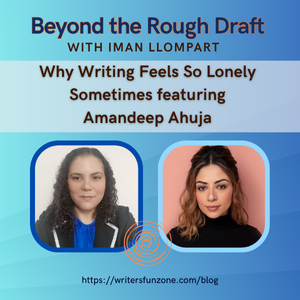 Let’s welcome back Iman Llompart as she shares with us “Facing Fear, Finding Purpose: Beyond the Rough Draft.” Enjoy!
***
Annnd my series, Beyond the Rough Draft, is finally out there in the internet ether, almost five months after I recorded the interview.
In a world overflowing with content, I didn’t see many podcasts or video series made for people like me — writers who want, more than anything, to be recognized for their craft, yet struggle silently with insecurity, doubt, and creative paralysis.
I won’t deny it: I was terrified to release this interview series. But it was the kind of scared that’s mixed with excitement, if that makes sense.
Why I Created Beyond the Rough DraftBeyond the Rough Draft is about the writing struggles that everyone faces, which means a lot to me.
It’s a topic I hold near and dear to my heart and one I’m still personally battling.
I wanted to create a space where we could talk about those struggles openly.
A safe place where writers and authors can connect, be vulnerable, and remind each other that writing isn’t easy.
Nothing creative ever is.
Sometimes, just talking about it with people who get it can reignite your motivation to keep wading through the uncertainty.
The Fear Behind the LaunchOf course, I was scared.
I was scared of how it would be received, scared of the feedback, scared of being seen.
Putting any passion project out there is terrifying, especially when it’s deeply personal.
I’ve always admired creators who make video series, but I never imagined I’d be one of them.
I’m not exactly camera-friendly, and I’ve always preferred to be behind the scenes.
But sometimes circumstances change.
And sometimes, discomfort is exactly what pushes you to grow.
I realized that what I’m doing fills a gap.
It’s something that’s missing from the conversation, so here I am, taking the uncomfortable plunge.
Gratitude for the People Who Believed in MeI have to thank the lovely Amandeep Ahuja, who bravely and enthusiastically became the first guest for an absolute novice host.
Her warm demeanor and kind presence immediately put me at ease.
Thank you, Amandeep, for your faith in me and in this series.
A huge thank you also goes to Beth Barany.
My client, mentor, and the one who gave me the final push to make this happen.
When I first pitched the idea, it was meant for her.
I suggested she start a series about the struggles of creative writing or maybe pass the concept to someone else.
I imagined myself helping behind the scenes, not in front of the camera.
But as soon as I told her about it, she said:
“Great, do it!”
I probably looked like a deer caught in headlights, but now I realize she was right.
I was the best person to host this because I understand the struggle firsthand.
Having these conversations helps me just as much as I hope they help my guests and the people watching.
Authenticity is key.
So thank you, Beth, for believing in an overthinking, camera-shy individual like me, and for partnering with me on Beyond the Rough Draft under your brand.
My Hope for the SeriesMy wish is that people connect with this series, that they see we all struggle, and that they find community and inspiration here.
If you’re stuck, listen in.
If you’re ready to share, be a guest.
And most importantly: finish what you started.
Pick up that half-finished shitty work-in-progress, and finish it anyway.
Or chase that new idea that’s been haunting you because those worlds and characters won’t leave you alone for a reason.
Finding My Way Back to WritingI’m slowly but surely getting back to my manuscript.
The doubt is still there, it always will be but I feel most like my authentic self when I’m writing.
And if Beyond the Rough Draft can help even one person feel that same spark again, then every moment of fear was worth it.
ResourcesSign up to be a guest.
***
About The Author Iman Llompart is a Spanish-American romantasy writer and interviewer based in Dubai. She’s working on her debut novel and hosting Beyond the Rough Draft in collaboration with Writer’s Fun Zone.
Iman’s mission is to create space for honest conversations with writers — the kind that reveal both the doubt and the discipline behind the craft.
Connect with Iman:
The post Facing Fear, Finding Purpose: Beyond the Rough Draft by Iman Llompart appeared first on Writer's Fun Zone.
November 17, 2025
Building Character-Driven Action Adventure Stories with Lawrence Connolly
Building Character-Driven Action Adventure Stories with Lawrence Connolly – How To Write the Future podcast, epsiode 179
***
“Written from the point of view of one character and then another scene from the another character. Now, we would never shift point of view within a scene, but each scene, each segment of the book is from a different point of view.” – Lawrence Connolly
In this How To Write the Future episode, “Building Character-Driven Action Adventure Stories with Lawrence Connolly,” podcast host Beth Barany interviews author Lawrence Connolly, where they explore his upcoming exciting projects, including a feature film with his brother and his new novel. They also dive into using deep POV to create characters that are emotionally compelling to draw a reader into the author’s world and share advice for writers working on film adaptations.
Platforms the podcast is available on: Apple Podcasts | Buzzsprout | Spotify| YouTube
RESOURCESFOR CREATIVE WRITING PROFESSIONALS – BUILD YOUR BUSINESS SERVING WRITERS
Sign up to be notified when our training opens and get a short Creative Business Style Quiz to help you create success.
https://bethbarany.com/apprenticeship/
Support our work for creatives!
Buy me a coffee: https://ko-fi.com/bethbarany
GET HELP WITH YOUR WORLD BUILDING – START HERE
Free World Building Workbook for Fiction Writers: https://writersfunzone.com/blog/world-building-resources/
GET SOME FREE WRITING COACHING LIVE ON THE PODCAST
Sign up for the 30-minute Story Success Clinic with Beth Barany: https://writersfunzone.com/blog/story-success-clinic/
GET SUPPORT FOR YOUR FICTION WRITING BY A NOVELIST AND WRITING TEACHER AND COACH
Schedule an exploratory call here and see if Beth can support you today: https://writersfunzone.com/blog/discovery-call/
About the How To Write the Future podcastThe How To Write The Future podcast is for science fiction and fantasy writers who want to write positive futures and successfully bring those stories out into the marketplace. Hosted by Beth Barany, science fiction novelist and creativity coach for writers. We cover tips for fiction writers.This podcast is for readers too if you’re at all curious about the future of humanity.
This podcast is for you if you have questions like:
– How do I create a believable world for my science fiction story?
– How do I figure out what’s not working if my story feels flat?
– How do I make my story more interesting and alive?
This podcast is for readers, too, if you’re at all curious about the future of humanity.
ABOUT LAWRENCE C. CONNOLLY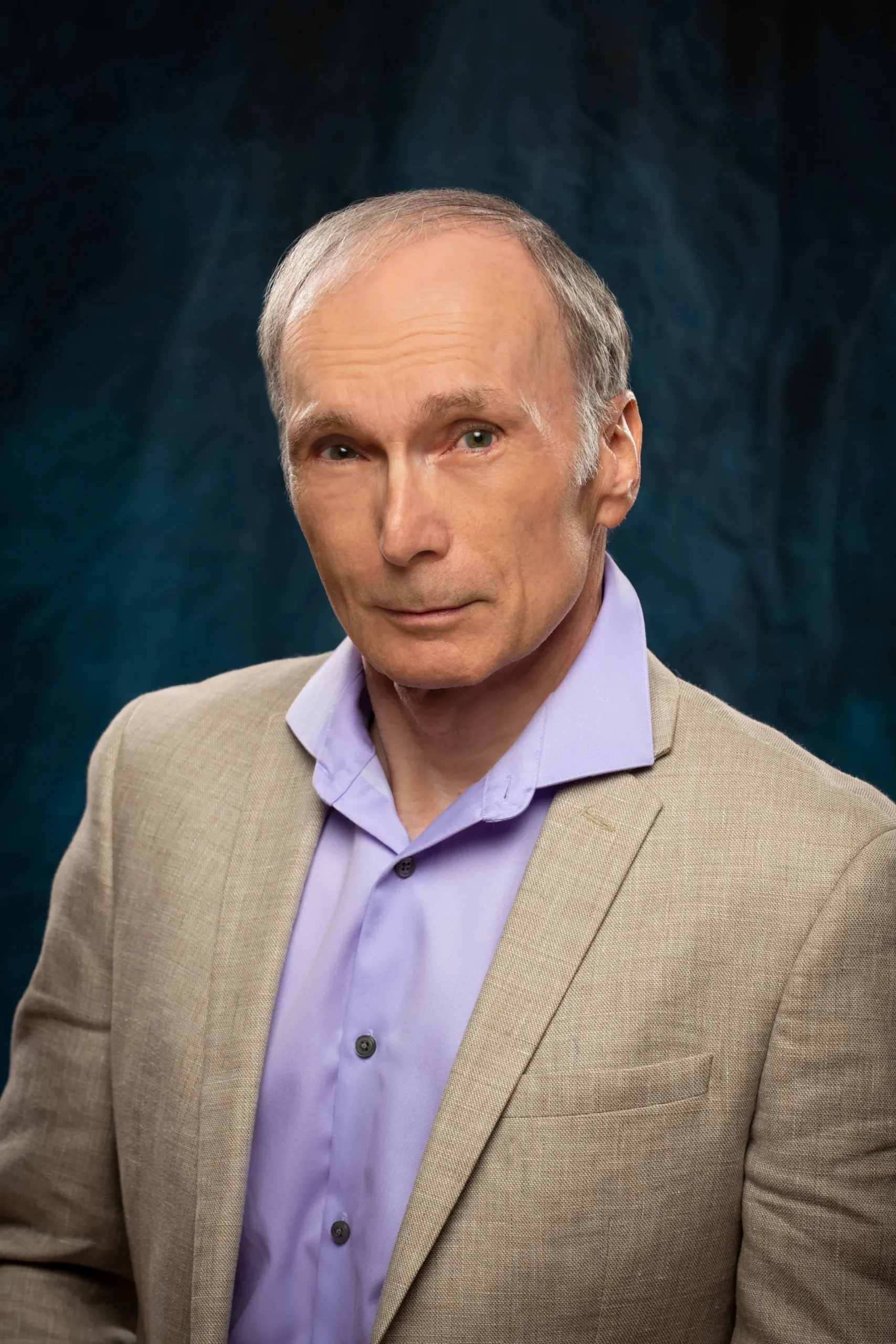 Lawrence C. Connolly’s books include the collections This Way to Egress, whose titular tale of psychological horror was adapted for the Mick Garris film Nightmare Cinema; and the Bram-Stoker-nominated Voices, which features Connolly’s best stories from The Magazine of Fantasy & Science Fiction, Twilight Zone, Year’s Best Horror, and other top magazines and anthologies of science fiction, fantasy, and horror. A third collection, Visions, was praised by Publishers Weekly for featuring an eclectic mix of “entertaining and satisfying” SF. His novels include the eco-thrillers Veins, Vipers, and Vortex. World Fantasy Award winner T. E. D. Klein called Veins “a crime thriller as intense and fast-moving as a Tarantino movie.” This fall, Caezik Science Fiction will release his new novel Minute-Men: Execute & Run, a globetrotting adventure that combines elements of military science fiction, gaming, and medical suspense in a thrilling reinvention of the superhero genre. He is collaborating with brother Christopher Connolly and Academy Award-winning producer Jonathan Sanger to develop a feature film based on Execute & Run. He is also the writer of Mystery Theatre, a podcast produced by Prime Stage Theatre, who premiered his adaptation of Frankenstein in 2022. His newset commission, a play based on the life and works of Edgar Allan Poe, opens in November 2025 at Pittsburgh’s New Hazelett Theatre.
CHRISTOPER CONNOLLY BIO
As a content creator, Christopher developed the Intellectual Property for Minute-Men, an action franchise about commandos with short-lived superpowers. Currently being developed as a feature film, the concept is also the basis for Minute-Men: Execute & Run, a novel written by his brother Lawrence C. Connolly and scheduled for release this fall from Arc Manor Publishing. More at MinuteMenNovel.com. He also began a designing career in the New York fashion industry in the 1980s, and is currently owner/president of Phoenix Design & Print and Thirty Three Design Solutions, companies that have produced work for Fortune 500 companies as well as the world’s top designers and performers, among them: Jeffrey Deitch of Deitch Gallery (NYC), Sotheby’s Auction House, Martha Stewart Living, Edun Fashion / Bono and Ali Hewson, and the Yoko Ono Coffins Exhibit. Also
Website: https://lawrencecconnolly.com/
Facebook: https://www.facebook.com/search/top/?q=lawrence c connolly
Instagram: https://www.instagram.com/lawrence_c_connolly/
Transcript for episode 179 – Building Character-Driven Action Adventure Stories with Lawrence Connolly Introduction and Host BackgroundBETH BARANY: Hi everyone. Welcome to How to Write the Future Podcast. I am your host, Beth Barany, science fiction and fantasy author. Also a creativity coach, editor, and teacher and speaker, and obviously podcaster and filmmaker. I do a lot of creative things. And I host this podcast because I really believe that when we envision what is possible, we help make it so. I love science fiction and fantasy. I write it, and I love interviewing authors who are working in that space because we can learn so much from each other’s visions.
[00:35] Guest Introduction: Lawrence ConnollySo I am very pleased today to welcome in special guest, Lawrence Connolly. I just wanna say welcome Lawrence. So glad that you’re here.
LAWRENCE CONNOLLY: Great to be here, Beth. Thanks for having me.
BETH BARANY: And I was hoping that you could share with everyone a little bit about you, what you do, what you’re up to, and then we’re gonna dive into some fun questions.
LAWRENCE CONNOLLY: All right.
[00:54] Lawrence’s Writing JourneyWell, I got started on this back in the eighties and I started writing for the science fiction magazines and it was an exciting time.
Now, I remember back then that a lot of the established writers were bemoaning the fact that the market was not as good as it used to be, but it was pretty darn good. There were a lot of magazines, a lot of science fiction magazines, and, a young guy starting out could send to the magazines and, if, writing a halfway decent story, get a reply back from some of the editors and those replies that I received from my first batch of stories, they were kinda like my MFA program and that’s how I learned how to write. Within a year I was writing for the magazines. I was writing for Amazing Stories. Rod Sterling Twilight Zone magazine came out and I began writing for them. My stories began getting picked up by Years’s Best Horror and for various Martin Harry Greenberg anthologies.
And then I began getting calls from Hollywood to to option some of those stories. So it was, it was an exciting time. That’s how I got started. And I, I had so much fun doing it. I I’m still doing it today, and not complaining at all. It’s a great life.
BETH BARANY: That’s so wonderful. And you seem to specialize in thriller action, adventure, horror, sci-fi, cop, that kind of thing, action adventure.
Would you say that’s about the half of it?
LAWRENCE CONNOLLY: I say that’s pretty good. You know, I have done some fairly quiet, creepy, weird stories too. I do like those. As a producer, in LA was just telling me recently, what is hot now, the things that are going now, that are being optioned now really are the action adventures whereas a novel, a novel is going to be, is going to need to be translated into another language, but an action adventure film that pretty much plays anywhere.
And so, writing action and adventure novels and stories is a good way to make sure, or to, you may try to make sure that, somebody calls up or, gets in touch with my agent and says, we would like to option this story, this novel. And, so yes, lately I have been doing things that I would consider action and adventure.
And, the new novel that’s coming out certainly falls into that category.
[03:03] Exploring Lawrence’s New NovelBETH BARANY: And actually, we’re here today to highlight your new novel, which, by the time this airs, will probably already be out. So for those watching on YouTube, you’ll be able to see in Lawrence’s background part of the cover.
I was really enjoying that cover. Can you tell us a little bit about this novel that’s coming, and hopefully we’ll be out by the time we go live and yeah, give us the short, pitch on that.
LAWRENCE CONNOLLY: Yeah, sure. It’s titled Minute Men: Execute and Run, and it is about a team of wounded warriors who are from, who were maimed in the most dangerous places on earth.
They were there serving, they were trying to help, but they were maimed in the process and they became forgotten. But they then get a second chance through a biotech firm that offers to rehabilitate them, but inadvertently imbues them with these incredible powers. Now, here’s where we step away from the comic book world and try to get into the science fiction world because in a comic book, Superman can fly and he can, use his x-ray vision and he can do all manner of things and never get tired.
But the human body, if it ever had superpower, it would burn out really quick. And that’s what happens with these guys. That’s why it’s called the Minute Men, because they can’t sustain their powers for much longer than a minute. And that’s the crux of the story, because these people from different walks of life and different parts of the world, they’ve gotta set aside their differences and learn to work together, because when they’re behind enemy lines on a mission and one of them uses his power and then goes down, that person is counting on the others to not only carry on with the mission, but to get him out of there. And I say him, although the Minute Men team is men and women. And so regardless of whether it’s one of the women who are down or one of the men who are down, the others have got to carry through with the mission and protect the ones who are down and get everyone out of Dodge alive.
BETH BARANY: I love the team element that you have here, as well as you’ve got such a great setup for, the team having to work together and then all the problems that can happen because their power’s only a minute long. What a great premise. I love that.
[05:23] Character Development and Deep POVAs you were working on this process or even, it sounds like you’ve got this cutting edge science and technology, and then how do you make sure that the your characters are compelling, emotionally compelling, that the readers can really attach to them and not get lost in the whizzbang tech?
LAWRENCE CONNOLLY: Thank you for that question. I I should go back to the origin of this project, which involves my brother Christopher Connolly and, and Chris is an artist and he was working on this idea for a screenplay or a novel. He’s a writer, but he is not a professional writer, so he communicates through images mostly and, I should probably just preface this by saying there’s one thing that writers often say. There’s often advice that writers give to younger writers, and that is if anybody comes up to you with an idea, says, I’ve got an idea for a story, all you have to do is write it. That’s not really a deal because Beth, we’ve got tons of ideas.
We’ve got more ideas than we’re ever going to write in our lifetime. But my brother was different when he came to me and said he had an idea, he didn’t just have an idea, he had a portfolio of sketches, of character sketches and character profiles, and he laid them all out on the table for me. And there was a pile for, uh, for, for a character named Daniel Hayes and a pile for a character named Christian Chase.
And I looked at all of this and these characters were so fully realized that I said, I want in, I wanna write a story about these guys. And so, your question really does anticipate or does point me to what got me into this project in the beginning, and it wasn’t so much the idea of the one minute superpowers, it was these people won me over these characters that he spread out on the table. And so I took this and I began working on it, and because I always had those piles of sketches in my mind, I determined very early on that this had to be an ensemble piece where we would have a scene written from the point of view of one character and then another scene from the another character.
Now, we would never shift point of view within a scene, but each scene, each segment of the book is from a different point of view, not first person, but very close third person. And so that’s how I like to get the characters in shape to appeal to the reader. I like to put the reader very close to the characters, let the reader hear the character’s voice because these sections are in slightly different voicings, and these sections deal with different points of view, and they see things from different angles and they know different things. So there might be a scientist who really knows the mechanism that has transformed these guys. But there is another person who’s not a scientist, she’s just a young woman. She’s she’s right out of high school and what she knows is what she can see.
And so we get to see the story through her eyes in a very different way. Short answer, make them appealing by putting the reader close.
BETH BARANY: I love that so much. And for anyone listening to the podcast for a while will know I have resources for this. I have two resources I just wanna point out to folks.
I have a whole Plan Your Novel Like A Pro book where I teach people how do you develop your characters, how do you really develop a plot, out of them. And I’m very character centric, like, so I love hearing how you evolved this story starting with your brother’s amazing art.
And then the second resource I wanna offer folks is, is how do you do close third person point of view? And I have an offering that one of the few books I published that isn’t mine called Mastering Deep Point of View, that gives you the tactical way on how you could actually craft wise do that in your fiction.
And I just have to say, I love that you are doing that because I know as a reader, I love that. I love getting deep into the heart of my characters as a reader and also as a writer, but where I get to know what they think and how they feel, their perspective, their take on things, their morality, their, what they really value.
So it sounds like you’re really giving us a story from each of, and it’s four main characters right in your story?
LAWRENCE CONNOLLY: That’s right. And it’s a great opportunity to do something and I, I’m excited about it because, as some of the characters are channeling or processing some of the things that are happening to them, some believe certain things about their powers and how their powers function.
And, so the scientist in the group has a different view of how things work than the person who’s never, you know, studied science. And this gives me the opportunity to really present the science fictional aspects of the story through a number of different points of view, and let the reader kind of experience it and see it and draw their own conclusions as to how things are actually working, because, sometimes a scientist doesn’t fully understand as well as the person who is going through the superhero transformation. So, the very close third person narrations are what drive this story and really, I think, make the science fiction aspect easy to understand without any long lectures, but we just get the chance to see it in process and in function and see how people think about it.
BETH BARANY: You alluded a little bit to this, but the perspective that the team will be having on what they’re going through, it might not always be easy, and there might be some ethics behind it, the right and the wrong of it in your story world.
[10:51] Ethical Dilemmas in FictionSo I was wondering if you could share with us how are you weaving real world ethical dilemmas into this, into the world that you’ve created here for the minute story.
LAWRENCE CONNOLLY: Yeah, they’re, they each have had experience in some of the most dangerous places on Earth. And so we see this novel as taking place in the day after tomorrow.
It’s not our world, but it is a world that has inherited some of the consequences that we are dealing with today. And so we’re talking about writing the future. This is a story that takes some of the things that we know are going on in the world, imagines what they will be like a little bit farther in the future, and then has these characters contending with them.
And so how do I take the things that are happening today and use them to drive the story and Minute Men: Execute and Run? I just extrapolate to the very near future. Try to imagine how things will be then, and then try to portray them as realistically as possible.
BETH BARANY: What are some of the ethical dilemmas that your characters have to deal with that maybe reflect today’s world? When is it okay as soldiers have the mandate to, they can kill, right?
It’s ethically mandated murder essentially, to put a blunt name on it. But, arena of war, there’s another term for that. It’s accepted, it’s acceptable, and and so I don’t know how you’re dealing with that in your story,
LAWRENCE CONNOLLY: This character right here, the character right behind me, the woman who is dominating the picture behind me, that’s Dr. Christian Chase and she is a doctor. She is served with Doctors without Borders.
She does not like using her power on people. And as you can see, her power is quite dramatic, quite violent. And, she also has a problem with using it because you can’t do this. And of course, this is a a graphic rendering of what she does. She has this ability of bioelectric pulse and she can’t use it without hurting herself.
She doesn’t wanna hurt other people, but she also doesn’t wanna hurt herself. And every time she uses it, she scars, she disfigures her face, as a result of this. She will often push back against the other men of the team, the other people in the team and say, I don’t want to do that, I don’t want to use my power for violence. And they might say to her, well, you just don’t want to hurt yourself, that’s all that’s about.
No, it’s not about that. It’s not about me. I will hurt myself to save you guys, but I will not use my power against people. But because things are never that cut and dry, things are never that easy. She finds herself in situations where she does crossover.
You talked about the fog of war, the violence of war. And when she is in the thick of it and her people are in danger and the people coming at them are very dangerous and very bad, she will, she will actually crossover and, and invest in it fully. And then afterwards she will pay that price. She will think about what she has done.
And there is another character who is very young. She’s never been in war. She was a a kickboxer in high school and she knows her power as it was before she was transformed. She doesn’t fully understand it now, and there is one scene where one of the soldiers, one of the, a former Marine, goes in to get her after she has dealt with a situation and realizes she has just killed the people who were coming at her. Now, she thinks she’s disabled them because that’s what she’s used to doing as a kickboxer. But he, and he decides not to tell her. I can’t tell her, this will destroy her if I tell her that she, because when she wakes up, because now she’s down, her power is out. She has to be carried out of the war zone. She re she will maybe not perform the next time so he decides to keep that from her.
So these are dilemmas that we face as people. We are not, we don’t want to be violent. We think of ourselves as, we may think of ourselves as nonviolent, but there are situations that might push us over and we might find ourselves doing things we don’t expect us to do.
And afterward we have to live with this. And this is as much a story about where the characters are coming from before they acquire their powers as it is to where the characters go after they begin using their powers. I hope that was a little more on point.
BETH BARANY: Absolutely. And I really love that. It’s very attractive to have fiction that explores this because we all wonder, and you know, I’ve read my fair share of comics and I am a fan of the superhero stories, you know, well, what would I do if I had that power?
What would I do if I had to live with the consequence of my power that was so destructive? And I think that’s an exploration that fiction is such a great place to explore that in so I’m really excited for your project and I could see how attractive that is and makes me wanna go into that safe place of reading a book that allows me to wrangle with these dilemmas and, oh, would I behave like this person or would I behave like that person?
Yeah, fiction is so great for that.
[16:00] Advice for Writers on Film AdaptationI wanna ask you if you, now moving toward advice for genre fiction writers who who are interested in collaborating with film producers to adapt their work for the screen? I’m very interested in this topic personally, as someone who has done this. I’ve written, I’ve taken my own series, Henrietta The Dragon Slayer.
I wrote a TV pilot. We took a part of that and we filmed it. Then I’ve gone on to write some more. I wanna film it. I wanna make a TV show. So the whole adaptation, working with filmmakers, working with the film industry, and also things are changing dramatically in that industry. I’ve been paying deep attention working with filmmakers.
Anyway, your take on that for writers who are like, oh, what if my book came to screen? How do I make that happen? What advice do you have to writers who are curious about coming into this adaptation space for film?
LAWRENCE CONNOLLY: Yes. Good question. The old adage that you’ve heard that, that I’m sure a lot of our listeners have heard, is that, Hollywood don’t call us, we’ll call you.
And so my advice and the only advice that I can give is the advice that comes from personal experience. And when I started writing, I was just writing very visually and writing in a way that is not like a movie because writing, because fiction is not like a movie. In fiction you might have a scene opens up and it’s close on a pair of boots that are walking in and the boots go up the stairs and then you pull back and you see the people.
You can’t do that in fiction. You don’t do close on boots walking up the stairs. You’re in the character’s head. So there’s that big difference between film and fiction in that we are all about the experience of the person in the story. Whereas in film, it’s really about the experience of the viewer, the person who is watching the movie and watching people go through these things.
But that aside, using the third person limited usually, which is the way I like to write my stories. I try to have the story come alive as visually as possible, and this is just something I did because I liked doing it that way. It seemed right to me and fortuitously it is why I began getting calls early on from people who wanted to produce my work.
I did four stories for amazing stories, and then I did a number for Twilight Zone and about two or three years into the writing life I got a call for one of the stories that was in Twilight Zone. A producer in Hollywood wanted to produce it as a short festival film. And then the next week I get a call from the former editor of Amazing Stories who has teamed up with a production company and they want to option one of my stories that was in amazing stories.
And what happens then is that you sign a deal and it’s nice to get an agent at this point because the agent will really help you work through this. But what you want to do is you want to sign an option agreement. And the option agreement is nothing more than an agreement that for a sum of money that the writer receives, the producer gets to say, I represent this property. And then as a writer, I kind of just sit back, work on the next story, and let the producer call me back and say, Hey, we got some money for a film. or maybe never call back because the thing goes into development limbo. But, once you do begin working with someone, again, I can only speak from personal experience. I’ve had very, very good, good fortune to work with some people that I admire. I worked with Mick Garris, the producer of Showtime’s Masters of Horror. I worked with, uh, David Slade, the Emmy Award winning director of Black Mirror Bander Snatch, and these people, these producers, Mick as the, producer of Nightmare Cinema and David as the director of my segment, because Nightmare Cinema is an anthology film, and so David and I co-wrote one of the segments of that film. These individuals just seem to share my vision. They seem to know where I’m coming from, and so there were never any real speed bumps along the way. Although, I will tell you this and I’ll share this with our listeners so that they will not make this mistake. I didn’t make it, fortunately. I almost did. We were on set for Nightmare Cinema. And I was watching the monitor and I was standing beside Mick and David is in the other room directing and directing the scene.
And I said to Mick, I said, that’s not right. That’s, but I’m not gonna say anything. Okay. I’m gonna trust the vision of the director. And Mick says, you know, that’s a real good idea, so I just keep my mouth. And it turned out it was right. I mean, everything that we put into our stories doesn’t translate to the screen, but sometimes the things that do end up on the screen are just right for the screen. And you have to trust the process. So you have to work with people that you believe in.
And right now I’m working with a couple of guys. I’m working with Jonathan Sanger, who is the Academy Award winning producer. He produced the Elephant Man and Vanilla Sky and Flight of the Navigator, some really terrific films and his producing partner M. Jones.
And last year Jonathan and M. Jones had a film out. A Biopic called Cabrini, which was really terrific and a beautiful, beautiful film. These guys have a great, what shall I say? They have a great range and I’m very excited that working with ’em and, and, and working with ’em so far has been a pleasure.
And, uh, so we are hoping that, um, that this film goes through a development and that we will someday, I hope very soon, have an adaptation, a Minuteman: Execute and Run produced by Jonathan Sanger and M. Jones. That’s what I’m hoping for. So I’ve been very fortunate. I haven’t bumped heads with any producers or any, any directors.
Maybe I haven’t had enough experience in it, but, uh, my advice to the writers is trust the process, trust the producers, trust the directors. Get a good agent, get a good option agreement, and then after the film goes into production, get a good contract. Make sure your agent’s watching out for you.
But, uh, but beyond that, trust these guys that you’ve signed on with because they know their craft.
BETH BARANY: And it sounds like also you were very lucky with having people who really got your story and got your vision. And you know, I’ve heard some horror stories of people who got optioned.
A big example is Michael Connolly. He got optioned, it allowed him to step away from his day job of being a a crime reporter and just be a full-time novelist. But then the projects that came out of it weren’t always exactly to his liking. And then he was able to pair up with the team that he works with now who’ve done Bosch and Ballard on Netflix. I’m just a huge fan. That’s all. That’s why I know these things as I’ve been a fan for a very long time. And he said that it became more collaborative. It became more working with people who really understood him and included him in the process, and that was more of a positive experience for him.
So, and I only know it from the indie side because I’m the writer, director, producer, and I have to say that I allowed my team to give me lots and lots of input. If they had a better idea, I took it. If they could solve a problem and that I didn’t have the answer to, I took it because they have experience in film and I’m over here as the writer and the one kind of wrangling the behind the scenes, and then I got to be in the role of director, which was totally new, totally unexpected, learned a lot. Still wanna understand that role much better, but probably would offload that if I could. Just because there’s so much else going on as the other two hats of of writer producer.
[23:39] Writing the Future: Insights and ConclusionSo as we wrap up today, I wanna end with a question that I like to ask my guests because of our podcast name, which is How to Write the Future.
And I was wondering what it means for you, to to write the future.
LAWRENCE CONNOLLY: Yes. To write the future. I think it’s important to keep in mind that that the future that we write about is the present for our characters. You see, the future is not a place to inhabit, a place to be. It’s a place to live through.
You get through this future, you do things in this future. So this is why, Dystopia don’t does not work because, it doesn’t work for me anyhow. Dystopia is characters living in a place that is, um, it, it’s, it’s done in. It it’s over. We are struggling in this terrible world and, and Utopia, is, we are living in a place that we’d like to be but we, you’ve talked about this before, and this is something that, let’s see, Rupert Reed in 2017 coined this term, Thrutopia, right? And Thrutopia is the future that we live through to get to the Utopia or if we mess up to get to the Dystopia. But more fascinating to read an account of characters struggling to make the world better in a world that is imperfect than to read a story about characters who are living in a perfect world, or characters who are living in a doomed world.
The way I see it as writers, it’s our job not only to write the future with a W but to write it with an R to show how we can get there and make it right. And that’s what, I’m hoping that Minute Men, the Minute Men series of books will do because, um, even though our characters have to go through a lot of stuff to get where they’re going, our plan is that when this series runs its course, they will get there. At least I hope so.
BETH BARANY: I hope so too. Oh, that’s wonderful. I love what you said. And we will be dropping some links in the show notes to our previous episodes about Thrutopia. I interviewed at least two writers, who I met through the course I took on Thrutopia and who are working in that space also as creatives.
So, as we finalized today’s episode, I wanna, uh, invite you to let people know where can they find you? Where can they, uh, learn more about Minute Men and get on your list and be notified of this incredible series that’s dropping?
LAWRENCE CONNOLLY: The best place to go is lawrence c connolly.com.
And that’s, Connolly with, C-O-N-N-O-L-L-Y. There’s not a whole lot of different letters in there. You know, there’s no e in there anywhere. So, Lawrence c connolly.com. you can find, uh, just about everything that you need to know about me there. I am also, I’m a novelist short story writer. I also have, I am a playwright. I have a new play opening this November. I did an adaptation of Frankenstein just a couple of years ago. You can read about those on my website. And, um, not to spread myself too thin, but I’m also a musician and there’s a music tab there. You can go there and listen to some of my music.
So, uh, lawrence c connolly.com is probably the best place. And the next place that people might want to go is, um, con, that’s CON as in Connolly, COM as in communication, COM. Con com entertainment.substack.com because, there, my brother and I have the newsletter for the Minute Men book, and it’s got a lot of cool stuff in it.
This is no run of the mill newsletter. There’s a whole bunch of art that my brother created. We’ve got videos, we’ve got some of my music there. We’ve got interviews, we’ve got really cool stuff there. I hope that our listeners will go check it out, and I hope they’ll check out the book when it comes out October 14th.
BETH BARANY: Absolutely, and we’ll be sure to put a book cover on the screen. And I just wanna say, shout out to your substack. I subscribed. I love it. It was so fun looking at the visuals that you have, and you have wonderful engagement quizzes and opportunities to win things, and it is just fabulous. That’s so wonderful.
Well, thank you so much, Lawrence, for being a guest today on how to write the future. I really love what you’re up to. Your enthusiasm is so vibrant. You have so many helpful things to say to writers and our fellow creatives, so thank you so much for being a guest today.
LAWRENCE CONNOLLY: You’re welcome, Beth. It’s been a pleasure and maybe I’ll see you in LA next year.
BETH BARANY: That would be so fun.
LAWRENCE CONNOLLY: Take care.
BETH BARANY: Alright everyone, take care, Lawrence. That’s it for this week, everyone, write long and prosper.
Loved this episode? Leave us a review and rating here: https://www.buzzsprout.com/2012061Need instructions on how to leave a review? Go here.
***Support our work for creatives: leave a tip: https://ko-fi.com/bethbarany
***
ABOUT BETH BARANY
Beth Barany teaches science fiction and fantasy novelists how to write, edit, and publish their books as a coach, teacher, consultant, and developmental editor. She’s an award-winning fantasy and science fiction novelist and runs the podcast, “How To Write The Future.”
Learn more about Beth Barany at these sites:
Author site / Coaching site / School of Fiction / Writer’s Fun Zone blog
CONNECTContact Beth: https://writersfunzone.com/blog/podcast/#tve-jump-185b4422580
Email: beth@bethbarany.com
LinkedIn:https://www.linkedin.com/in/bethbarany/
IG: https://www.instagram.com/bethbarany/
TT: https://www.tiktok.com/@bethbarany/
FB: https://www.facebook.com/bethbarany
X: https://twitter.com/BethBarany
CREDITSEDITED WITH DESCRIPT: https://www.descript.com?lmref=_w1WCA (Refer-a-Friend link)MUSIC CREDITS : Music from Uppbeat (free for Creators!): https://uppbeat.io/t/soundroll/fuzz-buzz License code: UMMKDRL02DFGKJ0L. “Fuzz buzz” by Soundroll. Commercial license: https://musicvine.com/track/soundroll/fuzz-buzz.DISTRIBUTED BY BUZZSPROUT: https://www.buzzsprout.com/?referrer_id=1994465 (Refer-a-Friend link)SHOW PRODUCTION BY Beth BaranySHOW CO-PRODUCTION + NOTES by Kerry-Ann McDadec 2025 BETH BARANY
For more “How To Write the Future” episodes, go here.
If you’d like to invite Beth onto your podcast, drop her a note here.
Like the work we do? Tip us! https://ko-fi.com/bethbarany
The post Building Character-Driven Action Adventure Stories with Lawrence Connolly appeared first on Writer's Fun Zone.
November 10, 2025
Future Fantasy, Real-World Resilience with Randee Dawn
Future Fantasy, Real-World Resilience with Randee Dawn – How To Write the Future podcast epsiode, 178
***
“I love plot, I love character, and I just feel like the colors are bolder and brighter and there’s more to work with when I’m writing about science fiction and fantasy.” – Randee Dawn
In this How To Write the Future episode, “Future Fantasy, Real-World Resilience with Randee Dawn,” podcast host Beth Barany interviews Brooklyn-based author and veteran entertainment journalist Randee Dawn, where Randee shares how her love of “new journalism” started and they discuss how to portray monsters in their novels that leave their readers guessing whether they’re good or evil, how to craft stories with emotional resonance, and the power of a writing community.
Platforms the podcast is available on: Apple Podcasts | Buzzsprout | Spotify| YouTube
RESOURCES
RELATED EPISODE: Monsters and Humanity in Fiction with Surekha Davies https://www.buzzsprout.com/2012061/episodes/18046744-177-monsters-and-humanity-in-fiction-with-surekha-davies
FOR CREATIVE WRITING PROFESSIONALS – BUILD YOUR BUSINESS SERVING WRITERS
Sign up to be notified when our training opens and get a short Creative Business Style Quiz to help you create success.
https://bethbarany.com/apprenticeship/
Support our work for creatives!
Buy me a coffee: https://ko-fi.com/bethbarany
GET HELP WITH YOUR WORLD BUILDING – START HERE
Free World Building Workbook for Fiction Writers: https://writersfunzone.com/blog/world-building-resources/
GET SOME FREE WRITING COACHING LIVE ON THE PODCAST
Sign up for the 30-minute Story Success Clinic with Beth Barany: https://writersfunzone.com/blog/story-success-clinic/
GET SUPPORT FOR YOUR FICTION WRITING BY A NOVELIST AND WRITING TEACHER AND COACH
Schedule an exploratory call here and see if Beth can support you today: https://writersfunzone.com/blog/discovery-call/
About the How To Write the Future podcastThe How To Write The Future podcast is for science fiction and fantasy writers who want to write positive futures and successfully bring those stories out into the marketplace. Hosted by Beth Barany, science fiction novelist and creativity coach for writers. We cover tips for fiction writers.This podcast is for readers too if you’re at all curious about the future of humanity.
This podcast is for you if you have questions like:
– How do I create a believable world for my science fiction story?
– How do I figure out what’s not working if my story feels flat?
– How do I make my story more interesting and alive?
This podcast is for readers, too, if you’re at all curious about the future of humanity.
ABOUT RANDEE DAWNRandee Dawn is a Brooklyn-based author and veteran entertainment journalist. In 2025, she has two dark rock n’ roll fantasies being published through Arc Manor/Caezik: The Only Song Worth Singing (April), and Leave No Trace (September).
Her first novel, a “funny as hell” pop culture contemporary fantasy, Tune In Tomorrow, was published by Solaris/Rebellion in 2022. A new – and presumably also “funny as hell” novel in the Tune-iverse, We Interrupt this Program, will be published in March 2026 by Solaris Nova.
Her short fiction runs the gamut in the speculative genres – fantasy, science-fiction, and horror. Her shorts have been published in multiple anthologies, and she published a short story and poetry collection called Home for the Holidays in 2012.
A novella featuring a character from The Only Song Worth Singing, called “Rough Beast, Slouching,” was published in Soul Scream Antholozine Vol. 1 in 2023. Two short stories based on characters in Leave No Trace have been published in separate anthologies: “Can’t Find My Way Home” in 2017’s Children of a Different Sky; and “The Way is Clear” in 2021’s Another World: Stories of Portal Fantasy.
Meanwhile, she pays the bills with features, interviews and lifestyle stories for publications including Today.com, NBCNews.com, Variety, The Los Angeles Times and Emmy Magazine. She’s also written for Soap Opera Digest and The Boston Phoenix, E! Online, New Musical Express and Mojo.
Randee co-edited of The Law & Order: SVU Unofficial Companion; co-edited the anthology Across the Universe: Tales of Alternative Beatles, and teaches an online class through Creative Coaching Partners called How to Be Interviewed.
Born in Virginia, raised in Maryland, she’s now based in Brooklyn with her spouse and never enough mangoes.
Website: https://randeedawn.com/
Facebook Page: https://www.facebook.com/AuthorRandeeDawn
Instagram: https://www.instagram.com/randeedawn/
LinkedIn: https://www.linkedin.com/in/randeedawn/
TikTok: https://www.tiktok.com/@randee.dawn
Transcript for 178 – Future Fantasy, Real-World Resilience with Randee Dawn Introduction and Host’s BackgroundBETH BARANY: Hi everyone. Welcome to How To Write the Future Podcast. I’m your host, Beth Barany. I am an award-winning science fiction and fantasy author and a creativity coach, editor, podcaster, obviously, and filmmaker. And I love interviewing people about their take on how we can write the future. Because I believe with our creativity as creative writers and creatives in the world and creative thinkers, we can actually reshape what does it mean to be human?
We can revision. That’s fiction is great for that. So I’m really excited to bring in a guest today.
[00:35] Guest Introduction: Randee DawnRandee Dawn. Welcome, Randee. So glad that you’re here.
RANDEE DAWN: Thank you so much for having me. I’m delighted to be here.
BETH BARANY: If you could tell us a little bit about who you are and then we will dive into the questions.
RANDEE DAWN: Yeah, no problem. So I am an entertainment journalist, uh, but I’m also an author obviously. I write for outlets like Variety in the LA Times and the Today Show website. But I now have three books out with the fourth one coming out in March, and my most recent book is called Leave No Trace. Which is a blend, it’s mostly fantasy, but it does blend sort of a futuristic sci-fi because we have a war going on between humans and Fae, and that sort of precipitated needing to come up with something that’s a little more, you know, up to date than just say, you know, sticks or, or spheres or magic or something like that.
So yeah, that’s, that’s where these two have blend and that’s it’s, that one is out September 23rd, which I imagine will be out by the time this podcast airs. And that is my most recent book.
BETH BARANY: Yes.
[01:32] Balancing Journalism and Fiction WritingAnd I, I see that you are, into today’s media, but then also writing material that, you know, science fiction and fantasy, and, I’m curious because I almost took a journalism route. I mean, I did do some journalism before I dug into fiction. What is it about fiction writing that really calls to you and now I’m kind of have my coaching and editor hat on because I think it’s so interesting, like you have one foot in the daily world with entertainment, but then here you need to have it, it looks like an outlet for your imagination.
But deeper than that. I’m curious, what drives you to to also write fiction in addition to being a an entertainment journalist?
RANDEE DAWN: So for me, um, fiction was really always the goal. Like journalism was the how I’m going to actually get paid for this thing, because I think even when I got started early on, I was like, I knew that fiction was not super remunerative.
And as I’ve got into it, I realized that even more deeply. But, I wanted to write and I wanted to get paid to write. I really love disappearing into worlds and creating worlds. And one of the neat things that I like to do with journalism when I had the opportunity, which doesn’t always present itself, is I love the long form interview. So with journalism they, you would occasionally get a cover story or you get to do a profile, and I’m super nosy and I love asking people all sorts of, you know, questions. And then when you have several thousand words to fashion a profile, which I’ve had a couple of times in my life, it’s not that you’re making up fiction about them, but you’re sort of putting a fictionalized narrative into reality. Um, when this first came out in the sixties, I believe it was called New Journalism, and there were authors like Gay Tellis who were really pioneering this narrative. And that was always really very interesting to me to really get to know people and then, look for the metaphors that presented themselves and the interesting ways to shape their life into something that felt almost like a story, but not with, but without making up anything. Like you wanted to make sure that, that it actually was really accurate and showed who they were. So that was always something I really loved, but I had been writing fiction for many, many years before that and eventually got published. It just took a long time to get published as an author.
BETH BARANY: That’s so interesting. And, and I mean, I was similar in that I always wanted to do fiction, but journalism was kind of like the, an easier way, easier entry point. Yeah. And also just, I wanna plug to writers listening to us that sometimes journalism is a easier entry point to writing, so take those opportunities if they’re in front of you. Uh, and keep writing fiction on the side.
[04:11] Exploring Themes in Speculative FictionSo moving into the themes of today. Can you talk to us a little bit about how you see science fiction and all speculative fiction, which includes fantasy and all kinds of variations, how it can really help us explore human resilience? And I, I take it that’s one of your themes, in your work.
RANDEE DAWN: You know, I think a lot of fiction can explore human resilience. I feel like with genre fiction, specifically science fiction, fantasy, I do occasionally even write a little bit of horror. It just gives me a wider palette to work with. I am not personally a big fan of just straight up literary fiction.
I love plot, I love character, and I just feel like the colors are bolder and brighter and there’s more to work with when I’m writing about science fiction and fantasy. And then in terms of just being able to explore the potential that people have, I love being able to pair them with- they’re like humans, but they’re not humans, so a lot of my stories are contemporary fantasy in which humans are living or existing alongside, ma magical or mythical creatures. And that, that fires my imagination so that I can think about what would it be like if you were immortal? What would it be like if you were a human who had become immortal or you were dealing with an immortal creature?
How they’re gonna see the world different than you are? And that really gets me going in terms of thinking of just how we approach the world, how we go into the future, how we think about, what humanity, I think the thing is that I’m trying to sort of make this up on the fly, but basically I don’t, I don’t think about this necessarily like word for word. But I, I think that you know, sometimes we work better by looking into a mirror and seeing something that is very familiar. And sometimes we work better by looking into sort of a distorted mirror and seeing things in there that reflect back to us. So I think that when I’m writing about the things that make me passionate in the first place, and then also when they are sort of invented creatures, I get a lot more out of it in terms of how I wanna approach the world and how I can see the world and what the, what the op, what the options are that are out there.
BETH BARANY: Yeah. I really love what you just said about the, you can look at yourself or reflection of yourself, or you can look at a distorted mirror, which, you know, in your case could, is your mythological magical creatures, and, and I too, I write about monsters, I write about, uh, I also write about Evil, ’cause I’m, I also have a science fiction mystery series, but when I’m working on my fantasy, I’m, I have monsters. And when I’m working, I also have a romantic paranormal, romantic suspense series I’m working on. And there it is monstrous behavior, but it’s also for like this, my humans are becoming God-like, or have the potential to be God-like.
And my villain wants to be like God essentially. And so he wants to exploit their power. So, um, and then I’m dealing with time travel, which is always such a big thing.
RANDEE DAWN: Yeah, definitely. I mean, I think the other thing too is that we, you mentioned monsters for example, right? So that actually comes up in multiple books that I’ve in that I’ve written because the definition of monster.
What does that actually mean? And when we’re looking at the reflection, we can see the monstrous inside ourselves, not just the ones that we might be encountering along the way. And maybe the creature that is external to us is not the monster at all and is just been defined that way. And I, I love exploring that the we the things we think our monstrous may not actually be.
BETH BARANY: I’m with you on that. I’m very much wanting to explore that in a in my Henrietta, the Dragon Slayer TV show material that I eventually wanna create. Coming back to this notion of human resilience, I was wondering if you could touch a little bit more on that in terms of, is that a theme that you are focused on, that you care about? Are you thinking about, and more specifically, is it like, how will humans survive the next decade, fifty years? A hundred years? Like how do you think of human resilience?
RANDEE DAWN: Uh, well, I think in my books in general, I like to have them sort of present tensey, but I also like writing about people who overcome not just the obstacles that are external, but the obstacles that they create for themselves.
Because we are are the ones who hold up our own, um, our, you know, our own progression in a lot of ways. I actually have a a magnet right over here on the, on the thing which says, get out of your own way. So we can sometimes be the obstacles that prevent us from getting to the next step. And so I love writing characters who find creative ways to be resilient to what comes up against them, and then also to not maybe think outside the box in terms of how they’re going to solve whatever problems they have.
With Leave No Trace I do have an unpublished manuscript that’s sort of near futurey, but Leave No Trace is really the first thing I’ve published that’s kind of near futurey. I wanted to imagine an idea that if you picture that there’s a veil between worlds, between the Fae world and the human world, but what happens if that starts to disappear and we don’t know the reasons, for example. This is all, this is kind of background to the book and you have magical creatures streaming over, well, I think it, it’s a very, it’s a fairly easy metaphor to look at. What happens when people who don’t live in one place try to get to another place? what, how humans react. And they’re like, no, don’t, don’t come here, you can’t, you don’t belong here.
So that’s where this Fae versus human world comes from and it’s, uh, that’s why I wanted to put a little bit in the future to see what that would be like when the two go up against each other. Because in theory, you know, humans don’t have magic so how do you actually fight a Fae, right? Well in, if there’s, if it is necessary to do so, you are gonna create new weapons. So I started thinking about new weapons and how those might affect a Fae or affect somebody who carries magic. And that just took me into this near future where people are afraid of strange things, which is not all that futuristic. We’re always afraid of strange things and then how we deal with them. And in the course of writing this book the, the real world situation that we live in has be, has mirrored it a lot more than I intended necessarily, but I like this idea of what happens if people who aren’t, who haven’t traditionally been here, or creatures who haven’t been here now are here, how do we cope with that?
How do we live alongside them? How do you accept, accept the things that they are different about, you know, the things that they may need that we don’t need or we do need? That’s, and when we talk about resilience, I think that can be one of those things that you then consider that you have to be resilient about.
You don’t have to, I always think of resilience as something that you bounce off of or you overcome. But I think that resilience can also be just how you stretch your own borders mentally, literally to accept the new and the different, and taking this a little bit into the future and examining how that might work was really interesting to me.
Uh, Leave No Trace is a standalone book, but I do have an idea for another one in the series in which we go past where the war is over and maybe the Fae worlds have completely uh, uh, you know, ceased to exist. But we’ve managed to change our own civilization while trying to fight them off to the extent that we’ve actually dialed ourselves back in time in a way, not literally like your time travel book, but more like we are now a different sort of society than we had been. So that’s a book that I would like to write and I haven’t, I, I don’t have time at the moment, but we’ll see how Leave No Trace does. And then I, I do see there to be more in the story if possible.
BETH BARANY: I love that, uh, and what you were saying about the borders and just, you know, stretching who we think we can be. I really love that.
[11:46] Crafting Stories with Emotional ResonanceSo in terms of craft, how have some, where are some of the challenges that you’ve had in crafting a your story Leave No Trace and while keeping the story grounded, in emotion?
RANDEE DAWN: The, the Leave No Trace is its own, is its own huge story. Just because I’ve been writing a version of this story since like middle school. I had this idea of a young woman whose father takes her off the grid and because he’s scared about the real world and they go and they live in the forest and she grows up in the forest. And there was always this sort of bigger than life bear that was in the forest, that in some way, uh, was was both a threat but also a comfort. And those are kind of the only elements that have still remained right?
But, so it’s, that was one of the, coming up with the actual story that I wanted to tell, and then being being comfortable enough with showing it to people. That was some of the biggest obstacles for me because I, one of the reasons, I mean, maybe I just wasn’t really good enough and that’s, I accept that, but for many, many years I just was afraid to show anybody my work.
So that whole phrase, get outta your own way, I was totally in my own way for many, many years because I didn’t understand how this process was supposed to work as an author. So getting Leave No Trace to this point, that was like the biggest obstacle. And then when I sat down and I was finally showing it to people and getting reactions and seeing what worked and what didn’t work, it was about then finding a new way to, to tell the story I wanted to tell that I’d been trying to tell for so many years, but also incorporate the changes that needed to be made.
And my friend LJ, who is also an author, actually her quote is on the front of the book. She came over at one point and we sat down and did like a a writer’s brainstorming weekend because there was the middle part of the book, which is usually the hardest part of the book. The beginning and the ending got ’em. Middle part of the book is the hardest part where you gotta start joining stuff together, and there was some parts of it that simply weren’t gelling and I had to rethink. It was kind of like when you have all the furniture in your house, but you have to find the right place to put everything. And it was like, okay, I know I want the cave to be important, but it’s not working as it is, so let’s move it over here into this corner and let’s use it in a different way, let’s turn it into a portal in the back or something like that.
So that was one of the other big challenges was just finding a way to put all the furniture in the right place. And I went in places that I honestly had never gone before and surprised me completely. But I think that’s what happens when you, when you poke the muse in your head enough to say, all right, you gotta gimme something better, we gotta, we gotta amp this up. Don’t just, don’t just hand me stuff you maybe have seen structured some way before, or told some way before. Let’s work with what we had to tell a different kind of stories. So those were kind of the big obstacles for me.
BETH BARANY: I really love that because you’re, you’re demonstrating through your story, something I’ve seen time and time again with other writers, myself included, where the story is calling to you and you need to do something more than just the norm.
And it, and I think this is where creativity lies. This is where our our work as as creative writers. And I love that, that you had a writer’s weekend and I think every writer needs to have their buddies to help them do this, right? Uh, and that’s why I I do what I do too as a writing teacher and a creativity coach, like we all work in community to actually make our work better.
It’s after a while the there’s a limit to what we can conceive of, but when people challenge our ideas and then we can start to stretch. So that’s that’s wonderful. That’s a great example of resilience right there.
[15:14] The Power of Community in WritingRANDEE DAWN: One of the things that I find also shows up in the work, but is also real in real life, is the sheer energy that you get from being around other people. You know, for me, one of the great things about a writer’s weekend is that you’re just sitting, sitting there and both doing the work in parallel. It’s like parallel play that kids have. There’s just an energy that is created when everybody is focusing, even if it’s only on their own task.
And I love the idea that the group is stronger than the individual. I mean, individuals bring specialized things to the group, but you can accomplish so much more when you have this group. There’s another book that I wrote that came out in April called The Only Song Worth Singing, and I, that there’s very much the sort of power of friendship as human magic, um, that comes up in it.
And so I, I, I very much believe about that. That exists and that we have to trust in it to make ourselves greater. Um, there’s plenty of stories about invent inventors who went into their garage and came out with whatever new doodad was important, but I don’t think anybody really does any of this all by themselves.
BETH BARANY: I am so with you on that, and I, I got chills when I heard you say that about how friendship is its own magic. I I think that’s so powerful. I wrote that kind of story I didn’t even realize in my Henrietta, the Dragon Slayer book one, and, and then the whole series builds on that, which is that friendship.
And actually it was a reviewer who said, wow, your, about how important friendship is and more important than she, she realized. So I just love that. And I think that’s a big part of resilience as well, is being able to, um, join together in community and allow each other to influence each other. Uh, because actually conversation like this on a podcast and any conversation, we’re actually co-creating something and it’s beautiful and it’s greater than than us, and it’s also unknown. We’re walking into the unknown, which I think is a big important part of being resilient. I noticed that I, I think this is a beautiful theme because I’ve been, I’m about to embark in a new adventure, a training creative writing professionals, helping other creative writers.
It’s something I’ve been wanting to do for a really long time, and I notice as you enter into business, any kind of business, you need to become more and more comfortable with the fact that you don’t know.
As we embark on a new book, uh, any kind of entrepreneurial endeavor, we need to be comfortable with, the unknown.
[17:29] Emotional Resonance of the CharactersI wanted to circle back to, how you, as an author make sure, I mean, you’re talking about how making sure your plot is working, but how do you also make sure that the emotional resonance of the story of the characters in their journey, that it’s alive. That it’s there on the page and it’s, you know, it’s not all just world building and and plot.
How do you do that for yourself?
RANDEE DAWN: You know, it’s, this is one of those things that I don’t have like a, um, a part what, like a number one, number two, number three, like the. It just kind of, this is where we enter the, the woowoo area of writing for me at least, because I know there e everybody sees or feels their story that they’re writing differently.
I’ve got the movie going on in my head. I’m that kind of person. So I’m sort of describing what I’m seeing and as I’m reading it, I things just kind of, they, they flow naturally together and then when they stop flowing naturally together, that’s when I have to stop and pause and take back, take a step back and think about, okay, did I go off in the wrong direction?
You know, am I trying to force the story at this point? And the the book that I’m working on right now, which, um, you know, might be out in another year or so. I’ve had this one section where it’s like, I know where I want her to go and I know how I want her to feel when she gets there, but I’ve been stumbling over the process of how to get there.
So in terms of making this all fold together,I don’t really know how it works except, so sometimes you have to do it over and over and over again, and sometimes you have to take a few minutes back, and think about a different way of approaching it. And I’m very much a person who I’ll lie back in bed at night before I go to sleep, and I’ll think about, you know, what can I do with these characters? What am I not thinking about? Can I bring somebody into the room who hadn’t, I hadn’t thought to and even include in this scene yet? You know, how do you open it up for yourself? So, I don’t know if that’s exactly what you are hoping for, but, that, that’s what works for me.
BETH BARANY: Yeah. Well, I’m really just wanting to hear your own process there.
You know, there is no one right way, in my opinion, to write a book. And the fact that you are willing to try it again and again and again, I think is just so wonderful. It opens up a lot of possibilities. You’re letting your, you’re letting, on the one hand, it sounds like you’re really trusting yourself.
You’re like, it’s not quite right, and you’re acknowledging that. And then on the other hand, you’re like, let me figure out maybe this, maybe that, maybe this, maybe that, and maybe you do rewrite the scene multiple times. And I think that’s a great demonstration. I mean, you’re a working writer, you’ve got your journalism.
I also wanna share to our listeners, like, this is what writing is. Writing is actually rewriting, right? That famous saying, someone said writing is rewriting. And if you’re willing to continue to rewrite your work until you hit that, until you know, the scene is wonderful. And, and I kind of say it sings, right? It’s like harmonious. Everything comes together. The rhythm. Yeah. Oh right. So it’s that willingness, that willingness to allow the process to unfold and not to, not to turn away, not to think that it, it doesn’t mean that you’re not a writer. It just means you haven’t figured it out yet. And so you’re just demonstrating through your own story how you’ve, how you sit with your process.
And I just think that’s a beautiful thing.
RANDEE DAWN: And there’s all sorts of other ways to that. There’s writing and then there’s writing, right? Like I actually was at a, a conference, uh, over the weekend and at some point we were doing these, these flash five minute quick reads to, writes to a prompt.
And somebody in the, in the audience said, I don’t think I can write like that. Like, I don’t think you can just gimme a prompt and I’ll just start writing on the page. And I, and I spoke up and I said, look, writing is sometimes just staring out the window and thinking about the story. So if that’s all you can do in the five minute period, that’s writing too.
And like you said, sometimes it’s rewriting, sometimes it’s pre-writing, sometimes it’s just getting the, they’re getting the pieces together in your head. So it’s all part of writing. And I think that’s something people who don’t do it regularly, maybe don’t think that it is, that don’t understand that that’s what it is. I think they think that you have a story and you just start writing and then you finish and you do spell check and then it’s done. Like that’s, that’s barely the beginning at that point.
BETH BARANY: Totally, totally. And, and this is something I noticed, beginning writers don’t quite realize how much rewriting goes into the work and how much noodling, daydreaming, thinking about it when you’re falling asleep, thinking, talking it over with buddies or other writers.
I have gotten my biggest, some of my biggest story insights, talking to perfect strangers. One time it was, it was at a writer’s conference. Other times it’s been with people who aren’t writers, but hear me describe the story, and then they’ll say, oh, but I’m not quite sure how to handle X, Y, and Z. And they’ll, they’ll say something ‘ cause they’re far away, you know, they’re on far on the outside and it opens something up for me.
Maybe they said something I use directly, but often it’s something, two or three steps removed, that opens it up. And that kind of comes back to like bringing other people’s eyes and attention onto our work that allows it to be something we couldn’t do by ourselves.
RANDEE DAWN: Totally agree with that. Totally agree with that.
I mean, it’s just about flipping things around and hearing other people’s take some things. You might describe something and you think you’re being totally clear and then they, they mirror it back to you and it’s like, no, it’s not what I said. But I like that. I could take that.
BETH BARANY: Can I take that? Yeah, absolutely.
[22:30] Behind the Scenes of ‘Leave No Trace’So as we wrap up today, I was wondering if you had any behind the scenes insights from creating your book Leave No Trace and how it reflects the possible futures that we might face.
RANDEE DAWN: Like I was saying before, it’s a near future thing. So you start thinking about the world all the way through, and I have little bits and pieces of technology that I talked about. Some of our characters are these musicians who are trying to escape the paparazzi, but I wanted to describe what it might be like to be a famous person in basically a surveillance state. Because I had this idea that you could have integrated contact lenses where you might be able to film, and you don’t even have to move from where you’re sitting. Uh, you don’t even have to show that there’s a camera going.
So I started to think of how that might, how our world might look like in this near future. And it’s not just about how do we create a new weapon that would take down, take down, magical creatures or something like that. It’s about imagining the whole world being a few steps along from where it is now.
And by doing that, you actually can look at your own world and see, okay, how would, how, how can this be different? How might this change? How can I be involved in supporting something that is actually making that change? So by by writing something that’s near future or even far future. It starts to fire up your imagination for the world that you’re living in, which I think is a really fun experience.
BETH BARANY: Yeah, that is so wonderful. And I know that a lot of futurists, and foresight practitioners do that. It’s such a great exercise, and I think any writer who’s writing about the future, the near future, the far future. And what could be, we are in an exercise, uh, just like those foresight prac practitioners, we’re just like putting a whole story behind it, uh, and, and really detailing one possibility.
So I have one final question I like to throw at people, which is, what does it mean for you how to write the future?
RANDEE DAWN: I think it’s a great privilege. You know, what does it mean for me to write the future? Like I, I’m sort of assuming that I’m allowed to, you know, it, it doesn’t feel like something that somebody has to show up to you and say, now you get to do it. I just sort of decided that this is what I wanted to do and I just wrote the story that it needed to be.
I think that there’s not necessarily a lot of overlap between fantasy and, and sci-fi futures because we we often put fantasy into the past. Uh, it always has to be surrounded by castles and quests and knights and things. But one of the things I love about writing contemporary fantasy is that you don’t have to even write it when it says contemporary, it can be future fantasy, right? It, there’s a lot of sci-fi that actually is fantasy and even if sci-fi people don’t wanna hear that. So, uh, I, it just, it’s just a privilege for me and it, it has helped me open my mind in a lot of ways and just see stories in, in, in a whole new way. And I’m, like I say, I have a, I have a manuscript that’s sort of near a little bit further than this one, but a sort of a, an advanced future that I would love to get my hands back on again because it’s just a lot of fun to, to picture things that way.
BETH BARANY: Oh, that’s so wonderful.
[25:28] Final Thoughts and How to ConnectAnd, how can people find you, find your books and get their hands on on your wonderful fiction?
RANDEE DAWN: So the best place is to go to my website, which is randee dawn.com. It’s Randee with two E’s. So just be prepared for that. So randee dawn.com.
Pretty much everything is on there, but I’m also all over the social medias as either you know, Randee or author Randee Dawn or Randee Dawn. So that’s where you can find me. I, I got in early, so I have some really good handles.
BETH BARANY: That’s great. That’s so great. Randee, thank you so much for taking the time out of your busy creative schedule and talking to us at How to Write the Future. I really appreciate it.
RANDEE DAWN: It’s my pleasure. Thank you so much for having me.
BETH BARANY: Alright everyone, that’s it for this week. Write long and prosper.
RANDEE DAWN: And that’s a wrap.
BETH BARANY: That’s right. Thank you.
Loved this episode? Leave us a review and rating here: https://www.buzzsprout.com/2012061Need instructions on how to leave a review? Go here.
***Support our work for creatives: leave a tip: https://ko-fi.com/bethbarany
***
ABOUT BETH BARANY
Beth Barany teaches science fiction and fantasy novelists how to write, edit, and publish their books as a coach, teacher, consultant, and developmental editor. She’s an award-winning fantasy and science fiction novelist and runs the podcast, “How To Write The Future.”
Learn more about Beth Barany at these sites:
Author site / Coaching site / School of Fiction / Writer’s Fun Zone blog
CONNECT
Contact Beth: https://writersfunzone.com/blog/podcast/#tve-jump-185b4422580
Email: beth@bethbarany.com
LinkedIn:https://www.linkedin.com/in/bethbarany/
IG: https://www.instagram.com/bethbarany/
TT: https://www.tiktok.com/@bethbarany/
FB: https://www.facebook.com/bethbarany
X: https://twitter.com/BethBarany
CREDITSEDITED WITH DESCRIPT: https://www.descript.com?lmref=_w1WCA (Refer-a-Friend link)MUSIC CREDITS : Music from Uppbeat (free for Creators!): https://uppbeat.io/t/soundroll/fuzz-buzz License code: UMMKDRL02DFGKJ0L. “Fuzz buzz” by Soundroll. Commercial license: https://musicvine.com/track/soundroll/fuzz-buzz.DISTRIBUTED BY BUZZSPROUT: https://www.buzzsprout.com/?referrer_id=1994465 (Refer-a-Friend link)SHOW PRODUCTION BY Beth BaranySHOW CO-PRODUCTION + NOTES by Kerry-Ann McDade2025 BETH BARANY
For more “How To Write the Future” episodes, go here.
If you’d like to invite Beth onto your podcast, drop her a note here.
Like the work we do? Tip us! https://ko-fi.com/bethbarany
The post Future Fantasy, Real-World Resilience with Randee Dawn appeared first on Writer's Fun Zone.
November 7, 2025
To Take Up Space: Start Small by Catharine Bramkamp
 Let’s welcome back monthly columnist Catharine Bramkamp as she shares with us “To Take Up Space: Start Small.” Enjoy!
***
Forgotten Women in Art HistoryJennifer Higgie in her book The Other Side, chronicles female artists who created visual works based on their spiritual experiences and beliefs, the most notably (and explosively) Hilma af Klint.
Who?
What?
When we recall art movements like — in this case — the Surrealists and Futurists, we think of Dali, Kandisky, Duchamp.
Since it was never brought up, we don’t notice the absence of women artists on these lists.
Surely some woman was painting in the early 20th century?
And they were.
Erased from the CanvasBut while these artists were painting, channeling, and expressing the inexplicable, their male counterparts were busy erasing the evidence of their work and contributions.
Both the boy’s clubs of Surrealists and Futurists flat out banned women from membership.
Even if the women artists were talented, maybe especially if they were talented, the men did not want to hear about it.
And example sited by Higgie tells the story of Janet Sobel, an untrained, 50 year old housewife who, later in life, started to paint, and paint well.
Peggy Guggenheim called Sobel “the best woman painter by far in America.”
Guggenheim championed Sobel’s work, hanging the paintings in Guggenheim’s New York gallery.
An established painter, Jackson Pollack was impressed (gobsmacked, but I wasn’t there) by Sobel’s The Milky Way.
Her painting inspired his subsequent work of action painting.
And while Pollock happily attributed Sobel’s influence, the boy’s club wasn’t having it.
Subsequent male reviewers and biographers of Pollock eliminated Sobel from the conversation, denying that Pollock could have been influenced by a mere woman who wasn’t even famous, and they should know.
Sobel herself said, “It is not easy to paint. It is very strenuous, but it’s something you’ve got to do if you have the urge.”
And that’s what she spent the second half of her life doing.
Creating Beyond the Gallery SystemArtists like Pamela Colman Smith (the, up until now, unacknowledged illustrator of the Waite Tarot deck), Sobel and even af Klint refused to play the dodge ball game of art gallery promotion.
Mostly because the game took up so much time, is soul sucking and even when you win, the upkeep is painful.
For these women the point of art is celebration and exploration — expressing their spiritual connection with the universe.
As for the art gallery game, often these artists created works that thematically and literally did not fit in the available galleries.
Hilma af Klint’s work looks reasonably sized in a printed monograph, but in real life, her canvases are enormous.
She did not sell her work, and because of the size and because the works were based on spiritual visions (which by the way, did not limit the sale of male spiritually influenced work) at the time of her death, she was completely unknown.
Now we have the af Klint reproductions, the printed scarf, umbrella and mug.
Rejecting the Inner CircleSo as an artist, or poet or a musician, if you want to be a member of the inner group, you must be a de facto member of the club.
And some of us are too old to mess with that, or even take it very seriously (me).
And some of us don’t want to join a club that would accept us as a member, like Agnes Pelton who moved to the desert to paint (like O’Keefe) because she was extremely uninterested in the trappings of fame or wealth.
You are here to create, not sell, not promote (feel you).
But if you do want to grow larger, blow the roof off with your art, how can you get out into the world?
Starting Small and Growing Your ArtLet’s say you are a painter (since that’s the example we began with), and you want to increase your artistic foot print.
Ask a friend to “buy” your work.
Maybe for ten dollars (easy) or for a glass of wine (more expensive but worth it.)
That friend hangs your painting, appreciates it, and when one of THEIR friends sees the work, your friend promotes you and your work.
This promotion may lead to another sale.
One that wouldn’t support you in any material way, but the sale gets your piece out — the poem published in a small press, being paid for the band gig, accepting tips.
Maybe you donate all your artistic income.
Maybe you exchange art for manicures (which is another art, since I never know how things will turn out.)
Does this take time?
Oh hell yes, but making these small steps should satisfy and help you feel your work is moving forward gradually taking up space.
You don’t start with a gallery showing but you could lead up to one.
Or to an article in the local paper, or the third reader at a poetry slam.
I’m not saying you must share your work, that’s up to you.
What I am saying is, in the course of sharing your work, don’t stand in your own way.
And start small, begin with inviting your art-buying friend to lunch.
Share Your Art and Your StoryHas making art improved your life?
Has it influenced your health?
Does participating in art make life more fun?
Please take about five minutes to answer the survey.
Your experience and story about your art practice may be featured in the upcoming book, Take up Space (working title), tentatively scheduled for release in 2026.
Thank you!
***
Want to read more articles like this one Writer’s Fun Zone? Subscribe here.
***
ABOUT THE AUTHOR Catharine Bramkamp is a successful writing coach, Chief Storytelling Officer, former co-producer of Newbie Writers Podcast, and author of a dozen books including the Real Estate Diva Mysteries series, and The Future Girls series. She holds two degrees in English and is an adjunct university professor. After fracturing her wrist, she has figured out there is very little she is able to do with one hand tied behind her back. She delights in inspiring her readers.
The post To Take Up Space: Start Small by Catharine Bramkamp appeared first on Writer's Fun Zone.
November 3, 2025
Monsters and Humanity in Fiction with Surekha Davies
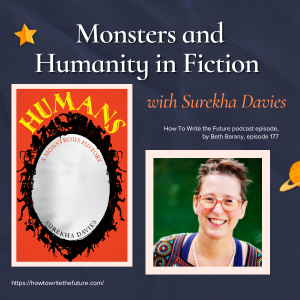
Monsters and Humanity in Fiction with Surekha Davies – How To Write the Future podcast, episode 177
***
“It all started with too much Star Trek, although you could say that that’s a lie because there is never too much Star Trek.” – Surekha Davies
In the latest How To Write the Future podcast, titled “Monsters and Humanity in Fiction with Surekha Davies,” host Beth Barany talks to science and art historian, monster consultant, and author, Surekha Davies. Together they discuss why understanding monsters matters, how they function as boundary-markers for humanity, and how writer’s can apply an historian’s perspective on monsters to deepen their storytelling.
Platforms the podcast is available on: Apple Podcasts | Buzzsprout | Spotify| YouTube
RESOURCESFOR CREATIVE WRITING PROFESSIONALS – BUILD YOUR BUSINESS SERVING WRITERS
Sign up to be notified when our training opens and get a short Creative Business Style Quiz to help you create success.
https://bethbarany.com/apprenticeship/
Support our work for creatives!
Buy me a coffee: https://ko-fi.com/bethbarany
GET HELP WITH YOUR WORLD BUILDING – START HERE
Free World Building Workbook for Fiction Writers: https://writersfunzone.com/blog/world-building-resources/
GET SOME FREE WRITING COACHING LIVE ON THE PODCAST
Sign up for the 30-minute Story Success Clinic with Beth Barany: https://writersfunzone.com/blog/story-success-clinic/
GET SUPPORT FOR YOUR FICTION WRITING BY A NOVELIST AND WRITING TEACHER AND COACH
Schedule an exploratory call here and see if Beth can support you today: https://writersfunzone.com/blog/discovery-call/
About the How To Write the Future podcastThe How To Write The Future podcast is for science fiction and fantasy writers who want to write positive futures and successfully bring those stories out into the marketplace. Hosted by Beth Barany, science fiction novelist and creativity coach for writers. We cover tips for fiction writers.This podcast is for readers too if you’re at all curious about the future of humanity.
This podcast is for you if you have questions like:
– How do I create a believable world for my science fiction story?
– How do I figure out what’s not working if my story feels flat?
– How do I make my story more interesting and alive?
This podcast is for readers, too, if you’re at all curious about the future of humanity.
ABOUT SUREKHA DAVIES
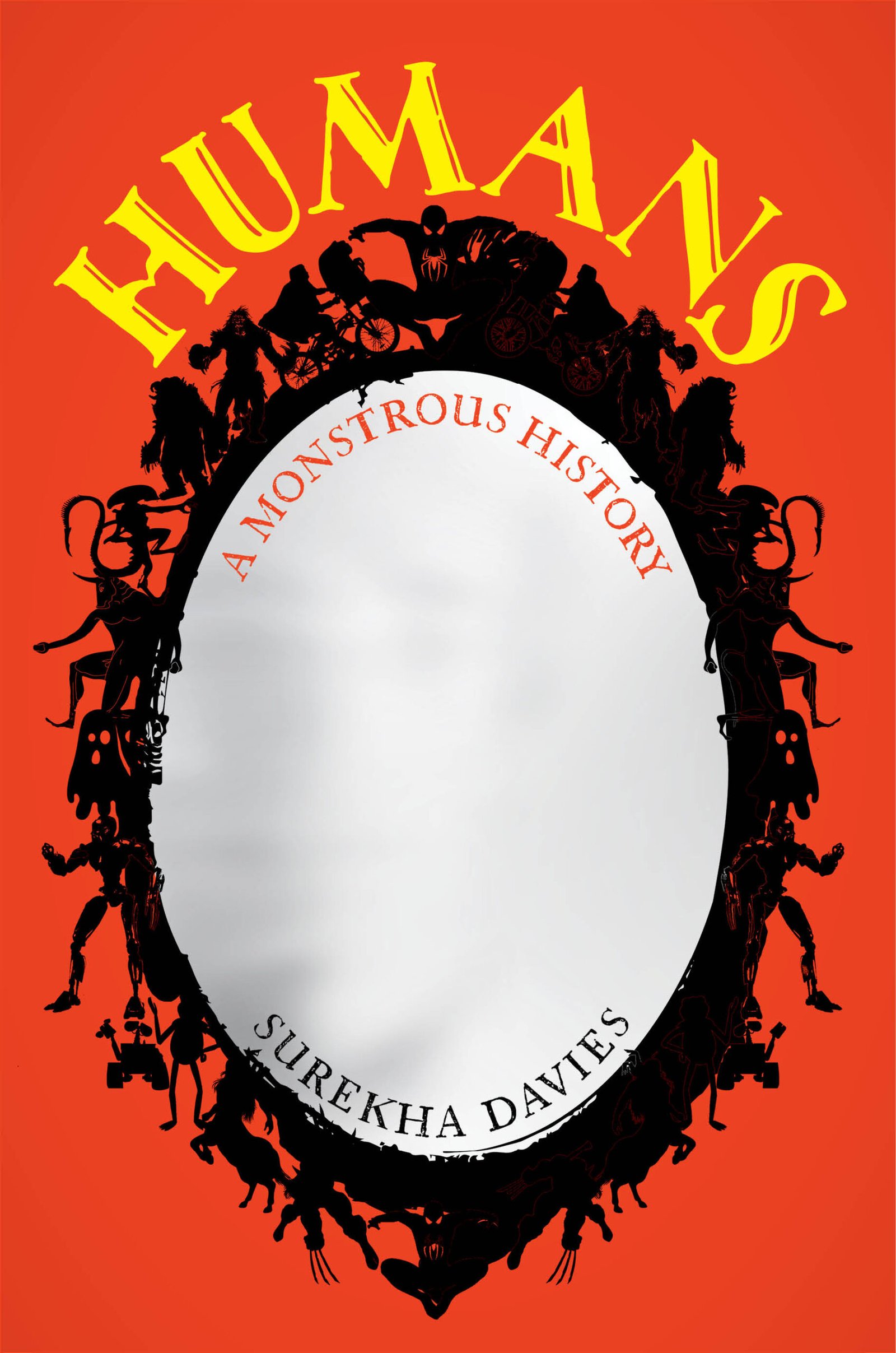
Surekha Davies is a historian of science, art, and ideas, a speaker, and a monster consultant for TV, film and radio. She is the author of “Humans: A Monstrous History” just out from the University of California Press, and writes the free newsletter, “Strange and Wondrous: Notes From a Science Historian.” Her first book, “Renaissance Ethnography and the Invention of the Human: New Worlds, Maps and Monsters,” won the Morris D. Forkosch Prize for the best first book in intellectual history from the Journal of the History of Ideas and the Roland H. Bainton Prize in History and Theology. Her work has appeared in the Times Literary Supplement, Nature, Science, and Aeon Magazine.
For a free excerpt from HUMANS: A MONSTROUS HISTORY sign up for my newsletter, “Strange and Wondrous”: https://buttondown.com/surekhadavies
Website: https://www.surekhadavies.org/
Instagram: https://www.instagram.com/surekhadavies/
LinkedIn: https://www.linkedin.com/in/surekha-davies-53711753/
Mastodon: https://hcommons.social/@surekhadavies
Bluesky: https://bsky.app/profile/drsurekhadavies.bsky.social
***
Transcript for episode 177 Monsters and Humanity in Fiction with Surekha DaviesIntroduction and Host’s BackgroundBETH BARANY: Hi everyone. Welcome to How To Write the Future Podcast. I’m your host, Beth Barany. I am an award-winning science fiction and fantasy writer, also creativity coach, writing teacher and editor, and also filmmaker, and of course podcaster. And I believe that with our creativity and our imagination and our diligence, we can create stories that actually can remake the world. And I love interviewing people for my podcast, thinkers, creatives, futurists, forward thinkers. And today I’m so excited to bring to you a special guest, uh, Surekha Davis.
Surekha, can you please introduce yourself for us and then we’ll, we’ll dive into questions.
[00:47] Guest Introduction: Surekha DaviesSUREKHA DAVIES: Hello everyone. Very happy to be here. I am a historian of science, art, and ideas. I’m also a bit of a monster consultant for radio, tv, that kind of thing. And, I became a historian of exploration and, um, broadened that out into thinking about monsters through time for the book that’s just come out, Humans: A Monstrous History, which is a history of humanity from antiquity to the present, and yes, it has a very cool mirror on it.
[01:21] Exploring the Fascination with MonstersBETH BARANY: Maybe you can tell us like what brought you into studying monsters? Because I, I, I immediately gravitated toward it as a storyteller. I have a whole story series I wanna build around monsters, a TV show actually with my heroine, Henrietta The Dragon Slayer, and the Monsters.
And so it I see a lot of women writers also really going deep into the monsters and there’s this whole thing evolving and it’s, it’s fascinating. So, yeah. If you could tell us a little bit about your evolution and what brought you to this topic.
[01:54] Star Trek and the Evolution of MonstersSUREKHA DAVIES: It all started with, uh, too much Star Trek, although you could say that that’s a lie because there is never too much Star Trek.
I, you know, as a small child was just watching Star Trek Next Generation and Cosmos and, uh, Deep Space Nine as soon as it came out. And all I wanted to do was be an intergalactic explorer because like what better thing could you possibly want to do than to be Jean-Luc Picard?
And so my original major when I started university was theoretical physics, but too much Star Trek. By the end of the first year, I realized, you know, once I’d taken a quantum mechanics class, that there wasn’t going to be warp drive in my own lifetime. So why was I doing this? It had all been about being in this space of wonder when faced with beings who were incomprehensible and exciting.
I’m, I won’t even go camping. I, uh, swapped to history and philosophy of science, which was a very easy swap, at Cambridge where I was an undergrad.
[02:58] Monsters in History and MapsAnd, I found myself working on the history of exploration and that, took me to the 16th century, to a moment that was in a very small way one of those meeting aliens, you know, on both sides of the encounter in that, the, the two hemispheres had been mostly separate for as long as humans have been around. And so I studied that those encounters between Europeans and indigenous peoples. And one of the things I noticed was that there were illustrations on maps and, you know, I became a curator at the British Library while I was trying to figure out what to do my PhD on and an exhibition that I curated when, you know, there was a, there was a gap in the calendar and somebody needed to be thrown in to do it, was on 16th century maps with images of monsters, simply because I ran into the reading room, opened all the, all the reference books in haste ’cause I had to come up with a topic by the end of the week. So I looked at the 16th century stuff and thought, wait a minute, there are monsters on these maps.
And so that was at the back of my mind, and then I wrote my first book on images of Peoples of the Americas in 16th century maps and how the category of the human changed in the Renaissance as people tried to figure out who or what was over there because, you know, ancient knowledge had predicted that in distant places with very, very different climates, humans would basically be monstrous.
And so I got into the monsters when I noticed that so much of the visual material about the Americas, about peoples in those early centuries, early decades, were either, you know, headless men or giants or eaters of human flesh. And these ideas were bound up with maps because, you know, the kinda way of thinking about the body then was that it was malleable. We weren’t these fixed beings, but we were vulnerable, if you will, to the climate and ancient Greek naturalists, Roman nationalists had talked about monstrous peoples at the edges of the world where the climate was harsh.
And so once you’re actually traveling everywhere, you’ve gotta ask where’s the boundary between human space and monster space? Once you start putting people on maps in different places, that makes differences of people, with latitude, very visible and comparable.
So I got into monsters because I saw them, and then I realized that, you know, the very idea of human is bound up with ideas about monsters because what’s, where’s the limit to human in terms of the kind of body, the kind of behavior, uh, where does human end and animal begin? Where does human end and God begin? And I realized there’s a history to how people have thought about those boundaries between human, an animal God machine, Extraterrestrial and that boundary is always moving.
And who sits on that boundary? They’re the category disruptors. They’re the category problems. And you, if you call them monsters, you can have your tidy categories on either side, your animals, your humans, your machines. So long as you have a word for human cross with machine.
And that word is cyborg. So the cyborg then is effectively a monster. So it started with Star Trek and it’s come right, right back around to Star Trek again.
BETH BARANY: Wow. I love that. I have to admit to all that are listening. I too am a huge, huge trekky and it deeply influences, my, my science fiction and probably all of my storytelling.
So let’s, let’s move into fiction because our main audience here is science fiction and fantasy writers primarily.
But, and anyone who cares about the future and anyone who, I mean, I invite all listeners to explore their creativity. What would you say makes a good monster for fiction writers?
And, and maybe we could stick to science fiction and fantasy since that’s the genre that, that I know the best. And, and as an avid star trekker, you know, you know it quite well as well.
So yeah. Thoughts on that?
SUREKHA DAVIES: Yeah, sure. So what makes you know a good monster in science fiction? In fantasy? I’d say, you know, maybe, you know, I wanna start with, with, I have to start with a Star Trek example and say, I’d say look no further than the Borg Collective when they first appear in Star Trek, next generation.
So for anyone who’s, who, who’s not a Trek, you know, the summary is there are, the borg are cyborgs. They’re vaguely human shaped, partially organic, partially machine, but they, their, their, their organic bodies are made up of all the species they have assimilated. So they assimilate people and, and, and, absorb their, their uniqueness into the Borg.
And maybe the, the key element that makes the borg terrifying and monstrous is that they trouble the boundary, not just between human and machine, like all cyborgs, you know, because they go around assimilating species, you, the viewer, the characters on the show, they aren’t safe either. That is maybe a, a fundamental thing that, that fictional monsters that are very powerful and also narratives in the present about monster making share, which is a, creating a sense of an existential threat posed by this being, they’re not just a villain.
They pose a threat to the integrity of your body, not just because they might shoot you with bullets and you might die, but because you might no longer be the same once you’ve spent time in their presence. So they might disrupt your body, they also have disrupted how you think about the life that exists on Earth.
So, oh my goodness, there’s a species that goes on absorbing other species and you know, they’ve got this deathly pallor, so of course the, the other, the, the other extreme is the, just the visceral effect of how they look. And there’s, you know, so much care has gone into this. As of course with, with Star Trek and all of their aliens, you know, they, the, when a person becomes turned into a Borg, they, you know, they have things injected into them. Nano probes, tiny robots, and their skin color changes. And maybe one of the things that that’s gonna maybe powerful today is we also kind of think about how otherness is framed through what skin looks like, even when everything else is kind of the same.
Uh, they have prosthetics that have special tools stuck on them, and, to go again from the, the very physical to the mental. They have something of a hive mind. And that, again, is really terrifying because not only do we now fear the integrity of our body in case we’re in assimilated, but our mind won’t be private either because all the drones as they’re called, could hear one another.
I could go on for forever there, but I’ll, I’ll stop for the moment and say there’s a perfection that comes with really activating all the ways in which a monster might destabilize the viewer and, and you know what, the Borg story does is it draws in the way we already think about what’s normal and what’s not, but also draws on what we already know about the Star Trek universe and what the other foes and rivals look like.
Even from when you look at the ships, the, the, the Klingons have ships called Birds of Prey, and they are elegant and bird-like. And the, the, the, the Romulan’s who are kind of the enemies, their ships are kind of green, so that’s spookier and snake-like, but the Borg have got cubes. So it’s like, oh my God, where is this the ship ever not been round? So even within the universe of, of Star Trek and its imaginary ships, they found a way to make them, you know, really uncanny.
BETH BARANY: Yeah. Very and very, uh, unusual and confounding. Yeah. I love that you use the Borg as a, as a great example of a terrifying monster in inside of the Star Trek universe.
[11:52] Monsters in Fiction and MediaSUREKHA DAVIES: Something I’ve learned something, a way in which I’ve maybe can change a little bit in the process of writing this book is that I don’t call people monsters, even in my head, you know, it’s like, you know, I, you know, it’s of course one shouldn’t call people things anyway, but you know, I, I don’t, that isn’t a category I use on sociopaths or mass murderers or anyone for a couple of reasons. One, you know, I don’t wanna dignify, for example, tech billionaire losers with a word like monster that just makes them too important, frankly.
It also, it’s too easy to label someone like, I don’t know, a school shooter and say, oh gosh, they’re a monster, and it somehow absorbs the rest of society from wondering whether anybody else in that society might become a tool school shooter or murder people. It, it gets in the way of addressing systemic problems, like radicalization of young people, you know, wholesale misogyny, the rise of the acceptability of using violence, and so, uh, I’ve now half forgotten your question.
Oh, yes. Well, what does it mean if people call others monsters? Yeah. I think it’s, for me that, that word as a, as a tool to use has kind of lost its power because it, it gets in the way of, of recognizing all the things that need to be done to change and stop those kinds of actions happening and it also, it’s too easy to then panic because someone has terrified you because they’re a monster, so don’t give them the power that the Borg have because then you can’t function. You can’t resist them, um, you can’t make jokes, uh, you, you can’t poke fun of the dictator at, if you give them too much power.
Um, uh, but you know, the, but a lot of my book is about what I, something I call monsterfication or monster making, which is telling stories about individuals or groups, in such a way as to frame them as falling outside of the category of human. So, and, and this is where, when, when stories are told about how, for example, all Latin American immigrants are allegedly, serious criminals, I mean that those are stories of monsterfication, which are used to justify, for example kidnapping people off the streets and trafficking them to gulags overseas without due process, actual US citizens have had this happen to them.
Um, so whoa. Oh yeah, the, the calling people monsters and I guess to go back to the start of your question, which is, how am I defining monster? I define the word, very broadly and very, very generally to simply mean category disruptor. So everybody has, so we say a taxonomy of like stuff there is in the world. There are apes and cats and dogs and lions and so on, um, and machines and robots.
And if you, you have, we have a finite set of categories, things in the world. And so what that means is if you run across something that transcends a couple of them, that straddles a couple of them, that is kinda technically a monster. That doesn’t mean you have to run around and have a nervous breakdown, it just means you’ve come across something that isn’t from, you know, your, your categories.
And so you know what, as you look at the history of how of history of taxonomy, if you will, you can see that people, there have been a lot of examples of fictional or religious, or actual physical in the world beings who have crossed either ca um, the boundary between human and some other kind of category altogether, like machine, or God, or, they crossed and challenged social categories between men and women, between faiths, between different nations of course, and the invention of race.
And the third kind of circle category breakers are at, are the individuals and groups who societies used to define the parameters of normal for an individual human body.
So what there are, quote unquote normal heights to be, what are normal things that someone can do? And so the kinda language of, of, of ability and disability, is one with which societies decide what the parameters of normal are. So monster making isn’t simply about, say, ethnic and racial monsterfication and discrimination, monsters can also be, perfectly neutral.
Um, I’m not sure we, we, we would call werewolf neutral exactly, but, but you know, it’s not always real things in the political world, but there are also very positive, positive monsters. And, you know, the Muppet Show is a place where one can see modeled a different way of engaging with, complete variety and hybridity.
BETH BARANY: Also, um, the movie Monsters Inc.
SUREKHA DAVIES: Oh my goodness. Yeah, that is such a favorite movie of mine. It came out just as I was beginning my PhD and that’s another place where you can see absolutely I think, fantastic monsters. I think there are like three quite different kinds of monsters in there. There are the classic, children’s bedtime horror story monsters, you know, the big blue fairy hairy animal and you know, the what? Giant single eyed, funny round guy.
So they’re, they’re, they’re the heroes, you know, Mike and Sully. And then there is the, another kind of classic monster, which is gonna Randall the, the, the arch villain who is reptilian. And that is again, really activating an ancient kinda human fear.
Reptiles are kind of creepy and he has a great many, you know, limbs. He can turn invisible. So he’s uncanny. But I think the top monster in there is the small child, the toddler, Boo. Because when you enter Monstropolis, you know, through a child’s closet door for example, you, it’s like going through the mirror, going through the looking glass ’cause in Monstropolis everyone is who we would think of as a monster, and they just go about their lives and it looks like New York City. And for them, human children are terrifying, dangerous, toxic beings who, who live on the other side of these doors. But Monstropolis runs on the power of their screams.
And so what makes Boo with a little 2-year-old kid, an amazing monster is ’cause the way she looks and acts on one level, she’s the opposite of monster. Isn’t she the target? I mean, she’s two. She’s got pigtails. She’s only got one sock and no shoes. She’s dressed in pink. I mean, you know, isn’t this the ultimate like monster fodder? But no, I mean, people like run screaming from her because one, they think the mythology, the monsterfication mythology, they think all human children are toxic and they’ll die if they touch her. But she herself, you know, she, she enters this world where everybody looks like the monsters for a 2-year-old.
They’re all kind of terrifying. And all she sees is all, you know, things of joy and wonder. You know, she calls one of the scariest monsters Kitty ’cause he’s just a giant cat to her. And so she, she models a different way of looking at difference and surprising beings. Um, while at the, at the same time, kind of, kind of showing us how, you know, when we monsterfy others, how wrong we might be.
BETH BARANY: I love that. Thank you so much for that fabulous summary and analysis of, of that movie, which is also dearly beloved in our house. Uh and this also comes to this fabulous idea of the ethics of thinking about monsters and how we tell stories about them. You know, are we gonna be like Boo and, and be, amazed?
And another character in Fiction who is amazed by monsters is Dr. Who. At every encounter, Dr. Who is like, hello, I have never seen one like you before. Wow, even though the monster’s like, you know, I want to eat you, and Dr. Who is in whatever form they’re in, they’re like, wow. And, and that brave wonder and, and curiosity toward monsters or, you know, the terror, the vilification, the just blanket assumptions, you know, and, and I’m wondering if there’s more nuances here around the ethics, because I feel like humanity is our, and I wanna call it an evolution, one, of learning that difference is interesting and wondrous versus horrifying, and, and it’s going to eat us and destroy our, our sense of everything we hold dear.
So I, I really feel like humanity’s on that cusp and maybe has been since, you know, the fifteen hundreds when, when our, the westerners were sailing out beyond their boundaries. I say Europeans because there were other cultures that also sailed beyond their boundaries, that, that, you know, the Pacific Islanders also sailed beyond their boundaries. The Chinese did as well, you know, but those aren’t the dominant stories these days anyway.
Yeah, if you could speak to the ethics a bit of how we go about making monsters of others that would be very interesting.
SUREKHA DAVIES: On the one hand, um, I mean maybe, you know, a lot of people read fiction for fun, you know, then, and not to have, people hectoring them about how not to monsterfy.
So we can start by saying, you know, kinda that books in, in every genre have, you know, the, there’s a, the whole consolation of, of moments and in people’s lives when they read them and like different thing reasons they may be reading a book at a, at a particular time. That said, you know, whatever we write fiction or nonfiction and put out into the world, it, it’s going out at a moment in a context, which people are going to interact with it in that place and time.
I mean, who knows in fifty years how people will interact, but we don’t care about that, not yet anyway. Even if you are writing something that you see as, you know, a, a light beach read, I mean, we all think about our audiences because we want our books to connect with them.
We want people to want to read them to love them, to tell other people about them. So we are thinking about how the books are, are going to land and I guess when it comes to fashioning, kind of heroes and villains and characters and monsters, it’s worth kinda remembering that the characteristics we give them, also, you know, to, to, to, you know, to make sure that the, the biases and preconceptions of the present, that we don’t simply go and replicate them without thinking. But, there are also, there are also, there’s so much potential to, to model, hopeful ways for the future to be, and it doesn’t even have to be because you’ve envisioned a a a a utopian future, like Star Trek.
It can also be more set in the present, like something like Spider-Man. And I think, I’m gonna call him Jerry McGuire, and that is of course not his name, the Spiderman who played against with James Franco.
BETH BARANY: All right.
SUREKHA DAVIES: Toby McGuire.
BETH BARANY: Toby McGuire. That’s right.
SUREKHA DAVIES: And it was McGuire, wasn’t it? I was not completely coming out of, you know, another dimension.
Um, I mean, it’s a great job as as Spider-Man. And of course it’s, it’s a, that wonderful kind of comic book, hyper reality ’cause it’s kind of our world, and then you have all these like, extraordinary characters with, with, superpowers I mean. But, you know, Spider-Man is, is the protagonist yet he’s, you know, bullied in school in this very, this really mundane, you know, school playground kind of monsterfication, you know, that kind of low level teasing, but it is about alienating someone and creating a kind of threatening environment for them ’cause it is kind of physically harassed as well. It’s very low level, but it’s, it’s something that everybody has kind of seen in their lives.
Um, so there’s a possibility with fiction to engender empathy, in different kinds of people. And the more incredible and amazing and great your story, the more that’s going to stay with people. And I think the TV series, Gotham, is extraordinary for how it shows you how people became some of the villains that crop up later in, you know, all kinds of movie franchises, so it’s sort of a prequel of before Batman was grown up. And as you go through the series, various characters, some of them start out as good guys and the others are bad guys. And then like, things happen to them along the way and it really unsettles that boundary between good and bad, in ways that I think help people think about how not to, how to fix, you know, sectarian violence.
Um, I’m, I’m, I’m kind of, maybe exaggerating, but,
BETH BARANY: Well, it’s about, like you were saying, having empathy and recognizing that the people we might want to label as monsters, well they’re people and things and circumstances and choices and, you know.
SUREKHA DAVIES: Yeah.
BETH BARANY: You watch a lot of cop shows and they’re always saying like, you never know who might be violent in a certain situation. They, uh, we don’t, we can’t predict how we might behave.
SUREKHA DAVIES: Yeah. Yeah. And, and I guess, I guess the, the, the, the other kind of dimension of the ethics is today it’s usually not that each one of us is running around, you know, monsterfying other people, but, you know, there are, but you know, people with power and influence and, and platforms uh, monsterfy entire groups. And so it behooves us to recognize when we, when we notice this happening, uh, when stories are told about how entire groups of people who, and it’s always the same, it’s always some kind of group that’s always been marginalized. Women, people who don’t fit, who were not gender conforming, immigrants, you know, a century ago it was Irish immigrants and, and, and Jewish immigrants.
And so that’s one of the ways in which these monsterfying stories in the real world of powers because they attach themselves to earlier, you know, prejudices and re reactivate them. So I’ve seen something that an ethical possibility with, with storytelling is to make people more attuned to seeing that maybe that’s also a future of storytelling to more kind of explicitly show monsterfication in action.
And, uh, you know, show that there, you know, people have a choice, and you know, they can notice how, their fears of, you know, legitimate fears of, the financial security might be actually, um, co-opted so that they’re not actually paying attention to why they might be financially insecure, which is that incoming inequality is growing and, and, you know, there are far too many billionaires.
BETH BARANY: Yeah. Well, I, I feel like you and I could, could keep going as, as we have in the past when we first met and we talked for hours.
SUREKHA DAVIES: We have. Yes. Yeah.
[28:14] Concluding Thoughts and Final QuestionBETH BARANY: Yeah. So, um, I wanna ask you one last question that I like to ask people off the cuff, um, before we wrap up, which is when you hear how to write the future, that, that phrase, what does that evoke for you?
SUREKHA DAVIES: It sounds hopeful. It’s like, oh, something I can do, the future isn’t written in stone, which I love.
BETH BARANY: Oh, I love that. I love that so much. Well, thank you so much, Surekha for being a guest. Surekha, uh, I really appreciate it. I hope we get a chance to talk again, and I just wanna say to everybody that is listening, write long and prosper.
SUREKHA DAVIES: Thank you so much for having me.
BETH BARANY: Thank you.
Loved this episode? Leave us a review and rating here: https://www.buzzsprout.com/2012061Need instructions on how to leave a review? Go here.
***Support our work for creatives: leave a tip: https://ko-fi.com/bethbarany
***
ABOUT BETH BARANY
Beth Barany teaches science fiction and fantasy novelists how to write, edit, and publish their books as a coach, teacher, consultant, and developmental editor. She’s an award-winning fantasy and science fiction novelist and runs the podcast, “How To Write The Future.”
Learn more about Beth Barany at these sites:
Author site / Coaching site / School of Fiction / Writer’s Fun Zone blog
CONNECTContact Beth: https://writersfunzone.com/blog/podcast/#tve-jump-185b4422580
Email: beth@bethbarany.com
LinkedIn:https://www.linkedin.com/in/bethbarany/
IG: https://www.instagram.com/bethbarany/
TT: https://www.tiktok.com/@bethbarany/
FB: https://www.facebook.com/bethbarany
X: https://twitter.com/BethBarany
CREDITSEDITED WITH DESCRIPT: https://www.descript.com?lmref=_w1WCA (Refer-a-Friend link)MUSIC CREDITS : Music from Uppbeat (free for Creators!): https://uppbeat.io/t/soundroll/fuzz-buzz License code: UMMKDRL02DFGKJ0L. “Fuzz buzz” by Soundroll. Commercial license: https://musicvine.com/track/soundroll/fuzz-buzz.DISTRIBUTED BY BUZZSPROUT: https://www.buzzsprout.com/?referrer_id=1994465 (Refer-a-Friend link)SHOW PRODUCTION BY Beth BaranySHOW CO-PRODUCTION + NOTES by Kerry-Ann McDadec 2025 BETH BARANY
For more “How To Write the Future” episodes, go here.
If you’d like to invite Beth onto your podcast, drop her a note here.
Like the work we do? Tip us! https://ko-fi.com/bethbarany
The post Monsters and Humanity in Fiction with Surekha Davies appeared first on Writer's Fun Zone.
October 31, 2025
Engage in a Writing Adventure with Wonderbook by LA Bourgeois
 Let’s welcome back LA Bourgeois as she shares with us “Engage in a Writing Adventure with Wonderbook.” Enjoy!
***
A Gateway into Creative ExplorationEven if you have never considered working in speculative fiction, you’ll still find a lot to explore in the pages of Wonderbook.
Here, Jeff VanderMeer includes the sort of tips that can lift stories from any genre into the extraordinary realm.
Expanding the Boundaries of CraftOne thing about exploring the boundaries of any art is that these adventures will improve your writing without even noticing.
Just like incorporating humor can help you sharpen your word selection, approaching familiar situations with the view of an alien can help you improve your worldbuilding.
After all, every fictional world, no matter how seemingly normal, must be built.
A Feast for the Creative MindBesides, opening Wonderbook comes with a little breath of excitement.
Each flip through the pages reveals another treasure to enjoy.
The brightly colored illustrations and dense prose increase delight.
More than anything else, this book is a picture book for writers, an easily digestible but nutrient dense feast!
Within this structure, the mind leaps into inspiration and relaxes into trances of learning.
Why Wonderbook Stands ApartAnd, while the basics are similar to advice found elsewhere, no other writing book has ever made me want to read every single word and ponder each illustration to discover what depths I could bring to my work.
About the Author: Jeff VanderMeerThe author, Jeff VanderMeer, is an award-winning writer whose books include speculative fiction and climate-focused nonfiction.
The first volume of his Southern Reach series, Annihilation, won the Shirley Jackson and Nebula awards before being adapted into a movie by Paramount.
Wonderbook is his version of a writing guide, though that characterization feels flat at best.
Inside the Pages of WonderbookWritten mainly as a guide for authors of speculative fiction, this text leads writers through every step of creating their own masterpiece.
The book starts with a dive into cultivating inspiration and building a creative life and jumps off into story from there.
Plot, structure, characters, worldbuilding and setting all get their turn.
Revision concludes the official part of the book, and then VanderMeer includes an appendix that is a workshop all its own.
Each section of the book delves deep into philosophies and practices that make fiction come alive for the reader.
Deep Insights from Master StorytellersAs an example, VanderMeer spends forty pages on the decision of how to create and place your beginning.
This single exploration includes exercises, examples of what happens with different choices, and an essay from Neil Gaiman about the beginning of American Gods.
Throughout the book, masters of the speculative field such as George R.R. Martin, Nnedi Okorafor, and Ursula K. LeGuin add their advice.
Each essay adds more color and knowledge to the subject of the chapter.
These short deep dives illustrate the advantages and pitfalls to certain techniques.
They share ideas to evoke inspiration, new ways to visualize story, and tips on creating fully rounded characters, among other things.
Generosity is the hallmark of these pieces, and all of them add one more piece of great advice to your writing repertoire.
A Visual Journey through StorycraftBut the biggest difference from any other writing guide is the plethora of pictures.
Even if you are one of those writers who doesn’t like to read, much can still be gleaned from the illustrations alone.
The main artist of these curious diagrams and illustrations is Jeremy Zerfoss, an artist who specializes in the creepy and intriguing.
Within the Wonderbook process, he created original art, and also collaborated with other artists when necessary.
But the images were all curated by VanderMeer, whose artist mother influenced his more visual approach to the craft.
How to Read WonderbookAs with most writing craft books, this one can be read from cover-to-cover or opened in different sections to go in-depth on any particular subject you may be dealing with at the moment.
My suggestion is to read the book through so you get a lay of the land and then go back to learn more about specific subjects as they arise.
However you choose to read it, prepare for a writing adventure when opening Wonderbook.
Tally ho!
Continue the Creative JourneyAre you ready for a writing adventure?
Grab a copy of Wonderbook at the library, your local independent bookstore, or online.
****
Next in the Books for Thriving Creatives SeriesThe Book of Alchemy: A Creative Practice for an Inspired Life by Suleika Jaouad is our next selection in the Books for Thriving Creatives series.
In this book, Jaouad explores the art of journaling and shares everything she’s learned about how this life-altering practice can help us tap into our creativity.
Through essays from one hundred writers, artists and thinkers, readers are invited to inhabit a more inspired life.
Join us to read The Book of Alchemy this November.
Pick up a copy at your favorite indie bookshop, at the library, or online.
***
ABOUT LA BOURGEOIS LA (as in tra-la-la) Bourgeois is a Kaizen-Muse Certified Creativity Coach and author who helps clients embrace the joy of their creative work and thrive while doing it.
Get more of her creativity ideas and techniques by subscribing to her newsletter at https://subscribepage.io/unlockyourcreativity.
The post Engage in a Writing Adventure with Wonderbook by LA Bourgeois appeared first on Writer's Fun Zone.
October 27, 2025
Bailey Lang’s Habits of Mind for Writers

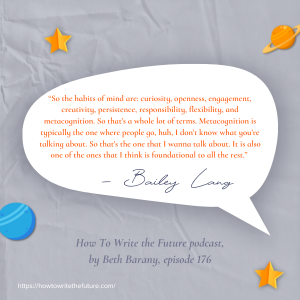
Bailey Lang’s Habits of Mind for Writers – How To Write the Future podcast, episode 176
***
“So the habits of mind are: curiosity, openness, engagement, creativity, persistence, responsibility, flexibility, and metacognition. So that’s a whole lot of terms. Metacognition is typically the one where people go, huh, I don’t know what you’re talking about. So that’s the one that I wanna talk about. It is also one of the ones that I think is foundational to all the rest.” – Bailey Lang
In this How To Write the Future podcast episode, “Bailey Lang’s Habits of Mind for Writers,” host Beth Barany talks to book coach, editor, and ghostwriter Bailey Lang, where they discuss the uses of AI in a creative world, and Bailey shares what the Habits of Mind are and why they are important to writers and how they can help them build sustainable practices.
Platforms the podcast is available on: Apple Podcasts | Buzzsprout | Spotify| YouTube
RESOURCESFOR CREATIVE WRITING PROFESSIONALS – BUILD YOUR BUSINESS SERVING WRITERS
Sign up to be notified when our training opens and get a short Creative Business Style Quiz to help you create success.
https://bethbarany.com/apprenticeship/
Support our work for creatives!
Buy me a coffee: https://ko-fi.com/bethbarany
GET HELP WITH YOUR WORLD BUILDING – START HERE
Free World Building Workbook for Fiction Writers: https://writersfunzone.com/blog/world-building-resources/
GET SOME FREE WRITING COACHING LIVE ON THE PODCAST
Sign up for the 30-minute Story Success Clinic with Beth Barany: https://writersfunzone.com/blog/story-success-clinic/
GET SUPPORT FOR YOUR FICTION WRITING BY A NOVELIST AND WRITING TEACHER AND COACH
Schedule an exploratory call here and see if Beth can support you today: https://writersfunzone.com/blog/discovery-call/
About the How To Write the Future podcastThe How To Write The Future podcast is for science fiction and fantasy writers who want to write positive futures and successfully bring those stories out into the marketplace. Hosted by Beth Barany, science fiction novelist and creativity coach for writers. We cover tips for fiction writers.This podcast is for readers too if you’re at all curious about the future of humanity.
This podcast is for you if you have questions like:
– How do I create a believable world for my science fiction story?
– How do I figure out what’s not working if my story feels flat?
– How do I make my story more interesting and alive?
This podcast is for readers, too, if you’re at all curious about the future of humanity.
ABOUT BAILEY LANG
Dr. Bailey Lang is a book coach, editor, and ghostwriter. At the Writing Desk, Bailey offers one-on-one coaching and manuscript reviews to support authors in building sustainable, enjoyable writing practices that take their books from draft to done. Bailey pairs a deep knowledge of the writing process with intuitive and highly customized practices that help writers develop confidence, grow in their craft, and produce writing they’re proud of—without burning out.
Bailey’s free newsletter, Word to the Wise, features writing advice you’ll actually use—plus regular interviews with published authors. https://usethewritingdesk.kit.com/
Website: https://usethewritingdesk.com/
LinkedIn: https://www.linkedin.com/in/bailey-lang/
Transcript for episode 176 – Bailey Lang’s Habits of Mind for WritersWelcome to How to Write the Future PodcastBETH BARANY: Hey everyone, welcome to or welcome back, to How to Write the Future Podcast. I’m your host Beth Barany, and I am a science fiction and fantasy writer, helping writers go from ” light bulb” to polished draft. I also work with creative entrepreneurs to take their business into action and put it into the world and help their audience.
And I love running this podcast because at How to Write the Future podcast, I not only get to talk to science fiction and fantasy writers, but I also get to talk to thinkers and people who are helping us expand into maybe a new version of who we want to be.
So I believe in the power of the imagination, and I believe in the power of creativity. So especially storytellers and writers and all artists,we are such an important job in our culture, and I believe, and here’s my motto, that when we vision what is possible for us as humans on this planet, we help make it so.
That is my optimism showing and I just wanna welcome to our stage, Bailey.
[01:07] Meet Bailey Lang: Book Coach and EditorBETH BARANY: Hi Bailey.
BAILEY LANG: Hello. Thank you for having me. I’m so excited to talk to you today.
BETH BARANY: Me too. I am so excited. So if you could introduce yourself to everyone, that would be awesome.
BAILEY LANG: Yeah. So hi everybody. Uh, I’m Bailey Lang. I am a book coach, editor, and writer. Um, my company’s called The Writing Desk and I work with authors, creatives, academics, entrepreneurs, a little bit of everybody, to build sustainable, enjoyable writing practices that take their books from draft to done.
BETH BARANY: Oh I just love that, from draft to done. Good job, great little pithy statement there.
You’re writing for our blog, Writer’s Fun Zone, and I’m really intrigued by your topic, “habits of mind,” and I find that just so attractive.
[01:57] Understanding Habits of Mind for WritersIf you could tell us a little bit about: What are the habits of mind and why are they important to writers?
BAILEY LANG: Yes, such a good question. So often when we think about our writing habits, right? We’re thinking about the actual physical act of sitting down to write, right? Like the external sorts of habits that maybe it’s happening once a day, maybe it’s happening once a week, but it’s something you’re sitting down and, and doing physically in some way.
And the habits of mind are our thinking patterns, right? It’s the things that are happening in our heads kind of all of the time. Um, and those sort of underpin all of our other habits. And so my dissertation research way back when, was about about these habits of mind, right? So there is this research that came out in, oh gosh, 2011, on Habits of Mind that help writers be successful. And they were specifically looking at post-secondary writers, so college students, transitioning out of high school into college.
What are the mental habits that help people succeed in writing in this new environment? And the sort of research question that I was pursuing is like, are these habits of mind things that we see show up in successful writers in other places? Are these habits of mine generally true of successful writers? And so I am a big old archival research dork, so my research project was looking at: can we find evidence for these habits of mind in the historical record, uh, in the writing of, of people from the past? And so what I found was, yeah, we do see it. And so part of the work that I do now is really helping writers get a handle on what these habits of mind look like for them in their practices currently. Are these things that they are actively engaging in? Are these things that they could be cultivating more?
And just seeing how, like when you practice some of this stuff, when you really train your brain to think in these specific ways, the payoff for your writing practice can be pretty impressive. Um, it’s really cool to see.
BETH BARANY: And when you say payoff, like what tangible results are you talking about?
BAILEY LANG: Yeah. People who work on the habits of mind typically find that they have an easier time sitting down to write. They have more ideas, they feel more confident in their writing. All of those things that kind of contribute to feeling blocked, right? And struggling to sit down at the page and write.
Some of that starts to alleviate when you focus on these habits of mind, because often the stuff that keeps us from writing is, is mental before it’s anything else, right? We’re like, we get in our own way, that the internal critic, all of that kind of stuff can come up. And so working on your habits of mind can really inform the entire rest of your writing practice.
BETH BARANY: Yeah, so, so important. So what can writers do? How can they cultivate strong habits of mind? Maybe you could just tell us one of these habits that you think, or that you’ve seen having the biggest impact with your clients.
BAILEY LANG: Oh my gosh. It’s so hard to pick. There are eight habits of mind that are studied, and so I’ll just give you a brief kind of list of what those are, and then I’ll talk about one in particular.
So the habits of mind are: curiosity, openness, engagement, creativity, persistence, responsibility, flexibility, and metacognition.
So that’s a whole lot of terms. Metacognition is typically the one where people go, huh, I don’t know what you’re talking about. So that’s the one that I wanna talk about. It is also one of the ones that I think is foundational to all the rest.
[05:30] The Power of Metacognition in WritingSo metacognition is the ability to think about your own thinking, which sounds very Inception, but if you are someone who journals, who has a mindfulness meditation practice, who has done breath work, who has any sort of intuitive practice that’s metacognition. You’re already doing it, and so if you’re thinking that sounds too esoteric and complicated and difficult, it’s really not right?
It really is just a matter of being able to notice what is going on mentally, and then you get into a position where you can make decisions about whether you want to continue down that path or do something that is going to intervene. So if you are like me, someone who has anxiety and you catch yourself like, oh, I am in a spiral right now.
I need to go sit outside for a few minutes and do some breath work and like ground myself. It’s metacognition that kind of intervenes in that spiral and goes, hey, here’s the pattern. We’ve seen this before. Like, what do we need to do here? So when it comes to writing, metacognition can really help you.
If every time you sit down on the page you’re like, this is gonna be really hard and I’m not gonna produce anything good and I’m, am I just wasting my time, et cetera. You can start to notice those thought patterns and then actively replace them with things that feel more helpful. Um, so that’s like metacognition is a really powerful tool to practice with.
BETH BARANY: I love that. And, metacognition, I would definitely say is a big part of the NLP training. I received a huge part. It’s all about like noticing. What do you notice? That’s a big question we might ask others, but I ask myself too, what do I notice? And so one of my journal prompts for myself is: What’s going on here, Beth?
BAILEY LANG: I love that.
BETH BARANY: Because I notice when I get in a spiral and I’ve had low level anxiety, I really noticed it when I started my business twenty years ago. I would have, I would just be kind of anxious and I didn’t know, and, and finally I realized, oh, I am like operating on low level anxiety, like all the time.
So what, starting to ask myself, what’s going on here? And especially when I’m stuck in the hard parts of writing, like editing like I am now and have been for a while, I’m constantly asking myself, what’s going on here? Because the meta of editing to, from my perspective, is the reason we’re having a, I’m having a hard time is that I’m asking myself to deal with some difficult things in the story itself.
The story’s asking me to deal with some difficult emotions, and it’s totally okay that I might be having a challenging time at that because there’s a reason why I left this part of the editing to the end, and here I am bumping up against it and, and feeling overwhelmed by it. I’m like, oh, okay. So when I ask myself in my journal sessions before I write and edit, it’s, hey, what’s going on here? Then I start to recognize the pattern, the, yeah, Habit of mind. Yeah.
BAILEY LANG: Oh, I love that. Yeah. That’s such a beautiful question, and it, it really just, it does put you into kind of that observer mode and not being this stuck in the experience mode, and that’s, that’s the power of that question. That’s great.
BETH BARANY: So powerful.
[08:41] Building a Sustainable Writing PracticeSo what else should writers know about building a sustainable, enjoyable writing practice?
BAILEY LANG: I have a issue of my newsletter about this coming out in a couple weeks. I was just writing about this topic like all morning. One of the big things that I’m always trying to tell people is you have to figure out what works for you and what works for somebody else may not be what works for you.
So if you ever are getting advice from someone and they’re like, well, this worked for me, It should work for you too. Just remember, that’s not necessarily true, right? They don’t have your life, they don’t have your experiences, they don’t have your constraints. They may have the absolute best of intentions and they may just be really excited that like, hey, this worked for them, right?
It’s, I’m not saying that people saying that have any bad intentions, but you have to be really discerning about writing advice and be willing to experiment with stuff right? Um, you may have a sense sometimes that like, ooh, I don’t know, that doesn’t sound like it’s gonna be fun or enjoyable, or effective.
And then sometimes you try something and you’re like, wow, that really, that really worked. So being willing to experiment I think is really good, but also cultivate that awareness of like, something that somebody says is the best piece of writing advice in the world may not be the best piece of writing advice for you.
And the only writing practice that is truly sustainable is the one that you are going to to maintain, right? And stick with or adapt as circumstances change. But it has to work for you. It can’t be the other way around.
BETH BARANY: Yeah. Yeah. And, and what I noticed is people can get frozen at the threshold. And I don’t know about you.
I’d be curious to hear what you think, but my solution to that is timed writing and the smallest amount of timed writing that feels feasible, so not an impossible, like I gonna write for an hour, but my favorite is twenty minutes. Some people love fifteen. I even say stand in your kitchen, heat your coffee up, and write for two minutes. And just to have the experience of what is it actually like to physically be writing constantly for a very, very small, almost dumb amount of time. Like I could do a minute, I could do two minutes, well do it. Go and see what that’s like.
Write small. Challenge yourself self to write five, fifty words or a hundred words, so it doesn’t have to be a time bound, it could be word bound, whatever works. But really, if you have the urge to write, but you’re not writing, that’s actually where the pain sits. That’s why you’re in pain. You’re not in pain because of something else.
You’re actually in pain ’cause you’re not doing what you love. Yes, and what’s the easiest ask you can ask your system like, oh sure, but I could do a minute. So I don’t know what your thought is on that, if your habits of mind include that like threshold I wanna be writing, but I’m not writing.
BAILEY LANG: I think there’s a few that kind of touch on that. So you have like the, the flexibility element, right? Is that willingness to, say, I’m gonna try something right? I am, while my tea steeps, I’m just gonna pull a notebook out and write. You know, that’s three, four minutes. So being willing to, to try other stuff and just see like what clicks, what doesn’t.
Yeah. Flexibility is huge in that, that openness, I think is big too. Just again, that willingness to try, not to close off possibilities before you give them a shot, but also then the responsibility element of like, I’m going to, to try this and then reflect on it. And taking that element of: did this really work for me? I’m going to evaluate it. I’m going to be the owner of the choices that I’m making about my writing and like putting yourself back in the driver’s seat I think can be huge. And yeah, I love the example of like, how can you set the bar so low that you kind of trip over it, right?
Like it, you don’t have to clear a huge hurdle to start writing. Like what is, what is an amount of writing that feels almost silly to, to say you could do. Start there if you are super stuck, like set that bar so, so low.
[12:36] The Role of AI in Creative BusinessBETH BARANY: Let’s switch gears a little bit to something that’s super timely and also, affecting our lives now and will continue to affect our lives, which is AI.
And what role do you see AI playing in the future of creative business, especially online?
And we’re talking to be more specific, the tools like chat GPT, the LLMs, the large language models. Yeah. What are your thoughts on that?
BAILEY LANG: Ideally none at all. That would be my ideal world.
I think that these tools are actively harmful in many, many ways to our creativity, to our ability to think, to our ability to produce new ideas, right? Because they’re, aside from all of the hype about them, right, they are based on probabilistic models. They are constantly pulling everything toward sameness and the mean, right?
That’s how they, that’s how they operate. So the more we see people rely on them, the more everything’s gonna sound and look the same. That said, these tools are out there. I don’t, barring a complete collapse of all technology, I don’t think they’re fully gonna go anywhere. I think that once this hype cycle kind of dies down and we see what really is their function, what really is their utility, I think we’ll start to see some more realistic use cases, right?
Like right now we’re still in that cycle where there’s a lot of people who are like, oh, you know, it’s gonna replace writers and, you know, we’re not gonna need creatives and artists and people who make things and think creatively. And I simply don’t think that that will ever be true, right?
I don’t think that these technologies can replace your human creativity, but I do think that there are really narrow, well scoped use cases for some of these tools. So Karen Hao’s book Empire of AI is a really, really good read on this topic. She has a lot of information just first about how like weird and deceptive and dysfunctional a lot of AI companies and marketing are, but also the history of LLMs and the use cases that they would actually be really well suited for.
So there’s this beautiful example of how LLMs are being used to preserve some indigenous languages and they’re being used and owned and operated by speakers of those languages to serve their communities. That’s incredible. If we can get stuff like that where these tools really are serving our needs and not exploiting and extracting from creatives and data workers in the environment, that would be amazing, right?
I would love to see things move in that direction. That’s definitely not where we are right now, but I think that possibility still exists.
BETH BARANY: And then for creative businesses, I have some examples that I could share that I could answer this question, but I’m curious what you think. There you are, you’re a writer, you’re a novelist, you have a book.
You might be a nonfiction writer, maybe you’re, you’re writing articles. In what way can these tools actually, maybe be useful or, or do you think not at all for us, writers.
BAILEY LANG: I talk to a lot of writers who use these tools for, they’ll give it a piece of text they’ve written and say, what have I missed here?
What’s another angle on this that maybe I have not thought of? That can be helpful up to an extent. I think that is a potential use case. I think you still have to be careful, right?
[15:58] Understanding AI Tools and Their LimitationsBecause these tools are not thinking, they’re not truly evaluating anything that you give them. They’re taking text data sets and spitting out the most likely answer that, that seems plausible, right? So you still have to be really careful, but I know that there are some people who have used it in that way, um, as kind of like a very early stage brainstormy thought partner. So that’s, that’s one possibility, it with fifty caveats stacked on top.
Uh, but I would be really curious to hear like what you see as some possibilities for these tools.
[16:31] Using AI for Marketing and Writing AssistanceBETH BARANY: Where I find it the most useful is when I’ve spent a lot of time creating something and then I want the AI tool to extract my short marketing messages from it because, and I’ve always felt this way since years and years and years ago where I had to, I wrote it, the novel, and then someone’s like, Hey, you’ve gotta write a pitch for this novel.
And I was just like horrified and actually felt, I felt like I was being asked to do damage to the story by condensing it to two sentences. Well, these tools can help you do that. Um, I know now how to write an elevator pitch for my fiction, but, writing an article and then, or writing, writing a landing page, you know that I spend tons of time writing a sales page for class and then having the tools extract twenty, you know, marketing messages from it, it’s like a writing assistant.
And then of course I go through everything and make sure it’s my voice and, and I can train the tool. I don’t use Chat GPT I use Notion’s AI and it’s trained on me so I can say, you know, using my voice, my branding voice, which I’ve already trained it on, You know, x, y, z types of marketing messages and be sure not to hallucinate or use emojis, use my brand voice guidelines, you know. I’ve gone through a lot of processes to, to be able to do that. So it shortcuts the work for me. And then I can go through it, review it, and test them. You know, I usually test them inside of the different social medias, make sure they have the right length or whatever, and then I can hand them off to my team that will put them out into the world for me.
So, I find that incredibly helpful. Also, I’ve used it to write emails, same kind of thing, like, here’s the marketing material I created on my own, now adapt this to different kinds of emails. Then I’ve also used it to generate lists of hashtags, like, here’s ten hashtags, please generate twenty more for me in this this audience for this purpose, for this content. Its strength is that it’s pulling from what is already known.
BAILEY LANG: Yes.
BETH BARANY: So if you’re wanting to address like what is known, what is popular, and you’re adapting, maybe you have some unusual content and you’re like, well, what is this like, that’s already there.
Okay, that’s useful. Or what are the hashtags people are currently using? Pull those in ’cause you wanna catch people’s attention right now. So that’s where I use it the most.
[18:42] AI in Research and Idea GenerationI also use it for idea generation for names, naming. That’s a huge thing for me.
Give me thirty names, that mean this or this type of culture, or mix these two cultures and come up with a bunch of names or fun things, inventions.
And then I’ll take what it gives me and I’ll invent on top of that. I’m like, oh, I like a bit from here and a bit from there. So it’s a quick way to get a whole bunch of ideas, so I’m not staring at a baby naming site
I need a kind of newness. Those are pretty much the main thing. And then I also use it for research. I use Perplexity for research because it’s pulling right from the web and I can get it to compile information quickly for me.
So it’s a time saver. I think they’re primarily time savers, but it’s icky for me to use it for fiction. I’m like, are you kidding?
BAILEY LANG: Right
BETH BARANY: Never do that.
BAILEY LANG: Right.
BETH BARANY: But I also have used it, and then on the business side, I’ve used it to help me draft some business things because, and tell me where my blind spots are, because it is working on today’s know-how.
So I find that useful because I have a lot of blind spots, so, I’m using, I guess like a mini teacher, I suppose.
BAILEY LANG: Yeah.
[19:46] Critical Thinking and the Risks of Overreliance on AII hear you saying, you know, like, yeah, this is not something that you would use to generate your fiction, right? That would be so outside, so far beyond the pale, but like all of these uses of saving time, right?
Taking a task that would normally take you way longer and having a tool that lets you streamline that a little bit. These are really narrow uses that I think, it’s, that’s a good function for this tool. I don’t think that it is a replacement for creativity. And like you said, right?
You’re taking what it gives you and then you are riffing on that further. You are still using all of those critical thinking skills. All of those writing skills, all of that creativity that you have honed over the course of your career to say you can look at that and then discern this is useful and this is not right?
And that’s, that’s where I worry about like overreliance on those tools by people with less experience. Then they won’t build those muscles, right? And they’ll lose the ability to say, this is helpful and this is not. And so I think there’s, I think there are like risks there, but the way that you have described using it like that makes total sense to me.
BETH BARANY: Yeah. And I do think there’s a huge risk, and I saw it from day one ’cause I was fiddling around with chat GPT when it first came out in November, 2022, I did tests on it. I did some podcast episodes on those tests. Critical thinking skills- they are, they’re diminishing, it’s measurable and our ability to handle the blank page and our ability to ask critical questions and, and evaluate and discern and critique and all of that. Uh, they’re, they are diminishing and they’re, I think more important than ever. And I foresee that there’s gonna be more and more classes.
[21:29] Supporting Neurodivergent WritersBut as we wrap up today, I’d love this question that you offered up, and I think it’s so important, which is: What tips do you have for neurodivergent writers who wanna build a strong writing practice?
BAILEY LANG: Yeah, this is one of my favorite things to talk about. So I am autistic, so this is a topic that is near and dear to my heart personally.
It’s something that I spend a lot of time reading and writing and thinking about. A lot of people that I work with are neurodivergent in one way or another, and so I think it’s important, particularly for neurodivergent writers, kinda like I was talking about earlier, to recognize that, advice that works for somebody else, may not be the advice that works for you, right?
So if you are someone like me who requires both a lot of structure and a lot of novelty in your writing process, right? That may be a situation where, you’re gonna set up a writing practice and then blow it up every three weeks and do something different, because that is what your brain needs.
If you are someone who just requires novelty, right? Someone being like, hey, use this habit tracker is going to feel like someone told you to sit on this fire anthill, right? Like, you’re just, it’s not gonna work for you, um, and it’ll be painful if you try. So really recognizing like, what are the features of your neurodivergence that intersect with that bump up against that align really well with different pieces of writing advice, and don’t be afraid to modify stuff to make it work for you.
It’s it is extra work for neurodivergent people to be in the world and try to do anything, and that sucks and is unfair, but it is really hard on us also to try to do something that, a way, the way a neurotypical person would, right? It’s, that’s gonna add a lot of cognitive burden, uh, and it’ll burn you out to try.
So don’t be afraid to do that work, right? And, and kind of start there and say, what is it that my mind and body need to fully let me be in my creativity and to live that out in the best way possible? And to be okay with that, not looking like how it quote, unquote should look or how somebody else tells you it ought to be, right?
It, it has to work for you. Um, so that’s something that I, I will probably be beating that drum for the rest of my career. It’s like it doesn’t have to work for anybody else, it just has to work for you.
[23:50] The Concept of Neurotypical and Education SystemsHow do we make space for everybody? How do we all get to be the creators and the storytellers and the thinkers that we are?
BETH BARANY: Yeah, and I would say that’s definitely the premise of my work here with the podcast, but also my fiction.
It’s like, well, why can’t we all be supported fully? Supported fully, emotionally, creatively, psychologically, physically. You know, why is it only some people and I just call BS on that, that’s baloney. We’re all human animals and we’re all part of the animal kingdom. So even the animals, right? Like we are in the animal kingdom, let us include that.
[24:28] The Magic of Storytelling and Writing the FutureI like to throw one more question at people toward the end of the podcast, which is, what does it mean for you this whole notion of to write the future?
BAILEY LANG: Oh, it’s such a beautiful question and I really believe that writing is a form of magic. Like storytelling is quite literally magical.
You are creating worlds and people and ideas and visions that didn’t exist before. And you are bringing those forth into being, and I think similar to your motto, right? Like our ability to, to imagine these things, to share these ideas with each other, that is how we move forward. That’s how we get a future that is better for all of us.
We have to have stories. They, they foster connection. They build empathy. You know, they lighten the load when things are really heavy. If that’s not magic, I don’t know what is.
BETH BARANY: Oh, I love it Bailey. Thank you so, so much for being a guest
BAILEY LANG: Thank you for having me.
BETH BARANY: All right, everyone. That’s it for this week. Write long and prosper. And that’s a wrap.
Loved this episode? Leave us a review and rating here: https://www.buzzsprout.com/2012061Need instructions on how to leave a review? Go here.
***Support our work for creatives: leave a tip: https://ko-fi.com/bethbarany
***
ABOUT BETH BARANY
Beth Barany teaches science fiction and fantasy novelists how to write, edit, and publish their books as a coach, teacher, consultant, and developmental editor. She’s an award-winning fantasy and science fiction novelist and runs the podcast, “How To Write The Future.”
Learn more about Beth Barany at these sites:
Author site / Coaching site / School of Fiction / Writer’s Fun Zone blog
CONNECTContact Beth: https://writersfunzone.com/blog/podcast/#tve-jump-185b4422580
Email: beth@bethbarany.com
LinkedIn:https://www.linkedin.com/in/bethbarany/
IG: https://www.instagram.com/bethbarany/
TT: https://www.tiktok.com/@bethbarany/
FB: https://www.facebook.com/bethbarany
X: https://twitter.com/BethBarany
CREDITSEDITED WITH DESCRIPT: https://www.descript.com?lmref=_w1WCA (Refer-a-Friend link)MUSIC CREDITS : Music from Uppbeat (free for Creators!): https://uppbeat.io/t/soundroll/fuzz-buzz License code: UMMKDRL02DFGKJ0L. “Fuzz buzz” by Soundroll. Commercial license: https://musicvine.com/track/soundroll/fuzz-buzz.DISTRIBUTED BY BUZZSPROUT: https://www.buzzsprout.com/?referrer_id=1994465 (Refer-a-Friend link)SHOW PRODUCTION BY Beth BaranySHOW CO-PRODUCTION + NOTES by Kerry-Ann McDadec 2025 BETH BARANY
For more “How To Write the Future” episodes, go here.
If you’d like to invite Beth onto your podcast, drop her a note here.
Like the work we do? Tip us! https://ko-fi.com/bethbarany
The post Bailey Lang’s Habits of Mind for Writers appeared first on Writer's Fun Zone.