Merryl Hammond's Blog
March 24, 2020
Coping with COVID-19
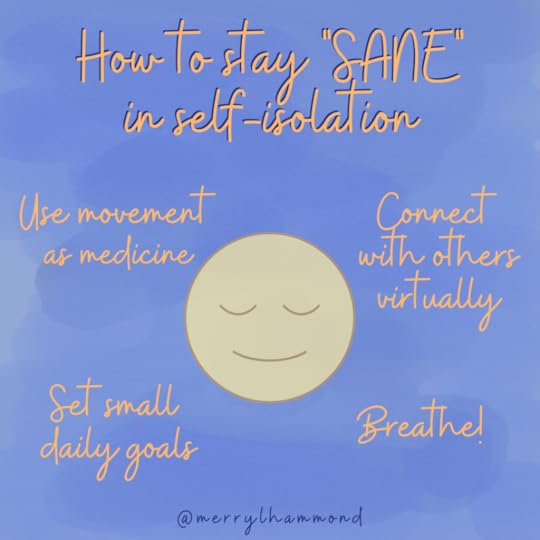
Have you been feeling way more stressed out
than usual, like you’re teetering on the edge of a breakdown with all the uncertainty
around coronavirus? For those of us who live with a mental illness and who
already need to make intentional daily efforts to manage and maintain our
mental health, the added stress of a pandemic could be seriously destabilizing,
and the practice of self-isolation could trigger anxiety or depression.
I, for one, am finding it really hard to focus on anything other than the pandemic, and I’m getting tired much earlier in the evening these days. Falling into a depression is definitely a worry for me because I know (from analyzing all my previous bipolar episodes) that getting any type of flu could likely trigger a depression.
Despite all the understandable attention
being placed on avoiding becoming physically
sick, now—more than ever—it’s vital that we take extra precautions to stay
“sane” and protect our mental health.
Here are some effective strategies to help you fight off the exceptional
anxiety and/or depression that this pandemic may be triggering in you.
1. Movement as medicine
When
the body moves, the brain quite literally grooves! We all know about the
powerful positive effects that exercise has on our mental health, and there’s
no reason why you shouldn’t keep up with daily exercise just because you can’t
go to the gym.
If
possible, get out into nature and go for walks or jogs. If you don’t have a
yard or a park nearby to get your nature-fix, step out onto your balcony or
stick your head out the window to breathe some fresh air, and then do an
at-home workout. There are thousands of workout options on YouTube, but to get
you started, here’s one video demonstrating a 16-minute high-intensity workout for
small spaces with absolutely no equipment needed: https://www.youtube.com/watch?v=TwOuh73cGGQ
If
you have an exercise machine like a treadmill or stationary bike at home, you
can watch a nature scene on your laptop or tablet while you exercise. I find they’re
quite realistic!
For example, here are two options for biking through nature:
https://www.youtube.com/watch?v=I-waCkPftQk
https://www.youtube.com/watch?v=USUJa3N3TOM
And this one is a relaxing walk on the beach: https://www.youtube.com/watch?v=lOGE7nNkL0Y
2. Use the internet to connect
Use the
internet (apps like WhatsApp, Skype, etc.) to connect with friends, family, and
coworkers. This will help you feel less isolated and shut out from the world.
However,
don’t allow yourself to obsess over the news. Keep a healthy distance from
things that will stress you out more.
For example, set a limit on the number of times or number of minutes per day
that you’ll listen to or watch the news. You don’t need to hear about every
single new confirmed case of COVID-19 infection, or death, etc.
3. Set small daily goals
Setting
yourself simple, achievable daily goals (e.g. I will exercise for x minutes,
and write x words in my journal, and email at least x people to stay in touch) will
give you a sense of purpose and control and help to decrease feelings of
powerlessness. I find that sticking as much as possible to my normal daily
routine (time of waking, mealtimes, exercise, bedtime, etc.) helps to normalize
this strange bubble we’re all living in during self-isolation.
Setting yourself simple, achievable daily goals (e.g. I will exercise for x minutes, and write x words in my journal, and email at least x people to stay in touch) will give you a sense of purpose and control and help to decrease feelings of powerlessness. I find that sticking as much as possible to my normal daily routine (time of waking, mealtimes, exercise, bedtime, etc.) helps to normalize this strange bubble we’re all living in during self-isolation.
4. Take one minute every hour or so to breathe
This
is a simple mindfulness practice that will bring your attention into the
present and rein in your anxious thoughts as you focus on the simple task of
inhaling and exhaling.
Instructions:
Set an alarm for every couple of hours to remind you to take a breathing breakSet a timer for the length of time you want to breathe for (1-2 minutes is a good start)Bring your attention to your slow breaths; to the feeling of air flowing into and out of your lungsEmpty your lungs fully with each exhalationIf your mind starts to wander, visualize the air as it comes in through your nose, gliding down your windpipe, flowing into your lungs and filling the air sacs (“alveoli” or tiny balloon-like structures) that make up your lungs. Hold the air there for a moment, and then picture the alveoli contracting and expelling the air back into the branches of your lungs, up into your windpipe, and out of your mouth.
If
it helps you to have a guided visual aid to concentrate on as you breathe, you
can try one of these methods:
A) Recommended for beginners:
(Or use this tool if you want to breathe for
longer than the 50-second video: https://www.calm.com/breathe)
B) For slower breaths (beginners beware: you may feel dizzy after a few breaths!):

Tip:
If you have an Apple watch like I do, I recommend using the Breathe app which
sends automatic breathing reminders and also has the animation to guide your
breaths.
Of
course, if you can manage to do a full mindfulness meditation, that’s
even better. Just search “guided meditation” on YouTube, and choose “sleep” or
“relaxation” or “anxiety” etc. One of my favourite YouTubers is Jason
Stephenson, whose voice and accent I really enjoy listening to, and he has
endless free videos ranging from fifteen minutes to several hours long. But I
urge you to experiment until you find someone you click with.

Know
that our main priority right now is to protect our mental health even as we
follow the guidelines of our public health authorities and politicians. By
keeping a positive attitude we will protect ourselves and can help others
around us who may not have the same strategies we have developed to stay sane.
Above all, remember that whatever else happens, this too shall pass!
Hang
in there, friends! And please let me know what you’re doing to cope with the
COVID-19 pandemic.
Cheers,

The post Coping with COVID-19 appeared first on Merryl Hammond.


December 12, 2019
How to Implement a Routine for Stability

In a previous post, I talked about WHY daily routines are so crucial to maintain mental stability. To recap quickly, it’s because routines help to regulate our circadian rhythms, and they also reduce our stress by removing some of the chaos and unpredictability of our day-to-day lives. So now let’s talk about HOW you can implement a routine in your life.
Just as diabetics must comply with dietary restrictions as well as take insulin, so those of us with bipolar must take responsibility to learn about how the disorder affects us personally, and to build a healthy lifestyle that will minimize our chances of triggering a bipolar episode and maximize our chances of maintaining a normal mood.
– Excerpt from my memoir Mad Like Me: Travels in Bipolar Country (p.262)
Be Realistic
There are two methods for creating new habits: slow and steady vs. radical. Most people find it more manageable to implement change incrementally – start with one new manageable habit and gradually add others on until you’ve got a whole new daily routine. Imagine walking slowly into a cold river, one small step at a time. This slow and steady method carries a lower risk of making you feel overwhelmed and causing you to burn out and revert back to your old lifestyle within a week. The radical method consists of diving into the deep end (or jumping head first into that cold river!) and making all the changes all at once – “all or nothing”. I’m a fan of this method because I get to reap the rewards of change much faster.
Either way, decide which method will work best for you and commit to
it!
The Slow & Steady Method
Examine your typical day and determine what parts of it are recurrent
and easy for you to control: sleep/wake up times, meals, exercise, chores,
personal time, hobbies, etc. Create a daily schedule with those controllable/regulatable
activities set in the same time slot each day and make a commitment to stick to
your schedule. Study your schedule to find places where you could insert a new,
healthy habit, and add that in using bold, colourful text.
Place a physical copy of your revised schedule – or many of them!
– somewhere you’ll be sure to see it (like beside your bathroom mirror, at your
keyboard, or on the fridge) so that:
you have
a visual reminder of what you should be doing and when (no “out of sight, out
of mind”!)you can
hold yourself accountable for what activity you should be engaging in at any
given moment.
Each week, add another new healthy activity to your schedule.

The Radical Method
Having a daily schedule has the added benefit of helping you become more self-aware of what you actually spend time doing, and I’ve found that typically helps me become more efficient at my routine tasks – I get through them faster and then have more relaxation time.
After successfully sticking to your dedicated times for activities in Level 1, examine your routine and see which activities and tasks you could cut, reduce, or combine. Keep your mental wellness in mind as you do this. For instance: let’s say that you have a girls’ night every two weeks, but that those friends mainly just complain about work/partners/kids/school/etc. and that makes you feel drained and annoyed, then perhaps you could cut that activity.
If you’re always running out of time in the day, see if it’s possible to reduce activities – e.g. if you like to watch TV or a movie to unwind after work, but you always lose track of time and then can’t exercise, then you could either switch the order of those activities (exercise FIRST and then watch TV for a shorter amount of time afterwards) or you could reduce your TV time by setting a timer for 30 minutes so that you have time to exercise.
Alternatively, you could combine the two activities – e.g. invest in a foldaway exercise bike and only allow yourself to watch TV if you’re using the bike at the same time.
Get in the habit of tracking or charting all that you can: your
activities, your mood, your symptoms, your sleep, etc. This may feel like a
nuisance for the first couple of weeks, but then it’ll become second nature.
Keep your charts close by in a place where you’ll be most likely to use them:
beside your bed, beside the coffee machine, or in your phone.
Get Creative
Consider what kind of life would best support your mental health. Write
down all the things you would do if you were living your dream life. What kind
of support network would you have? What relaxation and self-care activities
would you practise on a regular basis? Pick one or two of these items and
outline the steps that would enable you to achieve these things. Incorporate
those steps into your daily routine so that you don’t just continually put them
off.
Don’t be afraid to tweak and adjust your daily routine as you discover
what works best for you. Have fun with creating – and implementing – it!
Cheers,
The post How to Implement a Routine for Stability appeared first on Merryl Hammond.
October 11, 2019
The Benefits of Smiling: Why you should find one (or 100) reason(s) to smile every day!
Humans are a naturally smiley species. We appear to begin smiling even while we’re still in the womb.
There are so many emotional and health
benefits to smiling – keep reading to learn all about them – but what
does that mean for those of us in depression? Do we miss out on those benefits
altogether?
The answer: not if we don’t want to!
Smile therapy
If you’re not feeling your best today,
here’s a trick that I’ve used in the past when I was in depression: practise 5
minutes of “smile therapy.” You can do this either by forcing a smile or by
holding a pencil or chopstick lengthwise between your teeth for about 5 minutes.
Why?
Smiling (or simply moving the facial muscles that control a smile) can trick your brain into believing you’re happy which can then induce actual feelings of happiness.
How does it work?
Smiling activates the release of certain neuropeptides and neurotransmitters in your brain which lift your mood, lower stress, boost your immune system, and relax your body. Your brain can’t tell the difference between a genuine smile and a fake one: it just recognizes that your “smile muscles” were activated and it responds by releasing those chemicals.
So
even when you’re feeling down, the simple act of forcing a smile can cause your
brain to release these chemicals that lift your mood and make you feel better.
Moral of the story: Fake it (a smile)
‘til you make it (feel happy).
Better than chocolate?
Smiling – or even just seeing another smiling person – activates the reward center of our brain (the orbitofrontal cortex). Studies show that we can even feel more rewarded by smiles than by chocolate or sex or money! Personally, I have my doubts as to whether I’ll feel as satisfied by a smile next time I’m craving chocolate… but that may have more to do with addiction than a question of reward!
A big takeaway from this is that we can feel rewarded (aka better about ourselves) just by being around other people who are smiling.
So, try going to a park and watching happy families next time
you feel depressed – or even just look at a photograph of smiling people
if it’s one of those dreadful days when you can’t even get out of bed. Even if
you feel like you can’t possibly crack a smile, at least you’ll be surrounded
by happy people and excited children, and your brain will reward you anyway.
Smiling and pain relief
Smiling can also help to reduce physical pain. The endorphins that get released when you smile act as a natural pain reliever. Psychologist Sarah Pressman put this to the test by having a group of patients hold a chopstick in their mouths when they received a vaccine. She discovered that the chopstick patients reported feeling up to 40 percent less pain than those who weren’t given a chopstick and forced to “smile.”
Next time I stub my toe, I’ll try smiling
instead of cursing!
Wanna play with mind control?
Since we usually smile back at someone who smiles at us because smiling is contagious, try this “mind control” trick next time you come across someone who’s having a rough day:
Flash your pearly whites at them and
watch them smile back – now you’ve succeeded in tricking that person’s
brain into improving their mood just because they activated their smile muscles!
There’s some positive mind control for
you! Who
knows, maybe they will pass on a smile in turn…
Bonus
An added benefit of smiling is that people will actually treat you better: smiling causes people to view you as more attractive, reliable, relaxed, competent, and sincere.
So give a few minutes of continuous
smiling a try! And then let me know how you feel afterwards 
September 21, 2019
Use a Routine to Recover from Bipolar
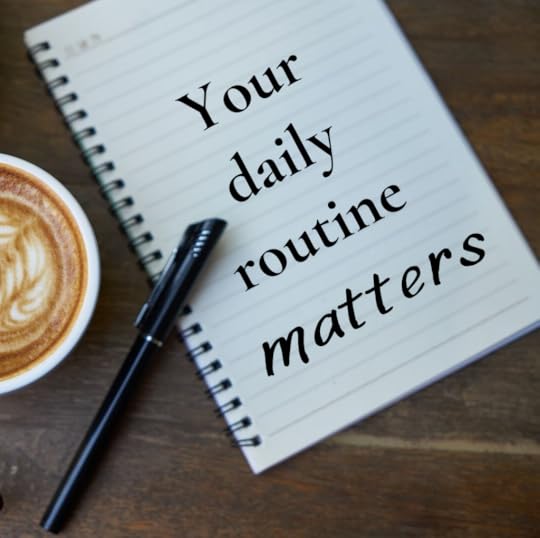
In my previous post, I explain how my type-A personality contributed to the development of my bipolar disorder, and – ironically – to my recovery from mental illness as well. It was thanks to my ambitious, highly-organized, perfectionist personality that I was able to analyze my symptoms and triggers, and establish a routine that would cultivate mental stability relatively early on.
Our mental
stability truly does need to be cared for; be nurtured. It is so fragile. Those
of us who have experienced mental breakdown, or who love someone who has, know
this well.
The best way
to nurture your mental health – whether you are currently living with a
brain illness or you’re wanting to save yourself the agony of ever dealing with
one – is to create a healthy daily routine.
The science of routine
Studies have shown that following a daily routine is one of the two most effective ways to achieve and maintain mental stability when you have bipolar disorder (the other is consistently taking the right meds). This is largely due to the fact that having a daily routine typically results in having a regular sleep schedule. And our circadian system (the body’s internal clock that regulates our sleep-wake cycle) is fundamentally linked to mood regulation.
In this study from the American Psychological Association, it was found that bipolar patients who maintained a daily routine averted new manic or depressive episodes longer than patients who didn’t.
Another study, in the Lancet Psychiatry, found that people who have a daytime routine have better mental health. This is attributed to two factors:
First, people who have daytime routine have a sense of agency and know what to expect from their day – meaning less chaos and unpredictability that would have resulted in stress. This frees up much-needed headspace, so they have more energy to combat other (more serious) stressors throughout the day, rather than being bulldozed by them, and this means that they can think and behave less impulsively.Second, people with daily routines have better sleep cycles and thus are better equipped to deal with emotional difficulties during the day.

Take care of your circadian system
While sleep
is undeniably critical for maintaining mental health and mood stability
– including for reasons beyond just stabilizing your circadian system – it
isn’t the only thing that affects your internal clock! Maintaining regular meal
times and even exercise times will help to regulate your circadian system too.
This means that you still need to pay close attention to the rest of your
waking hours, and you can do this by creating a daily routine.
Let’s dig a
little deeper into how a daily routine can help us maintain our mental health.
Routine, self-care, and boundaries
Maintaining a
daily routine may sound simple enough, but believe me, it’s no easy feat.
“Routine” is
a single word that – for most of us – encompasses an entire lifestyle
overhaul, including incorporating wellness activities (such as meditation, deep
breathing, regular exercise, self-expression [poetry, writing, art, sewing,
woodwork, etc.] and so on) and boundaries into each day if we want the best
chance of reclaiming or maintaining mental stability.
I use the
word “boundaries” because certain aspects of a routine may feel limiting
– for instance: sticking to a strict bedtime (even when you feel like you
have a good reason to extend it), restricting your caffeine and alcohol/drugs
intake, limiting exposure to emotional stimuli (e.g. horror films or toxic friends),
etc. But if these self-imposed boundaries mean that you will protect yourself
from mental illness, then surely that is actually more liberating than limiting?
It will be challenging to adjust to a new routine in the beginning, but I promise it will become your new normal soon enough if you stick with it, and it will be so worth it.
As I wrote on page 237 in my memoir:
“In the early days, it was a constant effort to
regain and reclaim my mental health. It started as a daily struggle to follow
my self-care routine. Gradually, that struggle became more manageable. Now,
it’s just the way I live. It’s a small price to pay to keep myself stable. If I
don’t manage my own bipolar, who will?”
And
so I wake up and go to bed at the same time every day, eat my meals at the same
time, exercise at the same time, meditate at the same time, and take my meds at
the same time. I don’t go to events that require me to stay up past my bedtime.
I don’t schedule work meetings or social events at times that would interfere
with my meal times.
This routine keeps my internal clock completely in check. It keeps my brain from getting over-stimulated by the change of activities each day; it provides structure so that my brain knows what to expect, and that helps keep my stress level low. The routine also frees up headspace and time (that would otherwise have been spent arranging my schedule and re-checking my to-do list), which I can instead put towards recovery activities, creative projects, or resting.
While some may view my routine as rigid, or boring, or lacking in spontaneity, I view it as my lifeline, because I don’t ever want to go mad again. I’ve been there, done that, and I refuse to let anything jeopardize my stability that I’ve worked so hard to earn back.

In
2011, I reflected in my journal:
In a fundamental way
My life is divided into two parts:
before bipolar, and after.
I spent years hankering for my “old life,”
But now I realize that was not ideal in any way.
Now I appreciate my “new life” –
all the things I do to stay healthy.
And all the things I never would’ve done
without bipolar.
I commit to continuing my healing.
I will love and take care of myself.
I hope that you,
too, will commit to your own health.
Stay tuned
for my next post about how you can do just that: by creating and implementing
your own routine!
Cheers,
The post Use a Routine to Recover from Bipolar appeared first on Merryl Hammond.
August 29, 2019
Did My Personality Type Cause My Bipolar?
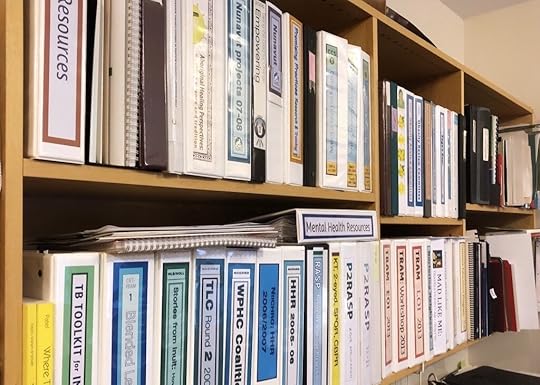 One of my several bookcases of binders
I used to pride myself on my total type-A personality. Over-achiever, control freak, wannabe wonder-woman who took on way too much – at work, at home, as a volunteer, and in social settings. My level of obsessive organization was unrivalled: I have over 60 binders for every possible project, labelled and stored neatly in my office.
Needless to say, confronting chaos and embracing change is not one of my fortés.
So when I developed bipolar disorder, I got completely derailed.
It was my type-A personality (combined with menopause) that caused my bipolar
In the spring of 2008, I was working 18-hour
days on work deadlines, plus some all-nighters (this was not too unusual for me
in those days). I was also in the middle of a legal crisis involving one of my
children and their school, so I was in full mama-bear mode, fighting the system
and defending our child. I was convinced that I would win, so I poured all my
energy into this battle. Add imbalanced hormones from menopause onset to the
mix of exhaustion, emotional over-investment, and work stress… and you have a
blueprint for mental meltdown.
In my case, this manifested as rapid-cycling
bipolar disorder type I.
My perfectly curated life collapsed. Immediately
after losing the legal battle, I plunged into a long depression. This was
followed by numerous classic manic and depressive episodes, psychiatric hospitalizations…
and all the drama that bipolar bestows.

But it was also my type-A personality that enabled my recovery
It was a hard road to recovery. But I got
here, ironically, thanks to my type-A personality. Even in my most wild mental
states, there was a fragment of the “real me” still clinging tenaciously. That
fragment hated the total loss of control that bipolar had brought, and knew
that this beast needed to be reined in.
So I gathered the few remaining shreds of
my brain that still functioned and began to:
meticulously chart
my moods; make daily lists of
my symptoms as well as the side effects I got from my meds; obsessively track
my activities, mealtimes, and sleep times; diligently study my
triggers; and radically alter my
lifestyle to avoid any excessive excitement or stress.
I totally redesigned my life and
implemented a new daily routine with militaristic obedience. I did everything
and anything to take back control of my life!
I succeeded!
After two full years of battling uncontrolled bipolar, I clawed my way back to mental stability. And there’s not a day that goes by that I’m not thankful for it.

If you’re still on the journey back to
your own stability, I urge you to implement a daily routine that will promote your
wellbeing. Take charge of your own mental health and be proactive about your
recovery. It’s entirely possible for you to get there!
If you’ve read my memoir, use the tips in Self-Care for Stability (Appendix 3), and any other resources you may have, to develop your routine. Ask for help with sticking to your routine from your support network. Reach out if you have specific questions; I’d love to address them in a future blog post.
By the way, I’m compiling an anthology of bipolar stories. If you’re interested in sharing yours, see the details here.
Check back next week for the science
behind daily routines and mental health.
Cheers,
The post Did My Personality Type Cause My Bipolar? appeared first on Merryl Hammond.
July 10, 2019
“Most productive week of my life”: A Self-Guided, At-Home Writer’s Retreat
A version of this article first appeared on the Nonfiction Authors Association’s blog on May 23 2019.

Beyond my budget!
Problem: As a member of various writers’ groups, I often receive notices about writers’ retreats, usually in exotic (and expensive!) locations. These retreats generally last between three and five days, many offer “yoga for all levels,” (they clearly haven’t seen me lately!), and all feature erudite experts who will lead participants in writing exercises to unblock our repressed creativity, and so on. There’s also plenty of free time to relax, explore, and enjoy local cuisine.
Sounds dreamy! But by the time I added up travel, accommodation, and meal costs to the several hundred dollars charged for registration, it was all way beyond my budget.
Solution: Design an at-home self-guided writer’s retreat for myself!
Using the advertised retreats as an example, I created my own program. The result was a wonderful week of intensely creative writing, reading, relaxing, and pampering!
I enjoyed this experience so much that I have included a template for you to plan your own at-home writer’s retreat.
Plan a Self-Guided, At-Home Retreat
Here are some headings for you to consider as your design your retreat:
Title of self-guided retreat: Professional retreats go by titles like “Write by the Ocean” or “Blue Mountain Writers’ Retreat.” Choose anything relevant and lofty-sounding for your retreat.
Goals: You might choose a creative writing-related goal, or do intensive research for a new project, or do something more administrative to do with promoting your last project (set up Amazon Ads; upload a Kindle version; pitch for podcasts or guest blog posts, etc.). But I’d caution you to ask: Is this goal really “retreat-worthy”?
Budget: By my calculations, I would have spent well over $1,000 to attend one of the retreats I saw advertised. I set a $200 limit for my at-home retreat, which would cover a couple of restaurant meals and a massage. What budget would work for you?
Preparation phase: To make the most of your actual retreat days, it helps to prepare mentally and logistically beforehand. For example, I went to the library so that I would already have the books I needed on hand during my retreat; I stocked up on groceries so no such mundane chores would divert me during my retreat; and of course I warned my family that I would be “away”/unavailable for five days.
Program: I created a table with activities and evaluations/reflections for each day, divided into morning, afternoon and evening slots. (See details about suggested activities below.)
Logistics: I moved into our guest room for the week, to signal to myself and my family (who kindly humoured me on this and many other points) that I really was “away on retreat” for the week! I did minimal housework and meal prep the whole week, with my family gamely covering for me. I made a sign saying “Respect the flow” and placed it beside my keyboard. I closed my office door when writing and stayed in there for as long as possible without leaving. I found that my ideal “work chunk” is somewhere between 1.5 – 2 hours. What’s yours?
Suggested Activities
Borrowing mercilessly from ideas gleaned from the professional retreats that had initially inspired this idea, I planned for:
Some physical activity (early morning walks or bike rides, a mini-yoga session following along on YouTube).
Outings to “inspiring places” nearby that I seldom make time to visit (playing tourist in my own neighbourhood to get a fresh perspective on things).
Visualizing exercises (again, YouTube is the best source: there are even some clips for visualizing success that target authors specifically).
A couple of treat meals out, both to avoid time-wasting meal prep and clean-up at home, but also to mark the fact that this week is really special.
Intensive reading and learning about writing (I devoured Stephen King’s highly recommended “On Writing” [2000], and watched some excellent Ted Talks on the craft of writing; I read several poetry books, and started reading a new book in my genre).
Brief daily journaling to reflect on the day’s activities, insights, ideas for new projects, and feedback for my next retreat.
But mainly, mainly reams of uninterrupted, focused time to write and brainstorm about my next project(s).
Reflections
This first retreat could not have gone better! I was infinitely more productive than during a normal week. In fact, as the title says, this was the most productive week of my life.
In the end, I spent less than $30 on restaurant meals, $85 on a 1.5-hour massage, and had no other out-of-pocket expenses.
I felt strangely validated: “Only writers go on writers’ retreats, right? I am on a writer’s retreat, therefore I must be a writer!” (I still have a hard time believing in myself as a writer even though I’ve published five books with mainstream publishers, numerous others with non-profit organizations, and self-published another one just last year. Maybe it’s “imposter syndrome” or maybe it’s internalized sexism, but either way I still need a confidence boost…)
But it’s the explosion of creativity and productivity that was so remarkable. Maybe “cascade” is a better term, because each new idea seemed to spark a related but independent idea. I started the week with one new blank document open on my desktop, and planned to focus on that project for the five days. By the end of the week, I had five separate documents, each representing a potential new writing project, and each, I can absolutely guarantee, would not have been “born” were it not for the magical creative bubble that my at-home retreat provided. My total output for the five days was 63 pages, or 12,650 words. That’s 12.6 pages or 2,530 words a day. King (2000:156) recommends that writers should set a goal of 1,000 words a day. I got two-and-a-half times more. And not to be competitive or anything, but the famously prolific King says he sets himselfa goal of 10 pages or 2,000 words a day (2000:154). Ha! (Granted, he sustains his output consistently, year after year. Maybe I need to go on a permanent retreat! Mind you, King admits that his wife is a major support to him. Maybe I just need a wife!)
So there you have it, fellow writers. I cannot recommend this strategy highly enough. What will it take for you to design and manage your own writer’s retreat? Perhaps on your retreat, you might write a story you’ll consider submitting to my new anthology project: Tales from Bipolar Country! (See the guidelines for contributors here.)
To your success!
The post “Most productive week of my life”: A Self-Guided, At-Home Writer’s Retreat appeared first on Merryl Hammond.
June 30, 2019
Happy Social Media Day!
Today is Social Media Day – a day to mark and celebrate the global impact that social media has had on the lives of all of us.
What an incredible tool it has proven to be for all of us! Social media has hugely impacted the way we communicate: we’re able to instantly share photos with friends, stay up-to-date about the lives of our family members across the world, reconnect with long-lost classmates, receive up-to-the-second news, and share our thoughts with millions of people in the blink of an eye.
It enables us to create and find communities of like-minded people who we can reach out to for support. Today, I’m thinking especially of the people in the mental health community on Facebook, Twitter, and Instagram who I’m so grateful to have connected with.
But social media can also be a big detriment to our lives – if we let it take control. We might compare our lives to the perfectly curated snapshots that we scroll past and feel that our lives are not as glamorous as everyone else’s.
Maybe you use social media as a means of procrastination. Before you know it, 10 (or 20 or 30) minutes of pointless scrolling have gone by, and you’re late for whatever task you should have been working on during that time. It can be big time-waster.
Another risk is that we might even become victim to harassment and mean remarks from people who disagree with us (or who just have nothing better to do with their time). Singer Selena Gomez recently admitted that she deleted Instagram when she realized how much she was fixating on the negative comments from body-shamers. It was making her feel depressed.
Social media makes us lonelier
A recent study from Psychiatry Research has shown that the better the support system that a person has IRL, the more likely they are to use social media in a healthy way (not spending too much time on it, not relying on it for all their emotional support and gratification). On the flip side, those who don’t have a positive support network IRL end up depending on social media far too much to create the same sense of support and friendship that they should be getting IRL, and that’s when it turns into an addiction. So, the more stressed or anxious a person is in their life, the more they’ll turn to social media for validation and comfort, which will then make them even more stressed (from FOMO and/or envy), which will cause them to spend even more time on social media… and so the cycle continues.
What does this mean for those of us who have a mental illness?
It means that if we’re not careful, we’ll get sucked down the social media rabbit hole and make our situations worse. Social media may seem harmless compared to other coping mechanisms we may use to deal with our stress and feel better in the moment (like drugs/alcohol, emotional eating, self-harm, money-spending, etc.). But it’s important to remember that it is still a type of addiction – and there is not a single addiction on the planet that is healthy for us. And allowing virtual connections to replace real-life connections can have a very real impact on our mental state.
So how do we find balance?
These are some tricks I use to stay balanced. See what might work for you!
When I feel my mood going down, I push myself to engage in real-life interactions, rather than sitting at home and isolating myself on social media. (Remember the study I mentioned: people who have a support network IRL use social media for fun and they don’t obsess over any aspect of it – so strive to be one of those people and emulate their behaviours.)
I schedule time into my day where I turn off my phone (or at least my notifications) and use that time to re-center myself – ideally by doing some meditation, walking in nature, or spending quality time with a loved one.
I am disciplined about how frequently I allow myself to check my social media. (See if you can bring it down to just twice a day: once in the morning and once in the evening. Maybe even take a full day off from it altogether! Try a Sunday Social Media Sabbatical.)
I am mindful about how being on social media makes me feel. (For many of us, it drains our energy, or makes us feel envious or anxious. We spend so much of our days on autopilot that we don’t check in with ourselves to see how certain activities make us feel. What a waste it is to allow ourselves to spend our precious time on something that doesn’t make us feel amazing.)
When I do go on social media, I focus on the positives. I engage with positive people, aim to learn something new, or to support others.
Social media is a tool, nothing more. It is a means of communication. It is not your life, nor is it an accurate reflection of anyone else’s. We all put our best face forward on Instagram!
When you’re old and wrinkly and reflecting back on the incredible life you’ve lived, I guarantee the highlights will have nothing to do with the time you spent scrolling on social media. They will be about the real connections and experiences you had. You will never regret having spent less time on your phone.
With all that said, happy Social Media Day, everyone!
The post Happy Social Media Day! appeared first on Merryl Hammond.
June 9, 2019
6 Tips to Write a Mesmerizing Memoir

This post originally appeared on the Nonfiction Authors Association’s blog on March 4 2019.
We all have a story buried somewhere within the years of our tumultuous lives. Each story contains a lesson to share, a perspective to enlighten, or an anecdote to entertain. I encourage everyone to pull that story out from the corners of your memories and onto the page, so that others can learn from it.
Reflecting on the process of writing Mad Like Me, I came up with these tips for you to write your own memoir. I am also running a free interactive workshop about memoir-writing at the Baie-D’Urfé Library on Wednesday, June 26, 2019 at 2pm, if you live in the area and would like to participate.
A quick definition before we begin: Memoir is a genre of non-fiction written from personal knowledge in the first person (unlike a biography which is researched and written by someone else, in the third person) about an era or period of one’s life (unlike an autobiography which usually spans an entire lifetime).
1. Prepare
Ask: Do I have a unique story to tell and/or message to share? (If not, maybe you could invest your time and energy elsewhere?) In my case, for example, I wrote my memoir, “Mad Like Me: Travels in Bipolar Country” to help break the stigma against bipolar disorder and mental illness in general.
Which sub-genre of memoir are you planning to write? Travel, adventure, family, romance, career, spirituality, grief, addictions, health, mental illness, or what? Read as many examples of other memoirs within that sub-genre as you can, so you can write knowing “what’s already out there.”
Ask: What is my main goal in writing this memoir? Catharsis? Personal healing? Vengeance? To set the record straight? To shock? To entertain? To educate? Or what?
Depending on your answer to the previous question, dig deeper by asking: Is writing a memoir the best possible means to achieve my goal? For example, it might be more effective for you to seek counselling. Or to re-write your will, omitting certain people as heirs!
2. Gather resources
If your memoir is going to refer to past events (e.g. memories from your childhood), you will need to find reliable source materials (e.g. photos, letters, diaries, school yearbooks, agendas, reflections by family members) to jog your memory and help you write with as much clarity, authority and earnestness as possible.
On the other hand, if your memoir is going to focus on recent times and future events (e.g. say you’ve just been diagnosed with a serious illness, and you want to document your physical symptoms and emotional reactions) then you have a perfect opportunity to become a kind of personal anthropologist. Keep copious notes as if you were observing yourself and your life from a social scientist’s perspective. What happened at your first doctor’s appointment? How did the other patients in the waiting room behave? How did the staff treat you? How did your family react to the diagnosis? Keep a detailed daily journal and record everything you experience. The richer the detail, the better the material you’ll have to refer back to when it comes time to write your memoir. Nothing will be as powerful as these impressions recorded in the moment.
Another source of data I used for my memoir was notes from informal interviews with my husband and then-teenaged children. Because my bipolar episodes often rendered me an “unreliable witness,” I had to rely on their recollections to fill in the gaps in my own story. In my memoir, I distinguish between my personal memories and theirs by specifying: “Rob says…” or “Tami tells me that…” This compromise enabled me to tell my story as honestly and comprehensively as possible.
Record impressions based on all five senses where relevant: what did things look, sound, taste, smell and feel like? This helps to bring the reader right into the situations you’re describing. You want them to feel as though they are truly accompanying you on this journey. This not only builds empathy for you, but makes readers feel much more invested in the story, and therefore more likely to recommend your memoir to others.
Store all your notes and other materials (brochures, travel tickets, mementos) safely. File notes and papers either in chronological order or by topic and use shoe boxes or other containers for bulkier items. The key is to have your records and other materials easily accessible as you write so you can refer to them whenever needed to verify dates, places and other details, and to inspire you to write with accuracy, immediacy and authenticity. For example, I still remember the sharp sensation in my chest the first time I held the ID bracelet from the psychiatric hospital where I’d been admitted. In that moment, I vividly remembered the fear, the zonked out feeling from heavy doses of psych meds, the staff, the other patients, the sounds… I was right back there! And I could write with so much more conviction and urgency as a result.
3. Develop a skeleton
When writing non-fiction, I like to start with a clear outline. Once I’ve determined a skeleton for the story, the writing flows relatively easily. It’s just a matter of “putting some flesh on the bones.”
One piece of advice I found very helpful is: start with the ending, and then decide where/when to begin your memoir. In other words, figure out what you consider to be the climax, then go back to the beginning and progressively move your story to that high point.
Most importantly, consider your audience: what story structure is most likely to be of greatest interest to them?
4. Find your voice
We all have a unique voice that represents something of who we are as individuals. Try to write like you speak; without any “literary airs” or self-conscious turns of phrase. Just be yourself on the page/screen and tell your story in your own words.
If you’re comfortable, include some humor – especially self-deprecating humor. Readers love a break from all the drama and pain that many memoirs include. Even the most serious topics (drug addiction, illness, betrayal, death) can be brightened with occasional moments of humor.
5. Write a first draft
Again: consider your audience! Ask, and then ask again: which details of my story will most interest readers? To help you sort through all the materials you’ve collected in the data gathering phase, ask which details you would include, and why: a) if you were writing the memoir only for yourself, as a therapeutic exercise; b) if you were writing it just for your family membersas a memento of your life; or c) if you were writing for publication?
Using your skeleton, consider factors like story pacing, use of dialogue, inclusion of artwork or photographs, where to place section and chapter breaks, etc. A memoir tells a story – it’s a true story from your own perspective – so all the guidelines of good story-telling apply here, too.
While we’re on the topic of truth-telling, it goes without saying that your readers rely on you to be honest. No exaggerations, no deceptions, no hoaxes. Wikipedia has a whole page with details of fake, false, fraudulent, fabricated and hoax memoirs dating back to 1836. It’s almost the case that fake memoirs are a sub-genre of memoirs! If you want to take licence with the truth, it’s simple: just write fiction!
6. Get permissions
Something that’s unique to a memoir is that you will probably have made detailed references to family members and friends, colleagues, and even professionals like health care providers, lawyers, and so on. That means that you need their permission to use their names in your memoir, or else you need to anonymize them.
To get permissions, I emailed people all the pages where they were mentioned by name and asked if I could a) include their names on those pages and b) formally thank them in the Acknowledgements. Only one psychiatrist preferred not to be named: he said he had no problem with what I had written, but he just didn’t want any “publicity.” He asked to be referred to simply as “Dr. Y.”
7. All the rest…
All the remaining work is the same for any book, not just a memoir, and is not dealt with here.
Ask for feedback from beta-readers.
Take up feedback and re-write sections if necessary.
Send to an editor.
Take up edits and polish the text.
Send for initial proofreading.
Take up proofreading corrections.
Send for typesetting.
Send for final proofreading. (Sometimes errors creep in during typesetting.)
Publish (decide: paperback, hard cover, ebook, audiobook?).
Promote and market your book.
Here’s to you and your memoir!

The post 6 Tips to Write a Mesmerizing Memoir appeared first on Merryl Hammond.
May 22, 2019
Go to the Mental Health Gym Every Day!
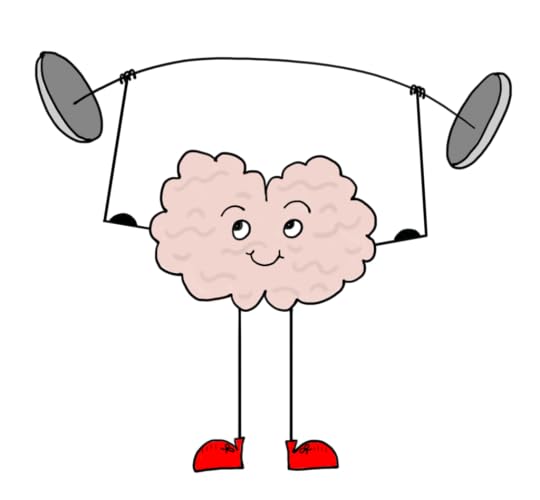
The concept of a “mental health gym”
I’m a big believer in going to the “brain gym”: taking steps to actively (and proactively) maintain my mental health. Mental fitness is vital for all of us, wherever we may fall on the mental health/mental illness continuum. We exercise or go to the gym every day (or we try to, at least!) to keep our bodies fit, but what do we do for our minds? We need to give just as much attention to our mental health as our physical health.
There are many types of physical exercises that we can do to stay physically fit: jogging, weight lifting, cycling, team sports, and yoga, to name a few. Just as we engage in these exercises both to stay fit now and to keep our bodies healthier for longer in our old age when they are more prone to breaking down, I do the same with mental “exercises” to maintain my current mental health, and prevent future mental illness when my mind might be more prone to getting sick.
What is a mental health gym?
What do I mean by going to the mental health gym? I mean engaging in brain exercises that will help keep you sane – these include wellness activities, positive social engagements, and all the usual aspects of maintaining a healthy lifestyle. Check out these ideas and see which activities you already engage in, and which you may need to pay more attention to:
Take your medications as prescribed.
Get enough sleep every night. (For me, 8 hours minimum works best.) This is when your brain – and body – works to heal itself.
Meditate daily. (I use guided meditations: YouTube has an endless selection, as does the free mobile app called “Insight Timer.” Experiment until you find a voice and music that soothes you.)
Exercise regularly. (See my blog post about “The power of exercise”.)
Reduce stress by minimizing your exposure to stressful events and relationships. (Easier said than done, often, but it’s something we can all learn to do better.)
Eat healthy food.
Avoid alcohol and other drugs.
Maintain social contact.
Develop a positive attitude: try to consciously feel grateful when something good happens in your life. At the same time, rather than viewing a negative event as “This bad thing happened to me” (victim mindset), try to reframe it to “This thing happened for me” (growth mindset). This empowering shift in mindset will enable you to find a learning experience within any supposedly ‘negative’ event and will stop you from feeling like a victim of the events in your life.
Check in with yourself regularly: schedule some me-time to evaluate how you’re feeling, how your week has gone, what events you handled well, and what ones detracted from your mental fitness. Find solutions to do better next week, and congratulate yourself for the things you did well.
If you’d like to explore these ideas further, these and other related points are discussed in detail in Appendix 3 (“Self-care for stability”) of my memoir, Mad Like Me.
Mental fitness and self-care
For all of us with bipolar disorder, self-care is a crucial part of working towards or maintaining recovery. And I mean disciplined, committed, almost fanatical self-care!
I didn’t used to take care of my mind at all – I didn’t know I had any reason to: I had been mentally healthy all my life and believed I would blissfully continue on that way! I worked looong hours, neglected my sleep, and often overextended myself both in my business and in my social life, and that’s why I got sick. Now – after going through hell and back with the beast that is bipolar, and thankfully coming out on the other side – I value my hard-won mental stability so highly, I take no chances. So I go to the mental health gym every day, and I don’t allow myself any ‘cheat days’ because I know what the cost may be.
In a teaching session that I ran for nursing students a couple of months ago, I concluded with this: “Please, don’t take your own mental health for granted. Go to the ‘mental health gym’ every single day, or you could end up like I did: on the wrong side of the thin line that separates mental health from mental illness.”
Can you think of any other brain exercises to keep yourself mentally healthy? Reach out to me on Facebook or Instagram with your ideas, I’d love to hear them!
To your mental health and fitness,
The post Go to the Mental Health Gym Every Day! appeared first on Merryl Hammond.
May 8, 2019
Let’s celebrate Mental Health Week! But…

It’s Mental Health Week here in Canada! This year’s theme, chosen by the sponsor, the Canadian Mental Health Association (CMHA), is “#GetLoud about what mental health really is.” I am so pleased that my country marks this occasion and sees the worthiness in promoting this cause. I am passionate about breaking the stigma against mental illness and to do that, we all need to #GetLoud about our experiences. Count me in!
But as I began to research the origins of Mental Health Week both in Canada and abroad, I noticed some immense gaps in the international level of involvement when it comes to promoting mental health…
In the UK
In the UK, they have what’s called Mental Health Awareness Week one week after us (13–19 May). The theme for that? “Body Image: How we think and feel about our bodies.”
In Australia
What if you live in Australia? There, you have to wait for Mental Health Week from October 5–11, 2019. The theme this year: “Mental Health: What do you know?” (The website also mentions: “We also support World Mental Health Day on October 10th, 2019.”)
Confusion!
Back in Canada and the USA, we also have a Mental Illness Awareness Week in October from October 6–12; it starts and ends just one day after Australia’s Mental Health Week.
In South Africa, the whole of October is “Mental Health Awareness Month.”
Confused about all the different dates, names and themes?
Me too!
But even more disturbing than the lack of global co-ordination on this matter is the fact that if you do a random search for Mental Health Weeks or Months in countries as diverse as India, China, Indonesia, Zambia, Costa Rica and Brazil, you will find absolutely no evidence that either governments or community organizations are taking any action to promote mental health.
Call to Action
There is no unity of thought and action on this topic around the world. I therefore call on the World Health Organization to work with member states to break down the existing national silos, to encourage and support all countries to co-ordinate their efforts and learn from each other, and to promote unified international efforts around global Mental Health Days, Weeks and Months to ensure that this topic is given the attention and funding it deserves, year-round.
Imagine how much more effective our efforts would be if people all around the world were rising up at the same time(s), under the same banner, galvanized around a common theme!
To your mental health,
The post Let’s celebrate Mental Health Week! But… appeared first on Merryl Hammond.