
Mark Resnick's Blog: Caregiving Guys Blog
January 8, 2026
How Caregivers Begin Again


September 17, 2025
Three conversations that changed my week
January 6, 2025
Loss and travel
The loss of my wife Lynda on June 6, 2024, was difficult and deeply painful. After six months of not hearing her voice, I am still in a state of disbelief. I look around the house that Lynda turned into a home. Without her, it feels like just a house again. It is absent of the life that Lynda created every day.
It is said that you don’t realize what someone does until they are no longer there—something I have learned. Even in her hardest days fighting cancer, Lynda managed to research and order things online that improved our life together. I still look around and see items that make me wonder, “When did she find the time to buy that?” or “How did she know it would make the room so much better?” I miss her dearly and will forever hold her in my heart.
I have always enjoyed traveling. I love discovering new places and revisiting old and familiar ones. Lynda often told me that, because of her cancer, she felt she was ruining my life and keeping me from doing the things I enjoyed. She said I could travel after she was gone. It hurt me to hear that, and I would always reply that I cared more for her and for helping her than for any travel I might dream of.
After almost 12 years of battling cancer, Lynda remained strong, but she left us on June 6, 2024. When she passed, my daughter Maria told me I should do something for myself. I would give anything to continue caring for Lynda, but that was no longer possible. My thoughts wandered to my roots and to visiting my aunt, who would soon celebrate her 93rd birthday in Italy.
I felt tremendous guilt for even considering the trip because Lynda wouldn’t be with me. I didn’t feel I had the right to start having a “good time.” The guilt built up as I thought about Lynda’s words—that she had given up her life so I could enjoy some of my remaining years. I think about this all the time and hope and pray that isn’t true. The guilt has not diminished. I would give anything to have her back.
THE JOURNEY HOME
The arrangements were made, and my brother and I traveled to Rome. On the first day, we took a bus to my hometown, Filetto, Abruzzo—a beautiful small town with a population of 930, most of whom live on farms in the outskirts. I admit my bias, but the town not only holds the charm of an ancient small village, but it is also conveniently located about 30 minutes from some of the most beautiful beaches to the east, in Pescara, and about 30 minutes from the majestic Maiella and Gran Sasso mountains to the west.
While I was excited to visit, I was still weighed down with guilt. I could not let go of the thought that Lynda had given up her life so that I could travel. I hope this isn’t the case, but the thought lingered.
It was thrilling to visit the land of my roots, the farmhouse where I was born, and to reconnect with family members, some of whom I hadn’t seen in almost 50 years, along with others I had never met.
A WARM WELCOME
When we arrived at my cousin’s house (in the middle of an extreme heat wave), we had not slept for almost 36 hours. But who could think about sleep? I was too excited to see my aunt, my cousin, her husband, and their sons. The excitement of being there outweighed any discomfort from the heat, especially after enjoying a delicious Italian dinner prepared by my cousin. Soon after, I finally went to bed.
The next day, we visited my aunt at her farmhouse about a mile outside town. It is the same farm where she has lived since she married about 75 years ago—a beautiful house on a hill, surrounded by breathtaking views of mountains, valleys, and extensive grapevines.
That evening, my brother and I took a walk around Filetto. While it saddened me to see that the town had fewer people than before, I was excited to walk streets I hadn’t seen in almost 50 years. As we strolled, an elderly woman stepped out of her home and started a conversation with us. She then invited us in for coffee. Where else would an elderly woman invite two strangers into her home at 9:30 at night? Such wonderful people!
WHERE I WAS BORN
During our visit, we walked down the dirt roads toward the farmhouse where I was born. Sadly, most of the house had collapsed from time and neglect, so I couldn’t go inside. But I stood in front of it, recalling the joy of playing as a little boy with cows, sheep, and my dog.
We were poor—there was no indoor plumbing or electricity. My mother cooked dinners in the fireplace, and we had to fetch water from a well across the yard. Yet, I never felt poor. The love and comfort of family and neighbors made life rich. This is where I first learned the life lesson of caregiving: to care for family members and neighbors, to share, and to love anyone in need.
Some of the land remains in the family and is now mostly covered in grapevines. Visiting during grape-picking season, we enjoyed eating grapes straight from the vine—nothing tastes better! We also stopped to talk with men harvesting grapes, who were loading them into trailers to be delivered to a winery in nearby Orsogna.
THREE DAYS IN ROME
From Filetto, we traveled to Rome with Matteo, my cousin’s son. He arranged for us to stay in a spacious apartment within walking distance of major attractions.
Visiting the Vatican for the first time exceeded every expectation. Walking through St. Peter’s Basilica and the Sistine Chapel left me speechless. The grandeur of the art and architecture—created centuries ago with limited tools—was awe-inspiring.
That evening, we dined at Ristorante Abruzzi SS Apostoli, a recommendation from Msgr. Avila of Falmouth. The food and service were incredible. At the end of the meal, the restaurant provided us with four bottles of liquor to enjoy with our dessert—gratis.
TIME WITH FAMILY
The rest of the trip was spent reconnecting with family. We visited my grandfather’s home, where I grew up and played as a boy. One cousin arranged a family dinner at a local restaurant. The meal was endless, delicious, and made even better by live music from an accordion player and his two young sons.
I also visited Chiesa Madonna Della Liberata, the church in Filetto where I was baptized and received my First Communion. The small size of the church surprised me, as childhood memories had painted it as much larger. Still, attending Mass there was deeply emotional. I felt a connection to my faith, my family, and to Lynda, who was with me in spirit throughout this trip.
FINAL THOUGHTS
I can’t wait to go back!
I’m so grateful for my brother, sister-in-law, and my family in Italy, for planning such a memorable visit. This journey was one of the most joyous adventures of my life, yet also one of the saddest. It reminded me that we must seize opportunities when they arise and not wait for a “better time.” Lynda and I had planned to visit Italy many times but always put it off. In retrospect, we should have gone when we had the chance.
Everyone tells me that Lynda would want me to travel, reconnect with my roots, and find joy. I want to believe that is true, but the guilt remains. While I enjoyed my time in Italy, it did not take away the sadness of traveling without her.
I would trade it all to have Lynda back with me physically, though she will always be in my heart.
November 12, 2024
Breaking Out of the Rut: Recharging as a Caregiver to Avoid Burnout
Last week, I split my time in San Diego between vacation and work—a change from how I used to travel, which was mainly work-focused. As I get older, I realize that taking time to recharge is not a luxury; it’s essential. This is especially true for caregivers. The pressure is unrelenting when you’re responsible for someone else’s well-being. Getting stuck in a rut or feeling burned out isn’t just a risk; it’s a reality.
Caregiving is a unique experience. The constant demands, physical and emotional exhaustion, and limited time for yourself can quickly lead to burnout. Add in the fact that many caregivers feel guilty for taking time off or prioritizing their needs, and it’s no wonder caregivers are often caught in a cycle of overexertion. But just like anyone else, caregivers need a way to recharge their batteries to be their best for those they care for.
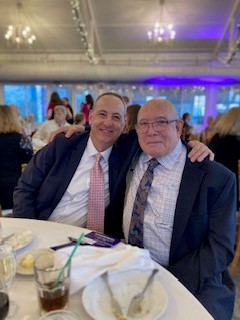
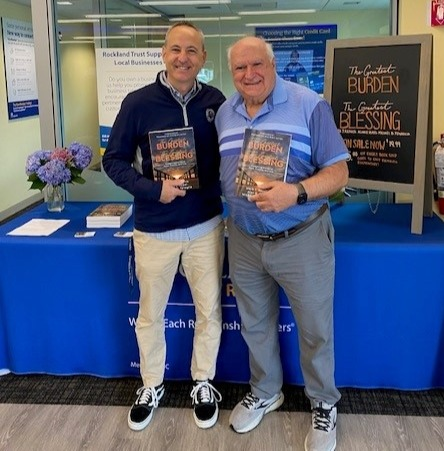
(L to R) Mark and Alan attend an Alzheimer's fundraiser. Mike and Mark promote the book. Don't skip social invitations—your health and the health of your care recipient require time to recharge.
When my dad was diagnosed with Alzheimer’s ten years ago, my priorities shifted. Caregiving teaches you to value time differently. It’s no longer just about balancing work and personal life; it’s about finding small moments for yourself amid a sea of responsibilities. While my caregiving journey has evolved, I know that many caregivers are still in the thick of it, facing long days and a near-constant sense of duty.
For caregivers, taking time away or even carving out personal moments can feel selfish, but it’s necessary. Just like my recent break in San Diego helped me regain energy, small breaks for caregivers can prevent burnout, reduce stress, and provide the resilience needed for the challenges of caregiving.
Caregiving routines can become monotonous, adding to mental and emotional fatigue. Here are a few small, manageable steps to help caregivers break out of those ruts and reenergize.
Daily “Caregiver Vitamins” Think of these as essential actions that give you a sense of accomplishment or calm, even on the busiest days. Caregiving doesn’t allow for long breaks, but setting aside just 10-15 minutes to recharge can make a huge difference. Whether taking a short walk, meditating, journaling, or listening to music, find small things that ground you. These “caregiver vitamins” can help you feel more in control and less overwhelmed.
Seek Moments of Joy and Connection The caregiving journey can often feel isolating, but finding joy—even in small ways—can make a difference. For some, it’s watching a favorite show with someone you care for, sharing a laugh, or enjoying nature. Small connections with others, whether family or friends, can lift your mood and ease feelings of isolation. Don’t underestimate the power of a phone call, a quick text exchange, or even an online support group to give you the emotional connection you need.
Give Yourself Permission to Rest Without Guilt Rest is essential for caregivers, yet many feel guilty taking even a short break. The reality is that taking time for yourself isn’t just okay; it’s necessary. Experts say rest boosts memory, reduces stress, and supports overall cognitive health. If a full night’s sleep isn’t possible, consider napping when you can or practicing mindfulness exercises that help you recharge in the moment.
Break Down Goals and Tasks into Manageable Bites Like everyone, caregivers have goals—managing the daily schedule, keeping up with medical appointments, or caring for the house. However, setting large, undefined goals often adds stress. James Clear’s Atomic Habits emphasizes the importance of 1% improvements or small, manageable changes over time. Try breaking down your to-do list into smaller, prioritized tasks. Focus on one thing at a time rather than getting overwhelmed by everything at once.
Don’t Hesitate to Ask for Help One of the most common causes of caregiver burnout is the reluctance to ask for help. If you feel you’re shouldering too much, remember that others may be willing to help if you let them know what you need. Whether asking family members to pitch in, seeking respite care, or hiring assistance for even a few hours a week, help can make all the difference. Sharing responsibilities gives you breathing room, which is critical to maintaining energy and resilience.

With winter and shorter days upon us, it’s easy for caregivers to fall into a deeper rut. Seasonal changes can bring about a lack of motivation, especially if the caregiving routine becomes more restrictive due to colder weather. The darker days often lead to more isolation and limit opportunities for outdoor activities, which are usually a vital outlet.
Consider trying new indoor activities, like gentle stretching, light exercises, or guided meditation, which can help relieve stress and offer a mental boost. Getting up just 15 minutes earlier to practice something restorative, like journaling or drinking coffee in silence, can positively impact your day.
I was lucky enough to get a vacation in November, but I know that may not be realistic for many caregivers. If you can’t take extended time away, look for other ways to charge your batteries. Do you enjoy something simple, like listening to a favorite podcast, reading a book, or just sitting outside for a few minutes? Small moments matter. These little escapes help us break the monotony and don’t require significant time commitments.
Ultimately, we all have needs—physical, emotional, and mental—that, when ignored, lead to burnout. Caregiving is a profoundly challenging yet rewarding role, and finding ways to stay energized and engaged is essential. Take a few moments each day to ask yourself what small action would make your day more accessible or enjoyable. Making a list of your needs can help clarify your priorities and lead to a healthier, more balanced routine.

Caregiving is an ongoing journey. Just as I prioritize small daily habits to avoid burnout in my work and personal life, caregivers can benefit from taking small, intentional steps that prevent ruts and keep spirits high. Whether through daily “vitamins,” seeking joy, or accepting help, caregivers can find ways to recharge and feel prepared for the road ahead.
If you’re a caregiver, remember that you’re not alone. Even in the most challenging times, a community of people understands. Embrace the support, take those small steps to recharge, and find strength in knowing you’re making a difference every day.
August 16, 2024
Caregiving and Celebrations: Why Taking Time to Celebrate Matters
As caregivers, it's easy to get lost in the demands of looking after our loved ones, often pushing aside our needs and desires. The idea of celebrating—whether it's a birthday, a wedding, or even just a night out with friends—can feel like an added burden when we're already exhausted, sad, and lonely.
But the truth is, celebrating life's milestones is not just important; it's essential for our well-being.
I was reminded of this when I watched the men’s USA gymnastics team win a bronze medal in Paris. The joy and pride I felt for those athletes—especially Stephen Nedoroscik from Worcester—was overwhelming. It brought tears to my eyes. There’s something magical about celebrations, whether it's a global event like the Olympics or a more personal occasion like a birthday.

Yet, despite the joy they bring, many of us caregivers shy away from celebrating, thinking we’re too tired or too burdened to enjoy it.
My dad would have turned 87 last week, on July 24th. I thought about posting a tribute on social media but didn’t. Birthdays have never been a big deal, perhaps because I have so few memories of celebrating them as a child. But as I’ve grown older, I’ve realized that celebrating—whether our birthdays or the milestones of those we love—is a crucial part of life.
Research shows that celebrations can significantly boost our mood and overall health. Engaging in positive activities like celebrating can increase the production of dopamine and serotonin, the brain chemicals responsible for feelings of happiness and well-being. Celebrations provide a break from the routine, a chance to connect with others, and an opportunity to reflect on the positive aspects of life, even during challenging times.
These benefits are particularly important for caregivers. The daily grind of caregiving can be emotionally and physically draining, leading to burnout if we’re not careful. Celebrating life’s moments—big or small—can provide much-needed respite, helping us recharge and maintain our emotional health.
But how can we find the time and energy to celebrate when caregiving feels like a full-time job? Here are some tips:
Prioritize Self-Care: It might seem counterintuitive, but taking time for yourself is one of the best things you can do for your loved one. When you’re rested and recharged, you’re better equipped to provide care. Schedule regular breaks, even if it’s just a short walk or a few minutes of quiet time.
Simplify Celebrations: Not every celebration needs to be a grand affair. Sometimes, a simple gathering with close friends or a quiet dinner can be as meaningful. Focus on what’s important to you, whether spending time with loved ones, enjoying your favorite meal, or reflecting.
Accept Help: Don’t be afraid to ask for help or accept offers from others. Whether it’s a friend offering to sit with your loved one for an afternoon or a family member helping to plan a small celebration, accepting help can lighten your load and allow you to enjoy the moment.
Celebrate the Small Wins: Sometimes, just making it through another day is worth celebrating. Find joy in the small victories—whether it’s a good day with your loved one or finding a few moments of peace for yourself.
Gift Ideas for Caregivers: To support a caregiver, consider gifts that encourage rest and relaxation. A spa day, a meal delivery service, or even a thoughtful note can go a long way in showing appreciation and providing relief.
As caregivers, it’s easy to feel like we don’t have time for celebrations. But taking the time to celebrate—even when it feels like the last thing on our minds—can profoundly benefit our health and well-being. So, whether it’s a birthday, an anniversary, or just a quiet evening with friends, remember that celebrating life’s moments is an important part of taking care of yourself.
June 27, 2024
remembering Lynda
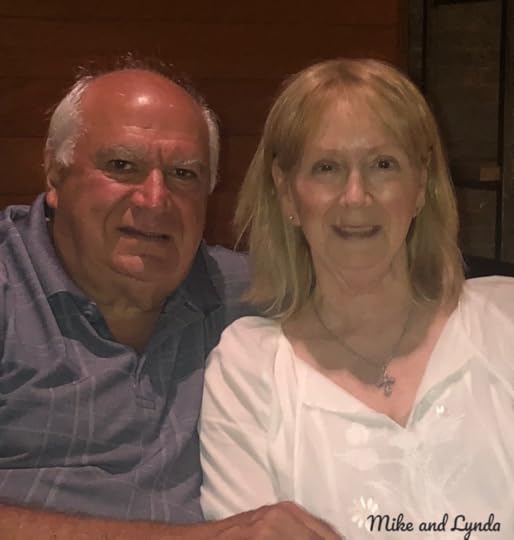
Lynda (Testa) Tenaglia passed away on June 6, 2024, after a long and courageous battle with cancer. She was the beloved wife of 54 years to co-author Michael Tenaglia and personally contributed her caregiving story to our book. We thank Mike for sharing this heartfelt and personal letter, read at her service on June 12.
It was August 29th, 1964, when Barbara Antonellis, a co-worker at Sklars, invited me to a party. I was a shy 17-year-old, but I went to the party to have a good time and meet new people. That’s when I saw a beautiful young lady…Lynda. After a while, I got the courage to ask her to dance. She used to come into the store with her cousin; I was so shy that I hid to see her without her seeing me. I finally got the courage to ask her out, and we had our first date on October 4th, 1964. As Father Nick told me the other night, you were not quick at the trigger, well maybe for a first date, but we dated for 6 years before we married!
I was somewhat of a prankster, so when I decided to ask her to marry me, I didn’t get on one knee like a normal person; I put the diamond in a cracker jack box. On the day I proposed, we were with my niece, Lisa. I handed Lynda the box of Cracker Jack’s, and she proceeded to open the box and give it to Lisa, what a generous person! I was shocked and panicked. I begged Lynda to take the box and open the gift inside, which she did, and we were engaged.
We were married for 54 years. In that time, there were struggles, some hard times, but many happy times. She always wanted her family to be safe and around her. On September 11th, she was scared; we were all scared. She called me at work asking me to come home because, not knowing what would happen, she wanted to be sure that her family was together and safe. It was an eerie feeling at home, total silence, not a plane in the sky, afraid but happy to be together. That started our many trips to New York because she wanted to see and experience ground zero. We also took advantage of our many trips to see Broadway plays and restaurants.
We enjoyed our time together with our children, family, and friends. Our vacations on the Cape with Maria and Peter or at my brother’s home in New Hampshire. Restaurants, BBQs, movies. We had many fun times, but that was before cancer entered our lives and changed everything.
Cancer entered our lives on February 5th, 2013, and nothing would ever be the same.
The pain in her face and body was devastating and hurtful, but with every burden, there is a blessing. In our frequent trips for Cancer treatment, whether it was to Mass General, Dana Farber, or Sloan Kettering in New York, we had the privilege of meeting many wonderful and strong people; Lynda and I often talked about meeting Alan Rubel and his wife, Sharon when we were in the waiting rooms at Mass General. We became strong and lifelong friends. We were great support for each other. Lynda and Sharon would often text each other in the middle of the night. We also met many courageous people in our weekly support meetings for cancer patients and their caregivers. I can’t name everyone, and some of these heroes are here today who have battled and continue to fight the courageous fight against cancer along with their caregivers. They are the most amazing people you would ever want to meet. They do it all with smiles and inspiration for their families and loved ones. Some of these wonderful people are no longer with us, but their strength, inspiration, and Lynda’s will stay with me forever.
I have met many wonderful people in my 11-year journey with Lynda. I recall one day when we were at Mass General for the daily radiation treatments, and I was approached by a young lady who handed me a piece of green candy. She said, “My dad thinks the green ones are the best, and he wanted you to have this.” I looked over and saw a man in a wheelchair, clearly dealing with his own cancer battle, and he cared about me and what cancer was doing to us. A real hero!!!!
I recently had an amazing conversation with my cousin at 11 o’clock at night, and we spoke about all the people afflicted with diseases. Because of his work with various hospitals, he has also encountered many wonderful doctors and patients, again the real heroes!!!
Lynda may not have known it, but she made me better. I love to eat Italian food, but she always reminded me that eating the way I did was not good for me and that I had to be careful. Of course, I didn’t like hearing it, but she was right. She inspired me to work harder and enjoy the simple things in life. She was always looking out for me. Even during her courageous fight with cancer, she watched out for me and made sure I was taking care of myself.
I enjoy playing golf, and those who have played with me wonder if I’ve ever picked a club before, but nevertheless, I enjoy it. Whenever a friend would call, she always encouraged me to go out to play, but I couldn’t leave her because I could see the pain in her face and the struggle in her body. It was very hard for both of us, but I would not trade one minute of caring for her because it was a privilege to care for her. I would do it all over again if I could have her back with me but without the pain of cancer.
She was always strong, and through it all, she was always worried about how her struggle impacted me, Maria, and her beautiful grandchildren, Abby and Jack. She often apologized that she was ruining my life because of her cancer. I did my best; I was only too happy to make sure she was comfortable and assist her in doing what she wanted.
Lynda inspired me to work with Alan Rubel and Mark Resnick to write and publish a book, The Greatest Burden The Greatest Blessing. Lynda inspired me to share our story through this book, hoping that our story could help others when cancer or other diseases change their lives forever. In Lynda’s memory, I commit myself to continuing to work in hospitals and churches to help others through this challenging journey.
May 31st was our 54th anniversary. All I could do was take some flowers to her hospital room. We talked about our life together and promised each other that when she was better, we would take another trip to Aruba or her favorite Island, Bermuda. Cancer did not defeat her strength and determination. She sometimes accused me of being in denial; perhaps our conversation on our anniversary was one of those times, but she didn’t say it or show it.
She was so proud of our grandchildren and wanted to be a part of their special moments. She couldn’t attend her granddaughter’s graduation, but she saw the video replay and was so proud that Abby was the Master of Ceremonies. She was so proud that she showed the video to any doctor or nurse who came into the room. She was also so proud of her grandson’s success with wrestling and track, and I recently showed her Jack’s pole-vaulting videos from the States. She was so impressed. She will continue to look down and watch Abby and Jack pursue their dreams.
I miss you, Lynda, and will continue to miss you every day for the rest of my life. I will continue to do some of our favorite activities: getting a cup of coffee and sitting at the beach, enjoying the sights and sounds of the waves. I will watch for your signs that you are with me. Like all the times we got a coffee and a breakfast sandwich or a scone, and we would have seagulls stand at the hood of the car, staring at us, begging for food and bringing a smile to our faces. Even though we are not supposed to do it, I will give them some food and blame you.
Despite Lynda's pain at the time, she always enjoyed being at the beach and having a cup of caramel macchiato. We would often sit there, whether talking about her cancer, our family and grandchildren, the members of our Mass General support group, or just sitting in silence. She loved being there.
Some of you may have heard of the national radio personality Delilah. I had the privilege of knowing her when she was in Boston. I spoke with her Monday night, and she was helpful and inspirational. She encouraged me to seek help when I needed it and help others when they needed it. No one has a perfect life; we all have pains and struggles, and as she reminded me the other night, I encourage you, and Lynda encourages you not to go through life’s struggles and pains alone. Get help when you need it, whether from a family member, a friend or sometimes even a stranger. You are stronger than you think, and you can become stronger with the help of others.
I love you, Lynda, and will love you and miss you every day for the rest of my life. I will see you someday so that you can remind me of all the things I did wrong in my life. But I won’t complain because you helped me become the best person I could be. You raised a wonderful family and have two incredible grandchildren. I am forever amazed at how you could do it all, even during these past 11 years through the pain of cancer.
You are and will always be my love and my hero!! I love you and miss you.
June 5, 2024
To a whole new level
By Michael D. Tenaglia
Caregiving is the activity or profession of regularly caring for a sick, elderly, or disabled person. It can be filled with rewards and joy but can also be overwhelming and exhausting. Some may choose it as a profession, while others have it imposed on them because a loved one is inflicted with a disease, a disability, or an accident.
Regardless, a person in a caregiving situation becomes the invisible patient, as Dr. Jamie Jacobs, PhD, of Massachusetts General Hospital, discusses in The Greatest Burden, The Greatest Blessing.
We hear directly from caregivers how they are stretched thin with little time to spare for themselves. It is no wonder we are learning that caregivers are experiencing more physical ailments, from colds to heart disease, as well as mood disorders like depression and anxiety.
regivers are worn out and at risk for serious chronic illness and mortality, yet why are we not doing more for them? The physical and emotional burdens of caregiving have never been more prominent. In essence, the caregiver has become the invisible patient.
Others in the book share similar experiences, but that doesn't stop them from serving as a caregiver for their loved ones.
Through my own thirteen-year journey caring for my wife, Lynda, I can't help but look at the world differently. I admire and adore those who perform selfless acts of love while serving as a caregiver. Their sacrifices, which they do without a hint of self-pity, are a marvel.
I also look at those who have achieved fortune and fame and use that platform for self-aggrandizing, gaining greater wealth, or enjoying the pleasures of their resources. These acts do nothing to help others, especially those in need. Sometimes, they perform selfless acts only when a camera is available, or others are around to witness their "acts" of generosity.
On the other hand, some well-known people use their platform to benefit others in need. Often, they do so quietly and selflessly. I am thinking of Tim and Stacy Wakefield, who both succumbed to cancer. It was only after their deaths that we learned of the many deeds of kindness and generosity that were done behind closed doors. These are true heroes in our society.
I would like to recognize one person who has taken caregiving to a whole new level. For me and many others, caregiving is a one-on-one situation. Yet, after attaining a visible platform and the necessary resources to care for others, she has used her platform to benefit children.
You know her as Delilah.
Years ago, I had the privilege of meeting Delilah at a local Boston radio station, WVBF, and interacted with her many times. Now, she is on nearly 200 stations throughout the country and using her expanded platform to care for 15 children (three of her own and 12 adopted). Later, she founded Point Hope and is still making a difference at home and in many people’s lives.
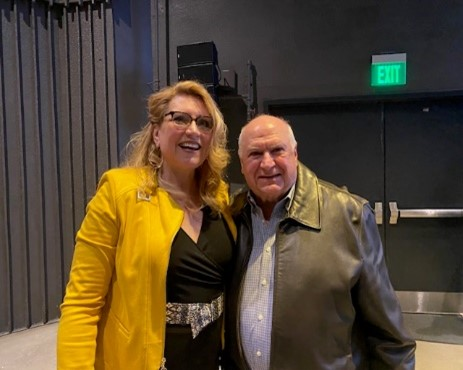
Delilah and Mike were recently at an event in Boston, MA. The author provided the photo.
I had the privilege of reconnecting with Delilah through an event produced by the local station, WMJX 106.7. It was an opportunity to introduce her to our book and discuss with her the wonderful opportunities and privileges of becoming a caregiver.
You may feel invisible, lost, or broken down.
But know this: you are not invisible, and you are not alone. You, too, take caregiving to a whole new level just by showing up every day for your loved one.
May 11, 2024
Cupcakes & karma
The Easy Bake oven Mom got me for Christmas was the highlight of my Christmas that year. It also prompted my first ambition: to become a baker.
I’m 52. It’s unlikely—though not impossible—that I’ll follow through on this goal. I do, however, continue to bake. Not just bread and cinnamon buns but chocolate chip cookies, shortbread, brownies, muffins, and apple pie.
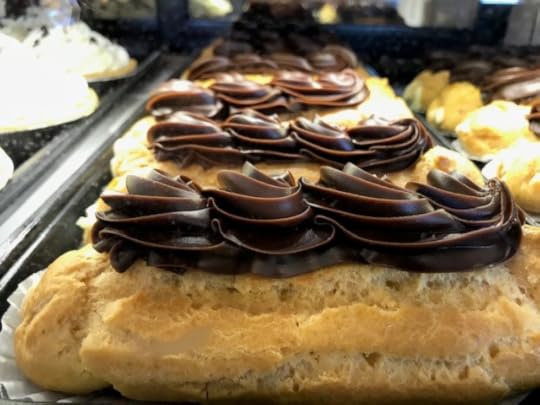
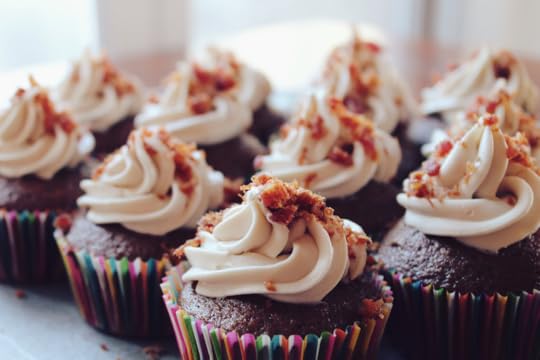
I used to make cupcakes but was never happy with the result; still, they remain high on my list of favorite desserts, along with chocolate eclairs, black and whites (half-moons), anisette cookies, whoopie pies, and lobster tails.
My second ambition was to become an author, thanks to Mrs. Blake, my fifth-grade English teacher. I don’t know if she’s still alive or how to contact her, but I’ll always be grateful for putting me on this path.
I’m using the word ambition, but the more appropriate word is passion. Growing up, I never had a passion for branded merch, yet that’s where I find myself today. Baking, writing, coaching—those were my passions.
I’d have started writing sooner and probably become a high school or college professor—maybe even a college president. I’ve always wanted to make a difference in people’s lives, but I think it’s safe to say that regardless of my chosen profession, I would be passionate about it.
That’s how I’m wired—and always have been.
Not everyone is wired this way, and not everyone is passionate about what they do for a living. I acknowledge this but don’t understand or accept not having passions to pursue.
What do you wish you could do all the time or hardly do anymore but wish you could? Whatever that is for you, it’s probably a passion of yours.
Maybe it’s running, golfing, or swimming. It could be knitting, painting, or bowling. Perhaps it’s something else, like creating that podcast you’ve been thinking about, writing that book or screenplay, or picking up the guitar again.
It’s never too late—or early—to pursue your passions with purpose
I wanted the Easy Bake Oven and circled it in the Sears Roebuck Wish List Catalog, but we don’t need something to do something.
In other words, you don’t have to buy new golf clubs to begin playing again. Dig them out of the basement or garage, dust them off, and get after it. Start small by going to the driving range. Build up your memory muscle and strength, attack a local par three course, then nine-hole, and progress to a full 18-hole if desired.

If you plan to begin a walking or running regiment, you might need a new pair of shoes, but the clubs can wait until you get more serious about picking up your passion.
Why am I so passionate about pursuing your passion?
I felt like I waited too long to pursue mine, postponing the happiest years of my life. Despite Dad’s Alzheimer’s and a global pandemic, I’m finally at peace with who I am and where I am in life. I still have big dreams and giant goals but am pursuing them through a new lens.
Caring for my dad helped me realize that our time is limited, and each day is a gift. Many things I thought were important before my dad got sick weren’t, and many things that used to bother me don’t.
My priorities and perspective changed—for the better.
Sharing my ten commandments for living in Ten Days With Dad wasn’t meant to be a blueprint for success or happiness. Yet the more I speak about the commandments, the more I realize that perhaps they might be after all.
Consistent peak performance is not possible without happiness. Sure, you can exert effort and force, and for a while, you’ll perform at high levels, but you won’t be able to sustain it. Your results will waver, and more importantly, you’ll start to crack. - Dr. Steve Taubman, Bulletproof
Don’t be like me and wait for tragedy or some life-altering event to pursue your passion, change, or choose happiness.
These words were made famous by the writers of Gossip Girl in 2008, but what is karma?
Karma means “action” in Sanskrit. However, experts say there are misconceptions about karma and how it applies to our lives.
According to Dr. Jennifer Rhodes, a licensed psychologist, karma is simply those situations or interactions that help us navigate our path toward our higher purpose.
“We are often easily distracted and miss messages which make us believe we have a lot of ‘bad’ karma. But those situations are simply signs for us to course-correct and move forward toward our higher purpose,” Rhodes explains.
“The journey is not about being perfect, it’s about undoing what is not us and becoming who we really are,” she adds.
It’s not a word I think about often, but I do believe in it—not in a fanatical or evangelical way, but in a good-vibes, bad-vibes kind of way. Good deeds or actions eventually create good results, and vice versa.
Cupcakes and karma. I'm not sure why both have been at the top of my mind lately.
I prefer the cake more than the frosting. Sometimes, I’ll cut off the bottom of a cupcake and place it on top, sandwiching the frosting between the cake layers. That way, it’s not too sweet or too dry. It’s the right balance for my tastes.
Balance was never my thing. As an ADHDer, my speed used to be full throttle or no throttle. I was all-in or all-out. This was not good for achieving success or happiness, and I was neither for a long time.
I knew I had to change long before I got my ADHD under control. First, I had to find the right tools to manage it; then, I had to use them consistently. I had a patient partner in Coleen, who pushed me forward whenever I stumbled. Which was often.
The right tools, partner(s), and balance are essential to building better habits. Identify areas in your work or personal life that you want to improve. Start by writing down your goals. What passions do you want to pursue?
What changes in your life do you prefer to make?
Write them down. This is important. Then, list every distraction or obstacle you feel hinders your success in accomplishing those goals. Lastly, examine what’s stopping you from improving yourself and identify ways to overcome those obstacles.
Do you want to become more organized and efficient? Try using a paper planner instead of relying on your phone. Have it open on your desk or kitchen counter for all to see, and consult it often, adding to it as needed throughout the day.
Have you been meaning to start working out or walking again? Leave your gym clothes or sneakers by the front door and ask someone to join you. It’s okay if you don’t get to exercise every day but try not to skip two days in a row.
Do you want to eat healthier, but nobody else around you does? Ensure that a salad or vegetable must be part of every meal.
Are you struggling to finish that paper? Have someone hold your phone until you’ve worked on it for 45 minutes. Then, repeat after a 15-minute break. Close the door to your room or work in the library, on the quiet floor.
Are you struggling to work on your book, meditate, exercise, call Mom, or FILL IN THE BLANK? Well, every new habit begins with action. After you list your distractions, I bet you can easily find five to fifteen minutes to start a new routine or habit. And if you can’t—call me.
Thanks to a suggestion from my friend Josh Peach, I now celebrate the small wins—every one of them. I celebrate each new email response, opportunity, quote request, follow-up, and order I receive.
Don't hit the snooze button when the alarm goes off in the morning. Don’t roll over and tuck the blankets in further. Pop right up and start your day. Then celebrate that win.
If you can write in your journal for three minutes, do ten jumping jacks, or meditate for five minutes—you’ve already won. You took action. Celebrate the win.
Celebrating the small wins is a form of practicing gratitude, and you can never have enough gratitude.
Want an easy phrase to remember that you should celebrate the small wins?
Cupcakes and karma.
April 7, 2024
Know your sweet spots
During the first four months of the pandemic, I made more than 250 loaves of sourdough bread. My second favorite item to bake was cinnamon buns. They were warm and gooey and made with high-quality cinnamon.
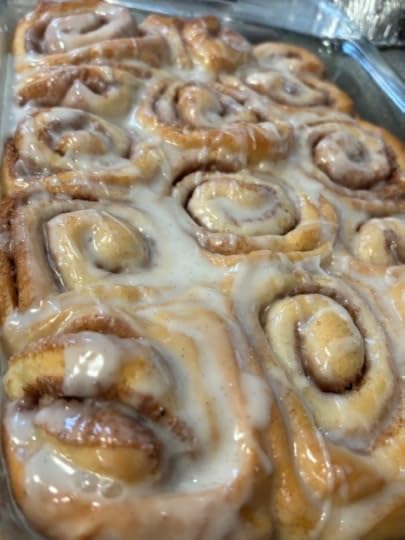
I still make bread and buns, though now it's a monthly occurrence. The bread is delicious, but the buns are divine.
I know that's a weird brag, yet that's what "they" tell me. When it comes to baking, buns are my sweet spot. I never say no to making them.
We all need sweet spots in our lives. For some, it's being a parent or grandparent. Yet, it might be entirely different for others, like working out on a peloton or in the gym.
Sweet spots are the activities that bring you the most joy at home, in the office, or on the field. Let me know what yours are in the comments section.
As caregivers, we can lose our sweet spots when we get overwhelmed. Whether running from appointment to appointment or having too many sleepless nights caring for our loved ones, it's easy to fall out of our everyday routines. Finding time to exercise becomes harder, as does eating healthy food and keeping up with our self-care.
The ultimate sweet spot, however, is self-care. It can't be abandoned. The cost is too high. When we let our own care lapse, we put our care recipient at risk. Here are some tips to keep self-care at the forefront of your mind.
To remind yourself to take daily walks, put your walking shoes at the end of your bed, by your bedroom, or by your front door.
Set a daily alarm on your phone each day to take that walk, meditate, go to the gym, or even read for a few minutes.
Always carry a book with you. You can read while waiting for medication or in the doctor's office.
Put a sticky note on the refrigerator to buy your favorite fresh fruit.
Ask for help. Can someone cover you for an hour so you can exercise or attend your medical appointments? People want to help; they don't know how.
Download the Self-Care checklist from our website.
Download the Caregiver Daily Planner Page on our website.
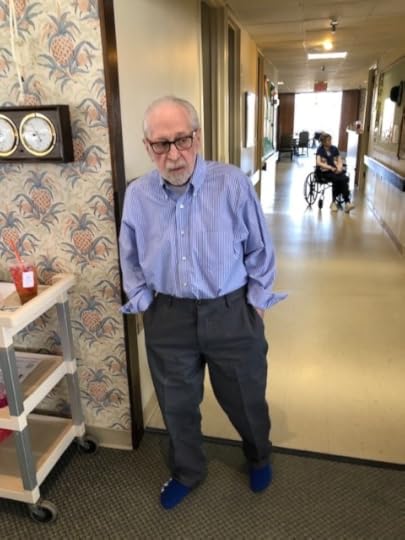
I'm not one who can organize things effectively on my phone. I've tried to adopt a paperless schedule many times, but I am visual. That's why I use a paper planner. I want to be paperless, but if I can't see my appointments on paper, I'm way more likely to forget them.
It reminds me of when I used to walk the halls with my dad in assisted living and the nursing home. We'd be walking side by side, and if I dropped back for a minute to talk to someone, he'd wonder where I had gone.
"Oh, there you are," he'd say when I caught up.
With Alzheimer's and other dementias, spatial awareness quickly disappears. With Dad, I'd say goodbye to him at night, and upon seeing him for breakfast, he'd always say, "Where you been, Markus?" I hadn't been with him for 12 hours, but in his mind, it was a matter of minutes since our last conversation. It was fascinating to witness.
After reading Hal Elrod's The Miracle Morning at the start of the year, I changed my morning routine. I now spend the first 45-90 minutes of my day reading, journaling, meditating, and exercising. This is before I look at my phone or turn on the computer. It's made a difference in my energy and focus, but more importantly, I feel so much better.
I don't have time to do all that...
I said the same thing. And because sleep is a huge priority (after I learned how important it is for the brain), I was reluctant to wake up early to try it. But I did and haven't looked back since. I also decided to get to bed earlier to soften the blow. My family makes fun of me on Saturdays when I let myself sleep in. In my mind, I get up early during the weekdays, and I deserve (and want) to sleep in on Saturdays. It's about balance.
I don't know how to journal...
There's no right or wrong way to journal. I would suggest starting with five minutes of journaling. Open a notebook or buy an inexpensive journal and ask yourself one of these questions--or write whatever comes to mind. Stop when you have nothing more to write. One minute is better than no minute.
What was the best part of my day yesterday?
What were my wins/what went well?
What bothered me the most during the day?
How would I describe my current mood?
I don't like to exercise...
Me neither! Exercise doesn't mean hitting the gym or lifting weights. Start with a few jumping jacks, pushups, or situps to get the brain moving in the morning. Have a treadmill? Start with five minutes a day. Walking is one of the best types of exercise. I started with twenty minutes on the treadmill and am now up to 30 minutes with light jogging.
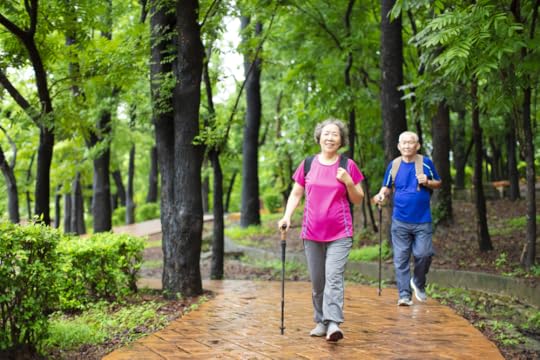
I think you get the point.
Care for the caregiver is one of the main themes throughout The Greatest Burden The Greatest Blessing, especially as the battles become more difficult. Alan and I are no longer in the throes of active caregiving, but Mike is, and we remind him daily of his obligation to take care of himself.
Let me repeat: as a caregiver, we are obligated to care for ourselves.
Otherwise, we might become the care recipient instead of the caregiver.
I've had a sweet tooth since I was a child. I don't see it going away any time soon. However, only after caring for my dad did I find my sweet spots: sleep, exercise, meditation, reading, and writing.
Like an excellent cinnamon bun, my sweet spots make me happy.
If you enjoy this blog and the material I write about, please consider receiving my weekly email newsletter, MARK. Set. Go. You'll receive a new email each Tuesday. There is no spam, just thoughtful and relatable content.
March 18, 2024
The bus ride eventually ends
My dad’s Alzheimer’s battle started in 2014 and lasted seven years, but my life changed the instant I heard the diagnosis. I was angry, sad, and shocked by the news and the realization that my dad’s bus ride in life would come to an end sooner than any of us realized.
Yet, instead of fighting it, I embraced it. When I became a caregiver for my dad, my entire perspective and purpose changed. Being there for Dad during his darkest days was the greatest burden and greatest blessing of my lifetime. It was a gut-wrenching, demanding, challenging, and emotional experience. But his courage inspired me, and more importantly, I was getting to know him—and myself—better than at any point in my life.
I published Ten Days With Dad: Finding Purpose, Passion, & Peace During the Darkest Days of Alzheimer’s on March 13, 2022, the day I turned fifty. The following year, I published The Greatest Burden The Greatest Blessing: Caregiving Stories of Hope, Humility, and Love with Alan Rubel and Michael Tenaglia. I've found my purpose in writing and will continue to write and speak about my life after-Alzheimer's (AA), and about caregiving--something which very well could kill you--but is also one of life’s greatest blessings.
More than 15,000 personal development books are published yearly, and most are geared toward older adults. The self-improvement industry is worth nearly $25 billion and, surprise, is almost entirely consumed by adults. This is despite the reality that most of them will never make significant changes to their lives unless they experience a tragedy or life-altering event.
I know because I was one of them.
Whether that change is related to your health, mindset, relationships, or career—we don’t have to wait for a life-altering event to change the narrative of our life’s story. None of us are obligated to be the person we were forty years ago, fourteen years ago, four years ago, or four weeks ago.
My father’s Alzheimer’s was anything but a blessing, but caring for him was. With a new perspective on life, I took up meditation, started exercising again, wrote (a lot), and let go of past regrets, grudges, and excuses for my shortcomings. I was able to appreciate and understand how fragile life is and finally accept that we all have demons, flaws, and limitations.
However, none of them need to define who we are or who we want to be.
If you're asking yourself, where I have I read this before, don't worry, you're not losing it. Last week I launched MARK. Set. Go... a weekly newsletter, and my very first post was an almost exact replica of this blog post.
A lot is going on in my brain. I continue to promote both books and have a new one in the works. I blog at caregivingguys.com and am constantly tweaking and improving the site. I post regularly on social media, am a co-host for the Be Au Sm podcast with Josh Peach, write, read, and research daily, have an audiobook in production for Ten Days With Dad, and am launching this very newsletter—oh, I have a real job that consumes the majority of my day—and pays the bills.
Yeah, it’s a lot.
But it doesn’t cause stress or exhaustion. Instead, it fuels me in a big-time way. As a bonus, my day job as a brand merchandise expert has been more successful (and rewarding) since I started writing daily.
Welcome to ADHD, only without the meds.
All of this to say:
Writing is my passion—nothing makes me happier.
Writing is my purpose—helping others become the best versions of themselves, motivating people to pursue their passions and dreams, and especially, assisting young adults to have the best year of their lives, over and over and over again…well, that’s the last thought in my head before going to bed and the first thought I have when I wake.
Writing is my future—I’m a part-time writer looking to become a full-time one. Eventually. Until then, I have so much more to say, share, and give, and a weekly newsletter allows me to HHH: help, hone, and heal. Help others. Hone my writing. Heal the mind, body, and soul.
Writing inspires me—Being a published author is pretty cool, but the “coolest” part of the experience is hearing someone say that one of my books made a difference in their life. My words can have an impact. Do have an impact. Some jumpstart their own personal transformation. For others, they realize that they are not alone.
Writing inspires others—I know because some of my most anticipated reads are newsletters. I love reading books and will continue to write them until I can no longer. Yet, there’s something refreshing about a newsletter. It’s like a podcast in words, though more easily digestible and on my schedule. (I save the podcasts for driving.) I hope you agree and will subscribe to mine.
MARK. Set. Go… will be delivered via email (and on the app) every Tuesday. It’s a free newsletter, but paid subscribers will receive additional content, resources, and offerings. For example, the first ten paid subscribers will receive monthly coaching calls for those interested in writing and publishing a book. Of course, it’s your time, so we can talk about any topic that is important to you.
Other benefits for paid subscribers:
Autographed (or unsigned) copies of both my books (shipped to a recipient of your choice)
Copy of my Caregiving Resources Guide (Available April 1)
Free audiobook download of Ten Days With Dad (due late 2024)
The first to know—you’ll be the first to receive news, updates, alerts, and relevant content from me, plus new benefits will be added throughout the year. I’m open to suggestions.
One fifteen-minute coaching call each month (optional—you’re not obligated to use it, so please don’t let this prevent you from subscribing).
There’s no right or wrong way to build a platform—a community—of engaged, like-minded readers, people willing to listen and learn, mentor and motivate, or support a guy who hopes his words (and actions) encourage others to live in the present, pursue their passions, and get going on those life-changes—before waiting for tragedy or some life-altering event to manifest.
So, please subscribe and say hi. Tell me what resonates—or what doesn’t. I’m here to learn and grow, too. So, let’s get going, shall we?
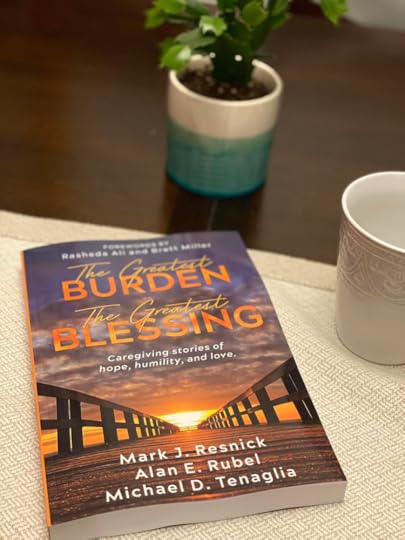
One final note. MARK. Set. Go… isn’t just for us “older” folk. Think about it: what if a fraction of the above-mentioned 25 billion dollars of self-improvement was aimed at young adults? Imagine the impact that would have on future leaders, teachers, scientists, writers, parents, and kinder human beings—the compounding interest in their potential is staggering.
Caregiving Guys Blog

- Mark Resnick's profile
- 7 followers

