
Joshua Guess's Blog
November 13, 2018
Goodbye, Stan Lee
It’s strange to find myself writing these words, but Stan Lee is gone from the world. It shouldn’t strike me as odd; the man was old when I was young. He was 59 when I was born, well into his seventies when I became a Marvel diehard. By the time I became aware of who he was, Stan Lee was already a legend for decades.
There are criticisms of his work to make, of course, but today is not for that. Instead I just want to remember the man he was, which was someone who stood up to racism and bigotry of all kinds during a time when it was not socially acceptable. It could have cost him everything, but he did it anyway.
That decision played into his work. Stan took the magic of superheroes and used it to reflect who we as a society were. He wrote the outcasts. The unsure. The damaged. The broken. Monsters who wanted only to be left alone. The tragic and the misunderstood. Stan Lee wrote, in his bombastic and now antiquated style, about human beings no matter their extraordinary gifts.
He created whole worlds for us to see ourselves in. He laid the foundation for a broad spectrum of people to see someone like them laid out in glorious primary colors. He wasn’t always perfect at it, and like anyone was a product of his time. But he tried. Even into his nineties, Stan Lee was wise enough to understand that those lessons never have an expiration date. They’re messages we all need to hear and see in perpetuity.
Few entertainers of any stripe have had an effect on popular culture as deep and wide as Stan’s. Pick up a Marvel book. Any Marvel book. If a character in it wasn’t created by him, then that character at least carries his DNA.
For all of my life, the man has been a giant. A fixed point. And now he’s gone.
It’s hard to see an idol pass on, to know that there will never be another cameo beyond those already filmed, or another interview where he stresses the importance of the diversity in fiction he helped instigate. It’s a strange thing to think of a world without Stan Lee in it. A sadder world.
I think I’ll pick up a comic today and lose myself in it. I think he would have liked that.


September 1, 2017
Deathwatch Chapters 1 & 2
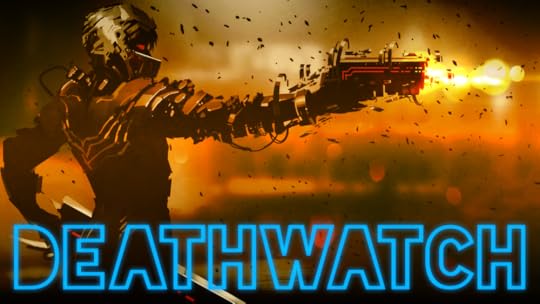
Chapter 1
Beck sat in the blowing dust, waiting for her family to be killed.
The thin particles stuck to her face, darkening where they merged with her tears. She took no notice of it. In the Outers, the dust was everywhere. She was hundreds of miles from the nearest patch of reclaimed land so long as you didn't count the crops inside the Rez itself. And who did? The food grown here was nothing like what she'd seen in pictures from the Inners. Even the cream of the harvest crop was wilted and thin no matter how hard the citizens toiled.
The people of Rez Brighton didn't need the crops, after all. There was a hardy biomass food reactor in the commons, more than sufficient to provide every person within the vast circular wall all the calories they needed. The crops were an experiment, an ongoing trial to determine how best to tame the damaged land and make living things thrive again.
In that, the crops weren't much different from the citizens themselves. Barely living and ultimately expendable, or so Beck thought at that moment.
The enormity of what was about to happen had only begun to make itself felt. Like an iceberg, the vast bulk of it was still below the surface. The weight of an uncertain future brushed against her, gentle at first but inescapable. Just a few weeks short of her eighteenth birthday and Beck's entire world was about to collapse.
No noises filtered from her home across the narrow street. The cube of printed stone stood silent, though she knew her parents and little brother waited inside. Still alive. A one in the binary of human existence, soon to flip over to zero.
She sat on the tiny stoop of the house across from hers, hands wrapped around her knees painfully tight, and dug her nails into her forearms to keep still. Every instinct screamed to go to them. To comfort them. To somehow make it not be true.
Beck did none of these things. Not only because those who showed symptoms of type B were to be immediately quarantined, but because they had made the choice. Told her to leave, that they loved her. Not to feel guilt. Aaron, not even in his teens but more of a brat than any little brother in human history, had pelted her face with kisses.
She lost count of the times he said those three words.
I love you. I love you, Beck. Never forget it. I love you.
Gone, but not gone. They were only a couple dozen feet away. Beneath the grief, which had burst into existence whole when her family woke to find the bruises and lesions on their skin, something rose. The pain was almost liquid, shifting inside her head from moment to moment as she tried to find some purchase in the new reality on the cusp of unfolding. Below, anger solidified. Fury at the Fade in both its pestilent varieties. Rage for the system, however necessary it might be, that necessitated the deaths of anyone who developed its rarer strain.
With effort, Beck uncurled her fingers and took a few deep breaths.
“Fuck this,” she muttered to herself, voice uneven but determined. If she went inside, she would be killed. Better to die with them than spend a lifetime recovering from their deaths.
Beck didn't get further than straightening her legs when the sound of approaching footsteps froze her in place. When a call like hers went out—mandatory with any type B incident—everyone but the reporting citizen was sent indoors. They locked themselves into the isolation room every home was required to have and waited for the all-clear. Only one person, or rather one kind of person, would be moving about freely. That fact alone would have told her what she was about to see.
It was a sound every person knew. The heavy, hard footfalls of an armored body all in black. Beck looked up just in time to see a figure step through a dervish of whirling dust.
It walked toward her unerringly, as if the obscuring cloud was no hindrance to its sight in the least. For all she knew, it wasn't. No one knew what technology lay inside the armor, only that the men and women within were dedicated to their work with a degree of unflinching relentlessness most often found in earthquakes.
The normally shining black armor had not escaped the blowing grit. A thin layer of the stuff coated every surface and caked in the joints. If the grains interfered with its function, Beck couldn't tell. The only section of the segmented mechanical carapace free of the dust were the smooth, shadowed glass lenses over the eyes. That much she understood. She used a hand held terminal down in the mine that repelled dust with some kind of field.
The figure stopped uncomfortably close to her, the tips of its metal boots nearly resting against the base of the stoop.
What's wrong with me? Beck thought. Why was she thinking about her terminal and how it shared technology with the armor? Her family was about to die. What kind of person let their mind wander to such trivial things in these circumstances? She bit back the wailing sob trying desperately to rip its way from her throat, and looked up at the armored shadow.
Its head tilted slightly to one side, a tic Beck thought looked insect-like.
“Are you Rebecca Park?”
She nodded. “Beck.”
The head tilted again. Though the voice was the same identical, flat, electronically modified tone all of them used, she still heard a trace of confusion. “Pardon?”
“My name is Beck,” she said, more fiercely than she expected. “My mom has been calling me that since I was two. It's...”
Mom. Dear god, she would never hear mom call her name again.
Before the pressure within could reach critical mass, the armored figure did something that derailed her emotions. It was so out of place, so unexpected, that for a fleeting few seconds she completely forgot why she was sitting in the dusty wind and weeping.
It extended a metallic hand. In a voice as earnest as its electronics allowed it to be, the armored figure spoke.
“I'm Guard 5110,” it said as it gently shook Beck's trembling hand and took in her bemused expression. “As you know, my role here is the containment of a potential bloom as the duly appointed representative of the Deathwatch.”
It hesitated for only a moment. “And for what it's worth, ma'am, I truly am sorry.”
*
“They sent a Guard,” the girl—no, the young woman—said. “Should I be flattered?”
Inside the armor, Eshton sighed. This was not picked up by the suit's public address system. Years of training kept him from accidentally transmitting. It helped that the powered armor had a reasonably complex AI to smooth over any potential errors caused by his all-too-human nature.
He had checked Beck's profile on his way from the chapterhouse. She was a junior supervisor in the mine, impressive at her age, but hadn't yet qualified for work outside the Rez. Like the average citizen, her experience with the Deathwatch was probably limited to the low-ranked Sentinels manning the wall. Interacting with a Guard or Warden just wasn't something most people did unless there was an unusual situation.
And here we are, Eshton thought. He wanted to say more, but the timer on the upper right of his HUD ticked inexorably forward.
“We don't leave blooms in the hands of Sentinels, Ms. Park,” Eshton said. “I would like you to stay here, please. My team will be arriving shortly. I will need to speak with you after.”
She nodded, looking away. She knew what the words meant. The moment was approaching quickly, now. Yet hearing them didn't cause her to break down. That, he knew from experience, was rare. Possibly unhealthy, but there was no time to worry over it.
Knowing nothing he could say would bring her comfort, he turned toward the target. Those few yards felt like miles. He was in no danger, of course. The suit ran on its internal air supply instead of using the filtration system. That was standard any time a call came in about a bloom. And even if the worst happened and he opened the door to find three newly-turned Pales staring at him, well, his suit was built for exactly that scenario.
It wasn't fear that constricted his throat and weighed down his belly with a chunk of ice the size of a fist, but regret. That plus aimless fury at the world for being this way, for forcing humanity to take these steps to protect itself.
Finding his way to the isolation chamber was simple enough; all family dwellings in the Rez were printed from the same template. He found them there, visible on the small monitor mounted on the wall outside. They huddled together, words of prayer crackling over the speaker.
Eshton shifted uncomfortably. Partially because religion, while not technically outlawed, was frowned upon. Practicing it openly was illegal, which created a taboo difficult to shake off. This was not his first containment order, however. Standing by while those about to die made peace with their creator was an uncomfortably common part of his job. Letting them finish was the least he could do, and judging by the appearance of the three loved ones holding each other, they had time.
When they were through—or possibly taking a break, he didn't have the personal experience with the ritual to know for sure—he keyed the microphone.
“Deathwatch,” he said simply. Few people needed less introduction than one of his kind.
They flinched as a group. This too was a common reaction. No one liked to know the boogeyman was real, much less be certain he was coming to get you.
“Is it time?” asked the father, on file as Ben Park. His wife Elisa and son Aaron looked up at the camera, eyes wide with terror.
“You have a few minutes, if you need them,” Eshton said. “I heard you praying. If you need more time...”
He saw the familiar war being fought within the three of them. Of course they wanted more time. Human beings were built to survive. That was what the last century was about, after all. The coming of the Fade and the dead it turned into Pales nearly wiped out the species. Harsh, universal tenets of survival were the only thing which allowed humanity to endure long enough to begin to rebuild, and even then only in protected settlements. One of those tenets was to choose death in the face of a bloom, the lethal and catastrophically virulent outcome of a type B event allowed to reach its conclusion.
“How long?” Elisa asked. He hated that question, especially in front of a child. It only ever made them panic. The war continued. Give me a second, now two. Or five. Just a little longer. How long? I need to know so I might make the most of it, sir.
Their survival instinct didn't care that if the bloom was allowed to occur, their deaths and resurrections would spread their strain of the Fade in all directions in a cascading geometric progression that would end all human life within the Rez. Their logic, however, existed within a frame of reference that included at least two Rez annihilations in the lifetimes of all three for that very reason. Seven or eight if you only considered the parents.
And that was how the battle was usually won. Oh, some folk lost in the end and did not go gently, but they were rare. But for those who made the choice to die in order to save others, it was little different from falling asleep.
The Park family shared a few moments to hold each other tight and whisper reassurances of love and a life beyond this one. Eshton wished he could believe the same, though why any god would force his children to suffer so deeply was beyond him.
“We're ready,” Elisa said, pulling the boy to her breast. “Please make sure Beck is okay.”
Eshton pulled a small tank from the waist of his armor and attached it to a port on the door. “Is there anything you would like me to say to her on your behalf?”
He had switched on recording as soon as he entered the front door. It was standard procedure, but also allowed him to relay last words if the need arose.
But Elisa shook her head and, to Eshton's surprise, smiled. “She knows we love her. And I know my girl will make it through this. She can make it through anything.”
He gave no warning as he thumbed the release on the canister. There wasn't even a gentle hiss as the gas flowed into the isolation room. He watched and felt a trickle of sweat inch down the side of his face despite the climate-controlled armor. In just the few minutes he's spent inside watching the Parks, the deep bruising and lesions climbing their necks had grown visibly. He was cutting it fine. Very fine.
They drifted off to sleep as one, a tangle of arms and legs leaning against the low bench lining the room. With practiced efficiency, Eshton opened the seal and placed a device about the size of three fists stacked atop each other as close to the middle of their sleeping forms as he could get it.
Once the room was sealed again, he triggered the release. A fine mist of metallic powder filled the room, coating the resting family. As always, he experienced a moment of deep dread that they would wake. It had never happened to him—to anyone in the Deathwatch, as far as he knew—but fear wasn't known for its adherence to reason.
“Find peace,” Eshton said. Then: “Activate incineration protocol.”
In a flash of white so bright it competed for the noonday sun, three lives were ended and more than one was changed forever.
Chapter 2
“Here,” Guard 5110 said to her, handing over a disposable dust mask. “The levels are a lot higher today. You're already at risk for a case of red lung.”
Beck took the mask and slipped it over her face, feeling the memory polymers inside it react to her body heat and tighten. She shook her head ruefully. “All this technology, but we can't cure the Fade.”
5110 didn't respond immediately. Its—their, because like it or not, a person was cocooned inside that armor—mostly smooth face plate blank as ever. “We're trying, Ms. Park. I wish I could say something more...uplifting, but until we have a breakthrough, it's the best I can give.”
Beck nodded. “Thanks.”
5110 noticeably reacted to that, straightening a little in surprise. “For what? Most people in your situation prefer attacking.”
Beck snorted. “Wouldn't do much good, would it? Probably break my hand on the first punch.”
“Yes, that happens a lot,” 5110 agreed.
Beck scrubbed a sleeve across her masked face as the dust remnants there tickled her nose. “I just mean...thank you for being kind, I guess? I don't know what I expected, but compassion wasn't part of it.”
5110 accepted this with a nod. “There is a reason Watch members are anonymous.”
Beck knew that for the truth. The details were obscured in the secrecy surrounding the Deathwatch, but everyone understood why public identity was surrendered upon acceptance into the organization. She had known a few kids from school who had chosen the Watch. One had been a fairly close friend. It could be her behind the mask. Lacey might have been the one to kill Beck's family.
No. That wasn't quite true. Whatever other fragile, explosive emotions churned and simmered inside her, Beck couldn't blame 5110. You don't blame the knife for cutting away a tumor.
Your family was not an illness.
No, but they were a danger. Despite the best isolation systems and precautions, sometimes a bloom happened anyway. The deeper, animal part of her brain rebelled at the cold, institutional logic of it, and it was in that conflict that the emotional upheaval made its roots.
“Is it hard for you?” Beck asked. “You don't seem like the kind of person who would enjoy it.”
The armor shifted awkwardly, in exactly the same way any person might fidget when they felt uncomfortable. “Is it important to you to know? Does talking about it help you cope?”
Beck's eyebrows rose. “Is there some reason I shouldn't ask? I don't know your rules.”
“No,” said 5110, “but in my experience, the last thing those left behind want to do is talk about their loss. Especially with the person responsible for it.”
“That's stupid,” Beck said. “Well, maybe not stupid for them, but it is for me. I was raised to always try to understand things that hurt me or scare me. Mom,” she paused, fighting down a sudden hitch in her throat. “Mom used to tell me the more you understand something, the less it can scare you. Or hurt you.”
5110 gave that same blank stare again. “Do you have someplace to stay until the quarantine team is finished with your family's home?”
Beck shuddered at the thought of sleeping in the place. “No. I haven't really thought about it. I could ask around, I guess.”
5110 nodded. “You have the option, if you like, of staying in the chapterhouse. I will need to fully debrief you on the protocols for a type B incident there anyway. You don't have to, but there are people you can speak with who can offer...perspective that might help you through this.”
Beck knew herself well enough to understand where the sudden, intense interest in seeing the inside of the mysterious building came from. When a hard decision loomed on her horizon, she read a book or spent hours vegetating in front of the vid. Escapism was an old friend, and not difficult to recognize. “Sure, but I didn't know citizens were allowed inside.”
“Usually, no, they aren't,” the Guard said. “There are a circumstances where it's allowed. Required, in this case. Protocols for anyone with a direct relation to victims of type B include blood tests along with the usual administrative tasks. We will go whenever you're ready. Since you're not displaying symptoms, there isn't a rush.”
Beck stood from the stoop and took a long, last look at her home. Even if given a dispensation to occupy a family dwelling rather than the usual single unit for unmarried citizens, she didn't think she'd take it. Not because—or not only because—she knew they had died there. The place was identical to all the others around it in form, but for Beck it was home. Its personality and feel had been shaped by years of happy times, sculpted with laughter, stained with tears and fights. Joy and heartbreak and all the things that made a house a home, good and bad alike ended with a single ugly handful of hours like a sentence cut off before it could be finished. A song skittering into discordant, painful notes.
“I think I'm done here,” she said. “Lead the way.”
*
An after bringing Beck in through the citizen entrance designed specifically for this purpose, he sat in one of the six interview rooms and waited patiently. She was off getting her physical and blood tests done. Ostensibly to make sure she wasn't just resistant to Fade B, the reaction offset by time, but in reality the purpose was to gather samples. He never understood why this deception was necessary; surely a person who had just lost their family to Fade B would be happy to donate whatever fluids and tissues were asked for in an attempt to find a cure.
When Beck finally entered the room, a Sentinel showing her in, she paused just inside the door. They always did. Citizens were used to seeing the Tenets chiseled on the walls of public buildings, but few saw the inside of a chapterhouse, where different societal laws were followed.
“Guard the many,” Beck said, reading the text on the far wall of the room. “I've never heard that one.” Her eyes dropped to the side and she gasped, stepping back toward the closed door.
“It's our guiding principle,” Eshton said, his voice unfiltered by a helmet. “Please, have a seat.” He gestured to the chair resting on the other side of the table.
Beck was hesitant, which he expected, as well as curious. Few citizens ever saw one of the Watch without their helmet. She sat, trying to study his face without staring. He knew what she saw.
Medium brown skin, curly black hair trimmed almost down to stubble. A light beard framing full lips below a straight nose and light brown eyes. Cutting across his visage from left temple to right cheek and mercifully sparing his eye from the shallowness of the cut was a thin band of darker flesh. He waved a hand at the scar and smiled. “Feel free to look. I ducked when I should have weaved.”
“How much trouble am I in?” Beck asked, eyes locked on his.
Eshton's smile widened. “None. You're going to figure this out on your own, but I'll just tell you we have protocols for about any circumstance you can think of. If there's a rule you've heard rumors about the Deathwatch having to follow, there's an exception to it. Special consideration is given to people who lose their family the way you have. It might sound cold, but we let you see the responding Watch member to put a human face on it. Some people need that, especially when recovery means blaming someone.”
Which was true and a lie at the same time. Oh, that was part of the reason. The larger purpose was, as with most things within the Protectorate, psychological manipulation. This was not a surprise to anyone; even the Tenets themselves were a deliberate and open effort to shift the priorities of human thought. A world where the dead nearly wiped out the species required a dedicated, purposeful realigning of culture, one that could not be allowed to happen at the usual glacial pace.
In this case, the point was to let any rage or revenge fantasies center on a known quantity, a human face, rather than the Deathwatch as a whole. Eshton had other reasons in addition to the standard protocol, however.
“I told you,” Beck said, her voice harsh, “I don't blame you for what happened. It fucking hurts even though I think your doctor dosed me with something to relax me, but I know you were just doing your job.”
Eshton nodded, quietly pleased she had noticed the Halcyon slipped into her system. “You feel that way now, and I believe you're sincere. But that might not be true tomorrow or a month from now.”
Her gaze was hard. “You read my file, right?”
Eshton seesawed one gauntleted hand. “As much as I could in the time I had. Why?”
Beck sat back in her chair, closing her eyes for a few seconds before looking at him with far less irritation than before. “Did you happen to look at how I got myself raised to supervisor at my age? I've only been in the mine since I was fifteen. Didn't that seem odd to you?”
“No,” Eshton said, thinking back over the file. “Why?”
Beck grimaced. “I was a team lead, mostly because I know how to troubleshoot the mining drones. We had a minor cave-in. One of my team was trapped on the other side. Then our sensors went off. Methane pocket, you see. Not just for coal mines. So there I was with four people in front of me and a fifth no more than a few yards away, trapped. You know what I did?”
Eshton didn't have to make much of a leap. “You left him.”
“I left him,” she said with a slight nod. “Tore me up to do it, but I knew it was the right call. Turns out the guy, Alonzo, lived. The rockfall didn't block off one of the side tunnels and he got into the emergency isolation tank in that section. But I didn't know that for hours. I thought I'd left him to die. He didn't thank me. Didn't give me any shit about it, but he knew what I'd done. It's a hell of a thing, having to make that kind of call at just shy of seventeen.”
Eshton considered the young woman. It was strange to think of her that way. He was only a few years older himself. The difference between them, however, was less about years than experience. Joining the Deathwatch at fourteen grew you up quickly. But the gap seemed smaller, now. “It's not the same thing,” he said. “Not really.”
Beck surprised him with a smile. “You're right. It isn't. I had to sacrifice one to save five. Your job made you choose between three or, what, five hundred citizens? Not to mention the other members of the Watch.”
Eshton didn't point out that in the event of a bloom, the armor would prevent infection. Rare was the suit that failed at this, its most basic function. “You're not wrong, but that doesn't mean I'll sleep well tonight. If I sleep at all.”
“Good,” Beck said. “You shouldn't. No one should be able to cope well with that. I know I didn't when I left Alonzo behind. I beat myself up for weeks.” She spaced out for a second, eyes going slightly unfocused, then shook her head. “I think these damn drugs are making me numb.”
“Halcyon doesn't do that,” Eshton said. “It calms you, keeps your heart rate and nervous system even, but that's about it. You're sitting there thinking you should be wailing and beating your chest in grief. Maybe you feel bad that you aren't showing it more.”
Beck blinked. “You don't know me.”
Eshton shook his head. “I don't pretend to. Everyone processes loss differently. Read the histories closely and you'll find accounts of people never shedding a tear for their lost family and friends during the Collapse. Some of them never showed a sign of trouble the rest of their lives. Others went weeks or months or years, then suddenly snapped. Others never could get over their grief and took their own lives—”
“First, survive,” Beck said automatically. The words of the First Tenet. Suicide had taken so many during the first months of the Collapse that whole populations of survivors died out from lack of bodies to perform basic tasks like guarding and hunting. The taboo against it within the Protectorate was strong enough to evoke the First Tenet by reflex, like a prayer. Or possibly a curse.
“The point,” Eshton said, “is that while everyone processes their grief differently, one factor is universal. You can't maintain that level of emotional energy for long. It exhausts you. Leaves you drained. Your mind forces itself to switch tracks and aim toward normalcy. You don't have to feel guilty about not putting on a show, Ms. Park. There is no wrong way to grieve, and no one to prove yourself to.”
She studied his face for a long, long time. Her eyes gleamed with intelligence, but also a quality far rarer in his experience: objectivity. She struck him very much as someone who could reel herself back from any situation and truly bend her mind to the task of understanding it from several angles.
“You sound like you know firsthand,” Beck said.
Eshton raised his hands as if to say, yes, you caught me. “I do. I lost my family to Fade B when I was a few years younger than you are now. The Guard who killed them did for me what I'm trying to do for you. We stay anonymous because it falls on us to make those impossible decisions, the ones that fall under our personal Tenet.” He waved a hand at the words inscribed on the wall. “We guard the many even if it means sacrificing the few. I hated her for it at the time. I even attacked her.”
Beck gasped. The Protectorate had few laws as only a recovering society can, but one of the most sacred was that no member of the Deathwatch could be assaulted or prevented in any way from the performance of their duty. “What did she do to you?”
The corner of Eshton's mouth quirked up, but his eyes were serious. “She offered me a place in the guard. I'd like to do the same for you, if you're interested.”
November 14, 2016
I made a coloring book
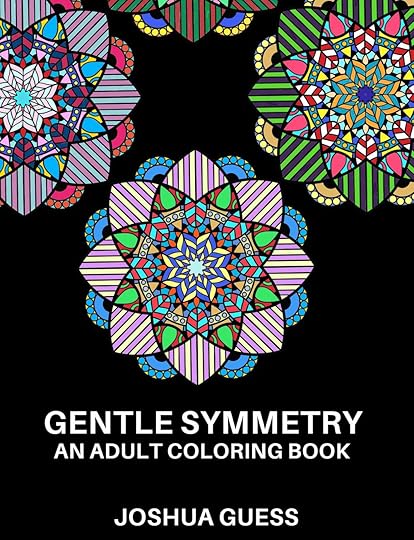
In case you missed it, I put out my first coloring book a few days ago. It's symmetrical, geometric images and perfectly suitable for children or adults.
You can pick it up at Amazon.
October 31, 2016
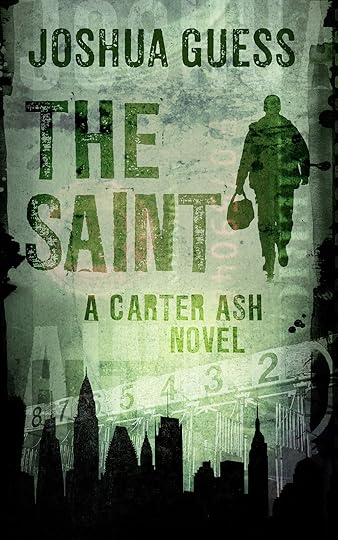
The Saint, but also bad news
I want to let everyone know the score, which is why I'm writing this blog post both as a way to make you aware my newest book is available and where things stand.
The Saint is a thriller I've had in my head for years. It's a simple story, in many ways. I wanted to explore the mind and experiences of a man who has been changed by the worst experiences in his life. It's action-packed but also--I hope--approaches the ideas surrounding psychological damage and trauma in ways that create a vibrant, living main character.
It's about a criminal named Carter Ash. A killer, but one with enough of a conscience that he draws lines that just can't be crossed. When formulating this book, I had to step back and ask myself where Carter would stand on some things. I like to think I did a pretty good job showing him as a real person rather than a caricature of the sort of people we think criminals are.
More than anything, I wanted to tell a story where the good guy is a bad guy.
And here's the hard truth that comes alongside this book: it may be my last.
Yeah, that's dramatic. But the hard truth is that I have seen an enormous drop in sales over time. Before I explain this to you, please understand that I'm not casting blame. That isn't what this is. I'm simply putting the reasons out there so everyone will understand.
The thing about putting books out is that the market is huge and stuffed with new releases. When I post a link on Facebook asking people to buy the book, readers who've been picking up my stuff for years, I'm not doing it to be greedy. Right now, my income is so low I'll have to pick up extra work just to pay my bills. I'm broke.
I don't ask people to pick up my books on a given day for fun. Over the weekend, when The Saint was released, I asked people to buy it to push it up the charts. Of the 1,900 people on my author page on Facebook, something like 50 or 60 people responded in some way. In three days, the book has sold exacly 37 copies. 37 out of nearly 2,000 people.
Many of you read on Kindle Unlimited, which is great. I have no problem with that. A lot of folks can't always afford to snag a book when it comes out, even the $2.99 this one costs. I understand; I'm broke right now, and have been before. I'm not holding that against anyone.
And if few people want to buy and read my books, well, no one owes me a career. I want to write. I desperately love this job. But this is the fifth book I've released in the last 12 months, and I've gone from making a good living to literally nonstop, terrible stress because every book I release makes less and less money.
Maybe you're no longer interested, and that's okay. You certainly don't owe me anything, and my job is to keep you entertained enough to want to pick up my books.
But I can only write so fast. The last several books have seen dramatically diminishing returns. Apocalyptica got me just enough income to pay the bills while I wrote The Saint. So far the latter is making almost nothing, while the rest of my back list makes less and less money no matter how many promotions I do or giveaways I throw.
Which means that in the very near future I'm going to have to do something to make money. I don't know what that will be for sure. I have a coloring book made up of geometric designs I'm planning to put out, but who knows if that will make even a dollar? There are some work from home options, which may help shore up my income.
The hard math of it is that I've written five full novels in a year, which is a lot of work. I can't keep up that level of intensity with no return, no matter how much I love it. The simple, brutal fact is that I'm not making a living right now. Full stop.
If every single person on my Facebook page--that 1,900 number I mentioned--put in a dollar a month into my Patreon each month, that would cost you $12 a year, or the cost of three of my books. At that level, I could at least afford to pay the bills. I would give away all my books to everyone backing me on Patreon, then put them up for sale on Amazon to make whatever I could from sales.
Right now, I have $67 in Patreon backing, and I'm incredibly grateful for every single penny.
I'm not angry. I'm not casting blame. Please, please don't read this post that way. I'm telling you how things stand. I want to keep writing, keep working, but it's getting down to the wire. Unless I see a drastic increase in sales, it's not looking good.
The reason I ask so emphatically for people to buy my books upon their release is that a big surge of sales propels them up the charts and puts them in front of new eyes. Without that, no book I write has much of a chance.
Short of doing a GoFundMe and just asking you for money outright, I'm out of ideas. My hope is that this post reaches people who are willing and able to help, whether it's through buying my books or supporting me on Patreon, or even donating on this website's donate button.
I'm going to keep writing for as long as I can. Make no mistake about that. If I start doing other work from home or pick up a job outside it, I'll still write when I can. But having to split my focus is going to slow me down. Before I went full-time, I was getting four hours of sleep a day while working full-time at my day job just so I could write my books. Since my back surgery, I don't know how capable of that I'm going to be.
That's where things stand. I'm open to ideas if you have them. If I could find anyone interested in buying the TV or film rights to my books, I'd sell them cheap. Just enough to keep me going for a while longer. But I'm an independent author; I don't have an agent or even contacts.
Hopefully things will turn around, but at this point I don't know what else I can do to make that happen.
No matter how it plays out, I want to thank all of you for giving me this time. I've dreamed of being a novelist since I was a teenager, and for the last three and a half years, you've made that dream come true. No matter how long I practice and hone my craft, I'll never be able to put in words how grateful I am to each and every one of you for giving me that chance.
October 3, 2016
The New Deal
As you can see, I've built a new website. Squarespace made it easy, and no, they aren't paying me to say that. I just hate the maintenance and problems that come with hosting a site and making it myself, so I'm pretty happy with this. But this post isn't just about that, it's about a bunch of stuff.
First, as you can see on the side there, is my Patreon. For those who don't know, Patreon is a site that lets people pay a monthly or per-item amount to a creator to support their work. Many Patreon creators take advantage of the tiered system of rewards and backer levels to dole out stuff to backers based on how much they pay. And that's fine; I have no issue with it. That's just not what I want to do. Instead I'm using it solely (for now) as a means of letting my hardcore supporters and readers back me and my work. I'm not dangling my writing over your head and hiding it behind a paywall.
In return for your backing, however, I am going to do a lot more than just put out books. Which is the other part of this post.
Up at the top of this site, you'll see a link to 'Free Online Stories', which opens up to a sub menu containing a link to a separate blog hosted here. It will be joined very shortly by more blogs, and it will be in those sections that I'll be writing parts of new stories. One of them will be a sort of continuation of Living With the Dead, though it's not planned to be an entire new storyline like the old blog was. That may change once I begin writing it. I never planned to write seven books worth of material on the blog when I started, after all.
The section titled Next is going to be a repository of all the new stuff I write in the world of The Next Chronicle, my superhuman series, that aren't actual books in the series. This is where things get tricky.
While I will absolutely keep these things up on the site, free to read for all of you while I'm writing them, at some point once I'm done I'll have to take them down. The reason is because to include them in Kindle Unlimited--which I make most of my money on at this point--they have to be exclusive to Amazon. So what I'm going to do is write a post in those blogs (LWtD will probably never be collected and sold, so it doesn't count) after each individual story is done, telling you I'm about to take them down in x number of days.
I have plans for a LOT of serialized material here, far beyond the various Next and LWtD stories. I have ideas for a separate superhero tale, some science fiction stuff, lots of things. I'm also still going to be working on my novels. Basically I'm adding a ton of stuff to my workload.
The idea is to attract new readers through word of mouth, which means you guys. Everyone who reads these serialized stories, each section of which will be between half and a full chapter, will have the chance to fall in love with characters and share with people. I really hope you do, because the market has been tough this year. Really, the last few years.
That's why I'm changing things up. That's why I've restarted my Patreon. That's why there's a donate button on this site. Because despite what fiction likes to tell us about writers all having money, it's not a given. I've put out 4 full-length novels in the last year, and haven't made as much money from them in that time as I did from the first 4 months of sales from Victim Zero alone.
I'm not blaming anyone. That's just the way it goes. A huge part of this is because the Kindle eBook market has exploded in size. When I put out the first LWtD collection, there were just under 700,000 books there. Now there are 5,000,000. That's a gigantic increase, making it much harder for my books to be seen.
That's it for now. Check back here regularly for updates, though any new posts I write here on the main blog or in the serial fiction parts will be shared on my Facebook Page. It's the best place to keep up with news. Also consider signing up for my mailing list, which I ONLY use to send out notifications about new books. Which is to say it's never, ever spammy and won't clutter your inbox. At the absolute outside, you might get a handful of emails from me in a year.
I'm looking forward to seeing how you all like the new site and the new stories.
August 1, 2016
Apocalyptica: Book One of Ran
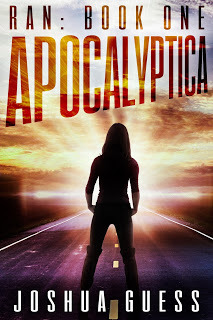
That's the cover for Apocalyptica, the first volume of what I intend to be my main series once I finish The Fall with book six. It's exclusive to Kindle and Kindle Unlimited, and it's the most fun I've ever had writing a book.
I don't want to spoil anything, but I do want to say a little something about it, the genesis of the book, and why I love it so much.
Before I wrote Victim Zero back in 2013, I had this idea for an end-of-the-world scenario where the lines between living and undead were much more blurry. In the middle of this situation was a woman. She came to my mind not fully formed, but I knew the broad outlines of her. I didn't have to construct her the way I have many of my other characters. I knew how she'd react and the sort of things she'd say, even if I didn't yet know the specifics.
Turns out her name was Ran Lawson, because she thinks her legal name, Randie, should be reserved for strippers.
Ran is the sort of leading lady I've always wanted to see in a post-apocalyptic novel but never run across. She has a Mysterious Past™ that gets explained throughout the course of the book. She's part pastiche and part homage to the many women in my life who have inspired me, from my friend Sarah's indomitably stubborn will, to my mom's brilliant ability to absorb and connect facts, to my wife Jessica's almost suicidal work ethic.
Ran is smart and flawed and funny and honestly a little weird. It even came as a surprise to me as I was writing her that she could be simultaneously outspoken and deeply insecure.
And with this series, named for her, I'm leaving behind the constraints of the genre. I'm exploring at least half a dozen ways the virus affects people, from creating your standard zombies to leaving people alive but fundamentally altered into something less (or more) than human. I've written a lot of survival stuff, and there will be elements of that. I've written a lot of fights and battles, and there will certainly be more of those.
But Ran will touch a lot of new territory for me. One book in the series will be a heist book, just one set with the zombie apocalypse as its background. Another will be a kidnap thriller. I'm leaving it as an open-ended series because the overall story, the larger arc, is Ran herself. I look forward to the freedom to expand on the many small things I've included in this first book as potential stories of their own. I've laced a lot them into the narrative to give them space to grow.
I hope you pick it up here, if you haven't already, and I hope you like it. If you do, leave a review and totally feel free to rave about it to your friends. Without your support, I don't have the privilege of doing this job.
I think you'll like it. In fact, I think if you've enjoyed Living With the Dead or The Fall, you'll love it to pieces.
Only one way to find out.
April 29, 2016
Why Space Matters, Part 2
This is why space really matters to us as a species. Let's pretend for a moment that climate change isn't a problem, though it absolutely is. There's a titanic volume of rigorously checked and repeatably provable evidence supporting it, but even if there weren't space would still be our best means of survival.
I don't mean in the next ten, fifty, or even a hundred years. I mean long-term. Centuries. Millennia.
Let's please remember that the Solar system, our happy little home, plays host to many asteroids. The Oort cloud, a collection of debris orbiting the Solar system itself, is the leftover material from its formation. Estimates indicate the matter there is at a minimum three times the mass of Earth, spread out over at least a trillion objects each more than a kilometer in diameter.
That's a lot of potential death. One interstellar object smashing into one orbiting piece of flotsam at just the right angle, and we could be facing an extinction-level event. Or a star goes supernova within the galactic neighborhood: the resulting gamma ray burst, if pointed at our planet, would scour all life from it in a blast of radiation.
These are but two ways our species could die. They're big, unlikely examples. But think of how obsessed we are with global pandemics, war, the slow erosion of the ecosystem. Earth is, for the moment, all we have. It's our only home.
Space can and should change that.
Colonizing beyond the borders of our atmosphere shouldn't be considered an extravagance, but a necessity. We have to bend ourselves into thinking in new ways. One interesting branch of technology Nasa and other space agencies and companies have long considered vital to this effort is in-situ resource utilization, or ISRU.
The idea is to design technologies that can take advantage of the raw materials encountered off of Earth for use in everything from solar cells to rocket fuel. SpaceX revolutionizing rocketry means serious efforts in this direction, and that's good. Because ISRU is how we'll build long-term colonies.
I know, I know, all of this sounds crazy and so far out of what we can manage now that it might as well be magic. But it really, really isn't. Along with being able to manufacture technology from junk we mine from asteroids or the surface of a planetary body, people have also been working on emerging technologies like vat-grown food, which would be a powerful solution to one of the larger problems for colonies.
Cost is always the concern, but the great irony in all of this is that with even a marginal increase in the investment we as a country (and we as a species) already put in, we could easily see huge advancements in very short periods of time. I should also clarify that these budding technologies, should they be given the nutrients they need to grow, wouldn't just be for space exploration. Imagine a world where a small indoor factory can produce several tons of edible, nutritious food without the need for months of growth and huge tracts of land. That's not even the tip of the iceberg, really, as much as just the top few molecules of its potential.
Science fiction has long predicted these things, and that's because science fiction has historically been pushed forward by men and women who were actual scientists and engineers. This stuff has been in the works for a long time, unfunded ideas tinkered with by people as educated as they are passionate.
We need to spread out. There's no way around it. Colonizing Mars, or the moon, or the moons of other planets--even floating cities in the Venusian atmosphere!--isn't something we could do, it's something we must do. In the long run, we have to leave this lovely rock to ensure the human race continues. To do that, we need to make investments right now.
If we don't, we're playing a long game of Russian roulette, and no one wins.
January 6, 2016
Why Space Matters, Part 1
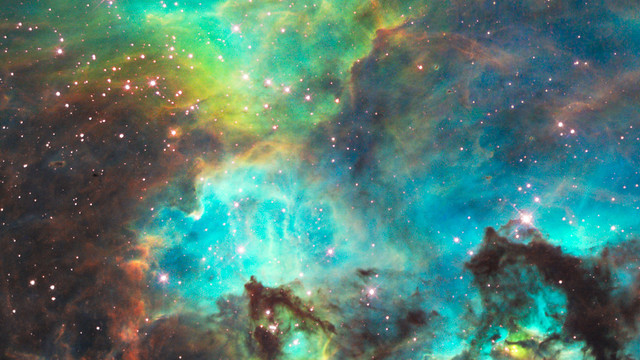
I thought about titling this post Why Science Matters but that way is fraught with political landmines. It's not that I'm at all silent about my political philosophy or how I arrived at my core beliefs. I'm not, nor am I ashamed. The calculation involved in the way I view politics and policy is a simple one:
Does this belief or policy do good for the largest number of people?
Do research.
Make conclusion.
Yeah, we might differ on what qualifies as good, but at that basic a level of disagreement there's really no way to change a person's mind.
So instead of talking about why science matters--and it does, clearly, as human civilization to this point wouldn't exist without it--I'm going to move forward under the assumption you agree with that premise. If you don't, that's fine. You can stop reading. Avoiding politics here means I'm not interested in being convinced that the scientific method is invalid. Chances are pretty good that if you believe, say, that the world is 6,000 years old, you're probably not reading any more.
So. Onward.
Space matters. In ways as vast as space itself and as small and mundane as everyday concerns like wanting a comfortable mattress, it matters. My goal with this series of posts is to explain in my wandering, often tangential way exactly why this is true and why we as a society should value the technologies and investments needed to make space exploration of all kinds an integral part of our cultural psyche.
Space=Technology
One thing that never ceases to confound me is how, in one breath, people will praise the technological breakthroughs made by space programs while damning the idea of space exploration as a priority.
You can see some Nasa spinoff technologies on Wikipedia or Nasa's own website at these links, but the benefits span everything from the enrichment of baby food to chemical detection. The simple truth is that you don't work for Nasa or any space agency to get rich. You don't spend years learning mechanical engineering or astrophysics because it's going to make you a rock star.
I mean, Neil deGrasse Tyson aside.
People get into space--even private space companies--because they love space. Or rockets. Maybe they have a lifelong jones for making some obscure mechanical process more efficient. I'm not judging. The point is that there is also a simple formula for near-certain breakthroughs across the entire spectrum of the scientific field.
Take a large group of passionate, educated nerds.
Give them resources.
Give them a problem.
Wait.
In fairness, this is less true in any of the biological sciences, since biology and medicine deal with much less predictable systems of much greater complexity. They take longer to have breakthroughs, but when they do, as Albus Dumbledore would say, they're correspondingly huger.
If you need a good example of what I'm talking about, let's look at SpaceX, the private space exploration company founded by real-life Tony Stark/potential Bond villain Elon Musk.
There are plenty of excellent resources out there where you can (and should) find everything you need to know about Musk and SpaceX, so I'll skip the details.
Musk started his company after posing himself a question: why is space exploration so expensive? After doing some research and figuring out the math, Musk realized that the actual cost of the materials that make up a rocket capable of reaching orbit are about 2% of the total. That leaves a lot of room for making rockets more cost effective. Which is exactly what he did.
Musk and company looked at rocket technology and, funded by Musk himself and some investors, decided to do something no one had really done since the 1960's: build their own damn rocket from the ground up. By doing this, they were able to utilize half a century of experience and practical data to create the most efficient booster in the world for a fraction of the cost ULA (United Launch Alliance, a partnership between Boeing and Lockheed-Martin that has been mercilessly bilking Nasa for years) could manage.
It should be noted here that ULA has been using Russian rocket engines made in the 1960's for their Nasa contracts. Not designed in the decade Kennedy was still alive, actually fucking manufactured in it.
As a result of SpaceX being provided resources, they were given contracts that provided even more resources, which allowed SpaceX to do something that changed the world.
They created a rocket that can land.
Yeah, I know. Doesn't sound like too big a deal. But consider the cost of a Falcon 9 rocket, which is the workhorse of the SpaceX fleet: about 90 million dollars. That's about the cost of a jumbo jet. Imagine if jets could only go one flight, and were then scrapped. That's how space exploration has worked until now.
With the advent of a booster that can land and be reused, the face of space exploration and as a consequence humanity's place in the solar system has changed forever. The cost of sending rockets into space will drop by staggering margins, allowing cheaper and cheaper flights.
This means we'll have the ability to create large orbital structures in a cost-effective way for the first time. Space stations are within our grasp, as are larger spacecraft capable of exploring and exploiting the resources of the solar system. This is not an exaggeration or science fiction, but rather the critical point much science fiction has hinged on before possibly becoming science fact.
Had Nasa been given the sort of funding they enjoyed during the space race in the 60's and 70's (wherein the exploration of space was a national contest with the Soviet Union, a sort of proxy war using scientific achievement as its ammunition), we'd have seen these advances long ago.
Yes, if we had kept giving Nasa the budget it once had, commercial space travel would be so normal by now we'd all be bored of it. But the budget cuts over the years meant Nasa couldn't build its own rockets, which meant whatever advances were made at the Jet Propulsion Laboratory (or anywhere inside the organization) were at best passed on to private third-party vendors like ULA, who were operating on contracts and looking to squeeze every penny or profit they could.
Nasa could have been SpaceX. Would have been, if the money had been there.
Even so, things are working out. We're on the edge of a boom in space travel. Successful demonstration of what we can accomplish with the increase in space travel brought on by the decrease in its cost will be vital to perpetuating the use of space as a resource for humankind. On the large scale, this will mean mining asteroids, dwarf planets, comets, even the gas giants. The things we could do with enough raw materials in orbit and the fuel (water, basically) we could collect from the solar system are almost endless.
But that's not what this section is about. Just think of what sorts of technology we'll see as a consequence!
Right now we have dozens of spinoff technologies working for us every day. That's just from a space program that's public, severely underfunded, and only able to focus in very narrow directions. Think for a second about the possibilities we'll see once we as a society are looking down the barrel of mining asteroids or building a base on the moon. Those are both immensely difficult prospects, with countless problems that will need to be solved.
The solving of them will produce technologies, both intentional and accidental, in numbers and variety we can scarcely imagine. That's totally ignoring what sorts of fantastic things we might learn to manufacture in microgravity.
People complain about the expense of Nasa, and they say it's money down the drain. No return.
Well, first of all: horseshit. Beyond the very real and very material return that is the growth of our understanding of the universe, physics, and a hundred other things, the technologies resulting from our investment in Nasa (and thus space) have a subtle but large economic benefit. Hell, the space program gave us memory foam, and you can't swing a dead cat in this country without it having its weight evenly distributed across some damn thing or another made of the stuff.
Second of all: so what? Even if space exploration costs this country $18 billion dollars a year, which is less than Americans spend on pizza, and made zero money back, so what? The non-economic benefits are still hugely important. Space exploration and the attendant discoveries which come with it have vastly increased our understanding of physics to the point where we have things like GPS and tons of other non-commercial benefits.
Now we've covered the basics on why space exploration isn't an economic waste of time, which has hopefully created some nice squishy feelings toward the idea of paying for rockets, or increased them if you already had them.
Which is good, because next time I'm going to explain why having a positive attitude toward space is the only way humanity can survive in the long term.
See you then.
January 3, 2016
Resolute
I haven't put out a post on this blog in almost two years. I'm resolving to change that. It's something I need to do, both because it gives me another connection to my readers and because it serves as an outlet that isn't facebook. Not that I have a problem with facebook at all--it has been instrumental in giving me a career I love--but it doesn't lend itself to longer posts. Also, people kind of make a choice to come here, and judging by my hit counter they've been doing it a surprising amount considering I've been ignoring this place for so long.
So this year I find myself resolute. I'm already more productive than I have been, and I feel like I can keep that up. This year is going to be make or break for me. I need to make more money than last year. I need to build up another nest egg in case I ever need another surgery and find myself unable to get much writing done like I did at the end of 2014. To do that I need to get back in the swing of things and put out work more regularly.
Yeah, yeah, I know. Most authors I read only put out a book a year. Maybe two. I always put out two at the least, and this year I'm planning on at least three, maybe as many as five.
Earthfall, my first foray into straight-up science fiction, is well on its way to being done. I'm quite far along. Then I'll take a crack at Book Five of The Fall. After that it's a toss-up between Dark Flow, which is book 3 of The Next Chronicle, or Devil's Due, the first book in a new series called The Hellbreakers.
That list is subject to change based on my financial needs, reader demands, or my whims. Writing is a thing that requires some inspiration and desire to do well, and it's not always there when I reach for it.
I'm probably going to be posting here more often, so make yourself a bookmark or a speed dial link on your browser if you want to check back more than once in a blue moon. I can't promise it'll be as often as you want, but I'll do my best to be entertaining.
April 19, 2014
Fell In Love With A Girl
I love that song. More important, I love my wife.
Storybook love is one of those things other people have. People in stories. It's not an experience most--if any--of us get to have. More than eight years with Jess, and as of today five of them as a married couple, have taught me the value of a real relationship.
We argue. We disagree all the time. I get on her nerves and she gets on mine. We have very different tastes in food and a dozen other things. I like comedies, she likes foreign films including weird Korean indie stuff she finds God-knows-where. I'm outspoken and loud, she's quiet and shy. I have a deep connection to family, she's mostly indifferent to her own.
And yet, we work. We work better than any couple I know. The things we argue about are silly, small things. Most of the time they're fun, like who would win in a fight between Nikola Tesla and Cthulhu. Sometimes we go days only seeing each other a few minutes at a time, mostly when she's leaving for work, and it's okay.
We're perfect for each other. We have the same dark, twisted sense of humor. We make each other laugh more than anyone else could manage. Our priorities mesh, and a billion other things that don't matter to you because they're specific to us.
We fit, do you see? Of course you don't. You aren't here. You don't watch us get along.
But all that isn't why I'm writing this. I don't want to rhapsodize about how well we work. I want to praise Jessica Guess, my wonderful Jess, because she's amazing in ways she doesn't understand.
I had a habit of falling in love, but with her it wasn't that way. I'm four years her senior, and we met when I was 19. You do the math. I was floored by her appearance right away, because she's looked like a horny-teenage boy's drawing of a female comic book character since she was twelve. Jess developed early, which was a problem for her because she looked much older. That's part of why she grew to be so shy.
So when we met, she was too young for me. A few years went by where I saw her only occasionally. We didn't talk much. I didn't really see many people during that time. I was in a relationship that screwed me up badly, made me terribly afraid of being with anyone. A few months after that relationship ended, I was cleaning out my car and found a card from Jess. She had mailed it to me a while before and I'd carelessly put it in the glove box without even opening it.
I found that note while cleaning my office. It reads, in part:
"...I just felt like telling you that even though our relationship is pretty much nonexistent now, I'll never forget you. You are someone truly special, and I wish you the best in the future..."
There I was, two months out of my longest and most painful relationship, and I was a broken man. That's not hyperbole; I really was shattered in ways I had never experienced before. I read that letter and felt, for the first time in months, a faint ray of hope. A little bit of joy. Someone out there thought I was worth something. Someone cared.
So I called her that night. We've been together ever since.
I was reluctant to love her. I had a history of falling in love easily and hard, but my heart had hardened. I was wary as any kicked dog is wary, fearful and nervous. She was patient with me, loving me without holding back while understanding why I couldn't do the same.
Eventually I grew to love Jess so thoroughly and completely that I can't imagine living any other way. Who else could make me laugh the way she does? Who is as funny, or smart, or dedicated? Who knows me so well that she can predict my mood and words as if reading my mind? No one. There's simply no other way to live than with her.
She is the most understanding person I know. Jess puts up with my faults but never lets me get away with lying to myself. She was the first person to encourage me to try writing for a living, way back when I was thinking about starting Living With the Dead. She was worried about our finances when I told her I was quitting my job, and that was a promise to her I had broken. I always said I'd wait to go full-time *after* I had made enough money writing to be off for a year. Still, she agreed, and now she's thrilled at how well it has worked out for both of us.
As always, she's my biggest fan and supporter.
The most frustrating thing in the world for a writer is the inability to convey the emotion you're feeling to the reader. That's impossible here, both because Jess is awesome (in the truest sense of the word) in a thousand ways too subtle and grounded in context to explain here, and because how I feel is very much a thing specific to me.
She's hardworking, smart, teaches herself skills and disciplines on a whim. She's hilarious and without filter at all times. She'll say things that would make the bluest comedians blush. She'll wrestle the shit out of you with zero warning. One second you're standing there talking to her, the next she's taking you to the ground and going for the pin. She knew nothing about computers, then spent a weekend learning them. I've been screwing with PCs for a decade and a half, and in those two days she surpassed me.
Jess is adorable. Her scowl is cute enough to make Japanese schoolgirls fall over in diabetic shock from the sweetness.
She is so many things, but the best one of them all is this: she's mine. For whatever reason (possible brain damage?) she chose me. I get to see her every day, and that's as close to heaven as I can imagine.
Today we've been married five years. They have been the best five years of my life.


