Sean Conley's Blog
November 18, 2020
Five practices to escape self-doubt and fears
As a football player, you’re not spending too much time focusing on your own self-discovery. You’re there to win. I’d dreamed of making the NFL as a boy—and that dream pushed me to eat, dream, drink, sleep, and most of all, play football. When I finally landed a spot on an NFL team, it was the culmination of my singular obsession, and I thought I was set for life. I believed the key to my happiness was to be an NFL kicker. I had no idea what a toll that would take on me—and what a toll I would take on myself.


November 10, 2020
10 Poses to Release Perfectionism and Boost Inner Peace
10 Poses to Release Perfectionism and Boost Inner Peace
Learn to accept yourself as you are with this balancing yoga sequence.
Perfectionism is something I have struggled with throughout my life. Sure, perfectionism can help us reach our goals and accomplishments. However, when things don’t go the way we want them to, it can feed feelings of stress and failure.
Read the entire article at Yoga Journal
October 30, 2020
5 Lessons in Resiliency: How I Rebuilt My Life After the NFL
As a boy, I dreamed of playing in the NFL, and that dream became an obsession. I ate, drank, and slept football. I beat up my body with relentless overtraining and tortured my mind and spirit, believing that the only way to be happy was with a long, successful career in the NFL.
After I made a starting kicker at the University of Pittsburgh, I joined the NFL, signing with the Detroit Lions. But within six months, I was cut. The following year I landed a contract with the Indianapolis Colts. After three months, I was let go due to an injury. Next, I signed to the New York Jets. But after another injury, that team cut me too.
August 6, 2019
7 Yoga Tips for New Students
These are some habits of body and mind to help you get the most out of your practice.
● Smile; it’s free therapy. Smiling immediately releases endorphins in your brain, changing your mood and relieving stress.
● Try to let go of any expectations. Expectations lead to frustration and heartache. Try not succumb to yoga peer pressure and feel like you have to do all the poses or that you have to do them a specific way.
● Use visualization to heal your body. Picture the parts of your body that need healing. Imagine those parts releasing tension and relaxing. When you notice yourself moving back into stress or beginning to feel increased tension, send healing thoughts and energy to specific places you know need attention.
● Stay focused on your breath. It will keep your mind calm and keep you present. As soon as you notice your thoughts drift, catch them, and bring your attention back to your breath.
● Don’t be afraid to modify. To modify simply means to make variations on the poses that give you more stability or avoid putting pressure on an injured spot. Gently move your body out of jamming or forcing.
● Never skip final relaxation also known as Savasana. The body, mind, and spirit need this five minutes of stillness to absorb all the healthy work you just did for them. It’s recovery time. When we blow off savasana, we are reinforcing hurrying and rushing, and our bodies won’t have the chance to heal. If you have to leave class early, take your savasana five minutes before you have to skip out.
● Be open to different styles and teachers. The yoga world is vast; keep experimenting until you find the style that fits you. With all the different styles and teachers out there, there is something for every individual. The beauty of yoga is that nearly every single pose can be adapted and modified to your level. A good teacher will encourage you to take things at your own pace.
Starting a new yoga practice, like starting anything new, can be intimidating. Some ways to overcome resistance, which arises in the form of excuses, are to start slow, try out different studios and teachers until you find the right fit, increase practices per week gradually, and keep the focus on the breath, having fun, and enjoying your beautiful practice by focusing on taking care of yourself.
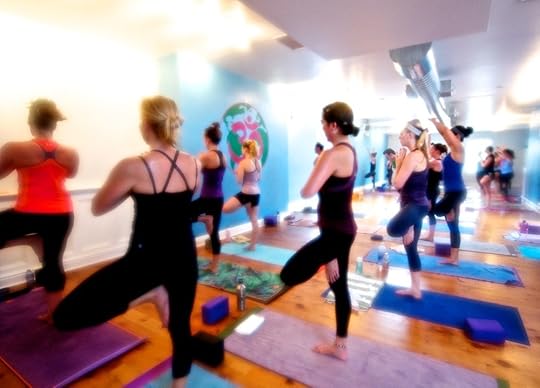
IF YOU FOUND THIS ARTICLE HELPFUL, PLEASE SHARE WITH SOMEONE WHO IS CONSIDERING PRACTICING YOGA. PLEASE LET ME KNOW WHAT YOU THOUGHT.
June 3, 2019
Why Does Yoga Work? How Does it Work?
The best way to learn about yoga is to just do it. But if you were ever interested in the how and why, here it is.
Yoga Lowers Stress. In 1974, Herbert Benson of Harvard Medical School discovered that there is an opposite state to the stress response, commonly known as “fight or flight” (the sympathetic nervous system). It’s called the relaxation response (the parasympathetic nervous system), and it’s a state of rest that changes the short and long-term physical and emotional responses to stress. The relaxation response turns off “fight or flight”. Methods to elicit the relaxation response include yoga and meditation.
From a practical standpoint, when we practice yoga we train ourselves to be calm and peaceful in a difficult moment—or to restore calm, if we’ve lost our cool. When we’re in a challenging pose we can choose to focus on how hard it is and fill our minds with negative thoughts or, instead, we can breathe and remind ourselves that we are going to be okay. It’s as if we are practicing living while on our yoga mats. We are working on controlling how we react to external events. We can train our mind just like any muscle in our body. Over time, we start to cultivate a new skill: relaxing in a stressful moment instead of fighting.
Yoga Increases Our Awareness. When we pay attention to our breath and the present moment, we begin to notice our thought patterns and habits. We discover where we hold tension in our bodies and how we cling to or repeat thoughts in our minds. This is where yoga becomes a moving meditation. Yoga gives us the tools to strip away these layers, through cultivating awareness and practicing letting go of unhealthy patterns. Stress is not what happens to us. It’s our response to what happens. This response is something we can learn to control.
In yoga, an awareness of our breathing (or lack thereof) is our top priority. As we begin to breathe fully and consciously, we take in more oxygen and feel calmer, more mentally present, and emotionally soothed. The breath leads to healing.
Yoga is challenging, and because of our habit of fighting, our first response typically is to hold our breath. This challenge of physical intensity, countered with breath, is the practice of yoga.
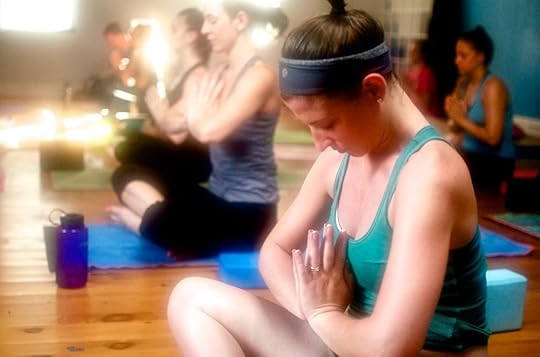
Just Breathe
● If you feel overwhelmed, breathe. It’ll calm you and help you let go of tension.
● If you find yourself in a state of worry, or fixated on a past event, breathe. It will bring you back to the present moment.
● If you find yourself rushing or hurrying, breathe. It will prompt you to slow down and enjoy life more.
● Breathe, and relish each and every moment of this life. Life moves too fast to miss these moments.
IF YOU FOUND THIS ARTICLE HELPFUL, PLEASE SHARE WITH SOMEONE WHO IS CONSIDERING PRACTICING YOGA. PLEASE LET ME KNOW WHAT YOU THOUGHT.
May 23, 2019
Why Does Yoga Work? How Does it Work?
Yoga Lowers Stress. In 1974, Herbert Benson of Harvard Medical School discovered that there is an opposite state to the stress response, commonly known as “fight or flight” (the sympathetic nervous system). It’s called the relaxation response (the parasympathetic nervous system), and it’s a state of rest that changes the short and long-term physical and emotional responses to stress. The relaxation response turns off “fight or flight”. Methods to elicit the relaxation response include yoga and meditation.
From a practical standpoint, when we practice yoga we train ourselves to be calm and peaceful in a difficult moment—or to restore calm, if we’ve lost our cool. When we’re in a challenging pose we can choose to focus on how hard it is and fill our minds with negative thoughts or, instead, we can breathe and remind ourselves that we are going to be okay. It’s as if we are practicing living while on our yoga mats. We are working on controlling how we react to external events. We can train our mind just like any muscle in our body. Over time, we start to cultivate a new skill: relaxing in a stressful moment instead of fighting.
Yoga Increases Our Awareness. When we pay attention to our breath and the present moment, we begin to notice our thought patterns and habits. We discover where we hold tension in our bodies and how we cling to or repeat thoughts in our minds. This is where yoga becomes a moving meditation. Yoga gives us the tools to strip away these layers, through cultivating awareness and practicing letting go of unhealthy patterns. Stress is not what happens to us. It’s our response to what happens. This response is something we can learn to control.
In yoga, an awareness of our breathing (or lack thereof) is our top priority. As we begin to breathe fully and consciously, we take in more oxygen and feel calmer, more mentally present, and emotionally soothed. The breath leads to healing.
Yoga is challenging, and because of our habit of fighting, our first response typically is to hold our breath. This challenge of physical intensity, countered with breath, is the practice of yoga.
Just Breathe
● If you feel overwhelmed, breathe. It’ll calm you and help you let go of tension.
● If you find yourself in a state of worry, or fixated on a past event, breathe. It will bring you back to the present moment.
● If you find yourself rushing or hurrying, breathe. It will prompt you to slow down and enjoy life more.
● Breathe, and relish each and every moment of this life. Life moves too fast to miss these moments.
April 27, 2019
5 Excuses that Keep You Away from Yoga & Why You Can Let Them Go.
For those who feel as I once did, that beginning a yoga practice is intimidating, too challenging, not challenging enough, or an otherwise uncomfortable undertaking, I want to share some of my experience and knowledge, in the hopes that it might make yoga more approachable. I believe that yoga can offer healing, fitness, and fun for everybody, and I want to help you get there. I’ll start with the first line of resistance to starting a new physical practice: excuses.
YOGA EXCUSESI could write an entire book on yoga excuses, because I’ve tried almost all of them myself. Here are some of the ones I’ve tried—and the ones I most commonly hear as a teacher:
1. I’m not flexible.This was my main cop-out excuse before I got into yoga. When I tried out Karen’s classes, I saw women move gracefully and easily into and out of yoga poses like natural ballerinas or synchronized swimmers. Meanwhile I looked like the Tin Man in downward dog; my joints practically squeaked out loud. I looked at the other students, who seemed to move so easily, and thought, I could never do that.
But it isn’t true. You don’t need to be flexible to do yoga. The magic of yoga is that no matter how flexible (or stiff) you are, you can still do a full yoga practice, build strength, increase mobility, and feel amazing afterward.
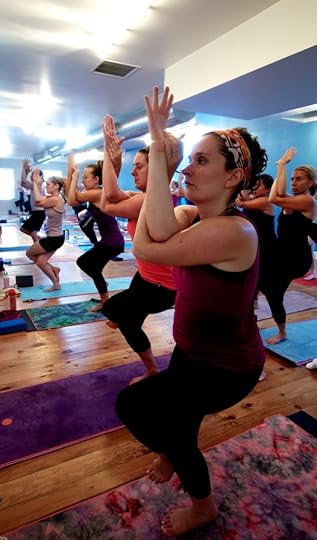
2. I’m too busy.
The crazier our lives feel, the more important it is to take time for ourselves. I know that endless to-do list all too well, and it can seem like taking time out for yoga will just make the day busier, or make it impossible to get it all done. But, paradoxically, the opposite is true. When I schedule yoga into my day, I find that I get more done, more efficiently. Yoga helps me focus my attention only on what’s important.
A ninety-day study in Germany looked at two groups of women. One group practiced yoga twice a week for ninety minutes; the other group maintained their normal activities. The women in the yoga group reported reductions in perceived stress, depression, anxiety, and fatigue, and improvements in energy levels and well-being. I find that time-wasters such as surfing the web or social media fall by the wayside when I’m more mindful and alert. There are many days when I feel completely overwhelmed, like I’m being pulled in every single direction, and on those days I sometimes consider skipping yoga. But after just thirty minutes of practice, it’s like I’ve hit a giant life-reset button. I feel relaxed, calm, and inspired. And I always ask myself, Why did you even consider skipping yoga?
3. I don’t look like a “yoga person.”There is no yoga type. When I started teaching, I wondered if I needed to grow a beard, dress in all white, have a halo, and cover my wrists in mala beads to look the part. It’s open to all body types, all ages, and any clothes that you find comfortable. People who practice yoga come in all shapes and sizes and from all backgrounds, diets, skin colors, occupations, incomes, etc.
4. I have too many injuries.Yoga is healthy and safe for every human; there are no contraindications. Many people who practice yoga have injuries. Every body is different, and we all have different injuries and weaknesses and strengths. There are ways to modify the poses so that your body has a chance to heal. If you have injuries or ailments, it can help to speak with an experienced yoga teacher to figure out which modifications are appropriate, or which poses you may need to avoid so as to protect sensitive or injured areas.
Today, there are many yoga teachers who are trained to work with specific health issues such as cancer, PTSD, Parkinson’s, and more. If you need this kind of specialized instruction, do some research to find a qualified teacher and talk to your doctor.
5. I’m intimidated by yoga studios.Many of our students tell us this story about how scared they were the first time they came to one of our studios. I’ve never done it before. Everyone will look at me and laugh as I try to do a yoga pose. Or: I will suck at yoga. I’ll be the worst one in class. Or: I am afraid to try something new.
These fears are common and valid. Trying something—anything—new is scary! It’s important to acknowledge that you may feel intimidated walking into that first class, and that’s okay. You’re having a normal response to a new and unknown situation. But I’d encourage you to try a class despite that fear, because I’m pretty sure you’ll find that as soon as you walk in and get settled on your mat, it isn’t as scary as you thought.
Most yoga studios emphasize a non-judgmental community atmosphere. Most yoga studios have friendly and supportive environments. And you can socialize as much or as little as you wish. Most people are so focused on what they are doing in yoga that they have no time to even look around at others. It’s like all of life: we so often think people are sitting around criticizing us, when really they’re just worrying about themselves.
That said, I can’t vouch for every single yoga studio having the right supportive environment for every student. You need to find the right fit for you. If after checking out a studio you don’t feel comfortable, you can try another one. Plus there are countless options if a studio is not your thing. Look for yoga at community centers, parks, gyms, online, etc. There are hundreds of ways to make yoga a part of your life, and it’s just a matter of finding what works for you.
If you found this article helpful, please share with someone who is considering practicing yoga. Please let me know what you thought.April 22, 2019
5 EXCUSES THAT KEEP YOU AWAY FROM YOGA & WHY YOU CAN LET THEM GO.
For those who feel as I once did, that beginning a yoga practice is intimidating, too challenging, not challenging enough, or an otherwise uncomfortable undertaking, I want to share some of my experience and knowledge, in the hopes that it might make yoga more approachable. I believe that yoga can offer healing, fitness, and fun for everybody, and I want to help you get there. I’ll start with the first line of resistance to starting a new physical practice: excuses.
YOGA EXCUSES
I could write an entire book on yoga excuses, because I’ve tried almost all of them myself. Here are some of the ones I’ve tried—and the ones I most commonly hear as a teacher:
1. I’m not flexible. This was my main cop-out excuse before I got into yoga. When I tried out Karen’s classes, I saw women move gracefully and easily into and out of yoga poses like natural ballerinas or synchronized swimmers. Meanwhile I looked like the Tin Man in downward dog; my joints practically squeaked out loud. I looked at the other students, who seemed to move so easily, and thought, I could never do that.
But it isn’t true. You don’t need to be flexible to do yoga. The magic of yoga is that no matter how flexible (or stiff) you are, you can still do a full yoga practice, build strength, increase mobility, and feel amazing afterward.
2. I’m too busy. The crazier our lives feel, the more important it is to take time for ourselves. I know that endless to-do list all too well, and it can seem like taking time out for yoga will just make the day busier, or make it impossible to get it all done. But, paradoxically, the opposite is true. When I schedule yoga into my day, I find that I get more done, more efficiently. Yoga helps me focus my attention only on what’s important.
A ninety-day study in Germany looked at two groups of women. One group practiced yoga twice a week for ninety minutes; the other group maintained their normal activities. The women in the yoga group reported reductions in perceived stress, depression, anxiety, and fatigue, and improvements in energy levels and well-being. I find that time-wasters such as surfing the web or social media fall by the wayside when I’m more mindful and alert. There are many days when I feel completely overwhelmed, like I’m being pulled in every single direction, and on those days I sometimes consider skipping yoga. But after just thirty minutes of practice, it’s like I’ve hit a giant life-reset button. I feel relaxed, calm, and inspired. And I always ask myself, Why did you even consider skipping yoga?
3. I don’t look like a “yoga person.” There is no yoga type. When I started teaching, I wondered if I needed to grow a beard, dress in all white, have a halo, and cover my wrists in mala beads to look the part. It’s open to all body types, all ages, and any clothes that you find comfortable. People who practice yoga come in all shapes and sizes and from all backgrounds, diets, skin colors, occupations, incomes, etc.
4. I have too many injuries.Yoga is healthy and safe for every human; there are no contraindications. Many people who practice yoga have injuries. Every body is different, and we all have different injuries and weaknesses and strengths. There are ways to modify the poses so that your body has a chance to heal. If you have injuries or ailments, it can help to speak with an experienced yoga teacher to figure out which modifications are appropriate, or which poses you may need to avoid so as to protect sensitive or injured areas.
Today, there are many yoga teachers who are trained to work with specific health issues such as cancer, PTSD, Parkinson’s, and more. If you need this kind of specialized instruction, do some research to find a qualified teacher and talk to your doctor.
5. I’m intimidated by yoga studios. Many of our students tell us this story about how scared they were the first time they came to one of our studios. I’ve never done it before. Everyone will look at me and laugh as I try to do a yoga pose. Or: I will suck at yoga. I’ll be the worst one in class. Or: I am afraid to try something new.
These fears are common and valid. Trying something—anything—new is scary! It’s important to acknowledge that you may feel intimidated walking into that first class, and that’s okay. You’re having a normal response to a new and unknown situation. But I’d encourage you to try a class despite that fear, because I’m pretty sure you’ll find that as soon as you walk in and get settled on your mat, it isn’t as scary as you thought.
Most yoga studios emphasize a non-judgmental community atmosphere. Most yoga studios have friendly and supportive environments. And you can socialize as much or as little as you wish. Most people are so focused on what they are doing in yoga that they have no time to even look around at others. It’s like all of life: we so often think people are sitting around criticizing us, when really they’re just worrying about themselves.
That said, I can’t vouch for every single yoga studio having the right supportive environment for every student. You need to find the right fit for you. If after checking out a studio you don’t feel comfortable, you can try another one. Plus there are countless options if a studio is not your thing. Look for yoga at community centers, parks, gyms, online, etc. There are hundreds of ways to make yoga a part of your life, and it’s just a matter of finding what works for you.
If you found this article helpful, please share with someone who is considering practicing yoga. Please let me know what you thought.
August 24, 2016
Playlist August 22, 2016
It's back to school time. Playlist for a little headspace. Goes well with lots of planks and long holds in extended side angle variations. enjoy :)
August 9, 2016
Rio
In honor of the amazing athletes from around the world at the 2016 Olympics in Rio. Here's a playlist that features RISE by Katy Perry, the theme song for this years games. Perfect to get one through three and half minutes of abdominals. Enjoy :) #phelpsface