
Kenneth Atchity's Blog
September 11, 2026
What to Do After Writing: Publish, Pitch, and Position It
Writers hear plenty of advice about how to write.
Far less is said about what happens after you’ve written.
Dr. Ken Atchity, founder of Writers Lifeline has spent his career on both sides of that question. He has written nearly 30 books, helped launch New York Times bestselling authors, represented stories to publishers and Hollywood, and produced nearly 40 films, including The Meg franchise.
What should I do next?
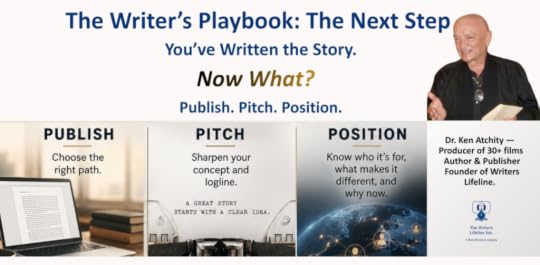
Publish, Pitch, Position
Once you have the story, you have three jobs: publish it, pitch it, and position it in the marketplace to promote it.
Those three things can look very different depending on what you’ve written and where you want to go.
PUBLISHFor book writers, finishing the manuscript is only the beginning. The next questions is my manuscript ready to publish? How should it be published? And how do you get it in front of readers?
Direct publishing can give writers more control over the process—but publishing without a plan isn’t enough. The book needs to be ready, properly presented and supported by a strategy for reaching its audience.
PITCHFor screenwriters, a great script still has to be sold.
That starts with the concept and logline. How do I write a logline? Can you explain the story in a way that makes someone want to hear more? Is the concept clear? Is the hook strong? And are you pitching the project to the right people?
POSITIONAnd whether you’re writing a book or a screenplay, you have to know where your story belongs in the marketplace.
Who is it for? What makes it different? Why now? How do you get it noticed?
This is where story development, concept and logline review, publishing, and marketing come together. The goal isn’t simply to finish your work. It’s to understand how to develop it, position it, and move it forward.
These are things writers need to think more strategically about:
Getting your book ready for publishingDeveloping and sharpening your concept and loglinePitching your screenplay or story effectivelyPositioning your work for the marketplaceFinding the right audience and building visibilityMarketing your book or project beyond simply putting it out thereChoosing the next step that makes sense for your larger writing careerBecause there isn’t one path that works for every writer.
You don’t have to know the whole road. You just have to know the next move. Visit Writers Lifeline Services and see what’s your next step.


What Authors Need to Know About Book-to-Film Adaptation
Authors often wonder whether their book could become a movie.
After all, a compelling novel already has characters, a world, a plot, and a story. However, taking a book from the page to the screen involves more than finding a producer and selling the film rights.
A book can become a movie. Yet not every book is structured to work as a movie without significant adaptation.
In a Film Courage interview, literary manager, producer, author, and story consultant Dr. Ken Atchity explains what writers need to understand when they hope to move a story from publishing into film or television.
His advice begins with a fundamental distinction: novels and movies serve different audiences.
A Great Novel Is Not Automatically a Great MovieA novel gives readers room to explore.
Readers can spend pages inside a character’s thoughts. They can follow multiple storylines, absorb extensive backstory, and take their time moving through the narrative.
Film works differently.
Because a movie unfolds in real time, the audience must understand the story through what they see and experience. Consequently, the structure needs to create momentum from beginning to end.
That difference becomes particularly important when a novelist considers adaptation.
An editor may accept a novel in which the third act develops gradually. A film audience, however, expects the story to build toward a decisive turning point, climax, and resolution.
What works on the page does not always work on the screen.
Therefore, authors who hope to see their books adapted need to look at their stories through a filmmaker’s eyes.
The Three-Act Structure Still MattersOne of the biggest challenges in adapting a novel can be the story’s third act.
In many novels, the transition from the second act into the third is not especially pronounced. The story may gradually move toward its conclusion, and readers may accept that progression.
Film audiences tend to expect something more defined.
The story needs a clear progression:
Act One: Establish the protagonist, the world, the central conflict, and what is at stake.
Act Two: Complicate the protagonist’s goal. Increase the obstacles. Raise the stakes.
Act Three: Force the protagonist into the final confrontation and deliver a satisfying climax and resolution.
Most importantly, the movement between these acts needs to feel purposeful.
A strong Act Two should create pressure that eventually forces the story into Act Three. Then, the third act should deliver the payoff the audience has been anticipating.
As Ken emphasizes, Hollywood storytelling depends on keeping the audience engaged throughout the entire experience.
Your Protagonist Needs Someone to FightStructure alone does not make a story cinematic.
Characters matter just as much.
At the center of a compelling film is a protagonist the audience can understand, care about, or root for. That does not mean the protagonist needs to be perfect. In fact, flaws often make a character more relatable.
The audience simply needs a reason to invest.
However, the protagonist also needs opposition.
That is where the antagonist becomes essential.
A weak antagonist creates a predictable story. Conversely, a powerful antagonist forces the protagonist to work harder, make difficult choices, and change.
The stronger the antagonist, the stronger the protagonist has to become.
As a result, stronger opposition creates stronger conflict. Stronger conflict creates greater tension. Ultimately, that tension gives the audience a reason to keep watching.
The Antagonist Should Be Worthy of the ProtagonistAn antagonist should not exist simply to make the protagonist’s life difficult.
The antagonist needs a goal, motivation, power, and the ability to create meaningful consequences.
More importantly, the antagonist should be capable of winning.
That possibility creates uncertainty.
If the audience knows the protagonist will easily defeat the villain, there is little dramatic tension. However, when the antagonist is intelligent, capable, motivated, and difficult to defeat, every confrontation carries greater weight.
That is why character conflict becomes so important when evaluating a book for film adaptation.
Ask yourself:
Who is standing in the protagonist’s way?What does the antagonist want?Why is the antagonist difficult to defeat?What happens if the protagonist fails?How does the conflict escalate?What forces the protagonist to change?If those questions do not have strong answers, the story may need more development before it is ready for the screen.
Movies Need a Big PayoffAnother important consideration is the ending.
A reader may finish a novel feeling satisfied by a quiet or ambiguous conclusion. A movie audience often expects a stronger sense of payoff.
That does not mean every film needs an explosive ending.
Instead, the ending needs to feel earned.
The central conflict should reach a meaningful climax. The protagonist should face the consequences of the choices made throughout the story. Finally, the audience should understand why the journey mattered.
A satisfying ending can determine how an audience remembers the entire experience.
Therefore, writers should not wait until the final pages to think about the ending.
The ending should influence the story from the beginning.
Think Like a Filmmaker Before You Pitch Your BookIf you believe your novel could become a movie, start by stepping away from the manuscript.
Instead, look at the story as a potential film.
What is the movie?
Who is the protagonist?
What does the protagonist want?
What stands in the way?
Who or what is the antagonist?
Where does the story turn?
What happens at the midpoint?
What forces the story into the third act?
What is the climax?
And, finally, what does the audience feel when the story ends?
These questions can reveal whether your book already contains the dramatic architecture needed for adaptation.
They can also reveal where the story needs work.
Your Book and Your Movie Are Two Different Storytelling ExperiencesA successful adaptation does not necessarily reproduce a book scene by scene.
Instead, it identifies the story’s dramatic engine and rebuilds the material for a different medium.
That process may require changing characters, combining events, eliminating subplots, restructuring the timeline, or strengthening the central conflict.
For authors, that can be difficult.
You spent years building the world of your novel. Naturally, you may want to protect every scene, character, and storyline.
However, adaptation requires a different question.
Instead of asking, “How do I put my entire book on the screen?”
Ask:
“What is the movie inside my book?”
That shift can change everything.
Should Your Book Become a Movie?The answer begins with the story.
A strong candidate for adaptation typically has elements that can engage a broad audience: a compelling protagonist, meaningful conflict, a worthy antagonist, escalating stakes, clear turning points, and a satisfying climax.
At the same time, the story needs to work visually.
Ultimately, ideas do not make movies. Stories do.
And great stories do more than entertain. They create characters audiences care about, conflicts they want to see resolved, and emotional journeys they want to experience.
For authors dreaming of seeing their work on screen, that is where the real work begins.
Watch Ken Atchity’s Full Film Courage InterviewIn “Can Any Book Be Made Into a Movie?”, Ken Atchity discusses the challenges of adapting books for film, what makes a story cinematic, and what writers should understand about the expectations of a Hollywood audience.
Want to know whether your story is ready for its next step?
Writers Lifeline helps authors examine story structure, character development, market potential, and the elements that can determine whether a project is ready to move forward.
Your book may have the potential to become a film.
The first step is understanding the story you actually have—and the story the audience needs to see.
August 20, 2026
What Makes a Historical Character Unstoppable?

Some of the most compelling stories are hiding in plain sight.
They may be buried in history books, reduced to a footnote, or remembered for a single controversial moment. But occasionally, a writer discovers the person behind the historical record—and realizes there is a much bigger story waiting to be told.
That is what Kate Danaher has done with Unstoppable: The Victoria Woodhull Story, a historical novel about a woman who was decades ahead of her time.
And now, Unstoppable has received a coveted “GET IT” verdict from Kirkus Reviews.
Read the full Kirkus review of Unstoppable
Victoria Woodhull was born into poverty in 19th-century Ohio. She married young, became a mother, educated herself largely through books, and eventually emerged as a financial entrepreneur, advocate for women’s rights, and the first woman to run for president of the United States.
She did this in an era when women couldn’t even vote.
That contradiction alone is remarkable. But for Danaher, Woodhull wasn’t simply a historical symbol. She was a complicated, ambitious, provocative woman with convictions, flaws, relationships, enemies, and enormous dreams.
That distinction matters.
A historical figure becomes a story when we stop looking only at what the person accomplished and start asking who this person was—and what it cost her to pursue what she believed.
Kirkus praised Danaher’s novel for its “rich characterization and well-observed historical detail,” noting that Victoria remains a vibrant presence throughout the book.
That is an important lesson for any writer working with history.
Historical fiction presents a particular challenge.
The writer has an extraordinary amount of material to work with: dates, political events, famous people, social customs, clothing, locations, technology, newspapers, and documented events.
But research alone doesn’t create a compelling narrative.
The story comes from the character moving through that world.
In Unstoppable, Danaher brings 19th-century America to life through details ranging from parlors and steamships to lavish dinners and the social conventions of the period. Kirkus specifically praised the novel’s novelistic rendering of the era.
But those details work because they surround a character who wants something.
Victoria wants a voice.
She wants independence.
She wants women to have a say in the government they help support.
And, ultimately, she wants to challenge a system that has already decided what a woman is allowed to be.
That gives the historical detail dramatic purpose.
One of the most useful questions a writer can ask when developing a story is:
What does my protagonist want that the world says she cannot have?
The larger the obstacle, the greater the potential for conflict.
Victoria Woodhull didn’t merely enter politics. She announced her intention to run for president at a time when women had no right to vote.
That creates an immediate dramatic question:
What happens when someone attempts the impossible?
For a storyteller, that is fertile territory.
The goal itself creates opposition. The culture resists it. Powerful people become threatened by it. The protagonist has to decide how much she is willing to sacrifice.
And that is where historical research becomes story structure.
Kirkus notes that Victoria’s campaign attracted powerful enemies, particularly after she publicly accused Henry Ward Beecher of adultery. The resulting scrutiny put her at risk of imprisonment.
This is another essential storytelling principle:
A protagonist’s goal becomes dramatically interesting when someone—or something—has a powerful reason to stop her.
Writers sometimes spend enormous amounts of time developing a protagonist’s backstory while overlooking the forces working against that character.
But conflict is what turns biography into narrative.
It would be easy to describe Victoria Woodhull simply as “the first woman to run for president.”
But that doesn’t tell us why we should care about her.
The more interesting question is:
What kind of woman would attempt something so improbable?
Danaher’s novel explores Victoria’s beliefs about marriage, sexuality, religion, women’s rights, money, and political power. Kirkus describes her as a far-seeing woman whose ideas about gender, religion, and happiness within marriage feel remarkably modern.
That’s where a historical figure becomes a character rather than a museum exhibit.
Writers should resist the temptation to make historical characters perfect heroes.
Contradictions are often more interesting than accomplishments.
A character who is brave but reckless, visionary but flawed, compassionate but difficult, or idealistic but capable of making disastrous choices can give a story far more life.
Great historical storytelling doesn’t make readers feel like they’re reading about “back then.”
It makes them feel as though they’re standing in the room.
That requires research, certainly—but also sensory detail, relationships, conflict, dialogue, and character choices.
Kirkus’s review highlights Danaher’s use of historical detail and her richly characterized cast, which includes figures such as Walt Whitman, Elizabeth Cady Stanton, Cornelius Vanderbilt, and Ulysses S. Grant.
Kate Danaher’s Unstoppable: The Victoria Woodhull Story is a reminder that history is filled with people whose stories are waiting to be rediscovered—and that the writer’s job is not simply to tell us what happened.
It is to make us care about the person it happened to.
Congratulations to Kate Danaher and Story Merchant Books on this important recognition from Kirkus Reviews.
What Happens When Harry Potter Meets Atlantis?
Knight School Shows Why Great Fantasy Begins with One Impossible Question
Every unforgettable story begins with a question that refuses to leave the writer alone.
What if Atlantis never disappeared?
What if becoming a knight required surviving school first?
And what if two ordinary teenagers were thrust into an ancient civilization where their greatest challenge wasn't just staying alive—but discovering who they were meant to become?
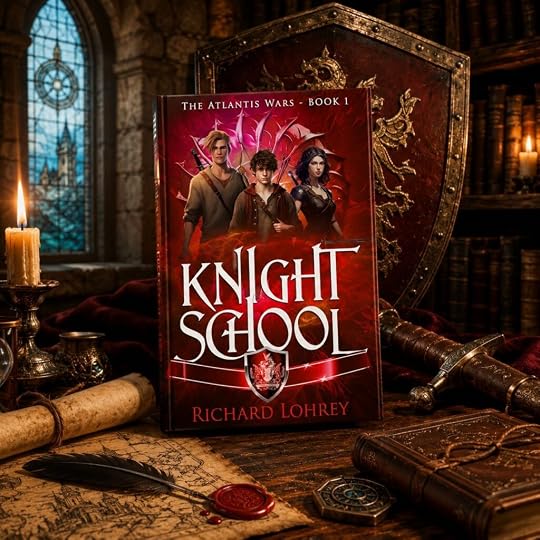
These are the kinds of "what ifs" that power Richard Lohrey's exciting new fantasy novel, Knight School (The Atlantis Wars, Book 1), now a #1 New Release in Teen & Young Adult Greek & Roman Myths & Legends.
The Power of an Irresistible PremiseWriters often spend years searching for the perfect premise. The strongest ones combine the familiar with the unexpected.
In Knight School, sheltered fourteen-year-old Jack Pepper receives an unusual birthday gift from his estranged grandmother: a mysterious nautilus shell. Instead of simply whispering ocean sounds, it delivers precise coordinates in the middle of the Atlantic Ocean.
Joined by his fearless new friend, Bowie Blackwood, Jack embarks on an adventure that transports them to medieval Atlantis—a kingdom where myths are history, danger lurks around every corner, and destiny has already chosen them.
Before they can fulfill that destiny, however, they must survive Strongthorne Academy, where becoming a knight involves far more than sword fighting. There are goblins, enemy armies, impossible lessons...and yes, even prom.
It's a premise that instantly sparks curiosity while creating endless opportunities for conflict, humor, and character growth.
Worldbuilding That Serves the StoryMany fantasy writers fall into the trap of building elaborate worlds without giving readers compelling characters to follow.
Lohrey avoids that pitfall by grounding his extraordinary setting through two relatable teenagers who experience Atlantis alongside the reader. Every magical discovery becomes personal because Jack and Bowie are discovering it for the first time themselves.
The result is immersive worldbuilding that enhances the emotional journey rather than overwhelming it.
Raising the StakesGreat fantasy isn't simply about magic.
It's about transformation.
Jack begins as a sheltered teenager uncertain of his place in the world. His journey through Atlantis forces him to confront danger, responsibility, friendship, courage, and purpose.
External conflict becomes internal growth—a hallmark of memorable storytelling.
Whether your story takes place in medieval Atlantis or modern-day Manhattan, readers stay invested when characters evolve under pressure.
Lessons for WritersKnight School reminds us of several timeless storytelling principles:
Start with a compelling "what if?"Introduce ordinary characters into extraordinary circumstances.Build a world that supports character growth.Balance high-stakes adventure with humor and heart.Make every obstacle reveal something new about your protagonist.These principles work across every genre, from fantasy to thrillers to literary fiction.
Ready to Build Your Own Story World?At Writers Lifeline, we believe every successful novel begins with a powerful premise, compelling characters, and a story structure that keeps readers turning pages.
Whether you're creating an epic fantasy, historical fiction, or contemporary novel, our editorial coaching and manuscript development services help writers transform promising ideas into publishable books.
Like Jack Pepper, every writer begins with a single invitation to adventure.
The question is: Where will yours take you?
Featured BookKnight School (The Atlantis Wars, Book 1) by Richard Lohre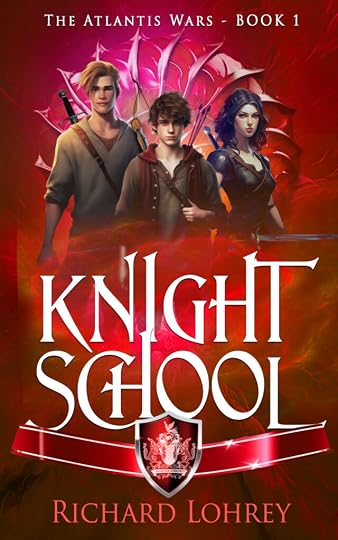
A thrilling coming-of-age fantasy where two teenagers journey to medieval Atlantis, enroll in an elite knight academy, and discover that surviving school may be every bit as dangerous as surviving war.
Perfect for readers who love imaginative worldbuilding, mythological adventure, memorable friendships, and stories where courage is earned one challenge at a time.Legends aren’t born—they’re enrolled.
Legends aren’t born—they’re enrolled.
Sheltered teen Jack Pepper receives a nautilus shell from his estranged grandmother on his fourteenth birthday. When he holds it up to his ear, he’s given coordinates to the middle of the Atlantic Ocean along with a time and date in the near future. He embarks on the journey of a lifetime along with his new best friend Bowie Blackwood, a fearless, street-smart runaway.
A harrowing voyage combined with supernatural intervention transports the teens to medieval Atlantis. Upon their arrival, they are summarily captured and sentenced to death for espionage. They are pardoned by the mystic leader Master Lumens, who has been expecting them. They each have a higher purpose to fulfill, but first things first—a good education.
They are enrolled at Strongthorne Academy where they will learn to become knights if they can survive the four-year curriculum, goblins, enemy troops—and prom.
June 19, 2026
Celebrating Atchity Production’s Tobe Roberts’ Innovation in Storytelling & Visual Effects
Congratulations to Tobe Roberts, Senior Associate Manager at Atchity Productions on being featured in this insightful interview following his Best Visual Effects Award win at the LAAIMPA. In this conversation, Tobe shares his creative journey, his passion for emerging technologies, and how AI is opening exciting new possibilities for filmmakers and storytellers.
Watch the interview and hear Tobe’s insights on creativity, visual effects, and the future of AI-powered storytelling.
 Tobe A. Roberts IV obtained his Master of Fine Arts degree at New York University’s Tisch School of the Arts (TSOA) Graduate Film Program. Tobe entered Graduate School as one of the top six applicants to spearhead the first TV & Film Producers Training Program of the University. He gained experience in publicity at Paramount Pictures East Coast Publicity, became the East Coast Editor for an online film E-Zine, and eventually became co-producer of a New York-based video production company specializing in Indigenous programming.
Tobe was an adjunct Professor in the Visual and Performing Arts Department at Fairleigh Dickinson University in Madison, NJ sharing his knowledge with aspiring filmmakers. He has worked with an NYC/CA-based VFX company in several positions on commercial and film projects. He currently serves as an Art Curator and Consultant in NYC.
At Atchity Productions, we’re proud to champion creators who embrace both innovation and great storytelling. Tobe’s work demonstrates how technology can enhance imagination while keeping the human element at the center of the creative process.
As the entertainment industry continues to evolve, conversations like these help illuminate the future of filmmaking—and the opportunities available to visionary storytellers willing to explore new frontiers.
NEW FROM STORY MERCHANT BOOKS UNSTOPPABLE The Woman Who Dared to Run for President
A powerful new historical novel by Kate Danaher
Available Now on Amazon from Story Merchant Books.
Some stories refuse to be forgotten.
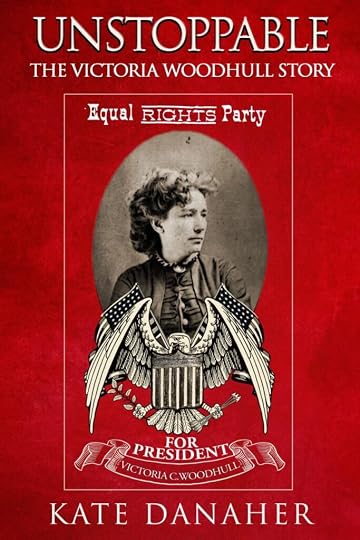
We’re thrilled to celebrate the release of Unstoppable: The Victoria Woodhull Story, the debut historical novel by Kate Danaher—a powerful reimagining of one of the most remarkable women in American history.
In 1872, Victoria Woodhull became the first woman to run for President of the United States. She challenged the political establishment, fought for women’s rights, endured public scandal, and spent Election Day in jail. Yet she refused to be silenced.
Through meticulous research and vivid storytelling, Kate Danaher brings Victoria’s extraordinary journey to life—her rise to prominence, her alliances with Susan B. Anthony and Elizabeth Cady Stanton, her friendship with Isabella Beecher Hooker, and her relentless determination to tell the truth no matter the cost.
Acclaimed author Mary Gabriel praises the novel:
“Danaher combines the work of a skilled researcher with the flair of a poet to resurrect Victoria as she was, not as she has been incorrectly depicted for a century.”
At Writers Lifeline, we believe stories that challenge convention and inspire courage deserve to be told. Unstoppable is exactly that kind of story—a testament to resilience, conviction, and the power of one voice to change history.
Congratulations to Kate Danaher and the Story Merchant Books team on this exciting release!
May 11, 2026
Still waiting for your project to move forward? You’re not alone — and you don’t have to navigate the waiting room by yourself
.png)
The Writer’s Playbook 2026: A Writer’s Life in the Waiting Room
This special session is for writers who are:
• Waiting on meetings, notes, attachments, or financing
• Wondering how to stay creative while projects stall
• Trying to build a sustainable writing career without burning out
• Looking for practical guidance from someone who’s spent decades producing films, publishing books, and helping stories reach the screen
My answer surprises them:
Don’t wait at all.
Waiting is a massive waste of time and can lead to depression and/or existential despair, and who knows what else. Write something while you wait. Plant another seed, cultivate it, and train it to grow straight. And while it’s taking its sweet time to bud and then bloom, do something else. Start a new spec script!
Back in my own “waiting room” in the sixties, I reviewed a great book by Barry Stevens: Don’t Push the River, It Flows by Itself. I translated Stevens’ Zen advice to Hollywood where every project has its own clock and will happen when and only when that clock reaches the appointed hour. Other than keeping that project on track the best you can by responding when asked to or when appropriate, there’s nothing much you can do—other than financing it yourself (a serious option, by the way) to speed up that project’s clock. By the nature of things, the project clock is invisible, which means extra frustration for the creator—unless you refuse to wait.
In 2015 I, and my dear producing partner Norman Stephens, produced a sweet little Christmas movie called Angels in the Snow. I had only been trying to get that movie produced for twenty years! I sold it to TNT once and came close to a deal at Hallmark another time. My client Steve Alten’s Meg after twenty-two years, finally premiered in 2018. What was I doing for the last twenty years? Writing twelve scripts and producing other films for television and cinema, managing hundreds of books, writing and publishing ten of my own, playing tennis, traveling, having a wonderful life. Not waiting.
Waiting makes writers neurotic. If I allowed myself to express my neurosis, as many writers have not yet learned not to do, I would drive those involved in making my or my clients’ stories into films crazy—and risk losing their support or return calls. The question I personally hate hearing the most, “What’s going on?” is one I have to force myself to refrain from asking. Your job, when it’s your turn to move your story forward, is to “get the ball out of your court” as efficiently, as well, and as soon as possible. Then, on that particular project, you have to wait for it to be returned to your court. Very few actual events requiring your help occur along the way, leaving a huge gap of dead time in between them, like super novae separated by vast time years of space. But it’s not dead time if you use it for something else creative.
If the glacial pace of the Hollywood creative business fills you with dread, you’re in the wrong business or you’re dealing with it the wrong way. Don’t wait. Do. As the great photographer Ansel Adams put it: “Start doing more. It’ll get rid of all those moods you’re having.”
Ken will share real-world insight into how professional writers survive the long timelines of Hollywood — and why your success depends less on waiting and more on continuing to create.
Because the writers who last are the ones who keep writing.
May 6, 2026
When Fiction Hits Too Close to Home: Inside Dennis Palumbo’s Panic Attack

What if you were sitting in a packed stadium, caught up in the energy of the game, when suddenly the unthinkable happened—the beloved team mascot is shot in front of thousands of fans?
It’s the kind of chilling, cinematic moment that instantly pulls you out of comfort and into chaos. And it’s exactly where Dennis Palumbo drops readers in his latest psychological thriller, Panic Attack.
In a recent episode of Twisted Passages, we explored how this shocking inciting incident draws Palumbo’s recurring protagonist,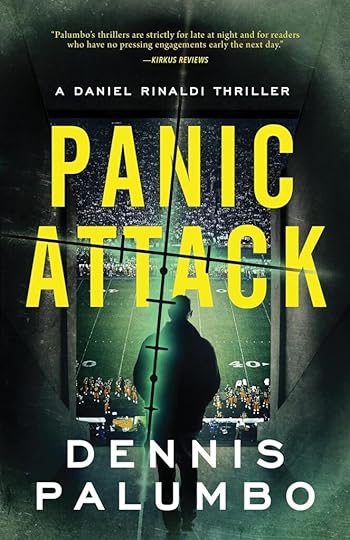 psychologist Daniel Rinaldi, into yet another high-stakes investigation. What begins as a random act of violence quickly spirals into something far more calculated—and far more dangerous. The killer isn’t finished. And this time, Rinaldi may find himself not just analyzing trauma, but living it… squarely in a sniper’s crosshairs.
Kirkus Reviews calls Panic Attack “strictly for late night readers,” and it’s easy to see why. Palumbo masterfully blends psychological insight with relentless suspense, crafting a narrative that keeps readers—and listeners—on edge.
But this conversation goes deeper than plot.
Guilt vs. Shame: The Psychology Behind the Thriller As a licensed psychotherapist, Palumbo brings a rare level of authenticity to his characters. In the interview, we unpack one of the most compelling themes in his work: the difference between guilt and shame.
It’s not just semantics—it’s the emotional engine driving many of his characters’ decisions. Guilt says, I did something bad. Shame says, I am bad. That distinction can mean everything when you’re building believable characters—or unraveling them.
For writers, it’s a powerful reminder: emotional truth is what makes high-concept fiction resonate.
A Life in StorytellingPalumbo also shares one of the proudest moments of his life, offering a glimpse into the personal journey behind his professional success. From screenwriting in Hollywood to crafting deeply human thrillers, his career is a testament to reinvention, resilience, and creative curiosity.
And yes—there are laughs along the way.
Because even in the darkest stories, there’s room for levity. Some of the most memorable moments in the interview come from shared humor and sharp punchlines—proof that storytelling, at its best, reflects the full spectrum of human experience.
At Writers Lifeline, we believe great storytelling lives at the intersection of craft and truth. This conversation with Dennis Palumbo is a masterclass in both:
How to build tension from a single, shocking momentHow psychology deepens character and conflictHow personal insight fuels compelling fictionWhether you’re writing thrillers or literary fiction, there’s something here to sharpen your approach.
Listen & Watch the Full Interview:
https://youtu.be/Hu_pChEx9g4
Or find Twisted Passages wherever you listen to your favorite podcasts.
This show is part of the Authors on the Air Global Radio Network, featuring conversations that dive deep into the minds behind today’s most compelling stories.
Final Thought
A single moment can change everything—in life and in fiction. The question is: what do your characters do next?
That’s where the real story begins.
April 27, 2026
The Story Merchant Mindset: What Writers Must Understand to Succeed
Insights from Ken Atchity’s Film Courage Interview
In a recent interview with Film Courage, Ken Atchity—producer, literary manager, and founder of The Writers Lifeline—cuts through one of the biggest myths in writing: that success is mysterious, magical, or reserved for a chosen few.
It isn’t.
Success in storytelling, as Ken makes clear, is built on craft, discipline, and an understanding of how story functions in the real marketplace.
One of Ken’s most grounded insights is simple: professional writing isn’t a trick or a talent lottery. It’s a repeatable process.
He emphasizes that strong storytelling follows structure—whether you’re writing a novel, screenplay, or nonfiction work. Even formats that appear fluid often reveal deeper frameworks when analyzed. In television, for example, structure may expand beyond traditional forms to meet commercial or pacing demands.
The takeaway:
If your work isn’t landing, it’s rarely because you lack talent. More often, it’s because the structure isn’t doing its job.
Ken has spent decades bridging writers to publishers, studios, and production companies. Across that experience, one truth stands out:
The stories that succeed are the ones that are clear, compelling, and marketable.
In industry terms, this often translates to “high concept”—a story that can be understood, pitched, and remembered quickly.
Writers sometimes mistake complexity for depth. But in the commercial world, confusion kills momentum. A story must communicate its core idea instantly—before anyone reads page ten.
3. Every Great Story Has Three Essential ElementsKen frequently returns to a foundational principle of storytelling:
A compelling hookA protagonist the audience cares aboutMeaningful turns and surprisesThese aren’t optional—they’re the engine of engagement.
Without them, even beautifully written work struggles to connect.
This is where many writers falter: focusing on prose or style while neglecting narrative drive. But readers—and buyers—respond first to story.
4. Finish the Work—Then Make It BetterAnother theme Ken underscores: unfinished work is the silent killer of writing careers.
Writers often generate ideas endlessly but fail to bring projects to completion. Yet in the professional world, execution beats inspiration every time.
At The Writers Lifeline, this is a core focus—guiding writers not just to start strong, but to finish, refine, and prepare their work for market.
Because an unfinished manuscript has zero market value.
A finished one can be transformed.
Ken’s career has been defined by one idea: stories don’t live in just one format.
Books become films. Scripts become series. Concepts evolve across platforms.
This is the foundation of the “Story Merchant” approach—developing stories not just as art, but as adaptable intellectual property that can travel across media.
For writers, this means asking:
Does my story translate visually?Can it scale beyond one format?Is the concept strong enough to carry across mediums?If the answer is yes, the opportunity expands exponentially.
6. Talent Is Only the BeginningKen’s career—spanning over 50 years in publishing and entertainment—has launched bestselling books and major films.
What separates those who succeed?
Not raw talent alone.
It’s the willingness to:
Learn structureAccept feedbackRevise relentlesslyAlign creativity with the marketplaceIn other words: to treat storytelling as both art and profession.
Final Thought: Storytelling Is a BridgeAt its core, Ken Atchity’s philosophy is about connection.
A story isn’t finished when it’s written—it’s finished when it reaches an audience and moves them.
That’s the mission behind The Writers Lifeline: helping writers close the gap between vision and impact, between draft and deal.
Because the ultimate goal isn’t just to write.
It’s to be read, seen, and remembered.
If your manuscript isn’t landing the way you hoped, the issue may not be effort—it may be alignment. Story, structure, and market awareness are what turn potential into momentum.
And that’s where the real work—and opportunity—begins.
April 23, 2026
The Business of Storytelling: What Hollywood Really Buys
In an insightful interview titled “The Business of Storytelling: What Hollywood Really Buys,” Ken Atchity—Yale-trained scholar, Hollywood producer, literary manager, and founder of Writers Lifeline—shares a candid look at how stories move from page to screen and what truly captures the attention of the entertainment industry.
For writers hoping to break into film, television, or publishing, the conversation offers a rare behind-the-scenes perspective on the intersection of creativity and market reality.
Story First—But Market MattersOne of the central ideas in the discussion is that great storytelling must meet real-world industry needs. While originality and voice are essential, Hollywood ultimately buys stories that are both compelling and marketable.
Atchity emphasizes that producers, studios, and publishers constantly ask questions such as:
Is the concept clear and immediately engaging?
Can the story attract a defined audience?
Does it translate visually for film or television?
In other words, the strongest projects combine emotional impact, clear structure, and commercial potential.
The Power of a Strong ConceptAccording to Atchity, many aspiring writers focus intensely on craft but overlook the importance of a strong core concept—the idea that can be pitched in a sentence and instantly spark interest.
In Hollywood, executives often hear dozens of pitches in a single day. The projects that rise above the noise usually share three characteristics:
A clear premise that can be understood immediately
High emotional stakes that drive the narrative
A distinctive twist that makes the story stand out
A memorable concept often opens the door to deeper discussions about characters, tone, and structure.
From Manuscript to ScreenAtchity’s career bridges both publishing and film production, giving him a unique vantage point on how stories evolve across mediums.
He explains that successful adaptations often depend on identifying the cinematic core of a story—the moments, conflicts, and characters that translate most powerfully to visual storytelling.
Writers who understand this process gain an advantage because they can shape their work in ways that resonate with both readers and producers.
The Writer’s Strategic MindsetBeyond creativity, Atchity encourages writers to think strategically about their careers.
Professional writers often succeed because they:
Study the marketplace for stories
Develop multiple ideas and projects
Seek objective feedback early in the process
Understand the difference between artistic expression and professional storytelling
This balance between inspiration and strategy is a recurring theme throughout the interview.
How Writers Lifeline Helps Writers Move ForwardAt Writers Lifeline, the goal is to help writers refine both the creative and professional sides of their work.
Services such as Project Launch Analysis, story development guidance, and strategic career advice help writers see their projects through the lens of the marketplace—while still honoring their creative vision.
Sometimes what a manuscript or screenplay needs most is fresh perspective: clarity on structure, character development, pacing, and positioning.
For Writers Ready to Take the Next StepIf you’re developing a novel, memoir, screenplay, or nonfiction project and want expert guidance on strengthening it for publication or production, Writers Lifeline can help.
Our professional story analysts provide detailed feedback on:
Story structure and narrative flow
Character development and dialogue
Concept and market positioning
Clarity, impact, and audience connection
Great stories deserve the best chance to succeed.
Learn more about Writers Lifeline services and how we help writers turn promising ideas into powerful, market-ready stories.

