J.W. Collier's Blog
March 20, 2022
I am not an Addict, anymore

I recently posted on my Facebook group, Sober Militia that I was sorry I have not been very active in the group. I also reminded them the reason why is because I have been busy doing non-recovery-related things. I then added, "that is the point, isn't it?" When I first quit drinking, I started writing a blog every day about my journey. I thought it would help keep me accountable, and it did. I wrote every day for the first 150 days of my sobriety. After that, I started writing twice a week for a few months and then once a week for a while. Eventually, I realized the writing, or I should say the reason I was writing, had shifted. I no longer felt the need to write about my journey. If I am honest, I probably felt that long before I quit blogging, but I was deep into my blog, podcast, website, and videos at that time. I didn't feel I could just quit. Nevertheless, one day I just quit writing. Do you know what I realized? I was okay. I did not need to write and probably hadn't needed to for quite some time. Do you know what else I realized? I am not an addict, anymore. This rubs the traditional alcohol recovery world wrong, but should it? I don't think so. No, I know so.
To support my theory, let's look at the word addict. Those of you who have followed me since the beginning know I like to pull up definitions occasionally so here you go: "a person with an uncontrolled compulsion to continue engaging in an activity despite suffering negative personal or professional consequences" (Dictionary.com). I think the key here is the phrase, ...uncontrolled compulsion to continue... Annie Grace, author of "This Naked Mind," did an experiment after she quit drinking. She recorded herself getting drunk to see how she acted and to witness for herself the effects of drinking. After the experiment, she simply went back to her work as a non-drinking activist. She was an alcoholic. She is no longer. This is contrary to much of the traditional literature we see and hear out in the recovery world. It is believed, in these realms, that we are forever addicts; we are forever in recovery; we are doomed to a life of meetings, steps, and living one day at a time. I vehemently disagree with this belief. I am proof, Annie Grace is proof, and so are many people out there in the world. Have you ever thought about why you do not hear from them/us as much as you do the other? Because we no longer have the need to talk about, witness, proclaim, relive, or testify our sobriety. You may ask, "If this is true, why are you writing again?" It's a fair question. I'll answer in two parts.
Part 1 - I love to write
When I made the decision to write about my sobriety it was because writing is something I love to do, but I had lost my desire to write for many years. When I quit drinking, I was initially quite anxious. It seemed like a good reason to sit down at the computer every day and force myself to write something. It worked exceptionally well. I was experiencing many emotions from my recent sobriety and writing gave me a powerful outlet. I was able to get out my thoughts and feelings and to reflect on them as well. I remember worrying I would run out of things to say. I never did. I just kept writing and I kept finding things to say. It was pretty amazing, actually. Of course, I ended up turning my blog into a book, "Alcohol-Free, Straight up with a Twist." I hope you will check it out or pass it on to a friend. Putting out that book was a special moment for me for many reasons. One, it showed my ability to overcome adversity, and two; it showed I was back to writing, something I had put off for far too long.
When I show up occasionally these days with a blog about sobriety, it is less about my sobriety and more about my desire to keep writing an active part of my life as well as a desire to maintain a connection to some of you who follow me. I said from the beginning I would continue to write as long as people continue to read my writing. I am trying to live up to that statement, even though I know I have certainly fallen off the sober writing path. But I am here now, for you, and for me.
Part 2 - I have to perpetuate a different story
I went into a lot of detail about this fact in my last blog, a couple of months ago. I really struggle with the negative sober rhetoric that is so prevalent in the online recovery community. One of those things is the title of this blog. The idea of eternal recovery. I cannot sit back and not at least offer another opinion, another side, another perception about a potentially damaging sentiment. So, I sit down at my computer and attempt to put out into the world a contrary view about eternal sobriety. We do not have to live in eternal recovery. We do not have to identify as an addict for the rest of our lives. We do not have to live one day at a time. Now, as I have always said and will continue to always say is that if this works for you, congratulations. Keep it up and keep going on the path that works for you. I applaud anyone who stays off alcohol for any reason and with any means. I am simply saying, it is not the only way. If you are sober curious or struggling with your sobriety, reach out. There are people, groups, blogs, and podcasts out there supporting a different view of sobriety and recovery. I have hundreds of blogs, podcasts, and videos about my beliefs on sobriety and recovery. Check out my website: https://XstopWriting.com
Originally, I thought this was going to be my life's work. To perpetuate a differing view on sobriety and recovery. I thought I could help people see an opposing belief. While I still believe this to be true and will continue to help where I can, I have come to realize it is not my life's work. My life's work is right here in my home. My partner, my son, my job, my passions, my life. I have a lot of life to make up for. I have a lot of people to make up to. I have a lot of life left to live. So, while I will continue to be here for those seeking a different direction, I am also out there, living my life as well and as fully as possible. I hope you will too. Maybe we will meet one day, on a non-recovery-related path. Maybe we will recognize each other because we come from the same place, we have traveled the same path. We will recognize each other because we are aware that sometimes the greatest light shines from the deepest depths of the dark. We may not even need to speak. We may simply nod our heads at each other as we pass by, shoulder to shoulder, because we don't need to talk about our similarities; we don't need to connect over our past, we don't need to justify our struggles. Those days are long gone. Today,
We have shit to do.


February 12, 2022
Sober Rhetoric

Some of you know me and you may have even followed me for a bit. Some of you do not know me. For almost two years, I wrote and podcasted prolifically about my journey living alcohol-free. I did videocast interviews with others in the alcohol-free community. I organized a sober summit, which did not do well, but the positive intent was there. I spoke with many, argued with some, and generally tried to be a positive voice in the community. I even published a book on my sober journey titled, "Alcohol-Free; Straight Up with a Twist." One day and some of you remember exactly when this occurred, I realized what I was saying and who I was trying to reach was not coalescing. I realized those who "got" me, didn't need to hear from me, and those who did not "get" me could not hear me. Once this realization occurred, I could not un-realize it. So, I decided to take a break from my involvement in the sober and alcohol-free community.
For those of you who do not know me, let me explain a little further my stance on living alcohol-free. Over the past couple of years, I made statements such as; sobriety is easy, I am not an addict (anymore), recovery is not a lifelong sentence, counting days is counterproductive, addiction is a choice, alcoholism is not a disease. Now, if you do not know me, many of you are already tense and bristling at the before-mentioned statements. And that, my friends, is the point. I had people call me names, boot me from groups, tell me I did not know what I was talking about, and the list of negativity goes on. For those of you who do know me, you also know I try to avoid negativity as much as possible, which is why I will not dwell too much on those unfortunate occurrences. Nevertheless, those occurrences are also what led me to the realization I was not reaching my intended audience.
You may be asking, "If that is the case, why are you writing again, now?" To be honest, I am not fully sure what drove me to want to write today or if I will continue to write in the future. I will say that even though I took a break from my involvement in the sober community, I still follow some sober-related social media. I do this because the psychology surrounding sobriety fascinates me. Even though I struggle with much of what is put out through these forums, I cannot help but continue to watch, read, and absorb the way we portray addiction and sobriety in society. In a way, it is like watching a car crash, I just can't look away (even though I actually despise that part of humanity and I do my best to avert my eyes from car crashes, fights, and any other reminders of the depravity inherent in the human condition). To be clear, comparing sobriety to a car crash is not my point, but the inability to pull myself away from the popular views on the subject is. Here is why.
If I was asked to sum up MY perception of the popular sentiments of sobriety from MY experience over the last couple of years, I would be able to do so in one word. Before I do that, however, I want to explain why I wrote, "MY" in all capital letters. I did this because, in all my writing, podcasting, and interviewing, everything I had to say was MY opinion. You can, of course, disagree, but you cannot say I am wrong. It is MY belief, MY experience, MY opinion. Now, if you want to try and sway my belief by using intelligent and respectful conversation, I am all ears. I will even go so far as to say, I encourage you to do so because I would invite a new, fresh, and sound view of sobriety into my life with open arms. But, to say I am wrong, to say I don't know anything, to block me, or to kick me out of a group without any intelligible offerings of evidence as to why is simply incredulous. And, by the way, you're wrong is not a valid argument. To be fair, here is my evidence to support my beliefs: everything I wrote, talked about, or said was one hundred percent from my experience and one hundred percent from my perspective. It all happened, it is all true, and it is all right: to me, anyway.
My reasoning for putting my beliefs out there was two-fold. First, it was important for me to pass on my sober journey in the event someone out there related to my beliefs, thoughts, and experiences. Second, it was important for me to try and change the rhetoric surrounding the sober experience, which brings me back to the way I would sum up my experience with the popular sentiments surrounding sobriety today. The word I would use to describe the verbiage most commonly used to portray sobriety is, "struggle." I have so many problems with this I do not even know where to begin. But first, as I have always done in all my writings, I want to be clear in stating my beliefs and experiences are not meant to discount the experience or beliefs of others. Your experiences and beliefs are yours and they are as valid as mine. I express my beliefs in the hopes of offering a different perspective to the sober curious person who is just beginning to look into the idea of living alcohol-free. I express my beliefs with the intent of saying, "Hey, it does NOT have to be so hard." In MY experience, it was not a struggle because I did not believe it to be as such, to begin with.
A good friend of mine, Bobby C. said something to me in the very early days of my sobriety that still sticks with me to this day. He said, "You weren't tainted by the negativity of sobriety." In other words, sobriety was easy for me because I did not go into it with the negativity that commonly surrounds recovery. I was not involved in groups, social media, or even AA. My partner and I knew we had to make a change, so we did, together on our own. It was not until after I started writing about my experience and then joined the social media sober community that I learned sobriety sucked, for most people. It was then I decided to try and make a change. The change I most vehemently wanted to enact was the common rhetoric surrounding sobriety. The negative verbiage used in the sober community bothered me because I know, had I joined the social media groups before I quit drinking, I would have had a much more difficult time. I know I would have struggled too. I know this because I am human. I know this because as a human, I am susceptible to the power of suggestion. If I hear something enough times, I too will begin to believe it. I am human, and so too are the many sober curious people out there leaning toward an alcohol-free lifestyle.
What would happen if there was more positive rhetoric surrounding sobriety? What if the power of suggestion we are so susceptible to suggested sobriety was easy? Don't argue it, Don't fight it. Just ask yourself, what if? Could it change the experience of someone beginning their journey? Could it invite more people to want to begin their journey? Could it? I believe it could, which is why I wrote about it for a couple of years. My blog, Sober Militia, focused mostly on this idea. I say, "Sobriety is easy." Guess what? It was, for me. If we say, "Sobriety is difficult." Guess what? It will be. I say, "Recovery is not a lifelong sentence." Guess what? It isn't, for me. If we say, "Recovery is forever." Guess what? It will be. I say, "Addiction is a choice." Guess what? It was for me and so to was my sobriety. I say, "Counting days is counterproductive." Guess what? It was for me. I counted for the first 101 days because that was the title of my blog. The day I changed the title of my blog, I never thought about it again. Did you ever hear me proclaim my one year, two year, three year... anniversary? Nope, and you never will because I am no longer in recovery. If I say, "Addiction is NOT a disease." Is it? Now, this is a highly debated and contentious statement. Does it need to be?
Whether you agree with the above statements or not, the point I am trying to make is this. The way we experience the world, our lives, our relationships, and our addictions, is what we believe it to be. It is a choice. Now, don't get me wrong, I know that changing our beliefs and perception of things can feel incredibly difficult, but that does not mean it is impossible unless we believe that to be true, too. In all the blogs, podcasts, interviews, my book, conversations, and arguments I have been involved in over the years all I have really been trying to say is this. Be positive. Give a wholly positive testimony. Don't make light of your downfalls. Focus on your strengths. Talk about the benefits of sobriety. Post about what works. Comment with ONLY positive remarks. Support everyone in sobriety, even if you don't understand them or their journey. Be a part of creating a one hundred percent positive, supportive, and wholly encouraging sober rhetoric. What if... it changed someone's perception? What if... it changed your perception, too?
August 24, 2021
A Sober Perspective
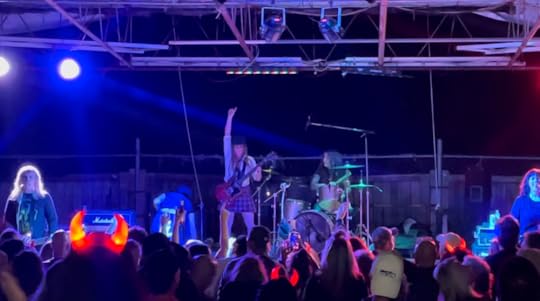
Last night, my partner and I went to see Hells Belles, an all-female AC/DC Tribute band. They are well known and even endorsed by AC/DC. They play small venues and have been around for twenty years. We saw them a couple of weeks ago for the first time, but they had some major technical issues and we left feeling a little disappointed. Nevertheless, we still loved them and their idea so much we decided to go see them again in the hopes of seeing a better show. They did not disappoint. The venue was outdoors and had a backyard feel. The stage was large, the sound was loud, and the lights were bright. A couple of hundred people surrounded the stage and outdoor area. An outdoor barbeque was smoking and drinks were flowing. I sat there with my partner taking in the sounds and melodies of a past generation. Memories stirred, feelings evoked, and I was in a very happy place while I sipped my Non-alcoholic beer. As the night went on, libations continued to pour and people grew more and more intoxicated. One thing became increasingly and overwhelmingly clear to L and me. Alcohol is not simply a problem in our society, it is a downright epidemic.
I try very hard to be a positive voice in the sober community. I use words such as we and us in the hopes of offering an inclusive view of addiction and the recovery process. I never discount or disregard anyone else's journey, and I am open to learning more about new ideas and experiences. With all that said, there is one thing I do not feel positive about and that is the overarching and neverending reach the society of alcohol has on our friends, families, partners, brothers, sisters, co-workers, parents, kids, and strangers. I don't feel positive because after witnessing, yet again, the way we idolize, worship, adore, glorify and praise alcohol, I don't know how to hold a positive view of our future. I mean, let's be honest. Alcohol consumption has been on an upward trajectory since its inception, and in recent times, even more so. Between 1990 and 2017 the consumption of alcohol has increased by 70 percent on a global level (medicalnewstoday.com). This study doesn't even take into account the even more recent uptick of consumption caused by the pandemic and stay-at-home orders. People are drinking more than ever before.
No, the overarching theme of the night could only be one thing: inebriation
It wasn't so much the act of drinking that caught my attention at the concert last night. It's nothing new and I have done my share of over-drinking to the point of intoxication in the past too. Some might say it's a right of passage. Others will say it's a phase we all go through. While some will even say it's just part of life. While all of these things may be true to some extent, what caught my attention more than the act of drinking was the discourse regarding alcohol throughout the entire night. If I had to honestly pick a theme to label the event last night based on the criteria generally associated with the idea of theme, it would NOT be music, art, creative expression, talent, community, entertainment, or even fun, which is what it should be. No, the overarching theme of the night could only be one thing: inebriation. It was the single most talked about thing, without question.
Every single one of the bands who played last night talked about drinking or getting drunk. One of the bands referenced getting fucked up in one way or another between every song they played. They drank on stage, requested shots, and even chastised people who were not drinking. The crowd cheered loudly anytime alcohol was referenced. The crowd bought the bands so many drinks they ran out of places to put them on stage. Audience members poured beer into the mouths of band members. Bottles were raised as much or more than applause was rendered for performances. People were drinking so much they couldn't stand and on more than one occasion, someone was dragged out of the standing area in front of the stage because they could not walk. I saw friends pushing each other to drink more. A few times I saw someone put up their hand in protest to their friend's drink offering only to have the drink physically placed into their hands and the bottom tipped up for them. Again, none of this is new, but in a heightened state of sober awareness, it is hard to not only see things more clearly but also to not feel saddened by what we see and hear perpetuated by the society of alcohol.
I am writing this because I no longer understand why it is funny to see our friends
stumble and fall down due to their intoxication
I am not writing this blog for those of us who have already become aware of the absurdity that lies at the bottom of every glass, bottle, and can; although, I don't think it is ever harmful to remind ourselves of these facts. No, I am writing this blog for those of us who are still struggling with our sobriety because we have not yet let go of our relationship with alcohol. I am writing this for those of us who are still sober curious and have not yet found the motivation that pushes us off the ledge and onto the path of freedom. I am writing this for those of us who have fallen into the society of alcohol's long-reaching arms of deceit and destruction and can no longer see the absurdity of all the things I witnessed last night because those absurd things have become normalized in our society. I am writing this because I cannot ignore how sad it is, to me, that we feel the need to not only encourage people to engage in drinking but also that we feel the need to criticize those who choose not to. I am writing this because what kind of a friend force-feeds us alcohol even when we object. I am writing this because I no longer understand why it is funny to see our friends stumble and fall down due to their intoxication. I am writing this because we have to change our perception of alcohol. We have to help each other see the damage it causes. We have to actively take part in the eradication of this toxic substance and behavior. We have to stop perpetuating the lies of alcohol.
A reader recently responded to one of my posts about how they could do without the rah-rah nature of my sentiments. While I would never describe my writing as such, I have to say, with all the negativity surrounding us every day from every corner of our lives and communities, a little positivity certainly cannot hurt us. It is not my intention, however, to be a cheerleader for sobriety. The reason I talk with such passion about this topic is that I have personally experienced the transformation following the cessation of alcohol, nicotine, and addiction. I talk the way I do because it has become clear to me there is not enough talk about how easy it can be to make life-long positive changes in our lives if we approach them in the right way. There is not enough talk about how living day to day can be limiting but living fully and with intention can be forever freeing. There is not enough conversation regarding the differences between being physically present in life and emotional present for life. There are not enough people saying quitting drinking is not giving up something but gaining everything. I talk the way I talk because I want to be a part of the positive transformation in our society. I want to be a part of the shift from a society that encourages each other to destroy ourselves, to a society that encourages each other to be better, stronger, and more unified in solidarity. The community is already out there, but we need your help to make it grow.
There really is nothing better than a sober perspective
For the record, if I portrayed my experience last night as a negative one due to all the things I witnessed, that is certainly not my intention. No, I made several comments to my partner about how much I was thoroughly enjoying myself. I loved the band, I loved the music, I loved the generational aspect of the crowd. I loved so much about the night mostly because I was able to fully take it all in. One of the caveats to awareness, however, is that we undoubtedly see more than we may want to see at times. I use these unsolicited observations as reminders of where I once was, of where I am now, and of where I will never have to return. I acknowledge them, as I am now, and then enjoy all the other observations I missed out on for the better part of my adult life. There really is nothing better than a sober perspective.
#sober #soberlife #soberliving #sobriety #recovery #addiction #recoveryposse #alcoholic
#soberpodcast #soberblog #blog #podcast #writingcommunity #bestseller #livingwell #grateful #gratitude #joyoflife #happiness #JOMO #FOMO #whatif #goals #perspective
August 16, 2021
Then and Now

One of my favorite aspects of the social media platform for sobriety is seeing the "Then vs. Now" photos and stories people post. Sometimes the differences are so drastic it is hard to believe. Other times, the visual changes aren't as powerful as the emotional ones. Nevertheless, the changes are impossible to ignore and I feel proud of everyone who has experienced them and who has had the courage to put themselves out there in the hopes of helping others. There are times in my day-to-day life where I forget about the differences between how I used to live and how I live now. There are other times when I stop and reflect on how much has changed and how grateful I am for all those changes. Yet, other times, I am absolutely dumbfounded by the vast differences between my life back then, and my life now.
My partner and I were talking the other day about what it means to live a happy, productive, and fulfilling life. The conversation initiated when I made a comment regarding how much time I wasted throughout my years of drinking. She asked me what the difference is between then and now. For me, the answer to this question lies in where and how I spent my time. Interestingly, this is true for both my physical and mental states. What I mean is, where I spent my time physically as in location as well as where I spent my time emotionally. Likewise, how I spent my time physically as in my activity as well as how I spent my time emotionally. Sometimes the differences can be subtle, but even in those subtle differences, enormous benefits await. Never in my life have I experienced so many positive changes in not only the way I interact with the world, but also in how I see the world, and you can too.
The most fascinating part of trying to remember the things I did while drinking is
I have a hard time remembering the things I did while drinking
One thing I have tried to remain consistent with, in my sober journey and in my writing about my journey is to NOT talk about the negatives of the past. I believe there is much more benefit in concentrating on the present and the future. With this in mind, I will not spend much time talking about the specifics of the "then." Instead, I will focus more on how the "then" differs from the "now." For me, the biggest most overarching difference can be summed up in one word: time. You cannot know how valuable time is until you begin using it effectively. My "then" consisted of squandering time like it was useless and something for which I couldn't be bothered. Looking back, I think that was part of the problem. I didn't understand how much importance, joy, and happiness existed in time, but then, hindsight will always be 20/20, won't it? Here is how my perception of time has changed since I quit drinking.
First, I will talk about how my perception of time has changed in regard to physicality. It's easier to conceive and picture physical things and actions. The most fascinating part of trying to remember the things I did while drinking is I have a hard time remembering the things I did while drinking. Now, I have to concede in saying I did accomplish quite a lot in my life while drinking. I went to and finished college at the age of 37 as a working, married, father. I personally raised over twenty thousand dollars for cancer research, I wrote produced, and played all the instruments for a five-song metal demo at the beginning of the century, I lived in Hawaii for eight years. I have also done some amazing things professionally: underwater construction, scuba diving instruction, non-profit work, worked on a horse ranch overlooking Monterey Bay in California, I have written several books, and most recently I began and maintained a successful teaching career. Nevertheless, while I have achieved some things in my life, all the time in between all of those things was wasted and forgotten. I have a hard time remembering how else I spent my time other than those things because mostly I was either drinking, waiting to drink, or recovering from drinking. Time wasted.
Changing the way we think about, perceive, and experience the world is truly
the most important aspect of any successful and long-term change
Now, my physical actions and the things I spend my time on are not only productive and healthy but they are also remembered and I am truly grateful for all of them. Instead of waking up hungover and making excuses for when I can begin drinking again to mitigate how horrible I feel, I am setting intentions, expressing gratitude, working to better myself, my family, and my life. I am learning new things, getting better at other things, and focusing on living my life as opposed to simply enduring it. For the better part of my adult life, I did not know how interactive life is, but we have to be present and able to experience it. I used to laugh at people who said there was not enough time in the day. It never made sense to me. Now I understand it because when we take advantage of our time by engaging in meaningful activities we love, all we want is more time to do more of that, which is called living.
The other side of time is how we spend our time emotionally. Now, this one is a little trickier because if you are like me, and you wasted much of your emotional life on things that don't matter, being angry, focusing on the negative, and generally feeling unhappy and lost, then this is not an easy habit to break, but it can be done, I promise. If I am honest, I do not know which is worse: wasting physical time or emotional time. I think, based on my previous statement, wasting emotional time is more damaging because it is definitely the harder one to correct. We can correct physical habits by literally changing our movements and over time muscle memory can help to change the way we do things. Emotionally, this is true as well, but the power of our mind is both our greatest strength and our greatest weakness. Changing the way we think about, perceive, and experience the world is truly the most important aspect of any successful and long-term change.
We can change the channel of our thoughts as easily as we change the channel
on the television, if we want to
While my physical life has dramatically changed for the better and more positive, because of the power of our minds and the amount of time I spent wasting time emotionally, my emotional health is a little slower to catch up with my physical health. Here is what I have done and continue to do to help change my bad emotional habits to more positive ones. First, I try to express my gratitude for all the positive things in my life every day. I don't always remember, but I try to make it a priority because I believe in the idea that positive thinking and gratitude create more positive outcomes.
Next, I try to surround myself with positive people I either admire or feel I can learn from. Listening to other's positivity reminds me to remain positive too. When I feel myself drift toward negative thoughts or feelings, I practice recognizing those feelings and then concentrating on what my family calls changing the channel. It sounds corny, but it really works. We can change the channel of our thoughts as easily as we change the channel on the television if we want to. The people with whom we surround ourselves can make or break how we experience our world. My partner and my son are two of the most positive influences in my life and I feel lucky and grateful to have them in my life. Not to mention, the amazingly supportive people I have met and maintain friendships within the sober community.
There is never a day that goes by where I am not fully aware of and engaging
with time in positive ways
Another thing I try to do is to see, acknowledge, and point out positive people, things, events, and moments whenever they occur. There is a difference between seeing something positive and acknowledging it. Acknowledging the positive forces us to engage with it and therefore learn from it as well. Often, especially in addiction, we disregard our emotions by masking, numbing, and ignoring them through the use of our addictions. Simply allowing ourselves to be aware of and engage with our emotions is the single most powerful thing we can do to help improve our emotional health and how we spend our time emotionally.
In summary, what is the biggest difference between then and now for me? Time. I take advantage of my time, I appreciate time, and I am grateful for time every day. There is never a day that goes by where I am not fully aware of and engaging with time in positive ways. Can I improve how I spend and experience time? Always, and it is in that simple acknowledgment of truth that I am certain to never waste my physical or emotional time again.
#sober #soberlife #soberliving #sobriety #recovery #addiction #recoveryposse #alcoholic
#soberpodcast #soberblog #blog #podcast #writingcommunity #bestseller #livingwell #grateful #gratitude #joyoflife #happiness #JOMO #FOMO #whatif #goals
August 8, 2021
Non-Judgmental Sobriety

A fellow person in sobriety recently told me the reason my sobriety was easy is that I am an educated, straight, white, man. I'm going to let that sink in for a moment. Now, my intention in writing about this is not to call out the individual who made this statement. It is not to take a political stance. It is not to stand up for a subcategory of sex, sexual orientation, socioeconomic status, or religious affiliation. No, my intention in writing about this is to beg everyone in the recovery and non-recovery community to please, please, please, stop telling people how they should overcome their addictions, and more importantly, to stop criticizing anyone's personal journey, recovery, sobriety, or alcohol-free lifestyle. Our journey is our own and if it is working for us, it is working for us and that is all that matters. Our individual path may not work for the person standing next to us or the person living across the globe. Gender, sexual orientation, religion, political views, socioeconomic status, spirituality, what we do for a living, what we ate for breakfast, the app we use for navigating traffic, or any other detail about us have very little bearing on our potential for successful sobriety. Our perception of these things, on the other hand, does.
It is important to remember that perception and reality are vastly different things. How we perceive the world, our experiences, the people around us, the choices we make, the wrongs we suffer, and any other action, choice, decision, or view we have or hold affects how we experience our lives, the world, and our sobriety. If we believe sobriety is hard because we are poor, we are correct. If we believe sobriety is easy because we are wealthy, we are correct. What we believe has the single greatest bearing on the outcome of our actions. Take the victim mentality for example. A victim mentality is a belief that the world is against us, personally. It is the belief that all bad things are happening to us because people, society, god, and the universe are all out to get us. If we believe this to be true, we subconsciously act in a manner that propagates experiences to support our beliefs. The more evidence we gather to support our victim mentality the stronger our conviction grows. The only way to stop this self-perpetuating cycle is to change our perceptions of why things are happening the way they are happening. The more evidence we gather to support the fact we are not victims, the stronger our conviction grows to support this belief too.
If we believe a specific item brings bad luck, then we are focusing all our energy
on the outcome, we do not want and guess what
Let's look at superstitions. Science is now saying superstitions can actually work (livescience.com). It really isn't all that surprising, to me, anyway. Why? It's pretty simple. If we believe a specific item brings us good luck, then it does, and here is why. Beliefs are strong and they cause us to focus on them with conviction. When we do this, we are focusing a large percentage of our energy on a positive outcome. Whether the outcome is to perform well or make the right choice, our energy is more focused on the outcome we want because we are focusing on the fact the item brings us good fortune. Can it work in the opposite way? Of course. If we believe a specific item brings bad luck, then we are focusing all our energy on the outcome we do not want, and guess what? In the book, "The Secret," one of the writers says, "What we think about we bring about." This basically means, what we focus on has a higher probability of occurring than what we do not focus on. This makes a lot of sense to me. Have you ever had a bad day and it didn't seem to get better? Well, what were we focusing on throughout the day? We were focusing on all the bad things occurring so bad things kept happening. In my family, we call it, changing the channel. Change the way we are perceiving the day and chances are, our day will change as well.
This is why I believe so strongly in the idea of easy sobriety. The ease with which I experienced sobriety had nothing to do with race, sex, sexuality, religion, or politics. It did, however, have everything to do with my perception of the experience. I have talked about this before but for the sake of this blog, I will revisit it briefly. When my partner and I began our sobriety, we were not involved in sober communities of any kind. The only thing we did to begin our journey was to read Annie Grace's book, "This Naked Mind." We did not have any preconceived notion about how hard sobriety "should" be. We did, on the other hand, have a notion, thanks to Annie, that sobriety was based more on our personal beliefs and relationships with alcohol. Our sobriety began with the understanding and belief that alcohol had no place in our lives any longer and so it didn't. It was really that easy. Looking back now, if I heard the myriad of stories about difficult, impossible, horrific, and lifelong sobriety, I wholeheartedly believe my and my partner's experiences may have been different. Thankfully, that was not the case. The disparity in our experience and the experience of others is why I wrote my book on sobriety, continue to write my blog, do podcasts, and work in the sober community. I want people to struggle less in sobriety.
This is difficult because admitting we have this control also means we have to
hold ourselves more accountable
The problem is this; because the power of our mind and our perceptions are so strong, we will struggle as much as we think we should. The more we listen to stories of struggle, the more we will struggle. The more we hear we can only make it one day at a time, the more we believe we are lucky to make it through a day, when in fact, we actually earned and deserve it. The more we hear we are powerless, the more we give credit to things outside ourselves and perpetuate our self-deprecation. The longer we tell ourselves we are an addict, the longer we will remain addicts. The words, thoughts, and beliefs we use to define our perceived reality are incredibly powerful and they either aid in our self-destruction or our rebuilding. The most difficult aspect of this entire idea is giving ourselves permission to believe we actually have an enormous amount of control over the words we use, the actions we take, and the beliefs we hold. This is difficult because admitting we have this control also means we have to hold ourselves more accountable for where we are and where we are going.
This brings me back to the idea of judgmental sobriety. If what we say to ourselves, how we act, and the beliefs we hold have such great power over the outcome of our own personal sobriety, that also means what we say, how we act, and the beliefs we hold can also affect the outcome of other people's sobriety too; if they listen to us. We have a responsibility, as people in the sober community, to be aware of the power our words and actions hold to affect others. We have an obligation to be mindful that our experiences are not the right or only way, no matter how proud we are of them. It is our duty to perpetuate the greatest amount of positivity, strength, and encouragement we can muster for those who may be listening. Regardless of our experience and beliefs, we have to acknowledge there may be better, more effective, and even easier ways to recover from addiction. We have to be aware of the opposite too. There are more difficult paths than ours as well. Our job, as a sober community, is not to judge each other's journies and paths, it is to support and encourage them, wholly.
Our greatest achievements begin with one very simple yet incredibly powerful notion,
belief in the unknown
Remember, humankind's greatest leaps forward began with someone believing the unbelievable. When someone allowed themselves to see what nobody else could see. Through someone's foresight and courage to challenge the status quo. By not settling with what is comfortable. Our greatest achievements begin with one very simple yet incredibly powerful notion, belief in the unknown. We must not invalidate each other's successes, no matter how difficult they may be to understand, we must celebrate them and each other, always.
I dare you to reach out to someone in sobriety you may not know or agree with and say congratulations on your journey, you are an inspiration to others. What if, the day you did this, that person was questioning their sobriety? What if the day you did this, you supported someone's sobriety by simply being non-judgmental? What if...?
#sober #soberlife #soberliving #sobriety #recovery #addiction #recoveryposse #alcoholic
#soberpodcast #soberblog #blog #podcast #writingcommunity #bestseller #livingwell #grateful #gratitude #joyoflife #happiness #JOMO #FOMO #whatif #goals
August 1, 2021
Don't be a Quitter
One of my readers and recent events at the Olympics both inspired me and reminded me of some things I have experienced in the past with my sobriety and alcohol-free life. Simone Biles had to pull out of the Olympics due to a medical condition affecting her ability to remain aware of her body positioning while spinning, twirling, and flipping through the air. It is not only a well-known condition that occurs to gymnasts, but it is also something that occurs quite often and nobody is immune to the devasting effects it has on those who suffer from the condition known as the twisties. For fear of her own personal safety and the potential to negatively affect the ability of the USA Women's gymnastics team chances of obtaining medals, she withdrew from the Olympics. People, and I truly am at a loss for words here, have degraded her for her decision and called her a quitter. While I know it is not the same thing, this reminded me of my first week of sobriety when I told my favorite bartender not to pour me a drink because I had quit drinking. Her response was, "Awww, don't be a quitter."
A reader reached out to me recently to tell me a little bit about their story and some concerns they have with remaining sober. First of all, his sober trajectory is fantastic. He is thinking about the right things, looking at his relationship with alcohol, allowing himself to believe his journey, thus far, has been easy, and reading and arming himself with the knowledge necessary to remain successful in sobriety. His concern revolved around what I often refer to as the Society of Alcohol. He is from England and said he struggles with turning down invites to stags and weddings because they are simply a reason for people to drink. He doesn't know how to deal with being around people who are so freely drinking. I responded by stating, while he was certainly on the right track, there was still some work to be done. I say this because if we are still looking at alcohol in a positive light, worrying about what others think of our decisions to live healthier more fulfilled lives, or simply not sure how to have fun sober with people who are drinking, we have not fully embraced the joy of living alcohol-free, yet. But we will if we truly want to, and I believe this gentleman not only wants to but already does, he just hasn't fully given himself permission to believe it.
We have to have a plan to deal with the society of alcohol's passive-aggressive
badgering to get us to drink
I remember feeling truly floored when my bartender made light of my decision to quit drinking. Now, I get it, it is their business, and part of their business is to be snarky and sell liquor. Nevertheless, it affected me greatly and I stopped going to that bowling alley because of it. It wasn't a conscious decision or anything, I just slowly drifted away from it and found other places to go because of the not-so-positive feeling of the exchange. I honestly have no hard feelings and am still friends with her on Facebook. The point is, the society of alcohol is everywhere. It is around us all the time and it is supported by our friends, family, coworkers, and strangers. No matter where we go or what we do, we will be subjected to the power it yields over the general public and our lives. With that said, even when we have a solid relationship with our sobriety, we have to have a plan to deal with the society of alcohol's passive-aggressive badgering to get us to drink.
First of all, we are not quitters. We did not quit drinking, we began living; there is a difference. One of the definitions of the word quit is as follows: to cease normal, expected, or necessary action (merriam-webster.com). Drinking is none of these things. Well, it is normal and expected, sadly, but it is certainly not necessary. Regardless, it should not be normal or expected. There was a time when smoking was normal and expected, but we finally acknowledged and accepted it as poison. You never hear anyone make light of someone who quit smoking. Those people are praised, celebrated, and even rewarded, as we should be. We, as a society, have not acknowledged and accepted alcohol as a poison, yet, but we will. Although, alcohol has succeeded in creating the most brilliant marketing and self-perpetuating scheme ever known to humankind. It doesn't even really need marketing anymore. We, as a society, market it every single day by word of mouth. By showing our reverence for it, by putting up shrines around it, by bragging about our tolerance to it, by touting it as our savior, by exclaiming our undying love for the infamously lethal libation we often proclaim ourselves so deserving of. I did not quit drinking, I began living and that I deserve.
When we feel FOMO we are living in a deficit mindset
Secondly, the FOMO we think we feel in social settings inundated with alcohol is a fallacy. We are not missing out on anything by not drinking. We are, in all actuality, gaining so much more. I wrote about FOMO vs. JOMO recently and it was one of my favorite blogs. If you are not aware of the acronym, as I wasn't, JOMO is the Joy Of Missing Out. I love the idea because it is a simple shift in perception to turn something quite devastating into something wonderfully powerful and freeing. When we feel FOMO we are living in a deficit mindset. We believe we are NOT having as much fun as everyone else. We believe we are NOT experiencing the same happiness as those drinking. We believe we are NOT capable of enjoying ourselves as much as those who are drunk. What a crock of shit! I can wrap up this fallacy in one short period of time. The next morning. What do you remember? What did you offer to the conversation? How annoying were you? How many things do you regret saying or doing? How do you feel? The sober person and the hungover person have vastly different answers to these questions. Not to mention only one of them is promising to never do THAT again.
Lastly, there are always going to be people who do not understand our decisions, actions, and direction. In regard to living an alcohol-free life, I say forget anyone who does not support us or our positive and healthy life choices. Simone Biles made an enormously difficult decision to support her health and well-being over her immediate wants and goals and is suffering ridicule for it. I say, screw that. I say, congratulations, Simone, we are proud of you. Is anyone aware of the number of lifelong injuries suffered by past Olympians whom most of us don't even remember their names? There are times to be selfish. There are times to put our needs first. There are times to stand up for ourselves and do what benefits us the most. Simone chose this as one of those times and I deeply hope she is able to drown out the negative criticism associated with her decision and to live happily knowing she did the right thing. I wish the same for my reader who reached out and inspired this blog. You are on the right track, my friend. You are making the right choice. You are choosing life and I applaud you for your courageous decision.
What if... sobriety was celebrated as much as any other life achievement?
#sober #soberlife #soberliving #sobriety #recovery #addiction #recoveryposse #alcoholic
#soberpodcast #soberblog #blog #podcast #writingcommunity #bestseller #livingwell #grateful #gratitude #joyoflife #happiness #JOMO #FOMO #whatif #goals
July 26, 2021
Motivated Sobriety
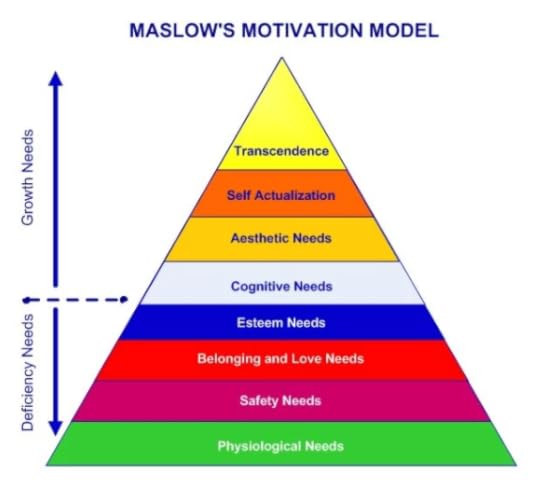
I just spent the morning reading about Maslow's theory regarding our hierarchy of needs. He postulated a person has to fulfill certain basic needs, (food, water, shelter, etc...) before they can adequately seek out higher-level needs, (learning, self-worth, creativity). In his theory, the basic needs are referred to as deficiency needs, and the higher-level needs are referred to as growth needs. I was fascinated by his theory, and I couldn't stop reading about all the different aspects that make up our hierarchy of needs. Of course, like all great minds of the past, newer generations have to flex their intellectual muscles by tearing down the intellect of those who came before them, nevermind the fact that the context has now changed and just because the older theories may not seem as relevant now, they were the highest level of thinking at the time. Maslow is no different, however, even with the negative criticism he has received, his theories have held strong and are still referred to in many different aspects of the human condition. His theories got me thinking about alcohol and our motivation to either keep drinking it or to quit drinking it altogether.
First, let's talk a little bit about Maslow's hierarchy of needs. He uses the visual of a pyramid to describe how the hierarchy works (simplepsychology.org). On the base of the pyramid are our most basic needs, foot shelter, water, etc... Once we fulfill those needs, we are then more motivated to move up the pyramid and work towards fulfilling needs such as safety, belongingness, and esteem. All of these needs fall into the category of deficiency. Without them, we are somewhat incapable of moving higher on the pyramid and toward the higher-level needs categorized as growth. The growth needs are as follows: cognitive, self-actualization, and finally transcendence. In the growth stages of our hierarchy of needs is where we find the motivation to learn more (not simply to survive), it is where our creativity is able to reach its fullest potential, and it is where we can also step outside ourselves and work towards helping others and the world in general. If this is not interesting to you, as an addict, I don't know what to say. Alarms should be sounding in your head, lights should be going off, and you should have said, "Awww, fuck!" at least once. I know I did.
Alcohol's numbing of my desire and need to find self-worth destroys any ability
I have of ever climbing the pyramid toward growth
Why is this so fascinating? It is fascinating to me because it is all based on the idea of motivation and what motivates us to live, or not to live as it is when we are bound by the constraints of addiction. If you look at the pyramid, the needs that are the most often not met for the addict are right above the most basic needs of food, water, and shelter (simplepsychology.org). Safety, belongingness, and esteem are all required to be met and fulfilled before we can obtain the ability to grow, per Maslow's theory. With this in mind, a double entendre presents itself to the emerging addict. If like me one of the needs not being met is self-worth based on extrinsic experience and information, then I am not capable of moving up the pyramid. The longer I stay deficient in this area, the harder it is to fulfill the deficiency. The double entendre occurs here; because of my inability to gain self-worth and therefore fulfill this need, I find alcohol as a way to escape the feeling associated with this need and stop trying to fulfill it all together. Alcohol's numbing of my desire and need to find self-worth destroys any ability I have of ever climbing the pyramid toward growth. I stall out and settle for less than I deserve.
It doesn't matter what aspect triggers our "need" for alcohol, once our need for self-worth, safety, belonging, love, etc... is replaced by a need for alcohol, then alcohol becomes more vital to our perceived health and well-being. The problem is, our need for alcohol can never be fulfilled and therefore we are rendered incapable of ever climbing the pyramid further and lose the opportunity to find real and true growth. We and our lives become stagnant, unmoving, and dormant until we either find a motivation stronger than our need for alcohol or we die. This is what fascinated me so much this morning. Just recently my partner and I were talking about how much things have changed since we quit drinking. It occurred to me, looking back at my drinking days, I didn't even know I was stuck. I didn't know I was stagnant. I didn't know I had settled for less than I deserved. I thought I was a productive and creative member of society when in reality I was simply just trying to survive the lowest rungs of the ladder on the pyramid toward true growth. That is what alcohol does to us; it masks the truth of our reality. It keeps us trapt in a fog of misperceived attention and forces us to continually travel in a circular trajectory toward nowhere. Do you know what makes this even worse? We go out of our way to praise alcohol for "helping" us remain immobile.
I try to avoid idioms as much as I can, but above this line, the sky is truly the limit
Now, let's look at the other side of this equation. What happens when we choose life over alcohol? What happens when we decide to find our self-worth; our safety and security; our family, community, and love? When alcohol is not numbing our hopes and desires and keeping us from finding these aspects of our lives, we become more open to them. You may ask, "Yeah, but what about before I began drinking? I was open then too, right?" Of course, but alcohol is not the only thing that prevents us from finding our true selves. It is, however, very good at ensuring we never do once we choose to go down its winding and disorienting path. Keep in mind, sometimes our negative experiences can fuel our desire to change if we let them; if we do not give up, quit, and succumb to a life that is less than we deserve. Whatever the initial reason was preventing us from feeling the motivation to grow, once alcohol got in the way, it became the problem. Fortunately, it can also become the motivation to change and grow once we experience the difference. I have never once heard someone say they regretted their decision to stop drinking. Keep that in mind.
Once we climb up from the bottom of the pyramid and onto the upper half we begin to see life in ways we did not know existed while in active addiction. This is the part nobody prepares us for. This is the part where we begin to understand what we have been missing. This is the reason sobriety can be easy. Above the deficiency line lies a world of neverending growth, prosperity, freedom, and life. I try to avoid idioms as much as I can, but above this line, the sky is truly the limit. Or maybe not. Maybe there simply is no limit and that is more the point. The reason many of us drank was we thought we were confined by neverending limits. The bottle seemed to remove those constraints, at least for a little while, and made us feel like we could breathe. In reality, it was literally squelching our ability and desire to grow.
This is where we not only understand our potential but also strive to attain our potential
Directly above the deficiency line is our cognitive need. What is cognition? It is our ability to think, reason, and remember. It is truly what makes us human. The more we use our intellect, the stronger our intellect grows. The more we learn, the more we want to learn. After cognition comes our desire to seek out and appreciate the beauty, balance, and form around us, within us, and within those around us. We want to see the beauty in our world and in those we love. Following our aesthetic needs comes our self-actualization needs. This is where we not only understand our potential but also strive to attain our potential. We push ourselves in ways we never knew possible because we did not know how far we could reach. We want and work toward being the best version of ourselves. Finally, and this is my favorite part. We work toward transcendence. This is when we feel motivated from outside our own personal values. We want to make the world a better place. We want to see others truly succeed. We want to help in ways that do not benefit us but the world as a whole. This is a whole new level beyond being of service.
Motivation is an integral part of successful and long-term sobriety. I have said this for a long time now and after learning about Maslow's theory I stand by my belief. If what motivates us to quit drinking has anything to do with drinking we are not on the right track. There is so much going on behind the scenes of our motivations to drink and consequently to quit drinking. We have to dig deeper, open ourselves up to new ideas, strive for our deepest truths, and work towards higher-level growth. We have to recognize and accept that we are worthy of stepping out of the deficiency area of the pyramid and into the growth area of the pyramid. Where we have come from is not as important as where we are going and every single one of us deserves to go as far as we not only want to go but also as far as we can conceive of going and further. The sky is not the limit, it is only the beginning.
#sober #soberlife #soberliving #sobriety #recovery #addiction #recoveryposse #alcoholic #soberpodcast #soberblog #blog #podcast #writingcommunity #bestseller #livingwell #grateful #gratitude #joyoflife #happiness
July 18, 2021
Addicted to Sobriety

I have noticed a trending phrase floating around in sobriety a lot lately, and I have to be honest in saying I very much dislike not only its denotation but also its connotation. The saying is, "I am addicted to sobriety." Okay, is it clever? Yeah, on some level I get it. It's clever and cute, but accurate and helpful, I am not so sure. As someone who has been under the spell of several addictions throughout my life, I am not one to throw around the addict or addiction terms loosely, especially in regard to things I consider to be positive. I can already tell this is going to be one of those blogs a person can either take or leave because most of what I am about to say is wildly open for interpretation, and depending on where you sit in your sobriety and beliefs, you may or may not agree with anything I have to say. Nevertheless, I strongly believe there is some merit in the idea that regardless of how cute it may sound, we should NEVER be addicted to sobriety.
First, let's start with the denotation of the word. The funny thing about words is the myriad of definitions each one seems to have and the word addict is no different. If you look up the word addict, the definitions range from medical conditions and diseases to light-hearted references to chocolate addiction. Anyone who has experienced addiction knows there is nothing light-hearted about it. While there may be many definitions for the word addict, I chose this one to focus on because it supports my theory about why we are not addicted to sobriety:
Noun - one exhibiting a compulsive, chronic, physiological, or psychological need for a
habit-forming substance, behavior, or activity.
There are several words in this definition that scream negativity to me: compulsive, chronic, habit-forming, and need. Compulsive implies acting against one's own wishes. Chronic most commonly refers to lasting illness. Habit-forming can be both good and bad but in regard to addiction, it feels mostly bad to me. And, of course, need. Need implies necessity as in life-sustaining.
I am talking about the negativity associated with the literal definition of the word addict
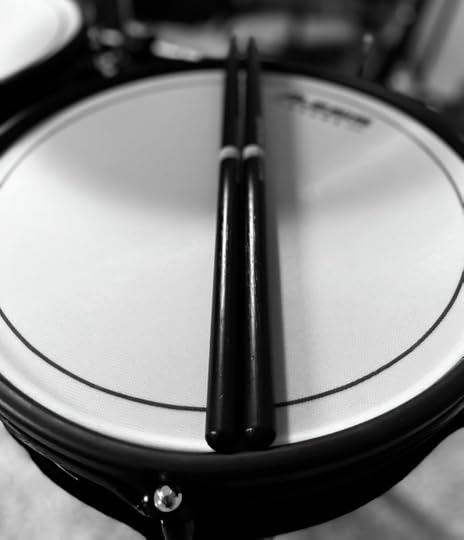
Now, habit-forming can be good too, right? Of course, but like anything, too much of anything can be negative. Recently, I have taken up drumming and I have to be honest in saying I have to be careful not to let drumming be an addiction too. That may sound a little counter-intuitive. Why would learning something new be negative? Well, if all I do is play drums and I drop the ball on the rest of my life, well then, drumming is just as much a negative addiction as anything else. And need, too, right? We may need to be sober to live the life we want to live. I get that. But, what I am talking about here is the negativity associated with the literal definition of the word addict. Generally speaking, addiction is used in reference to a habit that negatively affects our lives, whether it is a substance or behavior. Believe me, I know both.
Let's talk a little bit about connotation. Connotation is the feeling a word invokes upon reading, saying, or hearing it. I don't know about you, but the words addict and addiction bring up an array of feelings for me and none of them are even remotely positive. Even if I heard someone say they are addicted to chocolate, I would cringe a little and think to myself, I'm sorry. I don't wish any kind of addiction on anyone. What about exercise. Can addiction to exercise be unhealthy? It can. Injuries occur because of the overuse of muscles, tendons, and ligaments all the time. I'm addicted to my partner. OH for fuck's sake, NO! Never, never a good connotation. I'm addicted to work. Noooo! Addiction is not a positive answer to anything. We do NOT want to be addicted to anything or anyone, ever.
Do I need alcohol? If the answer is yes, I have a negative relationship with alcohol
I'm addicted to sobriety. No, no you're not. You are loving your sobriety like you should love your partner in a healthy relationship. Remember Annie Grace's talk about our relationship with alcohol? Well, this is what we are talking about. You can have a positive relationship with alcohol and you can have a negative relationship with alcohol. Likewise, you can have a positive relationship with your sobriety and you can have a negative relationship with your sobriety. Like everything else in life and sobriety, it all really comes down to our perception. Do I need alcohol? If the answer is yes, I have a negative relationship with alcohol. Do I miss alcohol? If the answer is yes, I have a negative relationship with alcohol. What does a positive relationship with alcohol look like? Here is how I view my relationship with alcohol. I am aware of alcohol and the fallacy it perpetuates, because of this, it has no place in my life. I don't want it, I don't miss it, I don't need it, I don't even really think about it. I know it is there and I simply don't use it.
Wait a minute. You said we can have a negative relationship with our sobriety too. How does that work? Well, this one gets a little tricky, but bear with me. Do you need your sobriety? If the answer is yes, then chances are you still have a negative relationship with alcohol. Meaning, because of your desire to drink you need sobriety to keep you on track. There is a very large difference between needing sobriety and choosing sobriety because you no longer have a desire for alcohol. Needing sobriety correlates to a negative relationship between it and alcohol. Choosing sobriety correlates to a positive relationship between it and alcohol. As is true with many of my views on sobriety and addiction, I know many of you have bristled at some of these statements. I understand why. I do. But I also understand the reason for many of the bristles we feel to conflicting information we hear are a result of past conditioning. It goes against what we know, what we have learned, what we have been taught. We bristle because it challenges our comfort zone. As stated perfectly by Neale Donald Walsch, "Life begins at the end of your comfort zone."
I am definitely not addicted to my sobriety. I am, however, addicted to life
Yes, I am addicted to my sobriety is a cute saying. It is clever. It is eye-catching. It'll get a lot of likes. But, is it really something we want to say let alone feel? If you ask me, I have to say, "Fuck No!" I am definitely not addicted to my sobriety. I am, however, addicted to life. Wait. How is that different? You said no addiction is healthy. You said all addictions are negative. I know, I know, but hear me out. What makes addictions negative? They interfere with our ability to live our lives well. With that said, if I am addicted to living, I am living my life fully. I am taking advantage of it every single day. I am constantly learning, growing, and evolving. I am embracing the time I have left on this planet by appreciating those who choose to spend time with me. I am grateful for the abundance I have in my life. I am present, aware, and conscious of my surroundings. I am living the best possible life I can live. And, because of that, yes:
I am addicted to life.
#sober #soberlife #soberliving #sobriety #recovery #addiction #recoveryposse #alcoholic #soberpodcast #soberblog #blog #podcast #writingcommunity #bestseller #livingwell #grateful #gratitude #joyoflife #happiness
July 11, 2021
Doing Sober Time

One of the benefits of following many sober blogs, groups, and pages is the abundance of reminders we can receive on a daily basis about our ultimate goal of living an alcohol-free life. One of the negatives is the abundance of reminders we can receive on a daily basis about our ultimate goal of living an alcohol-free life. There is an incredibly fine line separating some of the positive reminders from some of the negative ones in the recovery process. Something that has occurred to me lately is the, arguably negative, reminder of time. It seems to be one of the overarching themes in recovery. Now, don't get me wrong, as I have said many times throughout my blogs, if something is working for you then it works, and congratulations. I just can't help but challenge some of the things I hear when they do not make sense to me. One of those things is the undying need to remind ourselves of our time served.
Think about it. When you tell someone you do not drink, what is one of the first things they ask you? "How long have you been sober?" Or, "Why don't you drink?" These two replies sound a lot like something you may hear in prison. "What are you in for?" Or, "How much time did you get?" Why do we act like we are doing sober time when in fact we are actually receiving a gift. There is nothing negative about sober time and the sooner we realize this the sooner we will begin enjoying our time served rather than simply enduring it. There are many correlations we can make to the idea of time served, and none of them hold a positive connotation. When we use the abundance of time to describe something, we are generally describing something unenjoyable. Rarely do we say something like, "I had the most amazing time, it lasted forever." No, generally we say things like, "I had the most amazing time, it went too fast." The abundance of time is usually perceived like this, "I had the worst day, it lasted forever."
If we perceive time to be passing slowly, it passes slowly. If we perceive
time to be passing quickly, it passes quickly
Not to be too brash, but if our sober time is dragging, we may not be doing it right. think of a time when you had something incredibly important looming in the future. When you focused on how many days until the event arrived, how long did time appear to pass? It felt like an eternity, didn't it? Now, when your life got busy and you forgot about the looming date for a little while, how quickly did time appear to pass? It passed quickly. Why? Time is a funny thing. For one, time is a man-made construct, it doesn't really exist. And two, it relies almost entirely on our own personal perception of it. If we perceive time to be passing slowly, it passes slowly. If we perceive time to be passing quickly, it passes quickly. Is there really any difference in the amount of time passing in either scenario? No. The same number of seconds, minutes, hours, days, months, and years passed whether we perceived it to be passing slowly or quickly. How we perceive time is a choice and so is how we experience it.
This brings me to the ever-popular idea of counting days and even the concept of one day at a time. Again, if this is working for you, then keep it up, you are doing amazing and I am proud of you. If, on the other hand, you are new in sobriety and anything I am saying here resonates, then keep an open mind, and let's see where this takes us. I have been a large proponent of NOT counting days for quite some time now which, of course, is ironic if you know my sober beginnings. For those of you who do not know, I began my sobriety by writing a sober blog every day and I did so for the first 101-days of my sobriety. Each blog was titled, "Sober Day __." Later, I published those first 101-days of my sobriety in a book called, "Alcohol-Free Straight Up with a Twist; A 101-Day Journey Toward Easy Sobriety," all of which are dependent on the idea of time. Nevertheless, even though the beginning of my sobriety was largely dependent on time and counting days, I remember very distinctly feeling relieved when I wrote my first blog after those first 101 days. It was called, "After 101 Days of Sobriety." I was happy and relieved to let go of the titles revolving around my sober days.
All I know is I do not drink, and I haven't for quite some time. Put that on a chip
Since that day, I have never posted about my sober days again. If I am totally honest, it is tempting because I know I would get a barrage of internet love if I did, but I personally prefer just knowing I am doing it on my own and I am doing it for myself. I didn't post about my six-month day, my year day, or any other day because I honestly do not know when they occur. All I know is I do not drink, and I haven't for quite some time. Put that on a chip. Have you ever heard of object permanence? It's the understanding that an object still exists even when it cannot be seen or heard. It is part of the child development stages. Basically, it is the point when peekaboo no longer works for a child because they know you are hiding. Well, if we looked at early sobriety as a child, then object permanence, or sober permanence would occur when we stopped feeling the need to count our days because we know our sobriety still exists whether or not we focus on or count the days.
This is also why I do not like the idea of one day at a time either. While I know it works for many people, for me, it's a time bomb. I say this because to tell myself I only have to make it one day gives me a quick and easy out if I do not make it that one day. "Well, I knew one day was a stretch so..." I prefer the one life at a time approach. This is where I choose life over my addiction and live in a manner supportive of that decision for the rest of my life because I know I am worth it. Is this oversimplifying a massively complex and worldwide problem? Sure, but is it possible? I am here, and many other people whom I have met are here to tell you it is not only possible but it is also plausible if you give yourself permission to believe it. The problem is you have to let go of all those preconceived notions accompanying the negative aspect of social media and recovery in order to accept this as a potential reality. If you do, you just may find that your sober time is no longer felt as time served, but time that is finally lived. And, guess what? You deserve it, too.
Too often I hear people telling others what their experience should be
As we all know and have heard countless times, sobriety is an individual and personal journey. We all experience different things throughout our process and we all require different things to succeed in our sobriety. With that said, it is important for us all to allow each other to find our own paths and walk the lines we need to walk in order to know what our individual journey looks like. Too often I hear people telling others what their experience should be, how it should feel, what struggles they will experience, and whether or not they are doing it right. While I know we are all trying to be of service and help others in sobriety, sometimes, it may not help as much as hinder someone's progress.
Imagine someone new on their sober journey. They are doing really well and feeling strong. They wonder if what they are experiencing is real because they never thought they could quit drinking so easily. They decide it doesn't really matter because right now they feel good. In a conversation with a sober friend, they tell their friend they have found sobriety to actually be quite easy. The friend chuckles at them and says, "Oh, just wait, it gets harder. You are simply on a pink cloud right now. Give it time, it will get much harder." They shrug off the comment and continue living their sober life, but with one difference. Now, they have this nagging feeling deep down in their core questioning their experience. They go through each day waiting for the other shoe to drop because they now know what they are experiencing is only a fleeting moment of misperception. With each passing moment and experience, they wait for the struggle to come, and guess what? It finally comes because they knew it would, and they struggle just like their friend said they would. Later, someone approaches them with a similar experience of an easier time with sobriety and they say, "Oh, just wait..."
You were not tainted with the negativity surrounding other people's struggles.
You found your own way
Now, let me tell you about my sobriety. I began my sobriety feeling really good too. It was not hard for me because I engaged in some really helpful activities along the way. I wrote about my experience, exercised, took on some new hobbies, and generally changed the way I looked at alcohol and my relationship with it. I knew I no longer wanted it in my life, so I behaved in a manner that supported that desire. Sobriety was easy for me. One day, I met a man, Bobby C. who had been sober for thirty-five years. He asked about my experience and I told him how easy things have been for me. He asked a few questions and then came to the following conclusion. He said, "You know why sobriety has been easy for you? It's because you were not tainted with the negativity surrounding other people's struggles. You found your own way." I remember distinctly saying to myself, "that makes so much sense." At the moment I met him, I was just starting to interact with the sober community more and I was beginning to hear all the horror stories associated with other people's sobriety. Bobby's comment justified my feeling and I have been able to ignore all the negativity encircling sobriety ever since. My sobriety and my sober time have continued to be easy and enjoyable.
Remember, we have a choice in how we experience our time served. Whether it is in life, our job, our relationship, the dentist's office, or sobriety, we can change how we experience time and therefore how we experience these events. Undoubtedly, someone who began reading this blog didn't even finish reading it because they felt I am way off base with my feelings regarding the potential for easier sobriety. As I said earlier, we all have individual paths on this journey. If what I am saying does not resonate with you, I encourage you to stay on your path or find your own as well. If what I am saying resonates with you, or even if you simply wish it did keep an open mind in your experience. Seek out and find information and people who support what you WANT your sobriety to feel like. Listen and learn from everyone, but only adopt what feels right for you in your soul. Choose how you experience your life. Choose how you experience your sobriety. Choose to enjoy your sober time.
July 3, 2021
You Cannot Quit Drinking by Not Drinking
I have said this several times, I know Annie Grace, author of "This Naked Mind" has said it, and I am honestly not sure where it originated but, you cannot quit drinking by not drinking. I posted this again the other day and a friend replied asking what it meant. The person was genuinely curious and wanted to know more, so I decided to write about it in more detail. First of all, what does the saying actually mean? Well, in the most basic terms, it means not drinking in and of itself is not the cure to the problems a person encounters with alcohol addiction. It means, just because you gave up ingesting the poison, doesn't mean you understand why you were doing it in the first place. It means, there is so much more to alcohol addiction than the simple act of drinking alcohol. It means you
CANNOT quit drinking alcohol by simply not drinking alcohol
I liken the idea of quitting drinking by not drinking to the grin and bear school of quitting an addiction. Grinning and bearing it means you dig your heels in and endure all the pain and suffering that comes with an uncomfortable action. It is done by sheer willpower and brute strength. I picture an old western movie where the cowboy bites on the blade of a knife while the uneducated doctor removes a bullet from the cowboy's leg. Now, I know people have done this "successfully" with addictions. I have personally known people who have done it, and I have certainly heard stories about such antics, but I have to question the legitimacy of the success. That may sound harsh, but let me explain. Genuinely, when we grin and bear something, we do so by replacing the unwanted thing or behavior with some other thing or behavior. This can be literally anything and more often than not, the thing we use to replace the unwanted thing or behavior is not much better. Let me give you an example.
Some of you have heard this story before, so I apologize for the repetition. A couple of months before I quit drinking, I gave up nicotine. Originally, I was going to quit drinking and nicotine at the same time, but once that journey began I quickly realized quitting both was unrealistic, for me. So, I stuck with giving up nicotine and found it to be much harder than I had anticipated. Since I failed at quitting drinking, and I don't like to fail at anything, I decided to dig my heels in with nicotine and grin and bear my nicotine cessation. The result? I gained twenty pounds in less than two months. Why? because I ate everything that was not nailed down in the kitchen. I replaced my nicotine addiction with food. I was struggling immensely. I was a grumpy mess and I could not find peace in anything I did. Was I successful? Yes, I was successful in the act of not using nicotine, but that was all. In everything else, I failed miserably. How? Because:
You cannot quit an addiction by not doing the addiction
To some of you this may sound a bit harsh, but is it not the truth? I remember hearing the school of thought that suggested replacing an addiction with another addiction was acceptable. The idea was the new addiction had less of a hold on you and therefore once you quit the original addiction the new addiction would be easier to quit. What a crock of shit. If you are addicted to anything you know addiction is addiction regardless of time served. There is no magical cure or a simple way out. You have to deal with your addiction in order to quit your addiction properly. What does that look like? Well, if you have been following me for any amount of time you know I subscribe to the idea that quitting an addiction can be easy. How? Quitting an addiction can be easy if you do it properly. Doing it properly means uncovering the why's surrounding your addiction. I wrote about Finding Our Why's in a blog not long ago, check it out.
The why's refer to why you drink and why you want to quit drinking. If your answers to those two questions have anything to do with alcohol, you are not on the right track. I don't mean to say you don't want to quit drinking, I just mean you are not in the right frame of mind, yet. You see, you didn't start drinking because it tasted good, because it made you feel better, because it made you feel more confident, because it allowed you to check out, or because it relaxed you. No, alcohol may have aided in all those things on a chemical level, but those are not the reasons you began drinking, continued drinking, and now have a problem with alcohol. The reason you began drinking is deeper, more complex, and not so simple. Of course, I cannot answer that question for you. You have to find your own reason, in terms of why you drink (or drank) for yourself. Here is an example. One of my whys revolved around worth, or I guess I should say, lack of self-worth. I drank because I felt I did not deserve anything better. I drank because I felt worthless.
You cannot quit drinking by not drinking
Similarly, you also have to find your own reason, in terms of why you want to quit drinking too. If your whys about quitting drinking are any of the following, you are not on the right track, yet: I'm tired of hangovers, I am sick of screwing things up, I am sick of feeling controlled, I cannot sleep, I'm tired of doing stupid shit, or I have to quit to save my relationship. These are not the whys you are looking for. Sorry for the weak Star Wars allusion. No, much like why we drink, we have to dig deeper to find the why of our desires to quit drinking too. Again, it is not to say we are not tired of all those things, it is the fact that those things do not carry the necessary emotional weight to make our quitting easier. Here is an example. I am tired of hangovers. Okay, there is definitely truth in this statement. So, I quit drinking and stop having hangovers. Now, let me remind you of a statement every single one of us has made in our past while in active addiction. "I am never going to drink again." Sound familiar? Do you remember how much you meant it when you said it? I do. Why do we so quickly forget how horrific we felt at that moment? Because time has a way of erasing our emotional resolve if our resolve is not strong enough to last the test of time. Once I stop feeling like shit, I forget how shitting it actually felt.
Why do I want to quit drinking? For me, my why revolved around growth. My partner and I asked ourselves one simple question before we embarked on our easy sober journeys. What is the one thing we can stop doing that will have the greatest beneficial effect on our lives. There was no question it was alcohol. When I first went to therapy, my therapist asked me a question that may be difficult for some to answer. For me, the answer was almost too easy. She asked, "What would you be doing if you were not engaged in your addictions?" I replied without hesitation, "I would be writing more, spending more time with my family, doing more photography, exercising more, and living better." I didn't even have to think about it. Then she asked, "What is getting in the way of you actually doing those things?" My answer, "My addictions." It's not rocket science, but you do have to know what you are missing, what you can gain, and whether or not those things are important enough to you to last the test of time.
You cannot quit drinking by not drinking.
Am I getting through to you yet? Are you thinking about your whys in terms of drinking or any other addictions? Have you come up with some ideas about your whys that have nothing to do with alcohol? What are they? Do not settle for a few inspiring thoughts. Write them down, in detail. Instead of saying, "I want to remember the time I spend with family," say "I want to remember every detail of every holiday, vacation, life moment, and bedtime story." Be specific and go into detail. The more profound our whys, the easier our sobriety will feel. I cannot stress enough the importance of this aspect of our journies. Spend some time with it. Dig deep. Ask yourself the real questions. Be honest and truthful with yourself. Remember, it is your journey and you have the greatest impact on the actual success of your journey. Give yourself permission, be powerful, and take back the control you once gave away to alcohol.
Quit drinking by not wanting to drink any longer
If you want a little help digging deeper, try my free 7-Day Sobriety Challenge.