
Ellen Denham's Blog
May 8, 2020
On “Strategic Procrastination”
People in my profession are worried, and with good reason. The recent webinar by the National Association of Teachers of Singing, American Choral Directors Association, Chorus America, Barbershop Harmony Society, and Performing Arts Medical Association has suggested that singing together is not safe now, and may not be for some time.
Naturally, many of us who direct opera or choral ensembles are scrambling. What might we do? How can we plan? I am actually engaging in what you might call anti-planning right now, or as I have termed it for myself since at least 2013, “Strategic Procrastination.” Yes, you may laugh. It sounds like an excuse not to plan at all. But it is one of the most valuable techniques I have learned to employ as a director over the years.
I was trained in what you might call the traditional way of creating opera. It’s not that I feel I was never given the chance to explore my own creativity as a singer/actor, but largely in rehearsals, you learn the music correctly, then you show up and do exactly what the director says, to the best of your ability. In a few cases, if you were not able to execute exactly what the director wanted, or didn’t understand the instructions, you might get yelled at. I have also worked with directors who gave us a lot of ownership of the creative process, and I really appreciated that. But that is not always practical–rehearsal periods are short and somebody ultimately has to be in charge. The best directors, I believe, have a strong vision and are able to clearly articulate it and guide you along, but also are open to the unexpected and trying a different angle when maybe their vision and the natural tendencies of the actor are in conflict.
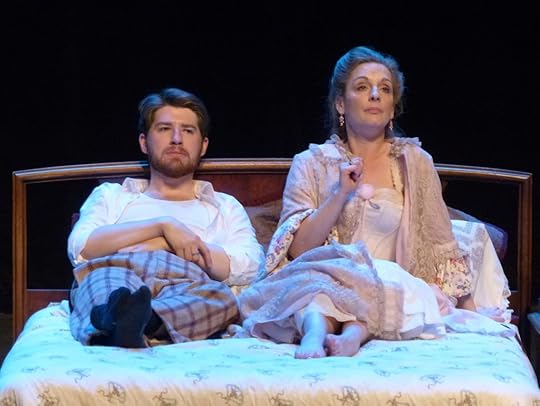 Griffin Candey and Ellen Denham in “Love Games” by Joseph Turrin, world premier 2014. Directed by the wonderful Stephen Fiol.
The first time I directed an opera—and looking back I’m surprised it “worked” at all—I was working with a couple of professional singers and some actors/dancers at the Indy Convergence in 2009. I had come in with a grand plan to write, compose, and direct a short opera. I ended up collaborating with a wonderful composer, Meredith Gilna, who did most of the composition. Because the cast members came from different artistic traditions, we didn’t really have a shared language. We also didn’t have enough rehearsal time to put on more than a sort of experiment rather than a finished product. In a few cases, there just wasn’t a way to teach everyone to sing their parts as written so we just went with whatever came out. I had to let go of my inner perfectionist and just roll with what happened. And you know what? It was ok. We had fun. We created something a little silly and though I’m certainly biased, I think there was some really nice collaboration and art-making going on. But in some ways to me it felt like a failure, because it did live up to the rigorous standards in which I had been trained. It didn’t deliver a polished final product. I realized I had probably been way too ambitious. Then I thought, maybe it was just right. Maybe you aim for the moon and land…not among the stars but take some really interesting detours?
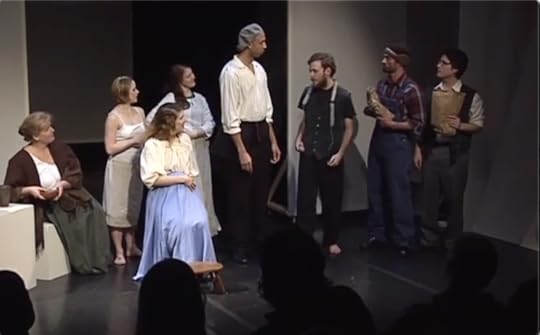 The cast of “Peter Peter Pumpkin Eater,” Indy Convergence 2009
I learned from the experience. I learned that I had to adapt my own process to meet people halfway, and respect that other artistic traditions come with their own processes and they are all valid. Sometimes you just need to get the music learned and get something done. Sometimes you can explore the process of creation rather than focus so much on the end product. I learned how to be process-oriented rather than product-oriented, and it was a valuable lesson for me as I went on to direct a collegiate opera program. What is more important to the students—to push them to achieve a final product or to have them learn and grow? While I would love to ideally do both, I like to put as much emphasis as possible on the learn and grow stage. This is where the strategic procrastination comes in.
In 2013, while working on my doctorate, I was invited to direct the Umbrella Project at the Indy Convergence. I came in knowing I was working with people with different artistic backgrounds, and the first thing I wanted to do was come in without much of a plan and listen and brainstorm and improvise musical textures and storyboard with them to see what strengths they each brought and what ideas excited and motivated them. Sometimes I almost went too far in that direction and then realized I did actually have to direct—to take what we were discussing and craft it into something. But we came up with some really interesting multidisciplinary explorations of the subject of Otherness, with spoken dialogue, improvised soundscapes, and dance.
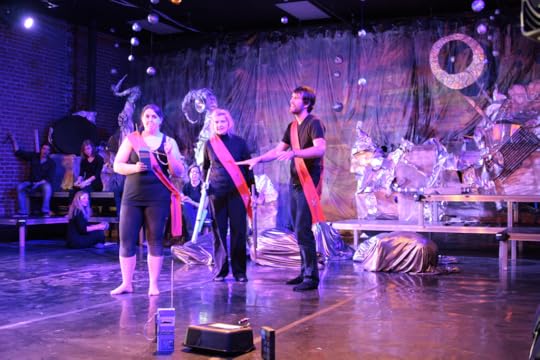 From the Otherness Project, Kristin Bowlby, Colleen Laliberte, and Lee Rainboth arrive to mine the planet. Photo by Roberta Wong.
These experiences have been very helpful as I finish my third year of directing a small collegiate opera program. I literally can’t plan very far ahead. My second semester, I almost had the forces to put on Gilbert and Sullivan’s “Patience,” but all it really took was for one or two singers to not be able to enroll in opera that semester for it to become impossible to cast. Fortunately, I already had a plan B, and though I had done some planning work for Patience, nothing had been set in stone.
Over the summer, I resisted the urge to do much planning for fall. “Strategic procrastination,” I told myself. I might have it all worked out and then a student I was counting on drop out, or a wonderful new student who needed a role. I needed to give the students ownership over their roles by involving them in the creative process. All I knew was that I was going to use music mostly from 1920s American Musical Theatre, and aim to give each student a solo and a duet or small ensemble number, and do at least one full-group number. The semester started in late August and the first thing I did was pick a song for everyone. I didn’t even have a partial script draft until September 7, when I wrote a few pages of dialogue, without really even knowing where the plot was going. Seeing the students in action and talking to them helped me write their characters. I involved them in things like name choices, personality, and so forth. I am extremely proud of the production of “Pinstripe Harry’s Tea Room Cabaret” that we put on. Was it perfect? No. Were there things we could have done differently? Yes. For one thing, I probably should have called a couple of extra rehearsals to help get the dialogue memorized more solidly a little sooner. But the students outdid themselves creating interesting characters and relationships, and along with our collaborative pianist Dr. Sangmi Lim, creating some beautiful music.
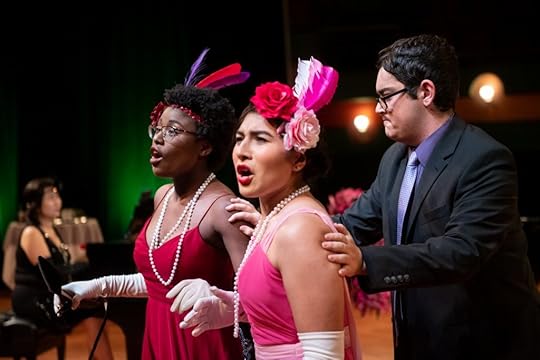 Dr. Sangmi Lim, piano, with Skylyn Bennett, Yoseline Castillo, and Jordan Kuzmack in Texas A&M University-Corpus Christi’s Fall 2018 Pinstripe Harry Opera Performance.
Sometimes the lack of information about the future, the lack of being able to plan in advance, can be a blessing. We find new paths, or sudden insights, or find things from working together that could never happen by one person sitting in a room thinking and planning. Serendipity can be a beautiful thing, and I am a more relaxed and happier person when I spend less time worrying about the future and more time just being open to it.
This is why I am not really all that worried about the future of opera. Am I worried about how long it will take to be able to sing in groups in person? Sure. Am I worried about lots of other things about this whole dreadful pandemic? Sure. Am I worried that a lot of bad things might happen to a lot of arts organizations? Sure. But opera will continue. I have some ideas I’m really excited about for Fall that involve thinking outside the box and that can work even if we have to do the performance virtually. But I’m not planning too hard, because who knows how much will have changed by August? I’m in strategic procrastination mode, letting ideas percolate and not planning too far out. I’m keeping up with the webinars and new technological innovations and what my colleagues are doing. Artists are innovators—we create things out of practically nothing. Lots of really smart, talented, and amazing people are dedicating themselves to making art continue to happen. And I’m thrilled to be a small part of that.
The post On “Strategic Procrastination” appeared first on Ellen Denham.


On “Strategic Procrastination”
People in my profession are worried, and with good reason. The recent webinar by the National Association of Teachers of Singing, American Choral Directors Association, Chorus America, Barbershop Harmony Society, and Performing Arts Medical Association has suggested that singing together is not safe now, and may not be for some time.
Naturally, many of us who direct opera or choral ensembles are scrambling. What might we do? How can we plan? I am actually engaging in what you might call anti-planning right now, or as I have termed it for myself since at least 2013, “Strategic Procrastination.” Yes, you may laugh. It sounds like an excuse not to plan at all. But it is one of the most valuable techniques I have learned to employ as a director over the years.
I was trained in what you might call the traditional way of creating opera. It’s not that I feel I was never given the chance to explore my own creativity as a singer/actor, but largely in rehearsals, you learn the music correctly, then you show up and do exactly what the director says, to the best of your ability. In a few cases, if you were not able to execute exactly what the director wanted, or didn’t understand the instructions, you might get yelled at. I have also worked with directors who gave us a lot of ownership of the creative process, and I really appreciated that. But that is not always practical–rehearsal periods are short and somebody ultimately has to be in charge. The best directors, I believe, have a strong vision and are able to clearly articulate it and guide you along, but also are open to the unexpected and trying a different angle when maybe their vision and the natural tendencies of the actor are in conflict.
Griffin Candey and Ellen Denham in “Love Games” by Joseph Turrin, world premier 2014. Directed by the wonderful Stephen Fiol.The first time I directed an opera—and looking back I’m surprised it “worked” at all—I was working with a couple of professional singers and some actors/dancers at the Indy Convergence in 2009. I had come in with a grand plan to write, compose, and direct a short opera. I ended up collaborating with a wonderful composer, Meredith Gilna, who did most of the composition. Because the cast members came from different artistic traditions, we didn’t really have a shared language. We also didn’t have enough rehearsal time to put on more than a sort of experiment rather than a finished product. In a few cases, there just wasn’t a way to teach everyone to sing their parts as written so we just went with whatever came out. I had to let go of my inner perfectionist and just roll with what happened. And you know what? It was ok. We had fun. We created something a little silly and though I’m certainly biased, I think there was some really nice collaboration and art-making going on. But in some ways to me it felt like a failure, because it did live up to the rigorous standards in which I had been trained. It didn’t deliver a polished final product. I realized I had probably been way too ambitious. Then I thought, maybe it was just right. Maybe you aim for the moon and land…not among the stars but take some really interesting detours?
The cast of “Peter Peter Pumpkin Eater,” Indy Convergence 2009I learned from the experience. I learned that I had to adapt my own process to meet people halfway, and respect that other artistic traditions come with their own processes and they are all valid. Sometimes you just need to get the music learned and get something done. Sometimes you can explore the process of creation rather than focus so much on the end product. I learned how to be process-oriented rather than product-oriented, and it was a valuable lesson for me as I went on to direct a collegiate opera program. What is more important to the students—to push them to achieve a final product or to have them learn and grow? While I would love to ideally do both, I like to put as much emphasis as possible on the learn and grow stage. This is where the strategic procrastination comes in.
In 2013, while working on my doctorate, I was invited to direct the Umbrella Project at the Indy Convergence. I came in knowing I was working with people with different artistic backgrounds, and the first thing I wanted to do was come in without much of a plan and listen and brainstorm and improvise musical textures and storyboard with them to see what strengths they each brought and what ideas excited and motivated them. Sometimes I almost went too far in that direction and then realized I did actually have to direct—to take what we were discussing and craft it into something. But we came up with some really interesting multidisciplinary explorations of the subject of Otherness, with spoken dialogue, improvised soundscapes, and dance.
From the Otherness Project, Kristin Bowlby, Colleen Laliberte, and Lee Rainboth arrive to mine the planet. Photo by Roberta Wong.These experiences have been very helpful as I finish my third year of directing a small collegiate opera program. I literally can’t plan very far ahead. My second semester, I almost had the forces to put on Gilbert and Sullivan’s “Patience,” but all it really took was for one or two singers to not be able to enroll in opera that semester for it to become impossible to cast. Fortunately, I already had a plan B, and though I had done some planning work for Patience, nothing had been set in stone.
Over the summer, I resisted the urge to do much planning for fall. “Strategic procrastination,” I told myself. I might have it all worked out and then a student I was counting on drop out, or a wonderful new student who needed a role. I needed to give the students ownership over their roles by involving them in the creative process. All I knew was that I was going to use music mostly from 1920s American Musical Theatre, and aim to give each student a solo and a duet or small ensemble number, and do at least one full-group number. The semester started in late August and the first thing I did was pick a song for everyone. I didn’t even have a partial script draft until September 7, when I wrote a few pages of dialogue, without really even knowing where the plot was going. Seeing the students in action and talking to them helped me write their characters. I involved them in things like name choices, personality, and so forth. I am extremely proud of the production of “Pinstripe Harry’s Tea Room Cabaret” that we put on. Was it perfect? No. Were there things we could have done differently? Yes. For one thing, I probably should have called a couple of extra rehearsals to help get the dialogue memorized more solidly a little sooner. But the students outdid themselves creating interesting characters and relationships, and along with our collaborative pianist Dr. Sangmi Lim, creating some beautiful music.
Dr. Sangmi Lim, piano, with Skylyn Bennett, Yoseline Castillo, and Jordan Kuzmack in Texas A&M University-Corpus Christi’s Fall 2018 Pinstripe Harry Opera Performance.Sometimes the lack of information about the future, the lack of being able to plan in advance, can be a blessing. We find new paths, or sudden insights, or find things from working together that could never happen by one person sitting in a room thinking and planning. Serendipity can be a beautiful thing, and I am a more relaxed and happier person when I spend less time worrying about the future and more time just being open to it.
This is why I am not really all that worried about the future of opera. Am I worried about how long it will take to be able to sing in groups in person? Sure. Am I worried about lots of other things about this whole dreadful pandemic? Sure. Am I worried that a lot of bad things might happen to a lot of arts organizations? Sure. But opera will continue. I have some ideas I’m really excited about for Fall that involve thinking outside the box and that can work even if we have to do the performance virtually. But I’m not planning too hard, because who knows how much will have changed by August? I’m in strategic procrastination mode, letting ideas percolate and not planning too far out. I’m keeping up with the webinars and new technological innovations and what my colleagues are doing. Artists are innovators—we create things out of practically nothing. Lots of really smart, talented, and amazing people are dedicating themselves to making art continue to happen. And I’m thrilled to be a small part of that.
May 4, 2020
What a year…and it’s only May!
2020 started off with a bang! In January, Stephan and I visited Disney World and especially enjoyed the new Star Wars Galaxy’s Edge area. Also in January, I presented at the National Opera Association National Conference on “Challenges and Solutions for the Developing Collegiate Opera Program” along with my colleague, Dr. Jon Truitt. I loved the conference so much because it was excellent to attend so many informative panels and meet other opera directors, composers, and singers. It is easy as an opera professional in a small program to feel alone, and I came home energized with so many great ideas and really feeling part of a community. I was happy that some of the solutions I’ve developed over the past three years at TAMU-CC were also helpful to others directing collegiate opera programs.
[image error]Drinking a strange concoction in a galaxy far, far away
Then I returned to Corpus Christi and got right to work directing Carmenella, a wonderful piece using mostly the music of Bizet’s Carmen with a very clever and funny script by my former Indianapolis Opera colleague, Denise Page Caraher. The students made me proud by getting their music and dialogue learned in record time. They even voted to come in on a Sunday and have an extra dialogue rehearsal to make sure they were prepared for the memory exam. We started blocking and learning some dance choreography. I just knew this was going to be the best opera yet—talented cast, great preparation, beautiful music, excellent script, students really taking ownership of their roles and creating well-rounded and interesting characters—pretty much everything you could want for a production.
In late January, I found out I was a national semifinalist for the American Prize in stage directing not only once but twice—in the Opera division with Pinocchio and the Musical Theatre division for Pinstripe Harry’s Tea Room Cabaret. This was amazing news! At the same time, I was submitting my three-year review binder for my academic position, and there is nothing like seeing a big stack of your cumulative teaching, creative, and service work to make you realize that you’ve accomplished something worthwhile.
In February I was hired to join the faculty of the Druid City Opera Workshop for the summer, and I was really excited to have the chance to work with opera professionals in a prestigious young artist program.
For Spring Break, Stephan and I went to the Texas Hill Country and had a wonderful time hiking, exploring, and eating at some great restaurants. We knew that COVID-19 was out there, and were a little worried, sure, but we kept washing and sanitizing our hands and planned upon return to hunker down for a while of social distancing.
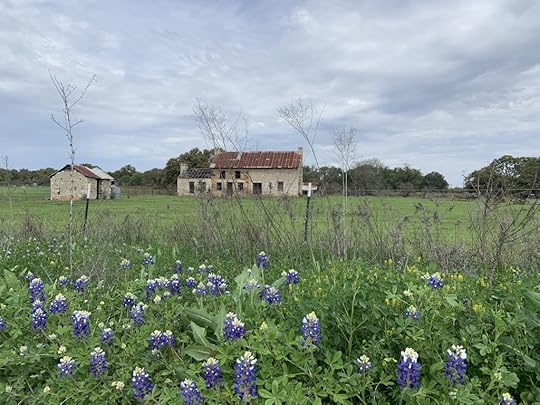 Beautiful bluebonnets near Marble Falls, TX
I don’t really need to explain what happened next, because it is a familiar story. My situation is not unique—I am better off than most, because I have been able to work from home and haven’t needed to put myself at risk. The May version of me looks back at the January version and just has to laugh. I remember feeling that things were going in such a positive direction. Now, there are so many bigger things to worry about. I worry most about my students, because I still want to give them the best learning experience possible, and while this is certainly not impossible via Zoom and other virtual platforms, it comes with its own set of challenges. Students, like all of us, are distracted with thoughts of worry for the future. I believe in the power of art in general and opera specifically to help us through this. On a bad day, I worry about how we will ever put on opera again. On a good day, I trust that our creativity as artists will help lift up all of us and someday soon we will make music together more beautifully than before.
The post What a year…and it’s only May! appeared first on Ellen Denham.
What a year…and it’s only May!
2020 started off with a bang! In January, Stephan and I visited Disney World and especially enjoyed the new Star Wars Galaxy’s Edge area. Also in January, I presented at the National Opera Association National Conference on “Challenges and Solutions for the Developing Collegiate Opera Program” along with my colleague, Dr. Jon Truitt. I loved the conference so much because it was excellent to attend so many informative panels and meet other opera directors, composers, and singers. It is easy as an opera professional in a small program to feel alone, and I came home energized with so many great ideas and really feeling part of a community. I was happy that some of the solutions I’ve developed over the past three years at TAMU-CC were also helpful to others directing collegiate opera programs.
[image error]Drinking a strange concoction in a galaxy far, far away
Then I returned to Corpus Christi and got right to work directing Carmenella, a wonderful piece using mostly the music of Bizet’s Carmen with a very clever and funny script by my former Indianapolis Opera colleague, Denise Page Caraher. The students made me proud by getting their music and dialogue learned in record time. They even voted to come in on a Sunday and have an extra dialogue rehearsal to make sure they were prepared for the memory exam. We started blocking and learning some dance choreography. I just knew this was going to be the best opera yet—talented cast, great preparation, beautiful music, excellent script, students really taking ownership of their roles and creating well-rounded and interesting characters—pretty much everything you could want for a production.
In late January, I found out I was a national semifinalist for the American Prize in stage directing not only once but twice—in the Opera division with Pinocchio and the Musical Theatre division for Pinstripe Harry’s Tea Room Cabaret. This was amazing news! At the same time, I was submitting my three-year review binder for my academic position, and there is nothing like seeing a big stack of your cumulative teaching, creative, and service work to make you realize that you’ve accomplished something worthwhile.
In February I was hired to join the faculty of the Druid City Opera Workshop for the summer, and I was really excited to have the chance to work with opera professionals in a prestigious young artist program.
For Spring Break, Stephan and I went to the Texas Hill Country and had a wonderful time hiking, exploring, and eating at some great restaurants. We knew that COVID-19 was out there, and were a little worried, sure, but we kept washing and sanitizing our hands and planned upon return to hunker down for a while of social distancing.
Beautiful bluebonnets near Marble Falls, TXI don’t really need to explain what happened next, because it is a familiar story. My situation is not unique—I am better off than most, because I have been able to work from home and haven’t needed to put myself at risk. The May version of me looks back at the January version and just has to laugh. I remember feeling that things were going in such a positive direction. Now, there are so many bigger things to worry about. I worry most about my students, because I still want to give them the best learning experience possible, and while this is certainly not impossible via Zoom and other virtual platforms, it comes with its own set of challenges. Students, like all of us, are distracted with thoughts of worry for the future. I believe in the power of art in general and opera specifically to help us through this. On a bad day, I worry about how we will ever put on opera again. On a good day, I trust that our creativity as artists will help lift up all of us and someday soon we will make music together more beautifully than before.
November 4, 2019
On Being a Work in Progress
The end of October and beginning of November were very busy for me—I directed an opera, performed in a faculty recital, and sang the soprano solo and chorus parts in Fauré’s beautiful Requiem with some wonderful colleagues. None of this is anything unusual for a professional singer/voice teacher/director, but it is a little unusual for me at the current time, as I have been recovering from a very bad case of acid reflux that has held my high range hostage for a period of many months while I worked to figure out what was causing it and how to treat it. The truth of the matter is, my voice is still not where I would like it to be, but I feel it is more important to continue to sing as a work in progress rather than wait until I feel 100% recovered.
The day after the recital, I went back to my ENT doctor to have him look at my vocal cords and assess the recovery. “Wow!” he said. “That’s much better than six months ago! Just a little thick at the back.” This was good news, and confirmation of what I felt in my own voice that I am in a lot better shape than I was then. For the recital I had purposely programmed less demanding repertoire with a lower tessitura, since I was still recovering, though I have been working my way back up into my soprano range.
Once I started healing from the reflux (I won’t go into all the details, but the single thing that helped the most was to eliminate wheat), it didn’t mean my voice would instantly go back to where it had been, because, in singing with chronic irritation, I had not been able to access the top of my range without muscling up there with too much weight in the sound. I had to also get the proper muscular coordination back.
I’ve worked hard on rehabbing my voice through regular practice and targeted work to learn how to lighten back up and get my voice more “heady” in the high range than I was able to accomplish during chronic irritation from reflux. I’ve been taking lessons via Zoom with a wonderful teacher, Barbara Fox DeMaio. A side benefit of all of this? It’s making me a better teacher, because I am having to go back to the basics and revisit and reanalyze almost every aspect of my own technique. (And as I write this, I am clearing my throat, wondering if it was the small amount of guacamole or the small amount of salsa I had with my chicken rice bowl? I already asked for “no beans” because I am afraid they could be a trigger. So yes, there are still frustrations.)
At some point I decided to sing with the voice I have now, even though it is a work in progress. That is what I tell my students, after all. Don’t think about that one note you didn’t like—focus on the rest of the music to come! Don’t wait until your voice is in perfect shape to sing or you will never sing at all. Remember that Beverly Sills is reported to have only been happy with her own singing six times in her life. When life messes with your high notes? Sing some lower repertoire.
I’d be lying if I said I was happy with the way I sound. I feel very good about my middle and lower range, and the high notes are coming back, but I’m having to work diligently across the secondo passaggio to not carry too much weight up and not let tension creep in because of so many months when those notes were not fully functional. I don’t quite have the stamina I would like. If I’m not careful, the higher pitches will be pushed and shrill. But the more I continue to work, the more likely it will be that they will come out the way they should, and that is something worth celebrating.
September 22, 2019
Childhood Memories
I am not a very good blogger, or journaler for that point, but sometimes I have thoughts in my head I would like to write down. Mostly these are just for my own information, or as drafts for essays I might write about various subjects, but sometimes I think, I’ve reached the age at which thinking back to my own childhood might actually be somewhat interesting for people besides myself. On the off chance that this is the case, I am posting here some thoughts and memories that were in my head when I woke up today, possibly spurred by something I dreamed about but can no longer recall.
Today I woke up thinking about a couple of childhood memories. At some point during elementary school (between third and fourth grade, perhaps), I attended a summer camp as part of the Mt. Tabor Summer Enrichment Program that I went to every summer from after second grade through most of high school. I don’t recall the name or location of the camp, but I recall I was in a cabin with three other girls: Sheila, girl whose name I think was Shanna or Shayna, and someone else I’ve forgotten. I believe the cabin had metal bed frames with no mattresses that we simply spread our sleeping bags on top of. I remember having a good time even though the camp was pretty basic—the dining hall served pancakes for breakfast one morning, for instance, but there was no syrup. And the no mattress thing.
But another thing I remember is that though there were four beds in the cabin, we got three other girls moved in there who slept on the floor. They were Asian and didn’t speak a word of English. I don’t recall their names but I think they were recent immigrants or refugees from Viet Nam. While I recall being polite to each other, I don’t recall that any of us made an effort to really talk to them or reach out, and that makes me sad for the missed opportunity.
I also remember, though I don’t recall if it was the same summer we went to that camp, taking a field trip to a planetarium. I don’t think I had ever been to one before, and I recall assuming we were going to learn facts about the stars or solar system. Projected into the dome was a program about a rogue planet by the name of “Loki” that was on an elliptical orbit and was going to collide with earth. I recall something about church bells and people praying as the collision was going to happen. I had missed the fact or did not completely understand that this was fiction, and wondered about why I hadn’t learned about this in school, and when this planet was going to come destroy the earth. Later I believe I tried to look it up in the World Book encyclopedia and found no reference to it, and figured out that it wasn’t true, but I don’t recall if I ever asked an adult and got it straightened out for me or just worried about it on my own.
That memory made me think of another time I was worried about death—I don’t remember how old I was but it was sometime in elementary school and our family had a Chevrolet Citation. We were driving up a winding mountain road to table rock, and it was quite vertiginous. Probably my Dad was driving and maybe my Mom was nervous and that made me nervous too; I don’t remember. But I distinctly remember feeling like we were not going to make it up the road and would go off the edge of the mountain to our deaths. I thought back over my life and decided that it had been a good life, and that I had done my best to be good, and Jesus would be waiting for me, and silently made my peace with my own death. Again, I don’t recall if I ever talked to my parents or another adult about this.
When I was in third grade I recall talking to my friend Lisa about where we would go if the Russians dropped the bomb. We were looking at a map of the US and picked out Dodge City, because the name sounded like it was something you would go to to dodge out of the way, and it wasn’t close to a big city as far as we could tell.
It’s actually sort of humorous and fun to remember things I was worried about as a child that now sound a little silly. For the most part, I had a pretty easy childhood, and though there were struggles, I remember a lot of fun and a lot of wonderful, supportive adults.
I never worried about someone coming into my school and shooting us. I can only imagine how much more difficult it is for children today, and I know that for every child who expresses this to a parent or another trusted adult, there are any number who just suffer silently with their worries.
July 30, 2019
Galápagos Adventure June 2019
Stephan and I were privileged to take the vacation of a lifetime in June, and recently completed putting together a large, physical scrapbook with photos, maps, and other items, with some captions and a small amount of commentary. Though I am not going to duplicate all of that here, I did want to share a couple of photos and some writing I did during and after the trip.
[image error] Stephan and Ellen on Genovesa Island
Seeing such beautiful wildlife up close was spectacular, and the fact that the animals, for the most part, have no fear of humans due to having had no negative experiences, is incredible. Our tour company, Ecoventura, was excellent, and the naturalists, captain, and all the staff on board the Letty helped make this the adventure of a lifetime.
[image error]Nazca boobies on Genovesa Island
Though I have no photos from snorkeling, the memory that stays with me the most is the one I describe here:
An Indescribable Feeling
The first thing I think about the feeling is that it is indescribable. But I am a writer, so I really have no excuse. It deserves an excellent poem that can make readers feel the same feeling, and I am not sure I am capable of that. But I can describe the experience of having the feeling, to the best of my ability, and maybe, if I am lucky, I can find words that help articulate it.
Here is part of what I wrote in my journal as the initial attempt to capture the feeling, on June 19, 2019:
Then, snorkeling from the panga, we had the most incredible snorkeling experience ever! Huge sea turtles, swimming with them and marine iguanas—we could see them dive down to eat—and all sorts of fish. At one point we were surrounded by schools of tiny silver striped fish like moving curtains turning this way and that, and at the same time, seeing a giant sea turtle below and an iguana swimming near the surface. Most incredible nature experience ever—I felt like I had stepped into a completely new world.
Though I didn’t write it down, I recall also feeling like I wanted to just put my hands to my heart and say a heartfelt “I love you” to all of nature, to express my gratitude for the beauty which I was privileged to experience. I still tear up a little bit just remembering what it felt like.
If I think about it for too long, there is also sadness, because I want for everyone to feel this, to have this opportunity—I can’t help feeling that the world would be a better place, that we would love each other more, that we would empathize with those who are different from us, if only we could, for a moment, love and try to understand a beautiful, majestic animal in their own environment. Maybe we would see how interconnected we all are, and that nature isn’t just something outside of us, but part of us in a way that we cannot and should not deny.
Ellen Denham
July 14 2019
[image error]Marine iguanas
During the trip, I also wrote one very short piece of fiction, after learning about the incredible story of the marine iguanas and how they must have evolved from land iguanas millions of years ago, and then passing a few pastures with cows in the highlands of Santa Cruz Island.
The Galapagos Cows
The story of the Galápagos cows is very long, and most of it has not happened yet. A small island far to the west of the archipelago consisted of nothing but basalt from lava. The cows decided to migrate there to see if over the course of several million years, some of them might evolve into creatures who could live in that harsh environment. Sadly, if the story were true, they would simply die, but since this story is based on magical realism, there will be, millions of years from now, seagoing cows who eat algae and whose hooves have become flat and broad, like paddles.
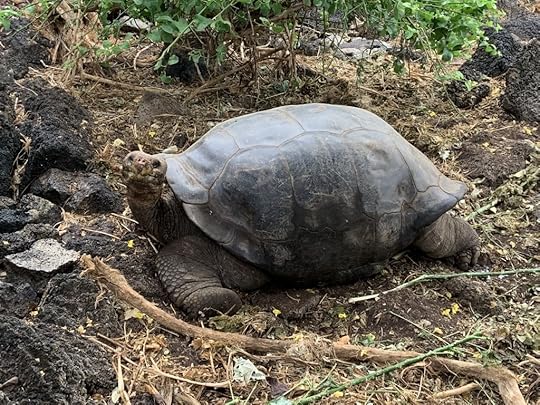 Galapagos tortoise
There is so much more I could say, but sadly, I am behind in lots of other writing I need to do. After our Galapagos adventure, we spent a week in Peru, which was also an amazing experience. I feel so enriched by the experience of travel, and lucky that we were able to take this wonderful trip together.
February 24, 2019
Thank you to all the experts!
As a voice teacher, singer, director, and writer, I prefer to blog about (when I actually blog) things related to these topics. However, because this subject came up in an internet discussion between professional singers, many of whom struggle with this issue, permit me to engage upon a small rant.
I feel like I owe all the self-appointed internet Mr. Experts on other people’s bodies a huge apology. I mean, how dare I not look like they think I should look? Really! The very nerve.

Summer 2010 in Costa Rica.
This is me after I had dieted, looking great! Of course, it was many years ago, but how dare I not keep that face and figure? Aren’t there a million products designed to keep me looking young and fit, no matter my numerical age? Just look at Jane Fonda! She is way hotter at 81 than I was at 20! So what is my excuse?
When I was on that diet, I was getting almost no exercise. I found it made me too hungry, and I couldn’t control my calorie intake. Now? I’ve done a 20-minute aerobic dance routine every single day since summer 2015. Every. Single. Day. And decided to worry less about the weight. Do I weigh a little more? Sure. I decided I’d rather be fit than skinny. Exercise also helps put me in a great mood for the day. But maybe I’m wrong about all of that—some Mr. Expert thinks that it is more healthy to be skinny, and he should know, right?
Then at some point I made the terrible choice to turn 50. Weight that used to go to other places started ending up around my middle. What a dumb choice! I really should have sent it to my boobs and butt so I would just get curvier. I mean, seriously, what was I thinking?
Once I even made the mistake of standing up for a fat person on the internet. Big no-no! Some helpful Mr. Expert went to look at photos of me and proclaimed me as “not fat” (Whew! That was like winning an Oscar!), and asked me why I was standing up for her? Well, let me consider this. I’m white and heterosexual, so I suppose I shouldn’t care about racism and homophobia either. Ok, wow, this is going to be really easy—all I have to do is care about what Mr. Expert thinks of me, and then I will be fine.
I am so grateful there are so many self-appointed Mr. Experts who dedicate their lives to selflessly concern-trolling women whom they know nothing about. Someday, one of them will win a Nobel Prize.

Valentine’s Day 2019. Note the lack of bikini.
(But wait! Until a man shows up to comment on this photo, does it really exist?)
Thank you to all the experts!
As a voice teacher, singer, director, and writer, I prefer to blog about (when I actually blog) things related to these topics. However, because this subject came up in an internet discussion between professional singers, many of whom struggle with this issue, permit me to engage upon a small rant.
I feel like I owe all the self-appointed internet Mr. Experts on other people’s bodies a huge apology. I mean, how dare I not look like they think I should look? Really! The very nerve.
Summer 2010 in Costa Rica.
This is me after I had dieted, looking great! Of course, it was many years ago, but how dare I not keep that face and figure? Aren’t there a million products designed to keep me looking young and fit, no matter my numerical age? Just look at Jane Fonda! She is way hotter at 81 than I was at 20! So what is my excuse?
When I was on that diet, I was getting almost no exercise. I found it made me too hungry, and I couldn’t control my calorie intake. Now? I’ve done a 20-minute aerobic dance routine every single day since summer 2015. Every. Single. Day. And decided to worry less about the weight. Do I weigh a little more? Sure. I decided I’d rather be fit than skinny. Exercise also helps put me in a great mood for the day. But maybe I’m wrong about all of that—some Mr. Expert thinks that it is more healthy to be skinny, and he should know, right?
Then at some point I made the terrible choice to turn 50. Weight that used to go to other places started ending up around my middle. What a dumb choice! I really should have sent it to my boobs and butt so I would just get curvier. I mean, seriously, what was I thinking?
Once I even made the mistake of standing up for a fat person on the internet. Big no-no! Some helpful Mr. Expert went to look at photos of me and proclaimed me as “not fat” (Whew! That was like winning an Oscar!), and asked me why I was standing up for her? Well, let me consider this. I’m white and heterosexual, so I suppose I shouldn’t care about racism and homophobia either. Ok, wow, this is going to be really easy—all I have to do is care about what Mr. Expert thinks of me, and then I will be fine.
I am so grateful there are so many self-appointed Mr. Experts who dedicate their lives to selflessly concern-trolling women whom they know nothing about. Someday, one of them will win a Nobel Prize.
Valentine’s Day 2019. Note the lack of bikini.
(But wait! Until a man shows up to comment on this photo, does it really exist?)
November 30, 2018
Musings on Singing, and Getting Older
One thing I say to my students frequently is that you have to sing with, and love, the voice you have, not the voice you wish you had. This doesn’t mean that you simply sing whatever comes out of your mouth unexamined and don’t work on improvement, but you also have to love your voice. Loving your voice means letting it tell you what you should be singing.
Naturally I need to apply this to myself as well. I sometimes jokingly refer to myself as a “recovering coloratura.” I used to have lots of high notes. Now, not so much. But I don’t know that I was ever really a coloratura soprano. Sure, I got an encouragement award at the district Met Auditions singing “Juliette’s Waltz” when I was 21, but I never got work singing that repertoire. I got work singing Bach and Handel, and small opera roles, and realized where I really excelled was in Baroque repertoire, and that in opera terms, I was a soubrette, the most common voice type for young sopranos, therefore the most competitive.
Years later, when I was in my 30s and at the age when one might graduate from soubrette repertoire to something a little heavier, I studied with a voice teacher who experimented with giving me some heavier, full-lyric repertoire. It never really suited my voice, and as I got into my 40s, watching younger folks get the roles I used to sing even though I felt in many ways I was singing better than ever, I realized that I was basically a middle-aged soubrette, and I wasn’t likely to get cast, as those are generally considered young singer roles.
Then I discovered my other super power—singing atonal music. While still in high school I drilled intervals in an Advanced Placement music theory class and got very good at them. It doesn’t matter if it is a tritone, major seventh, if it is in the scale, chord, or anywhere in the instrumentation. If I can relate it to the pitch I just sang or one I hear in an instrument, I can sing it. I also discovered that though I wasn’t likely to get cast in the opera roles that best suited my voice, there were other theatrical pieces that suited me very well—anything by Kurt Weill. Sondheim.
Now I do more teaching and directing than performing, but I still love to sing and want to continue to perform. It is frustrating that I have reached the age where I have lost a bit on the top of my range. My voice hasn’t dropped enough or darkened in color that I could reasonably consider myself a mezzo, and fast, melismatic pieces like “Rejoice Greatly” from Messiahstill feel great to sing, though the optional high notes are less reliable. So I am more or less a middle-aged soprano without much strength in what were once my “money notes.”
I am a more intelligent singer now, though, and I can relax and enjoy singing in some ways more than when I was younger and stressed more about making it perfect. There is a lot of repertoire I can still sing, including some very beautiful art songs, musical theatre, contemporary works, and yes, still a lot of my beloved Bach and Handel. My low range is stronger. I am a better interpreter.
I’m not going to lie—sometimes I feel like I would give anything to have the voice I had twenty some years ago, when I could soar up to a high E-flat with ease, when I was spending so much time performing that I kept my voice in tip-top shape, when now I tend to get out of practice because I am devoting so much more energy to other things besides performing. But I have to say, I do still love my voice. And, as my husband can attest, I still dance around the living room for the sheer joy of singing when I practice “Rejoice Greatly.”
A young singer must learn how to sing a wide variety of appropriate repertoire in order to master technique and explore different types of music. Eventually you will want to specialize–find the repertoire that really makes your voice dance! It may not be what you think, or what you started out with, and it will change over time, but it is out there, just waiting for your beautiful voice to bring it to life.
https://soundcloud.com/ellen-denham/juliettes-waltz
Here is an audition recording I made in 1997, with Dan Peelor at the piano, singing Juliette’s Waltz. I remember feeling out of practice—I hadn’t had a regular voice teacher for a few years and wasn’t spending as much time singing as when I had finished my MM degree a few years before. But now I am glad to have this recording—a snapshot of the voice I used to have, like an old photograph. I notice things that were easier for me then, as well as things that are easier for me now.



![[image error]](http://denham.virtualave.net/wordpress/wp-content/uploads/2019/07/IMG_0525.jpeg)