James Hulbert's Blog
May 10, 2014
If it's Sunday …: Reading Resets
A few Sundays ago, I woke up remembering how, when I was in graduate school, I developed a way of giving myself, every Sunday – I thought of it then as a little present, or a mini-vacation, but in these technologically more ‘advanced’ times we might just say that I found my personal reset button. It was a godsend at the time – and, when it came back to me last month, I couldn’t believe I’d ever let it slip away. It still works – wonders!
My discovery came in the early years of a Ph.D. program, when the work consisted mostly of reading, and plenty of it. Before I discovered my Sunday reset ploy, I, like most of my fellow students, worked almost all the time I wasn’t in class or eating or drinking coffee. Days off were few and far between, and – week in, week out – every day picked up right where the one before it had left off. It seemed the only way to get a break was to spend a weekend far away, and the rare occasions when I managed that, only showed me how much I needed something comparable all the other weekends of the year.
And showed me that a change of gears was a good investment of time: I got much more done in the five days after a weekend away than I would have in seven days of virtually uninterrupted work. But how was I going to manage it all the other weekends?
The solution came suddenly, one Sunday, a few decades ago, and it arrived full-fledged, with all the necessary details in place: instead of picking up on Sunday wherever I had left off the night before… I would read whatever new, previously unstarted book was calling out to me. The only requirement I imposed was that there had to be a good chance of finishing the book that same day.
Now, for me, that meant that the book had to be relatively short. I’ve never been a speed-reader. But, fortunately, shorter books were becoming more abundantly available. I didn’t select books with a maximum word- or page-count in mind, but I generally had an idea of what I could get through in a day and still have it feel like a vacation. That usually meant something more like a novella or short novel than a ‘full-length’ novel, and if I’d had an ideal page-count it might have been 150 pages – something in the neighborhood of 2000 ‘locations’ on a Kindle today.
I don’t always remember specifically which books I read on those Sundays. The ones I remember most clearly tended to be in French: Camus’s (first) posthumous novel, La mort heureuse; Stendhal’s Armance; a slim volume of televised conversations with Jacques Lacan. None of these sounds like highly promising ‘escape’ reading – but I’m sure I did my share of that, too. There were novels like the ones Graham Greene originally called ‘entertainments’, and repeated doses of Balzac and Henry James; there were plays and screenplays, and pulp fiction galore – all that I remember clearly was that the Sunday reading always did the trick. I came back to my regular reading on Monday morning feeling like a new man.
And now I’ve rediscovered that Sunday reboot button. I’ll save that for another blogpost on another day. For now, I’ll just say that the first book of my new era of Sundays was a surprising one, for me at least: Dostoevsky’s The Double …
My discovery came in the early years of a Ph.D. program, when the work consisted mostly of reading, and plenty of it. Before I discovered my Sunday reset ploy, I, like most of my fellow students, worked almost all the time I wasn’t in class or eating or drinking coffee. Days off were few and far between, and – week in, week out – every day picked up right where the one before it had left off. It seemed the only way to get a break was to spend a weekend far away, and the rare occasions when I managed that, only showed me how much I needed something comparable all the other weekends of the year.
And showed me that a change of gears was a good investment of time: I got much more done in the five days after a weekend away than I would have in seven days of virtually uninterrupted work. But how was I going to manage it all the other weekends?
The solution came suddenly, one Sunday, a few decades ago, and it arrived full-fledged, with all the necessary details in place: instead of picking up on Sunday wherever I had left off the night before… I would read whatever new, previously unstarted book was calling out to me. The only requirement I imposed was that there had to be a good chance of finishing the book that same day.
Now, for me, that meant that the book had to be relatively short. I’ve never been a speed-reader. But, fortunately, shorter books were becoming more abundantly available. I didn’t select books with a maximum word- or page-count in mind, but I generally had an idea of what I could get through in a day and still have it feel like a vacation. That usually meant something more like a novella or short novel than a ‘full-length’ novel, and if I’d had an ideal page-count it might have been 150 pages – something in the neighborhood of 2000 ‘locations’ on a Kindle today.
I don’t always remember specifically which books I read on those Sundays. The ones I remember most clearly tended to be in French: Camus’s (first) posthumous novel, La mort heureuse; Stendhal’s Armance; a slim volume of televised conversations with Jacques Lacan. None of these sounds like highly promising ‘escape’ reading – but I’m sure I did my share of that, too. There were novels like the ones Graham Greene originally called ‘entertainments’, and repeated doses of Balzac and Henry James; there were plays and screenplays, and pulp fiction galore – all that I remember clearly was that the Sunday reading always did the trick. I came back to my regular reading on Monday morning feeling like a new man.
And now I’ve rediscovered that Sunday reboot button. I’ll save that for another blogpost on another day. For now, I’ll just say that the first book of my new era of Sundays was a surprising one, for me at least: Dostoevsky’s The Double …


April 4, 2014
More Candles for Marguerite Duras
Today is the 100th anniversary of the birth of French writer-director Marguerite Duras.
Duras was born in French Indochina, near Saigon, in 1914, and spent virtually all of her adult life in France, where she died in 1996. Her complete works will span roughly 4000 pages in four volumes of the Bibliothèque de la Pléiade.
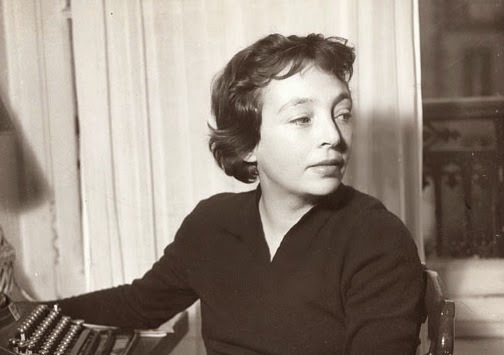 Until the publication of L'amant (The Lover) in 1984 - Duras' first bestseller and winner of the Prix Goncourt - she had for four decades almost the status of an underground writer. When I began reading her in the 1970s, only two of her books were available as rack-sized paperbacks in France: the novel Moderato cantabile (1958) and the screenplay for Hiroshima mon amour (published in 1960). Today she has acquired the status of a 'classic' (today's birthday feels to me like one of those watershed French events, like the funeral of Sartre). Duras is perhaps the most modern of classics, if either of those words is still meaningful - and some younger readers now approach her with an element of trepidation. (In interviews, Duras seemed to feel that 'the young' would ultimately understand her best, and I think they will, if they will only read her.)
Although I never met Duras, I 'followed' her (see my explanation of this use of the word 'follow', and an earlier discussion of Duras, here ) for the last 20 years of her life. She remains in some ways the most immediate of the authors I refer to collectively as 'the 26' - so that it's especially difficult for me to write about her without writing about myself. But I've resolved to let this be her day - and the best way I know to do that is to point to a few of her books as possible means of access to the rest.
Let's repeat three titles I've already mentioned - Moderato cantabile, Hiroshima mon amour, L'amant - and add a few more: Le ravissement de Lol. V. Stein, Le Vice-Consul, India Song, L'amante anglaise, L'été 80, La douleur (War) and Ecrire. But you can start, or restart, almost anywhere...
More to come.
Duras was born in French Indochina, near Saigon, in 1914, and spent virtually all of her adult life in France, where she died in 1996. Her complete works will span roughly 4000 pages in four volumes of the Bibliothèque de la Pléiade.
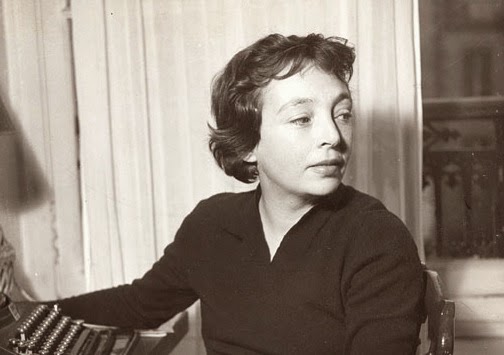 Until the publication of L'amant (The Lover) in 1984 - Duras' first bestseller and winner of the Prix Goncourt - she had for four decades almost the status of an underground writer. When I began reading her in the 1970s, only two of her books were available as rack-sized paperbacks in France: the novel Moderato cantabile (1958) and the screenplay for Hiroshima mon amour (published in 1960). Today she has acquired the status of a 'classic' (today's birthday feels to me like one of those watershed French events, like the funeral of Sartre). Duras is perhaps the most modern of classics, if either of those words is still meaningful - and some younger readers now approach her with an element of trepidation. (In interviews, Duras seemed to feel that 'the young' would ultimately understand her best, and I think they will, if they will only read her.)
Although I never met Duras, I 'followed' her (see my explanation of this use of the word 'follow', and an earlier discussion of Duras, here ) for the last 20 years of her life. She remains in some ways the most immediate of the authors I refer to collectively as 'the 26' - so that it's especially difficult for me to write about her without writing about myself. But I've resolved to let this be her day - and the best way I know to do that is to point to a few of her books as possible means of access to the rest.
Let's repeat three titles I've already mentioned - Moderato cantabile, Hiroshima mon amour, L'amant - and add a few more: Le ravissement de Lol. V. Stein, Le Vice-Consul, India Song, L'amante anglaise, L'été 80, La douleur (War) and Ecrire. But you can start, or restart, almost anywhere...
More to come.
March 18, 2013
Readers' Choice Awards - BigAl's Books and Pals
Many regular readers of this blog know BigAl's Books and Pals as as a 'go-to' website specializing in reviews of independently published English-language books available on Kindle. I was reading and recommending the site (see my blogroll in the right-hand column) long before BigAl's generous and perceptive review of my book
A Kiss Before You Leave Me
last May. Now Al and company are doing even more for indie authors and readers. BigAl and the Pals explain:
I hope you'll continue to support BigAl's Books and Pals in general and that you'll both support and benefit from this year's Readers' Choice Awards in particular. Voting is now under way.
In the twelve months ending February 28th, 2013, [we] received over 1,400 books to consider for review. Almost 300 of them were selected, read, and reviewed. From those we chose the books we felt stood out from the pack as exceptional examples of Indie (self-published and small press) writing and divided them into eleven categories....
For two weeks, starting March 18th at 10:00 Eastern Time and ending at Midnight Eastern Time on April 1st, we'll be asking readers to vote for the winner in each category. Winners will be announced the morning of Wednesday, April 3rd. We'll also have a giveaway with various prizes for those who vote.
Winners and nominees of "BigAl's Books and Pals 2012 Readers' Choice Awards" will feature on a special Readers' Choice page at Books and Pals for the next twelve months, with emphasis on the winner in each category.
I hope you'll continue to support BigAl's Books and Pals in general and that you'll both support and benefit from this year's Readers' Choice Awards in particular. Voting is now under way.
July 16, 2012
Simenon: Maigret and More
The biggest news in European ebooks last month, as I see it, was the release in France of the first 41 ebooks by Georges Simenon (1903 - 1989), the best-selling French-language author of the 20th century, and by some ways of reckoning the most prolific novelist of any era. Now and through 25 July 2012 the price of these French-language ebooks has been cut in half: individual ebooks now sell for less than four euros, three-packs for less than eight.
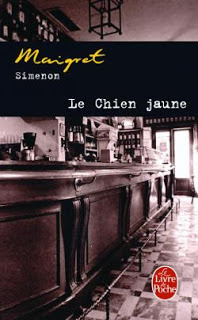
I've read, and mostly admired, several dozens of Simenon's books. There are so many of them, and the experience of them is so inseparable from French or European life, that his readers (and especially those of us with a few decades of reading under our belts) find they can't keep track of the numbers. (Simenon himself couldn't say how many he'd written.)
If you read French, you're likely to know a great deal about Simenon already. To you I'll just mention two of my favorite Simenons, one featuring Inspector Maigret and one non-series novel. L'affaire Saint-Fiacre brings the seasoned, adult Maigret back to his childhood home to investigate a crime involving a noblewoman whom he once idealized. Le chat (which was memorably filmed with Simone Signoret and Jean Gabin) is a powerful study of a claustrophobic marriage. (The links provided are to Amazon.fr. Kindle users may want to check their usual Amazon store, and users of other e-readers can get more information at the 'Simenon en numérique' website.)
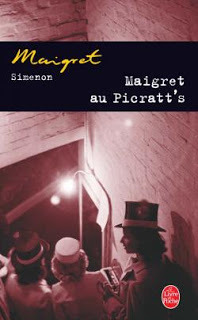
And if you don't read French? There's an excellent selection of Simenon ebooks in translation--except that the US ebook prices for all the Maigrets available in English exceed the ceiling I've set for most linking from this blog. (See here for an earlier discussion of ebook prices, especially of the 'gouge zone'.) But consider, among the non-series Simenons available in e-format, the very early Tropic Moon (which will remind you of Heart of Darkness, in a good way), Act of Passion (which takes the form of a letter from a man convicted of murder to the examining magistrate who handled his case) or The President (Simenon's most overtly political novel).
And, since we're stressing the non-series novels (now referred to more and more as romans durs), let me mention the best recent piece I've found on them, by John McIntyre.
I'll close with a link to Simenon's 1955 Paris Review interview, which includes among its extensive riches a documentation of Simenon's work schedule and output that is if anything more amazing almost 60 years later. Among other things, Simenon wrote faster than many of us read. But in the process he created a world of indelible atmosphere and unforgettable relationships. As readers and as writers, we're still struggling to catch up.

I've read, and mostly admired, several dozens of Simenon's books. There are so many of them, and the experience of them is so inseparable from French or European life, that his readers (and especially those of us with a few decades of reading under our belts) find they can't keep track of the numbers. (Simenon himself couldn't say how many he'd written.)
If you read French, you're likely to know a great deal about Simenon already. To you I'll just mention two of my favorite Simenons, one featuring Inspector Maigret and one non-series novel. L'affaire Saint-Fiacre brings the seasoned, adult Maigret back to his childhood home to investigate a crime involving a noblewoman whom he once idealized. Le chat (which was memorably filmed with Simone Signoret and Jean Gabin) is a powerful study of a claustrophobic marriage. (The links provided are to Amazon.fr. Kindle users may want to check their usual Amazon store, and users of other e-readers can get more information at the 'Simenon en numérique' website.)

And if you don't read French? There's an excellent selection of Simenon ebooks in translation--except that the US ebook prices for all the Maigrets available in English exceed the ceiling I've set for most linking from this blog. (See here for an earlier discussion of ebook prices, especially of the 'gouge zone'.) But consider, among the non-series Simenons available in e-format, the very early Tropic Moon (which will remind you of Heart of Darkness, in a good way), Act of Passion (which takes the form of a letter from a man convicted of murder to the examining magistrate who handled his case) or The President (Simenon's most overtly political novel).
And, since we're stressing the non-series novels (now referred to more and more as romans durs), let me mention the best recent piece I've found on them, by John McIntyre.
I'll close with a link to Simenon's 1955 Paris Review interview, which includes among its extensive riches a documentation of Simenon's work schedule and output that is if anything more amazing almost 60 years later. Among other things, Simenon wrote faster than many of us read. But in the process he created a world of indelible atmosphere and unforgettable relationships. As readers and as writers, we're still struggling to catch up.
January 29, 2012
From 'Hello, UK!' to 'I'm Here All Week, Folks!': Bearing the Burden of Bestsellerdom
I happened to notice a few mornings back that my novel
A Kiss Before You Leave Me
had cropped up on the AmazonUK bestseller list for psychological fiction, between a World's Classics paperback of a Virginia Woolf novel and an ebook by Philip Roth.
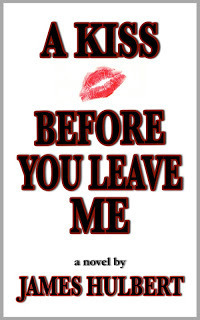 I'm not sure how either of those authors would have felt about our juxtaposition; not much worse, perhaps, than about the tête-à-tête (if that's the word for it) that I seem to have interrupted. (All I know is that, on the basis of my knowledge of the works in question, two of the three authors would have insisted on reporting that Woolf was on top. [You see how difficult it is to talk about bestsellers without getting into sexual content.])
I know, however, that I'm delighted to be on this UK list. And not just as an indication that the book is 'selling internationally'. For some very important part of me, the UK is at least one of the centers of my cultural universe, and has been ever since I first arrived in London at the age of 20. (If I told you what role I saw Judi Dench in the West End on that visit, it would be needlessly hurtful for one or both of us.)
Bestseller lists, we all know, don't mean very much.
Except when it's your book that gets noticed that way.
Well.
Because I, rightly or wrongly, attribute this 'movement' in the UK 'market' to the current (very international and very broadly 'cross-vendor') 'sunshine deal' on A Kiss Before You Leave Me, I'm extending the 'deal' for one additional week, in all markets and through all participating vendors. (I admit that this feels like an overly American response, but I don't want to be too hard on myself.)
Thank you to every reader in every country who's found room for my work on their digital 'shelves', on their virtual 'bedside table'.
(If you're still having trouble getting hold of Kiss, consult the links in the column to the right, or follow this link to the bitly 'bundle' and link on from there. Or 'comment' below, and let me know what you need. Finally, if you just arrived and want to know what this is all about, here are all my blogposts labelled 'A Kiss Before You Leave Me'--although, by this time, it might be easier for you just to break down and read the book...)
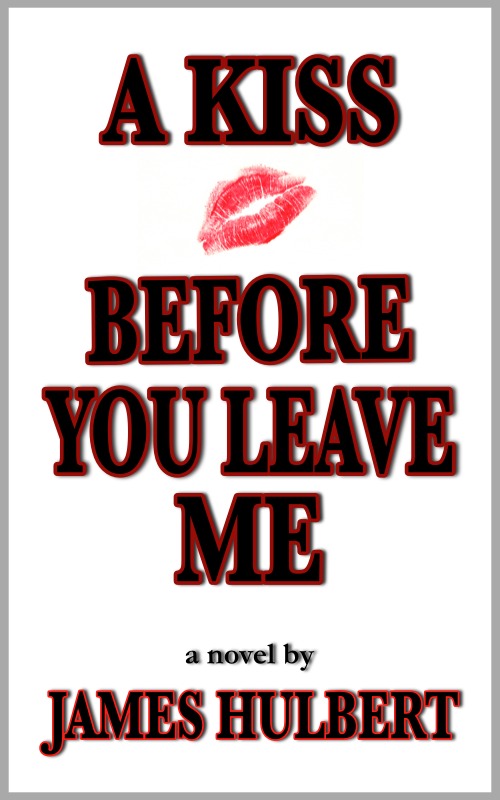 I'm not sure how either of those authors would have felt about our juxtaposition; not much worse, perhaps, than about the tête-à-tête (if that's the word for it) that I seem to have interrupted. (All I know is that, on the basis of my knowledge of the works in question, two of the three authors would have insisted on reporting that Woolf was on top. [You see how difficult it is to talk about bestsellers without getting into sexual content.])
I know, however, that I'm delighted to be on this UK list. And not just as an indication that the book is 'selling internationally'. For some very important part of me, the UK is at least one of the centers of my cultural universe, and has been ever since I first arrived in London at the age of 20. (If I told you what role I saw Judi Dench in the West End on that visit, it would be needlessly hurtful for one or both of us.)
Bestseller lists, we all know, don't mean very much.
Except when it's your book that gets noticed that way.
Well.
Because I, rightly or wrongly, attribute this 'movement' in the UK 'market' to the current (very international and very broadly 'cross-vendor') 'sunshine deal' on A Kiss Before You Leave Me, I'm extending the 'deal' for one additional week, in all markets and through all participating vendors. (I admit that this feels like an overly American response, but I don't want to be too hard on myself.)
Thank you to every reader in every country who's found room for my work on their digital 'shelves', on their virtual 'bedside table'.
(If you're still having trouble getting hold of Kiss, consult the links in the column to the right, or follow this link to the bitly 'bundle' and link on from there. Or 'comment' below, and let me know what you need. Finally, if you just arrived and want to know what this is all about, here are all my blogposts labelled 'A Kiss Before You Leave Me'--although, by this time, it might be easier for you just to break down and read the book...)
From 'Hello, UK!' to 'I'm Here All Week, Folks!'
I happened to notice a few mornings back that my novel
A Kiss Before You Leave Me
had cropped up on the AmazonUK bestseller list for psychological fiction, between a World's Classics paperback of a Virginia Woolf novel and an ebook by Philip Roth.
I'm not sure how either of those authors would have felt about our juxtaposition; not much worse, perhaps, than about the tête-à-tête (if that's the word for it) that I seem to have interrupted. (All I know is that, on the basis of my knowledge of the works in question, two of the three authors would have insisted on reporting that Woolf was on top. [You see how difficult it is to talk about bestsellers without getting into sexual content.])
I know, however, that I'm delighted to be on this UK list. And not just as an indication that the book is 'selling internationally'. For some very important part of me, the UK is at least one of the centers of my cultural universe, and has been ever since I first arrived in London at the age of 20. (If I told you what role I saw Judi Dench in in the West End on that visit, it would be needlessly hurtful for one or both of us.)
Bestseller lists, we all know, don't mean very much.
Except when it's your book that gets noticed that way.
Well.
Because I, rightly or wrongly, attribute this 'movement' in the UK 'market' to the current (very international and very broadly 'cross-vendor') 'sunshine deal' on A Kiss Before You Leave Me, I'm extending the 'deal' for one additional week, in all markets and through all participating vendors. (I admit that this feels like an overly American response, but I don't want to be too hard on myself.)
Thank you to every reader in every country who's found room for my work on their digital 'shelves', on their virtual 'bedside table'.
(If you're still having trouble getting hold of Kiss, consult the links in the column to the right, or follow this link to the bitly 'bundle' and link on from there. Or 'comment' below, and let me know what you need. Finally, if you just arrived and want to know what this is all about, here are all my blogposts labelled 'A Kiss Before You Leave Me'--although, by this time, it might be easier for you just to break down and read the book...)
I'm not sure how either of those authors would have felt about our juxtaposition; not much worse, perhaps, than about the tête-à-tête (if that's the word for it) that I seem to have interrupted. (All I know is that, on the basis of my knowledge of the works in question, two of the three authors would have insisted on reporting that Woolf was on top. [You see how difficult it is to talk about bestsellers without getting into sexual content.])I know, however, that I'm delighted to be on this UK list. And not just as an indication that the book is 'selling internationally'. For some very important part of me, the UK is at least one of the centers of my cultural universe, and has been ever since I first arrived in London at the age of 20. (If I told you what role I saw Judi Dench in in the West End on that visit, it would be needlessly hurtful for one or both of us.)
Bestseller lists, we all know, don't mean very much.
Except when it's your book that gets noticed that way.
Well.
Because I, rightly or wrongly, attribute this 'movement' in the UK 'market' to the current (very international and very broadly 'cross-vendor') 'sunshine deal' on A Kiss Before You Leave Me, I'm extending the 'deal' for one additional week, in all markets and through all participating vendors. (I admit that this feels like an overly American response, but I don't want to be too hard on myself.)
Thank you to every reader in every country who's found room for my work on their digital 'shelves', on their virtual 'bedside table'.
(If you're still having trouble getting hold of Kiss, consult the links in the column to the right, or follow this link to the bitly 'bundle' and link on from there. Or 'comment' below, and let me know what you need. Finally, if you just arrived and want to know what this is all about, here are all my blogposts labelled 'A Kiss Before You Leave Me'--although, by this time, it might be easier for you just to break down and read the book...)
Twitter Woes
First of all, this is addressed almost exclusively to people who have followed me on Twitter or who have an extreme interest in Twitter in general. Everybody else, please read a different post on Jascha Writes (click here for what is currently the most-read recent post; the top 10 of all time are listed at the foot of every page of the blog) or a good book (click here for a not-so-randomly-chosen title from a recent AmazonUK bestseller list of psychological fiction).
I hope I made it clear before that I love Twitter--or, to be more precise, that I love it much more than I ever expected to. I used it hassle-free for the better part of a year and hope for a speedy return of those halcyon days.
It's just that we've hit a snag. I can't quite get in an it's-not-you-it's-me here; all I know is that between (a) Twitter, (b) the third-party software I need to manage my account and (c) me--something isn't quite working. Twitter and my software disagree in their tallies of my followers and people followed, to such an extent that both the software and I are (temporarily, I hope) unable to follow back additional people. (Believe me, you don't want to hear about it in any more detail.)
I'm posting this here as an apology to any readers who may have been given the impression that I-- May I say, 'that I trifled with their readerly affections'?
Out there in the Twitterverse there are Tweeps who don't 'follow back'. There may even be a few who, after being followed, unfollow their followers so as to be able to attract additional followers more quickly.
Quite simply, I wouldn't do that. Not any of that. Along with everything else doglike about me, I definitely follow back.
I'm working to fix the problem. And, frankly, I'm also hoping for a fix from the people who brought us Tweet Adder 3.
For now, once more, my apologies.
Tweet on.
(That's what works for me. Even now.)
I hope I made it clear before that I love Twitter--or, to be more precise, that I love it much more than I ever expected to. I used it hassle-free for the better part of a year and hope for a speedy return of those halcyon days.
It's just that we've hit a snag. I can't quite get in an it's-not-you-it's-me here; all I know is that between (a) Twitter, (b) the third-party software I need to manage my account and (c) me--something isn't quite working. Twitter and my software disagree in their tallies of my followers and people followed, to such an extent that both the software and I are (temporarily, I hope) unable to follow back additional people. (Believe me, you don't want to hear about it in any more detail.)
I'm posting this here as an apology to any readers who may have been given the impression that I-- May I say, 'that I trifled with their readerly affections'?
Out there in the Twitterverse there are Tweeps who don't 'follow back'. There may even be a few who, after being followed, unfollow their followers so as to be able to attract additional followers more quickly.
Quite simply, I wouldn't do that. Not any of that. Along with everything else doglike about me, I definitely follow back.
I'm working to fix the problem. And, frankly, I'm also hoping for a fix from the people who brought us Tweet Adder 3.
For now, once more, my apologies.
Tweet on.
(That's what works for me. Even now.)
January 16, 2012
'Discovering' Boris Akunin
Imagine a young aspirant on the lowest rung of the Czarist police bureaucracy, 20-year-old Erast Fandorin, recently orphaned, indisputably wet behind the ears, stumbling (embarrassing 'foundation garment' and all) into his first case, which seems to involve a peripatetic game of what later centuries will call 'Russian roulette' (but which Russians in 1876 still call 'American roulette')... and a femme fatale for whom he's no match. At the outset, there's little to suggest that Fandorin has a big future (a distinguished career extending 35 years and counting, in which he will never solve the same kind of puzzle twice) or that his first case, The Winter Queen, will launch one of the most successful 'franchises' in international crime fiction. But in the Erast Fandorin novels, and in the other works of Boris Akunin (born 1956), appearances are often deceiving. Fandorin, it turns out, is not only brilliant (we suspected that) but also an astonishing polyglot, a master of disguise, a lover and, on occasion and in the line of duty, a killer....
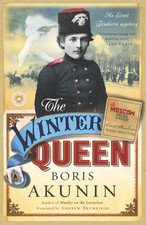 I've been away from blogging for much longer than I intended, but at least I don't believe I've been wasting time. Among other things, I managed, in the course of my holiday hiatus, to 'discover' Akunin. I put 'discover' in quotation marks because, although I was reading him for the first time, he's been publishing novels for well over 20 years and is the best-known Russian author of genre fiction. He combines qualities of Dostoevsky and Nabokov, not to mention the great series novelists of other countries, whose success he rivals.
He's also amazingly prolific. His historical series about Erast Fandorin runs to a dozen volumes, many of them already published by Random House in the US and Hachette subsidiary Orion in the UK--and this does not count other series under the Akunin name or other works published under other names. ('Boris Akunin' is itself a pseudonym, and it would take an entire blogpost just to explore its multiple meanings.)
Different Akunin series have different organizational principles, slowly disclosed by Akunin through little clues, then made explicit in interviews and essays. The novels in one series, for example, illustrate what Akunin sees as the various possible sub-genres for a crime novel, at the rate of one novel for each type; another series parallels cinematic genres. In addition, different novels and series explore different eras: for example, the first Erast Fandorin novel, The Winter Queen, is set in 1876 and the latest in 1911; another series features Fandorin's British grandson in (mostly) the late 20th and early 21st centuries.
Three of Akunin's novels have been filmed (lavishly, by all accounts) in Russia; The Winter Queen is currently getting the Hollywood treatment, for better or worse.
If you'd like to experience for yourself what all the excitement is about, I'd recommend to US readers this trade-paperback edition, and to UK readers this ebook edition, of The Winter Queen. (US customers of iBooks may find this link useful because of a database peculiarity that makes Akunin more difficult to search for otherwise; check prices carefully.)
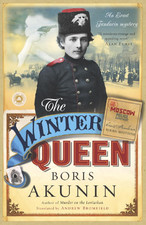 I've been away from blogging for much longer than I intended, but at least I don't believe I've been wasting time. Among other things, I managed, in the course of my holiday hiatus, to 'discover' Akunin. I put 'discover' in quotation marks because, although I was reading him for the first time, he's been publishing novels for well over 20 years and is the best-known Russian author of genre fiction. He combines qualities of Dostoevsky and Nabokov, not to mention the great series novelists of other countries, whose success he rivals.
He's also amazingly prolific. His historical series about Erast Fandorin runs to a dozen volumes, many of them already published by Random House in the US and Hachette subsidiary Orion in the UK--and this does not count other series under the Akunin name or other works published under other names. ('Boris Akunin' is itself a pseudonym, and it would take an entire blogpost just to explore its multiple meanings.)
Different Akunin series have different organizational principles, slowly disclosed by Akunin through little clues, then made explicit in interviews and essays. The novels in one series, for example, illustrate what Akunin sees as the various possible sub-genres for a crime novel, at the rate of one novel for each type; another series parallels cinematic genres. In addition, different novels and series explore different eras: for example, the first Erast Fandorin novel, The Winter Queen, is set in 1876 and the latest in 1911; another series features Fandorin's British grandson in (mostly) the late 20th and early 21st centuries.
Three of Akunin's novels have been filmed (lavishly, by all accounts) in Russia; The Winter Queen is currently getting the Hollywood treatment, for better or worse.
If you'd like to experience for yourself what all the excitement is about, I'd recommend to US readers this trade-paperback edition, and to UK readers this ebook edition, of The Winter Queen. (US customers of iBooks may find this link useful because of a database peculiarity that makes Akunin more difficult to search for otherwise; check prices carefully.)
December 14, 2011
Ed McBain and Jo Nesbø, and a P.S. on Exclusivity
Jo Nesbø (born 1960) must be the crime novelist I write about most often here, and I suspect I've never even mentioned Ed McBain (1926-2005; also known as Evan Hunter, the name under which he wrote Blackboard Jungle and the screenplay for Hitchcock's The Birds). So when a new-to-the-US Nesbø novel goes on sale on the same day that a dozen of McBain's 87th Precinct mysteries, some of them over 50 years old, become available on Kindle (in the US)--you might expect me to cover the 'new' Nesbø and save the 'old' McBains for another day.
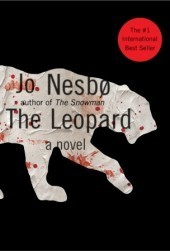 Actually, both writers are important to me. Nesbø's the newest writer I'm fervently 'following'; I followed McBain almost as devotedly for the last 20 years of his life and went to great lengths to find and read every last 87th Precinct and Matthew Hope novel from McBain's backlist. McBain seemed to write faster than Nesbø does, and a McBain novel is faster to read than a Nesbø; McBain's Steve Carella looks like a particularly straight arrow if you contrast him with Nesbø's antiheroic Harry Hole; but both writers are significant masters of the police procedural novel.
Today's new Nesbø is Harry Hole's eighth case, The Leopard, and it is very much a follow-up to The Snowman. (For the Harry Hole lineup, see here; for more on Nesbø, continue here.) It's another serial-killer novel, and, if anything, even more violent than its predecessor. Between the two books, Harry has left Oslo and begun a new life in Hong Kong. He has to be fetched back home to help his old colleagues unravel an unusually complicated case: you may find that it looks like Thomas Harris on the outside but more like Christie or Ellery Queen at its core (which, for me, is 'a good thing').
If you've read The Snowman, you probably know whether you want to read The Leopard. If you're new to Nesbø, start with the earliest available novel in the series. (Again, they're all listed here; for US readers of ebooks, the earliest currently available is The Redbreast, which introduces characters who appear in all the subsequent books.)
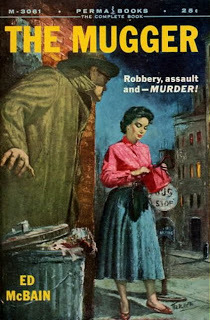 First edition (Permabooks [imprint
of Pocket Books], 1956)I should mention, for the benefit of newer readers of this blog, that I've vowed not to advertise ebooks that I consider to be overpriced, and I've encouraged others not to pay double-digit prices for ebooks. That's why I link to the hardback edition of The Leopard, not the ebook. I consider even The Snowman to be overpriced in ebook in the US, although the price will probably come down in the months ahead. [UPDATE: As of 18 January 2012, the US publisher has lowered the ebook prices of each of these novels to $9.99.]
Alternatively, consider taking advantage of Amazon.com's reduced prices for one of the two earliest McBain novels just released, The Mugger (1956) or The Con Man (1957), just $4.99 each for Kindle. They're early books, but in them McBain has already hit the stride he maintained through over 50 novels in the 87th Precinct series alone. Before Hill Street Blues and before all the Law and Orders and all the C.S.I.s--and grittier than any of them--there was the ongoing saga of squad room and crime scene, extending into the private lives of the dozen or so police detectives in a single precinct in a city that doesn't call itself New York but that corresponds to New York in every detail. (Show business trivia: Q: What was Gena Rowlands' breakthrough role? A: Arguably, as Steve Carella's wife Teddy in the 1960-61 TV series 87th Precinct, adapted from the McBain novels.) In every novel there are two or three storylines that may well never converge--just like the storylines in real life…
Print editions of all 12 McBains (and the others available for Kindle next week and the week after) will appear in 2012 and will be distributed throughout the US book trade. (McBain's novels about attorney Matthew Hope, beginning with Goldilocks, will follow in September 2012.) But the ebooks will remain Kindle exclusives for the foreseeable future. The publisher, after all, is Thomas & Mercer, Amazon's new crime imprint.
(One side benefit of Amazon's new investment in [or of] McBain is the page Perspectives on McBain, where Stephen King, Lawrence Block and many others assess their indebtedness to him.)
P.S.: Exclusivity, a budding issue at Amazon, is not necessarily a good thing. I, like most other independent authors, have the option of giving Amazon the exclusive right to distribute A Kiss Before You Leave Me for at least three months. Kiss would be enrolled in a new program that lends ebooks for free to Amazon Prime members, and I'd receive a prorated share of a multimillion-dollar royalty package set aside by Amazon--but I'd have to pull Kiss from the Apple iBookstore, Sony's Reader Store, Barnes & Noble and Kobo. No one of those stores sells as many copies of Kiss as the various Amazons combined--but ebooks should work for access, not exclusivity. Excluding those other vendors would mean limiting the access of readers who depend on an EPUB-friendly device--the majority of ebook readers internationally. I don't fault Amazon for offering exclusive terms--but exclusivity would not be the best arrangement for me and my readers.
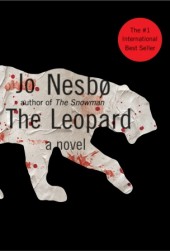 Actually, both writers are important to me. Nesbø's the newest writer I'm fervently 'following'; I followed McBain almost as devotedly for the last 20 years of his life and went to great lengths to find and read every last 87th Precinct and Matthew Hope novel from McBain's backlist. McBain seemed to write faster than Nesbø does, and a McBain novel is faster to read than a Nesbø; McBain's Steve Carella looks like a particularly straight arrow if you contrast him with Nesbø's antiheroic Harry Hole; but both writers are significant masters of the police procedural novel.
Today's new Nesbø is Harry Hole's eighth case, The Leopard, and it is very much a follow-up to The Snowman. (For the Harry Hole lineup, see here; for more on Nesbø, continue here.) It's another serial-killer novel, and, if anything, even more violent than its predecessor. Between the two books, Harry has left Oslo and begun a new life in Hong Kong. He has to be fetched back home to help his old colleagues unravel an unusually complicated case: you may find that it looks like Thomas Harris on the outside but more like Christie or Ellery Queen at its core (which, for me, is 'a good thing').
If you've read The Snowman, you probably know whether you want to read The Leopard. If you're new to Nesbø, start with the earliest available novel in the series. (Again, they're all listed here; for US readers of ebooks, the earliest currently available is The Redbreast, which introduces characters who appear in all the subsequent books.)
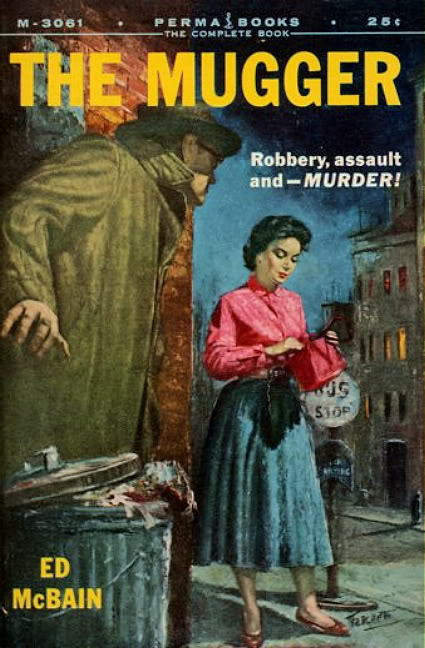 First edition (Permabooks [imprint
of Pocket Books], 1956)I should mention, for the benefit of newer readers of this blog, that I've vowed not to advertise ebooks that I consider to be overpriced, and I've encouraged others not to pay double-digit prices for ebooks. That's why I link to the hardback edition of The Leopard, not the ebook. I consider even The Snowman to be overpriced in ebook in the US, although the price will probably come down in the months ahead. [UPDATE: As of 18 January 2012, the US publisher has lowered the ebook prices of each of these novels to $9.99.]
Alternatively, consider taking advantage of Amazon.com's reduced prices for one of the two earliest McBain novels just released, The Mugger (1956) or The Con Man (1957), just $4.99 each for Kindle. They're early books, but in them McBain has already hit the stride he maintained through over 50 novels in the 87th Precinct series alone. Before Hill Street Blues and before all the Law and Orders and all the C.S.I.s--and grittier than any of them--there was the ongoing saga of squad room and crime scene, extending into the private lives of the dozen or so police detectives in a single precinct in a city that doesn't call itself New York but that corresponds to New York in every detail. (Show business trivia: Q: What was Gena Rowlands' breakthrough role? A: Arguably, as Steve Carella's wife Teddy in the 1960-61 TV series 87th Precinct, adapted from the McBain novels.) In every novel there are two or three storylines that may well never converge--just like the storylines in real life…
Print editions of all 12 McBains (and the others available for Kindle next week and the week after) will appear in 2012 and will be distributed throughout the US book trade. (McBain's novels about attorney Matthew Hope, beginning with Goldilocks, will follow in September 2012.) But the ebooks will remain Kindle exclusives for the foreseeable future. The publisher, after all, is Thomas & Mercer, Amazon's new crime imprint.
(One side benefit of Amazon's new investment in [or of] McBain is the page Perspectives on McBain, where Stephen King, Lawrence Block and many others assess their indebtedness to him.)
P.S.: Exclusivity, a budding issue at Amazon, is not necessarily a good thing. I, like most other independent authors, have the option of giving Amazon the exclusive right to distribute A Kiss Before You Leave Me for at least three months. Kiss would be enrolled in a new program that lends ebooks for free to Amazon Prime members, and I'd receive a prorated share of a multimillion-dollar royalty package set aside by Amazon--but I'd have to pull Kiss from the Apple iBookstore, Sony's Reader Store, Barnes & Noble and Kobo. No one of those stores sells as many copies of Kiss as the various Amazons combined--but ebooks should work for access, not exclusivity. Excluding those other vendors would mean limiting the access of readers who depend on an EPUB-friendly device--the majority of ebook readers internationally. I don't fault Amazon for offering exclusive terms--but exclusivity would not be the best arrangement for me and my readers.
December 8, 2011
Links, and Links: Italian, Spanish, International, Reciprocal
A week ago today, Amazon opened online Kindle stores in Italy and Spain. This means that residents of those countries can now buy Kindles locally (Italian link here, Spanish link here) and have immediate access at Amazon.it and Amazon.es, respectively, to close to a million ebooks--in Italian, Spanish, English and other languages (including Catalán, Galician and Basque)--including tens of thousands of free ebooks. Even the new Kindles themselves are polyglot: the user selects the language for menus, on-screen messages, default dictionary and such. And, like all other Kindle stores, the new ones for Italy and Spain offer free apps for customers who prefer to read ebooks on their laptops, smartphones or tablets.
The opening of a Kindle store in-country has always been a milestone in the 'maturing' of a country's ebook market. And there are implications for the rest of the world, too (as we've noted in talking about the coming of Kindle stores to Germany and France): among other things, the author of A Kiss Before You Leave Me will sell more copies of it in Italy and Spain, and Amazon customers around the world will have improved access to free ebooks in Italian (example here) and Spanish (example here of a work we've mentioned before).
Indeed, although I do welcome (on behalf of all independent authors and publishers of ebooks) new Italian and Spanish readers, along with all other readers internationally--the riches of Italian and Spanish literature and culture in general are so great that I suggest that the rest of us might want to respond, more than we have in the past, to their welcome to us. Let me just mention, in addition to the works of Pirandello and Cervantes for which I've provided links above, three of the greatest reads of the last few decades, all of them made to order for the book lover in you: Umberto Eco's The Name of the Rose, Arturo Pérez-Reverte's The Club Dumas and Carlos Ruiz Zafón's The Shadow of the Wind. In addition to whatever else these novels have in common, they each have a power to fascinate and intrigue that cannot be contained within any one nation's borders. If there's a title in the bunch that's new to you, please check it out. And please share your favorites with the rest of us.
The opening of a Kindle store in-country has always been a milestone in the 'maturing' of a country's ebook market. And there are implications for the rest of the world, too (as we've noted in talking about the coming of Kindle stores to Germany and France): among other things, the author of A Kiss Before You Leave Me will sell more copies of it in Italy and Spain, and Amazon customers around the world will have improved access to free ebooks in Italian (example here) and Spanish (example here of a work we've mentioned before).
Indeed, although I do welcome (on behalf of all independent authors and publishers of ebooks) new Italian and Spanish readers, along with all other readers internationally--the riches of Italian and Spanish literature and culture in general are so great that I suggest that the rest of us might want to respond, more than we have in the past, to their welcome to us. Let me just mention, in addition to the works of Pirandello and Cervantes for which I've provided links above, three of the greatest reads of the last few decades, all of them made to order for the book lover in you: Umberto Eco's The Name of the Rose, Arturo Pérez-Reverte's The Club Dumas and Carlos Ruiz Zafón's The Shadow of the Wind. In addition to whatever else these novels have in common, they each have a power to fascinate and intrigue that cannot be contained within any one nation's borders. If there's a title in the bunch that's new to you, please check it out. And please share your favorites with the rest of us.