Jeffrey R. DeRego's Blog
October 18, 2025
RIP Ace Frehley and Some Perfect Rock Songs
When I was 6 or 7 years old my parents gifted me with a little red plastic record player and the first record album that was completly under my control. In the past I had to have a grown up put on records like The Jackson 5 or The Beatles in my little kids playroom. But once I had my little red record player and my own record I was in charge. That first record was Kiss: Rock and Roll Over. Not long after that my uncle gave us all of his older Monkees and Paul Rever and The Raiders records too. But I have always had a soft spot for Kiss and for hard rock because of Kiss.

Ace Frehley the lead guitarist of Kiss died after a fall in his studio caused a brain bleed. I’m at the age where a lot of the musicians I grew up enjoying are getting into their… upper sixties and seventies… and like, The Who, my all time favorite rock band, the mid 80s.
Roger Daltrey of The Who is 81 years old as I write this.
81?
81! Jesus…
Anyway, losing Ace has put me in a mood to go back and listen to some of the music that at different places in my life were really fun or played often, or soundtracked one summer or another between elementary and high school. To be fair over the last couple of years I’ve gone back to lesser known bands from when I was in my formative years and found some wonderful stuff that maybe, could have, maybe should have, done better for the bands that recorded them.
So, in honor of Ace Frehley here are some of the recent older hard rock songs that have been part of my recent frequent play count. As an older guy I see these songs differently than I did when they were regular radio fodder. Where I saw them as three minutes between other songs back then I see them as perfect pop/hard-rock songs. In no particular order -
Rick Derringer - Rock and Roll Hoochie Koo.We lost Rick Derringer this year too. This was the only real hit of his though he wrote hits for other bands and produced a ton of records including a bunch of Edgar Winter records, the goofy-ass Hulk Hogan (ALSO dead this year…) song Real American. He also produced some of Weird Al’s records and a bunch of others. Rick also wrote, sang on, and played on the Edgar Winter hit Free Ride.
Here is Rock and Roll Hoochie Koo one of the perfect hard rock songs. This isn’t to say that Free Ride isn’t great, it is, but Rock and Roll Hoochie Koo is just at another level. The guitar riff in this is crunchy and instantly reconizable. Edgar Winter’s band backing this song just pushes it over the edge.
Elvin Bishop Band - Fooled Around and Fell in LoveI ignored this song. I remember it being on the radio a lot for a few months when I was a kid and usually heard it on the FM radio in the car. This wasn’t something my parents listened to so it was just available to me on the radio. I didn’t give this song a second’s though until it was used briefly in Guardians of the Galaxy. Then, one afternoon while poking around for pulp fiction novels at a local antiques/flea market place this song was playing over the store speakers and I knew pretty much every word and sung along quietly as I walked the store. So, I must have heard it plenty when I was a kid but it didn’t leave a visible mark, as it were. I didn’t give it much thought until, reflecting on this, I hunted down the song on youtube and found this live version from the TV Show Midnight Special. I remember this show being advertised when I was a kid but it was on too late for me to watch, not that I would have anyway at the time. I’ve gone on to pick up a handful of Elvin Bishop records since then and this is literally the only song in his catalog that sounds like this. The vocals, handed off to Micky Thomas who usually sang back up, suited the lyrics so well it carried this song up to #3 on the 1976 US charts. And live… Oh my god it’s great. Elvin Bishop is way more country funk than hard rock and this song is way more adult contemporary than anything else, but for some reason this all comes together into a perfect 4+ minutes. The rest of the album is good… mostly.
Montrose - Bad Motor ScooterI knew of Ronny Montrose but for the life of me I have no idea why. I knew his name and that he was a guitar player for decades and I knew there was a band named Montrose and I never listened to them, ever, until just this year and what an eye opening experience that has been. My folks weren’t “hard rock” fans. My mom loved motown and disco, my dad loved records from when he was a kid, and also disco, so I listened to standard FM top 40 radio as a kid. I didn’t even know that hard rock stations existed. Anyway, Montrose was probably never played on WPRO so I am baffled by why I knew who they were. Sammy Hagar, who we will be coming up in this list as a solo artist, is the lead singer for Montrose. I learned that this summer. Like, the summer of 2025. I just picked up a great CD of The Very Best of Montrose and there are like 17 songs on it and all of them are really, really good. This one, probably their best known song (though not by me) is Bad Motor Scooter. This is a great hard rock song that has more edge than contemporaries like Foghat, but not as sharp as, like, Deep Purple. That said, this song hits every single good note for a perfect hard rock song. Fantastic bluesy guitar that drives the song, great lead vocals, and a tight, tight band. This is a live TV appearance from 1974. It’s so, so good.
Rainbow - Since You Been GoneThis song I knew when it was new. Rainbow’s Since You Been Gone was a staple in the early MTV years and I probably saw this video like 6 million times in between Adam and the Ants and 38 Special… But I haven’t thought about it for decades either. I have one of Rainbow’s later records, Right Between the Eyes, with Joe Lynn Turner as the lead singer. It’s a good record and sounds like early Foreigner. But, before that record Ritchie Blackmore made Down to Earth with the third lead singer, Graham Bonnet. I bring this song up because as I was watching old Ace Frehley videos of music and of interviews one of the things that the algorithm spooled up for me was Since You Been Gone. This. Song. Is. Perfect. The lyrics are singable, it has a driving bass and percussion line, and Graham Bonnet’s voice is absolutely flawless. The whole record is great but this song is untouchable. I would argue that this is the best Rainbow song in their whole discography. Here is the video that youtube gave me that led to this article.
Rainbow Version -
Graham Bonnet 2025 live version (how good does he sound?!)
Both Ace Frehley and Graham Bonnet played my town this summer and I didn’t go. I saw the sign at the venue, I looked at tickets, I even considered going, but ultimately didn’t. Now Ace is gone and that one shot I had was wasted. Next time Graham Bonnet comes I’ll go. Ace was 74. Graham Bonnet looks to be about 170 in this live version so we’ll see what happens.
Sammy Hagar - Heavy MetalI saw Sammy Hagar when he was fronting Van Halen. I fell asleep. I was in high school when Van Halen deconstructed and reconstructed going from David Lee Roth as front man to Sammy Hagar. Whole new sound. More mature music. Less flamboyance. I was never a huge Van Halen fan in any of their incarnations. I found myself at their show in Worcester because my brother’s car broke down on the way and he had to ride back with the tow truck so I picked up his friends and his ticket and went. I knew this song, sort of, when it was kind of new. See, my mom took me and my younger brothers to what used to be called the Capitol Cinema (now the Ziterion) in New Bedford, Massachusetts to see the film Heavy Metal based on the very adult comic anthology magazine that she had started to purchase for me.
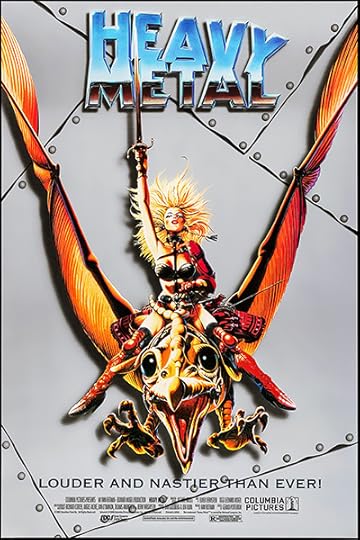
Heavy Metal was released in 1981. I was 11. I don’t remember THIS song from the film, clearly it didn’t have as much impact as Mob Rules by Black Sabbath or Through Being Cool by Devo, but that may be because the visuals that those songs accompany are SUPER memorable - well, for me anyway. I really remember Sammy Hagar for I Can’t Drive 55, a terrible, stupid song that is I think his only chart topper. It’s only not completely forgotten because it’s a novelty song. So when he joined Van Halen I thought “Great, the I can’t drive 55 guy… he stinks.” Except here’s the thing. He doesn’t. In fact, he’s fantastic. His work as the frontman of Montrose is great and if he’d been able to let loose as a solo guy the way he apparently wanted to we might have had more songs like Heavy Metal and fewer like I Can’t Drive 55. Heavy Metal has one of the best hooky guitar riffs I have ever heard. It’s instantly recognizable like the riff in Rock and Roll Hoochie Koo, and has a great change in tempo, the vocals are awesome as well. It’s just a perfect hard rock song.
Here is a great live version from 2021 or so.
And here is the album cut.
Sammy is 78 now. I wish I’d not fallen asleep back during the OU812 tour.
Ace Frehley - 10,000 VoltsI listened to this a bunch last year when Ace Frehley’s most recent album was released. It’s a great song and shows that even as an older rocker he was still able to create new music with the same spirit and soul as the stuff that made him famous in the early 1970s. He’s gone now but his music lives on.
Here is his last single 10,000 Volts from his last album 10,000 volts. I’m going to kick myself black and blue for skipping his show.
And this is a live version of his first solo single, Back in the New York Groove performed with Kiss.
The audience for this music is getting old and while I’ve shared these songs with my offspring the impact of these songs will will be lesser and lesser as time goes on until they are just memories.
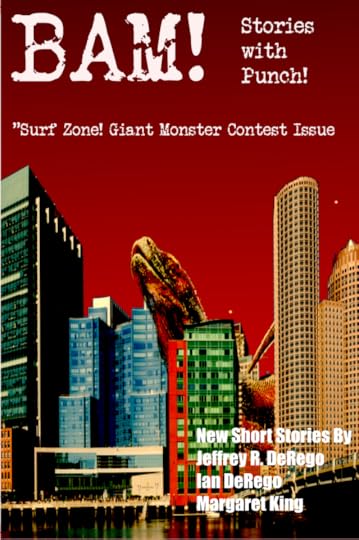
And…I’ve been reading lots and writing lots and editing lots. I have started the next Heinlein marathon book, The Moon is a Harsh Mistress. More importantly, I’ve released the first issue of BAM! Magazine and am soliciting stories for the second issue due in March 2026. Check out a copy here - Cheap reads! The Kindle version is even cheaper!
I’ve written a bunch of short stories over the last few months and am trying to get them in front of editors. So far no luck though. All of them are science fiction and it feels weirdly comforting to write in genre for a while. I’ve stepped away from it while writing Park Place and I guess it’s taken a while for me to find my way back. Anyway, here I am.


October 5, 2025
Crap turned 12 today!

Crap turned 12 today!
September 12, 2025
Hi everyone, it’s here! BAM! Magazine, for the seventeen or so of you (minus 15 porn bots) who…
Hi everyone, it’s here! BAM! Magazine, for the seventeen or so of you (minus 15 porn bots) who follow, this is a new pulp fiction short story magazine I’ve created and published. It’s small, only three stories in this inaugural issue, but it will grow as I solicit and accept more short stories. The first issue is available now! We leverage the printing and logistics of Amazon.com to make this available inexpensively! There is a paper and a Kindle version depending on how you want to read BAM! Not only is this a place where some of my writing will find a home, it is a paying market for other writers. Submissions will open soon! Watch the page, and here, for notification. Also check out some of the “original fiction writers” Tumblr pages for as I’ll be announcing there as well.
BAM! Together we can save short fiction! We’ve got a podcast and we’ll have Tiktok soon! Information here or at our website, which Tumblr won’t let me share…
September 1, 2025
Daily writing promptWhat brings a tear of joy to your eye?View all responses
Figuring out WordPress…
Daily writing promptWhat brings a tear of joy to your eye?View all responses
Figuring out WordPress enough to get this website alive and limping around.
July 25, 2025
Thoughts on Superman 2025
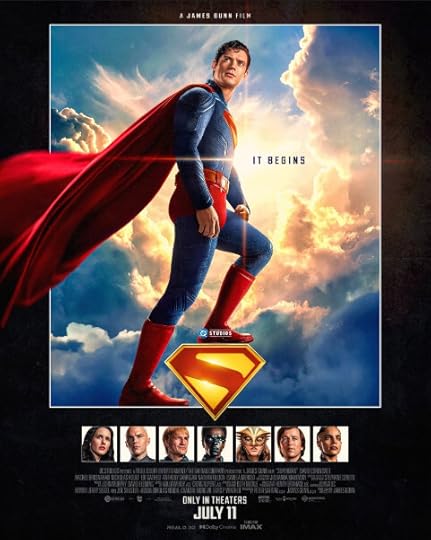
I write a lot of stories featuring Superheroes. I have two books out of short stories dedicated to them and have written several one-offs that explore what it might be like to be bestowed with abilities beyond those of normal people. As I am almost always writing something about Superheroes I tend to studiously avoid media with Superheroes in them. I don’t collect comics with any regularity, I don’t watch Superhero TV shows, I don’t generally watch Superhero movies unless there is a really compelling character. There are some exceptions to this, Captain Marvel (Shazam!) and Superman are two that will generally get my attention at least for the first of whatever movie series they are anchoring.
As a Superhero fiction writer I struggle with creating and maintaining characters that are effectively all-powerful because it makes for difficult storytelling. How do I put a character with no physical weaknesses in danger? Either they are omnipotent or they aren’t, know what I mean? Then I have to define lesser and greater omnipotence and before long I am creating a system that is very much like I’d need in a fantasy story and I don’t like fantasy stories. That said, my two favorite Superhero characters are pretty much omnipotent, Superman the last son of Krypton and Captain Marvel the world’s mightiest mortal.
I’ve written stories that obliquely feature or are inspired by the presentation of these two characters. In Mighty, George’s cape is exactly Captain Marvel’s cape and I tried to capture images of Captain Marvel as drawn by the amazing CC Beck in my narrative of his fighting the tornado.
In my story Jobber I created Crimson Splash as a third-tier type Superhero who interacts with a mix of thinly disguised Justice League and Avengers characters, one of which, “The Big Guy” is modeled on Superman. While The Big Guy is a secondary character, his existence is one of the drivers of Crimson Splash’s journey.
There have been ample deconstructions of Justice League, Superman, Batman, and even Captain Marvel that are generally called out as the best written comics of all time and those who set the tone for decades to come for how that character is presented in any format.
Superman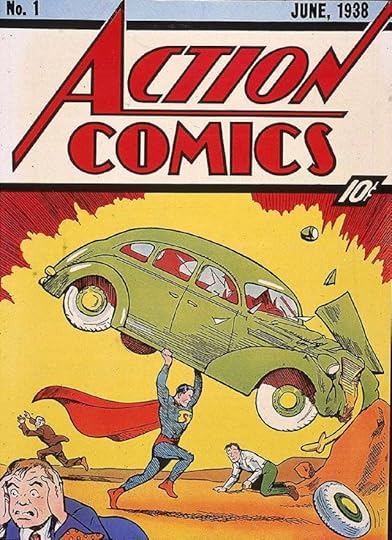
Superman has been deconstructed in several titles, stuff like Mark Waid’s Irredeemable where a Superman type character goes nuts and starts killing the other heroes on Earth, none of whom are as powerful as he. Grace Randolph’s Supurbia presents a Superman character who has captured his main enemy, Hella Heart, and made her his sex slave. Robert Kirkman’s Invicible presents another evil Superman character, and finally Alan Moore’s Watchmen presents Doctor Manhattan who is both omnipotent and growing more and more distant from any connection to humanity and its people. Grant Morrison’s The Boys does this too with Homelander. Even DC comics got into the act with the Superman character in Injustice: Gods Among Us where a vengeful Superman rules earth after the Joker kills Lois Lane. Superman in the modern age is ripe for this kind of storytelling as comics have moved from entertainment for children to entertainment for more mature audiences. Don’t believe me? Go back and watch the old George Reeves Superman shows from the 1950s, or the second two Superman films featuring Christopher Reeve. But Superman had to evolve through several stages to the point where he could be deconstructed. He was mostly unchanged through the early 1980s until the end of the Superman comics line where Alan Moore wrote out the final issues including possibly the best Superman comic of all time “For the Man Who Has Everything” in which Superman is poisoned by an alien plant that shows him his deepest desires, which is to be married on Krypton and to have never known of or been sent to, Earth. It’s both beautiful and sad and transitions Superman from a character who defines super heroism into one that is trapped in super heroism such that his more subliminal desire is to be someone else who isn’t super.
Captain Marvel (Fawcett version and Lawsuit)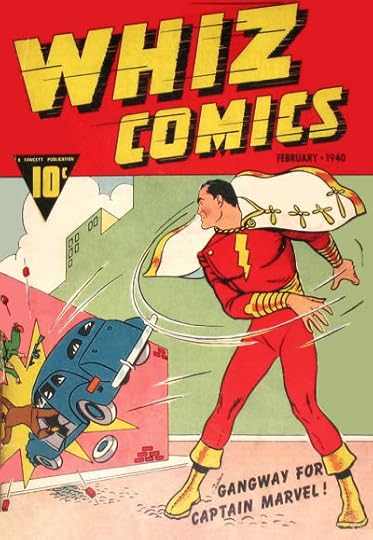
Captain Marvel is my favorite superhero of all time. He’s a ripoff of Superman created in the 1940s by publisher Fawcett Publications who wanted a “flying strongman to complete with Superman” and they got it via CC Beck. His one real difference at the superficial level is that Captain Marvel only half exists, swapping time/space with human boy Billy Batson after he utters the magic word “Shazam!” He has been dissected in possibly the best comic I’ve ever read, Miracleman by Alan Moore. Known as Marvelman in the UK where this book was published first after Fawcett Comics could not be imported because Captain Marvel was tied up in a really long plaigarism lawsuit from DC Comics that prevented Fawcett from publishing. (DC eventually acquired the Captain Marvel character and released new titles as “Shazam!” as Marvel Comics had capitalized on the gap in publication and created their own Captain Marvel.
Marvelman written by Mick Anglo copied the lore of the Captain Marvel books with the same sort of family of Marvelman, Marvelman Jr. and Kid Marvelman. The stories were goofy just like the Captain Marvel stories were and geared to younger audiences. But in the British comics fandom Marvelman had a robust fanbase for the few years it was offered. Alan Moore being one of those fans.
Alan Moore takes up the character of Marvelman in 1980 and writes original comics for a British magazine. These were then compiled and released after coloring by US company Eclipse Comics as Miracleman. In this book, Miracleman, released him from a decades long swap with his human half, Mickey Moran into a world that has no superheroes. What deconstructs here is that there is a fine line that the story crosses between the superhero tropes of the original Captain Marvel/Marvelman stories and reality all of which is determined by the villain of the story. It’s complex and fun and weird and scary.
Captain Marvel has some fun film depictions as well, a serial in the 1940s has Captain Marvel machine gunning soldiers to death…
It was a different time.
In the 1970s there was as weird Saturday Afternoon live action show where the Wizard Shazam who bestowed the powers of the gods onto Captain Marvel was replaced with a pantheon of the God’s themselves. These were a lot of Captain Marvel rescues people who made idiotic decisions and get-themselves-into-trouble storytelling that was really popular at the time. See also, Super Friends…
Shazam! spun off another character, a female version named Mighty Isis. They are fun and goofy and make the best of 1970s effects technology. I like them quite a bit as they are very similar in tone to the original CC Beck stories. The Shazam! film in 2019 starring Zachary Levy is a pretty good representation of the character as portraid in the New 52 era of comics with Captain Marvel being a scaled up Billy Batson bestowed with the powers of the Gods but still mentally a 14 year old boy whgo has to adapt to his abilities and identity. It’s not bad. Zachary Levy was pretty good as Captain Marvel. I dunno, the second film crashed really hard and Zachary Levy made some bad PR for himself which pretty much doomed the series to two films.
Anyway, I am getting way off track here. What I want to talk about, albeit briefly, is the 2025 Superman film directed by James Gunn.
The long way around to this is that for Superheroes to be a popular culture phenomenon as they have been it requires darkening them up to make them palatable to adult audiences and as a way to downplay the overwhelming goofiness of the presentation on its face. This led from Tim Burton’s Batman and Batman Forever to Blade to the Deadpool movies etc until we get to the DC universe as envisioned by Zach Snyder. Say what you want about the guy but he is consistent if nothing else, and as someone who writes dark superhero stories I have a lot of respect for his vision. Even if, like with the Justice League, I don’t agree with it, because not everything has to be Watchmen. Not everything has to be Miracleman.
Superheroes can be fun and colorful and be written to inspire us as readers/viewers to be better people. That is what makes them fun and what makes the morality tales that provide their foundation so prescient.
Superman 2025 ReviewAnyway, that brings us to James Gunn’s Superman.
Go see it. It’s great. It is so light and airy and embraces the morality plays that underpin comics from the golden age and still manages to be complex and gripping.
There, that’s my review.
No really, I don’t really want to spoil anything. I’ve seen it twice now in the cinema and I may go to see it again tomorrow (July 26). The cast is great, the writing is crisp, and the special effects are to be expected in a big budget studio superhero movie.
ThemesThere are a lot of great themes in the film that include now only right and wrong, but the place of immigrants in society, the role parents play in how we develop as adults, what sacrifice means etc… There is so much to unpack that i can’t even pretend to do it here.
Go see it.
MiscellaneousAs for me. Well, I’m still writing lots and reading lots too. My books and stories aren’t selling other than the couple of art fairs I do each year. I tried Amazon marketing but that didn’t get anything sold, it didn’t get stuff clicked through either. So, at least on the upside, it didn’t cost me anything other than a week of wondering what to do next. I’ve seen people on TicTok shilling their books but the thought of having to do that fills me with dread. My podcast has a small audience too. Tumblr, not matter what I do, is mostly followers who are porn bots. I can’t even get anyone to jump on the Self on the Shelf 100 Page Challenge. So far no one has pitched their book so I haven’t bought any. Tumblr, even on Communities for original fiction writers, is silly with fanfic writers.
What’s a writer like me to do? Send me your ideas for better marketing? Should I do the TicTok thing? Youtube? Yelling at the sky? Naked performance art?
July 20, 2025
July 7, 2025
Story Published!
Story Published!
For anyone interested my story “Anna F” is available to read in the Summer 25 issue of Portrait of New England!
June 27, 2025
New Bunch Of Stuffcast
The podcast version of my read through It Can’t Happen Here by Sinclair Lewis is up. Enjoy.
It Can’t Happen Here - Sinclair Lewis by Jeffrey R. DeRego’s Bunch of Stuffcast
June 13, 2025
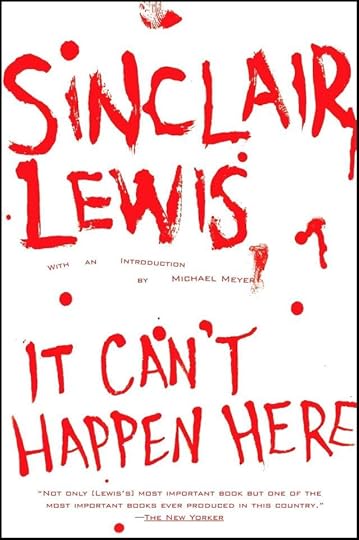
Sinclair Lewis - It Can’t Happen Here
 Introduction and Initial Thoughts
I suppose I should be more familiar with Sinclair Lewis’ work. I have heard his name bandied about since high school and know titles like Elmer Gantry, but until now I have never read him. That changed after I saw a reference to his 1935 novel It Can’t Happen Here. I had heard of this title too, but it was always in the context of a high school or college history class when we were discussing the short lived “share the wealth” program of one time governor and later Senator from Louisiana, Huey Long. This was my first real brush with the idea of populism and while I guess it made sense in a historical context, American Populism and Fascism were lever linked, at least not in my studies. So, anyway, I heard mention of this book and its exploration of the growth of and takeover by Fascists in 1936 America I rushed out and bought it.
I’ve heard on some other podcasts that there was a run on this book and it ended up back in the NYT Best Seller List before the 2016 election. I guess none of the people who bought it read it though as we ended up with a populist president, and now have the same populist president now. At any rate, I picked up a copy and started in on it. This review will be a little different as I am only going to BROADLY call out the plot events and evolution because this is a book that everyone should read (and I hesitate to add this clause) while you still can. The parallels of the story in this book, especially the first hundred and fifty or so pages, and the 2024 election are almost unbelievable. As I read further into the story the more disturbed I became. In the 1930s, especially at the end of the Great Depression where the US government was so worried about communists and socialists pulling a Moscow 1917 due to the harsh economic realities of the time that Roosevelt was able to get the New Deal passed. The jobs programs created there and the stabilizing effect of regulatory controls of banks, the establishment of the break between investment and savings banks, and more regulation of industry and tolerance of unions helped prevent what many in power saw as a landscape ripe for communist agitation. Huey Long, as mentioned earlier, was a champion of the “Share the Wealth” program was gunned down in the Louisiana state house.
I don’t pretend to know if Lewis was modeling his political antagonist Berzelius Windrip on Long, or Mussolini, or Hitler, or Franco, but he seems to contain elements of all of them. Mussolini and Hitler get name checked a few times in this novel so the audience of the time could see the danger that these men and their countries were especially after they drifted further and further into dictatorship. The conditions that led to fascism in Europe were not unlike the conditions that led to the New Deal. Anyway, I’m getting ahead of myself. Let’s have a look at the characters and I apologize in advance. I don’t know if it is novel writing in the 30s or something but the names in this book are memorable if only because they are so… well… you’ll see what I mean.
CharactersDoremus Jessup - Our main character, editor of the local newspaper in a small Vermont town
Emma Jessup - Doremus’ wife. She is sort of ambivalent to everything
Sissy Jessup - Doremus’ youngest daughter. Recent high school graduate.
Mary (jessup) Greenhill - Doremyus’ oldest daughter. Married to Dr. Mark Greenhill
Mark Greenhill - Married to Mary
Walter Trowbridge - Outsted Presidential candidate and leader of the resistance from Canada
Mr. Tasborough - Owns the local quarry
Buck Titus- Doremus’ best friend and the owner of a hunting lodge in the woods
Shad Ledue - Doremus’ handyman, later the District Commander and leader of the local Minute Men
Lorinda Pike - Owner of the local tea house, Doremus’ girlfriend (it’s complicated)
Hector McGoblin - Advisor to President Windrip and later Secretary of Treasury
Lee Sarenson - Advisor to President Windrip and later Secretary of State
General Haik - Leader of the Minute Men and then the entire military
Mary Candy - Cook in Doremus Jessup’s home
Karl Pascal - Local machinist and communist
Bishop Prang - Advisor to President Windrip while on campaign. Has nationwide evengelical, racist, radio show
Effingham Swan - District Commissioner of Northern New Hampshire and Vermont
There are other characters buried in here but for the most part this is all we’ll need to make sense of this story here.
PlotSo, while there is a through line plot for our hero, Doremus Jessup, in It Can’t Happen Here, this is more of an exploration of an idea or events than it is a character story. For me the first 150 pages or so when Doremus is mostly an observers and chronicler of the slide of the US into a fascist state were almost all set dressing for the story that rounds out the rest of the book. Namely, what do people do average Americans do when their system of government is subverted.
We open at a dinner party where we are introduced to Doremus Jessup editor of the local newspaper and one of the middle class or upper middle class in the town of Fort Beulah, Vermont. After the meal they listen to the radio news and we learn that the US is in the middle of the 1936 Presidential Campaign. Berzelius “Buzz” Windrip runs strong on the Democratic Party side with Franklin Roosevelt (Progressive) and Walt Trowbridge (Republican) splitting the opposition vote. Windrip is presented through speech transcriptions and excerpts from his book “Zero Hour” that lead every chapter until around Chapter 13 or thereabouts. Each of these exerpts leads off the chapter and gives some visibility and characterization to Buzz Windrip even though he never interacts with the main characters in the story. What’s interesting in the first few chapters here is that Doremus and his family don’t really take the Windrip presidency with any seriousness. Who would vote for someone who promises to throw out minorities, rails against the Jewish ownership of banks, plans to impose protectionist tariffs even though the US is barely limping out of the Great Depression, and finally, silencing dissent on college campuses and mass media. Who would vote for someone who promised a $5000 per year income benefit to every American? (adjusted for inflation as of 2025 that is $114,000). No one, Jessup believes, because it’s clearly bullshit, but he can see the impact that the regular radio addresses, rallies, and sermons have converted a lot of the low income and unskilled workers in and around Fort Beulah. The most important of these is the Jessup household’s handyman, Shad Ledue. Forever on the verge of being fired for not being a very good handy man, Shad becomes our lens into which we view and interact with the Windrip presidency. But that doesn’t happen for a while. In the early parts of the book Shad is the first to throw his support behind Windrip’s campaign because he believes it will make him able to escape generational poverty. Some of the locals are like him as well and as the campaign goes on they get more and more overt in their support. Shad eventually gets himself fired from the Jessups but not to worry, he has become the precinct captain of the local force of militia who report directly to Buzz Windrip, the Minute Men. There is a pretty good description of how all of the campaigns function, and ultimately how at the convention Windrip’s use of the Reverend’s reach, and his appeal to the historical conflicts that the US has faced using veterans of the Civil War as props, and clear racist conservatism via the Daughters of the American Revolution propel him to the top of the ticket. Lewis takes time to describe the convention in detail and how Windrip’s theatrical nature helps sway the sea of delegates.
Once he’s installed as President, though he refuses to live in the White House and instead lives in the top floor of a Washington hotel, Windrip begins his plan to consolidate power and remove the checks and balances that keep things functioning. First he arrests and imprisons the Reverend that helped push him over the finish line, then all of the congresspeople from the opposing party. After those steps, Windrip then breaks the country down into 8 districts with their own governors and Minute Man police forces. Creates a new singular political party “the Corpos” and taken control of all facets of the economy, military, and education.
This is when the US has gone completely fascist. All of the people who were hard Windrip supporters march and threaten everyone else that payback time is coming. This includes Shad Ledue who already has an axe to grind with Doremus Jessup because of the way pre-Windrip society was organized, Jessup was Ledue’s boss and their relationship has always been somewhat fraught. Shad Ledue wasn’t a great handyman but Doremus kept him employed partly out of a sense of pity.
With Ledue in power now as the regional Commander of the Minute Men he has the ability to torment Jessup and his family. But for now the Minute Men have more important work than tormenting Doremus Jessup, they are rounding up communists and social agitators, social democrats, and eventually anyone from the opposition party and sending them to work camps. Once in the camps the workers are leased out to industry and paid a dollar per day, 90 cents of which is taken for room and board. Whole families of the unemployed are relocated this way.
Very shortly afterward the government open concentration camps to house political prisoners that the Windrip administration uses for propaganda purposes. They make films of the camps where the inmates are “gently re-educated” into patriotic Americans. Speak highly of the food and the necessary work, etc… When in reality they are hard labor prisons and the sadistic guards torture and beat the inmates to force them to reveal the names of potential enemies of the state.
Jessup decides to quit the paper but he is arrested and taken into a “trial” before the magistrate Effingham Swan because of an editorial he wrote that was critical of Buzz Windrip. Swan tells that Jessup that he would like to kill him but he is going to remain free for now so he can train up another editor to take over the paper. During this hearing, Jessup’s son in law is brought in and threatens Effingham over the whole situation. Effingham has him taken outside and shot.
Jessup returns home. Mary learns that her husband is dead and her child has no father. She falls into a great, deep, silence and stays that way for a lot of the novel. Emma doesn’t really care about the state of the politics of the world and is, like always, more concerned with keeping a nice home and having friends. Jessup returns to the paper and begins training his replacement. During this time Shad Ledue continues to torment the family. He arrests and/or beats several of the smaller characters from the beginning of the story including Karl Pascal. Karl, as we learn quickly, is a communist and they are the first real targets of the Minute Men.
Let’s speed this up. Things get bad enough that one of Jessup’s friends suggests that he, Sissy, and Emma flee to Canada. With the expectation that he’ll be scooped up and shot in the head like his son in law, Jessup agrees. After a harrowing trip north in a blizzard the group is unable to get over the border and returns home.
Jessup’s son visits and spends all of his energy trying to talk his father into supporting president Windrip. Jessup decides then that he may not be able to break the government but he can’t sit back and do nothing. He gets some help from his friends and steals an old manual printing press from the newspaper basement and sets it up in the basement of one of their homes. They begin printing pamphlets criticising the government and distributing them around the state. Employing Sissy and her potential boyfriend, Mrs. Candy even, and others, the pamphlets give them all a sense of purpose.
The Minute Men begin burning books. Dozens if not hundreds of titles are declared illegal. Shad Ledue leads the Minute Men to Jessup’s home where they beat him and take all of the books in his study and burn them. Sissy tries cozying up to Shad Ledue to get information about upcoming raids so that she can warn people. She flirts with Shad but he isn’t a rapist, though he nearly does rape her. Sissy, as we remember, is barely 18 years old. Jessup warns her to stay away from him, but she’s sure she can maintain control of the situation. Meanwhile her boyfriend enlists in the Minute Men and begins to act as a double agent, later he is discovered and sent to the concentration camp. Lorinda works as as a delivery person and information gatherer from her tea house. She spends nights at Buck’s in bed with Doremus Jessup. Their relationship has changed though and they both know it.
The printing press operation is eventually discovered as are several articles and papers that Jessup had hidden in his study. He’s is beaten mercilessly and thrown into the concentration camp. In there with some of his compatriots, Karl, for example, they spend their days wandering around in a fenced yard or doing manual labor. In between this are more merciless beatings where the Minute Men try to get additional names of potential revolutionaries from all of them. Eventually the Minute Men begin to turn on each other and Shad Ledoux is stripped of his title and incarcerated for graft.
We also get a nice little aside here in that the US has been building up its military for a war of expansion into Mexico and Canada and one of the branches most in need of people is the Air Corps. Mary signs up and trains as a pilot. She has been single minded and mostly out of the story. We get this one chapter where we learn that she’s become a single engine fighter pilot and has stolen grenades with the plan to blow up the plane carrying Effingham Swan. The grenades don’t work but ramming his plane does and they are both killed. Ironically, Mary is awarded a posthumous medal.
Emma goes to live with her son.
Lorinda bribes guards at the concentration camp to get Doremus out and he escapes to Canada. After a few months of recovery he agrees to return to the US as a spy and agitator.
ThoughtsOkay So that was probably more dense in plot description than was probably necessary. Still, even this is just scratching the surface of the novel. Viewed through the lens of history it is clear that Sinclair Lewis was sounding the alarm as the US in 1935 was pushing towards the same trajectory as both Italy and Germany. Two countries where fascism has - at least temporarily - righted their economies. Huey Long was a populist Louisanna senator who was preparing a run for president under the Share the Wealth program which, like in this book, promised each American $5000 per year. Every man a king but no one wears a crown. Long was an agitator of both parties, though a Democrat he was pretty far left. At any rate he didn’t get a shot at the presidency because he got a shot in the belly on the steps of the Louisanna State House.
Long is, at least a little, the model for Buzz Windrip and some of Long’s sayings make their way into WIndrip’s book “Zero Hour” that we get snippets from leading into the first 15 chapters. There is a quote from Long that seems most appropriate to mention here. “When fascism comes to America it will be wearing the clothes of Americanism.”
So, jump ahead to 2023 and the ascendancy of the Trump campaign to the front of the Republican ticket. Some of the stuff that Windrip did in the book Trump does while campaigning. He holds long rambling rallies with little substantive information, publicizes grievances, attacks enemies relentlessly and not in the “proper” way that politicians generally disagree, rails about the current administration and promises a better world once he is elected to undo all of the wrongs that the current administration has created. He cultivates a deep relationship with very popular religious figures which helps swing the vote then, once in office, abandons those leaders and their followers almost instantly and carries out an agenda that will harm them in the long run. Economic policy, domestic law enforcement, and militarization are all part of the ongoing plan to remake America into his image.
I found myself checking the publication date as I was reading. It was like, at least for the first 150 pages or so it was a description of the current United States and I am writing this in June of 2025. The parallels between the fictional Windrip and actual Trump administrations are not only visible, they are terrifying. And, like the remaining 200 or so pages of Sinclair’s book we are all Doremus Jessup and family struggling under the boot of authoritarianism. Why Trump hasn’t banned oppositions parties (yes) he has damn well created his own, Trumpists, with their own political and social ideology Trumpism. You can map Lee Sarensen to Steven Miller, in fact that was how I pictured Lee as I was reading the novel, Peter Hegseth as General Haik, etc.. All of these people map to the characters in the book. It’s easy to see Trump as Windrip almost like Sinclair Lewis could see 90 years into the future.
Final ThoughtsWhere It Can’t Happen Here was once a dystopian thought experiment of what would happen if fascism took hold in the US, it is now a document of how fascism took over the US 90 years later.
Go read it and shiver.
June 9, 2025
Hey, I Landed a Short Story
My short story Anna F will appear in a future issue of the literary magazine Portrait of New England!
https://portraitne.com/