
Tim Hawken's Blog
September 21, 2026
New Book Out Now! Just 99c This Week Only.
Huge news, my latest book, The Apocalypse Will Still Have Coffee just landed. It’s part cyberpunk, part hopepunk, all thrill ride.
Set in post-collapse Melbourne, it’s about a rogue barista who gets framed for murder over some coffee beans.
Here’s the official blurb…
Things have gone to hell in New Melbourne since The Collapse.
People live in compound communities to stay safe from thugs in the badlands. It’s hard to get supplies. It’s near impossible to get a decent cappuccino.
Axl ‘The Barista’ Hart makes his living by scavenging coffee and other hard-to-find items.
But when he’s framed for murder over some arabica beans, he’s forced into a deadly race to solve the crime.
With the help of a malfunctioning AI and a legendary graffiti artist, Axl must sort rumour from conspiracy, and friend from psychopath, before time runs out.
Good thing he’s caffeinated.
An irreverent, dystopian thriller with extra kick.
It’s under a dollar for launch week on Kindle. So give it a run.
READ NOW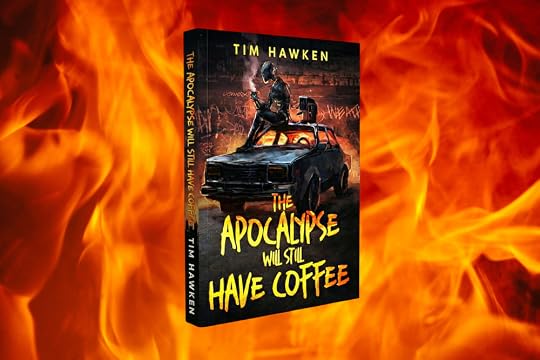


August 28, 2026
Best Dystopian Books with Dark Humor (If You Loved Fallout)
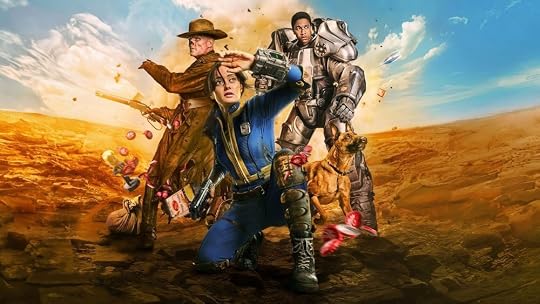
If there is one thing the Fallout games and TV show proved, it’s that the end of the world doesn't have to be entirely depressing. Sometimes, the apocalypse is just incredibly weird. While a lot of wasteland survival fiction focuses on grim realism, there is a massive space for post-apocalyptic dark comedy. I’m talking about stories where survivors aren't just fighting for their lives; they are fighting over ridiculous things, hoarding bizarre pre-collapse relics, and dealing with the absurd consequences of hyper-capitalism gone wrong. If you’re looking for satirical dystopian books where the humour is as pitch-black as the irradiated skies, here are my top picks for books like Fallout.
(Note: If you prefer your end-of-the-world stories a little more grounded, check out my other list of survival-focused dystopian reads without zombies ).
1. A Canticle for Leibowitz by Walter M. Miller Jr.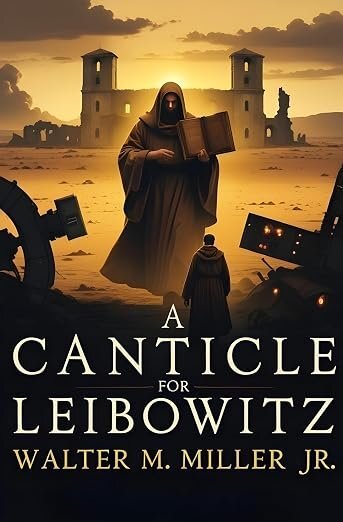
You can’t talk about retro-futuristic survival like Fallout without paying respects to the godfather of the genre. After a nuclear holocaust, a cloister of Catholic monks in the American Southwest dedicates themselves to preserving the surviving remnants of human scientific knowledge. The catch? They are blindly guarding grocery lists and engineering blueprints without actually understanding what any of it means. Winner of the 1961 Hugo award.
It is a brilliant, biting satire on the cyclical nature of human destruction and blind faith.
Why it’s a book like Fallout: If you love the idea of techno-religious zealots hoarding technology they barely understand, this is mandatory reading.
2. The Apocalypse Will Still Have Coffee by Tim Hawken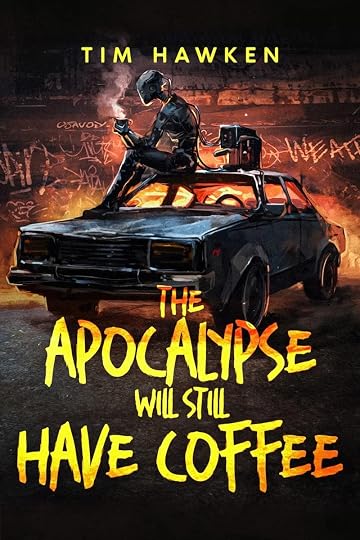
Yeah, okay, I am schilling my own work here. But if you’re hunting for post-apocalyptic dark comedy, I wrote this specifically to scratch that itch.
Set in a post-collapse Melbourne, this one drops the heavy military tropes and focuses on something much more important: caffeine. It follows a rogue barista who gets framed for murder over a stash of high-grade coffee beans. Teaming up with a graffiti artist-turned-medic, he has to clear his name or face execution. It’s gritty, fast-paced, and leans hard into the odd priorities humans will cling to when society flatlines.
The ‘Books Like Fallout’ Vibe: Wasteland currency and strange obsessions. In a world where cans of ‘Pinga’ can buy you a sniper rifle, killing a man over a fresh bag of espresso beans makes perfect, twisted sense. Right?
READ THE APOCALYPSE WILL STILL HAVE COFFEE HERE
3. Futuristic Violence and Fancy Suits by Jason Pargin
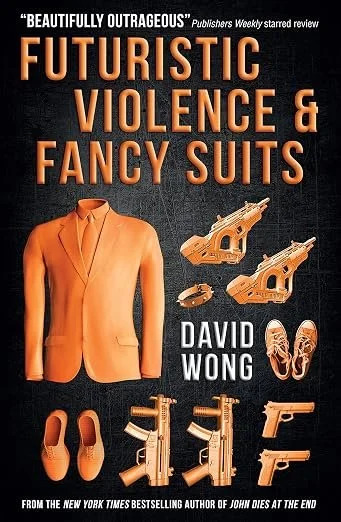
If you want the unhinged, chem-fueled raider energy of the wasteland, this is the book. Set in a lawless, hyper-capitalist city where anyone can buy cybernetic upgrades (and where streaming your own violent crimes is a legitimate career path), it follows a totally normal protagonist who inherits a criminal empire.
Pargin (who also writes as David Wong) is a master of blending genuinely terrifying high-stakes action with laugh-out-loud absurdity. If you liked his hilarious cosmic horror book John Dies at the End, you’ll love this.
The Fallout Vibe: The satirical, hyper-corporate greed of Vault-Tec, mixed with the chaotic, neon-soaked violence of New Vegas.
4. Severance by Ling Ma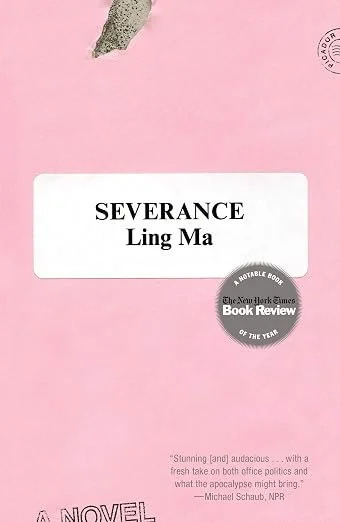
This book is so good that it sold well while having one of the worst covers in history. I mean, really? Look at it! When a global fungal infection shuts down the world, a millennial office drone named Candace just... keeps going to work. She wanders through a collapsing New York City, taking photos for her blog and maintaining her routine while society completely unravels around her.
It is a dry, cynical look at modern work culture and what it actually takes to break our programming. It’s less about dodging mutants and more about the dark humor of realizing capitalism might just outlive humanity.
The Fallout Vibe: The unquestioning loyalty of Vault dwellers. Candace has the exact same energy as an NPC who just keeps sweeping the floor while the settlement is actively burning down.
5. Go-Go Girls of the Apocalypse by Victor Gischler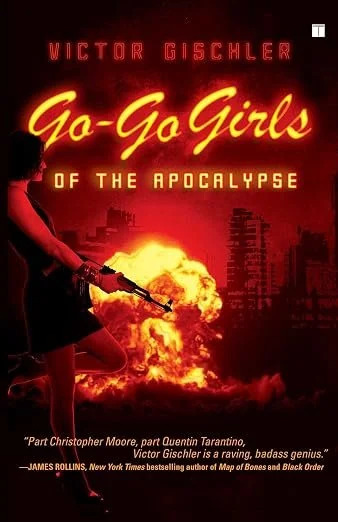
You like your funny dystopian fiction extra strange? Me too. In this book, Mortimer Tate survives the end of the world by sealing himself in a mountain bunker. When he finally emerges nine years later, he steps into a shattered, lawless landscape full of raiders, weird wasteland settlements, and mutated wildlife. His quest? To find a fabled, neon-lit oasis in the ruins of Atlanta.
It is unapologetic, fast-paced pulp satire that doesn't take itself too seriously, prioritizing high-octane action and bizarre encounters over bleak philosophy.
The Fallout Vibe: This shouts out the "Vault Dweller steps into the sun" trope. It reads exactly like a bizarre, violent, and highly entertaining side quest in Fallout: New Vegas.
That’s it for now. But if you’re into gritty worlds, you might also dig this wrap-up of the Best Cyberpunk Novels out there. More cannon fodder for the TBR pile!
June 5, 2026
Best LitRPG Books Ever
Like many people, I've been tearing through Dungeon Crawler Carl recently, and it has completely rekindled my love for good LitRPG books. The genre has exploded over the last few years, moving from a niche corner of the internet to dominating the audiobook and Kindle charts. What’s not to love too? Hilarious dark humour, characters who progress, and the odd talking axe.
If you're wondering what to read after Dungeon Crawler Carl, I've put together a list of hits I've personally loved. These range from the greatest LitRPG books of all time, to the best new LitPRG releases you can get your hands on right now. Here is one epic list for fans of game-based speculative fiction.
What Is LitRPG?Before we dive into the best LitRPG books ever, it's probably worth stopping for a second to define the genre.
Put simply, LitRPG (Literary Role Playing Game) blends the imaginative worlds of traditional sci-fi and fantasy with the addictive progression mechanics of video games. Think stats, skill trees, leveling up, and loot boxes woven directly into the narrative.
Instead of just wielding magic or swinging a sword, characters grind for XP. The "game" elements aren't just hidden subtext, they are a key driving part of the story itself. Characters receive system notifications, equip new gear, and figure out how to exploit the rules to survive. Whether it’s a sprawling epic fantasy, an immersive VR simulation, or an apocalyptic event, what unites LitRPG is that sheer, undeniable satisfaction of watching an underdog "level up" and break the game.
What Are The Best LitRPG Books?There are a few clear heavy hitters when it comes to the best LitRPG books out there. Here are the ones you need to check out.
Dungeon Crawler Carl by Matt Dinniman
If you haven't picked this up yet, drop what you're doing. Earth is sold to an intergalactic corporation and transformed into a televised, multi-level dungeon crawl. Our hero, Carl, is a regular guy who enters the dungeon wearing nothing but boxer shorts and Crocs, alongside his ex-girlfriend’s prize-winning show cat, Princess Donut.
It is darkly hilarious, high-stakes, and action-packed. The banter is phenomenal, the system mechanics are incredibly well-thought-out, and the audiobooks are absolutely legendary.
Shadeslinger by Kyle Kirrin
If you love VRMMO (Virtual Reality Massively Multiplayer Online) stories, this is top-tier. It follows a protagonist who fully immerses himself in a game world where grinding, leveling, and exploiting mechanics are the core focus.
The absolute highlight here is Frank, a hilariously sarcastic talking axe who acts as the main character's reluctant companion. Like Dungeon Crawler Carl, the audiobook version of this is an absolute cracker and elevates the witty dialogue to another level. Find it on Kindle here.
He Who Fights with Monsters by Shirtaloon
This one hits the "Isekai" (transported to another world) sub-genre perfectly. Jason Asano, an Australian slacker, wakes up in a magical world with no pants and an RPG-style interface tied to a unique magic system. He has a highly polarizing, anti-authoritarian personality, which makes for incredible dialogue and political intrigue as he levels up his dark, affliction-based abilities. It's a massive, binge-worthy saga. I don’t just recommend this because the author ‘Shirtaloon’ is a fellow Aussie. It’s genuinely one of the highest selling LitPRG series ever. Get in there.
Ready Player One by Ernest Cline (The Grey Area)
I'm including this here because it's widely read, but it sits in a bit of a grey area. Is it LitRPG? Not strictly. It's generally classified as GameLit. While the plot takes place inside an MMORPG (the OASIS) where characters have avatars, levels, and loot, the narrative focuses on 80s pop-culture trivia and an adventure quest rather than the "crunchy" math of stat progression or ability synergy.
Interestingly, some people also mistakenly class Ready Player One as cyberpunk due to the dystopian corporate-ruled real world, but I'd keep it separate. If you actually want pure cyberpunk recommendations, check out my Best Cyberpunk Books Ever article here.
Best New LitRPG BooksNow that you know the heavyweights, I have two newer releases for you.
Last Save Dave by Michael James Ploof
Hot off the presses, this brand new LitRPG book comes from Aethon Books who orginally brought us He Who Fights With Monsters. It’s also got that Dungeon Crawler Carl vibe about it.
Dave Deranger is a middle-aged plumber who was the 1990 Nintendo Champion and an Olympic silver medalist in boxing. His greatest challenge these days is trying to quit smoking and plunging toilets. That all changes when an immature deity named Tyme abducts him to be her champion in a "intergalactic scavenger hunt." The prize? His world is spared. The penalty for losing? Earth gets vaporized by a massive laser pointer from space. Even better, two books will be dropping in quick succession. Be the first to grab them here.
Chrysalis 9 by RinoZ
If you enjoy "monster evolution" LitRPGs, this is a phenomenal series about a guy reincarnated as a low-level monster ant. Book 9 is about to drop, bringing more hilarious colony building and deep RPG skill-tree mechanics. It's a wildly fun take on the genre that keeps getting better.
Royal Road - the LitRPG lover’s favourite siteIf you’re looking for the top LitRPG novels emerging in the scene, there is a massive, thriving community of indie authors writing progression fantasy and LitRPG as serial fiction over on Royal Road.
While you're browsing over there, you can check out my current serial, The Apocalypse Will Still Have Coffee. It isn't LitRPG, but if you're into dystopian fiction with a caffeine kick, I think you'll dig it.
March 10, 2026
7 Best Post-Apocalyptic Books Without Zombies (plus a dash of Hopepunk
If you're burnt out on the standard "lone wolf blasting the undead with a shotgun" trope, I’m with you. Zombie fiction is great, sure, but sometimes you want a post-apocalyptic tale where the threat isn't a brain-hungry corpse. What’s even more terrifying is the environment, human nature, or the sheer weight of isolation. There is a also whole subgenre of sci-fi dedicated to what happens when humans actually cooperate to rebuild. From the bleakest wastelands to "hopepunk" stories about preserving culture, here my 7 of the best post-apocalyptic books without a zombie in sight.
(Side note: if you’re after some darkly funny post-apocalyptic reads, you might find a few inappropriate laughs over at my Best Dystopian Books with Dark Humor list) .
1. The Road by Cormac McCarthy
We have to start with the bleakest benchmark of them all. There are no zombies here, just desperate, starving humans (and yes, cannibals). It’s the ultimate lone-wolf survival story of a father and son "carrying the fire." It’s a brutal, necessary read that perfectly defines the grimdark end of the apocalyptic spectrum. I first read this after I became a father for the first time and, man, it really hit home hard. A classic of post-apocalyptic fiction.
2. The Apocalypse Will Still Have Coffee by Tim Hawken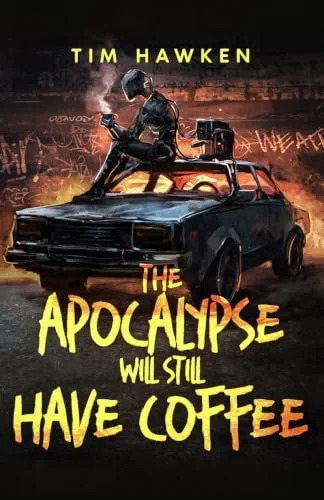
Yeah okay, this is my latest book, but if you can’t love your own books, who will?!
If you like the idea of humanity holding onto its rituals (and sense of humour) at the end of the world, you’ll like this. Axl has been framed for murder… and he hasn’t even had a coffee yet. Teaming up with a graffiti-artist/medic, he has to clear his name in a single week or face execution by head explosion. It’s a story about found family, caffeine, and the rebellious act of holding onto hope when everything else has gone to hell.
READ THE APOCALYPSE WILL STILL HAVE COFFEE HERE
3. Juice by Tim Winton - Post-Apocalyptic CliFi
I had to include the GOAT of Australian fiction. This is a terrifyingly plausible, uniquely Aussie take on the apocalypse. It’s a harsh, sun-blasted read, but at its core, it’s about human endurance and what one generation is willing to sacrifice for the next. It’s an absolute cracker of a novel that proves you don't need monsters when the sun itself is trying to kill you. I especially rate the audiobook for this one.
4. The Dog Stars by Peter HellerThis is the perfect bridge between bleak survival and hopeful rebuilding. It follows a pilot living out of an abandoned airport with his dog and a gun-toting misanthrope. But when he hears a voice over his Cessna's radio, he risks everything to find a connection. It’s deeply poetic, balancing the constant threat of violence with a desperate yearning for community.
5. Parable of the Sower by Octavia E. Butler (a hopepunk classic)
Butler’s masterpiece is eerily prescient. While the world she paints is chaotic and violent, the hero, Lauren Olamina, doesn't just want to survive. She wants to build a completely new belief system and community from the ashes. It's the ultimate blueprint for rebuilding society when the old rules no longer apply.
6. Wool (The Silo Series) by Hugh Howey - Best Post-Apocalyptic Books Without Zombies
I mean, have you seen this on Apple TV yet? It made me remember why I LOVED this series when Howey first took the self-publishing world by storm with these insanely good novels. Wool especially is a masterclass in claustrophobic sci-fi and mystery. When a mechanic starts digging into the true history of the Silo, the story becomes a brilliant exploration of truth, class structures, and tearing down corrupt systems to build something better.
7. My Best Hopepunk Pick - Station Eleven by Emily St. John Mandel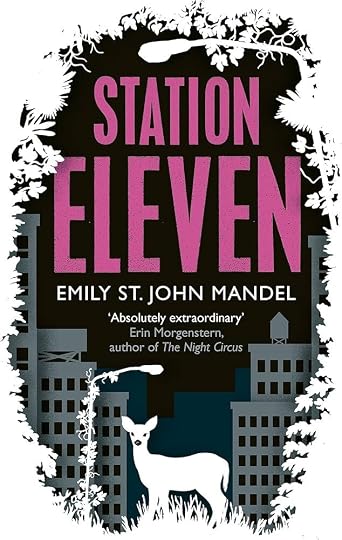
This is where we firmly enter the territory of ‘Hopepunk’. It follows a nomadic group of actors and musicians—The Traveling Symphony—who roam the Great Lakes region performing Shakespeare for scattered settlements. Their motto, “Survival is insufficient,” is the beating heart of the hopepunk genre. It’s proof that art is just as crucial as food when the world ends.
So, those are my top post-apocalyptic reads. No zombies. A dash of hope. Many with a bunch of humour thrown in.
If you’re into dystopian worlds, you might also enjoy Cyberpunk. High tech, low life ratbags fighting for a better world. Check out by personal best cyberpunk novels here.
7 Best Post-Apocalyptic Books Without Zombies (plus a dash of Hopepunk)
If you're burnt out on the standard "lone wolf blasting the undead with a shotgun" trope, I’m with you. Zombie fiction is great, sure, but sometimes you want a post-apocalyptic tale where the threat isn't a brain-hungry corpse. What’s even more terrifying is the environment, human nature, or the sheer weight of isolation.
There is a also whole subgenre of sci-fi dedicated to what happens when humans actually cooperate to rebuild. From the bleakest wastelands to "hopepunk" stories about preserving culture, here my 7 of the best post-apocalyptic books without a zombie in sight.
1. The Road by Cormac McCarthy We have to start with the bleakest benchmark of them all. There are no zombies here, just desperate, starving humans (and yes, cannibals). It’s the ultimate lone-wolf survival story of a father and son "carrying the fire." It’s a brutal, necessary read that perfectly defines the grimdark end of the apocalyptic spectrum. I first read this after I became a father for the first time and, man, it really hit home hard. A classic of post-apocalyptic fiction.
2. Juice by Tim Winton - Post-Apocalyptic CliFi I had to include the GOAT of Australian fiction. This is a terrifyingly plausible, uniquely Aussie take on the apocalypse. It’s a harsh, sun-blasted read, but at its core, it’s about human endurance and what one generation is willing to sacrifice for the next. It’s an absolute cracker of a novel that proves you don't need monsters when the sun itself is trying to kill you. I especially rate the audiobook for this one.
3. The Dog Stars by Peter HellerThis is the perfect bridge between bleak survival and hopeful rebuilding. It follows a pilot living out of an abandoned airport with his dog and a gun-toting misanthrope. But when he hears a voice over his Cessna's radio, he risks everything to find a connection. It’s deeply poetic, balancing the constant threat of violence with a desperate yearning for community.
4. Parable of the Sower by Octavia E. Butler (a hopepunk classic) Butler’s masterpiece is eerily prescient. While the world she paints is chaotic and violent, the hero, Lauren Olamina, doesn't just want to survive. She wants to build a completely new belief system and community from the ashes. It's the ultimate blueprint for rebuilding society when the old rules no longer apply.
5. Wool (The Silo Series) by Hugh Howey - Best Post-Apocalyptic Books Without Zombies I mean, have you seen this on Apple TV yet? It made me remember why I LOVED this series when Howey first took the self-publishing world by storm with these insanely good novels. Wool especially is a masterclass in claustrophobic sci-fi and mystery. When a mechanic starts digging into the true history of the Silo, the story becomes a brilliant exploration of truth, class structures, and tearing down corrupt systems to build something better.
6. My Best Hopepunk Pick - Station Eleven by Emily St. John Mandel
This is where we firmly enter the territory of ‘Hopepunk’. It follows a nomadic group of actors and musicians—The Traveling Symphony—who roam the Great Lakes region performing Shakespeare for scattered settlements. Their motto, “Survival is insufficient,” is the beating heart of the hopepunk genre. It’s proof that art is just as crucial as food when the world ends.
7. The Apocalypse Will Still Have Coffee by Tim Hawken
Yeah, okay. Here I am again schilling my own stories. I’m proud of this one though. If you like the idea of humanity holding onto its rituals (and sense of humour) at the end of the world, you’ll like this. In it, a rogue barista is framed for murder over a stash of coffee beans. Teaming up with a graffiti-artist/medic, he has to clear his name or face execution. It’s a story about found family, caffeine, and the rebellious act of holding onto hope when everything else has gone to hell.
Ever better, you can read it FREE on my Substack here.
November 23, 2025
Best Serial Fiction on Substack: 6 Reads You Need in Your Inbox
If you think Substack is just for political rants and tech bros giving marketing advice, you’re missing out on the good stuff.
There’s a quiet revolution happening right inside our inboxes. Serial fiction is back! Like the old newspaper serials from the Dickens era, or Fahrenheit 451 being first being published in Playboy, this format has resurrected again. Instead of getting ink on your fingers, you now get a fresh chapter delivered to your phone while you’re waiting for your flat white.
I’ve done the digging so you don’t have to. Here are 5 of the best serial fiction newsletters on Substack right now—from a dystopian sport that feels like Formula One on steroids to a cozy sci-fi guide on how to tame humans.
1. Dracula DailyBy Matt Kirkland

If you haven’t heard of this one, you’ve probably been living in a crypt. Dracula Daily is the OG of the Substack fiction wave. It takes Bram Stoker’s classic novel—which was originally written as letters and diary entries—and emails them to you on the exact date they happen in the story.
Some days you get a long, spooky entry from Jonathan Harker. Other days? Nothing. It’s essentially "real-time" reading. It turns a classic text into a communal event where thousands of us freak out together over email.
Genre: Classic Horror / Epistolary
Read it here: Subscribe to Dracula Daily
2. The Cog That Spins The WheelBy Ian Patterson

Imagine if Rollerball had a baby with Formula One and raised it on the moon. That’s the vibe Ian Patterson is serving up.
The Cog That Spins The Wheel explores a dystopian future where sports are the only glue holding society together. It’s high-octane, gritty, and asks a pretty wild question: what happens when you throttle out just to survive? If you want action that hits you like an energy drink, this is it.
Genre: Dystopian Sci-Fi / Sports
Read it here: Check out The Cog That Spins The Wheel
3. Station 2-14
By Cameron Scott
A shoutout to a fellow Aussie writer from Melbourne! Cameron Scott is weaving something special with Station 2-14.
The story follows Ley, a fighter desperate to save her dying mother. To do it, she has to test her special abilities in the brutal "Games of Station 2-14." It’s got that classic underdog energy, but with a twist. Ley isn’t the only one with everything to lose. If you love character-driven action with a bit of heart (and Aussie grit), give this a go.
Genre: Sci-Fi / Action
Read it here: Start reading Station 2-14
4. Intergalactizen's Guide to Taming EarthlingsBy JW Ellenhall

Need a laugh? Intergalactizen's Guide To Taming Earthlings is a "Planetary Domination Made Easy" series that flips the script on alien invasions.
Here’s the hilarious blurb: Most of the galaxy wants to destroy Earth for being an utter nuisance – except for one group of Intergalactizens, beings who thrive on betting against unpredictable odds and disguising themselves as cats.
Genre: Cozy Sci-Fi / Comedy
Read it here: Read the Intergalactizen's Guide
5. Mechanical PulpBy Liza Kuznak

Liza Kuznak is doing the lord’s work keeping the short story format alive. Mechanical Pulp is an eclectic mix of short stories, vignettes, and "other stuff" that keeps you guessing.
It feels like opening a mystery box every time a new email lands. The writing is sharp, the tone is unique, and it’s a great example of how flexible the newsletter format can be for fiction writers. Worth dipping into.
Genre: Short Stories / Mixed Genre
Read it here: Subscribe to Mechanical Pulp
6. The Apocalypse Will Still Have CoffeeBy Tim Hawken

You didn't think I’d write a whole list about Substack fiction and leave myself out, did you?
The Apocalypse Will Still Have Coffee is my latest serialised project. It’s fun, it’s gritty, and it asks the important questions, like how to get a decent caffeine hit when the world has gone to hell. If you like your dystopian fiction with a side of noir and audio chapters included in the paid tier, come join me for a cuppa at the end of the world.
Genre: Dystopian / Crime
Read it here: Subscribe to The Apocalypse Will Still Have Coffee
Got a favourite serial fiction read I missed? Drop it in the comments—I need something new to read while I procrastinate on my own writing.
October 31, 2025
The Apocalypse Will Still Have Coffee
My latest book has just launched on Substack. To get a chapter a week delivered to your inbox (and read any back chapters, depending on when you read this), sign up HERE.
What’s it about? Here’s a little sneak peak…
A rogue barista in post-collapse Melbourne is framed for murder over some coffee beans. With the help of a graffiti-artist/medic, he must prove his innocence or face execution. Good thing they’re both caffeinated.
True to other work of mine, it’s a little dark, a lot cheeky, and a whole lot of fun. Check out this artwork by Katerina Belikova (aka Ninjajo) which I commissioned to celebrate the release.

The main chapters of the book will always be free, plus I’ll have some extra special content like audiobook installments, art, behind-the-scenes insights at more for premium subscribers. Here’s the official sign up form to make it easy too.
August 8, 2025
Killware Now In Italian
It’s my pleasure to announcing that my cyberpunk novella, Killware, has now been translated into Italian by the amazing Raffaella Maria Prenza.
For those who speak Italiano, here is the blurb and links…
Un noir-cyberpunk da friggerti il cervello...
L’Ispettore Bram Tedeschi preferirebbe malmenare criminali che digitare su tastiere. Ma quando due giocatori-RV muoiono folgorati nelle tute tattili, è costretto a investigare un mondo a lui ignoto.
Coadiuvato da Vancy, collega esperta-tecnologica, Bram interverrà per rintracciare un hacker che è più leggenda che realtà – il misterioso Psyren.
Risolveranno il caso prima di trasformarsi nel prossimo bersaglio? O le loro vite diventeranno un inferno, dove i loro peggiori incubi verranno impiegati per condurli alla follia?
Killware: novella incalzante, 100-capitoli x 100-parole, affiancati dall’incredibile arte di Megan Mushi. Ambientata nell’Universo Thrill Switch di Tim Hawken.
Find it on Amazon here.

Un noir-cyberpunk da friggerti il cervello...
February 20, 2025
Cyberpunk vs. Dystopia: What’s the Difference?

Dystopian fiction and cyberpunk often get thrown into the same bucket. Both genres paint grim visions of the future, filled with corruption, oppression, and the fight for freedom. But while they share some DNA, they’re not identical twins. If dystopia is the broader canvas, cyberpunk is the neon-splattered corner where rebels, hackers, and megacorporations collide. I often get asked what is the difference between dystopia and cyberpunk. the short answer is: all cyberpunk is dystopian, but not all dystopian fiction is cyberpunk. To unpack that a little bit, here’s a rundown of each, with some examples and then comparisons.
What is Dystopian Fiction?
Dystopian fiction is a genre that explores societies where something has gone horribly wrong. These worlds are often the result of:
• Totalitarian governments (think Orwell’s 1984)
• Environmental disasters (like Atwood’s The Handmaid’s Tale)
• Technological oppression (Brave New World, anyone?)
A dystopia doesn’t have to be futuristic—though many are. The defining feature is a broken system that controls people’s lives, often disguised as something that was supposed to “help” society. Whether it’s through fear, surveillance, or even the illusion of pleasure, dystopian worlds show us what happens when power goes unchecked.
The tone of dystopian fiction is often bleak, cautionary, and deeply philosophical. It forces us to ask: How close are we to becoming this world? And can we stop it before it’s too late?
Famous dystopian books include:
• 1984 by George Orwell
• Fahrenheit 451 by Ray Bradbury
• The Hunger Games by Suzanne Collins
• The Road by Cormac McCarthy
Some might mistakenly include something like Kim Stanley Robinson’s The Ministry for the Future as dystopian because it’s climate fiction that kicks off very, very horrifically. However, the book ends on a very optimistic note. Not only are the main characters in a much better place, but the system that has made the world so terrible to live in is being dismantled and the characters have a real hope at a better, long lasting future. That’s not dystopian.
What is Cyberpunk?
Cyberpunk is a subgenre of science fiction that blends high-tech futures with low-life realities. If dystopia is about power crushing society, cyberpunk is about the rebels fighting back—often in the dirtiest ways possible with tech as their weapons.
Cyberpunk worlds are hyper-technological but deeply broken. Think:
• Giant megacorporations running everything
• Hacking, cybernetic enhancements, and AI
• Dark, neon-lit cities drowning in rain and corruption
Where dystopian fiction often follows the masses suffering under oppression, cyberpunk focuses on rogue individuals—hackers, mercenaries, and punks—who use the system’s own tools to fight back. Instead of asking, How do we stop this future from happening?, cyberpunk shrugs and says, We’re already here. Time to jack in and survive.
Classic cyberpunk books and films include:
• Neuromancer by William Gibson
• Blade Runner (based on Do Androids Dream of Electric Sheep? by Philip K. Dick)
• The Matrix (a modern take on cyberpunk themes)
• Altered Carbon by Richard Morgan
• Ghost in the Shell (anime & manga)
Cyberpunk worlds are grimy, dangerous, and filled with hackers, mercs, and antiheroes. The themes often explore humanity vs. technology, asking: At what point do we stop being human?
Key Differences Between Cyberpunk and Dystopia Feature Dystopian Fiction Cyberpunk Setting Oppressive, often totalitarian High-tech, neon-drenched, urban sprawl Themes Political control, social decay Technology, AI, hacking, rebellion Power Structures Governments, dictators, thought control Megacorporations, AI overlords Characters Regular people caught in oppression Hackers, mercs, antiheroes Tone Grim, bleak, cautionary Fast-paced, rebellious, punk energySometimes, a story blends both genres. Take Black Mirror—some episodes lean dystopian (Nosedive, Fifteen Million Merits), while others lean cyberpunk (San Junipero, Striking Vipers).
Or consider The Matrix. It’s a cyberpunk world (hacking, AI, virtual reality), but it’s also dystopian (humans enslaved by machines).
The lines blur, but the core difference remains:
• Dystopia asks how the system keeps people in line.
• Cyberpunk asks how we can break it.
Why Cyberpunk and Dystopian Fiction Matters TodayCyberpunk and dystopian fiction aren’t just entertainment—they’re blueprints for reality. Many dystopian nightmares (mass surveillance, algorithmic control, political propaganda) are already here. And cyberpunk? We’re living in a world where AI, corporations, and hackers have more power than governments. I mean, damn. An AI even helped me write and clean up this blog post. I feel like I should leave a typo in hear just to be ruthlessly human. How long until it’s writing our fiction too? Not mine anytime soon at least.
Understanding these genres, however, helps us see where we’re headed. Cyberpunk might give us a roadmap for rebellion. Dystopia might give us a warning. Either way, they remind us to stay awake, stay sharp, and stay human.
What’s your favourite dystopian or cyberpunk story? If you’re looking for a world that blends the best of both, check out my books Thrill Switch and Killware .
January 30, 2025
Sandman Slim Reading Order - A Guide
If you’re a fan of urban fantasy novels, then chances are you’ve heard of Richard Kadrey’s Sandman Slim book series. The series follows the adventures of James Stark, a magician who has escaped from Hell and returned to Earth seeking revenge against those who betrayed him. With the twelfth and final novel in the series already out, plus more companion novellas, it’s the perfect time to dive into the world of Sandman Slim. But with so many Sandman Slim Books to consider, it can be tough to know where to start. Fear not! In this post, I’ll provide you with a comprehensive guide to reading the best Sandman Slim reading order.
 What Is The First Sandman Slim Book?
Sandman Slim. This is the first book in the series that gives it its name. It’s also definitely the first book you should read in the series, if you want to read the Sandman Slim Books in order. It’s important to start with this book to fully understand the background and motivations of the protagonist, James Stark. In this book, we learn that Stark was a talented magician who was sent to Hell by a group of fellow magicians, and spent 11 years there fighting in the gladiator pits. He eventually manages to escape and return to Earth to seek revenge against those who wronged him, all while navigating the hidden supernatural world of Los Angeles.

(Note: I recommend the audiobook, which perfectly captures the noir voices of James Stark)
Sandman Slim Books Reading Order (The Novels)Now you’re sorted with the first book in the Sandman Slim series, here’s a list of all of the full length novels. I recommend you blaze through them like fiery bat outta hell…
Sandman Slim (2009)
Kill the Dead (2010)
Aloha from Hell (2011)
Devil Said Bang (2012)
Kill City Blues (2013)
The Getaway God (2014)
Killing Pretty (2015)
The Perdition Score (2016)
The Kill Society (2017)
Hollywood Dead (2018)
Ballistic Kiss (2020)
King Bullet (2021)
Sandman Slim Book Order – Remember Devil in the Dollhouse
For those who are right into the Sandman Slim, there is also a novelette to complement the series. Called Devil in the Dollhouse, this story of 100 pages (or just over an hour on Audible) sits between books 3 and 4 in terms of the Sandman Slim reading order. You’ll see it labelled as Sandman Slim #3.5 in a few places. Find that one here for just 99c on Kindle.
If you want to go super hard, dive into the full Sandman Slim Kindle Bundle which will give you all of the full-length novels in fell swoop.
There you have it! A complete guide to reading the Sandman Slim book series in order. While the novella in the series is worth reading too, I recommend starting with the main books. The Sandman Slim series is a wild, action-packed ride filled with humor and heart.
And, if you like them and are yearning for more, try my Hellbound Trilogy. A wild journey through the underworld like you’ve never seen it before.

