P.L. Reid's Blog
May 31, 2023
A Eulogy To Mom
This eulogy was written 10 years ago. Emphysema is a brutal disease; the dying lasts for years.
How ironic that, for the past 18 months, I’ve watched the two most important women in my life struggle with what would otherwise be an irrepressible reflex - breathing. One woman, my mother, was in the late stages of emphysema, and the other, my daughter, has severe asthma.
I was 43 years old when my last child was born. When I struggled to carry my daughter to term, then later, to keep her alive, mom was right there beside me. She was with my husband and me every time my daughter was rushed to the emergency room or the pediatric ICU at Lutheran General. When my father was too tired to travel, mom simply drove herself up to Park Ridge, huffing and puffing her way slowly down the halls of the pediatric wing to her granddaughter’s room. It seemed nothing could keep her away. Mom took Brighid to her doctor’s appointments. She cared for her at her home three days a week and then would e-mail me updates (she called them “Brighid reports”) later in the evening. When Brighid was so sick that daycare refused to take her, mom was always there with open arms. She nursed my daughter through three months of pneumonia , all on her own, even before she was properly diagnosed. The baby was miserable but mom never complained. “She’s such a good girl,” she would say.
Since my daughter’s arrival, I’ve watched my mom’s health steadily decline. I’ll never forget the moment she sat in my car and said the words I’d dreaded to hear. It was Saturday, April 14, 2013, on a beautiful spring day, and we were shopping for a bathing suit for Brighid. Mom quietly said she had emphysema. She told me the disease was in the advanced stages, and she may have as little as six months to live. I froze. I wanted her to believe that I was going to be okay, that I was strong enough to handle the news, that she could talk to me if she needed someone to listen. But, inside, my heart shattered. All the plans I’d put off over the years were gone in the blink of an eye. She and I had always talked about taking my sons back to Hawaii to show them where they were born. We recently talked about taking a family vacation to Walt Disney World. All gone. I’ll never forget her next words. “You know what? I am 67 years old. I’ve had a good life. I’ve watched my kids grow up and have kids of their own. I’ve even had the chance to get to know my granddaughter. I have no reason to complain.”
It was a far cry from the call I’d received at work a month earlier after she’d returned home from a rare doctor’s visit. I’m not sure what her doctor said to her that day, but mom was absolutely beside herself, sobbing over the phone, “I’m scared I won’t be able to watch Brighid anymore.” In less than a month, she’d moved through the grieving process to resignation. And acceptance. Sitting beside me in the car, mom told me that her one remaining wish was for my son Joseph to realize his dream of becoming a medical doctor. She told me she hoped my son Kory knew how lucky he was to have found such a good wife and mother for his son. She said I had a wonderful family. She said I had a husband who adored me. I silently listened while she worked through her hopes and fears and, incredibly, tried to prepare me for the inevitability that waited. I cried the entire way home. Who would fill mom’s shoes in my daughter’s life? Brighid was already “Grandma’s girl.”
In the summer of 2012, mom fell in her garage, shattering her forearm and wrist, and breaking one of her legs. Throughout her recovery, she begged me not to put Brighid in daycare full-time. “Please don’t take her away from me,” she’d say. I understood completely. She only wanted to be remembered by her littlest granddaughter. It saddens me to think Brighid probably won’t have any clear memories of her grandmother. But what she will be left with is an abstract sense of the woman who cared for her when she was at her most-vulnerable: Feelings of warmth and security, memories of her kisses or a loving embrace, maybe even the faint echo of Grandma fussing with her hair.
Of course, there were gifts mom left for me as well. I’m not talking about antique dishes, or jewelry, or furniture, or any of the trappings of this world, but irreplaceable things, like: A father. One of the greatest gifts two parents can give the children they love is a deeply abiding love for one another. It is what centers us. It is the roots that plant a child firmly to this earth. My parents celebrated a marriage that lasted more than 47 years. A love of family. Like her mother before her, first and foremost, my mom loved her family. Her father died in a car accident when she was just 9 years old. Mom’s family was poor, but they had each other. Most of her aunts, uncles, cousins and grandparents lived within miles of each other so she grew up around them. A rich ancestry. When I was in high school, mom began working to build a historical archive of the family that she loved. Today, that family history is documented back to the 16th century. What was once her passion will now become her legacy.A fierce loyalty. She gave it freely but also demanded it in kind. An independent spirit. Her desire for my sister and I and, later, for my daughter, was that we would each be able and willing to take care of ourselves.An innate modesty. She deeply despised immodesty in young ladies. She had very strict “rules” which, to my chagrin, didn’t seem to apply to my brother.A sense of tradition. My mother gave me family recipes dating back to the Second World War. She taught me how to cook by letting me shadow her in the kitchen from a very young age, barely able to see over the countertop, later allocating menial tasks, I was her soux chef and, for the most part, she led by example. A mother’s perspective and, sometimes, painfully honest feedback.A need for stillness and for privacy. My mother was both a quiet and a deeply private person. In today’s culture where folks flout pictures of their meals and party escapades, she was very uncomfortable with that level of sharing. I can respect that as I too feel there is far too much sharing in the public sector these days.A generosity of spirit. The reason my mother loved Christmas so much was it was the one time a year she could indulge her children and then, later, her grandchildren. No one celebrated Christmas like my mom. For the past 15 years I’ve clung to my parents, even after becoming a grandma myself, knowing instinctively my time with them was drawing to a close. The things I’ve lost with mom’s passing are simply too numerous to mention, but my real angst lies in what my daughter has lost. The myriad of little things grandma was good at, where I simply fall short. Who will teach her these things? No one. They’re lost in time along with all the other women in my life who’ve long-since passed away. Now, it’s my turn. I was blessed to have a grandmother until I was 40 years old. I had my mother until I was 45. God-willing, I will be with my daughter until she’s in her 40’s and, more importantly, that I can meet the challenges set forth by all those women who’ve molded and shaped me.
How ironic that, for the past 18 months, I’ve watched the two most important women in my life struggle with what would otherwise be an irrepressible reflex - breathing. One woman, my mother, was in the late stages of emphysema, and the other, my daughter, has severe asthma.
I was 43 years old when my last child was born. When I struggled to carry my daughter to term, then later, to keep her alive, mom was right there beside me. She was with my husband and me every time my daughter was rushed to the emergency room or the pediatric ICU at Lutheran General. When my father was too tired to travel, mom simply drove herself up to Park Ridge, huffing and puffing her way slowly down the halls of the pediatric wing to her granddaughter’s room. It seemed nothing could keep her away. Mom took Brighid to her doctor’s appointments. She cared for her at her home three days a week and then would e-mail me updates (she called them “Brighid reports”) later in the evening. When Brighid was so sick that daycare refused to take her, mom was always there with open arms. She nursed my daughter through three months of pneumonia , all on her own, even before she was properly diagnosed. The baby was miserable but mom never complained. “She’s such a good girl,” she would say.
Since my daughter’s arrival, I’ve watched my mom’s health steadily decline. I’ll never forget the moment she sat in my car and said the words I’d dreaded to hear. It was Saturday, April 14, 2013, on a beautiful spring day, and we were shopping for a bathing suit for Brighid. Mom quietly said she had emphysema. She told me the disease was in the advanced stages, and she may have as little as six months to live. I froze. I wanted her to believe that I was going to be okay, that I was strong enough to handle the news, that she could talk to me if she needed someone to listen. But, inside, my heart shattered. All the plans I’d put off over the years were gone in the blink of an eye. She and I had always talked about taking my sons back to Hawaii to show them where they were born. We recently talked about taking a family vacation to Walt Disney World. All gone. I’ll never forget her next words. “You know what? I am 67 years old. I’ve had a good life. I’ve watched my kids grow up and have kids of their own. I’ve even had the chance to get to know my granddaughter. I have no reason to complain.”
It was a far cry from the call I’d received at work a month earlier after she’d returned home from a rare doctor’s visit. I’m not sure what her doctor said to her that day, but mom was absolutely beside herself, sobbing over the phone, “I’m scared I won’t be able to watch Brighid anymore.” In less than a month, she’d moved through the grieving process to resignation. And acceptance. Sitting beside me in the car, mom told me that her one remaining wish was for my son Joseph to realize his dream of becoming a medical doctor. She told me she hoped my son Kory knew how lucky he was to have found such a good wife and mother for his son. She said I had a wonderful family. She said I had a husband who adored me. I silently listened while she worked through her hopes and fears and, incredibly, tried to prepare me for the inevitability that waited. I cried the entire way home. Who would fill mom’s shoes in my daughter’s life? Brighid was already “Grandma’s girl.”
In the summer of 2012, mom fell in her garage, shattering her forearm and wrist, and breaking one of her legs. Throughout her recovery, she begged me not to put Brighid in daycare full-time. “Please don’t take her away from me,” she’d say. I understood completely. She only wanted to be remembered by her littlest granddaughter. It saddens me to think Brighid probably won’t have any clear memories of her grandmother. But what she will be left with is an abstract sense of the woman who cared for her when she was at her most-vulnerable: Feelings of warmth and security, memories of her kisses or a loving embrace, maybe even the faint echo of Grandma fussing with her hair.
Of course, there were gifts mom left for me as well. I’m not talking about antique dishes, or jewelry, or furniture, or any of the trappings of this world, but irreplaceable things, like: A father. One of the greatest gifts two parents can give the children they love is a deeply abiding love for one another. It is what centers us. It is the roots that plant a child firmly to this earth. My parents celebrated a marriage that lasted more than 47 years. A love of family. Like her mother before her, first and foremost, my mom loved her family. Her father died in a car accident when she was just 9 years old. Mom’s family was poor, but they had each other. Most of her aunts, uncles, cousins and grandparents lived within miles of each other so she grew up around them. A rich ancestry. When I was in high school, mom began working to build a historical archive of the family that she loved. Today, that family history is documented back to the 16th century. What was once her passion will now become her legacy.A fierce loyalty. She gave it freely but also demanded it in kind. An independent spirit. Her desire for my sister and I and, later, for my daughter, was that we would each be able and willing to take care of ourselves.An innate modesty. She deeply despised immodesty in young ladies. She had very strict “rules” which, to my chagrin, didn’t seem to apply to my brother.A sense of tradition. My mother gave me family recipes dating back to the Second World War. She taught me how to cook by letting me shadow her in the kitchen from a very young age, barely able to see over the countertop, later allocating menial tasks, I was her soux chef and, for the most part, she led by example. A mother’s perspective and, sometimes, painfully honest feedback.A need for stillness and for privacy. My mother was both a quiet and a deeply private person. In today’s culture where folks flout pictures of their meals and party escapades, she was very uncomfortable with that level of sharing. I can respect that as I too feel there is far too much sharing in the public sector these days.A generosity of spirit. The reason my mother loved Christmas so much was it was the one time a year she could indulge her children and then, later, her grandchildren. No one celebrated Christmas like my mom. For the past 15 years I’ve clung to my parents, even after becoming a grandma myself, knowing instinctively my time with them was drawing to a close. The things I’ve lost with mom’s passing are simply too numerous to mention, but my real angst lies in what my daughter has lost. The myriad of little things grandma was good at, where I simply fall short. Who will teach her these things? No one. They’re lost in time along with all the other women in my life who’ve long-since passed away. Now, it’s my turn. I was blessed to have a grandmother until I was 40 years old. I had my mother until I was 45. God-willing, I will be with my daughter until she’s in her 40’s and, more importantly, that I can meet the challenges set forth by all those women who’ve molded and shaped me.


November 11, 2013
May God Bless America
Like many writers that I know, I tend to dislike being the center of attention, even if the attention is positive. However, today is Veterans Day. It is a day to commemorate the extraordinary lives led by those in service of the nation, and it is time to honor the brave soldiers, sailors, airmen and marines who safeguard our peace and freedom. I was deeply honored and humbled to have been selected to represent my military brothers and sisters at the Inspire (AGL Resources Professional Women’s Group) year-end event in Naperville, Illinois this evening. I would like to express my sincere appreciation to the Inspire managing team for their assistance and support.
My name is Pamela Reid. I am the Program Manager, Operations, Quality Assurance for Nicor Gas. I report to Leticia Quezada, Manager, Compliance Assurance, who reports to Rick Lonn, Director, Compliance Assurance in Atlanta. I’ve worked at Nicor Gas since June 1997, more than 16 years, but, unlike most of my counterparts in management, I came to Nicor Gas at 27 years of age. What did I do for the nine years prior to my arriving here? Well, I am also a veteran of the United States Marine Corps and served during the First Gulf War. I can tell you that those early experiences helped to shape the person I am today. Later, I will share some of my personal beliefs and core values in hopes that others may be inspired by my words.
Before I share those thoughts, I would like to tell you a little about the journey that led me to become a military veteran. I was a High Honors student in high school and an Illinois State Scholar. I achieved a nearly perfect score on the English, Reading and Writing ACT Tests; however, if I chose to attend a university, I would have to do it on my own. I was undeterred. I went to the library and, in researching scholarships and grants, I learned that, as a resident of the state of Illinois, if I served at least one year of federal active duty service in the Armed Forces of the United States, and was honorably discharged, I would be eligible for the Illinois Veteran Grant (IVG) Program. Qualified applicants could use this grant at the undergraduate or graduate level for the
equivalent of four academic years of full-time enrollment. This program pays all eligible tuition and mandatory fees. I had found a way.
When I entered the service in 1986, many Marines felt that women had a lot to offer the armed forces, but the Marine Corps' duty was to develop and employ an effective fighting force. There were very important roles that women played in that effective fighting force, and many opportunities for women to add to the 212-year history of locating, closing with, and destroying the enemy through fire and maneuver. But not with a combat MOS. Options being somewhat limited for women Marines, I opted for an administrative MOS. I administered pay and personnel for the Marine Corps, collecting, monitoring and conducting audits on source documents, references, records, Leave and Earnings Statements, bonds and allotments, disbursement notices and pay, and took corrective action as required. My first duty station was at Marine Corps Air Station, Tustin, California. I was happy, for a while. I was awarded meritorious masts, selected to compete on special recognition boards, and received Certificates of Commendation. I was thankful for these opportunities, but I was bored. I expressed interest in a more challenging role. The command master sergeant called me into his office to let me know he’d personally recommended me for Marine Corps Security Force (MCSF) Guard duty.
I became the first woman Marine assigned to Security Forces billet at Marine Barracks Pearl Harbor, newly opened for women by U.S. Congress. Elements of MCSF were assigned world-wide to naval installations that, in the opinion of the Chief of Naval Operations and the Commandant of the Marine Corps, represented a high value target or security risk. I had to be physically fit and mentally capable of enduring the rigors of combat. I had to have the requisite knowledge to safely and properly employ the service rifle, pistol and shotgun. As a member of a reaction force, I conducted offensive infantry tactics in confined spaces, ashore and afloat, to restore breached security and provide the final barrier/element of an integrated security plan for the asset being protected. I had to possess skills in land navigation and patrolling. This was exactly what I had trained for since first arriving at Parris Island two years earlier so, like my male counterparts, I was well-prepared for such a challenge.
Having qualified as a high expert with the M16 service rifle, with multiple awards, afforded me the opportunity to become the first woman Marine selected for the Marine Barracks Rifle Team. I competed in events with the M14 United States Rifle, the M16 Service Rifle, the M1911A1 .45 Caliber Pistol, the Smith & Wesson Model 59 / 9 mm, the M2 .50 caliber machine gun and the combat shotgun. I also served on a multi-service detail that carried flag-draped coffins, one by one, out of the back of a C-141 Starlifter cargo aircraft on the base flightline at Hickam Air Force Base in Hawaii at 1900 hours on days the remains of U.S. service members killed in Korea,
Vietnam, or elsewhere, arrived for transfer to the Central Identification Laboratory for forensic examination and eventual return to next of kin.
Like many young Marines, I was extremely proud. But the truth was, I was not all that special. Every Marine is a leader. Leadership is found throughout the ranks and at every level of the Marine Corps. Every Marine is trained to act instinctively and effectively, regardless of the situation. Leadership training is critical to ensuring all Marines are not only prepared, but also prepared to lead. Marine Corps principles such as "strive for excellence, “lead by example" and "make sound and timely decisions" are lessons that I continue to apply at home, in the community, and in the business world.
Let’s talk about excellence. You may think that striving for excellence means perfectionism. Perfectionism is the opposite of excellence. Perfectionism is about shielding yourself out of a fear of failure. It is about uncertainty and doubt. Excellence is about getting the most out of our talents. It is about knowing yourself and your strengths. Excellence means utilizing your talents so that, when you move on, you’ll have left a better place for those who follow.
I believe there are no coincidences in this life. If you are here, whether you intended to be or not, you are here for a reason. So, find your passion. One of my passions is writing. I wrote a historical novel that was published in 2010. At that time, I was a single parent with two small children. I worked tirelessly from 10 p.m. to 2 a.m. every night simply because that’s when my children were asleep and I could immerse myself in my work. Out of some hugely misguided notion, I also insisted on writing my first novel completely in long-hand, pen to paper, later transcribing it to word processing software. It took me six agonizing months to complete the historical research and two more years to have a submission-worthy manuscript. It was painfully exhausting. But, make no mistake, it was never a sacrifice. Only when I am immersed in a new writing project do I feel alive. Writing is my passion. What is yours?
Have you ever thought about what you really want to do in life? Not your profession or hobby, but on a much deeper level. What impact do you want to have on the world? How do you want to be remembered? First, identify your mission. Then, identify your values. Once you can align yourself with what matters most to your heart, you become empowered to make the right choices. If you can learn to foster your talents, and leverage others along the way, you’ll become that person in your community and workplace who inspires other to embrace life. Your talents and your strengths, and, ultimately you, yourself, are your greatest assets. Likewise, when you are working on your goals, or on activities aligned with your mission and values, throw yourself into it. Your love for that task will not go unnoticed. Identify the hard work you need to do to move your projects forward.
Consider the vast amount of life experience here in this room and the commensurate lessons you have to share with others. Don’t squander your experience or your knowledge. Be inclusive, not exclusive. We are the sum of our parts and every single person in this room has gifts to share. Be an inspiration to others. Give without expectations. Share your knowledge and expertise freely with others. While we usually see giving as a way to getting something, it is incredibly satisfying to let go of this expectation. When you meet people, open your heart to their lives and stories because, let’s face it, life is about the relationships you build along the way.
So, have you checked your compass lately? Our compass tells us how to steer the ship of our life. It tells us when adjustments are needed at the wheel. Once you have done so, set your compass true, and then stay the course.
In closing, I would like to say how proud I am to have served my country in the armed forces. My time in the
military allowed me to learn many life lessons and, for that, I am truly grateful. Please remember those who serve and have served. It is because of their sacrifices that we are able to say that we live in the land of the free. May God Bless You and May God Bless America on this Veterans Day!
My name is Pamela Reid. I am the Program Manager, Operations, Quality Assurance for Nicor Gas. I report to Leticia Quezada, Manager, Compliance Assurance, who reports to Rick Lonn, Director, Compliance Assurance in Atlanta. I’ve worked at Nicor Gas since June 1997, more than 16 years, but, unlike most of my counterparts in management, I came to Nicor Gas at 27 years of age. What did I do for the nine years prior to my arriving here? Well, I am also a veteran of the United States Marine Corps and served during the First Gulf War. I can tell you that those early experiences helped to shape the person I am today. Later, I will share some of my personal beliefs and core values in hopes that others may be inspired by my words.
Before I share those thoughts, I would like to tell you a little about the journey that led me to become a military veteran. I was a High Honors student in high school and an Illinois State Scholar. I achieved a nearly perfect score on the English, Reading and Writing ACT Tests; however, if I chose to attend a university, I would have to do it on my own. I was undeterred. I went to the library and, in researching scholarships and grants, I learned that, as a resident of the state of Illinois, if I served at least one year of federal active duty service in the Armed Forces of the United States, and was honorably discharged, I would be eligible for the Illinois Veteran Grant (IVG) Program. Qualified applicants could use this grant at the undergraduate or graduate level for the
equivalent of four academic years of full-time enrollment. This program pays all eligible tuition and mandatory fees. I had found a way.
When I entered the service in 1986, many Marines felt that women had a lot to offer the armed forces, but the Marine Corps' duty was to develop and employ an effective fighting force. There were very important roles that women played in that effective fighting force, and many opportunities for women to add to the 212-year history of locating, closing with, and destroying the enemy through fire and maneuver. But not with a combat MOS. Options being somewhat limited for women Marines, I opted for an administrative MOS. I administered pay and personnel for the Marine Corps, collecting, monitoring and conducting audits on source documents, references, records, Leave and Earnings Statements, bonds and allotments, disbursement notices and pay, and took corrective action as required. My first duty station was at Marine Corps Air Station, Tustin, California. I was happy, for a while. I was awarded meritorious masts, selected to compete on special recognition boards, and received Certificates of Commendation. I was thankful for these opportunities, but I was bored. I expressed interest in a more challenging role. The command master sergeant called me into his office to let me know he’d personally recommended me for Marine Corps Security Force (MCSF) Guard duty.
I became the first woman Marine assigned to Security Forces billet at Marine Barracks Pearl Harbor, newly opened for women by U.S. Congress. Elements of MCSF were assigned world-wide to naval installations that, in the opinion of the Chief of Naval Operations and the Commandant of the Marine Corps, represented a high value target or security risk. I had to be physically fit and mentally capable of enduring the rigors of combat. I had to have the requisite knowledge to safely and properly employ the service rifle, pistol and shotgun. As a member of a reaction force, I conducted offensive infantry tactics in confined spaces, ashore and afloat, to restore breached security and provide the final barrier/element of an integrated security plan for the asset being protected. I had to possess skills in land navigation and patrolling. This was exactly what I had trained for since first arriving at Parris Island two years earlier so, like my male counterparts, I was well-prepared for such a challenge.
Having qualified as a high expert with the M16 service rifle, with multiple awards, afforded me the opportunity to become the first woman Marine selected for the Marine Barracks Rifle Team. I competed in events with the M14 United States Rifle, the M16 Service Rifle, the M1911A1 .45 Caliber Pistol, the Smith & Wesson Model 59 / 9 mm, the M2 .50 caliber machine gun and the combat shotgun. I also served on a multi-service detail that carried flag-draped coffins, one by one, out of the back of a C-141 Starlifter cargo aircraft on the base flightline at Hickam Air Force Base in Hawaii at 1900 hours on days the remains of U.S. service members killed in Korea,
Vietnam, or elsewhere, arrived for transfer to the Central Identification Laboratory for forensic examination and eventual return to next of kin.
Like many young Marines, I was extremely proud. But the truth was, I was not all that special. Every Marine is a leader. Leadership is found throughout the ranks and at every level of the Marine Corps. Every Marine is trained to act instinctively and effectively, regardless of the situation. Leadership training is critical to ensuring all Marines are not only prepared, but also prepared to lead. Marine Corps principles such as "strive for excellence, “lead by example" and "make sound and timely decisions" are lessons that I continue to apply at home, in the community, and in the business world.
Let’s talk about excellence. You may think that striving for excellence means perfectionism. Perfectionism is the opposite of excellence. Perfectionism is about shielding yourself out of a fear of failure. It is about uncertainty and doubt. Excellence is about getting the most out of our talents. It is about knowing yourself and your strengths. Excellence means utilizing your talents so that, when you move on, you’ll have left a better place for those who follow.
I believe there are no coincidences in this life. If you are here, whether you intended to be or not, you are here for a reason. So, find your passion. One of my passions is writing. I wrote a historical novel that was published in 2010. At that time, I was a single parent with two small children. I worked tirelessly from 10 p.m. to 2 a.m. every night simply because that’s when my children were asleep and I could immerse myself in my work. Out of some hugely misguided notion, I also insisted on writing my first novel completely in long-hand, pen to paper, later transcribing it to word processing software. It took me six agonizing months to complete the historical research and two more years to have a submission-worthy manuscript. It was painfully exhausting. But, make no mistake, it was never a sacrifice. Only when I am immersed in a new writing project do I feel alive. Writing is my passion. What is yours?
Have you ever thought about what you really want to do in life? Not your profession or hobby, but on a much deeper level. What impact do you want to have on the world? How do you want to be remembered? First, identify your mission. Then, identify your values. Once you can align yourself with what matters most to your heart, you become empowered to make the right choices. If you can learn to foster your talents, and leverage others along the way, you’ll become that person in your community and workplace who inspires other to embrace life. Your talents and your strengths, and, ultimately you, yourself, are your greatest assets. Likewise, when you are working on your goals, or on activities aligned with your mission and values, throw yourself into it. Your love for that task will not go unnoticed. Identify the hard work you need to do to move your projects forward.
Consider the vast amount of life experience here in this room and the commensurate lessons you have to share with others. Don’t squander your experience or your knowledge. Be inclusive, not exclusive. We are the sum of our parts and every single person in this room has gifts to share. Be an inspiration to others. Give without expectations. Share your knowledge and expertise freely with others. While we usually see giving as a way to getting something, it is incredibly satisfying to let go of this expectation. When you meet people, open your heart to their lives and stories because, let’s face it, life is about the relationships you build along the way.
So, have you checked your compass lately? Our compass tells us how to steer the ship of our life. It tells us when adjustments are needed at the wheel. Once you have done so, set your compass true, and then stay the course.
In closing, I would like to say how proud I am to have served my country in the armed forces. My time in the
military allowed me to learn many life lessons and, for that, I am truly grateful. Please remember those who serve and have served. It is because of their sacrifices that we are able to say that we live in the land of the free. May God Bless You and May God Bless America on this Veterans Day!
March 29, 2013
Sometimes, Life Just Happens.
Many of you have noticed, and several have asked, why I’ve been so quiet these past six months. I have neither written nor posted a single blog entry since August of 2012. I have a beautiful book manuscript which has sat, neglected, in my office since last Spring. Even the young college professor from California assisting me with revisions has stopped asking for updates. Why, you ask?
My only daughter was just diagnosed with her eighth—or maybe her ninth; I’ve lost count—viral pneumonia. Last night at dinner was the first time I’ve felt anything close to despair. Her father and I have spent 18 months doing only one thing—nursing Brighid back to health one illness at a time. Nearly two years of emergency room visits and hospitalizations have impacted us in ways you couldn’t begin to understand unless you’ve had a sick child: our marriage, home, work, finances, family relations, and state of mind.
If my youngest child and only daughter had been born 100 years ago, she most-likely would not have lived to see her first birthday. She’s never gone sledding or played in the snow. She stays in the house most weekends. She still walks around with a pacifier and blanket because her father and I don’t have the heart to wean her from the only two things that bring her comfort when she’s sick. She often clings to us with only enough energy to sit on our laps and watch her favorite TV show.
If it were not for the tender loving care of my mother, Brighid would be a much thinner, smaller, and less energetic child. Grandma’s top priority is for her granddaughter to eat three square meals a day plus snacks at her house—whether she has an appetite or not. Then she gives her a high-calorie supplement to drink to help her gain weight. All I can say is, thank God for my mother.
To make matters worse, we’re broke—spiritually and financially. Brighid’s father was fired from his last two jobs partly due to the ridiculous amount of time lost to care for his sick child. As a result, he was unemployed for six months last year. I’m perpetually one hospitalization behind on bill payments. The house is slowly falling into disrepair because I don’t have the money or time to make repairs. I never cook anymore. I struggle to clean and, my husband, to do laundry. We’re afraid to travel away from our network of clinics and hospitals. We’ve even stopped attending church to keep Brighid out of the public nursery.
I have tried talking to my husband about her long-term prognosis. I wonder about the scar tissue slowly building up on her lungs with each new pneumonia—a topic her pulmonologist won’t even discuss until her health has stabilized. I worry about her long-term quality of life. At 18 months, she still screams at the sight of medicine syringes and cries inconsolably when we change her diaper. To me, she just seems tired. I’ve never seem a child behave like that before and, I won’t lie, it scares me.
My only daughter was just diagnosed with her eighth—or maybe her ninth; I’ve lost count—viral pneumonia. Last night at dinner was the first time I’ve felt anything close to despair. Her father and I have spent 18 months doing only one thing—nursing Brighid back to health one illness at a time. Nearly two years of emergency room visits and hospitalizations have impacted us in ways you couldn’t begin to understand unless you’ve had a sick child: our marriage, home, work, finances, family relations, and state of mind.
If my youngest child and only daughter had been born 100 years ago, she most-likely would not have lived to see her first birthday. She’s never gone sledding or played in the snow. She stays in the house most weekends. She still walks around with a pacifier and blanket because her father and I don’t have the heart to wean her from the only two things that bring her comfort when she’s sick. She often clings to us with only enough energy to sit on our laps and watch her favorite TV show.
If it were not for the tender loving care of my mother, Brighid would be a much thinner, smaller, and less energetic child. Grandma’s top priority is for her granddaughter to eat three square meals a day plus snacks at her house—whether she has an appetite or not. Then she gives her a high-calorie supplement to drink to help her gain weight. All I can say is, thank God for my mother.
To make matters worse, we’re broke—spiritually and financially. Brighid’s father was fired from his last two jobs partly due to the ridiculous amount of time lost to care for his sick child. As a result, he was unemployed for six months last year. I’m perpetually one hospitalization behind on bill payments. The house is slowly falling into disrepair because I don’t have the money or time to make repairs. I never cook anymore. I struggle to clean and, my husband, to do laundry. We’re afraid to travel away from our network of clinics and hospitals. We’ve even stopped attending church to keep Brighid out of the public nursery.
I have tried talking to my husband about her long-term prognosis. I wonder about the scar tissue slowly building up on her lungs with each new pneumonia—a topic her pulmonologist won’t even discuss until her health has stabilized. I worry about her long-term quality of life. At 18 months, she still screams at the sight of medicine syringes and cries inconsolably when we change her diaper. To me, she just seems tired. I’ve never seem a child behave like that before and, I won’t lie, it scares me.
August 18, 2012
For Pity's Sake
On my way home from work one summer evening, I saw a middle-aged woman standing on a patio outside a garden apartment with an older woman who I assumed to be her elderly mother. The younger woman was brushing the old woman’s thinning white hair, her eyes closed in what appeared to be unadulterated joy. It was a fleeting glimpse of a truly intimate moment between two people—one not often witnessed by a complete stranger—and my eyes filled with tears.
I was inexplicably reminded of how much my young sons reviled the sights, sounds and smells of my grandmother’s nursing home—especially the smells: a mix of dried urine, diarrhea, medicine, floor cleaner, cafeteria food, and decaying flowers. For a woman who hid lavender-scented bath soaps in her dresser drawers to fragrance her unmentionables, I assumed it was a miserable existence for her. So, when the weather was temperate, I whisked her outside to breathe the fresh air, feel the sun on her face, and listen to the birds. But these trips seemed somehow painful for her and, for whatever reason, she only wanted to go back inside.
I often brought my 10-lb Shih Tzu to the nursing home with us and, each time, my sons and I had to run the gauntlet of people lining the hallways. Even patients who were normally unresponsive would light up at the sight of a little dog. My grandma liked the dog, but was much more interested in talking to me. The conversations were painful at the end. She repeated every question at least a dozen times in the hours we spent together, and my sons and I patiently answered them, over and over again, hardly missing a beat.
Long after she’d forgotten the names of both of her great-grandsons, my grandma still remembered me. She always seemed to be searching for familiar faces in the crowd. She recognized me immediately, even when I arrived unannounced and, each time I met her, I embraced her and kissed her lips. This is a ritual common in our family—no air kisses or stiff hugs for us. On the rare occasion a family member or close friend turns their face away when I try to kiss them, I cannot help but feel offended. It is simply not our way.
This is my message to the young ones. Touch the old ones in your life. Let them feel your hands in theirs. Kiss them without retching like you’re embracing a homeless person. Answer their questions without irritation. Do not try to correct their grammatical mistakes, explain what century they’re living in, inform them about who has died, or get them up to speed on current events. They don’t care. They are institutionalized. Have compassion, for this may be you one day. If you’re lucky.
I still feel physical pain at the thought of my grandmother. I remember how her skin felt soft and thin against my own, and how her fingernails were perfectly manicured and polished, even in the nursing home. Granted, her toenails were jagged and thick, the skin on her face and around her hair was dry and peeling, her clothing was wash-and-wear and covered in dandruff, and her shoes, though brand-new, were left untied, the toes cut open, to relieve her swollen ankles and feet. But those are not the things I choose to remember about her life.
Many elderly folks chew with their mouths open and drool when they sleep. So what? They don’t care—why should you? I understand there exists a certain amount of fear and angst around aging in the American culture today. I can empathize. But how would you feel if people were offended by you? If they backed away when they saw you? If they averted your gaze? I saw my own children treat my grandmother in such a way more than once and, though I completely understood why, I was still ashamed.
I was inexplicably reminded of how much my young sons reviled the sights, sounds and smells of my grandmother’s nursing home—especially the smells: a mix of dried urine, diarrhea, medicine, floor cleaner, cafeteria food, and decaying flowers. For a woman who hid lavender-scented bath soaps in her dresser drawers to fragrance her unmentionables, I assumed it was a miserable existence for her. So, when the weather was temperate, I whisked her outside to breathe the fresh air, feel the sun on her face, and listen to the birds. But these trips seemed somehow painful for her and, for whatever reason, she only wanted to go back inside.
I often brought my 10-lb Shih Tzu to the nursing home with us and, each time, my sons and I had to run the gauntlet of people lining the hallways. Even patients who were normally unresponsive would light up at the sight of a little dog. My grandma liked the dog, but was much more interested in talking to me. The conversations were painful at the end. She repeated every question at least a dozen times in the hours we spent together, and my sons and I patiently answered them, over and over again, hardly missing a beat.
Long after she’d forgotten the names of both of her great-grandsons, my grandma still remembered me. She always seemed to be searching for familiar faces in the crowd. She recognized me immediately, even when I arrived unannounced and, each time I met her, I embraced her and kissed her lips. This is a ritual common in our family—no air kisses or stiff hugs for us. On the rare occasion a family member or close friend turns their face away when I try to kiss them, I cannot help but feel offended. It is simply not our way.
This is my message to the young ones. Touch the old ones in your life. Let them feel your hands in theirs. Kiss them without retching like you’re embracing a homeless person. Answer their questions without irritation. Do not try to correct their grammatical mistakes, explain what century they’re living in, inform them about who has died, or get them up to speed on current events. They don’t care. They are institutionalized. Have compassion, for this may be you one day. If you’re lucky.
I still feel physical pain at the thought of my grandmother. I remember how her skin felt soft and thin against my own, and how her fingernails were perfectly manicured and polished, even in the nursing home. Granted, her toenails were jagged and thick, the skin on her face and around her hair was dry and peeling, her clothing was wash-and-wear and covered in dandruff, and her shoes, though brand-new, were left untied, the toes cut open, to relieve her swollen ankles and feet. But those are not the things I choose to remember about her life.
Many elderly folks chew with their mouths open and drool when they sleep. So what? They don’t care—why should you? I understand there exists a certain amount of fear and angst around aging in the American culture today. I can empathize. But how would you feel if people were offended by you? If they backed away when they saw you? If they averted your gaze? I saw my own children treat my grandmother in such a way more than once and, though I completely understood why, I was still ashamed.
For Pity's Sake
On my way home from work one summer evening, I saw a middle-aged woman standing on a patio outside a garden apartment with an older woman who I assumed to be her elderly mother. The younger woman was brushing the old woman’s thinning white hair, her eyes closed in what appeared to be unadulterated joy. It was a fleeting glimpse of a truly intimate moment between two people—one not often witnessed by a complete stranger—and my eyes filled with tears.
I was inexplicably reminded of how much my young sons reviled the sights, sounds and smells of my grandmother’s nursing home—especially the smells: a mix of dried urine, diarrhea, medicine, floor cleaner, cafeteria food, and decaying flowers. For a woman who hid lavender-scented bath soaps in her dresser drawers to fragrance her unmentionables, I assumed it was a miserable existence for her. So, when the weather was temperate, I whisked her outside to breathe the fresh air, feel the sun on her face, and listen to the birds. But these trips seemed somehow painful for her and, for whatever reason, she only wanted to go back inside.
I often brought my 10-lb Shih Tzu to the nursing home with us and, each time, my sons and I had to run the gauntlet of people lining the hallways. Even patients who were normally unresponsive would light up at the sight of a little dog. My grandma liked the dog, but was much more interested in talking to me. The conversations were painful at the end. She repeated every question at least a dozen times in the hours we spent together, and my sons and I patiently answered them, over and over again, hardly missing a beat.
Long after she’d forgotten the names of both of her great-grandsons, my grandma still remembered me. She always seemed to be searching for familiar faces in the crowd. She recognized me immediately, even when I arrived unannounced and, each time I met her, I embraced her and kissed her lips. This is a ritual common in our family—no air kisses or stiff hugs for us. On the rare occasion a family member or close friend turns their face away when I try to kiss them, I cannot help but feel offended. It is simply not our way.
This is my message to the young ones. Touch the old ones in your life. Let them feel your hands in theirs. Kiss them without retching like you’re embracing a homeless person. Answer their questions without irritation. Do not try to correct their grammatical mistakes, explain what century they’re living in, inform them about who has died, or get them up to speed on current events. They don’t care. They are institutionalized. Have compassion, for this may be you one day. If you’re lucky.
I still feel physical pain at the thought of my grandmother. I remember how her skin felt soft and thin against my own, and how her fingernails were perfectly manicured and polished, even in the nursing home. Granted, her toenails were jagged and thick, the skin on her face and around her hair was dry and peeling, her clothing was wash-and-wear and covered in dandruff, and her shoes, though brand-new, were left untied, the toes cut open, to relieve her swollen ankles and feet. But those are not the things I choose to remember about her life.
Many elderly folks chew with their mouths open and drool when they sleep. So what? They don’t care—why should you? I understand there exists a certain amount of fear and angst around aging in the American culture today. I can empathize. But how would you feel if people were offended by you? If they backed away when they saw you? If they averted your gaze? I saw my own children treat my grandmother in such a way more than once and, though I completely understood why, I was still ashamed.
I was inexplicably reminded of how much my young sons reviled the sights, sounds and smells of my grandmother’s nursing home—especially the smells: a mix of dried urine, diarrhea, medicine, floor cleaner, cafeteria food, and decaying flowers. For a woman who hid lavender-scented bath soaps in her dresser drawers to fragrance her unmentionables, I assumed it was a miserable existence for her. So, when the weather was temperate, I whisked her outside to breathe the fresh air, feel the sun on her face, and listen to the birds. But these trips seemed somehow painful for her and, for whatever reason, she only wanted to go back inside.
I often brought my 10-lb Shih Tzu to the nursing home with us and, each time, my sons and I had to run the gauntlet of people lining the hallways. Even patients who were normally unresponsive would light up at the sight of a little dog. My grandma liked the dog, but was much more interested in talking to me. The conversations were painful at the end. She repeated every question at least a dozen times in the hours we spent together, and my sons and I patiently answered them, over and over again, hardly missing a beat.
Long after she’d forgotten the names of both of her great-grandsons, my grandma still remembered me. She always seemed to be searching for familiar faces in the crowd. She recognized me immediately, even when I arrived unannounced and, each time I met her, I embraced her and kissed her lips. This is a ritual common in our family—no air kisses or stiff hugs for us. On the rare occasion a family member or close friend turns their face away when I try to kiss them, I cannot help but feel offended. It is simply not our way.
This is my message to the young ones. Touch the old ones in your life. Let them feel your hands in theirs. Kiss them without retching like you’re embracing a homeless person. Answer their questions without irritation. Do not try to correct their grammatical mistakes, explain what century they’re living in, inform them about who has died, or get them up to speed on current events. They don’t care. They are institutionalized. Have compassion, for this may be you one day. If you’re lucky.
I still feel physical pain at the thought of my grandmother. I remember how her skin felt soft and thin against my own, and how her fingernails were perfectly manicured and polished, even in the nursing home. Granted, her toenails were jagged and thick, the skin on her face and around her hair was dry and peeling, her clothing was wash-and-wear and covered in dandruff, and her shoes, though brand-new, were left untied, the toes cut open, to relieve her swollen ankles and feet. But those are not the things I choose to remember about her life.
Many elderly folks chew with their mouths open and drool when they sleep. So what? They don’t care—why should you? I understand there exists a certain amount of fear and angst around aging in the American culture today. I can empathize. But how would you feel if people were offended by you? If they backed away when they saw you? If they averted your gaze? I saw my own children treat my grandmother in such a way more than once and, though I completely understood why, I was still ashamed.
May 13, 2012
Although They Came Through You, They Belong Not To You
There is an old Irish saying, “A son is a son till he takes him a wife, a daughter is a daughter all of her life.” My daughter Brighid was born on September 8, 2011. She was at least a month premature and spent an entire week in the neonatal intensive care unit. The gestational diabetes that wreaked havoc on my body during pregnancy had taken a heavy toll on her as well: she had a sizable hole in her enlarged heart, her blood sugars were dangerously low, and she was unable to breathe normally during feedings. She often turned blue in my arms. She even occasionally stopped breathing while sleeping in her incubator at night.
But there were a few gifts she gave us during those first critical weeks of her life. The moment that Brighid was born, I heard a sweet noise, similar to the sound a little lamb makes. This fragile vocalization, common in premature babies, only lasted about six weeks. Brighid was born without eyelashes. She had no cartilage in her ears; they lay close to her head, resembling tiny flaps of skin. I used to gently peel her ears away from her head and hold them on my fingertips as she slept in my arms. Between the two of us, my husband and I have raised four boys and, to me, she was absolute perfection.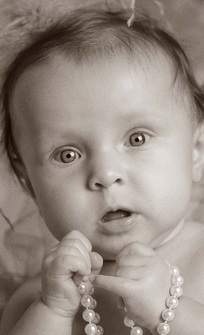
It is deeply satisfying to see the sun strike her hair, bringing out the brown, gold, and red highlights—my hair. I love that her eyes are cornflower blue while mine are dark green and her father’s are brown. I love how her skin is the color of sweetened, condensed milk. I love how she’s tall like her father. I love the soft curve of her belly. I even love her sweaty little feet. I love how she holds onto my hair when I’m carrying her, refusing to let go even when I try to put her down. I love how she shrieks at the dogs when they wander in her direction, waving at them to come closer as they're high-tailing out of the room. I love watching her play with her toys. I love how she squeals at the cat when he’s sleeping on the back of the couch and he lazily opens one eye before falling back to sleep. I love the tiny dimple above the right side of her mouth that only appears when she’s thinking about smiling.
I love how she screams at the top of her lungs, waving her arms and shaking with excitement, when she sees me at the end of the day. I love how she flirts with her brothers and how she reaches up to touch my mother's face. I love how her eyes light up when she sees her bathtub being filled with water and how she quivers with anticipation as her father sets her down inside. I love how she bounces up and down on her round little bottom when she hears music playing—even when no one is watching. I stare at her constantly, amazed at her beauty and brightness.
Having a daughter has been therapeutic for me. It has helped to heal my soul and made me happy in ways I never expected. And if the Good Lord calls me home before Brighid has time to get to know me, I’m certain that her brothers will tell her how honored and privileged I was to have met her. “Although they came through you, they belong not to you, for they are the sons and daughters of Life’s longing for itself. And theirs is the world of tomorrow; they need the confidence and courage to create the new world, a world full of love and peace” – Author unknown.
But there were a few gifts she gave us during those first critical weeks of her life. The moment that Brighid was born, I heard a sweet noise, similar to the sound a little lamb makes. This fragile vocalization, common in premature babies, only lasted about six weeks. Brighid was born without eyelashes. She had no cartilage in her ears; they lay close to her head, resembling tiny flaps of skin. I used to gently peel her ears away from her head and hold them on my fingertips as she slept in my arms. Between the two of us, my husband and I have raised four boys and, to me, she was absolute perfection.
It is deeply satisfying to see the sun strike her hair, bringing out the brown, gold, and red highlights—my hair. I love that her eyes are cornflower blue while mine are dark green and her father’s are brown. I love how her skin is the color of sweetened, condensed milk. I love how she’s tall like her father. I love the soft curve of her belly. I even love her sweaty little feet. I love how she holds onto my hair when I’m carrying her, refusing to let go even when I try to put her down. I love how she shrieks at the dogs when they wander in her direction, waving at them to come closer as they're high-tailing out of the room. I love watching her play with her toys. I love how she squeals at the cat when he’s sleeping on the back of the couch and he lazily opens one eye before falling back to sleep. I love the tiny dimple above the right side of her mouth that only appears when she’s thinking about smiling.
I love how she screams at the top of her lungs, waving her arms and shaking with excitement, when she sees me at the end of the day. I love how she flirts with her brothers and how she reaches up to touch my mother's face. I love how her eyes light up when she sees her bathtub being filled with water and how she quivers with anticipation as her father sets her down inside. I love how she bounces up and down on her round little bottom when she hears music playing—even when no one is watching. I stare at her constantly, amazed at her beauty and brightness.
Having a daughter has been therapeutic for me. It has helped to heal my soul and made me happy in ways I never expected. And if the Good Lord calls me home before Brighid has time to get to know me, I’m certain that her brothers will tell her how honored and privileged I was to have met her. “Although they came through you, they belong not to you, for they are the sons and daughters of Life’s longing for itself. And theirs is the world of tomorrow; they need the confidence and courage to create the new world, a world full of love and peace” – Author unknown.
Although They Came Through You, They Belong Not To You
There is an old Irish saying, “A son is a son till he takes him a wife, a daughter is a daughter all of her life.” My daughter Brighid was born on September 8, 2011. She was at least a month premature and spent an entire week in the neonatal intensive care unit. The gestational diabetes that wreaked havoc on my body during pregnancy had taken a heavy toll on her as well: she had a sizable hole in her enlarged heart, her blood sugars were dangerously low, and she was unable to breathe normally during feedings. She often turned blue in my arms. She even occasionally stopped breathing while sleeping in her incubator at night.
But there were a few gifts she gave us during those first critical weeks of her life. The moment that Brighid was born, I heard a sweet noise, similar to the sound a little lamb makes. This fragile vocalization, common in premature babies, only lasted about six weeks. Brighid was born without eyelashes. She had no cartilage in her ears; they lay close to her head, resembling tiny flaps of skin. I used to gently peel her ears away from her head and hold them on my fingertips as she slept in my arms. Between the two of us, my husband and I have raised four boys and, to me, she was absolute perfection.
It is deeply satisfying to see the sun strike her hair, bringing out the brown, gold, and red highlights—my hair. I love that her eyes are cornflower blue while mine are dark green and her father’s are brown. I love how her skin is the color of sweetened, condensed milk. I love how she’s tall like her father. I love the soft curve of her belly. I even love her sweaty little feet. I love how she holds onto my hair when I’m carrying her, refusing to let go even when I try to put her down. I love how she shrieks at the dogs when they wander in her direction, waving at them to come closer as they're high-tailing out of the room. I love watching her play with her toys. I love how she squeals at the cat when he’s sleeping on the back of the couch and he lazily opens one eye before falling back to sleep. I love the tiny dimple above the right side of her mouth that only appears when she’s thinking about smiling.
I love how she screams at the top of her lungs, waving her arms and shaking with excitement, when she sees me at the end of the day. I love how she flirts with her brothers and how she reaches up to touch my mother's face. I love how her eyes light up when she sees her bathtub being filled with water and how she quivers with anticipation as her father sets her down inside. I love how she bounces up and down on her round little bottom when she hears music playing—even when no one is watching. I stare at her constantly, amazed at her beauty and brightness.
Having a daughter has been therapeutic for me. It has helped to heal my soul and made me happy in ways I never expected. And if the Good Lord calls me home before Brighid has time to get to know me, I’m certain that her brothers will tell her how honored and privileged I was to have met her. “Although they came through you, they belong not to you, for they are the sons and daughters of Life’s longing for itself. And theirs is the world of tomorrow; they need the confidence and courage to create the new world, a world full of love and peace” – Author unknown.
But there were a few gifts she gave us during those first critical weeks of her life. The moment that Brighid was born, I heard a sweet noise, similar to the sound a little lamb makes. This fragile vocalization, common in premature babies, only lasted about six weeks. Brighid was born without eyelashes. She had no cartilage in her ears; they lay close to her head, resembling tiny flaps of skin. I used to gently peel her ears away from her head and hold them on my fingertips as she slept in my arms. Between the two of us, my husband and I have raised four boys and, to me, she was absolute perfection.
It is deeply satisfying to see the sun strike her hair, bringing out the brown, gold, and red highlights—my hair. I love that her eyes are cornflower blue while mine are dark green and her father’s are brown. I love how her skin is the color of sweetened, condensed milk. I love how she’s tall like her father. I love the soft curve of her belly. I even love her sweaty little feet. I love how she holds onto my hair when I’m carrying her, refusing to let go even when I try to put her down. I love how she shrieks at the dogs when they wander in her direction, waving at them to come closer as they're high-tailing out of the room. I love watching her play with her toys. I love how she squeals at the cat when he’s sleeping on the back of the couch and he lazily opens one eye before falling back to sleep. I love the tiny dimple above the right side of her mouth that only appears when she’s thinking about smiling.
I love how she screams at the top of her lungs, waving her arms and shaking with excitement, when she sees me at the end of the day. I love how she flirts with her brothers and how she reaches up to touch my mother's face. I love how her eyes light up when she sees her bathtub being filled with water and how she quivers with anticipation as her father sets her down inside. I love how she bounces up and down on her round little bottom when she hears music playing—even when no one is watching. I stare at her constantly, amazed at her beauty and brightness.
Having a daughter has been therapeutic for me. It has helped to heal my soul and made me happy in ways I never expected. And if the Good Lord calls me home before Brighid has time to get to know me, I’m certain that her brothers will tell her how honored and privileged I was to have met her. “Although they came through you, they belong not to you, for they are the sons and daughters of Life’s longing for itself. And theirs is the world of tomorrow; they need the confidence and courage to create the new world, a world full of love and peace” – Author unknown.
April 22, 2012
The Top 25 Things That Make You Uniquely You
A few of you might remember that, not too long ago, I was a divorced, single mother with two young sons. My former husband was absentis parentis so, quite literally, the whole world revolved around my boys—ages five and 18 months. For 15 years we struggled. I worked incredibly hard trying to build a successful career. I paid my way through college—not once, but twice. We lived for many years in a squalid apartment complex amongst drug dealers, convicted felons and, sadly, other single parents. I couldn’t afford to buy two new winter coats each year so my boys had to alternate, buying clothes several sizes too large to make them last. We never took a family vacation. We don’t have a single family portrait of the three of us. Family portraits were a luxury we couldn’t afford.
By the time I met my current husband, my sons were nearly grown, and the toughest years were behind us. But the years of hardship had left me feeling philosophically skeptical, infallible, mistrustful and arrogant. Then I met my husband. After a courtship that lasted several years, we took a giant leap of faith and got married in 2009. It
has not been an easy marriage. The past three years have been fraught with financial woes, unemployment, family drama, work stress, a new house, a new baby, two dogs and a cat, bad neighbors, and the associated stress that all those things bring.
When my husband and I were still dating, before we were even engaged, I felt strangely compelled to write about him. My husband fascinated me. I admired him. He was a scintillation of so many of the things I felt I’d lost with the passing of previous generations. I barely knew him, but I knew enough. This list is a reminder of the potential of our relationship and it is a celebration of his uniqueness. Little did I know my appreciation of him would help carry me through some very tough times. So, in celebration of my husband, I would like to share this list with readers, and challenge them to do the same.
The Top 25 Things That Make You Uniquely You
1. When you smile, it lights up a room.
2. You are a 6’4”, 275 pound Drama Queen. You writhe around in agony when you stub your toe on a piece of furniture. You’re an example of why God doesn’t let men have babies.
3. You are fiercely protective of your family. Especially of your “little” sisters, ages 41 and 46.
4. You adore your son Andrew. You beam with pride whenever you talk about him.
5. You are unapologetic about your political views.
6. You are a dreamer. You wistfully hope for things with no expectation that you will ever have them. You only hope.
7. You are old-fashioned in your beliefs.
8. You love the Marine Corps with all your heart. That is the only time I’ve ever seen you cry. Except when you stub your toe.
9. You are the quintessential dog-person. You’d prefer to be in the company of animals than most people.
10. You believe that you and John Wayne were actually “tight.”
11. You are an old soul. You remind me of everything that I’ve lost with the passing of earlier generations.
12. You know the titles of old movies on TV, ones from the “golden era” of film. I don’t know how you know such things.
13. You are a natural historian. You have a deeply abiding respect for the past.
14. You are intelligent. You have many divergent interests. You can discuss a multitude of ideas and topics.
15. You are child-like. You love wandering through antique shops looking for old toy trains.
16. You are a Boy Scout. You have a certain innocence about you that I cannot even fathom.
17. You have broad shoulders.
18. You are what I believe every man should be. What I hope my sons one day to become.
19. You admire the strength and courage of other men. Especially if they also happen to be Marines.
20. You love your mother. Even though you’re a pain in her rump.
21. You never let the truth get in the way of a good story.
22. You love an audience. I’ve seen you hold court in a room full of people you don’t even know. At a party you weren’t even invited to. You are a ham. A glazed ham, but a ham, nonetheless.
23. You love my cooking.
24. You get extremely cranky when you need a nap. Or when you need to be burped, or changed.
25. You make me feel safe when I’m with you. I know in my heart that you love me.
By the time I met my current husband, my sons were nearly grown, and the toughest years were behind us. But the years of hardship had left me feeling philosophically skeptical, infallible, mistrustful and arrogant. Then I met my husband. After a courtship that lasted several years, we took a giant leap of faith and got married in 2009. It
has not been an easy marriage. The past three years have been fraught with financial woes, unemployment, family drama, work stress, a new house, a new baby, two dogs and a cat, bad neighbors, and the associated stress that all those things bring.
When my husband and I were still dating, before we were even engaged, I felt strangely compelled to write about him. My husband fascinated me. I admired him. He was a scintillation of so many of the things I felt I’d lost with the passing of previous generations. I barely knew him, but I knew enough. This list is a reminder of the potential of our relationship and it is a celebration of his uniqueness. Little did I know my appreciation of him would help carry me through some very tough times. So, in celebration of my husband, I would like to share this list with readers, and challenge them to do the same.
The Top 25 Things That Make You Uniquely You
1. When you smile, it lights up a room.
2. You are a 6’4”, 275 pound Drama Queen. You writhe around in agony when you stub your toe on a piece of furniture. You’re an example of why God doesn’t let men have babies.
3. You are fiercely protective of your family. Especially of your “little” sisters, ages 41 and 46.
4. You adore your son Andrew. You beam with pride whenever you talk about him.
5. You are unapologetic about your political views.
6. You are a dreamer. You wistfully hope for things with no expectation that you will ever have them. You only hope.
7. You are old-fashioned in your beliefs.
8. You love the Marine Corps with all your heart. That is the only time I’ve ever seen you cry. Except when you stub your toe.
9. You are the quintessential dog-person. You’d prefer to be in the company of animals than most people.
10. You believe that you and John Wayne were actually “tight.”
11. You are an old soul. You remind me of everything that I’ve lost with the passing of earlier generations.
12. You know the titles of old movies on TV, ones from the “golden era” of film. I don’t know how you know such things.
13. You are a natural historian. You have a deeply abiding respect for the past.
14. You are intelligent. You have many divergent interests. You can discuss a multitude of ideas and topics.
15. You are child-like. You love wandering through antique shops looking for old toy trains.
16. You are a Boy Scout. You have a certain innocence about you that I cannot even fathom.
17. You have broad shoulders.
18. You are what I believe every man should be. What I hope my sons one day to become.
19. You admire the strength and courage of other men. Especially if they also happen to be Marines.
20. You love your mother. Even though you’re a pain in her rump.
21. You never let the truth get in the way of a good story.
22. You love an audience. I’ve seen you hold court in a room full of people you don’t even know. At a party you weren’t even invited to. You are a ham. A glazed ham, but a ham, nonetheless.
23. You love my cooking.
24. You get extremely cranky when you need a nap. Or when you need to be burped, or changed.
25. You make me feel safe when I’m with you. I know in my heart that you love me.
The Top 25 Things That Make You Uniquely You
A few of you might remember that, not too long ago, I was a divorced, single mother with two young sons. My former husband was absentis parentis so, quite literally, the whole world revolved around my boys—ages five and 18 months. For 15 years we struggled. I worked incredibly hard trying to build a successful career. I paid my way through college—not once, but twice. We lived for many years in a squalid apartment complex amongst drug dealers, convicted felons and, sadly, other single parents. I couldn’t afford to buy two new winter coats each year so my boys had to alternate, buying clothes several sizes too large to make them last. We never took a family vacation. We don’t have a single family portrait of the three of us. Family portraits were a luxury we couldn’t afford.
By the time I met my current husband, my sons were nearly grown, and the toughest years were behind us. But the years of hardship had left me feeling philosophically skeptical, infallible, mistrustful and arrogant. Then I met my husband. After a courtship that lasted several years, we took a giant leap of faith and got married in 2009. It
has not been an easy marriage. The past three years have been fraught with financial woes, unemployment, family drama, work stress, a new house, a new baby, two dogs and a cat, bad neighbors, and the associated stress that all those things bring.
When my husband and I were still dating, before we were even engaged, I felt strangely compelled to write about him. My husband fascinated me. I admired him. He was a scintillation of so many of the things I felt I’d lost with the passing of previous generations. I barely knew him, but I knew enough. This list is a reminder of the potential of our relationship and it is a celebration of his uniqueness. Little did I know my appreciation of him would help carry me through some very tough times. So, in celebration of my husband, I would like to share this list with readers, and challenge them to do the same.
The Top 25 Things That Make You Uniquely You
1. When you smile, it lights up a room.
2. You are a 6’4”, 275 pound Drama Queen. You writhe around in agony when you stub your toe on a piece of furniture. You’re an example of why God doesn’t let men have babies.
3. You are fiercely protective of your family. Especially of your “little” sisters, ages 41 and 46.
4. You adore your son Andrew. You beam with pride whenever you talk about him.
5. You are unapologetic about your political views.
6. You are a dreamer. You wistfully hope for things with no expectation that you will ever have them. You only hope.
7. You are old-fashioned in your beliefs.
8. You love the Marine Corps with all your heart. That is the only time I’ve ever seen you cry. Except when you stub your toe.
9. You are the quintessential dog-person. You’d prefer to be in the company of animals than most people.
10. You believe that you and John Wayne were actually “tight.”
11. You are an old soul. You remind me of everything that I’ve lost with the passing of earlier generations.
12. You know the titles of old movies on TV, ones from the “golden era” of film. I don’t know how you know such things.
13. You are a natural historian. You have a deeply abiding respect for the past.
14. You are intelligent. You have many divergent interests. You can discuss a multitude of ideas and topics.
15. You are child-like. You love wandering through antique shops looking for old toy trains.
16. You are a Boy Scout. You have a certain innocence about you that I cannot even fathom.
17. You have broad shoulders.
18. You are what I believe every man should be. What I hope my sons one day to become.
19. You admire the strength and courage of other men. Especially if they also happen to be Marines.
20. You love your mother. Even though you’re a pain in her rump.
21. You never let the truth get in the way of a good story.
22. You love an audience. I’ve seen you hold court in a room full of people you don’t even know. At a party you weren’t even invited to. You are a ham. A glazed ham, but a ham, nonetheless.
23. You love my cooking.
24. You get extremely cranky when you need a nap. Or when you need to be burped, or changed.
25. You make me feel safe when I’m with you. I know in my heart that you love me.
By the time I met my current husband, my sons were nearly grown, and the toughest years were behind us. But the years of hardship had left me feeling philosophically skeptical, infallible, mistrustful and arrogant. Then I met my husband. After a courtship that lasted several years, we took a giant leap of faith and got married in 2009. It
has not been an easy marriage. The past three years have been fraught with financial woes, unemployment, family drama, work stress, a new house, a new baby, two dogs and a cat, bad neighbors, and the associated stress that all those things bring.
When my husband and I were still dating, before we were even engaged, I felt strangely compelled to write about him. My husband fascinated me. I admired him. He was a scintillation of so many of the things I felt I’d lost with the passing of previous generations. I barely knew him, but I knew enough. This list is a reminder of the potential of our relationship and it is a celebration of his uniqueness. Little did I know my appreciation of him would help carry me through some very tough times. So, in celebration of my husband, I would like to share this list with readers, and challenge them to do the same.
The Top 25 Things That Make You Uniquely You
1. When you smile, it lights up a room.
2. You are a 6’4”, 275 pound Drama Queen. You writhe around in agony when you stub your toe on a piece of furniture. You’re an example of why God doesn’t let men have babies.
3. You are fiercely protective of your family. Especially of your “little” sisters, ages 41 and 46.
4. You adore your son Andrew. You beam with pride whenever you talk about him.
5. You are unapologetic about your political views.
6. You are a dreamer. You wistfully hope for things with no expectation that you will ever have them. You only hope.
7. You are old-fashioned in your beliefs.
8. You love the Marine Corps with all your heart. That is the only time I’ve ever seen you cry. Except when you stub your toe.
9. You are the quintessential dog-person. You’d prefer to be in the company of animals than most people.
10. You believe that you and John Wayne were actually “tight.”
11. You are an old soul. You remind me of everything that I’ve lost with the passing of earlier generations.
12. You know the titles of old movies on TV, ones from the “golden era” of film. I don’t know how you know such things.
13. You are a natural historian. You have a deeply abiding respect for the past.
14. You are intelligent. You have many divergent interests. You can discuss a multitude of ideas and topics.
15. You are child-like. You love wandering through antique shops looking for old toy trains.
16. You are a Boy Scout. You have a certain innocence about you that I cannot even fathom.
17. You have broad shoulders.
18. You are what I believe every man should be. What I hope my sons one day to become.
19. You admire the strength and courage of other men. Especially if they also happen to be Marines.
20. You love your mother. Even though you’re a pain in her rump.
21. You never let the truth get in the way of a good story.
22. You love an audience. I’ve seen you hold court in a room full of people you don’t even know. At a party you weren’t even invited to. You are a ham. A glazed ham, but a ham, nonetheless.
23. You love my cooking.
24. You get extremely cranky when you need a nap. Or when you need to be burped, or changed.
25. You make me feel safe when I’m with you. I know in my heart that you love me.
April 19, 2012
Code Of e-Conduct
My next two blog posts will be a departure from the norm for me as both will encompass some very personal feelings about two very important people to me—my husband and my daughter. I am a private person by nature; therefore, I also try to be sensitive of the privacy of others, especially my own children. If I offend someone who knows me well, I expect them to reach out to me in private to express their feelings. A public forum is never the place to air your grievances. Unbridled rage and sarcasm only make readers wary. And do not confuse public interest with empathy; at the most, you are mildly entertaining, like scanning a National Enquirer at the grocery store checkout. Nothing more. Those who feed into your e-tantrums and daily rants are not your friends—trust me. They will not be there when the crowd grows bored with you and moves on to the next titillating topic.
I revile bloggers who post scathing rebukes electronically as a way to exact punishment for perceived wrongs. I shake my head in disgust when I read unflattering posts about easily identifiable family members or friends written in what appears to be some form of cheap entertainment. I wonder how these otherwise intelligent people fail to realize that a blog is not a child’s diary that can be kept under lock and key. A blog is a living, breathing document. A scathing post can have deleterious and long-lasting effects. If your relationships are strained to the breaking point or, worse, you can count lost relationships among the collateral damage, you are probably one of the offenders of whom I speak. I admit that this self-ascribed “Code of e-Conduct” is the hope and dream of a fatally flawed individual and, as such, I am sure to fail miserably now and again. No matter, it is enough to strive for excellence; no one will crucify you if you fall short on occasion.
Sadly, my hyper-sensitivity to privacy issues has also worked against me, preventing me from sharing my thoughts and feelings about the people I care about the most. I intend to remedy this situation by writing opuses for two people of whom I’ve never written about publicly—pieces that, in the event of my untimely departure, I would be proud for them to read and share with others. I am not an emotional person by nature; however, I am a human being who, like you, loves her family with all her heart. It seems shameful not to try and capture my feelings for the ones I love in words, if for no other reason than simply to raise them up. To my husband and daughter, thank you for trusting me to write about you. I promise not to embarrass you; well, not intentionally, anyway.
I revile bloggers who post scathing rebukes electronically as a way to exact punishment for perceived wrongs. I shake my head in disgust when I read unflattering posts about easily identifiable family members or friends written in what appears to be some form of cheap entertainment. I wonder how these otherwise intelligent people fail to realize that a blog is not a child’s diary that can be kept under lock and key. A blog is a living, breathing document. A scathing post can have deleterious and long-lasting effects. If your relationships are strained to the breaking point or, worse, you can count lost relationships among the collateral damage, you are probably one of the offenders of whom I speak. I admit that this self-ascribed “Code of e-Conduct” is the hope and dream of a fatally flawed individual and, as such, I am sure to fail miserably now and again. No matter, it is enough to strive for excellence; no one will crucify you if you fall short on occasion.
Sadly, my hyper-sensitivity to privacy issues has also worked against me, preventing me from sharing my thoughts and feelings about the people I care about the most. I intend to remedy this situation by writing opuses for two people of whom I’ve never written about publicly—pieces that, in the event of my untimely departure, I would be proud for them to read and share with others. I am not an emotional person by nature; however, I am a human being who, like you, loves her family with all her heart. It seems shameful not to try and capture my feelings for the ones I love in words, if for no other reason than simply to raise them up. To my husband and daughter, thank you for trusting me to write about you. I promise not to embarrass you; well, not intentionally, anyway.