
Jean Gill's Blog
June 3, 2021
Voice by Jannie
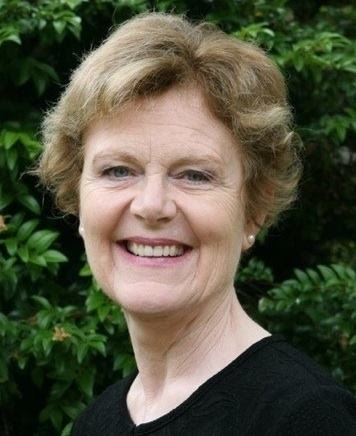
Jean Gill, the author of Arrows Tipped With Honey, book 2 in the Natural Forces series, which I recorded recently, has asked me to tell you a bit about myself. You can watch this interview on video if you prefer. I did add a little more in the video!
VIDEO LINK
Jannie: I’m Jannie Meisberger, a British voice actor and audiobook narrator living happily in the beautiful Pacific Northwest of America.
Jean: Can you give me a brief picture of your personal journey as a Voice Actor (Kind of work you do? When started?
Jannie: My voice acting journey began 10 years ago, with poetry recordings for LibriVox, a group of worldwide volunteers who record public domain texts, before I moved on to commercial voice work. I started recording audiobooks in 2014. In addition to recording audiobooks, I record on-hold messages and company videos as well as live performance narration of classics like Peter and the Wolf for children’s concerts.
Jean: You usually record Regency romance and fantasy novels. Why did you choose these very different genres?
The majority of the 45 audiobooks I’ve recorded are Regency romance novels.Jannie: Going to boarding school in Bath, the home of stately Georgian and Regency architecture and culture, was a huge influence not only on the books I read in school, but also much later on the choice of novels I chose to record, which is why the majority of the 45 audiobooks I’ve recorded are Regency romance novels. During a recent visit to Bath I visited the Jane Austen Museum and here’s a photo of me with Mr. Darcy.

Jean: That's an impressive number of audiobooks and an even more impressive claim to fame. I think many of us would like to spend time with Mr Darcy!
Jannie: Unfortunately I’m not properly attired for the occasion but Mr. Darcy didn’t seem to mind! While at school, I learned to play the piano, love drama and absorb several languages, including Latin, French and German, all great resources to draw upon when I’m researching character voices for audiobooks.
My journey into the world of fantasy novels began when I was offered a series which included dwarves, pixies, goblins, even a German baroness and many other characters. The series reminded me of the fairy tales I read to my children and how much fun I had voicing all the characters for them. On the wall behind me I have a Family Circus picture -‘I hope you practiced. This book has a lot of funny voices for you to do.’
Jean: How do you prepare for recording an audiobook?
We are a team. The author’s words are the stars, and I hope my voice allows listeners to be enthralled by the story.Jannie: I always keep in mind that the author has spent many months, even years researching and crafting each book and it takes a leap of faith to trust a narrator to bring just the right voice to the story. We are a team. The author’s words are the stars, and I hope my voice allows listeners to be enthralled by the story.
As far as the recording process goes, I usually spend 4-8 hours per finished hour of the audiobook. This involves reading the manuscript, listing all the characters and voices for each, as well as making short recordings of each voice for reference, and checking with the author and online resources for pronunciations of names and places before recording and producing the final project.
Jean: I don't think authors realise how much time the preparation takes!
Jean: For the Natural Forces series you had to create voices for bees, evil mages and shape-shifters. Which character/s did you find most challenging and how did you come up with the voice/s?
Jannie: Qingzhao’s voice was the most challenging. I first tried out a couple of voices, which didn’t work. I then researched a huge number of photos of elderly Asian women online, before I found a photo of an elderly Mongolian woman that just drew me into Qingzhao’s personality as described by Jean. Finally I took a long walk, with the photo on my IPhone and talked to myself until I found Qingzhao’s voice.
Jean: For what reasons do you turn books down?
Jannie: When it’s apparent the author does little or no marketing of his/her book, so probably won’t do much for the audiobook version; the cover art isn’t professional; there are grammatical errors in the excerpt provided. And, I have to be excited about the storyline!
Jean: Do you network with other Voice Actors? Are there any sites you’d recommend?
Jannie: I definitely network with other Voice Actors and coaches. The indie (ACX and Others) Audiobook Narrators and Producers Face Book page has a wealth of information: https://www.facebook.com/groups/ACXNa...
Karen Commins’ Narrators Road Map is also a treasure trove of helpful advice: https://www.narratorsroadmap.com/
Jean: How can an author help the Voice Actor/ Producer of his/her book?
Jannie: Having a list of characters with their characteristics is so important, as is a pronunciation guide for names and places, especially if the book is a fantasy. Jean also recorded the characters’ names for me, which was a tremendous help.
Jean: Are there ways in which an author can hinder or even spoil the Voice Actor’s recording of a book?
Jannie: In a word - Micromanagement! Wanting input about the recording from friends or family before deciding whether to approve or request changes.
Jean: Tell me about your working day. Do you work to a routine? Do you use a recording studio? Endless cups of coffee or tea?
Jannie: My husband built me a wonderful recording booth and I usually record for an hour or two early in the morning then go for a walk and have lunch before editing the chapters I’ve recorded. I often drink sips of Throat Coat tea with a dollop of honey as well as water while I’m recording.
Jean: Who or what has been the greatest help to you as a Voice Actor?
Jannie: Peer support and encouragement from my fellow Voice Actors as well as excellent instruction from a number of wonderful coaches, both on the creative side of voice acting as well as the technological side has been incredibly helpful.
Jean: What has been the hardest thing for you to overcome in becoming a Voice Actor?
Jannie: The technological side of voice acting. That’s why it took me so long to tackle audiobooks. I’m getting more adept technologically but need to learn more.
Jean: If you could pick one character in one of your audiobooks, to spend some time with, who would it be and why?
Jannie: It would have to be Qingzhao, the ancient beekeeper in Arrows Tipped with Honey. I can imagine enjoying tea and biscuits in her cottage while she sits in her rocker and shares her life story with me. Not only would I learn so much about her life, her children and grandchildren and her tribe as they moved between the natural and manmade worlds, I’d also follow her to the beehives and watch her take care of them. I didn’t know very much about bee-keeping until I recorded Jean’s books so this has been an added bonus.
Jean: Tell me about your latest audiobook and why we should all buy it?
Jannie: Arrows Tipped With Honey is the second in the Natural Forces Series and has intriguing twists and turns which will keep listeners fully engaged. I was always excited to record the next chapter, to find out what would happen next, and I hope listeners will be just as captivated as they listen to the audiobook.
Jean: What are you working on next? Do you have an ambition?
Jannie: I’m about to begin recording The World Beyond the Walls, the final book in Jean Gill’s Natural Forces Series, and I am thrilled to journey again with Mielitta, her bees and all the wonderful characters I’ve met along the way. My ambition is to continue recording many more fantasy and Regency period novels for my authors.
Thank you, Jean, for giving me this opportunity to talk about audiobooks and also for entrusting your wonderful series to my voice. Thanks also to everyone who reads this interview or watches the video.
Jean: Jannie, I've learned a lot from your interview and love working with you. Many thanks! And to all my readers, you have to listen to Jannie's voice creation for her favourite character, the aged beekeeper Qingzhao. I think it's brilliant!
QINGZHAO
Where can we find you?
www.voicebyjannie.com where I’ve included links to my audiobooks.
Contact Website: https://www.voicebyjannie.com
Facebook https://www.facebook.com/Jannie-Meisb...
LinkedIn: https://www.linkedin.com/in/jannie-me...
The Indie (ACX and Others) Audiobook Narrators and Producers FB page: https://www.facebook.com/groups/ACXNa...
Karen Commins’ Narrators Road Map: https://www.narratorsroadmap.com


July 2, 2019
Test your bee knowledge against medieval beekeepers

The extracts are from Geoponika: Agricultural Pursuits a collection of books compiled in 10th Century Byzantium
1. Let the intervals between all the trees be filled with roses, and lilies, and violets, and the crocus, which are very pleasant to the sight and to the smell; and they are very useful, and profitable, and they are of advantage to the bees.
TRUE An easy one! Planting flowers does attract bees although there are specific links between types of flower and type of pollinator so modern advice is to plant wildflowers. Honeybees love dandelions, clover and, of course, bee borage. If you look at the labels on types of honey, you'll see honeybees' favourite forage foods!
2. Now, as bees produced from an ox come to life on the one-and-twentieth day, so are swarms produced in the same number of days.
FALSE The medieval notion that bees were born from worms in ox or calf corpses was reported as fact by such luminaries as Augustine (5thC CE) Isidore of Seville (7thC CE). FAKE news, people! I bet confusion between maggots and bee larvae led to the story. However, worker bees DO take 21 days to develop from egg to hatching, so this does show good beekeeping knowledge! (24 days for a drone (male bee) and 16 days for a queen).

3. The kings indeed are found in the upper parts of the combs: and it is proper to leave one in every hive, and to destroy the rest; for the bees being divided between them, raise a sedition, and they desist from their work.
FALSE There is no bee king. The medieval assumption was that the beehive was a mirror of the most common human feudal system with a male leader. We now know this is a (female) queen bee and that, in a healthy hive, she is the only egg-layer. Modern thought is that she is no leader - the bees' system of decision-making is complex and democratic. BUT beekeepers will tell you that the queen sets the tone for the hive. If you replace a queen, a hive can turn from being aggressive to being friendly. There is still much we don't know!
HALF TRUE The queen cells for a replacement queen are usually half-way up the comb whereas queen cells for swarm queens hang from the bottom of frames. Bees will indeed be 'distracted' during a change of queens and the battles between rivals so some beekeepers do eliminate all the queen cells bar one. This is risky as if the sole queen dies (e.g. during her mating flight) there are no alternatives.
The best indeed of the kings are those of a yellow colour, of a size larger than that of a bee by the half; the second are those that are variegated, rather of a dark colour, of double size.
I HAVE NO IDEA but it's interesting that in the 10thC different types of honeybee queen and their virtues were observed and discussed. Just by choosing big yellow queens in preference to stripey dark ones, humans were breeding honeybees selectively long before theories of evolution were formulated. There is still huge debate over which strains of honeybees are best. My last purchase included a Frere Adam queen, trademarked for the famous beekeeper monk who worked at Buckfast Abbey from 2019 and who created this cross-breed of Italian bees with African bees.

This animal alone seeks a leader, that takes care of the whole swarm; it therefore always honours the king, and it accompanies him with alacrity, wherever he takes his station, and it supports him when he is fatigued, and it carries and protects him when he cannot fly.
TRUE The bee colony does congregate around the queen and 'pay her respect' with a special fluttering gesture of wings. A bee swarm will cluster around the queen. Bees do carry and protect their queen if she is weakened. I saw this on my beekeeping course when a queen reacted badly to being marked. The beemaster put a coloured spot on the queen through the mesh in the tube he'd placed her in but when he released her., she lay quite still on the landing board. A group of bees rushed out, expressed anxiety and carried her into the hive. The story ended well and she recovered, thanks to her courtiers.
Modern thinking does not suggest that the queen takes care of the swarm but her existence and behaviour, plus her scent, sets the tone for the hive. A queenless hive is depressed, suffers disease and decline. The workers stop gathering pollen, become apathetic.
4. If it be necessary for a purchaser, or for some other reason, that they (the hives) should be moved, let the person tie the hives, in the night, carefully in leather (skins), and let him take them away before day ; for in this private manner he will neither disturb the combs, nor harass the bees.
TRUE Night-time is best for moving bees and I will never forget collecting a hive full of bees from a Provençal hillside in the darkness, my husband and I wearing white suits (as many of our friends think appropriate). We used belts strapped around the hive and foam in the entrance to stop angry bees escaping.

5. You will cure them of dimness of sight with the smoke of the leaves of origanum (origano).
FALSE Bee eye-sight is amazing. They have two sets of eyes and see a range of ultra-violets that flowers use to attract their pollinators. Through bee eyes, a flower has a scented target on it shouting 'I'm here!' I am prepared to state that a blast of origano smoke will not improve a bee's eyesight but I must confess I have no evidence to back that up. I DO wonder how a medieval beekeeper figured out that the bees' eyesight was dim (note the plural in the instruction - it seems ALL the bees are going short-sighted). I can think of many possible misinterpretations, for example
- a bee uses its waggle-dance to follow its internal GPS to the exact spot where home entrance is - or should be. If you transfer bees from a hive with a low entrance to one with a high entrance, they will at first head for the place the old entrance was.
So you give a blast of oregano smoke and hey presto, within a few days the bees' eyesight must have improved because they're using the correct entrance (as they do anyway after a few days to get used to it).
6. You will also destroy creatures that lie in wait for them and they are wasps, the titmouse (tit family), the bee-eater, swallows, crocodiles, and lizards; and drive away and destroy all things that are pernicious to the bee.
TRUE All these creatures will eat bees.
 This artist seems to have added an extra pair of legs but I love the way the bees look like flowers.7. But it consummately hates the slothful; and they therefore take the slothful and kill them.
FALSE Scientists have tracked individual bees and found that some foraging worker bees are very 'lazy', do little foraging and fall asleep in flowers often :) but no chastisement has been observed. However, drones (male bees) have become synonymous with 'lazy creatures' in human vocabulary prior to drone machines. It is true that drones are expelled from the hive (killed) in autumn so that could be interpreted as hating and killing slothful bees.
Are drones 'slothful'? The biological function of a drone is to fertilise a queen (any queen) during her maiden flight. If one succeeds, he dies. Those who don't succeed are the boys of summer, waiting for queens or in the hive so no, they don't do housework, child care, feeding, gathering or honey-making or defence (they have no stings). If necessary, they do help cool the hive by vibrating their wings. Our local nougat museum has a human-size beehive mock-up and the model drones are playing cards and drinking beer so I think the public image is obvious :)
BUT without drones, the colony dies. One problem with that parasite we beekeepers hate, the varroa mite, is that it develops on the drone larvae. The resulting weakness in the colonoy makes it clear how vital drones are.
 Note the traditional enmity between bears and bees
8. Its mechanical skill indeed seems to make a very near approach to a rational understanding, for it makes hexagonal cells.
TRUE and the mathematics of nature is a wonder.
9. Proper harmony is also appreciated by this animal; for which reason, bee-masters bring them together by means of cymbals, or by clapping heir hands with just adaptation.
I HAVE NO IDEA but my bees do not show any signs of obedience. I am happy that they don't attack me when I sing or hum to them and we'll leave it there.
10. They indeed become unmanageable at the approach of human creatures, and they fall upon them, and they are more severe on such as smell of wine, and of perfume; and they fall upon women, especially upon such as are of an amorous complexion.
 I love this portrayal of bees, showing them as bird-like. Medieval thinking considered bees to be small birds, not insects. I think the artist was influenced by this belief!
SOMETIMES TRUE Bees are sometimes very aggressive and sometimes very easy to work with. Beekeepers will give you many reasons for this: storm coming, high winds, rain, dark colours, woollen clothes. Scent is very important to honeybees and they will kill their queen or each other if the smell is wrong. They do react badly to some perfumes and the venom in their stings gives off the scent of bananas, rousing other bees to attack. That's why the bees attack Mielitta in 'Queen of the Warrior Bees; she's wearing the banana scent delivered anonymously as her 18th year-cycle gift.
As to whether they fall upon women... FALSE! There have been too many women beekeepers for that to be true, including the Irish Patron saint of Bees, Saint Gobnait.
I've suffered one attack from my bees and maybe it was because of my amorous complexion but I think it more like to have been because: they were in a bad mood with a storm in the air; I banged the hive trying to get in a frame that didn't fit properly; and I was wearing a snood over my hair that must have smelled wrong (That's the only way I can explain the attack focusing completely on my head and hair, not my face at all.)
11. The bee is the most sagacious and the most skilful of all animals, and it approaches man in point of understanding; and its work is truly divine, and of the greatest utility to the human race
YOU DECIDE! The more we know about bees, the more we realise that the hive mind is a super-organism of great complexity and they are now considered essential to the human race not just useful.
If bees interest you, then you'll enjoy shapeshifting into one, entering a beehive and getting a bee's eye-view of the world through my eco-fantasy novel.
Check out Queen of the Warrior Bees:one misfit girl and 50,000 bees Together they must change the world.
 Buy the book
GOODREADS REVIEWS
5* 'captivating and intriguing'
Buy the book
GOODREADS REVIEWS
5* 'captivating and intriguing'5* 'I loved the bees and the parts about the hive - as a bee keeper in training I appreciate the author’s factual bee knowledge and the imaginative way this was translated into fantasy - just wonderful.'
5* 'I was a little dubious going in to the book about the whole bee element. I had yet to read a book where this kind of story line works. But Jean Gill again does it with such ease that I not only believed it, I enjoyed it! The descriptions and the writing style were so potent I could almost believe I was in the book right alongside Mielitta. This is a book that I would highly recommend. I will now be going straight out to try anything else by this author!!'
53 goodreads reviews - average 4.17* out of 5 - see them all
Geoponika: Agricultural Pursuits. Compiled in 10th Century ByzantiumTranslated from the Greek by Owen T. (Thomas) 1749-1812
PHOTOS
1. Douce 88 fol 111v B
2. Bibliothèque Municipale de Reims, ms. 993, Folio 151v
3. The Luttrell Psalter
4. Medieval Bees Hortus Noster
5. Barthélémy L'Anglais, op.cit, 1445-1450, Artificiosae Apes, France, Le Mans XVe s. BNF, FR 136, fol. 16
6. Illuminated Manuscript BNF
7. Koninklijke Bibliotheek, KB, KA 16, Folio 128v
More medieval bee photos can be found on the American Garden History Blog
April 2, 2019
Amazing Bee-haviour
You would not bee-lieve some of this bee-haviour but it's true!
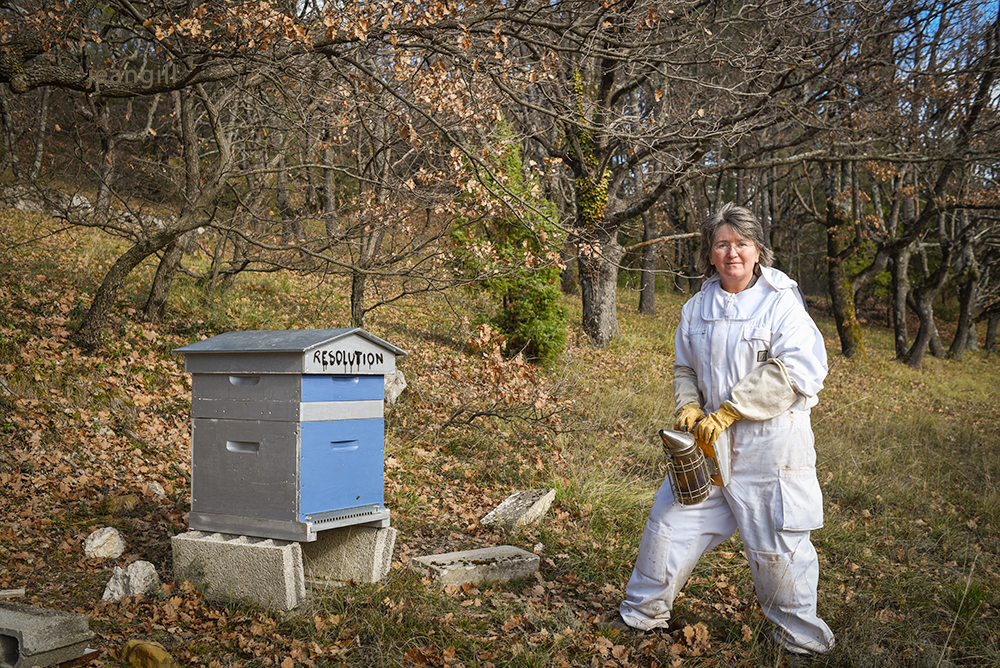 To become a registered beekeeper here in Provence, I took a practical course during 2014 and since then I've looked after my hives, Endeavour, Diligence and Resolution (named by my husband). Nothing tastes as good as honey produced by your own bees from your own 'terroir' (a French word that means more than 'soil'. It's not easy these days to keep honeybees alive but that makes beekeeping even more important, even on my small scale.
I never thought I'd be brave enough to become a beekeeper but here I am, fascinated by the habits of
creatures that have been farmed by humans since prehistory, for almost 9,000 years according to archaeological evidence. And yet there is still so much we don't know. Which is good for a novelist!
 When I realised that my heroine shape-shifted into a bee, I knew I was going to enjoy the research! Here are some amazing bee-facts. Not all of them found their way into Queen of the Warrior Bees but Mielitta's experiences as a bee draw on my own experience and research. I hope you enjoy finding out about bees as much as I have.
 All worker bees are female. They map out their territory and communicate this by dances, which give exact directions to e.g. food or home, by distance and compass points.The queen is female and on her mating flight she is impregnated by approx 10-20 male bees (drones) with the thousands of sperm needed to lay eggs all her life (6 years if she's lucky). After mating, she doesn't fly again unless she takes a third of the colony and swarms, leaving the old hive to a new queen (one of her daughters).A queenless hive is doomed but the queen does not make decisions.
 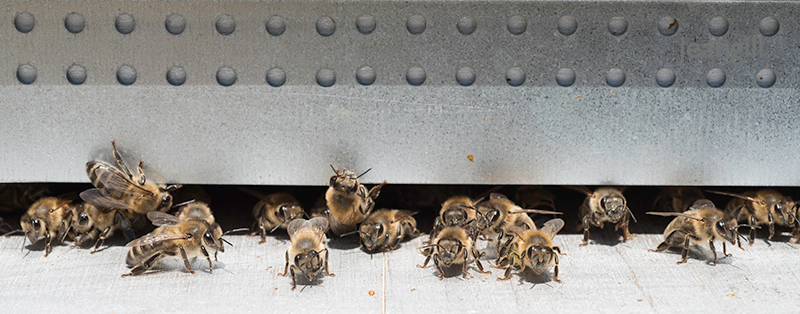 Drones successful in mating leave part of their body in the queen and die.In my region, honeybees prepare for winter by throwing out all the drones. They are left outside to die and in the spring, the queen lays eggs which will become the new season's drones.Bees can't see red and they can see ultra-violet so flowers look like they have targets and landing-paths, in a purplish world.When worker bees want to raise a new queen, they feed royal jelly to a worker baby so she grows up as a queen. A newly-hatched queen will try to kill any other queens in her hive and will sting unhatched rivals to death in their cells. The murder victims 'sing', aware of death approaching.
Here's a little taster of life in a beehive, from the viewpoint of Mielitta a girl who finds herself in a queen bee's body.

You should not feed yourself. It is a criticism of your courtiers.
Their feelers gesturing anxiously, her courtiers brought her more royal jelly, pollen and nectar. At this rate, she’d be too big to move through the bee spaces! However, a queen had her duties to perform so Mielitta opened her mouth and added another stock of food to the delicacies in her stomach. Honey distilled the flavours of nectar and she’d only tasted one mix of flowers so far. This was the life.Not flowers. That is forest honey made from sugared tree sap, honeydew. Aphids chew the sap, take what they need, give the rest back to the tree. And our people harvest the honeydew. You will taste many honeys in your lifetime.Satiated and buoyed up by the love of her people, Mielitta was ready to find out what the hive’s problems were, or rather, had been. The coming of the Queen would no doubt solve everything. She waved a foreleg in regal benediction.‘Why was there no queen?’ she demanded.There was a swarm. The old queen took a third of the colony, sought a new home. As was proper, the new queen hatched, took her mating flight and then disaster struck. A crow killed her.‘But there are new queens growing. Couldn’t the hive manage on its own for a bit?It was weak, struggling. The old queen did not lay well. Not enough brood, no new babies for too long. We need brood or the new queen will have no people. You must be the Queen.‘Well, if I kill the queens in their cells – and I have no idea how to do that – then there won’t be a new queen, will there. And I have to go back.’ Mielitta couldn’t remember why but she knew she was needed back at the Citadel, just as much as she was needed here. She couldn’t stay here too long. ‘Let’s get this over with, then. What do I have to do?’
 Pre-order or buy the book from the store of your choiceI hope you enjoyed this blog, creating a buzz for my new novel. You can find out more about Queen of the Warrior Bees here and until 7th June you can get the special pre-order price of $2.99 / £1.99 or local equivalents at amazon, kobo, apple and B&N.
January 10, 2019
A Greater World :Clare Flynn
 Clare's author page on amazonSince I first met historical novelist Clare Flynn at a conference in Oxford in 2016 and felt an instant cameraderie, her books have become bestsellers. Her fans can't wait for their next voyage in the early 20th century in the company of women who suffer and survive and I have great news for them! But what about the woman behind the books? Clare's life has been as amazing as any of her books and each year I discover more of her secret life. One constant is Clare's love of travel and awareness that she is part of a greater world so this story of love, loss and a voyage into the unknown seems an appropriate focus for the interview!
Welcome to my blog, Clare!
 Find out more about the book from amazon.com
Tell me a bit about yourself - where do you live and what do you do when you’re not writing?
Thanks for inviting me, Jean. Home is Eastbourne on the beautiful Sussex coast, surrounded by the South Downs and with views of the grey-green chalky sea from my window. I moved here three years ago after twenty years in London, but lived here in my teens so I knew what I was I was letting myself in for. I love it!
I spent my pre-writing career firstly in Marketing where I worked for big global companies like Proctor & Gamble, then latterly working for myself as a strategy consultant. My work took me all over the world with a wide range of fabulous clients from brewers to broadcasters.
Ah, The Chalky Sea is another title I recognise and now I know the inspiration!
I know you lived in Paris for some time. Where else have you lived and what drew you there? Do you think any of these places influenced you and your writing?
I lived in Paris on the Boulevard St Germain in the late 80s for two years. It sounds romantic but not when you have to drive round for hours trying to find a parking spot after getting home late from work. It was my first experience of living abroad and it wasn’t a happy one – pity as I’d lap it up now– especially my gorgeous little apartment in the heart of the Latin Quarter.
I had a couple of years in Brussels and three in Milan. I adore Italy and speak Italian. The Alien Corn has some flashbacks to the war there. More recently my latest book, which will be published by Canelo in June 2019, has an Italian character and I very much enjoyed writing him.
My other exotic temporary home was Sydney where I worked for six months in 2006/7. I’d been to Australia a few times before and had already started work on my first novel, A Greater World, set in the Blue Mountains.
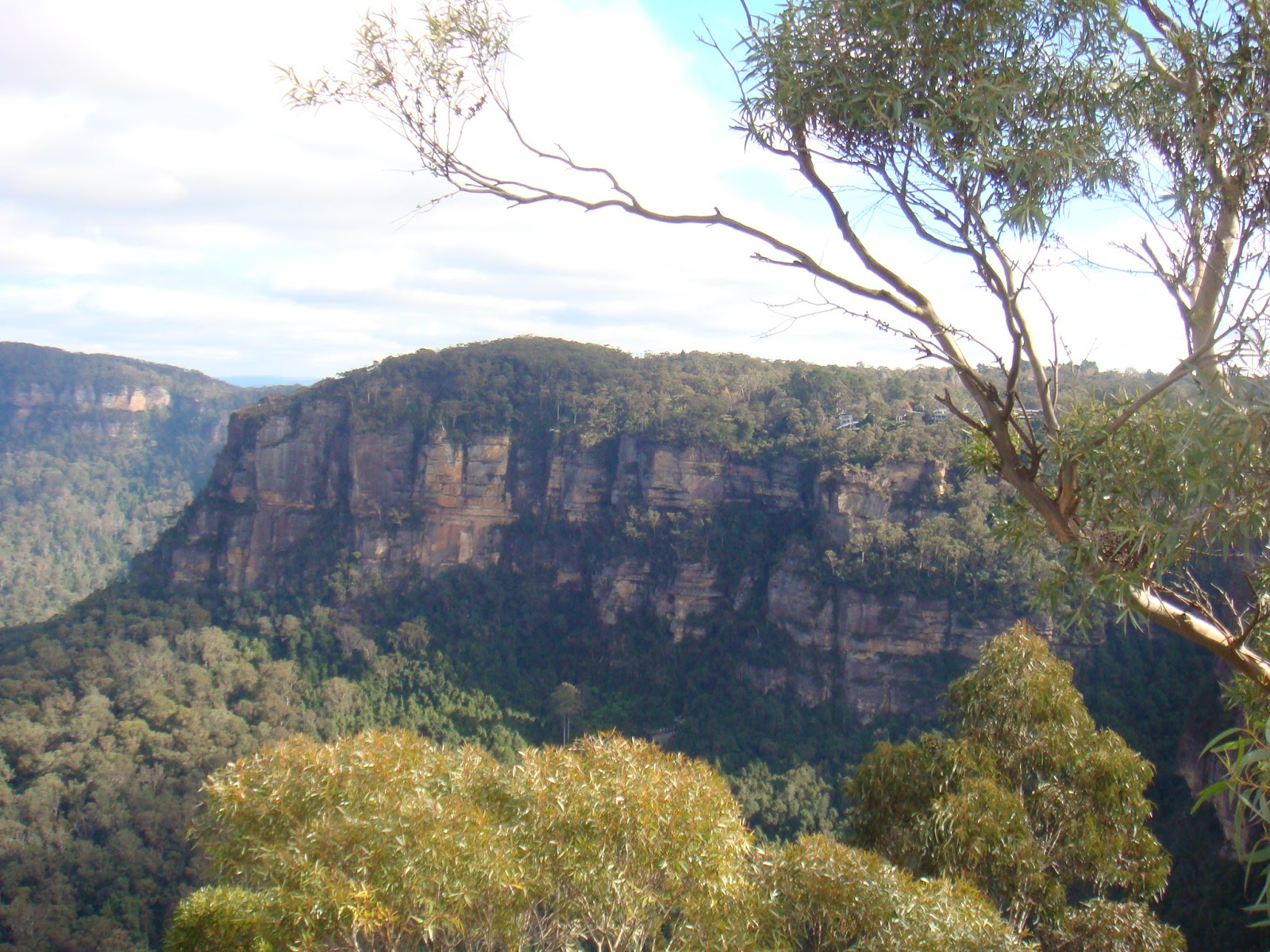 The Blue MountainsWhat made you choose the different settings in your books (including Canada and India)?
Location has a huge influence on my writing. It’s often the trigger point for a story. My second novel, Kurinji Flowers, is set in South India in a fictional hill town, based on Munnar. Unable to sleep in my hotel room one night on holiday there, I lay thinking about who else might have stayed in that room back in the 1930s. By the time dawn was breaking I had mapped out the background to the book and some of the key characters. I found the whole area magical – the endless rolling tea gardens, like a huge piece of corduroy velvet across the landscape, the bright vivid colours of the statues and temples, the flowers, the wildlife, the birdsong, and the visible colonial heritage. My first visit there was to paint so I had to make my character, Ginny, a painter too – albeit a more successful one than I could ever be!
I love your descriptions of place. You have a painter's eye!
What drew you to the early 20th century as a period and how do you do your research?
I read an interview with William Boyd the other day in which he said that he didn’t see the twentieth century as history because his grandmother had lived in the nineteenth century and his great uncle fought in the first war, so it doesn’t feel so far away or alien. He said, “I feel that’s my natural range – say three generations back from my own life and time – it’s not strange.” That exactly reflects my own feelings. I can’t see me writing books set in Tudor England or eighteenth century France.
I do a variety of things as research. Ideally, I visit the location – but my recent trilogy, The Canadians, is set in eastern Canada and I couldn’t get there. Instead I used Google Earth, YouTube, books, websites, maps, films, almanacs, online weather statistics and – best of all – my own private Facebook group consisting of three retired Canadian librarians who answered all my questions, no matter how obscure, and went above and beyond the call of duty to help me.
We are so lucky these days to be able to connect through social media with experts - and, like you, I've found them so generous in response.
You write about strong women who suffer and survive, sometimes hindered by the men in their lives. How do you hope readers will react to your novels?
I hope they will see my characters as living within their own period, not ours. I get very frustrated when someone describes a character as being insufficiently empowered when, in the context of the era she lived in, she was pushing the boundaries as far as they would go. We can’t expect the world of the early twentieth century to match our own. Most married women were not even permitted to work outside the home. My character, Elizabeth, in A Greater World, has never worked in the sense we would – she took in violin pupils when her family fell on hard times and later in the book gets involved in understanding the economics of her husband’s failing coalmine. I had one reviewer very snidely remark that a mere violin teacher couldn’t possibly have done that – which is incredibly patronising. Elizabeth never actually takes over the running of the mine but asks enough questions to figure out what its future might be. So, I suppose I’m saying I’d like readers not to assume women in the past had all the same attitudes and possibilities open to them – while at the same time not patronising women because their lives were more confined than ours may be.
That's a very balanced response to the ongoing debate re women's roles in the past and one that resonates with me as writer of medieval fiction too.
Who is your ideal reader?
Someone who appreciates a good story, with multi-faceted characters and a liking for travel to interesting places – even if it’s vicarious.
If you could wave a magic wand and change something about your career what would it be?
That I’d started it sooner. But that said, I have no real regrets. I am very happy with what I’ve achieved so far, and I remain excited about the future. I’m also grateful that my professional life gave me the financial footing that helped me have the courage to go full time as a writer.
Congratulations on your incredible performance in Nanowrimo! https://nanowrimo.org/ In 2018, you completed a draft novel in a month for the third year running. How do you manage this in November but not the rest of the year? And what tips do you have for others in tackling Nanowrimo?
Actually, it was the fourth year! Four of my books were partly written in NanoWriMo. I’m a highly competitive individual as my siblings will testify (but then so are they!) and the pressure of hitting that goal – even though I’m only competing against myself – is a huge motivator. And having done it once it’s easier to do it again. I’m quite a fast writer anyway and I’m lucky that my first drafts are already fairly polished before I get into the rounds of editing. It wasn’t always like this – I think it has come over years of practice. Maybe not always in writing fiction but I have long had the need to express myself in words as a cornerstone of the way I made my living.
My only tips for NaNoWriMo are very simple ones. Firstly, get off to as fast a start as possible so you have some slack to cover any underperforming days. Nothing’s worse than racing to catch up if you’re behind – that’s very demoralising. Secondly, do some planning beforehand so you have a clear idea of where you are going even if, like me, you write by the seat of your pants. I think I’d struggle if I sat down on Day One and had to start from a blank page with no idea of characters, location or inciting incident.
Tell me about your working day. Do you work to a routine? Endless cups of coffee or tea? How does this change during Nanowrimo?
No routine! I try to write every day but I don’t beat myself up if I miss a few days. Yes, gallons of tea and a more limited amount of coffee, then wine at six o’clock! I always break for lunch and rarely spend the entire day writing – there’s so much else to do – not least marketing. In Nanowrimo it’s much the same as long as I hit the target for that day.
What has been the hardest thing for you to overcome in becoming a published author? What or who has helped you most in the process?
I wasted a lot of time before deciding to self-publish. I had an agent and lost months waiting for her to sell the book, which she didn’t. She wasn’t enamoured of my second book so I decided I’d nothing to lose by giving Self-Publishing a go. And by then I had some self-belief. What I never expected to happen was that it would open a whole new world of friendship and support. Nor did I expect to be so successful – especially as I write Historical with a romantic element (not straight romance) and was warned it was hard to crack. I think I took well to Self-Publishing as I was used to running my own business and hence having control. I see it as more entrepreneurial than being trad published. Although now I am enjoying having a foot in both camps.
My fellow authors have helped me the most. I have been amazed at the friendship, generosity and massive support of other writers such as you, Jean.
Right back at you! I feel the same as you re Self-Publishing (and time wasted with traditional publishers) and the support of fellow-writers is generous - and practical! - beyond belief.
If you could pick one character in one of your books, to spend some time with, who would it be and why?
Hector from Kurinji Flowers would be great fun. The drinks would flow, the conversation would be challenging and entertaining. Just as long as we don’t end up fancying the same men!
Haha! Always a friendship spoiler :)
Tell me about your latest book and why we should all buy it?
My first book, A Greater World is now also my next book! I signed a contract with Canelo for them to relaunch it and for me to write a follow up. I’ve just finished the follow up (yay!). A Greater World is available NOW! The follow up, The Storms Between Us, comes out in June 2019. And why should you read it? I have no idea – unless you like losing out on your beauty sleep! One reader described it as Wuthering Heights meets Australia meets Titanic! Another said, “There is so much going on in this story - everything from rape, death, murder, marriage, divorce, drug taking and every human emotion from loss to joy to reconciliation.”
What’s next for Clare Flynn?
By the time you’re reading this I will be away on a four-month cruise around the world calling at numerous exotic destinations from French Polynesia to Japan. I’m not putting myself under any pressure to write while I’m away as it’s a holiday – but I know while we are at sea, I will probably end up at some point hiding away in my cabin or under a sunshade, bashing away at my laptop! I’ll be back in May in time for the publication of The Storms Between Them.
Happy Launch Day, Clare, for your book and your cruise ship!
You can connect with Clare via
her website
her publisher's website
her blog
goodreads
youtube
While Clare is on her cruise, discovering a greater world, why not check out her books?
 Buy from amazon.comBuy from amazon.co.ukBuy from amazon.caBuy from amazon.com.auBuy from kobo
A Greater World
She crossed the world to marry a stranger.
When Elizabeth Morton's father asks her to travel to the other side of the world to marry a man she's never met, she is stunned. It's 1920 and a woman has rights. But her choices are removed when she is raped by her brother-in-law and thrown out of her own home by her sister.
When Michael Winterbourne wakes with a hangover after his engagement celebrations, he is about to be the cause of a terrible tragedy that will destroy his family, turn his life upside down and catapult him into leaving England.
Elizabeth, born into a prosperous family, and Michael, a miner, come from different worlds. They would never have met but the SS Historic, bound for Sydney, is a ship with only one class.
Falling in love should have been the end to all their troubles. But fate and the mysterious Jack Kidd make sure it's only the beginning.
Photo credits: Clare Flynn and Canelo
November 13, 2018
12 Mustread Books for Christmas
Show how you feel by giving somebody the perfect book! Even if that somebody is YOU!
Treat yourself this Christmas!
For the first book at Christmas, my true love gave to me
a crib scene calamity!
 Murder in the Manger by Debbie Young
Read more details and buy the book at amazon
For the second book at Christmas, my true love gave to me2 haunted lives
The Chase by Lorna Fergusson
Read more details and buy the book at amazonor kobo
For the third book at Christmas, my true love gave to me3 French dogs
Nici's Christmas Tale by Jean Gill
Read more details and buy the book at amazon.com amazon.co.uk other bookstores
For the fourth book at Christmas, my true love gave to me4 stalking birds
The Silent Sea by Claire Stibbe
Read more details and buy the book at amazon
For the fifth book at Christmas, my true love gave to me5 wild flings
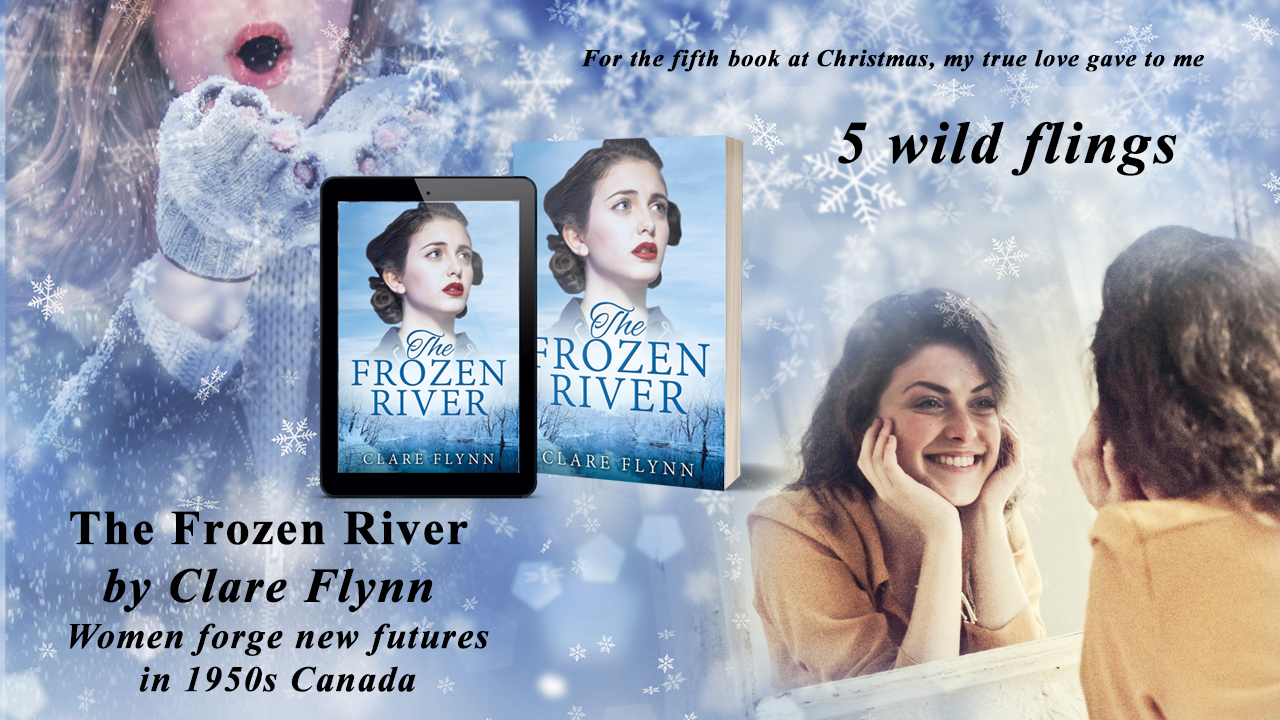
The Frozen River by Clare Flynn
Read more details and buy the book at amazon
For the sixth book at Christmas, my true love gave to me6 family strangers
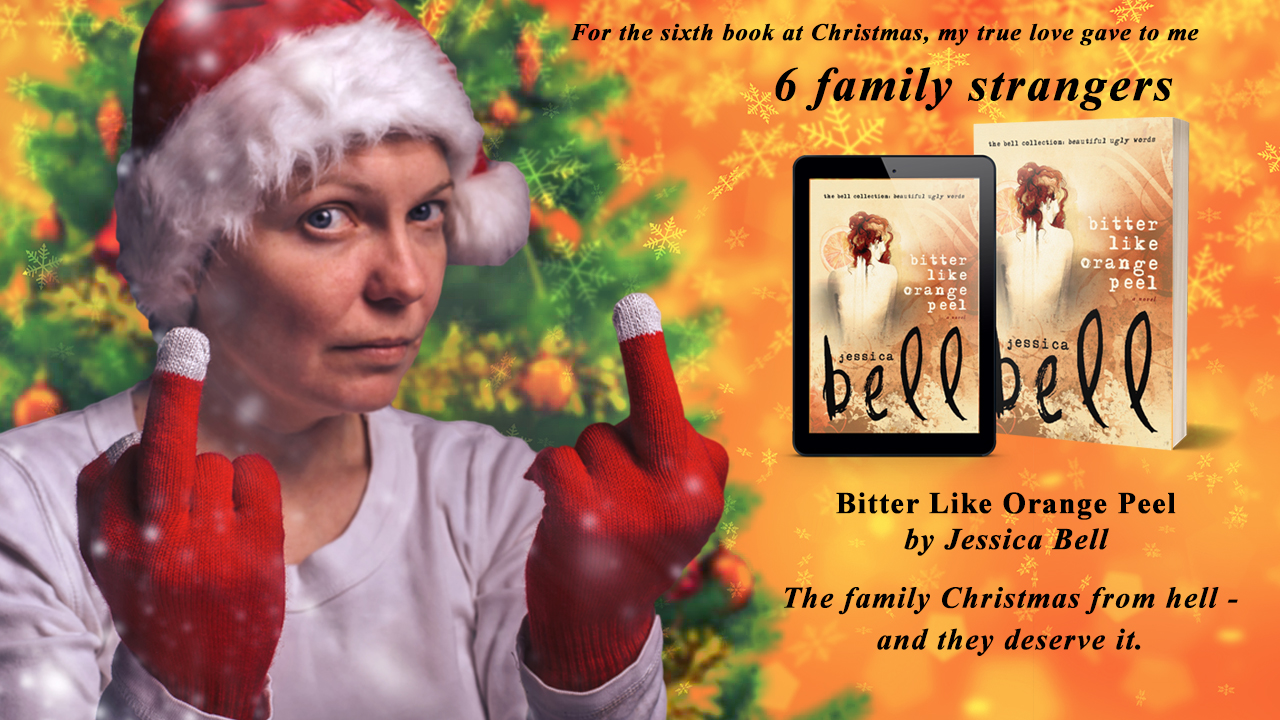
Bitter Like Orange Peel by Jessica Bell
Read more details and buy the book at all bookstores
For the seventh book at Christmas, my true love gave to me7 savage women
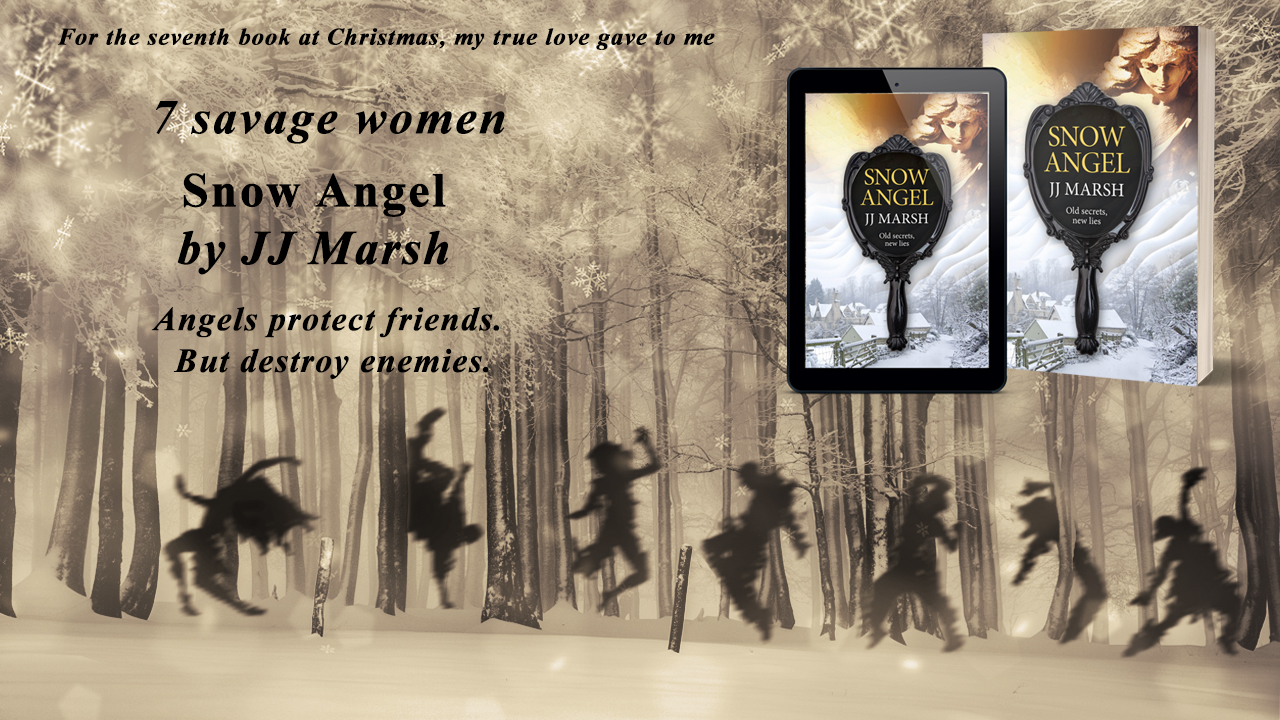
Snow Angel by JJ Marsh
Read more details and buy the book at amazon
For the eighth book at Christmas, my true love gave to me8 Saturnalia

Roma Nova Extra by Alison Morton
Read more details and buy the book at amazonkobo B & N ibooks
For the ninth book at Christmas, my true love gave to me9 hearts romancing
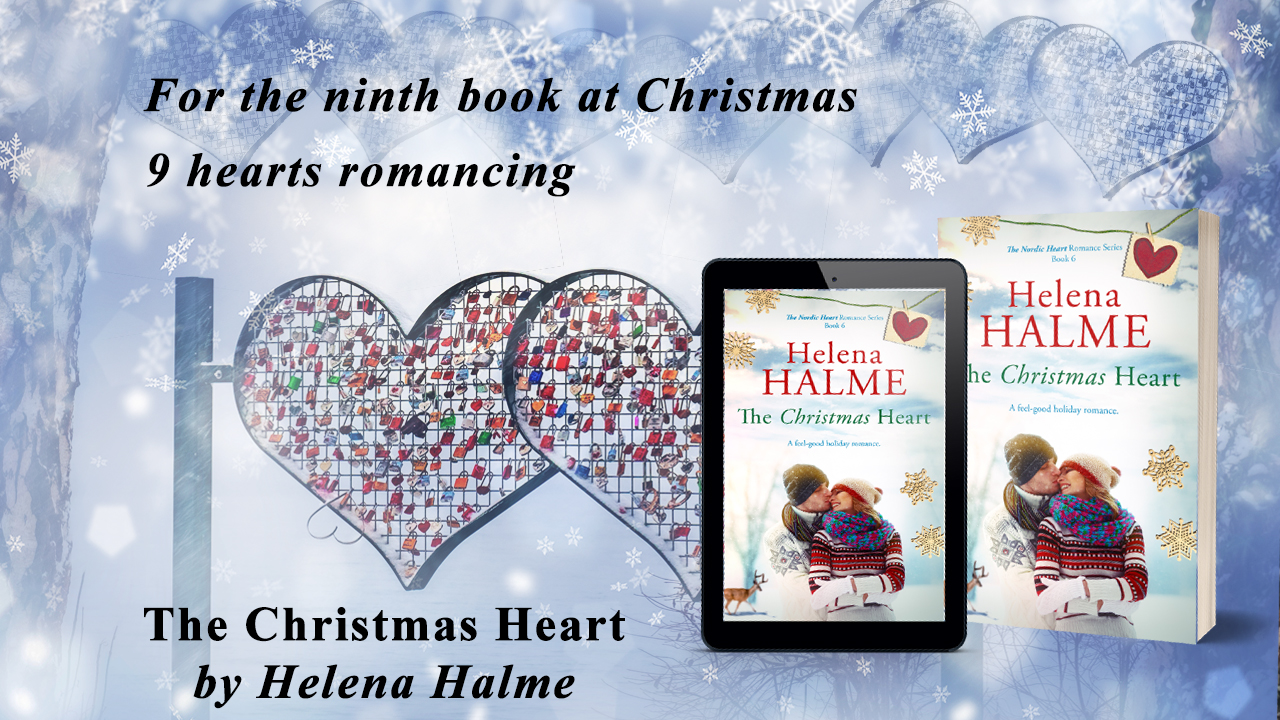
The Christmas Heart by Helena Halme
Read more details and buy the book at all bookstores
For the tenth book at Christmas, my true love gave to me10 loves for weeping

The Swooping Magpie by Liza Perrat
Read more details and buy the book at amazon
For the eleventh book at Christmas, my true love gave to me11 pirates fighting
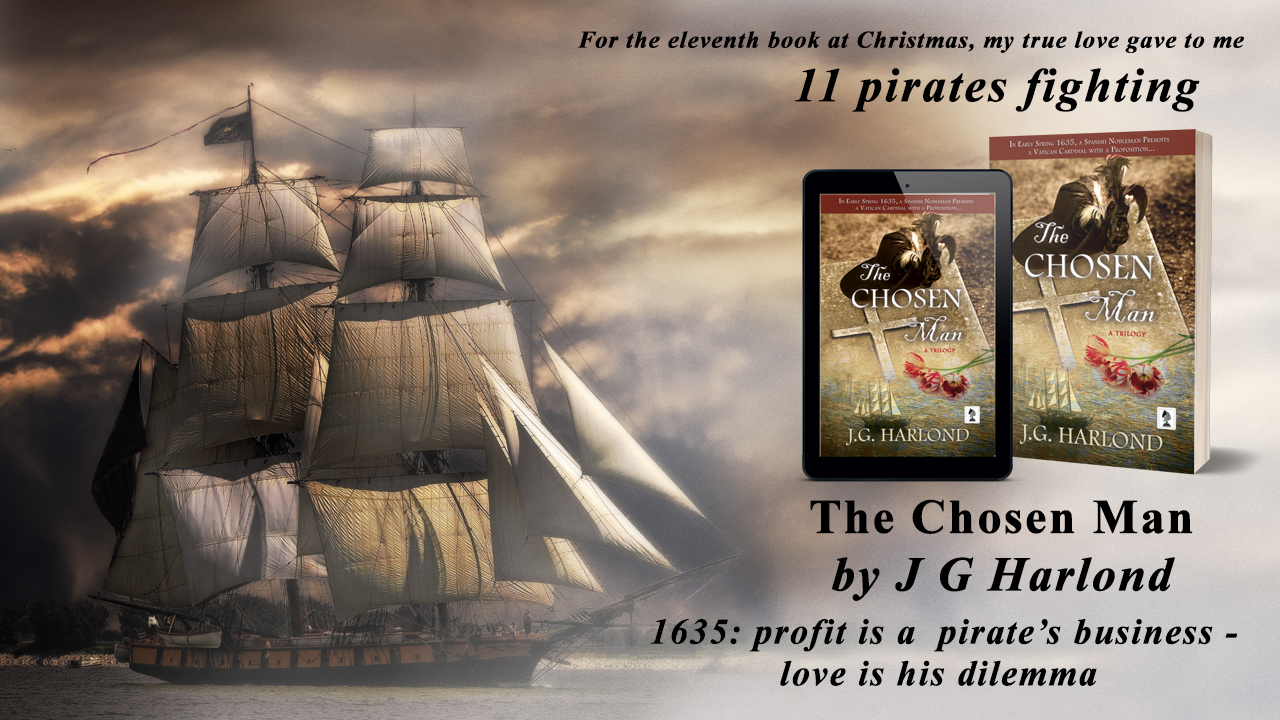
The Chosen Man by J G Harlond
Read more details and buy the book at amazon.com amazon.co.uk
For the twelfth book at Christmas, my true love gave to me12 fine art photos
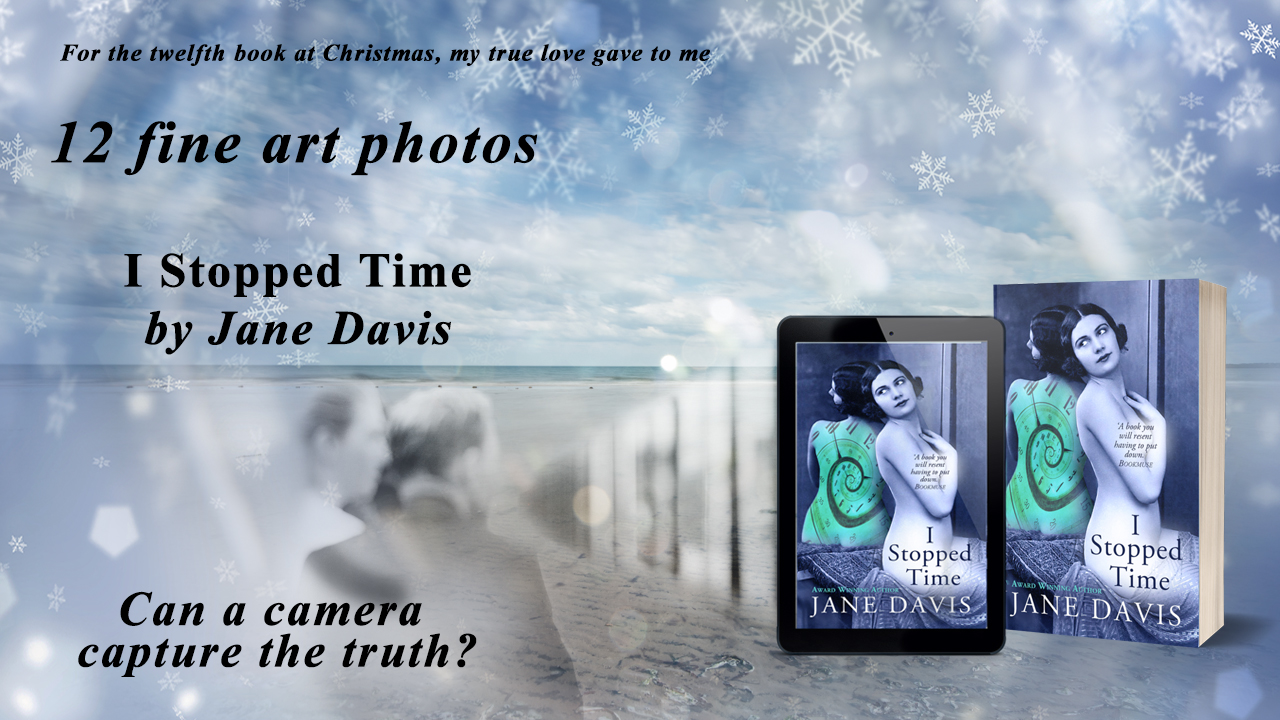
I Stopped Time by Jane Davis
Read more details and buy the book at all bookstores
Sing along! The Twelve Books For Christmas - Song
For the twelfth book at Christmas, my true love gave to me 12 fine art photos11 pirates fighting10 loves for weeping9 hearts romancing8 Saturnalia7 savage women6 family strangers5 wild flings4 stalking birds3 French dogs2 haunted livesanda crib scene calamity!
May 21, 2018
Seeing Every Tree - Anita Kovacevic
Today's blog guest is Anita Kovacevic, a remarkable author whose tireless work on behalf of other authors makes her an unsung hero -so let's do some singing.

Tell me a bit about yourself - where do you live and what do you do when you’re not writing?
My family and I live in Croatia, where we are all from. I teach English in a private school for foreign languages to groups of various ages; this is a full-time job. Writing sneaks in whenever possible, usually on breaks and holidays, but when a story is particularly active in my head, it will worm its way even into my dreams at night. Writing makes time for itself, but, for now, it tries to understand my main priority – family.

Can you give me a brief picture of your personal journey as a writer?
Another author friend recently celebrated his anniversary and, as I congratulated him on his success, I checked my own publishing dates. It all still seems so fresh, especially knowing how much I have yet to learn about the craft, but it was only at that moment, when I checked the date, that I realized my books have been in the publishing world for over three years now. There are four of my children’s books out there and, in the world of adult fiction, there’s a novella, two novels, two poetry collections, and finally my stories and poems in six anthologies. If I am doing my math well, that sums up to fifteen titles available online to my own name. It still seems totally surreal at times.
There are two wonderful charity projects which came even before my own books and sort of started the whole business of books for me – an educational story book published traditionally a long time ago, Teaching Children from the Heart (currently unavailable) and the international anti-bullying anthology Inner Giant (available on Amazon). I was invited to both by Mr. Letras, an author and teacher, as a member of an online teachers group. These two collections are, in a way, why I dared publish at all. They are linked to my work in education and I am very proud of participating in them.
Most of my books are self-published, because I too have had my share of encounters with vanity publishers, which are way too costly for all of my resources, financially, time-wise and emotionally.
 When I think back to my childhood, I was always writing something, and then it continued throughout my education, as well as my teaching. I often write lesson materials, stories, riddles and limericks for my learners and theatre plays which they perform. This is actually how all of my children’s books started.
 As for my current position as a writer, I would say I am still exploring my possibilities and learning as much as I can. Teaching is my primary occupation and it takes up a lot of my time, especially now that the school year is ending, but it also provides a lot of inspiration.
I have not distilled my writing into one single genre, nor do I plan to. There are still too many stories in different genres which I feel should see the light of the publishing world. They are waiting in my laptop and notebooks (yes, old-fashioned hand-writing has its advantages) for their time to come and for me to give them proper attention.
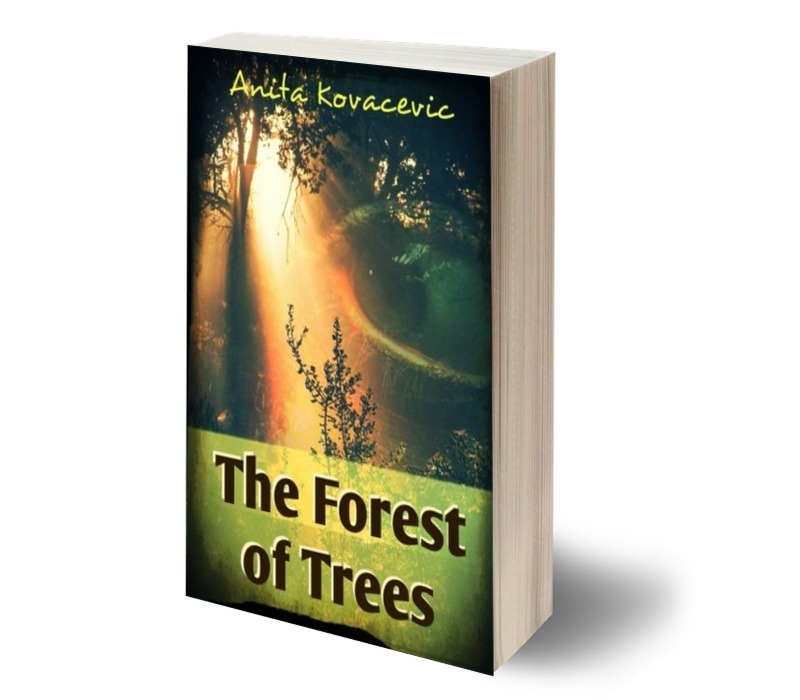
Let’s talk about The Forest of Trees, a book which left a huge impression on me because of the questions it raises and because it is so unusual!
You know that the title put me off reading the book and that it was only after starting the book and reading your explanation, that I thought about it differently. Why do you like a title that repeats the obvious?
First of all, thank you very much for reading the book. It means a lot to me, because I admire your work tremendously.
Yes, The Forest of Trees is very unusual and difficult to sum up. Trust me – the blurb was the most difficult thing to write. I suppose when you’ve spent seven years writing something, it is only right that it should be difficult to sum up.
But let’s start from the title. I had tried changing it many times during the writing and revision process. It would not be changed. Whatever I tried to do, I’d go back to it. Anything else caused havoc in my mind and a severe stomachache. This book wanted to be called The Forest of Trees from the very moment it clicked in my head, and it feels right to me. The marketability of the title is something I am not yet worried about in my writing career. The obviousness of the message, seeing or not being able to see a forest for the trees, doesn’t bother me at all, knowing that nothing else functioned for me. To be honest, nowadays the obvious needs to be stressed – you might be amazed how many people I’ve talked to who know of this saying, and think it refers to weeds in a garden or forest, without any idea of its metaphorical strength. (Sometimes I wonder if people really don’t see or simply choose not to.) I admire the people who are able to see the big picture still respecting each individual tree, and you know, of course, that I am not only talking about plant life here. I have been privileged to know and work with some of such people. The novel abounds in characters, and their stories are so different, and yet all connected, even when we don’t want them to be. Kind of like life.
The Forest of Trees deals with a family who move out of a big city, drained from illnesses, unemployment and their son being bullied, and they set off in search of a better life in a small town. Their lives change tremendously, as the children start a new school, the mother starts working and the father is temporarily not the bread-winner of the family. Opportunities abound, and unusual new friendships are formed, but, naturally, nothing is ever perfect. Small towns have their own secrets, some wonderful, some less. It’s how we deal with them that matters, on our own but also together.
What makes the story different and special are The Forest and all the characters. The Forest is an infamous wood right next to their new residence, with sort of an urban legend behind it, which turns out to be partly true. In a way, the nature and the magical parts of the story are a reflection of what happens in human reality – nothing is ever totally good or bad, and communication and empathy are the keys to handling things and connecting all the trees in the forest. And again, I am not only talking about plant life here. Speck and Tallulah, the link between the magical and human world, are both tiny, which is how much magic humans allow into this world.
I never expected everyone to like the title, cover or the story. I am a writer and teacher, which automatically makes me crazy, but I am not so crazy as to think any book could please everyone. Being at peace with this may be the result of my joining several truly positive author communities, where other authors helped me put things into perspective. It may also be the result of having children and working with them – they teach you very early on that ego is a ridiculous thing and you can never please everybody. The trick is to live with yourself as you are, or else you are living a lie.
I felt that the fantasy creatures of the forest highlighted the same problems experienced by the human characters: bullying, peer pressure, violence, and losing touch with nature (in all its senses). Did you write the fantasy thread with this in mind?
Absolutely, they do highlight them. Thank you for interpreting it in this way. I did not write them with this in mind though. They had me write them. From the very beginning of the story, they were part of it. They grew with the characters and developed the relationships naturally. I am pleased they revealed themselves in true form too, not all of them as good or bad, just like humans. I have always believed we are just parts of the intricate tapestry of the universe, and that there is far more to this world, call it magic or nature or whatever you want, than we allow ourselves to see.
As my characters, the fantasy ones and the ‘real’ ones, connected and formed their relationships, it made me feel more complete, more connected, happier. There are several scenes in the book which made me cry happy tears. The initial scene of the boy, Jeremy, whistling in the middle of the forest the very first day they arrive from the city, waking up the slumbering trees and his own soul… this one was so lovely to write, but grew more and more powerful every time I reread it during revisions. Now that I’ve had some time to cool my head from the story, it still evokes strong emotions within me. And that’s just chapter one.
There are some hard-hitting scenes, showing abusive family relationships and how these affect the wider community, in school, or in the neighbourhood. Were these hard to write?
Horribly difficult to write. I tried not to write some. I avoided them.
Old Jackson, the malicious ‘pig’ king, was a special torment for me. The scene where he bullies his youngest grandson and then suffers a just punishment (which should bring some gratification, but doesn’t make you feel good), haunted me as a nightmare for 2 weeks. I would wake up in cold sweat with him whispering in my ear. It is the writer’s horror – the scene repeats itself, word for word, with even more detail every single time. Finally, I gave in, got up one night at about 2 a.m. and wrote it down. I slept like a log the rest of that morning.
A similar thing happened with the French teacher, Gabrielle, waking up in the motel room, beaten and half-conscious, trying to decide if she wants to try to remember or to forget what exactly happened during the night. This one woke me up after I’d dreamt it, and the entire chapter was dreamed almost exactly as it appears in the book.
Philip, the little boy who uses his talent in computer sciences for his unbelievably malicious plans, was a shock. I’d known from the start he’d be worse than Angel, who is merely a physical bully with learned behavior who needed some love. But the extent of Philip’s wickedness gave me that feeling of defeat. Having almost twenty-five years of teaching experience, I have seen children grow into people I’d hoped they wouldn’t, but this happened really rarely. I love children and their potential, which needs only be unlocked, nourished and inspired by positivity. All the children at Tillsworth seemed to be my learners, so seeing one of them perform such devious acts actually hurt. I remember writing out his final scenes in the book constantly thinking ‘You’re not really going to do that, are you, Philip? Please, don’t. You can do so much better, be so much more…’ It didn’t help. He is very savvy on computers, but uses his power for evil, with total disregard for others or any responsibility. What he did in the end started an avalanche of events which crumbled the town to pieces and tested all relationships. Some might say his deed was eventually productive, but I’d always rather have people water the trees than shake them.
These difficult characters and scenes still have that effect on me which you might call 'writer’s PTSP'. Some might know what I mean. I was not just writing those scenes. I was actually there witnessing them and could do nothing about them. It’s a terrible feeling to wake up with the taste of blood in your mouth which is virtual, and yet not.
One layer of the story follows a teacher and her family to a new job and environment. How far did this story draw on your own life, as a teacher, and as a mother?
Well, I am happy to report none of the abuse scenes come from my own life, which is probably why they were so difficult for me to witness and then write. Somehow, putting them on paper makes them real, as if I am admitting these situations exist. They do, but I wish they didn’t.
Whatever we may think, that we are not guided by our own life when we write, that we are not divulging our own thoughts and details in our writing… I believe it is impossible to separate the two completely. There are some scenes related to lessons which probably stem from my own experiences, even some methods Emma uses in class. Emma’s feelings of inadequacy as a mother during her days at home with her firstborn are something I can completely relate to. There are some tiny details in the Stone family life which sneaked into the story with love and honesty, such as Emma not being much of a cook, Dot’s dislike of wearing proper skirts, Jeremy’s art, which must have been inspired by some situations from my own life. Some characters were inspired by the people I know, but never entirely, just in some mannerisms, clothing style, etc.
Fantasy often presents Good versus Evil in grand battles and in this book you show that battle in both fantasy-style action and in metaphorical human struggles. I loved the section offering youngsters a way to deal with bullying. But you don’t offer easy solutions. One youngster is portrayed as being beyond redemption. I was reminded of Kevin, in ‘We Need To Talk About Kevin,’ and of real teenage murderers. Do you think containment is sometimes all that’s possible?
You are talking about Philip, but also some other children. Bullying is often copied, learned behavior. There is a difference between kids who bully others physically and those who abuse them mentally. Philip’s is the worst kind, I think. He operates from the shadows. I’d hate to see what he grows up to be.
Interesting you should mention containment. I believe it depends on timing. Forgive my bluntness, but it’s like a serious illness – if discovered early, things can be done about it. Philip’s mother Gloria is not a bad person; she herself has obviously been taught that her beauty is her only value, and as it fades, she gets more scared. She knows no better. She never even sees what he is growing into. I’d always felt that at one point she realized his intelligence had surpassed hers and she simply escaped into herself. She may have felt he was not taking the path of positivity, but being lost herself, she was no guide. I have seen this happen – people who are unable to follow their children’s talents or mental development, who are either too weak to ask for help or even too ashamed to ask for help.
This is why I cannot stress communication enough. Solutions to problems are never easy, because the problems are not easy.

I believe for Philip it was too late to do anything. Regrettably, there are situations like that. I remember seeing this in some children. It is a frightening feeling in the pit of your stomach as you gaze into that child’s eyes and you realize they do know the difference between right and wrong, but it doesn’t interest them – all they care about is what they want. It is one of the scariest feelings in the world, seeing future in that light. You hope you are wrong. And then you meet the source – the parents, and the feeling in your stomach sinks in – irredeemable. Frightful feeling. I am glad it is rare.
But overall, bullying and abuse in children can be handled and steered in the right direction. All my other children characters are proof. The project they work on at school is one I feel so privileged to have witnesses in my mind. It has nothing to do with bullying, and yet demands all the positive things I believe in education – creativity, team work, individuality, respect, problem solving, collaboration with adults… even things getting literally messy in water colours. It is my firm belief that by focusing on positivity and creativity is the way to go.
As for Jeremy’s method to handle bullying by finding his own inner strength, I’d thought a lot about it. For a moment I was even a bit disappointed that he’d chosen such stereotypes (talking to his own angel and demon), until I realized it was normal – children use images we provide them with, so having his own angel and demon was his brain simplifying things for him to a level he was able to handle. The Ready Room is one of my favourite places in the book, but people need to read the book to see why. And it is not even a physical place.
Who is your ideal reader and what would you like him/her to take away from reading your book?
Oh this may be the most difficult question of all. I don’t know what kind of person it would take to like The Forest of Trees, but perhaps that’s part of the magic of writing. I would certainly recommend it to educators, parents, family people, even young adults with interest in human psyche. Anyone who doesn’t mind a bit of magic now and then. The fantasy creatures certainly helped me handle some of the ghastly people in the book.
I hope readers feel good after reading the novel and it makes them think about themselves and others. I hope they realize how much respect some people, for instance the Bosworths (the school principal and his wife), deserve – the modest, non-conflicting people who never steal the show but facilitate life to all around them, despite their own personal tragedy.
Everyone has a story. I hope my readers admit that children, and some adults, need to believe in magic, need their own inner world which makes them better people. Tallulah, Speck and the trees, the fantasy elements I mentioned in this interview, they are the links in the book, with the help of the children, of course. They keep the balance. I love my tree characters. I cried over some, and I’d love to meet them in person. I hope my readers will too.
How do you feed your creative engine? Where do you look, or what do you do, to keep the inspiration flowing?
With everything else still taking precedence in my life, inspiration flows too often to fit my timetable. I never have to look for it – it finds me. The people at the bus stop, a scent, an image, music, somebody’s laughter, doing the dishes, chatting with my husband or my kids… everything has a story. Everyone has a story.
What comes first –location, plot, characters?
An entire scene plays out in my head, or even a dream. With sounds, scents and all. When that happens, I know I’m in for a story. Some stories continue right away, playing out scene by scene on a daily basis, some don’t. Those take their time, simmer down and lurk. When their time comes, they simply continue themselves. If they don’t, they just weren’t meant to be.
Tell me about your writing day. Do you work to a routine? Do you have a dedicated space to write in? Endless cups of coffee or tea?
Oh that would be something – a writing day! Well, that notion certainly gives me something to hope for :) . I had a spot dedicated to writing, but now it’s my daughter’s school desk. Luckily, I am not a slave to a place. All I need is that spark and then I can write on napkins. For instance, a part of The Forest of Trees was written on the back of my old lesson plans. What does happen when I’m in the writing zone is that lack of sleep becomes a routine. I usually eat more and gain less while I write. The perfect diet, huh? And I am generally in a really good mood. Writing makes me a better person to the people around me – must be because I release those demons from my head.
Who or what has been the greatest help to you as a writer?
As far as my children’s books are concerned, I’d say my own children and my little learners. They don’t know I write books, by the way (my learners, I mean), so when I tell a story they react as kids do – honestly and brutally. If they lose interest, I know I am doing it wrong. Some of my colleagues have offered lots of support and even use my stories in my lessons. Those people are in my dedications.
My friends and family try to be supportive, each in their own way. My husband has learned to understand my insomniac phases and persuaded me to get myself a very small and very silent laptop, so I could write during the night and not wake him up. I also have been blessed with good friends who tell me my mistakes to my face, not behind my back.
I have been privileged to meet some wonderful authors, yourself included, who help with advice, reviews, promoting, even proofreading and editing. Forgive me for not naming them, but I’d hate anyone to feel left out, and then again some people hate feeling tagged.
Reading helps me a lot. I often remember my English teachers and writing instructors from my university days when I write. They must have done something right, right?
What has been the hardest thing for you to overcome in becoming an author?
Lots of things really. Realizing you can write whatever you want, but once it is in publishing stages, it becomes a business like everything else. I am not much of a business person, so investments, marketing and strategizing are not my forte.
The moment you realize it will take a long time and perseverance is a difficult one. However, it is not as frustrating as I imagined it would be. One has to be at peace with the fact that things need time to happen. Of course, if you give up, you are not allowing yourself that time, so have no expectations.
One thing I am still trying to overcome… well, not overcome but balance and come to terms with is life’s reality – responsibilities and priorities. Let’s say it’s a good thing – it means I am still learning, and that keeps me young.
If you could pick one of your own characters to spend some time with, who would it be and why?
Oh I couldn’t. Just one? Can I cheat a bit? I’d love to take a walk through The Forest with my family and see who we bumped into. That would be a treat.
What are you working on now - or next?
Oddly enough, or not, I’ve just finished the first version of a non-fiction manuscript. It’s a book about a method I apply when I teach – something I’ve come up with that works for not only my subject, sort of a strategy of learning and teaching which is pretty simple and most effective. I also have several children’s books and adult short story collections in editing stages, and an unusual psychological thriller in ‘lurking’ stage – it wants to be written but knows it requires lots of research.
Tell me about your latest book and why we should all buy it?
The latest one is The Forest of Trees, which I talked about a lot during this interview, and thank you immensely for this opportunity. Why should you buy it? Because it is really good, ha-ha. Told you I am no marketing expert. I can recommend you tons of books by other authors though, and be spectacularly creative about it.
I can vouch for that and it's been impossible for me to interview Anita at a time when she's not reviewing and promoting my books! This has made it harder for me to interview her and to review The Forest of Trees but as she would say, 'Finally I gave in to my gut and I slept better.' My respect for her grows every time we exchange views and, as we've both been teachers for a long time, we share the knowledge of how hard it is to be in the front line of a battle that seems to grow ever more dangerous.
Thank you, Anita!
Where can we find you?
Anita's website Anita's blog Follow Anita on twitter Anita on instagram Anita on facebookFollow Anita on Goodreads
Anita's Youtube channel
Buy The Forest of Trees on amazon
on B & N on Kobo on Apple itunes
My review of The Forest of Trees
What are we doing for and to our kids? This gripping novel makes you wonder!
This is not a children's story although some youngsters would relate to many parts of it. Through a gripping story, the author faces us with some of those big questions behind the news every day, and helps us understand people better. How can we protect our children, sometimes from each other? What drives some adults, and some children to commit horrific crimes? How does our relationship with nature affect our nature, as a human society?
The Forest of Trees is unusual in the way it links a fantasy storyline that seems almost childish, with a realistic depiction of bullying and abuse, in a small town location. Every detail of school life is convincing, both from teachers' viewpoints and students'. The youngsters and their relationships below the radar of adult intervention are heart-breaking in their potential for both good and evil. I was rooting for Jeremy! I also appreciated the quiet goodness of many of the adults, which I found more moving than any one superhero could have been.
Bad things happen, in the book and in life, and the Ready Room is something we all need. You'll have to read the book to understand what it is and why!
This book annoyed me because it didn't make its mind up which sort of book it was. The title annoyed me until I read the author's explanation for it (which you don't read unless you get past the title). The fairy annoyed me - maybe it was just the word 'fairy' that seemed childish - and yet, the faery folk of legend aren't childish at all. All my criticisms disappeared against the inescapable fact that I keep thinking about this book. It's as important as We Need To Talk About Kevin and Micka in showing us something about youngsters today. We need to talk about Philip.
May 9, 2018
'Nobody sees how young you are!' Meet Voice Actor Jake Urry
Jake Urry
is a British actor, voice artist and narrator of audiobooks, who already has an impressive list of 30+ audiobooks, and testimonials to make any author hope he'll accept a book for narration. When Jake said 'Yes' to me, I fastened my seatbelt, ready for a new way of living my own novel. I was not disappointed! How could I be when Jake attracts comments like, 'I have listened to thousands of audio books through the years, and rarely have I heard such a versatile talent as Jake Urry.' John D Mimms
I really appreciate Jake taking the time to visit my blog and record this interview as I know he's a very private person when not being somebody else.
 Photo: Tom Barker PhotographyWelcome to my blog, Jake!
 Tell me a bit about yourself - what do you do when you’re not recording a book?
I co-run Just Some Theatre, a theatre company, and spend most of my time working. I share a studio with Tom Barker Photography so have access to this lovely screen, space and lighting. In my spare time, I like peaceful things like walking, the countryside, and eating salmon.
You can watch Jake's interview live, with more detail than on the blog post, here
 Watch Jake's interview on youtube
Tell me about your journey as a Voice Actor
I did a couple of commercial voice-overs but wasn't inspired by reading phone messages for big companies and such-like. Then audiobooks came along and I've had a real passion for them since I started listening about twelve years ago. So, in 2016, my own narrating journey started.
You produce a lot of thrillers and suspense books. Do you see yourself branching out into other genres in the future?
I have worked on thriller, suspense, mystery, horror - dark themes. I was drawn to them because I like the narration voice I use, which is nothing like my natural speaking voice. I love the 'Vincent Price' way of creating suspense, building on it and keeping that energy going. I love that atmosphere.
Recently I have started doing other genres, fantasy and sc-fi, doing things in a completely different accent. I did a book called The Tesla Gate, by John D Mimms, in a sort of American drawl. I really enjoyed it and it's doing very well!
I do feel like branching out more. This is the first book I've done with as much romance in it. It's not all romance as a story but Song at Dawn has more romantic elements than anything I've done before. I would certainly consider doing more in that vein in the future.
How do you prepare for recording an audiobook?
When I get the script, I look for moments of tension, big changes in the script, how that should push the story along and what the narrative voice should be like. Then, I'll go through looking for main characters, deciding their voices, before recording anything. Then I start reading and see how it evolves.
For what reasons do you turn books down?
If the story doesn't grab me or if I'm not right person for the book. I have to personally want to do it. Financially I can't do it if it won't sell. For instance, if the cover is bad, it won't pay off.
How can an author help the Voice Actor/ Producer of his/her book?
I've been lucky and worked with some great authors. On the whole, they tend to give me free rein. Some specify how they want a particular character to sound, which is fine. I usually ask for a list of main characters, and if the author can tell me anything to help me find a voice, that's helpful. Authors can give me any ideas they have but if they're happy for me to interpret for them, that's fine too.
Are there ways in which an author can hinder or even spoil the Voice Actor’s recording of a book?
What would be annoying would be an author not giving me anything at the beginning, saying, 'Do what you want,' and then came back to me after I'd recorded the whole thing with criticisms such as 'I thought the character would sound more like....' If you've got ideas, let me know at the beginning.
If you could wave a magic wand and change something about your career what would it be?
I'd make more time or get a robot to do my editing, which takes up so much time that i'd rather be recording.
Tell me about your working day. Do you work to a routine? Do you use a recording studio? Endless cups of coffee or tea?
My days starts with computer stuff. I need time for my voice to warm up so I do editing or paperwork or theatre company work first. I do some warm-ups, then go into my booth. I do drink a lot of coffee, and water as well. I try to relax as that's important. The worst thing is a deadline. You can't rush narrating.
Who or what has been the greatest help to you as a Voice Actor?
It's hard to choose. The person who put the spark in me to do narrating was Samuel West, when I heard him doing 1984 by George Orwell. I was on an acting degree and I thought, 'I want to do that!' I always thought I would have to wait until I was older, more seasoned, but the great thing about audiobooks is that they can't see how young you are. I sound about seventy-two when I'm recording but when people see me, they say, 'That's not the guy who read that!' I started doing it a lot sooner than I thought I could, and that's all down to Samuel West.
Jean: Jake made me laugh when we working on Song at Dawn because he enjoyed himself most when portraying old, male villains! NOT what I'd expected!
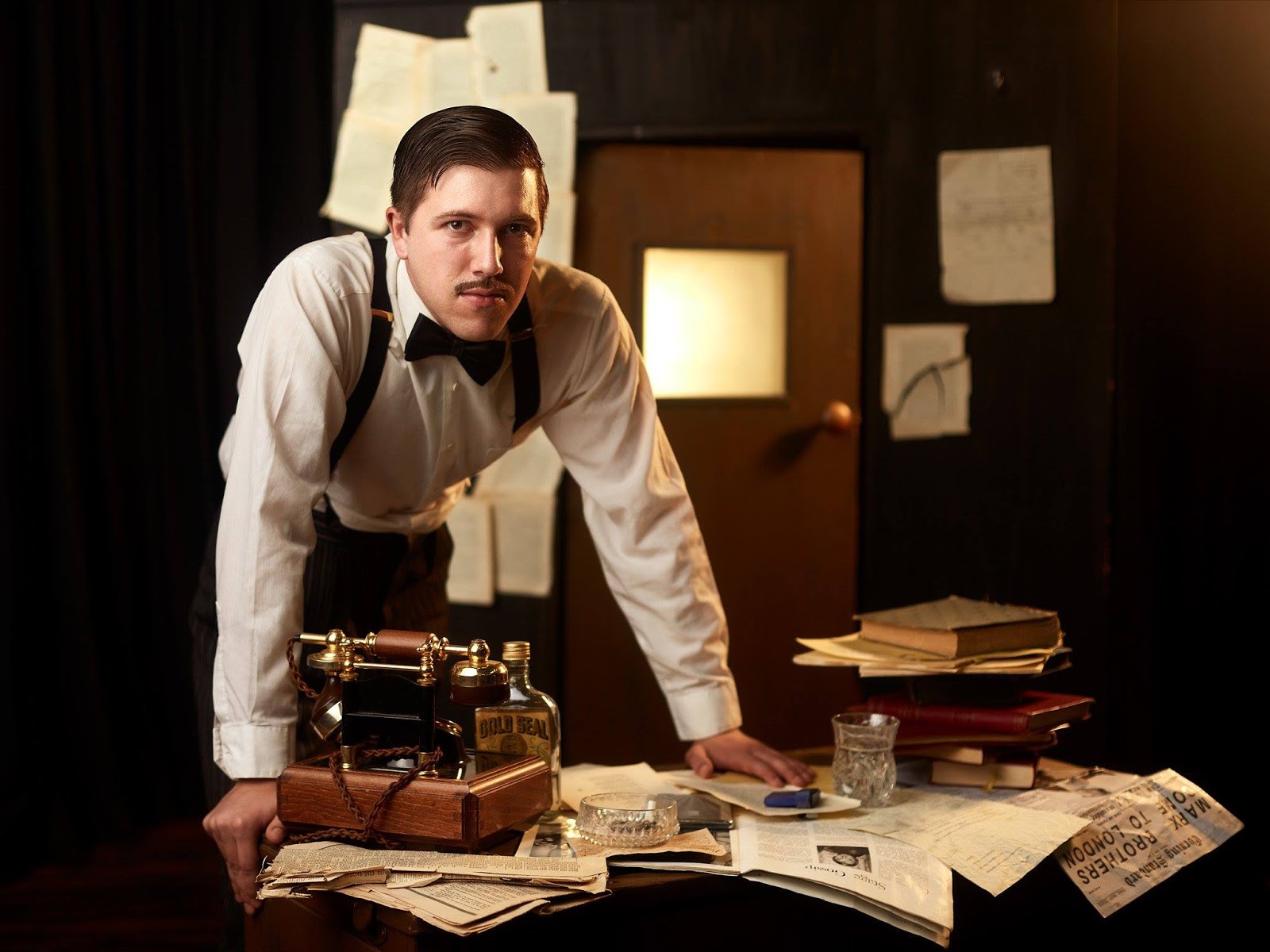 Jake on stage. Photo: Tom Barker PhotographyWhat has been the hardest thing for you to overcome in becoming a Voice Actor?Technical difficulties. I've had so many problems with microphones and software, spent so much time fixing them. Asking online for help would have saved me a lot of problems but I didn't know that was an option at the time!
If you could pick one character in one of your audiobooks, to spend some time with, who would it be and why?
I would love to spend some time with Harlan Ulrich, who is the P.I. in the The Ulrich Files by Ambrose Ibson because he spends so much time around abandoned buildings, trying to use his phone torch, and I think if he had someone there to shine a light, it would all be less scary. I could keep him company. He loves good coffee so I could learn coffee-brewing skills from him. I think he'd be pretty chilled to hang out with.
Jean: Now I've checked out The Ulrich Files, I think 'chilling' is a better description than 'chilled'!
Tell me about your latest audiobook and why we should all buy it?
My latest audiobook is of course Song at Dawn by Jean Gill. It's wonderful! I had such a blast narrating it. It has so many different layers, so many spectacular scenes. You can really imagine yourself being in those places. So much historical research has gone into it. I used to think historical fiction might not be as engaging but Song at Dawn shattered that illusion for me. It wasn't difficult to come up with different voices for the different characters because they are so detailed. the whole thing was a joy to narrate - and even to edit, which I don't usually say!
Jean: I had a blast too, Jake, and even enjoyed editing :) I don't usually like that either! Congratulations on a wonderful first review!
 5* review on audible from Melanie Preston Lewis
'Jake Urry provides exquisite narration, and what a task he had, providing voices for female singers as well as the troubadours, French aristocracy and the Jewish and Muslim characters. What an enormous and overwhelming challenge this must have been. Mr Urry rose to the occasion and must be congratulated on his success with so many difficult roles. 'Where can we find you?
I want to add to my youtube channel so if you have any audiobook-related ideas for videos, anything you'd like to hear about, please post below or get in touch, through any of these links.
Contact Jake via his website
Youtube
Thank you, Jake, for letting us behind the scenes and for bringing my book to life!
The ebook of Song at Dawn is FREE from 7th-31st May 2018 - get it here!
If you own the kindle version of Song at Dawn, you can get a BIG discount on amazon for your copy of Jake Urry reading Song at Dawn from
amazon.com
amazon.co.uk
Or join audible and get a FREE copy of Song at Dawn audiobook here.
Listen to Jake reading Chapter 1 of Song at Dawn
Discover the award-winning Troubadours Quartet FREE!
 Get Book 1 FREE
March 31, 2018
Finding your Voice: Ian M. Walker
Have you ever wondered about narrating an audiobook?
If you read my 2012 blog about my experience as an author-narrator you already know why authors can be the worst narrators of our own books! And why choosing the right narrator is so important. The moment I heard Ian's submission for Someone To Look Up To, I knew I'd found the voice of Sirius and, since publication three weeks ago, listeners are agreeing with me. So who is the man behind Walker's Words? And what's the inside story on being a Voice?

Ian M. Walker is a Brit living in Los Angeles who broke the shackles of many years in the corporate I.T. world to follow a more creative dream. He is known for 5* audiobook narration in his 'deep, gravelly voice'. He has an upcoming part in a stop-motion film, upcoming animation narration, completed Orcish feast voices and ambience for an upcoming role-playing game by World Tree Studios.
As Ian is a Voice, he decided to answer my questions live for you, on video, so you could see him working and so he could expand on his answers. You can enjoy the full version of Ian's interview here and I can only say that I was moved to tears by the end of it - good tears.
Welcome to my blog, Ian!
Tell me a bit about yourself - where do you live and what do you do when you’re not recording a book?Originally from England, I live in Los Angeles, CA. I’ve actually now been over here for longer than I lived in the country of my birth! When not recording I’m usually playing with my dog, Bailey, reading, swimming, playing a computer game or visiting friends.
 Ian and his Catahoula Leopard Dog (with that beautiful coat!) x pitbull, Bailey in McArthur parkCan you give me a brief picture of your personal journey as a Voice Actor?
After a long career in I.T. and one too many lay-offs, I started to put serious thought into what I actually wanted to do when I grow up. I.T. had been good to me but it never fulfilled me. I did some traveling and during that time, I came across an ad for a voice assessment. I went along, heard myself recorded in a professional booth for the first time and a fire was lit in my belly. I just completed my fourth complete audiobook and I’m working on the fifth. I may also be voicing Einstein the English Elephant in an independent stop-motion film. Since elephants have always been my favourite animal, that would be fun. I definitely intend to do some voice work for gaming.
How do you prepare for recording an audiobook?
Initially, I read the book. I try to just enjoy it as a reader would but, of course, I’m already starting to think of the voices. I’ll speak with the author in case they have input or I need to clarify anything such as words, accents, etc. When it comes time to record, it varies. Sometimes, the voice(s) will just come to me. With others, I may try a few out and see which I prefer. If there are a great many voices I’ll usually record snippets which I may refer back to.
Do you network with other Voice Actors? Are there any sites you’d recommend?
Absolutely! I have quite a few peers I’m connected with via social media. There are a great many voice groups out there so I’d rather not favour any single one. One thing I would mention, though, is that I’ve always found these groups and my peers to be very helpful. I heard early on that, unlike other areas of the entertainment industry, voice is less cut-throat and more about lifting one another up. So far, I’ve found this to be the case.
How can an author help the Voice Actor/ Producer of his/her book?
Hmm, an interesting question. Though I don’t have a great deal of personal experience yet, from what I’ve read some authors can be quite hands-on whilst others leave it to the Narrator. Usually, though, this IS a partnership so there ought to be some discussion. Steering clear of too much description of tone/flavor would be helpful as it isn’t always easy to understand exactly what the author was going for. One thing which would be nice, though it is likely not feasible, is if the author could consider, when writing, just how long a sentence they are writing (without any pauses) and how that might affect the poor narrator as they attempt to voice it without expiring.
January 23, 2018
NEW Books! GOODREADS Giveaways for US Readers
100 COPIES to be won AHEAD of Publication Day! The antidote to Valentine's Day if you like your reading sharp, not sickly sweet. .goodreadsGiveawayWidget { color: #555; font-family: georgia, serif; font-weight: normal; text-align: left; font-size: 14px; font-style: normal; background: white; } .goodreadsGiveawayWidget p { margin: 0 0 .5em !important; padding: 0; } .goodreadsGiveawayWidgetEnterLink { display: inline-block; color: #181818; background-color: #F6F6EE; border: 1px solid #9D8A78; border-radius: 3px; font-family: "Helvetica Neue", Helvetica, Arial, sans-serif; font-weight: bold; text-decoration: none; outline: none; font-size: 13px; padding: 8px 12px; } .goodreadsGiveawayWidgetEnterLink:hover { color: #181818; background-color: #F7F2ED; border: 1px solid #AFAFAF; text-decoration: none; }
Goodreads Book Giveaway

With Double Blade
by Jean Gill
Giveaway ends February 12, 2018.
See the giveaway details
at Goodreads.
Enter Giveaway
Goodreads kindle giveaways are US only but if you live elsewhere - or if you're not lucky in the giveaway there's a **SPECIAL PRE-ORDER 0.99** (Publication price 3.99)
You CAN read kindles on other ereaders. Get the FREE APP from amazon and follow these instructions. If you use a different amazon, search for 'kindle app' on your local one.
'Jean Gill’s spiky humour makes you feel as if she’s caught you on barbed wire and yet makes you smile about it'– Mike Sharpe, Haverfordwest Journalist
Strong, fresh, vivid poems from award-winning author Jean Gill, on an astounding range of subjects including adultery, AIDS and the Mexican Earthquake. If you crossed Wendy Cope’s work with Sylvia Plath’s, Jean Gill’s poetry might be the result.
‘You’re starting to smother me, darling, you’re faded and boring, my dear. It’s my turn to play with another and your turn alone with your fear.’
Divided into two parts, this new edition includes the stories behind the poetry, some personal and some about world events; always surprising.
'Moving and varied ' – Dorothy Tutin
'Jean Gill brings off the rare feat of looking life squarely in the eye without descending into dreary cynicism.' – HS Milford Haven, Journalist
'The author is particularly gifted with poetry.' The Wishing Shelf Award

 Add With Double Blade to your goodreads shelf
Want to pre-order now? At SPECIAL 99c/99p price?
amazon.com
amazon.co.uk
other amazons
other stores - including kobo, itunes, B&N
Your chance to win a copy of the historical novel everybody's talking about. Like #GOT with real history! 100 copies!
.goodreadsGiveawayWidget { color: #555; font-family: georgia, serif; font-weight: normal; text-align: left; font-size: 14px; font-style: normal; background: white; } .goodreadsGiveawayWidget p { margin: 0 0 .5em !important; padding: 0; } .goodreadsGiveawayWidgetEnterLink { display: inline-block; color: #181818; background-color: #F6F6EE; border: 1px solid #9D8A78; border-radius: 3px; font-family: "Helvetica Neue", Helvetica, Arial, sans-serif; font-weight: bold; text-decoration: none; outline: none; font-size: 13px; padding: 8px 12px; } .goodreadsGiveawayWidgetEnterLink:hover { color: #181818; background-color: #F7F2ED; border: 1px solid #AFAFAF; text-decoration: none; }
Goodreads Book Giveaway

Song Hereafter
by Jean Gill
Giveaway ends February 17, 2018.
See the giveaway details
at Goodreads.
Enter Giveaway
Thrilling conclusion to an award-winning epic series. Can be read as a stand-alone.
Add Song Hereafter to your goodreads shelfAmazon 5* review Perfect!
"I looked forward to this publication knowing it was the last book in a wonderful series and then put off actually reading it. I so loved the characters that I couldn't bear for it to end. And then I realized that enough time had passed and I could start over with the first book to live it all again. I've never been so pleased with the final chapter in any series as this. The story is so engaging, one almost doesn’t realize the lessons in history, poetry, music and medicine are being taught. The relationships between characters are enchanting, intriguing, and sometimes frightening. And the dog! You will recognize your own special dog in this hero, no matter the size or breed. Bravo!"
 Want to buy now?
amazon.com
amazon.co.uk
other amazons
other store links - kobo, itunes, B&N
November 6, 2017
El Rey Lobo, the Wolf King of 12thC Murcia
 Romantic 19th C painting of a Caliph and his escort, often used to depict El Rey Lobo but NOT of himNot a fantasy invention but a real historical figure, the man nicknamed 'El Rey Lobo' in Spanish ('The Wolf King'), ruled the kingdom of Murcia from 1147, when he was twenty-three years old, until his death in 1172. He was crucial in the defence of the Christian kingdoms in the north of the Iberian Peninsula, against the Almohad Muslims in the south - and he was a Muslim.
 Typical of the complications in real history, his ancestors had converted to the Muslim faith, so he was described as 'muwallad', an Arabic term for 'of mixed background'. Some say his nickname came from the family name Lope, which was abandoned when his Christian forebears converted to Islam.
 The Spanish Kingdoms in 1210In 1153, Abu ʿAbd Allāh Muḥammad ibn Mardanīš (to give the Wolf King his full name) was the King of Valencia and Murcia. For the more romantically inclined, his wolf nickname could have arisen from stories such as his treatment of a relative, Yūsuf, who challenged his authority. Having won a battle against Yūsuf, El Rey Lobo threatened to gouge out his eyes unless he gave the order to surrender. Yūsuf refused and lost his right eye. El Rey Lobo then ordered Yūsuf's wife to surrender the castle or else watch her husband blinded. She refused and Yūsuf's other eye was removed. He was then imprisoned. Such was the mercy of the Wolf King.
 His kingdoms were sandwiched between the Christian realms of Barcelona and Aragon (both ruled by the Count of Barcelona, thanks to the marriage coup of the century) and the southern taifas of Al-Andalus (Muslim Spain). Relationships were amicable between El Rey Lobo and his Christian neighbours, with trade links and tolerance of mixed-faith communities.
Tolerance did not mean equality and the laws favoured the faith group in power, whether in Muslim Murcia or Christian Aragon. Jews held positions of high status in both Muslim and Christian kingdoms but were expected to keep to their own community for accommodation, social occasions and - a big cultural division - eating.
 The medieval arms of Aragon showing a moor's head in the lower left quadrantOne example of a Christian ruler's laws: 'I likewise grant to all settlers this prerogative... whether Christian, Moor or Jew, free or servile, [they] should come in safety'
[In a court case] the Christian should swear on the cross and the Jew on the Torah. And if the Jew or Christian does not want to swear, he should lose the case. (from The Code of Cuença, late 12th Century)
Relationships were not amicable between El Rey Lobo and his fanatical southern neighbours, the Almohad Muslims. These invaders brought extremist views with them from North Africa and, even more than they hated Christians, they hated their fellow-Muslims. They hated the Almoravids, Muslims who'd been lords of Al-Andalus for centuries until the Almohads arrived. And they hated those like El Rey Lobo, of 'mixed' background.
In short, Muslims who'd been settled a long time on the Iberian Peninsula, and who now governed peaceful mixed-faith communities, betrayed their own faith, from the Almohad point of view, and were worse than Christians.
There was no doubt that the Almohads' conquest of southern Spain and advance northwards was El Rey Lobo's biggest threat. An alliance with his northern, Christian neighbours was in both their interests. How was that alliance secured? Did Ramon Berengeur IV of Barcelona and Aragon perhaps take a party of his men to El Rey Lobo's stronghold of Monteagudo? What did Berengeur offer to gain Murcia's defence of his southern border?
 El Rey Lobo's Castle of Monteagudo with the more modern addition of a statue of ChristThat meeting is the starting-point for my historical novel 'Song Hereafter', in the court of El Rey Lobo, where Ramon Berengeur and his two commanders seek an alliance with Murcia. One of those commanders is Malik, the Muslim from Zaragoza, and one is his friend, the Christian warrior and troubadour, Dragonetz los Pros, fictional hero of The Troubadours Quartet.
Song Hereafter
1153 in Hispania and the Isles of AlbionChapter 1'Usually when El Rey Lobo bared his teeth, everyone in his line of sight wondered whether to do likewise and call it smiling, or to wait and pray for invisibility. Men had been killed for doing either. He had earned his nickname ‘the Wolf King’. The men in front of the king today were not, however, his courtiers but his Christian neighbours of Barcelone: Ramon Berenguer and two of his commanders. They were not currying favour but seeking an alliance.
Ramon was sombre. ‘Without the King of Murcia, we would have the Almohads in our gardens. I hear they make a virtue of killing.’‘And of dying, too. In order to ‘purge’this land.’ the king replied. At the mention of the Almohads, El Rey Lobo’s face darkened beneath his turban, and his mouth pursed as if accustomed to spit at the name. His swarthy features, oiled beard and flowing robes gave no sign of his Christian ancestry and it had been many generations since his family had converted to the Muslim faith of their overlords. He continued, ‘They will not rest until all our people are dead. All of our faith who have made this country our home for generations. We have ‘sinned’, we are ‘unbelievers’ and the penalty is death for me, for our wives, for our children, for men like your commander Malik. They will make slaves of Jews and Christians but us, they will kill. They are superstitious barbarians from the hills of Africa! They shave their heads before battle. What pious man would do such a thing? And their black slaves thump on great drums the size of cartwheels. When you hear the beat of their war-drums, you hear your own death. This is what my men must face! Their own hearts beating in fear!’Dragonetz listened intently to his Liege and the Wolf King, sifting courtesies from nuggets of information. They were all waiting for the king’s terms. El Rey Lobo dismissed the Almohads with a defiant gesture and began the bargaining. ‘The Almohads are not causing me a problem today. If you want to solve the problems I have today, go and find me a mintmaster and an expert in siege warfare.’ He paused for thought, then held up a third finger. ‘And somebody who will repair a paper mill. These are the problems that take up a king’s time! When you take away these headaches, we can talk about protecting boundaries and Almohads!’
To continue reading, for more details and buy links for Song Hereafter (the last book in the award-winning Troubadours Quartet) please visit my website . Book 1 Song at Dawn is on promotion at 99c / 99p if you wish to start this epic saga at the beginning but Song Hereafter can be read as a standalone.
Further Reading
Medieval Iberia, Readings from Christian, Jewish and Muslim sources, edited by Olivia Remie ConstablePhoto creditsMap of the Spanish Kingdoms, courtesy of the University of Texas Libraries, The University of Texas at Austin. Castle of Monteagudo By SergioHC (Own work) [CC BY-SA 3.0 es (https://creativecommons.org/licenses/...)], via Wikimedia CommonsArms of Aragon, the Aljaferia, Zaragoza - Jean GillSong Hereafter - cover design Jessica Bell
Painting by Theodore Chaserieu of Caliph Ali Ben-Hamet, public domain


