
Neil Manthorp's Blog
December 31, 2020
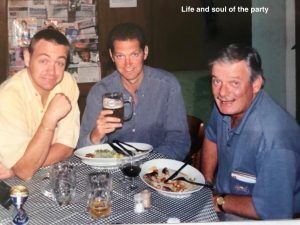
RIP – Robin David Jackman
Jackers didn’t enjoy flying at the best of times but it was particularly grueling in mid-90s India before the airports had all been upgraded and expanded. Delays were inevitable and long and many of the Air India planes looked and felt like they’d seen better days.
In order to move their cameras and cabling around the country, the television production company on South Africa’s 1997 tour had hired their own aeroplane, a Russian transport monster retired from military service into a new life as a private mover of goods – and a few people.
In the bar one evening Jackers was having a couple of soothers and dreading the next journey to Ahmedabad, or maybe it was Kanpur, which involved two flights and a six hour stopover in Kolkata. “At least you know you’ll get there in one piece,” muttered the TV producer into his glass of Old Monk and Coke.
All that mattered to Jackers was that it was direct with a door-to-door travel time of about five hours rather than closer to 20. Some paperwork needed to be filled in and there was an issue with insurance – “I’m not going to be in a position to sue you if we don’t make it…” Jackers said.
It was a beast of an aeroplane, big enough to accommodate troop carrying trucks. The Russian crew wore over-sized ear-mufflers but it wasn’t until we started taxiing to the runway that we realised why. We couldn’t hear ourselves speak, never mind our colleagues.
Taking off was a mobile earthquake. How can something so large shake and rattle so violently without falling to pieces? Only at cruising altitude did the few ‘extra’ passengers start worrying about each other. Shit – where was Jackers? He must be a wreck.
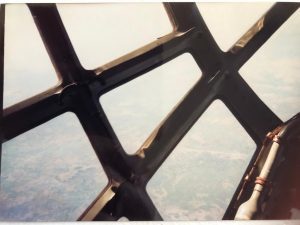
Far from it. The Fox had made himself comfortable in the navigator’s seat, a position made redundant by the installation of a radar. He couldn’t have been more comfortable with his crossword, a large bar of kit-kat and an ash-tray. Just in front of his feet were glass panels. It was terrifying. “If we go down at least I’ll be able to see what we hit, old boy.”

Flying and curry did not agree with him. Especially at breakfast when all he wanted was a plain fried egg on toast. He tried, and failed, to get one for days. The curry was already in the pan.
Having ascertained that breakfast started at 6:00am, Jackers asked the chef: “I would like the first egg you fry, please. Before you put that effing curry in there. Fry me an egg and leave it on a plate, I’ll be here at 7:00am. Please.”
The following morning, there was the egg. Cold, but curry-free. As Jackers reached for it, the young assistant chef grabbed the plate and threw the egg into the waste bin. “That old one, not good – I make you fresh one.” The air turned blue. “My effing kingdom for an effing fried egg – what does an effing man have to do to get an effing egg without effing curry on it?!”
He slumped down at his table and consoled himself with a cup of tea, again. There was silence for a minute but it was too much for the rest of the touring diners who could no longer bite their lips. A muffled chuckle, a gagged snigger – then an explosion of laughter. Jackers simmered on for a while longer but couldn’t maintain it. The corners of his mouth turned upwards and the smile was back: “At least I’ll lose a bit of weight,” he grumbled. The irony that he was born in the Punjab was never lost on him.
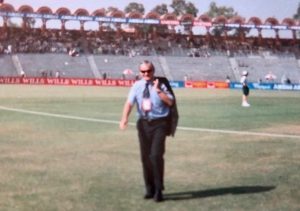
In Pakistan a year later he had further opportunities to lose weight, not least by having to do the pitch report in full jacket and tie: “Who the bloody hell thinks it’s a good idea to do a pitch report dressed like you’re going to church? I haven’t sweated like this since I bowled 15 overs on the trot against Middlesex in 1976.”
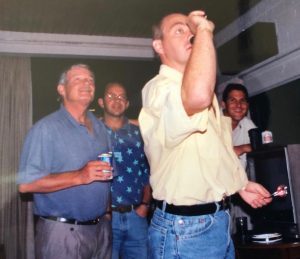
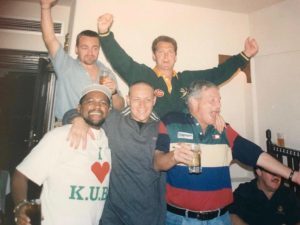
There was, at least, the haven of the ‘British Club’ in Lahore which offered very welcome cold lager and meals like fish and chips and bangers and mash. Jackers excelled, as you would expect, at both darts and pool but really came into his element when somebody mentioned that Monday was karaoke night. Nobody did a cover version of Rhinestone Cowboy like Robin David Jackman.
The obituaries I have read have been fulsome in their praise of the cricketer, the coach, the commentator and the man. Even the husband and father although Jackers was adamant that Yvonne deserved all the credit and praise for raising their two daughters while he pursued his cricket career. There is nothing I can add to that praise.
I have never written an obituary for a close friend before. A few years ago, discussing his book and the challenges of biographical writing, I mentioned that, one day, obituaries would be written about him. “Well, Manners, old boy, try and put a smile on people’s faces if you write one.”
I’ll try, Jackers.


December 23, 2020
A toast to Michael Vaughan and the Aussies…hopefully
Soon after England’s players decided to abandon their short tour of South Africa – and make no mistake, it was the players’ decision – former England captain Michael Vaughan climbed slightly too easily on the ‘bash CSA’ bandwagon and declared that there was “no way” Australia would tour here in Late February and March for their three-match Test series.
There have, subsequently, been some less than reassuring noises being made by Australia’s players and administrators about their commitment to fulfilling the fixtures. They have made no secret of the fact that they would “see how things go during the Sri Lanka tour.” In other words, if there are any positive tests for Covid-19 during the tour, they would be all the excuse they need to stay at home.
From my understanding, that’s like expecting someone to have a swim in the ocean, shower with fresh water and soap, dry off with a towel – and then pass a test for salt residue. Most will pass, but this is a pandemic. Apart from the world’s idiots there are hundreds of thousands of ‘positive’ people who have taken the virus extremely seriously and have no idea how they contracted it.
“We do have protocols, and from day one everyone has been adhering to them,” said captain Quinton de Kock. “We have that responsibility but it’s nothing that we can’t handle. It’s a small thing we can do to help out, to ensure tours during bubble life and Covid times. We do what we can to make sure our bubble is safe.”
The bio-secure environment for this series is stricter than the one requested by England whose players were clearly suffering ‘bubble fatigue’ after almost six months in restricted conditions of some sort for many of them. It is always worth remembering that playing golf during the tour was not a request by the tourists, but a condition of touring.
“We had authorised vehicles to take them straight to the first tee at pre-arranged courses – they did not use the clubhouse or other facilities and returned as soon as they had finished. I don’t believe they were made vulnerable to the virus by playing golf but it is indicative of their desire to be a little more ‘relaxed’,” said CSA’s Chief Medical Officer, Dr Shuaib Manjra.
Both teams are staying at the Irene Country Club just four kilometres from Supersport Park in Centurion, venue for the Boxing Day Test. It is a vast expanse of real estate on which social-distancing is hard to avoid, even in the best of times. All of the staff who will be looking after the two teams will be staying on-site for the duration of the tour. There will be no ‘green zone’ and ‘red zone’ as there was at the Vineyard Hotel for the England tour.

‘Irene Country Club breakfast area – photograph courtesy of Mickey Arthur
Many people will be making sacrifices to make the Test matches safe, not least the players and squad management: “Most of our guys have been in a bubble for well over three months,” Sri Lanka head coach, Mickey Arthur, said this week. “And there has been absolutely no compromise in Sri Lanka – visitors are required to spend 14 days in isolation. It’s been tough.”
The Sri Lankans, in fact, will remain in a bubble at the end of the New Year’s Test at the Wanderers, transferring the morning after the Test match to a sanitised charter plane for a direct flight to Colombo from where they will be transferred by helicopter to Galle which will stage the first of two back-to-back Tests against England starting on January 14, just six days after leaving South Africa.
Arthur’s return to South Africa is tinged with some personal regret of his own: “I had been looking forward to seeing my father, daughter and little grand-daughter at some stage, however fleetingly, but obviously that won’t be possible as we are not allowed to leave the Country Club and no visitors are permitted.”
Is Manjra confident that this bubble won’t be breached? “Nobody can be ‘100% confident’ that there will be no infections in any bio-secure environment with a virus as insidious as this one. That would be fantastic if we achieved that, but it is how you manage the infections which matters. That is what we had prepared for during the England tour, and it is what we have prepared for now.”
Arthur, who landed on Jo’burg with the team doctor three days ahead of the team to go through protocols, has publicly backed Manjra and the CSA Operations Team – as did the ECB’s medical team despite what Eoin Morgan and his players said.
“From a playing perspective I am completely happy that the authenticity of Test cricket has been preserved. Our doctor asked all the medical questions and, too, is reassured that everything possible is being done to give us the best chance of playing the series,” Arthur said.

Lungi Ngidi hard at work in Centurion
De Kock described how the players collected their evening meals one-at-a-time and then returned to their rooms to dine alone for the first three days in the ‘Irene bubble’ so that social-distancing can be maintained wherever possible. If a player or squad member does, somehow, contract the disease, the chance of passing it on is limited and the cricket can continue.
I enjoy Michael Vaughan and get on well with him. Nothing would make me happier than raising a glass to him, via Zoom, if and when the Aussies touch down in February. He’d raise one back, too.
December 16, 2020
Is yet another boardroom war looming?
Last week’s online discussion between the CSA Interim Board chairman, judge Zak Yacoob, and the media provided a sobering reminder of the prevailing attitude of so many administrators towards the truth – and a worrying glimpse into the future.
R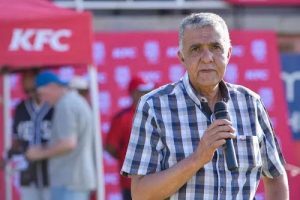 ihan Richards (pictured), the acting president of the CSA Members Council on the basis that he is the longest serving, was asked whether the hard but necessary decisions taken by the Interim Board would remain ‘binding’ once their provisional three-month term has expired.
“That is why we went the way of appointing the Interim Board as the board of CSA. It gives them certain powers and binds the company to their decisions,” Richards replied, momentarily promisingly.
“The decisions can be rescinded after the fact but that is not our intention. We specifically went that way to ensure that we can get cricket into a better space.” Less promising.
So – is the Members Council in support of the decisions taken so far, like suspending the company secretary and acting chief executive? [Kugnadrie Govender – pictured]

“The members have always said the space within which the board will operate is clearly defined on what they should deliver and this is agreed on by all the parties. At times we do question process and policy but I think we have found a very workable solution…because we should also (want) this process to run to a conclusion very swiftly,” Richards said.
The words were positive but untrue. We knew that because the majority of the Interim Board have exercised no restraint with the truth. They have been open about the difficulties they have experienced with the Members Council which, you may remember, reneged on its promise to the Sports Minister to officially sanction the Interim Board until strong-armed into doing so by the Minister.
Richards, like the majority of his colleagues in recent years, was speaking from an agreed agenda to an audience he had little regard for. Suddenly there was an interruption on the Zoom conference, which can be awkward with over 50 people involved. It was the judge.
“Can I just comment please…I don’t agree. I am not as optimistic as Mr Richards is. I am not sure at all yet whether the solution is workable. I am not sure at all yet whether there is the will to complete quickly. Let’s wait and see how much more obstruction there is and we will come to that conclusion later. I just wanted to make sure that all of you know that I do not share Mr Richards optimism and the majority of the Board does not share Mr Richards optimism either.”
The truth can be so damn inconvenient. Judges, especially ones who complete 15 years at the Constitutional Court, know that better than most. Unlike most, they have no fear or reason not to say so.
At which point another Interim Board Member, governance specialist Judith February, also spoke up:
“I would like to add that it is important, again, to make the distinction between the Members Council and the role of the Board. The Board is responsible for operations, on a point of clarity about what can and can’t be rescinded after we have left.”
It was the most tactful way possible to say that operational staff – like the company secretary and acting CEO – who were found to be in dereliction of their duties, could not be replaced once dismissed.
February’s second point was made with equal tact, but was considerably harder hitting:
“The other point to be made is obviously the Memorandum of Incorporation will be amended so there will be quite a different structure after the next AGM.”
In other words, the Members Council – comprising all of the provincial presidents – will formally become what it should always have been in the professional, multi-million rand era of the game. A largely honorary group of (mostly) men, elected into office by their provinces to which they are fiercely loyal, who host other dignitaries in their Presidential Suites during international matches and present trophies. While a board of lawyers, accountants, marketers and other professional businessmen and women run the game.
Will the Members Council agree to that? Judge Yacoob didn’t answer specifically, not publicly, but he didn’t need to. He has a way with words.
“The Members Council has the power to take a resolution to throw us all out tomorrow. Some people would say they are prevented from doing so because they would love this process to go on and to be properly completed. I am sure some people would love this process to go on and be properly completed. Others, I think, are actually struggling with the notion of the consequences of completing the proposal on the one hand, and the public consequences of firing us on the other,” Yacoob said.
The thought that “public consequences” are all that stand between the Members Council and a decision to undo all the positive work being done by the Interim Board is a grave concern.
“The public consequences might be serious,” said the judge, “and therefore I think that some of the people in Cricket South Africa at the moment are between the proverbial rock and a hard place.”
It required a few days to sink in, but reflection suggested that the man appointed to the highest court in the land by Nelson Mandela in 1998, might know something about cricket’s boardroom battles ahead that the rest of us don’t. We couldn’t have hoped for a better person to sort the mess out and complete the mandate of “restoring the integrity” of CSA and the game.
December 9, 2020
“Difficult” decisions – hope for CSA future
Sometimes the quietest days can be the busiest and, as the England team wiled away their final hours in South Africa and packed their bags for the charter flight home, South African Cricket’s better legs were kicking furiously beneath the surface attempting to undo the damage caused by the abandoned tour.
It will take some time before South Africans, never mind cricket followers in the rest of the world, come to learn of the efforts of CSA’s Operations Team and Medical Committee and the lengths to which the Vineyard Hotel staff went to make the tour a success.
The ECB’s own medical staff were consulted extensively and worked with their South African counterparts in a collaborative atmosphere of cooperation at every turn. When CSA and the ECB announced the postponement of the ODI leg of the tour, the ECB offered a full endorsement of the procedures and protocols used during the tour.
Remarkably, the board of Sri Lanka Cricket (SLC) did not wait for the evidence or a report from England’s decision to leave South Africa. On Wednesday they voted to cancel their tour to the country for the Boxing Day and New Year’s Test matches.
In the space of 24 hours, a combination of influences, from Sri Lanka coach Mickey Arthur to CSA Interim Board member Haroon Lorgat and CSA Director of Cricket, Graeme Smith, to ECB CEO Tom Harrison, managed to convey the reality to SLC and the decision was reversed. The tour will go ahead.
The knee-jerk reaction from Sri Lanka is exactly what the cricket world needs to guard against. As CSA’s Chief Medical Officer, Dr Shuaib Manjra said, the ECB – and every other major cricket nation – may become victims of the success of staging a full international schedule, involving four different touring nations, without a single infection.
During the English summer the players were required to eat meals wearing rubber gloves. Protocols were brutal and no player suggested otherwise. It was the England players’ request, through the ECB, that the tour took place in Cape Town and that they were based at the Vineyard Hotel. And it was a condition, not a request, that they were allowed to play golf. None of that is unreasonable, but it does point firmly to an ‘agreement’ that a less restrictive ‘bubble’ was required by England’s players before they agreed to tour.
Dr Manjra said weeks before the tour began that positive Covid tests “should be expected.” It was more important that procedures were in place to deal with them than trying to stop the unpreventable. “The nature of infectious diseases is that they manifest in different ways and in different spaces, you can’t completely control them. I get a sense that England is a victim of its own success. It was done at enormous cost, that we can’t afford. England will probably admit that it is unsustainable to do that,” Manjra said.
“You get positive cases, the game goes on, it’s becoming a fact of life, it’s part of public health, it’s about how you deal with it. You can’t develop an attitude that you have one or two positive cases and suddenly you feel unsafe.
“There is no place that can be completely sanitised – you can do it, but it comes at enormous cost. It is unsustainable for any sport – Lewis Hamilton just tested positive, does that mean the Grand Prix schedule comes to a halt?” No it doesn’t.
The sad truth is that cricket’s world is beset with self-gaining politics. Dozens of series and tours, all crucial to the financial survival of the games smaller Test nations, have been cancelled or postponed. The backlog is already impossible to fix without radical departures from usual scheduling. Cricket will be played in winter months and separate Test and Limited Overs teams will compete concurrently. Those ideas were abhorrent just a year ago, but now they are acceptable. Times are changing rapidly.

Omphile Ramela – angry
Finally, CSA’s Interim Board of Directors are continuing to show the steely resolve so desperately required to restore faith and confidence in the game. A cynical attempt to undermine the work of the nine-member Board, led by former Easterns president Xolani Vonya and former SA Cricketers Association (SACA) president, Omphile Ramela, appears to have failed.
Both have been recused from the Interim Board, for now, after “obstructionist, inflammatory and even extremely confrontational behaviour.” When the Interim Board suspended CSA company secretary, Welsh Gwaza, Ramela was said to have become “semi-hysterical.” He immediately called for the removal of former CSA CEO, Haroon Lorgat, from the Interim Board.

Chief fence-sitter, Andre Odendaal
Interim Board Chairman, Judge Zak Yaqoob, said from the outset that “difficult decisions will have to be taken in order to restore CSA’s credibility, and some people will be uncomfortable with those decisions.” It would appear that some people, having had their hopes or expectations or personal gain dashed, have already expressed their discomfort. By the time most of you have read this, more “difficult” decisions will already have been made. And there are more to come.
December 3, 2020
ODI series crucial amidst admin change
The Proteas’ 3-0 drubbing in the T20 International series against England may – or may not – have consequences as we head towards the T20 World Cup in eleven months time. The series itself counts for nothing. The ramifications, good and bad, will be a distant memory for all but the combatants once the world’s best T20 nations line-up in India in October next year.
The ODI series, however, which begins at Newlands on Friday, has immediate relevance for both teams. It is the first of eight three-match series to be played in the World Cup Super League which guarantees qualification for the 2023 World Cup.
The 13-team Super League comprises the 12-Test playing nations and the Netherlands with each playing eight series against random other nations, four at home and four away, with the top seven automatically qualifying for the World Cup along with hosts India. The bottom five will enter a second qualifying tournament, along with three further Associate nations, with the top two also qualifying for the World Cup.
England will qualify as surely as the sun will rise, and the same could be said for South Africa, although with a little less certainty. If they lose 3-0 again, however, and then stumble against the West Indies and Sri Lanka, they could find themselves with very few points and chances running out. Ten points are awarded for each win.
Should the Proteas find themselves in seventh or eighth place with half their series played, pressure will mount. Suddenly the three-match series against the Netherlands in The Hague next year, or Ireland in Dublin, won’t seem quite the holiday it looks like now. Could the mighty Proteas be forced into a repechage with the likes of Zimbabwe, Namibia and Scotland? Possibly.
Meanwhile, Cricket South Africa is being purged by the Interim Board of Directors. On Tuesday it was announced that CSA company secretary, Welsh Gwaza, was suspended on full pay until a disciplinary hearing on December 14. His hand has been on the tiller of the organisation for at least 18 months and he has many questions to answer, should he choose to do so.
Gwaza is/was the ‘quiet’ commanding force behind CSA. He sat on every committee, in either an acting or observing capacity, and pulled the strings of those in higher positions. When Acting CEO Jacques Faul and President Chris Nenzani resigned, their correspondence was re-directed to Gwaza. At the penultimate meeting of the Members Council before they finally approved the appointment of the Interim Board, Gwaza advised them to oppose Minister of Sport Nathie Mthethwa and assured them of a strong legal case for damages and loss of income should the England tour be cancelled.
Should such a course of action have transpired, the professional game in South Africa would not have been crippled. It would have been killed out right.
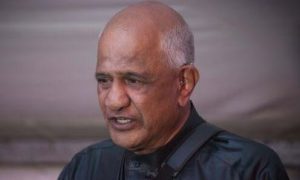
Many of us who have watched and reported on the self-serving administrative chaos over the last two or three years have welcomed the Interim Board as saviours. Six of the nine members are genuinely independent and serving purely for the restoration of the game’s reputation. Chairman Zak Yaqoob (pictured) and de facto board spokesperson, Judith February, are taking no fees. Neither are former ICC and CSA CEO, Haroon Lorgat, nor Stavros Nicolaou.
The Members Council, which refused to ratify the new board 13 days after promising the Minister that they would do so, had been asked to nominate three of the nine. At least one of those three is reporting the contents of board meetings directly back to disgraced, sacked former CEO, Thabang Moroe – who is feeding twisted versions of events to one media outlet. Which is publishing them.
When I said we welcomed the Interim Board as ‘saviours’, that does not mean they are above and beyond questioning. Indeed, board chairman, retired judge Zak Yaqoob, implored journalists to question their work when he spoke to the media for an hour two weeks ago. The lack of transparency of the previous board, he said, is exactly what the Interim Board are striving to avoid.
Two stories have been written in the last two days which stated, as fact, that Gwaza’s suspension was carried out against the wishes of the majority of the new board and that correct ‘procedure’ had not been followed. It was said that the confiscation of Gwaza’s company laptop, too, was irregular and against the wishes of the majority of board members.
“We said in our statement that these were majority decisions but they were made by a majority of the directors which is standard governance procedure,” February said. “Unfortunately we were expecting some attempts to derail our task with disinformation, but we will not be deterred. Our brief is to restore the credibility of CSA and the public’s confidence in it, and that is what we intend to do.”
It is a herculean task.
“The lack of internal controls in the organisation is quite obvious. The lists of credit card expenditure in the Fundudzi Report alone, the gratuitous expenditure, gives you a sense of the toxic culture in the organisation.
“We have paid very close attention to our fiduciary responsibilities in terms of the Companies Act. We are obviously looking at the conduct of Moroe but, at the same time, there must have been people who enabled him, either in the executive or on the board of the Members Council. The question going forward is, how do we prevent that?”
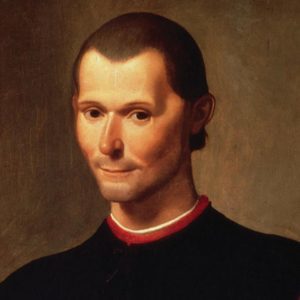
The Machiavellian plots and sub-plots, sadly, are just beginning. Moroe is suing CSA for wrongful dismissal, Gwaza is fighting for his future and any number of former directors want, or need, to keep as much under the carpet as possible.
November 19, 2020
Belt and Braces Bubble.
For most sportsmen and officials who have experienced life inside a ‘Covid Bubble’ it is not necessarily the rules and regulations of living such a limited life but the lack of choice. Many of them are perfectly happy to spend days in their hotel room on tour, and have done so in the past, but not being allowed to leave is very different from choosing not to.
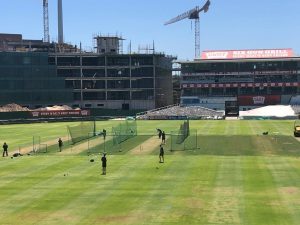 I had my first experience of security of Bubble Security when I visited Newlands during the week to test my broadcast kit. I cleared my visit with the media manager and the stadium manager, making it clear I would go nowhere near the pavilion end of the ground, only the media centre on the opposite side of the stadium. I would not set foot on the playing field and would leave before the England team even arrived for their first practise session.
There was plenty of skittishness around the place with it being the first practise session for both teams. Lots of people checking and double-checking. I was told I was ‘fine’ when my temperature reading was 33 degrees. I said I ‘probably wasn’t’ if that was accurate but it was no time for humour. It felt a bit like a bomb joke in an airport.
Earlier I drove past the Vineyard Hotel where both teams and all the match officials are staying for the next 20 days. There were uniformed police outside and plain-clothes men with walkie-talkies. The man in overall charge of the bubble blueprint is CSA’s chief medical officer, Doctor Shuaib Manjra. He happily admits that some of his measures might be described as ‘extreme.’
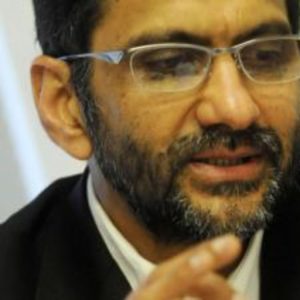 “The first point to make is that it is wonderful place to be locked down – I couldn’t think of a better venue,” he told me. “The expansive grounds and gardens means you don’t feel trapped, you don’t get that impression. There is even a walking or jogging track around the perimeter alongside a river, so there is plenty of opportunity to escape,” Manjra said.
“But the teams do not eat together, they have separate dining areas. The tables are separated by two metres and there are Perspex screens between them. We have separate gym times but the swimming pool is open to all because it is large and open air.
“The two squads are occupying approximately 100 of the 200 rooms in the hotel with the ‘green zone’ staff occupying many of the other rooms. Green zone staff will stay onsite, inside the bubble, for the duration of the tour and the ‘red zone’ staff will be outside the bubble and have no contact with the players. Every precaution is being taken. The players rooms will only be cleaned when they are out of the hotel and there will be systematic deep-cleaning of the common areas in the hotel.”
A common question for Manjra has been ‘why?’ If both squads and the match officials have all tested negative for the virus, and will have no contact with anyone outside the bubble, why are so many extreme measures in place inside the bubble?
“We are taking a belt and braces approach. We would rather have extra safety measures than insufficient – there is so much at stake with this tour. No matter how small the risk, we cannot afford to take it,” Manjra said. What sort of risk?
“The chefs, for example, are red zone staff but those serving the food are in the green zone. There must be a degree of interaction between them, however minimal. The risks are extremely small, almost negligible, but that does not stop us wanting to eliminate them.”
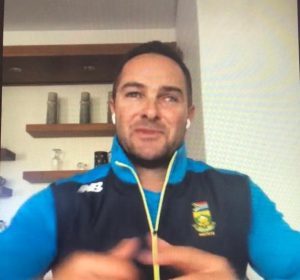
Proteas head coach, Mark Boucher, held a Zoom with the media this morning. He was asked about the three players from his squad who are self-isolating. One tested positive and the other two are in precautionary quarantine after spending considerable time with the first player:
“We’ve prepared for this situation, which is very real in today’s world,” Boucher said. “Yes, it does affect us. But it’s more about the welfare of those players and looking after them from a mental perspective. It’s a very tough thing to go through. The care factor needs to be there for the guys. Sitting in rooms for up to 10 days is quite tough. When they do come out of it, hopefully on the right side, they come back into this environment and they feel nothing’s been lost,” Boucher said.
Boucher was asked, inevitably, about the mess at Cricket South Africa’s headquarters: “Those issues are there, you can’t hide from them. We’ve got to try and put that behind us. We understand that we’re in a position to bring some good news to the game of cricket in our country. If we start playing a good brand of cricket and leading from the front, hopefully we can change a couple of perceptions about the game in our country.
November 15, 2020
The Madness must stop
On Friday evening Cricket South Africa’s lawyers advised the Members Council that, should they choose to defy the Minister of Sport and refuse to appoint and cooperate with the Interim Board of directors, and the Minister cancelled England’s tour of South Africa as a result, then they would have a strong case against him in court.
Let that sink in for a moment.
Nothing that has happened or been said in the last two years of administrative incompetence and negligence more clearly illustrates how little the majority of the game’s highest authority care about the good of the game. Nothing more obviously illustrates how out of touch the majority of them have become.
The possibility of taking the Sports Minister to court should never have come up. But when it did the Members Council should have realised just how deep its collective descent into madness had become. Cancelling the England tour would cost CSA over R70million in lost income. Even if it was ‘legally’ possible to recover that from the Ministry of Sports, Arts and Culture, it would take years. The game would bleed to death.
And yet that is the decision they took. Only two provincial presidents have broken rank. In the case of Eastern Province’s Donovan May, who has spent the last 18 months telling anybody who would listen that the board were “doing a great job” and blaming the “negative publicity” on the media, the u-turn has more than a suspicion of expediency.
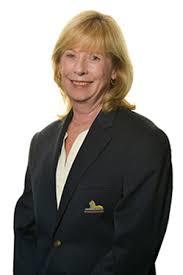 That is most certainly not the case with Central Gauteng Lions president, Anne Vilas, who is the most recent addition to the Members Council and both untainted by its lack of governance and unaffected by the madness. “In the best interests of the game, we are 100% behind the Minister and strongly oppose the actions and sentiments of the majority of the Cricket SA Members’ Council’s decision to challenge the Minister,” she said after Friday’s meeting.“It is our duty to place the game of cricket first in all our decision making and serve the cricketing community to the best of our abilities. With the full support of the CGL
Board, we recommend that the Members Council appoint the interim Board of
Directors and let Judge Yacoob manage any conflict.”
It should be a source of comfort that there is, at least, one sane person in the room. It is, however, a great deal more concerning that she is in such a small minority.
The Minister agreed in last week’s letter to the Members Council.
“None of the grounds mentioned by you… constitute either rational and/or reasonable grounds (not to recognise the interim board). By contrast, there appears to be an attempt to frustrate the process of correcting the many wrongs that exist within CSA which the members council has consistently, and publicly, acknowledged.”
Even his threat to intervene and place CSA under administration had no effect: “I will exercise my powers under the Act and issue a directive in that regard. In the event that you fail to comply with my directive, I will not hesitate to impose the sanctions available to me in terms of the Act. The interim board require your consent, and your co-operation; not your filibustering tactics, and attempts to frustrate it from getting to the bottom of what is rotten in South African cricket.”
Chairman of the Interim Board, retired Constitutional Court judge, Zak Yacoob, was clear about what he believed had transpired:
“I suspect the members council feared administration and the repercussions the minister is now promising, and to avoid that it falsely agreed with the minister and then reneged. In other words, they broke their promise.”
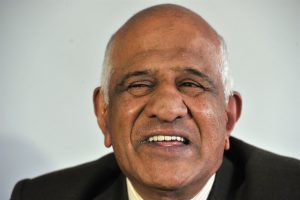 He also said that the MC’s objection to the presence of former CSA chief executive, Haroon Lorgat, was a “giant red herring” and that their concern was more likely the speed with which the Interim Board were doing their work – and what they would find.
“We began interfering too quickly and too soon. They became very uncomfortable. It could be said that we should have bided our time, treated them nicely, pretended that we were going to be good to them. Then they might have confirmed us. Maybe that was a mistake on our part,” Yacoob said with polite sarcasm.
The Members Council told the Minister that there had been a “breakdown in relations” between them and the Interim Board. It is doubtful they ever intended to have a working relationship. CSA’s acting chief executive, Kugandrie Govender, issued instructions to the rest of the executive not to cooperate with the Interim Board and not to respond to any of their queries.
Yacoob said the CSA executive, including company secretary Welsh Gwaza, had been: “…uncooperative, difficult, unresponsive, arrogant and sometimes rude. That has been part of the problem. We have been trying to get information from them, trying to bring them to account,” Yacoob said, suggesting some of the treatment his fellow interim directors had experienced was “hooliganish and thuggish in the extreme.”
“That they’ve got too much to hide is the only inference that can be drawn. That opinion may be wrong, and they can prove it wrong by saying, ‘Come into our offices and look wherever you like, you will never find that we did anything wrong’. If they do that, I will withdraw my opinion and apologise.”
The Minister has been outstanding throughout this debacle, time and time again offering the Members Council the chance to do the right thing. His only ‘mistake’ so far was to issue a statement saying that the Interim Board would ‘report to’ the Members Council rather than ‘provide reports to…’
“I’m quite certain that the minister was saying we should report to them in the sense that we keep them advised of what we are doing, and we try to get everyone together and work together as much as possible. We try and consult with them as much as possible, and we make sure we take them into account in the work that we do. They have interpreted that to mean, wrongly, that we are accountable to them and we must do what they tell us to do. Or what they authorise us to do. And we were not prepared to accept that,” Yacoob said.
So, the Members Council are protecting themselves, their lawyers from Bowman, Gilfillan are ‘earning’ hundreds of thousands of rands and the CSA company secretary – who used to be employed by Bowmans – is suggesting they can win a legal battle with the sports minister.
If any part of that comment is incorrect then I, like judge Yacoob, will apologise and withdraw it. The madness must stop.
November 12, 2020
Civil war is amongst us – let the good guys win
The skirmishing has ended. Civil war is now amongst us. Cricket South Africa’s Members Council has discarded its final chance to retrieve any respect or dignity and has declared open hostility against the players and supporters of cricket in this country. There can be no peaceful outcome now. Perhaps this is the way it should, and was always going to end. The building needs to be demolished.
The Members Council, comprising the presidents of the country’s provinces, disbanded the discredited board of directors two weeks ago. They negotiated with the Minister of Sport and agreed to appoint an interim board of nine independent directors with three members nominated by the Members Council – which immediately compromised its independence anyway.
Today, they refused to sanction or recognise the interim board. In a long-winded, rambling release packed with legal jargon and obfuscation, they attempted to justify their decision to cling on to power and increase the game’s laughable reputation for incompetence and non-existent governance.
Having grown tired of criticising CSA’s ‘leaders’, it is with some relief that I can hand the rest of this newsletter over to a statemen
t from the interim board’s chairman, retired Constitutional Court Judge, Zaq Yacoob. Appointed to the highest court in the land by Nelson Mandela in 1998, he served until 2013. He is a lifelong cricket lover and a renown judge of character as well as the law. His response to the Members Council is really all you need to read. So here you are:
“Dear Mr Acting-President,
We are now in a position to respond more fully to your letter sent to the Interim Board yesterday, indicating that the Members Council will not appoint those people suggested by the Minister for the Interim Board and attempts to provide, in a confusing and over-generalised way, “reasons” aimed at justifying the decision.
We start by saying that our understanding of the position is very different from what is said in the letter to be the understanding of the Members Council. Indeed we may say at the outset, that the “reasons” as communicated to us appear to be self-serving, opportunistic, misleading and if we may say so, very short-sighted as far as the interests of cricket in South Africa is concerned. We elaborate our understanding.
Technicalities aside, we were publicly mandated by the Minister to serve as an independent interim board to resolve well-aired difficulties faced by CSA over the years, and, over the next three months to try and ensure an Annual General Meeting by the end of that time so that an Independent, untainted Board would take CSA forward with integrity. We understood that there was an agreement between the Minister and the Members Council on exactly who was to be appointed and the Members Council undertook to formalise the appointment so that the Interim Independent Board would have the necessary authority and power to clean up cricket in South Africa.
The Members Council acting mainly through its Acting-President has adopted the strategy to pretend to cooperate in the process but ensured that every effort was made to obstruct our work. It is for this reason and only for this reason that the Interim Board has not been appointed. The reasons given have no substance and do not begin to stand scrutiny. These so-called reasons have been carefully crafted.
We dispute that the Board should be accountable to the Members Council in every way. Each of these entities have their own powers and responsibilities in term of the relevant enabling provisions. It occurs to us that the real reasons is to prevent us from doing our work independently and outside the Members Council control. We refuse to subject ourselves to any control and sacrifice our independence in the performance of our duties and in the interests of cricket.
The Members Council should also remember that the executive is accountable to the Board if the Board had been appointed and not the other way round. We assumed that the Members Council would act honourably and confirm our appointment. We therefore acted as the Board and gave instructions to the executive.
The executive balked at this because they were too accustomed to doing what they wanted to do without any accountability. They apparently complained and the Members Council was somehow, morally wrongly persuaded to take up their cudgels in the letter under reply, in support of the executive for no justifiable reason.
We understand that you have made it more difficult (as you clearly intended to do) for us to carry out our public mandate which we had accepted and to which we remain committed.
We will continue to act in the public interest to carry out our mandate. We reject any instruction from you as superfluous and will approach the media at our discretion in the public interest and in interests of SA Cricket as distinct from the narrow interest of some executive member or any other entity.
We hope you will see reason and put things right.
In Cricket
Zak Yacoob”
November 6, 2020
Running on driveways, eating seagulls
Most human beings are remarkably resourceful in dealing with adversity. Fishermen have survived at sea for months living on rainwater and seagull flesh. Others have been dragged from collapsed buildings weeks after survival hopes had apparently been extinguished.
Often it is not until long after they have been rescued that the strain of what they went through sinks in. The enormity of their experience makes it ‘other worldly’ and, occasionally, there is delayed shock. They find it hard to explain.
I have a very minor version of this when I think back to Lockdown Level 5 when I ran 10 kilometres on my driveway every day for over a month. I find it harder to believe now that we were not allowed out to exercise than I did at the time. Did that really happen?
There is a larger and longer version of this phenomenon, however, one that started over two years ago and dragged on interminably. Unlike the Coronavirus, for which everybody knows there will be vaccine, there were times when many of us genuinely doubted there would – or even could – be a cure for the malaise at Cricket South Africa.
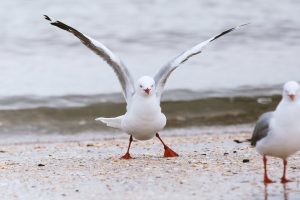
I don’t even care if it sounds like hyperbole. After all, I haven’t been forced to drink seagull blood to survive for the last 12 months, but it genuinely felt as if my means to earn to a living was being eroded by a majority of CSA board members who cared only for their perks and privileges and had no understanding or empathy for the thousands of people who depend on the sport and the hundreds of thousands who love watching it.
Sponsors, on whom the game depends, walked away citing reputational damage. They and many others called on the board to resign. Costs soared and income dwindled, yet in board meetings they told themselves they were doing a good job and blamed the media for the negative publicity. I wasn’t alone in feeling threatened. Several professional players contacted me to ask if I thought they would still have jobs and salaries in the future. I had to say I wasn’t sure.
Now that the board has finally been replaced by a nine-member interim board, I have remembered what it feels like to be optimistic again. A weight has been lifted with the appointment of good, honest and approachable people who are not just prepared to tell the truth but actually want to. It would be only right and proper for them to be remunerated for their time. The fact that they have not even discussed the topic of payment yet should tell the old board all they need to hear. The interim chairman, retired judge Zak Yaqoob, and governance expert Judith February, have expressly stated that they will not be asking for or expecting compensation. February said she regarded the task as a “national duty.” They accepted their positions because they care about the game and have been pained by its demise.
The restructuring of the domestic game can now be tackled because seven of the nine new board members have no history of provincial affiliation. If financial imperatives mean that provincial cricket needs to return to amateur status with professional, franchise cricket increased from six to eight teams, those hard decisions will be made dispassionately and for the greater good of the game.
The provincial presidents, who comprise the Members Council, were told by interim board president, retired judge Zak Yaqoob, that they and their institution would be respected but that, for at least the next three months, they would have no part in the administration of the game. Provincial bias will not only be eliminated for the next three months, however. The interim board has vowed to restructure CSA’s constitution to demand a majority of independent directors and an independent chairman.
The Members Council and the old board were advised by CSA’s lawyers, Bowman & Gillfilan, not to reveal the contents of the forensic audit into the organisation’s administration and finances for fear of litigation. The MC commissioned the audit. Their lawyers told them to keep it under wraps. You don’t need to be trained sniffer dog to detect something rotten in that. The interim board agrees.

“We will be engaging another law firm which was not involved in material details related to the forensic report,” said new board member Judith February, a lawyer and governance expert. “We will seek fresh independent legal advice as to whether one may or may not institute possible sanctions regarding individuals mentioned in the report.
“We are looking at the report with fresh eyes and how best can we engage it. We don’t foresee that this will be very time-consuming,” February said. Wow. Not only are all the pressing issues being tackled, they are being done so expeditiously. It took the old board eight months – on full pay of R350k a month – to dismiss Thabang Moroe as chief executive.
There is forensic investigation expertise on the new board, commercial and financial expertise, player representation and the vast, first-hand knowledge of former CSA CEO Haroon Lorgat. It is an immensely reassuring group of professionals.
My optimism is shrouded in caution. The boardroom slate may have been wiped clean but six board members are still metaphorically in the room by remaining on the Members Council. The slate is stained. But I am immensely grateful to have any optimism at all.
Professionally, we’ve been running up and down the driveway and eating seagulls for two years.
Seagull photo by Phil Botha on Unsplash
October 29, 2020
Bad-mouthing media is as cheap as it gets
In years gone by, in happier more prosperous times, Cricket South Africa held its annual Awards dinner at a fancy hotel or conference centre in Johannesburg. They were lavish affairs, to be sure. Pretty much everybody who was anybody involved in cricket was there.
 The senior administrative teams from the provinces and franchises were invited as were the country’s coaches and players, and not just the high profile ones. The most important people at the events were always those who had contributed most to the organisation’s success, the sponsors.
At the event’s peak there were over 650 people in attendance. They may not have been life or career-shaping nights for Dale Steyn, Makhaya Ntini, Hashim Amla or Jacques Kallis, but they certainly were for the amateur and provincial award winners. And for the Schools week winners, the blind cricket winners, the under-19s and so many others.
 Even the media were invited, seated on tables 63 and 64 in the back right hand corner of the room, out of harm’s way. The list of award winners was provided to us on an embargoed basis so we could write about them before deadline. There were also interviews with the main winners for follow-up stories the next day. I wouldn’t go so far as to say it was a ‘working dinner’, but we were certainly contributing.
Most important were the sponsors, of which there were many. It was an opportunity for CSA to thank them and for them to rub shoulders with the Proteas, one of which was assigned to each of their tables. After the main course many people wandered amongst the tables and sought out old acquaintances or familiar faces. It was an opportunity to meet up with people you rarely saw face-to-face and, in some cases, clear the air.
About ten days ago CSA’s acting CEO, Kugandrie Govender, held a virtual meeting with the contracted Proteas, including those at the IPL. She assured them that the organisation was financially healthy and that the board members “…aren’t going anywhere.” A week later they had all resigned.
One of the players asked her why the picture painted by the media was very different to hers. Later, Govender was asked what her response had been:
“I made it clear [to the players] that CSA drastically improved its financial control and that led to a change in our media strategy. The changes include that gifts and unnecessary trips for the media weren’t approved anymore,” she said.
Cutting twenty journalists from an annual dinner – many of whom were resident in Johannesburg anyway and did not incur transport of accommodation costs. Hard to see how that’s contributed to the claimed R250 million which CSA has said it has cut from its operating budget, but that isn’t the point.
With one, ill-considered and sweeping statement, the woman in charge of the day-to-day business of running the national game has rubbished the credentials of every cricket writer in the country – because every one of them has criticised the shoddy lack of administrative leadership. Her implication that the criticism has been motivated by the lack of an invitation to the Awards Dinner is so feeble it is not even insulting.
I have been thinking hard about the ‘gifts’ to which she refers. A few polo shirts over the years and the traditional tie for each tour. Cricket writers stopped wearing ties in the 1960s. Perhaps she was referring to lunches on match days as ‘gifts’. I’m happy to take my own sandwiches if it helps to stem the flood of expenses. Or perhaps she can implement a fee for meals eaten by the people she really needs to promote the game.
Govender was speaking to the people who are responsible for generating 95% of the revenue generated by the business she is in charge of. No wonder she was keen to reassure them. The problem is, they aren’t ignorant sportsmen who believe what they are told because the words come from an executive.
The players are more informed than ever and they stand to lose more than anyone if the game shrinks as much as their own organisation, the SA Cricketers Association, predicts it will. They cannot be fobbed off with a tawdry and flippant effort to blame the messengers of truth.
If Govender seriously had ambitions of making her role permanent, she would be concentrating on replacing the sponsors who have already used the exit door and on being honest about the challenges the organisation faces. The problem with journalists is that they can see through selective honesty.
Jokes about ‘gifts’ and ‘freebies’ for media have been around for decades. In 30 years I have never, ever encountered a genuine journalist whose principles have been compromised by the receipt of a shirt or tie – all of which are supplied anyway by a sponsor and bear its logo.
It is going to take time to turn the game around, but the snide and snarky attitudes will have to stop. If the new administration does its job with integrity and for the good of the game above themselves, there will be no need to worry about the media. Definitely no need to gratuitously bad-mouth them.
Photo by Antonio Castellano and David Travis on Unsplash
Neil Manthorp's Blog

- Neil Manthorp's profile
- 2 followers
