Wendy Orr's Blog
November 6, 2016
Rhinoceros poems and strange things writers do
I always love hearing from readers, but some requests are more unusual than others. I received this letter from Germany on Friday.
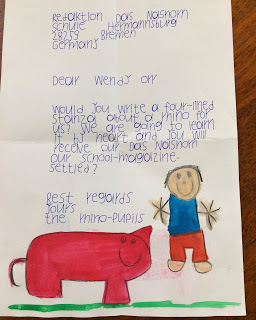 They also enclosed copies of verses they’ve received from Doris Lessing and Patrick Modiano, both writers I particularly admire (as well as the minor detail of being Nobel prize winners). Obviously this has been going for some time, as Doris Lessing died three years ago – and equally obviously, I could not have said No even if I’d wanted to!
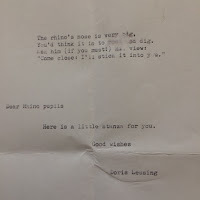
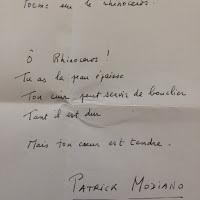
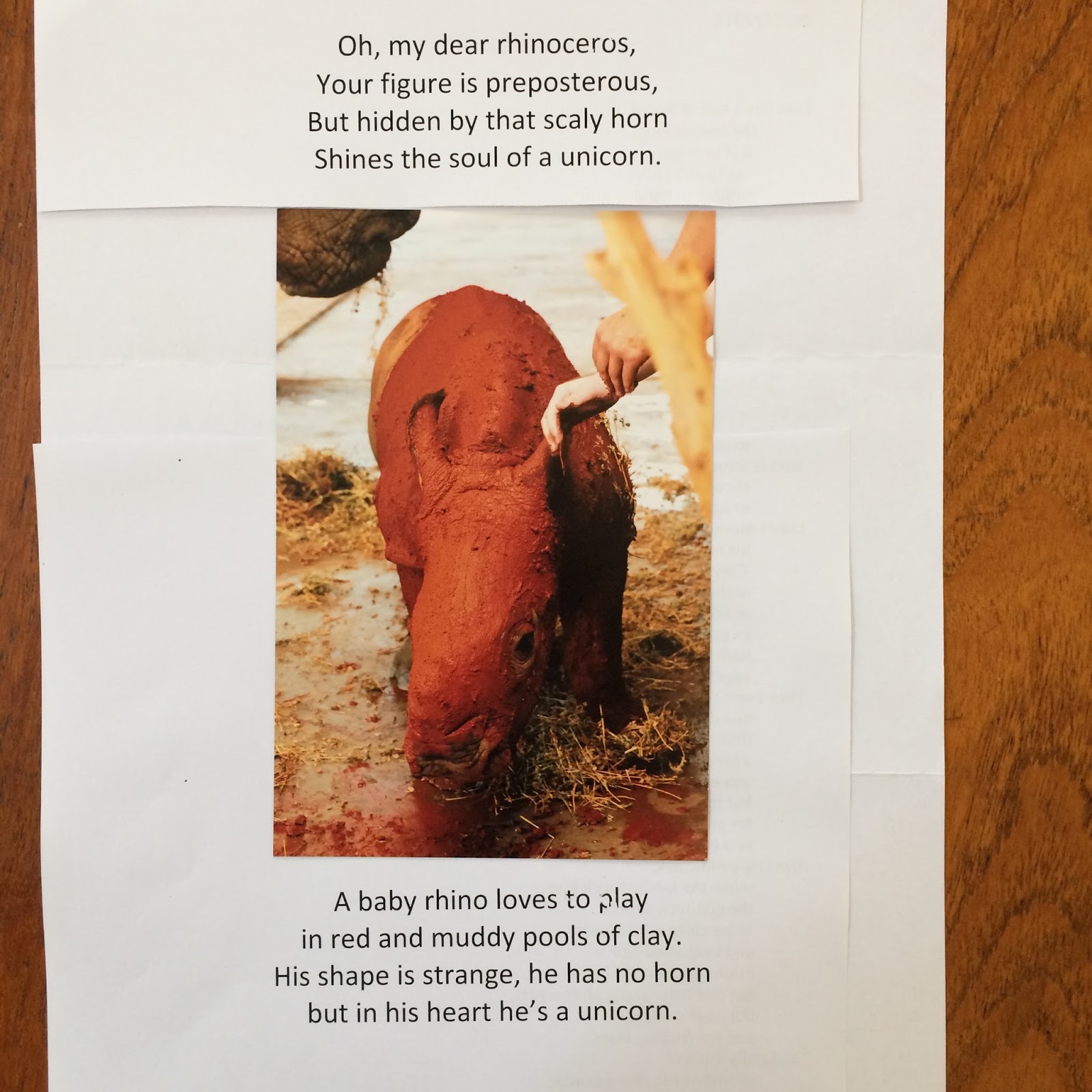
I wrote a little verse, and then remembered that I had a picture of giving a baby rhinoceros a mud bath on a Behind the Scenes tour of the Australia Zoo, the day of the Return to Nim’s Island premiere. So I wrote another verse about the baby rhino, and am now trying to decide which one to send.
Now I have to choose one to send off with this bonus photo – which one would you vote for? Let me know in the comments below.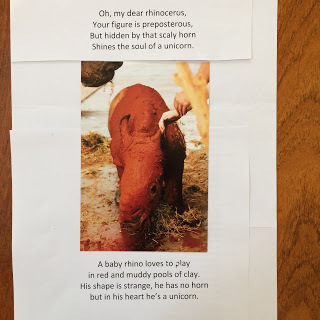
I presume they knew me through these rather lovely editions of Nim's Island and Raven's Mountain.
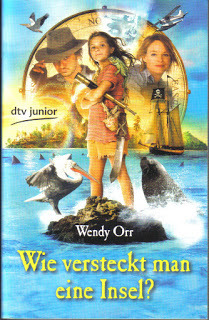 Nim's Island - How do you hide an Island?
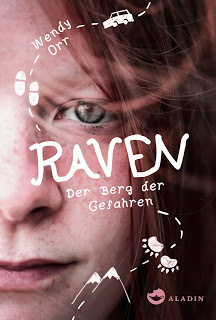 Raven's Mountain
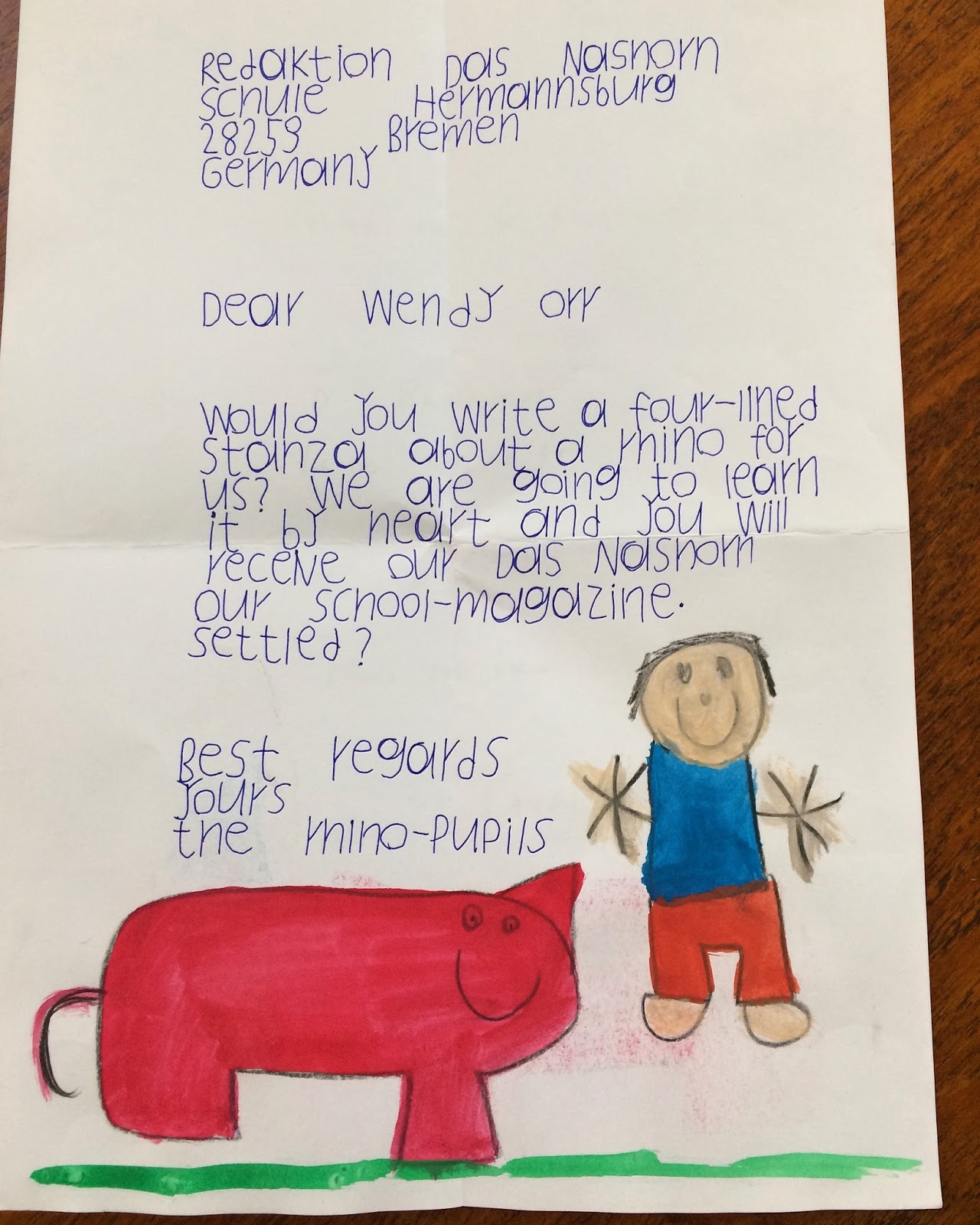 They also enclosed copies of verses they’ve received from Doris Lessing and Patrick Modiano, both writers I particularly admire (as well as the minor detail of being Nobel prize winners). Obviously this has been going for some time, as Doris Lessing died three years ago – and equally obviously, I could not have said No even if I’d wanted to!

I wrote a little verse, and then remembered that I had a picture of giving a baby rhinoceros a mud bath on a Behind the Scenes tour of the Australia Zoo, the day of the Return to Nim’s Island premiere. So I wrote another verse about the baby rhino, and am now trying to decide which one to send.
Now I have to choose one to send off with this bonus photo – which one would you vote for? Let me know in the comments below.
I presume they knew me through these rather lovely editions of Nim's Island and Raven's Mountain.
Nim's Island - How do you hide an Island?
Raven's Mountain

October 20, 2016
My Top 5 First Draft Tips
With NaNoWriMo creeping steadily closer, I thought I’d give my top 5 tips on pushing through your first draft. Sometimes I need to remind myself of my own rules, so even if you’re not signing up for an official challenge, these still might help in getting that all important first draft downloaded from your head to paper or screen.
 Tapping for the inner critic, CYA masterclass1) Send your inner critic on holiday. The meanie voice – my editor’s technical term – is not helpful in a first draft. In fact, it’s extremely detrimental. (I use EFT for this, but you can use any self talk that works for you.) And don’t worry, it will come back when you’re editing.
If the critic creeps back and points out that what you’ve just spent the last three days writing is complete garbage, tell it you don’t care. Every bit of garbage you write is teaching you more about your story. Even if you throw out every word in subsequent drafts, your first draft will have done its job. 2) Take quick breaks from the screen – stand up and stretch every half hour, walk around a bit. Go for a walk outdoors every day, without a mobile phone. Meditate, do your yoga or tai chi. Your draft will be better if you’re physically and mentally healthy. 3) While you’re writing, close email, turn off social media notifications and put your phone on Do Not Disturb. Each distraction might only seem momentary, but if it jolts you out of your own world, it takes much more than that out of your writing time. You need to be able to relax into your story to let it flow.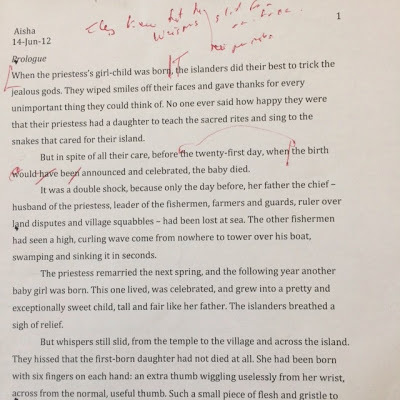 Early draft of Dragonfly Song -when Aissa was Aisha4) Don’t stop just because you’re stuck in one spot. If you find you’ve got a character without a name, call it Joe* or Jane* or just plain X or *. The name is likely to be much more obvious when you’ve written more of the story.
If a whole scene is stalling you, just skip it. Put in a chapter marking and whatever thoughts you have, even if it’s just ‘Linking Scene or Passage of time??’
The brighter side is – if you have a scene that is exceptionally clear in your head or demands to be written because it is in line with your own mood at the moment – just do it. If it’s that clear, it’s probably a pivotal point in the book. Writing it may help clarify all the steps towards it. 5) If you’re halfway through and decide that it really should be written in the first person instead of the third, or the past tense instead of the present, just go ahead and try. If it feels right, you can change the beginning when you redraft later. If it doesn’t you can revert to the person and tense that you started with.
So – to sum up: Remember that this first draft is for fun, exploration, and the wastepaper basket.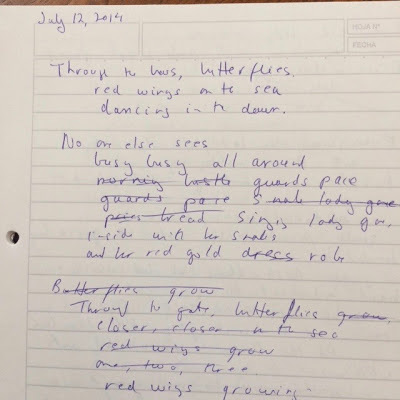 A new first draft, 2 years later
Keep moving forward, no matter what.
Have faith that you will find the best way to tell this story; even if it takes more drafts and experiments than you hoped, each step and misstep will takeyou closer to that best.
 Tapping for the inner critic, CYA masterclass1) Send your inner critic on holiday. The meanie voice – my editor’s technical term – is not helpful in a first draft. In fact, it’s extremely detrimental. (I use EFT for this, but you can use any self talk that works for you.) And don’t worry, it will come back when you’re editing.
 If the critic creeps back and points out that what you’ve just spent the last three days writing is complete garbage, tell it you don’t care. Every bit of garbage you write is teaching you more about your story. Even if you throw out every word in subsequent drafts, your first draft will have done its job. 2) Take quick breaks from the screen – stand up and stretch every half hour, walk around a bit. Go for a walk outdoors every day, without a mobile phone. Meditate, do your yoga or tai chi. Your draft will be better if you’re physically and mentally healthy. 3) While you’re writing, close email, turn off social media notifications and put your phone on Do Not Disturb. Each distraction might only seem momentary, but if it jolts you out of your own world, it takes much more than that out of your writing time. You need to be able to relax into your story to let it flow.
 Early draft of Dragonfly Song -when Aissa was Aisha4) Don’t stop just because you’re stuck in one spot. If you find you’ve got a character without a name, call it Joe* or Jane* or just plain X or *. The name is likely to be much more obvious when you’ve written more of the story.
 If a whole scene is stalling you, just skip it. Put in a chapter marking and whatever thoughts you have, even if it’s just ‘Linking Scene or Passage of time??’
The brighter side is – if you have a scene that is exceptionally clear in your head or demands to be written because it is in line with your own mood at the moment – just do it. If it’s that clear, it’s probably a pivotal point in the book. Writing it may help clarify all the steps towards it. 5) If you’re halfway through and decide that it really should be written in the first person instead of the third, or the past tense instead of the present, just go ahead and try. If it feels right, you can change the beginning when you redraft later. If it doesn’t you can revert to the person and tense that you started with.
So – to sum up: Remember that this first draft is for fun, exploration, and the wastepaper basket.
 A new first draft, 2 years later
Keep moving forward, no matter what.
Have faith that you will find the best way to tell this story; even if it takes more drafts and experiments than you hoped, each step and misstep will takeyou closer to that best.
October 6, 2016
Blending traditions - pumpkin pie for AFL grand final
Part of being a migrant is developing your own rituals, blended from your country of origin and your new home. That holds true even for privileged migrants like me – privileged in the sense of an easy transition between two similar countries speaking the same language.
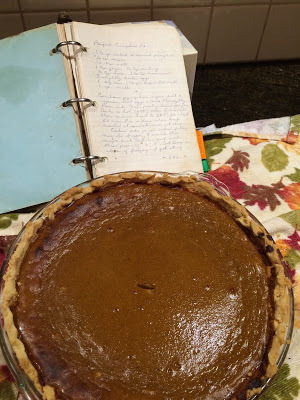 So last weekend, a long weekend in Victoria to celebrate the AFL grand final, which happens to be the weekend before Canadian Thanksgiving, my family celebrated our own version. The only rule everyone insisted on was that there had to be pumpkin pie. And of course I used the recipe my mother wrote out for me in the handmade recipe book she gave me when I got married.
The picture I posted on Facebook got so much reaction from my Australian friends that I agreed to post the recipe. I think it was originally adapted from Better Homes & Gardens.
My mother's Pumpkin Pie
1 shortcrust pie shell – 9” or 22 cm
1 ½ c cooked smoothly mashed pumpkin
¾ c sugar
¼ tsp salt1 tsp ginger½ tsp nutmeg
½ tsp cloves
1 ¼ tsp cinnamon3 slightly beaten eggs
1 ¾ c milk
Combine pumpkin, sugar & spices. Add eggs & milk and mix thoroughly. Pour into pie shell. Bake for 5 minutes in hot oven – 400’ F or 200 ‘ C, 180’ for fan forced Lower heat to 325’F or 165 C for 50 minutes. Pie is done when knife inserted at centre comes out clean.
Serve warm or room temperature.
 So last weekend, a long weekend in Victoria to celebrate the AFL grand final, which happens to be the weekend before Canadian Thanksgiving, my family celebrated our own version. The only rule everyone insisted on was that there had to be pumpkin pie. And of course I used the recipe my mother wrote out for me in the handmade recipe book she gave me when I got married.
 The picture I posted on Facebook got so much reaction from my Australian friends that I agreed to post the recipe. I think it was originally adapted from Better Homes & Gardens.
My mother's Pumpkin Pie
1 shortcrust pie shell – 9” or 22 cm
1 ½ c cooked smoothly mashed pumpkin
¾ c sugar
¼ tsp salt1 tsp ginger½ tsp nutmeg
½ tsp cloves
1 ¼ tsp cinnamon3 slightly beaten eggs
1 ¾ c milk
Combine pumpkin, sugar & spices. Add eggs & milk and mix thoroughly. Pour into pie shell. Bake for 5 minutes in hot oven – 400’ F or 200 ‘ C, 180’ for fan forced Lower heat to 325’F or 165 C for 50 minutes. Pie is done when knife inserted at centre comes out clean.
Serve warm or room temperature.
September 8, 2016
Difficult to judge; delightful to read: the Environment Award for Children's Literature
I was thrilled to have Rescue on Nim's Island win the Environment Award for Children's Literature, fiction, and the Puggles award in 2015, so I was honoured to be one of the judges, and the guest speaker for this year's awards.
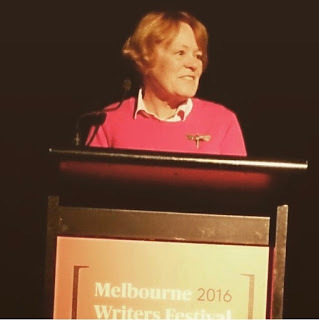 photo by Coral Vass
Coral Vass has covered the awards for Kids' Book Review, so I won't repeat it all, but you can read my speech below. It was wonderful to meet many of the authors and illustrators on the day - and I was very pleased that I had actually seen Rohan Cleave being interviewed on the phasmids (Lord Howe stick insects) on the news the night before the awards. That's not something that happens often with children's literature!
And a bit of trivia: all three of the shortlisted picture books were by an author-illustrator, rather than being written by one person and illustrated by another.
On a serious note, the threat to the Australian publishing industry means that, like many authors participating in festivals around Australia this month, I showed a Save Oz Stories placard:
“Audience members may not be aware that the Australian book industry is under threat. The Productivity Commission has proposed a number of changes to copyright that will result in fewer Australian publishers, booksellers and authors. We need to make our voices heard. If you enjoy events like this, and if you value Australian stories, visit www.bookscreateaustralia.com.au and sign the petition.’
Since it’s Father’s Day, I thought I’d start with an embarrassing Dad story. We travelled a lot when I was a child, and whenever we stopped for a picnic lunch, or camped my father would always pick up all the rubbish at the site. Can you imagine how humiliating that was by the time I was a young teen – my father picking up other people’s garbage? And can you imagine how I admire him now that he’s 85 and walks with a stick – and still wobbles off the road when he’s walking the dogs, to pick up a coke can instead of leaving it there to pollute the woods or roll down to the sea?
And yes, whether I’m walking my dog around the bush near our home or on the beach, I usually pick up rubbish too. Not to copy my dad, but because one of the most valuable lessons my parents taught me was to love and respect nature: its beauty, and its complexity. So it’s partly because each plastic bag or six pack loop that I remove is one less that an animal might swallow or be trapped in. But even if all the rubbish was instantly biodegradable, I wouldn’t want to see it. Walking in the bush, or on a lonely beach, is something that replenishes my spirit. Sometimes, when a breeze rustles leaves, or wild waves whip the ocean, story ideas come to me – but most importantly, is that being out in the natural world settles me, at the same time that it makes me feel fully alive. And so it’s important for me to care for it.
 It doesn’t matter that I grew up in Europe and North America – the feeling is the same, and so are some of the lessons. Whether it’s a rattlesnake or a king brown, leave it alone. Enjoy watching a hedgehog or an echidna, but leave them in the wild to live their own lives. The bears are just less likely to eat you in Australia.
So the environment – loving it, being in it, hiking in it, and caring for it – is part of who I am. Recently, at the launch of Dragonfly Song, I was asked why the environment is so powerful in my books. But just as I can’t separate who I am from what I write, I can’t separate the environment from my plots. The environment acts on our real lives, and if it doesn’t act on our stories, then those stories will fail to live. After all, a writer’s job is to create a world – and the environment is what makes the world. We need to understand our real environment to create fictitious ones, no matter how way out those fictitious ones might be.
Not that everything needs to be didactic. I think the only environmental message in Dragonfly Song, set in 1460 BCE, is that the chief has killed the last lion in the island’s mountains. Goatherds are pretty happy about that, and we don’t see any environmental consequences in the time period of the book. But I still hope that readers might think about it.
Of course my environmentally focussed character is Nim, of Nim’s Island. I didn’t set out to make her a wildlife warrior – it was just the only way to make her true to the environment I built for her. However, it was fantastic to realise that kids around the world saw her as a model in that way (even this week I got letters from children who’d made solar ovens after reading the book.). So I know how the shortlisted authors feel today, because I was absolutely thrilled last year when Rescue on Nim’s Island won the Environment award for fiction, as well as the Puggles. I always feel it’s the award that mattered most to Nim.
But there’s more to these particular awards than making writers and their imaginary friends happy. The other day, looking out at a bunch of blue wrens and yellow robins, my husband said, ‘If people could only see the birds we have here, they’d take more care of their bush.’ We live on 5 acres of bush in the Mornington Peninsula, and it was quite degraded when we moved there – so there were lots of parrots and kookaburras in the big eucalypts, but not enough indigenous understory for the small birds. As the natural bush has been restored, the birds have come back. And of course there are echidnas, very occasional koalas – and in summer we walk through clouds of butterflies, so thick they sometimes brush our faces.
Because it’s important to remember that when we’re talking about environment, we need to start with what’s right around us. It’s great to protest to save whales or rainforests in other parts of the world – but if you replace agapanthus with the rushes that indigenous butterflies breed in, you can help save a species in your own garden. Sometimes small changes can accomplish big things.
The books on this shortlist do more than walk us around one tiny piece of restored bushland. They captivate and entertain us – and along the way, inspire us to find out more about our natural environment, maybe to act on it – and I hope, to love it.
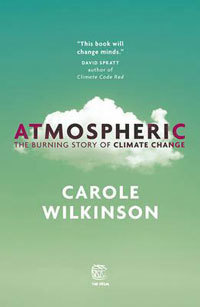 Shortlist: Non-fiction: Atmospheric: by Carole Wilkinson – absolutely packed with facts about the atmosphere, problems in the environment today and throughout history – as well as lots of ideas for action you can take to help. (Winner)
Platypus – Written by Sue Whiting and illustrated by Mark Jackson – I loved everything about this book, but I’m just going to point out the very interesting layout – P 12: with the larger font for the story of what this platypus is doing, and the smaller font for general facts. It works really well.
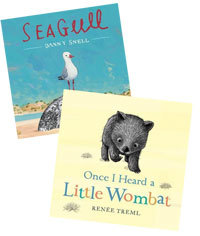 Phasmid: Written by Rohan Cleave and illustrated by Coral Tulloch –fascinating story about phasmids – the Lord Howe Island stick insects, which were thought to be extinct after black rats from a 1918 shipwreck spread over the island and ate them – until 3 were discovered in in 2001. And like platypus, beautifully illustrated.
Picture Fiction - Seagull by Danny Snell – I once saw a seagull that had lost both its feet, presumably from fishing line, and I was SO relieved that Danny Snell allowed this one to eventually be saved, while still alerting us to the danger. (Joint winner)
A River by Marc Martin – this story of a child dreaming of how the river travels from her city to the sea is just exquisite
Once I Heard a Little Wombat by Renee Treml – read a bit rather than tell you how delightful it is (joint winner)
Fiction - Thirst by Lizzie Wilcock – This is a great action and survival story – emotional healing as well as physical survival, with really lovely descriptions of the Australian outback – without trivializing any of its harshness.
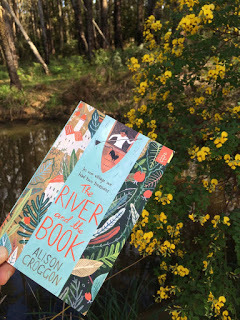
The River and the Book by Alison Croggon – A beautifully written book: I loved the mythic quality of the story, and found that the interweaving of respect for a sacred book and nature really lingered in my mind. (Winner)
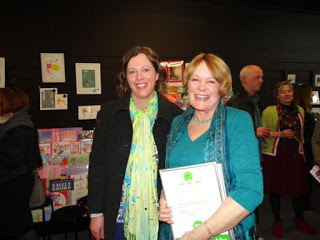 And from last year's awards:
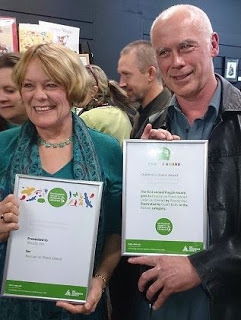 Mister Cassowary by Samantha Wheeler – This is another book that, with a bit of fun, courage and family mystery, doesn’t minimize the risks in dealing with birds like cassowaries – actually, I don’t know that there are many birds like cassowaries! – and emphasizes the respect we need to show for nature.
 photo by Coral Vass
Coral Vass has covered the awards for Kids' Book Review, so I won't repeat it all, but you can read my speech below. It was wonderful to meet many of the authors and illustrators on the day - and I was very pleased that I had actually seen Rohan Cleave being interviewed on the phasmids (Lord Howe stick insects) on the news the night before the awards. That's not something that happens often with children's literature!
And a bit of trivia: all three of the shortlisted picture books were by an author-illustrator, rather than being written by one person and illustrated by another.
On a serious note, the threat to the Australian publishing industry means that, like many authors participating in festivals around Australia this month, I showed a Save Oz Stories placard:
“Audience members may not be aware that the Australian book industry is under threat. The Productivity Commission has proposed a number of changes to copyright that will result in fewer Australian publishers, booksellers and authors. We need to make our voices heard. If you enjoy events like this, and if you value Australian stories, visit www.bookscreateaustralia.com.au and sign the petition.’
Since it’s Father’s Day, I thought I’d start with an embarrassing Dad story. We travelled a lot when I was a child, and whenever we stopped for a picnic lunch, or camped my father would always pick up all the rubbish at the site. Can you imagine how humiliating that was by the time I was a young teen – my father picking up other people’s garbage? And can you imagine how I admire him now that he’s 85 and walks with a stick – and still wobbles off the road when he’s walking the dogs, to pick up a coke can instead of leaving it there to pollute the woods or roll down to the sea?
And yes, whether I’m walking my dog around the bush near our home or on the beach, I usually pick up rubbish too. Not to copy my dad, but because one of the most valuable lessons my parents taught me was to love and respect nature: its beauty, and its complexity. So it’s partly because each plastic bag or six pack loop that I remove is one less that an animal might swallow or be trapped in. But even if all the rubbish was instantly biodegradable, I wouldn’t want to see it. Walking in the bush, or on a lonely beach, is something that replenishes my spirit. Sometimes, when a breeze rustles leaves, or wild waves whip the ocean, story ideas come to me – but most importantly, is that being out in the natural world settles me, at the same time that it makes me feel fully alive. And so it’s important for me to care for it.
 It doesn’t matter that I grew up in Europe and North America – the feeling is the same, and so are some of the lessons. Whether it’s a rattlesnake or a king brown, leave it alone. Enjoy watching a hedgehog or an echidna, but leave them in the wild to live their own lives. The bears are just less likely to eat you in Australia.
 So the environment – loving it, being in it, hiking in it, and caring for it – is part of who I am. Recently, at the launch of Dragonfly Song, I was asked why the environment is so powerful in my books. But just as I can’t separate who I am from what I write, I can’t separate the environment from my plots. The environment acts on our real lives, and if it doesn’t act on our stories, then those stories will fail to live. After all, a writer’s job is to create a world – and the environment is what makes the world. We need to understand our real environment to create fictitious ones, no matter how way out those fictitious ones might be.
Not that everything needs to be didactic. I think the only environmental message in Dragonfly Song, set in 1460 BCE, is that the chief has killed the last lion in the island’s mountains. Goatherds are pretty happy about that, and we don’t see any environmental consequences in the time period of the book. But I still hope that readers might think about it.
Of course my environmentally focussed character is Nim, of Nim’s Island. I didn’t set out to make her a wildlife warrior – it was just the only way to make her true to the environment I built for her. However, it was fantastic to realise that kids around the world saw her as a model in that way (even this week I got letters from children who’d made solar ovens after reading the book.). So I know how the shortlisted authors feel today, because I was absolutely thrilled last year when Rescue on Nim’s Island won the Environment award for fiction, as well as the Puggles. I always feel it’s the award that mattered most to Nim.
But there’s more to these particular awards than making writers and their imaginary friends happy. The other day, looking out at a bunch of blue wrens and yellow robins, my husband said, ‘If people could only see the birds we have here, they’d take more care of their bush.’ We live on 5 acres of bush in the Mornington Peninsula, and it was quite degraded when we moved there – so there were lots of parrots and kookaburras in the big eucalypts, but not enough indigenous understory for the small birds. As the natural bush has been restored, the birds have come back. And of course there are echidnas, very occasional koalas – and in summer we walk through clouds of butterflies, so thick they sometimes brush our faces.
Because it’s important to remember that when we’re talking about environment, we need to start with what’s right around us. It’s great to protest to save whales or rainforests in other parts of the world – but if you replace agapanthus with the rushes that indigenous butterflies breed in, you can help save a species in your own garden. Sometimes small changes can accomplish big things.
The books on this shortlist do more than walk us around one tiny piece of restored bushland. They captivate and entertain us – and along the way, inspire us to find out more about our natural environment, maybe to act on it – and I hope, to love it.
 Shortlist: Non-fiction: Atmospheric: by Carole Wilkinson – absolutely packed with facts about the atmosphere, problems in the environment today and throughout history – as well as lots of ideas for action you can take to help. (Winner)
 Platypus – Written by Sue Whiting and illustrated by Mark Jackson – I loved everything about this book, but I’m just going to point out the very interesting layout – P 12: with the larger font for the story of what this platypus is doing, and the smaller font for general facts. It works really well.
 Phasmid: Written by Rohan Cleave and illustrated by Coral Tulloch –fascinating story about phasmids – the Lord Howe Island stick insects, which were thought to be extinct after black rats from a 1918 shipwreck spread over the island and ate them – until 3 were discovered in in 2001. And like platypus, beautifully illustrated.
 Picture Fiction - Seagull by Danny Snell – I once saw a seagull that had lost both its feet, presumably from fishing line, and I was SO relieved that Danny Snell allowed this one to eventually be saved, while still alerting us to the danger. (Joint winner)
A River by Marc Martin – this story of a child dreaming of how the river travels from her city to the sea is just exquisite
Once I Heard a Little Wombat by Renee Treml – read a bit rather than tell you how delightful it is (joint winner)
Fiction - Thirst by Lizzie Wilcock – This is a great action and survival story – emotional healing as well as physical survival, with really lovely descriptions of the Australian outback – without trivializing any of its harshness.
The River and the Book by Alison Croggon – A beautifully written book: I loved the mythic quality of the story, and found that the interweaving of respect for a sacred book and nature really lingered in my mind. (Winner)
 And from last year's awards:
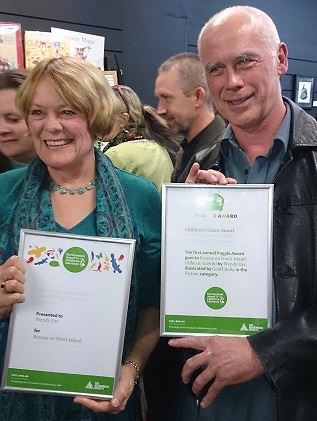 Mister Cassowary by Samantha Wheeler – This is another book that, with a bit of fun, courage and family mystery, doesn’t minimize the risks in dealing with birds like cassowaries – actually, I don’t know that there are many birds like cassowaries! – and emphasizes the respect we need to show for nature.
 August 27, 2016
The gift of bonded pair rescue cats - Harry the Rescue Dog's Rainbow Street Animal Shelter blog
Harry the Rescue Dog hasn't posted in his Rainbow Street Animal Shelter blog for a while, so in penance, we're sharing a cat story today.
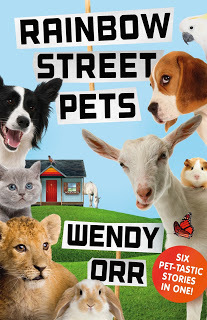 Australian edition
Have you heard of bonded pairs? For this context, they're animals who've lived together and arrived at the shelter together, and the shelter feels that they are too closely bonded to be separated.
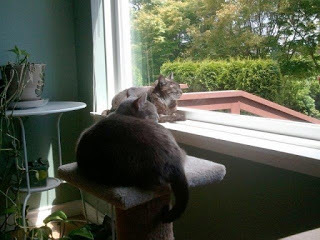
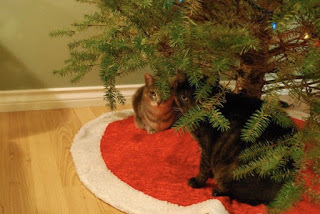
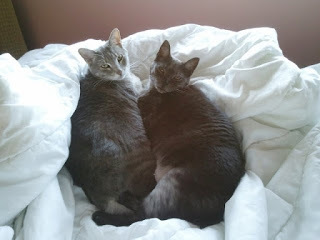
When a friend's Jack Russell dog died, at an enormous old age, she and her teenage daughter decided that they weren't ready for another dog, but that they would like a cat. One little cat. So they headed off to the shelter, and met quite a lot of cats and kittens, but none that really spoke to them. The worker asked if they'd considered a bonded pair - just about at the same moment that my friend's daughter spotted these two cats. The four of them of them quickly fell in love, and by the time my friend was asked to come to the office for a special discussion about these cats, she knew she couldn't change her mind, no matter what dread news was about to be discussed.
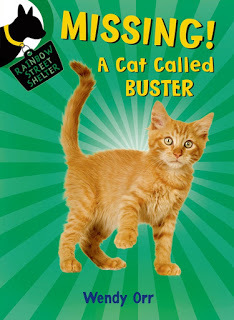 US edition: Rainbow Street Shelter Book 2
This pair of cats, the shelter manager explained, had outlived their owners. The will specified that they were to be cared for in a shelter until someone arrived who wanted them both. Only after the person committed to the cats would they be told that all vet bills would be covered for life; even the annual checkup, worming etc, would be done by house call.
We stayed with my friend last year (we as in husband and me, not Harry) and can guarantee that they were lovely cats, and very happy in their new home.
So, when you're ready for an animal companion and you head to the shelter to meet them, you never know what story might come with them! And anyone who's old enough to make a will - i.e. any adult - perhaps we should think about what would happen to our pets if we should die unexpectedly.
On that cheerful note, a long and healthy life to all of us and our pets!
 Australian edition
Have you heard of bonded pairs? For this context, they're animals who've lived together and arrived at the shelter together, and the shelter feels that they are too closely bonded to be separated.
When a friend's Jack Russell dog died, at an enormous old age, she and her teenage daughter decided that they weren't ready for another dog, but that they would like a cat. One little cat. So they headed off to the shelter, and met quite a lot of cats and kittens, but none that really spoke to them. The worker asked if they'd considered a bonded pair - just about at the same moment that my friend's daughter spotted these two cats. The four of them of them quickly fell in love, and by the time my friend was asked to come to the office for a special discussion about these cats, she knew she couldn't change her mind, no matter what dread news was about to be discussed.
 US edition: Rainbow Street Shelter Book 2
This pair of cats, the shelter manager explained, had outlived their owners. The will specified that they were to be cared for in a shelter until someone arrived who wanted them both. Only after the person committed to the cats would they be told that all vet bills would be covered for life; even the annual checkup, worming etc, would be done by house call.
We stayed with my friend last year (we as in husband and me, not Harry) and can guarantee that they were lovely cats, and very happy in their new home.
So, when you're ready for an animal companion and you head to the shelter to meet them, you never know what story might come with them! And anyone who's old enough to make a will - i.e. any adult - perhaps we should think about what would happen to our pets if we should die unexpectedly.
On that cheerful note, a long and healthy life to all of us and our pets!


July 28, 2016
Dragonfly Song Giveaway: Books & Skype Talks
 Kersey Creek's photo from OneSchoolOne Book Have I ever said how much I love Skype talks? I think the biggest percentage I do are with schools in the USA that are studying Nim's Island for One School One Book. (I will blog about that amazing program another time.) In Australia I've done them for general writing talks as well as for individual books.
 And now I'm so excited about the feedback and reviews I've been getting for Dragonfly Song, both formal and informal (like people phoning and emailing to say they're loving it – that is so nice!) that I'm offering a free Skype talk to the first three schools to order a class set.
 e.g. Dimity Powell writes: '...the sweeping majesty of an epic novel and the thrill of a mid-grade fantasy that will win leagues of young new fans. Powerful, eloquent and moving, Dragonfly Song is a story you will never want to leave.'
And Pamela Freeman (Pamela Hart) said on Facebook: 'Everyone must read this. It's right up there with The Wizard of Earthsea and Mary Stewart's The Crystal Cave.'
A whole list of quotes like this might not thrill you as much as it does me, so I'll quit there. Teaching notes and an excerpt from the book can be downloaded from my website: wendyorr.com or Allen and Unwin.
ALSO: GOODREADS IS GIVING AWAY 5 COPIES! But you have to be quick.
 A piece of chipped flint, like Aissa's 'knife'There are more classroom suggestion on Pinterest: Dragonfly Song Background and Teaching Ideas
 The books is suggested for ages 9 to 13, and ties in with the Victorian ancient history units in Year 7, but I'm visiting a school next week that's looking at it for their Year 10 classes. Have a look at the excerpt and decide for yourselves!
July 12, 2016
Dealing with Writers' Block - Part 1: Letting go of the previous story
I’ve never really believed in writers’ block – but I do think there are a lot of different reasons why we might have trouble writing at any one time. And right now I’ve hit one of them:
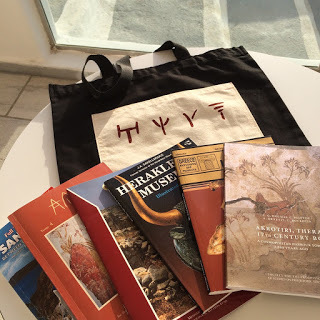 Aissa and Luki, and all the characters and stories of Dragonfly Song, have filled my mind for so long that it’s hard to let them go, especially now that I’m starting to hear lovely comments from readers. But more than that, I’ve just realised that I loved writing this story so much I’m afraid that I can never love another one quite as much. I remember a friend saying that she’d worried something similar before the birth of her second child. Needless to say, she was telling me because it hadn’t come true.
Of course I know this, but like a lot of life lessons (and most writing lessons are pretty much about life) I seem to have to learn it again each time it happens. But at least now I have some strategies.
· Noticing it. It’s true that I’ve been very busy. I finished the final proof read of Dragonfly Song days before going to Crete and Santorini to research the next book; I came back and jumped into preparing for the launch. But the launch was over a week ago now and I’m still finding lots of busywork today. I think it now has to be labelled procrastination. Time to do something about it. · Timetabling. Structure the time that I need to start on the new book and the time for social media, interviews and emails. The new book doesn’t need huge blocks of time right now. It does need concentration and focus.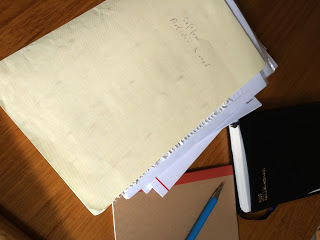 · Research. Again, the important thing here is corralling this into a specified time. I could spend the next ten years researching – but I’m not an archaeologist, I’m a fiction writer. I need to sort out notes and pictures, and read more of my huge stack of articles, but I actually have pretty well all the research I need to plan and write this book. I’ll find specific things that I need to know as I write, but I don’t have to know everything first. If I’m feeling truly stuck, a couple of hours of reading is likely to bring me at least one thing that will start an idea.
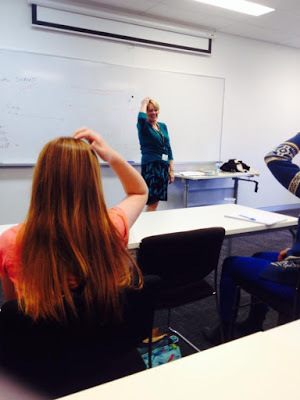 Tapping for the inner critic, CYA masterclass 2014· Synopsis. By the time I finished this, a couple of months before the final proofreading of Dragonfly Song, I was falling in love with my new character and her story. Now that Aissa has jumped to the foreground again, I know that fleshing out the synopsis and asking the questions I need to know, will reignite the new love affair.
· EFT Tapping. Always my go-to when I need to sort something out. After a round or two something about the story is usually so clear that I have to stop to get straight to work.
 Aissa and Luki, and all the characters and stories of Dragonfly Song, have filled my mind for so long that it’s hard to let them go, especially now that I’m starting to hear lovely comments from readers. But more than that, I’ve just realised that I loved writing this story so much I’m afraid that I can never love another one quite as much. I remember a friend saying that she’d worried something similar before the birth of her second child. Needless to say, she was telling me because it hadn’t come true.
 Of course I know this, but like a lot of life lessons (and most writing lessons are pretty much about life) I seem to have to learn it again each time it happens. But at least now I have some strategies.
· Noticing it. It’s true that I’ve been very busy. I finished the final proof read of Dragonfly Song days before going to Crete and Santorini to research the next book; I came back and jumped into preparing for the launch. But the launch was over a week ago now and I’m still finding lots of busywork today. I think it now has to be labelled procrastination. Time to do something about it. · Timetabling. Structure the time that I need to start on the new book and the time for social media, interviews and emails. The new book doesn’t need huge blocks of time right now. It does need concentration and focus.
 · Research. Again, the important thing here is corralling this into a specified time. I could spend the next ten years researching – but I’m not an archaeologist, I’m a fiction writer. I need to sort out notes and pictures, and read more of my huge stack of articles, but I actually have pretty well all the research I need to plan and write this book. I’ll find specific things that I need to know as I write, but I don’t have to know everything first. If I’m feeling truly stuck, a couple of hours of reading is likely to bring me at least one thing that will start an idea.
 Tapping for the inner critic, CYA masterclass 2014· Synopsis. By the time I finished this, a couple of months before the final proofreading of Dragonfly Song, I was falling in love with my new character and her story. Now that Aissa has jumped to the foreground again, I know that fleshing out the synopsis and asking the questions I need to know, will reignite the new love affair.
 · EFT Tapping. Always my go-to when I need to sort something out. After a round or two something about the story is usually so clear that I have to stop to get straight to work.
June 30, 2016
Dragonflies: myths, meanings and mysteries
 Dragonfly photo sent by my cousin when she heard the titleHappy birth day to my newest baby: Dragonfly Song. You've been a long time coming.
The dragonfly theme in the book began because when I first imagined the shape of the story and the questions I needed to answer, I saw them in an iridescent blue bubble - and the next day saw a real dragonfly, exactly the same colour. This kept happening: it seemed that whenever I made a significant decision about the story, I saw a dragonfly soon after. It became too much to ignore, and eventually I decided that my character's name, Aissa, meant dragonfly in the island's language. Her amulet - the carved name-stone around her neck, that she calls her mama stone - would therefore be carved with a dragonfly symbol.
 Met a friend wearing this as I picked up the advance copyI knew that dragonflies had many myths and symbolic meanings in different cultures around the world. Dragonflysite.com even categorises them by continent, so we can see that they range from symbols of purity to Satan, but suggests that the overwhelming belief is that they symbolise change and perhaps self-realisation. I didn't happen to read that summary until the book was finished, but it's particularly apt for Aissa.
However, despite all my reading on Minoan and Cycladic civilisations, I had no idea that the dragonfly was relevant to Aissa's own culture. Then a month ago, with the book safely with the printer, I went to Crete and had an amazing, mind-boggling day with an archaeologist as I started the research for my next book.
Of course I told her about Dragonfly Song. 'Of course,' she said, 'the dragonfly was an important symbol for the goddess, or her priestess.'
 Fragment of fresco with dragonfly, from AkrotiriOn one of the most famous frescos from Akrotiri, on Santorini, the goddess is wearing a dragonfly necklace. A ring from Archanes in Crete shows dragonflies hovering in front of the goddess; a dragonfly bead from Mochlos in Crete may have been worn by a priestess...
Life is full of coincidences and synchronicity, and sometimes story-making has more of them than the stories themselves.
June 22, 2016
Book Launch! And Blog Tour.
It's finally here - Dragonfly Song will be in stores across Australia next Monday. (The wait might not have seemed as long to you, but it's been on my computer for a long time, and in my heart for longer, and I'm actually having trouble believing that it's really going out into the world now.)
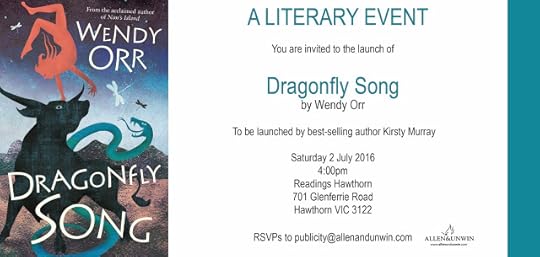
So if you're in Melbourne, I'd love you to come and celebrate its launch at Readings in Hawthorn, at 4 pm on July 2. Yes, election day - but wouldn't it be great to slip back to 1460 BCE for an hour or so and let present day politics slip away? I'm really thrilled to have Kirsty Murray launching it, so come and hear what she has to say.
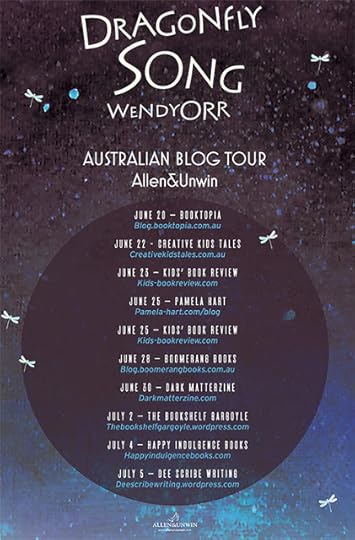
And in the meantime, I'm hopping around a great bunch of blogs. Booktopia started off with 10 Terrifying Questions yesterday, and today was an interview on Creative Kid Tales.
You can also read an excerpt on my website - and of course you can send me a question here!
So if you're in Melbourne, I'd love you to come and celebrate its launch at Readings in Hawthorn, at 4 pm on July 2. Yes, election day - but wouldn't it be great to slip back to 1460 BCE for an hour or so and let present day politics slip away? I'm really thrilled to have Kirsty Murray launching it, so come and hear what she has to say.

And in the meantime, I'm hopping around a great bunch of blogs. Booktopia started off with 10 Terrifying Questions yesterday, and today was an interview on Creative Kid Tales.
You can also read an excerpt on my website - and of course you can send me a question here!

June 16, 2016
When Hollywood Comes Knocking - Part 3: Green Light!
So your film’s been optioned, it’s spent years in development and now the script has been approved, the cast and crew are pretty well set… and finally you get that call. I still have the recording of Paula Mazur’s message on my answering machine: ‘I’ve got good news, girlfriend. We’ve got the green light.’
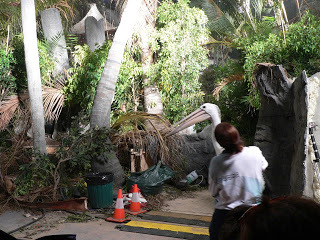 Lea the pelican arriving on set
And from the moment of that green light, everything springs into action. Preproduction – finalising cast, crew, locations… all the details so that when it goes into production, the actual filming, no time is wasted. And when that unbelievably intense period of filming is over, there’s post production, with editing and any special effects.
As the author, even if you’ve been a consultant on the script, or even if you’ve written it, you’re unlikely to have any rights be involved with any of these stages. But if you’re lucky, you’ll be invited to spend time on set.
You’re in someone else’s workplace, you have to obey their rules – but really, it’s not that complicated. This is not the time to suggest that they change something to the way that you envisaged it. And you can probably work out that if someone calls for silence and then shouts, ‘Rolling!’ you need to keep quiet. The rest of it probably depends on the directors and cast involved – but my advice is: if you get a chance, take it. It’s like nothing else.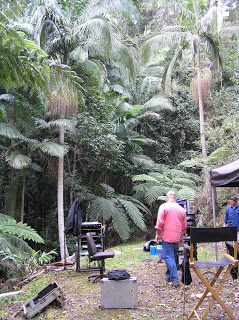 Setting up in the rainforest
I was lucky enough to spend a couple of 3 day periods on set for Nim’s Island, and one for Return to Nim’s Island. It was phenomenal. It’s difficult to describe the emotion of seeing your characters embodied in flesh and blood. The first time I arrived in the middle of the scene with Abigail Breslin as Nim, running down the mountain with a bloody bandage on her knee and Fred on her shoulder. It’s exactly as I described it in the book – and there it was. It was surreal. Of course it also quickly demonstrated the perils of filming with animals: every time Abbie turned her head to speak to Fred, played by the Australian Bearded Dragon Goblet, he’d crossed to her other shoulder. Goblet was more interested in staying in the sunshine than the camera.
 Later I met Jodie Foster and Gerard Butler … and they were so like the characters in my imagination that it was overwhelming, though I didn’t cry till I met the sea lion playing Selkie. In fact the human stars were much friendlier than the sea lion, who I’m pretty sure only kissed me because of the fish in his trainer’s hand. And a few years later, when I met Bindi Irwin playing Nim, it was the same – there, the storyline was different, but Bindi embodied the older Nim just as Abbie had the younger version.
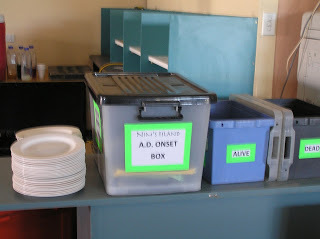 I was also an extra in Nim’s Island – I couldn’t think of a better way to understand a bit more about the whole procedure. So if you’re watching the film, when Alex Rover is going through security at San Francisco airport, I’m the first person in the scene, putting my bag on the Xray conveyor belt. You won’t see my husband, who went through first and ended up on the cutting room floor, but you’ll see the book’s illustrator, Kerry Millard, behind me, and then the producer’s two children. (In fact you’re unlikely to see me, because your eyes won’t have adjusted yet from the brilliant blue sky and sea of the previous scene, to see the somber airport colours.)
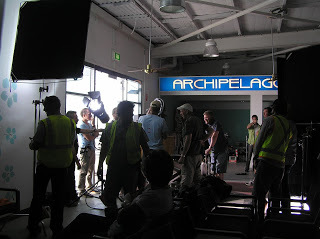 Filming in the airport
The filming was in the Gold Coast international airport, so we were going through the real security setup – over and over, to have it right by the time Jodie Foster appeared. And when she did, as I headed back to lay my bag on the belt again, she looked at me and called, ‘So you’re doing it today? Isn’t it boring?’
There were another 200 extras in the room, and I swear there was a single, group intake of shocked breath. Later that night a young man came up to me. ‘Are you family?’ he asked.
‘I wrote the book,’ I said.
 Lea the pelican arriving on set
And from the moment of that green light, everything springs into action. Preproduction – finalising cast, crew, locations… all the details so that when it goes into production, the actual filming, no time is wasted. And when that unbelievably intense period of filming is over, there’s post production, with editing and any special effects.
As the author, even if you’ve been a consultant on the script, or even if you’ve written it, you’re unlikely to have any rights be involved with any of these stages. But if you’re lucky, you’ll be invited to spend time on set.
You’re in someone else’s workplace, you have to obey their rules – but really, it’s not that complicated. This is not the time to suggest that they change something to the way that you envisaged it. And you can probably work out that if someone calls for silence and then shouts, ‘Rolling!’ you need to keep quiet. The rest of it probably depends on the directors and cast involved – but my advice is: if you get a chance, take it. It’s like nothing else.
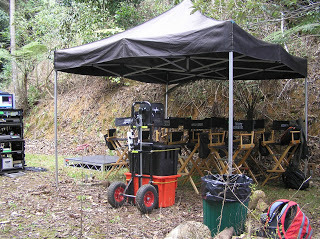
 Setting up in the rainforest
I was lucky enough to spend a couple of 3 day periods on set for Nim’s Island, and one for Return to Nim’s Island. It was phenomenal. It’s difficult to describe the emotion of seeing your characters embodied in flesh and blood. The first time I arrived in the middle of the scene with Abigail Breslin as Nim, running down the mountain with a bloody bandage on her knee and Fred on her shoulder. It’s exactly as I described it in the book – and there it was. It was surreal. Of course it also quickly demonstrated the perils of filming with animals: every time Abbie turned her head to speak to Fred, played by the Australian Bearded Dragon Goblet, he’d crossed to her other shoulder. Goblet was more interested in staying in the sunshine than the camera.
 Later I met Jodie Foster and Gerard Butler … and they were so like the characters in my imagination that it was overwhelming, though I didn’t cry till I met the sea lion playing Selkie. In fact the human stars were much friendlier than the sea lion, who I’m pretty sure only kissed me because of the fish in his trainer’s hand. And a few years later, when I met Bindi Irwin playing Nim, it was the same – there, the storyline was different, but Bindi embodied the older Nim just as Abbie had the younger version.
 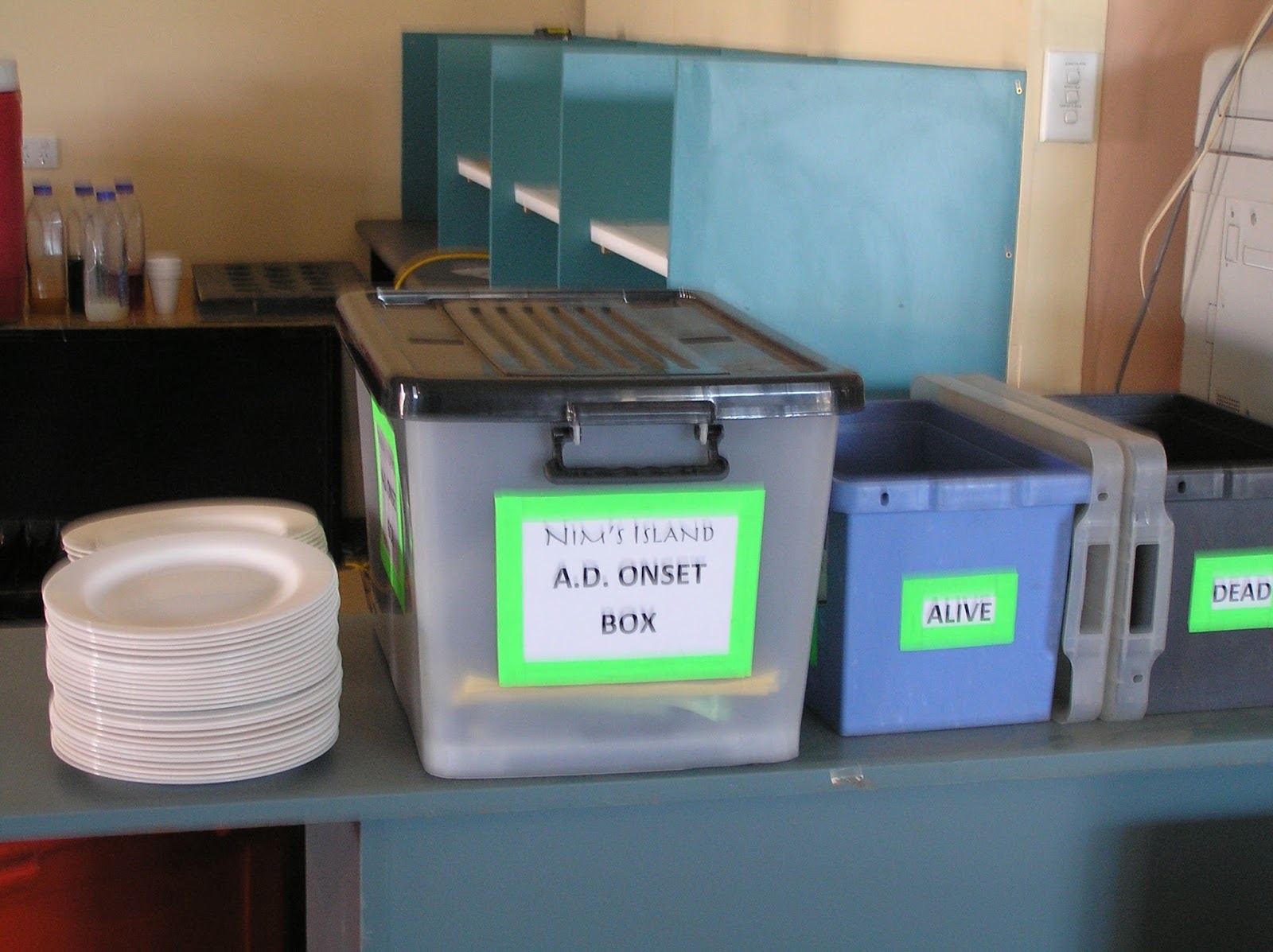 I was also an extra in Nim’s Island – I couldn’t think of a better way to understand a bit more about the whole procedure. So if you’re watching the film, when Alex Rover is going through security at San Francisco airport, I’m the first person in the scene, putting my bag on the Xray conveyor belt. You won’t see my husband, who went through first and ended up on the cutting room floor, but you’ll see the book’s illustrator, Kerry Millard, behind me, and then the producer’s two children. (In fact you’re unlikely to see me, because your eyes won’t have adjusted yet from the brilliant blue sky and sea of the previous scene, to see the somber airport colours.)
 Filming in the airport
The filming was in the Gold Coast international airport, so we were going through the real security setup – over and over, to have it right by the time Jodie Foster appeared. And when she did, as I headed back to lay my bag on the belt again, she looked at me and called, ‘So you’re doing it today? Isn’t it boring?’
There were another 200 extras in the room, and I swear there was a single, group intake of shocked breath. Later that night a young man came up to me. ‘Are you family?’ he asked.
‘I wrote the book,’ I said.