Randi E. Golub's Blog
February 19, 2015
The Power of One Bad Book Review
In the past six months I have packed up a house that I had lived in for 14 years, sold it, bought a new house, moved, reestablished my cat boarding business after designing and implementing the new cattery, started two new book projects, went on a much needed and enjoyed vacation overseas and recovered from the worst jet lag I've ever experienced. Having said all that it's no wonder I haven't written a blog post, reestablished contacts in the writing world or done any marketing on my already...


June 1, 2014
Ciao! Ciao Baby!
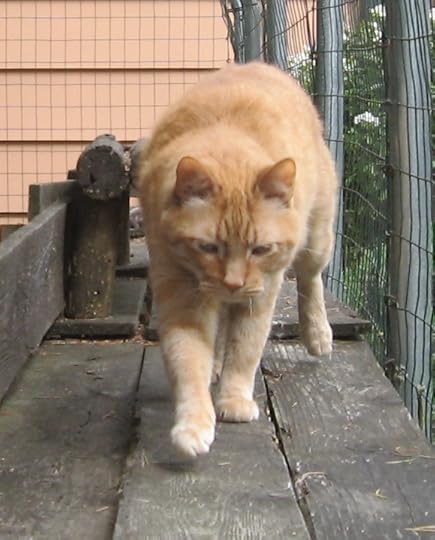
Ciao Baby in his enclosure coming to tell me something very important !
As animal lovers we know it’s often heartbreaking saying good bye to one of our cats or dogs because with some we have an amazing connection. (And I’m sorry but I sort of think some of you might want to grab a few tissues right about now.)
A few days ago I had to say good bye to Ciao Baby, my funny and demanding 17 year old orange tabby. I’ll tell you more about our connection in a minute but f...
May 9, 2014
My Best Mother's Day Ever !
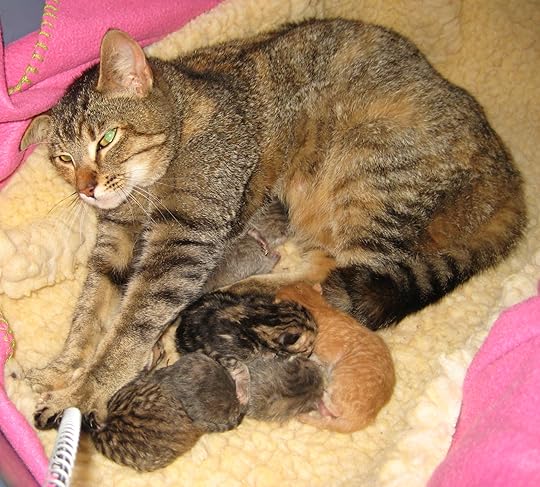
Isis and her adorable kittens - Mother's Day 2011
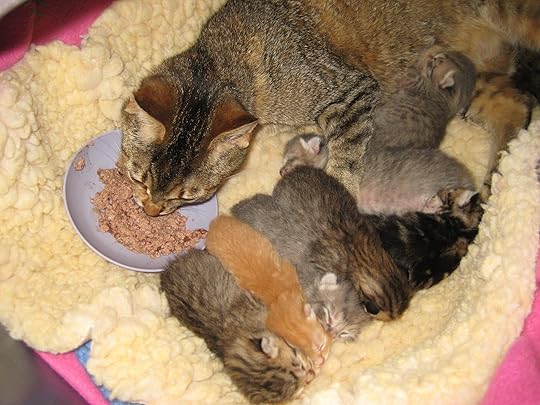
A well deserved meal for a hard working Mother!
<!--[if gte mso 9]>
May 6, 2014
Writing fever!
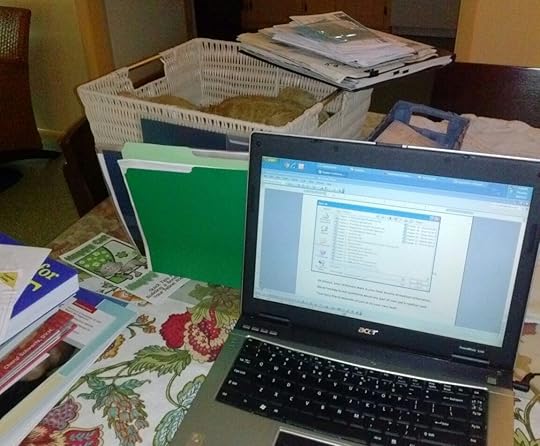
Look closely.....Can you see my writing assistant?
<!--[if gte mso 9]>
April 29, 2014
Keeping Your Pet Hydrated Part II - Giving fluids at home

Bumble - The Purrect Patient !!
<!--[if gte mso 9]>
April 24, 2014
Pilling a cat IS Rocket Science!

Yesterday I had in-home appointments all over town. I was mostly trimming cat nails, giving tips for getting finicky cats to eat and administering SC (subcutaneous) fluids. But I was also delivering the news that I had finally figured out where to buy the elusive hickory smoke flavored Greenies brand Pill Pockets® that have fooled every cat I have ever given a pill to, when the pill was wrapped in a tiny piece of this. While this might not sound like rocket science, if you have ever tried to make a cat eat a pill….you know it might as well be rocket science. And I can thank a cat named Slinky, a wonderful but especially difficult-to-pill cat for this major breakthrough in the world of pilling cats. Slinky was boarding with me at CatNurse Cottage and needed to get a tiny sliver of a very bitter pill. I tried all my usual tricks (see below) but nothing worked until I remembered I had a small unlabeled sample of what looked like a dog size Pill Pocket. I opened it up and immediately wanted to eat it myself! It smelled yummy. Then Slinky perked up, looked around sniffing the air and when I put the pill in the pocket in front of him, he scarfed it up in heartbeat. And the next day he ate it again…and again…. and again…as has every cat I have tried it with since. This is miracle stuff! But my stash was running low; I had to find out exactly what this sample was before I ran out. I finally found them yesterday at a farm store away from town. I was so excited to open up the package and smell that hickory smoke flavor that I exclaimed Eureka! I have found them! Then I called Slinky’s Mom and said “I’m on my way over! I have a whole bag of them!” And at every appointment I had after that, I shared the goods with grateful cat parents. As you know, sometimes it’s the little things in life, although getting your cat to take its pill is no little thing.
Here are more tips for giving your cat a pill: Hide it in a Pill Pocket and offer it this way. Hide it in a Pill Pocket and bury in some very tasty canned food. Hide it in a Pill Pocket and put in a bowl with a few pieces of a kind of dry food or treats that your cat LOVES but usually doesn’t get. If it is not a bad tasting pill you can crush it and add it to a small amount of tuna water, chicken gravy or some very yummy food. (Keep in mind that what we consider bad tasting or not differs from your cat’s opinion because humans and cats have very different taste buds.) Often anything added to food makes it highly suspect. Add the crushed pill to a small amount of food and watch to make sure they eat it. Once your cat has eaten that amount you can give them the rest of their meal. My friend Nydia came up with a great idea for getting her cat to eat its pill in a Pill Pocket. She placed the pill in the pocket and lightly moistened the pocket. She then “breaded” the pocket with a powdered freeze dried chicken treat. She said this works like a charm! Freeze dried treats also come in salmon, beef and turkey flavors.Do you have any favorite tips for pilling your cat? Comment below and share your tips!
(For much more information on medicating cats and dogs please see my book The Feel Better Book for Cats & Dogs - Nursing Care for All Life Stages)
April 17, 2014
Keeping Your Pet Well Hydrated - Part I

http://www.publicdomainpictures.net/v...
Making sure your pet stays well hydrated is especially important with warm weather on the way (believe it or not east coasters!) You can help pets avoid dehydration and encourage a healthy urinary system by feeding fresh and canned foods. Getting more moisture into your pet’s system is important throughout its life and especially as it ages. Try to make moist foods the majority of every older cat and dog's diet.
How to Get More Moisture Into Your Pet
* Canned food, all meat/no grain varieties are good choices
* Balanced raw food diet
* Cooked chicken or turkey breast with broth
* Low fat plain yogurt
* Cottage cheese
* Organ meats such as heart, liver or kidneys
* Gizzards
* Steamed vegetables such as squash or broccoli. Grinding helps break down cellulose and make raw vegetables more digestible for pets.
* Green beans, pea pods and Jerusalem artichokes are also good choices as they contain substances that are related to or may mimic insulin.
* Encouraging water consumption.
Encouraging Water Consumption
To encourage your pet to drink more, provide plenty of cool fresh water at all times. Filtered or spring water is a good idea to use as it may taste fresher and contains fewer particles for the kidneys to process. Distilled water is not a good choice, as it may actually flush needed minerals out of the body.
Try to provide several types of drinking stations for your pet through out the house and cater to your pet’s wishes for drinking water (except out of the toilet.) Try different types of bowls; some cats and dogs prefer a really wide bowl or have a preference for glass, ceramic or stainless steel. Many a small dog or cat will appreciate their own glass of water on the night table. (Use caution and/or plastic cups, as some animals have been known to knock over the glass in the middle of the night!) One client of mine even has two cups on her night table. Both are plastic, but hers has a plastic lid and straw. Now she and her kitty are both happy!
Many cats and dogs like to drink fresh running water. As a result, there are now several different types of water fountains for pets on the market. Some pets (especially cats) can be suspicious of new things; so make sure you know they are drinking out of the fountain before removing the other water bowls. One of my clients told me her cat wouldn’t go near the new water fountain until she sprinkled treats around it. Eventually she was able to taper off placing the treats there, and the cat started to use the fountain!
Another client of mine got her dog to drink more by floating his favorite treats in the water bowl while he was watching. Another client puts a few inches of clean water in her bathroom sink every morning for her cat. Think out of the bowl and provide your pet with plenty of opportunities to get more fluids!
Adding warm water or broth to your pet’s food is another way to get them to consume more liquids. Low sodium beef, chicken, vegetable broth or tuna water can also be offered to supplement your pet's fresh water. If you are tempted to serve your pet low sodium soup, read the list of ingredients carefully, and do not give it to your pet if the soup contains onion powder. Onion powder can cause changes to red blood cells and can cause illness or even death.
Your veterinarian may at some point recommend giving subcutaneous (SC) injections of saline solution under the skin to support hydration and keep the kidneys flushed. Commonly prescribed types of fluids are normal saline solution (Normosol) and lactated ringers solution (LRS). When low potassium levels (hypokalemia) are an issue, some veterinarians will add potassium to the fluid bag for additional benefit. Vitamin B may also be added to the fluids in case the animal may be deficient in this vitamin (due to poor appetite). Vitamin B can also help stimulate appetite. A trained veterinary technician such as moi can show you how to administer the fluids if you chose to do this at home. Stayed tuned for Part II - Tips for Giving Your Pet SC Fluids!
April 1, 2014
Pet Foster Parents Save Lives!

You may think that I am preaching to the choir when it comes to talking to animal lovers about fostering animals for rescue organizations and shelters. But the truth is that many people who love animals think they love them too much to foster and give them up. I get it; I have been a “foster failure” in the past.
But let me start by saying that foster parents absolutely save lives. During puppy and kitten season shelters and rescues become overwhelmed with the number of young animals that the public want to give them. Without foster parents these young and vulnerable animals are turned away to accept whatever fate awaits them or are euthanized in large numbers. When foster parents step up to give these animals a safe haven and much needed human contact, they set them up to be healthy and well socialized animals. Foster homes free up a shelter’s resources and space so that other animals may be helped. And it’s not just puppies and kittens that need foster homes. A shelter can be a very scary place for some cats and dogs and foster families provide a safe, quiet environment for an animal to recover from stress, surgery, illness or injury, etc. Often in a home setting, these animals blossom and become much more adoptable.
I hear from people all the time that yes, fostering is a great idea but it would be too hard to foster and give them up. So let me tell you about one of my many foster experiences. In September of 2012 I was at a farm in the country checking the blood sugar of client’s diabetic dog. It was right near my favorite farm stand and I was looking forward to stopping there on my way home. One thing I have learned about animals is that they rarely check your calendar before making their appearance. After I had checked Pinky’s blood sugar on the back porch, I noticed a nearby box and started hearing squeaky noises coming from it. I inquired and was told that someone had just “dropped” it off. This is an all too common problem for people living in the country and the people at this particular farm dealt with it continuously. They did their best with the cats and kittens that showed up but were clearly overwhelmed. I looked down at these dusty and hungry kittens and simultaneously thought “The last thing I need right now are 4 kittens/I cannot leave them there - I’m taking them home.” Another thing I’ve learned is that I may be the only chance some animals get for being rescued and I can’t count on anyone else to do it. (That is also why I have driven miles out of my way to turn around and go back after seeing an animal on a highway.) So instead of coming home with peaches, filberts, strawberries and honey in my shopping bag, I came home with The Farmstand Kittens – Peach, Filbert, Strawberry and Honey in a dirty cardboard box. Back at my house, I set them up and prepared meals and a bubble bath for each. At the time I had no idea that in 4 weeks time this raggedy bunch would grow up to be the worst furry heart thieves I would ever meet.
With the help of Greenhill Humane Society here in Eugene the kittens were tested for FeLV (feline leukemia virus), vaccinated, treated for fleas and dewormed. This was a tremendous help to me! My new little family grew up as sweet and healthy as could be imagined. I would enter their room and they would race across the room to climb up my leg, purring furiously. Or they would pile up on my lap and nap for as long as my legs wouldn’t fall asleep. In the golden afternoons I would set up a puppy exercise pen in the garden and let them play and explore. Those hours became my most favorite hours of the day. I grew incredibly attached to them and them to me.
I’d like to say that when the day came to take them in to be adopted I congratulated myself for raising beautiful kittens and packed them up to take back, albeit with a little sadness. I knew these kittens would quickly be adopted and provide their new adoptive families with a life time of love and joy. But no, instead of that experienced animal rescue person who had done this before, I became a blubbering, crying, snorting, hiccupping, emotional mess. It was not pretty. I would decide to pack them up immediately and take them in and then one second later “No! I’m keeping everyone of them!” Finally with the help of supportive Facebook messages, emails, tweets, text messages and phone calls my sanity was restored and I was able to take them to the shelter. My friends and family had gotten me through those dark hours and reminded me why I fostered in the first place. I did feel much better afterwards but not until a few days later. And all 4 kittens were adopted within a day or two of returning to the shelter after being spayed or neutered.
My point is – I will never let the sadness and missing them stop me from taking on another little one or litter that needs my help, It is not easy to say good bye but I would have felt much worse NOT fostering them and wondering what kind of life they would have had as stray cats at the mercy of a big unsafe world. And you know what, when I get the next call that there are more kittens to foster, I’ll forget for a while the hard part and I will race, and I mean race, to get all my supplies ready to welcome a new little bunch of furry heart thieves.

March 27, 2014
Crocheted Cat Blankies and the Art of Meditation

I spend a lot of time in my cottage (CatNurse Cottage) and on quiet catnappy afternoons when not writing or watching endless cute cat videos, I crochet. And I always crochet the same exact thing - catnapping blankets. I always do the same 2 stitches – single and double crochet. If I’m feeling especially inspired I may crochet a ruffle around the border and throw in a triple crochet just to spice things up. And my blankets are always 75 stitches long and about 50 rows wide. I rarely do anything different. I might vary the gauge (thickness of the yarn) and the colors but I always do the same.darn.thing. Every.single.time.
I’ve often thought that I should break out of this yarny mold and challenge myself - learn new stitches, make round catnapping blankets, crochet bobbles and chevrons and seashells. Or crochet a scarf, by all means! I mean really, how many blankets do cats need? (Although I do give many away.) How hard could it be to do something different, just once? But no – I never do! As a matter of fact right next to me are several books on crocheting from the library all full of beautiful patterns and stitches that I know I could teach myself. But who am I fooling; I don’t want to learn new stitches. I’m perfectly fine doing the same exact pattern every time. And do you want to know why? (Please say yes.) It’s because I’ve come to realize that I get into a meditative state when I do the same thing over and over again. It requires no effort at all and is very calming.
Recently I set out to find out if others have found this same thing. According to Betsan Corkhill of Stitchlinks, an organization that endeavors to teach people about the feel-good effects of knitting, “It's the rhythmic, repetitive movements that are important, like a metronome, the rhythm of working the same stitch over and over again calms the heart rate and breathing, creating a feeling of stability and inner quiet.” Furthermore as New York City yoga teacher Tara Stiles explains “Because you're doing a similar pattern over and over, it becomes very calming. It has that effect that yoga and meditation have, that you stop thinking about all the things you have to do and you're brought right into the moment.” After reading these quotes, I completely let myself off the hook about the crocheting rut I am in! And since apparently Einstein would knit to clear his mind, I feel like it’s really all right that I have found my niche in making catnapping blanket after catnapping blanket, stitch in, stitch out…...every.single.time…..
March 23, 2014
Saying good bye to Kringle: How did I know it was time?
Last night I had to day goodbye to my wonderful 20+ year old, Kringle (the tabby and white kitty in the picture.) Kringle showed up at my home in rural Pennsylvania one cold day right before Christmas in 1994. He smelled awful, like cow manure and had a big scratch on his nose. We took him inside and offered him food but as thin and hungry as he was, all he wanted was to be held and loved. We thought for sure he must be someone's cat and later tracked down his origin to a farm down the road. But they had many cats and didn't mind us keeping him. (Can you imagine?) So in a very short time he went from being Chester the surplus farm cat to Kringle Babaloo Bingle, beloved and spoiled rotten house cat. Everyone loved Kringle and commented on on his huge eyes and sweet personality. He loved every single person he met and was always in the middle of everything. I would joke that my arm could fall off before he got enough pets and now I miss him so very much.
It became obvious that Kringle's quality of life had quickly deteriorated to the point that I knew that any attempts to keep him alive would only be because I didn't want to say good bye to him. And because I loved him so much, and did not want to him to suffer at all, I made the difficult decision to let him go. Putting Kringle's quality of life first, it was not a hard decision to make in some ways. But it was no less painful. Kringle was ready to go and his passing, thanks to a very compassionate veterinarian, was gentle and calm. Right up to the end, he was purring, laying his head on my shoulder and looking me, while making biscuits. He knew how incredibly loved he was right up to his last breath.
In putting Kringle's welfare first, I knew I made the right decision. But in some cases, making this final decision, is not so clear cut. It begs the question, how do I know when it's time? One concept that may help in making a decision is ‘What is my ‘bottom line’? This is a guideline by which to measure your pet’s quality of life and/or level of deterioration. For some, the bottom line is consistently refusing food, for others it is difficulty breathing or hiding from and/or avoiding loved ones.
Examples of other situations to help gauge by:
Refusal to eat, no matter what is offered
Incontinence, especially if the animal is immobile
Inability to get up and walk
Struggle to get comfortable or inability to get restful sleep
Lack of interest/interaction with family members and/or other pets
Determining if your pet is in pain or feeling unwell can be difficult as animals by nature try to hide this from us. Some signs to look for are:
Dilated pupils (a sign of pain)
Lack of appetite. Some animals may turn their head or move away from food put down near it. Food may make them feel nauseous. They may vomit and/or have diarrhea.
Restlessness (a sign of pain)
Panting or heavy breathing (signs of pain)
Vocalizing: moaning, growling, crying (signs of pain or severe discomfort)
Painful or pinched look to face (a sign of pain or discomfort)
Hunched up back (a sign of abdominal pain)
Stumbling and/or falling down
Lethargy
Not paying attention to detail, sound, or movement in the room
Unusual aggressive behavior, such as growling or biting people or other pets. This could indicate pain or fear of pain when being touched.
And although vocalizing can be a sign of pain, current thinking is that it may also be a way that dying animals communicate with us and other animals. By observing your pet's overall condition and attitude, you may be able to differentiate the two. So while no one can (or should) make the decision for you, there are questions to ask yourself that may be helpful in guiding you through this difficult decision making process:
How much time will additional treatments give my pet? What will the quality of life be during this time?
Is there a reasonable chance for cure? For comfort?
Do I have the emotional and financial resources to handle a long-term illness?
Do I have the physical and emotional energy to attend to the extra care my pet will need?
Is my relationship with my pet decreasing as I anticipate this loss?
How many of my pet’s usual activities are still possible?
Is my pet suffering although physical pain may not be obvious?
(The preceding info in included in my books Sugarbabies – A Holistic Guide to Caring for Your Diabetic Pet and in The Feel Better Book for Cats & Dogs – Nursing Care for All Life Stages. Excerpts have been used with permission from Mary and Herb Montgomery's wonderful book A Final Act of Caring.)
It's never easy to say goodbye but by giving thoughtful attention to what is best for your pet, it may be just a little easier. I'm missing my little Kringle tonight. But he's close by in a lovely place in my garden. And just now as it was getting dark, I left writing this to go bring inside my cat Chuck (more about him in future blog entries.) Chuck was sitting there, right next to Kringle's final resting place. I'm convinced Kringle hasn't gone far and know he'll always be in our hearts - right around the corner or maybe up in heaven where there are, to his delight, his old friends Scotty, Choppy and Astro Boy and 24 hour petting services where nobody's arm ever gets tired.
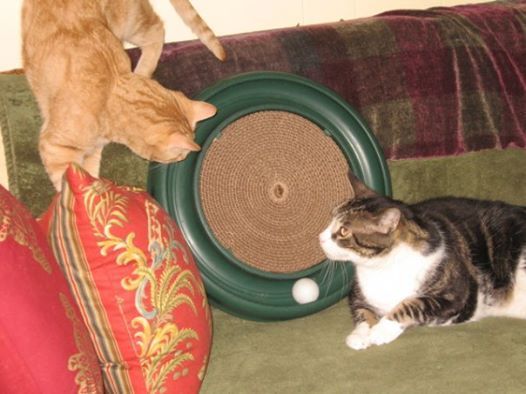
Jimmy Jet and Kringle