Chris Karlsen's Blog
September 18, 2023
Capturing a Moment in Time
Capturing a Moment in Time
I think I am speaking for most of us who writer historical settings, whether its historical romance, historical fiction, historical mystery, or time travel, there’s a passion for the period. I don’t know a author who writes about a certain time and place that doesn’t also read books that are set in the same period.
My father taught history so it was a common topic in our house when I was growing up. He spoke of many different eras and regions and/or countries. But even as a young girl, I had my favorites. Medieval history struck a chord with me. Like so many girls and women, knights and the Age of Chivalry captured my imagination.
Once I decided to write my first book, which was from a story idea I had for many years, I knew the romantic hero would be a knight. That book has been followed by two sequels, all involving medieval English knights. All are part of my Knights in Time series. When considering a particular period for my books, I like to focus on an event or historical figure. In that series, all the heroes are knights (friends) who fought in the Battle of Poitiers, a famous English victory. Edward of Woodstock, the Black Prince, led the English army to that victory. My knights are associates of his and fight alongside him. The battle and the prince are the common denominators in all three books.
My latest book, Silk, is a historical suspense set in Victorian London. The setting was my first and only choice. To me, the city in that period of time is perfectly suited to the genre for many reasons: the mood of the people with Jack the Ripper running loose, the sumptuous lifestyle of the wealthy upper class vs. the struggling lower classes across town, the way the fog could swallow up a person walking after dark, and the incredible mix of architecture, to name a few.
For a long time, I’ve had a passing interest in the Zulu Wars between the Zulus and the British army (the South Wales Borderers regiment) in 1879, especially the battle at Isandhlwana and Rorke’s Drift. Several years ago I had the opportunity to visit the SWB regimental museum. The volunteers spoke to me for a long time about the two actions. The Victoria Cross (the equivalent of the Medal of Honor) was awarded to eleven men of the regiment who fought at Rorke’s Drift. I left knowing that one day I wanted to write a story with a hero who was a veteran of that battle.
Detective Inspector Rudyard Bloodstone, is Silk’s determined investigator and the veteran of Rorke’s Drift I sought to portray. He was, for me, the perfect character to reflect that moment in time. He’s a hero who doesn’t consider himself one. He likes to hang with a veteran friend who owns a pub, he enjoys music hall entertainment, he’s not a man who envy’s others. He is what he is.
As a writer, it is such fun to “walk” with a character, shadow them. To bring them to life using the time and place. Rudyard (Ruddy) moves from crime scenes to his friend’s pub to the moors of Cornwall.
Historical fiction creates a scene that hopefully readers will experience with their senses. You want them to know the cold and disorienting feel of the evening fog, the smell of popular perfumes used by ladies at the time, the sight of a black polished carriage drawn by a team of elegant horses, the call of newsboys repeating the headlines of the latest editions, even the taste of a warm stew of some kind.
I love to hear from readers who talk about how real the setting was for them. It doesn’t matter if the setting scared them or delighted them, only that it took them to another place. That place for a brief time became a living, breathing thing, another character so to speak.
Knights in Time Heroes Live Forever
The post Capturing a Moment in Time appeared first on Chris Karlsen Author.


September 15, 2023
Giving Your Antagonist a POV
Giving Your Antagonist a POV
I read across the board genres, especially romances, thrillers, and historical fiction. I write paranormal romances and romantic thrillers. With my first two paranormal novels, Heroes Live Forever and Journey in Time, Point of View was limited to either the hero or the heroine. The antagonists in those stories were the situations they found themselves in and had to overcome. On occasion, the situations generated villainous characters for them to encounter, but those characters did not have running roles throughout the stories.
On the other hand, Golden Chariot and Byzantine Gold, the romantic thrillers, had definite antagonists. They were cunning and dangerous people who placed the protagonists in perilous circumstances. These are not characters out of a Criminal Minds episode driven by blood lust. They’re men with an agenda. They have a goal and what they consider a logical purpose for their actions. Whether it’s for revenge, financial gain, or for a cause they believe in, they feel justified in everything they do.
Golden Chariot has three antagonists. Two are the masterminds behind the artifact smuggling operation. The third is a contract killer hired by the other two. When one of the conspirators orders an agent murdered without the other’s knowledge, the co-conspirator is incensed. Their entire scheme nearly falls apart, a situation the man who ordered the murder can’t afford to have happen. I needed to give him an extraordinary reason for taking this risk. To justify his actions, he required a POV. Taking a path less traveled by handing the antagonist this power can be more than fun, it can be enlightening for both the author and reader. What resulted was suddenly seeing both the man behind the murder and the victim is a different light. That didn’t change the fact the killing was wrong, but it helped to understand why the man who ordered the murder felt justified.
I also gave the contract killer a POV. The reader sees him exactly for what he is: a man who kills for profit. He doesn’t moralize about his business or try to justify his actions. He is what he is, most of the time. In addition to a POV, I gave him moments of surprise for the reader. There is one scene where he performs a random act of kindness, totally unexpected for the amoral and generally cruel man he is.
In another scene we see him at home. Through the eyes of the heroine, we see his taste in furniture, in music, in something as simple as fine crystal. It is easy to forget that the antagonist has a mother, possibly siblings, food he/she likes, a certain style of décor or clothing. Those reveals can pull a reader in closer to the story. The enemy isn’t an indistinct, vacuous man or woman who is just evil. They have personality and that personality can go many directions.
This same killer returns in Byzantine Gold. For that story, I took him a step further and gave him a love interest. This is by no means a man who desires love or even has the capacity to give it in any deep way. As mentioned, he is amoral and without true warmth of character. That doesn’t mean there isn’t a woman who finds a way to love him. In this book, he finds himself attracted to a young woman and he chooses to let her travel with him. They share moments where he is true to his nature and brutal to her. There are other moments where he has the opportunity to show an unexpected side of himself.
Byzantine Gold also has a political terrorist who shares the role of antagonist. As horrifying as terrorism is to us, to him, his cause is righteous and he will do anything he must to achieve his goal.
Buy Here
The post Giving Your Antagonist a POV appeared first on Chris Karlsen Author.
August 30, 2023
Having Fun With An Old Fashioned Detective

I spent nineteen of my twenty-five years in law enforcement as a detective. Long before I became a police officer, I wanted to be a writer. But I feared it wasn’t a practical profession and lacked the confidence to an attempt at it. Shortly after I retired from law enforcement, I found the courage to try my hand writing a story that I had floated around in my imagination for years. I started taking classes to learn the craft and began my first book at the same time.
When I went to conferences and seminars the same question was asked: why don’t I write a cop story? I never had the desire to write one—to relive my career through my characters. I enjoy a good police story as much as anyone. My favorite authors in the genre are Mike Connelly, Joe Wambaugh, and John Sandford. I just didn’t want to take that road.
I have a great love of history. The story I had in my head all those years involved a medieval knight and a young English woman. The two subsequent books were based on characters from that original story. All were historical romances and had a medieval element. I also wrote two romantic thrillers in addition to the others where the protagonists are nautical archaeologists.
I was in the process of writing the third historical romance when I had the idea for an old fashioned detective. I knew he’d work in London and I couldn’t think of a better setting for a murder/suspense than Victorian England. Detective Inspector Rudyard Bloodstone (Ruddy) was created. At the same time, the killer came to me. Both personalities were crystal clear in my mind before I wrote the first word of Silk.
Since Ruddy was a 19th Century detective, when I started the book it hadn’t occurred to me how much of my personal background would influence the story. I wanted to put my spin on a classical British mystery. I found when writing the romantic thrillers including the POV of the antagonists added a lot of interesting aspects to their characters. They remained villains, but they weren’t flat, black and white ones. I knew I do the same with William Everhard, the killer in Silk. I liked the idea of showing his descent into madness. It added a cat and mouse feel to the story that I had fun with.
My detective experience became important during Ruddy’s investigation. The story is set in 1888, a year before the first rudimentary work with fingertips began. He literally has no forensic science to help him. With each murder, I had to walk the scene with him, observe with him, and consider what could possibly serve as a clue. I had to think about every detail I included in the scene and then figure out how to use the potential clues. To stay true to the period, I had to strip away everything I knew from modern investigations and fall back on old fashioned police work.
I did give him an issue that crosses timelines and can be problematic to any investigation: a high profile (receiving a lot of media coverage), the manner in which it presented to the public, and influences of a political nature. I used how the press that surrounded the Jack the Ripper cases affected Ruddy’s. I also added in departmental rivalries between the two main police agencies, and political/economic forces coming to bear by making Everhard a wealthy nobleman in the House of Lords.
I found by putting the Victorian spin on it, I surprisingly loved the challenge of writing a cop story. Detective Bloodstone just may be my favorite character. He’ll definitely get more cases to solve in the near future.
The post Having Fun With An Old Fashioned Detective appeared first on Chris Karlsen Author.
August 11, 2023
A Muse with A Historical Bent

A Muse With A Historical Bent
My father taught history. The politics, culture, and people of different periods was a common topic in our house. When I decided to do what I’d secretly wanted to try for many years, write, my long quiet muse went in search of people and events to build a world around.
Not all periods and places interest me while others have a strong draw for me. I write a Knights in Time series where a part of the story is set in medieval England and occasionally France. The battle of Poitiers, a great English victory fought in 1356, is the common denominator for those characters. My latest release, Silk, a suspense/thriller, is set in Victorian England, London in particular.
I chose Victorian London for a couple of reasons. So much changed over that time period, developments in industry and the expansion of the British Empire are two examples. The period conjures up both romantic images perfect for Christmas cards and menacing images of dark allies and people living hard lives. You could turn a corner and run into a polished carriage pulled by a handsome team of horses, or, you could turn a corner and run into Jack the Ripper. I thought it the most atmospheric of cities for my killer and detective to challenge each other.
Another reason I chose this time period (1888) was for my protagonist’s personal history and quality of character. Several years ago, I had the occasion to visit the South Wales Borderers regimental museum. I was interested in the Zulu wars of 1879 and in particular two battles fought by that regiment: Isandhlwana and Rorke’s Drift. Eleven Victoria Crosses, the equivalent of our Medal of Honor, were awarded to the men who fought at Rorke’s Drift. After speaking at great length with the volunteers at the museum who gave me a private tour, I knew if I ever wrote a book, one day I’d use a veteran of this battle as the protagonist.
In Silk, Detective Inspector Rudyard Bloodstone was ill with a serious fever when the hospital station at Rorke’s Drift was attacked by thousands of Zulu warriors. He managed to rise and fight after saving the lives of several men unable to walk on their own. As a result, he was awarded a Victoria Cross for “Extreme valour in the face of the enemy.” Rudyard (Ruddy) keeps the medal and the queen’s declaration in his sock drawer. He doesn’t consider himself a hero. To him, he was just a soldier doing what was necessary in battle.
I treat settings like characters. They are living, breathing things. They evoke emotions the way the men and women in the story do. They can be beautiful and make you want to stay in that moment and place. Or, they can frighten as cold fog wraps around the human characters and the dark holds danger. In the Knights in Time books, I loved recreating medieval England without the iconic trappings so familiar with today: Big Ben, double-decker buses, black cabs, and tourists gathered around Buckingham Palace. In Silk, I loved showing London through the eyes of the different classes. The multi—facets of the city. One oddity I discovered in my research was an “entertainment” enjoyed by the middle class. There’s scene in Silk that takes place in an asylum. I learned for a time asylums made a profit by letting so called normal folk view the lunatics (a common term used at the time) for a penny a tour.
I try to recreate the place and time by walking through it mentally. Every sidewalk my protagonist goes down, every room he or she enters I note the details along with them. Since I can’t time travel in reality, I can travel through time on the page.
The post A Muse with A Historical Bent appeared first on Chris Karlsen Author.
August 9, 2023
Hello world!
Welcome to WordPress. This is your first post. Edit or delete it, then start writing!
The post Hello world! appeared first on Chris Karlsen Author.
May 21, 2023
How Authors Capture a Moment In Time
 I think I am speaking for most of us who writer historical settings, whether its historical romance, historical fiction, historical mystery, or time travel, there’s a passion for the period. I don’t know a author who writes about a certain time and place that doesn’t also read books that are set in the same period.
My father taught history so it was a common topic in our house when I was growing up. He spoke of many different eras and regions and/or countries. But even as a young girl, I had my favorites. Medieval history struck a chord with me. Like so many girls and women, knights and the Age of Chivalry captured my imagination.
Once I decided to write my first book, which was from a story idea I had for many years, I knew the romantic hero would be a knight. That book has been followed by two sequels, all involving medieval English knights. All are part of my Knights in Time series. When considering a particular period for my books, I like to focus on an event or historical figure. In that series, all the heroes are knights (friends) who fought in the Battle of Poitiers, a famous English victory. Edward of Woodstock, the Black Prince, led the English army to that victory. My knights are associates of his and fight alongside him. The battle and the prince are the common denominators in all three books.

My latest book, Silk, is a historical suspense set in Victorian London. The setting was my first and only choice. To me, the city in that period of time is perfectly suited to the genre for many reasons: the mood of the people with Jack the Ripper running loose, the sumptuous lifestyle of the wealthy upper class vs. the struggling lower classes across town, the way the fog could swallow up a person walking after dark, and the incredible mix of architecture, to name a few.
For a long time, I’ve had a passing interest in the Zulu Wars between the Zulus and the British army (the South Wales Borderers regiment) in 1879, especially the battle at Isandhlwana and Rorke’s Drift. Several years ago I had the opportunity to visit the SWB regimental museum. The volunteers spoke to me for a long time about the two actions. The Victoria Cross (the equivalent of the Medal of Honor) was awarded to eleven men of the regiment who fought at Rorke’s Drift. I left knowing that one day I wanted to write a story with a hero who was a veteran of that battle.
Detective Inspector Rudyard Bloodstone, is Silk’s determined investigator and the veteran of Rorke’s Drift I sought to portray. He was, for me, the perfect character to reflect that moment in time. He’s a hero who doesn’t consider himself one. He likes to hang with a veteran friend who owns a pub, he enjoys music hall entertainment, he’s not a man who envy’s others. He is what he is.
As a writer, it is such fun to “walk” with a character, shadow them. To bring them to life using the time and place. Rudyard (Ruddy) moves from crime scenes to his friend’s pub to the moors of Cornwall.
Historical fiction creates a scene that hopefully readers will experience with their senses. You want them to know the cold and disorienting feel of the evening fog, the smell of popular perfumes used by ladies at the time, the sight of a black polished carriage drawn by a team of elegant horses, the call of newsboys repeating the headlines of the latest editions, even the taste of a warm stew of some kind.
I love to hear from readers who talk about how real the setting was for them. It doesn’t matter if the setting scared them or delighted them, only that it took them to another place. That place for a brief time became a living, breathing thing, another character so to speak.
Buy the Bloodstone murders here: https://www.amazon.com/dp/B0BVBD42VL
April 30, 2023
Giving You Antagonist a POV in Golden Chariot and Byzantine Gold


I read across the board genres, especially romances, thrillers, and historical fiction. I write paranormal romances and romantic thrillers. With my first two paranormal novels, Heroes Live Forever and Journey in Time, Point of View was limited to either the hero or the heroine. The antagonists in those stories were the situations they found themselves in and had to overcome. On occasion, the situations generated villainous characters for them to encounter, but those characters did not have running roles throughout the stories.
On the other hand, Golden Chariot and Byzantine Gold, the romantic thrillers, had definite antagonists. They were cunning and dangerous people who placed the protagonists in perilous circumstances. These are not characters out of a Criminal Minds episode driven by blood lust. They’re men with an agenda. They have a goal and what they consider a logical purpose for their actions. Whether it’s for revenge, financial gain, or for a cause they believe in, they feel justified in everything they do.
Golden Chariot has three antagonists. Two are the masterminds behind the artifact smuggling operation. The third is a contract killer hired by the other two. When one of the conspirators orders an agent murdered without the other’s knowledge, the co-conspirator is incensed. Their entire scheme nearly falls apart, a situation the man who ordered the murder can’t afford to have happen. I needed to give him an extraordinary reason for taking this risk. To justify his actions, he required a POV. Taking a path less traveled by handing the antagonist this power can be more than fun, it can be enlightening for both the author and reader. What resulted was suddenly seeing both the man behind the murder and the victim is a different light. That didn’t change the fact the killing was wrong, but it helped to understand why the man who ordered the murder felt justified.
I also gave the contract killer a POV. The reader sees him exactly for what he is: a man who kills for profit. He doesn’t moralize about his business or try to justify his actions. He is what he is, most of the time. In addition to a POV, I gave him moments of surprise for the reader. There is one scene where he performs a random act of kindness, totally unexpected for the amoral and generally cruel man he is.
In another scene we see him at home. Through the eyes of the heroine, we see his taste in furniture, in music, in something as simple as fine crystal. It is easy to forget that the antagonist has a mother, possibly siblings, food he/she likes, a certain style of décor or clothing. Those reveals can pull a reader in closer to the story. The enemy isn’t an indistinct, vacuous man or woman who is just evil. They have personality and that personality can go many directions.
This same killer returns in Byzantine Gold. For that story, I took him a step further and gave him a love interest. This is by no means a man who desires love or even has the capacity to give it in any deep way. As mentioned, he is amoral and without true warmth of character. That doesn’t mean there isn’t a woman who finds a way to love him. In this book, he finds himself attracted to a young woman and he chooses to let her travel with him. They share moments where he is true to his nature and brutal to her. There are other moments where he has the opportunity to show an unexpected side of himself.
Byzantine Gold also has a political terrorist who shares the role of antagonist. As horrifying as terrorism is to us, to him, his cause is righteous and he will do anything he must to achieve his goal.
Giving the antagonists in these last two books POVs has generated some interesting commentary from readers and reviewers. They were by no means sympathetic to the characters, but were intrigued seeing the character fleshed out in a way where their motivation was not excused but understood. They became three dimensional for the reader. The antagonist’s POV is not often shown and as a result these men stood out. One reviewer emailed me privately and said; the relationship between the killer and the young woman in Byzantine Gold had him wondering at times what the killer might have been like had he met someone like her sooner. Knowing the killer as well as I do, I’d have to say I doubt he’d be any different. What was important, in my opinion, was the fact the question was raised and that he generated interest beyond the norm.
To me one of the great antagonist/villains of recent years was Tony Soprano. He was the villain you hated to love. Week after week, we’d see him kill people, order people killed, engage in all sorts of illegal activity, and take every possible opportunity to cheat on his loving wife. On the face of it, one would think it unimaginable to like this man. Yet…what else did the writers show? The audience saw a man who loved the ducks who landed in his pool. They saw a man who suffered anxiety attacks and sought the services of a psychiatrist. They saw a man who adored and protected his daughter, felt disappointment in the son he had high hopes for, who looked after his most unpleasant mother and annoying sister. And deep down, at times, we embraced him. When Dr. Melfi was raped and beaten, didn’t most of us talk to the television screen? When Tony came to his appointment and she was still bruised and injured, didn’t most us say aloud, “tell him, tell Tony who did this to you. He’ll take care of the brute.” I, for one, was very disappointed she didn’t.
Antagonists can be fun, intelligent, surprising, and have all sorts of quirks. All of which can make the story much richer and more interesting, if we give them a voice and a POV.
April 7, 2023
Writers, Characters & Playlists
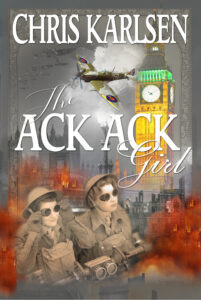
Q: Do My Characters Have Playlists?
A: Absolutely.
A question I see on author interviews fairly often is-do they listen to music while they write? The majority answer that they do. I have five playlists made and two more in my head waiting for me to put them together. I almost always have one of my lists playing in the background as I write. The music is there but I may not be aware of a particular song or songs playing, if I’m really concentrating on a scene. On the flipside, there are times the music helps me through a scene. It can establish a sense of setting for me or many days, a mood for both the story and the characters.
In my latest book, The Ack Ack Girl, the heroine, Ava Armstrong, was in London during a German bomber attack during the Battle for Britain (1940). She is determined to help the war effort and defend her country. Ava joins one of the brand-new anti-aircraft teams of women. Her unit is close to an RAF airfield where she meets and falls in love with a Spitfire pilot, Chris Fairfield. Before I started the story, I made a playlist of Big Band Music, Glenn Miller, Tommy Dorsey, and Artie Shaw are a few I chose. It is the music of my character’s time. My favorite songs became theirs. Songs like In the Mood, String of Pearls, Moonlight Serenade and of course, the poignant, I’ll Be Home for Christmas-if only in my dreams.
One song was particularly special to Chris, The White Cliffs of Dover, Vera Lynn’s sentimental and touching WW2 ballad. Chris hums the tune a lot and when Ava asks why, he explains that after a mission fighting the enemy, seeing the white cliffs is a relief, it means he’s made it home once more.
In my first book, “Heroes Live Forever,” Elinor, the heroine, has inherited a house haunted by two medieval knights– Basil, the hero, and Guy, his friend. The story begins in 1980. While Elinor is unpacking, she’s dancing along to an album she’s listening to. Taking into consideration the year and bands that were popular in the late 60’s and 70’s, one of the first groups who came to mind for Elinor to dance to was Fleetwood Mac. I thought of Stevie Nicks and her gypsy-like outfits and how she danced around on stage. As Elinor hums along to Rhiannon, she’s dancing and spinning from box to box, doing her version of Stevie Nicks. Watching and thoroughly enjoying the show is her unseen audience, Basil and Guy.
Throughout the story, Guy has a keen interest in music. Even as a ghost, he’s very outgoing, more so than Basil who was raised to be more reserved. One of Guy’s favorite songs when he was feeling cheerful was Born to be Wild, by Steppenwolf. In a pensive moment, he listened to Dust in the Wind, by Kansas.
As the story shifts to the current year, Basil is living a new life as Ian Cherlein and in love with Miranda Coltrane. Miranda is a Sarah Brightman fan. Ian has no ear for music but dances to Brightman to please Miranda. The situation turns comical when, unaware of the lyrics, Ian plays, “Time to Say Goodbye.”
You never know how something simple–like giving your characters favorite songs might turnout better than you imagine. In the sequel, “Journey in Time,” Guy, who has been given another chance at life is now Alex Lancaster, a successful music producer. Shakira, the heroine, is a London attorney but plays second lead guitar in a weekend cover band. She loves to take songs she likes and dabble with other arrangements. Alex has a cottage in the English countryside where he’s converted a bedroom to a mini music studio. He also dabbles with arrangements. Their mutual love of music plays a substantial role in the relationship and the story.
In “Journey in Time,” Shakira and Alex are caught in a time warp and thrown back to medieval England in the 14th century. At one point in the story, it’s Alex’s birthday and Shakira wants to do something special. She brings together a group of musicians and arranges Fleetwood Mac’s Tusk and Cole Porter’s The Way You Look Tonight, using the instruments of the period. It took my listening to loads of songs and trying to mentally hear how they’d sound with the limited choice of instruments Shakira had to work with, but I think it turned out well, and I had fun with the scene.
Again, you never know where giving your characters songs for them to love will lead. Shakira’s choice of the Cole Porter song allowed one of the knights at the castle to sing to the ladies at the banquet. That knight is the hero of “Knight Blindness,” the next book in that series.
March 28, 2023
Journey in Time: Interview with Alex and Shakira Lancaster
As an author, I can tell you my story ideas come from a variety of sources. When I heard a pub rumor that a local Gloucestershire couple, Alex and Shakira Lancaster, were time travelers, I immediately saw the potential for a novel, perhaps a paranormal romance. Maybe I could persuade them to talk to me.
I paid for my lunch and hurried out the door. Before I left the pub’s carpark I Googled the Lancasters. He was a successful music producer. As Shakira Constantine, she’d formerly been an attorney with a revered London firm. No longer with that firm, she now was on retainer for Alex’s company. One news article mentioned he’d donated a large parcel of land to a group of scientists who happened to be working on time-travel theories. My curiosity spiked higher.
A short drive later, I pulled up to their surprisingly small, thatched roof cottage. I’d read they split their time between a fashionable London townhome and the cottage. A search showed no phone or email listing for them at this location so I had no choice but to knock on the door and hope they’d didn’t slam it in my face.
A tall, slim woman with coal black hair and dark eyes opened the door just as I was about to knock.
“Can I help you?” she asked.
I recognized Shakira Lancaster from pictures on Google. I introduced myself and told her I was an author interested in writing a time-travel romance. I admitted I’d heard a rumor she and her husband might discuss their feelings on the topic. “You have donated property to physicists experimenting with the theory.”
A ruddy complected, well built man around thirty years old joined Shakira at the door. I knew Alex Lancaster from the same Google photos.
“The young scientists are keen to spread that rumor.” He exchanged a smile with his wife.
They stepped aside and waved me into a comfortable drawing room, gesturing for me to sit. They sat in two overstuffed chairs across from the sofa where I sat.
“What do you want to know?” Shakira asked.
“Have you and your husband time-traveled?” No point in beating about the bush.
“No,” they said in unison.
There was a devilish glint in his eyes when he’d answered and I’d darted a glance her way. I’d swear I saw a humorous twinkle in those ebony eyes. Hmm.
“This rumor—where is it you’re supposed to have gone?”
“Medieval England. The 14th century to be exact and a few months prior to the Black Prince’s campaign in France,” Shakira said.
Alex looked healthy and strong and the right age for military service. “Well, then it’s a good thing you didn’t travel back to that time. The prince could’ve conscripted you into the army as a foot soldier.”
“Not necessarily. I might’ve been a mounted knight. There was a barony quite close to here during the period. It’s possible I’d have been mistaken for the baron.”
Odd deduction. Odd indeed. “But still sent into battle.”
“It’s our understanding the baron died at Poitiers,” Shakira added. “Since Alex is here, it’s obvious that had we been caught in a time portal of some sort, we also found a way to return. You see how amusing the rumor is.”
I thought about how I’d feel in her position. “Were there a kernel of truth to it, had you’d not returned to this century, I can imagine how terrified you’d be at the thought of winding up alone, with no protector in a world totally alien to you.”
“I’d be awash in fear and panic.” she said in a serious tone, the twinkle in her eyes gone. Alex reached over and clasped her hand in his.
“Do you believe living in that period would be horrible?” I asked.
She shook her head. A slow smile crossed her face. “No. Not as long as I had Alex with me. I believe there’s a lot to be said for living a life that’s simpler in many ways. Less noisy, less hustle and bustle, less television and more conversation.”
They stood and wrapped their arms around each other’s waist. I took the hint. This was all I’d get for an interview. I thanked them and left. As I drove away, I kept thinking about how such a rumor got started. I thought about the glint and twinkle in their eyes and wondered where the truth really lay. I didn’t wonder about characters for my next story. I had my time-traveling hero and heroine for “Journey in Time,” and I knew where I planned to send them.
March 23, 2023
A Muse With A Historical Bent
My father taught history. The politics, culture, and people of different periods was a common topic in our house. When I decided to do what I’d secretly wanted to try for many years, write, my long quiet muse went in search of people and events to build a world around.
Not all periods and places interest me while others have a strong draw for me. I write a Knights in Time series where a part of the story is set in medieval England and occasionally France. The battle of Poitiers, a great English victory fought in 1356, is the common denominator for those characters. My latest release, Silk, a suspense/thriller, is set in Victorian England, London in particular.

Vintage view of London, Big Ben & Houses of Parliament
I chose Victorian London for a couple of reasons. So much changed over that time period, developments in industry and the expansion of the British Empire are two examples. The period conjures up both romantic images perfect for Christmas cards and menacing images of dark allies and people living hard lives. You could turn a corner and run into a polished carriage pulled by a handsome team of horses, or, you could turn a corner and run into Jack the Ripper. I thought it the most atmospheric of cities for my killer and detective to challenge each other.
Another reason I chose this time period (1888) was for my protagonist’s personal history and quality of character. Several years ago, I had the occasion to visit the South Wales Borderers regimental museum. I was interested in the Zulu wars of 1879 and in particular two battles fought by that regiment: Isandhlwana and Rorke’s Drift. Eleven Victoria Crosses, the equivalent of our Medal of Honor, were awarded to the men who fought at Rorke’s Drift. After speaking at great length with the volunteers at the museum who gave me a private tour, I knew if I ever wrote a book, one day I’d use a veteran of this battle as the protagonist.
In Silk, Detective Inspector Rudyard Bloodstone was ill with a serious fever when the hospital station at Rorke’s Drift was attacked by thousands of Zulu warriors. He managed to rise and fight after saving the lives of several men unable to walk on their own. As a result, he was awarded a Victoria Cross for “Extreme valour in the face of the enemy.” Rudyard (Ruddy) keeps the medal and the queen’s declaration in his sock drawer. He doesn’t consider himself a hero. To him, he was just a soldier doing what was necessary in battle.
I treat settings like characters. They are living, breathing things. They evoke emotions the way the men and women in the story do. They can be beautiful and make you want to stay in that moment and place. Or, they can frighten as cold fog wraps around the human characters and the dark holds danger. In the Knights in Time books, I loved recreating medieval England without the iconic trappings so familiar with today: Big Ben, double-decker buses, black cabs, and tourists gathered around Buckingham Palace. In Silk, I loved showing London through the eyes of the different classes. The multi—facets of the city. One oddity I discovered in my research was an “entertainment” enjoyed by the middle class. There’s scene in Silk that takes place in an asylum. I learned for a time asylums made a profit by letting so called normal folk view the lunatics (a common term used at the time) for a penny a tour.
I try to recreate the place and time by walking through it mentally. Every sidewalk my protagonist goes down, every room he or she enters I note the details along with them. Since I can’t time travel in reality, I can travel through time on the page.