Robert M. Ellis's Blog
May 24, 2024
‘A Systemic History’ Book Launch
‘A Systemic History of the Middle Way’ is due to be published in early June 2024 by Equinox. This third volume of the new Middle Way Philosophy series explores the conditions that make the Middle Way both possible and necessary. What is it about human biology that means we need a path of practice? How does our path interact with normal human maturation and psychological development? How has the human culture through its history in some ways made our path harder, by hijacking human awareness, and in others harder, by developing practices that can help us? For more information about the book, see this page on this site, and also the publisher’s page (where you can also purchase the book – in paperback, hardbook, and e-book versions).
Robert will be hosting a Zoom book launch for this book on Mon 8th July 2024 at 7.30pm UK time (UTC+1 in summer). At this event he will give a talk to introduce the themes of the book, and answer questions from the audience. The link for this event will be given on the Middle Way Society Newsletter email, so the easiest way to access it is to sign up for the newsletter on the right of the Middle Way Society website home page. If for any reason you don’t wish to do this, you could alternatively contact Robert directly for the link.


December 13, 2023
Progress of the New Middle Way Philosophy Series
As of the end of 2023, two volumes of the new Middle Way Philosophy series have been published: Absolutization and The Five Principles of Middle Way Philosophy. These are the most important and central parts of the series, with the first laying out a distinctive account of the problem in human judgement – their tendency to assume that they have the whole story – and the second offering a positive and practically- oriented account of the path in response to that problem.
In 2024 the third volume A Systemic History of the Middle Way, will be published, which looks at the underlying conditions in biology, psychological development, and cultural history that have made the Middle Way necessary and possible. Volumes 4 and 5 are now at different points of preparation.
At this point, too, the old Middle Way Philosophy series has been withdrawn. This is because it is out of date, and the new series represents the approach much better. The key two volumes have now been published in replacement, and the remaining volumes will give more detail on specific areas: meaning, bias, agnosticism, aesthetics, ethics and politics.
In the podcast interview below, Robert discusses the whole series of books in outline.
November 17, 2020
Announcing the New Middle Way Philosophy Series
I’m very pleased to announce agreement with Equinox to publish a very substantially revised (more than 50% wholly new) version of my previously self-published ‘Middle Way Philosophy’ series. This will finally give full academic publication to the core work on Middle Way Philosophy that I have been developing over the last 20 years, rather than only the books applying it for specific audiences that I have published in recent years.
Equinox have agreed in principle to publish a series that is currently planned to include at least eight volumes, likely to be released over the period 2022-2026. This will be a fully updated, more rigorously evidenced and more effectively structured development of the multi-disciplinary approach used in the earlier ‘Middle Way Philosophy’ series. As the first three books in the series will be almost wholly new, the old series also does not have to be withdrawn for a while.

These are the planned eight books in the series:
1. Absolutisation: The Source of Dogma, Repression and Conflict
What do dogma, repression and conflict have in common? They all result from human judgement blocked from wider understanding by a false assumption of completeness. This book puts forward a theory of absolutisation, bringing together a multi-disciplinary understanding of this central flaw in human judgement, and what we can do about it. This approach, drawing on Buddhist thought and practice, philosophy, psychology, neuroscience, embodied meaning and systems theory, offers a rigorous introduction to absolutisation as the central problem addressed in Middle Way Philosophy, which is a synthetic approach developed by the author over more than twenty years in a series of books. It challenges disciplinary boundaries as well as offering a substantial framework for practical application.
2, The Five Principles of Middle Way Philosophy: Living Experientially in a World of Uncertainty
The Five Principles provide an overall analysis of the Middle Way as a universal principle of judgement, already introduced in The Buddha’s Middle Way in relation to the Buddha’s metaphors. These begin with the consistent acknowledgement of human uncertainty (scepticism), and follow through with openness to alternative possibilities (provisionality), the importance of judging things as a matter of degree (incrementality), the clear rejection of polarised absolute claims (agnosticism) and the cultivation of cognitive and emotional states that will help us resolve conflict (integration). In this book these are all developed much more fully, not only in theory, but with links to the wide range of established human practices that can help us to follow them.
3. A Bio-Systemic History of the Middle Way
Absolutisation is the human version of a more basic problem of maladaptation for all organisms, and the Middle Way as a path of individual judgement is nested within a wider series of histories – those of biological adaptation, the development of the human species, and the psychological stages passed in an individual’s life. This book draws on systems theory, human history, and the developmental psychology of Robert Kegan, to offer an account of the wider context in which the Middle Way has arisen.
4. Embodied Meaning and Integration: Overcoming the Abstracted Grip on Meaning in Theory and Practice
Embodied Meaning, an approach pioneered since the 1980’s by George Lakoff and Mark Johnson, provides a radical new approach that allows us to understand our relationship to even the most abstract language experientially. It challenges the top-down abstracted assumptions about meaning that are still applied across most academic thinking, and which have many negative consequences in maintaining absolutised approaches. Put into an inter-disciplinary relationship with Middle Way theory and practice, embodied meaning can provide us with a new understanding of how we gather the resources we need for understanding, inspiration and motivation, as this book explains.
5. Bias and the Integration of Belief: The Psychology of Absolutised Judgement and the Middle Way
A wide range of helpful information is now available to us from cognitive psychology and the critical thinking tradition on the range of biases and fallacies that afflict human judgement. This book offers a comprehensive account of bias as absolutisation, surveying hundreds of biases and fallacies (along with their seldom-acknowledged opposites) and showing how the Middle Way can offer the most adequate response to the conflicts they create.
6. The Practice of Agnosticism: Overcoming False Dualities across Human Thought
The presentation of most issues in philosophy, ideology and religion is still overwhelmingly dominated by false dualities, which create huge amounts of unnecessary rigidity and conflict. These dualities cannot be resolved just by proclaiming metaphysical monism instead, but they can be reduced by systematic agnosticism about opposing metaphysical claims, accompanied by contextual reframing of the issues, incrementalising of absolute concepts, and Middle Way practice. This book surveys a range of such unnecessary dualities and how they can be defused in practice.
7. Middle Way Ethics and Politics: Stretching across the Gap between Relative and Absolute Values
Our debates about ethical and political values are hugely burdened by absolutised assumptions that create polarised discourses. This book offers a new approach to these debates by offering a ‘stretch’ model of ethical justification that bridges the gap between the limitations of our psychology and the ideals of our morality. Drawing on both social psychology and moral philosophy, it identifies key types of value used both in personal ethics and socio-political values, and argues that each of these values should be applied in particular contexts in response to our psychological limitations, rather than imposed as a total solution.
8. Mindful Beauty: Aesthetics as Gathering Attention
In a modern
discourse about the arts that has often been taken over by conceptual goals,
beauty is increasingly neglected because it is dismissed as ‘subjective’ or
reduced to ‘processing efficiency’. The experience of mindfulness, however,
provides a new approach to thinking about beauty, and the ways it can uplift
and inspire us in our judgements. This book syntheses a range of approaches to
beauty to argue that there are not one but four types of it: mindful, symbolic,
archetypal and conceptual, and that all four can be used in the arts in
different ways to provide different kinds of practical inspiration.
October 30, 2020
Now published: ‘Red Book, Middle Way’
‘Red Book, Middle Way: How Jung Parallels the Buddha’s Quest for Human Integration’ is now published by Equinox! It’s available in paperback, hardback, and pdf, and has full-colour illustrations, mainly taken from Jung’s ‘Red Book’ itself. You can see more details on the book’s page here.
Here is a video of the book launch event, which took place on Zoom on 18th Oct 2020, and included a talk about the book followed by Q&A.
May 12, 2020
Review of ‘Buddhism and God’ from Progressive Voices Magazine
Buddhism and God by Robert M. Ellis, Mud Pie
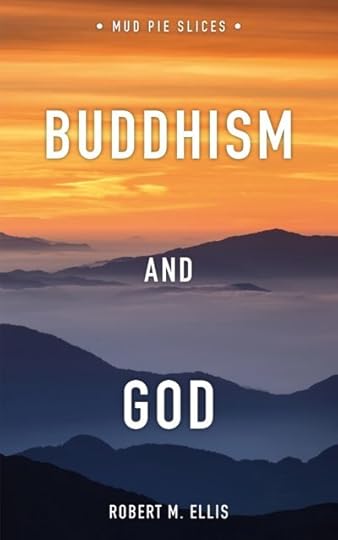
“In only 70 pages it articulates serious and contentious content. Ellis is experienced in Christianity, an ex member of a Buddhist order, and as a philosopher is well placed to conduct comparative studies. He creates a structured exploration of the meaning of God from differing perspectives (Theists, Buddhists and Universalists), to interrogate and push forward analysis. And this reveals fundamental ideas,particularly that the notion of an absolute God is unhelpful, and downright dangerous. The Christian God, the Enlightened One, and Universalist religious relativism all start from the premise of the reality of God, which then allows a cycle of self-justified wishful thinking to condone at best limiting and at worst
extreme beliefs.
For Ellis the existence of God is irrelevant as he argues for exploring the religious experience, rather than the reality of the Supreme Being. It is through encountering, sharing and exploring this experience that we enhance spirituality, not through dogma and tradition.
It is a fascinating argument, not always easy to follow as the
language of philosophical discourse can be hard. But Ellis does also have lightness of touch. When examining the idea that because the ‘God’ experience shares features across times and faiths, it ‘proves’ the existence of God he comments: ‘This is no more necessarily the case than claiming that if a thousand people scattered across the globe all say they have a headache, therefore they are all in communication with the Cosmic Headache.’
But this book is not merely critical. Ellis sets up an alternative approach using the Buddhist concept of The Middle Way (He is the founder of the Middle Way Society). While this text is not concerned with establishing or describing this stance, his use of this idea is convincing, convincing enough to make me register for an online Middle Way conference!”
Andrew Lancaster
March 28, 2020
‘Buddhism and God’ now published
I’m pleased to announce the publication of ‘Buddhism and God: Seeking the Middle Way’ by Mud Pie books. Unlike most of my other books, this one is a short argument of only about 20,000 words. It focuses specifically on the assumptions that Buddhism and theistic religions make about each other, and how those assumptions can be questioned using a Middle Way framework. It argues that, yes, it is possible to reconcile Buddhism and God, but not through naive universalism that just asserts that all is one. Rather we need an openness to the archetypal functions that different religions share, and a critical awareness to separate those important functions from the absolute beliefs that cause unnecessary conflict.
For more information please go to the page about this book.
March 1, 2020
Two new books on archetypes
I’m pleased to announce that in the past few months I’ve signed two contracts with Equinox for books on archetypes. The first is Red Book, Middle Way, which interprets the visions and insights of Jung’s Red Book in relation to the Middle Way. The second is Archetypes in Religion and Beyond, which gives a wider and fuller account of my functional theory of archetypes in relation to a wide variety of example material from world religions and beyond. Both of these should come out in 2021. Please see the linked titles for more information on each of these books.
June 7, 2019
The Buddha’s Middle Way: published
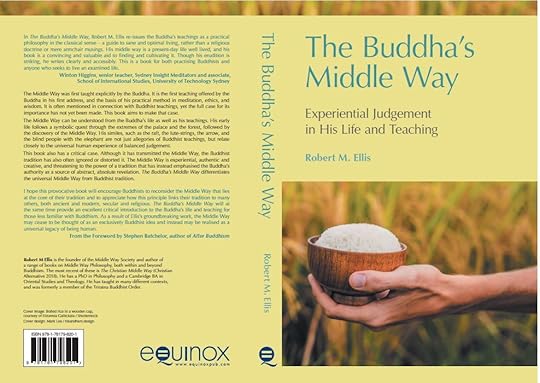
‘The Buddha’s Middle Way’ has now been published by Equinox. Please go to this page for full details. Below is a podcast interview about the book and a reproduction of the cover.
March 26, 2019
The Thought of Sangharakshita: to be published by Equinox
I’m pleased to announce that The Thought of Sangharakshita: A Critical Evaluation is to be published by Equinox (who will already be publishing The Buddha’s Middle Way this summer). This seems to be the first time that anyone has attempted a critical evaluation of the ideas of this innovative but controversial modern Buddhist leader. Please go to this page for more details about the forthcoming book.
February 1, 2019
Welcome!
Welcome to my newly updated and revised website! This domain was previously given over to tutoring, but since I have stopped doing this, I have now turned this site over entirely to publicising my books and other work. This site should serve a slightly different purpose to the Middle Way Society site. The MWS site is run by the society, which is a charity, and, although I’ve had a major input into it, it is shared with others and focused on the Middle Way in general, including society events, podcasts, and discussion. This site is merely a showcase for my personal work.
Apart from information about my books, including links and extracts, this site also gives access to my papers, and indexes book reviews, interviews, discussions, introductory videos and talks that are available elsewhere but linked from here. However, the other main purpose of this site is to provide a non-linear online version of my four-volume academic book Middle Way Philosophy. When this is fully up and running, it will enable you to engage with this text more easily at different levels of detail, using section and chapter summaries, as well as reading the full text chapter by chapter and having the ability to comment on it. At present only the section headings are up, together with the other layers only for the beginning of volume 1. But I will post further updates here when I have made more progress.
This ‘updates’ space will be mainly a place to post updates about my books or about this website. I do blog on a variety of other topics (psychology, religion, politics, the arts etc in relation to the Middle Way), but you will find these blogs on the Middle Way Society site, going back to 2013 when the society was started.
You may wonder why most of the site is in the third person. This may seem odd, but I’ve experienced a number of cases of people pasting materials I’ve created to publicise my work using the first person, without bothering to turn it into the third person. The use of the first person may be jarringly inappropriate in the new context. So I’ve used the third person to err on the side of caution in case that happens again. That means that the material on this site can be shared without being concerned about how it’s phrased.