Anna Marie Riley's Blog
April 21, 2026
Top 5 Must-Read Books that Capture Chicago's Unique Vibe


March 8, 2026
Top 10 Books While You Wait for The Devil Wears Prada 2
April 15, 2025
Waikiki in a Day: The Ultimate First-Day Guide for Travelers
April 1, 2025
Writing contests help Indie Writers Go From Slush Pile to Stardom
October 29, 2024
NaNoWriMo was right...but not for the reason you think

As we close in on November, the writing community is still hotly debating NaNoWriMo's recent statement on Artificial Intelligence.
My plan was to stay away from the debate entirely. It's way too soon in the development of this technology to speak with absolute authority about any of it. Besides, it's not like anyone needs this organization to participate in the challenge. You can just as easily form a group on social media and cheer each other toward your fifty thousand word goal.
But after a while, I realized most people were missing the point. Which isn't surprising, since most people don't get A.I. to begin with. It's become an umbrella term that seemingly anyone can apply to a product or service even if it doesn't apply. Those pushing an apocalyptic narrative have often never used these tools. And the ones advocating for them seem to think it's far more sophisticated than it actually is.
Still, there's reason to worry. Geniune A.I. is more advanced than anything we've seen before. And it learns faster than any of us could imagine. But as a writer, it just doesn't keep me up at night. I'm not concerned about machine learning destroying my career prospects for one simple reason: machines can't create.
If that statement confuses you, you're not alone. The problem lies in our understanding of the word. To create is to bring something into existence. Computers can't do that. They can only synthesize, which is to say they can take parts of a concept to create a whole. You can't buy a new computer, plug it in, and get a novel. It requires input. No source material? No A.I.
It's that simple.
So why does this matter? If you're on the chicken little side of the argument, it means we need to advocate for protecting our existing body of work. We could insist that these tools need our permission to use our writing to inform the technology. That gives policy makers an actionable request instead of doomsday scenarios with no legitimate solution.
But there's another reason. We've been slacking as a species.
For too long, we've chosen the safer, more comfortable path of adaptation over invention. Rather than forge entirely new paths, we've gotten skilled at redecorating well-worn ones. Without question, there's real value in this. We understand an issue inside and out when we look at it from different vantage points. But modification is not true creation.
So what would happen if we had more room in our day to focus on brand new things? Where would our society be if we had more creators instead of synthesizers? How many of our most dire problems would be fixed by now? What if we rejected refinement in favor of revolution?
The work of writing can be tedious and difficult, not to mention time consuming. And every writer knows very well their strengths and weaknesses. Personally, I've learned to value technology simply because it helps me focus. I only have a certain number of hours I'll be able to create while living this life. Should I spend it agonizing over a P.O.V. shift? Or should I let Claude take a look at it while I dream up my next character? Should I get into a heated debate in the comments section about whether A.I. will destroy human storytelling? (an endeavor that has survived 36,000 years) or should I get back to work on my next novel?
You know what? I think just made my decision...
January 24, 2023
Beta Readers: Friend or Foe?

As with any topic, writers have strong and varying positions on the use of beta readers when preparing to send a novel out into the world. General consensus is that if you're self-publishing, beta readers are essential for identifying plot holes, harmful tropes, and problems with character arcs. If you're seeking representation, this is less important simply because you'll have an agent and editor combing through it line by line anyway. That said, you can, of course, self-publish without beta readers or use them before finding an agent. As we say in the writing world, there are no rules. Only guidelines.
Because I'm an educator, I can't help but elicit as much feedback as I think would be helpful. Although I'll be seeking representation for my own work, I decided to recruit beta readers after my developmental editor had a crack at it. Below are a few reflections on my own experience that may help you determine if beta readers will be useful for you.
Beta readers are people who examine a polished version of your manuscript and offer feedback. This can be in the form of general impressions or (more often) specific insight based on questions the author provides. Reedsy has a great comprehensive guide here.
In general, you're looking for people who represent your target audience. You might already know likely candidates or you may have to recruit them through writer's groups or other forums. Although it's not a bad idea to recruit friends who represent your demographic, general advice is to avoid people you know who would be more complimentary than honest. That said, it's also important to avoid the family member who's always a little too honest. Remember, you're still developing this work, so you're looking for balanced people with balanced views. If you'd rather let seasoned beta readers handle it, here is a guide for finding those folks.
I decided to recruit a mix of friends and family who were avid readers along side other writers for a later draft of my first book. The manuscript had already been through several edits and a developmental editor before this group received a copy. After this experience, I saw benefits and drawbacks of using beta readers.
Shows the forest through the trees: Despite several cycles of writing and letting it breathe over the course of two years, I was still too close to this project to see issues. Outside perspectives both confirmed my choices and questioned them in ways that were clarifying.
New perspectives: The best feedback I received raised questions about character motivations I hadn't considered. The more diverse your beta readers are in their thinking, the more useful this sort of critique is to your work.
Brings your audience into focus: The most valuable benefit for me was also the most unexpected. We all know our work won't be everyone's cup of tea, but beta readers clarify this in a way no other process will. Through the feedback, you can start to paint a picture of what you ideal reader actually looks like. And for me, it wasn't quite what I expected.
DrawbacksCan be a confidence shaker: If you're not centered and sure of yourself before you go in, it can be humbling to realize not everyone thinks you deserve a Pulitzer. Luckily, as teachers, we're accustomed to critique and continuous improvement. I knew what I was writing and why but if I'd done this process a year earlier, I might have let it rattle me to the point that I'd give up.
Might make you throw the baby out with the bathwater: If my readers all have different answers to a specific question (favorite character, for instance), I take it to be a matter of personal preference and move on. But if there's consensus (we all hate April), then changes are worth considering. However, even a broad recommendation can feel wrong to you. In my own book, I only found consensus on one point and I found myself agreeing with the group, so I changed it. However, individual critiques sometimes rubbed me the wrong way so I decided to leave them. In the end, you have to trust your gut.
Adds another month (or three) to your timeline: This is the big downside I didn't really think about. I'm a teacher. So when i give an assignment, it usually comes with a deadline. I decided not to impose that here and I paid a price. Some came back very quickly with useful feedback. Others took months or abandoned it altogether. Some went in fits and starts so they forgot key elements, leaving the feedback rather disjointed. Next time, I would probably choose a relatively quiet time of year and name a specific conclusion date. (This goes down easier if they're paid in either cash or wine, BTW).
As all teachers know, the quality of the information you get from people directly correlates to the quality of the questions you ask. Did you like it? Why or why not? is a question sometimes offered on English exams, but it had no place for me in this process. A few of the more specific questions I asked were more helpful:
If you had to keep just one character, who would it be? What if you had to dump one?
What questions would you like to ask the main characters?
Were there any unresolved parts of the story?
What themes or story beats repeated themselves too much?
A quick search of beta reader questionnaires will give you hundreds to choose from, but in the end, make sure you consider what kind of information you're looking for, then find the right question.
In the end, it was a useful process for me and I'm glad I did it and I wish you luck in getting the sort of feedback that will be most beneficial for you!
August 14, 2021
Why Teachers Make Fantastic Fiction Writers
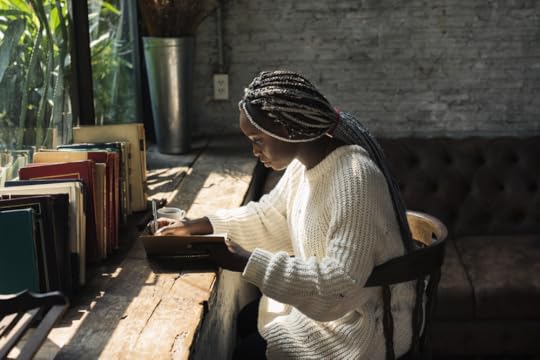
It may not seem a logical leap but there are so many reasons you're way ahead of most other people who want to start a writing career. If you have a story in your head that just won't leave, it might be time to get it down on paper and throw it out into the world. Here are some reasons why teachers are inherently good at this!
Ok, you've probably embarrassed yourself on more than one occasion when you said 'their' instead of 'they're' in an email to your principal. But on balance, you're a better writer than the average social media manager. In a field as isolated as ours, collaboration primarily occurs asynchronously and through email or a Google Doc. When starting a new hobby, it helps to have a little background knowledge to give you just enough confidence to keep going in those early stages when the lack of basic skill can get frustrating. Teachers have a fundamental grasp of the English language so all you'll need to do is fine-tune your word craft...not learn it from scratch.
Ok, if your first period is Algebra, you probably tap into this skill less often than, say, a history teacher. BUT storytelling is at the heart of the job. Humans understand the world through story and this is how we help our students learn. Whether it's sharing real world examples or asking kids to share their own experiences, these stories help deepen our understanding of all concepts taught. Even math has word problems to accomplish this. And let's be honest. We have no shortage of insane 'you won't believe what this kid did' stories to use as fodder for our novels!
No matter what grade level you teach, you have to do your research. Even if you have a prescribed curriculum, you've figured out by now it never resonates with all your kids the same way. Finding resources to differentiate learning, identify and support special needs, or make learning more exciting for everyone is a skill you've developed out of necessity. Given the isolated nature of the job, it may have even become necessary for you to find your tribe or get personal support online if you can't find it in your school.
Identifying a problem and finding creative ways to solve it is also vital to success in writing. If you haven't had much experience with fiction, learning the basics of storytelling is a key first step. As your writing becomes more refined, you may find yourself exploring examples from authors you wish to emulate. Although it's important to develop your own voice, it also helps to learn from the experience of others. Like teachers, writers are also great at finding each other, especially on Twitter. There are quite a few Facebook groups as well.
Rarely do things in the classroom go the way we've played them out in our heads. As a student teacher I had five periods of the same course. Although tedious, it gave me the opportunity to perfect the lesson. By the time the last period rolled around, it went off without a hitch. It takes practice to get things right. This is as true in writing as it is in teaching and it may be your single greatest advantage over other writers.
Far too often I've seen authors agonize over every word only to torture themselves when their first book is never picked up. The best writers know what teachers universally understand. You have to keep going until you get it right. Many writers consider their works their babies and any rejection can be fatal. Please. Most teachers can't get through an hour without someone insulting their efforts or belittling their intentions. Even if the critique of your work is valid, you have yet another ace up your sleeve. With time, persistence, and the right resources you know humans can learn anything. And this applies to your efforts at writing. You'd be surprised how rare this insight is for much of humanity.
Bet it's the first time you've heard this. The academic calendar for teachers can be a blessing and a curse in many ways, but as a writer, it's ideal. Let's take writing a novel as an example. Summers are a great time to disconnect from the field and pursue other interests. This is an ideal time to start considering ideas and begin outlining a story structure. Of course, everyone's writing process is different, but writing a novel in a year could look something like this:
Summer
Outline and rough draft of novel
Fall
Edit first half
(maybe 20 minutes each day after school in the isolation of your classroom before heading home)
Winter Break
New resources about writing techniques you might incorporate
Spring
Edit second half and start giving draft to beta readers
Summer
Start pitching to agents or self-publish AND get started on book #2!
You may be coaching, moonlighting, or parenting and that could very well be an obstacle to a schedule like this, so make it work for you! Everyone's different so be sure to experiment and find the right flow. If something in you wants to get that story down, you'll find a way!
Where do I start?
The resources for learning how to become a fiction writer are endless but the Teachers Who Write page gives you just a little taste so you can better figure out your path. Pay attention to the sites, blogs, and other resources offered that resonate most with you and grow your toolbox from there. There's no right or wrong way to do this! If nothing else, leading a more creative life will make you an even better, more sympathetic, and patient teacher!