C.J. Klinger's Blog
May 31, 2019
New Book, New subject
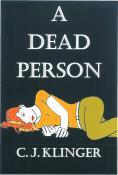 I have now been writing steadily for ten years, a little bit every day. I do not publish everything I write. Some of it is for my personal satisfaction, but last year I heard something that compelled me to write a book that was not another Science Fiction story. At a family gathering, my grandson told me one of his high school friends had died of a drug overdose. Out of curiosity I asked the other young people at the party how many of them had friends or school mates who had died as a result of a drug overdose. Their answers shocked me. Within weeks I was in touch with the young girl's mother, Liz Pires, first to offer my condolences, and second to ask for her assistance in writing a fictionalized story about drug addiction in America. She readily agreed, wanting to do something to shed light on the plague that took her daughter's life. "A DEAD PERSON" is a hard look at the problem through the eyes of a Cincinnati homicide detective, Logan Decker. My hope ifs that one person, reading this story will be alerted enough to save one child from an early, totally preventable death.
This story was written from the heart. I hope you will enjoy it and be enlightened.
Chuck Klinger


March 24, 2019
Coffee and Tangential Thinking
As an author, I rely heavily on coffee to sustain me through periods of chasing tangential thoughts. Here’s an example; My wife or anyone for that matter will say a word or a sentence that triggers an idea for a novel. My mind will immediately start fabricating a story-line with quasi-characters while at the same time I will say something like, “That’s interesting,” or “I didn’t know that.”In reality, those carry-the-conversation-along remarks are really my way of trying to find enough immediate time to flesh out the new story. In the interim, the sane part of my brain, the one not filled with building a fantasy world is trying to decide if this new infatuation is worth six months of work in hopes of creating a New York Times bestseller.
If the new plot seems worthy of further work, coffee comes into play. I cannot describe the anticipation I experience when I sit down with a fresh cup of hot coffee and look at a blank computer screen. The new story inside of me is just bursting to get out, to express itself award-winning prose. Usually, I take a sip of coffee and start typing. After ten minutes the coffee gets cold, and I’ll refill the cup and reheat it in the microwave.
I call the first stages of writing a new novel “Vomiting,” because that’s precisely what it is; a rush to get as much of the new story on paper as quickly as possible before I lose the train of thought created in a moment of tangential-thinking. When this period is through, the work of writing begins.
Back to the coffee. I have repeatedly told people that I drink five cups of coffee a day, especially when I’m writing. Now, this is an accomplishment considering my coffee maker only holds five cups and my wife drinks two of them. At the end of the day, I usually throw out a full cup of cold coffee, so that leaves two cups unaccounted for. I guess it’s more accurate for me to say I drink two cups a day reheated five times, but what the heck, I write fiction. Facts are optional.
Chuck Klinger
If the new plot seems worthy of further work, coffee comes into play. I cannot describe the anticipation I experience when I sit down with a fresh cup of hot coffee and look at a blank computer screen. The new story inside of me is just bursting to get out, to express itself award-winning prose. Usually, I take a sip of coffee and start typing. After ten minutes the coffee gets cold, and I’ll refill the cup and reheat it in the microwave.
I call the first stages of writing a new novel “Vomiting,” because that’s precisely what it is; a rush to get as much of the new story on paper as quickly as possible before I lose the train of thought created in a moment of tangential-thinking. When this period is through, the work of writing begins.
Back to the coffee. I have repeatedly told people that I drink five cups of coffee a day, especially when I’m writing. Now, this is an accomplishment considering my coffee maker only holds five cups and my wife drinks two of them. At the end of the day, I usually throw out a full cup of cold coffee, so that leaves two cups unaccounted for. I guess it’s more accurate for me to say I drink two cups a day reheated five times, but what the heck, I write fiction. Facts are optional.
Chuck Klinger
December 19, 2018
A Christmas Message
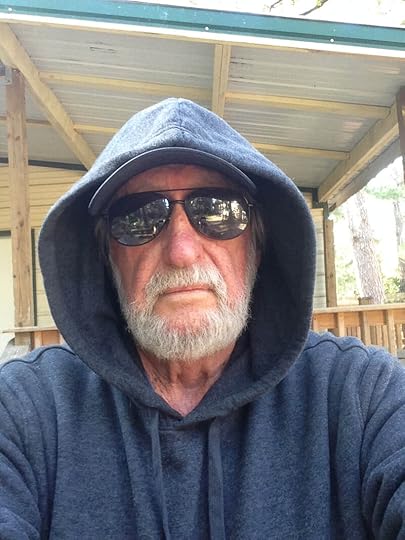 I have not posted a blog in several months. 2018 has been a busy year, and in the last three months I have devoted much of my time to finalizing the republication of my science fiction series under the umbrella title of “The McKinnah Chronicles.” New covers and new material have turned this popular tale into a source of genuine pride. The first two books, “Islandia: The Lost Colony,” and “The Rise of The Confederation” are on the shelves in print and ebook version. The third book in the series, “The Khruellian Encounter” will be out in January. An additional short story full of background material titled, “The McKinnah Chronicles, A History of the McKinnah Clan,” is also available.
I have also just finished a new book titled, “A Dead Person.” It is the tragic story of the death of a fifteen-year-old girl from an overdose. The story is personal and based on the death of one of my grandson’s high school friends. It is a fictionalized look at the drug problem facing America through the eyes of a homicide detective. The book is in editing, but I have decided to release a few chapters at a time over the next several months. Doing the research on this book was disheartening. Like many people I didn’t realize the true extent of the problem we face. The book has turned out to be an exciting detective story, and I know you will enjoy Detective Jack Decker’s hunt for the girl’s killers.
Finally, It’s the Christmas season, and I would be remiss if I didn’t wish all of you a Merry Christmas and a Happy New Year. I’ll keep writing, and you keep reading. It’s good for both of us.
“Chuck” C.J.Klinger
October 2, 2018
"Too Liberal for Texans"
I live in Texas where we are currently engaged in an election campaign between our Republican incumbent, Junior Senator, Ted Cruz, and a Democratic challenger, Representative Beto O’Rourke. This state is deeply divided Politically, as is much of the country. The contrast between the two is sharp, with clearly defined positions. Beto O’Rouke speaks of working together to solve our national problems. His words address the reality of what America is today, not of what it once-was. Ted Cruz claims Beto is too Liberal Texans, and he doesn’t like the oil industry, a vital part of the Texas economy.
I’ve listened carefully to both and will vote for Beto O’Rourke this November. Two things contributed to my decision; I want a politician who says he will work across the aisle to solve our problems, and I want a politician who thinks progressively about the future, not one who is trying to recreate a past that was not necessarily kind to all Americans.
Ted Cruz’ term about Beto being “Too Liberal for Texans” got me too thinking. What does it mean to be, “Too liberal?” A little fact checking unearthed the following facts:
Act/Law Administration Party People covered
Social Security President Roosevelt Democrat 62,000,000
Medicare President Johnson Democrat 44,000,000
Medicaid President Johnson Democrat 70,000,000
Minimum wage law President Roosevelt Democrat 542,000
Voting Rights Act President Johnson Democrat Everybody
FEMA President Carter Democrat Everybody
ACA President Obama Democrat 12,200,000 (2017)
The United States of America would be ranked among the Third World countries of the earth if these programs did not exist. If Beto O’Rouke is too liberal for Texans, then so were the five presidents listed above, the signers of The Declaration of Independence, and the people who wrote the Constitution.
Chuck Klinger
I’ve listened carefully to both and will vote for Beto O’Rourke this November. Two things contributed to my decision; I want a politician who says he will work across the aisle to solve our problems, and I want a politician who thinks progressively about the future, not one who is trying to recreate a past that was not necessarily kind to all Americans.
Ted Cruz’ term about Beto being “Too Liberal for Texans” got me too thinking. What does it mean to be, “Too liberal?” A little fact checking unearthed the following facts:
Act/Law Administration Party People covered
Social Security President Roosevelt Democrat 62,000,000
Medicare President Johnson Democrat 44,000,000
Medicaid President Johnson Democrat 70,000,000
Minimum wage law President Roosevelt Democrat 542,000
Voting Rights Act President Johnson Democrat Everybody
FEMA President Carter Democrat Everybody
ACA President Obama Democrat 12,200,000 (2017)
The United States of America would be ranked among the Third World countries of the earth if these programs did not exist. If Beto O’Rouke is too liberal for Texans, then so were the five presidents listed above, the signers of The Declaration of Independence, and the people who wrote the Constitution.
Chuck Klinger
August 22, 2018
History in Reverse
I write in several genres, but my main staple is science fiction. To me, SciFi is history in reverse and my favorite writing tactic is to take a situation in today’s world and project it into the future. Since I’m not a clairvoyant, I must rely on logic and educated speculation to create a story of the future that is believable and entertaining. But recently I’m having a problem creating a believable future scenario where the human race survives the present day events.
Let me explain. Human Beings are extremely adept at self-preservation. This skill has made it possible for us to survive in almost every environment on Earth. This sense of self-preservation extends to our children and our mates. We will risk our lives to save the lives of our children. This willingness to protect extends to a lesser degree to our extended family and much less to territorial affiliations and very little to the human race as a whole.
This is a problem. The dangers we face are planet-wide, threatening humans as a whole, but not immediately threatening to us individually. In time, how much time is debatable, the weakest members of us will face extinction, then the weakest societies will suffer and fall. The danger to the strong societies is that these weaker societies will not go quietly; they will flood the world with refugees in an attempt to survive. No barrier can stop a man or woman trying to save their children.
These problems will not be solved by people who think in terms of regional geography. Occasionally we are gifted with leaders who think globally but as we have witnessed, they are often ridiculed into ineffectiveness. It does not seem possible for us to act as a whole to protect the human race against these species threatening dangers.
Back to my problem of creating stories that are a realistic projection of today’s science and technology. Maybe the people who write dystopian, post-apocalyptic SciFi stories are right after all. I’ll have to consider it.
Chuck Klinger
Let me explain. Human Beings are extremely adept at self-preservation. This skill has made it possible for us to survive in almost every environment on Earth. This sense of self-preservation extends to our children and our mates. We will risk our lives to save the lives of our children. This willingness to protect extends to a lesser degree to our extended family and much less to territorial affiliations and very little to the human race as a whole.
This is a problem. The dangers we face are planet-wide, threatening humans as a whole, but not immediately threatening to us individually. In time, how much time is debatable, the weakest members of us will face extinction, then the weakest societies will suffer and fall. The danger to the strong societies is that these weaker societies will not go quietly; they will flood the world with refugees in an attempt to survive. No barrier can stop a man or woman trying to save their children.
These problems will not be solved by people who think in terms of regional geography. Occasionally we are gifted with leaders who think globally but as we have witnessed, they are often ridiculed into ineffectiveness. It does not seem possible for us to act as a whole to protect the human race against these species threatening dangers.
Back to my problem of creating stories that are a realistic projection of today’s science and technology. Maybe the people who write dystopian, post-apocalyptic SciFi stories are right after all. I’ll have to consider it.
Chuck Klinger
June 26, 2018
The Lure of Creativity
Currently I’m working on editing the second book of the McKinnah Chronicles titled, “The Rise of the Confederation.” It is a continuation of Jonathon McKinnah’s quest to return to Earth. His intrepid band of followers have managed to crack the secrets held in the Great Library at Gruenwald and are preparing to visit their mother world after a four-hundred-and-sixty-year absence.
I say “working” because editing is work; tedious work. It’s the time when an author rewrites the original story to correct all the inconsistencies and hopefully create a better story. The old saying, “The writing is in the rewriting” does not do justice to the amount of work that goes into a finished novel. It should say, “The writing is in the rewriting, the rewriting, the rewriting and more rewriting.
But there’s a problem. The creative forces that made me write the original story are still alive and cry out for me to do the fun stuff, begin a new story. Usually I put ear plugs in and don’t pay attention to the siren’s call when I’m editing, but this time I forgot. Sure enough, I started a new story about a young girl who died of an overdose. Now I find myself torn between two obligations, one to my role as an editor and one to the creative forces that made me write in the first place. My wife can tell which one I’m working on by the expression on my face. When I’m editing, I write a sentence then stop and study it. When I’m creating a new story, the words seem to flow nonstop. Both roles are necessary, but I must confess, one is more fun.
On another subject. I received an email from my daughter, Erica in Johnson City, Tennessee. One of the surgeons she works with, a Dr. Collins told her he read my book, “The Isabella List” and as a result decided to take his children to see the Isabella Stuart Garner Museum in Boston. The kids thought it was really cool that their dad knew all the details of the largest art robbery in the history of the world. If you appreciate art and like a good murder mystery, I suggest you read the three-book series about a former CIA agent who becomes an art investigator. The titles are: “The Rembrandt Bomb”, “The Isabella List” and “The Q Source.”
Like Yogi Berra once said, “If you come to a fork in the road, write about it.” (Not really)
Chuck Klinger
June 26, 2018
May 29, 2018
The Story Teller
One of the most common questions asked by my friends and family when I tell them I have published another book is, “How do you do that?” I’m never sure what part of the process they’re asking about, creating the story, writing it out, publishing it on line or having a printed copy made.
It’s a complicated process with a lot of moving parts, but I understand why people are curious. All of us have stories running around in our heads that we have at some time thought would make a good book. Actually, that is the first step in the process, a story idea. It can be based on a real-life event, historical fact, dream or something somebody said. Each story has an origin. My responsibility as an author is to foster it, feed it characters, give it a place to grow until it matures into full blown tale with a strong start, an exciting life and a dramatic ending.
Through the entire process of publishing a book, this is the most creative, and for me the most rewarding. If I never publish it, the story is still a personal, successful creation.
The difficult part is putting the mental story into words. There are as many ways to do this as there are authors. Some make elaborate plots and charts while others just start recording the story in their head. For me it starts with a conversation between two characters in the story. That simple step triggers a flood of more ideas and before I know it, I have created the first situation, which leads to another situation. By the time I have written ten thousand words, my characters have a face, a personality and a role to play. At that point they take over and tell me what they want to say. It sounds ridiculous, but I have heard many other authors describe the same process.
The old saying, “The writing starts with the rewrite,” is absolutely true. Sometimes it’s hard for new author to accept the fact the story they labored to get into words is not ready for prime time. Rewriting is work, but it is an opportunity for a story teller to become a writer. It is not an easy process, but a necessary one. If the story teller can get through this part of the process, he or she has a good chance of becoming a published author.
For me, the story creating part is worth the work part and I can tell you from experience, holding the first printed copy of your own book is a pretty heady experience.
Chuck Klinger
It’s a complicated process with a lot of moving parts, but I understand why people are curious. All of us have stories running around in our heads that we have at some time thought would make a good book. Actually, that is the first step in the process, a story idea. It can be based on a real-life event, historical fact, dream or something somebody said. Each story has an origin. My responsibility as an author is to foster it, feed it characters, give it a place to grow until it matures into full blown tale with a strong start, an exciting life and a dramatic ending.
Through the entire process of publishing a book, this is the most creative, and for me the most rewarding. If I never publish it, the story is still a personal, successful creation.
The difficult part is putting the mental story into words. There are as many ways to do this as there are authors. Some make elaborate plots and charts while others just start recording the story in their head. For me it starts with a conversation between two characters in the story. That simple step triggers a flood of more ideas and before I know it, I have created the first situation, which leads to another situation. By the time I have written ten thousand words, my characters have a face, a personality and a role to play. At that point they take over and tell me what they want to say. It sounds ridiculous, but I have heard many other authors describe the same process.
The old saying, “The writing starts with the rewrite,” is absolutely true. Sometimes it’s hard for new author to accept the fact the story they labored to get into words is not ready for prime time. Rewriting is work, but it is an opportunity for a story teller to become a writer. It is not an easy process, but a necessary one. If the story teller can get through this part of the process, he or she has a good chance of becoming a published author.
For me, the story creating part is worth the work part and I can tell you from experience, holding the first printed copy of your own book is a pretty heady experience.
Chuck Klinger
May 23, 2018
CJ Klinger's Favorite Indie Science Fiction Books
Welcome to the list of my favorite indie science fiction books. As a sci-fi author, I decided to read and review my fellow indie author's works in hopes that other avid sci-fi readers will discover some of my favorite, and perhaps otherwise undiscovered, sci-fi books.
As for the rules of the game, I only review one title of an author's collection, that book being either their favorite book of choice, or the first book of the series. I personally guarantee that I've read each book on the list and have given an review that I believe is honest.
If you're an author and would like to submit your work for a personal review, please email me for consideration.
For all you readers out there, here's the list! Enjoy and let me know what you think.
THE LIST OF MY FAVORITE INDIE SCI-FI BOOKS I'm still awaiting submissions. Updates to come!
As for the rules of the game, I only review one title of an author's collection, that book being either their favorite book of choice, or the first book of the series. I personally guarantee that I've read each book on the list and have given an review that I believe is honest.
If you're an author and would like to submit your work for a personal review, please email me for consideration.
For all you readers out there, here's the list! Enjoy and let me know what you think.
THE LIST OF MY FAVORITE INDIE SCI-FI BOOKS I'm still awaiting submissions. Updates to come!
What I do to relax


 Writing can be very intense, especially when I'm in the throes of developing the characters and initial plot. Doing some kind of art has always been my safety valve. These are some examples of the large fish I used to sculpture when I lived on South Padre Island, Texas. It was a fun time and marked the start of my writing career. The blue marlin on the left is sixteen feet long and is the largest sculpture I have ever done. The yellow fin tuna in the middle is six feet long and probably my favorite. Presently, I am trying to master water color painting. It is probably the most difficult art I have ever attempted.
May 9, 2018
New release of "Islandia; The Lost Colony"
Dear Reader,
Two years ago I took my science fiction series off the market. The four book series was well received, but received several harsh reviews for poor editing. Justly so. In the past two years I have completely rewritten the series with substantial new material and expanded on the idea of the McKinnah clan's role in Humans' early push into interstellar space. The stories of the founder, Jonathon McKinnah, his son, grandson and great granddaughter cover the first one hundred years of the formation of the CIP, the Confederation of Independent Planets. These stories are told in a five book series which I will release over the next eighteen months.
The first book, "Islandia; The Lost Colony" is now released for publication today on Amazon in both digital and print form. My hope is you will enjoy the story as much as I did writing it and will take the time to give it a favorable review.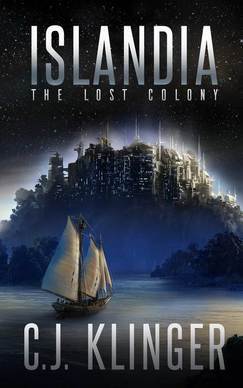 Thanks for being a fan,
Chuck Klinger
Two years ago I took my science fiction series off the market. The four book series was well received, but received several harsh reviews for poor editing. Justly so. In the past two years I have completely rewritten the series with substantial new material and expanded on the idea of the McKinnah clan's role in Humans' early push into interstellar space. The stories of the founder, Jonathon McKinnah, his son, grandson and great granddaughter cover the first one hundred years of the formation of the CIP, the Confederation of Independent Planets. These stories are told in a five book series which I will release over the next eighteen months.
The first book, "Islandia; The Lost Colony" is now released for publication today on Amazon in both digital and print form. My hope is you will enjoy the story as much as I did writing it and will take the time to give it a favorable review.
Thanks for being a fan,Chuck Klinger