
Fiona Barnett's Blog
April 28, 2023
Revealing the paperback cover for The Dark Between The Trees
My debut novel, The Dark Between The Trees, came out in October - so just over six months ago. It’s been surreal in all sorts of ways - the book as done about as well as I could possibly have hoped for, which is pleasing. It seems to have found its people - and received a few pretty great reviews along the way.
If you’re the kind of reader who prefers a soft cover, I have good news - the paperback is being released this coming October (for peak spookiness, of course), and it’s going to look like this:
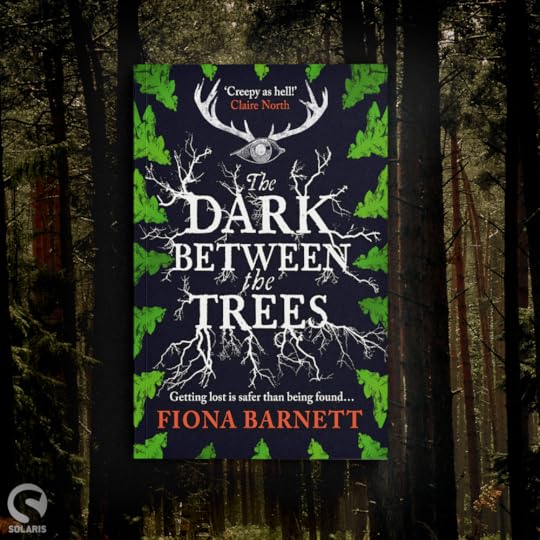
I love the cover of the hardback, and I love how this riffs off it.
If you want to get your hands on a copy, my local indie bookshop is the connoisseur’s choice, but you can also pre-order the paperback at Waterstones / Amazon / bookshop.org in the UK, or Amazon / Barnes & Noble in the US - or if you can’t wait that long, the very fancy hardbacks are still available.


May 17, 2022
Notes on a wash
Last week, I finished reading Trumpet by Jackie Kay - an excellent book that I’d been meaning to get around to for Literal Years and was glad to have a chance to pay attention to. At the end of it was printed an interview Kay did with Ali Smith, in which she said that Trumpet took her five years to write, and that she stopped and wrote an entire other book in the middle of it before coming back.
Phew, I thought. That means you’re allowed to do it. Which is comforting, really, because in the last few weeks I have put away the half-a-novel I’ve been working on for the last seven months. It wasn’t working. I’ve tried it backwards, forwards, sideways, switching out endings and middles and beginnings, and finally I’ve had to face it: it’s a wash. Well, not quite. I’ll come back to it in a couple of years and see if, like Jackie Kay, I’ve found the thing that will make it fit together. Meanwhile, I took a bit of time to grieve, and now I’m trying to figure out what to write next.
It’s a strange place to be having ideas in, what with Dark making its way towards other people with increasing speed. I was right, by the way - that’s swiftly got easier to imagine, not least because I’ve already received some extremely thoughtful and kind words from several people. I’m starting to understand that the moment people tell you, “Just relax and enjoy this bit!” is the moment it’s all going to get very complicated. Just like the moment anyone says, “Just try and concentrate on the next thing!” is the moment you have to mothball an entire seven months’ worth of new draft. But here we are! Perhaps the next thing will be good, but even if it isn’t, maybe the one after that will.
Whenever I’m about to start knitting something big - a cardigan, a blanket, a cardigan that’s also a blanket - I’ll knit a few swatches first, to see what the fabric looks like and check I like it. So I’ve started a fresh notebook. Changed the ink in my favourite pen. Bought a stack of new books and promptly got distracted by different ones. Marge Piercy, Jackie Kay, M. John Harrison, Yoko Ogawa, that’s who I’m sitting with at the moment. Sooner or later I’ll know what I’m doing.
If you’re interested in getting your hands on a sneaky early copy of The Dark Between the Trees , by the way, here’s a fun way you might be able to nab one from Wyrd & Wonder! The giveaway is open til the end of May: they’re getting forest-themed for this whole month, to celebrate their fifth birthday, and I for one approve immensely.
April 16, 2022
Three Months in the Library
I absolutely hate having all of my eggs in one basket, so one of my new year’s resolutions this year was to become less dependent on Amazon - to find other places to buy things. This has been difficult in two ways: first of all because the Kindle app is objectively pretty great and my self control in that arena isn’t; and secondly because it’s surprisingly hard to know where to buy Weird Stuff when you’ve not really been out and about for a few years. Where does one buy an electric blanket these days? Filofax diary inserts six months too early? Potting soil, when you live in the middle of a city and don’t have a car?
The problem with most of these things is not that they’re objectively difficult to find, just that it’s more time consuming, like buying your food from six different shops rather than going to the supermarket. In the last few years, I feel like I’ve mentally trained myself to dedicate less time to knowing where to find obscure yet necessary household goods. In that sense, trying to do without Amazon for a year is a lesson in noticing things - noticing what I need, noticing what’s around me, noticing how long things take. Occasionally I’ve found myself doing without a thing because it’s too complicated to research. But that’s not a bad thing, either. This year, I am calculating the maths of acquiring things differently, on purpose.
One brilliant thing has come out of this, though: at the end of January, I renewed my access to the public library for the first time in about a decade. But the future is now, and Libby exists, and in the last three months I’ve found some absolute gems that I would not have picked up otherwise. As of this morning, I’ve read fourteen books out of the public library since the end of January. Several I’d never heard of before I saw them (The Library of the Dead! The Housekeeper and the Professor!). Several I jumped on because I specifically had not been able to find them anywhere else (Djinn City! The Library at Mount Char!). My list of books I cannot find anywhere/cannot afford to buy in hardback still exists, but it’s a few books shorter than it was. My desperate-to-read-this-immediately list, on the other hand, has exploded.
The Dark Between the Trees is making its first tentative steps out into the world at the moment - I sent off my very last ever edit a week ago, and I’m reliably informed that the first of the eARCs have gone out. On one hand, that’s a couple of fairly sizeable milestones, so raise a glass to all those last dotted i’s and crossed t’s: it’s done! Over to the professionals now! But on the other hand, it’s pretty terrifying to me - that’s quite enough loss of control for one week, thank you very much!
I’m torn, sat here writing this, about how much detail I want to go into about that last sentence, and how it really feels. It is extremely exposing! There’s no way to say it without either minimising it or coming across as neurotic, so all I can tell you is that this week I feel very neurotic! I am more neurotic than anything else! I really hope this subsides soon, because at the moment the inside of my head feels like the sound a buzzsaw makes.
This too will pass, though, and I don’t expect it will take very long. That’s the trouble with trying to be more mindful about things and experience them as they happen: sometimes they involve a buzzsaw.
February 24, 2022
Coming soon - The Dark between the Trees!
May I present my debut novel, The Dark Between the Trees, coming October 2022 from Solaris!
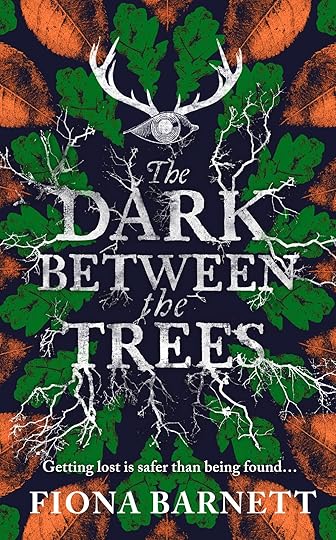
I knew it was The Book from the moment I wrote the first sentence. I’ve been noodling about with novel-writing for more than a decade, and as soon as I started The Dark Between the Trees, it felt different. Not perfect, and it was still a long road and a lot of iterative, often frustrating work getting it into the right shape, but I knew this was the first one I really, really wanted to share.
Luckily for me, my agent, Anne Perry, and my editor, Michael Rowley at Solaris/Rebellion, saw that spark as well. The last few months, because of their enthusiasm, I’ve felt qualitatively different about my writing. It’s more forceful and less echoey, it feels less like I’m trying to eavesdrop on something from two rooms away. I wouldn’t say it’s been easier to write, but different things are difficult now, which means I’ve levelled up.
The Dark Between the Trees was written for people who started a degree and felt like they were in over their heads. It’s for people who read around the subject without knowing or caring if the books they’re reading have gaps in them. It’s for people who like to go for long walks in the countryside, but never want to be the one holding the map. It’s for the ones who like to hear the ghost stories, and then immediately find out about the history behind them, and then the historiography underneath the history, before going back and listening to the ghost story again. It’s for people who like to make up the answers and then see how close they got.
I could try to be coy about this, but it really wouldn’t work: I think this book is so great. I’m so proud of it. This is the kind of book that, if someone else wrote it, four people would get me for Christmas, and I would take the hint. I can’t wait for you to be able to read it.
December 30, 2021
The Q4 Media Report: Patience, as far as it goes
It’s the end of the year! Lest auld acquaintance be forgot, etc. For me, 2021 has been an extremely liminal sort of year, not one thing nor another; waiting for things to happen but not quite getting to them yet. I’m fully expecting 2022 to be explosive, on a personal level. Any more broadly than that and my goal is to be as patient with everyone as I can possibly manage. I don’t know much about how the next year will go, but I do know the more patience we can pour into it, the better.
Maybe I’ve been on the wrong bits of internet but it feels like there have been fewer Best Of lists than usual. I’ve been trying to work out if I want to do one. On one hand, by my reckoning, I’ve read 57 books this year and watched 39 films (hey, add me on Letterboxd, if that’s a thing you’re at all interested in) - not nearly as many films as usual, mainly on account of giving the inside of the cinema a somewhat wider berth than I ordinarily would, but plenty to have opinions about. On the other hand, I’m burnt out of having opinions.
So I’m going to half-ass it. Quick! Six best books I’ve read this year! It’s an arbitrary number but I can’t cut them down any further!
Giovanni’s Room - James Baldwin. Unquestionably the best prose I’ve read all year. Just astonishing.
Nunslinger - Stark Holborn. This was my first Stark Holborn and I bloody loved it. I also read Triggernometry, and the only reason I’ve not got around to Ten Low is because my partner stole it off my bedside table before I could start.
Inverted World - Christopher Priest. On my birthday, back in June, I went out for dinner by myself and drank cocktails and read this. Total mind-bender. Nobody does it better.
Mythago Wood - Robert Holdstock. Ever realised after the fact that you’ve basically written fanfiction of a book you hadn’t read yet? Let the record show that I first read Mythago Wood in the autumn of 2021.
The Magic Mountain - Thomas Mann, trans. H. T. Lowe-Porter. Basically all I read for the months of October and November. Pretty dense, but that’s how I like my friends, so we got on really well.
Poor Things - Alasdair Gray. This one was a recommendation from a friend with excellent taste. I want to pull out every page, stick them all to a wall, and stand in front of them gesticulating wildly.
And six new-to-me films!
Palm Springs (Max Barbakow, 2020). Back in lockdown again, we got around to this from last year, and it was hilarious and a delight.
Limbo (Ben Sharrock, 2021). When they say “darkly funny”, this one tips significantly more dark than funny. I loved it, I thought it looked great, and it’s high up the list of weirdest films I’ve ever ushered a baby and carer screening for. Niche!
Nausicaä of the Valley of the Wind (Hayao Miyazaki, 1984). Obviously I love Princess Mononoke very much, so I’m surprised it took me this long to get around to Nausicaä.
The Green Knight (David Lowery, 2021). Extremely my jam. Whoever’s been suggesting scripts to Dev Patel in the last few years deserves a medal.
Snowpiercer (Bong Joon-Ho, 2013). Not my #1 favourite ever Bong Joon-Ho (which I still think is probably Memories of a Murder) but I just think he’s really good at making films!
The Power of the Dog (Jane Campion, 2021). Wasn’t expecting to enjoy it! Definitely wasn’t paying attention for the first 45 minutes, until I realised I was absolutely rapt.
Both unusually manly lists this year, but I suppose that’s going to happen statistically now and again. One thing I want to keep an eye on next year is reading and watching much more in translation. That’s where a lot of the fun stuff seems to be.
One bit of good news in Q4 of 2021 is that I’ve started writing new things again - some might say too much of a new thing, before it’s had enough time to bake properly; others might say you kind of always have to rush in ahead before it’s done, because if you wait then it never will be. I spent two months reading very slowly through a single book - The Magic Mountain by Thomas Mann, which was exactly the right thing to do at this time of this year, but I don’t necessarily recommend reading century-old Nobel prizewinners when you’re writing a book you don’t have a solid grip on yet.
I’ve heard before that every time you write a book, you have to teach yourself afresh how to write that book in particular - and this one is absolutely the opposite of every one I’ve ever known. The first time I’ve not had a plan going in. The first time I’ve not known the ending, more or less, before I write the first sentence. Part of it is set in a time period I find very exposing to write about, because I want to do it well, but know that many other people know it far better than I do. I know that feeling already, of course - but on previous occasions it’s been the British Civil Wars and I’ve felt like I know it about as well as a non-trained-historian can, more or less. This time I’m essentially researching as I go (or rather, I only properly started over the summer), and honestly right now I feel like a total cowboy about it. And not in a fun way.
Well, the only thing for it is to hold my nerve as much as I can manage, and hope I can figure out how the whole thing ends before I back myself into a corner in a fit of despair.
And in the new year? I hope to have fun things to tell you, rather than coming through every few months to tell you glumly that I feel like I’m not doing enough. No, I know I’ll have fun things to tell you: more or less this time last year, I sent up a tentative flare to see if anyone liked the same things I did. And they did! So between us we sent up another flare, and this one was bigger and brighter, and the answer came back stronger, and all this year I’ve been heading in the direction the light came from. I’m nearly on the crest of a hill. I can see it. I don’t know what’s on the other side exactly, but I know there’s someone there, and I know when they see my signal they’ll know what they’re looking at. Will it be you? I can’t wait to find out.
September 24, 2021
The Q3 Media Report: the library is open; I repeat, the library is open
Back in the middle of August, the email I’d been waiting for arrived: the university library had decided to tentatively let a few people with alumni access back into the building. Just for a few weeks during the summer holiday. Before the actual current students came back.
That same week, I finished the novel edit that (if anyone’s been paying attention) I’ve been working on since February. I was just about to embark on a new project. A new project I was at that point considering reducing the scope of dramatically because I didn’t have library access and therefore couldn’t do the research.
The next week, I went into the building. I think it might actually have been 9 o’clock on a Monday morning. I said to myself: now, don’t go overboard, will you? I stayed for my full allotted four hours and got nine books out. Ten days later, I got another email from the library helpdesk: we’re, ah, glad to see you’ve been back in - what is it, four times now? We’re extending your access. Special dispensation.
And I don’t mind telling you, I’ve been like a pig in muck. The sheer volume of library books I’ve got through in the last month and a half - the majority of them nonfiction, but not all. Enough that I’ve started the new book, more or less, and it’s stretching its tendrils out in my brain, and I think we’re just about going to be okay cohabiting in here for the next few months. Let’s see how it goes. I’ve not been able to do Big Research, just like I’ve not been able to do Long Writing, since about the end of 2019. Maybe longer. It’s been exhausting - but in other ways it’s been absolutely necessary.
Other than that, not much else to report. I’ve spent two solid months disliking 90% of the films I’ve seen, of which there haven’t been many. I’m starting to think that’s saying more about me at the moment than it’s saying about the cinema. Come back in three months.
July 28, 2021
Favourite nonfiction from the last five years
Nonfiction is a different beast from fiction. Between 2016 and 2020, my novel reading dropped off a bit of a cliff, but I read more nonfiction than I’d ever managed to do before. Partly because that’s when I turned into a bit of a British Civil Wars anorak, and partly because, circa 2017, I discovered that as an alumna of Edinburgh University, I was still eligible for a university library card. GAME CHANGER. Of course, the game changed again in March 2020, but I live in hope that one day my borrowing privileges might be reinstated and I might be able to find some more Weird Stuff.
Ironically, there’s not a lot of civil war books in this list – mostly because I academicked my way through them, reading a chapter here and there, collating several at once.
Here they are, in order I read them, with commentary:
The Weaker Vessel – Antonia Fraser
This is the book that started it all. It’s a proper signature Fraser tome, about women in the seventeenth century: wives and mothers and daughters, medics and businesswomen and solicitors, soldiers and cooks and queens and scholars. Hang on, thought I: women did things in history? I mean, I know women did things in history, but this is the first time I looked at the past and saw my foremothers. That was it, that was all I needed. You can trace so much of my work back to this book.
How to Write a Thesis – Umberto Eco
Picture it: it’s 2016, I’ve long since given up on the thought of a PhD, but still have an absolute terror of proper academics. I’ve just fallen in love with the period 1625-1660 in the British Isles, which means I want to talk about it to everyone, constantly. There’s a logical conclusion here, and I’ve no idea where to start – but at the same time, I absolutely refuse to ask a real-life historian for help. In sidles Umberto Eco. “Come on in!” he says. “The water’s lovely! And more to the point, you can choose exactly where you want to swim.” Immediately, I go to the nearest stationer’s and purchase ten packs of 8x5 index cards.
Montrose – John Buchan
This is a biography of James Graham, the Marquis of Montrose, and it’s history from a place of grand affection. Historically speaking, it’s decent. As storytelling, it’s fab. But most of all it’s a love letter to a historical figure. I thought: I don’t want to be an academic. I don’t want to expand the edges of human knowledge. I want to do this.
Wanderlust – Rebecca Solnit
I went to a women’s business conference once where they referred to Solnit as “Saint Rebecca”. Much as my natural instinct is to go “ugh, put it away”… well. You don’t need me to tell you that she’s very, very good. “Walk and talk with Rebecca Solnit” is, remains, my weekend sorted.
How to Suppress Women’s Writing – Joanna Russ
I come back to this often: when I want to remember how to examine my biases, when I want to read someone verbally punching the whole world on behalf of Margaret Cavendish, and when it is creatively important for me to be absolutely livid.
On Identity – Amin Maalouf
The first casualty of war is not truth, but nuance, and I bought this because I wanted nuance. I got it. My biggest takeaways from this are: the biggest parts of your identity are often the ones you feel most threatened about – so I never really noticed my Englishness until I moved to Scotland; I am often a Background Christian because nobody is really yelling at me about it; every culture war in existence is magnified whenever people feel like a Thing about themselves is getting them backed into a corner. There’s more than that, obviously, but I still think about the idea often. My second takeaway: Maalouf says everyone should speak, or try to speak, three languages: their mother tongue, a diplomatic language to allow them to communicate with as many more people as possible, and a language that they love or that helps them interact with a culture that they love. As reasons for learning, I think all of that is great.
Handywoman – Kate Davies
Apart from having possibly the most beautiful cover I have ever seen, this is a memoir of creative fulfilment and understanding of one’s body. It contains a chapter called “The All-Over”, which one day I will write a proper essay on because it’s the most accurate description of how it feels to do creative work that I’ve ever seen. Kate Davies is a former literature professor, now knitting designer, writer, businesswoman. One day I shall meet her, tell her how influential her work has been for me, and make an absolute tit of myself doing it. Presumably she already knows how many copies of this book I’ve bought to give to people, because every eight months or so I get another one shipped to my house.
Ink in the Blood – Hilary Mantel
A friend sent me a Kindle copy of this in July 2019, five days after I left ICU, when I was back on the main ward and starting to try to put myself back together. I reread it every year. It has been a different book every time.
Nine Wartime Lives: Mass Observation and the Making of the Modern Self – James Hinton
This one is so cool, I did not expect to love it as much as I did. It’s eight essays on nine different people (one’s a husband and wife team) and the diaries they sent in to Mass Observation during and around the Second World War. Deep-dive character studies on real people in their own voices. There’s Nella Last, obviously, and an unstoppable force of a lady from the Women’s Institute, a conscientious objector, and perhaps most fascinatingly of all, a woman who’s dependent on her husband and really does base her self-image off his approval. In her diary. Hinton calls it a rare example of an authentic woman’s voice from inside the patriarchy. Just fascinating. I read it cover to cover and took enthusiastic notes.
You Look Like a Thing and I Love You – Janelle Shane
A great, accessible, highly readable book about artificial intelligence: the title is the AI’s idea of what a pick-up line should look like. Apart from the fact that I feel like I understand how AI fits into the rest of the world a lot better now – no mean feat, it really is an outstanding bit of science communication – I also feel like “we programmed an AI to replicate something, and it did it badly” is the pinnacle of 2020s humour. It’s a certain kind of absurdism, with a dash of affectionate anthropomorphism. Can’t beat it.
July 25, 2021
My Favourite Ten Books from the Last Five Years
Idea shamelessly nicked from Nina Allan! You know where you do the thing, where you see someone else’s list of good books, and you go down the list, and it turns out you’ve only read one of them? Well, that’s a reasonable feeling to have. Sometimes I come out of my independent cinema convinced that I’ve never seen a film in my life.
So I thought I’d write my own list the same, since I do keep a list of things I’ve read: and then you can tell me how few of these you’ve ever got to. Here they are, in order of reading, all 29 of them – and disclaimer first that this is about what I read, not when it was written, and also I’ve not included short stories, nonfiction, or rereads.
HHhH – Laurent Binet
Doomsday Book – Connie Willis
Moby Dick – Herman Melville
A Monster Calls – Patrick Ness
North & South – Elizabeth Gaskell
Red Shift – Alan Garner
Gaudy Night – Dorothy Sayers
The First Fifteen Lives of Harry August – Claire North
Bête – Adam Roberts
The Affirmation – Christopher Priest
One Hundred Years of Solitude – Gabriel García Marquez
Flemington – Violet Jacob
Osama – Lavie Tidhar
To the Lighthouse – Virginia Woolf
The Good People – Hannah Kent
Twenty Trillion Leagues Under the Sea – Adam Roberts
Herland – Charlotte Perkins Gilman
Lolly Willowes – Sylvia Townsend Warner
The Girls of Slender Means – Muriel Spark
The Disorderly Knights – Dorothy Dunnett
One is Enough – Flora Nwapa
Living Alone – Stella Benson
Solaris – Stanisław Lem
The Corner That Held Them – Sylvia Townsend Warner
The Ballad of Black Tom – Victor LaValle
The Navidad Incident – Natsuki Ikezawa
Villette – Charlotte Brontë
Quicksand – Nella Larsen
The Man of Property – John Galsworthy
Just for the stats nerds: that’s 16 by women, 15 by men; 4 in translation (I’ve not noted the translators because I only started keeping track of that in 2019); and, what’s most interesting to me, only 9 written after the year 2000. Two authors with double entries: I’m not much of a completionist when it comes to authors’ works, so this doesn’t surprise me very much. Over those five years, I reread 21 books, quite a lot of which were either nonfiction, or by Muriel Spark. What can I say? Everyone should reread some Spark at one time or another.
Cutting that down to the final ten wasn’t actually too difficult, but at the same time it underlines for me why I’d be a terrible critic: so much of my memories of these comes from where I was mentally and physically when I read them. Let’s have the final list then.
Doomsday Book – Connie Willis
Gaudy Night – Dorothy Sayers
Bête – Adam Roberts
Lolly Willowes – Sylvia Townsend Warner
The Disorderly Knights – Dorothy Dunnett
Living Alone – Stella Benson
Solaris – Stanisław Lem
The Navidad Incident – Natsuki Ikezawa
Quicksand – Nella Larsen
The Man of Property – John Galsworthy
Three from 2016, three from 2020, and the remaining four from 2017 through 2019. I hardly read anything during those three years. And I do remember where I was for most of them! I read Bête in a succession of airport lounges and hotel rooms, that time I went to a feminist business conference in California three months before Trump got elected. I don’t think I knew at the time why angry impotence in a rapidly crumbling world resonated with me so much. That autumn I read four Dorothy Sayers books in succession because it was about all I could manage to hold on to, and then transitioned to Lolly Willowes – which I have since bought as a birthday present for four separate people. I read the Dunnett on a trip to Berlin, then put it aside, and read the entire second half breathlessly in three days about six months later – there’s a climactic scene at the end in St Giles’ Church in Edinburgh, from which I was approximately 100 yards as the crow flies when I read it. (It’s a breathlessly fast chase scene, and it’s only when you go back and look that you realise the thing is 30 pages long. How did she keep the suspense up?! Dorothy Dunnett is a master.) And in 2019, when I got out of hospital, I read Stella Benson, and stole a chapter title from Living Alone to name a book I wrote the first draft of in five feverish weeks. (I’ve nearly finished editing it now, I swear.)
I’m working my way through the remains of the Forsyte Saga right now, for similar reasons to all that Sayers in 2016. And I want you to know that since I said all that stuff about Natsuki Ikezawa at Christmas – how I couldn’t find anything else about him or his work – I’ve acquired a hardback of The Navidad Incident and a beautiful short story pamphlet of his from two different people who evidently have better truffle-hunting skills than me, and also know exactly how to make a girl happy.
Just for fun, I went back through the nonfiction I read in 2016-20 as well, which was how I remembered I’ve read some absolute blinders of NF in the last couple of years. But this is already long enough (and indulgent enough) so I’ll save it for another time.
June 27, 2021
The Q2 Media Report: if in doubt, go sideways
“I haven't read enough” is a thing I say to myself with enough regularity that I know it’s code for my own imposter syndrome, and I still can’t fix it. How much is enough? There’s no answer to that. In April through June I’ve been reading contemporary world sci-fi and minor interwar modernists. I've read poetry pamphlets (my friend Sean’s new one is pretty great) and watched a handful of comedy specials. My cinema reopened and I've not sat through a single film without leaving the room and pacing up and down a corridor, not since early April. I’ve listened to a lot of the back catalogue of Hoy Hablamos. I started learning Scottish Gaelic on Duolingo, then got frustrated at the weird voice recordings and lack of grammatical explanation and bought an actual book for it. I’ve knitted three and a half pairs of socks. Three weeks ago I started Inverted World by Christopher Priest and Gödel, Escher, Bach by Douglas Hofstadter within two days of each other, and gave myself a headache. (They’re both great, but that’s a lot of brain.)
The book I was editing in March is still only half-finished. I’ve sat in plenty of cafes with it, and got as far as the end of Chapter 8. To be clear, that’s a better pace than it was. But it’s still pants - I was hoping to be done with it by now.
There’s a concept to which knitters introduced me, by which they say they're either a “process knitter” or a “product knitter”, or else some kind of mix of the two. It’s essentially asking what motivates you: whether you want to do something or you want to have done it. I enjoy reading, and often find the pressure to have read to be too much to handle, even if the pressure only comes from myself. With writing it’s more complicated. They say if you want to finish anything big, you have to get satisfaction from the process of it. There’s a sense in which the enjoyment of process is seen as the “virtuous” kind of satisfaction, and only hacks and pseuds race through to the end. I say there’s room for both things, and frankly at the moment I could do with a bit of product. What I could do with right now, to mix my metaphors absolutely shamelessly, is to pause, and turn around, and enjoy the view for what it is, rather than what it might be when I’ve sunk a few hundred more hours into it.
So that’s where I’m at, here at the end of June.
March 27, 2021
The Q1 Media Report: Comfort Watching and Then Some
It’s the end of March. No, I don’t know how that happened either. I spent the first five weeks of the year polishing up one novel, and the intervening time deep in revisions for another. It’s been hard going: I’ve managed two (longish, but out of fifteen) chapters in two months. Not the most sustainable pace! I keep telling myself it’ll be easier from the end of April, when I can go back to my usual technique of sitting in cafes with it.
A couple of months ago, a friend asked me, “How often do you get a new idea for a story?” and the truthful answer - because there is one! - is “About every 200 miles I walk”. Many writers have had it hard this last year, but I can absolutely pinpoint the reasons for my lack of output: either it’s been a boom period in my very boom-and-bust freelance working year (the month before exam season is usually an absolute bust for creative output, for example), or it’s because I’ve not been able to walk for 45 minutes to a place, sit in that place for three hours, go like the clappers at something, and then walk 45 minutes home. Going “for a walk” between home and home, I have discovered, isn’t the same.
Also, this book was emotionally taxing enough when I wrote it. Fixing it is turning out to be harder. I’m being kept aloft at the moment only by the thought that if I pull off the trick of it, and it’s a big if, then it’ll be worth the effort. It’s a big ask, and it’s taking everything in the toolkit right now, but I’m hopeful.
So much for output; let’s talk about input. My film-watching is far less exciting at the times I’m not spending three nights a week at my pet cinema. Last year in lockdown, we subsisted on the collected films of Arnold Schwarzenegger. In the last few months, the household’s comfort cinema has expanded in a few directions: Bill and Ted, Studio Ghibli, Disney animation circa 1980-1990 (love the Rescuers, will never not love the Rescuers), and tentatively beginning a loose Impromptu Vampire Season.
If you get, by the way, the chance to see Francis Lee’s Ammonite, do. I loved it. The biopic-lovers I know didn’t enjoy it so much, because it’s not a biopic. Essentially, Francis Lee has somehow convinced the BFI to fund, and Kate Winslet/Saiorse Ronan to star in, his Mary Anning real person fic. Everyone’s going in, expecting the man behind God’s Own Country to have made a biopic rather than a proper queer romance, without understanding what a delight genre romance is when you approach it on its own terms. If you go in expecting RPF, which you should, then you’ll have an absolute blast. Trust me, I’m an expert. I know what it means when there’s only one bed, and so quite clearly does Francis Lee, and if the marketing is anything to go by then the BFI decidedly doesn’t. Joke’s on them.
In terms of TV, we’ve worked our way through both series of The Mandalorian (which even this Star Wars agnostic enjoyed); both series of His Dark Materials; and a whole lot of Time Team. There’s a ton of Time Team on Youtube - it was formative for me growing up in history-heavy Hampshire, and coming back to it is exactly as joyous as I’d hoped it would be.
And then, books. I’ve been reading them. It’s been eclectic, and there’s been a lot of it. A biography of Isabella Bird - I still find biography uncomfortable to read, because it’s such an intense look at a person. Imagine being on the receiving end of that! Especially if there’s editorialising, or skipping over parts, or… I just overthink biography a lot. I don’t read it often. More romance, of all stripes - a long-ago remembrance that I just didn’t really get on with Georgette Heyer is newly reconfirmed, but Mary Stewart can decidedly stay. Mansfield Park is another one with a famously passive protagonist - take a moment to be thankful you live in the twenty-first century; if Fanny Price had been able to leave home and spend three years at uni rather than spending her entire life with the same six people, she might have been a lot happier. John Langan’s The Fisherman - it’s Lovecraftian horror, very good for all that I found it a bit structurally lopsided; Stark Holborn’s Nunslinger which was a riot start to finish. The ending of Nnedi Okorafor’s Binti seemed to me at first to be anticlimactic and too pat, but now I think it’s far braver than the ending I would have tried to replace it with. On Holocaust Memorial Day, I read Elie Wiesel’s Night (trans. Marion Wiesel) in a day, shut up in my office, lying on the floor. James Baldwin’s Giovanni’s Room wrung me out - it’s the kind of book where you can’t possibly write for a few days after you read it, because you’ll spend the entire time being acutely aware of not being James Baldwin. The same is true of Story of Your Life by Ted Chiang, although for very different reasons: Chiang writes like a blueprint, and after reading him everything I do feels like a pencil sketch. It takes a while to remember pencil sketches can be aesthetically pleasing too. Sometimes.
Right now I am stuck decidedly in the 1910s: wading slowly through a reread of Pat Barker’s Regeneration, and biographies again of a few Scottish modernists. It’s the closest I’ve been to being able to settle on a genre, an era, a style for a while - I’ve been hopping about all over the place the last few months, so much that I think where I really want to be is anywhere but here.
Fiona Barnett's Blog

- Fiona Barnett's profile
- 23 followers

