
E.J. Dionne Jr.'s Blog
June 25, 2020
Lift every voice: The urgency of universal civic duty voting
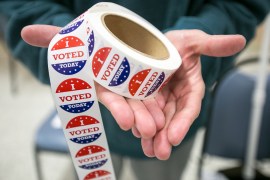
Imagine an American democracy where the election system was designed to allow citizens to perform their most basic civic duty with ease and without obstruction. Imagine every citizen treating voting as a civic duty, a society where nearly everyone voted.
Our current crisis of governance has focused unprecedented public attention on intolerable inequities and demands that Americans think boldly and consider reforms that until now seemed beyond our reach. A new report from the Brookings Institution and the Ash Center for Democratic Governance and Innovation at Harvard Kennedy School explores the idea of requiring every eligible citizen to participate in our elections.
In 26 countries across the world, there is some form of civic duty voting.What would this system look like in the United States? How could universal civic duty voting change the dynamic of our elections and campaigning? Does this proposal pass constitutional muster? What do Americans think of civic duty voting? These questions and more are addressed in a forthcoming report, “Lift Every Voice: The Urgency of Universal Civic Duty Voting.”
On July 20, Governance Studies at Brookings and the Ash Center for Democratic Governance and Innovation at Harvard Kennedy School will cohost a webinar to discuss key takeways from the forthcoming paper on civic duty voting. Panelists will discuss the current state of our election system and transformative steps lawmakers can take to increase turnout and make our elections truly representative.
Viewers can submit questions for speakers by emailing events@brookings.edu or via Twitter @BrookingsGov or #UniversalVoting.



June 18, 2020
Baby bonds can help close the wealth gap for Black Americans
By E.J. Dionne
Freedom is typically measured by the absence of coercion and our discussions of liberty are thus focused on what the state does—or does not do—to individuals and groups. Government, particularly its policing power, is thus at the center of our debates about what it means to be free and to be treated fairly. In the case of law enforcement, this is literally a matter of life and death, and demands for reform are urgent.
But freedom involves something else as well: The ability to choose one’s own ends and purposes. Here, the resources available to individuals, families and groups are decisive. And this is why the wealth gap between whites and African-Americans must become a far more urgent matter to our nation.
The black/white wealth gap has been much noted, and yet it has drawn little in the way of policy response, in part because inequalities of wealth generally have, until recently, been far less of a focus for policy-makers than inequalities of income.
This can be explained by factors related to ideology and power, of course, and also by the fact that policies to redistribute income—from Social Security to the Earned Income Tax Credit—have become an accepted part of the social insurance state.
The facts are stark: As Kriston McIntosh, Emily Moss, Ryan Nunn and Jay Shambaugh noted in a Brookings paper in February on the basis of 2016 data, the net worth of a typical white family is $171,000, ten times greater than that of a Black family ($17,150).
An important source of the racial wealth gap is neighborhood segregation. For most Americans, their residences are their major source of wealth, and the gulf in the evaluation of homes in white and African American neighborhoods is enormous, as Brookings’ Andre M. Perry, Jonathan Rothwell and David Harshbarger showed.
“Majority-black neighborhoods hold $609 billion in owner-occupied housing assets,” they wrote in 2018, and “in the average U.S. metropolitan area, homes in neighborhoods where the share of the population is 50 percent black are valued at roughly half the price as homes in neighborhoods with no black residents.”
Compounding this effect is the gap in home ownership itself. A study by Harvard University’s Joint Center for Housing Studies found that 72.3 percent of white Americans owned a home in 2017, compared with just 46.2 percent of Latinos and 43.1 percent of African-Americans.
Reducing the wealth gap should be a central concern for all committed to racial justice and social justice. McIntosh and her colleagues rightly point to how “income from inheritances, and from wealth more generally, is taxed at an inequitably low rate, especially when compared to earnings.” They argue that “well-designed taxes on inheritances, reforms to capital income taxation and even taxes on wealth could be part of the solution.”
But what of the other side of the equation? What policies can begin to build wealth for African-Americans and lower income Americans generally?
One promising path has been championed by Sen. Cory Booker, building on what have come to be called “baby bonds.” Booker proposes “creating a federally-funded savings account for every child at birth seeded with $1,000 and that could grow by up to $2,000 every year thereafter depending on family income.”
“By the age of 18,” Booker says, “low-income account-holders would have access to nearly $50,000 in seed capital to do the kind of things that create wealth and change life trajectories, including putting a down payment on a home.” He would pay for his plan by restoring 2009-era estate tax rules and closing loopholes that allow wealthy households to avoid paying taxes on investments held at death.
Account holders could not access the funds until age 18, and could use them only for specified purposes, among them education, home ownership, and retirement. As Vox’s Sarah Kliff noted, Booker’s plan is structured to be especially beneficial to Americans at or below 175 percent of the Federal Poverty Line, with the largest benefits going to those below the poverty line.
The plan is income-based, not race-based, so it would benefit lower income whites in large numbers. But because of the racial and ethnic income gap, it would be especially beneficial to African-Americans and Latinos. Over time, federal payments to members of both groups would be nearly double those to whites.
“A lot of aspects of our tax code, the benefits are usually used by the wealthy,” Booker told Kliff. “It’s time we start to give less-wealthy families the same opportunity.”
Baby bonds are no cure-all. But they begin to build a framework for addressing the wealth gap. “Freedom from” is an essential concept to protect individuals and groups from abuses by government. But “freedom to” speaks to the imperative of enhancing the capacity of individuals to choose their own paths forward. Accumulating savings and wealth is part of that freedom.

April 1, 2020
Webinar: Protecting elections during the coronavirus pandemic
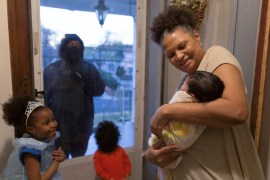
As the coronavirus outbreak spreads throughout the country and containment measures are implemented by authorities, every facet of American life has been upended—including elections.
Candidates have shifted their campaign strategies toward more television and digital engagement, rather than crowded in-person rallies; Democrats delayed their nominating convention to a later date in the summer; and many states have postponed presidential primaries. To ensure the safety of voters and poll workers, policymakers have proposed emergency election reform measures such as mail-in ballots, unrestricted absentee voting, early voting, and curbside ballot drop-off, but they have been met by resistance in some states. Recognizing the urgency of situation, Congress allocated $400 million towards election assistance for states in the latest relief bill. However, many argue that figure is not enough.
On April 14, Governance Studies at Brookings will host a webinar discussion focusing on what steps policymakers, election officials, and political organizations can take to protect the integrity of elections during the COVID-19 pandemic and other national emergencies.
Viewers can submit questions for panelists by emailing events@brookings.edu or via Twitter at @BrookingsGov or by using #ProtectElections.

February 10, 2020
Code Red: A book event with E.J. Dionne Jr.
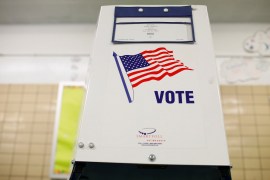
Broad and principled opposition to Donald Trump’s presidency has drawn millions of previously disengaged citizens to the public square and to the ballot box. But if progressives and moderates are unable—and unwilling—to overcome their differences, they could not only enable Trump to prevail again but also squander an occasion for launching a new era of reform. Will progressives and moderates feud while America burns, or will they take advantage of the greatest opportunity since the New Deal era to strengthen American democracy, foster social justice, and turn back the threats of the Trump era? In his new book, “Code Red: How Progressives and Moderates Can Unite to Save Our Country,” Brookings Senior Fellow E.J. Dionne Jr. calls for an alliance between progressives and moderates to seize the moment and restore hope to America’s future for the 2020 presidential election.
On February 24, Alexandra Petri of The Washington Post will join Dionne at Brookings for a conversation on his new book. After the discussion, he will take audience questions. This event will be webcast live.

December 12, 2019

October 4, 2019
20191004 NPR Dionne
By Louis Serino

In the shadow of impeachment hearings, dueling visions for the nation
A year away from the 2020 election and in the shadow of impeachment hearings, a wide-ranging new survey from PRRI explores the profound cultural fissures in the country. With Americans deeply divided along political, racial, and religious lines, the survey shows how these factions are prioritizing different issues—from terrorism and immigration to health care and climate change. The survey measures Democratic presidential nominee preferences and the stability of President Trump’s base, including analysis of support for impeachment. This year’s survey, the 10th in the annual American Values Survey series, also highlights long-term trends in partisan and religious affiliation, and how these changes have produced two starkly contrasting visions for the nation.
On October 21, Governance Studies at Brookings and PRRI hosted an event to release this year’s American Values Survey. A panel of experts discussed the survey results and Americans’ views on a variety of political issues.
After the program, panelists took audience questions.

September 27, 2019
20190927 NPR Dionne
By Louis Serino

September 26, 2019
Impeachment: What happens now?
The White House released a readout from President Trump’s call with Ukrainian President Volodymyr Zelensky, in which he requested assistance to investigate former Vice President Joe Biden. As a growing number of House Democrats declared their support for a formal impeachment inquiry, Speaker Nancy Pelosi announced that the House would pursue one. Now that the full whistleblower complaint was released by the White House, the future of the Trump presidency hangs in the balance. What happens next? How does impeachment work? Is impeachment imminent?
On September 30, Governance Studies at Brookings will host a forum discussing these issues and more. Following the discussion, the speakers will take audience questions.

September 4, 2019
2020 and beyond: Maintaining the bipartisan narrative on US global development
It is timely to look at the dynamics that will drive the next period of U.S. politics and policymaking and how they will affect U.S. foreign assistance and development programs. Over the past 15 years, a strong bipartisan consensus—especially in the U.S. Congress—has emerged to advance and support U.S. leadership on global development as a key pillar of U.S. foreign policy.
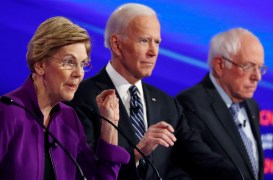
2020 presidential and congressional candidates are taking the field and looking for themes that will galvanize their campaigns in 2019. There will be strong competition for votes among Republicans, Democrats, and independents.
Regardless of which political stripes win at the ballot box, the president and Congress taking office in January 2021 will be faced with old constraints and new opportunities, including immediately having to deal with the FY2022 budget. The political pressure cooker will include the need to address a historic level of public debt and stem budget deficits while addressing neglected domestic priorities, ensuring the national defense, and meeting global challenges.
In the development arena, issues that are drawing attention include the growing prevalence of state fragility and violence, climate change, the unprecedented level of refugee populations, China’s entry as a major development actor, and how to address development issues such as education, youth, women’s empowerment, sustainable infrastructure, and job-friendly growth.
The 16th Brookings Blum Roundtable considered what narrative and practical proposals will not only maintain current levels of U.S. development leadership and investments, which have remained static in recent years, but respond appropriately to rising global challenges.

E.J. Dionne Jr.'s Blog

- E.J. Dionne Jr.'s profile
- 123 followers

