Jason O'Mahony's Blog
June 1, 2024
Irish Elections 2024: Finally, before you vote…
Cast your first preference for the person you really want. This sounds so obvious, but it’s true. Don’t try to second guess other voters. First preferences matter the most, because they are the only vote that will definitely be counted.You decide where your vote goes, not the parties. A clear preference must be visible to the returning officer before he transfers a vote. Your ballot paper is written permission from you to the returning officer who to transfer to and who not to.Your preferences cannot affect your earlier preferences. Do not write anything other than numbers on your ballot paper, as anything else may be taken as a sign of political intimidation. This may result in your ballot paper being ruled spoiled.If you want to really try to stop an individual getting elected, give a preference to every other candidate. This means that your vote is available to help any candidate fighting your most hated candidate.No, spoiled or blank ballots do not “automatically go to the government”. I hear this every year, and I have no idea where it comes from.


May 31, 2024
The Rules of Irish Politics (Updated) June 2024 edition
 With certain exceptions (in particular Sinn Fein), the personal vote of a candidate is more important to election victory than their party vote.
Voters decide what matters in elections, not candidates or party activists.
Voters are strongly in favour of new housing in theory. But there are always far more votes to be won opposing a specific proposal to build new housing in an area than supporting it. Already Housed Voters are simply easier to identify.
Being an Irish legislator is like being a brain surgeon who is employed to carry out brain surgery but whose employment review is decided on how well he maintains a public car park on the other side of the country.
You cannot be lazy and be a successful Irish politician. You can be corrupt, deceitful or stupid but you cannot be lazy.
Irish voters are perfectly happy holding two or more completely contradictory beliefs.
There are no votes in proposing long-term solutions. In fact, there may well be votes lost supporting long-term solutions because some voters want that money spent now. There is a “F**K our children’s children” constituency.
There is a large number of people involved in Irish politics who have almost no interest in the shaping or direction of Irish society. To them it is simply a job.
It is possible to have a successful career in Irish politics and never ever have to make an unpopular decision.
Being an Irish citizen gives you more rights than the citizens of any other nation on Earth. Especially in a country where you can cherry-pick the rights you like and have a good chance of brassnecking your way out of obligations you don’t like.
Increased public spending is a religious ritual: there is very little political interest as to whether the money is spent well.
A very substantial number of the Irish have the bizarre belief that American, continental and British taxpayers are eager to pay for public services we don’t wish to pay for ourselves.
Many of the same people who oppose tax cuts nevertheless insist on public sector pay being calculated based on post-tax “take home pay”.
Most Irish voters believe that voters in other constituencies should vote for nationally concerned politicians whilst they need a local champion.
Irish voters are still, after 100 years of independence, very happy with a political system based on “It’s all their fault up there in Dublin”. Unlike the Scots, Quebecois, Catalan and Basques, the Irish are openly hostile to having responsibility devolved into their local hands. Our local government system is essentially run by colonial governors.
Election posters work. People who know little about politics say they don’t, but they are a very effective way of boosting name recognition in Ireland which is very important in elections (See Rule 1). The Name You Know matters in Irish elections.
NGOs and other lobbying groups disproportionately shape policy in Ireland because the skills needed to be elected and stay elected are very different from the skills needed to set national policy. Many national legislators simply haven’t the time for legislative issues.
May 18, 2024
If there is ONE book you read this year…
 I would forgive any bookseller who decided to put Annie Jacobsen’s “Nuclear War: A Scenario” in the horror rather than current affairs section. It is an absolutely terrifying book, deeply disturbing and prone to leaving its readers pondering what they’ve just read for months afterwards.But here’s the thing: although the book takes its readers through a blow-by-blow account of a surprise nuclear attack by North Korea on Washington DC, and the outcome to that eventually leading to nuclear apocalypse in often excruciating detail, that’s actually not the most scary part.The scary part is the inevitability and the apparent fact that the United States, a nuclear power for 79 years, has not actually devised a better method of managing its response to such an imagined attack, and left such glaring flaws in its response mechanisms that even I, someone who knows nothing about nuclear weapons, started questioning from the very beginning of the book.“Nuclear War: a scenario” is not a novel as such, and so I’m going to risk giving some spoilers, which I suggest won’t actually ruin a potential reader’s enjoyment (if that’s the right word) of the book. But I feel I have to comment on them, so you have been warned.The first jaw-dropping aspect of the novel is the tiny time frame the President of the United States has to make an informed decision about responding to such an attack. This constrains the ability of the United States to communicate with other highly-nervous nuclear powers and to reassure them that the response is against a specific rogue state.Secondly, the obsession of the US military’s Use Them Or Lose Them doctrine is incredibly dangerous for the same reason as the above, requiring the President to launch a major response when before any actual missiles have actually struck the United States. Surely the deterrence policy could be adjusted, perhaps with a shifting of substantially more of the US nuclear forces to submarines, to allow the President to risk an actual strike on US territory as proof of attack without risking the core aspect of deterrence, the ability to strike back.This still leaves the other extraordinary aspect to all this: the incredible vulnerability of the United States to a bolt-out-of-the-blue decapitation attack aimed at destroying the senior political and military leadership of the US. Whether by ICBM attack or by a haulage truck with a smuggled nuclear device in it detonating in the middle of Washington DC, there seems to be no emergency political control authority back up. At any given time the President and ALL his immediate 12 successors are most likely in Washington DC. An attack on the day of the State of the Union would almost certainly get them all including the Designated Survivor in the White House.The two vulnerabilities above force rapid, often panicked decision making which in turn causes panic in Moscow and Beijing. There has to be a better way.Finally, Jacobsen starts her attack with a decision by the North Korean dictator to launch a surprise attack on the United States. The attack itself challenges the inherent logic of the Mutual Assured Destruction deterrence doctrine, that people with nuclear weapons are rational and will act in their own logical self-interest. It’s a big if, and it assumes that only rational (indeed sane people) reach those levels of authority. But what happens if that’s not true? If Kim Jong Un ordered a nuclear attack on the United States, is there anyone in his immediate circle who would act to stop him, knowing he was essentially ordering the end of existence of them, their families and their actual state?I was left with four thoughts.1. Use Them Or Lose Them is actually more dangerous than the risk (nuclear response decapitation) it is trying to avoid. Submarine based ICBMs will always assure the US will have the ability to end the existence of any nation that attacks the US EVEN IF the continental US is devastated. The political leadership needs more time to verify the attack is real, and calm those who are not the US response target.2. In order to do the above, the US needs to be able to rely on a robust alternate command structure even if the administration is incapacitated. Would it be impossible for the party leaderships to create a panel of civilians, former presidents, former senators, former governors, to be formed into small groups and secured secretly at, say, one week intervals, and a mechanism for the panel to assume leadership in the event of decapitation? This would ease the pressure on the military for a rash response.3. The threat of a rogue action by a “mad king” escalating into a global conflict between the superpowers is a real one, and requires a superpower response. Imagine if the US, Russia and China agreed to create a specific shared facility, with a limited number of ICBMs (and not necessarily all nuclear armed) to act as the first response mechanism to an attack by a rogue state, but in a planned and familiar (to the three powers) strategy to avoid the unexpected launching by any of those powers of their own missiles. Such a facility could also have access to US technology to ensure that both the Chinese and the Russians have clear information as to who is and isn’t launching attacks.4. Finally, there is the issue of pre-emptive attacks. What if the US became aware that Iran or North Korea were planning a first strike? How would the world respond to a US pre-emptive attack? Would the world believe it? Or would the US become a global pariah? Again, would a joint superpower response be needed, as above?Perhaps food for thought for another book from Ms Jacobsen on possible nuclear hypotheticals?
April 25, 2024
The speech I’d like President-elect Macron to give*
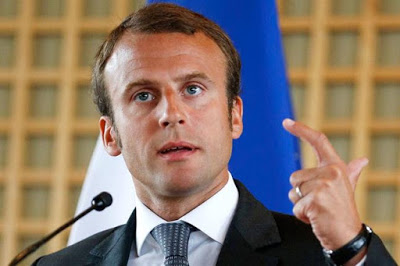 *Wrote this before he was elected….My fellow French citizens. You, my new employers:Thank you for the honour you have bestowed on me tonight. This has been an extraordinary election, and has one clear message that has come through tonight from virtually every voter, regardless of whom they voted for.The French want change.I am acutely aware that many of you, of right, centre and left did not as much give me your votes as lend them to me. I understand that. I will not forget that. It is, as I said, a precious honour that I will treasure with humility.Our nation faces huge challenges, from the maintaining of economic dignity of our people, to our security from extremists, to our place in the world.Change is coming at a speed never witnessed before in living memory. The challenges of technological change, of migration, of climate change are all titanic.Yet this is not a nation of weakness. We are not a people with nothing to offer. We live in the most beautiful country in the world. We produce the greatest food. We build the greatest airliners. Our culture from our language to our movies to our art to our fashion to our literature are those of a superpower. We put nuclear aircraft carriers to sea. Our fighters bomb ISIS. Al Quaeda in Mali did not see a defeated or feeble nation: they flee in terror as our foreign legion liberates the people of that friendly nation.France is not on its knees. We do not lack strength. What we need now is courage. To not fear change, not be hijacked by it, but to seize it and make it our weapon to do what we want. The solutions to our problems will not come from just the left or right. This election has shown that a good idea must be respected as such, regardless of which party or candidate suggests it first. I intend to assemble a government of all France, of all talents, of all generations of the French.I campaigned in favour of free trade and free markets. But also that both must deliver their benefits first to the people. As France must change, so must Europe. I believe in Europe and its unity as a community of sovereign nations, cooperating on our shared values. But also recognizing that Brussels is the servant of the people, not the master. They work for us, not the other way.Both Brussels and the markets, like every good dog, may occasionally need a tap on the nose with a rolled up newspaper to remind them whose house it is that they live in.We must show generosity to those fleeing war whilst ensuring that we control our borders. To those who see France as a great nation of which they wish to be part of, and who wish to share our values, to you I say you are welcome. You can be a good Frenchman and a good Jew. A good Muslim. A good Christian. A good atheist. But to those who wish to come to our land and impose other values, the values of the extremist, I say to you: keep walking. This country and this continent are not for you.And let me be very clear: if the security of the borders of France and Europe require taking action, be it military or humanitarian, outside the continent, so be it. This country will not be found wanting. My fellow citizens: some recently spoke of Making France Great Again. France is great. France is strong. France is courageous. France does not fear the night. France makes the day.Long live the republic.
April 24, 2024
What if…the West aggressively interfered in Russian politics?
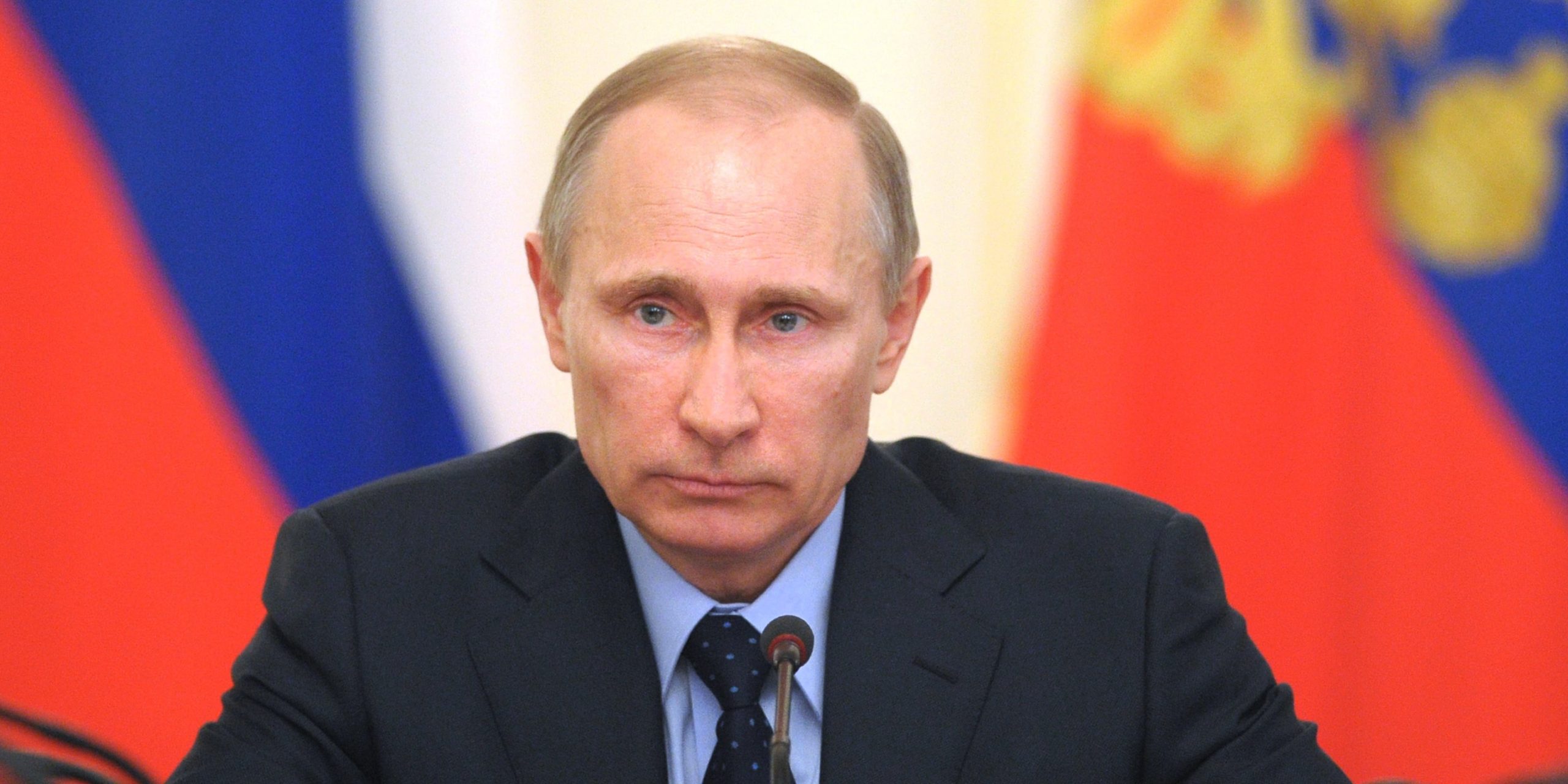 The house had been chosen very carefully. In rural Galway, the former home of an American billionaire boasted its own helicopter pad discreetly tucked behind the main house, and was less than 20 minutes by helicopter from Ireland West airport in County Mayo.It had been secured by a specialist team, and a discreet ring had been put around by undercover members of the Irish special forces ranger unit, at the request of one of the attendees who had contacted the Irish premier directly. He was the sort of person who could get through to almost anyone on Earth by sheer mention of his name. The helicopter ferried the guests from the airport to house in relays as their private jets arrived, with all 18 guests arrived and ready for dinner at 8pm. The staff providing the meals and other support services were from a very private firm that specialised in discretion. They were trained not to gawk when the household names attending arrived.Although there were 18 attendees, there were six major figures present to whom others demurred. The former US southern governor was first into the bar where the others, less known and some not known at all (by choice) were waiting. He was greeted warmly, displaying that silver haired charisma that had won the hearts of so many voters and too many women not his wife. She was not in attendance, not that it mattered. They were the very definition of a power couple: get one and you get both. Another former US president stepped in behind him, a former baseball team owner whom many speculated had run for president out of a need to prove a point to a celebrated and distinguished father. Within 15 minutes two former British prime ministers and a former president of France had joined them. All men, all used to being the centre of attention and yet even they stopped on the arrival of the former editor of the Harvard Law Review, who shared the eloquence of the former southern governor but was now the epitome of progressive liberal centrism having managed to keep his dick in his trousers. The former British prime minister who had acted as the unofficial convenor of the group suggested they all move into the next room, a large drawing room which had most of its furniture removed. Instead, a large screen in one corner displaying a changing stream of information from both traditional news and social media sources. This screen was separated from the guests by a number of guests laid out in a Mission Control style, with laptops and other equipment already manned.The men and women manning them were not public figures, although nearly all would be recognizable to those familiar with various western intelligence agencies. In the corner a very famous movie director was advising a former head of the German foriegn intelligence service.“This is where we will monitor this weekend’s operation from. As you can see, the social media feed of our message has been slowly replicating itself across Russian social media for a week. At approximately 8am tomorrow,the next phase of Operation Blowback begins. Can I take it I have the consent of the group to proceed?”The room murmured in approval.The former Fettes student nodded at a former British Secret Intelligence Service director who reached for his highly encrypted phone.Just after 8am the following morning, on the other side of Europe, a very expensive Mercedes limousine with armoured glass and doors suddenly exploded outside an exclusive apartment block. No one was killed in the blast, or even injured in anything but a very superficial way. It was nevertheless a spectacular sight to see windows shattering on both sides of the Moscow Street. The driver and the two bodyguards who had been accompanying the vehicle had been approaching it, and immediately drew weapons, surrounding their principal, the chairman of the federal security bureau the FSB. He had been visiting his girlfriend, a strikingly beautiful blonde who hoped one day to be the leading anchorwoman on the main Russian television channel. He was immediately raced to safety by his bodyguards who commandeered the first police car to arrive on the scene and rushed to FSB headquarters. It was not until he was inside that fortress that he felt safe enough to direct the investigation into the attack. Within the Kremlin a unit of the presidential security detail with special responsibility for monitoring social media noted a sharp increase in stories on Russian social media concerning the health of the president, with many speculation that the president was suffering from terminal stomach cancer. Many stated “as fact” that they had noticed that the president had not been on TV in weeks. It wasn’t actually true, but that didn’t stop it becoming an alternative fact. The unit was quick to communicate its concerns to various state bodies including the communication security directorate of the interior ministry and within the hour large numbers of dedicated social media operatives were online tempting to distract disperse or identify the sources of this malicious message, and to harass those orders civilians who propagated the message. The head of the Communications unit reported back to his superiors very quickly that this was not some normal viral message that happened to just catch the attention of an online public. “This is a campaign. And almost certainly been orchestrated from outside the state.”45 minutes later news came in on the second attack, an attempted sniper assassination of the Prime Minister of Russia. The shooting occurred as the Prime Minister arrived at his offices and the car passed through the main Kremlin gate.The two bullets were easily intercepted by the armoured glass of the back window. The main television news, firmly under Kremlin control, did not report on the rumours about how suspiciously ineffectual the attack on the PM had been compared to the narrow escape of the FSB chairman. Many online questioned how surely a serious attempt on the prime minister‘s life would take into account the fact that he traveled in a heavily armoured vehicle and therefore would not have used a bog standard sniper rifle but a weapon with the ability to penetrate serious armour.As this speculation circulated eagle-eyed TV viewers would have noticed, whilst watching a mid-morning news report, a blink-and-you-miss-it glitch during the programme and suddenly the deadpan face of the President of the Russian Federation speaking directly to them. He seemed to be talking, from the dates he mentioned, about an upcoming summit with the Chinese president when, mid-sentence, he started coughing. Then a large mouthful of blood came out of his mouth, and down the front of his crisp white shirt as he slumped forward and people appeared on camera, with a panicked voice shouting “cut it! Cut it!”The screen suddenly returned to the previous programme, but the clip was online in minutes, breathing like a virus. In a number of airports and military airfields used for storing the aircraft of the president’s circle, near both Moscow and Saint Petersburg, interior ministry troops suddenly received orders to secure the private airport private aircraft of a number of oligarchs and nominal supporters of the president. The operations were done in a very public way, with online clips including the arrest of significant numbers of staff of the oligarchs.At the same time various individuals responsible for the personal security of the same oligarchs received email and text communications from unknown sources or in some cases from sources purporting to be sources that they were familiar with advising them that there would be an attempt by security forces loyal to the Kremlin to arrest their employers as part of a counter coup by the president. The amount of warning time given allowed the said individuals to rapidly evacuate their employers from their various apartments and well-appointed mansions and dachas around Saint Petersburg and Moscow and get them into hiding ahead of any expected round up by Kremlin forces.By lunchtime the speculation as to the president’s terminal condition was now being reported on CNN, Fox News, the BBC, Al Jazeera and Euronews and pretty much every national broadcaster is in Europe. By 2 PM that was open speculation on European and American Media that there was a power struggle going on as various forces both loyal and less loyal to the current regime were manouvering in the event of a Kremlin vacancy. Stories and (manufactured) clips of FSB snatch squads and interior ministry troops speeding across the two main cities of the Russian Federation attempting to arrest each other‘s enemies were now the lead item in both American and European new stories. Rumours circulated that the interior ministry was now under the control of a number of oligarchs making an open challenge to the loyalist FSB. It was also beginning to be openly speculated that the attempt on the Prime Minister was almost certainly a false flag operation to cover up the prime minister’s complicity in the attack on the head of the FSB, a well-known and loyal servant of the president. As with all of the authoritarian leaders, the President had an inflated opinion as to his own skills and ability to convince the people. At 3 pm he talked directly to the Russian people to inform them that there was no chance of a change of regime and that he was in perfect health. It would have been far more convincing if the transmission was not interrupted in mid-sentence and replaced by a sign informing viewers to standby for further information. It would later be revealed that the two hacking incidents of the system which control the transmission had probably been based in Germany.The state transmission was restored in minutes but was already been mocked online that the Kremlinhad even lost control of its primary mouthpiece. At this point there was a machine gun attack on one of the leading oligarchs as he was being sped by his security detail to a site where he had a helicopter ready to take him across the border and to relative safety in Finland. The attack failed to injure anyone, but nevertheless created a sense of panic in the oligarchs mind that there was in fact a conspiracy to kill him and possibly others. This led to him speaking by satellite phone to a number of other oligarchs that the president was trying to eradicate him and probably them as well in an attempt to hold on power in some sort of paranoid spasm. Some openly speculated about the need to remove him.The phonecalls were intercepted and released online within an hour, causing even further panic amongst certain oligarchs. They were now racing to flee the country as the FSB moved after them. Many had very large amounts of money stored abroad as no one of any real wealth in Russia dared keep their money actually in the country run by people like them. By 5 pm the Russia One network was reassuring the country that the president was not sick and that the FSB and interior ministry were rounding up criminal elements plotting a coup. The prime minister had tendered his resignation and was now described as on extended holiday in Turkey. Bitter oligarchs were plotting revenge as their leggy girlfriends complained about having to leave their wardrobes behind. When he was alone in his office, the president returned his old service pistol to his desk, having first checked that it was properly cleaned and oiled as his old KGB training would require. The computer on his desk suddenly lit up with an anonymous FaceTime call. He had never experienced such a thing before, given the fact that his communication system was secure and controlled. Curiosity got the better of him, and he accepted the call.He was genuinely shocked to see three former United States presidents, a former president of France, two former British prime ministers and the former foreign minister of Germany looking into a camera at him. The most recent former president stood in the middle of the group, hands in pockets. He stepped forward, slightly closer to the camera.“Good evening Mr President: just a quick reminder that we can fuck with your system too. Now, you have a good night.”The screen went dead.At that moment, the sitting President of the United States was on Twitter arguing with someone about TV ratings.
April 8, 2024
What if…China intervened in Gaza?
 The People’s Republic of China task force departed the huge naval base in Djibouti just as the Chinese ambassador began to speak at the UN Security Council. The People’s Republic, he said, was no longer willing to tolerate the suffering of the people of Gaza. China was going to intervene directly in the conflict.
The global response was predictable.
Those states opposed to Israel, deftly sidestepped the novelty of China taking the high moral road and endorsed the audacious action.
The United States and some of its European allies condemned the announcement, and the US Navy put the Mediterranean fleet on standby.
In Tel Aviv, the Israeli cabinet met in crisis session. The far-right elements of the cabinet called on Israel’s defense forces to attack and destroy the Chinese task force before it entered the canal. The Chief of Staff (COS) of the Israeli military was less than enthusiastic about the proposal. He pointed out that satellite images provided by their American allies showed the Chinese task force was a very significant military force, centered around the People’s Republic’s newest aircraft carrier.
This was a very modern naval force, he said, and it was by no means guaranteed that if the Israeli Navy engaged it they would not come off second best.
In a less-than-subtle move, the Chinese ministry of defense held a separate briefing where it announced that it was converting a substantial number of China’s intercontinental ballistic missiles to conventional non-nuclear warheads.
This was, they said, a response to the United States’ Prompt Global Strike initiative, which allowed both countries the ability to deliver a powerful, highly disruptive, non-nuclear and unstoppable military strike upon any place on the surface of the Earth.
The Chinese task force cleared the Suez Canal and took a position off the coast of Gaza, Israeli ships and aircraft putting on a display of patrolling outside the self-designated Chinese defense perimeter of its fleet.
Both Israeli pilots and naval commanders, pointing out that their aircraft and vessels were clearly targeted by the advanced anti-aircraft and anti-ship defense systems of the Chinese fleet.
The Israelis could clearly see the amphibious landing craft accompanying the Chinese fleet being prepared to engage in landing Chinese forces in Gaza and once again these Israeli Prime Minister met in crisis meeting with his fellow ministers.
The choice was one recent Israeli leaders were simply not used to having to make. That is, the decision to take military action against the force that was at least military comparable, and possibly militarily superior to the forces of the state of Israel.
What was not clear to the Israeli government or indeed, to Israel’s delegation to the United Nations in New York was what was the actual plan of the Chinese. They were obviously about to deploy forces into Gazza, but with what intent?
The answer to this question was given once again by China’s UN ambassador. He announced that China was going to deploy significant troops and aid facilities to restore order to Gaza, to prevent attack on the Gaza civilian population, but also to suppress and remove the ability of Hamas to govern Gaza or indeed carry out attacks on Israel.
The public response to this proposal, even in the United States and in Europe was not entirely negative. Indeed many pro-Palestinian protesters were thrown into confusion as they did not exactly know whether they should be opposing or supporting the Chinese intervention?
On the one hand, the Chinese were going to stop the Israelis bombing Gaza. On the other hand, the Chinese were going to almost certainly inflict serious military action against Hamas. The left in the United States and European Union were in a state of confusion, not used to the idea of condemning China, a non-western country, for an act of colonialism, which is very most certainly was. One Irish member of parliament collapsed.
The COS confirmed to the Israeli cabinet that the Chinese force was preparing to land forces in Gaza, and that the navy and the IAF were ready to carry out anti-ship missile attacks on the fleet.
But they could not guarantee either that the attacks would stop the Chinese nor that the Israeli forces would not suffer huge casualties themselves. In the middle of the cabinet discussion the prime minister was summoned to a call from the US president who informed him that the Chinese president had spoken to him to inform him as to which ICBM silos were being readied for conventional launch against key Israeli military bases if the Israelis attacked the Chinese force, and that the US would be notified before launch so they could track them to ensure they were not being launched against the United States. The US President strongly registered the US unhappiness but stressed to the Israeli prime minister that the US would not retaliate militarily against China.
Elements within Likud were quick to pass the conversation to their allies in the US Republican Party and the upcoming presidential election campaign. The Republican nominee, not known for his deep thought or nuance, announced that if he were president he would immediately launch missiles against mainland China. Republican senators immediately endorsed the candidates position on the grounds that nuclear apocalypse was more desirable to being challenged in their primary from the far right. The junior Republican senator for Alabama expressed surprise at the news that China had ICBMs.
Chinese marines began their landing in Gaza as Israeli forces withdrew to a safe distance. With large beachheads secured, the PLA moved inland as army engineers began rapidly assembling aid and food stations.
Gazan civilians cheered the Chinese soldiers as they progressed into the city. Hamas fighters withdrew, as their leadership furiously debated how to react to the new developments, especially as many Gazans seemed just as happy to see them withdraw as the IDF.
Civilians rapidly began to gather at the Chinese aid centres, where they received prompt and efficient medical and other aid services. Gazans were shocked to discover that the Chinese were not charging them for aid materials as their Hamas predecessors had. Indeed, the civilians started booing and mocking the Hamas fighters kept out of the aid areas by heavily armed PLA troops.
As more and more of the area was taken over, and Hamas fighters were disarmed on sight by the PLA, the Hamas leadership, meeting in their luxury hotel in Qatar, decided that enough was enough, and that the Chinese intervention was just another imperial superpower. They ordered Hamas fighters to attack the PLA forces.
Hamas found two challenges. The first was that the PLA fought back with massive firepower, inflicting casualties on them. Secondly, and more worrying for Hamas, was the fact that many of the civilians preferred the PLA. The Chinese troops had been specially trained for a softly softly UN peacekeeping approach, and were respectful to the civilians, with a special corps of Arabic speakers deployed with active units. Areas cleared out by the PLA of Hamas fighters found they didn’t want them back, and found the appointed PRC administrators to be straightforward and more importantly not looking for constant bribes. Hamas fighters trying to quietly reestablish control found themselves being identified and arrested by PLA troops and physically detained. The Chinese general commanding the force casually suggested that if they had too many Hamas detainees they’d just ship them back to China, a threat which significantly depleted the numbers of Hamas volunteers willing to infiltrate the expanding Chinese zone.
For their part, the Israelis quickly adapted to the new situation. The PLA prevented their forces from interfering in Gaza, and were following up any intelligence provided by the Israelis on hostages in good faith. Additionally, they were preventing Hamas from launching rocket attacks on Israel as PLA drones flooded the skies and either guided fast moving ground units into rocket sites before they could fire, or hit them with air to surface missiles themselves.
The Chinese were also playing a masterful media game. The new Chinese foreign minister was tall, handsome and in his early forties. He was also American educated, his father having been a minister under Deng Xiaoping, and spoke perfect English with a soft New England accent. Neatly packaged clips of PLA forces engaging Hamas fighters were soon in the US and Israeli social media landscape, and having an effect. Europeans saw clips of Gazan refugees being fed and clothed by UN and other aid agencies under the protective eye of Chinese blue helmets with UN symbols on their helmets. The UN Secretary General had protested at the image, as the UN Security Council had vetoed the Chinese intervention, but Beijing put them on anyway.
The Israelis were quite pleased with the solution, which kept Gaza down without them having to act. When more Chinese ships started to arrive, with engineering brigades to start rebuilding Gaza, the Israelis shifted uneasily, especially as the Chinese unveiled their plans for a huge new port in Gaza.
But the Chinese FM’s statement that China was concerned about the expansion of Israeli settlements in the West Bank caused yet another panicked Israeli cabinet meeting. The formal statement given by the dapper Chinese minister, that Israel could simply not build any new settlements, sent the far-right in the Knesset into apoplexy, with one leader screaming at the prime minister to launch a nuclear attack on the Chinese fleet. The PRC issued an ultimatum: they were watching the West Bank, and if there was more settlement, or orchestrated violence against Palestinians by existing settlers, then China would intervene.
As election day in the United States approached, the president tried to calm the situation as his Republican opponent escalated it, promising that it China put troops into the West Bank the US would also deploy US Marines in support of the settlers. This caused rioting in Europe, the US and across the Middle East.
When Shin Bet informed the cabinet that a large group of settlers were gathering to attack a Palestinian village, the PM ordered the IDF to stop them. The far-right national security minister countermanded the order and ordered the army to help the settlers. The COS then countermanded that order and informed the PM, which caused an actual fist fight in the Israeli cabinet room when the centrist foreign minister broke the national security minister’s jaw.
The IDF held off the settlers.
The Israeli government collapsed as Americans went to the polls, and left-wing Democrats refused to back the president over his Gaza policy.
He narrowly lost Michigan and Wisconsin (despite a 4m winning margin in the popular vote) and the electoral college. Much to their fury, the new president-elect stopped taking phone calls from his far-right Israeli allies.
In a long-style interview with the BBC, the Chinese foreign minister announced that with nearly all of Gaza now stable and under PLA “supervision”, and aid and rebuilding strongly underway, he felt it was time for the people of Gaza to vote in free elections for a representative council to work with PRC administrators. It would not have executive power, he added, but we will clearly listen to it.
When challenged on the irony of China calling for UN-run free elections, the minister smiled. Let me be clear, he said. China does not believe western democracy is inherently bad, just not for large countries. It seems to work fine for small countries like Ireland or Denmark and hopefully Gaza. It just doesn’t seem to work well for larger more complex countries, as the riots in the United States would underline.
Would Hamas be allowed run in the elections? The BBC man asked.
Oh yes, of course. But only on an equal basis with every other party. And we’ll help: we are currently funding and training a new Good Government Party made up of many good and honest Gazans who have helped us with our aid and recovery efforts. A vote for that party would be a great vote of confidence in the resources the Chinese people are investing in Gaza.
One more thing, minister. Is it true the new port will be so big it can host aircraft carriers?
And cruise liners, the minister replied. Don’t forget the cruise liners.
March 22, 2024
An Occasional Guide to Irish Life: Dublin Airport.
Dublin airport is a unique institution, because it is THE airport for most of the country. The huge majority of the country have used it at some time, and it is a wonderful place to observe the state of the nation. Five years ago, it was where one would see Polish builders (Is there any Polish man under 40 with hair?) departing home for the weekend as this seasons Lithuanian au-pair clacked by in high heels and sprayed on 1980s blue jeans. Today, you see that scene we thought we had banished, as a tearful mammy has to be pulled off a young departing engineer as he reminds her “Mammy, it’s only Vancouver! It’s not the moon!”You still see the holiday crowd of course, second-degree burn lobster red and shivering as they come through arrivals like they’ve been released from an alien abduction, blinking in disbelief as if knowledge of Irish weather and the power of sunrays was wiped by a Venusian probe from their minds.Everyone always does the same thing at arrivals, has that milli-second hope that someone came to meet them at the airport. They rarely do.The ads, normally for mobile phone services, always have a coy tone, hinting at illicit sexual encounters. It would be fun if they took it to the logical conclusion. “Try our new Morning After Pill app!”Then there are the airline staff, walking with that swagger that says “Yes, we were once impressed by AirportLand too, but now it’s so yesterday.” You can’t help thinking that in every gay nightclub east of Berlin there must be a respected photo of Michael O’Leary, the Great F**king Liberator who gave them all jobs.Security is always a saga, especially if you, like me, have the ability to always stand behind the person who gets to the X-Ray machine and then decides to see if they have anything in their pockets, liquids on their person, or just realise that they are at an airport. Could we not have an instant “F**king Eejit” queue where they are immediately made stand with all the other dopes? Let them all hold each other up away from us.Passport Control needs work. You just know that whilst every other border force in the world spends a lot of time working on cultural sensitivity policies and seminars, our lads have been handed a torn corner from The Racing Post with “Keep an eye out for black fellas!” scribbled on it in biro.Finally, as we board, there’s the always entertaining last scuffle with the fella trying to defy the laws of physics fitting his bag into the metal frame measuring thing, and giving himself a blood clot in the effort, as Helga from Latvia looks on coldly.
March 20, 2024
An Occasional Guide to Irish Life: The ho-hum guy with the hot girlfriend.
You see him through the window of Clarks, in the Dundrum shopping centre. He’s pretty forgettable, dressed like he’s been sleeping fully-clothed in a sleeping bag two sizes too small. He’s short, balding, with a belly looming over his belt, and he’s fingering the sensible brown brogues. He makes his purchase, wanders out of the store, and stops. Then you see what he’s looking at.You would notice her, in fact, she’s what the shopping malls financiers were thinking of when they briefed their marketing people. She’s well dressed, stylish, perfectly coiffured and walks like she belongs on a catwalk, which she looks like she does. Men and women both take a second look. Our schmuck smiles weakly at her, like a barely flickering candle in the middle of midnight desert.She stops, towering over him, bends down and kisses him with one of those kisses that brothers and sisters don’t give each other outside of Mississippi. People genuinely stop in disbelief. A rotund fellow in a snug Darth Vader tee shirt almost cries. She takes his hand, he takes some of one of her many bags, and they walk on, as the question hangs:How the f**k?It wasn’t easy. She had been in a bad relationship, and the window had opened at just the right moment that he fell through a window. How does he keep her? Will it work or just be a random moment? Perhaps. But as she walks away, she laughs, and not the laugh of good manners, but the laugh of genuine amusement. He makes her happy, and that’s what she wants at that moment in her life. She’ll want him to change, of course. To change his diet and cut out deep fried stuff and she’ll play a more active role in his wardrobe, but he doesn’t mind, because he’s smart. He knows what he has, and he isn’t going to give it up easily.
March 18, 2024
An Occasional Guide to Irish Life: The Day Out to IKEA.

We’re all going to IKEA!
It’s still, for the Irish, an event. You don’t just “pop in” to IKEA, but put aside a half day, usually with a “Sure, we can get a bite to eat out there” thrown in. Sitting in the restaurant, you can see the spectrum. The young still-in-love couple, debating, in between nuzzling, what will fit where in their new home together. An inordinate amount of time and coy looks goes into the tour of the bedroom section. Their Polish or Lithuanian counterparts are much less tactile, their relationship almost formal. He looks built to strangle a Soviet infantryman (often the truth) and she looks like a perfume model, striking and bet (yes, bet) into 1980s style jeans that would look ridiculous on anyone else, but with cold, dead eyes that would chill a happy-go-lucky Irishman. He can look, he can want, but he would not want to keep.Then there’s the couple with kids. Both automatons, dealing with the ever rotating cycle of child needs and demands, barely looking at each other. She gazes off into the distance, morosely recognising that this is her actual life. He uses the opportunity to steal a glance at the gorgeous Pole strutting by in boots normally reserved for a Waffen SS commander.The journey through the store has two effects. It gives ideas to one group about how to better manage their homes: “I didn’t even know you could buy those hanging things! See! We could hang your mother from the stairs with that!” and reminds the other group of how grotty their home actually is.When in doubt, some form of DVD rack-slash-bookshelf is bought. After all, they’ve come all this way and sure they’re practically giving them away and anyway we can always use more shelves. She rolls her eyes at his DIY aspirations. At the food section, a browse ends up with a bar of chocolate for the drive home and a box of what looks like cookies. He’s not sure, but they look like cookies. In IKEA headquarters in the Netherlands (yes is the answer to your question), accountants scratch their heads and wonder just what is the obsession with dog biscuits in the Irish market?A moment of panic ensues in the car park, as to whether the long cardboard thing will fit in, even with that great solution of Irish men across the world to any spacial problem: “We’ll fold the seat down!”It eventually fits, as long as she doesn’t mind twisting her body in the passenger seat with the suppleness of the average Phuket lapdancer. The kids are stacked into the back seat like illegal immigrants in a container truck.Finally home, he goes at it with gusto, thinking that he really should have bought that mini-toolkit they were selling at the cashpoints (“Practically giving them away!”). Nearly taking the finger off twice with the butterknife he uses to turn the screws, he loses his temper and beats the last screw in with the butt of the knife, sucking his other finger to stop the blood. Fortunately, she’s in the garden stopping one child trying to feed the younger one to the dog. He admires his handiwork. She’ll never see the coerced screw, and it’ll be grand as long as nothing too heavy is put on it. Like DVDs. Or books.What if…Ireland elected a socialist government?

Finally. A People’s Government!
It was a combination of global events that swept so many governments from power. The global economic meltdown, the war in Eastern Europe. The invasion of Taiwan. The ruling SF/FF/FG coalition just didn’t have the ability to see beyond “business as usual” and ended up with 40% of the Dail between them as the loose Coalition Of The Left took the majority under its charismatic Marxist leader.To the surprise of the new opposition parties, the new government moved to introduce legislation immediately.A right to occupy unoccupied buildings that hadn’t paid their vacancy tax was rushed through in days, as was a bill to nationalise all vulture fund holdings in Ireland.A bank run started on the night of the election result, with everything from credit union accounts to Prize Bonds to State Bonds being cashed in or transferred out of the jurisdiction of the state to the extent but by the time the new government temporarily banned money leaving the state it was already too late, with the banks and the credit unions and other institutions in serious shortage of liquid cash.The new government also introduced legislation to nationalise all childcare facilities across the country under a new national child care service which would provide free childcare to all who needed it.Finally, in its first week, the government introduced a bill to create a state construction company to build public housing directly on behalf of the state. As part of this bill the minister for housing was given the direct power to nationalise building land but compensation to be set at a price decided by the government.What was left of the European Union objected to many of these new policies on the basis that they interfered with competition or the right of other European Union citizens to conduct business within Ireland. The Taoiseach responded by pointing out as he had in his manifesto that if membership of the European Union was in contradiction to delivery of a socialist republic then withdrawal from the European Union would be a consideration the Cabinet would take under advisement.Many of the government’s new policies were immediately challenged in the courts, In particular with regard to private property. The new attorney general unveiled her plan to dismiss the sitting chief justice and president of the high court and the subordinate courts as “reactionary obstacles” and to replace them with new nominees who are more in line with the thinking of the new socialist republic.The AG also pointed out that the government would be appointing dozens of new judges whom she expected the new president of the courts to appoint to hear cases which are deemed to be of particular public interest under the new regimeThe Board of RTE was dismissed almost immediately and appointed with loyalists of the various coalition parties who moved to ensure that the state broadcaster would reflect the values of the new socialist era.Private media outlets found that they immediately lost almost all state advertising and it had a detrimental effect to the extent that within the first 18 months of the new government the great majority of private media outlets in Ireland were in a precarious financial situation. This was then compounded by the new government introducing a media consolidation bill where it offered to purchase the ailing media companies and placed them into a state Media Trust where they would be open to receiving state funding. Many of the media owners saw the writing on the wall, took the money, and ran.Within a year and a half there was a single private media outlet left in the republic, which was, along with its editor, denounced by the rest of the media as being essentially a fascist organ. That same media outlet found itself under close surveillance by various state bodies to ensure that they did not engage in any acts of hate speech.The first budget of the new government was filled with substantial increases in state welfare payments and increased income tax for pretty much anybody in employment. The government also announced that it intended to levy a substantial windfall tax on the various foreign direct investment companies currently residing in Ireland, a policy which triggered a heated and angry response from those same companies.One by one the companies announced that they were reducing their presence in Ireland, transferring employees out of Ireland to other countries, and intending to seek a long term presence elsewhere. The Minister for Finance told the house that she would not be threatened by a load of capitalist “carpetbaggers”, and that she would move to nationalise the aspects of those companies that were physically located in Ireland.When one of the major pharmaceutical manufacturers in the country announced that not only was it closing its factory but that it was moving the very expensive and very substantial hardware used to manufacture pharmaceuticals in its premises back to the United States the minister announced that she was going to place a compulsory purchase order on both the property and all the equipment present. The Taoiseach then received a phone call from the President of the United States, a man who was diametrically opposed to pretty much every single thing that the Taoiseach believed in, and informed him that if there was any attempt to physically prevent the company in question from removing its property from Ireland that the president would deploy United States Marines to ensure that American property was protected and recovered.The government did not test the president’s resolve on the matter.Two and a half years into the socialist regime, Ireland had changed radically.The state housing company now had nearly 70,000 employees, a quarter of whom were currently on sick leave. The number of total new dwellings had actually fallen year on year as cost per unit had risen to accommodate the public service terms and conditions of employment of the new construction workers in the state company.The country has seen a drop in population of approximately 400,000, as many highly skilled immigrants who previously worked for the foreign multinationals have now departed the country.Many skilled young Irish employees have also chosen to leave the country and are now working in the United Kingdom, other parts of Europe. the United States or Australia.The departure of most of the foreign direct investment from Ireland has led to a very substantial collapse in the country’s gross domestic product, gross national product, and also in tax revenue. This has required the minister for finance, who has largely been increasing spending quite substantially under her leadership, to increase borrowing substantially to the point now where the bond markets are beginning to question the sustainability of the Irish national debt.The Taoiseach, in response to this, has led a large demonstration outside Leinster House condemning the international bond markets and demanding the United Nations take action against these “unelected masters of international finance”.Those within government in Merrion Square are aware that the next budget will require either very substantial tax increases on ordinary PAYE workers, given that many high earners have actually departed from the state, or substantial cuts in public spending, in particular, on social welfare, pensions and public sector pay. Irish exports have fallen quite substantially as foreign direct investment withdrew from the state.In foreign policy, the government has pursued a radical agenda. It has recognised Palestine, and called Israel’s Bluff by welcoming the 30,000 Palestinian refugees that the Israeli government shipped to Ireland. They are currently being kept in a substantial tent city in the Phoenix Park, which locals have now taken to calling Pairc Arafat.One of the first acts of the new Taoiseach was to ban United States Air Force aircraft from entering Irish airspace. The United States government, despite having withdrawn many of the United States’s forces from Europe, has still nevertheless chosen to completely ignore the ruling by the Irish government and US forces, both air and naval, continue to enter Irish territory without challenge.The minister for foreign affairs has sent a very strongly worded letter to the United Nations Secretary General to complain. The government has recently announced a new treaty of peaceful cooperation with Cuba, including military cooperation which has involved the deployment of 5000 Cuban military advisers to the Curragh to assist with training with the Permanent Defence Forces.This arrangement has not been met with enthusiasm within the defence forces, nor has it been enthusiastic received by the United States Ambassador. The same ambassador is facing constant calls from government TDs for his expulsion.On the question of immigration, the new government has, as it promised, during the election campaign, abolished direct provision and instead given every asylum seeker the automatic right to seek a job, in both the public and private sector upon arrival into the state. This has reduced some pressure with regard to labour shortages, as the great majority of asylum seekers are very eager to work.As the local elections approach along with a referendum on Irish withdrawal from the European Union, the public sector unions have announced that they will seek very substantial pay increases and a reduction in working hours as a sign of solidarity with the working class from the socialist government.The minister for finance has accused senior officials in her department of pursuing a neoliberal capitalist agenda when they informed her that the amount of tax revenue received by the state is now seriously in deficit compared to the amount of money the state wishes to spend on public services. Instead she is preparing legislation which will allow her to retire early senior civil service officials whom she feels are not ideologically disposed towards the aims of the democratically elected people’s government with their “neoliberal mathematics that sees the cost of everything and the value of nothing”, and points out that social capital should be recognised as a resources in the budget.She informs the house that she is confident that with more ideologically flexible senior officials in place it will become more likely that the state can balance its books between what it wishes to spend and what tax revenue it receives.The government confronts the falling tax revenue problem by declaring that the issue is not too much state control of the economy, but not enough. Supermarkets and other large private firms are profiteering and must be taken into public ownership. The now docile Supreme Court agrees, and the foreign owned supermarkets pull out, their buildings but little else taken into public ownership by Connolly Stores, the new single state-owned supermarket chain.The new company immediately finds itself fighting with international grocery suppliers who insist upon being paid upfront before they will supply. Sparse shelves and limited choice becomes the norm, with talk of rationing.A black market in goods from Northern Ireland becomes very prosperous, to the extent that the army is deployed to the border to ensure tariffs are paid on incoming “luxury goods”.As the general election approaches, the coalition is now way behind in the polls. The minister for finance sums up the issue. Economic productivity has collapsed. A substantial proportion of the working age population is now permanently inactive and on welfare payments.In addition to that, there is now a serious brain drain as the country’s most talented and highly educated are fleeing the country for more prosperous shores and greater opportunities abroad.One of these is a massive draw on public funds, and the second is contributing to a massive reduction in incoming tax revenue to the state.The Minister pauses for effect.We are reaching the point, she says, that we are going to have to start to question the idea that highly productive individuals are doing the patriotic thing in leaving the state just to enhance their own personal wealth abroad.We have to ask ourselves whether their right to travel abroad is greater than the right of the community as a whole to require them to remain in Ireland and contribute to the community as a whole true their skills and efforts.It is with this thinking in mind, the minister continued, that we should consider the introduction of exit visas, on a temporary basis only, of course, but to ensure that those people remain in the country until the current economic emergency has passed.I commend these proposals to the Cabinet.