
Ana Hebra Flaster's Blog: CubaCurious
April 24, 2026
“After a week, no one will even remember you.”
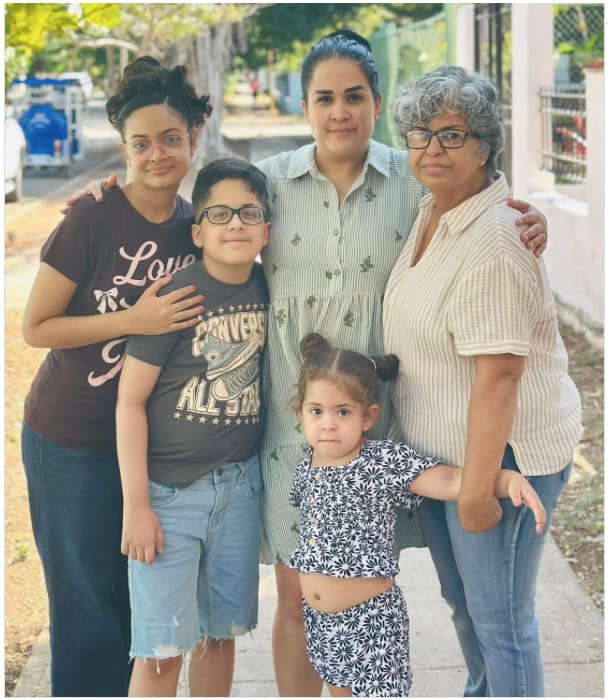 Activist Anna Bensi, her nephew, sister, niece, and mother in Havana earlier this month. Political police agents threatened the family for Anna’s social media posts criticizing the regime. Photo / Facebook
 24 abril 2026
Hola y welcome. Thanks for being with me for this week’s CubaCurious.
This week you’ll meet three courageous Cuban women activists, all battling the regime’s escalating repression against them. Anna, Mileydi, and Eliannis are alone and asking for the international community’s support for themselves, their children, and their political prisoner relatives.
They haven’t hurt anyone, called for protests, damaged property, stolen anything, or advocated for violence. They simply want political change and freedom. They’re afraid, but not too afraid to stay silent. That’s a problem for the regime and, therefore, for them.
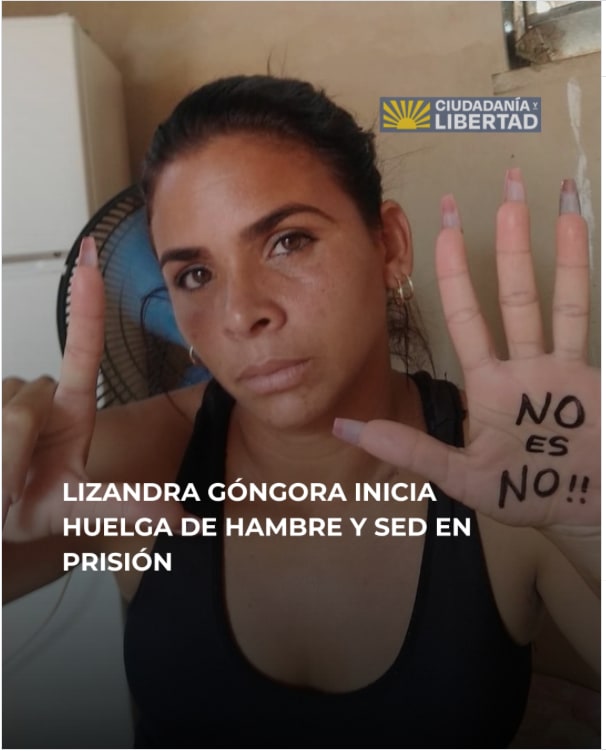 Political prisoner Lizandra Góngora. Facebook / Lizandra Góngora.
The three women are free, for now, but Lizandra Góngora, who is serving a 14-year sentence for marching in the anti-regime demonstrations of July 11, 2021, is not. The political prisoner began a hunger strike this Wednesday to protest the recent declarations on NBC News by Cuban leader Miguel Díaz Canel denying that Cuba has political prisoners. MDC said people claiming to be political prisoners were jailed for vandalism and crimes against the Cuban constitution. Sounds a little political to me.
Lizandra is the mother of five children and has been seriously ill several times during her imprisonment. She was diagnosed in March with a 5-centimeter uterine fibroid that has caused hemorrhages. Prison officials denied her surgery, saying there is a lack of specialists in their region.
Cubans won’t read about these stories in the state-run media. In fact, many Cubans call the news “el menticiero.” Noticias = news. Mentira = lie. Put them together and you get Cuban newscasts: menticieros. All the news that’s fit to print—if it serves the purposes of the revolutionary government. You won’t find investigations of people in power, state agencies, institutions, alleged wrongdoing, or the dark reality Cubans face every day. One Cubana told me she stopped watching the menticiero a long time ago. “They talk about a Cuba that I don’t know.”
Maybe that’s why ever since the 1959 revolution came to power, many Cubans consider the word-on-the-street, Radio Bemba (Radio Big Mouth) in Cuban slang, the most accurate source of important news. Radio Bemba told you how to cheat on your ration card. Where to find the best potatoes on the black market. Who the snitches were.
Sixty-five years ago last Friday, 17 April, Cubans tuned into Radio Bemba to find out where their relatives had been taken when they were arrested as the Bay of Pigs Invasion began. Thousands of Cubans suspected of being anti-revolutionary, or perhaps lacking sufficient revolutionary zeal, were hauled off to prisons, stadiums, and other holding centers. You weren’t going to learn those details on el menticiero.
One of the diciest problems in those first years was finding out how to obtain a permiso, the exit visa the revolutionary government instituted to prevent the exodus of Cubans searching for freer ground. Until the 1959 revolution, Cubans had enjoyed the right to leave and return to their country at will, like the citizens of most countries. El menticiero wasn’t going to spell out how to apply for your permiso, but Radio Bemba knew.
Today, Cubans have a new Radio Bemba. They can access areas of the internet (the regime blocks many sites)—when they have electricity, the government hasn’t cut their access, or they aren’t running around searching for food, water, and Tylenol. Facebook and X are the new Radio Bemba plazas where Cubans share survival strategies, vent (up to a point), and inform and support each other.
Mobile internet access is relatively new in Cuba; it dates to December 2018. The regime had given years of excuses, blamed the U.S., dragged its feet, until it finally delivered the service. It was through the state’s monopoly (ETCSA), at exorbitant rates, slow speed, and convenient shutdowns at times of social unrest. But at least Cubans had a shot at the Web.
Dictatorship’s don’t like free information flow. So it’s no wonder that one of the juiciest news stories this week came from a leaked report in the U.S. media. USA Today, which appears to have some shy but talkative contacts in the State Department, revealed that U.S. officials traveled to Havana on 10 April with time-sensitive demands for the regime: free high-profile political prisoners, give Cubans uncensored internet access, and ease restrictions on foreign investment—within two weeks, which means time is pretty much up.
When the news broke, Cuban officials scrambled to control the narrative. Yes, they’d had a meeting with the U.S., but they denied any demands, said the talks were “respectful” and that no conditions were linked to the discussions.
Radio Bemba was crackling mad. Cubans complained about having to rely on foreign media for information about their lives and their future. Many cheered Cuba’s stated historic “enemy” for defending Cuba’s estimated 1,200 political prisoners, pressuring it to give uncensored internet access to citizens, championing Cubans’ right to start businesses of their own, and to be paid directly by foreign employers—not through the regime, after it collects workers’ salaries in foreign currency, takes a cut, and pays them in worthless pesos.
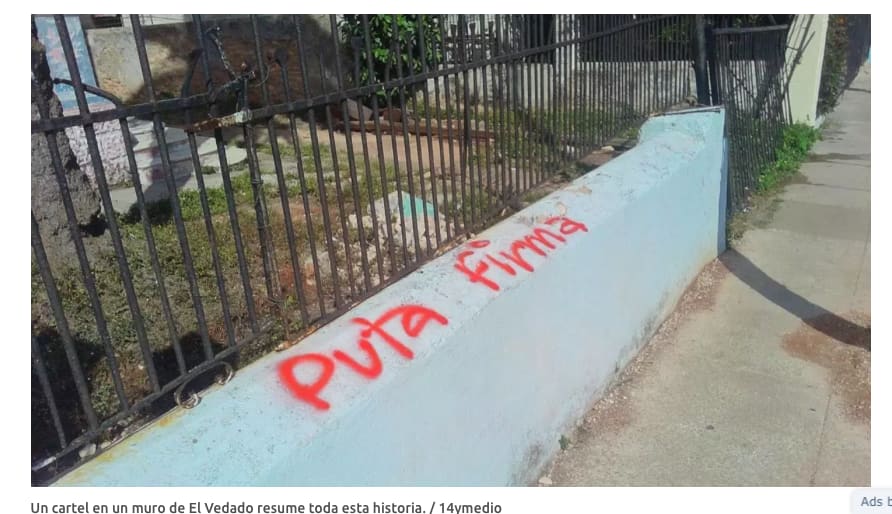 Graffiti response to signature campaign supporting the revolution. “Fucking signature.” Photo: 14ymedio.com
 And there’s an insult on top of the injury, because the regime has a campaign underway to collect signatures showing support for the revolution and the government. Cubans are complaining about having to sign the petition in public, at work, at school, in front of neighbors. With so little time in their stressful days, with so many problems to solve, this is what their government wants from them.
Who wouldn’t go on Radio Bemba and let it rip?
Ah, but that’ll get you in a heap of trouble, as the women you’ll meet below will tell you.
Their courage inspires me. I hope it will do the same for you.
Hasta la semana que viene,
Ana
CubaCurious is a reader-supported publication. To receive new posts and support my work, consider becoming a free or paid subscriber.
UNO“We can help you achieve your dreams, but . . .” Anna Bensi. Screen shot from her live post on Facebook this week.
Anna Sofía Benítez Silvente may tip the scales at 100 pounds on a lucky day when she’s found enough to eat. The anti-regime influencer lives alone in Havana with her mother, who is ill. Anna Bensi, as she is also known, is not a member of any activist groups and has never called for a protest. But she is an effective, popular, and fearless critic of the Cuban dictatorship on social media.
The regime, which has threatened and harassed Anna for years, unleashed non-stop persecution against Anna and her mother in the last few weeks. Agents are posted at their door, on the corner. Six or seven young men follow them wherever they go. They play loud music, laugh at them, comment about them.
Mother and daughter are routinely called in for questioning. They receive threatening calls. They’ve had their WhatsApp accounts shut down, their live posts cut off. Their neighbors are harassed, warned to keep their distance. Both women are being investigated and have pending court cases, Anna for being “counter revolutionary,” her mother for allowing it.
When Anna’s older sister, Elmis, visited from the U.S. recently to bring her mother medicine and offer support, a state security agent arrived and ordered Elmis to appear at the local police station just hours before she was due to board her plane home. She needed to resolve an issue with her passport, was the excuse.
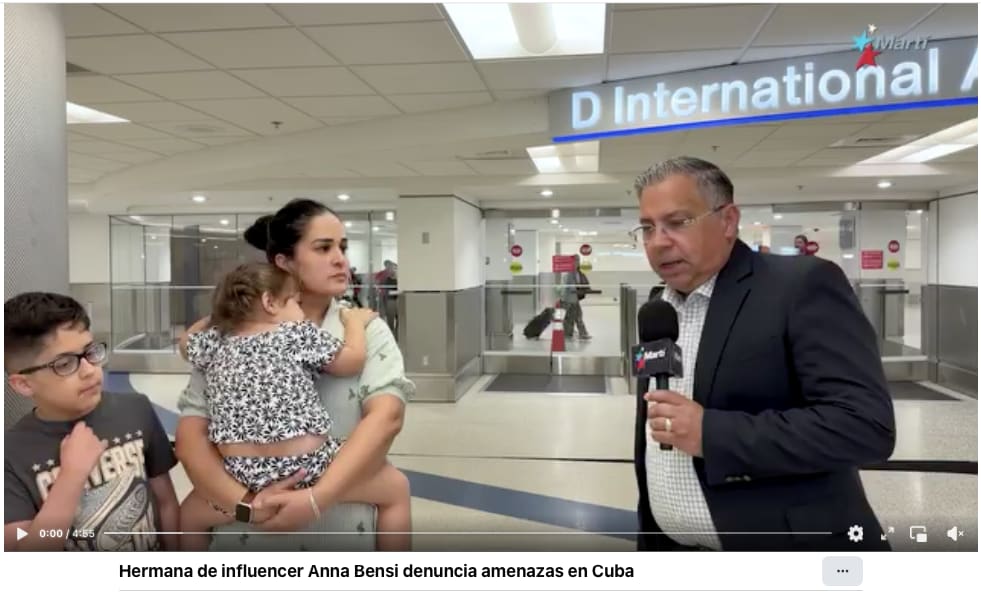 Elmis, Anna Bensi’s sister, with her children at Miami International Airport. Photo: Youtube / U.S.-based Martí Noticias.
The passport didn’t come up during the interrogation but Anna’s “reactionary behavior” did. “Aren’t you afraid that something could happen to her,” Elmis said one of the officials asked her. She was terrified she’d be arrested, her children—who were just outside the interrogation room—taken from her. “Your sister and mother are alone. Anything can happen to them.” Elmis said she could hear her children crying outside throughout the interrogation.
“They asked me about Mike Hammer (the U.S. embassy’s head of mission in Havana), if he was trying to incite young people to rise up.” Elmis told Martí Noticias. She had not expected Hammer’s visit, but was glad when he arrived. She and her children are U.S. citizens. Elmis said she told the agents that Hammer’s visit was a courtesy, to see if she and her family were safe. “He is a wonderful human being,” she told a Martí Noticias in an interview at Miami International Airport later the same day. “They treated me very, very badly.”
The agents ruined the last few hours the family had together, but they let Elmis go and she made her flight. They let Anna’s mother go as well, but they kept Anna for an interrogation. Three agents who never identified themselves interrogated Anna for over two hours.
Anna managed to make a live post on Facebook later in the day. “They don’t respect anything. Anyone . . . It’s such a disgrace that I have to face this, that my family has to face this, just because I want to say what I think.
“Two men and a woman . . . They tried to act like my friends,” Anna said in a live post that same day. “What are your dreams? You like to sing, don’t you? . . . We can help you with that career . . . But your reactionary posts must stop . . . Your ideas, your videos, leave those aside . . . ”
Anna said she will not be silenced and will never be complicit with “a dictatorship . . . that has the Cuban people in misery, hungry. Never.”
Her disgust was palpable, especially when describing the male agent. “He was almost whispering the whole time . . . ‘You are this close to being arrested. We have everything ready. And after a week, no one will even remember you. . . You’re getting into a mess that makes it a good idea to leave the country.’ Why?” Anna asked. “Why do I have to leave? Why don’t you leave?”
The agents told her to think of her mother, of how much she will suffer.
“Pure repression,” Anna said in her post. “They want us isolated. They’ll stop at nothing . . . I thank all of you, because it is the visibility you’ve given me that is keeping them from doing more against me. Thank you.”
“My conscience is clear . . . I do this for myself,” she said, tapping her chest, “so I can let things out. I’ll never be part of an injustice. Never.”
If you’d like to support Anna, like her posts, follow her on social media. That’s all she has for protection right now. It’s a small step but means a great deal to her and her family.
DOS“You may imprison him, but you can’t imprison his ideas, nor the people’s.”—Mileydi Machin, mother of political prisoner
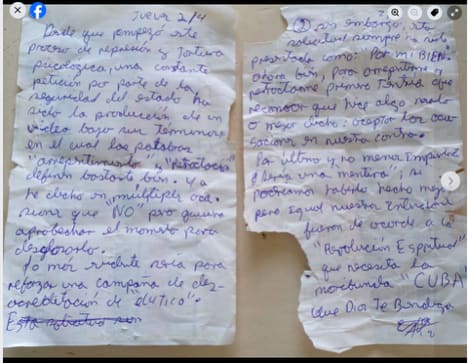 Note from political prisoner smuggled out of prison, posted by his mother on Facebook. Photo: Facebook
Mileydi Machin believes that “truth cannot be held back, it is like a river.”
So, despite threats from officials to stay silent, she shared a note smuggled out of the prison where her son, political prisoner Ernesto Ricardo Medin, is being held. Ernesto and his partner Kamil Zayas Pérez are the creators of El4tico, an audio-visual project that exposes the dictatorship’s incoherent policies and demands. It is extremely popular among young Cubans. And that’s what landed Ernesto and Kamil in a dungeon 72 days ago.
Mileydi called out Cuban leader Miguel Díaz Canel’s in her post. “Our president says there are no political prisoners in Cuba, then what is he (Ernesto) accused of? Terrorism? Is he causing terror with a pencil and some paper, with an idea? You may imprison him, but you can’t imprison his ideas, nor the people’s. People are quiet but they cheer when someone raises their voice against injustice.”
“I don’t want to disobey anyone. I just don’t want to stay silent. . .” she added, referring to the coercion used by officials to keep political prisoners’ families quiet.
Excerpts from Ernesto’s note are below. He and his mother will surely pay for publicizing his unjust imprisonment and exposing the regime’s manipulation. But silence keeps the injustice hidden. Visibility is the only weapon activists and political prisoners have. I hope you’ll consider a comment, a like, a show of support for Mileydi Machin and Ernesto.
“Since this repression and psychological torture began, State Security has constantly demanded I record with the words “repentance and retraction.” I have aleady said on multiple occasions “NO.”The most obvious reason is it would reinforce the campaign to discredit El4tico. They’ve always presented this as “For my good.” But to repent and retract I’d have to admit that I did something wrong, accept the accusations against us.That would be a lie! Our goal is only to support the “Spiritual Revolution” that moribund Cuba needs.God bless you.”TRES “I have never been so afraid.”—Christian pro-democracy activist Eliannis Villavicencio reacting to agents’ latest threats.
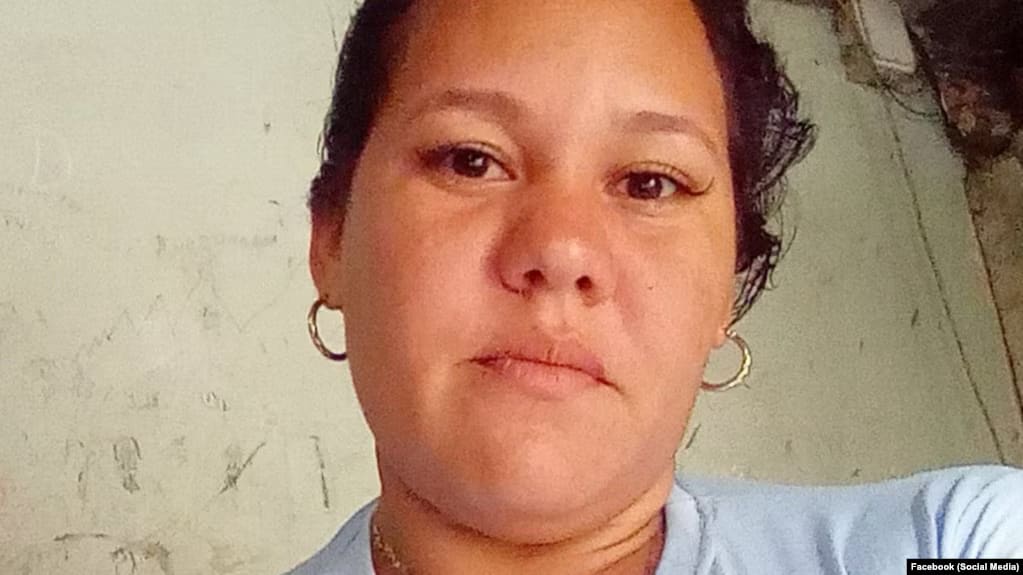 Eliannis Villavicencio, wife of political prisoner and UNPACU member Alexander Verdecia. Facebook photo.
Eliannis Villavicencio is a Christian pro-democracy activist who has worked alongside her husband, political prisoner Alexander Verdecia, for eleven years. Wife and husband have been persecuted for their activism and their Christian faith for as long as they can remember. That has not dissuaded them from working with their group, UNPACU, to bring about peaceful democratic transition in Cuba.
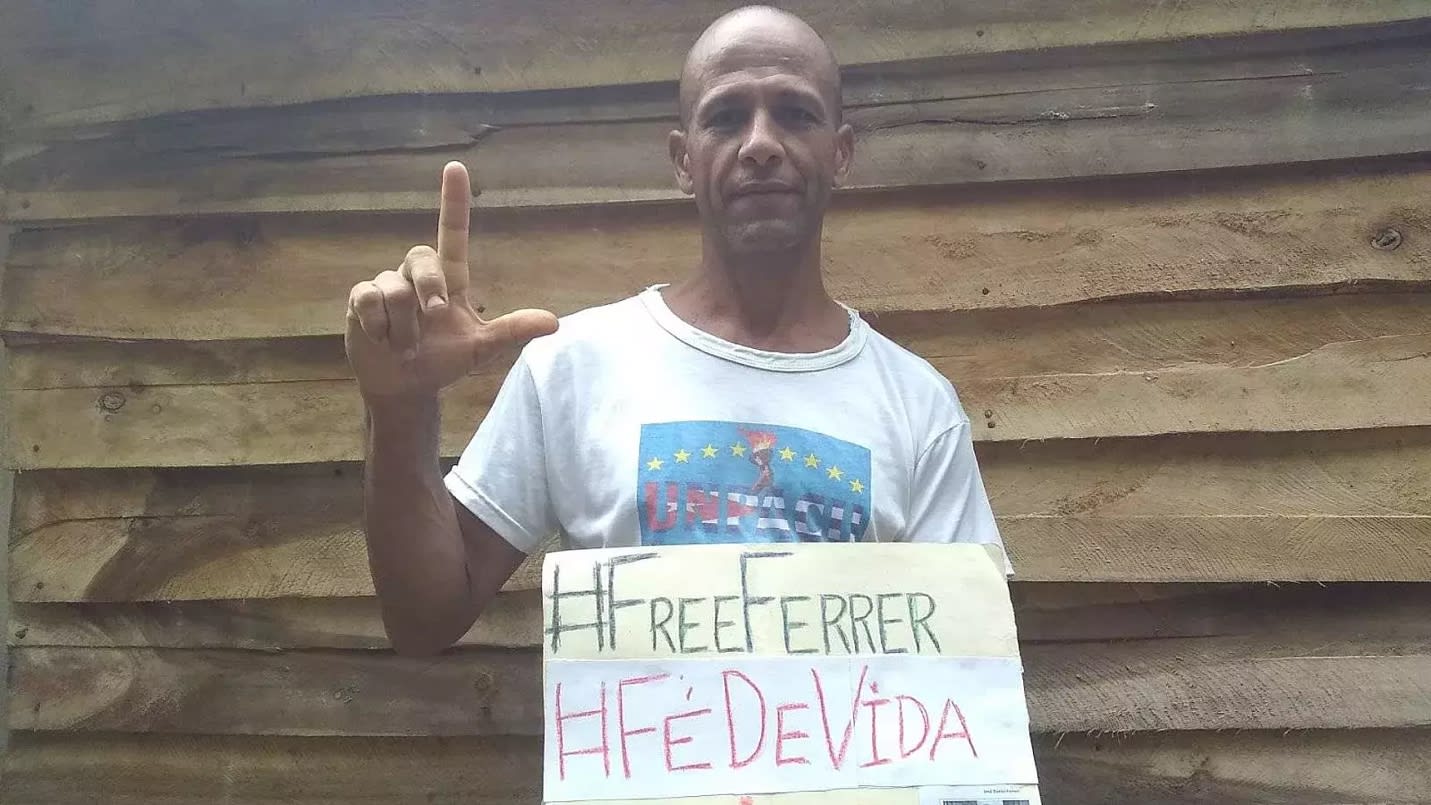 Facebook / Cuban regime opponent, Alexander Verdecia, was sentenced to seven years for posting his pro-democracy beliefs and calls for reforms on social media. He was found guilty of “propaganda against the constitutional order.”
 Eliannis has not stopped demanding freedom for her husband.
In the last weeks, she was served citations at home for posting about her husband and for using his account. (Who knew Cuban State Security was moonlighting at Facebook, helping Zuck keep users in line?)
Eliannis told Martí Noticias that she was summoned to a local operations center and fined by “a telecommunications inspector.” Later, a political police agent who goes by the name Rolando threatened her.
“He said they have everything ready to arrest me,” the activist said, adding that in the eleven years of working with Christian pro-democracy group UNPACU she has never felt so much fear. “I’m not afraid of going to prison, nor the fine.” She is in anguish about her daughters, 7 and 11 years old, who “would be completely alone” if she goes to prison.
In Eliannis’s case, like Mileydis and Anna’s, speaking out may help but it will certainly hurt, because the reprisals will come. That’s a given. The families are left to weigh the risks each time they raise their voices, hoping they rack up enough followers, likes, hearts, and comments and that some protection comes their way.
Cuban Treat of the Week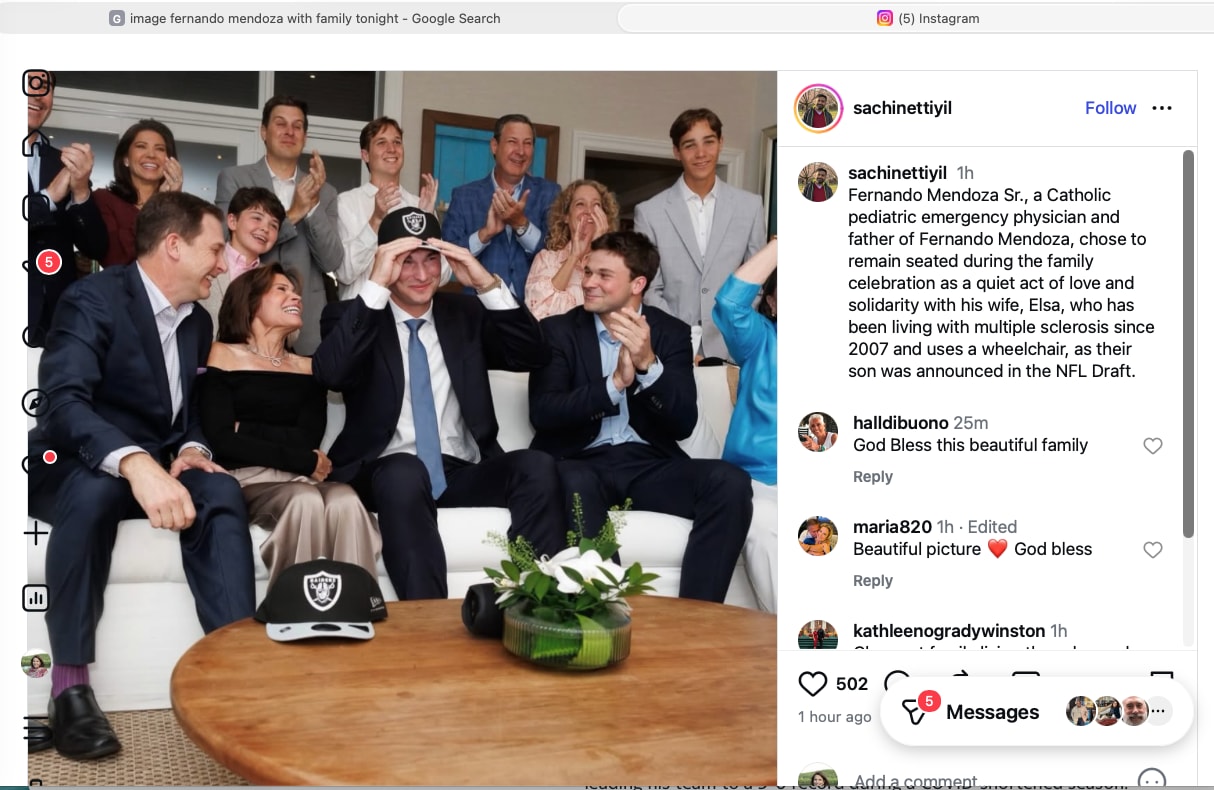
As expected, Cuban American quarterback Fernandito Mendoza was the No. 1 overall pick in last night’s 2006 NFL Draft. What may not have been expected is that he stayed home with his family rather than attend the ceremony in Pittsburgh. He said he wanted to be with them and open the celebration to a large group of friends and supporters. They only allow a small number of guests at the event, so Fernandito said, Yo me quedo en casa. I’ll stay home.
I think that’s worthy of a Cuban Treat of the Week slot. Not being the No. 1 pick. The love of family and gratitude for the folks that got him to where he is today.


April 17, 2026
"A free Cuba. That is still my dream."
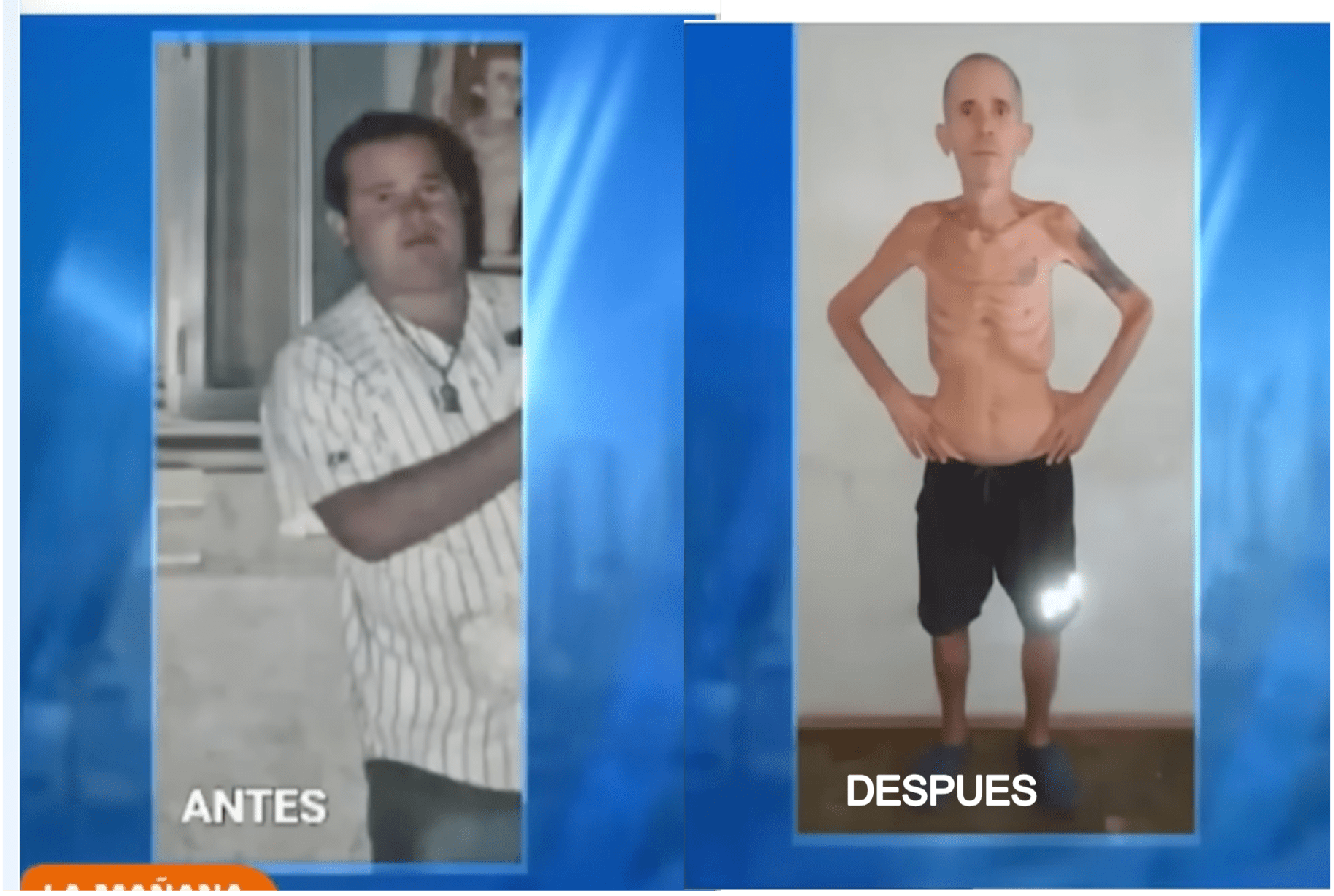 Cuban political prisoner Alexander Díaz Rodríguez weighed 178 lbs when he was arrested in July 2021 for protesting the dictatorship. He weighed 81 lbs when released this month, having completed his full five-year sentence. The activist says he received “harsh, harsh treatment” for his convictions. The regime denied requests for medical parole given his terminal cancer diagnosis. Screen shot compiled from NTN24 video images.
 17 abril 2026
Hola y welcome back to CubaCurious.
Thanks very much for being here.
Every time I think I’m getting better at handling the deeply disturbing stories coming out of Cuba, I hit a week like this one and end up reeling.
Dissidents, activists, and average Cubans reported being physically and psychological brutalized for criticizing the regime in recent days. The daughter of an exiled author whose book criticizes the regime was arrested without cause and threatened with losing custody of her children. A university professor was imprisoned for writing an anti-regime slogan. A mother and daughter who live alone were interrogated and warned that “something bad” could happen to them if they continue posting anti-regime content. A political prisoner who completed his five-year sentence was released in a state of severe malnutrition and suffering from untreated throat cancer and Hepatitis B, contracted while in prison. Prisoners at the same jail where a 75-year-old political prisoner is being held reported that he was brutally beaten and transferred to solitary confinement. There are many, many other tragedies befalling Cubans who think differently than their leaders, who want change.
I’m not sure why I held out hope for better news this week. Rather than easing up amid growing protests and U.S. pressure to free political prisoners, the regime has ratcheted up its repression in recent months. Not that you would think that based on Cuban leaders’ statements in the foreign press this week.
Yet the arrests are growing more violent, based on the latest photos of victims and eyewitness accounts. More people in opponents’ social circles and families say they’ve been detained, threatened.
The latest report by Prisoners’ Defenders, a Madrid-based NGO that documents and tracks politically linked arrests, confirms the regime is going putting on its best jack boots. PD documented hundreds of new arrests related to spontaneous civic protests in recent weeks. Twenty nine percent of those arrested were women. There was an increase in the number of teenagers who were arrested for protesting or accused of politically related crimes. The group is tracking 1,213 known Cuban political prisoners.
“That image that in Cuba anyone who speaks against the revolution is imprisoned is a lie.”—Cuban leader Miguel Díaz Canel to NBC News interviewer.
Meanwhile, I watched Cuba’s appointed president, Miguel Díaz Canel, lie to American journalists in televised interviews. He described a Cuba that doesn’t exist. A Cuba where there are no political prisoners, where he serves at the will of Cuban citizens, and where things really aren’t that bad—that’s just a myth created by the U.S. and imperialists bent on defaming the revolution.
MDC told NBC News that “That image that anyone in Cuba who speaks against the regime is imprisoned is a lie.” He explained that Cubans have been victorious, given the devastating impact of the American bloqueo (blockade, the regime’s preferred term for the partial and porous U.S. trade embargo). They’ve made great achievements—and continue to do so, he said. As he wrapped up a spectacular string of lies, MDC pushed his finger against his nose, a body-language tell linked to extreme discomfort or lying. Not that we needed the clue.
When a reporter asked MDC if he’d step down to open a path for U.S.-Cuba negotiations that could improve Cubans’ lives, he went on the offensive. “Would you ask any other leader such a question? Is that you’re question or the State Department’s question?”
Here, MDC revealed his ignorance of what life is like in a country with a free press and basic freedoms. He couldn’t fathom that, one, the reporter works for an institution that is independent, or at least strives to be, from any political party or the White House. And two, he couldn’t understand that in a liberal democracy journalists are charged with asking probing, uncomfortable questions, especially of elected leaders. They search for the truth, hold elected leaders to account, strive to keep independent voters informed. MDC has been protected entirely from that reality, including needing to think about voters at all.
MDC said he serves as president at the will of the Cuban people and would step down the day they say he should.
¿Perdón? How would that happen?
Many Cubans in and outside of Cuba seemed to share my reaction online and in interviews with the independent journalists. He thinks we elected him? . . . If we elected him, then who lost? Because someone has to lose if there’s an election, right? Show me the loser! are comments that captured the general disgust.
Amelia Calzadilla is a Cuban activist now living in Spain. She has 130,000 Facebook followers and is well respected in the activist community. Amelia decided to conduct a survey, using transparent metrics, asking Cubans what they think of MDC’s leadership. You know, he kind of asked for it.
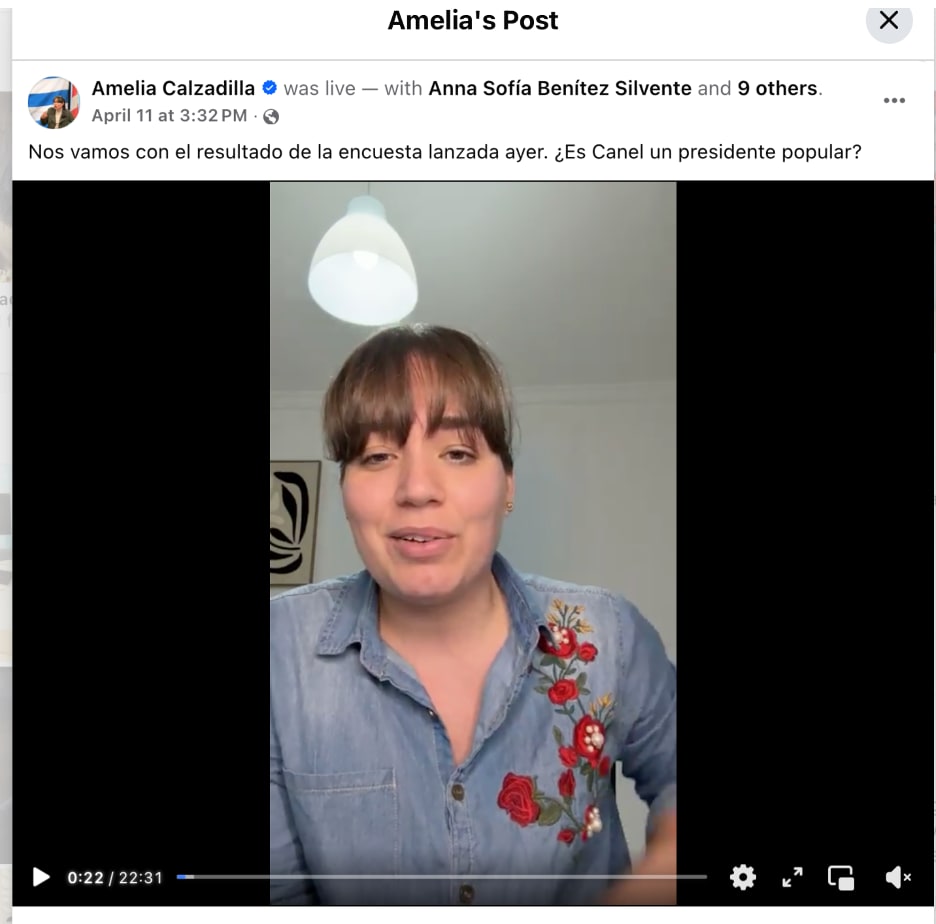 A screen shot from Amelia’s post on the survey results.
 Vote 1 if: MDC has your support and should stay in his post. Vote 2 if: you think MDC is an appointed puppet leader, you did not vote for him, nor would you in your wildest dream ever think of voting for him; he should pack his bags and take the Castros and everybody else in power with him.
In 24 hours, Amelia’s post generated 13,000 comments, 26,000 votes against MDC and 965 voted for him. She knew that most of the 965 pro-MDC votes were made in error. She knows from their past posts that most of those followers do not support the regime and had mistakenly clicked the heart for the wrong option.
But to make it easier, she assumed the full 965 votes for MDC were legitimate. That’s 3% of respondents supporting MDC. In her video opens her account and goes page by page to show the post analytics for the 24-hour period. Roughly 1 million views, something very few of her posts have garnered. And 40,000 interactions/engagements. She shared plenty of other metrics, but those are the big ones.
But the best part about the survey is that 64% of respondents were from accounts inside Cuba, which she proved by zooming in and going page by page through the metrics. Amelia knew the regime would say respondents were members of the gusano (worm) diaspora, paid traitors, mercenaries, the usual accusations it uses to discredit opponents.
“This shows . . . Cubans are speaking loudly and clearly,” she says in the live post where she revealed the survey results. “They don’t want [Díaz] Canel, they don’t want communism and they don’t want the dictatorship to continue . . . And they are hitting “like” knowing it is dangerous, that state security could show up at their door as a result. Now, there are 30,000 other accounts that voted that way. It’s unlikely they’d go after all of them. But they know that their names and data are easily pulled from their accounts. It says a lot about how much they care about this issue.”
“Here’s the data from the Cuban people. . . despite the danger to them, despite the abandonment of their own government, knowing that the international community sides with the dictatorship, seeing the conduct of democratic governments that often back the regime. . . Here’s proof of what Cubans want . . . We want to be free . . . We want to come home.”
Amelia believes in data, hard proof, and an open mic—unlike the regime, which eliminated in the 2019 constitution the only vehicle Cubans had had, at least technically, to bring about change in their government: creating a petition with 10,000 signatures and presenting it to the National Assembly.
“Shame on you,” she said on her post. “You should be ashamed of yourselves,”
Brava, Amelia. ¡Brava!
I have just one short story for you this week, because I think it deserves our full attention.
Thanks for reading. If you appreciate today’s CubaCurious, please share, subscribe, click the heart, tell others so they can join us. Also, let me know what you think of all of this in the comments section.
Gracias.
Hasta la semana que viene,
Ana
Thanks for reading CubaCurious! This post is public so feel free to share it.
Uno—Activists denounce terminally ill political prisoner’s severe malnutrition, abuse.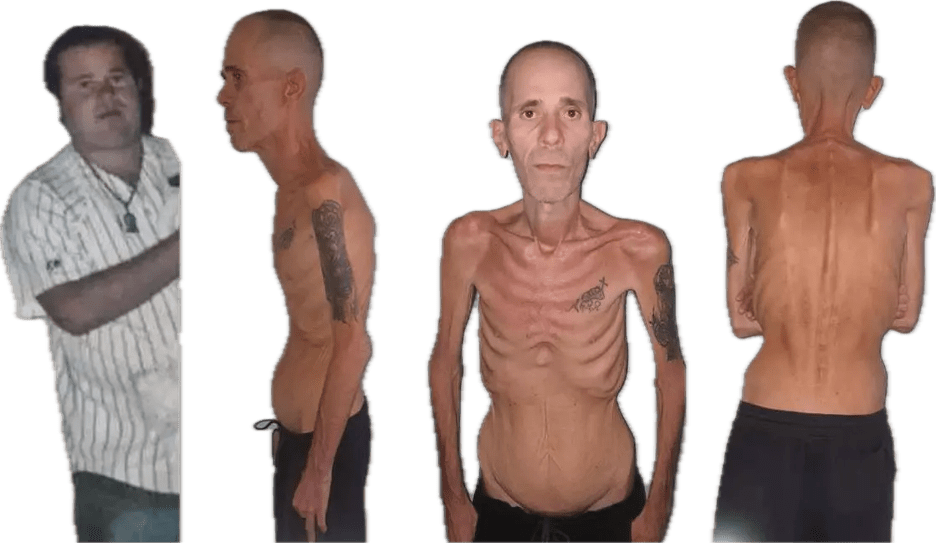 Political prisoner Alexander Díaz Rodríguez, before his imprisonment upon completing his full five-year sentence, 4 April 2026. / Photo: Prisoners Defenders.
The U.S. Embassy in Havana is evaluating the possibility of a humanitarian visa for recently released political prisoner Alexander Díaz Rodríguez. The 45-year-old was diagnosed with thyroid cancer while he was in prison but did not receive adequate treatment. The visa would allow Díaz-Rodríguez, who also contracted Hepatitis B, anemia, and suffers from gum disease and other symptoms associated with the abysmal conditions of the prison, a chance to go to the U.S. for medical care.
Prisoners Defenders had tracked the case since the activist’s arrest for protesting peacefully in the 11J anti-regime demonstrations. Subjective assessments were used against the activist during his court case, including “poor social conduct,” and “destabilizing actions.” He was given the maximum sentence of five years for “disrespect” and “sedition.”
Legal rights groups and activists denounced the severe judicial irregularities in the case and Díaz Rodríguez’s terminal illness, but the regime denied medical parole. He served his full prison sentence.
The activist’s family said he met the medical criteria for medical parole, but officials were punishing him for his convictions. Díaz Rodriguez was rushed to the hospital several times in critical condition during his 4-year imprisonment but was always returned and did not receive necessary medical treatment. The family also reported threats against them for publicizing the case on social media.
“When I saw the condition he was in, I noticed what I have seen other times in prisoners leaving Cuba: they look like survivors rescued from a concentration camp,” Javier Larrondo, president of Prisoners Defenders, told 14ymedio.
The activist said he was put in isolation cells approximately twelve times as punishment for being “counter revolutionary.” “They were very harsh, very harsh on me. I have gone through quite a few things with conviction for my principles.
The abuse extended to his family, he said. An aunt, the only relative he has left in Cuba, was beaten after demanding his release during one of her visits to the prison.
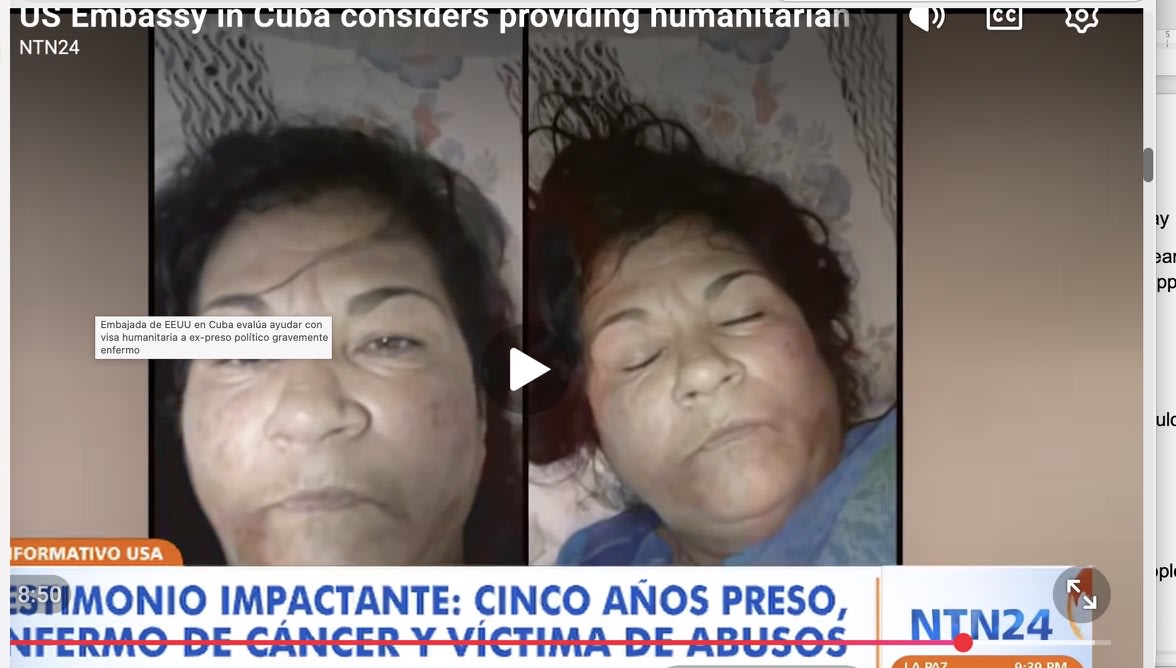 Photos taken of the activist’s aunt after reportedly being beaten by prison guards following a visit to her nephew. Screen capture from NTN24 video.
PD petitioned unsuccessfully to have the activist serve the remainder of his sentence at home due to his terminal illness, even presenting the case at the UN.
The activist entered prison weighing about 81 kilograms (178 lbs). He left weighing 37 kilograms (81 lbs). “I’m a bit thin, but I’m alive,” he told NTN24.
PD’s latest, released Thursday, shows a total of 1,213 known Cuban political prisoners.
How many of them are in Díaz Rodríguez’s condition? We can’t know. Cuba is the only country in our hemisphere that does not permit independent prison monitors access to its prisons. Not even the Red Cross.
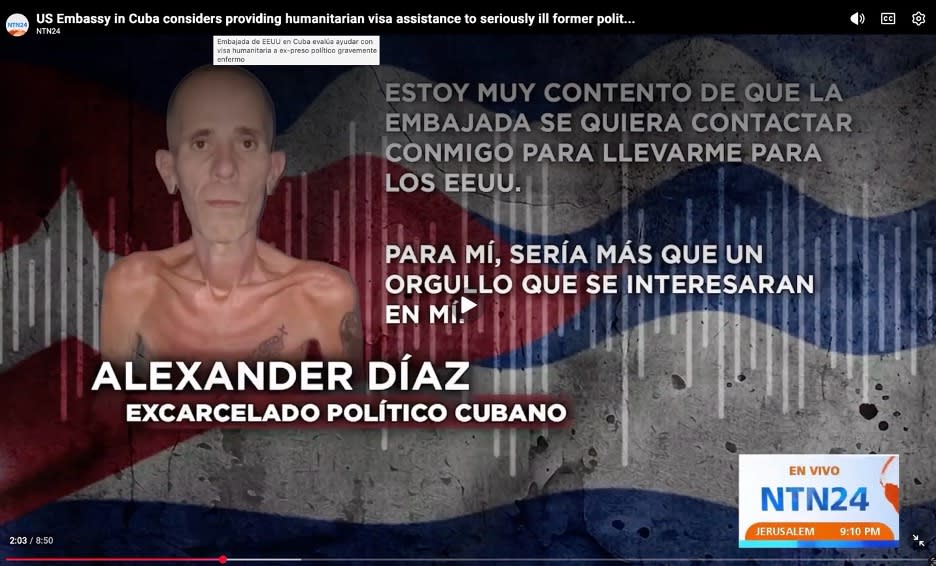 Activist’s comments after release: I’m very happy that the [U.S.} embassy wants to contact me to take me to the U.S. For me, it would be a great honor to have their interest in me.”
As I listened to Díaz Rodríguez’s interview, I was struck by the gentleness of his voice, his humility, and his deep concern for all Cuban prisoners. He said he felt “very, very weak”, was struggling to move, and in great pain . . . But it’s an honor to have their [U.S. embassy officials] interest in me.”
“A free Cuba. That’s still my dream,” he told NTN24 news.
We’re with you, amigo, and send you wishes for freedom, healing, and peace.
For more details of Díaz Rodríguez’s ordeal, read this 14ymedio article.
Cuban Treat of the WeekI had a fun and meaningful afternoon yesterday working with other Cuban Americans here in Boston who share my dream of freedom for Cuba. Alberto Vasallo, host of WGBH’s “Amplify” tv show, invited five of us who’ve been active in supporting Cuban dissidents to talk about the misconceptions Americans seem to have about post-revolutionary Cuba.
Activists Grecia Ordoñez and Mike Reyes, author Jorge Lucas Álvarez, and educator Cesar Pérez (by video) joined me for the lively conversation, moderated expertly by Alberto. Keeping four Cubans in order while discussing politics is not for the faint-hearted.
The episode airs next Wednesday on WGBH, channel 2, Boston’s public television station, but here’s a video Alberto cooked up after we wrapped.
If we don’t tell our story, someone else will. Right?
¡Viva Cuba Libre!
CubaCurious is a reader-supported publication. To receive new posts and support my work, consider becoming a free or paid subscriber.
April 10, 2026
When life gives Cubans "limones," they create lemon soufflés
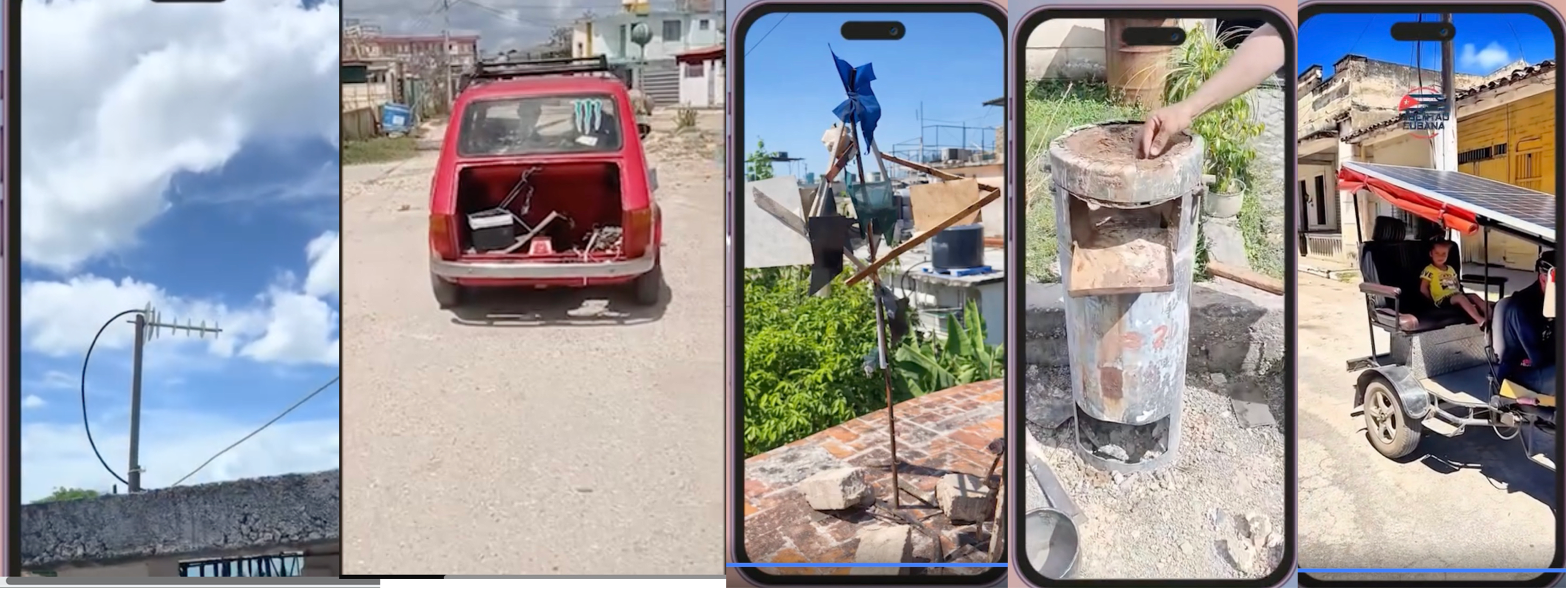 Cubans are solving problems the government can’t or won’t fix with DIY remedies. L-R. Home-made antenna delivers 4G internet access. Gasoline powered car retrofitted with an electric motor solves fuel shortage. Wind-powered protest machine bangs pots and pans, protects protestors’ identity. Soldered scrap metal grill makes cooking in blackouts possible. A Bici-Taxi driver repurposes solar panel, saves business in fuel crisis. Photos captured from El Toque news video.
10 abril 2026
Hola y welcome back to CubaCurious.
Thanks so much for being here.
For years, every time I asked average Cubans how they were doing they often answered the same way. Resolviendo (solving problems) or inventando (inventing solutions).
Understandable responses considering the chronic shortages of everything from cooking oil to toilet paper on the island. But resolviendo and inventando are the permanent state Cubans live in now.
Most Cubans go into problem-solving mode the moment they wake up. Sometimes that happens at 3 am when the power comes back on after a blackout. That’s why people leave their light switches turned on when they go to bed during a blackout. If they want to eat rice for dinner the next day, wash a pile of dirty clothes, or run the water purifier that Tía Berta sent them from Kansas, they have to get up, plug in the appliances they shut off when the power went out (those surges will fry them)—and get crackin’.
What would it be like if Cubans’ energy and resourcefulness could be unleashed from the economic straitjacket the regime uses to ensure no one gets richer than their neighbors (unless they’re in the cupula of power)?
I see signs of great, if exhausted, resilience from average Cubans every day. I thought I’d share some of them with you this week, take a break from another painful human rights update from the island. After all, you wouldn’t be surprised if I told you that not even one of the prisoners released in the last week—of the touted 2010 the regime said it would free—had been in jail for political reasons. Or that the two young anti-regime creatives of El Cuartico, Ernesto “Tico” Medina and Camil Sallas Pérez, are entering their second month in detention for simply saying, publicly, what so many young Cubans feel. They don’t want to live in fear anymore. They don’t want to be punished for thinking differently.
Since the U.S. capture of Nicolás Maduro in January, Venezuela and Nicaragua have freed some political prisoners. But not Cuba—other than 27 of the 51 prisoners released last month in a much-promoted “humanitarian” gesture. And those 27 releasees are under harsh restrictions, deprived of true freedom, and likely—because many remain committed to speaking their minds—to end up in prison again.
So, let’s turn away from what’s been taken from Cubans and look at the creative ways they’re solving the problems their government can’t or won’t address. Each example of Cuban ingenuity below was sourced from El Toque articles mentioned in this recent news video.
An estimated 70% of Cubans face daily water shortages. Maybe your barrio hasn’t had water service for seven months, like the Pitilla and Primero de Mayo barrios in Trinidad. But you’ve been thinking. You know a guy in a nearby barrio that gets water now and then. He’s been looking for a muffler for his car. You scored one the other day on the black market for a great price, knowing he’d be interested. Maybe he’ll barter. A 1978 Ford muffler if he lets you fill a 30-gallon container (which you and your neighbor made from soldered scrap metal) with water that’s as precious as gold right now.
Many Cubans I’ve met or spoken with are skilled at free market, supply and demand basics—not to mention arbitrage. They know if a black market produce vendor in outlying barrio x sells low, they can buy early in the day from him and sell high later to black market customers in the city. Strange, how a communist system can spark capitalistic thinking. That’s a kind of accidental creativity.
Three state aqueduct workers in Trinidad are capitalizing on that kind of thinking, according to townspeople who reported them to El Toque. They say the men have been running a lucrative water supply business for years by shutting it off and making townspeople buy it from them. “That business is backed by the top figures of the PCC (Communist Party of Cuba) and the government . . . people are outraged at the injustice, one of them wrote. “It’s painful to see old folks carrying water because of these corrupt people. This business has been going on for years. They limit water in some zones and open it in others to maintain the appearance that they are supplying it. Everyone knows this is happening. Please publish this.”
Other Cubans are using their creativity to solve problems more fairly. I read about a cubana who bought “at a very reasonable price” a home-made antenna from a DIY black market telecom guru in her neighborhood. He rigged a coaxial cable attached to a wooden phone stand to a gadget that, to me, looks like an auger. He set the auger-antenna into an inconspicuous area on the woman’s terrace and now she can access 4G internet, a luxury most Cubans can’t afford due to the state monopoly’s exorbitant rates.
“I just have to set my phone on the plug in the little wooden stand,” she said, quite content with her new purchase.
Elsewhere . . . an unemployed man began experimenting on a gasoline-powered Polish-made car and managed to convert it to an electric vehicle that goes 100 kilometers on a single charge. The inventor said he removed the old motor, clutch, gas tank, and modified the back of car, where the new electric motor would go. “I used a Dogma electric battery, 75watt, 75 amperes.” He’s charging about $2000 USD for the conversion, but he says the price might go down as he improves the process.
Thanks for reading CubaCurious! This post is public so feel free to share it.
The cleverest invention I saw this week is a wind-powered pot-banging protest machine. The inventor told El Toque he was fed up with not being able to protest the constant power outages by banging pots and pans in the cover of darkness. The cazerlolazos have become almost routine in Havana each night and are a relatively safe way to protest. But police have managed to identify some protestors and arrest them. The inventor came up with the idea for the machine after Cuba’s “energy grid went down 3 times in 15 days . . . People need to keep protesting,” he said. “It’s not just the power going out. It’s the kid who can’t learn in school, the worker who goes to work without having slept . . . the hospitals that are in the dark while hotels are all lit up.”
Cubans have been both satisfied and disgusted by the outcome of some protests, because the power is quickly turned on when protests get large or loud. “So is there a deficit or isn’t there one?” a protestor said. “There was fuel suddenly for just this little piece of the barrio? I keep asking myself if this is how they’re going to control us. Because at this rate, five Cubans with some pots and pans might be able to open the Strait of Hormuz.”
Large protests don’t always result in power being restored. Besides “we want water, we want light,” the more dangerous chants of “Libertad,” “down with the communism,” and insults against Cuba’s appointed president, Miguel Díaz Canel, are routinely heard during cazerlolazos. Trucks full of Boinas Negras (Black Beret) shock troops have arrived at some recent demonstrations, searched homes, and made arrests.
The determined inventor of the pot-banging contraption says his machine can help protect Cubans who dare to protest.
“This way, if police go up to the roof, they’ll find a ridiculous apparatus, no one can be traced, or blamed.”
That’s the kind of thinking the new Cuba will need. Brave, creative, community focused—free.
Thanks so much for thinking about this with me. I hope you enjoyed the read. If you did, please let me know by clicking the heart at the end, sharing, commenting, or subscribing.
Hasta la semana que viene.
Ana
CubaCurious is a reader-supported publication. To receive new posts and support my work, consider becoming a free or paid subscriber.
Cuban Treat of the Week
The Orishas are one of my favorite contemporary Cuban bands. Yotuel Romero, center above, was a co-creator of the Latin Grammy Song of the Year, “Patria y Vida,” which became an anti-regime anthem in Cuba. If you haven’t listened to that song, I strongly recommend you give it a try.
I’m not a huge hip hop fan but when the Orishas are doing the hipping and hopping, they take me with them. Hope you enjoy.
CubaCurious is a reader-supported publication. To receive new posts and support my work, consider becoming a free or paid subscriber.
April 3, 2026
Cuba to “free” 2010 prisoners—but beatings, arrests, disappearances are rising
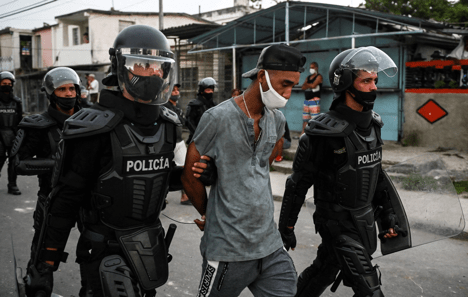 A man is arrested during the countrywide protests against regime in Havana, Cuba, July 12, 2021. © 2021 YAMIL LAGE/AFP via Getty Images/HumanRightsWatch.ORG
3 abril 2026
Hola y welcome back to CubaCurious.
Thanks so much for being here.
For the first time in my life, everywhere I go people are talking about Cuba. Unfortunately, most Americans I speak with think U.S. sanctions are the primary source of Cubans’ suffering.
If you’ve been reading CubaCurious for a while, you’ve read too many stories to believe that. But if all your news comes from traditional English-language sources, I doubt you’d question the prevailing view of Cuba in the media.
This is crucial, because we may not be able to deliver democratic change to Cuba—something Cubans wanted and expected from the 1959 revolution—but we can at least get a clearer picture of the real source of Cubans’ suffering.
Let’s keep trying with this week’s line up.
Late yesterday, the Cuban Communist Party announced that Cuba will release 2010 “prisoners.” There was no mention of political prisoners. Why would there be? Cuba says it has none. That’s why NGOs like Prisoners Defenders have to document the cases they can confirm, despite the threats to political prisoners and their families of worse outcomes if they go public.
Just before the prisoner release was announced, a story broke about a woman in Guanabacoa who reported being beaten by plainclothes agents carrying rifles and machine guns. She said the agents violently entered and ransacked her home and beat her while they were searching for her son, who was accused of protesting a power outage on 23 March.
This assault is the latest proof that while the regime tries to win international support for its “humanitarian gestures,” it continues to repress its citizens mercilessly.
A video taken by the woman’s niece captures the destruction of her aunt’s humble home and her testimony of the beating.
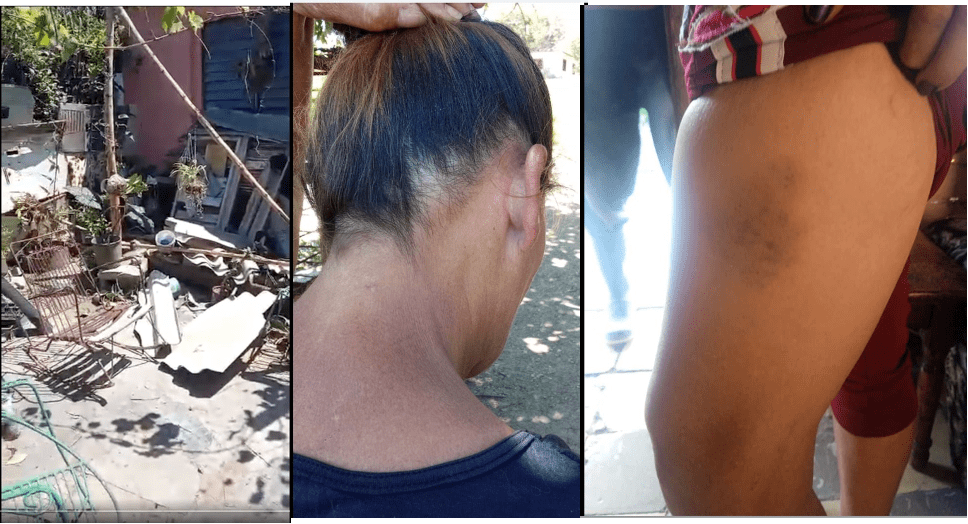 Screen shots from video denunciation of assault, destruction of property by political police agents.
“He put me in a headlock,” the aunt said, “It was the stocky one, dressed in yellow, I don’t know if he’s from [state security] or the Guanabacoa police, he slapped both sides of my face hard, threw me to the ground, they were going to arrest me . . . I was on the ground, in a hold, and they kicked me in the thigh before they left . . .” The video shows the bald patches on the woman’s scalp where she said the agents ripped her hair out.
The niece, who lives next door to her aunt, showed the entrance to her own simple home and said the agents went there first by mistake. “They came in with machine guns. . . and my son was there. He’s 10 years old.”
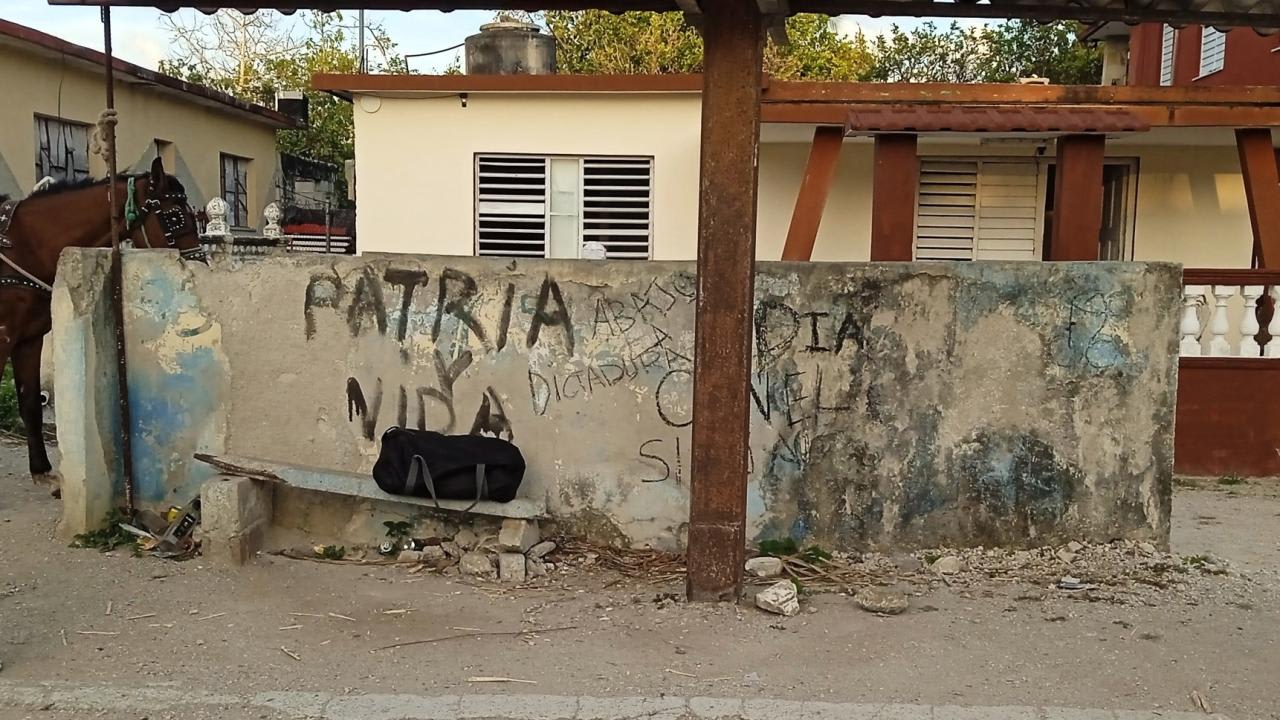 Anti-regime graffiti on a wall in Guanabacoa, a Havana township. (Cubalex/Facebook)
Bail for some of the protestors arrested in Guanabacoa was as high as 50,000 pesos, 25 times the minimum average salary (2,100 p), according to Cubalex, a legal rights advocacy NGO.
I doubt the regime’s new humanitarian attitudes and prisoner releases will help this family. They have “challenged authority” by protesting, which the president has said will not be treated with impunity. I worry about what will happen, the reprisals against all of them, now that the story has spread.
Cuban pro-democracy activists in exile criticized the regime’s prisoner release announcement for failing to recognize Cuba’s estimated 1,200 political prisoners. The lack of transparency—who is on the list, why they’re on it, when they’ll be released— adds to the suffering of prisoners and their families.
The greatest problem is the harsh restrictions placed on the releasees, including prohibitions of movement, expression, forced labor, and onerous court obligations. Many of the previously released prisoners were re-arrested not long after for not complying with the terms of their “freedom.”
“I am happy for those who get out of those infernal places,” exiled dissident leader José Daniel Ferrer said. But “the only and valid solution is the end of the tyranny that today is trying to save itself at all costs.”
The prisoner release, which was announced in the official newspaper of the Cuban Communist Party, Granma, had the self-congratulatory note of similar announcements. The “humanitarian and sovereign gesture” was “in the context of Holy Week”—the regime has spiffed up its history of religious persecution in recent years—and is part of Cuba’s “system of penal justice and the humanitarian trajectory of the revolution.”
The prisoner releases are a “habitual practice,” according to the statement, and benefit prisoners in good standing, those who have health issues, are foreigners or Cubans residing abroad.
The statement ends with facts meant to impress, I think. There have been five of these releases since 2011, benefiting more than11,000 prisoners—and this will be the third release since January.
But the math doesn’t match the rhetoric. Two prisoner releases in 13 years do not a “habitual practice” make. And three prisoner releases in the last three months is too dramatic to be the unpressured, spontaneous burst of humanitarianism this military dictatorship claims.
So, I’m going with the obvious to rationale. The regime is reaching buying time and offering morsels at the negotiating table.
And the Cuban people are waiting.
There were too many interesting stories to give you just tres scoops this week, so here’s a quick round up of the ones that got to me.
Thanks for reading.
Hasta la semana que viene,
Ana
CubaCurious is a reader-supported publication. To receive new posts and support my work, consider becoming a free or paid subscriber.
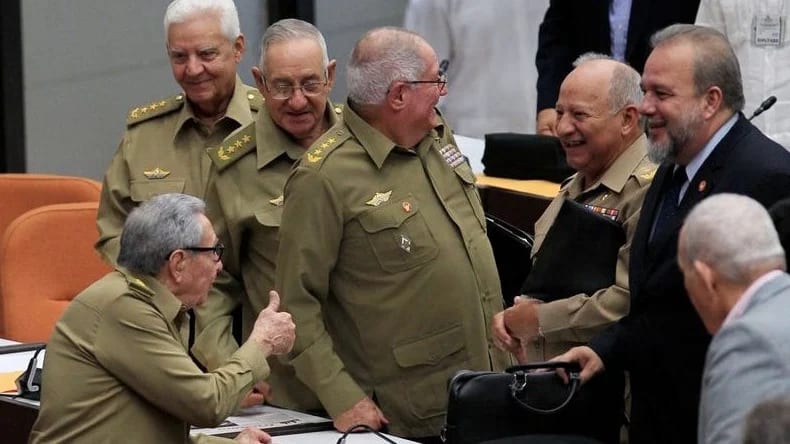 Some members of Cuba’s “cupula of power.” Raul Castro at bottom left. (DiariodeCuba.com/Reuters)
The latest report from the V-Dem Institute at the University of Gotemberg, Sweden, gave Cuba one of the worst rankings (161 of 179 countries in the world) for democratic indicators. The world is living a “third wave of autocracy,” that affects all existing democracies and has caused a regression of democratic liberties to 1978 levels. Cuba ranked close to China, North Korea, Saudi Arabia, and Eritrea in the report.
The regime doesn’t need to worry about getting its pro-revolution narrative into the world. Article after article seems to pin Cubans’ suffering almost entirely on the recent U.S. oil sanctions. Power outages, food lines, medicine and food shortages, lack of water service, transportation—all are neatly tied to the recent oil sanctions.
If these decades’ long problems or the regime’s catastrophic state-planned economy get mentioned at all, you find it in the last paragraphs. And when the dictatorship is held to some account, the shining triumph of its educational and health care systems are presented as successes to counter the failures.
Nothing about historic uprising of July 2021, the ongoing protests, the clear daily signs that Cubans want political change. Nothing about Cubans’ rage about daily blackouts while the military’s hotels are ablaze in light and full of food they can’t find anywhere let alone afford. Nothing about political prisoners.
From two recent NYT articles:
“ . . . a community doctor in one Havana neighborhood, said this year her patients haven’t received any milk or supplements like folic acid, which the state once provided regularly. That is occurring as overall food prices have shot up since January, another result of the soaring cost of fuel. —NO. Milk has been rationed since the first years of the revolution, along with most basic staples. The shortages have been increasing in severity in recent years. Inflation has been rising for years, since the regime’s disastrous “economic reordering” in 2020.
“ . . . which has struggled to function under crippling, sometimes days long electricity blackouts since January, when the Trump administration told the rest of the world to stop providing Cuba with oil.—NO. Cubans have endured rolling blackouts since the beginning of the revolution. The regime has under invested in infrastructure and over invested in tourism for decades. The entire energy grid has collapsed multiple times in recent years, even when Venezuela sold Cuba oil well below market rates and Cuba sold as much as 60% on the international market. The regime said it was reinvesting the proceeds in infrastructure, but power outages only worsened.
A Russian tanker arrived in Cuba this week with about a 3-week supply of crude for the country. Trump appears to have reversed course on his partial (diesel deliveries have been allowed for non-state owned businesses)oil blockade. Trump’s new take: Sure, countries can deliver oil to Cuba, maybe. It won’t change the catastrophe the regime has created.
Perhaps, but isn’t that oil going to go straight into the gas tanks and businesses of the political and military elites, empowering them and helping them to keep their repressive apparatus in fine working order? The shipment is a drop in the bucket, so the millions of average Cubans won’t feel the impact. But favored military and party members running the juiciest parts of the economy will. (GAESA, the military’s conglomerate controls an estimated 70% of the economy (tourism, dollar only stores, gas stations) and almost all of Cuba’s financial system.)
And whatever happened the sanctions on Russian oil shipments as a consequence of Russia’s invasion of Ukraine?
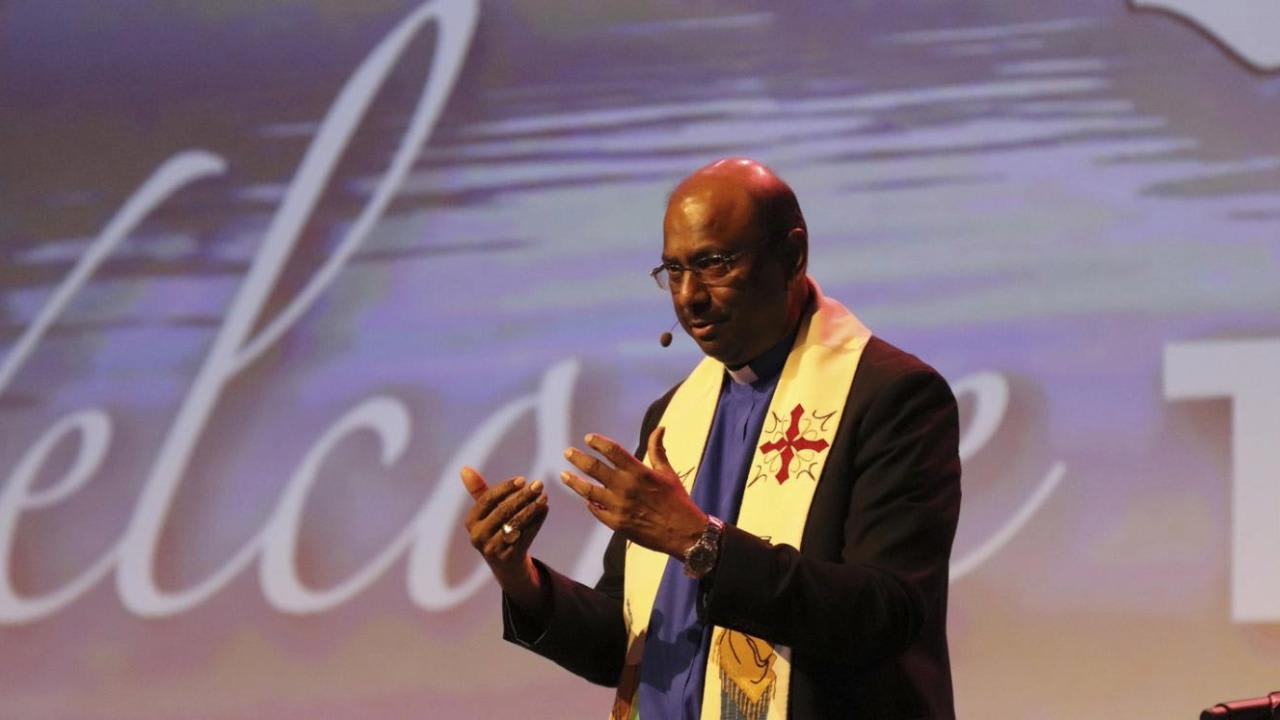 The reverend Jerry Pillay, secretary general of the World Council of Churches Kristen Gaydos (PCUSA)
An international ecumenical clergy delegation visiting Havana considers “false and unfounded” allegations that the regime is violating citizens’ religious rights. Maybe the visitors stuck too closely to the regime’s guides during their stay. They could have checked in with pastor and activist Elier Muir Ávila, who has been persecuted for years for denouncing the regime’s human rights violations. His 16-year-old son is in prison for protesting the regime and bound for a maximum-security prison. Did anyone check with the members of the Ladies in White, a pro-democracy Christian group whose members have been persecuted for decades or their members currently in jail?
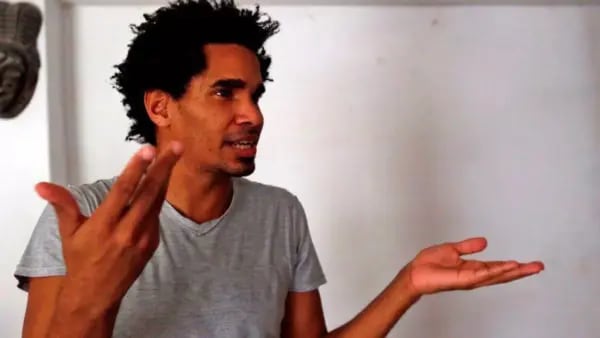 Luis Manuel Otero Álcantara. Served five-year sentence for “defamation of martyrs and symbols of the revolution.”
Imprisoned artist-dissident Luis Manuel Otero Álacantara reported that prison officials at the maximum-security prison where has already served his five-year threatened to kill him this week. He fears the regime will create new charges against him to keep him behind bars.
The legal rights NGO Cubalex has been petitioning for his release given that he has completed his sentence, based on time served while awaiting trial. But the court rejected a habeas corpus plea. When Cubalex appealed, the same court denied the request because, the official in the case was “unavailable.”
LMOA’s supporters are asking, once again, for the international community’s help. He began a new hunger strike this week to protest the latest psychological tortures..
I’ve lost track of the number of hunger strikes this gentle activist has undertaken. His activism is founded on non-violence, which has increased his vulnerability in the notorious prison of Guanajay.
Thanks for reading CubaCurious! This post is public so feel free to share it.
Cuban Treat of the WeekTomás Sánchez is one of the most acclaimed living Cuban artists. His gorgeous works are linked closely with meditation and the search for self awareness. There is a mystical beauty in the images I’ve seen of his paintings. Maybe one day I’ll be lucky enough to see one in person.
A documentary about painter, Perseverancia , will be shown on April 13 at 7:30 p.m. at the Koubek Center, as part of the official selection of the Miami Film Festival.
 The inner landscape. Tomás Sánchez.
March 27, 2026
7 years for writing 2 words: "How long?"
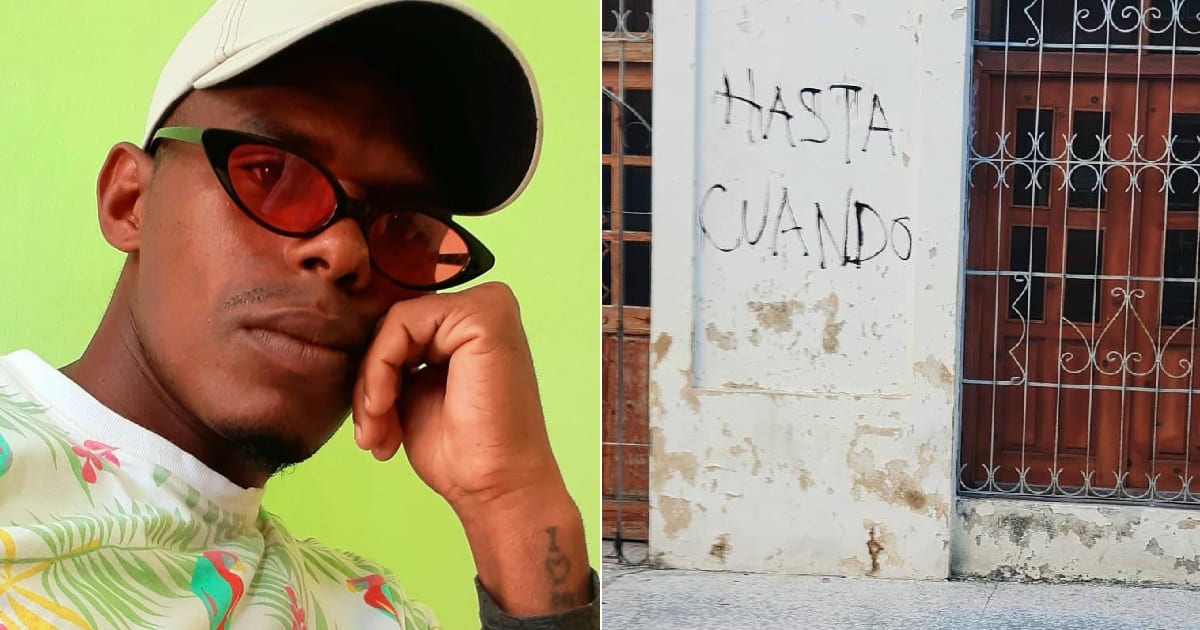 Artist-musician Leonard Richard González Alfonso was sentenced to seven years’ imprisonment prison for writing signs criticizing the regime. Photo © Facebook/Leonard Richard González Alfonso y La TijeraCiberCuba
27 marzo 2026
Hola. Welcome. Gracias for being here.
Before we get to the progressive internationalists who arrived in Cuba with tons of humanitarian aid but little awareness of Cubans’ suffering, here’s a powerful 1-minute video response to the visitors, in English, by former Cuban political prisoner Ruhama Fernández. “If you go to Cuba to defend that regime, do not pretend that you are helping my country . . .”
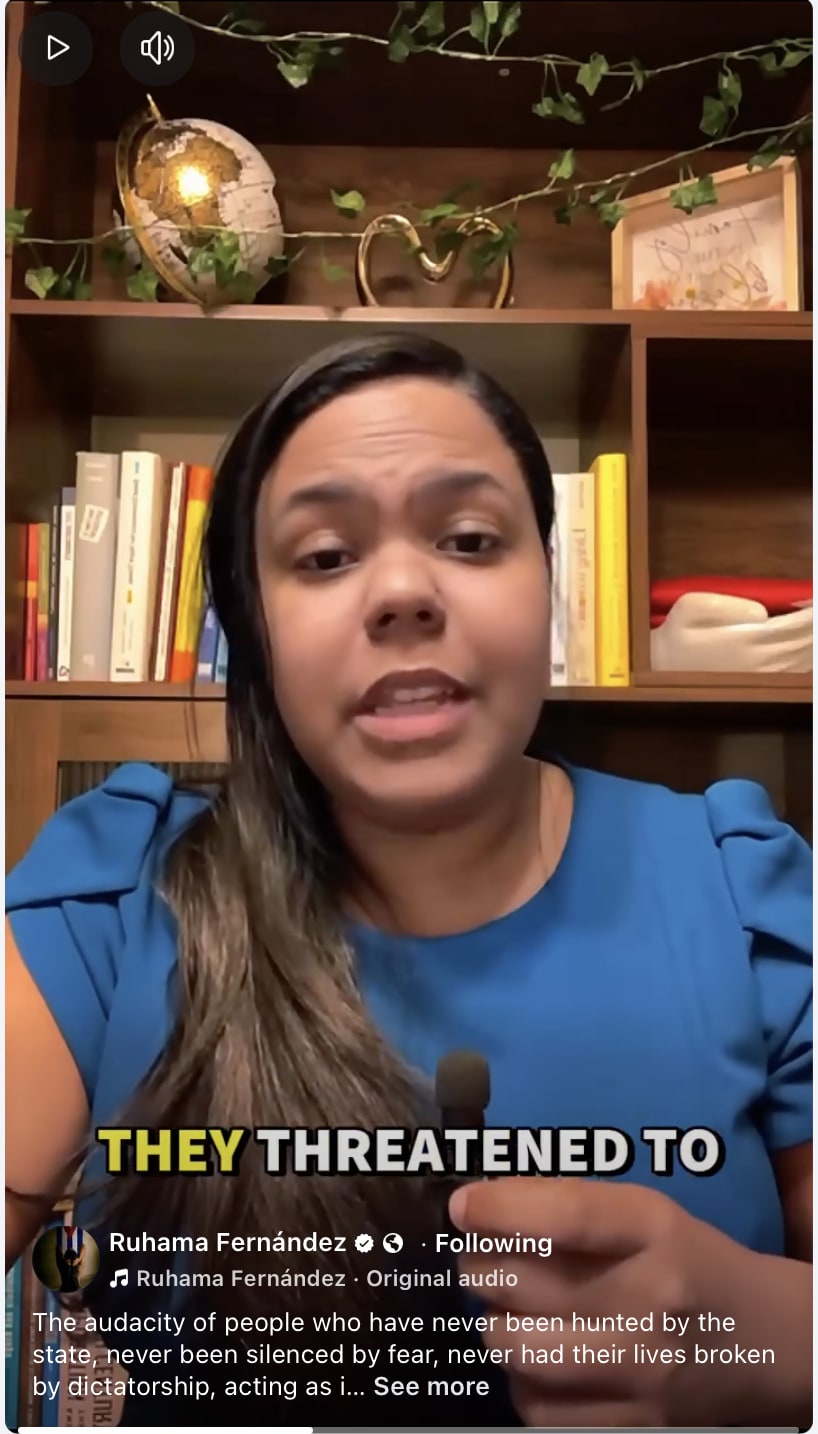 Screen shot from Ruhama’s video post on SM.
Ruhama tells it hard and straight. This Cuban quip gets to the point with a lighter vibe.
Las cosas en Cuba están tan malas que están importando a los comunistas.
Things are so bad in Cuba that they’re importing communists.
That gave me on of the only smiles I got this week tracking the story. Roughly 600 foreigners—and some Cubans who love the revolution but no longer live in Cuba—came on boats and jets to pledge allegiance to the revolution, swear to defend it with AKM rifles, take pictures of hungry Cubans on the street from inside their air-conditioned buses, consume scarce food, energy, and other resources, donate aid to alleviate “67 years of U.S. economic warfare,” and then—I assume—return to their democratic countries and the fruits of capitalism.
When they get home, they’ll be free to come and go as they please, vote for the candidate of their choice, maybe form their own political party. They can protest, form labor unions, enjoy freedom of speech, religion, assembly, and due process rights.
Cubans lost all those rights in 1959, when the revolution promised to make things so perfect they’d never have to even consider political change. Imagine that. Because that’s all you can do with it. Imagine.
That’s story is numero DOS this week. Numero TRES shows how the regime’s distortions about the crisis, some would say “lies,” often go unquestioned in the foreign press, allowing it to whitewash its mistakes and perpetuate its propaganda.
And numero UNO gives us new painful evidence that Cuba is a . . . dictatorship, a totalitarian state that systematically denies citizens the most basic human rights.
You would think we could all agree on that. I mean, there’s only one political party allowed in Cuba, the Communist Party of Cuba. Every institution and branch of government is subjugated to that party. Cuba has been under the same military leadership since 1959—and only since 2018 led by someone other than a Castro. Its political system is “irrevocable,” as stated in the 2019 constitution. Even its representatives in the National Assembly are appointed; many aren’t even from the area they represent.
Then again, the constitution also declares that Cuba is a democracy. Go figure.
Lots going on back home, that’s for sure. I’m doing what I can to bring you angles on the stories that I haven’t seen in the English-language press.
I hope you enjoy the read. Please consider sharing it with others. Cuban Treat of the Week awaits at the end. Gotta find a light note in these heavy times.
Thanks for reading and for caring about Cuba.
Hasta la semana que viene,
Ana
CubaCurious is a reader-supported publication. To receive new posts and support my work, consider becoming a free or paid subscriber.
UNOArtist sentenced to 7 years for writing “How long?”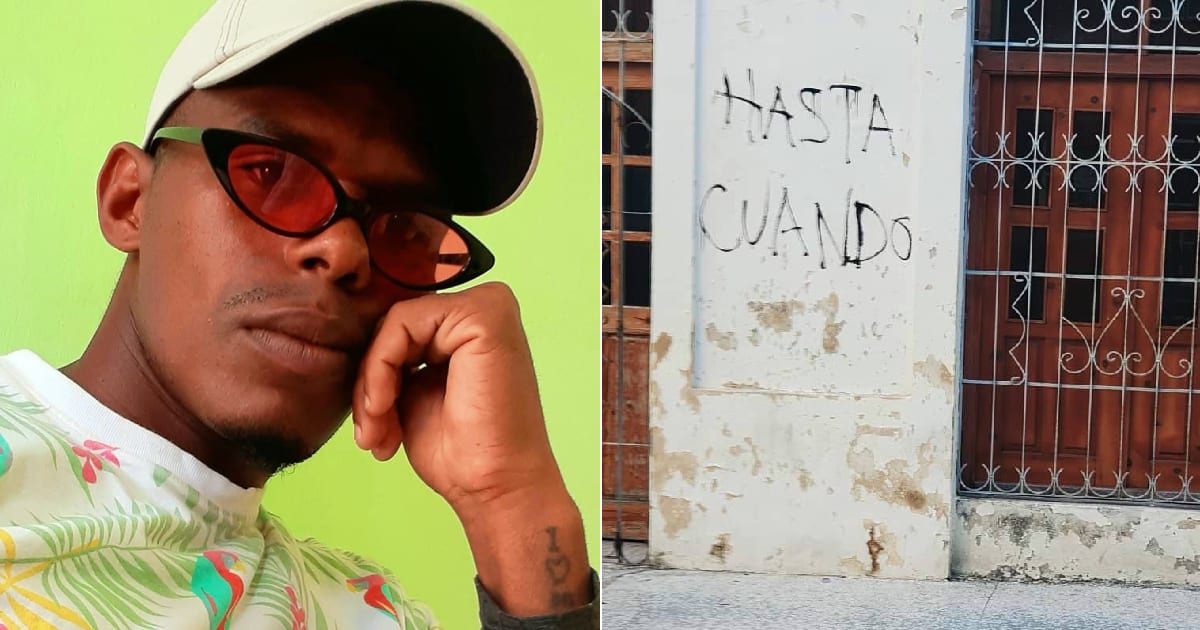 Leonard Richard González Alfonso, a 33-year-old painter and musician, will go to jail for writing anti-regime signs in Regla, Havana, Cuba.
 Far from softening its stance toward dissident voices, the regime is increasing its repression against its opponents—or perceived opponents. Artists, protestors, indie reporters, known activists, or average Cubans who dared to shout, write, march or say something inconvenient to the dictatorship are reporting harsher punishments, more violence.
On Wednesday, Leonard Richard González Alfonso, a Regla artist and musician, was sentenced to 7 years imprisonment for painting signs criticizing the regime. He was charged with “propaganda against the constitutional order and threats.” The case file described him insulting someone who found him in the act of creating the sign and then leaving without “resolving” the situation.
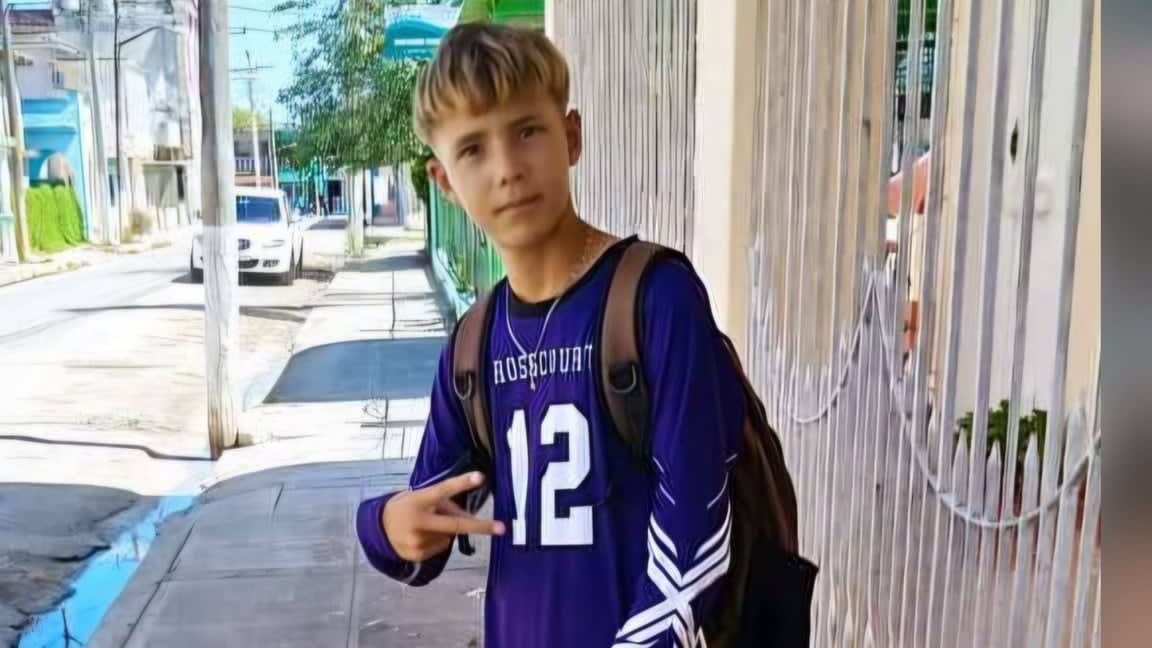 Jonathan Muir Burgos, 16 years old. YOAXIS MARCHECO SUÁREZ/FACEBOOK Diario de Cuba...
On Wednesday, a Cuban court denied a habeas corpus plea on behalf of Jonathan Muir Burgos, the 16-year-old son of an activist pastor. The minor was arbitrarily detained after protests broke out in Morón earlier this month. He is being held in “subhuman conditions” according to his father, who was also jailed but then released. The teenager is reportedly sleeping on the floor of his cell because the putrid mattress he was given is riddled with insects. NGOs and activists say he is being psychologically tortured, denied nutrition, and have called for the international communities support.
Jonathan’s parents were able to see him in prison and are worried that his chronic skin infection twill worsen and trigger a rheumatic fever. His parents told Cuba Decide, one of the U.S.-based groups helping the family, officials threatened to deny them legal representation, a measure that further violates international conventions protecting the rights of children. His parents fear Jonathan will be transferred to Canaleta, a notorious prison and the site of a recent violent uprising, and that he will remain there awaiting charges and a trial.
Also this week, the persecuted 21 year-old activist and YouTuber Anna Bensi was put under house arrest pending probable charges for “acts against the personal and family identity, voice, or image of a person and their data.”
Anna and her mother are in this particular mess because they recorded a plainclothes political agent who came to their front door with a summons for an interrogation. Anna’s mother is facing a five-year sentence for accusations of conspiring with the U.S.
But isn’t the regime the guilty party here, the one that violates citizens privacy with impunity? It runs programs on state-run television defaming opponents, entire shows dedicated to counter-revolutionaries, without a thought to their privacy rights or even the right to respond.
A few years ago, one of these programs dedicated a full hour to reviewing the medical records of a political prisoner on a hunger strike (Luis Manuel Otero Álcantara). His bloodwork and personal data were broadcast to the nation as proof that he was not as ill as his supporters were claiming. Cuba needs a good dose of HIPA.
In April 2025, doctors were interviewed on television about a young boy who had died following a prolonged, complex illness and treatments that his mother publicly denounced as negligent. She had campaigned to get the doctors’ permission to to take the boy to the U.S. for care, but they denied her request. The doctors said, on national tv, that the mother, by then in the U.S., had ignored their advice, delayed decisions, and wasted time on getting the transfer, something they denied until international support for the family forced them to acquiesce. Ten-year-old Damir Ortiz died of septic shock shortly after arriving in Miami.
DOSAhoy, there. We’ve come to save you!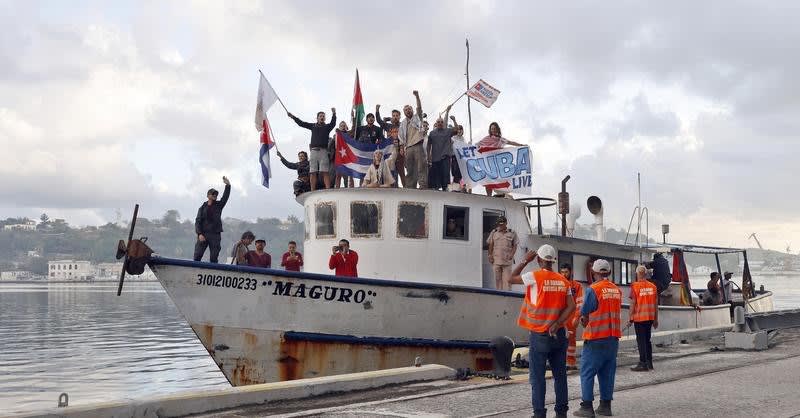 The arrival of 32 internationalists from 10 countries in Havana Harbor. 14ymedio / EFE
The 600 leftist activists and politicians from the U.S., Spain, the U.K., and Latin America who arrived in Cuba pledging support for the revolution and bearing donated aid delivered something else. A profound insult to many Cubans, who are struggling to survive a multi-faceted crisis—energy, food, water, health care, economic, social, political. Average Cubans, activists, and families living abroad, ridiculed and raged at the insensitivity and political blindness of the visitors’ “poverty safari.”
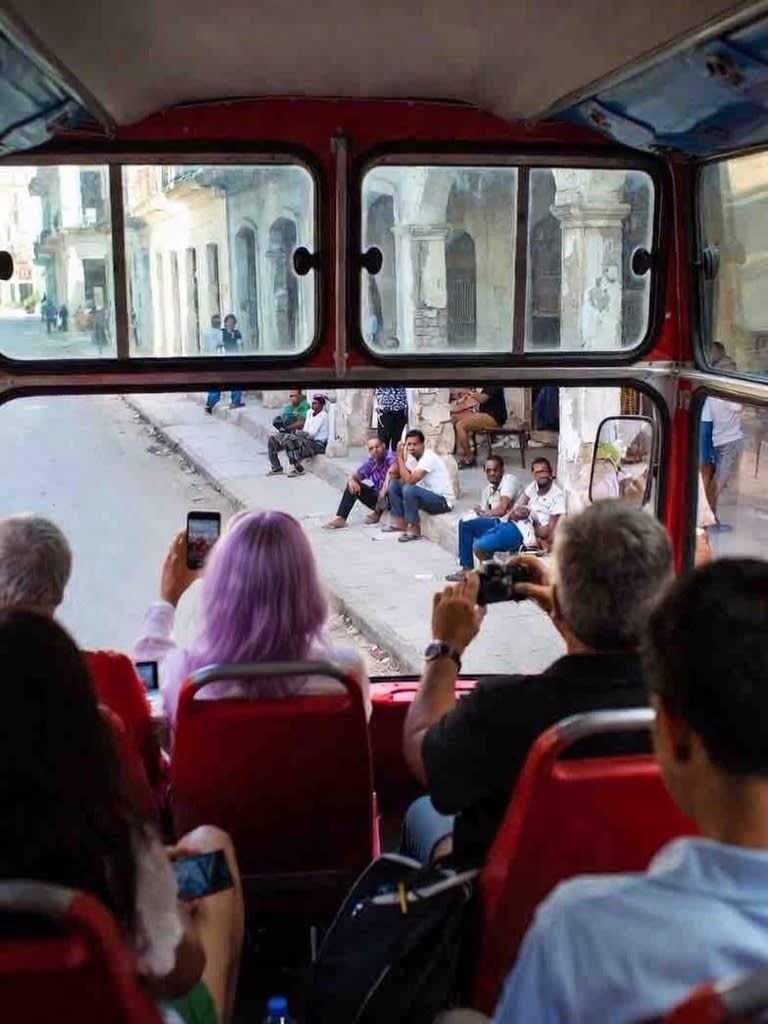 Photo posted on social media from inside Nuestra America tour bus.
 The Nuestra America, Our America, project handed over the donations to a regime that has been caught—repeatedly—selling donated goods to citizens in the military’s dollar-only stores and has more than 1200 known political prisoners. Not one of the “humanitarians” tweeted or Facebooked about them or their persecuted friends and families.
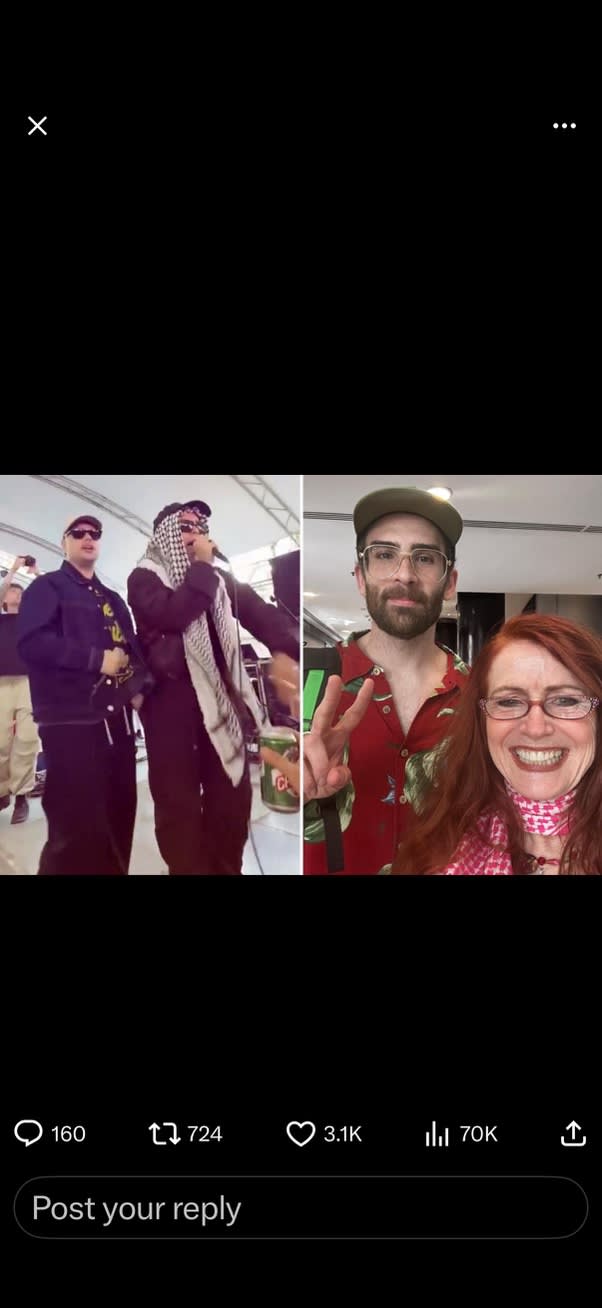 Photos from social media posts by Nuestra America members.
Some reports allege that the regime is paying at least some of the visitors’ expenses, including stays at the military’s mostly empty luxury hotels, taking them on tours in air-conditioned buses, giving them food Cubans can’t find, let alone afford. The visitors posted photos and recordings of their parties aboard boats and at an outdoor venue with a live band.
Meanwhile, Cubans have been risking imprisonment by protesting every night, banging pots and pans, shouting “down with the dictatorship” and “freedom.” Citizens and some indie news sites have been reporting increasing violence by military and political police forces against protestors. Families say loved ones have been “disappeared” and others imprisoned after the demonstrations, including the 16 year-old son of an activist pastor who is still in prison.
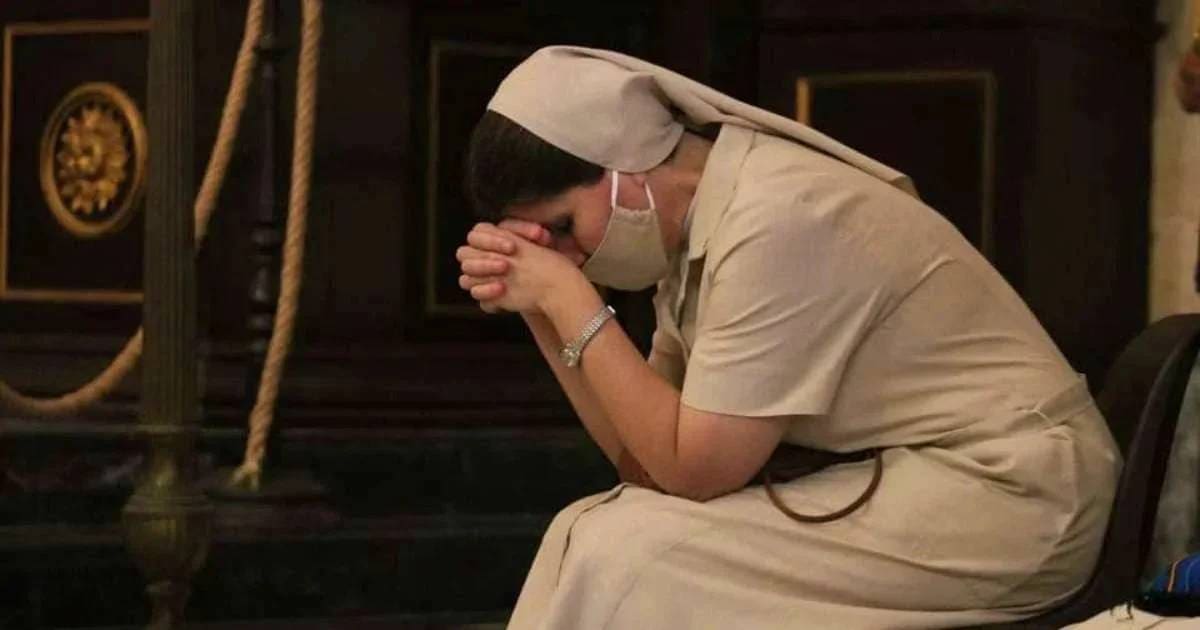 Sor Nadieska Almeida Miguel. H.C
Sor Nadieska Almeida Miguel. H.C, a Cuban religious and activist, described “living hungry, enveloped in piles of garbage, and [the internationalists] arrive with shows of solidarity, gestures of friendship toward children that show total lack of respect, and taking photos of us without our permission.” (referring to scenes of one internationalist holding a cookie above a Cuban child’s head while the child danced).
From Spain, Sor Lucía Caram, an Argentinian activist nun, rebuked Spanish leftist politician Pablo Iglesias, one of the leaders of the convoy. "Pablo, you're wrong. You’re promoting a dictatorship, a regime that has oppressed. I do not agree with what the United States has done, but I also do not agree with this pathetic defense you are making of the Cuban regime, an oppressive and dictatorial government."
Spanish leftists weighed in on El Estornudo’s Facebook page on Wednesday. “ . . . as a member of Podemos (far left socialist party), a feminist, dedicated to social justice . . . it profoundly depresses me that people from the left are going to Cuba and joining in this pantomime of propaganda,” Clara González, said.
Others in the recording wondered why the internationalists didn’t go to the barrios to ask people directly about their lives. Alberto Schwarzmann said, “Humanitarian aid, empathy, doesn’t consist of whitewashing a repressive regime, giving more propaganda to a system that has clearly failed and has condemned so many people to misery.” Sara Sánchez, said her Cuban friends all have the same opinion: “Cuba is a a communist dictatorship.”
Anamely Ramos González, a forcibly exiled activist now in the U.S., lambasted the regime for denying its own citizens the right to return home as punishment for criticizing it—yet welcoming ideologically acceptable foreigners and allowing them to to play hero to suffering Cubans. Some religious Cuban Americans recalled the regime denying the humanitarian aid they had attempted to deliver directly to churches after a hurricane. The regime said the group had infiltrated anti-regime propaganda in the shipment. Officials showed photos of cans with writing that said “from your brothers and sisters in Florida.”
Other Cubans were indignant that while the regime forbids them from riding on motor boats around their own island (due to fears they’ll flee), but it had organized a joyful reception for “poverty safari” members, who floated into Havana Harbor dancing and singing on the decks of their boats.
Former Cuban political prisoner Ruhama Fernández sent a scathing and powerful video message to the internationalists. It’s a short but powerful must-see. Girl tells it like it is.
TRESCuban diplomats’ “untruths” go unquestioned in international interviews. One pro-trade group is tracking the whoppers.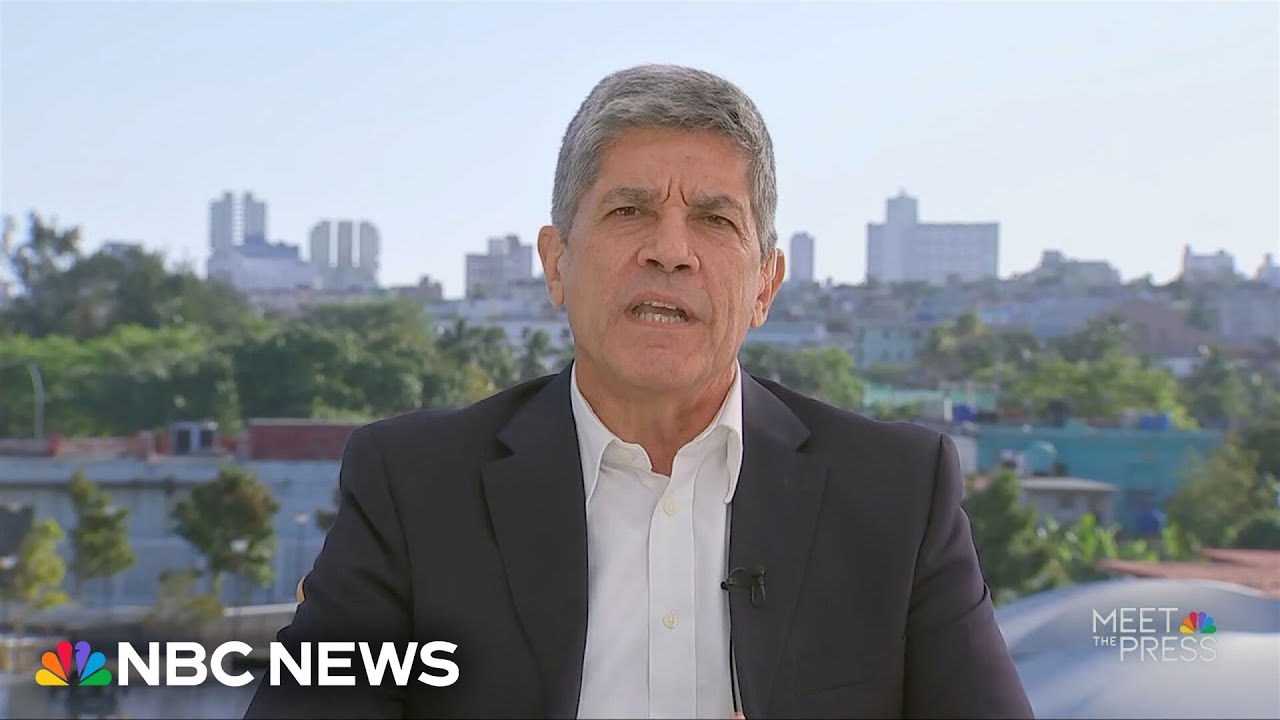 Cuban Deputy Foreign Minister on NBC News last week.
 One of the most disturbing aspects of the crisis in Cuba is how easily Cuban diplomats distort—some would say lie—its causes. They often tell interviewers that the severe outages, the food, gasoline, medicine shortages, and even some Cuban deaths are due to the embargo, particularly the recent oil sanctions. But they regularly omit the loopholes that make the partial embargo so porous that I can order food for family members online in New Hampshire and have it at their door in Cuba two days later.
A recent article by a pro-Cuba trade group calls out some of the whoppers.
For example, Cuba officials constantly say the U.S. won’t permit investment in Cuba. Yet in 2022, the Biden-Harris Administration authorized direct U.S. investment in and financing to a Cuban enterprise. Four years later, the Cuban government has still not provided the necessary documentation for that process to open up. But its leaders and spokespeople continue to say the U.S. “does not permit direct investing and financing.”
Among the most skilled at this obfuscation is Deputy Minister of Foreign Affairs, Carlos Fernández de Cossío. He is a favorite of the foreign media. His English is strong and his demeanor calm. On the rare interviews where I’ve seen a reporter challenge him, he pivots beautifully or restates the “untruth” more emphatically. There are no political prisoners in Cuba. The U.S. has the greatest number of prisoners in the world, yet Cuba would not dream of insisting that topic be a condition for negotiations. The U.S. embargo prohibits Cuba from securing financing around the world—or trading with other countries.
Cossío recently told Thomson Reuters that trade between the two countries has been “severed by the comprehensive U.S. economic embargo.” But Cuba’s imports of U.S. food and agricultural products (approx. $490 million) increased 13% between 2024 and 2025.
Cuba imports other U.S. products, like jacuzzis, golf carts, and luxury vehicles. I doubt those things alleviate the suffering of average Cubans. They certainly help the tourism sector, run by Cuban military enterprises, and the political elites, who need there status symbols.
Maybe it’s better to skip over that on Meet the Press.
Reporters, lawmakers, and credulous foreigners too often take the regime’s spokespeople at their word. Is it politeness? Is it cluelessness? Is it out of sympathy, political affinity?
You would think journalists from a country with a free press that demands transparency of politicians and business leaders would ask the representative of a totalitarian regime a few tough questions backed by a hard fact or two. 1,214 Cuban political prisoners? Anyone?
Would that roasting cost them the next chance at an interview with a twitchy Cuban official? Maybe.
So . . . thank you so much for being here—and mum’s the word.
Thanks for reading CubaCurious. If you appreciated this post, please click the heart at the end of the post and share it.
Cuban Treat of the WeekFor Cubans and people who love Cuba, there is a treasure in Miami that you may not know about. Nope. Not a new Cuban sandwich shop. It’s the University of Miami Libraries’ Cuban Heritage Collection, a treasure trove of documents, books, ephemera, and other Cuban artifacts dating back centuries.
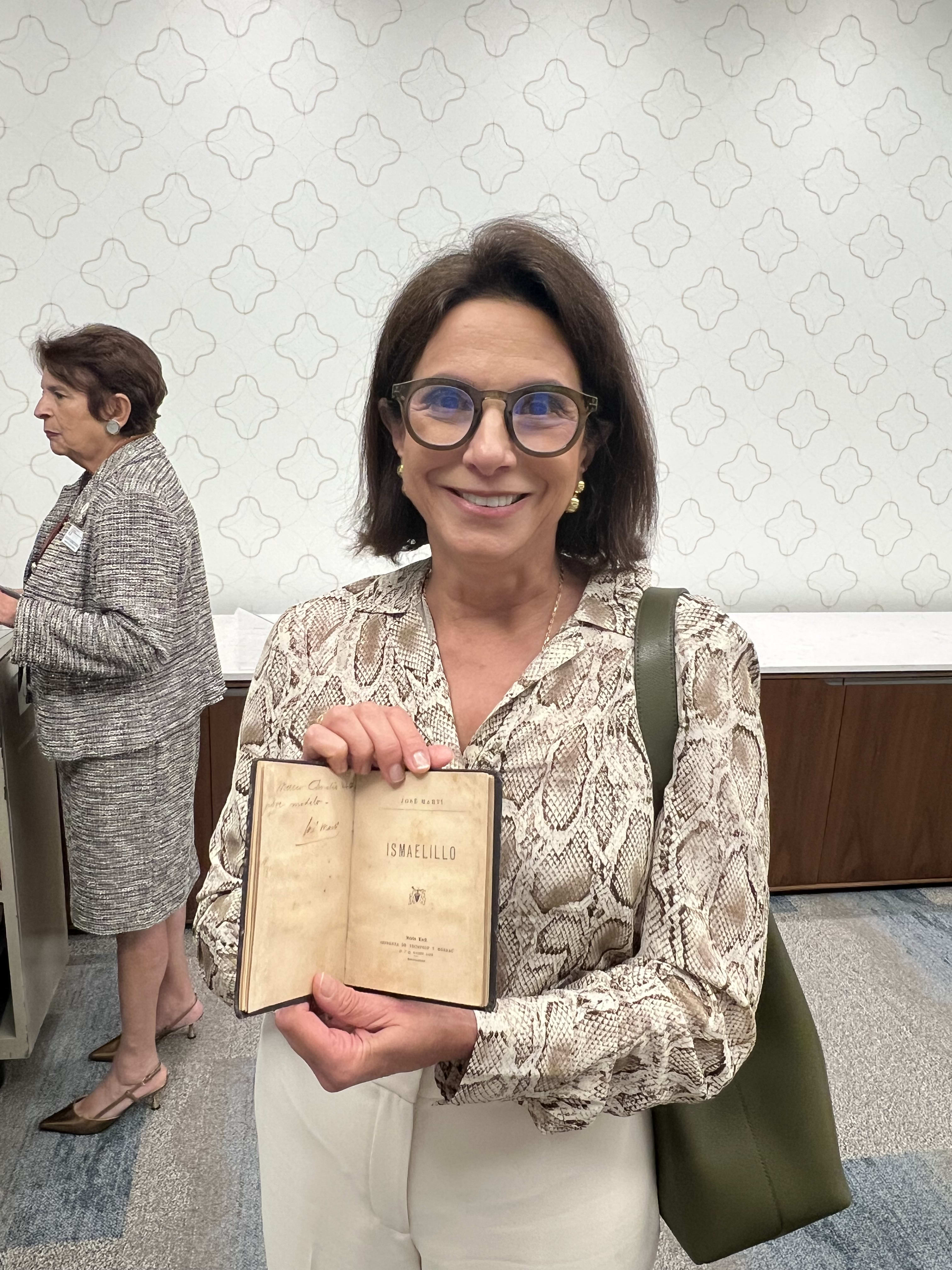
I was there earlier this month for a book event for Property of the Revolution: From a Cuban Barrio to a New Hampshire Mill Town, my almost one-year-old memoir.
Gladys—loved her sling backs—let me hold José Martí’s Ismaelillo, which was signed by him. Major goosebumps. I also got to hold a copy of History of the Americas, by Bartolomé de las Casas, begun in 1542 and possibly printed around 1552. More escalofrios.
I hope you get to visit this beautiful space and enjoy the exhibits. How wonderful that some Cubans and friends of Cubans created this project so people like me—and you?—can our literature, art, history, and heritage.
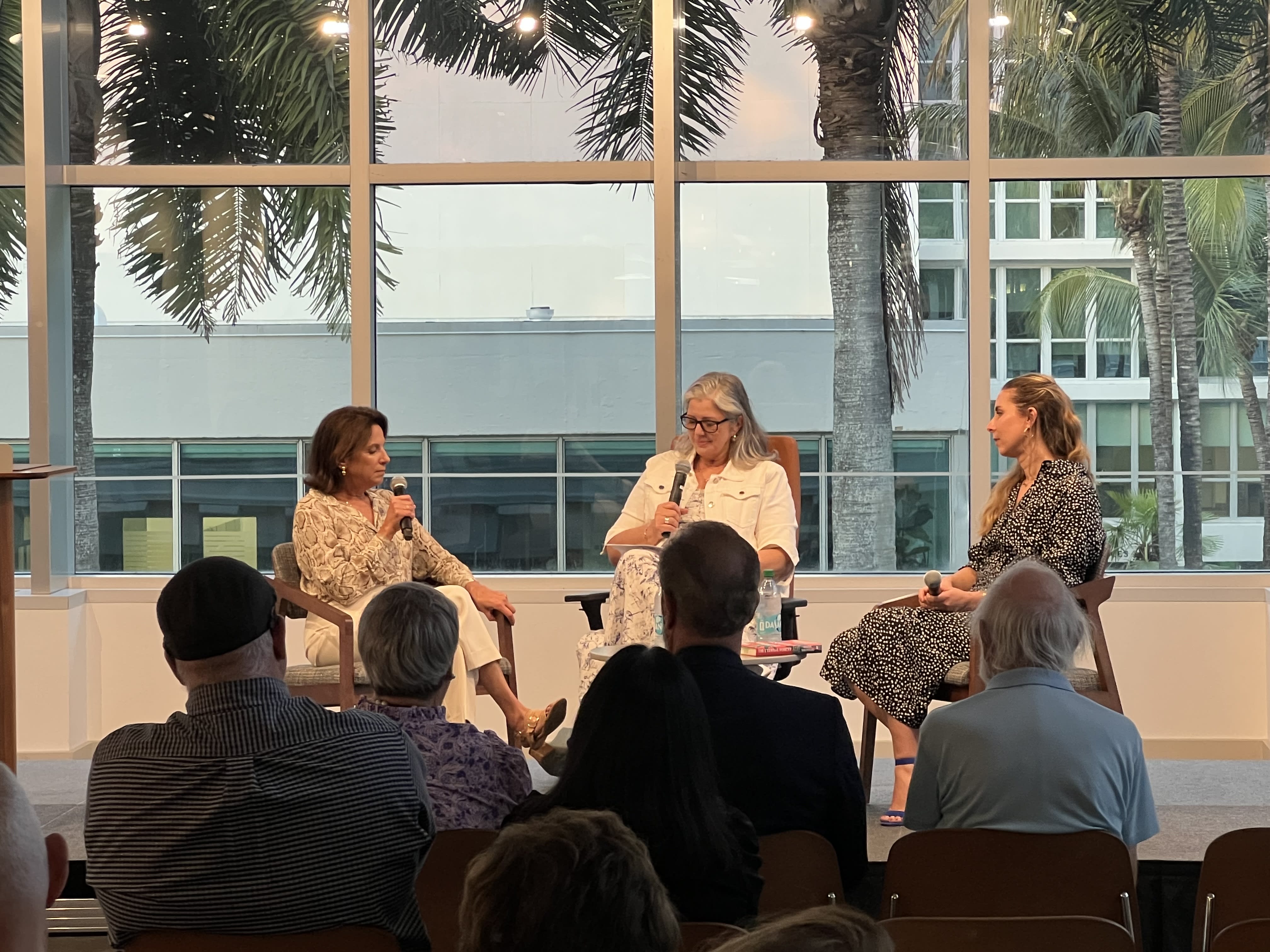 Cuban American authors Mirta Ojito, center, and Elena Sheppard, right, joined me for the program. The Geography of Memory: Stories from the Cuban Diaspora.
 I highly recommend these new, gorgeous books by my talented cubana friends. Mirta’s historical fiction novel, Deeper than the Ocean, and Elena’s memoir, The Eternal Forest . Happy reading.
March 20, 2026
Dissident prisoner suffers heart attack on 49th day of hunger strike.
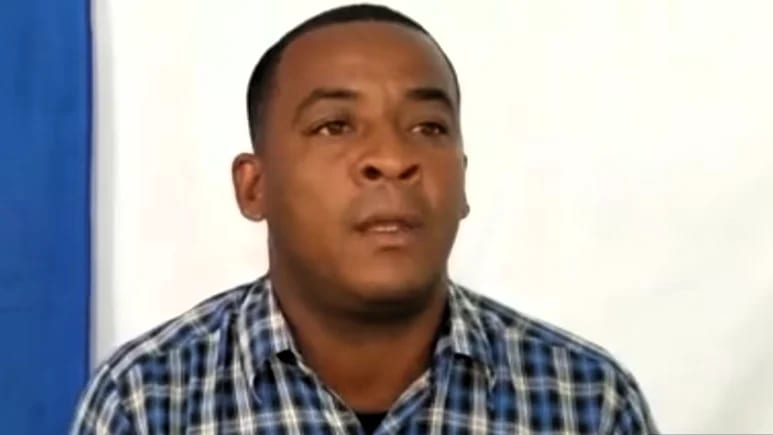 Cuban political prisoner Roilán Álvarez Rensoler is a member of non-violent, pro-democracy Christian group UNPACU/YOUTUBE
20 febrero 2026
Hola. Gracias for being here.
Six hours after I sent out Monday’s CubaCurious the entire power grid on the island collapsed. A family later posted a photo taken at 3 am Tuesday showing everyone in the household awake and moving, cooking, doing chores that can only be done when the power is on—which is never guaranteed.
In fact, Cubans now talk about alumbrones (alumbrar means to light up)—the brief periods when they have electrical power. That’s the news, not the apagones (apagón means blackout), the 20+ hour-long blackouts many of them live in and with.
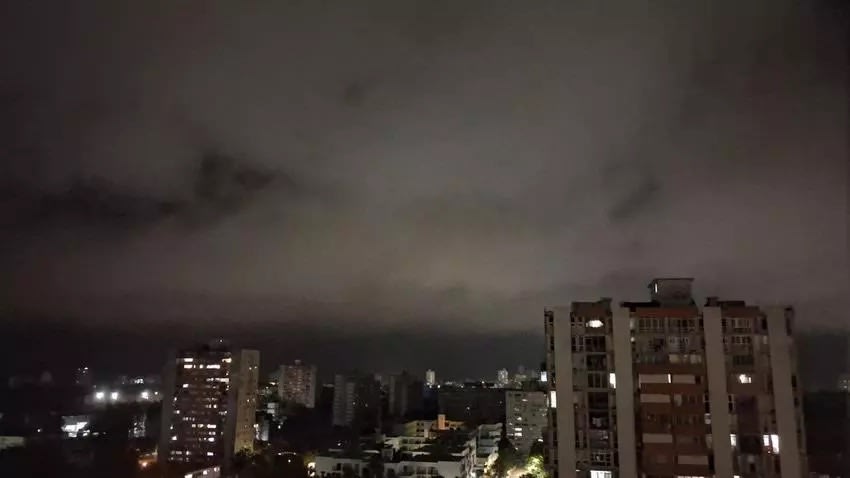 From the editorial office of ‘14ymedio’ most of the lights that could be seen before dawn came from the ministerial zone of Havana. / 14ymedio
Many people were grateful for Tuesday’s rain, which cooled the air and promised a better night’s sleep. Without a fan, sleeping in Cuba’s oppressive heat is nearly impossible. If sweating doesn’t do you in, the mosquitos will.
As Cubans limp through another day, cambio, change, feels painfully remote. Yet many believe it will happen, that it is happening. They point to the nightly protests—even with the militarization of some barrios, the beatings, the young people who’ve been disappeared, the families being threatened.
It wasn’t too long ago that people shut their windows if they were going to criticize the government. Isn’t that cambio?
Humans need freedom. When will it come for Cubans?
Four quick Cuba stories for you below.
I’m here if you have questions, comments, suggestions for new topics, whatever. Just drop your note in the comments section. Let’s talk.
Apologies, but there’s no Cuban Treat of the Week this week. I ran out of steam. Instead, you’re get cuatro scoops instead of the usual tres.
Thanks for reading and for caring about Cuba.
Hasta la semana que viene,
Ana
CubaCurious is a reader-supported publication. To receive new posts and support my work, consider becoming a free or paid subscriber.
UNODissident in critical condition after heart attack.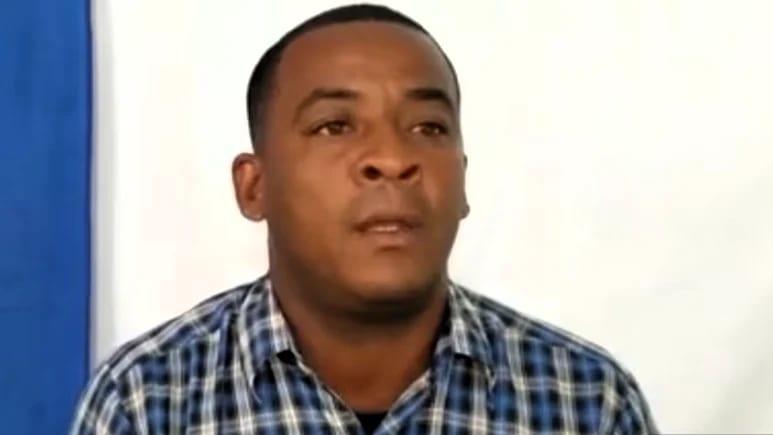 Cuban political prisoner Roilán Álvarez Rensoler is a member of non-violent Christian pro-democracy group, UNPACU. Photo YOUTUBE.
Cuban political prisoner Roilán Álavarez Rensoler is in critical condition after suffering a heart attack on the 49th day of a hunger strike. Arianna Álvarez, the dissident’s sister, has repeatedly denounced the regime’s threats against her brother’s life, its lack of transparency about his status, and the excessive restrictions set by police at the hospital. The regime will only release her brother, she said, if he agrees to leave the country, a quid pro quo that violates Cuban and international laws and shows the regime’s lack of respect for human life.
Rights groups are requesting the international community’s support for Roilán and his family, who have been harassed and threatened by officials. Roilán was arrested in January and charged with painting anti-government slogans and damaging a fence bearing an image of Fidel Castro.
To me, Roilán’s tragic situation shows that this regime—which can’t meet citizens’ most basic needs—does have the capability of being highly efficient and successful at something. Repression. Source: Diario de Cuba.
DOSCosta Rica denounces Cuban repression—closes Havana embassy.Cuban regime says “crude” accusations are “unjustified,” blames U.S. embargo.
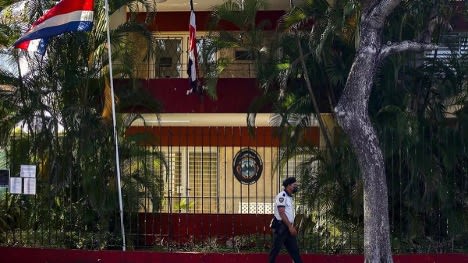 Costa Rica is the second Latin American country in the last month to denounce Cuba and recall its diplomats from Havana. / CN360 / 14ymedio.
Last week Ecuador accused Cuba of interfering with its internal politics and spying and expelled its diplomatic corps from the country. This week Costa Rica ordered its diplomats in Havana to return home and requested the removal of Cuban diplomats from Costa Rica due to “deep concerns” about the “sustained deterioration of the human rights situation on the island, as well as increasing repression against citizens, activists and dissidents who are exercising their legitimate right to self-expression and participation in public life.”
Costa Rican president Rodrigo Chaves said he considers the Cuban regime illegitimate given the “mistreatment, repression and undignified living conditions suffered by citizens of that beautiful island.”
In a statement, Cuba’s Ministry of Foreign Relations said the accusations were “unfounded,” “unjustified” and the result of U.S. pressure. “Cuba strongly rejects the disrespectful statements made by the President of Costa Rica . . . when, in trying to justify this unfriendly act . . . he crudely manipulated the history and reality of Cuba and scandalously ignored the direct responsibility for the aggravation of the economic situation and the deterioration of the living conditions of the Cuban people due to the blockade policy of the United States.”
Costa Rica stressed that its decision is not an administrative reorganization but rather a political protest of the regime’s intensifying repression of any form of dissent and that it hopes Cuba will make significant changes so the two countries can re-establish diplomatic ties.
Chaves said Costa Rica’s president elect, Laura Fernández Delgado, who will be sworn in on 8 May, is in “total agreement” and that her administration will uphold the decision.
Most Latin American countries have been measured in their critiques of the regime’s human rights abuses over the years, to the great dismay of pro-democracy activists on the island. That’s changing. In recent years, voters throughout the region have shifted away from left-wing governments, choosing anti-communist leaders in Argentina, Costa Rica, Chile, Ecuador, Bolivia, and El Salvador. Cuba is now being held accountable for its human rights violations at home and foreign interference abroad.
The right-wing shift is being attributed to voter concerns about crime, economic instability, and immigration. If it ends up holding Cuba accountable for its human rights violations and promoting democratic change, it might be part of long overdue Karmic justice.
Source: Diario de Cuba, 14ymedio.
TRESNew evidence, inconsistencies in tragic confrontation on Cuba’s coast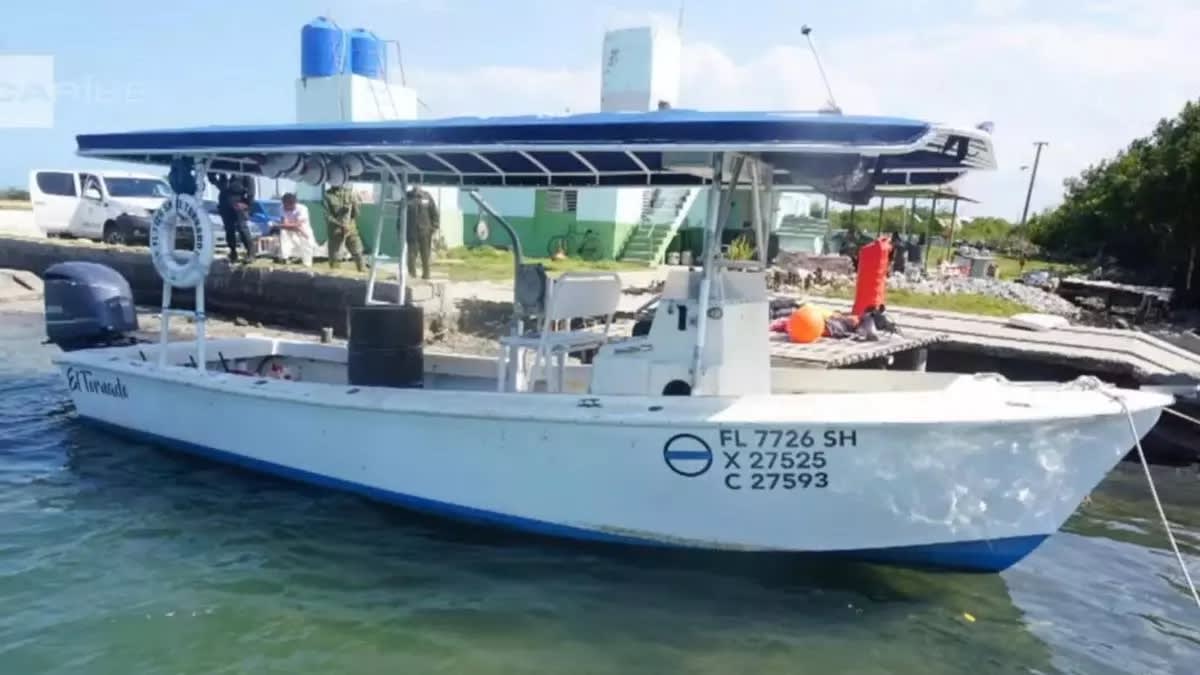 The Cuban Coast Guard said the “speedboat” carried 10 “terrorists” and was loaded with 1.8 tons of weapons, including 14 assault rifles, handguns, homemade explosives, body armor, telescopic sights, and 13,000 bullets. Screen capture /14ymedio.
Cuba’s appointed president, Miguel Díaz-Canel, announced last week that the FBI will be arriving in Cuba to investigate the deadly confrontation between the Cuban Coast Guard and a group of men aboard a “speed launch” off the Cuban coast late last month. The CCG said it shot and killed four of the men after they fired at the CCG first. Officials later said one of the six survivors had died after he was treated at a hospital and later transported to a specialist center.
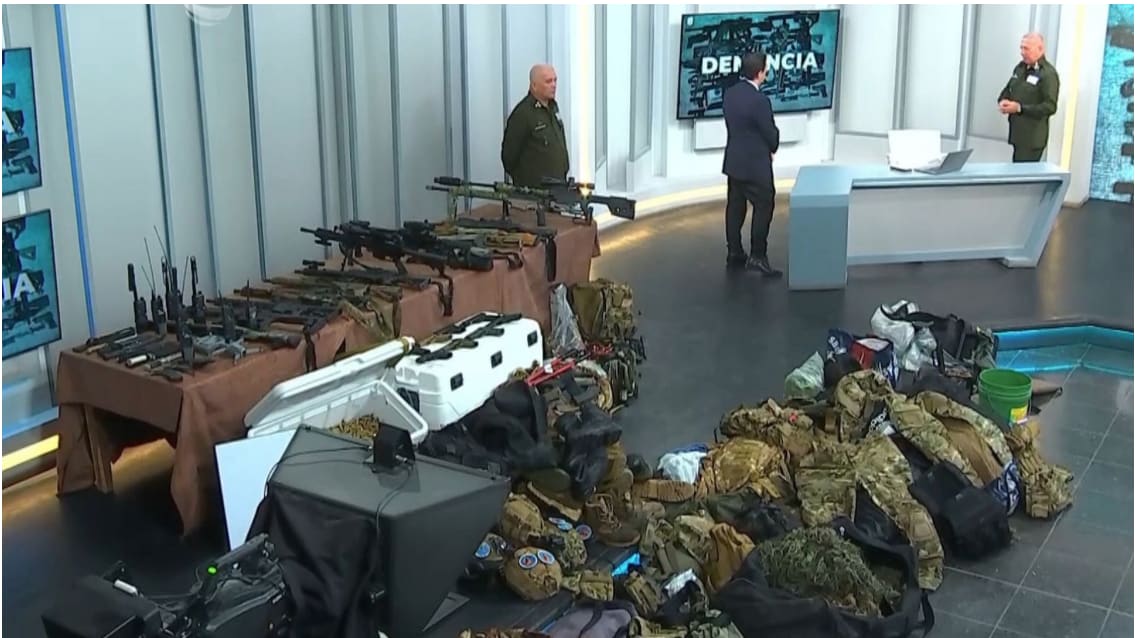 The regime displayed the contents of the launch on national television. EFE/ TV CUBANA
Legal rights NGO CubaLex has petitioned the regime for detention documents of the survivors, whose whereabouts are still in question. Family members attempted to file a habeas corpus plea with a Camagüey court but, according to CubaLex, the court denied the petition because “it had no knowledge of the case.”
The UN’s Committee Against Forced Disappearances filed an urgent action request with the Cuban government on 28 February for the location and status of the men. Cuba was to report the location of the survivors by 19 March. I haven’t seen any sign that Cuba responded yesterday.
Questions about the alleged “terrorist plot” have only increased since the news broke. In an early February press conference, Díaz-Canel referred to a terrorist plot, originating within the U.S., against Cuba that would soon be revealed. Several relatives of the men on the launch believe they were lured by people inside Cuba and that it was an “ambush,” that the CCG was waiting for them.
That could explain why five members on the CCG boat were able to kill four of the ten “heavily armed” men on the launch. It might also be why the regime initially said it had captured a man at the scene who turned out to be safe and sound in Miami. Did they have a list of who would be on the launch?
About that launch. I’m no expert, but that shallow bottom boat doesn’t look capable of traveling at high speed at all, let alone crossing the Florida Straits loaded with ten men and 1.8 tons of weapons.
The regime keeps saying the leaders of the plot are in Miami, among the Cuban Americans obsessed with toppling the revolution. Could it be that the people responsible for the incident are actually in Havana, in air-conditioned offices miraculously spared from the rolling blackouts? Source: 14ymedio.
CUATRORussian oil arrived in Cuba this month, defying sanctions against Cuba and Russia, according to a maritime tracking company. The Sea Horse delivered Russian oil to Cuba last month, more is en route, according to Windward Maritime AI.
Despite the U.S. oil blockade on Cuba and sanctions against Russia for its invasion of Ukraine, a ship carrying Russian clandestinely delivered 190,000 barrels of oil to Cuba in early March, according to Windward Maritime AI, a shipping monitoring company. Windward detected anomalies in the data the Sea Horse transmitted about its identification, location, and speed. The ship drifted toward Cuba at a speed of less than 1 knot, evading detection by using “not under command” warning signals, which gives a vessel the right of way and requires other ships to avoid it.
Windward said the Sea Horse has used similar deceptions in the past, including shutting off its transponders, to evade sanctions against Moscow for its invasion of Ukraine. Reuters and Bloomberg reported that the Sea Horse is making its way to the island again, after being a drift for some time, with roughly 200,000 barrels of Russian diesel. A second ship carrying Russian oil is making its way to Cuba and expected to arrive in Cuba by the end of the month. The Anatoly Kolodkin is carrying 730,000 barrels of oil.
Where will the oil go? Will average Cubans benefit or is it destined for the military and other groups that repress citizens? Those patrol cars, cage trucks, and military vehicles patrolling Cuba’s streets need fuel. Maybe Cuba will sell more than half of the oil on the international market, as it did with the discounted oil Venezuela sent the regime for more than two decades. With oil prices rising almost as sharply as Cuba’s need for hard currency, Russian oil may end up empowering the regime by filling its coffers, rather than fueling power plants and public transportation. .
Thanks for reading CubaCurious. If you appreciated this post, please click the heart at the end of the post and share it.
March 16, 2026
"We don't want light, we want freedom!"
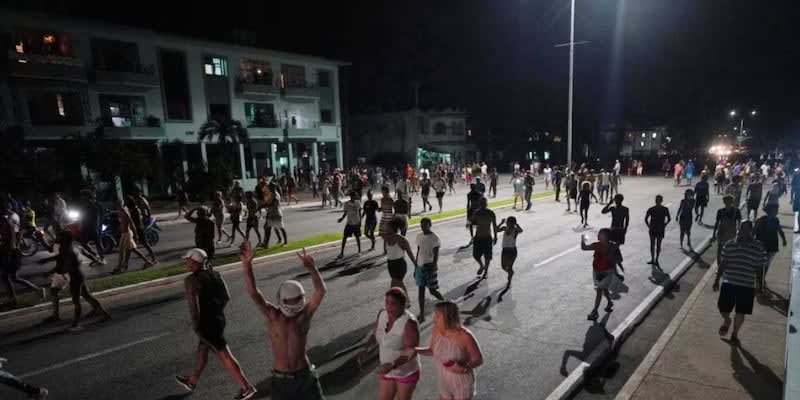 “No queremos luz, queremos libertad” (We don’t want light, we want liberty) is being chanted in anti-regime protests taking place every night. Protests intensified after Cuba admitted on Friday that it is negotiating with the U.S.
16 febrero 2026
Hola. Thanks for being here.
I’m back with a more complete update than what I sent out Saturday. I’d hoped to get this out last night, but Cuba is intense right now and I struggled on what to cover.
Protests continued in various parts of Cuba on Saturday, the 9th consecutive night of Cubans taking it to the streets, banging pots and pans, chanting “Down with the dictatorship!” “Down with communism!” “We’re not afraid!” and “Change!”
Residents reported extensive police operations, including Boinas Negras (black berets) shock troops, throughout Havana and in some provinces where protests had occurred. Cell service and internet access were cut in many of the same areas. Both services are being rationed throughout the country. In many regions, cell and internet service are available only for a few hours several times a day. Schedules are set by the government’s telecom monopoly, ETCSA, which continues to charge rates that exceed most Cubans’ monthly salaries.
In Morón, about a 6-hour drive to the east of Havana, a large group of townspeople, many of them in their teens, sacked the headquarters of the Communist Party of Cuba (PCC) after midnight Saturday. “They have taken many, many children prisoners,” an eyewitness told Martí Noticias.
The protests escalated sharply after Cuba’s appointed “president,” Miguel Díaz-Canel, held a press conference Friday morning and admitted to being in “dialogue” with the United States, something that had been widely reported outside of Cuba and across social media. Díaz-Canel spoke in front of high ranking political and military officials—including Raúl Castro’s grandson, who recently met with U.S. Secretary of State Marco Rubio—and members of the state-run media. In addition to confirming what most Cubans already knew, Díaz-Canel responded—indirectly—to several recent controversies.
A major one is an investigation by Mexican news agency Aztec Noticias that revealed that some of the humanitarian aid that Mexico recently donated to Cuba ended up in stores run by Cuba’s military conglomerate, GAESA. The military’s stores sell basic, scarce products only in dollars and euros, not in the pesos that Cubans are paid in. Average Cubans rail against the stores and the practice, which increases the severe disparity between Cubans with access to foreign currency and those without it.
Cubans have accused the regime of confiscating or selling foreign donations, usually marked “not for re-sale,” in the past. After a recent hurricane, an official newspaper celebrated the government’s sale of donated mattresses at discounted prices to the public. I’ve seen many reports over the years denouncing the practice, including photos of cans and other goods marked donated by x and not for resale in the hands of the angry Cubans who bought them out of desperation.
Díaz-Canel managed to bring up foreign donations in his speech, boasting that humanitarian aid from “brother” countries was reaching the most vulnerable Cubans, in a “transparent and just manner,” in accordance with “the revolution’s humanistic values and principles.” I can see why that statement alone would drive Cubans to the street in protest.
The “president” also boasted that no country would have been able to survive as well as Cuba has without access to petroleum for three months. “What planet is this individual living on?” exiled dissident leader José Daniel Ferrer posted during the speech.
Díaz-Canel defended Cuba against another recent accusation, this one by family members of five Cuban men, all U.S. residents, who were killed by the Cuban Coast Guard when it encountered their Florida-registered launch near the island’s coast on 25 February. The CCG said the men on the launch fired first and they shot back, killing four of the “heavily armed” men. The regime later announced that a fifth man had died after being treated at one hospital and transferred to another.
Family members of the men said Cuban officials were ignoring their requests for information and the reclamation of the bodies of the deceased. One family contacted a hospital and was told their relative was in its intensive care unit. But shortly after that call, the same hospital denied the man was a patient and the call with the family was abruptly cut off. In his speech on Friday, Díaz-Canel raised the topic of the launch, commending the CCG for its bravery against the “terrorists” and emphasizing that Cuba had been in total cooperation with the men’s grateful families from the start.
Díaz-Canel used the word dialogo many times in his speech, something that angered many Cubans and worried others, according to independent Spanish-language news sites and social media posts. Cubans warned the regime should not be trusted, that it has expertise in buying time by promising reforms that never materialize.
The Castro Clan does not compromise, they say, and they certainly don’t believe in the “honest dialogue” Díaz-Canel touted in his speech. Some pointed out how even after President Obama’s “Cuban Thaw” and his generous concessions—easing of travel and remittance restrictions, removal of Cuba from the state sponsor of terrorism list, restoring diplomatic ties, permitting commercial flights, etc.—Raúl Castro gloated in a speech that Cuba had not conceded “a single revolutionary principle” in the process.
One of those principles is to maintain societal “discipline,” and law and order. That’s why Díaz-Canel warned there would be no impunity for vandalism or violence (unless the regime is behind it, evidently). Then he called on revolutionary institutions to guard against any threat to “citizens’ tranquility.”
To me, that sounded like a barely veiled message to the regime’s henchmen, the uniformed, plainclothes, workplace or prison thugs who use attack dogs, handguns, fists and feet, iron rods and truncheons to keep wayward revolutionaries in line. Díaz-Canel was giving them the all-clear for violent repression.
He sent a much more direct message to the regime’s esbirros when unprecedented nationwide anti-regime protests broke out on July 11, 2021. Addressing citizens that day on national TV, he said “The order to combat has been given. Revolutionaries to the street!” essentially calling for citizen-on-citizen violence, a civil war, rather than calm and restraint.
Challenge, debate, dialogue, protest—are not tolerated in Cuba. Uniformity of thought, unanimity in government are the rule and the expectation.
We’re used to protests in the U.S. Unions, students, religious and political groups picket and rally on a regular basis. But in Cuba protests have been extremely rare until recent years. They are illegal unless they are authorized—and they are never authorized unless they are pro-revolutionary. In Cuba, “liking” a post critical of the regime can land you in jail or bring the revolutionary police to your door. It’s no wonder Cubans have been reluctant to speak freely, let alone protest publicly.
Now Cubans are saying they have nothing left to lose. Many openly criticize the regime. And they’re more likely to speak to independent reporters, although there are few of them left. In recent weeks, the government has increased its persecution of indie journalists, an illegal profession in Cuba.
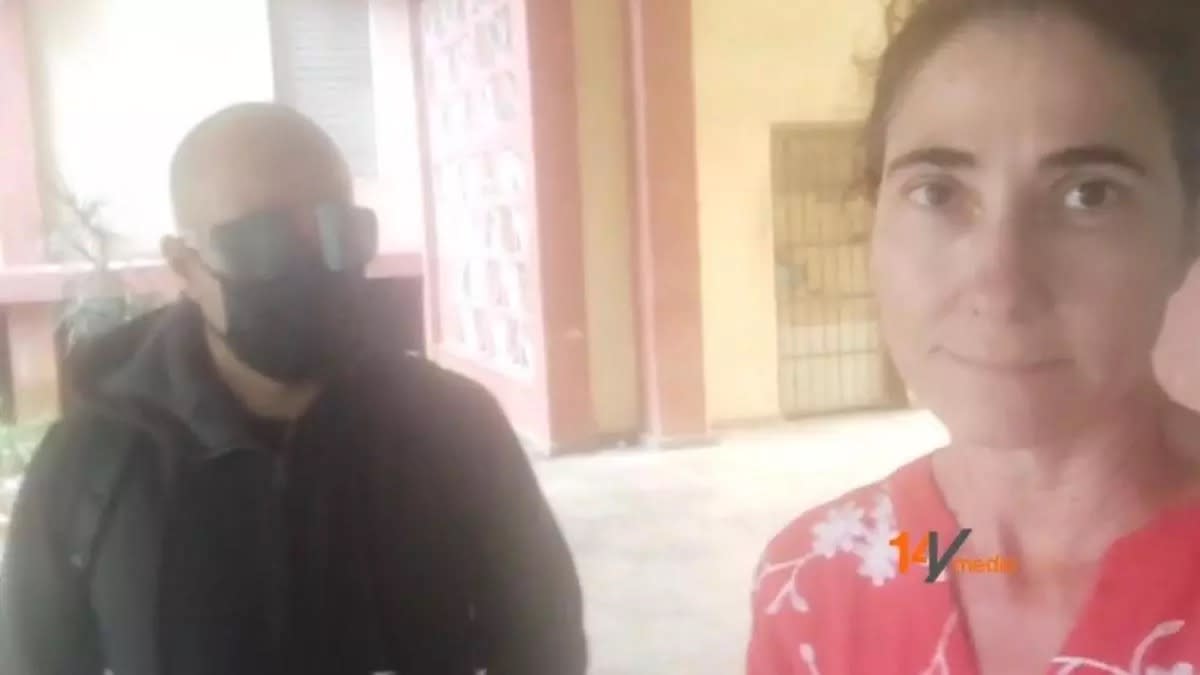 Yoani Sánchez, director of 14ymedio, next to the State Security agent who would dno’t let her leave her building Sunday morning, in Havana. / 14ymedio.
The intrepid journalists still standing report intensifying threats, detentions, arbitrary house arrests, and assaults. On Sunday, Yoani Sánchez, the director of the indie news site 14ymedio, recorded a video of a plainclothes agent preventing her from leaving her home. The agent’s face was completely hidden behind a visor and a black face mask. She asked why he was violating her basic rights, since she hadn’t been charged with a crime. “All I can say is that I can’t let you leave,” was his answer.
CubaCurious is a reader-supported publication. To receive new posts and support my work, consider becoming a free or paid subscriber.
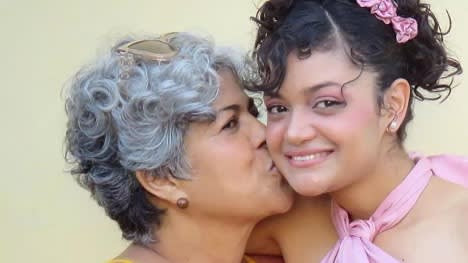 Anna Benzi and her mother, Caridad Silvente. / Image from social media.
The mother of 21-year-old Anna Bensi, a fearless and very popular anti-regime Cuban Youtuber, is facing a five-year prison sentence for posting photos of the plainclothes agent who came to her door with a citation for an interrogation. Caridad Silvente said she was interrogated for two hours and accused of allowing her daughter to publicly criticize the government, being a “counter-revolutionary,” and conspiring with and taking orders from the U.S. She is under house arrest and cannot receive visitors. She was told to find a lawyer within five days to defend her at her hearing and that her daughter soon will be called in for an interrogation. The intimidation campaign by security forces against two women who live alone is aimed at one goal: silencing Anna.
That seems unlikely. Anna launched a stinging response to the regime’s harassment on social media. “My mother is not a criminal,” she wrote. “If anything happens to her or to me, you (State Security) will be at fault . . . I will continue to express my ideas without fear.”
With severe shortages, from food to gasoline, this is how the regime uses the country’s precious human and material resources. Cubans see that choice every day. They’re protesting the regime every night, protected somewhat in the darkness. They don’t want to waste their shot, the best one they’ve had in almost 70 years of dictatorial rule, at freedom.
Meanwhile, democratic socialist groups and people like Greta Thunberg are defending Cuba’s military dictatorship, despite a well-documented history of violence against its own people and its profound disregard for their basic human rights. One of these groups is sending 20 members later this month to Cuba to bring aid and to volunteer in an island “under siege.”
They say they are doing this for the Cuban people, but they are not listening to what Cubans are saying. Instead, they admire and defend the ideologically compatible, unelected rulers who, among other things, criminalize dissent, free speech, labor unions, free assembly, and private humanitarian missions like the ones they’re crowing about.
Many commenters on social media recommend that this group stay permanently in Cuba, so its members can truly appreciate the beauty of life under a regime they accept for Cubans but would never tolerate for themselves. Others think Greta should join them. “But don’t stay in a hotel,” one commenter wrote. She would like Greta to stay with her.
I had more to offer today, but Substack cut me off. The file was too big. Too many links, photos, text, I guess. I’ll patch what I can into this Friday’s post.
As always, I’d love to hear from you. Please share your comments below.
And if you enjoyed the post, please share and click the heart at the end to help others find CubaCurious.
Hasta este viernes.
Ana
Thanks for reading CubaCurious. If you appreciated this post, please click the heart at the end of the post and share it.
March 14, 2026
Protests erupt across Cuba, chants of ¡Cambio, cambio, cambio!—Change, change, change!
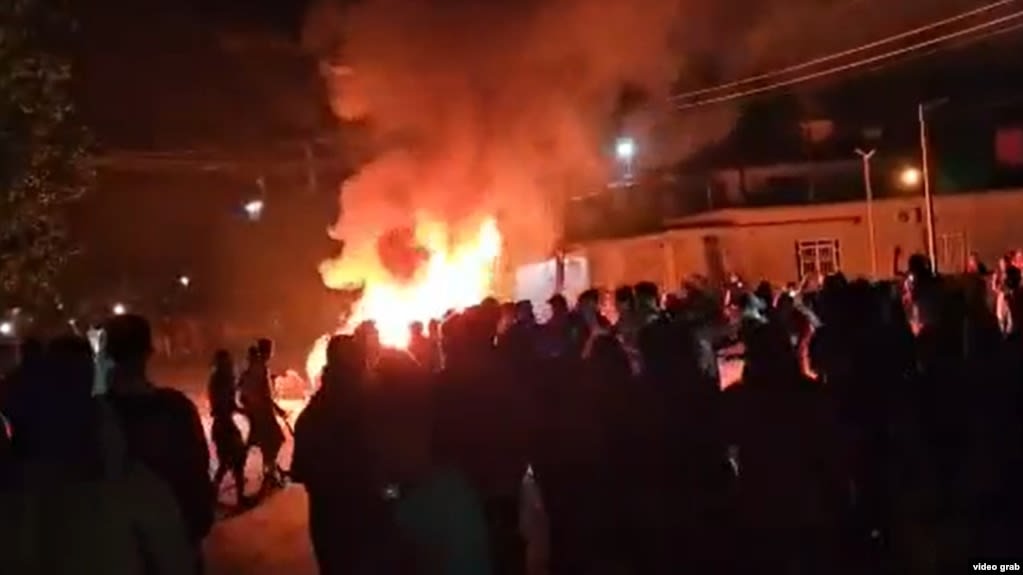 Screen shot from video, Marti Noticias, 14 March 2026, showing protest in front of Communist Party headquarters in Moron, Cuba.
14 febrero 2026
Hi folks,
I couldn’t post what I’d prepared to send you yesterday morning. The demonstrations erupting across the island were making it feel too outdated. Those protests have only intensified over the last two nights.
I’m catching up on reports of Black Beret shock troops brutally repressing protests, which are becoming more aggressive, with people throwing rocks at government buildings as Cubans’ rage grows.
In Ciego de Ávila, protestors damaged the Communist Party headquarters, the only building with power during another prolonged blackout. Similar attacks on government buildings were reported in other towns.
Cries of “¡Abajo la dictadura!,” down with the dictatorship, and “¡Vamos!,” Let’s go!” can be heard in the first video, from Ciego de Ávila’s streets.
I’ll post again by tomorrow night. In the meantime, here are some videos taken from Cuba’s streets, all sourced from trusted Spanish-language sites and accounts.
Official Cuban news—there are no legal independent news sources on the island—will not cover any of these stories, at least not accurately, nor will foreign news agencies in Cuba. Their press credentials depend on toeing the regime’s news boundaries, telling the story as MINCOM, Ministry of Communications, says it should be told. That’s why Reuters and other agencies point to Trump’s oil sanctions as the cause of the recent protests.
Those sanctions have broadened the hardships Cubans face. But we’ve seen, here, that these protests have been ongoing for the last few years, that 20+hour-long power outages have been a fact of life in Cuba for many years.
I depend on trusted and mostly Spanish-language independent news sources, even though in some of these videos, I can’t verify the exact date they were taken. But I can confirm, after cross-checking reports, that each of the events occurred in very recent days.
More details coming tomorrow.
Hasta mañana,
Ana
CubaCurious is a reader-supported publication. To receive new posts and support my work, consider becoming a free or paid subscriber.
#Cuba.\n\nPodrán intentar silenciar a estos muchachos... la chispa ya está prendida. ","username":"MagJorgeCastro","name":"Mag Jorge Castro🇨🇺","profile_image_url":"https://pbs.substack.com/profile_imag...}" data-component-name="Twitter2ToDOM">Thanks for reading CubaCurious. If you appreciated this post, please click the heart at the end of the post and share it.
February 28, 2026
Cuba's border patrol—shoot first, ask questions later
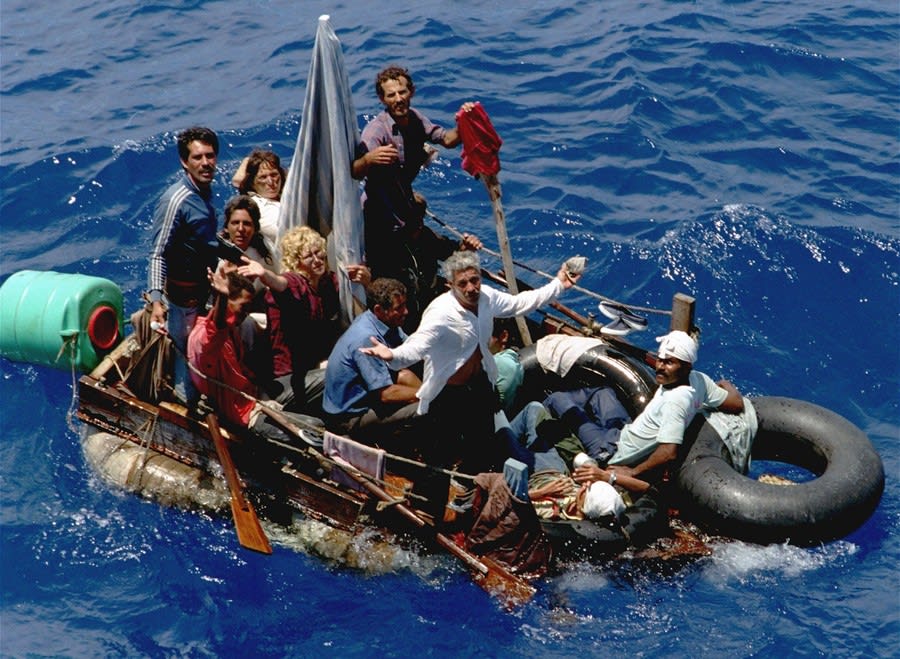 Cubans fleeing the island, this group in 1994, have feared encounters with their own coast guard, who some survivors have accused of ramming their rafts and boats to stop them.
27 febrero 2026
I was supposed to be off until 3/13, but this week’s Cuba news drove me back to my keyboard.
We have more questions than answers about the confrontation on Wednesday between a U.S.-registered launch and the Cuban Coast Guard. Cuba says the men on the launch were heavily armed and shot first. So the Cuban coast guard responded, killing four of the ten men on the launch. If the CCG’s story is true, then the men on the launch acted recklessly and should have expected a disastrous ending.
But how can we trust a dictatorship with a 67-year record of blatant lying, beginning with its description of Cuba as a democracy and ending with its insistence that it has no political prisoners at all.
The U.S. government is investigating before commenting on the case. Good. I don’t trust the Cuban Coast Guard, which is run by a ministry of the interior—the heart of the regime’s system of repression. It’s also a coast guard that has been accused by citizens of ramming boats full of Cubans trying to flee the island.
Cuban officials have been triumphantly boasting that its armed forces thwarted “armed terrorist infiltrators” and always have and always will defend the homeland to the last man. We know the regime uses “terrorist” loosely. We’ve seen here how peaceful protestors have been charged with terrorist acts for criticizing the dictatorship.
We know that all the men on the launch were Cubans residing in the U.S. At least one man had served time as a political prisoner in Cuba, according to the Cuban activist Jorge Luis García ‘Antúnez, who described him as “honest, decent,” . . . “family man” who’d worked as an Uber driver.
 Azcorra publicly denied any link to the events and assured that he is not even in Cuba. / Screenshot / Video by EFE
We also know that one of men that Cuba said it captured is alive and well in Miami. Roberto Azcorra told El Toque the regime isn’t telling the truth, “How can my name appear in its report when I’m here in the United States?”
The regime has lied with impunity in the past; there is no free press, no independent judiciary in Cuba to hold the dictatorship to account or even to demand transparency. A recent example: the regime repeatedly and emphatically denied for years that it had intelligence or military personnel in Venezuela. Then we learned that Maduro’s personal security guards were all Cuban and that thirty-two of those soldiers were killed during the U.S. operation.
CubaCurious is a reader-supported publication. To receive new posts and support my work, consider becoming a free or paid subscriber.
Questions about whether the men on the launch were armed, whether it was a speed boat, as the regime insists, and whether the men had violent pasts are mounting up. The brother of one of the men killed said “something is wrong in the telling of this story,’ and that his brother was never a violent person. The pro-democracy diaspora group that some of the men supported has said it rejects violence of any kind and was not involved.
The regime is using the incident to spin one of its most successful pieces of propaganda: the Cuban mafia in Miami is obsessed with toppling the revolution so they can reclaim their riches. It’s a trope that has kept the diaspora’s criticism of the regime from being heard over the years, since we’re “obsessed” and only looking to recover our wealth.
As the daughter of a Cuban forklift driver and a teacher, I can tell you that almost every Cuban I’ve ever met in the U.S. is from a working- or middle-class background, quite sane, and in possession of solid memories. We have our nutjobs like any other group. But we have a lived experience that should not be silenced by the same dictatorship that stole our freedom.
Cuba’s violence against perceived “terrorists” provocateurs and “traitors” escaping by sea goes back to when the 1959 revolution revoked Cubans’ right to leave the country freely, a right they’d enjoyed since the republic was founded and even during Spanish colonial rule.
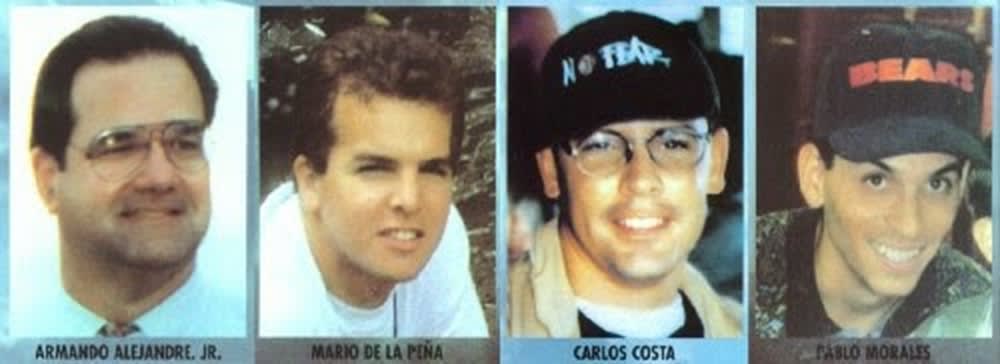 Mario de la Peña, 24; Carlos Costa and Pablo Morales, both 29; and Armando Alejandro Jr., 45 were humanitarian workers and pilots shot down by Cuban MiGs in 1996 over international waters. Photo: Center for a Free Cuba
One of the most horrendous examples of Cuba’s shoot-first border patrolling happened 30 years ago this month. On 24 February 1996, two Cuban MiGs pulverized two U.S.-registered Cessnas over international waters north of Cuba. Three American citizens and one U.S. resident aboard the twin-engine Cessnas were killed.
Mario de la Peña, 24; Carlos Costa and Pablo Morales, both 29; and Armando Alejandro Jr., 45, were doing humanitarian work aboard the Cessnas, searching for stranded rafters in the Florida Straits. The men were members of Brothers to the Rescue, a Cuban American group responsible for saving countless lives at sea.
One of the men killed that day had himself been saved by BTTR. By volunteering with the group, Pablo Morales was fulfilling a promise he’d made as he floated in the ocean and BTTR planes circled above him. If he lived, he’d join the group and help save others.
Cuba justified the killings, claiming the planes were involved in a “terrorist” provocation that threatened the country’s sovereignty. It had accused BTTR of coming into Cuban airspace before the incident. In an interview with Dan Rather, Fidel Castro calmly admitted giving the “general orders” for the shoot down and showed no regret.
Then secretary of state Madeleine Albright released transcripts of the Cuban pilots engaged in the attack, proving they knew the Cessnas were unarmed and demonstrating the glee when they destroyed the planes.
A UN investigation of the shootdown found that the Cessnas had been over international waters when the Cuban MiGs fired. Cuba vehmently rejected the findings and the international condemnation of its actions.
I remember talking with two American pilots about the shoot down soon after it happened. They were both U.S. Airforce veterans who’d fought in Vietnam. When I asked their opinion, their disgust was clear. One pilot said, “It would be like a soldier going up to a mother and child on the sidewalk and shooting them point blank.”
All countries have a right to defend their borders. But in most liberal democracies, armed border guards—and certainly coast guards tasked with rescuing people—hold fire unless seriously threatened. Even Russia, in 1987, allowed a reckless German teenager flying an unidentified Cessna to land in Moscow’s Red Square without firing a single shot—let alone air-to-air missiles—at him. Havana would have made ropa vieja out of 19-year-old Mathias Rust.
After so many reports by Cubans that their own coast guard attacked or threatened them as they attempted to escape, it’s easy to see why so many of us are questioning the regime’s version of the incident this week.
The survivors of some of those tragedies have been forced to tell the regime’s version of the story on state-controlled television—especially if they had denounced the coast guard’s attack when they first returned. The faces of those victims, still traumatized by their near-death experience, are heartbreaking: victims suffering the insult of having to praise their attackers for saving them.
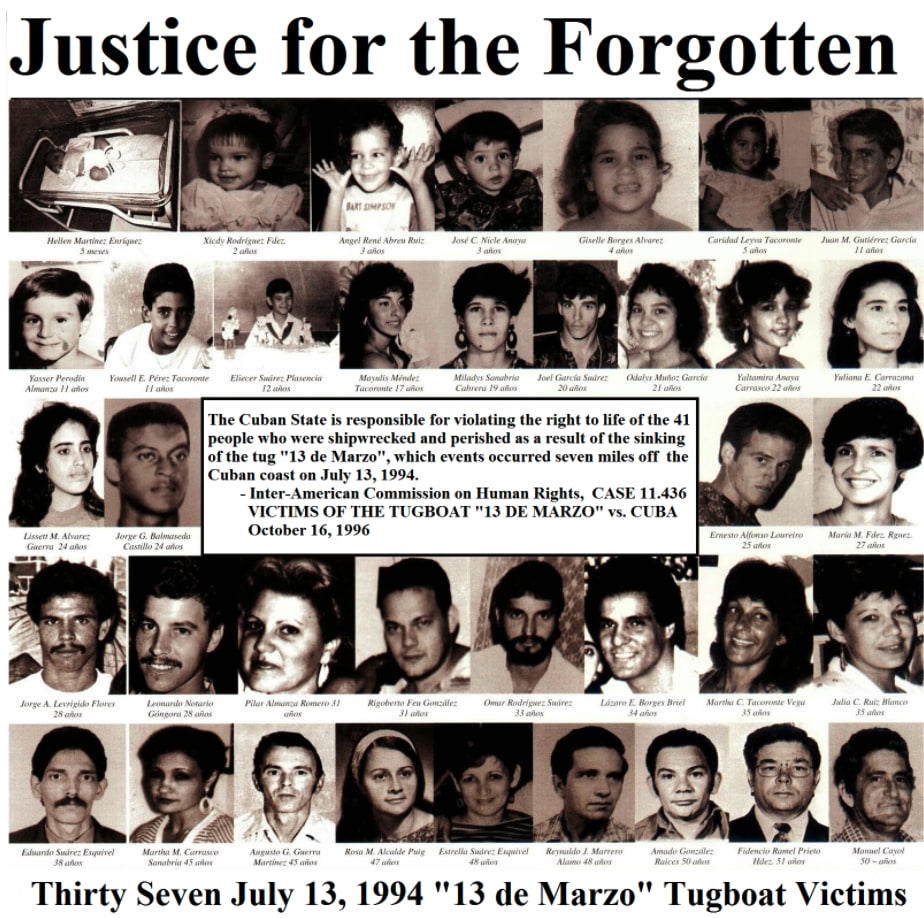 Victims of the 13 de marzo tugboat tragedy. Photo: Center for a Free Cuba.
Thanks for reading CubaCurious! This post is public so feel free to share it.
That’s what some of the survivors of the 13 de marzo tragedy were forced to do. Approximately 72 Cubans had boarded a stolen tugboat to escape the island one night in the summer of 1994. Survivors said the Cuban coast guard and government agents aboard two other tugboats had followed their boat miles out to sea, water cannoned the people on the deck into the ocean, and sunk the tugboat. Victims said they shouted that children were on board, but the guards continued to water cannon the boat. Some believed that if a foreign freighter hadn’t happened to pass near the scene, the guards would have continued, and they would have all drowned. Of the 72 Cubans on board the tugboat, 31 survived, 41 died, including 10 minors.
Cuban officials commended the coast guard on national news for saving the “irresponsible” survivors and rewarded the guards with public tributes. But a 1997 Amnesty International investigation concluded that, based on survivors’ testimonies, those who perished were victims of extrajudicial execution.
What happened on the Cuban coast between the launch and the Cuban coast guard will remain a mystery, because the survivors will almost certainly be pressured to confess their guilt and Cuba’s rulers will never admit theirs. Maybe these survivors, too, will end up on the state-run television thanking the coast guard who killed their crew mates—for “saving” them.
Meanwhile, average Cubans suffer and wait, suffer and wait, suffer and wait.
When will change come?
Thanks for reading and caring. As always, please comment, click the heart, and share with others if you enjoyed the post.
Hasta el 13 de marzo. May it be a freer one for all Cubans.
Ana
CubaCurious is a reader-supported publication. To receive new posts and support my work, consider becoming a free or paid subscriber.
February 20, 2026
“It’s simple. They just don’t care about us.”
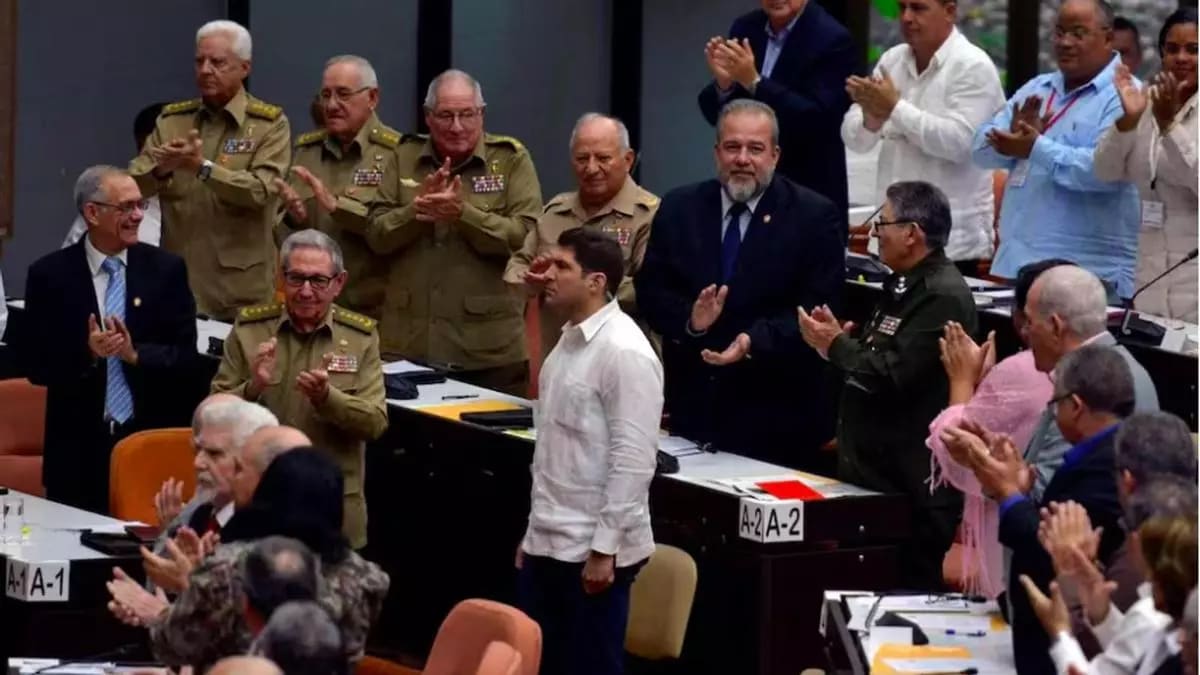 Raúl Guillermo Rodríguez Castro, el Cangrejo, (The Crab), Raúl Castro’s grandson, in the center, wearing white, is reportedly speaking with Marco Rubio about “the future.” Photo: Presidency of Cuba
20 febrero 2026
Hola y welcome back to CubaCurious.
Thanks for being here.
I hadn’t spoken with the Cubano* on the other end of the call in long while. There was something in his voice that was weighing us both down. We were WhatsApp-ing, he in Havana, me in New Hampshire, and he was struggling to find the right adjective for how he felt, given the dismal reality of life in Cuba right now. He stuttered, grunted. He wanted the right word. I told him he didn’t need to. The tone of his voice told me everything.
He described steaming mountains of garbage everywhere, the gagging stench made worse after it rains. The government hasn’t dealt with it, so for months people have been burning the piles of garbage themselves, creating dangerous fumes and ash that floats and spreads in the wind.
I remembered the overflowing barrels and dumpsters on street corners that I saw back in 2012, the last time I was in Havana. For those ten days, the mounds in front of the house we were staying in just got bigger. Nothing was taken away. People just dumped their trash or on the piles and kept walking. Fourteen years later, the problem has only worsened.
My friend said there are no cars on the streets. “Nada. Bueno, you see those luxury cars, those massive Fords from the U.S. Me encabrono cada vez que veo uno. I get so pissed when I see one. But the streets? Empty. At night, you can hear a fly buzzing. It’s that quiet. Even on New Year’s Eve, you know there’s always a racket, “no se oía nada.” You couldn’t hear a thing.
The nightly noticiero (newscast) is an insult. “It’s like they’re talking about another country. Like nothing is happening. Everything is normal. They sit there with those faces, their caras duras (hard faces), and lie and lie . . . that’s why everbody calls it the menticiero (mentira, lie).”
He said a friend who lives in the countryside told him there are entire villages that are empty. Everyone left “months and months ago.” There was never any electricity. So, they abandoned everything and left.
“Why don’t they just leave,” he said, again. “I can’t stand their shit anymore.” He’s worried something is changing deep in his soul. He’s been fantasizing about horrible things happening to “them.” He’s logical, even tempered, an engineer. He’s going to watch that. He doesn’t want “them to take what’s left of my soul, too.”
I wondered, stupidly and out loud, how the regime can watch so much suffering and let it go on. “It’s simple,” he said. They don’t care about us.”
I didn’t tell him, but I think it’s worse than that. I think the regime has contempt for Cubans because it blames them for revolution’s failures. The embargo is first, of course. But they blame the Cuban people next.
I can hear the regime’s contempt for citizens each time officials tell them to toughen up, resist harder, or when officials lose it in front of a Cuban asking for help, as their unelected president did last fall when he visited hurricane victims in Oriente. Miguel Díaz Canel told the homeless group before him that help was coming, they were in good hands, this would happen, and then that would happen, and, and, and. When he finished one of the women, looking at the ground, said—almost inaudibly—that she needed a bed. Her “president” lost it. He waved his hands in front of her face. “And I don’t have a bed to give you! I can’t make a bed appear! You have to wait!”
I heard contempt for citizens in an infamous 2013 speech by Raul Castro. He scolded Cubans for depending on the state for everything, “like sparrows with their beaks always open.” It was time, he said, for Cubans to get to work and solve their own problems rather than looking to the state for everything.
And who had forced Cubans to do just that? The system the revolution created, the one Raul is vowing to protect to the very “last drop of Cuban blood,” the one that keeps even the limited private businesses it reluctantly allows in a death grip. The system will not allow—another point Raul made that day—anyone having more than their neighbor. Everyone is equal. Well, not Cuba’s political, military, and party greats—and their families. They can live in a very capitalistic Cuba, own businesses, travel where they like, import what they need, go to special hospitals, throw pool parties for celebrities and visiting dignitaries—and then, quite cluelessly, post photos of the overflowing buffet tables and 20-piece bands on Insta.
My friend is worried about the hot weather ahead. “It’ll be here in a few weeks. You can’t sleep inside here when it’s hot if you don’t have a fan. You have to get out on the porch, a balcony. That’s why everybody got chikungunya.” (one of several mosquito-borne viruses that caused serious illness and an unknown number of deaths in the last year.)
But what the engineer fears most is that, after all this pain, no political change will come. “Imagine that. I’m sure they’ll find a way to keep robbing us even when there’s nothing left.”
That sounds paradoxical, but it’s the essence of life in what’s left of post-revolutionary Cuba.
So, if you hear Americans laying the blame of Cuban suffering on the U.S., consider sharing this with them. Because there’s more to the story than they know.
Don’t forget to check out the Cuban Treat of the Week at the end of the post.
I’ll be traveling for events for my book and a week of vacation over the next three weeks. I plan to send out a few short posts during that time, so stay tuned for micro scoops about mega news from a Cuba that wants to be libre.
A few mini scoops from this week, below.
Hasta la próxima ves,
Ana
* I’ve changed identifying details to protect privacy.CubaCurious is a reader-supported publication. To receive new posts and support my work, consider becoming a free or paid subscriber.
UnoSeven feared dead, dozens injured after unprecedented protest in notorious prison.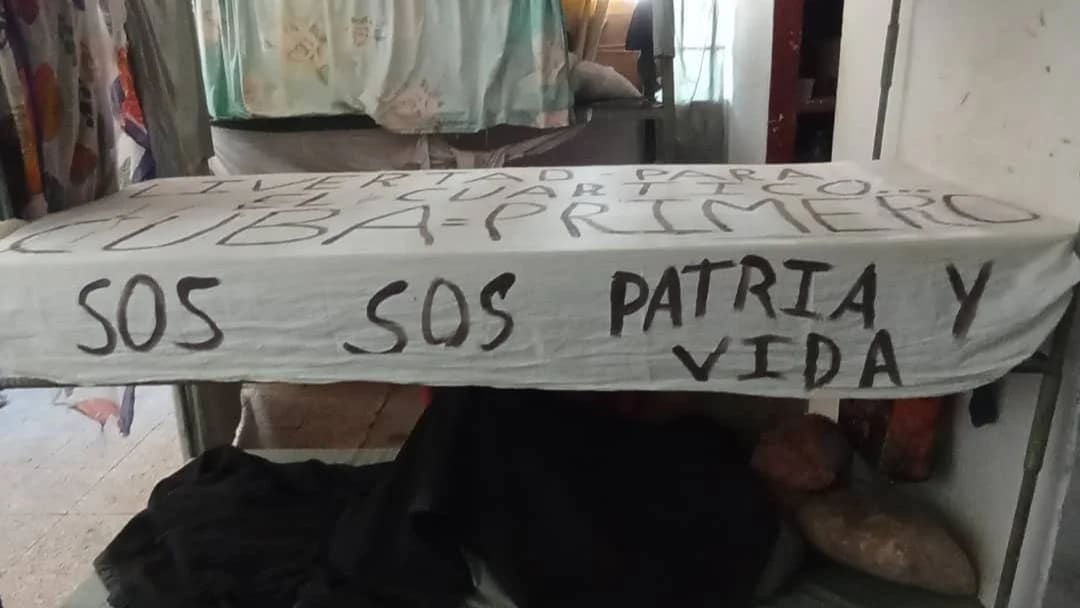 A rare protest broke out inside the notorious prison la Canaleta, in Diego de Ávila. The riot took the lives of seven people and dozens are reportedly hospitalized with injuries. The image of a sheet with anti-regime slogans was captured on a smuggled cell phone inside the prison. JAVIER DÍAZ/FACEBOOK
The NGO Prisoners Defenders and the Spanish news outlet EFE reported that prisoners at a maximum-security prison staged a large protest Wednesday after finding a young prisoner, “a child, really,” hung in his cell. The PD report was based on eye-witness accounts that the young prisoner had been brutally beaten by guards after he complained that he could not go on with the amount of food he was being given. “They massacred those prisoners,” a source told the NGO. He said at a distance of one kilometer shouts of “down with the dictatorship,” “down with Diaz Canel,” “VivaTrump,” and “Libertad” could be heard. A prisoner using a smuggled cell phone transmitted the images live. Prisoners, presumably both common and political, were could still be heard shouting at 1 pm Thursday.
DosIs Rubio talking with The Crab?
Raúl Guillermo Rodríguez Castro, ‘El Cangrejo’, nieto de Raúl Castro, en el centro, de blanco / Presidencia CubaAxios reported Wednesday that Trump administration sources say U.S. secretary of state, Marco Rubio, is having “discussions” with Raul Castro’s favorite grandchild, Raul Guillermo Rodríguez Castro, 41. Apparently, they’re talking about “the future,” according to one source. Trump said again Monday talks are under way. Cuban officials deny the story. But it makes sense for Rubio to work with someone in the inner circle who isn’t using a cane and likes toys. El Cangrejo is known to love luxury.
TresAmid so much hunger, the regime closes a private soup kitchen Utensils in the community dining room run by Father Leandro Naun Hung and ordered closed this week by State Security. LEANDRO NAUN HUNG/FACEBOOK
Amid the extreme hunger in Cuba, the regime ordered the closing of a soup kitchen in Santiago de Cuba this week. The comedor comunitario, community dining room, was run by Father Leandro Nuan Hung and served dozens of vulnerable citizens every day. The priest announced the closing on his Facebook page. The state justified the shut down with allegations of suspicious funding, although an Univisión report said it was run “on private donations and without state funding.” “Amid so much need . . . the closing of a comedor . . . is a symptom of the clash between social need and the state’s need for institutional control.”
Thanks for reading CubaCurious! If you enjoyed reading this free post, please click the heart at the end and share it with others.
Cuban Treat of the WeekNo music or art this week, but a grand Cuban Treat all the same. After four years and 7 months’ imprisonment, María Cristina Garrido Rodríguez, mother, poet, and 11J political prisoner was allowed her first visit home. She is one of the most well-known female political prisoners in Cuba.
Wishing María and her family a happy few days together. https://www.facebook.com/watch/?v=1936621510275228
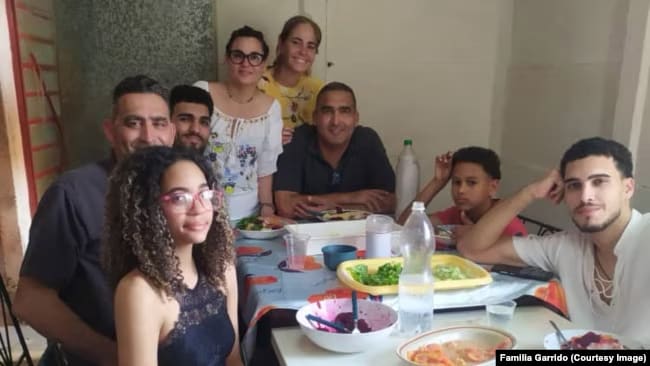
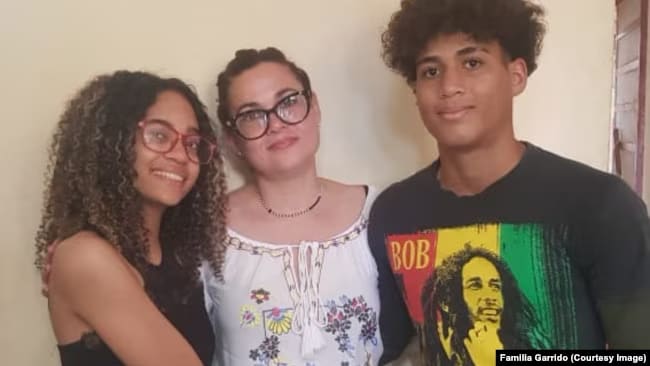
CubaCurious

Here's my weekly news mashup from the Cuban underground—stuff state-controlled media doesn't cover. I translate and compile stories from respected Spanish-language sources that r ...more
- Ana Hebra Flaster's profile
- 8 followers

