
Wes Moore's Blog
February 20, 2019
Top Six Funding Tips For Bridge Programs
Bridge programs in the summer or winter are effective ways to keep students engaged while helping them refresh academic and personal development needed for college success.
There are many examples of summer bridge and winter melt programs, all with the same goal – to help retain students and ensure their continued success. Now that you have decided on having one, how do you fund one?
Here are six things you should definitely have in place.
Connect with Local Foundations. Often, your institution will align with foundations or organizations interested in student success. Go to your grant offices to see what is available and funders who have funded your institution before.Write a Short Concept Paper. A two-page executive summary may help funders understand the bridge program goals and audience. Be prepared to answer questions like – What is the problem you are trying to solve? How will you solve it? How do you measure success and impact? What is the overall timeline? Budget? Operational staffing needs? Write it in such a way that if it lands on someone’s desk, they immediately get what you are trying to do.Talk to Leaders in Your Institution. There may be grant dollars, resources, organizations, initiatives, that may complement your bridge program idea and could help fund some of your needs. Plus, it never hurts to network around!Expand/Extend an Existing Program. If you already have funding for an existing program, check to see if that program can be extended to fund a bridge program. Since the funders have already invested, it would not be a stretch for them to add more and they have been through the internal, institutional red tape!Be Bold in Your Ask and Be Prepared! Funders like to see creativity, impact, and confidence. Approach them, whether in person, on paper, through influencers. Be confident that this bridge program will indeed make a difference and you are looking to scale and learn from it. Preparation will demonstrate confidence and funders will feel safer investing in what you want to do.Factor Time into the Equation. If you want a bridge program, you need to look for funding at least 3-6 months in advance. It is not likely you will find funds in weeks, but months. If you want a summer bridge program for 2019, the time is now.
Click here to learn how we help institutions successfully fund summer bridge programs.
The post Top Six Funding Tips For Bridge Programs appeared first on BridgeEdU.


January 3, 2019
2019 is the Year of Student Success!
At BridgeEdU, our New Year’s Resolution is to support all students this spring.
After working directly with hundreds of students of promise (underserved, underrepresented) here’s our top five resolutions towards student success.
BridgeEdU’s Top Five Resolutions
#5) Make a Personal Connection
How well do you know your students? Make a commitment this year to know a few that you just – don’t. Many students of promise may struggle with trust at first. Find one thing that you can connect with them on (favorite color, sports team, hobby) and start the conversation!

#4) Know The Campus
So many resources – Which would benefit your students the most? Based on the questions they ask, make a simple list with the most helpful resources for the students you advise.

#3) Create Personal Space
Before you head back to the hustle and bustle, allow 5 minutes each day to BREATHE. You’ll be more patient and open when your head is in the right space.

#2) Measure Your Work
What gets measured gets done. Set a metric-driven student success goal and monitor it. Share your success and challenges in a way where you can track impact and progress. How many students should you speak with a week? What percent is a reasonable response percentage?

#1) Be Proactive
Don’t wait for students to come to you. Reach out to those who you have not heard from TODAY. Make it a quest to see if you can get them to respond and connect.
Ready to get a jump start on the new year?
The post 2019 is the Year of Student Success! appeared first on BridgeEdU.
December 12, 2018
4 Financial Aid Challenge Areas for Lower-Income Students
Students of Promise face multiple challenges throughout the lifecycle of their financial loans. From applying for loans to repaying them, financial aid plays a critical role in underserved students’ lives for years.
The difficulties begin when applying for loans using the Free Application for Federal Student Aid (FAFSA) form. FAFSA presents a wide-ranging series of hurdles for would-be students and their families, particularly those from lower-income backgrounds, who often face additional verification challenges.
But these difficulties continue throughout the academic lifecycle. They include not only understanding the financial opportunities upon acceptance and the challenges of successful graduation within the constraints of work/family/life balance, but also appreciating the many factors that go into repaying these loans.
BridgeEdU created an infographic to highlight the many challenges facing students engaged in the financial aid lifecycle at their institution. You can access the infographic below. It covers these four primary areas:
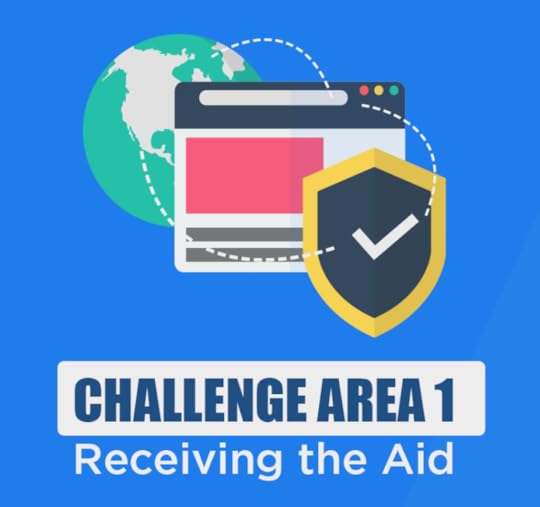
Challenge Area 1) Receiving the Aid
Lower-income students often trigger a verification process, forcing them and their families to prove to the college and the federal government that they are indeed needy of funding.
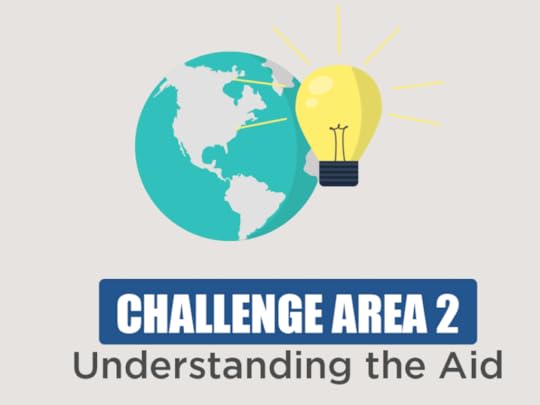
Challenge 2) Understanding the Aid
After successfully applying for financial aid, students receive award letters that can confuse them about grants, scholarships, and loans.
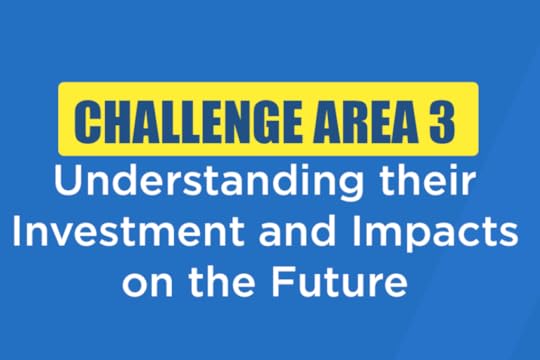
Challenge Area 3) Appreciating the Investment and its Impact on the Future
Without non-academic support structures, students struggle with many priorities and challenges, often dropping out before they successfully earn their degrees and achieve return on investment.
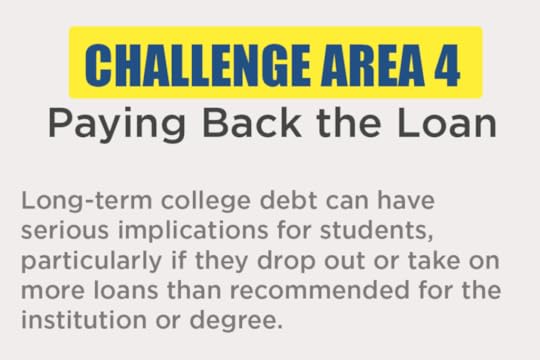
Challenge Area 4) Paying Back the Loan
Long-term college debt can have serious implications for students, particularly if they drop out or take on more loans than recommended for the institution or degree.
You can see the whole infographic here.
Download the Infographic
BridgeEdU works to serve students of promise. Our Financial Aid Coaching Tool (FACT) helps institutions and students understand their financial investment and how it relates to their academic momentum. BridgeEdU supports students by removing common barriers to success.
Learn more by contacting BridgeEdU today.
The post 4 Financial Aid Challenge Areas for Lower-Income Students appeared first on BridgeEdU.
4 FAFSA Challenge Areas for Lower-Income Students
Students of Promise face multiple challenges throughout the lifecycle of their financial loans. From applying for loans to repaying them, financial aid plays a critical role in underserved students’ lives for years.
The difficulties begin when applying for loans using the Free Application for Federal Student Aid (FAFSA) form. FAFSA presents a wide-ranging series of hurdles for would-be students and their families, particularly those from lower-income backgrounds, who often face additional verification challenges.
But these difficulties continue throughout the academic lifecycle. They include not only understanding the financial opportunities upon acceptance and the challenges of successful graduation within the constraints of work/family/life balance, but also appreciating the many factors that go into repaying these loans.
BridgeEdU created an infographic to highlight the many challenges facing students engaged in the financial aid lifecycle at their institution. You can access the infographic below. It covers these four primary areas:
Challenge Area 1) Receiving the Aid
Lower-income students often trigger a verification process, forcing them and their families to prove to the college and the federal government that they are indeed needy of funding.
Challenge 2) Understanding the Aid
After successfully applying for financial aid, students receive award letters that can confuse them about grants, scholarships, and loans.
Challenge Area 3) Appreciating the Investment and its Impact on the Future
Without non-academic support structures, students struggle with many priorities and challenges, often dropping out before they successfully earn their degrees and achieve return on investment.
Challenge Area 4) Paying Back the Loan
Long-term college debt can have serious implications for students, particularly if they drop out or take on more loans than recommended for the institution or degree.
You can see the whole infographic here.
Download the Infographic
BridgeEdU works to serve students of promise. Our Financial Aid Coaching Tool (FACT) helps institutions and students understand their financial investment and how it relates to their academic momentum. BridgeEdU supports students by removing common barriers to success.
Learn more by contacting BridgeEdU today.
The post 4 FAFSA Challenge Areas for Lower-Income Students appeared first on BridgeEdU.
November 28, 2018
What Does the Future of College Look Like?
With fewer admissions and less pressure to contain financial costs, colleges across the country are challenged to do more to serve students. To do that, schools need to evolve their admissions policies and approaches to make higher education more accessible. Our CEO Tisha Edwards offers her vision for schools in the above video.
The modern student defies the traditional convention of a kid sent to school with two parents at home. Today’s student is just as likely to have dependents, have a job, or serve as the household’s primary earner. Further, many students of promise are entering school as their family’s first college student without the resources a traditional student would have.
The reality of modern students creates the need to remove barriers to access financial aid, and add support mechanisms to ensure graduation. Counseling and support are needed to ensure not only that students graduate, but also that their degree is meaningful.
The following is an edited transcript of Tisha’s video.
Tisha’s Vision
The world is changing, the skill sets that young people are going to need coming out of college are different. My dream is that number one, education is more accessible to people that it has not been accessible to in the past, that we’ve really done the work to remove the barriers to completion. They do exist and institutions can get really courageous about that.
And also, that students feel like they got what they paid for. Way too many students are graduating from college and saying, you know, “Why am I having to take a job at Starbucks? I could have done that without a college degree.”
I think that institutions who take ownership of ensuring that college degrees represent the path to a better life for young people. That needs to become a part of our mission and the work that we want to do.
Yes, college is a place for self-exploration; yes, it’s a place to write and grow. But students also need to be able to take care of themselves after they graduate from college.
They should not be in a worse financial situation than they were when they started, and they should feel like they’re prepared to begin some type of career. Colleges must accept that call to action. It’s more equitable, it’s more actionable, and it’s a place where people should get what they pay for.
September 16, 2018
Presenting at NCAN Conference 2018
BridgeEdU’s data-driven success coaching model is grounded in the understanding that a student’s academic trajectory is rooted in socio-emotional factors. BridgeEdU collects data including non-cognitive and non-academic items that allow Success Coaches insight into all aspects of the student experience. BridgeEdU delivers a holistic experience tailored to the individual student that supports momentum in their academic, financial, and career journeys. Participants will take stock of their own resources to evaluate a data aggregation and integration strategy leading to student success.
Not attending NCAN? Want to know how BridgeEdU increases persistence with underserved students? Contact us here. https://try.bridgeedu.com/partners-bridgeedu-form
Monday, September 24, 2018 from 3:45-4:45PM
Data-Driven, Student-Centered: A Holistic Approach to Student Success Coaching

The 2018 NCAN National Conference site, the Wyndham Grand Pittsburgh Downtown, is pictured at center is located in the heart of the city.
August 17, 2018
New Summer Bridge Programs A Success!
New Summer Programs focused on Workforce Prep and Higher Education options for Baltimore high school graduates.
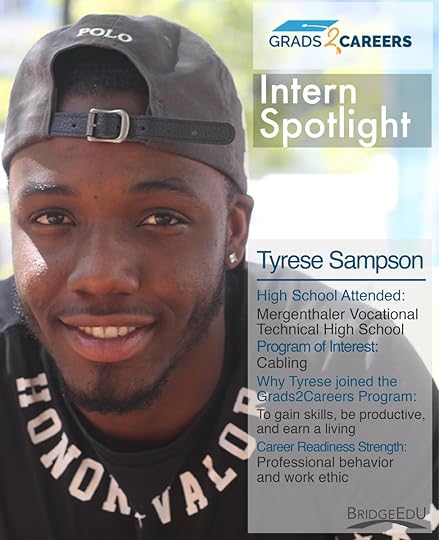
Grads2Career Intern Spotlight. Congrats Tyrese! http://bridgeedu.com #meant4more #mybmore #thefuture
Tyrese Sampson is exactly the kind of Baltimore City high school graduate Grads2Careers was hoping for.
In spring 2018, he was encouraged by his friend to apply to the Grads2Careers program. Tyrese is now part of an inaugural cohort of Baltimore City high school graduates and plans to pursue cabling. Cabling refers to all of the underground and above wires and cables that are the backbone of our telecommunications networks.
“I will continue to educate myself on certain things and other fields to get into. I’m big on self education. I want to get into flipping houses. Cabling will help me save money for real estate. I don’t want to pay everybody to do the work. I want to do something for myself.”
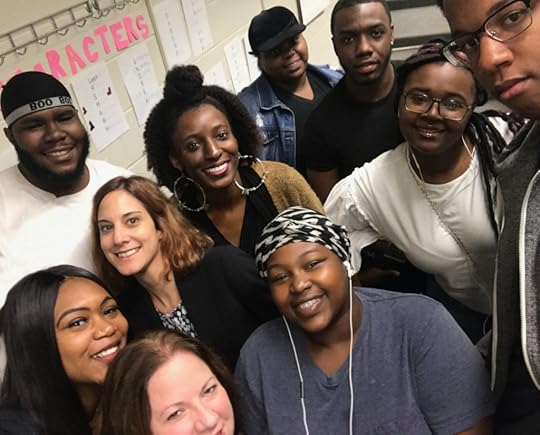
Grads2Careers interns and instructors at the end of summer program celebration. Tyrese Sampson shown on top right in black t-shirt.
Grads2Careers offers ten different tracks in automotive, biotechnology, construction, healthcare, information technology, information and communications technology, distribution & logistics, and surveying fields. Grads2Careers is a partnership between Baltimore City Public Schools, the Mayor’s Office of Employment Development, and Baltimore’s Promise.
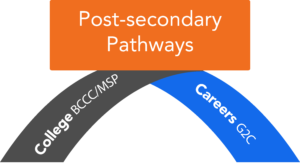
Post-secondary pathways covered in Bridge EdU’s summer program include higher ed prep (BCCC/MSP) or workforce development (G2C)
In early July, the Washington Post reported that President Donald Trump signed an executive order to bolster vocational training, creating a National Council for the American Workers and a Workforce Policy Advisory Board. The new push aims to increase the number of skilled workers in the U.S. workforce, at a time when many companies are struggling to find qualified employees. As part of our mission, BridegEdU’s career and college pathways programs prepare young people for their career goals. This summer BridgeEdU launched two new bridge programs, one focused on workforce prep, and the other supporting students in their transition to college.
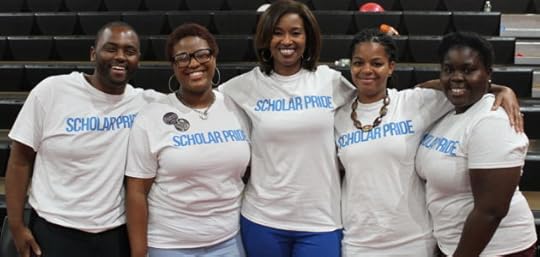
BCCC MSP Success Coaches in their Scholar Pride t-shirts.
Leveraging the Power of Educational Bridge Programs to Support Workforce Development
Summer youth employment programs are relatively popular national strategies proven to reduce violence and property crime among participants. But not all work experiences are equal, and little research exists about how these programs achieve impact or influence long-term employment and educational outcomes: some include learning opportunities and engaged supervisors, but many do not. What sets BridgeEdU apart? We design our programs to address specific challenges, so that the students and institutions we serve can achieve measurable success.
Program Challenges
Our workforce prep bridge program responds to the challenges that partner institutions meet when serving students of promise. Using the power of our data-driven coaching model to develop a comprehensive solution, BridgeEdU identifies the barriers to success for each intern:
Overall lack of college or career readiness, low self-confidence and limited family support to persist through the training program.
Lack of awareness of the value of post-secondary options to attain a sustainable career.
Minimal to no financial literacy or planning skills.
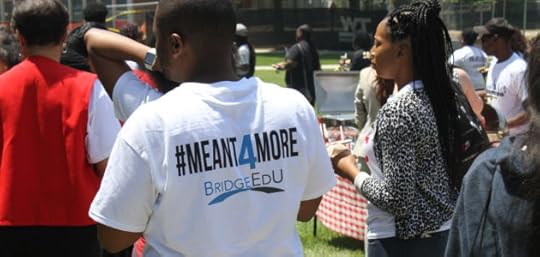
#Meant4More at BridgeEdU
Designing New Workforce Solutions
BridgeEdU leveraged the practical framework workforce programs provide, allowing students to take a more active role in their education. Grads2Careers is a intense seven-week workforce development program for high school graduates. The workforce-related Bridge program addresses the above risk challenges by:
Building confidence, social capital, and a community of learning resources through workforce experience and skill-development courses to reduce learning anxiety and practice using support resources.
Reflecting on workforce experience to set career-minded educational goals and boost agency in their learning journey.
Providing financial aid and financial literacy training so that students can create personal budgets, develop a relationship with a banking institution, and save for their future.
Supporting the Transition from High School to College
The Mayor’s Scholars Program (MSP) at Baltimore City Community College, is a seven-week college transition program for students involved in a free community college program. The MSP program integrates the full suite of BridgeEdU services and interventions to support academic momentum among students, including:
In-depth student academic assessments, college-success needs assessments, and career inventories
Tailored and accelerated academic tutoring
Financial aid education and financial literacy focused on understanding planning for the cost of attendance
Tools and workshops to build personal and professional social capital
Dashboards and mobile alerts to track incremental progress
You can learn more about BridgeEdU’s success working with community colleges here. Interested in learning more about our other retention service offerings? Connect with our team here.
Click to view slideshow.
Click to view slideshow.
May 30, 2018
Heat Up Your Retention Efforts This Summer With New BridgeEdU Services

BridgeEdU is excited to announce two new additions to our Bridge Program: the Independent Retention System Review and Data-Tracking Dashboard. These two new components are now available individually for institutions that are looking for alternatives to the full BridgeEdU coaching solution.
Product 1: Independent Retention System Review
When your institution collaborates with BridgeEdU, we begin by reviewing your current retention efforts to identify growth opportunities and specific organizational goals. Our review lays the groundwork for BridgeEdU to strategically integrate into your existing infrastructure and develop a plan toward measurable retention progress. Until recently, this review was only available as part of the BridgeEdU comprehensive coaching solution. Due to demand, BridgeEdU now offers this independent review as a stand-alone service for institutions that seek to better diagnose their systems before fully investing in BridgeEdU’s retention solutions.
What Does An Independent Retention System Review Look Like?
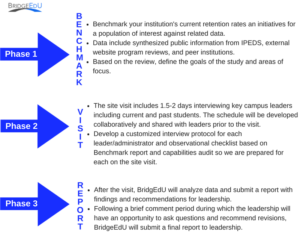
Phase 1: Benchmark
Benchmark your institution’s current retention rates and initiatives for a population of interest against related data.
Data include synthesized public information from IPEDS, external website program reviews, and peer institutions.
Based on the review, define the goals of the study and areas of focus.
Phase 2: Visit
The site visit includes 1.5-2 days interviewing key campus leaders including current and past students. The schedule is developed collaboratively and shared with administrators prior to the visit.
BridgeEdU develops a customized interview protocol for each leader/administrator and an observational checklist based on the benchmark report and capabilities audit so we are prepared for each on-site visit.
Phase 3: Report
After the visit, BridgEdU will analyze data and submit a report with findings and recommendations.
Following a brief comment period during which administrators will have an opportunity to ask questions and recommend revisions, BridgeEdU will submit a final report to your leadership team.
Interested in discovering your institution’s greatest opportunities to improve retention? Click here to learn more about scheduling your Independent Retention System Review today.
Product 2: Data-Tracking Dashboard
BridgeEdU’s Data-Tracking dashboard is foundational to our collaborative program model. User-friendly data-visualization makes it easy for teams to connect insights across departments, track student and faculty engagement, determine accountability, and organize important action items. The dashboard arranges data according to key performance indicators (KPIs) defined by the institution. Over the years, we’ve found that taking time to identify and sort data around KPIs leads to more organized and goal-oriented data-tracking practices.
This newly available tool is not only helpful for faculty collaboration, but helps advisory staff to track and discuss academic progress, financial aid status, and loan projection with students. Best practice retention research underscores data sharing as a useful tool for analyzing performance, establishing efficient interventions, and increasing student success. Our easy-to-use dashboard helps students and educational institutions partner around data-driven objectives and visualize progress.
What’s Included in the Data-Tracking Dashboard?
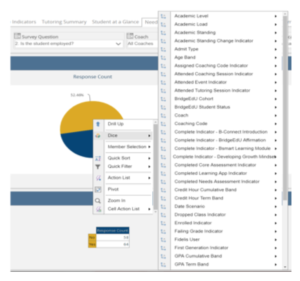
Easy Data-Sharing with Your Institution
Tutor Engagement Reports – By Class, Month, and Student
BridgeEdU Proprietary Financial Aid Coaching Tool (FACT model)
Ties together academic momentum and cost of a degree
Financial Health Updates – Open Balances, Aid, and Scholarship Status
Total Cost of Loan – Monthly Payment Estimator and Interest Impact
The Dashboard is now available to institutions looking to prioritize data tracking and sharing. Click here to learn more.
Our new additions equip your university with personalized expert insight to optimize retention strategies and simplify data-sharing with our user-friendly tracking tools. If you’re looking to scale up your retention efforts but not ready for the full BridgeEdU coaching solution, BridgeEdU’s new services have you covered.
Work Smarter To Raise Student Retention With New BridgeEdU Services
BridgeEdU is excited to announce two new additions to our Bridge Program: the Independent Retention System Review and Data-Tracking Dashboard. These two new components are now available individually for institutions that are not ready to adopt the full BridgeEdU coaching solution.
Product 1: Independent Retention System Review
When your institution collaborates with BridgeEdU, we begin by reviewing your current retention efforts to identify growth opportunities and specific organizational goals. This lays the groundwork for BridgeEdU to strategically integrate into your college’s existing infrastructure and develop a plan toward measurable retention progress. Until recently, this review only existed as part of the BridgeEdU comprehensive coaching solution. Due to demand, BridgeEdU now offers this independent review as a stand-alone service for institutions that seek to better diagnose their systems before fully investing in BridgeEdU’s retention solutions.
What Does An Independent Retention System Review Look Like?
Interested in discovering your institution’s greatest opportunities to improve retention? Click here to learn more about reserving your Independent Retention System Review today.
Product 2: Data-Tracking Dashboard
BridgeEdU’s Data-Tracking dashboard is foundational to our collaborative program model. User-friendly data-visualization makes it easy for teams to connect insights across departments, track student, and faculty engagement, determine accountability, and organize important action items. The dashboard arranges data according to key performance indicators (KPIs) defined by an organization. BridgeEdU finds that taking time to define and sort data around KPIs leads to more organized and goal-oriented data-tracking practices.
This newly available tool is not only helpful for faculty collaboration, but aids the work of advising staff to track and discuss academic progress, financial aid status, and loan projection with students. Best practice retention research underscores data sharing as an effective tool for analyzing performance, establishing efficient interventions, and increasing student accountability and success. Our easy-to-use dashboard helps students and educational institutions partner around data-driven objectives and visualize progress.
What’s Included in the Data-Tracking Dashboard?
Easy-Data Sharing with Your InstitutionTutor Engagement Reports – By Class, Month, and Student
BridgeEdU Proprietary Financial Aid Coaching Tool (FACT model)
Ties together academic momentum and cost of a degree
Financial Health Updates – Open Balances, Aid, and Scholarship Status
Total Cost of Loan – Monthly Payment Estimator and Interest Impact
The Dashboard is now available to institutions looking to prioritize data tracking and sharing. Click here to learn more.
Our new additions equip your university with personalized expert insight on maximizing retention strategy and simplify data-sharing with our user-friendly tracking tools. If you’re looking to scale up your retention efforts but not ready for the full BridgeEdU coaching solution, BridgeEdU’s new services have you covered.
May 11, 2018
BridgeEdU to Co-Sponsor Baltimore’s First Citywide College Signing Day
What is Baltimore College Signing day?
In 2014, former First Lady, Michelle Obama, kicked off the College Signing Day celebration in San Antonio, Texas with 1,200 high school graduates pledging to pursue a college degree or certificate. Today, schools, access organizations and others working to increase college access and completion hosts over 1,500 College Signing Day celebrations across the nation. This year, Baltimore adds to that number.
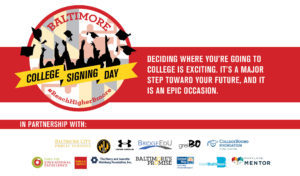
On May 11, at the Royal Farms arena, BridgeEdU will co-host Baltimore’s inaugural College Signing Day to spotlight over 5,000 Baltimore City Public School school graduates choosing to pursue post-secondary education and/or join the military, and inspire their peers to Reach Higher as well.
Expectations Matter: It Starts With A College-Going Culture
Encouraging students to develop post-secondary career goals is important in setting the stage for ongoing educational attainment. BridgeEdU recognizes that supporting a college-going culture is an important first step in closing the college access gap. Before completing the FAFSA or register for their first semester of classes, students must first be motivated and committed to pursuing a college degree.
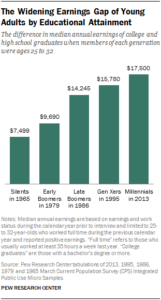
The data is clear: young adults have greater economic opportunity and overall improved quality of life when they earn a degree or other meaningful credential after high school. College Signing Day is a celebratory event that reinforces the message that the extended community has high hopes and expectations for its young people.
BridgeEdU is fully committed to partnering with community stakeholders to further the efforts of bringing more students, especially first-generation students, into the college completion journey. Historically, only 50% of Baltimore’s high school graduates go to college immediately after graduation. To that end, Baltimore College Signing Day serves as an important community engagement opportunity for setting a new standard for high school graduates.
Expectation theory is foundational to BridgeEdU. Creating opportunities for students of promise to further their academic and career goals through a comprehensive support model is at the core of BridgeEdU’s mission.
Our coaching program reinforces the importance of persistence even though many students often receive competing messages that can determine which cultural values they internalize and sometimes negatively impacts their decision-making. We, therefore, depend on the larger community to reinforce high expectations and to ensure there are opportunities for students to receive the support they need to pursue post-secondary opportunities.
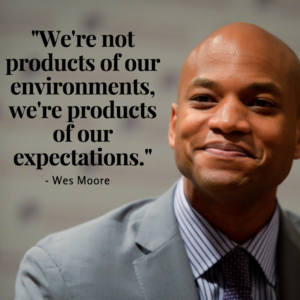
BridgeEdU founder, Wes Moore, reminds us that ensuring equitable educational opportunities is a more than a moral imperative and affects the entire nation’s well-being, “If you’re not going to do it to be selfless, then do it to be selfish. If you’re not going to do it because it’s the right thing to do, then do it because it makes your life better. Because the best way to live in a community that is safe and prosperous is to make sure everybody in that community feels safe and prosperous.”
We invite you to join Baltimore in the movement to champion a college-going culture by wearing college apparel and showing support for post-secondary education via social media. Let Baltimore youth know that pursuing higher learning is expected, praised, admirable, and within their reach.
Social media interaction is encouraged using the hashtags #CollegeSigningDay, #BetterMakeRoom,#ReachHigherBmore, #WeWill and #MyBmore. Stay connected by following @ReachHigherBmore on Facebook, Twitter, and Instagram.
For event details visit CollegeSigningDay.org
Wes Moore's Blog

- Wes Moore's profile
- 509 followers

