Byron Edgington's Blog
March 12, 2014
Thank you!
 Thank you, to all those readers who took advantage of the recent sale.
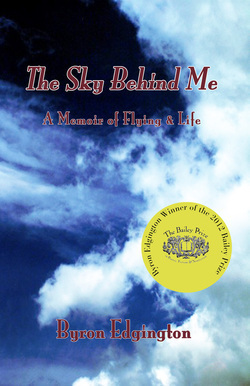
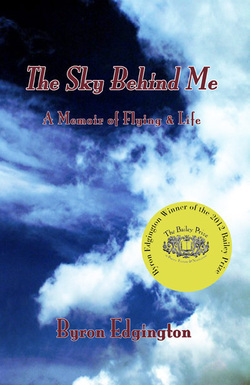
The Sky Behind Me, a Memoir of Flying and Life
had a tremendous number of downloads at the reduced price, and reviews are very gratifying. I appreciate everyone who took the time with my memoir, and especially those who have written such fine, objective reviews. Thank you all very much, and please tell your friends, book club members, librarian and social media sites about The Sky Behind Me. It’s much more than aviation memoir; it’s a meeting life challenges story and much more.
Thank you, to all those readers who took advantage of the recent sale.
The Sky Behind Me, a Memoir of Flying and Life
had a tremendous number of downloads at the reduced price, and reviews are very gratifying. I appreciate everyone who took the time with my memoir, and especially those who have written such fine, objective reviews. Thank you all very much, and please tell your friends, book club members, librarian and social media sites about The Sky Behind Me. It’s much more than aviation memoir; it’s a meeting life challenges story and much more.


March 10, 2014
March 5, 2014
March 1, 2014
 On Saturday March 8th,
 February 18, 2014
Adopt-A-Library
 I'm looking outside on this sleety, chilly, miserable February morning and thinking—what a great day to curl up with a book. Indeed, if it didn't entail a trip to the car, then a sloppy, awkward, potentially frightening and fatal drive to the library it's a great day to go there. Libraries have fireplaces, too, and books. Lots of books.
Libraries are the airports of the mind. They allow us to take off, explore, cruise through realms of imagination and adventure, just by opening a book.
Recently, a librarian in Oregon contacted me. She'd discovered my book, The Sky Behind Me, a Memoir of Flying and Life and she was intrigued by it. I guess inside its covers she'd found a runway open, ready to launch her into a world she'd never explored, the world of helicopter aviation. So she read TSBM way out in Oregon. Then she had a question: her library needed renovation work. In Jefferson Oregon, the drive to modernize the library is in full swing, and she wondered if, as an author, I might be wiling to contribute whatever I could? I said I'd see what I could do. As I wrote the (very small) check to Friends of the Jefferson Library, it occurred to me that this is something all authors ought to do. Not write checks; we do plenty of that. Authors should adopt a library. We should individually & collectively create a kind of Adopt-A-Library program, a place we send copies of our books, a place we go on a regular basis, use the stacks, do research, and take advantage of the resources there. We should also adopt this library to do readings and signings of our own work, promote them there and make a kind of symbiotic covenant with that library. All over America libraries struggle with budget cuts, ebbing interest in printed books, low visitation rates. Authors have a stake in promoting books, of course, so stealing a page from the infamous outlaw Willie Sutton, authors should go to libraries because, 'that's where the books are.' So if you're an author, and you're reading this on a sleety, chilly February morning, why not adopt a library? Just book on over there and do it. You'll be glad you did.
January 6, 2014
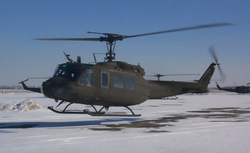 In my book,
 December 9, 2013
Interview with...?
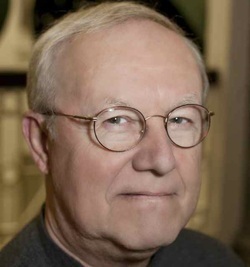 1. My last interview left his Truncheon here… can you tell me what is about to happen?
 No, but this reminds me of a fun joke: What did the knight say when he couldn’t find his truncheon? Wait for it— “Where the hell’s my truncheon?”
2. Alright, lets just forget about my big stick for a second. Are you generally a happy person?
Yes, except when the subject turns to truncheons and big sticks. I’m a very happy person. Considering what I’ve seen and done and owned and accomplished, if I complain about anything someone ought to slap me. The sex? Man, that one in the Fall is great! You bet I’m happy.
3. Why?
I’m generally happy because I don’t have a frickin’ clue what will happen next, and I’m fine with that. A Lincoln was right when he said “...we have nothing to fear but General McArthur and spiders.” That was Lincoln, right?
4. What inspired you to write your first novel?
That Beowulf fellow and his arch-nemesis Grendel. I figure he, whoever ‘he’ was, sat around the mead hall making stuff up, and it’s lasted 15 centuries give or take, so maybe I can do it too. The mead helps. Seriously, a book I read when I was a very young lad, way back in the twentieth century is what started it. It was titled Kon Tiki, and though non-fiction, Mr. Heyerdahl’s fine little travel book whispered in my ear that I could write. As for why I write at all, I’m second of ten, couldn’t get a word in edgewise, so I started writing. Good damn thing, I’d’a starved.
5. So you were a pilot… I guess you like getting high?
Still do. Love that mead! Yes, a helicopter pilot for nigh on forty years. I flew all over the world, for several different operators, doing all manner of things. Most rewarding was my 20 years in Iowa City flying for the University Hospital there, UIHC. In that time I flew 3,200 patient missions. It’s all in my book, The Sky Behind Me, a Memoir of Flying and Life. Thanks for letting me plug it.
6. Do you think we live in a dying world?
I know we do. Let me rephrase that: we live in a dynamic world. We ought to drop this save the earth conceit and talk about saving ourselves, because no matter what damage we ass-wipe humans do to it, the earth will recover and be fine, whatever fine means. Heck, at one time it was a gigundous ice ball, and look at it now, a gigundous melting ice ball.
Why do men have nipples?
They do? This reminds me of a funny joke: boy baby says, “...you mean if I cry, boobs appear?”
8. What made you decide to start writing your memoirs?
When I retired from aviation in 2005 I planned to sit around and watch reruns of my favorite shows, Lone Ranger, Leave it to Beaver, Little Rascals, Hill Street Blues, but I couldn’t figure out the damn remote, so I decided to write instead. It was time to put it down, especially the Vietnam part. It’s not a war memoir at all, but we Vietnam vets never talked about that little dustup. Ever. So I figured it was time. I’m sure it’s a better book because I waited.
Are you interested in writing fiction?
A lot of TSBM readers think I already do. Some of the stories in it are rather fantastic. I hardly believe them myself, looking back. But they’re all true, they all happened, even the Vinh MY story, my rescue flight for a pregnant Vietnamese girl in August 1970. That mission made me a pilot. (BTW The Mile High Club’s a real thing, swear to god)
10. What is next on your literary plate?
I’m mostly done with a draft of a novel titled Final Sky. Love story about hospital air medical crews. Oh, I used to watch Sky King, too. Stupid %#&! remote!
11.Speaking of plates, are you hungry? Want to make some sandwiches?
Only if we can have mead with them.
12. What's your favorite kind of sandwich?
Earl of Sandwich? Oreo sandwich? Knuckle sandwich? Maybe White Castles. They go great with mead, but then my wife says I have to sleep somewhere else that night.
13. What do you think about when you're on the toilet?
Marriage equality. Seriously, those same-sex couples never have to worry about leaving the seat up or down. Think about it.
14. When the day is done and all noises cease, will you be content with all you have achieved?
I’m sure you meant cease. Anyway, let me get serious here for a few lines. Speaking of fiction, I chucked religion a long time ago, and here’s what I believe. That we accumulate debts as we mature and grow, and a great achievement in life would be to pay back what we owe, then have a few weeks, months, years, to pay forward a bit. To leave the campsite cleaner than we found it. I hope I’m on track to do that, and I think I am, so yes I’ll be content. Plus, there’s the mead.
15. What do you do when you are not writing?
Breathe?
16. Do you still fly?
Nowadays I soar. Seriously, I fly in a different way, that is, I look for others trying to fly and help where I can. I’m a big equal rights advocate because I’ve always been for the underdog, and those opposed to equality can just go piss up a rope. Stinkers and negative people annoy me; I avoid them.
17. If you were a superhero, what superhero would you be?
AuthorMan, able to leap tall participles in a single bound, banish evil adverbs, rescue damsels in dialogue distress, rewrite the 2000 election and erase the designated hitter rule!
18. Do you believe in life on other planets?
Where there’s mead there’s life. I’ve actually given this some thought. Those searches we do for extra-terrestrial life? I think there are sentient beings who’ve received our signals, then took a look at us and said ‘no way, baby, those earthlings are flippin nuts! Look at the Kardashians! And that Trump guy, what’s with the hair? Is that a spaceship on his head? And what about those so called Republicans? I mean, seriously, if you got wind of Michelle Bachmann would you respond? I’d run like the wind.
19. Star Trek or Star Wars?
Star Wars, definitely. I wanna come back as the guy who owns that bar. How cool would that be?
20. Can I hold your hand while we finish the rest of this interview?
Not my writing hand, please.
21. What music gets you in the mood to be AWESOME?
The music from the bar scene in Star Wars. Otherwise, anything by Dvorack, Norah Jones, Brother Iz, Secret Garden or my 3 year old grandson on his ukulele. He does a mean Uke version of Joe Cocker. The lad’s going all the way I tell ‘ya.
22. Do you think humans will always be finite beings?
Lord I hope so. Can you imagine living forever? Shit the bed, eighty-year old men drive bad enough. At 300 they’d never switch the damn turn signal off! Never!
Last question, if you could do it all over, would you? Assuming you would, what would you change?
Do the interview over? No way. Oh, you mean life. I wouldn’t do it over, partly because, well, see question 14. Been a great gig. When it’s my time, Aloha baby! Lot of folks really outlive their welcome on this big ‘ol melting ice ball, know what I mean? Could be the reason it’s melting is all the hot air out there, you dig? Hey, thanks, Todd! I’m gonna shut up and write.
Do you remember the first story you ever wrote?
The script for a play in High School titled BC Brain. It was standard banal HS fare, with a mad cave-man scientist who discovers all these amazing things, long before the supporting infrastructure exists. He invents TV, for example, long before electricity. That invention brought the most memorable line in the play, when he says, “Guess we’ll have to watch TV by candlelight.” That may tell you how the play was reviewed right there. Coincidence or not, I don’t know, but I’ve yet to write another script, and that was fifty years ago, so…
What is your writing process?
I have a terrible affliction for a writer; I sit and write a thousand, two thousand, sometimes three thousand words a day without difficulty. Mind you, I didn’t say three thousand ‘good’ words, but I can whip off a bunch of copy in a very short time if need be. My process, as it were, is to freewrite, then try to find a plot if it’s fiction, and then go where it takes me. My writing always, always benefits from a steeping process, that is, from sitting dormant for a time, sometimes a very long time, before I rewrite it. The truth is always in the rewrite.
What are your five favorite books, and why?
First on the list has to be Moby Dick. Melville’s epic contains the DNA of America, our sometimes senseless pursuit of our own white whale, and the depredations we’re willing to commit to get it. It has racism, class division, our work ethic, our travel obsession and our pseudo-aristocracy and… You get the idea. The others, in no particular order would be To Kill a Mockingbird, in my estimation the greatest novel of the twentieth century, Lolita, believe it or not, for Nabokov’s willingness to create art from the sludge of our worst taboo, The Things They Carried, O’Brien’s brilliant essay-istic paean to Vietnam grunts and Faulkner’s The Sound and the Fury for the way he uses Benjy as Shakespeare’s idiot, telling his tale signifying nothing.
What book marketing techniques have been most effective for you?
Good old word of mouth. There’s nothing that works better. Those hucksters and pucksters offering help to sell your masterpiece? Save your money.
Describe your desk
Plastered with post-it-notes, but otherwise pretty clean. I’ve started to stand up to write more than half the time. Keeps the pounds off, and I think the writing’s better, too. It worked for Hemingway.
When did you first start writing?
Shortly after birth, I think. I’m second of ten, so I couldn’t get a word in edgewise around the dinner table, a place where concentration was required lest hunger follow. I’ve written as a long as I remember.
What's the story behind your latest book?
The Sky Behind Me, a Memoir of Flying and Life--available at Amazon in paper and Smashwords as an E-book, is memoir based on my forty year career in commercial aviation. I lost my childhood dream to be a priest. A priest took advantage of me for his own perverse pleasure and I was forced out of the seminary. I got drafted out of college, went to Army flight school and flew Hueys in Vietnam for the 101st Airborne Division. After the war I found a commercial career flying helicopters all over the world. Aviation was a replacement dream come true, and a way for me to recapture a long-lost desire to help people when they most needed help. The book’s tag line is: “The heart of a man can want no more than this.” I had a marvelous life in the sky doing the work I dreamed of as a child, while soaring in a very different way than I anticipated.
What is your greatest joy as a writer?
Knowing someone has enjoyed the words I put together. An unanticipated pleasure of having The Sky Behind Me out there is hearing from readers that the writing is so strong. I kinda assumed the stories would resonate, but hearing how well written the book is has been tremendously gratifying.
What are you working on next?
I have three books in progress. One is an Air Medical novel about flight nurses and pilots based at a hospital who’ve found themselves cynical, disillusioned and feeling hopeless, both about the work they do and their industry. Working title ‘Final Sky’ has all the juicy stuff—intrigue, danger, adventure, sex (tasteful, worry not), inside info and a damned satisfying ending. Next comes Growing Up Crowded, my family memoir of being second of ten kids in a robustly Irish Catholic family in the fifties. Waiting for Willie Pete, my Vietnam helicopter novel is based on the Moby Dick model— a crazed company commander in Vietnam is obsessed with a North Vietnamese colonel who injured him as young lieutenant. ‘Captain Ahearn’ will take his vengeance on this NVA fellow, or kill himself and his company of aviators trying.
Favorite authors?
Melville, for sure, Harper Lee, William Faulkner, Christopher Hitchens, Tim O’Brien and myself.
Do you remember the first story you ever read, and the impact it had on you?
First book I ever finished was a paperback version of Thor Hyerdahl’s Kon Tiki. I read that book in fifth grade, actually devoured it, read it over and over till the pages blurred. It’s such a grand tale that I may have to read it again. Kon Tiki showed me people who understand danger, and how we have a choice to either let fear govern our lives, or ignore it and have a real adventure. I’m happy to say I’ve had a wonderful adventure, because I understood that principle. And I think I picked it up from Hyerdahl and his band of sailors on that leaky little raft in the middle of the Pacific ocean. I’m not afraid of anything. Hey, I’m a writer, fear is not a factor.
November 27, 2013
Is it done yet?
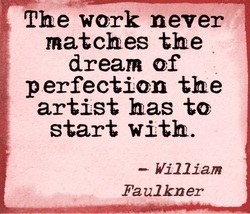 Today’s post is pure, unadulterated plagiarism. There, I said it out front. I’ve taken a fellow writer/blogger’s post today, and run with it because it’s timely, and it’s something I’ve been pondering for a long time. In today’s Procrastiwriter blog, Shanan Haislip discusses the relative merits of tweaking ones work, massaging the writing and altering, editing, changing and rearranging so the damn thing shines like a diamond in a goat’s ass. Or at least until WE think it does. It applies to any artistic endeavor: how the hell do we know when it’s done?
The great American poet laureate John Ciardi once said his fear when letting go of a poem was that he may have left part of it in his head. I think this fear is very real among writers of every genre. We tend to be perfectionists with our craft, so I suppose the only way to know if something’s ready to go into the cold, cruel world is to ask someone else. I compare it to sending our kids to school the first day. If they’re home by noon weeping and desolate, we sent them too soon, we left part of their development in our heads. Personally, I’m never sure when something’s ready. Too bad there’s no intermediate step between ‘I think it’s done,’ and the rejection or acceptance slip. The question points up the value of a good editor, I suppose.
One way I personally figure out if the damned thing is done is read it aloud. That usually points out the clunkers, and tells me if the thing is ready for a publisher or a spot in the bottom of my bird cage. The writing always benefits from sitting for a day/week/year as well. The story may be apocryphal and likely is, but literary legend has it that Tolstoy rewrote War and Peace seven times. Okay, his wife Sophia rewrote it seven times, but the damned thing is one of the longest books in world literature and it was tweaked to a gnat's ass. Maybe the answer to the question 'is it done yet?' is simply this: will your spouse read it one more time?
November 22, 2013
JFK + 50: Kennedy was a daredevil
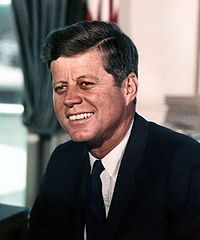 Reluctant as I am to add to the gushing stream of literary, video, audio, archival, historical and assorted other ‘ical references today about the events in Dallas on November 22 1963, here’s my two-cents worth.
 I was (and still am to some extent, though the image is a bit tarnished) a fan of John Fitzgerald Kennedy. I was twelve years old when Mr. Kennedy came to Columbus, my home town, during the tumultuous 1960 campaign. I stood fifty feet from JFK as he spoke to a crowd on the west steps of our Statehouse, itemizing his vision of America and our way forward when— not if, but when—he became the 35th president of the United States. I watched on election night, and thrilled when he eked out the narrowest victory in any race in U.S. national election history. Little did I know or appreciate that election night in 1960 that his victory came about just as Kennedy would have wished. He savored that victory; relished the nail-biting aspect of it. Once, during the campaign in West Virginia, Kennedy was asked about the influence of his father’s wealth, that is, has Joe Kennedy been buying votes for you? The candidate’s response was standard John Kennedy. “Perhaps he has been buying votes for me,” he said. “But pop told me he’s damned if he’ll pay for a landslide.”
That was quintessential Kennedy, and a bit prescient as well. Why? Because Kennedy was, like all his brothers, his old man, too, a risk taker. He was a daredevil, someone who dove into the fray unafraid, even with relish. Kennedy never met a challenge or a risky opportunity he didn’t like, never encountered a danger that didn’t get his juices flowing. We saw it in his open, carefree style; we saw it in his history as a veteran PT boat captain whose ship was sliced in two in the Pacific; we saw it in the way he swaggered in front of a podium, in the debates with the cautious and pedestrian Dick Nixon during the televised debates. And we saw it that day in Dallas. Try to imagine someone assassinating Nixon, and the mind reels. Not only why would anyone do that, but why would Nixon put himself in harm’s way like that? Impossible.
Fifty years ago today I was a fifteen-year-old high school sophomore in a minor seminary, and an ardent fan of our first Irish Catholic president. Yes, I remember with perfect clarity where I was, what I was doing and the exact reaction I had when Father Sala announced in chapel that indeed “...the president has been shot and killed in Dallas.” My arms still mass with bumps as I write those words, the indelible emotions erupting as fresh as that terrible day half a century ago. The Kennedy assassination was without question the signal event of my youth, the 9/11 for my time. It’s taken me fifty years to truly understand my feelings about it, and the subtle, almost invisible resentment I have about the man and what he did. Not Oswald; Kennedy.
Like his brothers, his dad and even the Kennedy women to some extent, John F. Kennedy was a daredevil. Fifty years ago today I would have been flayed alive for writing these words, for committing them to a page that would be read by anyone, much less posted for the (potential) world to see and preserved for all time in cyberspace. But here it is. John Kennedy asked for it. Okay, no president asks to be killed, but Kennedy knew without question that in traveling to Dallas, in diving into one of the most sinister and dark, most overtly dangerous plots of real estate for him in America, he was courting not only political but physical danger. To parade through the teeming streets of Dallas Texas, the so called ‘city of hate’ at that time, was brazen. To do so in an open vehicle, and to wind through several sharp-angled turns and narrow streets was nothing less than foolhardy. Kennedy had been warned ahead of time by friends and foes alike that he was taking a real chance going to Dallas. Many advisers told him not to go. History records that he brushed the danger aside, saying, “If they want to kill me all they have to do is stake out the top of a building and use a high-powered rifle.” What the history of this infamous day does not record, or what it perhaps can only say now, half a century later, is that John F. Kennedy was a daredevil, and that he should have at least taken the offered precautions while flinging himself into the madness and danger of Dallas. I say he welcomed the danger, relished it.
In reference to the moon landing Kennedy once said, “...we choose (to go there) not because it is easy, but because it is hard.” I believe that part of the man welcomed the danger that Dallas offered, and for that very reason and no other he chose to go there. History has shown the rest. I wish I still had my unvarnished respect and admiration for JFK, but I admit that the tarnish is real, and that my resentment about his part in Dallas while slight, is real as well.
November 20, 2013
Writers at Work
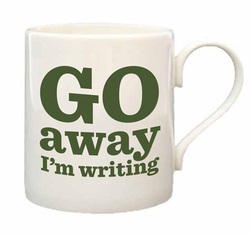 Writing is damn hard work. Don’t believe me? What’s the last thing you had published, printed, accepted or distributed to eager readers? I thought so. Here’s a story about the writing job/career/work taken from Judith Barrington’s great writing book, Writing the Memoir: From Truth to Art: at a party, a writer engaged a surgeon, telling her about his latest published memoir. The doctor said, “You’ve inspired me. I think I’ll take six months off and write my own memoir.” Without skipping a beat, the writer said, “You’ve inspired me. I think I’ll take six months off and become a surgeon.” Writers have a reputation, some of it deserved, of taking our time, dabbling in the art of clashing words, being dilletantes–even knowing what ‘dilletante’ means! (Someone without real commitment who dabbles, basically). We’re seen lazing around in our robes at noon, refusing to engage with the ‘working world,’ never far from a bottle opener or cigarette lighter as we create stories about real people we can’t possibly understand. Writing is black magic. It’s smoke and mirrors. It’s that artsy-fartsy gene. No it’s not: it’s damn hard work putting words together, forming sentences that sing, paragraphs that pulse, stories that satisfy. And there are all those damnably hard happy endings! Jeez, how to make one of those happen in a world filled with chaos, confusion, riots and republicans? It’s almost impossible.
But we do it. When I finished The Sky Behind Me, a Memoir of Flying and Life I dscovered the ultimate challenge for any writer. It’s not how to get published. These days anyone with a laptop and a credit card can get happily (if not qualitatively) published in under an hour. It’s not how to patch the bloody thing together. If you can’t create a cogent, readable manuscript you’re just not a writer, sorry. It’s not the $$$. There are more write-a-book-and-get-famous shysters out there anxious to take a wannabe writer’s $$$ these days than you shake a credit card at. No, it’s simply this. That, like John Ciardi once said about his poetry, “I’m always afraid there’s a part of it I left inside my head.” Writers struggle to write, and it’s damn hard work, and we always hope, like the surgeon extracting a tumor, that we got it all. In the meantime, go away, leave us alone. We have work to do.
Thanks to Shanan Haislip, The Procrastiwriter, for the inspiration today, and for the picture. Gotta get one of those mugs.